







Abstract
The aim of this study was to examine the temporal associations between feelings of emotional connectedness, jealousy, pro-relationship behaviors, and intimate partner violence (IPV) within adolescent and young adult romantic relationships. A cohort of late adolescent females (N = 144), aged 16 to 19, in a dating relationship with physical or psychological IPV, were recruited from public locations and a pediatric emergency department. Participants completed a daily Web-based survey for 4 months on partner-specific feelings of emotional connectedness (i.e., communication, trust, commitment, emotional security); emotional safety; jealousy; pro-relationship behaviors (i.e., had fun together, partner showed appreciation, partner did something that made her feel loved, gave/received a gift); sexual behavior, and experienced and use of psychological and physical IPV. The results of random effects models found previous- and same-day emotional connectedness decreased odds of experienced IPV; however, experienced IPV did not impact next-day emotional connectedness. Feeling less emotionally safe the previous day was associated with experiencing IPV, and both experiencing and using IPV were associated with feeling emotionally unsafe the next day. Made to feel loved and showing appreciation were protective against experienced IPV, while other pro-relationship behaviors were associated with increased risk (i.e., gifts, sex, and fun together). Findings highlight the need to develop prevention strategies that provide youth with meaningful skills to assist in navigating the emotional and behavioral challenges within their romantic relationships.
Keywords
Introduction
Intimate partner violence (IPV) is highly prevalent among youth in the United States, with 8.5% of high school students who had dated in the past year reporting experiences of physical violence (Centers for Disease Control & Prevention 2024). Estimates of psychological abuse vary, but as many as 65% of youth report experiencing psychological abuse in their relationships (National Institute of Justice 2022). Experiencing IPV during adolescence has lifelong adverse consequences including increased injury risk, sexual risk behaviors, mental health issues, substance use, and subsequent IPV, suggesting that adolescence is a critical window for prevention (Chen et al., 2018; Exner-Cortens et al., 2013; Saini et al., 2024).
Experiences with intimacy are a developmental milestone of adolescence (Giordano, Manning, & Longmore, 2015). Feelings of trust, closeness, and love reflect core dimensions that characterize youths’ cognitions about ideal romantic relationships (Sumter et al., 2013). Many youth are highly invested in their main romantic partners and, like adults, have hopes for continued commitment over time; this is particularly true during late adolescence when youth transition from an emphasis on peer socializing (Giordano, Manning, & Longmore, 2010; Sumter et al., 2013). Studies have found that adolescents prioritize maintaining intimacy over health behaviors even when they perceive risk (Alexander, 2012; Eyre et al., 2011; Matson, Chung, et al., 2021). This may also be true of relationships with IPV. Previous cross-sectional research found that while jealousy was associated with increased IPV, there was no difference in feelings of love or intimacy between adolescent and young adult (AYA) relationships with and without IPV (Giordano, Soto, et al., 2010). At a more granular level, patterns of feelings surrounding IPV are complex and may be counterintuitive, including reports of positive emotions. A study of young women found that jealousy was strongly associated with same-day IPV, whereas greater trust, closeness, and commitment were reported the day before an IPV event, and both use of and experienced IPV were positively associated with feelings of commitment and trust the day after an IPV event (Matson, Ridenour, et al., 2021). While young women may report on the whole feeling love for their partner despite experiences of IPV, day-to-day changes in feelings of love or other aspects of emotional connectedness (communication, dyadic trust, emotional safety, emotional security, and commitment) may be indicators of risk for IPV.
In that vein, little is known about how IPV events unfold within day-to-day intimate relationships where AYA strive to maintain connection with a partner (Matson, Fortenberry, et al., 2021; National Institute of Justice, 2014). AYA may minimize IPV and justify remaining in relationships because they are in love or feel emotionally connected to their abusive partner (Johnson et al., 2005; Matson, Ridenour, et al., 2021). It is unknown how positive feelings or behaviors may be linked to IPV events (National Institute of Justice, 2014). Pro-relationship behaviors, also known as relationship maintenance behaviors, are behaviors that individuals engage in to keep a relationship going and are correlated with relationship satisfaction (Eberly et al., 2013). Pro-relationship behaviors – such as time together, playing, or giving gifts – are viewed as evidence of partner investment in the relationship and as a means to maintain relationship strength, trust, and satisfaction (Dainton & Aylor, 2002; Park et al., 2025). Our prior work found that youth engage in pro-relationship behaviors, including gift-giving and having sex, to restore intimacy in their relationships (Matson, Fortenberry, et al., 2021). Adolescent girls report that even apparently minor shared activities such as “being silly together” are essential to romantic relationships (Volpe et al., 2014). However, the relational outcomes of such “play” (e.g., laughing and doing silly things together) may lead to IPV if the play involves elements of competition, aggression, mockery, and teasing (Gonzalez-Mendez & Hernandez-Cabrera, 2009). Despite the overtones of fun, one partner may perceive these elements as an exertion of control by their partner and interpret the situation as a point of conflict potentially resulting in IPV (Giordano et al., 2013).
The theoretical basis for this study comes from the symbolic interactionist perspective, which states that human behavior is not driven merely by instincts, but instead by the meanings, perspectives, and interpretations that an AYA brings to a situation. Meanings that emerge from interactions and communication within AYA relationships have significant influence on individual behaviors, including IPV (Landor & Ramseyer Winter, 2019; Protasiuk et al., 2024). A symbolic interactionist framework suggests that IPV emerges from dynamics within AYA relationships, specifically localized relationship and emotional processes (Giordano et al., 2013). A strength of this framework is its focus on individual small-scale experiences and daily communications; individuals act based on meaning, and meaning is derived through social interaction. This perspective highlights the need to hone in on day-to-day relationship context, including feelings and relationship supporting behaviors, because dynamics within dating relationships can illuminate specific patterns of violence (Giordano, Copp, et al., 2015). Thus, a deeper dive into IPV and relationship contexts is needed to examine the under-studied topic of how relationship feelings and behaviors that are traditionally viewed as positive might prevent IPV episodes or, in contrast, keep youth tethered to relationships with IPV. Aligned with symbolic interactionist theory, we examine the level of emotional connectedness and pro-relationship behaviors as central to understanding IPV within AYA relationships. This provides the theoretical basis for the hypotheses that emotional connectedness and pro-relationship behaviors will be inversely associated with IPV, while feelings of jealousy will be positively associated with IPV.
The objectives of this study were to use daily survey data to determine temporal associations between emotional connectedness, pro-relationship behaviors, and experiences and use of IPV within young women’s relationships. There has been a call for research on the sequencing of behaviors and interrelated relationship dynamics (Giordano, Copp, et al., 2015). We collected daily survey data from young women to determine temporal (same-day, previous-day, and next-day) associations of emotional connectedness, pro-relationship behaviors, and jealousy with both experienced and use of IPV. This approach fills gaps in existing knowledge in terms of interactions between experienced and use of IPV with key affective and behavioral relationship elements as experienced on a day-to-day basis.
Methods
Sample and Study Design
A prospective cohort was recruited from public locations and a pediatric emergency department (PED) in Baltimore, MD, between August 2018 and July 2021. A research study van with private interview space was parked in public spaces in the community. The van enabled enrollment of a broad convenience sample, including those who were not attending school or care-seeking. Flyers with study staff contact information were distributed in the community and posted in the PED; those interested in study participation contacted a trained research assistant who obtained oral consent before asking eligibility questions. Health providers also shared study information and referred interested patients to the study coordinator.
Eligible participants were English-speaking 16- to 19-year-olds, self-identified as female, in a current relationship with at least one act of experienced or use of IPV in the past month. All potential participants received IPV resources and an offer to speak to someone about their relationship. Participants were excluded if pregnant at screening or had a debilitating condition. Written informed consent was obtained for eligible participants. Parental permission for participation in research was waived for participants under 18 years of age to maximize participant confidentiality and safety (Matson, Ridenour, et al., 2021). Participants were offered an optional brief letter containing the institution/principal investigator and funder information and to let their parent/guardian know that they agreed to participate in a research study that involved using a cell phone to answer a daily questionnaire. The institutional review board approved the protocol.
Participants completed a baseline survey using Audio Computer-Assisted Self-Interview technology to maximize confidentiality and minimize literacy expectations (Boekeloo et al., 1994). Participants were trained to respond to the daily surveys using a personal smartphone; no youth required a study-provided phone. Daily surveys were completed for four continuous months by responding to a text that linked to a nondescript, password-protected, Web-based questionnaire. The survey took less than 5 min to complete. For safety reasons, one survey question appeared at a time, with the screen timing out after 30 s and requiring a password for reentry. The last message of each daily survey contained the phone number for the national dating violence hotline and this reminder: “If you have concerns, you can talk to a safe adult. Remember that a person is not going to be looking very often at your answers to these questions, so call the hotline or reach out to a safe adult right away if you need help.” Daily data were electronically transmitted to an encrypted, secure database. Participants received a $25 Visa gift card for the baseline survey and $60 Visa per month for the daily surveys.
Baseline Measures
Demographics
Participants reported age, race/ethnicity, parents’ education, school status, sexual identity, and lifetime number of male and female dating partners.
Daily Survey Measures
All daily survey measures were partner-specific. On each daily survey, participants recorded their partner’s initials and responded to questions in reference to this person. Partner initials were used to determine whether participants were reporting on the same or different relationships across time. Daily survey questions referred to the past 24 hr to capture continuous time between surveys.
Intimate Partner Violence
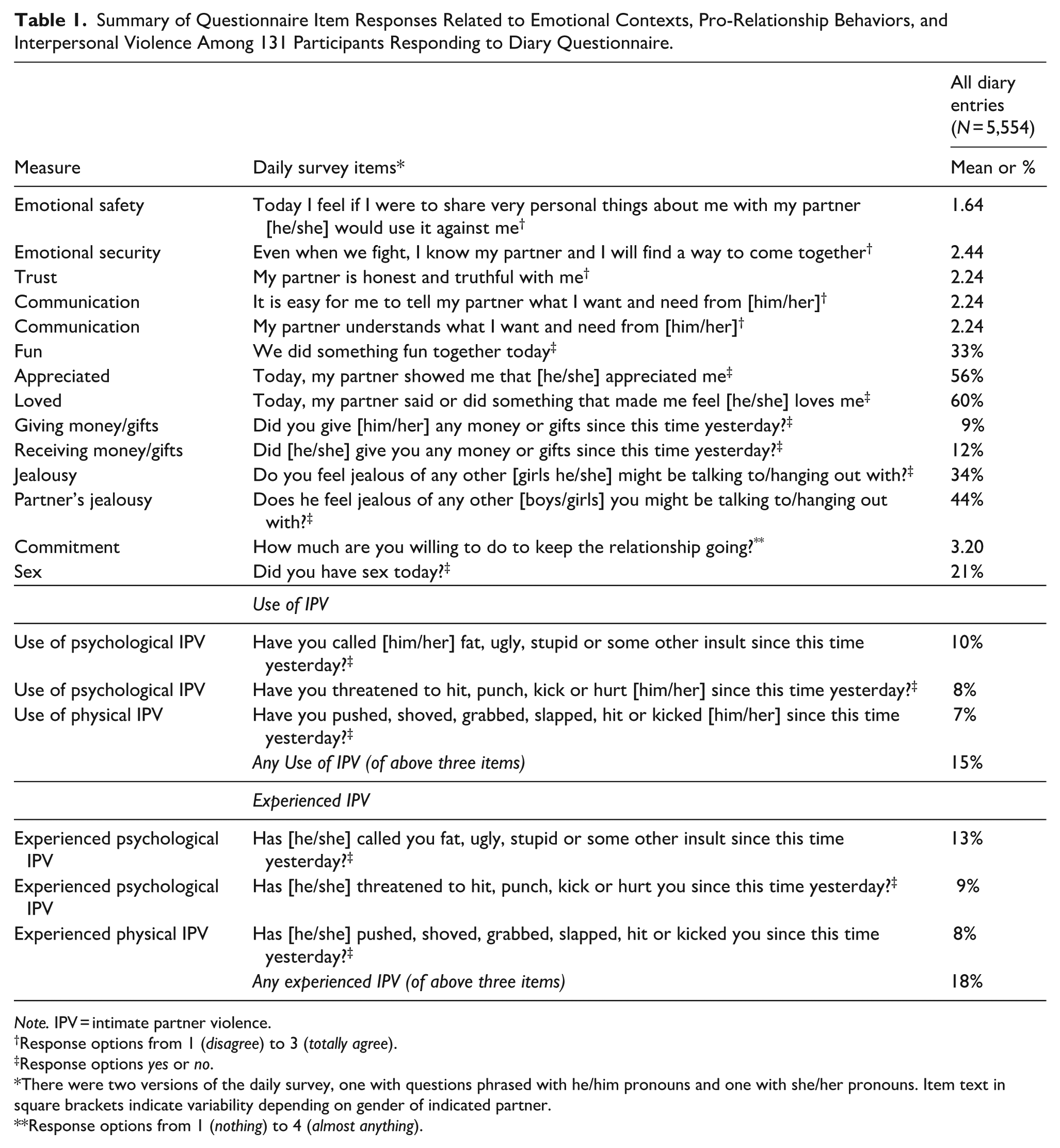
Every day, participants responded to six items about experienced and use of psychological and physical IPV in the past 24 hr using validated dating violence questions from the Safe Dates program (Table 1; Foshee et al., 2004). Experienced psychological IPV was assessed with the questions, “Has he/she called you fat, ugly, stupid, or some other insult since this time yesterday?” and “Has he/she threatened to hit, punch, kick, or hurt you since this time yesterday?” Use of psychological IPV was assessed by “Have you called him/her fat, ugly, stupid, or some other insult since this time yesterday?” and “Have you threatened to hit, punch, kick, or hurt him/her since this time yesterday?” Experienced physical IPV was assessed with the question, “Has he/she pushed, shoved, grabbed, slapped, hit, or kicked you since this time yesterday?” Use of physical IPV was assessed by, “Have you pushed, shoved, grabbed, slapped, hit, or kicked him/her since this time yesterday?” Response options were yes/no for all daily IPV measures.
Summary of Questionnaire Item Responses Related to Emotional Contexts, Pro-Relationship Behaviors, and Interpersonal Violence Among 131 Participants Responding to Diary Questionnaire.
Note. IPV = intimate partner violence.
Response options from 1 (disagree) to 3 (totally agree).
Response options yes or no.
There were two versions of the daily survey, one with questions phrased with he/him pronouns and one with she/her pronouns. Item text in square brackets indicate variability depending on gender of indicated partner.
Response options from 1 (nothing) to 4 (almost anything).
Emotional Connectedness
Participants reported daily on partner-specific feelings of emotional safety, emotional security, trust, commitment, and communication. Items for this survey were adapted from validated instruments and previous studies with youth (Table 1; Giordano, Soto, et al., 2010; Johnson-George & Swap, 1982; Larzelere & Huston, 1980; Schaefer & Olson, 1981; Van Dulmen et al., 2008). Emotional safety was assessed, with the question “Today I feel if I were to share very personal things about me with my partner would use it against me” (Johnson-George & Swap, 1982) and emotional security, with the question “Even when we fight, I know my partner and I will find a way to come together” (Van Dulmen et al., 2008). Trust was assessed with the question “My partner is honest and truthful with me” (Larzelere & Huston, 1980). Commitment was assessed with the question “How much are you willing to do to keep the relationship going?” (Giordano, Soto, et al., 2010). Communication was assessed with two questions “It is easy for me to tell my partner what I want and need from him/her” and “My partner understands what I want and need from him/her” (Schaefer & Olson, 1981). Each question had a 3-item Likert response option.
Pro-Relationship Behaviors
Participants responded to six yes/no items created for this study to address daily partner-specific pro-relationship behaviors (Table 1). These items included the following: “Today, my partner showed me that he/she appreciated me”; “Today, my partner said or did something that made me feel he/she loves me”; “We did something fun together today”; “Did you have sex today?”; “Did he/she give you any money or gifts since this time yesterday?”; and “Did you give him/her any money or gifts since this time yesterday?”
Jealousy
Two yes/no items addressed participant and partner jealousy: “Do you feel jealous of any other girls/boys he/she might be talking to/hanging out with?” and “Does he/she feel jealous of any other boys/girls you might be talking to/hanging out with?” (Table 1).
Statistical Methods
Descriptive analyses were conducted for demographic and daily survey measures. We used principal component analysis among relational context measures, which consisted of fourteen items representing our daily measures of emotional connectedness, jealousy, and pro-relationship behaviors (Pettersson & Turkheimer, 2010). We then conducted separate unadjusted analyses between the identified relational context measures (emotional connectedness [average of 5 items, Cronbach’s alpha [α] = .88], emotional safety [1 item], pro-relationship behaviors [average of 6 items, α = .71], jealousy [average of 2 items, α = .69]), and IPV. Contemporaneous associations (“same-day”) were defined as all variables reported on the same day. A second set of analyses examined associations of the prior-day’s (“previous-day”) relational context measures on the next-day’s IPV. Lagged effects were analyzed for IPV’s association with next-day (“next-day”) relational context measures. Experienced and use of IPV were modeled as separate dependent variables when examining “same-day” and “previous-day” associations and modeled as separate independent variables when examining “next-day” associations. In order to account for the dependence among daily survey responses, we used generalized estimating equations (GEE) with logistic and linear regression, for binary and continuous outcomes, respectively. We used GEE to estimate all regression coefficients, with clusters defined by participants and an exchangeable working correlation (Zeger et al., 1988). Daily surveys that were not completed by participants were excluded from all analyses. Sufficient statistical power was achieved from the sizable number of daily observations (n = 5,554) within relationships across the sample.
Results
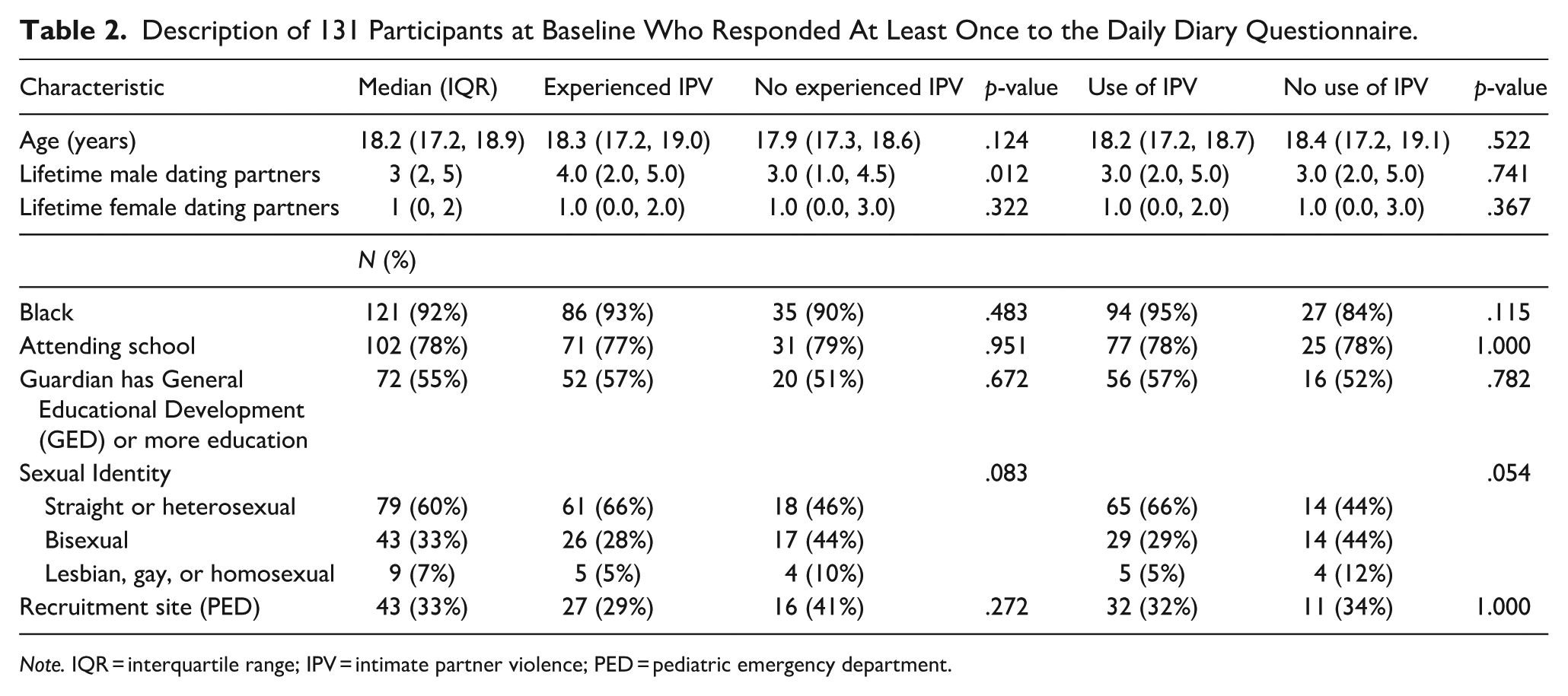
A total of 144 participants were recruited, 48 (33.3%) from the PED and 96 (66.7%) by a study van; 131 (91%) completed at least one daily survey (Table 2). The median (interquartile range [IQR]) age was 18 (17.2, 18.9) years. Most participants were Black (92%) and attending school (78%). There were no differences in experienced or use of IPV by recruitment site or by demographic characteristic with one exception; participants who experienced IPV had a greater number of lifetime male dating partners than participants who did not experience IPV at baseline (4.0 vs. 3.0, respectively).
Description of 131 Participants at Baseline Who Responded At Least Once to the Daily Diary Questionnaire.
Note. IQR = interquartile range; IPV = intimate partner violence; PED = pediatric emergency department.
Daily Experiences
Participants submitted 5,554 daily diary responses (median = 37 per participant, IQR [18, 65]). This diary completion rate is consistent with that of other published studies with AYA participants (Fortenberry et al., 2005; Moore et al., 2011). Table 1 summarizes the emotional connectedness, emotional safety, pro-relationship behaviors, jealousy, and IPV experiences reported in the daily surveys. Some diary surveys reported IPV without reporting emotional connectedness or pro-relationship behaviors, and vice-versa; however, this was fewer than 5% of all daily surveys. Participants reported both use of (15% of diary entries) and experienced (18% of diary entries) IPV, with 10% of days reporting both use of and experienced IPV.
Principal Component Analysis
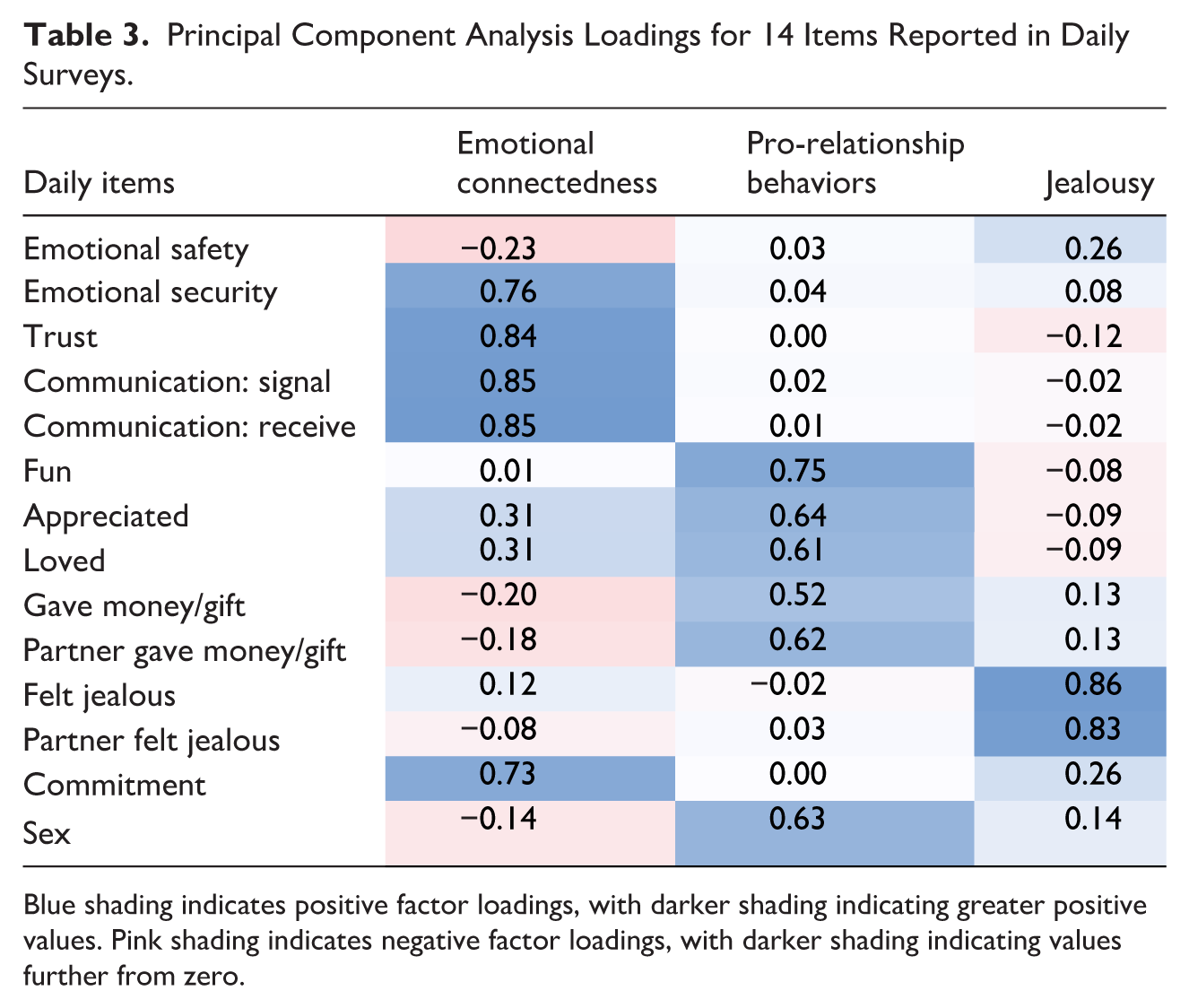
Principal component analysis based on the standard Pearson correlation among fourteen items (emotional connectedness, jealousy, and pro-relationship behaviors) was used to reduce the dimension of the daily responses (Table 3; Pettersson & Turkheimer, 2010). Eigenvalues of the covariance matrix examined in a scree plot (not shown) indicated three factors (Cattell, 1966). The first factor, explaining 23% of the total variability, had 5 items with loadings greater than 0.5, and all other items with loadings of 0.31 or lower. These five items (“Emotional Connectedness”) included emotional security, trust, communication (signaled and received), and commitment. The second factor explained 15% of the total variation with 6 items with loadings greater than 0.5, and all other items with loadings less than 0.05. These six items (“Pro-relationship Behavior”) included having fun, giving gifts, and feeling loved and appreciated, and having sex with their partner. The third factor explained 9% of the total variation, with two items with loadings greater than 0.8, with all other items having loadings of 0.26 or less. These two items (“Jealousy”) were participant’s feelings of jealousy and the perceived jealousy of the participant’s partner. Notably, emotional safety did not load onto emotional connectedness, pro-relationship, or jealousy factors, so we examined this measure individually in subsequent analyses. We examined the three factors and the emotional safety item related to daily IPV.
Principal Component Analysis Loadings for 14 Items Reported in Daily Surveys..
Temporal Associations
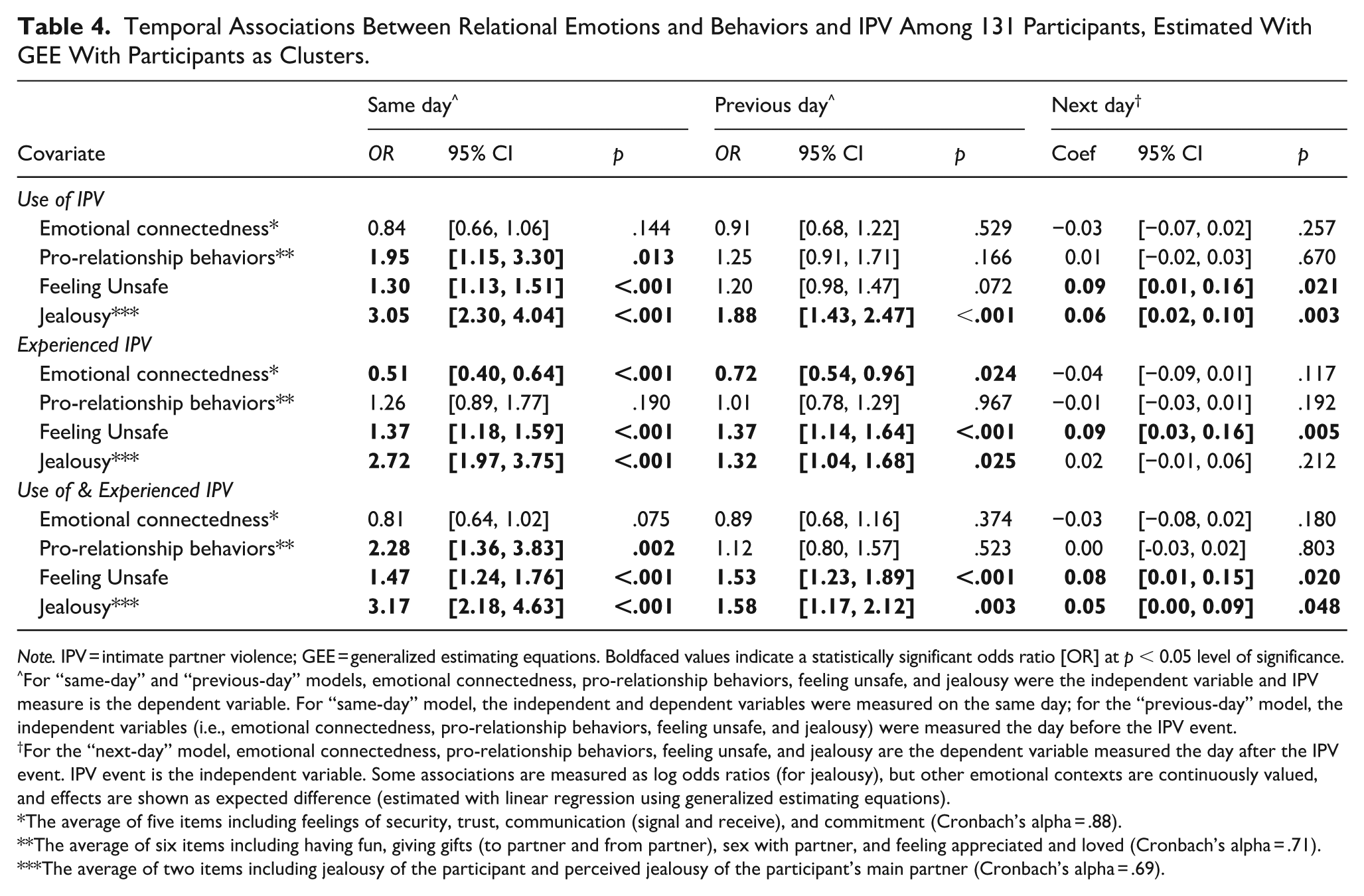
Table 4 presents the same-day, previous-day, and next-day associations between emotional connectedness, pro-relationship behaviors, jealousy, emotional safety, and IPV. Greater emotional connectedness on the same-day and the previous-day was associated with decreased odds of experiencing IPV (odds ratio [OR] = 0.51, 95% CI [0.40, 0.64]; OR = 0.72 [0.54, 0.96], respectively). Conversely, less same-day or previous-day emotional safety was associated with increased odds of experiencing IPV (OR = 1.37 [1.18, 1.59]; OR = 1.37 [1.14, 1.64], respectively). Same-day jealousy and previous-day jealousy were also associated with increased odds of experienced IPV (OR = 2.72 [1.97, 3.75]; OR = 1.32 [1.04, 1.68], respectively). Experienced IPV was associated with feeling less emotional safety the next day (β = .09 [0.03, 0.16]). No association was found between pro-relationship behaviors and experienced IPV.
Temporal Associations Between Relational Emotions and Behaviors and IPV Among 131 Participants, Estimated With GEE With Participants as Clusters.
Note. IPV = intimate partner violence; GEE = generalized estimating equations. Boldfaced values indicate a statistically significant odds ratio [OR] at p < 0.05 level of significance.
For “same-day” and “previous-day” models, emotional connectedness, pro-relationship behaviors, feeling unsafe, and jealousy were the independent variable and IPV measure is the dependent variable. For “same-day” model, the independent and dependent variables were measured on the same day; for the “previous-day” model, the independent variables (i.e., emotional connectedness, pro-relationship behaviors, feeling unsafe, and jealousy) were measured the day before the IPV event.
For the “next-day” model, emotional connectedness, pro-relationship behaviors, feeling unsafe, and jealousy are the dependent variable measured the day after the IPV event. IPV event is the independent variable. Some associations are measured as log odds ratios (for jealousy), but other emotional contexts are continuously valued, and effects are shown as expected difference (estimated with linear regression using generalized estimating equations).
The average of five items including feelings of security, trust, communication (signal and receive), and commitment (Cronbach’s alpha = .88).
The average of six items including having fun, giving gifts (to partner and from partner), sex with partner, and feeling appreciated and loved (Cronbach’s alpha = .71).
The average of two items including jealousy of the participant and perceived jealousy of the participant’s main partner (Cronbach’s alpha = .69).
Pro-relationship behaviors were associated with increased odds of same-day use of IPV (OR = 1.95, 95% CI [1.15, 3.30]). Less emotional safety was also associated with increased odds of use of IPV on the same day (OR = 1.30 [1.13, 1.51]). Use of IPV was associated with less emotional safety the next day (β = .09 [0.01, 0.16]). Same-day jealousy and previous-day jealousy increased odds of use of IPV (OR = 3.05 [2.30, 4.04]; OR = 1.88 [1.43, 2.47], respectively). Further, use of IPV was associated with increased next-day jealousy (β = .06 [0.02, 0.10]). No association was found between emotional connectedness and use of IPV.
Pro-relationship behaviors were associated with increased odds of experienced and use of IPV on the same day (OR = 2.28, 95% CI [1.36, 3.83]). While feeling unsafe and jealousy were associated with increased odds of both experienced and use of IPV the same day (OR = 1.47 [1.24, 1.76]; OR = 3.17 [2.18, 4.63], respectively), feeling unsafe and jealousy the previous day were also associated with increased odds of both experienced and use of IPV (OR = 1.53 [1.23, 1.89]; OR = 1.58 [1.17, 2.12], respectively). Further, both experiencing and using IPV was associated with feeling less emotional safety and jealous the next day (β = .08 [0.01, 0.15]; β = .05 [0.00, 0.09], respectively).
Post Hoc Analyses
To better understand the temporal phenomenology of IPV within relationships, post hoc analyses examined previous-day, same-day, and next-day associations between individual daily pro-relationship behaviors and emotional connectedness items with experienced and use of IPV. Results were largely similar for use of IPV, with having fun together, having sex with partner, and giving/receiving gifts from partner associated with increased odds of use of IPV (Table 5). However, we found important differences for experienced IPV. While we found no association between pro-relationship behaviors as a whole and experienced IPV, feeling loved by a partner and demonstrating appreciation was associated with decreased odds of same-day experienced IPV (OR = 0.71, 95% CI [0.59, 0.86]; OR = 0.75 [0.62, 0.90], respectively). In contrast, having sex with partner (OR = 1.65 [1.37, 1.99]) and giving/receiving gifts from partner were associated with increased odds of same-day IPV (OR = 1.67 [1.34, 2.08]; OR = 1.71 [1.43, 2.04], respectively). In addition, we found that previous-day gift giving increased the odds of experiencing IPV and that experiencing IPV was associated with having less fun with the partner the next day (β = −.23 [−0.45, 0.00]). Evaluation of individual daily emotional connectedness measures produced associations consistent with those demonstrated for the combined emotional connectedness measure [data not shown].
Temporal Associations Between Pro-Relationship Items and IPV Among 131 Participants, Estimated With GEE With Participants as Clusters
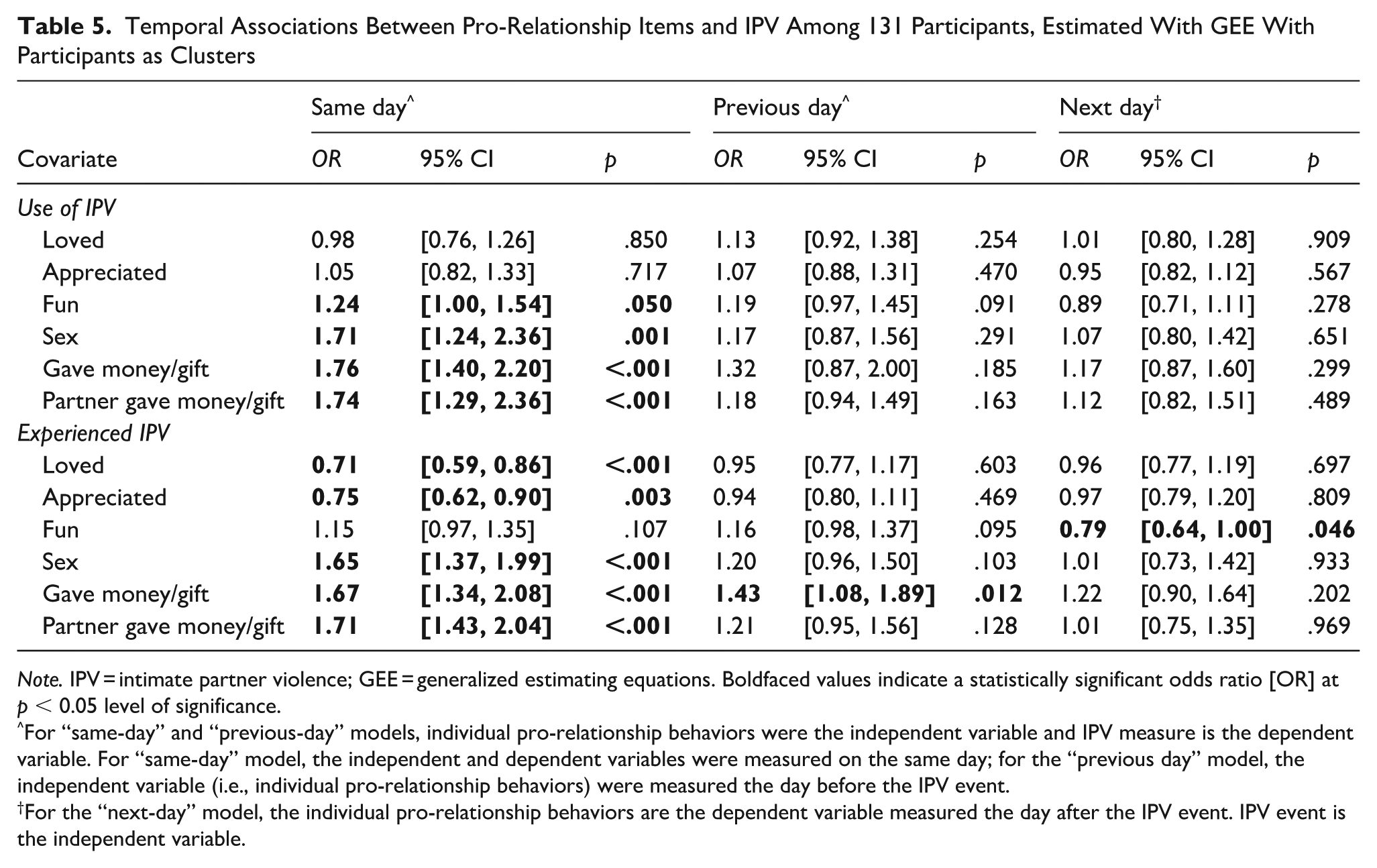
Note. IPV = intimate partner violence; GEE = generalized estimating equations. Boldfaced values indicate a statistically significant odds ratio [OR] at p < 0.05 level of significance.
For “same-day” and “previous-day” models, individual pro-relationship behaviors were the independent variable and IPV measure is the dependent variable. For “same-day” model, the independent and dependent variables were measured on the same day; for the “previous day” model, the independent variable (i.e., individual pro-relationship behaviors) were measured the day before the IPV event.
For the “next-day” model, the individual pro-relationship behaviors are the dependent variable measured the day after the IPV event. IPV event is the independent variable.
Discussion
Feelings and behaviors generally thought to be positive aspects of romantic relationships have the potential to enhance IPV prevention interventions for youth. This prospective study collected daily data from community- and PED-recruited young women in a current relationship with IPV to examine their feelings of emotional connectedness to partners and pro-relationship behaviors in relation to experienced and use of IPV over 4 months. There were three main findings of this study that improve our understanding of relationship dynamics in AYA relationships with IPV and fill in gaps to the literature. First, while emotional connectedness was protective against experienced IPV, this was not the case for use of IPV, nor did experiencing IPV impact next-day emotional connectedness. Second, we found emotional safety to be distinct from emotional connectedness and uniquely associated with both experienced and use of IPV. Finally, some pro-relationship behaviors, specifically their partner doing something to make them feel loved and to make them feel appreciated, were protective against experiencing IPV; however, other pro-relationship behaviors were associated with increased risk, including giving money/gifts, sex, and having fun together.
An examination of temporal contexts found both previous- and same-day emotional connectedness (trust, emotional security, communication, and commitment) were associated with reduced odds of experienced IPV. These findings are consistent with traditional views of connectedness as a desirable feature of a healthy relationship (Sumter et al., 2013). Further, the finding that experienced IPV did not impact next-day emotional connectedness is consistent with previous findings that suggested young women’s feelings of intimacy for a partner rebound after experiencing IPV (Matson, Ridenour, et al., 2021). Based on prior research, finding that feelings of emotional connectedness were not associated with use of IPV was counter to expectations. However, an increasing body of literature is finding youth have gendered perspectives on the use of violence where female-enacted abuse is more acceptable and viewed as done out of concern or caring (Storer, Schultz, & Hamby et al., 2020). For example, one study found young men view physical violence as a reflection of their partner’s caring about the relationship – “it’s like love hits” (Storer, Talan, et al., 2020). In some contexts, youth view physical IPV as a sign of the emotional intensity of the relationship rather than evidence of an emotionally deficient relationship (Barter, 2009; Storer, Talan et al., 2020). Future research should investigate whether these perceptions are person- or stage specific (i.e., only early in the relationship). Further, young women report the use of violence as a means of communicating their negative emotions, which strengthens the argument for interventions to address healthy communication skills (Walley-Jean & Swan, 2014).
Jealousy and fear of infidelity are prominent negative emotions experienced within AYA relationships. Consistent with previous research, our results show that feelings of jealousy are a risk factor for IPV. Though not measured in this study, research has found that technology use (e.g., cell phones and social media) plays an essential role in fueling jealousy within AYA romantic relationships, by both increasing the opportunity for youth to interact with peers their partner may be jealous of and monitoring partner behavior (Baker & Carreño, 2016; Van Ouytsel et al., 2019). IPV responses to jealousy are also viewed through a gendered lens, where young women often suffer greater consequences of jealousy as contextualized by male gender norms (Storer, Schultz, & Hamby et al., 2020). These findings suggest the need to address the intersection of gender norms and social media as part of approaches to coping with jealousy and promoting healthy relationships among youth. Future studies would benefit from examining the role of technology on jealousy as well as incorporating measures of cyber or technology-facilitated abuse (Afrouz & Vassos, 2024).
A significant discovery from this study is that emotional safety is associated with both experienced and use of IPV. Principal component analysis revealed that emotional safety was a distinct construct as it did not load with the other emotional connectedness measures. Notably feeling less emotionally safe the previous day was associated with experiencing IPV. Further, both experiencing and using IPV were associated with feeling emotionally unsafe the next day. These findings are consistent with a study with young adults that found experiencing an attachment injury – a significant relational betrayal or abandonment during a time when the partner’s caring and support is needed, undermining a fundamental sense of safety and trust – was associated with increased experienced and use of physical IPV (Lafontaine et al., 2025). Further, a study among college-attending AYA found that greater emotional safety increased the odds of breaking-up (Vennum et al., 2017). While it was possible that we captured the end of a relationship, for the most part we observed ongoing relationships. However, this work sheds important insights on the role of emotional safety as the authors suggest that emotional safety is necessary to discuss needs and feelings with a partner that would facilitate ending a relationship, whereas feeling less emotional safety would pose a barrier to breaking-up due to the fear of the partner’s response. For example, many youth report more experiences of psychological abuse, such as being called names and targeted by rumors, via social media after a breakup compared with during the relationship (Lenhart, 2015). Lack of emotional safety may particularly pose a barrier to the dissolution of relationships with IPV if the perceived negative consequences of leaving a relationship outweigh the current experiences of violence (Vennum et al., 2017). Fear of retribution has been found to prevent help-seeking and ending the relationship among young women (Storer, Schultz, & Hamby, 2020). Even so, emotional safety would be necessary to navigate conflict throughout the relationship. Qualitative work has found that adolescent girls describe how healthy communication in a relationship can only exist if they feel they can confide in their partner without being judged (Debnam et al., 2014). Emotional safety may be also be connected to IPV, due to a lack of emotional safety being perceived as a threat, which can trigger a fear-based response system. As recently described in the Lancet “Safeness is not so much the absence of threat (e.g., a critical or even a neutral carer) but the presence of positive supports (e.g., compassion from a trusted carer or friend) and signals that downregulate threat processing” (Veale et al., 2023). The triggering of deep feelings of vulnerability may lead to protective emotions such as anger and blame resulting in use of IPV, consistent with findings observed in this study. In discussions on healthy relationships, AYA can be encouraged to pay attention to these emotional cues and can be coached on healthy responses.
Another significant finding of this study is a more nuanced understanding of the role of pro-relationship behaviors on IPV among AYA. When examining pro-relationship behaviors collectively, we found these activities were associated with an increase in violence; however, when examined individually, some – specifically their partner doing something to make them feel loved and to make them feel appreciated – were protective against experienced IPV. These findings are consistent with the goals of pro-relationship behaviors, which serve to maintain relationship quality and satisfaction (Dainton & Aylor, 2002; Girme et al., 2014). However, some pro-relationship behaviors were associated with increased risk, including giving money/gifts, sex, and having fun together. Giving and receiving money/gifts and sex were associated with both experienced and use of IPV, while having fun together was associated with only use of IPV. Finding that giving and receiving money/gifts were associated with increased IPV reinforces results from previous studies with AYA examining instrumental support (Giordano, Soto, et al., 2010; Matson, Ridenour, et al., 2021). However, youth regard gift giving as a pro-relationship behavior, as studies have shown youth have expectations of gifts from their partner, particularly from males, to demonstrate the importance of the relationship (Christopher et al., 2016; Storer, Schultz, & Hamby, 2020). Our previous work found that exchanging money and receiving gifts from a main partner was associated with high levels of intimacy in the relationship (Matson et al., 2012). While giving a partner a gift or money could be benevolent, it has also been viewed as a controlling behavior (Copp et al., 2016). Our measure is limited in that we do not know the intent of the money or gift nor whether money was meant as a loan. Further, it remains unclear whether a gift comes before or after violence within a day. A partner giving a gift to preempt an anticipated conflict may have the opposite effect and incite violence, or a gift may serve to make up for violent behavior. Given these significant but conflicting findings, more research is needed to discriminate the positive and negative relationship between money and gifts and IPV within AYA relationships.
Having fun with a partner was associated with same-day use of IPV. While this finding seems counterintuitive, one study found that play generated negative emotions which led to experienced IPV within AYA relationships (Gonzalez-Mendez & Hernandez-Cabrera, 2009). Other studies have found youth justify violence as just playing or in the context of a joke or game (Arriaga, 2002; Ronzón-Tirado et al., 2024). Young adolescents report that fun is a characteristic of a healthy relationship (Fredland et al., 2005) though few studies examine the association between partners having fun together and IPV. One study suggests that having fun is part of alcohol-related IPV, where young women report that they are having fun at the start of drinking together but then intoxication leads to conflict and violence (Wilson et al., 2017). While we did not find evidence that having fun together was protective, experiencing IPV reduced the odds of having fun together the following day.
Our data show that sex with a partner is not unequivocally “pro-relationship” as it was associated with same-day experienced and use of IPV. Sex initially was conceptualized as a pro-relationship behavior based in conceptual frameworks that position sex as a component of healthy adolescent relationships (Harden, 2014) and research showing that young adolescents have strong expectations that sex will satisfy intimacy and sexual pleasure goals within a relationship (Ott et al., 2006). In addition, results from our principal component analysis showed that sex loaded with other pro-relationship behaviors, including made to feel loved and appreciated. The finding that sex was associated with IPV suggests the developmental complexity of sexual expression within AYA relationships – this complexity was not fully addressed in our research. For example, we asked whether sex occurred (or not) but did not assess wantedness, consent, or coercion. These contexts conflate sex with IPV. Our methodology also did not allow for temporal ordering of sex and IPV within a day. For example, the use of sex to reduce relationship stress after experienced or use of IPV (e.g., make-up sex; Matson, Fortenberry, et al., 2021). An additional explanation relates to recent findings from college-attending youth where a majority of participants with a sexual partner (~80%) had engaged in “rough sex,” most commonly consisting of choking but included other behaviors that would be viewed as IPV if unexpected or nonconsensual (Herbenick et al., 2021). These reasons support the call from others for more research into the dyadic context of violent behaviors within AYA relationships as they have different implications on targets for prevention (Barter, 2009).
An important strength of this research is the intentional effort to focus enrollment on minoritized youth whose relationship experiences are not well described elsewhere. Investigating relationship context may be particularly salient for urban minoritized youth, given that most studies focus on White youth. Compared with youth of other race/ethnicities, Black youth are more likely to have dating relationships marked by conflict, attributed in part to exposure to racism and disproportionate exposure to community violence (Kann et al., 2018; Kogan et al., 2013). Debnam and colleagues have described how young woman often adapt to race and gender discrimination by adopting a Strong Black Woman (SBW) or stereotypical Superwoman role, which is characterized by conveying strength and independence while concealing fear and vulnerability, and found that young women who endorse this role were more likely to experience TDV victimization (Debnam et al., 2022). Self-silencing and self-sacrificing behaviors consistent with the SBW schema manifest in Black women prioritizing their partners well-being over themselves, including tolerating IPV so as to not subject their partner to police violence particularly when the partner is a Black male, and compromising expectations of their partner (Debnam et al., 2025). These findings are consistent with a study that found young Black women who perceived low availability of ideal partners in their community tolerated undesirable partner behaviors that put their health at risk (i.e., nonmonogamy) if their emotional needs were met (Matson et al., 2014). The intersection of structural racism that leads to this restricted choice of partners resulting from disproportionate rates of Black male mortality and incarceration and gendered-racial socialization may increase tolerance of unhealthy behaviors like IPV, putting minoritized youth at particularly high risk (Andrinopoulos et al., 2006; Debnam et al., 2025).
Findings must be interpreted considering several limitations that argue for future research. These data are from one partner in the relationship. Participants may have over- or underestimated their partners’ feelings of jealousy. Further, these data were collected from female AYA only. The goal of this study was to gain a deeper understanding of the emotional context of female AYA IPV experience. It is crucial that future studies understand the experiences of emotional connectedness and pro-relationship behaviors from the male AYA perspective, which may require recruitment strategies tailored to male youth as young men are less likely to present in health care settings (Marcell et al., 2002). AYA males are underrepresented in daily diary studies, and as a result, more formative work is needed to optimize retention of male youth in studies collecting intensive longitudinal data on relational emotions and IPV. Ideally, future studies would survey dyads to truly understand partner dynamics within both same- and opposite-gender relationships, particularly given the high prevalence of co-occurring violence (Mark et al., 2024; Paradis et al., 2017). We found strong same-day associations; however, we cannot make any inferences on the ordering of behaviors within a day. We are unable to determine whether money or gifts were exchanged prior to or following IPV, nor whether having fun together led to violence or served to repair the relationship following the violent event. These have different implications for prevention strategies. Finally, we recognize that emotions and behaviors are multidimensional. The need to minimize participant burden resulted in a limited number of measures on the daily survey, preventing us from assessing multiple domains of trust, commitment, and context of behaviors, for example. Additionally, this study was carried out with a relatively small convenience sample. While not an inclusion criterion, our sample was predominantly Black/African American AYA from one urban community, limiting our study’s generalizability to suburban or rural Black/African American AYA or to youth of other race/ethnicities; however, our findings should be relevant to other Black/African American urban populations.
There are several practical implications of this work. First, it is imperative to advocate for universal healthy relationship education programming in schools. Dating Matters®: Strategies to Promote Healthy Teen Relationships is one example of a comprehensive, multicomponent IPV prevention model developed by the U.S. Centers for Disease Control and Prevention to prevent teen dating violence that addresses communication skills and the role of social media in relationships among other components (Niolon et al., 2024). Despite demonstrated effectiveness, there has been limited uptake of this curriculum. Working with state and local policy makers to address cost and implementation barriers or to identify other evidence-based programs will help to advance IPV prevention (Debnam & Temple, 2021). Second, while widespread dissemination of primary prevention education is necessary, it is likely not sufficient. This study sheds light on the complex emotions and behaviors that young women are managing within their relationships. Additionally, evidence supports that ending a relationship poses risks (Lenhart, 2015; Li, 2024). Youth need support from safe adults to manage these relationship dynamics. Clinicians, educators, and others who work with youth can engage youth on their romantic relationships and ask basic questions, such as “Do you feel safe in your relationship?” to open the door for youth to share their experiences regarding both physical and emotional safety and to ask for assistance navigating difficult dynamics (Banyard et al., 2022; Gordon et al., 2022). Lastly, these findings and others point to next steps for research priorities. Findings from this study emphasize the need to examine within-day temporality to understand the ordering and intent of emotions and behaviors. Our findings show that emotional connectedness rebounds following IPV. Understanding the role of money/gifts and sex in the rupture and repair process have important implications on the design of new or optimization of existing IPV interventions (Matson et al., 2025).
Healthy relationships in adolescence are both protective and learning opportunities for adult relationships (Gómez-López et al., 2019). Our study highlights the need to develop curricula and other universal prevention strategies that provide youth with meaningful skills to assist in navigating the emotional and behavioral challenges within their romantic relationships. The field urgently needs more effective and durable interventions that are relevant to the lives of diverse youth; developing these interventions requires understanding the precursors of IPV as well as the reasons why youth remain in unhealthy relationships and return to them repeatedly over time (National Institute of Justice, 2014).
Footnotes
Acknowledgements
The authors are deeply grateful to Dr. Susan (Shana) Millstein for sharing her wisdom and insights that laid the foundation for this work. The authors wish to thank the participants for their contribution to this study.

Funding
The authors disclosed receipt of the following financial support for the research and/or authorship of this article: This research was funded by the National Institute of Justice (grant number 2013-VA-CX-0003), Office of Justice Programs, U.S. Department of Justice. Findings and conclusions of the research reported here are those of the authors and do not necessarily reflect the official position or policies of the U.S. Department of Justice. Dr. Matson was funded by the National Institute on Drug Abuse (grant number K01DA035387). The funders had no role in the design and conduct of the study; collection, management, analysis, and interpretation of the data; preparation, review, or approval of the manuscript; and decision to submit the manuscript for publication.
Declaration of Conflicting Interests
The authors declared a potential conflict of interest (e.g., a financial relationship with the commercial organizations or products discussed in this article) as follows: Dr. Trent receives research supplies through a material transfer agreement with SpeeDx, LLC, for unrelated research studies.