







Abstract
Sexual violence (SV) against children and youth is a global problem. Minimal evidence exists on how contextual factors, such as those at the community or societal levels, influence the prevalence of SV in low- and middle-income countries (LMICs). Data from the Violence against Children and Youth Surveys in Cambodia, Colombia, Côte d’Ivoire, El Salvador, Kenya, Mozambique, and Nigeria (nmale = 9,245; nfemale = 10,022) were merged with the Out of the Shadows Index (OOSI), a global index of national child protection efforts developed by Economist Impact. Age- and sex-stratified sequential fixed effects random intercepts models assessed associations between cluster-level community-aggregated attitudes and OOSI indicators with forced sexual initiation (FSI), lifetime non-consensual sexual touching (NCST), and lifetime SV. We found that aggregated harmful attitudes about women and men at the community-level were associated with FSI among females (adjusted odds ratio (aOR) = 4.43, p =< .001), and NCST (aOR = 2.86, p < .001), and SV (aOR = 2.70, p < .001) among males. Aggregated community attitudes supportive of intimate partner violence were significantly associated with lifetime SV among females (aOR = 2.09, p < .001) and males (aOR = 3.16, p < .001), and NCST (aOR = 3.10, p < .001) among males. The OOSI legal indicator was associated with lower prevalence of NCST (aOR = 0.94, p =< .001) and SV (aOR = 0.94, p =< .001) among males, and NCST among females aged 13 to 17 years (aOR = 0.96, p = .009). Community attitudes are associated with youth experiences of SV, and protective national legislation is associated with a lower risk of youth experiencing SV in LMICs. National policies and programs that alter these factors have the potential to help prevent SV among children and youth.
Introduction
Sexual violence (SV) against children and youth violates their personal freedoms and rights and engenders significant lifelong consequences (Hailes et al., 2019; Reza et al., 2009; United Nations Children’s Fund, 2020). SV against children and youth can include any completed or attempted sexual act, sexual contact with, or exploitation of a child or youth that he/she does not fully comprehend, does not consent to, or is unable to give consent to, or is not developmentally prepared for and cannot give consent to (Leeb et al., 2008; World Health Organization, 2003). Current global age-standardized prevalence estimates for child SV victimization are 18.9% for females and 14.8% for males, with considerable regional and national variation (Cagney et al., 2025). SV against children and youth can lead to adulthood morbidity and disability, including anxiety, depression, substance misuse, and risky sexual behaviors, many of which reach far into adulthood (Gilbert et al., 2009; Hailes et al., 2019; Reza et al., 2009). SV against children and youth can also contribute to adverse economic and social costs for families, communities, and societies (Fang et al., 2015; Letourneau et al., 2018).
Evidence from low- and middle-income countries (LMICs) largely focuses on risk factors for SV against children and youth at the individual, family, or household levels (Meinck et al., 2014; Palermo et al., 2019; United Nations Children’s Fund, 2020; Ward et al., 2018). 1 This evidence is critical to establish immediate and proximal drivers of violence in the lives of young people. Yet it is insufficient to explain the totality of risk facing some youth, given that individual, family, and household risk factors are often moderated by factors at higher levels of the social ecology. For example, laws to prevent and respond to violence against women may moderate the well-established effect of age on intimate partner violence risk, such that older women benefit more from legislative progress compared to younger women (Maxwell et al., 2022).
Thus, characteristics of the community and society are central to the complex etiology of SV against children and youth (Molnar, Beatriz, & Beardslee, 2016). Decades of child development theory and research point to the central role of community, culture, and other aspects of a child’s environment for children’s growth and development, as well as their exposure and resilience to abuse and violence (Belsky, 1980; Bronfenbrenner, 1994). In the empirical maltreatment literature, community and societal characteristics such as neighborhood structure (Coulton et al., 2007; Molnar, Goerge, et al., 2016), social norms and attitudes related to violence (Lansford et al., 2020), education and literacy levels (Klevens et al., 2018; Lansford & Deater-Deckard, 2012), national economic and social development (Klevens et al., 2018; Peterman et al., 2017; Viola et al., 2016), and discrimination (Klevens & Ports, 2017; Klevens et al., 2018) are associated with the prevalence of violence against children and youth. For example, evidence from high-income contexts identifies significant associations between greater neighborhood-level social ties (i.e., how well neighbors know one another) and lower levels of child maltreatment. Conversely, social disorganization (e.g., perceptions of physical and social disorder in the community) was found to be associated with higher levels of substantiated cases of physical child abuse (Molnar, Goerge, et al., 2016).
The influence of community and social environments on SV against children in LMICs is not well explored. Still, some evidence exists on the influence of social norms and beliefs (Buller et al., 2020), the legal and policy environment (Maxwell et al., 2022), and neighborhood characteristics such as urbanicity (Meinck et al., 2014; Palermo et al., 2019). In one systematic review, Buller et al. (2020) identified several injunctive norms associated with the sexual exploitation of children and adolescents, including norms around financial contribution and status, stigmatizing attitudes toward survivors of SV, and legal and social norms that failed to sanction SV against children and youth (Buller et al., 2020). The influence of these normative environmental factors was compounded for older adolescents (who were presumed to be more physically developed) and in areas characterized by poverty, thereby underscoring the interconnectedness of macro-level factors (such as norms and poverty) when it comes to SV risk among youth. Yet overall, the literature on contextual factors associated with SV against children remains sparse in LMICs. This lack of evidence is due in part to the lack of comparable measurement and survey processes between countries and a dearth of ecological data.
In this exploratory study, we used nationally representative, comparable data on SV against children and youth from the Violence Against Children and Youth Surveys (VACS) to examine empirical relationships between contextual factors and the prevalence of SV against male and female children and youth in seven LMICs. The study merged VACS data with index scores from the 2019 Out of the Shadows Index (OOSI). The OOSI is a global benchmarking index designed and developed by Economist Impact (Economist Impact, n.d.). The index categorizes how well countries are preventing and responding to SV against children, thereby quantifying national efforts to achieve Sustainable Development Goals around child safety and protection (Economist Impact, n.d.). The present analysis aims to test whether multi-sectoral national child protection systems, as measured by the OOSI index, and community normative environments, were associated with odds of experiencing SV among male and female children and youth in seven LMICs.
Methods
Data
The present analysis uses a multi-country merged data set comprised of VACS data and the 2019 OOSI index. The seven countries included in the present analysis were selected based on data availability of cross-country comparable prevalence of SV against male and female youth (derived from the most VACS in each country) and the status of multi-sectoral national child protection systems (derived from the 2019 OOSI). VACS are nationally representative, cross-sectional, comparable surveys of males and females aged 13 to 24 years measuring the prevalence of, risk factors for, and health outcomes associated with violence and adversity among children, adolescents, and young adults in LMICs across the world (Nguyen et al., 2019).
VACS employ a standardized approach to sampling design, interviewer training, response plans, questionnaires, survey administration, and weighting procedures (Chiang et al., 2016). VACS apply a split-sample approach in which surveys among female and male participants are conducted in separate primary sampling units (Nguyen et al., 2019). Interviews are conducted face-to-face, in a private location, by trained interviewers and in selected local languages. All surveys follow parallel ethics review and consent procedures. Participants are offered a list of youth-friendly services. Those who meet criteria (e.g., become upset during the interview, report feeling unsafe in their current living situation, experience violence in the past 12 months, report being in immediate danger, or request help) are referred to direct violence response service providers (e.g., social workers or counselors; Nguyen et al., 2019). VACS are conducted in partnership between national government ministries, the Together for Girls non-governmental organization, the U.S. Centers for Disease Control and Prevention, and other local and global partner organizations (Nguyen et al., 2019).
Between 2013 and 2019, VACS were implemented in 17 countries, 7 of which are included in the present analysis: Cambodia, Colombia, Côte d’Ivoire, El Salvador, Kenya, Mozambique, and Nigeria. As noted above, data from these seven countries were included due to the simultaneous availability of OOSI data. Table 1 provides details on VACS sampling and implementation for these countries. National data from each of the seven VACS countries were appended into a multi-country data set. Analyses were stratified by sex (nm = 9,245; nf = 10,022). Individual weights from each country were used for the appended data set. The number of clusters per country ranged from 109 (Kenya) to 292 (Colombia) for males and 84 (Côte d’Ivoire and El Salvador) to 277 (Colombia) for females. The mean completed interviews per cluster was 11.89 for females and 11.41 for males. Given that small clusters may not sufficiently reflect the true attitudes of the entire community, sensitivity analysis was conducted on a sub-sample of youth living in clusters of >10 (average cluster size was 15.71 for females and 15.52 for males) who completed interviews. We observed no differences in direction, magnitude, or significance of cluster-level aggregated variables with any SV outcomes compared to the full models, so we retained the full sample for purposes of maximizing sample power. Additional information on the sample frame and sample selection for each country can be found in Supplemental Table 1.
Weighted Prevalence of Sexual Violence Against Children and Youth, Demographic Characteristics and Cluster-Level Indicators of Community-Aggregated Attitudes and Child Protection, by Country, Among Male and Female Children and Youth 13 to 24, Violence Against Children and Youth Survey Data (2014–2019).
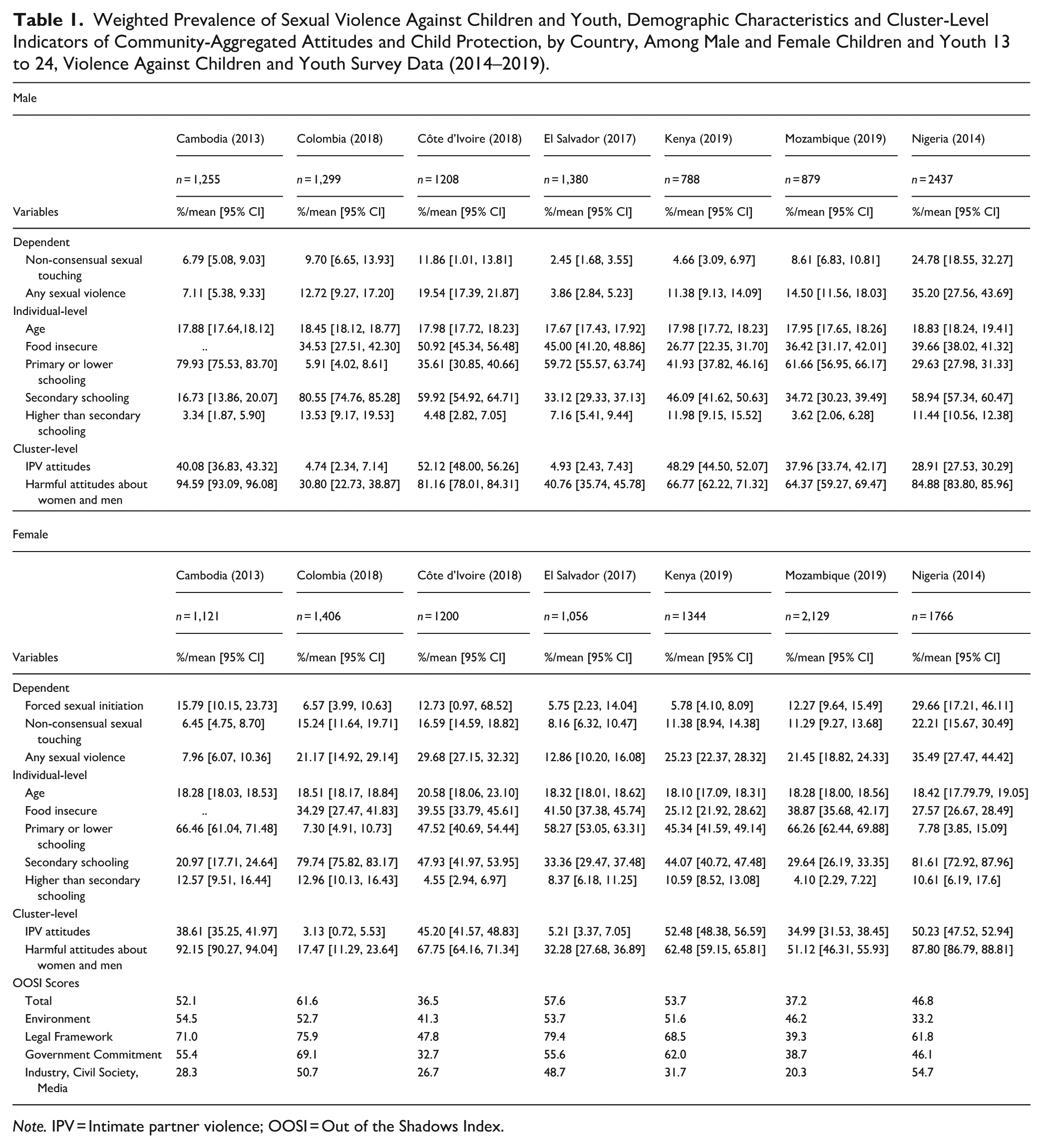
Note. IPV = Intimate partner violence; OOSI = Out of the Shadows Index.
As noted by others (Palermo et al., 2019), VACS include a few measures of the societal context. To capture societal indicators of child protection, we merged VACS data with the 2019 global OOSI. The 2019 global OOSI was a novel benchmarking index to evaluate and monitor how countries around the world prevented and responded to the threat of child sexual abuse and exploitation. Conducted across 60 countries, representing 85% of the global population under 19 years old, the index supports measurement and priority-setting for nations to address and achieve the UN Sustainable Development Goals pertaining to child protection (Economist Impact, n.d.). The 2019 Index contains 34 indicators, and 132 sub-indicators, of response and prevention of SV against children and youth organized across four domains: (1) Environment – the safety and stability of a country and extant social protection for children and their families; (2) Legal Framework – the extent to which a country provides legal protections for SV against children and youth; (3) Government and Commitment and Capacity – the investment and resourcing of national institutions and personnel to adequately respond to SV; and (4) Industry, Civil Society, and Media Engagement – the propensity of industry to engage in awareness building, support services, and risk reduction for SV. The 2019 iteration of the OOSI focused on responses to child sexual abuse and exploitation. In 2022, a second global iteration was published. Because of data availability at the time of analysis, this paper uses data from the 2019 Index (Economist Impact, n.d.). Data from the 2019 Index are available upon request. Economist Impact incorporated two validation exercises into the development of the 2019 Index. The first was through a data validation outreach to government stakeholders in each country. This provided an opportunity for governments to comment and provide feedback on questions in the index where the country did not receive credit, or where Economist Impact had a specific question. A country-specific data validation form was sent to a government contact in each country included in the index, and Economist Impact used their responses to reevaluate the scores. The second validation process was a series of civil society organization roundtables focused on core regions in the index, which brought together experts across relevant topic areas to review the data, discuss challenging indicators, and assess the accuracy of results. The index is designed as a tool to help stakeholders understand their country’s current response to sexual violence against children, identify priority areas for action, increase transparency and accountability, and track progress. See Supplemental Table 2 for details on domains and indicators of the 2019 Index. Unless specified, all data and measures described below derive from the VACS.
Measures
We examined three outcomes of lifetime SV against children and youth: forced sexual initiation (FSI), non-consensual sexual touching (NCST), and any SV. FSI is an intractable public health problem facing adolescent girls and young women worldwide, associated with other forms of child maltreatment and adverse health outcomes (Howard, 2021; Stockman et al., 2013; Swedo et al., 2019). FSI was measured as a first sexual experience in which the participant was pressured, tricked, threatened, physically forced, and/or unable to consent due to alcohol. This item was asked only among female participants who reported any sexual intercourse. A global lifetime SV measure captured any experience of NCST, attempted forced sex, physically forced sex, or pressured sex. All participants were asked the SV questions, irrespective of whether they reported having sexual intercourse. We also examined lifetime NCST separately, given that this type of sexual harassment is a common form of SV impacting youth in LMICs (Hardt et al., 2023). Lifetime NCST was measured as any experience in which anyone touched the respondent in a sexual way without their permission, but did not try to force them to have sex.
Two cluster-level indicators provided a proximate measure of community social norms: aggregated community attitudes supportive of intimate partner violence (IPV) and aggregated harmful community attitudes around women’s and men’s roles, status, and responsibilities in society. An individual-level binary variable captured whether respondents agreed that a husband can beat his wife under at least one condition of the following: if she goes out without telling him, neglects the children, argues with him, refuses to have sex with him, or burns the food. Responses were aggregated to the cluster level. A second binary variable measured whether children and youth endorsed at least one of the following attitudes: only men should decide when to have sex, if someone insults a boy/man, he should defend his reputation with force if need be, there are times when a woman should be beaten, women who carry condoms have sex with lot of men, and a woman should tolerate violence to keep her family together. An aggregated cluster-level measure reflected the cluster average response. All VACS questions on SV and cluster-level social norms were standard across countries, thus ensuring comparability across countries and reducing the risk of measurement bias in the multi-country data set.
For the OOSI, each country received an overall score, calculated from a weighted mean of the underlying indicator scores for each domain (Supplemental Table 2). The domains and indicator metrics were selected based on Economist Impact’s analysis and consultation with a panel of international experts on child sexual abuse and exploitation. Domain and indicator metrics were standardized across countries. All quantitative and qualitative data in the OOSI were reviewed and analyzed by the Economist Impact project team, working with in-country national experts and regional specialists. Following data collection, national governments were provided with an opportunity to review and validate their provided scores. OOSI scores were assigned to the cluster-level because of an inadequate number of countries for the three-level models. To account for the possibility of Type I error due to inflated statistical power, we used a conservative p-value of .01. Associations significant at the .05 level are noted in tables as trending and should be interpreted with caution.
Analysis
We calculated descriptive statistics taking into account survey weights, stratification, and the cluster sampling design of the VACS. We calculated the intra-class correlation (ICC) for each outcome, interpreted as the proportion of variance in the dependent variables that is observed at the cluster level (Luke, 2004). We ran bivariate fixed effects random intercept models for each individual and cluster-level indicator to assess non-adjusted associations for all covariates with each SV outcome. We then estimated sequential multivariable random coefficients models containing individual-level covariates, and sequential multivariable random intercepts models with cluster-level indicators. These models allowed us to systematically assess whether and how individual- and cluster-level indicators attenuated one another at each respective level and evaluate the potential for suppression effects or multicollinearity. Finally, we estimated final models for each SV outcome with cluster-level indicators, adjusting for individual-level age and schooling attainment (Equation 1).
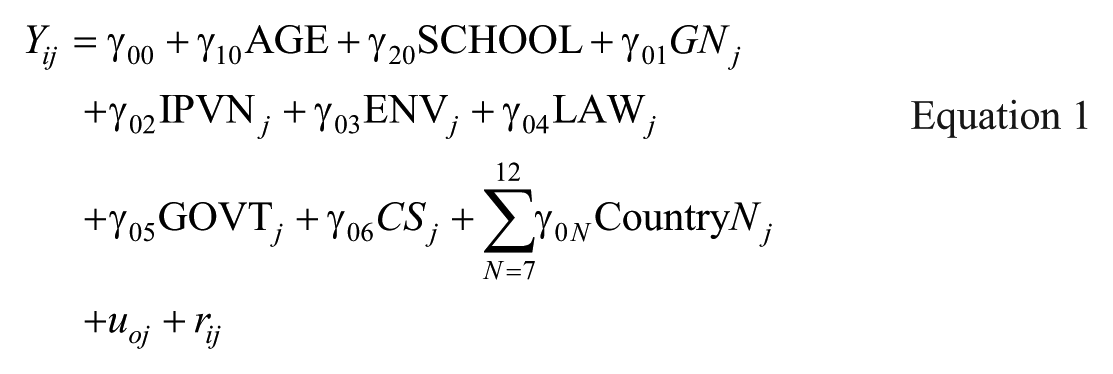
Where Y = FSI, NCST, or SV; AGE = age; SCHOOL = highest level of schooling attainment; GN = harmful community attitudes around women and men; IPVN = intimate partner violence attitudes; ENV = OOSI Environment Domain Score; LAW = OOSI Legal Domain Score; GOVT = OOSI Government Capacity Domain Score; and CS = OOSI Civil Society Domain Score
We also ran final models stratified by age groups: 13 to 17-year-olds and 18 to 24-year-olds. All models were estimated using full information maximum likelihood estimation and accounted for the VACS complex survey design. All models, other than null models, included country as a covariate to adjust for unobserved country-level confounders. We used Stata SE/17 for descriptive statistics and Mplus 8.8 for all other analyses. We used the STROBE cross-sectional reporting guidelines to ensure accuracy in reporting (von Elm, n.d.).
Results
Prevalence of SV against children and youth varied by country (Table 1). Prevalence of lifetime FSI among females ranged from 5.8% (El Salvador) to 30.0% (Nigeria). For males, the prevalence of lifetime non-consensual touching ranged from 2.5% (El Salvador) to 24.8% (Nigeria), whereas for females, prevalence ranged from 6.5% (Cambodia) to 22.2% (Nigeria). Any lifetime SV among females ranged from 7.7% (Cambodia) to 35.5% (Nigeria). For males, any lifetime SV ranged from 3.9% (El Salvador) to 35.2% (Nigeria).
Cluster-level indicators of aggregated community attitudes and national child protection systems varied by country (Table 1). National averages of cluster mean proportions of aggregated community attitudes supportive of IPV were lowest in Colombia (males: 4.7%; females: 3.1%) and highest in Kenya (males: 48.3%; females: 52.5%). Aggregate harmful community attitudes around women’s and men’s roles, status, and responsibilities in society were high across countries, except for Colombia and El Salvador, where national averages of cluster mean proportion of children and youth who endorsed at least one harmful attitude were below 50%. OOSI overall scores ranged from 36.5 (Côte d’Ivoire) to 61.6 (Colombia) out of a total of 100. Intra-class correlations among all SV outcomes were above .24, indicating that at least 24% of the variation in log odds of the outcome could be attributed to the cluster level and justifying application of multilevel modeling approaches (Table 2).
ICC for Sexual Violence Outcomes Among Female and Male Children and Youth Aged 13 to 24, Violence Against Children and Youth Survey Data (2014–2019).
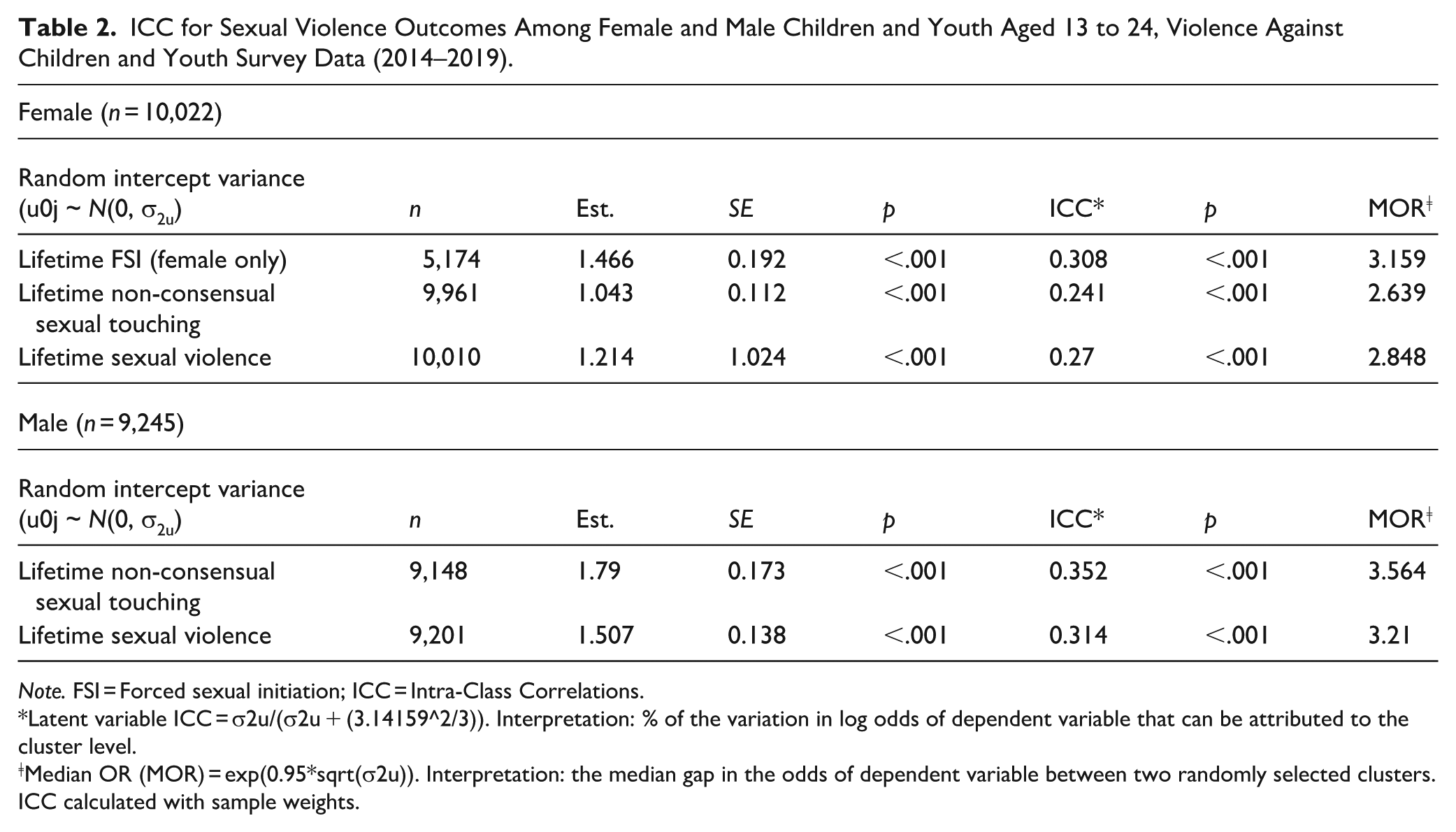
Note. FSI = Forced sexual initiation; ICC = Intra-Class Correlations.
Latent variable ICC = σ2u/(σ2u + (3.14159^2/3)). Interpretation: % of the variation in log odds of dependent variable that can be attributed to the cluster level.
Median OR (MOR) = exp(0.95*sqrt(σ2u)). Interpretation: the median gap in the odds of dependent variable between two randomly selected clusters. ICC calculated with sample weights.
Tables 3 and 4 present weighted adjusted odds ratios of multilevel logistic regression models for SV outcomes among young females and males, stratified by age. Among females, aggregated harmful community attitudes around women and men were significantly associated with FSI among all females aged 13 to 24 years (aOR = 4.43, p < .001) and females aged 18 to 24 years (aOR = 6.63, p < .001; Table 3). Aggregated community attitudes supportive of IPV were significantly associated with lifetime sexual violence among all females (aOR = 2.09, p < .001) and females 13 to 17 years old (aOR = 2.67, p =< .001). No other cluster-level indicators of aggregated community attitudes were associated with SV against female children and youth at the .01 level (Table 3). Among males, aggregated community attitudes supportive of IPV were significantly associated with increased exposure to lifetime NCST (males aged 13–24 years: aOR = 3.10, p < .001) and lifetime SV (males aged 13–24 years: aOR = 3.16, p < .001; Table 4). Among males, aggregated harmful community attitudes around women and men had similar positive associations with exposure to lifetime NCST (males aged 13–24 years: aOR = 2.86, p < .001) and lifetime SV (males aged 13–24 years: aOR = 2.70, p < .001; Table 4). Positive associations between community-aggregated attitudes and prevalence of SV outcomes among male youth were generally consistent when stratified by age (13–17 years and 18–24 years).
Adjusted Odds Ratios of Cluster-Level Indicators of Child Protective Environments and Community-Aggregated Attitudes for Lifetime Forced Sexual Initiation, Lifetime Non-Consensual Sexual Touching, and Lifetime Sexual Violence Among Young Females, Aged 13–24, Violence Against Children and Youth Survey Data (2014–2019).
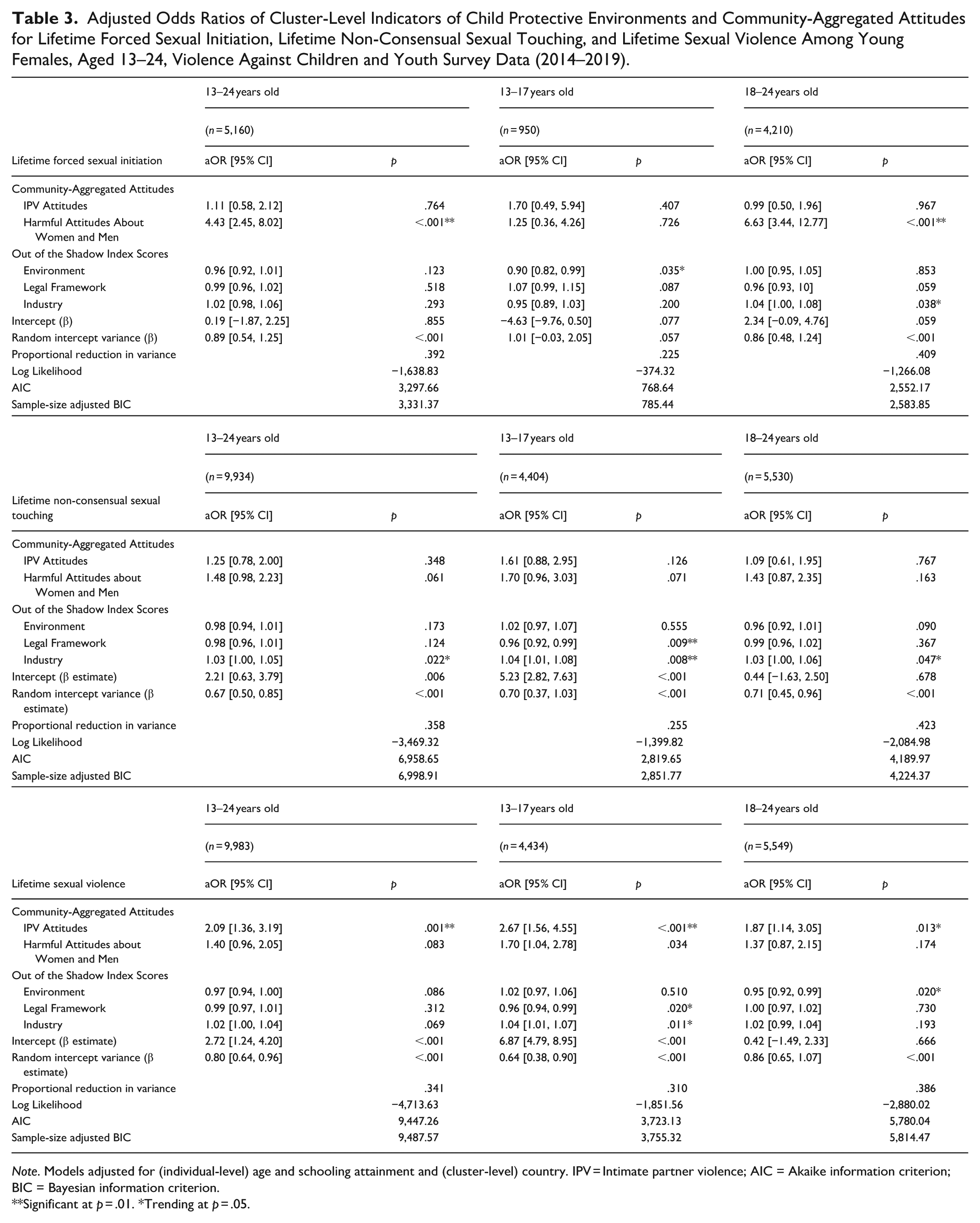
Note. Models adjusted for (individual-level) age and schooling attainment and (cluster-level) country. IPV = Intimate partner violence; AIC = Akaike information criterion; BIC = Bayesian information criterion.
Significant at p = .01. *Trending at p = .05.
Adjusted Odds Ratios of Cluster-Level Indicators of Child Protective Environments and Community-Aggregated Attitudes on Lifetime Non-Consensual Sexual Touching and Lifetime Sexual Violence Among Young Males, Aged 13 to 24, Violence Against Children and Youth Survey Data (2014–2019).
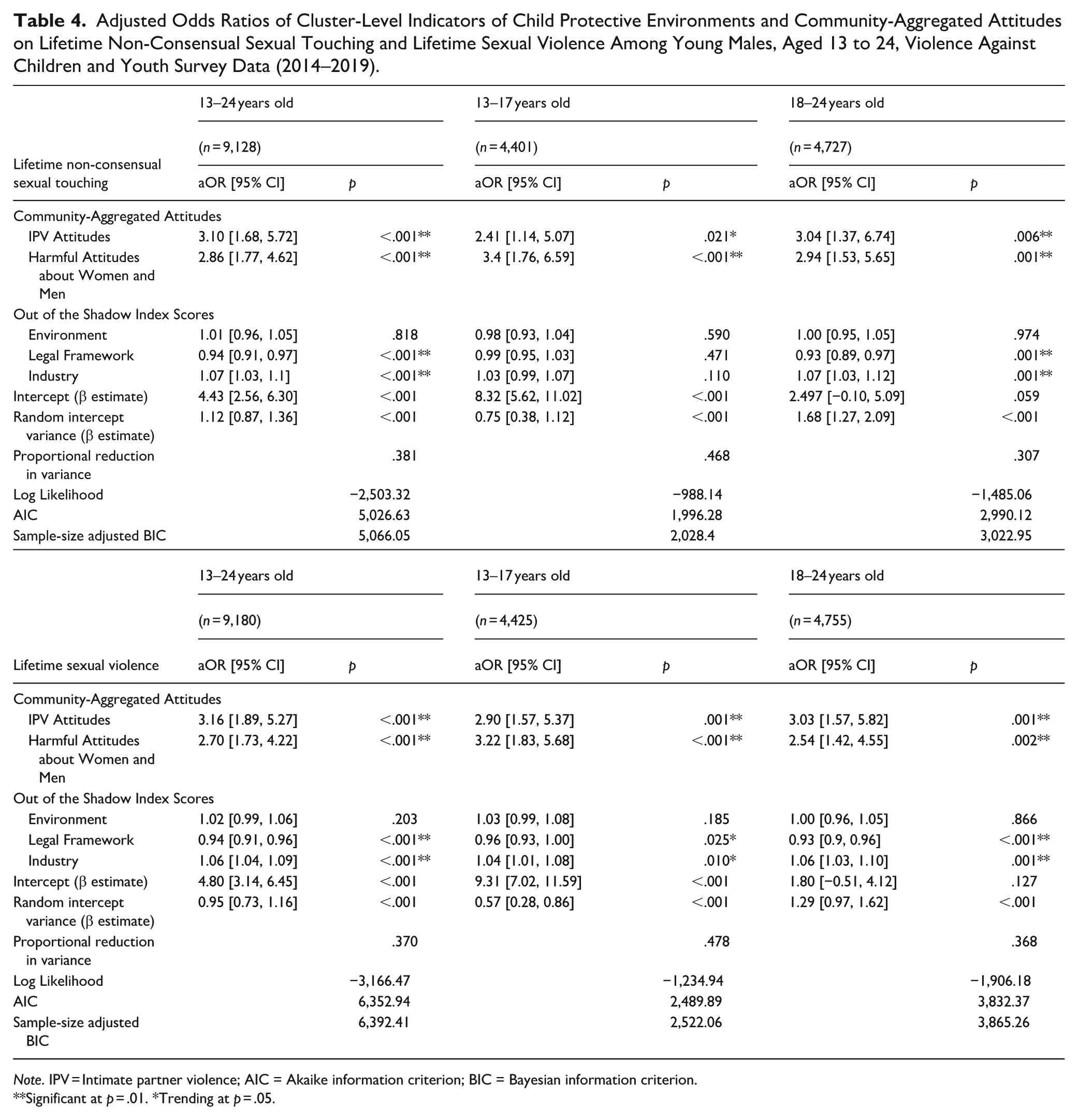
Note. IPV = Intimate partner violence; AIC = Akaike information criterion; BIC = Bayesian information criterion.
Significant at p = .01. *Trending at p = .05.
Results showed varied associations between OOSI domain scores and SV outcomes among male and female youth. The OOSI Legal Framework domain, capturing the presence of legal protections for children, was significantly associated with lower SV prevalence among all male youth and some female youth. Among males aged 13 to 24 years, a one-unit increase in the Legal Framework domain index score was associated with a 6% reduction in both lifetime NCST and lifetime SV (p < .001 for both). When stratified by age, results were consistent among male youth aged 18 to 24. Among females, the Legal Framework domain index score was negatively associated with prevalence of lifetime NCST among females aged 13 to 17 years (aOR = 0.96, p = .009). The Legal Framework domain index score was not significantly associated with any SV outcome among females when age groups were combined.
Unexpectedly, for both male and female youth, OOSI domain scores for Industry, Civil Society, and Media Engagement were associated with a higher prevalence of SV. Among females aged 13 to 17 years, a one-unit increase in the Industry, Civil Society, and Media Engagement domain index score was associated with a 4% higher prevalence of lifetime NCST (p = .008). Among male youth, the Industry, Civil Society, and Media Engagement domain index score was positively associated with both SV outcomes among those 13 to 24 years and remained significantly when stratified by age group.
Discussion
The present study demonstrates how community-aggregated attitudes and national policies, programs, and processes have the potential to influence SV risk among children and youth in LMICs. The results underscore the relevance and importance of ecological frameworks of child development and protection, which take into account contextual and societal factors, alongside those at the individual, interpersonal, and household levels (Belsky, 1980; Bronfenbrenner, 1994). In this exploratory study, we integrate the OOSI, a novel measure of national child protection efforts, with nationally representative, comparable VACS data on SV against children and youth in seven LMICs. We observe considerable variability in the prevalence of multiple forms of SV against male and female youth, as well as variability in aggregated community attitudes and national child protection systems in the seven countries. For example, we observe low endorsement of attitudes supportive of IPV in Colombia and El Salvador compared to other countries. The between-country differences in male and female attitudes toward IPV are consistent with other multi-country data on IPV attitudes. For example, Lansford et al. (2020) found considerable variability in percentages of women and men who justified IPV across 21 LMICs, as well as in-country differences between women’s and men’s attitudes, using data from UNICEF’s Multiple Indicator Surveys. Differences in endorsement of harmful norms between male and female participants – alongside ample global evidence of the connection between harmful norms and violence victimization and perpetration – suggest the need for tailored interventions working with both women and girls, and men and boys to shift community attitudes (Ligiero et al., 2019).
We also observe that OOSI scores for each domain varied across countries: Cambodia held the highest score with respect to social protections and protective demographic characteristics (Environment domain), yet scored relatively low with respect to industry, media, and civil society engagement on SV issues. Among countries used for the present analysis, El Salvador and Colombia scored highest with respect to protective legal frameworks in place, yet notably represented the lower and higher end, respectively, of OOSI scores among all Latin American and Caribbean countries included in the OOSI (Child Rights International Network, 2023). In sum, this country-level variability in SV prevalence, community attitudes, and OOSI scores further illustrates how each country hosts a unique landscape with respect to child protection and violence prevention, and emphasizes the importance of having national data and prioritizing country-tailored, evidence-based strategies to address the problem of SV against children (Chiang et al., 2024; Cravero et al., 2022).
We find that the presence of legal and regulatory frameworks to protect children is associated with a lower risk of SV in LMICs. These results are consistent with global evidence that national laws promoting youth protection can reduce the prevalence of violence (Maxwell et al., 2022). In their multi-level analysis of 15 LMICs, Maxwell et al. observed how the presence of national laws against marital rape, child marriage, and sexual harassment was associated with reductions in the prevalence of SV among women and girls (Maxwell et al., 2022). In Kenya, repeated VACS between 2010 and 2019 captured declines in lifetime violence prevalence among both male and female youth. Although not empirically established, it was suggested that increased violence prevention programming and the implementation of child-supportive laws and policies in the interim period between studies may have contributed, in part, to these declines (Annor et al., 2022). Overall, the results underscore how laws to promote children’s rights, prevent and respond to violence against children, and enhance child development and wellbeing can play a central role in protecting children and youth from SV (World Health Organization, 2016).
Conversely, we find that aggregated harmful community attitudes around women’s and men’s roles, responsibilities, and status are associated with increased risk of SV in LMICs. Overall, for females, we observed some variation by outcome and age: we found significant associations between harmful community attitudes and FSI for all females and older females, and significant associations between harmful community attitudes around IPV and lifetime SV for all females, irrespective of age. We did not find any significant associations between harmful community attitudes and NCST. However, for males, we observed consistent and significant associations between all aggregated community attitudes measures and both NCST and lifetime SV. Studies in other LMICs find that harmful community norms increase the risk of SV and other forms of violence against adolescent girls and young women (Buller et al., 2020; Clark et al., 2018; Lansford et al., 2020; Vanderende et al., 2012). Our study extends this evidence, illustrating how aggregated harmful community attitudes have adverse consequences for male, as well as female, youth. In particular, these aggregated attitudinal measures are associated with increased risk of all SV outcomes among male youth. Global evidence shows how harmful social norms burden both male and female children and how the impact of these social norms starts early in adolescence (Blum et al., 2017; World Health Organization, 2016). The results of the present study point to the need for further focus on opportunities for broad-based violence prevention that are inclusive of girls and boys. For example, evidence-based interventions that promote positive social norm change in communities have been found to be effective in reducing risk for sexual violence (Abramsky et al., 2014) and can have positive downstream effects on all children by shifting norms and attitudes to protect against child sexual exploitation and abuse against male and female youth.
Unexpected positive associations were observed between the Industry, Civil Society, and Media Engagement domain of the OOSI and some SV outcomes. We propose two possible hypotheses. First, society-wide initiatives to increase visibility of and response to SV against children and youth, such as public educational initiatives, awareness-raising campaigns, or provision of therapeutic care to survivors of violence, may result in greater awareness and decreased sensitivity, shame, or sense of culpability associated with experiences of SV (Alaggia et al., 2019), which in turn may improve reporting. Further, social action to address SV against children may take time to affect prevalence rates. The presence of civil society engagement on the front lines to respond to SV among children and youth signals awareness and energy dedicated to a recognized issue and thus may be more robust and responsive in geographic areas where SV is higher, or at least, less invisible. Yet any protective effects of civil society action may take longer to observe. These explanations are speculative. While civil society mobilization is associated with lower prevalence of violence against adult women (Weldon & Htun, 2013), further research is needed to explore the processes through which civil society, media engagement, and industry leadership may prevent SV against children.
Limitations
This study has several limitations. The VACS and OOSI are both cross-sectional data sources, and so, temporal effects of contextual factors on SV prevalence cannot be established. The slight temporal misalignment of OOSI data and dates of VACS data collection is a limitation. However, with the exceptions of Cambodia and Nigeria, all VACS were conducted within 2 years of the 2019 OOSI scores, thus ensuring relatively close temporality of VACS and OOSI data. The inclusion of Cambodia and Nigeria ensured greater geographic diversity of the sample. Further, national systems and structures – as measured by the OOSI – are slow to change, and we anticipated that the OOSI snapshot would still be generally reflective of prior years when data were collected for the Cambodia (2013) and Nigeria (2014) VACS.
Second, the number of mean completed interviews per cluster was less than 15, and male and female EAs were separated. Thus, aggregate proxy measures of community-level norms (aggregated attitudes) capture only a small and sex-segregated subset of the attitudes of the broader community. Small cluster sizes can also contribute to the potential for inflation of odds ratios in adjusted models.
Third, the OOSI domains include only the presence of various laws and policies regarding child safety from sexual violence. The domains do not capture the effectiveness of implementation, which can influence the extent to which the presence of a law or policy leads to meaningful protections in children’s lives. In this sense, variability in the impact of laws or policies at sub-national levels may be influencing the associations we observe in the present analysis. Further research on the state of law and policy implementation at sub-national levels could be valuable to further understand how macro-level structures and cultures influence efforts to prevent and respond to sexual violence against children.
Finally, only seven countries had available VACS and OOSI data. There are two notable consequences of this limitation. One, the included countries may systematically differ from other LMICs insofar as the presence of VACS data signals national prioritization of violence against children prevention efforts, thereby limiting the generalizability of these findings to all LMICs. Second, we had inadequate n to model a third (national) level. To accommodate this limitation, we modeled the national OOSI scores at the cluster level. Assigning the national OOSI scores to the cluster-level could unduly increase statistical power. However, even after limiting models to a conservative significance level (p = .01), most models attained statistical significance. We note in the tables where estimates do not attain a conservative significance level of p = .01, and therefore may be interpreted with caution as trending. Assigning OOSI scores to the cluster-level also increases risk of ecological fallacy, whereby a national-level measure is used to explain phenomena at the local level, where it may or may not be relevant. However, we theorized that even while OOSI scores are not directly derived from the cluster-level, the national context of child protection laws, policies, resources, and processes would continue to be relevant and salient in these more localized contexts, albeit likely with some local variation in legal norms and implementation practices, which are beyond the scope of these data. Given the limitations of the available data, this is considered an exploratory analysis of these associations. In the future, as more countries implement VACS or similar surveys, we encourage replication of this analysis applying a three-level approach (individual, cluster, and national) to mitigate potential methodological challenges and further advance evidence on the role of contextual factors on SV prevalence among youth. Future replication can also provide continued monitoring on the relationship between national child protection and violence indicators and track country progress in attaining the Sustainable Development Goals.
Conclusion
Societal context matters to prevent SV against children and youth. This exploratory study on contextual factors associated with SV against male and female youth in LMICs found that harmful community attitudes were associated with a higher prevalence of SV, and legal frameworks were associated with a lower prevalence of SV among young people. National policies and programs that address factors at higher levels of the social ecology – such as those geared toward positive social norm change and protective legislation – may have the potential to help prevent SV among children and youth in LMICs.
Supplemental Material
sj-docx-1-jiv-10.1177_08862605261444006 – Supplemental material for Cross-Sectional Analysis of Contextual Factors Associated With Sexual Violence Against Children and Youth in Low- and Middle-Income Countries
Supplemental material, sj-docx-1-jiv-10.1177_08862605261444006 for Cross-Sectional Analysis of Contextual Factors Associated With Sexual Violence Against Children and Youth in Low- and Middle-Income Countries by Stephanie Spaid Miedema, Muloongo Simuzingili, Francis B. Annor, Katherine Stewart, Araceli Irurzun Pérez, Regine Haardörfer, Laura Avery and Greta M. Massetti in Journal of Interpersonal Violence
Supplemental Material
sj-docx-2-jiv-10.1177_08862605261444006 – Supplemental material for Cross-Sectional Analysis of Contextual Factors Associated With Sexual Violence Against Children and Youth in Low- and Middle-Income Countries
Supplemental material, sj-docx-2-jiv-10.1177_08862605261444006 for Cross-Sectional Analysis of Contextual Factors Associated With Sexual Violence Against Children and Youth in Low- and Middle-Income Countries by Stephanie Spaid Miedema, Muloongo Simuzingili, Francis B. Annor, Katherine Stewart, Araceli Irurzun Pérez, Regine Haardörfer, Laura Avery and Greta M. Massetti in Journal of Interpersonal Violence
Footnotes
Acknowledgements
The authors gratefully acknowledge Dr. Yuk Fai Cheong and Dr. Allison Tracy for their thoughtful reviews of our manuscript. We also extend our gratitude to the thousands of girls and boys, and young women and men, who shared their life experiences as part of the VACS in Cambodia, Colombia, Côte d’Ivoire, El Salvador, Kenya, Mozambique, and Nigeria. Results of this analysis were presented at the 2023 Society for Prevention Research Annual Conference, Washington, D.C.
Author Note
The findings and conclusions in this report are those of the authors and do not necessarily represent the official position of the Centers for Disease Control and Prevention. Violence Against Children and Youth Survey (VACS) data are owned by the Governments of Cambodia, Colombia, Côte d’Ivoire, El Salvador, Kenya, Mozambique, and Nigeria and made available by the Centers for Disease Control and Prevention through a Data Use Agreement. While every effort has been taken to verify the accuracy of the Out of the Shadows Index data, Economist Impact cannot accept any responsibility or liability for reliance by any person on the data or any of the information or conclusions set out in this manuscript. The findings and views expressed in the manuscript do not necessarily reflect the views of Economist Impact or the sponsor of the Index.

Ethical Considerations
The VACS involve human participants. All VACS are approved by the Institutional Review Board of the Centers for Disease Control and Prevention and institutional review boards in each VACS country.
• Cambodia: U.S. Centers for Disease Control and Prevention IRB Protocol #6372 and National Ethics Committee for Health Research by the National Institute of Statistics, Ministry of Planning (Cambodia)
• Colombia: U.S. Centers for Disease Control and Prevention IRB Protocol #7012 and Ethics and Research Methods Committee of the National Institute of Health (Colombia)
• Côte d’Ivoire: U.S. Centers for Disease Control and Prevention IRB Protocol #6538 and National Research Ethics Committee (Côte d’Ivoire)
• El Salvador: U.S. Centers for Disease Control and Prevention IRB Protocol #7012 and National Ethics Committee on Research in Health of El Salvador (El Salvador)
• Kenya: U.S. Centers for Disease Control and Prevention IRB Protocol #6538 and Kenyatta National Hospital/University of Nairobi Ethics Review Committee (Kenya)
• Mozambique: U.S. Centers for Disease Control and Prevention IRB Protocol #6538 and National Bioethics Committee for Health of Mozambique (Mozambique)
• Nigeria: U.S. Centers for Disease Control and Prevention IRB Protocol #6538 and National Health Ethics Research Committee, National Ministry of Health (Nigeria).
No ethics approval was needed for the 2019 Out of the Shadows Index as this data source did not involve human participants.
Consent to Participate
All VACS participants completed informed written consent procedures prior to participation in the survey administration.
Funding
The authors received no financial support for the research and/or authorship of this article.
Declaration of Conflicting Interests
The authors declared no potential conflicts of interests with respect to the authorship and/or publication of this article.
Data Availability Statement
Supplemental Material
Supplemental material for this article is available online.
Notes
Author Biographies
References
Supplementary Material
Please find the following supplemental material available below.
For Open Access articles published under a Creative Commons License, all supplemental material carries the same license as the article it is associated with.
For non-Open Access articles published, all supplemental material carries a non-exclusive license, and permission requests for re-use of supplemental material or any part of supplemental material shall be sent directly to the copyright owner as specified in the copyright notice associated with the article.
