






Abstract
Intimate partner violence is a widespread social problem with severe consequences for victims. While most research has focused on unidirectional violence, evidence shows that bidirectional violence (BV) is the most common form within intimate relationships. Its recognition, however, is often limited by gender stereotypes that portray women exclusively as victims and men as perpetrators. This study aimed to examine whether university students’ judgments about BV varied according to the proportion of violence, the type of violence, and the initiator of violence, using three immersive virtual reality (VR) scenarios. A total of 162 university students were randomly assigned to view one of the scenarios and subsequently completed a questionnaire. Results showed that physical violence was perceived as more severe than psychological violence, “female-dominated” violence was judged more severely than “male-dominated,” and women were judged more harshly when initiating conflict. No gender differences were found in judgments of responsibility, seriousness, or injury severity in the “male domination” scenario. These findings suggest that prevention and intervention strategies should move beyond gender-based assumptions, adopting inclusive approaches that address all victims’ experiences and challenge prevailing gender stereotypes.
Keywords
Introduction
Intimate partner violence (IPV) refers to the use of physical (e.g., hitting and pushing), psychological (e.g., insulting and intimidating), and sexual violence (e.g., forcing someone to have sex), stalking, and various forms of controlling a partner’s behavior (e.g., economic deprivation and isolation; Laskey et al., 2019; World Health Organization [WHO], 2021). IPV is a serious public health problem with substantial consequences for victims, families, and society (WHO, 2021). It affects individuals of all genders, ages, and backgrounds (Laskey et al., 2019; WHO, 2021). Despite its widespread recognition, how IPV is conceptualized has evolved over time.
Historically, IPV has predominantly been conceptualized as a unidirectional phenomenon, characterized by male-perpetrated violence against women (e.g., see Bates et al., 2017 for discussion). This gendered framework positions IPV exclusively within the context of men’s violence toward women, interpreting it as an expression of patriarchal structures and sociocultural norms that legitimize men’s use of violence as a means of exerting power and control over their female partners (Machado et al., 2018; Tran et al., 2016). While this approach has been instrumental in highlighting the role of gender inequality in the perpetuation of IPV, it presents notable limitations. Specifically, it neglects empirical evidence indicating that men can also be victims of IPV (Office for National Statistics, 2024) and the occurrence of IPV in same-sex relationships (Laskey et al., 2019). Furthermore, this gendered perspective overlooks the substantial body of research documenting that bidirectional violence is highly prevalent (Laskey et al., 2019; Mennicke & Wilke, 2015) and fails to acknowledge its adverse consequences and risks (Bates, 2016).
BV is defined as a pattern of IPV in which both members of an intimate partnership engage in perpetration and victimization of aggressive behaviors (e.g., physical, verbal, emotional, sexual, or controlling acts) within the same relationship, regardless of whether such behaviors occur symmetrically or simultaneously (Machado et al., under review). This pattern of violence negatively impacts the couple and their immediate environment, including children who may witness or experience violence (Langhinrichsen-Rohling et al., 2012; Miller & McCaw, 2019). Despite its relevance, BV remains less studied and less clearly understood than unidirectional IPV.
A systematic review by Langhinrichsen-Rohling et al. (2012) found that BV was the most commonly experienced form of IPV (59.6%). Similarly, a recent systematic review reported global BV prevalence rates ranging from 2% to 98.4%, with psychological BV being the most prevalent (Machado et al., 2023). Another review of 64 empirical studies conducted between 2012 and 2022 estimated the average BV prevalence at 52.8%, also noting that unidirectional IPV perpetrated by women against men occurred more frequently than the reverse (31.4% vs. 16.9%, respectively; Lysova et al., 2024). In Portugal, BV prevalence among men ranges from 59.8% to 60.3% (Machado et al., 2019), and in heterosexual couples, it accounts for 89.1% of IPV cases, compared to 84.1% in same-sex couples (Capinha et al., 2022). Regarding university students, BV was also the most common pattern of violence in the past year (Santiago et al., 2025). These findings highlight that BV is not a marginal phenomenon, but rather a central pattern of IPV that requires further investigation.
Understanding BV also requires examining how such dynamics are perceived. Gender stereotypes play a critical role in shaping how IPV, both unidirectional and bidirectional, is perceived and addressed. For example, stereotypical gender norms make it particularly difficult for male victims to recognize and label their experiences, as “victim” identity often conflicts with socially constructed notions of masculinity (Bates, 2019; Bates et al., 2018; Hine et al., 2020; Machado, Hines, et al., 2016). Gender stereotypes also influence external judgments about perpetrators and victims, with factors such as perceived seriousness, responsibility, and the legitimacy of self-defense varying according to the gender of the actor, the type of violence employed, and the gender of the responder (Ahmed et al., 2024; Kuijpers et al., 2017; Mclennan et al., 2025, Mennicke & Wilke, 2015; Pu et al., 2021; Sorenson & Taylor, 2005).
Importantly, these biases may be even more pronounced in the context of bidirectional violence, where traditional victim–perpetrator roles are blurred (Sorenson & Taylor, 2005). Among these, gender stereotypes play a particularly influential role, as they intersect with cultural norms and societal expectations to shape judgments of severity, responsibility, and blame.
Research consistently demonstrates that IPV scenarios involving male perpetrators and female victims are perceived as more serious, more violent, and more deserving of criminal justice intervention than cases involving female perpetrators and male victims (Bates, 2016, 2019; Hine et al., 2020; Kuijpers et al., 2017; Pu et al., 2021; Russell & Kraus, 2016). In such cases, greater responsibility and dislike are attributed to male perpetrators, reflecting dominant cultural narratives that associate masculinity with aggression and femininity with vulnerability (Bates, 2016; Koenig & Eagly, 2014; Kuijpers et al., 2017). Female-perpetrated IPV, by contrast, is often minimized, explained as self-defense, or judged as less harmful (Ahmed et al., 2024; Bates, 2016, 2019; Bates et al., 2018; Cox et al., 2022; Hine et al., 2020; Machado, Santos, et al., 2016), despite evidence that women may perpetrate IPV at similar rates than men and that the physical and psychological consequences for male victims can be equally severe (Bates, 2019; Hine et al., 2020; Langhinrichsen-Rohling et al., 2012).
These gendered double standards can be traced to broader societal beliefs that men are strong, independent, and capable of self-protection, whereas women are fragile and in need of safeguarding (Bates, 2019). Such stereotypes hinder the recognition of male victimization, often contributing to shame, fear, and reluctance among men to seek support (Langhinrichsen-Rohling & Capaldi, 2012; Machado, Hines, et al., 2016; Russell, 2017). Service providers may also discount or downplay men’s experiences, thereby reinforcing barriers to help-seeking (Bates et al., 2018; Machado, Hines, et al., 2016). These dynamics have tangible consequences: female perpetrators tend to receive lighter convictions, while legal action is more often pursued when the victim is female (Cox et al., 2022; Hine et al., 2020). This distinction is particularly relevant when examining how different patterns of violence are evaluated within BV scenarios.
In addition, physical and sexual IPV are generally judged more harshly than psychological abuse, which is frequently minimized or overlooked (McLennan et al., 2025; Wagers et al., 2021; Wilson & Smirles, 2022). Psychological abuse is often considered less severe because its damage is less visible, and cultural norms may further downplay its seriousness (Capezza & Arriaga, 2008; Rhodes et al., 2018). Yet, psychological IPV can have enduring and debilitating effects on victims’ mental health, highlighting a disconnect between actual harm and public perceptions (McLennan et al., 2025).
Perceptions are further complicated in cases of BV. Evidence suggests that respondents often perceive BV as less severe, assigning lower offender risk, diminished harm to victims, and greater victim responsibility (Ahmed et al., 2024). These perceptions perpetuate harmful stereotypes by obscuring the seriousness of IPV when it does not conform to the traditional male-perpetrator/female-victim model, thereby marginalizing “non-typical” victims. However, these findings remain limited, particularly in terms of how multiple characteristics of violence interact to shape these perceptions.
The respondents’ own characteristics, particularly gender, add further complexity. Some studies suggest that male respondents tend to be more tolerant of IPV, attribute more blame to victims, and perceive less need for intervention than female respondents (Kuijpers et al., 2017; Yamawaki et al., 2012). Others report that female respondents attribute greater blame to perpetrators (Hamby & Jackson, 2010), while still others find that women may justify IPV under certain circumstances more than men (Waltermaurer, 2012). However, a recent meta-analysis of 12 studies revealed that men often perceived IPV as less severe than women (Badenes-Sastre et al., 2024). These findings suggest that gender interacts with broader gender stereotypes to shape IPV perceptions.
Taken together, the evidence underscores the pervasive influence of gender stereotypes on how IPV is recognized, interpreted, and acted upon. Prevention and intervention efforts that rely exclusively on traditional gender narratives—framing IPV as primarily male-perpetrated and female-experienced—risk excluding large groups of victims and overlooking female perpetrators (Bates et al., 2018; Hine et al., 2020). Addressing these biases requires challenging rigid gender stereotypes and developing inclusive IPV strategies that cover nonphysical forms of IPV and account for the complexities of BV, ensuring all victims have access to adequate support and legal protection. From a prevention standpoint, greater insight into these perceptions is crucial, as they directly shape reporting and help-seeking behaviors (Kuijpers et al., 2017). Despite this, there is still limited research examining these processes specifically in BV contexts, particularly when multiple characteristics of violence (e.g., proportion, type, and initiator) are considered simultaneously.
To address these limitations, virtual reality (VR) offers a unique opportunity to investigate those perceptions. VR allows participants to interact with immersive, 360º scenarios from a first-person perspective, fostering a sense of presence and realism (Gonzalez-Liencres et al., 2020; Rueda & Lara, 2020; Seinfeld et al., 2021). This technology enables participants to experience events through the eyes of another person, potentially increasing empathy and enhancing the realism of responses (Bloch, 2021). In IPV research, VR can simulate violent episodes, enabling perpetrators to adopt the victim’s perspective and better understand the consequences of their actions (de Borst et al., 2020; Seinfeld et al., 2018). It also allows researchers to present participants with standardized, controlled scenarios for assessing perceptions and judgments. Therefore, VR represents a valuable methodological tool for examining perceptions of IPV in more realistic and controlled contexts, particularly in complex scenarios such as BV.
Present Study
Despite the high prevalence of BV in various populations (Capinha et al., 2022; Hine et al., 2020; Langhinrichsen-Rohling et al., 2012; Lysova et al., 2024; Machado et al., 2023), including university students (Rodriguez et al., 2022; Santiago et al., 2025), few studies have examined how gender stereotypes influence perceptions of BV. Indeed, to our knowledge, only a small number of prior studies have explored this intersection using traditional vignette methods (Ahmed et al., 2024; Hine et al., 2020). Hine et al. (2020) found that participants often misidentified victims and perpetrators based on gendered assumptions, judged female-perpetrated violence as less severe, and were less likely to recommend formal intervention when the victim was male. In Ahmed et al.’s (2024) study, participants tend to perceive lower offender risk, lower physical and psychological harm to the victim, and higher victim responsibility when violence was bidirectional.
Building on these findings, the present study aimed to partially replicate and extend Hine et al.’s (2020) study using immersive VR scenarios to examine how university students perceive different forms of BV. We consider this a partial replication because the study retains the central design logic and variables of Hine et al. (2020) but introduces a methodological innovation: the use of VR instead of traditional text-based vignettes. This extension aimed to increase ecological validity and participant immersion, thereby advancing the study of BV perceptions. This immersive approach enabled participants to respond to realistic but ethically safe situations, while ensuring standardization across all participants.
Participants were exposed to one of three scenarios depicting different configurations of BV. Within these scenarios, characteristics such as the proportion of violence (male domination, female domination, equal domination), the type of violence (physical vs. psychological), and the initiator of violence (male vs. female) varied. Accordingly, we examined whether participants’ judgments differed across these scenario characteristics, as well as according to participants’ gender. Based on prior literature, we hypothesized that scenarios involving male-dominated violence would be associated with greater attributions of responsibility and higher perceived injury severity than scenarios involving female-dominated or equally dominated violence. We also expected physical violence to be judged more harshly than psychological violence, with participants attributing greater responsibility and perceiving more severe injuries in scenarios involving physical aggression. In addition, we hypothesized that participants would attribute less responsibility and perceive less severe injuries when women initiated the violence, and greater responsibility and injury severity when men initiated the violence. Finally, we expected participants’ gender to influence these judgments.
Methodology
Participants
Participants were recruited based on the following inclusion criteria: (1) being 18 years of age or older; (2) being fluent in both written and spoken Portuguese; and (3) being a university student [at Lusofona University]. These criteria were selected to ensure that all participants were adults capable of providing informed consent, able to fully understand and engage with the study materials in Portuguese, and representative of the population of interest to the research question. University students were targeted because they represent a relevant at-risk group for BV in intimate relationships, and because the study aimed to replicate the methodology of Hine et al. (2020), which also focused on a student sample. In addition, the accessibility of this group facilitated the application of immersive VR procedures within the available ethical and logistical constraints.
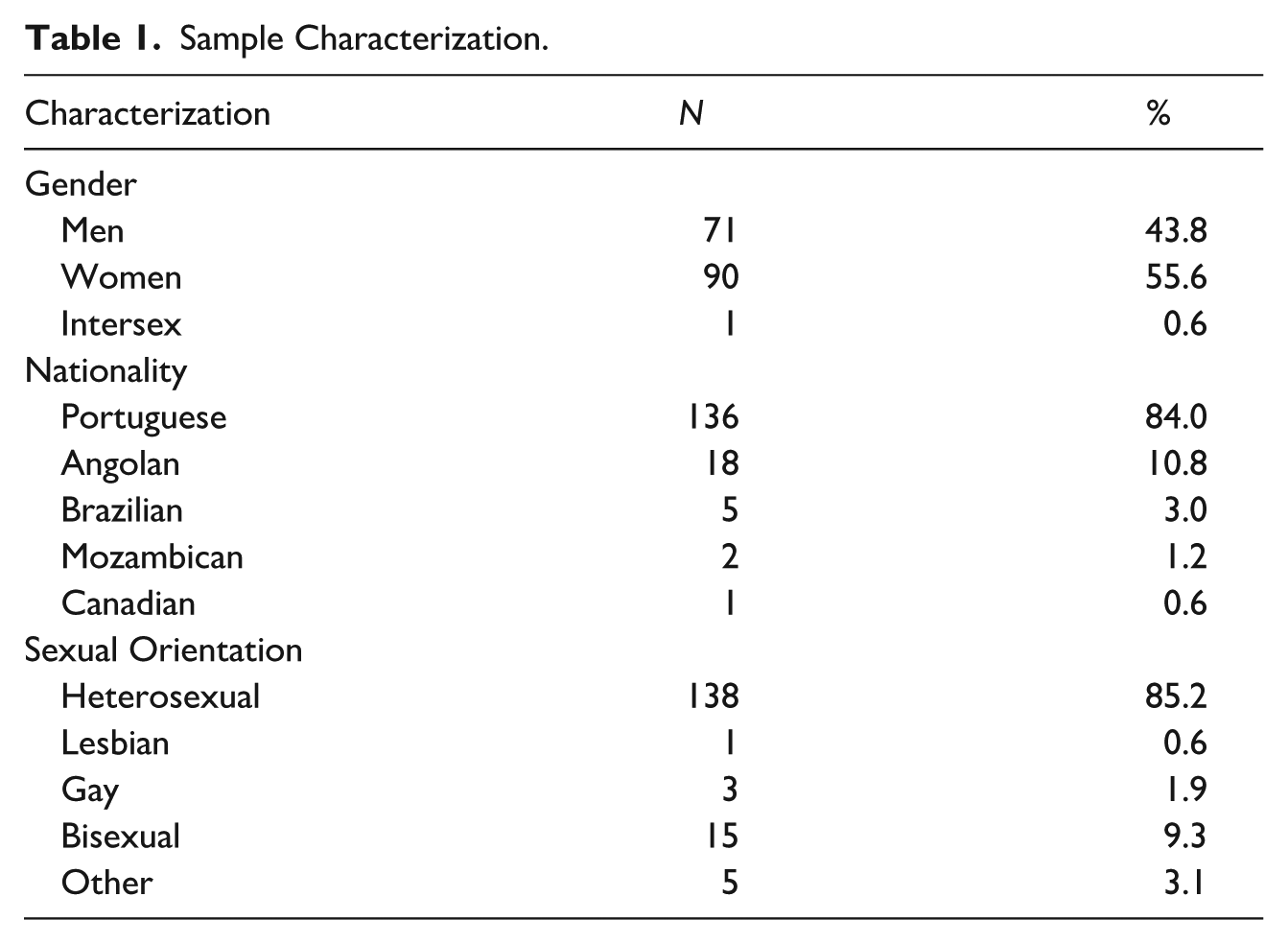
The sample included 162 participants (71 men, 90 women, and 1 intersex), aged between 18 and 57 years (M = 23.41; SD = 6.145). Of the 162 participants, 136 had Portuguese nationality. Regarding the sexual orientation of participants, 138 were heterosexual. Sociodemographic data are presented in Table 1. The participant who identified as intersex was excluded from the statistical analyses due to being the only case in this category.
Sample Characterization.
Instruments
The instruments used in this study were a sociodemographic questionnaire, three VR experiences, and a questionnaire administered after exposure to the VR experience.
The sociodemographic questionnaire consisted of both closed- and open-ended questions designed to collect information on participants’ demographic variables (e.g., age, gender, sexual orientation, nationality, and academic qualifications).
The three VR experiences were based on the vignettes used in the study by Hine et al. (2020). These vignettes were translated into Portuguese and then transformed into VR scenarios using the Unity game engine to create immersive environments. All these processes were supervised and double-checked by the researchers. Each VR experience presented an incident of violence between a heterosexual couple. Two actors played these roles in the university motion capture lab equipped with a MOCAP Vicon system, where their movements were captured, transferred to 3D avatars, and integrated into the Unity 3D digital environment (see Supplemental Material, Figures S1–S4). The 3D avatars were modeled using the Character Creator software (Reallusion).
Each scenario represented a different configuration of bidirectional violence. In the “male domination” condition (i.e., the man perpetrates three acts of violence, and the woman perpetrates one act), “female domination” condition (i.e., the woman perpetrates three acts of violence, and the man perpetrates one act), and “equal-domination” condition (i.e., each member of the couple perpetrates and is the victim of three acts of violence). Each participant was immersed into the Unity VR scenario, in a seated position, and faced the narrative situations represented by the characters of Kelly and Mark with VR glasses (Oculus Quest 2). The types of violence varied through the direct exchange of acts of physical violence versus psychological violence. The interaction varied according to who started the violence (i.e., man or woman). Two VR experiences depicted episodes of physical violence, and one VR experience depicted psychological violence. The three factors considered in this study were: the type of violence (physical and psychological violence), the proportion of perpetration and victimization (“male domination,” “female domination,” and “equal domination”), and who initiated violence (man or woman).
Importantly, the three variables of interest (proportion of violence, type of violence, and initiator) were not independently manipulated. Instead, each scenario represented a fixed combination of these characteristics. Specifically, the male dominance scenario depicted primarily psychological violence initiated by the male partner, whereas the female dominance and equal dominance scenarios depicted physical violence initiated by the female partner. Thus, comparisons across variables should be interpreted with caution, as these factors are confounded within each scenario.
The scenarios shared a common narrative structure. The couple (Kelly, 26 years old; Mark, 27 years old) is portrayed with matched height and weight (≈1.78 m, ≈80 kg) to control for visual cues. The triggering event is identical in all conditions: Kelly returns home late after working overtime to meet a deadline, and Mark questions her about where she has been, implying possible infidelity. In the “male domination/male initiator” scenario, the conflict escalates through repeated verbal accusations and insults by Mark, without physical contact. In the “female domination/female initiator” scenario, Kelly begins with a slap, Mark responds by grabbing her arm (leaving a mark), and Kelly scratches him and throws a glass before retreating. In the “equal-domination/female initiator” scenario, Kelly initiates with a slap, Mark grabs her arm and pushes her against a table, and after Kelly throws a glass, Mark slaps her. All scenarios ended with the partners separated (Kelly in the bedroom, Mark in the living room).
After the VR experience, participants completed a 21-item questionnaire assessing three domains: perception of the interaction between the couple, perception of the violent episode, and resolution and perceived future risk. For the purposes of the present study, only items from the perception of the violent episode domain were included in the analyses. These items were grouped into three composite variables: responsibility, seriousness, and injury severity. Higher scores reflected greater perceived responsibility, seriousness, and injury severity.
Procedures
The present study was carried out in the University of [Lusofona University] after being submitted and approved by the Committee of Ethics and Deontology for Scientific Research (CEDIC) of the University of [Lusófona University].
Participants were recruited through social networks, emails, Moodle, coordinators of several courses at the university, and in person on campus (e.g., classrooms, study spaces, bars, and cafeteria). Before participating, students were briefly informed that the study concerned perceptions of conflict in intimate relationships, but no additional details were provided to avoid biasing their responses. The objectives were explained to the participants, and their availability to participate was assessed. All participants signed an informed consent form, where the objectives of the study and the nature of their participation (i.e., anonymity and confidentiality of the data, voluntary participation, right to withdraw at any moment, no financial or material reward) were explained in detail.
Then, participants were equipped with the VR glasses (Oculus Quest 2), read a brief description of the scenario, and watched one of the VR experiences, which was randomly selected. The three scenarios depicted different configurations of BV: (a) male domination, (b) female domination, and (c) equal domination. Each scenario portrayed a conflict between a heterosexual couple in which both partners engaged in aggressive behaviors. Across scenarios, characteristics such as the type of violence (physical vs. psychological) and the initiator of the conflict (male vs. female) varied. However, these elements were embedded within each scenario and were not manipulated in a fully crossed factorial design. After viewing the scenario, participants completed the questionnaire assessing their perceptions of the interaction.
Data Analysis
Data were analyzed using the Statistical Package for Social Sciences—SPSS (version 29; IBM SPSS Statistics 29). To investigate participants’ judgments of responsibility, seriousness, and severity as a function of the proportion of violence (“male domination” vs. “female domination” vs. “equal domination”), type of violence (physical vs. psychological), initiator of violence (men vs. women), and participants’ sex (female vs. male), a series of two-way factorial ANOVAs were conducted. Where appropriate, post-hoc comparisons were performed using Tukey HSD. Because the type of violence and initiator of violence were confounded with scenario type, their independent effects could not be estimated separately; therefore, only the effects of scenario type, participant sex, and their interaction were computed. Effect sizes were computed using partial eta squares (η2p), with η2p = .01, referring to a small effect size, 0.06 to a medium effect size, and 0.14 to a large effect size (Tabachnick & Fidell, 2013).
Results
Proportion of Violence
Concerning the influence of the proportion of violence on participants’ judgments of Mark’s and Kelly’s responsibility, the results revealed a significant effect of scenario type (i.e., “male domination,” “female domination,” and “equal domination”) on judgments of Mark’s and Kelly’s responsibility (see Table 2), indicating that participants’ attributions of responsibility varied depending on the type of scenario presented. The observed effect sizes for responsibility were large. Post-hoc comparisons (Tukey HSD) revealed that Mark was judged as significantly more responsible in the “male domination” (p < .001) and “equal domination” (p < .001) scenarios compared to the “female domination” scenario. Regarding Kelly’s responsibility, participants attributed significantly higher responsibility in the “equal domination” and “female domination” scenarios compared to the “male domination” scenario (p < .001).
Differences in the Participants’ Judgments According to the Proportion of Violence.
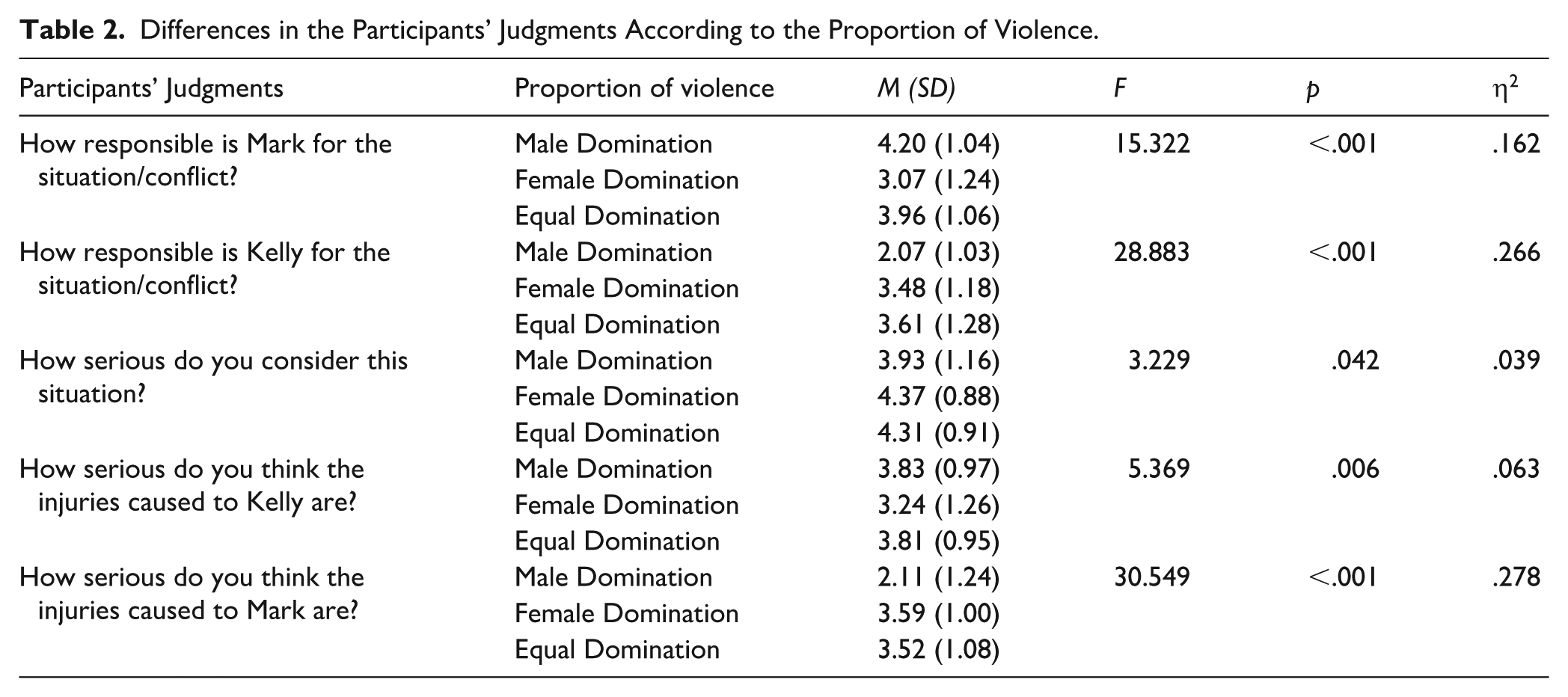
Regarding the seriousness of the conflict, the results showed a significant effect of scenario type on perceived seriousness, suggesting that participants’ judgments of seriousness varied according to the type of scenario viewed. Nevertheless, the effect size was small. Post-hoc comparisons revealed only marginally significant differences, with participants rating the episode in the “female domination” scenario as more serious (p = .054) than those in the “male domination” and “equal-domination” scenarios.
With regard to injury severity, the results revealed a significant effect of scenario type on perceived injury severity, indicating that participants’ perceptions of injury severity varied depending on the scenario presented. Effect sizes ranged from medium to large. Post-hoc comparisons showed that participants rated the injuries to Kelly as significantly more severe in the “male domination” (p < .012) and “equal-domination” scenarios (p < .016) compared to the “female domination” scenario. Conversely, injuries to Mark were rated as significantly more severe in the “female domination” (p < .001) and “equal-domination” scenarios (p < .001) compared to the “male domination” scenario.
Type of Violence
Concerning the influence of the type of violence on participants’ judgments of responsibility, the results showed significant effects of violence type on judgments of both Mark’s and Kelly’s responsibility (see Table 3). Specifically, Mark was judged to be more responsible in scenarios involving psychological violence than in those involving physical violence, whereas Kelly was judged to be more responsible in scenarios involving physical violence than in those involving psychological violence, with medium and large effect sizes, respectively.
Differences in the Participants’ Judgments According to the Type of Violence.
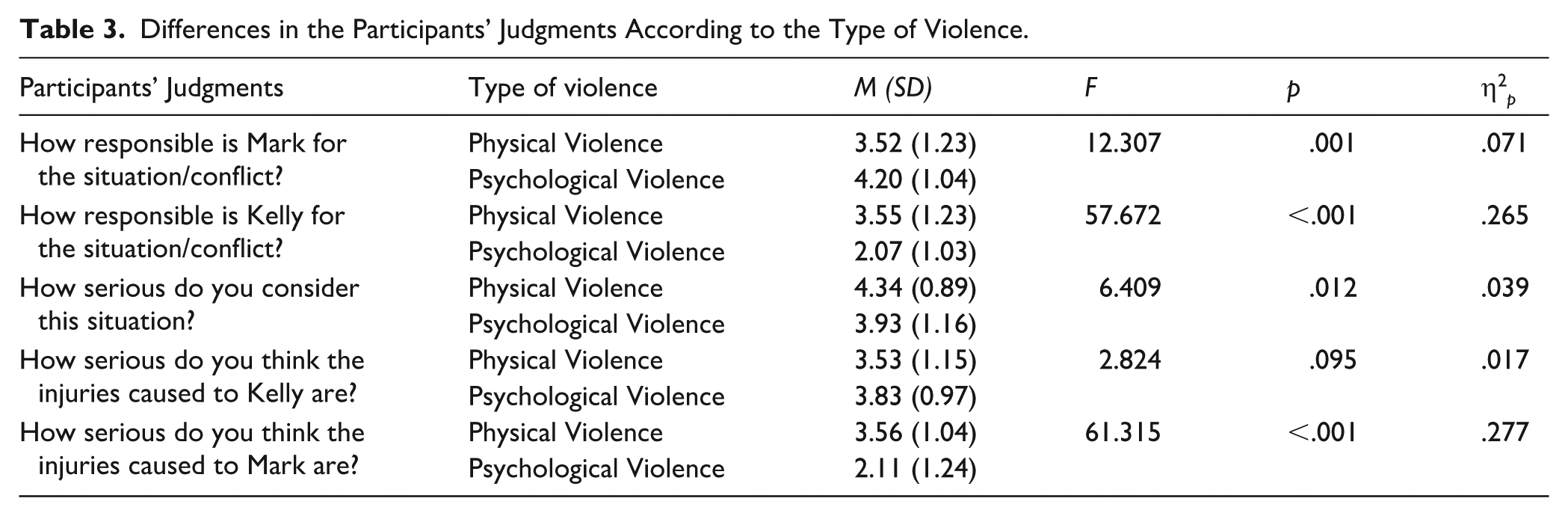
Regarding the seriousness of the conflict, the results also showed a significant effect of the type of violence. Participants perceived physical violence as more serious than psychological violence. However, the observed effect size was small.
In terms of the injuries caused to Mark and Kelly, the results revealed a significant effect of the type of violence on perceptions of the injuries caused to Mark. Specifically, physical violence against Mark was judged to be more severe than psychological violence against him. Moreover, the effect size was large.
Initiator of Violence
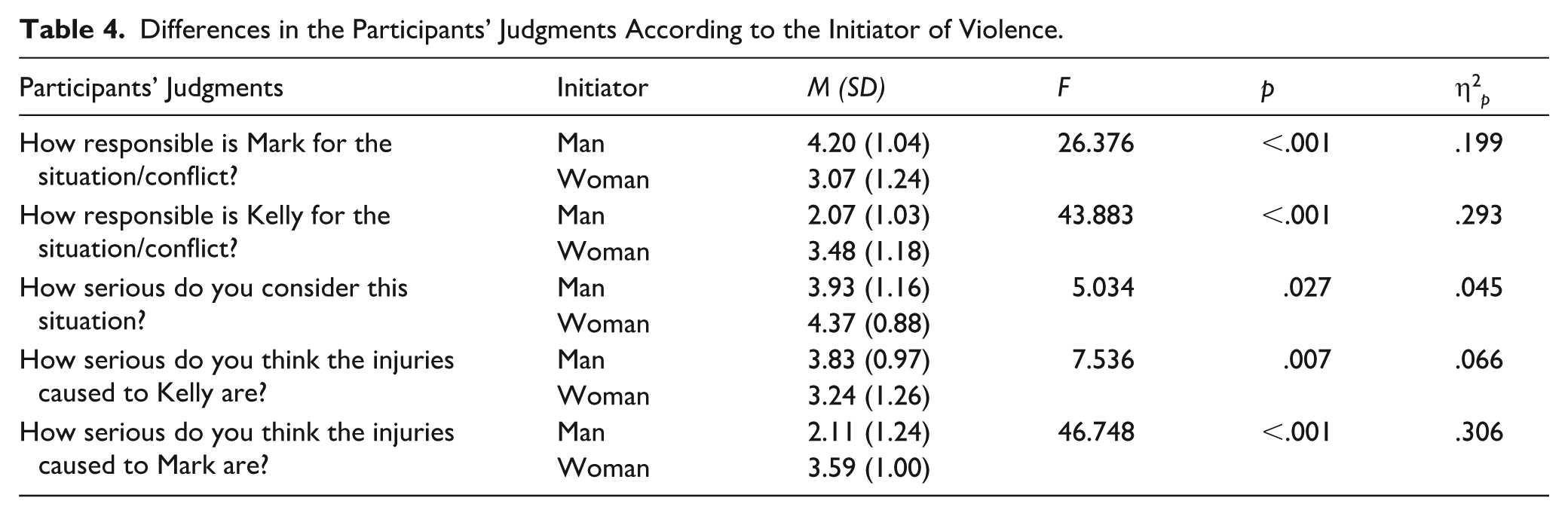
Analyses revealed significant effects of the initiator of violence on judgments of responsibility, seriousness of conflict, and injuries caused. Both Mark and Kelly were judged to be more responsible when they were portrayed as the initiators of the violence (see Tables 4 and 5).
Differences in the Participants’ Judgments According to the Initiator of Violence.
Gender Differences in the Judgments of the Participants About the Proportion of Violence by Scenario Type.
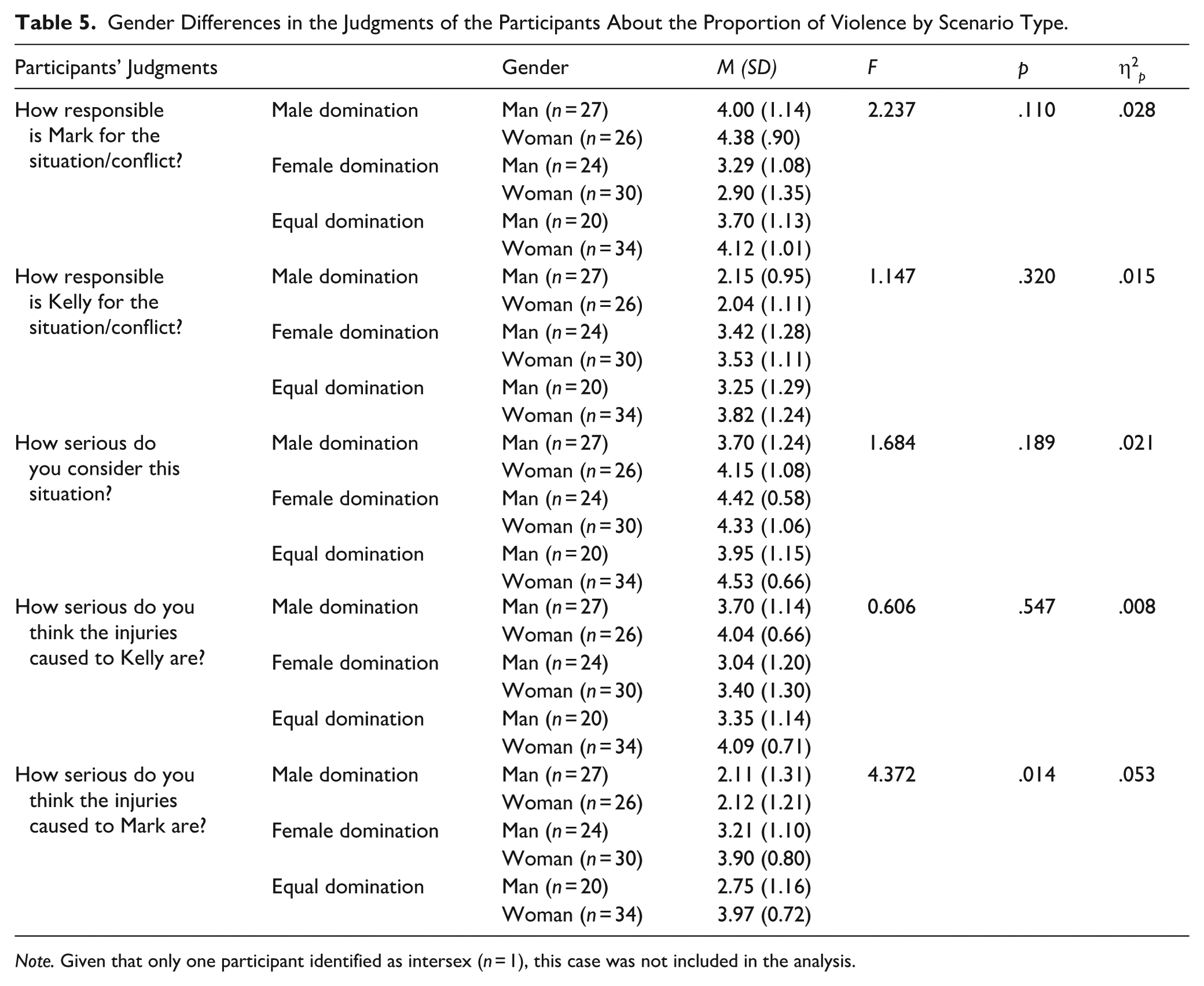
Note. Given that only one participant identified as intersex (n = 1), this case was not included in the analysis.
Regarding the seriousness of the violence, participants perceived the situation as more serious when the woman was the initiator. Concerning injuries, the perceived severity of injuries caused to Kelly was higher when the man initiated the violence, whereas injuries caused to Mark were rated as more severe when the woman was the initiator.
Sex Differences in the Participants’ Judgments
There were no significant main effects of participant sex on judgments of Mark’s responsibility, F(1, 155) = 0.593, p = .442, ηp2 = .004, or Kelly’s responsibility, F(1, 155) = 1.080, p = .300, ηp2 = .007. However, participant sex significantly affected perceived seriousness, F(1, 155) = 4.053, p = .046, ηp2 = .025, severity of injuries to Kelly, F(1, 155) = 8.220, p = .005, ηp2 = .050, and severity of injuries to Mark, F(1, 155) = 14.507, p < .001, ηp2 = .086. Overall, women rated the situations as more serious than men and judged the injuries to both Kelly and Mark as more severe. The observed effect sizes were small for seriousness and small to moderate for injury severity.
The scenario type × participant sex interaction was not significant for judgments of Mark’s responsibility, F(2, 155) = 2.237, p = .110, ηp2 = .028, Kelly’s responsibility, F(2, 155) = 1.147, p = .320, ηp2 = .015, seriousness, F(2, 155) = 1.684, p = .189, ηp2 = .021, or severity of injuries to Kelly, F(2, 155) = 0.606, p = .547, ηp2 = .008, indicating small or negligible effect sizes. However, the interaction was significant for the severity of injuries to Mark, F(2, 155) = 4.372, p = .014, ηp2 = .053, corresponding to a small-to-moderate effect size. Inspection of the means indicated that women rated injuries to Mark as especially severe in the female domination and equal-domination scenarios, whereas men showed lower ratings in these same conditions.
Discussion
The present study investigated the influence of gender stereotypes on judgments of IPV among Portuguese university students, focusing on the proportion and type of violence, and the initiator of the violence. The findings revealed: (a) judgments about responsibility, seriousness, and injury severity varied according to the proportion of violence; (b) physical violence was perceived as more serious than psychological violence; and (c) the initiator of the violence was consistently judged as more responsible and causing more severe harm. In addition, gender differences in judgments were scenario-dependent, with female participants tending to rate certain injuries and conflicts as more serious than male participants.
Regarding responsibility for the violence, the men were considered more responsible in the “male domination” scenario, consistent with the findings of Hine et al. (2020). However, an intriguing pattern also emerged: the woman was considered more responsible in the “equal-domination” and “female-domination” scenarios, and the “female-domination” scenario was perceived as more serious, although this latter result was only marginally significant. These unexpected outcomes may be linked to the violation of traditional gender norms, whereby female perpetrators challenge societal expectations, leading participants to perceive the scenario as unusual or particularly concerning. It may also reflect an emerging recognition and awareness that men can also be victims and experience harm from IPV (Thomas & Hart, 2022). This finding is in line with the results found regarding injury severity, as the injuries inflicted on women in male-dominated scenarios and the injuries inflicted on men in female-dominated scenarios were perceived as more serious, consistent with Hine et al. (2020). These results suggest that judgments are sensitive to gender and to the proportion of violence used, as participants may have perceived IPV perpetration by women as equally serious as IPV perpetration by men (Spencer et al., 2020; Thomas & Hart, 2022). Indeed, some studies suggest that male victims’ experiences are comparable to those of female victims (Laskey et al., 2019), and there is emerging evidence of a shift in societal perceptions, recognizing that both men and women can be perpetrators and victims of IPV (Gueta & Shlichove, 2022). However, given the typically small effect sizes observed, further research is needed to explore the underlying mechanisms driving these judgments.
On what concerns the type of violence, overall, participants considered physical violence more serious than psychological violence, which is consistent with prior studies (McLennan et al., 2025; Wagers et al., 2021; Wilson & Smirles, 2022). This finding is also in line with prior work suggesting that psychological violence is underestimated in IPV contexts (Hine et al., 2020) since psychological abuse is often considered less severe because its damage is less visible, and cultural norms may further downplay its seriousness (Capezza & Arriaga, 2008; Rhodes et al., 2018). Nonetheless, psychological IPV can lead to long-term mental health consequences, revealing a gap between its actual effects and how it is viewed by the public (McLennan et al., 2025). In addition, the results showed that women are considered more responsible for the violence when it involves physical violence, and the injuries caused to men by women are more severe, while the man is considered more responsible for psychological violence. These results may again be explained by the fact that a scenario in which a woman uses physical violence against a man violates traditional gender role expectations, as women are generally not expected to engage in physical violence (Bates, 2019; Renner et al., 2015; Russell, 2017; Russell & Kraus, 2016). However, these results should be interpreted cautiously, as they may have been influenced by scenario type (i.e., “male dominant,” “female dominant,” equal dominant”), which could not be adequately controlled because each scenario involved a distinct and mutually exclusive form of violence, resulting in partial confounding with violence type in the study design.
In this study, judgments about the responsibility for the conflict, the seriousness of the conflict, and the severity of the injuries depended on the initiator of violence. That is, the individual who initiated the violence, whether it was the man or the woman, was judged as more responsible for the conflict, and the conflict itself was evaluated as more serious. However, with regard to the injuries caused, only those inflicted on the man were perceived as more severe when the woman was the initiator. These findings contrast with previous research suggesting that women are less frequently perceived as perpetrators of IPV (Bates, 2016, 2019; Bates et al., 2018; Hine et al., 2020; Langhinrichsen-Rohling & Capaldi, 2012; Machado, Santos, et al., 2016; Pu et al., 2021; Russell & Kraus, 2016). One possible explanation is that this sample of university students may have a greater awareness that women can also perpetrate IPV, aligning with research supporting the notion of gender symmetry in IPV perpetration (Archer, 2000; Machado, Santos, et al., 2016; Mennicke & Wilke, 2015). However, once again, these results should be interpreted with caution, as they may have been influenced by scenario type (i.e., male dominant, female dominant, or equal dominant), which could not be adequately controlled because it was partially confounded with the initiator of violence in the study design.
With respect to participants’ sex, no significant differences were found in judgments of responsibility, seriousness of the conflict, or injury severity in the “male domination” scenario. This finding contrasts with previous research reporting differences between male and female participants (Hine et al., 2020; Thomas & Hart, 2022), as well as with studies suggesting that men tend to be more tolerant of IPV (Kuijpers et al., 2017; Yamawaki et al., 2012), whereas women are generally more likely to assign blame to perpetrators (Hamby & Jackson, 2010). Indeed, some studies have shown that men are more often perceived as primarily responsible for the conflict and that violence perpetrated by men is judged as more serious (Hine et al., 2020; Savage et al., 2016; Thomas & Hart, 2022). However, other findings, such as those reported by Capinha et al. (2022), indicate that women may also be the first to use physical violence against an intimate partner, outside the context of self-defense or retaliation. Taken together, these findings reinforce prior research pointing to gender symmetry in some motivations and risk factors associated with IPV (Archer, 2000; Machado, Santos, et al., 2016; Mennicke & Wilke, 2015), which may help explain the pattern observed in the present study. In contrast, in the “female domination” and “equal-domination” scenarios, differences between genders were observed, but only in the participants’ judgments about the seriousness of the injuries caused to the man, as women perceived the violence as more serious than men. Taken together, these findings suggest that female university students may show greater empathy toward cases involving severe violence and injuries, attributing more blame to the perpetrator (Hamby & Jackson, 2010). In contrast, male students appear to be more tolerant of such forms of violence (Badenes-Sastre et al., 2024; Kuijpers et al., 2017; Yamawaki et al., 2012), particularly in cases involving female individuals perpetrating physical violence. These perceptions may be shaped by gender stereotypes that depict men as the primary perpetrators and women as the primary victims, which could lead individuals—especially women—to judge women more harshly when they engage in violence against an intimate partner. Indeed, previous studies have shown that women who display violent behavior toward an intimate partner are often portrayed as deviant or inherently malicious (Carlyle et al., 2014).
In general, the results obtained in this study demonstrated that university students consider physical violence to be more serious than psychological violence, which may indicate an underestimation of the severity of psychological violence in IPV scenarios (Hine et al., 2020). Some results found (e.g., women are considered the most responsible in cases of “female dominance” and those who cause more injuries) contradict the expectations of predictions based on gender roles; it was not expected that the woman starting the conflict or using physical violence, and that they consider the violence perpetrated by women to be as serious as when men are perpetrating IPV (Bates, 2019; Renner et al., 2015; Russell, 2017; Russell & Kraus, 2016). These results may indicate that students are more aware that both women and men can be IPV perpetrators (Kolbe & Büttner, 2020) and that the injuries that female perpetrators cause to male victims are as serious as those caused by male perpetrators (Archer, 2000; Machado, Santos, et al., 2016; Spencer et al., 2020; Thomas & Hart, 2022).
Implications for Practice
There are a number of important implications from this study; firstly, there is a need to raise awareness that IPV is not only unidirectional, for both the general population and for service providers. Professionals must maintain a nonjudgmental position when victims ask for formal support, regardless of their gender, and contribute to improving prevention and intervention programs (Bates, 2016; Hine et al., 2020; Laskey et al., 2019; Machado et al., 2019; Mennicke & Wilke, 2015; Palmetto et al., 2013). The focus within the wider criminal justice system on unidirectional violence risks not providing appropriate or risk-based interventions for victims or perpetrators.
Secondly, raising awareness of the prevalence of this form of IPV could be one way to tackle damaging stereotypes and perceptions that often prevent victims, especially male victims, from recognizing their own victimization experiences. It is also necessary to investigate the use of binary labels of victim/perpetrator and the influence of language on the experiences of men who are victims (Hine et al., 2020). The language used is powerful within legislation and practice to make victims feel either seen or invisible. Our use of “victim” and “perpetrator” alone can also present issues around risk; Hope et al. (2021) found in their review of Domestic Homicide Reviews with male victims and female perpetrators that where BV was present, men were only ever viewed as offenders/perpetrators and not as victims. This was acknowledged as a “missed opportunity” to intervene and prevent further violence.
Thirdly, this study highlights the potential of VR as a valuable tool in studying attitudes compared to traditional 2D environments, as it enables individuals to engage with different perspectives within complex social dynamics, such as violent interactions, offering a more realistic analysis of real-life scenarios. Moreover, VR can reduce the psychological distance between users and abstract concepts, transforming distant attitude objects into more immediate and personally relevant ones (Kalyanaraman & Bailenson, 2020).
Limitations
Although this study makes important contributions, some limitations should be considered when interpreting the results. First and foremost, the fact that the sample consisted exclusively of university students and was relatively small is a key drawback. However, the decision to include only university students was intentional, reflecting both the exploratory nature of the research and the goal of replicating Hine et al. (2020) methodology, which also involved a student population. University students are a relevant at-risk group for BV, and their accessibility facilitated the use of immersive VR procedures within available ethical and logistical constraints. Second, the sample is not representative of the university student population, since it was composed of students from only one university, and was recruited through non-probabilistic methods, which may have attracted participants with a particular interest in the topic. Third, social desirability bias may have influenced participants’ responses, despite assurances of anonymity and confidentiality. Nonetheless, we tried to mitigate these limitations by publicizing the study widely through multiple online and campus channels, actively encouraging participation from male students to improve gender balance, and maximizing heterogeneity within the student group in terms of age, field of study, and other sociodemographic variables.
Another limitation concerns the cultural context of the study. As 84% of participants were Portuguese, their perceptions and judgments may have been influenced by cultural norms, values, and attitudes toward gender roles and IPV specific to Portuguese society. These cultural influences may not be representative of other contexts, potentially limiting the generalizability of the findings.
Another limitation of this study concerns the nature of the instruments used. Although VR scenarios are immersive and allow for controlled manipulation of variables, they cannot fully capture the complexity and unpredictability of real-life interpersonal dynamics. Participant responses may also have been influenced by the artificial nature of the simulation. Similarly, self-report questionnaires are inherently vulnerable to biases such as social desirability and recall bias.
In addition, an important limitation of this study concerns the non-orthogonal structure of the VR scenarios. More specifically, key contextual features of the interactions, namely the type of violence (physical vs. psychological) and the initiator of the conflict, were embedded within the three scenario types (male, female, and equal domination) as part of a cohesive narrative. Consequently, these variables were not fully crossed across conditions, which prevented the independent estimation of their effects. Although this design enhanced the ecological and narrative realism of the VR experience, it also limited the extent to which participants’ perceptions of violence type or conflict initiator could be disentangled from the specific scenario in which they were presented. Accordingly, scenario type was partially confounded with type of violence and initiator of violence, restricting the interpretation of their unique contributions to participants’ judgments.
It is also recommended that future research replicate this study in other countries and diverse cultural contexts to explore whether the observed patterns are culturally specific or reflect broader, cross-cultural trends. Furthermore, future studies should expand to include larger and more diverse samples from the general population, as well as clinical populations and forensic contexts, and address other forms of violence (e.g., sexual violence, stalking, and economic deprivation). Such studies would strengthen the generalizability of findings and allow for more nuanced analyses of the influence of gender stereotypes on BV.
Conclusion
Research on BV and the influence of gender stereotypes in Portugal is almost nonexistent, so it is important to highlight that this study is pioneering and innovative. This study contributes to the investigation of BV in university students and provides important data for a broader knowledge of the phenomenon of BV in the Portuguese university population.
Our results revealed that the participants consider “female domination” violence scenario as more severe than the “male domination” scenario, as well as judged the woman as responsible for starting the conflict, for the seriousness of the conflict, and for the injuries caused to the man; physical violence was considered more severe than psychological violence; and no significant differences between sexes were found for the responsibility, seriousness, and severity of the injuries in the “male domination” violence scenario. These results seem to indicate that for the participants, the roles of victim and perpetrator are not exclusive to men and women, both of whom may be victims and/or perpetrators of IPV, with an overlap of roles (Machado et al., 2019).
BV, despite being the most perpetrated type of violence (Capinha et al., 2022; Langhinrichsen-Rohling et al., 2012; Machado et al., 2023; Mennicke & Wilke, 2015; Ridings et al., 2018), represents a huge difficulty for the victim protection system and the justice system, because these services usually identify and work with women as victims and men as perpetrators, and risk and intervention assessments are planned in this way. Because BV can affect anyone of any gender in any context, the great challenge of systems is to rethink interventions by planning inclusive responses to meet the challenges posed by BV.
Supplemental Material
sj-jpeg-1-jiv-10.1177_08862605261455509 – Supplemental material for Who is the Victim and Who is the Perpetrator? The Influence of Gender Stereotypes on Bidirectional Intimate Partner Violence Scenario
Supplemental material, sj-jpeg-1-jiv-10.1177_08862605261455509 for Who is the Victim and Who is the Perpetrator? The Influence of Gender Stereotypes on Bidirectional Intimate Partner Violence Scenario by Raquel Caixinha, Olga Cunha, Nélio Brazão, Ben Hine, Elizabeth Bates, Filipe Luz, Filipe Pinto, Inês Jongenelen, Pedro Gamito and Andreia Machado in Journal of Interpersonal Violence
Supplemental Material
sj-jpeg-2-jiv-10.1177_08862605261455509 – Supplemental material for Who is the Victim and Who is the Perpetrator? The Influence of Gender Stereotypes on Bidirectional Intimate Partner Violence Scenario
Supplemental material, sj-jpeg-2-jiv-10.1177_08862605261455509 for Who is the Victim and Who is the Perpetrator? The Influence of Gender Stereotypes on Bidirectional Intimate Partner Violence Scenario by Raquel Caixinha, Olga Cunha, Nélio Brazão, Ben Hine, Elizabeth Bates, Filipe Luz, Filipe Pinto, Inês Jongenelen, Pedro Gamito and Andreia Machado in Journal of Interpersonal Violence
Supplemental Material
sj-jpeg-3-jiv-10.1177_08862605261455509 – Supplemental material for Who is the Victim and Who is the Perpetrator? The Influence of Gender Stereotypes on Bidirectional Intimate Partner Violence Scenario
Supplemental material, sj-jpeg-3-jiv-10.1177_08862605261455509 for Who is the Victim and Who is the Perpetrator? The Influence of Gender Stereotypes on Bidirectional Intimate Partner Violence Scenario by Raquel Caixinha, Olga Cunha, Nélio Brazão, Ben Hine, Elizabeth Bates, Filipe Luz, Filipe Pinto, Inês Jongenelen, Pedro Gamito and Andreia Machado in Journal of Interpersonal Violence
Supplemental Material
sj-jpg-4-jiv-10.1177_08862605261455509 – Supplemental material for Who is the Victim and Who is the Perpetrator? The Influence of Gender Stereotypes on Bidirectional Intimate Partner Violence Scenario
Supplemental material, sj-jpg-4-jiv-10.1177_08862605261455509 for Who is the Victim and Who is the Perpetrator? The Influence of Gender Stereotypes on Bidirectional Intimate Partner Violence Scenario by Raquel Caixinha, Olga Cunha, Nélio Brazão, Ben Hine, Elizabeth Bates, Filipe Luz, Filipe Pinto, Inês Jongenelen, Pedro Gamito and Andreia Machado in Journal of Interpersonal Violence
Footnotes

Ethical Considerations
The Ethics Review Committee at Lusófona University approved our study on May 11, 2022. Participants gave electronic consent before completing any of the instruments presented.
Funding
The authors disclosed receipt of the following financial support for the research and/or authorship of this article: This work was conducted at HEI-Lab: Digital Human-Environment Interaction Lab, Lusófona University, and supported by the Foundation for Science and Technology—FCT (Portuguese Ministry of Science, Technology and Higher Education), under the grant UIDB/05380/2020.
Declaration of Conflicting Interests
The authors declared no potential conflicts of interests with respect to the authorship and/or publication of this article.
Data Availability Statement
Data collected for this study cannot be shared publicly due to confidentiality restrictions, but is available upon request to the corresponding author.*
Supplemental Material
Supplemental material for this article is available online.
Author Biographies
References
Supplementary Material
Please find the following supplemental material available below.
For Open Access articles published under a Creative Commons License, all supplemental material carries the same license as the article it is associated with.
For non-Open Access articles published, all supplemental material carries a non-exclusive license, and permission requests for re-use of supplemental material or any part of supplemental material shall be sent directly to the copyright owner as specified in the copyright notice associated with the article.


