






Abstract
Firearms trafficking across the U.S.-Mexico border is a major challenge. While studies have examined the effect of U.S. federal policies on firearms trafficking and mortality in Mexico, limited studies have examined the effect of state-level policies. We examine a recently released dataset on the origin of firearms recovered from crimes committed in Mexico from 2015 to 2024 and traced by Alcohol, Firearms and Explosives. These traces included the U.S. state where firearms were last purchased at a retail store. We describe this dataset and explore the association between U.S. state levels bans on assault weapons and the volume of firearms recovered in Mexico from January 2015 to July 2014. We ran analyzes based on three categories of time to crime (TTC; <1 year, 1 to 3 years, >3 years) and controlled for other firearm-related policies, whether states border Mexico, gun ownership, and the monetary value of exports to Mexico. Our results indicate that states that ban assault weapons are less likely to have firearms recovered in Mexico traced back to a retail seller. This magnitude is larger when examining shorter periods of TTC. Overall, our study highlights the importance of including the impact of firearm-related policies not just in studies of firearm-related violence within the United States but also beyond its borders, particularly to Central American and Caribbean countries.
Introduction
Firearms trafficking across the U.S.-Mexico border is a major challenge. Researchers estimate that close to 213,000 firearms were purchased in the United States and illegally trafficked into Mexico every year from 2010 to 2012 (McDougal et al., 2015). Since 2009, the Bureau of Tobacco, Alcohol, Firearms and Explosives (ATF) has been reporting on the percentage of crime guns recovered in Mexico that originate in the United States. This percentage has consistently ranged between 65% and 75% from 2009 to 2023 (Bureau of Alcohol, Tobacco, Firearms and Explosives, 2025a). Out of those originating in the United States, close to 74% were manufactured in the United States and another 26% were first imported to the United States before being recovered in Mexico (Bureau of Alcohol, Tobacco, Firearms and Explosives, 2025a).
The production of firearms in the United States increased significantly during the mids-2000s, and these increases were significantly associated with rates of firearm homicides in the region of Central America and the Caribbean, including Mexico (Weigend Vargas, Hans, et al., 2024). One of the reasons theorized to be behind the strong association is the increased lethality of weapons produced and trafficked during this period. Increases in the manufacturing of firearms in the United States during the mid-2000s were primarily driven by rifles and high caliber pistols (Smith et al., 2017). Specifically, reports from the Washington Post examining data from the National Shooting Sporting Foundation indicate that while AR-15 rifles represented close to 3.6% of the firearm production in the United States during 2004, this percentage reached 23.4% by 2020 (Frankel et al., 2023). In this regard, increases in the manufacturing of firearms coincided with the expiration of the U.S. Federal Ban on Assault Weapons. This policy, in place from 1994 to 2004, prohibited the possession, transfer, and manufacturing of certain semiautomatic firearms, including AR-15 and AK-47 style rifles (Violent Crime Control and Law Enforcement Act, 1994). This policy was also known as the Public Safety and Recreational Firearms Use Protection Act and was part of the Violent Crime of the Violent Crime Control and Law Enforcement Act of 1994. The policy expired in 2004 and was not renewed by Congress. Nonetheless, various states either maintained a version of the assault weapons policy or have passed a form of assault weapons ban since the Federal policy expired. As of 2024, 10 states and the District of Colombia have a version of an assault weapons ban (RAND, 2025a). However, while mirroring the prior federal ban, these policies are not homogenous. For example, Hawaii only limits assault pistols while other states define the presence of certain features to be considered an assault weapon (RAND, 2025b).
While several studies have examined the effect of state-level bans on assault weapons on mass shooting incidents and casualties (DiMaggio et al., 2024; Webster et al., 2020), little is known about the potential effect of these bans on international firearms trafficking. As close to 70% of firearms recovered in crimes in Mexico and traced by ATF originate in the United States, this country is a relevant case to examine (Bureau of Alcohol, Tobacco, Firearms and Explosives, 2025a). Moreover, two studies have examined the potential effects of the removal of the U.S. Federal assault weapons ban in September of 2004 and the rise of firearm-homicides in Mexico. The first used a difference in discontinuities model to examine the association between the expiration of the ban and firearm homicides in Mexico. The study found that rates of homicides increased in Mexico for the first time in a decade and that this was driven by a significant increase in rates of firearm homicides after the expiration of the U.S. federal ban on assault weapons (Chicoine, 2017). These effects were larger in states near the U.S.–Mexico border. Similarly, a 2013 study reported an increase in firearm homicides in Mexican municipalities bordering Arizona, New Mexico, and Texas after the expiration of the ban (Dube et al., 2013). Mexican municipalities bordering California, however, did not present this effect. Researchers suggest that the reason is that California maintained its own state-level ban (Dube et al., 2013).
In this regard, the types of U.S. firearms recovered in crimes abroad differ from those recovered in crimes in the United States. In the United States, long guns (rifles and shotguns) represented close to 19% of crime guns recovered domestically and traced by ATF from 2017 to 2021 (Bureau of Alcohol, Tobacco, Firearms and Explosives, 2025b). This figure was 29% for U.S. crime guns recovered in other countries and traced by ATF during the same period (Bureau of Alcohol, Tobacco, Firearms and Explosives, 2025b). Moreover, a high proportion of the United States sourced long guns associated with firearms trafficking tend to be assault weapons. An analysis of indictments and other court documents of cases involving alleged illegal firearms trafficking from the United States to Mexico and other Latin American countries from 2006 to 2024 indicate that among those cases where weapon type was determined (roughly 6,696), more than 3,637 (54%) were assault type rifles, primarily AK-47 and AR-15 (Violence Policy Center, 2025).
Despite these studies and statistics, limited analyses have explored how individual state-level bans are associated with firearm trafficking to Mexico. A major reason for this is that data on firearms recovered in Mexico and traced to U.S. states are not currently publicly available. What little is known about the number of firearms originating in U.S. states and recovered in Mexico come from limited sources. Reports from the Government Accountability Office illustrate that border states, primarily Texas and Arizona, are the principal suppliers of crime guns to Mexico (United States Government Accountability Office, 2016). In addition, a study that obtained data through an administrative record, reported that states that implemented stricter firearms laws (e.g., background checks) were less likely to export crime guns to Mexico from 2006 to 2010 (Eby, 2014). Despite these efforts, more extensive research has been limited, and detailed data remains inaccessible. Recently, however, data on firearms recovered in Mexico (from January 2015 to July 2024) and traced back to the United States were made available through a Freedom of Information Act (FOIA) request.
We examine this unique dataset on the origin of firearms recovered from crimes committed in Mexico from 2015 to 2024. The objective of this study is to examine and describe this dataset and explore the association between state-levels bans on assault weapons in the United States and the volume of firearms recovered in Mexico that are traced back to each U.S. state from January 2015 to July 2024. This will contribute to the literature on the potential impacts of these bans beyond the United States and could help guide state-level policies to contribute to violence in the region. In this regard, Mexico is a relevant country for various reasons. Firearm mortality has increased in the country, has been driven by firearm-related homicides, and has become a major cause of death for children and adolescents (Degli Esposti et al., 2024; Weigend Vargas, Degli Esposti, et al., 2024). In addition, firearms have been used to perpetrate extortions in Mexico and are potentially used to control drug routes from Mexico to the United States (United Nations Office on Drugs and Crime, Global Firearms Programme, Flemish Peace Institute, 2024; Weigend Vargas et al., 2025). Additionally, numerous U.S. immigrants report violence as the number one reason why they leave their home countries and further report high levels of experiences with firearm-related violence (Weigend Vargas, Goldstick, & Vargas, 2024).
Data and Methods
We examined data on firearms recovered in crimes in Mexico and traced to the United States by the Bureau of Alcohol, Tobacco, Firearms, and Explosives from January 2015 to July 2024. Data were obtained by the organization Stop U.S. Arms to Mexico through a FOIA request and is now publicly available (Stop US Arms to Mexico, 2025). Overall, ATF received roughly 185 thousand tracing requests of firearms recovered in crimes in Mexico from 2015 to 2023 (data on tracing requests for 2024 were not yet available). Out of those received and traced by ATF, roughly 68% were traced back to the United States (either they were manufactured in or imported into the United States), 16% were traced to other countries, and 16% were of undetermined origin (Bureau of Alcohol, Tobacco, Firearms and Explosives, 2025a). Moreover, in roughly half of those 68% that were traced back to the United States, the ATF was able to trace the firearms to a specific retail purchaser (Bureau of Alcohol, Tobacco, Firearms and Explosives, 2025a).
Our dataset encompasses firearms that were recovered in Mexico and where ATF was able to trace back to a U.S. retail seller from January 2015 to July 2024. Each firearm was traced to the U.S. state where it was last purchased. Additionally, data were further broken down by time to crime (TTC), meaning the time that lapsed from when the firearm was last purchased in the United States to when it was recovered in a crime in Mexico. Data are also broken down by types of firearms (i.e., pistol or rifle) and calibers (i.e., 5.56 mm or 7.62 mm). However, information on firearm types and calibers is not broken down by state.
Dependent Variable
For our dependent variables, we used the aggregated number of firearms recovered in a crime in Mexico from 2015 to 2024 that were traced to each of the 50 U.S. states (n = 50). We stratified this dependent variable based on TTC. The first encompassed firearms recovered in Mexico that had a TTC of 3 years or more. Two additional dependent variables were constructed based on a TTC of 1 to 3 years, and TTC of <1 year. TTC of less than 3 years has been recognized as a strong indicator that the firearm was purchased with the intent of being trafficked, and those with a TCC of <1 providing further evidence of trafficking (Bureau of Alcohol, Tobacco, Firearms and Explosive, 2025b; Laqueur et al., 2024). Understanding that more populated states would have more potential for firearm purchasing, we used an offset for the log of the state population size in our analysis, effectively making the outcome the number of firearms recovered per unit population.
Independent Variable
The main independent variable was whether the state had some form of policy restricting assault weapons during most of the period 2015 to 2024 (1 = had a ban, 0 = no ban), obtained from RAND Corporation (Rand, 2025a). As of December 2024, 10 states (and the District of Colombia) have some form of ban. However, three states (Delaware, Illinois, and Washington) adopted their bans after 2022. Hence, we are not including these states within those that banned assault weapons during the period of analysis (see Table A1 in the Appendix A). States that restricted assault weapons ownership/purchase during the period of analysis (2015–2024) included California, Connecticut, Hawaii, Maryland, Massachusetts, New Jersey, and New York. Furthermore, as the state of Hawaii only bans assault pistols and not rifles (the latter are common types of firearms recovered in Mexico), we further conducted a sensitivity analysis where we excluded Hawaii within states that banned assault weapons.
Covariates
Within our analysis, we controlled for whether the state mandated some form of firearms background check beyond federal requirements (i.e., background checks at point of sale or a license to purchase requirement during private sales) for most of the period of our analysis (5 years or more). We believed that controlling for this was necessary given that secondary sales without background checks have been recognized by the ATF as common channels for firearms trafficking (Bureau of Alcohol, Tobacco, Firearms and Explosives, 2025c). Data on states that have laws requiring some form of background check beyond federal law were obtained from RAND Corporation (Rand, 2025a). These included states that implemented this form of legislation during our period of analysis (i.e., New Mexico and Nevada) as well as those that recently removed this type of law but had it in place during 5 years of the period of analysis (i.e., Iowa and North Carolina). We controlled for whether states shared a border with Mexico (California, Arizona, New Mexico, and Texas) as well as the volume of commercial exports (in hundreds of millions of dollars) from each state to Mexico during the period of analysis. Information on exports was obtained from the United States Census Bureau with updated data examined on May 2025 (United States Census Bureau, 2025). Finally, we controlled for the percentage of the state population that are estimated to be firearm owners. To do so, we used RAND’s estimation of firearm ownership for the year 2016, the latest available year in their analysis (Rand, 2025c). Each state is summarized based on these variables in Table A1 in Appendix A.
Analytical Approach
We used descriptive statistics to describe the types of firearms and calibers recovered in Mexico as well as to examine the proportion of firearms originating in each state. All these broken down by the three categories of TTC described above. We then used negative binomial regression (with the 2015–2024 state population as the exposure variable) to examine the association between state-level bans on assault weapons and the volume of firearms trafficked to Mexico (broken down into three categories based on TTC). To aid in interpretation, we recast the regression coefficients as incident rate ratios (IRR). We presented both unadjusted IRRs and IRRs that are adjusted for the aforementioned covariates. To examine whether our model results changed with variations, we further conducted a series of negative binomial regressions (based on the three categories of TTC) where we removed border states (n = 46). This approach allowed us to isolate policy effects among states that are not directly adjacent to Mexico and are less likely to exhibit strong spatial dependence or direct trafficking routes based solely on proximity. As a sensitivity analysis, we also estimated the IRRs with Hawaii included within states that do not ban assault weapons.
Results
There were 67,300 firearms recovered in Mexico from January 2015 to July 2024 that were traced back to a retailer in the United States. Out of these, 67,284 were traced back to U.S. states and 16 were traced back to U.S. territories or the District of Colombia and were thus not part of our analytic data sets. Roughly, 73% of these firearms had a TTC of 3 years or more, 15% had a TTC of 1 to 3 years, and 12% had a TTC of less than a year.
Across all firearms recovered, roughly 33% were rifles and 55% were pistols. However, this proportion changed across the different categories of TTC. Rifles represented more than 50% of recovered firearms with a TTC of 3 years or less (see Table 1). Similarly, while close to 16% of firearms with a TTC of more than 3 years were 5.56-mm, 7.62-mm, or 0.50 caliber, this proportion rose to 36% for those with a TTC between 1 year and 3 years and 43% for those firearms with a TTC of less than a year. Another common type of caliber was the 9 mm.
Proportion of Crime Guns Recovered in Mexico, 2015- July 2024.
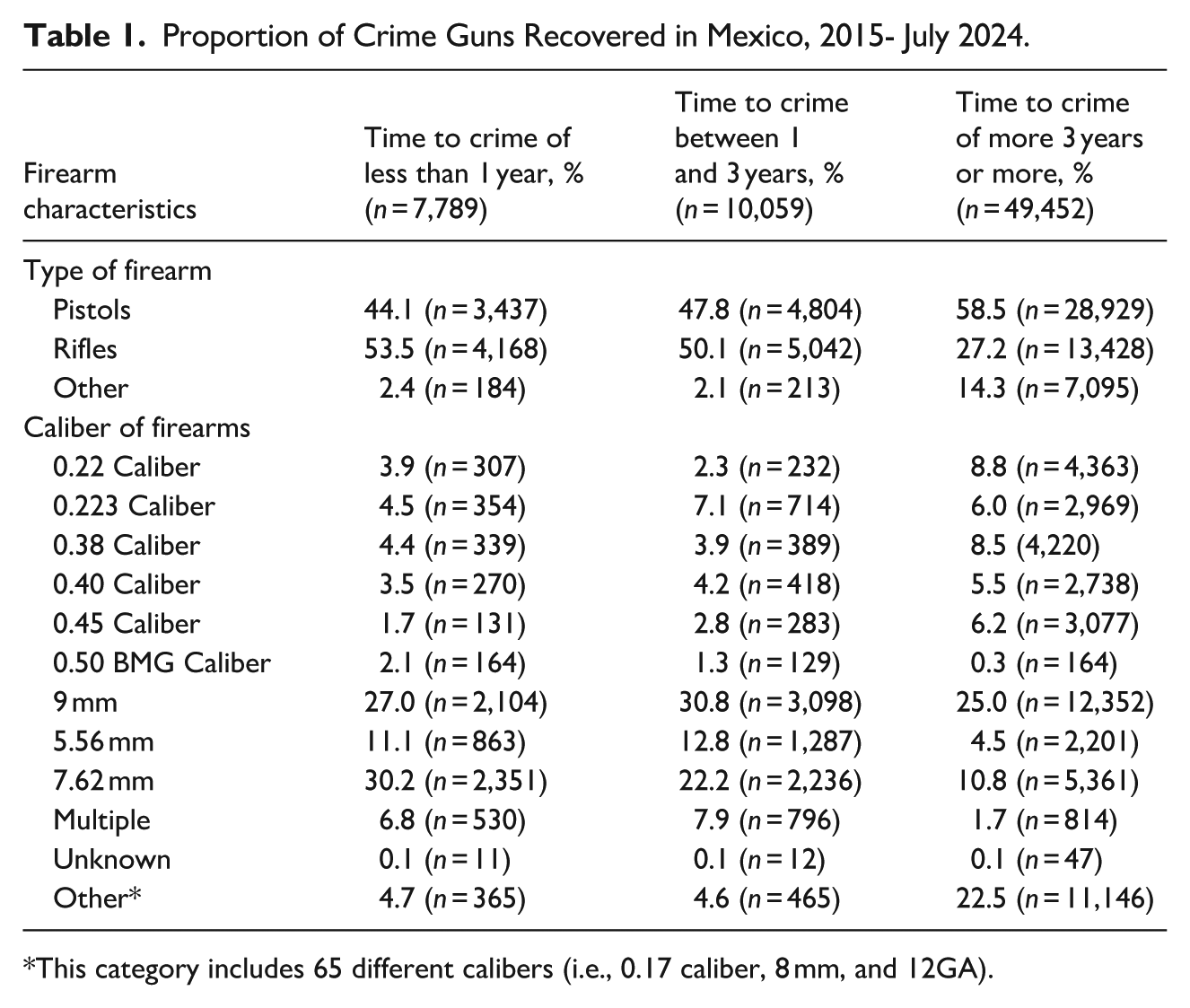
This category includes 65 different calibers (i.e., 0.17 caliber, 8 mm, and 12GA).
Most firearms recovered in Mexico and traced to the United States originate in border states (CA, AZ, NM, and TX) with Texas and Arizona being the primary states of origin across all categories of TTC (see Table 2). In contrast, while California is the origin of 16% of recovered firearms with a TTC of 3 years or more, this proportion drops to less than 2% for firearms with a TTC of less than 3 years. In addition to border states, more than 100 firearms with a TTC of less than 3 years were traced to Alabama, Colorado, Florida, Georgia, Kansas, Nevada, Oklahoma, and Utah. Finally, all states and territories have at least one firearm with a TTC of 3 years or more traced back to them and only four states (HI, IA, RI, and VT) and DC have zero firearms with a TTC of less than a year traced back to them.
Firearms Recovered in Mexico From 2015 to 2024 and Traced Back to the United States by State (Absolute Numbers).
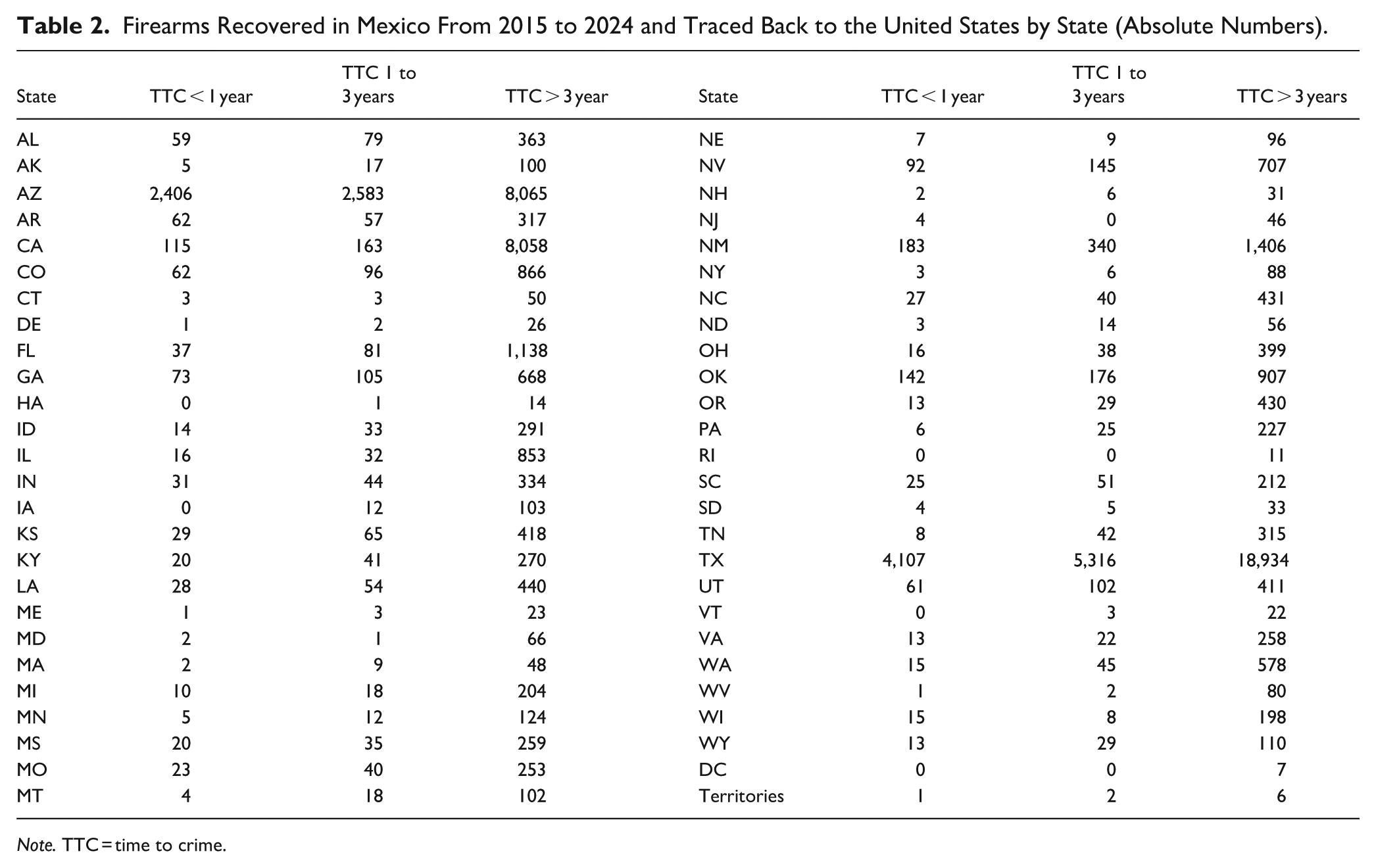
Note. TTC = time to crime.
Our adjusted and unadjusted analysis (Tables 3 and 4) indicate that states that ban assault weapons are less likely to be the origin of firearms recovered in Mexico. This is consistent across all categories of TTC. However, while the rate of recovered firearms with a TTC of 3 years or more is 76% lower in states that ban assault weapons, rates in states that ban assault weapons are 89% lower when examining firearms with a TTC of 3 years or less. States that border Mexico are significantly more likely to have firearms recovered in Mexico traced back to them. This is consistent across all categories of TTC. Levels of gun ownership were only significant among those firearms with a TTC of more than 3 years. We further ran a series of negative binomial regressions without including border states. Results match those represented in Table 4 (see Table A2 in the Appendix A). Similarly, when excluding Hawaii from states that ban assault weapons, results did not change substantially (see Table A3 in the Appendix A).
Unadjusted Results of the Negative Binomial Regressions (n = 50).
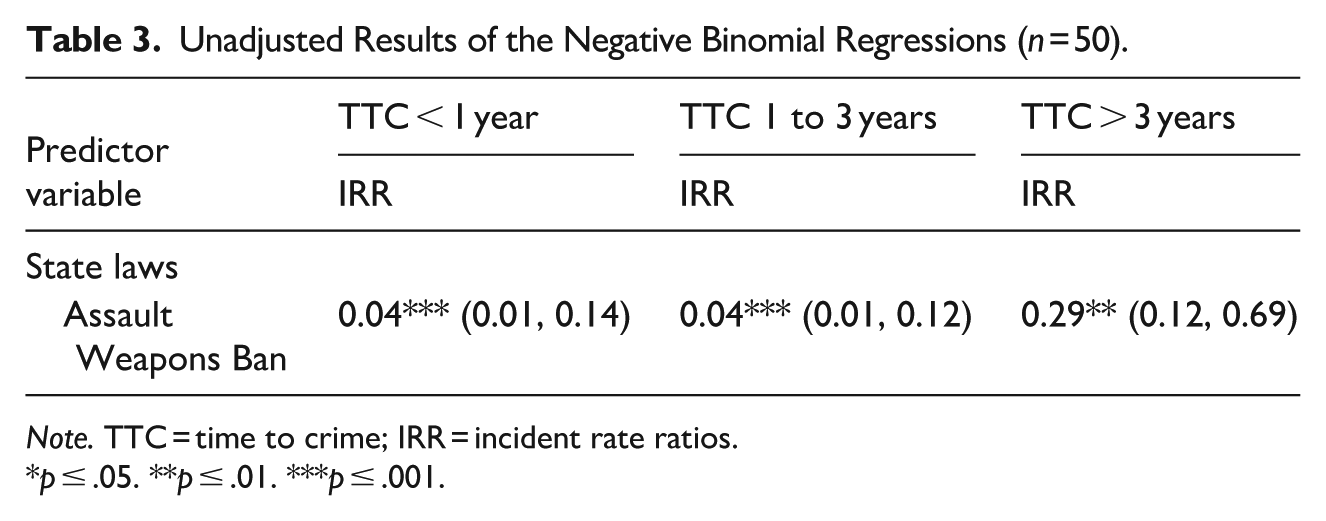
Note. TTC = time to crime; IRR = incident rate ratios.
p ≤ .05. **p ≤ .01. ***p ≤ .001.
Adjusted Results of the Negative Binomial Regressions (n = 50).
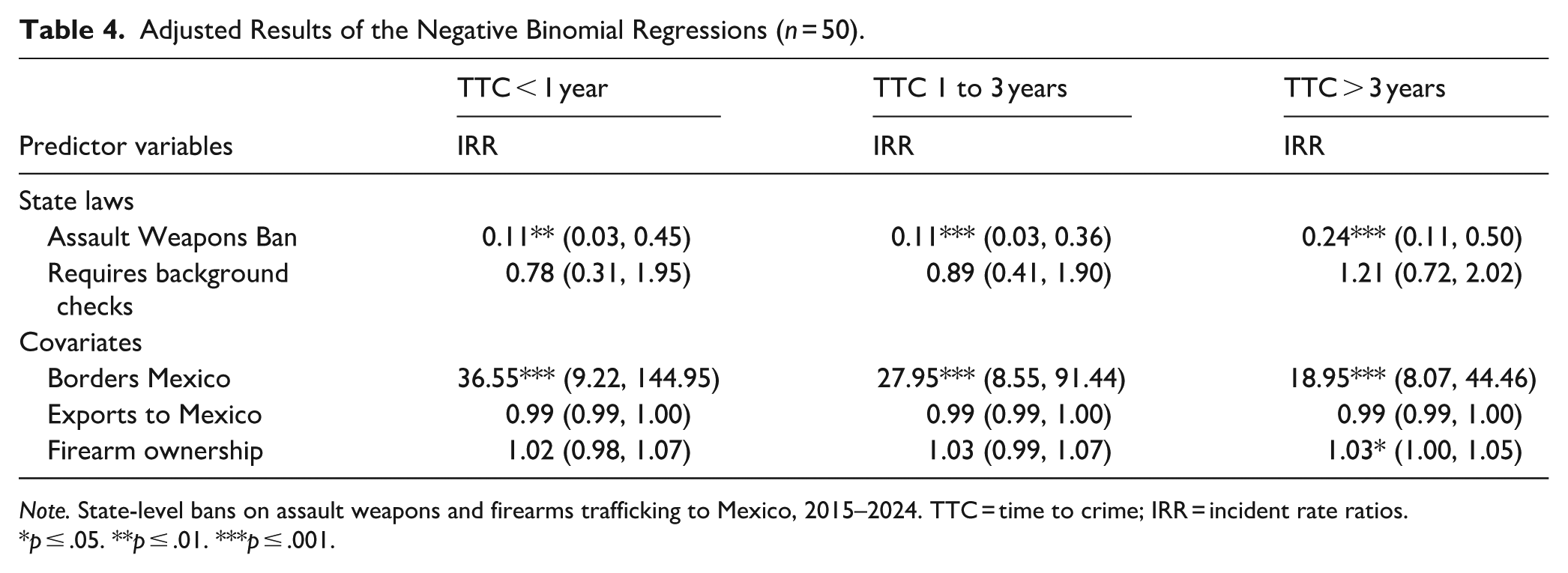
Note. State-level bans on assault weapons and firearms trafficking to Mexico, 2015–2024. TTC = time to crime; IRR = incident rate ratios.
p ≤ .05. **p ≤ .01. ***p ≤ .001.
Discussion
Our study examined data on 67,300 firearms recovered in Mexico and traced back to the United States between January 2015 and July 2024. Our analysis shows that states bordering Mexico are more likely to involve higher volume of firearms trafficking; however, this varies when examining firearms with different TTCs. For example, California appears to be a major supplier of crime guns with a TTC of more than 3 years (16%), but the corresponding proportion of firearms with a TTC of ≤3 years drops to <2%. This connects to our research question, as California bans assault weapons—weapons that are of greatest interest to criminal organizations in Mexico (Schmitt & Young, 2011). This supports previous findings suggesting that following the expiration of the federal ban on assault weapons in 2004 Mexican municipalities bordering California did not see an increase in firearm homicides when the state maintained its own state-level ban (Dube et al., 2013).
Our study also suggests that pistols and rifles comprise 55% and 33% of all traced firearms, respectively. This contrasts with U.S. data, where rifles represented a smaller proportion (11%–15%) of firearms recovered in criminal investigations domestically from 2015 to 2023 (Bureau of Alcohol, Tobacco, Firearms and Explosives, 2025d). Moreover, the proportion of rifles recovered in Mexico rises to over 50% when examining firearms with a TTC of 3 years or less. While a shorter timeframe from purchase to recovery is often interpreted as a potential indicator of firearms trafficking (Webster et al., 2012), this pattern may suggest that rifles—particularly semiautomatic models—could be more frequently associated with trafficking flows into Mexico. However, without direct tracing data confirming the intended destination at the point of sale, this interpretation should be viewed with caution. In contrast, the proportion of pistols increases as TTC increases, while rifles decrease. One possible explanation is that trafficked rifles are used more quickly in violent conflicts, leading to earlier recovery and shorter TTCs. In contrast, pistols may circulate longer in illicit markets, be used in crimes of opportunity, or remain in criminal arsenals for extended periods before being recovered—resulting in longer TTCs. Differences in enforcement priorities or the relative ease of concealing and transporting pistols could also contribute to this pattern.
In addition, we found that firearms trafficked to Mexico tend to be of higher caliber and greater lethality. Of note are the 7.62 mm rounds associated with AK-47-style rifles, the 5.56 mm commonly used in AR-platform rifles, and the 9 mm. These findings align with recent ATF and other agency reports on the types of firearms trafficked across the Southwest border, as well as with seizures and arrests made in both Mexico and the United States (Bureau of Alcohol, Tobacco, Firearms and Explosives, 2025e; United States Immigration and Customs Enforcement, 2023). In this regard, recent reports have documented at least nine major criminal organizations and hundreds of smaller groups operating throughout Mexico, with violent competition among these groups present in most states (Beittel, 2024). As these conflicts escalate, criminal groups may seek quick access to powerful firearms to assert territorial control and dominance.
Our results highlight that in the absence of a federal policy regarding assault weapons, state-level policies (i.e., restrictions on certain types of assault-firearms) are strongly associated with the volume of firearms trafficking to Mexico. Specifically, our models suggest that those states that restrict the purchase/ownership of assault weapons are less likely to have firearms recovered in Mexico traced back to their state. These states are also less likely to have firearms with a TTC of 3 years or less (those most associated with trafficking) traced back to the state. Such findings may relate to a preference among Mexican criminal groups for higher caliber firearms currently available from state that do not maintain restrictions on the high lethality assault weapon types such as the AK-47 and AR-15 rifles.
Our data suggests that the current heterogeneity in state response to assault weapon availability provide differential opportunities through which Mexican criminal groups are able to acquire high lethality assault weapons. In the absence of federal policy, potential policy responses at the state level may be important to restricting those opportunities; for example, state-level policies specific to AR-15 and AK-47 rifles. However, it is important to highlight that while some federal courts have upheld state-level bans on assault weapons (Bianchi v. Brown, 2024), other federal courts have declared them as unconstitutional, though rulings have been appealed (Harrel et al. v. Raoul et al., 2024). Alternatively, states could consider instituting waiting periods, or a limitation on the number of assault-weapon firearms purchased within a certain period particularly because firearms purchased with the intent of being trafficked tend to be sold in bulk.
At the national level, suggestions include regulating assault rifles under the National Firearms Act (1934). In this regard, while firearms regulated under this act, such as machine guns and destructive devices, are trafficked to Mexico from the United States, they represented 0.03% of the 67,300 firearms examined in this study. This may be related to the fact that firearms regulated under this act have stricter purchasing and possession limitations. Additionally, while Federal Firearm License dealers in border states (California, Arizona, New Mexico, Texas) are required to report multiple sales of long guns (i.e., rifles) in a short period, this is not a requirement in other states (Bureau of Alcohol, Tobacco, Firearms and Explosives, 2025f). This could enable potential traffickers to bypass this requirement by purchasing firearms in states where such restrictions do not exist. In this regard, our study indicates that eight states had over 100 firearms with a TTC of 3 years or less traced back to state (Oklahoma, Nevada, Georgia, Utah, Colorado, Alabama, Arkansas, and Florida). Hence, extending this requirement to other states might contribute to detecting and reducing trafficking schemes that contribute to the acquisition of firearms by Mexican criminal groups. Regardless, further research is needed to understand the efficacy of such policies at reducing or preventing the trafficking of high lethality weapons across international borders.
While states that are in proximity to Mexico or those that do not ban assault weapons are more likely to be involved in trafficking, firearms recovered in Mexico are traced back to every state, territory and the District of Colombia. Of the 67,300 firearms, a minimum of 11 firearms were traced back to each state, and 15 were traced back to the District of Colombia or U.S. territories. Moreover, firearms with a TTC of 1 year or less were traced back to 46 states. This indicates that firearms trafficked to Mexico can be acquired in any state and further suggests that even those states located further away from Mexico or that have stricter polices may need to consider additional policy-related measures to reduce firearms trafficking.
Several limitations exist for our analysis. First, our analysis only includes firearms that were successfully traced back to the United States and could be specifically linked to a retail purchaser. Additional firearms recovered in Mexico that may have come from the United States but were not able to be traced were not able to be measured/included. Furthermore, the firearms in our analysis (n = 67,300) are those recovered from crimes in Mexico and only represent a small fraction of the 213,000 firearms estimated to be trafficked annually to Mexico from the United States (McDougal et al., 2015). Nonetheless, our study is novel because it uses detailed data on firearms recovered in Mexico that have not been previously publicly available. Moreover, our analysis is between states, and we do not examine the volume of trafficked firearms as a response to policy changes within a state (i.e., the implementation of a ban on assault weapons) as only three states recently implemented this form of ban (Illinois, Delaware, and Washington), providing few years of observation in our dataset.
Additionally, it is important to highlight that state-level bans are not homogenous. While our analysis grouped states dichotomously based on the presence or absence of an assault weapons ban, it is important to note that these policies vary considerably in their scope and enforcement mechanisms. For instance, some states, like California and Connecticut, maintain expansive definitions of assault weapons that include both rifles and pistols based on a list and/or specific features such as detachable magazines or pistol grips (RAND, 2025b). Other states, like Hawaii only ban assault pistols (RAND, 2025b). Additionally, some states require registration of previously owned firearms or mandate waiting periods, whereas others do not. These differences in regulatory models suggest that not all “bans” function in the same way, and their impact on firearm trafficking may differ depending on how comprehensively they restrict access to high-lethality firearms. Future analyses could incorporate a more nuanced classification of regulatory types to assess whether more comprehensive bans are associated with lower trafficking volumes, or if certain provisions (e.g., feature tests, registration requirements) are more effective deterrents than others. Future studies could focus on certain aspects of these state-level bans.
Building on this, it is also essential to consider the bilateral flows of firearms and the interplay of criminal violence as interdependent dynamics within a broader market. Firearms trafficking and violence are shaped by regulatory frameworks operating at multiple scales—transnational, national, state, and municipal—and these layers interact in complex ways, particularly between national and binational jurisdictions. A more comprehensive understanding of firearm flows must therefore account for how regulatory approaches at different levels influence each other and contribute to patterns of trafficking across borders.
Overall, our study highlights the importance of including the impact of firearm-related policies not just in studies of firearm-related violence within the United States but also beyond its borders, particularly to Central American and Caribbean countries. This is relevant in a country like Mexico, a nation that shares a large border and has important trade agreements with the United States. The use of firearms has been associated with the rise of homicides in Mexico and like in the United States, firearms are a leading cause of deaths for children and adolescents (Degli Esposti et al., 2024; Weigend Vargas, Degli Esposti, et al., 2024). Firearms in Mexico are also associated with regional challenges that are of interest to the United States such as drug trafficking and immigration (Weigend Vargas, Goldstick, & Vargas, 2024). Our analysis demonstrates that additional steps could be taken by U.S. states and federal agencies to mitigate the illegal flow of high-caliber weapons into Mexico.
Diversity
We acknowledge diversity issues that are not addressed in this article. For example, violence in Mexico disproportionately affects young people, those living in urban areas and those living in households with lower income. Future studies could analyze how firearms trafficking from the United States contribute to these differences.
Footnotes
Appendix A
Adjusted Results of the Negative Binomial Regressions Without Hawaii as a State That Bans Assault Weapons.
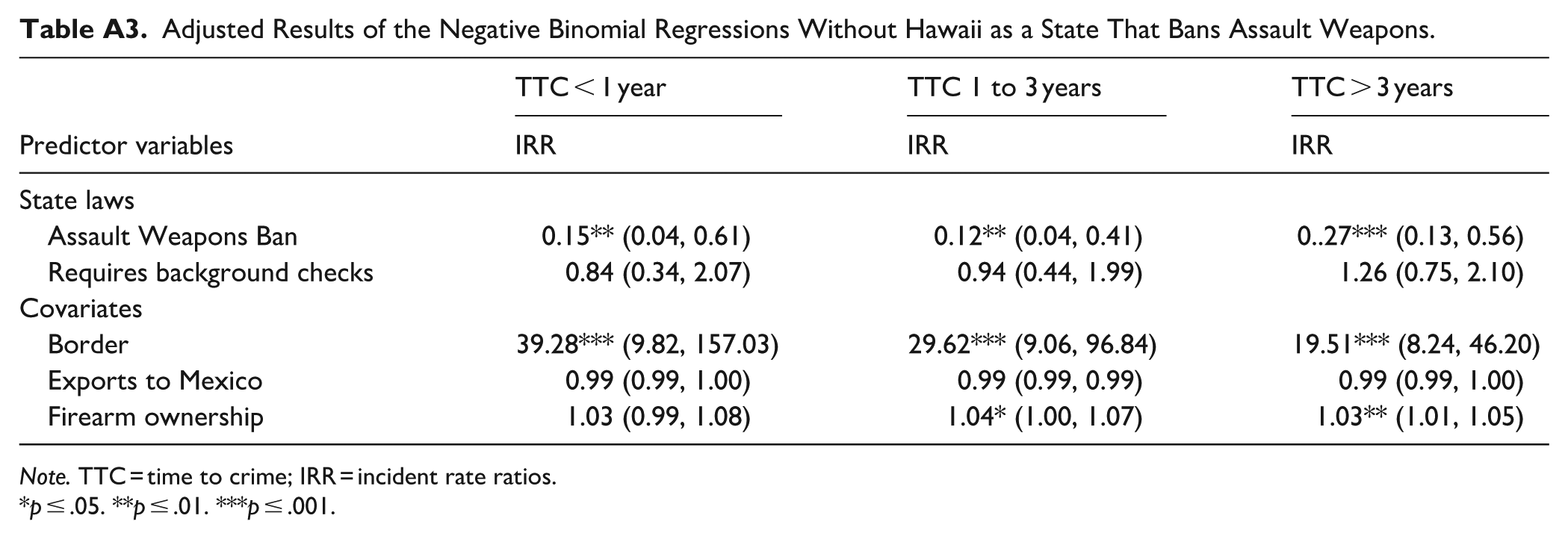
| TTC < 1 year | TTC 1 to 3 years | TTC > 3 years | |
|---|---|---|---|
| Predictor variables | IRR | IRR | IRR |
| State laws | |||
| Assault Weapons Ban | 0.15** (0.04, 0.61) | 0.12** (0.04, 0.41) | 0.27*** (0.13, 0.56) |
| Requires background checks | 0.84 (0.34, 2.07) | 0.94 (0.44, 1.99) | 1.26 (0.75, 2.10) |
| Covariates | |||
| Border | 39.28*** (9.82, 157.03) | 29.62*** (9.06, 96.84) | 19.51*** (8.24, 46.20) |
| Exports to Mexico | 0.99 (0.99, 1.00) | 0.99 (0.99, 0.99) | 0.99 (0.99, 1.00) |
| Firearm ownership | 1.03 (0.99, 1.08) | 1.04* (1.00, 1.07) | 1.03** (1.01, 1.05) |
Note. TTC = time to crime; IRR = incident rate ratios.
p ≤ .05. **p ≤ .01. ***p ≤ .001.
Funding
The authors disclosed receipt of the following financial support for the research and/or authorship of this article: Research reported in this publication was supported by the Eunice Kennedy Shriver National Institute of Child Health and Human Development of the National Institutes of Health under Award Number T32HD108054. The content is solely the responsibility of the authors and does not necessarily represent the official views of the National Institutes of Health.
Declaration of Conflicting Interests
The authors declared no potential conflicts of interests with respect to the authorship and/or publication of this article.
Author Biographies
 ), and a prospective longitudinal study (R01CE003294) focused on applying machine learning methods to develop an optimal brief screen for future firearm violence.