







Abstract
Flexible work arrangements have been extensively advocated to improve employee performance. However, research evidence from non-Western, process-intensive service contexts remains underrepresented. Critically, it is unclear whether organizational commitment-based or work–family balance-based pathways are more influential in traditional work settings characterized by conservative institutional gender role expectations, an important boundary condition for social exchange theory (SET) and job characteristics theory (JCT). This research examines the relationship between job flexibility (JF) and female employees’ performance (PERF) via work–family balance (WFBS) and organizational commitment (OC) in Moroccan insurance companies. Analysis is based on survey data from 300 respondents and structural equation modeling. Results indicate that it has a modest direct positive effect on performance and significantly benefits OC as well as WFBS. OC was found to strongly predict performance and significantly mediate the flexibility–performance relationship, while work–family balance had a nonsignificant mediating effect, implying that flexibility may lead to higher performance in jobs with high levels of service standardization when viewed as sincere organizational support (increasing commitment) rather than an immediate enhancer of work–life balance. Thus, this study underscores the value of implementing flexibility policies that focus on fostering perceptions of fairness, trust, and supportive climates among female employees working in insurance companies or similar settings.
Keywords
Introduction
The concept of job flexibility (JF) used to be an apple of temptation passed around in the Human Resources (HR) circles, but now it has become a reality of an organizational strategy that businesses can no longer ignore. Work was conceptualized as rigid nine-to-five duty, office-bound schedules, and agreed-on expectations (Zappalà et al., 2024). The first to challenge the old model were employees with family responsibilities, soon followed by concerns from researchers in organizational psychology: The impact on performance when flexibility is obtainable depends on whether it enhances productivity and effectiveness or, conversely, undermines discipline and work performance.
Flexibility as empowerment and flexibility as potential chaos are apparently the opposing rivals in management literature (Arlianto, 2025). Research shows that a worker who is given the freedom to take control over work hours or the workplace expresses more satisfaction and less pressure while handling professional and personal responsibilities (Çivilidağ & Durmaz, 2024). By providing flexible schedules, a worker has space to breathe and is much less pulled apart by child care duties, household activities, and professional obligations (Allen et al., 2013). One interpretation is along the lines of social exchange theory (SET): when employees feel trusted by the organization, in the sense that they are given free rein, a debt element might enter into play, making them feel the need to reciprocate with efforts, loyalty, or just through the willingness to overperform (Costa & Loureiro, 2018). The fact that employees will actually be able to balance their family needs against their job responsibilities will determine whether flexibility is positively affecting performance or not. Otherwise, if it is unbalanced, flexibility may turn out to be just another source of stress in another disguise (AGBANU et al., 2023).
The Moroccan insurance firms are generally regimented places, particularly regarding targets and office responsibilities. Flexibility can present either an escape or an extra burden to female employees who often have to juggle work and family responsibilities (Yucel & Fan, 2023). The key issue is whether flexibility genuinely contributes to better performance or merely defers the strain of managing conflicting responsibilities, only for that pressure to reemerge at the individual level.
Women still suffer from a double burden in household and childcare (Ishizuka & Musick, 2021). Moroccan women’s professional life is affected by a risk of career stagnation linked to the conflict between rigid schedules and family responsibilities. Although there have been some advancements in the participation of women in white-collar jobs, the strains of professional and domestic duties still exist (Lekchiri & Eversole, 2021). JF, therefore, might permit women to remain competitive and productive in a fast-moving industry (Riquelme-Segura et al., 2025).
Workers’ feelings of attachment and loyalty to their places of employment have real consequences on their productivity (Zhao et al., 2025). Flexibility can both bolster and harm that commitment, either by expressing trust or by making workers feel alienated from the culture of their workplace, particularly based on the context, individual perception, and company culture at large (Lei et al., 2023).
Although there is a growing body of research documenting positive relationships between flexible work arrangements and performance, there are several limitations in the current extant literature across nations. Research has largely centered on Western countries and occupations with high job discretion, leaving jobs with more standardized service roles, such as insurance sales, understudied. Most studies examine WFBS as the primary underlying mechanism, while testing OC as a competing mediator is limited. Additionally, there is a lack of large-sample quantitative studies regarding women in conservative Global South contexts where caregiving burdens may be greater.
Although previous studies have conceptualized and tested SET and JCT-based paths from JF to outcomes in Western countries and high-discretion occupations, the comparative prominence of these two paths has not been evaluated in roles with low discretion and high process orientation within conservative countries in the Global South. Testing these boundary conditions in a new institutional context such as Moroccan insurance companies allows this study to contribute to theory by identifying whether OC or WFBS would serve as the mediating process in this context. Specifically, JF may not directly cause higher performance but rather work through WFBS and OC (Isa & Indrayati, 2023), initiating a series of adaptations that allow individuals to schedule their days, negotiate family responsibilities, and sense employer support. Such adjustments can shape the effectiveness of their performance (Eshun & Segbenya, 2024).
The COVID-19 pandemic led to increased worldwide discussions regarding telecommuting and flexible schedules, which pressured conservative organizations to reconsider long-established routines (Martucci, 2023). Although the pandemic is on a global scale, the aftershocks are local. Moroccan insurance companies are facing pressures from both internal staff members of the companies and international business practices, which have left them with only one option: to adapt. In this regard, it is essential to have a better idea of whether flexibility is actually beneficial to female employees in this field or whether it is just a form of a symbolic policy that looks good on paper but doesn’t actually enhance well-being (Çivilidağ & Durmaz, 2024).
Theoretical Background and Hypothesis Development
Theoretical Foundation and Literature Review
This study is anchored in two complementary theoretical frameworks: Social Exchange Theory (SET; (Blau, 1964) and Job Characteristics Theory (JCT; (Hackman & Oldham, 1976). These two perspectives jointly explain how flexibility translates into performance through both motivational (JCT) and reciprocity-based (SET) mechanisms. Conservation of Resources (COR) theory is drawn upon as a complementary lens that operates alongside SET and JCT to clarify how work–family balance preserves and reinvests the psychological resources required for sustained performance. Job Characteristics Theory suggests that when jobs have motivating characteristics such as autonomy, employees will feel intrinsically driven and perform better (Hackman & Oldham, 1976). However, when JF is poorly managed, it may lead to employee overload (Beauregard & Henry, 2009). SET proposes that flexible work practices are tangible resources that organizations provide to their employees. If female workers perceive that organizational flexibility is distributed equitably, they will feel indebted to the organization and will want to repay with higher levels of commitment, organizational citizenship behaviors, and better performance. If flexibility is perceived as unfair, the social exchange relationship will be significantly weakened or may not emerge (Leenders, 2019). The theories above justify our consideration of WFBS and OC as potential mediators of the ultimate effect of job flexibility on female employee performance in Morocco’s insurance sector. Within the JCT lens, flexibility operates as a form of autonomy that reduces inter-role strain and frees psychological resources for task performance, while within the SET lens, flexibility signals genuine organizational support that workers reciprocate with effort and loyalty. The competing pathway, drawing on OC research, positions flexibility as a sign of organizational support that workers repay with increased loyalty and effort. These are competing exploration routes that may not apply equally to structured service jobs, where relationships could matter more than work–life relief when it comes to near-term task performance. This research aims to examine which pathway is stronger among women working in Moroccan insurance companies.
JCT Theory (Hackman & Oldham, 1976) serves as the dominant theoretical perspective through which JF is believed to impact employee outcomes. The theory posits that when jobs are designed with autonomy, intrinsic motivation will be triggered, individuals will feel more responsible for the outcomes of their work, and as a result, their performance will improve. Flexibility arrangements include flexible scheduling, telework, and control over work location, which are operationalizations of autonomy as one of the main dimensions of JCT (Ray & Pana-Cryan, 2021). JCT also acknowledges that autonomy is not always helpful if demands exceed resources. Flexibility may be detrimental if it is not managed properly, leading to role overload rather than motivation. Given the standardized and customer-facing nature of jobs in the Moroccan insurance sector, we argue that JCT suggests flexibility will lead to higher performance by allowing female employees to better adjust their work schedules to accommodate their personal and familial needs (lowering inter-role conflict) and conserve cognitive resources to perform their tasks. Thus, this conceptualization of JF as predicted by JCT is framed as an autonomy-enhancing work design.
Hypothesis
The following hypotheses are formulated to explore the effects of JF on women employees’ performance in Moroccan insurance companies, as shown in Figure 1. Flexibility in work arrangements has been found to play a significant role in affecting performance. According to JCT, autonomy increases performance by increasing job satisfaction and motivation while allowing individuals to decide where and when they want to work (Ray & Pana-Cryan, 2021). Prior research found that flexible work hours increased women’s well-being and PERF (Dousin et al., 2021; Sahni et al., 2025). These findings suggest that flexible work environments disproportionately benefit women’s productivity and loyalty. Further, flexibility when combined with organizational support has been shown to increase motivation, satisfaction, and retention among workers in high-stress jobs or jobs with caregiving responsibilities (Gašić et al., 2025; Rahman & Mehnaz, 2024). Research framework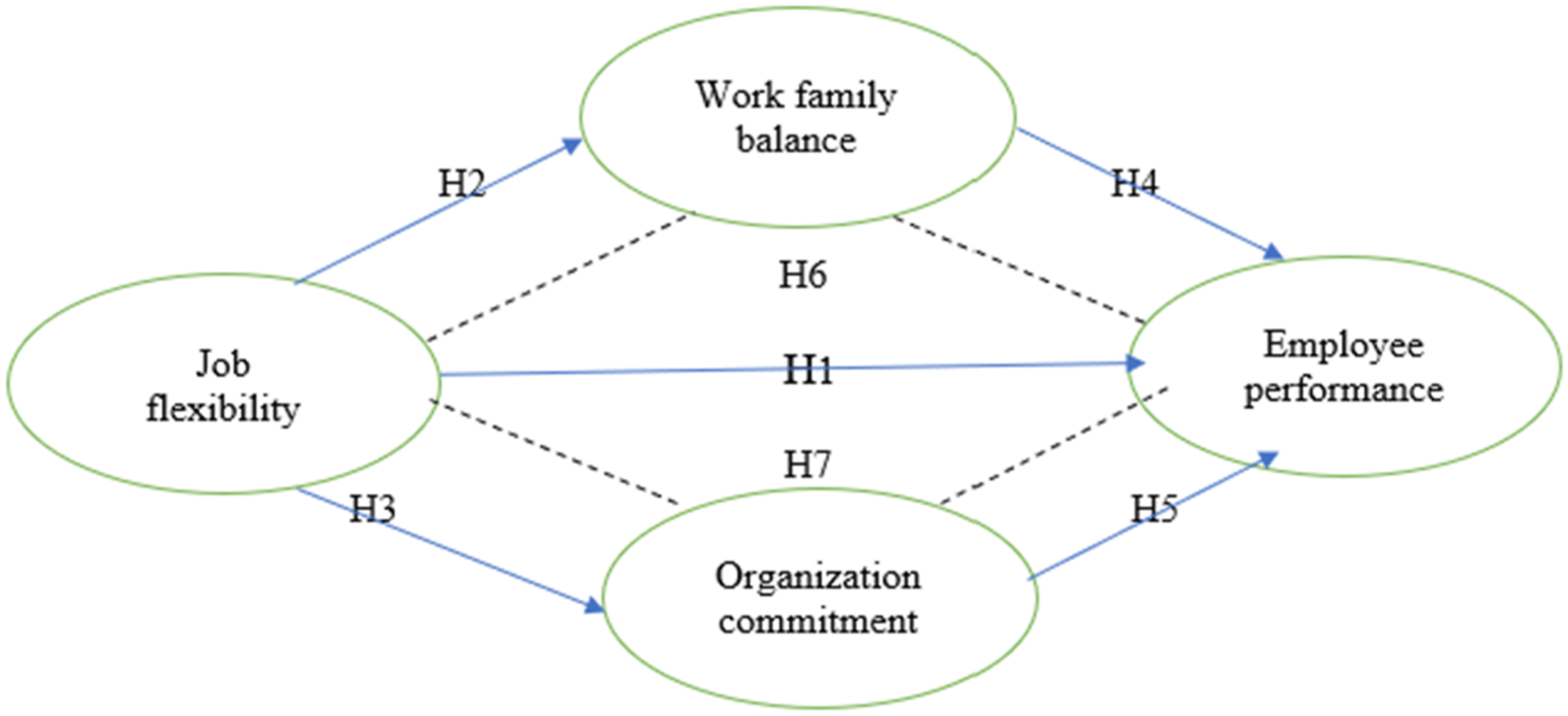
Most of these findings, however, come from professional and managerial samples in Western settings, where employees enjoy considerable discretion over how they perform their tasks. In standardized service work such as insurance, where roles are scripted and outputs are closely monitored, the size of the flexibility effect on performance is less well understood and may be more modest.
The correlation between job flexibility and job performance among the employees is positive.
WFBS has also been shown to significantly impact female PERF. When female employees have a good WFBS, they can easily meet their job demands without stress, role conflict, or burnout. While also fostering improved concentration, vitality, and emotional regulation, this leads to enhanced job satisfaction. From an SET viewpoint, employees with effective WFBS perceive the organization’s flexibility as legitimate and respond by maintaining their effort and involvement in their work. Supplementing SET, COR theory suggests that WFBS maintains the psychological resources, energy, attention, and emotional control needed for high task performance; therefore, the reciprocity impulse (SET) can be acted upon because inter-role conflict has not depleted those resources (Ferry et al., 2025). Several studies have found a positive correlation between WFBS and PERF, as women who achieve this balance tend to have higher job satisfaction, motivation, and engagement levels, leading to better performance outcomes (Esther, 2024).
In settings like Morocco, where women carry a disproportionate share of household and caregiving work, the performance returns of achieving balance may be smaller, since balance in those circumstances tends to relieve strain without freeing up substantial additional time or energy for work.
Work–family balance amongst employees positively correlates with job performance.
The study also predicts that females who are highly committed to their organization will exhibit higher organizational citizenship behavior by enhancing their company’s efficiency through helping co-workers, volunteering for additional responsibilities, and going beyond expectations to complete tasks. Previous research has shown support for this relationship (Chambel & Carvalho, 2022; Naqvi et al., 2024). Women who are effectively committed show high levels of motivation, responsibility, and job satisfaction, which reflects on their productivity and organizational goal achievement (Afota et al., 2025). Therefore, women who feel cared for and appreciated by their organization will value its goals and show higher work engagement, resulting in consistent quality performance (Vukolić et al., 2025).
Much of the existing evidence on this link pools different forms of commitment together, treating affective attachment, continuance calculation, and normative obligation as a single construct. This matters here because, in this context where formal job alternatives for women are limited, continuous commitment can inflate reported attachment without producing the discretionary effort that drives performance. In this context, isolating affective commitment, as this study does, therefore offers a cleaner test of the relationship than aggregate measures allow.
“Organizational commitment is positively associated with job performance amongst workers.”
JF has been found to play a critical role in enabling employees, especially females, to manage competing work and family obligations. The foundation of flexibility lies in the JCT, which suggests that flexibility in terms of autonomy over work hours, location, and schedule can increase the employee’s well-being by providing control over when and how they complete their work tasks (Dousin et al., 2021). Studies have found that flexible work arrangements allow women to manage work and family responsibilities more effectively, which can lead to better mental health, life satisfaction, and improved WFBS. The mentioned benefits seem to be the most apparent for female employees, as flexibility enables them to alleviate household duties and caregiving role pressures while remaining productive and engaged (Laia & Palupiningtyas, 2025). Considering that Moroccan women working in insurance companies often have customer-centric roles that demand long hours yet are expected to uphold family responsibilities, JF represents an effective way to alleviate work–family conflict and improve satisfaction without jeopardizing performance (Lekchiri & Eversole, 2023).
For women in Moroccan insurance firms, where heavy domestic expectations sit alongside demanding professional roles, flexibility therefore functions less as a perk than as a practical mechanism through which work–family balance becomes attainable.
Job flexibility is positively related to work–family balance.
JF has been found to be a crucial aspect in promoting OC. One example includes female employees working hard to fulfill professional responsibilities while maintaining familial duties (Shahi, 2023). Employees that feel cared about and supported by their employers through JF are prone to develop stronger OC (Jaskeviciute et al., 2021). Built upon SET, a company/organization provides employees with flexible work options, including flex hours, work from home, or hybrid models in which employees reciprocate that support back by demonstrating greater loyalty, engagement, and affective OC (Siswanto et al., 2022). Studies have found JB to be a great contributor to females’ affective OC (Young et al., 2020). A flexible approach from employers translates to employees feeling cared for and valued. This leads to greater satisfaction, performance, and retention in the long run (Kosek et al., 2021; Thompson et al., 2021).
Affective commitment in this setting is closely tied to whether women can realistically foresee a long-term future in the firm rather than an eventual forced exit. Empirical evidence on Moroccan female labor-force participation shows that being married significantly reduces the probability of remaining in the labor market and that the presence of caregiving obligations within the household compounds this effect, with many women leaving the formal sector altogether at points where flexibility could have preserved the employment relationship (Lopez-Acevedo et al., 2021). Insurance firms that offer genuine flexibility interrupt that trajectory by making continued employment compatible with the very life events that have historically pushed women out of professional roles, and the resulting ability to project a stable career inside the same organization provides one of the more durable foundations for the affective attachment this hypothesis predicts.
Job flexibility is positively related to organizational commitment amongst employees.
This hypothesis suggests that WFBS mediates the effect of JF on job performance for women employees. JF does not always directly produce higher PERF; its effects depend on whether it enables WFBS. Whether a woman benefits from flexibility depends on whether she can use it to create a healthy WFBS. From a Job Characteristics Theory (JCT) standpoint, the autonomy provided by flexible work arrangements allows women to structure their time in ways that reduce inter-role strain. Complementing JCT, Conservation of Resources (COR) theory clarifies the mediating mechanism: when flexibility enables better WFBS, women conserve psychological resources, time, energy, and attention that would otherwise be depleted by work–family conflict, and they reinvest those resources in task performance. Balance is therefore the psychological pathway through which flexibility translates into performance. This mediation is also supported by Damman and Henkens (2020). If women feel that the organization is providing them with flexibility, they will feel a sense of obligation to repay with higher levels of engagement and performance. In the Moroccan insurance companies, flexibility can help women achieve better WFBS, which should lead to higher performance and engagement (Owolewa et al., 2025).
Whether this mediating role holds in the Moroccan insurance context is less obvious than it might appear. If achieving WFBS does not, on its own, free up enough resources to translate into observable performance gains, the mediating effect of balance may be weaker in this setting than the resource-conservation reasoning would predict.
Work–family balance positively mediates the relationship between job flexibility and job performance amongst employees.
This hypothesis suggests OC as a mediator between JF and PERF. According to SET, reciprocity serves as a justification. When employers offer favorable treatment in the form of organizational support, such as flexibility, they are likely to receive favorable reactions in terms of commitment and performance (Melkamu, 2023). Highly committed women will leverage flexible practices with positive discretionary behaviors like innovation, cooperation, and OCBC, which reinforce their performance (Boccoli et al., 2024). Flexibility leads to higher levels of OC, which has been found to positively predict PERF (Berkery et al., 2025; Bui et al., 2021). Commitment, thus, is the mediating psychological process through which flexibility results in performance for females working at Moroccan insurance companies.
Although this mediating mechanism has received some empirical support, the relative importance of OC as the channel through which JF shapes performance remains underexplored in service-sector samples from the Global South. Examining this pathway in the Moroccan insurance industry offers a useful test of how far the SET-based reasoning extends beyond the contexts in which it has typically been studied.
Organizational commitment positively mediates the relationship between job flexibility and employee job performance.
Methodology
Research Design and Data Sources
The study employed quantitative methodology using a cross-sectional survey. Questionnaires gathering primary data were administered through online survey software and included validated Likert-type scaled questions to provide uniform and comparable data. Three hundred sixty-five questionnaires were distributed, and three hundred valid cases remained after cleaning the data. SPSS was employed for descriptive/demographic analysis, means, and standard deviations of major variables. SPSS was used for descriptive/demographic statistics, means, and standard deviations of key variables. PLS-SEM (using SMART PLS 3.3.3) analyzed the measurement model and structural model to determine reliability, validity, and direct and indirect effects. Bootstrapping (five thousand resamples) was used to test the significance of paths.
Research Population, Sampling Method, and Sample Size
The chosen population for this research is women employees who work in Moroccan insurance companies. This demographic is particularly relevant given that Morocco’s 2026 birth rate data show that women aged 20–29 account for 99.8 births per 1,000 women, the highest of any age group, and women aged 30 and above contribute an additional 29.1 per 1,000, meaning the vast majority of childbearing activity falls squarely within the 20–40 age range that constitutes the core of the present sample (Morocco Birth & Fertility Rate Decline on Charts, 2025). Crucially, childbearing does not operate in isolation: national time-use data indicate that Moroccan women aged 15 and over devote approximately 20.8% of their daily time to unpaid domestic and care work, compared to fewer than 3% for men (Hanna et al., 2023). Furthermore, a recently proposed policy framework acknowledges that Moroccan women shoulder 87%–90% of all unpaid household and care labor, a structural imbalance that persists regardless of employment status or marital status, based on the same source. Taken together, these figures demonstrate that even in the absence of direct survey measures of caregiving status, the overwhelming structural and demographic evidence strongly supports the inference that the women in this sample, 79% of whom are married and who fall predominantly in the peak childbearing and domestic-work-intensive age groups, are likely to be managing meaningful caregiving responsibilities alongside their professional roles. The choice to focus on women, therefore, reflects not a simplistic assumption but an evidence-based design decision grounded in Morocco’s documented gendered reality.
They also tend to be more affected by JF options, as these allow for a better work–life balance and thus can lead to higher performance. Participants were drawn from Moroccan insurance firms that had adopted formal flexible work policies within the past two and a half years (flextime, occasional telecommuting, or compressed workweeks), female employees who had been working for at least 6 months and experienced some form of flexibility in their jobs (flexible hours, occasional telecommuting, or compressed weeks); participants were excluded if they had not reached their 6-month mark. The survey is offered in the form of a self-administered online questionnaire after they provide informed consent. This method allows for large numbers of participants from diverse locations while ensuring confidentiality and ethical hypothesis testing.
Research Instruments
The four constructs used in the current study were measured with adapted, validated scales to allow for reliability and comparability. JF (the independent variable) was measured with items from Kossek and Thompson (2015) that indicate the degree to which employees can decide when, where, and how they work on a 5-point Likert scale ranging from 1 (Strongly Disagree) to 5 (Strongly Agree). This scale comprises 12 items; a sample item is “I have control over when I start and end my workday.” WFBS was measured using a work–family conflict scale. (Netemeyer et al., 1996) which assessed time- and strain-based interference from work to family and family to work on a scale from 1 (Never) to 5 (Always). This scale comprises eight items; a sample item is “The demands of my work interfere with my home and family life.” OC was assessed using affective commitment measures on a 5-point agree–disagree scale (Allen & Meyer, 1990). This scale comprises eight items measuring affective commitment; a sample item is “I feel a strong sense of belonging to my organization.” Finally, the dependent variable PERF was measured by task performance items developed by Williams and Anderson (1991), rated on a scale from 1 (Very Poor) to 5 (Very Good), reflecting the respondents’ typical behavior. This scale comprises nine items; a sample item is “I believe my job performance contributes to the success of the organization.” All items across the four scales were rated on 5-point Likert scales.
Ethical Considerations
The research followed established ethical principles designed to protect participants’ rights and ensure their welfare. Participants received complete information about the study’s purpose and procedures and consented to participate voluntarily. Confidentiality and anonymity were guaranteed, and no personally identifiable information was collected.
Results and Discussion
Demographic Characteristics of Respondents
Demographic Characteristics of the Participants
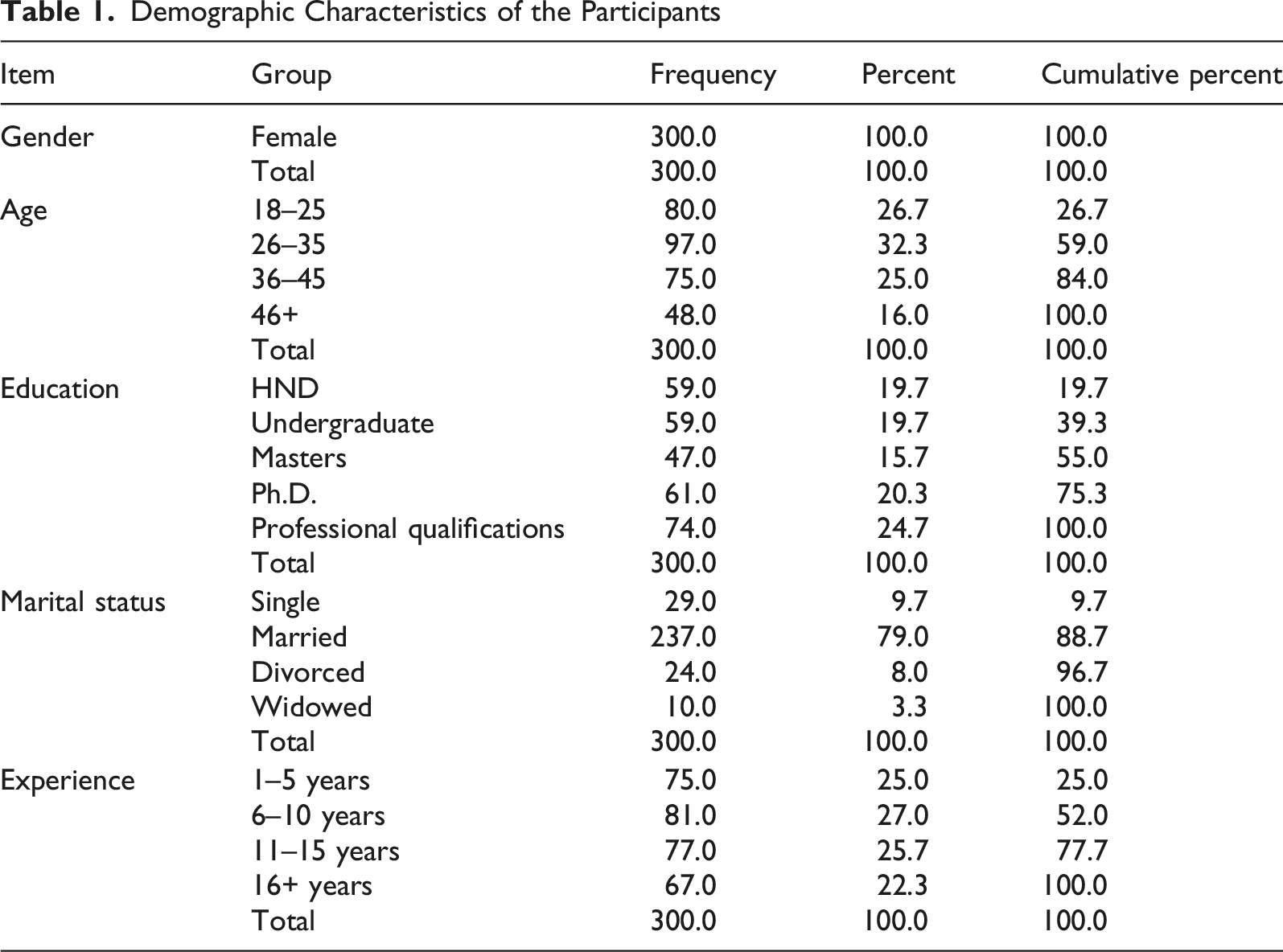
The study’s scope provides a specific focus on women’s experiences related to WFBS, OC, PERF, and JF. For age, the highest percentage of participants falls into the 26–35 years range (32.3%), being in their early- to mid-stages of career and family life. The second largest group is 18–25 years old (26.7%); this group is in the early stage of their careers. 36–45 years comes next with 25%, with employees with more established work–family routines. 46+ years is the smallest age group at 16%. The highest qualification educational level among the respondents is the professional certification of qualifications and occupational knowledge in the working field, with 24.7% of respondents. This is closely followed by PhD, the highest level of education attained (20.3%). HND and undergraduate degree holders are evenly matched at 19.7% each. Respondents with a master’s degree represent the smallest group in the educational background field. In terms of marital status, the majority of the respondents are married (79%). This is especially important because married workers are at the highest risk of experiencing work–family conflict. The other categories include single (9.7%), divorced (8%), and widowed (3.3%).
Their work experience varied, with the largest category being 6–10 years (27%), followed by 11–15 years (25.7%) and 1–5 years (25%). The remaining 22.3% of the respondents had 16+ years of experience.
Descriptive Statistics and Correlation Analysis
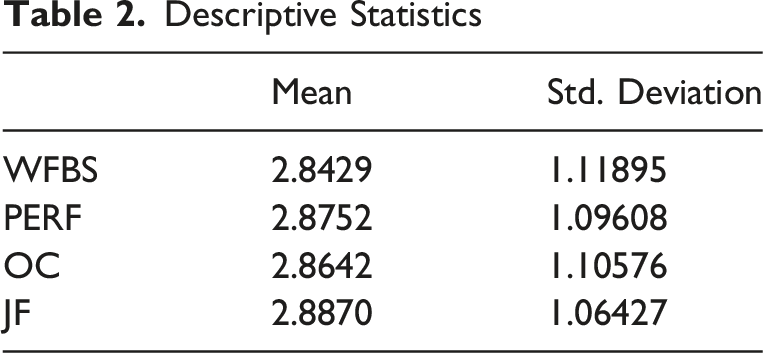
Descriptive Statistics
Correlation Between the Studied Variables
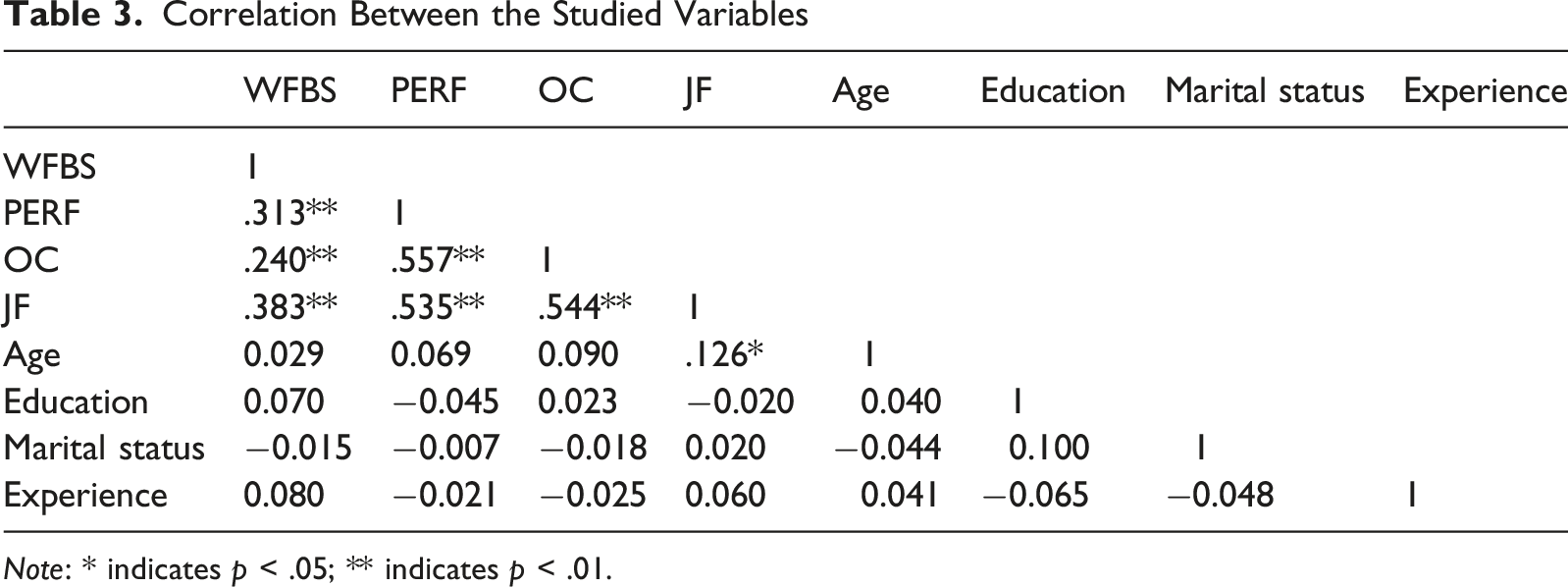
Note: * indicates p < .05; ** indicates p < .01.
Measurement Model Evaluation
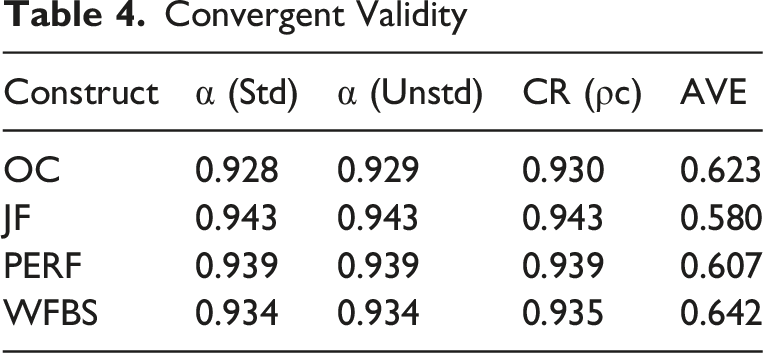
Convergent Validity
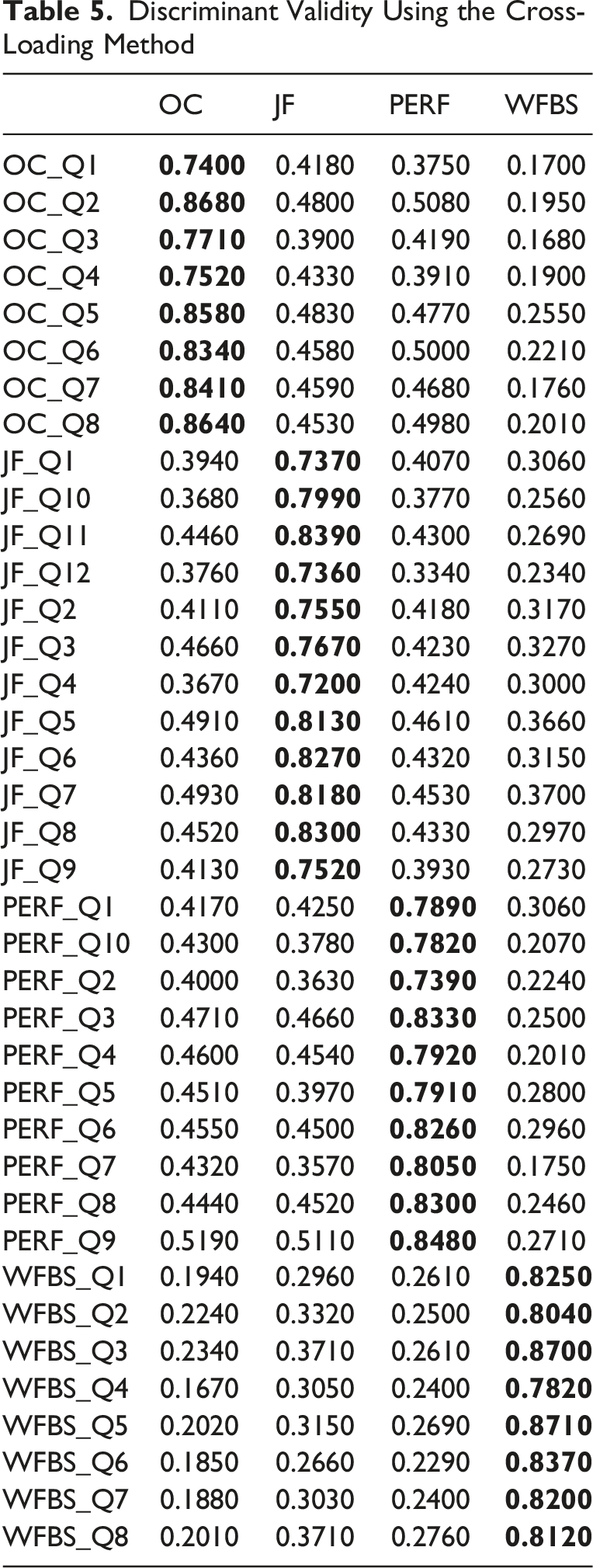
Discriminant Validity Using the Cross-Loading Method
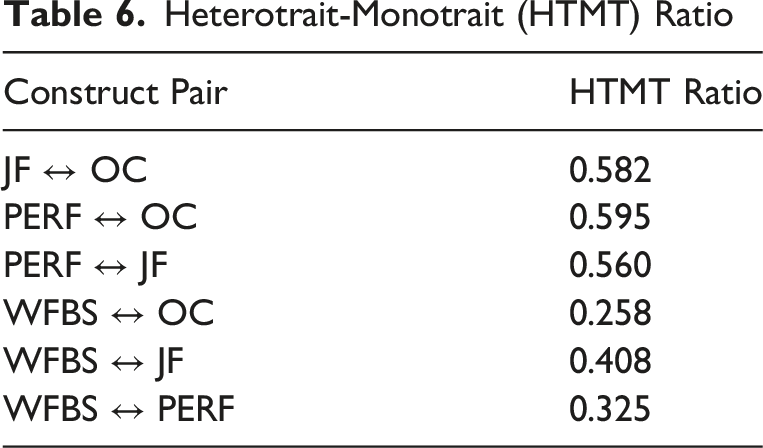
Heterotrait-Monotrait (HTMT) Ratio
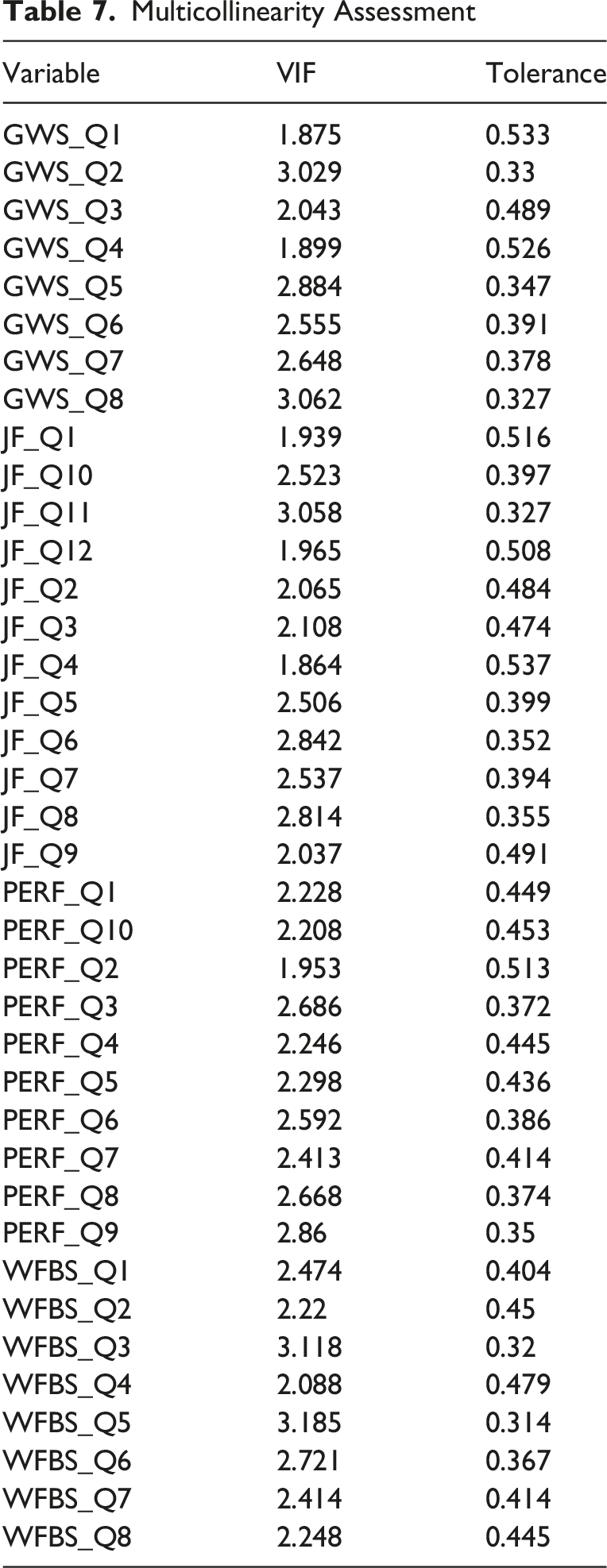
Multicollinearity Assessment
Model Fitness Test
As presented in Table 6, the estimated model has an excellent fit to the data. The results obtained for the chi-square (679.428), RMSEA (0.010), and CFI (0.998). These values represent an excellent fit, as the RMSEA is lower than the acceptable level of 0.05, the CFI is close to the optimal value of 1, and the p value of .292 is greater than the 0.05 cut-off level. On the other hand, the results for the null model that is based on an assumption of no relationship between the variables show a poor fit as indicated by a chi-square value of 8536.889 and RMSEA of 0.193. The null model, which is based on chi-square and RMSEA along with the p value of 0.000, indicates that the null model is a significantly worse fit and that the estimated model is a relevant and effective one in which significant relationships between the variables under study are explained.
Testing for Direct Relationships
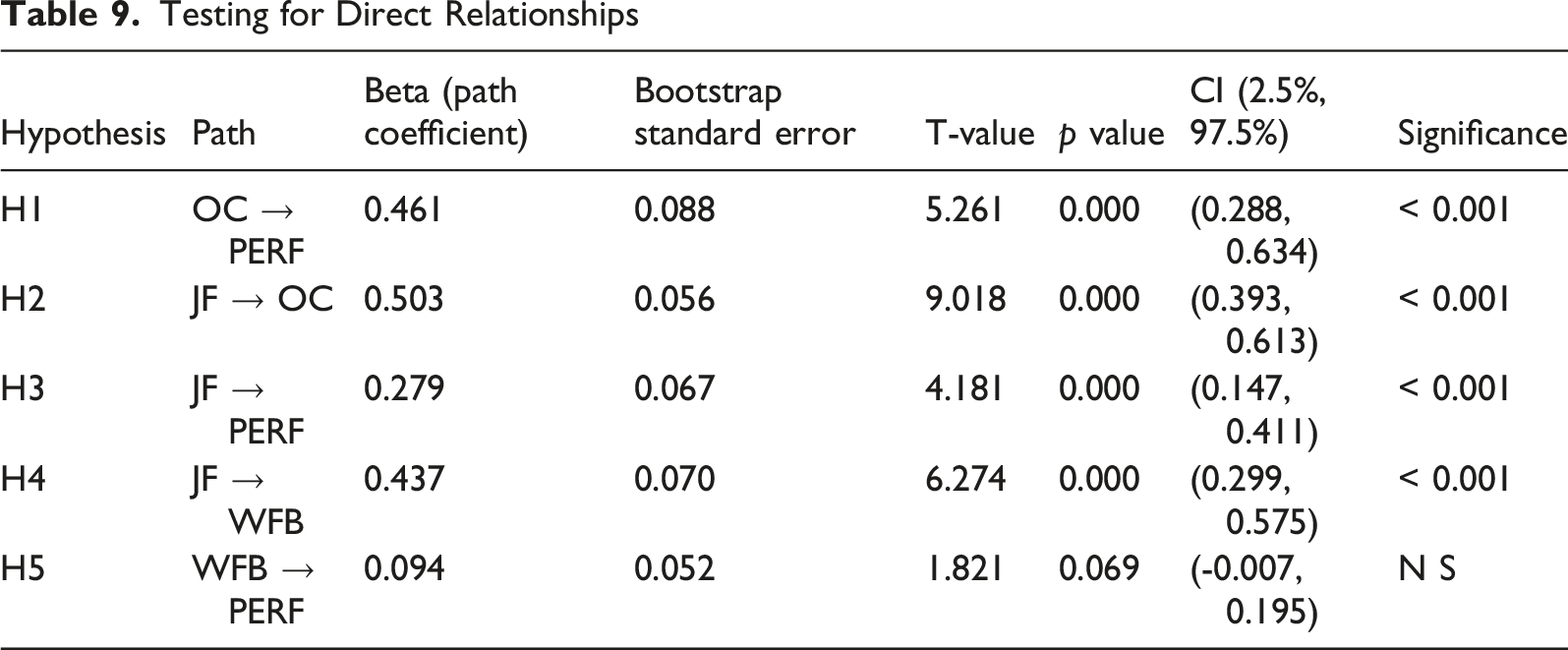
As shown in Table 7, the path coefficient of JF → PERF is 0.279, with a T-value of 4.181 and a p-value <0.001. The magnitude is moderately sized and positively directed, which suggests that people with high flexibility perform better; however, in the path coefficient, the influence of JF on PERF is lower than that of OC. Parveen and Rizq (2024) show that JF is associated with higher PERF, though the extent could vary with the nature of the job and the company context. Workplaces have high performance levels. Flexibility has been found to increase motivation and reduce stress levels, although evidence of its impact on performance has been a bit more setting-dependent, particularly in insurance companies, where the link between performance and flexibility might be less of a direct impact. The path coefficient of JF → WFBS is 0.437; the T-value of this relationship is 6.274 (p < 0.001). Therefore, we have a strong positive relationship between the two variables. In this regard Beauregard and Henry (2009) have shown that WBFS is promoted by JF in the work organization. Their findings revealed that the positive association between JF and WFBS is particularly evident among employees with high family caregiving demands. The path coefficient of JF → OC is 0.503 (T = 9.018, p < 0.001); JF is positively associated with OC. This significant positive relationship is also in line with SET, where employees repay the trust and support received from the employer (allowing JF) with higher commitment to their organization (Blau, 2007). Recent literature suggests a positive correlation between JF and OC. For example, Gašić et al. (2024) conducted a study that concluded employees with greater flexibility experienced higher commitment. The path coefficient for WFBS → PERF is 0.094 with a T-value of 1.821 (p = 0.069), which is not statistically significant at the conventional 0.05 level. This finding indicates that WFBS may not have a direct impact on performance, and other factors may be more influential drivers of performance. Studies have shown that the direct effects of WFBS on performance are somewhat inconsistent (Sahay & Lall, 2024). While WFBS may lead to reduced stress and overall well-being, the effects on performance may be more complicated or moderated by other factors like OC. The path coefficient for OC → PERF was 0.461, with a T-value of 5.261 (p < 0.001); the stronger the level of commitment, the better the performance, and this relationship is significant and positive. In accordance with previous studies, it has been shown that employees who feel affective commitment to their organization (i.e., emotionally attached) show better performance at work (Meyer et al., 2002). Employees with a sense of attachment and belonging to an organization are willing to do more for its success, which positively impacts performance. Recent studies (Kim & Vandenberghe, 2021) report that OC was significantly related to improved performance.
Testing for Mediating Effects
Model Fitness Test

Discussion
Discussion of Findings
Testing for Direct Relationships
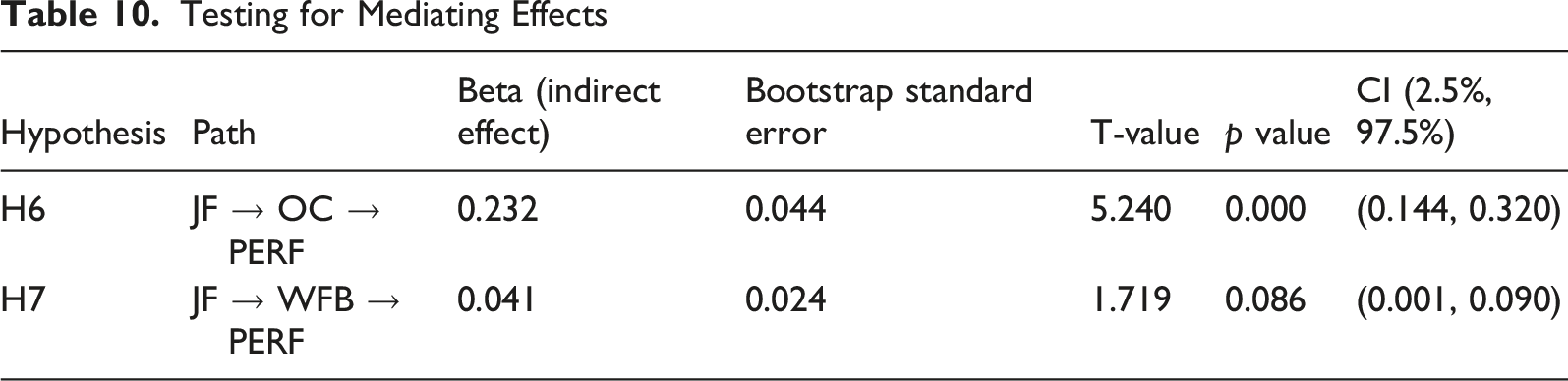
Testing for Mediating Effects
Results of the Hypothesis
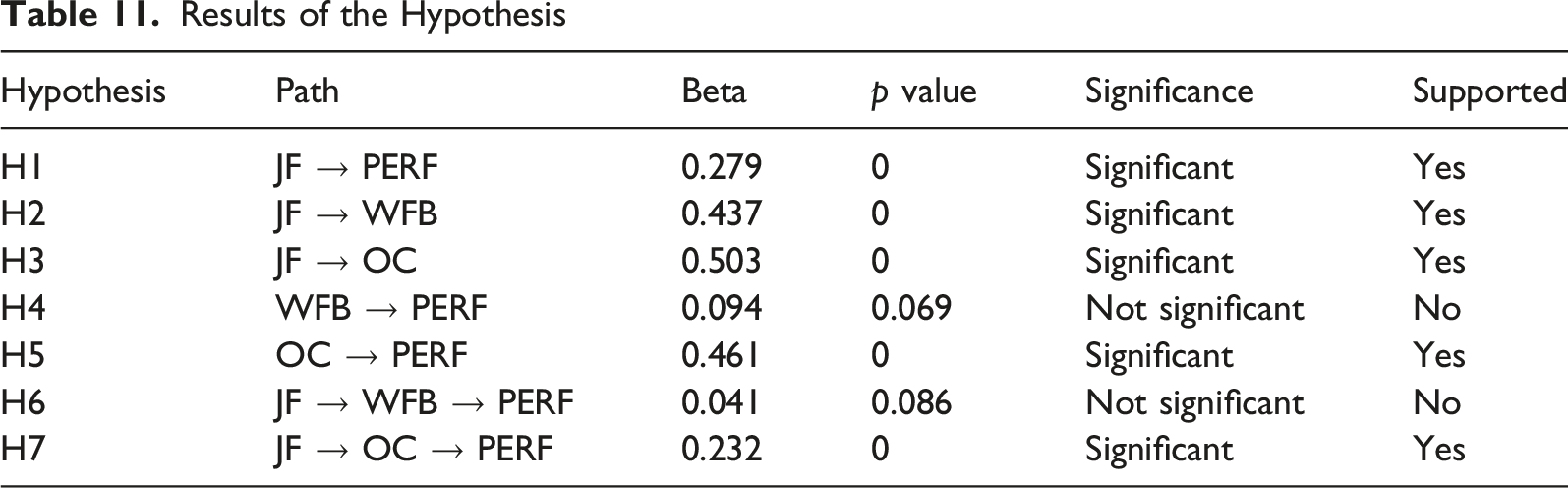
The significant positive relationship between JF and WFBS confirms the argument that flexible work arrangements provide employees with greater control over their time and work patterns, which in turn facilitates better management of work and family obligations. The previously established finding by Beauregard and Henry (2009) has shown that JF enables employees to better accommodate both work and family responsibilities. Beauregard and Henry (2009) have shown that WFBS is promoted by flexibility in the work organization. Their findings revealed that the positive association between JF and WFBS balance is particularly evident among employees with high family caregiving demands. This is consistent with my study, since it demonstrates that JF plays a key role in the reduction of work–family conflict and the promotion of a better WFBS, particularly for female employees in the Moroccan insurance sector.
The non-significant effect of work–family balance on performance suggests that balance alone does not automatically lead to higher performance. This is in line with some recent studies that have shown that the direct effects of WFBS on PERF are somewhat inconsistent (Sahay & Lall, 2024). While WFBS may lead to reduced stress and overall well-being, the effects on performance may be more complicated or moderated by other factors like OC. Performance tends to be a function of day-to-day pressures, deadlines, and service demands in most insurance companies. Therefore, even satisfied and balanced female employees will not perform at higher levels if the organization does not provide a supportive environment in which that balance can be leveraged. As a result, WFBS may act more as a contextual resource.
OC appears to act as a powerful engine of performance in this study. Employees who feel emotionally connected to their organization seem more willing to go beyond routine compliance and invest real effort in their work. This is in accordance with the previous studies. Alrowwad et al. (2019) investigated the role of affective organizational commitment on the job performance of women who work in demanding job positions. The results showed that female employees with strong emotional ties to the organization were characterized by high job performance that was driven by intrinsic motivation resulting from affective commitment to the organization.
The mediation analysis shows that work–family balance does not serve as a significant pathway through which JF influences PERF. This aligns with some of the recent research on the subject, such as Hokke et al. (2024) and Yang et al. (2023), which has indicated that the direct effect of WFBS on PERF is significantly lower than other primary constructs, such as OC. While JF allows female employees greater ability to adjust their work schedules and arrangements to accommodate family responsibilities, this accommodation may not result in increased PERF. A likely reason may be that WFBS is more of a factor that functions as a personal resource to alleviate strain, instead of a mechanism through which work outcomes are improved. In the current study, flexibility may have allowed women employees to better organize their work roles; however, this improvement was not enough to impact performance. PERF in insurance companies may be impacted more directly by organization-level variables, like task requirements, performance pressures, OC, and supervision. Thus, WFBS lessens strain but is not an adequate mediator of JF and PERF.
OC emerges here as a meaningful bridge between JF and PERF. This is consistent with recent research by Lautsch, et al. (2022), which also demonstrated that JF increases OC and that employees who are more committed to their organization tend to perform better. SET may help to explain this finding, as employees who are provided with supportive work arrangements, such as flexibility, may feel an obligation to reciprocate this support through their commitment and loyalty to the organization, which also enhances their performance.
Theoretical Implications
This study contributes to theory in three ways, each grounded in SET (Blau, 1964) and JCT (Hackman & Oldham, 1976). This study makes three theoretical contributions. First, drawing on SET (Blau, 1964), our discovery that commitment not WFBS is the dominant mediating pathway advances theory by showing that when institutional forces are conservative and jobs are standardized to the point that service work is scripted, employees treat flexibility as a signal of organizational trust and support worthiness and reciprocate with increased affective commitment and sustained task performance. SET-based exchange appears to have more proximal effects on performance than resource conservation among jobs with highly prescribed tasks and in contexts where inter-role conflict is a chronic experience. Second, another JCT implication is that the relatively small direct effect of JF on performance suggests that autonomy without a perception of organizational endorsement and fairness will not improve performance in low-discretion jobs. This refines JCT by highlighting that perceived organizational support mediates the autonomy–performance link in process-intensive work. Third, the study identifies a theoretically important boundary condition: the relative dominance of the OC pathway over the WFBS pathway is likely contingent on job discretion level and institutional gender norms. In higher-discretion occupations or more egalitarian institutional contexts, the WFBS pathway may carry comparatively greater weight. Together, these contributions position the Moroccan insurance sector as an important test case for refining the boundary conditions of both SET and JCT in Global South service contexts, consistent with recent calls for contextually grounded theory-building in the flexibility literature (Mabaso et al., 2026; Owolewa et al., 2025).
Practical Implications
Flexibility programs work best when they’re perceived as employee-friendly. With more process-driven insurance jobs, emphasizing OC first, not productivity: setting transparent eligibility rules, guidelines for review, and manager leadership by example to show trust and respect for employees. Establishing predictable flex schedules with core hours, approving results-only work standards for back-office tasks, and creating coverage for peak periods with cross-training and float pools. Targeting women with the highest care responsibilities first but maintaining equity by rotating access and monitoring progress.
Leaders must shift from a “heads in chairs” management style to managing by results. Set SLAs around response, quality, and throughput; provide frequent feedback; manage techs (Corp VPN, virtual desktops), and overcommunicate your three anchors: trust, fairness, and service continuity. Pilot for 90 days. Revisit SLAs based on service metrics and commitment scores and then scale. Anchor flexibility in growth instead of survival. Once coverage is a non-issue and decisions can be made objectively, flexibility becomes key to crafting a talent strategy that boosts service and keeps employees on board. These suggestions are useful for insurance companies and other service providers in comparable settings around the world.
Limitations
Limitations of this research include its cross-sectional nature, not allowing for true causal statements or identification of lagged effects (the accumulation of WFBS to PERF). Since all variables were self-reported, the study is subject to common method bias, halo effects, and leniency in performance ratings. Slow process results, such as decreased absenteeism or burnout, were not captured due to the small window of measurement, administered online; employees with easier digital access or more desk time may be overrepresented compared with colleagues whose work takes them away from screens.
A next generation of studies would benefit by following employees over time rather than relying on a single time point snapshot.
Future Research Directions
Longitudinal research designs are needed (panel surveys, experience sampling) to establish temporal ordering for testing lagged mediation; integrating multiple sources of information (self-report measures, ratings by supervisors, objective performance indicators such as error rates or SLAs, and usage logs) would add to convergent validity. Future research could run micro-experiments to test bundles of flexibility (i.e., autonomy + feedback), as well as moderated mediation models with caregiving load as the moderating variable and managerial climate and task discretion as possible mediator variables. Replicating and re-validating translated scales, including satisfaction with client items, and supplementing the survey with qualitative measures to contextualize norms around flexibility stigma would bolster generalizability. These extensions position the current findings as a foundation for broader theory-building on flexibility mechanisms in diverse institutional settings.
Conclusion
This study examined whether WFBS or OC is the dominant mediator of the JF-PERF relationship among women in Moroccan insurance companies. Drawing on SET, JCT theories, and analyzing cross-sectional survey data from three hundred respondents using PLS-SEM, we found that JF primarily improves PERF by strengthening OC, whereas its effect through WFBS is statistically non-significant in this context. The principal contribution of the study is to identify a boundary condition under which the SET-based commitment pathway dominates over the resource-based work–family balance pathway: standardized, process-intensive service roles in a Global South setting where women bear a disproportionate domestic burden. The findings underscore the importance of designing flexibility policies that are perceived as fair, supportive, and trust-based, rather than as logistical accommodations alone.
Footnotes

Funding
The authors received no financial support for the research, authorship, and/or publication of this article.
Declaration of Conflicting Interests
The authors declared no potential conflicts of interest with respect to the research, authorship, and/or publication of this article.