







Abstract
This study investigates the effect of wearing body armor while walking on lower body mobility using a motion capture system. Seven male participants participated in a walking test while markers were attached to anatomical points on their joints under two garment conditions. The treatment garment was an 18-lb ballistic outer tactical vest with inserted ceramic front and back plates and the control garment was a pair of sports shorts. The walking test was repeated 5 times per subject. Wearing the outer tactical vest significantly increased stance phase, double support, knee flexion, foot plantar flexion at the ankle, and anterior pelvic tilt. Wearing the outer tactical vest significantly decreased swing phase, posterior pelvic tilt, and pelvic rotation. The increase in knee flexion and plantar flexion while wearing the outer tactical vest may accelerate fatigue and increase energy expenditure, which can negatively affect soldiers' performance and safety by increasing injury risk.
Introduction
The impact of weight on body movement is a central issue to improve soldiers' working efficiency and safety since wearing body armor and carrying loads are an inevitable part of military working conditions. On average, an infantry soldier hauls between 100 and 150 pounds in addition to the weight of body armor (Leimbach, 2006).
Knee pain, low back pain, and rucksack palsy are common orthopedic problems resulting from carrying weight (Knapik, Reynolds, & Harman, 2004). Foot blisters are a common injury that can be caused by carrying weight due to increased pressure on the skin and friction between the foot and the insole of the boot. Attwells, Birrell, Hooper, and Mansfield (2006) in their study about military load carriage systems (weights: 8, 16, 40, and 50 kg) found that as the weight of the carrying loads increased, standing posture changed such that the torso and the head leaned forward to counterbalance loads on the back that can lead to greater muscle strain and tension.
Mobility of the lower extremities is critically important to an individual soldier’s performance and safety in the combat zone since crawling, walking, and running are basic movements necessary for military operations in combat zones (Man, Swan, & Rahmatalla, 2006). Therefore, restricted lower body movement can have negative impacts on military operations and soldier safety.
Research Background
Previous studies investigated changes in gait under weight-bearing conditions. Kinoshita (1985) and Birrell and Haslam (2010) investigated how different designs of military load carriage systems changed normal walking patterns. They found that load bearing naturally increases (a) the time that feet are in contact with the ground and (b) the step width in proportion to the load increase in order to provide stability and balance to the body while walking. Kinoshita further supported the idea that bearing weight significantly increases ankle injuries by introducing a sudden change in range of motion (ROM) at the ankle, leading to rapid muscle fatigue due to excessive strain to the ankle. Risk for ankle injury can be greater when soldiers run at fast speeds while carrying additional loads because such increases add more intensive strain to the ankles, resulting in excessive impact energy being transferred from the ground at the heel-strike moment (Grabowski & Kram, 2008). Increase in running speed and carrying load not only demands more energy expenditure but also requires more muscle force to control excessive impact energy—primarily at the knee and ankle. This can be a direct cause of overuse injury of knee and ankle (Grabowski & Kram, 2008). Birrell, Hooper, and Haslam (2007) show that carrying weight increases the magnitude of impact forces at the moment of heel strike, which is one of the major reasons for overuse injuries such as stress fractures of the tibia and the knee joint. Repetitive overloading of bones resulting from wearing a backpack or other load carriage system is known as a direct cause of stress fractures (Knapik et al., 2004).
Extra weight on the body can also restrict rotational body movement that can cause rapid fatigue by increasing energy expenditure. Smith et al. (2006) indicated that backpack load carriage restricted rotational movements in the pelvis when generating force to propel legs forward. Teunissen, Grabowski, and Kram (2007), in their load carriage system study, also showed that vertical forces to support body weight and horizontal forces to propel body mass are major metabolic costs of walking and running. Weight-bearing conditions require more metabolic energy due to increased vertical and horizontal force necessary to break the balance of force with gravity in the standing position and move the body forward under the increased weight. This impedes horizontal propelling movements when walking and running. Therefore, insufficient propelling force due to limited rotational movement in the pelvis as well as the wider step induces more rapid fatigue, which significantly increases energy expenditure and adds extra strain to muscles and other joints (Smith et al., 2006).
According to Military Technology (2006), the increased weight of body armor may have a noticeable negative impact on soldiers' agility and mobility. Physiological strain and uncomfortable movement resulting from wearing heavy body armor can lead to musculoskeletal illness and fatigue by increasing energy expenditure (Konitzer, Fargo, Brininger, & Reed, 2008). Konitzer, Fargo, Brininger, and Reed (2008) claimed that wearing body armor is a direct cause of musculoskeletal pain and negatively impacts combat readiness; the authors pointed to the substantial increase in the reported incidence of musculoskeletal pain with the recent increase in the weight of body armor. Knapik, Reynold, and Harman (2004) in their review article further claimed that such negative impacts of musculoskeletal illness can influence individual soldiers' mobility and the effectiveness of military operation of an entire military unit. It is important to note that although these three articles claim that wearing body armor negatively impacts soldiers' agility, mobility, and health, these articles were not reporting results of experimental studies that ascertained these claims.
Existing experimental studies focused on investigating the effect of design, weight placement, and level of heaviness of personal military load carriage systems on lower body mobility. However, no studies were found that assessed the impact of wearing body armor on lower body mobility. Program Executive Office Soldier (2009), an organization created by the U.S. Army to develop and field the best combat equipment, reported that a ballistic vest can weigh up to 33.1 pounds depending on required vest attachments and level of risk. Yet, ballistic vests are routinely worn for soldiers' personal protection, regardless of assigned duties since frontline combat zone is no longer the norm. In addition, since the weight distribution and suspension of a ballistic vest are quite different from those of a backpack load carriage system, an evaluation of the vest’s impact on body mobility, and specifically on lower body mobility, is imperative.
Purpose of Study
This study explores the impact of wearing interceptor body armor, specifically the outer tactical vest, on lower body movement and analyzes changes in mobility based on a biomechanical approach. Gait analysis, which has been used for clinical applications to diagnose and rehabilitate orthopedic problems (Davis, Ounpuu, Tyburski, & Gage, 1991), was used to identify biomechanical changes of the lower limbs and changes in walking patterns while wearing the outer tactical vest. In this study, “impact” was operationally defined as the change in lower body movement.
Assessment of Mobility
Mobility has been previously evaluated in several ways. Subjective perception of ease of movement and objective measurement of two-dimensional (2D) ROM in standard static postures was used by Huck, Maganga, and Kim (1997). Although, measurement of ROM in standard static postures can provide limited information about mobility, this methodology does not permit evaluation of how mobility restriction changes body movement over time in real working situations, in terms of ergonomic and physiological effects.
Another method of objective evaluation of mobility involves using a motion capture system. Motion capture technology, which tracks human body movement based on a four-dimensional (4D) approach, that is, a three-dimensional (3D) spatial measurement over time, is expected to provide more comprehensive measurements of changes in body movement resulting from moving while wearing different garments. The motion capture system measures simultaneous, continuous changes in ROM at each joint by analyzing a cycle of body movements at each anatomical reference point over time. Motion capture technology has been mainly used in biomedical disciplines for clinical and rehabilitation purposes because it can provide numerical data identifying changes in body movement. Besides capturing body movements, this technology also allows for calculation of moving distance, speed in observed movements, and continuous changes in ROM at each joint in three cardinal planes: frontal, sagittal, and transverse (see Figure 1).
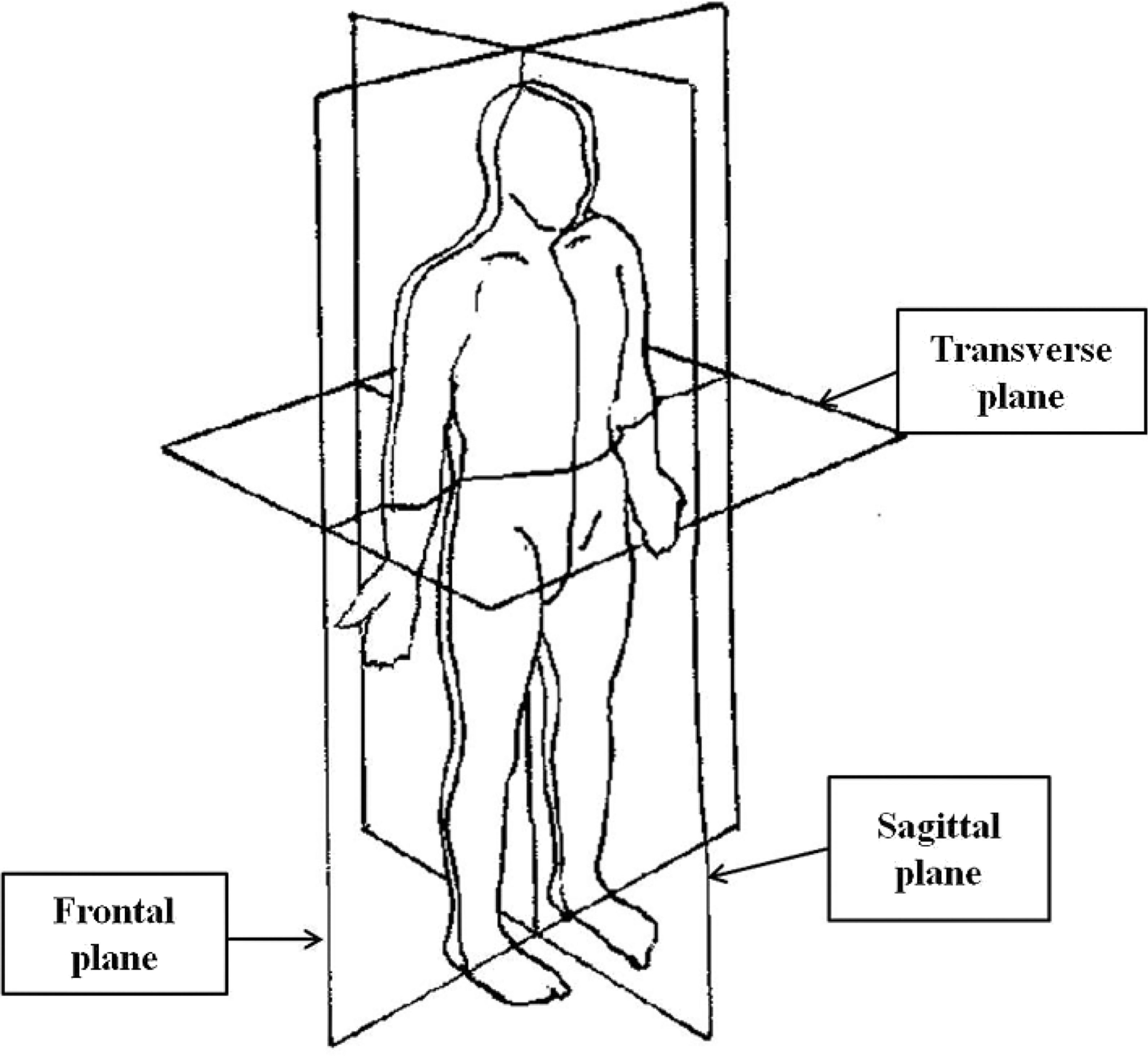
Three cardinal planes. Adapted with permission from Vaughan, Davis, and O’Connor (1996, p. 19).
Davis, Ounpuu, Tyburski, and Deluca (1991) have shown that motion capture technology provides more accurate data than 2D measurements because tracking motions in three planes is more accurate than tracking 2D measurements in one plane only since these results in the loss of simultaneous movements in the other two planes. These measurements are expected to provide practical parameters to assess the change in mobility caused by garment conditions.
Method
Test Garments
The control garment was a pair of snuggly fitting sports shorts (see Figure 2A) with no upper body garment. The treatment garment was an outer tactical vest (see Figure 2B; size: medium) with front and back ceramic plates (see Figure 2C) worn with the control garment. The outer tactical vest consisted of Cordura® outer and inner shells, soft armor panel inserts made of multiple layers of Kevlar designed to stop a 9-mm bullet, and 2 ceramic plates that were capable of stopping 7.62 mm rounds (Interceptor Body Armor, n.d., Globalsecurity.org). The outer tactical vest had webbing attached to its front and back called a “Molle system,” which was designed for load carriage. The outer tactical vest was selected for this study because it was developed by the U.S. Army and is the standard issued to the U.S. Army and the U.S. Marine Corps for the first 6–7 years of the Iraq and Afghanistan wars. An improved outer tactical vest was introduced by the U.S. Army in late 2007. The U.S. Marine Corps developed their own new vest, the modular tactical vest, about the same time. As of 2010, the interceptor body armor had two variations in use, the outer tactical vest and the improved outer tactical vest (Individual Equipment and Weapons, 2010, Army Magazine). The outer tactical vest is suspended primarily on the shoulders. The weight of the outer tactical vest used in this study was 18 lbs, which included two hard plates.
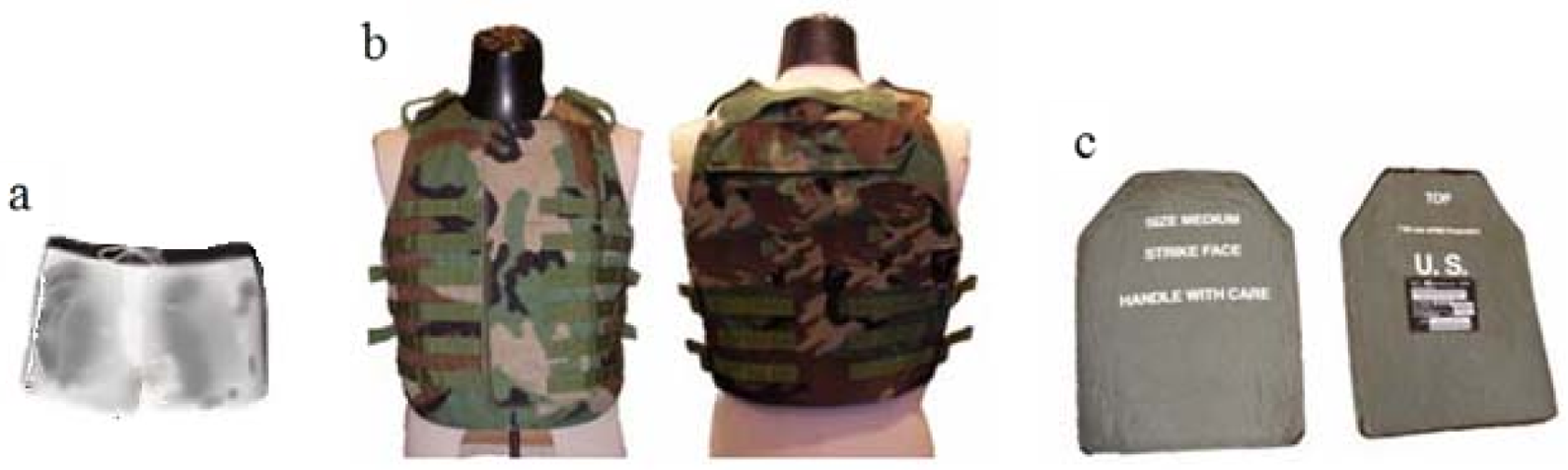
Garment treatments.
Instruments
To assess the change in lower body movement, the BTS Smart-D® motion capture system (BTS Bioengineering, Milano, Italy) was used. BTS Smart-D is a passive optical motion capture system that uses infrared cameras and retroreflective markers. The passive optical motion capture system has been widely used for biomedical applications such as sports injuries because this system does not require cables that may cause unnatural movements (Furniss, 2000). Infrared cameras (see Figure 3A) recognize and record the position of retroreflective markers (see Figure 3B) attached to the joints during movement for data collection. Collected data from the markers' locations and the video are sent to a processing computer, which uses a preprogrammed data processing protocol to calculate various parameters of the motion (e.g., distances and angles determining ROM, velocities, accelerations, etc.) based on the 3D coordinates' data of the markers.
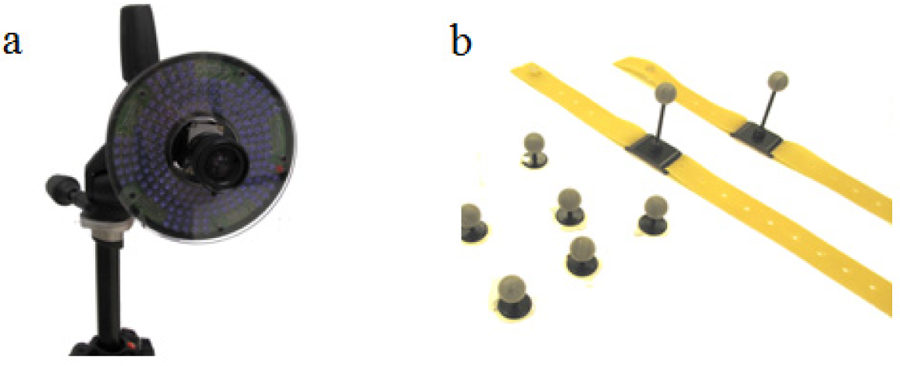
Infrared cameras and retroreflective markers.
Measurements
Gait analysis and Davis protocol
To assess the change in lower body mobility, this study used the Davis protocol, which is one of the established gait analysis methods. Gait analysis, the systematic assessment of locomotion of the lower body, has been mainly used for biomedical applications (Davis, Ounpuu, Tyburski, & Gage, 1991). Gait analysis is also used as a predictor of running-inflicted injury and has provided practical applications to sports science and running shoe design (Manson, McKean, & Stanish, 2008). Gait analysis typically measures ROMs in the lower extremity and characteristics of walking patterns such as step length, step width, and velocity.
The Davis protocol, a method of performing gait analysis, has been widely used for biomedical applications because it provides a high level of accuracy and reliability based on passive optical motion capture systems (Davis, Ounpuu, Tyburski, & Gage, 1991). The Davis protocol defines a cycle of walking from heel contact to toe-off for each leg as shown in Figure 4.
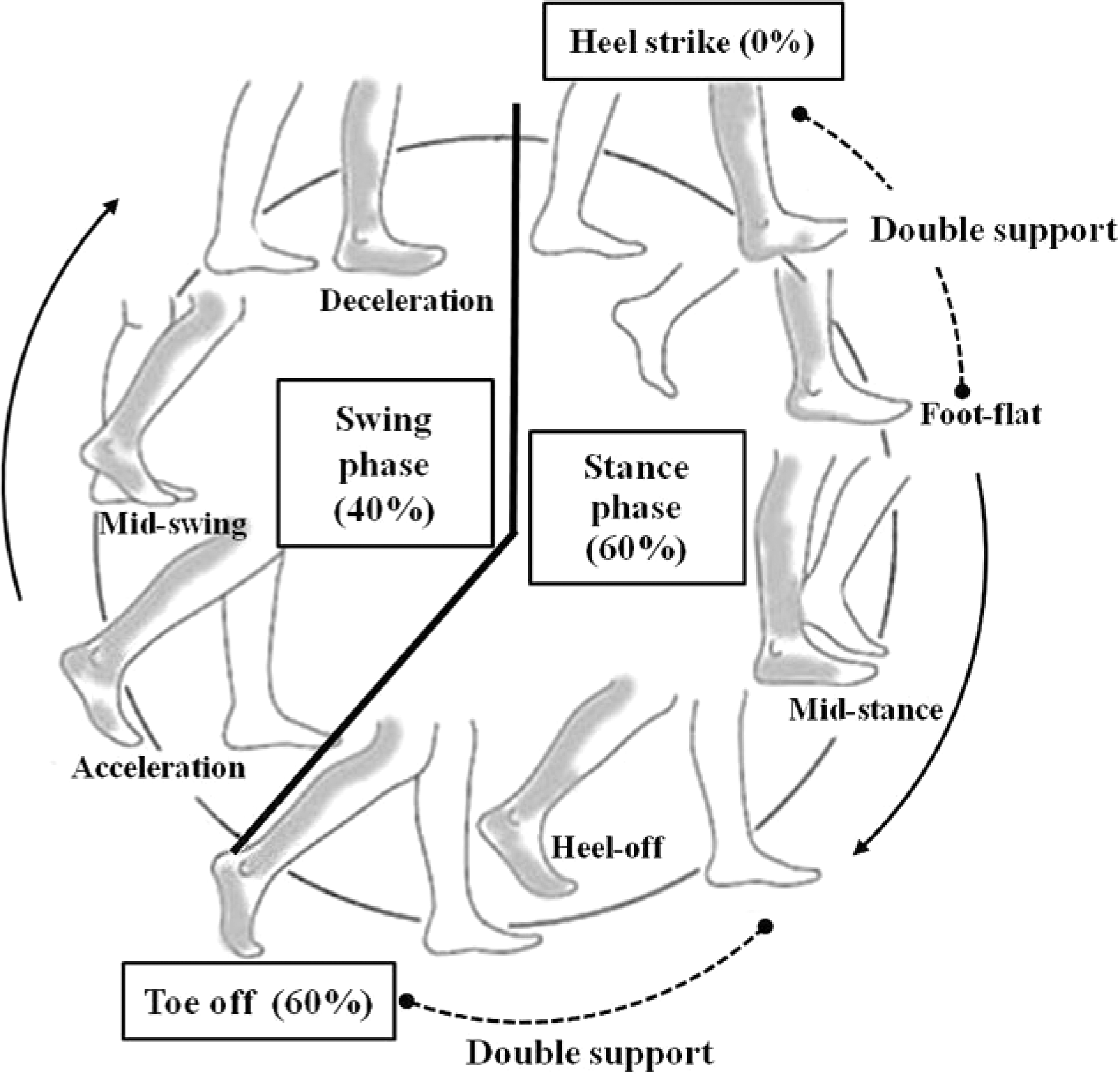
A cycle of walking. Adapted with permission from Vaughan, Davis, and O’Connor (1996, p. 23).
The Davis protocol uses body movement data to calculate temporal parameters, distance parameters, and ROMs during a cycle of walking. In order to identify characteristics and abnormal walking patterns of participants, collected body movement data are compared with normative walking patterns established using a data pool archived from numerous tests with participants without orthopedic problems. The BTS system has used the normality band created by Politecnico di Milano in collaboration with Buzzi Hospital and San Raffaele Pisana Hospital in Rome and validated through comparison with published data elaborated by Gage (2004) in his book entitled The Treatment of Gait Problems in Cerebral Palsy (D. Ferrario, personal communication, May 6, 2011).
Temporal parameters include walking velocity, stance phase, swing phase, and double support. Walking speed is walking distance divided by time. Stance phase refers to the period of time when the foot is in contact with the ground and swing phase indicates the period of time when the foot is not in contact with the ground (Gage, 2004). Normative walking is composed of about 60% stance phase and 40% swing phase. Stance phase allows weight-bearing and provides body stability (Rodgers, 1988). As walking speed increases, swing phase increases and stance phase decreases (Mann & Hagy, 1980). On average, stance phase decreases by about 30% for running (from 60% to 30%) and by about 40% for sprinting (from 60% to 20%). A double support is the period of time when both feet are in contact with the ground (see Figure 4) and decreases with an increase in walking speed (Mann & Hagy, 1980). Therefore, as one walks or runs faster, stance phase and double support decrease and swing phase increases, so that the foot contacts the ground for shorter periods of time.
Distance parameters of gait include step length and step width. Step length refers to the distance from one foot’s point of contact (heel strike) with the ground to the other foot’s point of contact (heel strike) with the ground. Step width indicates the side to side distance between the feet.
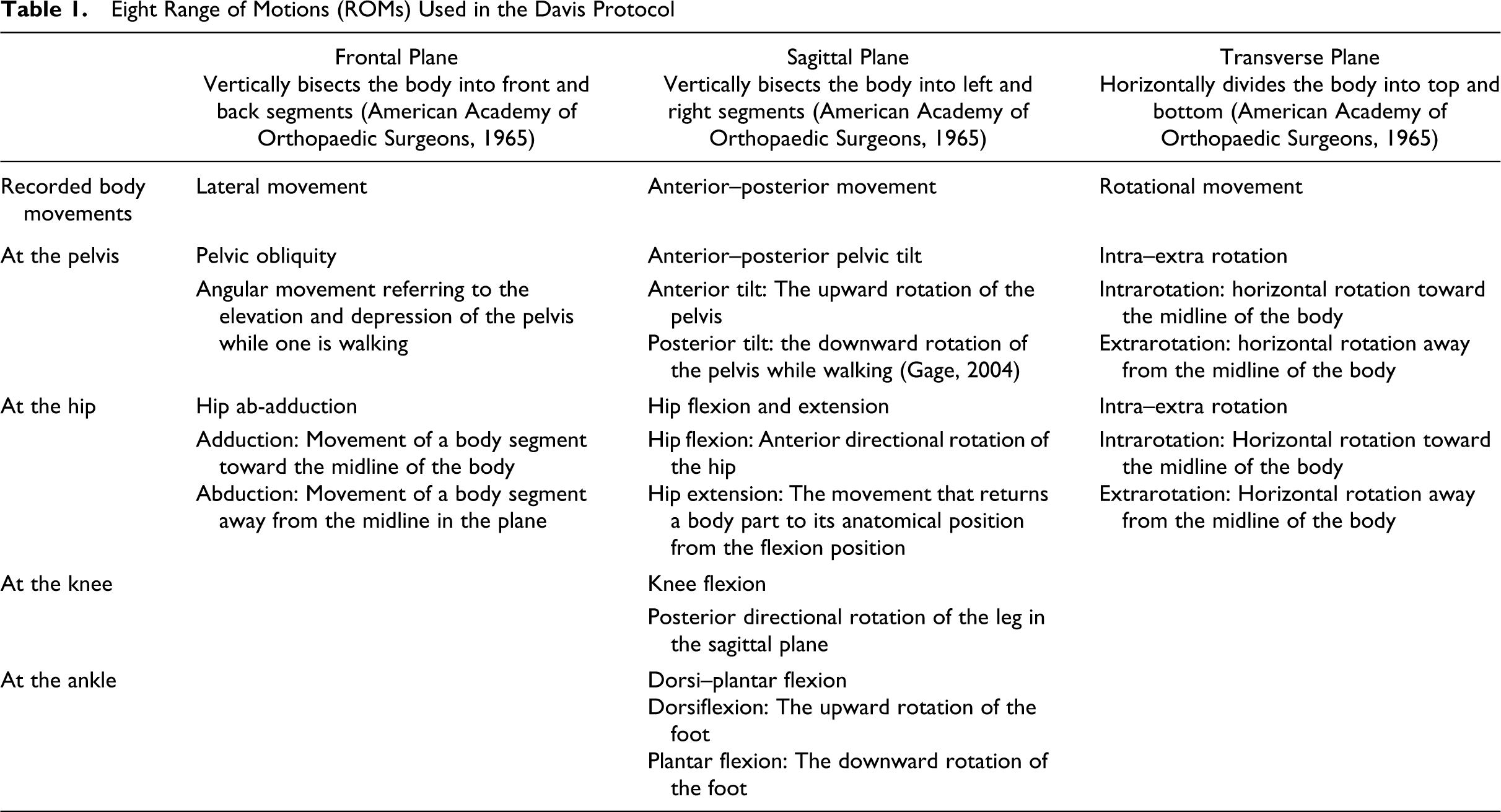
Eight ROMs in three planes are measured as kinematic parameters during a cycle of walking to identify abnormal gait characteristics. In the frontal plane, pelvic obliquity, hip abduction, and hip adduction are measured. In the sagittal plane, pelvic tilt, hip flexion and hip extension, knee flexion, and ankle dorsiflexion and ankle plantar flexion are measured. In the transverse plane, intrarotation and extrarotation are measured at the pelvis and the hip. These eight ROMs have been used as typical measurements to identify changes in walking patterns in gait analysis (Davis, Ounpuu, Tyburski, & Gage, 1991). These are illustrated in Table 1 and Figure 5.
Eight Range of Motions (ROMs) Used in the Davis Protocol
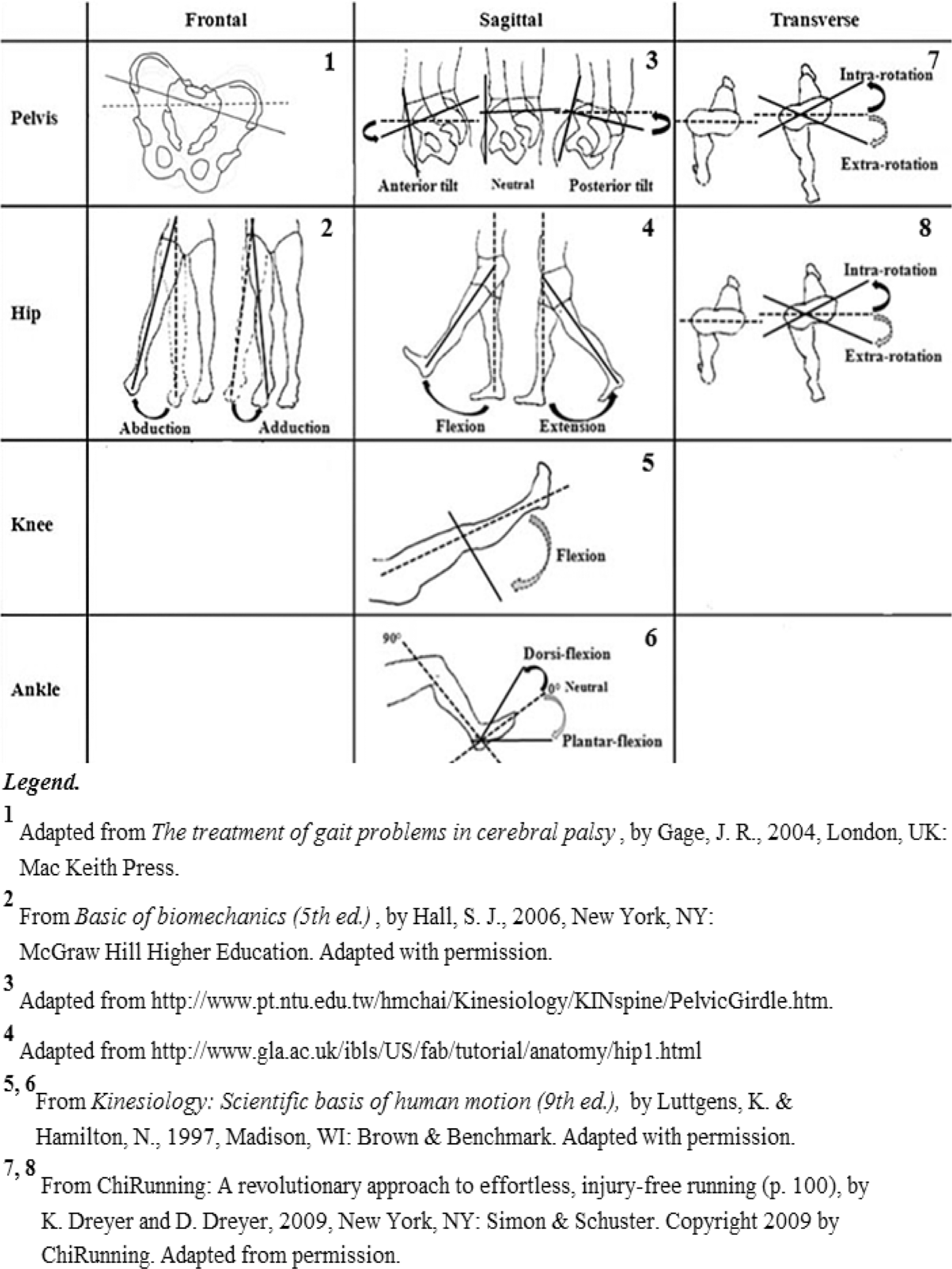
Characteristic ROMs in a gait analysis.
Experiment protocol
Upon approval of the Institutional Review Board, a human subject study was conducted. It used the Davis protocol gait analysis to assess biomechanical mobility changes in the human body caused by wearing an outer tactical vest. Multilateral analysis was conducted based on temporal parameters, distance parameters, and ROMs to provide practical implications for evaluating body movement. Seven male right-handed volunteers (age: 24 ± 3.6, height: 187.3 ± 2.1 cm, and weight: 83.4 ± 5.2 kg) without orthopedic medical history participated. Informed consent was obtained from the participants prior to the experiments. Retroreflective markers with a spherical shape (diameter 10 mm) and an adhesive surface were attached to 22 anatomical points on the shoulders and lower body to detect changes in joint positions while walking (see Figure 6).
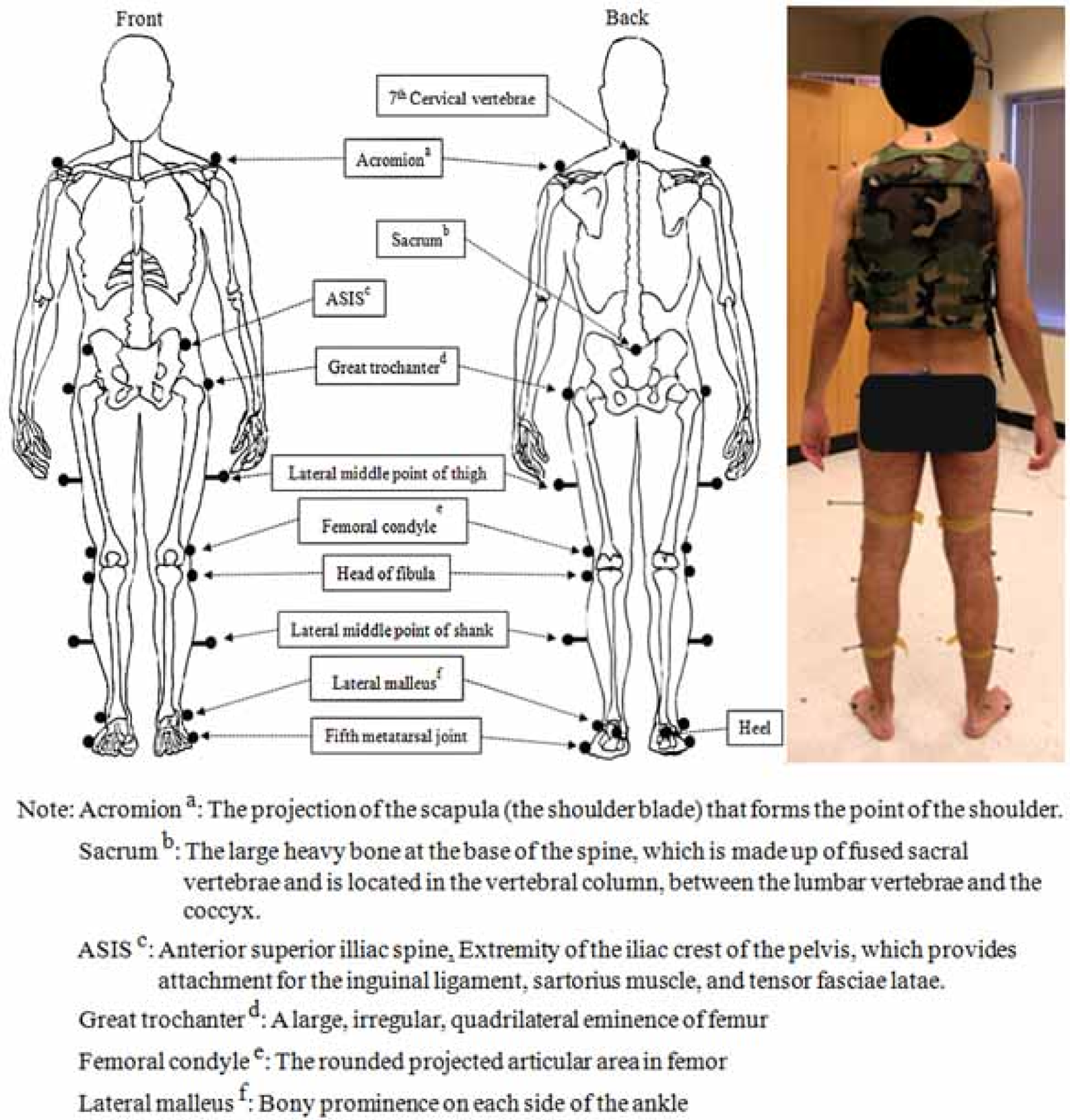
Marker placements.
During the walking test, participants walked barefoot along the diagonal line of a walking area of 5 × 5 m using their natural manner of walking. Under both garment conditions, each participant repeated the walking test 5 times. For data analysis, changes in location of each anatomical point were captured by eight infrared cameras: a pair of infrared cameras was installed on the each wall of the rectangular shaped lab. The processing computer calculated temporal parameters, distance parameters, and ROMs at each joint. The following parameters were measured as dependent variables: stance phase (%), stance time (s), swing phase (%), swing time (s), double support (%), double support time (s), step length (m), step width (m), walking velocity (m/s), and eight ROMs (°) at the pelvis, hip, knee, and ankle based on the Davis protocol.
Results
A total of 35 measurements were collected from 7 participants' repeated walking tests. A total of 32 measurements (except 3 missing data points due to invisibility of markers during the walking test recording) were used for data analysis. Therefore, four or five measurements per participant per side (left and right) were used for data analysis. Measurements were first averaged on each side for each participant for each garment condition. A mixed models repeated measures analysis using the Kenward–Roger degrees of freedom approximation method was performed using either the SAS/MIXED® procedure or SAS/GLIMMIX® procedure, Version 9.2 of the SAS system (SAS Institute Inc., 2010).
The experimental design was a randomized complete block design with repeated measures where participants were blocks and (left/right) side defined the repeated measures. Main effects of garment and side and the interaction between the two were assessed. All statistical tests were performed at the .05 level of significance.
Temporal and Distance Parameters
A significant effect of garment condition was found in stance phase, F(1, 6) = 88.61, p < .0001; stance time, F(1, 6) = 13.02, p = .011; swing phase, F(1, 6) = 87.64, p < .0001; swing time, F(1, 6) = 31.30, p = .001; double support, F(1, 6) = 72.49, p = .0001; and double support time, F(1, 6) = 84.04, p < .0001. No garment effect was found in step length, step width, or walking speed.
The only significant difference in side between left and right foot was found in double support time, F(1, 12) = 7.21, p = .02. The effect of side was not tested for step width and walking speed as they are calculated as a function of both sides. No significant interaction between garment and side was found. Table 2 contains these results (p values) and the least squares means and their standard errors.
Temporal and Distance Variable Least Squares Means (LSMs), Standard Errors (SE) of the Means, and Observed Significance Levels
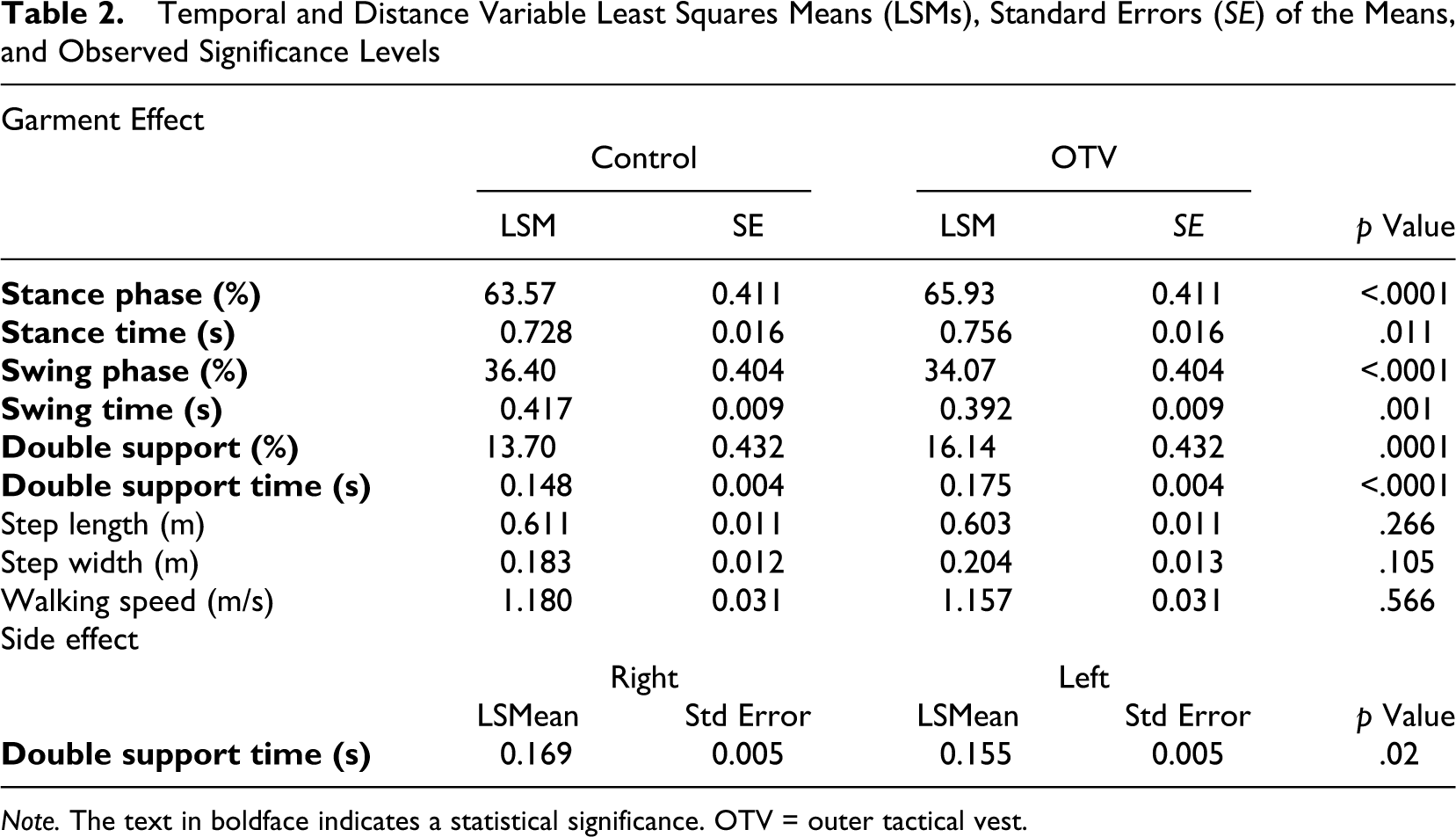
Note. The text in boldface indicates a statistical significance. OTV = outer tactical vest.
Wearing the outer tactical vest significantly increased stance phase and stance time. Mean stance phase increased from 63.57% to 65.93% and mean stance time increased from .728 to .756 s. Wearing the outer tactical vest significantly decreased swing phase and swing time. Mean swing phase decreased from 36.4% to 34.07% and mean swing time decreased from .417 to .392 s. Participants' double support was significantly increased by 2.44% while wearing the outer tactical vest: Wearing the outer tactical vest showed 16.14% double support, while wearing the control garment resulted in 13.7%.
Double support time significantly increased by .027 s while wearing the outer tactical vest. Double support time was significantly longer in the right foot than in the left foot. Double support time in the right foot was .014 s significantly longer than the left foot.
ROM
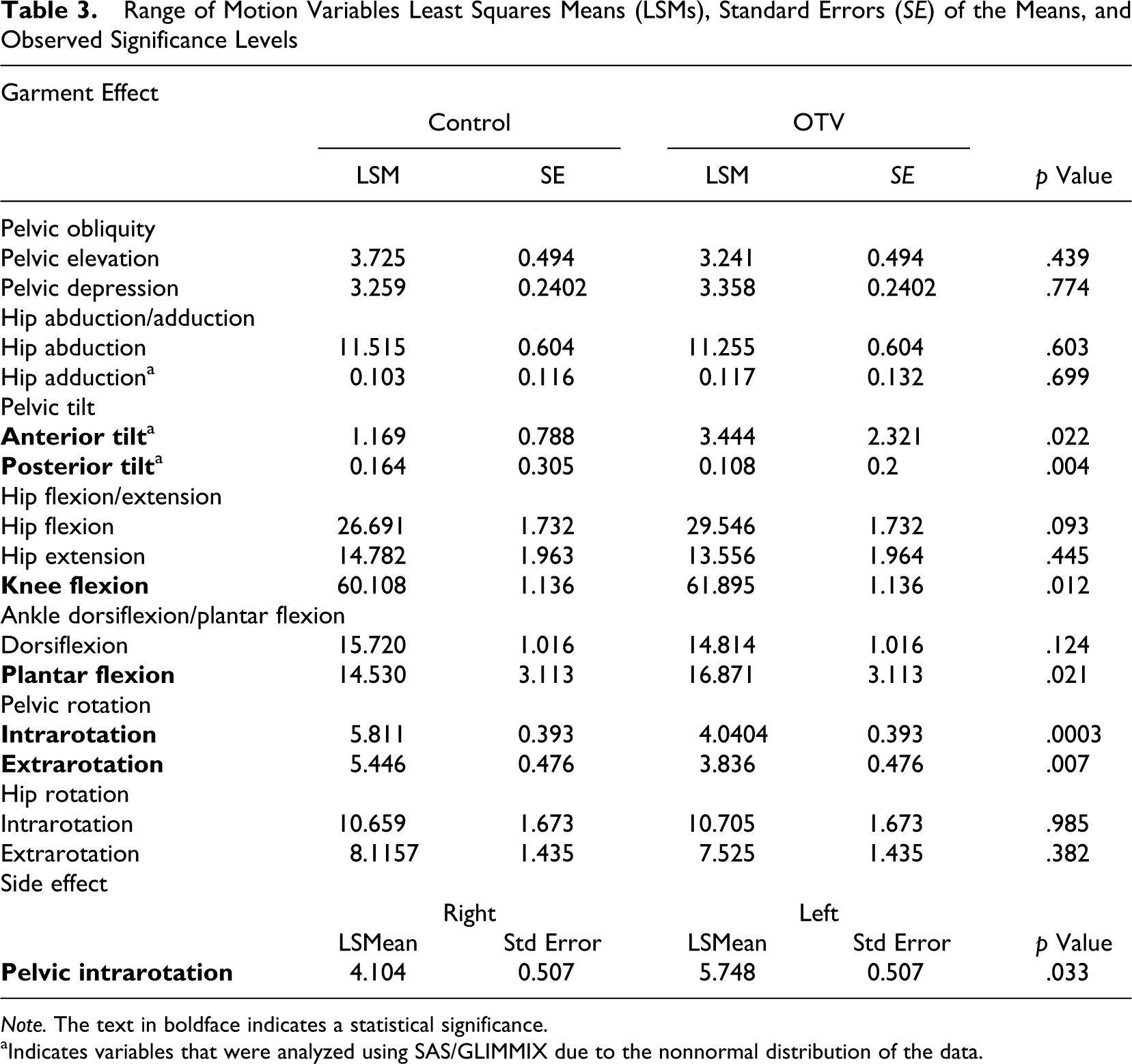
The effect of garment on ROM at each joint was analyzed by comparing each garment condition’s maximum value of ROM (ROMmax) during walking cycles. No significant interaction between garment and side was found for any of the ROM response variables. The effect of garment was significant in six ROMs among the 15 measurements of ROMs obtained, as shown in Table 3. The only significant difference in side, F(1, 12) = 5.79; p = .033, was found in pelvic intrarotation where left exceeded right. Table 3 contains these results (p values) and the least squares means and their standard errors.
Range of Motion Variables Least Squares Means (LSMs), Standard Errors (SE) of the Means, and Observed Significance Levels
Note. The text in boldface indicates a statistical significance.
aIndicates variables that were analyzed using SAS/GLIMMIX due to the nonnormal distribution of the data.
Frontal Plane Movements
Pelvic obliquity: No significant differences between garment conditions were found in ROMmax for elevation and depression (see Figure 5 illustration 1). Hip abduction and adduction: No significant differences between garment conditions were found in ROMmax for abduction or adduction (see Figure 5 illustration 2).
Sagittal Plane Movements
Pelvic tilt: Wearing the outer tactical vest significantly increased anterior tilt, F(1, 14.88) = 6.56; p = .022, from 1.169 to 3.444° and decreased posterior tilt, F(1, 18) = 10.62; p = .004, from .164 to .108° (see Figure 5 illustration 3). Hip flexion/extension: No significant differences between garment conditions were found in ROMmax for flexion or extension (see Figure 5 illustration 4). Knee flexion: Wearing the outer tactical vest significantly increased knee flexion, F(1, 6) = 12.51; p = .012, from 60.108 to 61.895° (see Figure 5 illustration 5). Ankle dorsiflexion/plantar flexion: No significant garment effect was found in ROMmax dorsiflexion. However, a significant garment effect, F(1, 6) = 9.54; p = .021, was found in plantar flexion. Wearing the outer tactical vest significantly increased ROMmax in plantar flexion from 14.53 to 16.871° (see Figure 5 illustration 6).
Transverse Plane Movements
Pelvic intrarotation and extrarotation: A significant garment effect was found in both intrarotation, F(1, 6) = 53.22; p = .0003, and extrarotation, F(1, 6) = 15.96; p = .007. Wearing the outer tactical vest significantly decreased ROMmax in intrarotation from 5.811 to 4.0404°. A significant difference in intrarotation between left and right side, F(1, 12) = 5.79; p = .033, was found in pelvic intrarotation. Left intrarotation ROMmax of 5.478° was significantly higher than the right intrarotation ROMmax of 4.104°. Wearing the outer tactical vest also decreased extrarotation ROMmax from 5.446 to 3.836° (see Figure 5 illustration 7). Hip intrarotation and extrarotation: No significant differences between garment conditions were found in ROMmax for intrarotation and extrarotation (see Figure 5 illustration 8).
Conclusions and Implications
This study determined the effects of wearing the outer tactical vest with front and back hard plates inserted into the vest pockets on lower body movement by investigating temporal parameters, distance parameters, and ROMs as well as using gait analysis to characterize lower body movement. A significant increase in stance phase and double support as well as a decrease in swing phase was found when participants wore the outer tactical vest. This demonstrates that the foot contacts the ground for a longer period of time in order to efficiently support the weight of the outer tactical vest, which seems to be a natural human body reaction to maintain a stable posture and balance. These results concurred with the results found by Kinoshita (1985) and Birrell and Haslam (2010).
Results of this study show that wearing the outer tactical vest significantly decreases the rotational movement in the pelvis, as the weight of the outer tactical vest adds a physical burden to the lower body. This finding concurs with Smith et al. (2006) who showed that carrying a backpack significantly decreased pelvic rotation, probably to maintain dynamic stability while walking. Reinhardt (n.d.) claimed that insufficient rotational movements in the pelvis can negatively affect the working efficiency of walking and running by limiting the force when swinging the legs forward to propel the body forward. Birrell and Haslam (2010) showed that insufficient rotational movements in the pelvis lead to wider step width by limiting each foot’s ability to return to its normal position.
In addition, a significant increase in ROM for flexion was found for the knee with the outer tactical vest condition. A result concurs with Kinoshita (1985). The result relates to the human body’s natural adaptive movement to reduce excessive impact forces received from the ground at the heel-strike moment, stemming from the weight-bearing conditions.
The present study also found that the plantar flexion ROM when wearing the outer tactical vest increased. This agrees with Kinoshita (1985) who suggested that this effect is due to the increased ground reaction forces generated to propel the body forward by compensating for the physical burden on the lower body. Kinoshita (1985) further suggested that such increases in ROMs (resulting from wearing heavy military backpacks) may accelerate fatigue by adding more strain to joint and increasing energy expenditure over time, which also may increase overuse injury. Furthermore, a change in ROM at the ankle may increase ankle injury, which can have a negative impact on soldiers' performance and safety. Ankle injury risk can be greater when soldiers run at fast speeds while carrying additional loads because such increases add more intensive strain to the ankles, resulting in excessive impact energy being transferred from the ground at the heel-strike moment (Grabowski & Kram, 2008).
Wearing a ballistic vest to provide protection against ballistic and blast injuries is paramount in warfare. But minimizing the risks of musculoskeletal injuries and fatigue are also important. This study demonstrates the importance of decreasing the weight of the ballistic vest or possibly redesigning the vest with a suspension system in which the shoulders alone do not carry all of the weight. Both goals were part of the solicitation and design processes that resulted in the current use of the improved outer tactical vests and modular tactical vests. Of course, the weight of the full protective clothing system must be considered since potential weight savings maybe more feasible with other parts of the system.
Research Limitations and Future Study
This study used a mobility evaluation method based on a 4D biomechanical approach using a motion capture system and gait analysis in order to provide a comprehensive understanding on how wearing an outer tactical vest impacts soldiers' lower body mobility. Although the cited carriage system studies also used motion capture systems, this methodology has not been used by many apparel researchers, and the approach does offer more information for mobility research. This study established the impact of wearing an outer tactical vest on lower body movement by identifying differences in distance parameters, temporal parameters, and ROMs. Wearing a heavy outer tactical vest significantly changed participants' walking patterns and ROM at three joints, which can negatively affect the free movement of the lower body, introduce more rapid fatigue, and increase ankle injuries. However, this study was limited to a small number of (right-handed) participants and a small walking space due to the size of the laboratory.
Future research should explore the impact of weight distribution of body armor and carrying loads on mobility while walking or running a longer distance in outdoor conditions. A similar study should be carried out using the newly designed U.S. Army improved outer tactical vest and U.S. Marine Corps modular tactical vests in order to determine if the new suspensions systems in both vests negatively impact lower body mobility. Depending on the results of such a study, design criteria could be developed for use in improving the design of the relevant vest. Measuring muscle activities by electromyography as well as ROM would provide additional information to understand changes in lower body movement due to weight of garment and carrying loads. This biomechanical approach could be used to measure mobility of other functional apparel applications that have weight and/or mobility issues.
Footnotes
Acknowledgement
This research was conducted in Oklahoma State University with financial and technical support by the Institute for Protective Apparel Research and Technology, at the Department of Design, Housing and Merchandising, Oklahoma State University.
The authors declared no potential conflicts of interest with respect to the research, authorship, and/or publication of this article.
The authors disclosed receipt of the following financial support for the research, authorship, and/or publication of this article: The authors received technical support and internal funding for this research from the Institute for Protective Apparel Research and Technology, Oklahoma State University.