







Abstract
The study investigated the learning experiences and outcomes of students participating in a virtual team-based multinational collaboration project. The participants in the project were 172 undergraduate students enrolled in three apparel programs located in three different countries: Australia, South Africa, and the United States. To explore student learning experiences and outcomes, 66 anonymous reflective essays were analyzed. As a result of the interpretive analysis, the three topical areas emerged: Discovering New Knowledge, Acquiring New Skills, and Personal Development. Results indicate that participation in the unique learning experience helped students acquire new knowledge and skills, become more mature, and, ultimately, feel better prepared to enter the global apparel industry. Based on our findings, we propose three components that are necessary for a successful preparation of students for the careers in the global apparel industry: (a) obtaining both general and industry-specific knowledge, (b) acquiring professional skills, and (c) personality growth and development.
The breakthrough in electronic and information technology together with the liberalization of international trade has changed the business environment for organizations of all sizes across all industries around the globe. In an increasingly interconnected world, companies not only have suppliers and customers around the world, they also operate in many countries. This is especially the case for the apparel industry, which is considered one of the most globalized sectors (Birnbaum, 2005; Dickerson, 1999). To meet the demands of the new business environment, companies create multinational, virtual teams across divisions, organizations, countries, and cultures (Lurey & Raisinghani, 2001). As a result, there is a growing demand for professionals who are able to effectively and efficiently communicate and collaborate with partners from different countries and cultures in a virtual environment (DeVoss, Jasken, & Hayden, 2002).
To be prepared to communicate across cultural and organizational boundaries using technology, undergraduate students need to practice virtual teamwork and collaboration while they are in college (Grosse, 2002). Such experiences help obtain skills necessary to operate globally (Merryfield, 2003). For example, students can practice the process of establishing connections, negotiation, reaching consensus, and making decisions in online settings with teammates from various cultures and countries.
However, despite strong demand for cross-culturally competent workers, the training in universities falls short (Deardorff, 2006; Johnson, Lenartowicz, & Apud, 2006). Few college courses provide students with an opportunity to interact with their counterparts from other countries using computer-based communication (Yu & Jin, 2005). Even though virtual team-based collaboration as a teaching and learning strategy is beginning to be included in some business schools as part of undergraduate curricula (e.g., Aubert & Kelsey, 2003; Paul, Seetharaman, Samarah, & Mykytyn, 2004; Roebuck, Brock, & Moodie, 2004), textiles and apparel programs fall behind in using this innovative instructional strategy to provide students with hands-on virtual cross-cultural exchange.
To address this gap in textiles and apparel curricula and provide students with an opportunity to work together with peers from different cultures using web-based technology, a multinational virtual team-based project, Going Global, was developed. The objectives of the project were to allow students to (a) experience communication in a technology-assisted environment; (b) practice virtual teamwork and collaboration; and (c) enhance student intercultural competence. The overarching goal of the project was to better prepare students for careers in the global apparel industry and equip them with the required skills and competencies, including intercultural competence, virtual teamwork, computer-mediated communication, problem solving, and time management.
Background
Experiential Learning
To create an environment that stimulates learning and enhances its outcomes, students need to be genuinely engaged in the process and be the ones discovering and creating the knowledge (Froyd & Simpson, 2008; So, Seah, & Toh-Heng, 2010). To achieve that, the learning process can be based on real-life experience. Experiential learning is the “process whereby knowledge is created through the transformation of experience” (Kolb, 1984, p. 38). In other words, this pedagogical approach encourages students to learn by doing and forces students to play a more active role in the education process. Experiential learning activities include role-playing, service-learning projects, games, and simulations among others (Munoz & Huser, 2008). For example, simulation can offer the missing part in college education by providing an environment to test personal emotions and interpersonal relationships of the real world that the simulation is imitating (Fox, 2003). Research shows that experiential learning has been effective in increasing student engagement, stimulating higher-order thinking, improving learning outcomes (Hakeem, 2001), and developing essential practical skills such as communication and teamwork (Peterson, 1996).
Collaborative Learning
Collaborative learning is a mechanism to share and distribute cognitive content while articulating the thought through explanation, argumentation, and inquiry (Hakkinen & Jarvela, 2006). A primary goal of such learning is to create new knowledge through the discussion process, building on divergent individual experiences and information of each participant (Alexander, 2006). Puntambekar (2006) noted that collaborative discussion not only supported learning but also facilitated building a community. As a form of collaborative learning, team-based projects and assignments are often used in the undergraduate textiles and apparel curriculum because they simulate a working environment common for the apparel industry (Frazier & Cheek, 2005; Kimmons & Spruiell, 2005; LaBat & Sokolowski, 1999; LeHew & Meyer, 2005; Paulins, 2005). Besides the creation of new knowledge, other benefits related to teamwork include the development of important interpersonal and communication skills (Casamayor, Amandi, & Campo, 2009; Looi, Chen, & Ng, 2010; Onrubia & Engel, 2009).
Virtual Teamwork
A virtual team is a group of people (a) whose members are physically separated by space and/or time and (b) who work together to solve problems through computer-mediated rather than face-to-face communication (Hertel, Geiser, & Konradt, 2005; Nemiro, 2004). Virtual teams typically consist of members from different countries and cultures and are also referred to as multinational or global teams (Dekker, Rutte, & van den Berg, 2008). Often such teams are internationally dispersed and have to make decisions within a global context (Maznevski & Chudoba, 2001). Virtual team members are expected to quickly establish and maintain reciprocal relationships with people from various backgrounds, relying on computer-mediated communication only. Research indicates that virtual teams have to overcome more obstacles in comparison to face-to-face teams; and the former type of collaboration is not always successful due to the challenges in communication (Jarvenpaa & Leidner, 1999; Karpova, Correia, & Baran, 2009; Wilson, Straus, & McEvily, 2006).
A significant body of research examined virtual teamwork, including communication within virtual intercultural teams (Grosse, 2002), choice and application of technology (Karpova et al., 2009), decision making in computer-mediated environment (Batles, Dickson, Sherman, Bauer, & LaGanke, 2002), team heterogeneity and conflict management (Paul et al., 2004), communication and trust (Jarvenpaa & Leider, 1999), and trust and performance (Aubert & Kelsey, 2003). Most extant research that involved online learning and/or course-management systems focused on technological and technical aspects but not on issues related to what and how people are learning in a virtual environment (Maliowski, Thompson, & Theis, 2007). An in-depth investigation of student experiences related to learning in the process of virtual team-based collaboration will contribute to the understanding of how to make this instructional strategy more effective, efficient, and satisfying for both students and instructors.
The purpose of the study was to understand whether and how student preparation for careers in the global apparel industry can be advanced through a virtual multinational collaboration project. The research questions included what were student perceptions of the project? What did they learn by participating in it? Did the project help the participants feel better prepared to enter the global apparel industry? Such investigation may contribute to the development of strategies for incorporating virtual collaboration in undergraduate textiles and apparel curricula by gaining a better understanding of student learning experiences and outcomes.
Project Design
Participants
The project involved collaboration among undergraduate students enrolled in three universities located in three countries on three different continents: Africa (South Africa), Australia, and North America (the United States). It should be noted that even though the majority of students represented one of the three main cultures, based on the country of residence (i.e., American, Australian, and South African), there were also a few international students in all three universities from various countries such as Indonesia, Japan, China, India, Malaysia, and others. A total of 172 students enrolled in textiles and apparel/fashion programs (75 from Australia, 27 from South Africa, and 70 from the United States) participated in the project. The students were enrolled in sourcing/global operations or fashion merchandising courses and had junior/senior standing. The majority of participants were women of 20–21 years old. The percentage of male participants was typical for textile and apparel majors and close to 5%. Students worked in teams of 7–8 people. Each of the 24 teams had one or more representatives from each of the countries. The duration of the project was slightly over a month. Students did not have any special training on cross-cultural communication before the project.
Technology
The project was implemented using virtual learning environment software (VLE) such as WebCT or Blackboard, hosted by the U.S. University. Participants communicated with team members via text-based discussion board, which supported interactive asynchronous communication. For all assignments, there was a designated space created in the VLE that was accessible only by the members of a team. This space was used to post student’s individual contributions (e.g., essay or report), respond to each other’s postings, and engage in team discussion to negotiate, make decisions, and produce a final team report. In addition to these private teams' spaces, a Virtual Café was created within the VLE for all teams to share their final products with all project participants. In this project, other means of communication besides the VLE were encouraged but not required. For example, several teams chose to use e-mail and/or chat in addition to communicating through the VLE.
Learning Module
To address the instructional goals, the project was designed as an experiential collaborative learning, with student-to-student communication and interaction being completely computer mediated. The authors 1 collaboratively conceptualized, developed, and refined a learning module consisting of three assignments. The first assignment was created to introduce team members to each other, break the ice, and establish social connections. Each student prepared a self-introduction in an essay format, using a set of questions as a guide. The essay included participant picture/pictures. Students were expected to ask questions and/or make comments to each introduction posted by his or her team members. The second assignment was developed to help students clarify their own values and compare them with the ones of their peers from different cultures. In addition to posting individual contributions and reading and responding to team members' postings, students engaged in a virtual discussion to agree on three values that were important for them as a team. Every team posted then three final values with an explanation summary to the Virtual Café accessible by all teams.
For the third and major assignment, first each team had to discuss and select one of the two issues associated with the global apparel industry: sweatshops or counterfeits. After agreeing on one of the two issues, a team had to agree on roles that each member was to represent (e.g., a sweatshop worker in a developing country, a consumer in a developed country, a representative of an apparel company in a developed country for the sweatshop assignment). The assignment required (a) individual research and development of a position statement toward the issue, based on each team member’s assigned role and (b) as a result of the discourse, each team collaboratively produce a final report that reflected a shared, negotiated team’s position, or solution to the issue. For example, for the counterfeit assignment, half of team represented a local branch of an apparel company in Country A. The company, known for its quality and stylish products, was opening an international branch in Country B (represented by the second half of the team). However, the company’s counterfeit products were widespread in Country B’s market. First, each team was to select countries for Country A and Country B. Next, each team member assigned to Country A conducted individual research to identify strategies used by other companies to fight counterfeits and prepared a report. Each team member assigned to Country B had to identify fashion counterfeit problems in the selected international country. Finally, each team had to propose actions against company’s counterfeit products to be successful in the new market.
For each of the assignments, each student was expected to compose reports/essays, while their team members were expected to read the postings and reply with suggestions, disagreements/agreements, or questions. A detailed assignment schedule was available to all participants at the beginning of the project to help teams stay on task. The schedule had information on assignments' deadlines (date and time common for all participants) and recommended dates to start new assignments. Three instructors, one from each participating university, reviewed teams' progress and discussion board postings daily to monitor teams' progress, provide feedback, encourage participation, and assess student learning process and outcomes.
Method
To explore student project-related experiences and perceptions of outcomes of the virtual collaboration, it was important to capture participants' perspectives and opinions. A qualitative methodology was selected because it allows obtaining “rich” data by providing an opportunity to respondents to express themselves in their own words (Esterberg, 2002; Kvale, 1996). Given the large number of geographically dispersed participants, a written format of interviewing was used to collect the data. The study was approved by human subject review board. At the end of the project, students were asked to reflect on their experiences and write a statement in an essay format. A set of open-ended questions was provided to serve as a guide for the reflection process. The questions asked about overall experiences with the project, communication with team members, use of technology, what was learned as a result of the project, and most/least favorite parts of the project. No incentive was offered for completing the reflections, which were anonymous. 2
A total of 66 students completed and posted reflections to a designated place within the project shell. The length of essays ranged from 0.5 to 2.5 single-spaced pages. All essays were compiled in a single document, forming a narrative text, where each entry was numbered from 1 to 66. The research questions guided the interpretive analysis of the narrative (Spiggle, 1994; Thompson, Locander, & Pollio, 1990). First, the narrative was analyzed and interpreted by the researchers independently using fundamental analytical operations such as part-to-whole comparison, categorization, abstraction, and integration (Spiggle, 1994; Van Manen, 1990). Next, emerging themes were reviewed by the researchers together to define major areas of commonality and difference and to clarify and resolve any inconsistencies through discussion. This provided the researchers an opportunity to take into account different perspectives of the participants (Babbie & Mouton, 2001). During the next stage of the analysis and interpretation of the data, the researchers worked together to merge the themes into a consistent whole (Spiggle, 1994). As a result of the analyses, three topical areas emerged: Discovery of Knowledge, Acquiring New Skills, and Personal Development. The three topical areas point to the key issues of how the virtual collaboration experience facilitated preparation of participants for careers in the global apparel industry.
Interpretation
Discovery of Knowledge
The two themes of the first topical area summarized student cognitive learning processes and outcomes and illustrated what key knowledge was discovered by the students as a result of this collaboration. The first theme described students' realization of cultural differences and similarities and how the former affected the project’s dynamics. The second theme revealed how the project contributed to the participants' understanding of the global apparel industry.
Making sense of culture. Every participant noted that learning about values, beliefs, and worldviews of students from other cultures was one of the greatest benefits of the experience. Clarifying one’s own values, discovering those of others, and comparing and discussing them ultimately helped participants understand why people may have priorities that are different or similar to their own. Some students were surprised that despite living thousands miles apart, people might have the same values and beliefs and similar worldviews, “I learned that other cultures might have the same views on important values in their lives. I had some of the same values as the students from Australia and South Africa. It was very interesting to know” (S30). 3 Other participants discovered that people of the same age, speaking the same language, 4 with similar professional interests might be driven in life by different values, “I was interested in all the different values everyone had, but also the way we were able to evaluate these values and decide collaboratively what values were the most important for us as a group” (S63).
Intensive interaction with students from different cultural backgrounds provided an opportunity to reflect on the role of culture in the world’s current state of affairs. Participants noted that, perhaps, people’s values and beliefs around the globe are more similar than is stereotyped by the media, “The current events going on in the world today make me feel, like, everyone in the world is so different, and that is why we can’t get along. But, really, maybe we aren’t all so different after all and we all share the same values” (S19).
Even though finding out about each others' values and beliefs was an important part of the project, realizing that students from other cultures not only think differently but also do things differently was an eye-opening experience for participants, “I believe that this was a great way to learn how to interact with other cultures, however, I think that it was very difficult to understand that we are collaborating with other cultures that do not do things the same way we do here …” (S11). Students noted that perception of time and importance of deadlines seemed to vary among the participating countries, “I found it interesting how different our country treats deadlines compared to how [students from other countries] do. They were not as concerned about getting their assignments done on that exact date as much as we were. They always completed their assignments but some of the times it would be after the deadline” (S15). 5 This cultural difference resulted in some frustration when teams were finalizing and submitting assignments, “I learned that different cultures are different about time, which is kind of hard for me to understand. It just seems, like, if an agreed date and time was assigned for a project, a person would want to meet that on time” (S35).
Industry from a global perspective
Through interaction with future industry professionals located on three different continents and by learning about their career aspirations, work experiences, and exchanging view points on important industry issues, participants reported a greater understanding of the global nature of the apparel industry, “The project really made me think about what is happening in other parts of the world in my industry” (S63). Another student agreed, “This project was an interesting way to learn about the textile and apparel industry from a global point of view” (S31).
Students appreciated the fact that the project was a simulation of real-world experience when apparel industry professionals communicate and problem solve with international partners they have never met in person but rely upon to accomplish common goals. Participants commented that such experience helped them to feel more comfortable to join the global industry upon graduation, “I feel that this project was a good way to figure out what the real world will be like in the fashion industry. I think that this was a great project to do, so we are more prepared for when we graduate” (S52). Specifically, students commented that they felt better prepared to deal with people from different parts of the world and use computer-mediated communication when working as a group, “When we all enter into the fashion industry we will be dealing with long distance and international relationships. This project taught us how to join together as a group, meet our deadlines, and get things completed regardless of time differences or locations” (S16).
The major assignment of the project focused on two issues the global apparel industry is often associated with sweatshops and counterfeits. Engaging in research and discussion in order to propose solutions to these problems while taking into account diverse perspectives of various stakeholders helped participants to see these issues from a new perspective, “I think the most useful thing we touched on was the sweatshop issue, which, obviously, we all were in agreement against the issue, but having to take certain points of view was very eye opening. It just shows that all aspects of the supply chain in the apparel and textile industry must be all together to stop this problem. One party cannot change everything, everyone must make social responsibility a priority” (S24). After discussing the issue with multicultural peers, participants were more optimistic about the socially responsible future of the industry, “My favorite assignment was the one on sweatshops. It is so interesting to me that we all agree on the morality of this global issue. The future of our world is going to be stronger because of people like us, and I am glad we got the opportunity to come together and speak about the issues. Maybe something will change sooner than later because we, students, really are the future” (S3). For some students, the collaborative learning process resulted in a change of their personal positions on these issues, “I enjoyed the counterfeit project. I have bought counterfeit products knowingly and never knew what I was supporting. I've changed my views about counterfeits!” (S53). Overall, problem solving with multicultural peers resulted in a deeper understanding of the global industry issues.
Acquiring New Skills
Two themes formed the second topical area, which reviewed new skills that were acquired by the participants as a result of the experience. The first theme summarized participants' views and perspectives on virtual teamwork. Students' opinions about challenges of computer-mediated communication are presented in the second theme.
Virtual teamwork
Even though all participants from the three countries had a solid experience of working in teams on various projects and assignments prior to the Going Global project, group interaction in a virtual format was a completely new experience for them, “I liked that it was different from any other team project I have done before. It was definitely a unique experience to do a team project completely online, without meeting my team members” (S50). Despite the fact that Generation Y and their peers worldwide spend much time communicating over the Internet chatting, skyping, blogging, and e-mailing (Altes, 2009), practically all participants agreed that teamwork in a technology-assisted environment is a challenging task, “I have learned from this project that teamwork is not easy when the whole team cannot meet altogether” (S17).
Student reflections indicated that the key factor that determined a success of virtual teamwork was active participation of all team members. First, it was necessary to contribute by completing and posting individual assignments, “Everyone [in my team] did their part and did it in a timely manner. I know that other groups were having difficulties, but ours stayed strong throughout the entire process. I am grateful that I had such an enjoyable team!” (S8). Second, reading and responding to team members' postings on a regular basis and in a timely manner was critical to support the flow of the teamwork, “My team communicated great. We all made sure to check our postings a couple of times a day just to see what our other group members had to say. Every member was very informative and had a lot to say, which I found very interesting to hear about everyone’s thoughts” (S54).
The teams, whose members actively participated in the project, reported that they learned a lot in the course of the project, found the learning process interesting and beneficial, and were overall pleased with the experience, “The project met my expectations because my group worked well with each other. We had conversations and learned a lot from each other” (S56). In contrast, teams with inactive members of the total number appeared to be less satisfied with the project as low participation had negatively affected the overall team dynamic: “I thought that communication with my team members could have been a lot better. It seems that when discussions came up, there were a lot of people who did not reply at all, which made the whole point of the assignment difficult to achieve” (S11). Students from teams with uncooperative members (roughly one fourth of the total number of teams) perceived the project as “busy work,” frustrating, and overall unsuccessful because they were not able to learn much from the experience, “I feel that I didn’t learn much and assignments were so frustrating, no one would work together and some people just didn’t do the work and left it up to the others to carry their load” (S17).
Computer-mediated communication
Communication between team members was a critical factor because it determined not only what students were learning but also the quality of the overall experience, “I learned that when you are trying to work as a group and half of your group is in a different country, communication is extremely important. Without communication, the assignments would not get done” (S15). When team members cannot speak face to face, they do not have the luxury of using nonverbal cues to interpret the behavior of each other and the meaning behind the words. In this situation, ability to correctly express thoughts and present a view point in a written format becomes critical, “This project has taught me the importance of written communication. Writing in order for others to understand was critical because if a team member does not understand your report, they cannot verbally communicate to solve the miscommunication” (S58).
From the participants' perspective, the fact that team members were located in three different time zones added another layer of complexity to the computer-mediated communication. 6 “When you send a question you have to wait a long time for a response to come back. It wasn’t so much a problem with WebCT as it was the long distance and not being able to contact them by phone or a faster means of communication” (S62). However, it appears that the time difference challenge did not prevent the majority of teams to establish and maintain a successful communication rapport, “It is a lot harder to communicate just via WebCT threads as opposed to seeing the group face to face. Sometimes I got confused about what was being said. I have learned that it is best to get things done as soon as possible. If things are done at the last minute, there may be a chance no one will respond and one group member will have to make the decision. This really didn’t happen to our group except that little bit when the last assignment’s summary was due” (S21).
Participants noted that making decisions as a team and reaching a consensus while using only the asynchronous discussion might slow the process and affect the quality of final outcomes. They suggested including e-mail, chat, and/or video conferencing in the future projects, “It's difficult to reply, to keep up with postings and having conversations through discussion board. A possible suggestion for next time is to incorporate e-mail or chat somehow” (S7). As one of the students noted, individual levels of patience with technology might be deterministic for overall perception of and experience with of the project, “I really had no issues with the actually functioning of the use of WebCT, but other people’s experiences probably vary based on their tolerance for technological problems/programs” (S64).
Personal Development
The last topical area presented student overall evaluation of the learning experience and illustrated in what ways the project affected the participants. The first theme summarized the student overall perception of the project. The second theme showed how participation in the project affected student personalities.
Unique experience
All participants acknowledged the innovativeness of the project. None of them had prior experience of virtual team-based collaboration and very few had interacted before with peers from participating countries, “The Going Global project was an experience like no other I have had while attending [the University]” (S40). As it is often the case with a new experience, it was not enthusiastically met by everyone. Roughly 25% of respondents were not completely satisfied with the project. The most common reason cited for low satisfaction was uncooperative team members and lack of participation, “I don’t feel like the Going Global project was very beneficial in understanding other cultures due to the lack of participation by team members” (S49). However, the majority of the participants (about 75% of respondents) positively evaluated the project. These participants stressed the hands-on, experiential nature of the project, “Everything was useful because it was an experience” (S55). They commented that it was an interesting and engaging way to learn, “The project overall was very fun and very educational” (S28).
The project created a unique environment for interaction and self-assessment of knowledge, skills, and personal characteristics due to instant multiple feedbacks from peers and instructors. By participating in this virtual collaboration, students had a chance to synthesize all the pieces together and then immediately apply the newly acquired knowledge and skills. This resulted in a broad range of learning outcomes, “I learned about other people’s culture, values, and personal outlook on life. I learned how to communicate with people in other countries on a daily basis. I learned about the globalization of the textile and clothing industry, including the effects it is having on other countries” (S2).
Ultimately, the unique experience helped shape how participants viewed themselves, “Throughout this entire experience, I took away a few things that I think will make me stronger and be able to hold my opinions high. I have learned how important communication is, and that difficult tasks like this can be tackled if we just talk through them. I also learned that although we may come from different areas of the world, a lot of us still know what is right and wrong, decent, and inhumane” (S3). In addition to discovering new knowledge and practicing new skills, the project was an authentic real-life experience for the students, regardless of whether they were satisfied with it or not. As one participant stated, “I understand now why we did this project. Although at the time, I truly did not enjoy it. It brought separate lives together as a team. None of us knew each other previous to this experience, and we have been able to understand different cultures through this. It is hard not being able to be face to face speaking about these issues, but I feel as though this is a lot of what our future might entail. It taught me a lot about the ‘vibe’ I give off towards other people and it also taught me how to act on things professionally through e-mails and technology” (S14).
Character growth
As with any new experience, students had an opportunity to learn more about themselves and reflect on their personalities from a fresh perspective, “While working with this project, I have learned some interesting things about myself” (S11). Participants repeatedly noted that taking time to create a relationship and mutual understanding with strangers from other cultures in a virtual environment under the stress of deadlines helped them to become more patient. Increased tolerance was reported as a result of working in a technology-assisted environment with people who had various levels of technology expertise, “It taught me to be patient with the different levels of technology” (S46). Students mentioned that challenges of computer-mediated communication with a group of people located in three different time zones made them more patient. The overall project-related experiences resulted in an increased level of patience, “I have learned that you should learn to be patient. Communication through WebCT is not the easiest and it is also somewhat stressful. Half the time I had no clue what was going on because there were so many different conversations at once” (S7).
Many participants reported that they were able to get better at time management, “The one thing I did learn is that you really need to be on top of things when communicating with people all over the world. You need to consider the time difference and you need to keep in mind that you have to do things daily to meet deadlines” (S40). Other cases of students' maturity as a result of participating in this experience were very diverse, depending on the level of personal development prior to the project as well as personal characteristics and qualities. Some learned leadership skills, “Another thing I learned is that sometimes you need to take charge. You can't always rely on other people” (S40). Others were able to overcome communication barriers, “I am not typically the type to talk to people who are not my own ethnicity. It is not because I do not want to, or think that I am better, it is because I am always worried that I will say something that will offend them, or that I will not fully understand them. To me, doing this over the Internet was the best way to really speak to someone else in a different country, because I did not have to worry about understanding the way they talked and I did not have to be as nervous saying what I really wanted to say” (S51).
Discussion and Conclusions
There is a growing demand for interculturally competent professionals in the globalized apparel industry (Yu & Jin, 2005). Moreover, as in many other industries, where the production component is outsourced to lower-wage countries, apparel industry professionals are expected to communicate daily across different cultures and to solve problems, make decisions, and negotiate in a technology-assisted environment. For educators, it is important to prepare students to function in this global environment by providing them an opportunity to virtually interact and learn together with culturally different counterparts. In this article, the authors presented learning experiences and outcomes of students participating in a virtual team-based multinational collaboration project. The participants in the project were undergraduate students enrolled in textiles and apparel programs located in three different countries: Australia, South Africa, and the United States. To explore student learning experiences and outcomes, 66 anonymous reflective essays were analyzed. As a result of the interpretive analysis, the three topical areas emerged: Discovering New Knowledge, Acquiring New Skills, and Personal Development.
The two themes in the first topical area demonstrate that students obtained both general (i.e., cultural values and beliefs and how they might affect communication patterns, teamwork, and completion of tasks) and content-specific knowledge related to the apparel industry. When learning about each other’s culture, participants were not only prompted to think about and prioritize their own values but also to read and reflect on those of their peers from different countries. The experiential nature of the project allowed participants to learn about cultural differences and also experience how these differences manifested themselves in the processes of communication, negotiation, and decision making. Students reported that they had a unique opportunity to learn about cultural differences and how they might affect communication and collaboration.
Many students participating in the project had never traveled abroad. For them, the opportunity to virtually experience different cultures without leaving home was an invaluable and eye-opening experience. Moreover, close interaction with peers, who shared the same professional interests and similar career aspirations, provided participants with new insights into old industry issues, such as counterfeits and sweatshops. The instructional design of the project, which included a simulation of real-life scenarios and role-playing, facilitated greater student involvement and, as a result, diverse and meaningful learning outcomes. Participants frequently noted that the project broadened their perspectives and knowledge of the global textile and apparel industry.
The second topical area summarized major professional skills that students gained while working on the project. These skills included virtual teamwork and computer-mediated communication. Like other fundamental skills such as creative problem solving and critical thinking, effective and efficient virtual collaboration is becoming more important than discipline-specific knowledge (Smith & Bath, 2006). In this project, participants realized that virtual teamwork was more challenging in comparison to face-to-face teamwork and required the ability to express themselves clearly in a written format as well as greater organizational skills. In agreement with previous research findings (e.g., Finegold & Cooke, 2006; Karpova et al., 2009), time zone difference was identified as a barrier in the virtual collaboration process. Participants noted that working in geographically dispersed teams, whose members were located in three different time zones, required additional efforts to keep the discussion going, attention to details, and time management skills. Findings indicate that nonparticipation negatively affected virtual teamwork dynamics as well as the learning process and outcomes in several teams. This result is in line with Weller, Peglar, and Mason’s (2005) argument that asynchronous communication in virtual environment can have a problem of low participation.
In addition to practicing collaboration in a computer-mediated environment and increasing awareness of culture and the global apparel industry, reflections indicate that participants developed and/or enhanced a variety of personal characteristics such as time management, integrity and tolerance, ethical practice, and leadership. Two themes of the third topical area reflected these findings. For example, to keep up with six other team members located on three different continents and to meet tight multiple project deadlines required making and reading postings on the discussion board several times a day. Consequently, some students reported that they learned to be more patient when interacting with diverse team members and dealing with technology. Many reported changing a variety of personal attitudes toward different cultures and industry issues and even behavioral intentions (e.g., not to buy counterfeit products in the future).
One of the most important benefits of using virtual collaboration as a strategy to teach and learn was the opportunity to bring together heterogeneous participants and expose students to variety of cultures, opinions, and communication styles. Diversity of team members increased the value of shared knowledge creation and application. Team members had to combine different perspectives to develop a collaborative solution. The process of shared knowledge application combined learners' information, opinions, and experiences to produce collaborative learning outcomes.
The results demonstrate that virtual team-based multinational collaboration was a valuable learning experience for the undergraduate apparel students for a number of reasons. The authentic online learning environment facilitated construction of meaningful and transferable knowledge and skills and, in some cases, realization of personal strengths and weaknesses. More importantly, students had an opportunity to experience a “real-life” working situation of what is awaiting them when they graduate. The project provided an opportunity for networking and creating personal and professional relationships that might be beneficial in the future. And, finally, through this hands-on learning experience, many participants had an opportunity to mature by enhancing personal and professional qualities and skills. Virtual collaboration experience resulted in increased student adaptability and flexibility required for the fast paced, ever changing, and highly competitive global apparel industry. Overall, after completion of the project, students reported to be better prepared to communicate across cultural and organizational boundaries using technology.
Results indicate that participation in the unique learning experience helped students gain a substantial amount of new knowledge and skills, become more mature, and, ultimately, felt better prepared to enter the global apparel industry. Figure 1
illustrates the interconnection of the major findings and topical areas. Based on our findings, we propose that three components are necessary for a successful preparation of students for the careers in the global apparel industry: (a) obtaining both general and industry-specific knowledge, (b) acquiring professional skills, and (c) personal growth and development. Even though participants in this research were undergraduate students enrolled in textiles and apparel programs, these propositions are likely to be transferable to other subjects and majors. To summarize, the major learning outcomes of the virtual multinational collaboration included: cognitive learning: discovering new knowledge both general and content specific through continuing interaction and feedback from peers and instructors; development of professional skills: use of technology to support computer-mediated communication and virtual teamwork processes; personal maturity and development as a result of the unique experience and reflection on this experience.
To better prepare students for entering the global workforce, universities should be constantly adjusting undergraduate curricula to keep up with the changing work environment. This study presented an innovative experiential strategy that helps actively engage students in the learning process. This project illustrates how development of a powerful learning environment facilitated active knowledge construction based on merging participants' individual knowledge and experiences, followed by applying this shared constructed knowledge and skills to complete the assignments. The core idea of the project—student virtual collaboration in multinational teams—is applicable to various educational situations. This study shows that virtual multinational collaboration is a successful teaching and learning strategy for preparing students for careers in the global textile and apparel industries. The project can be replicated and incorporated in a variety of courses. For example, consumer behavior, retailing, merchandising, and product development courses can integrate virtual multinational collaborative projects to add international perspective to the topics studied.
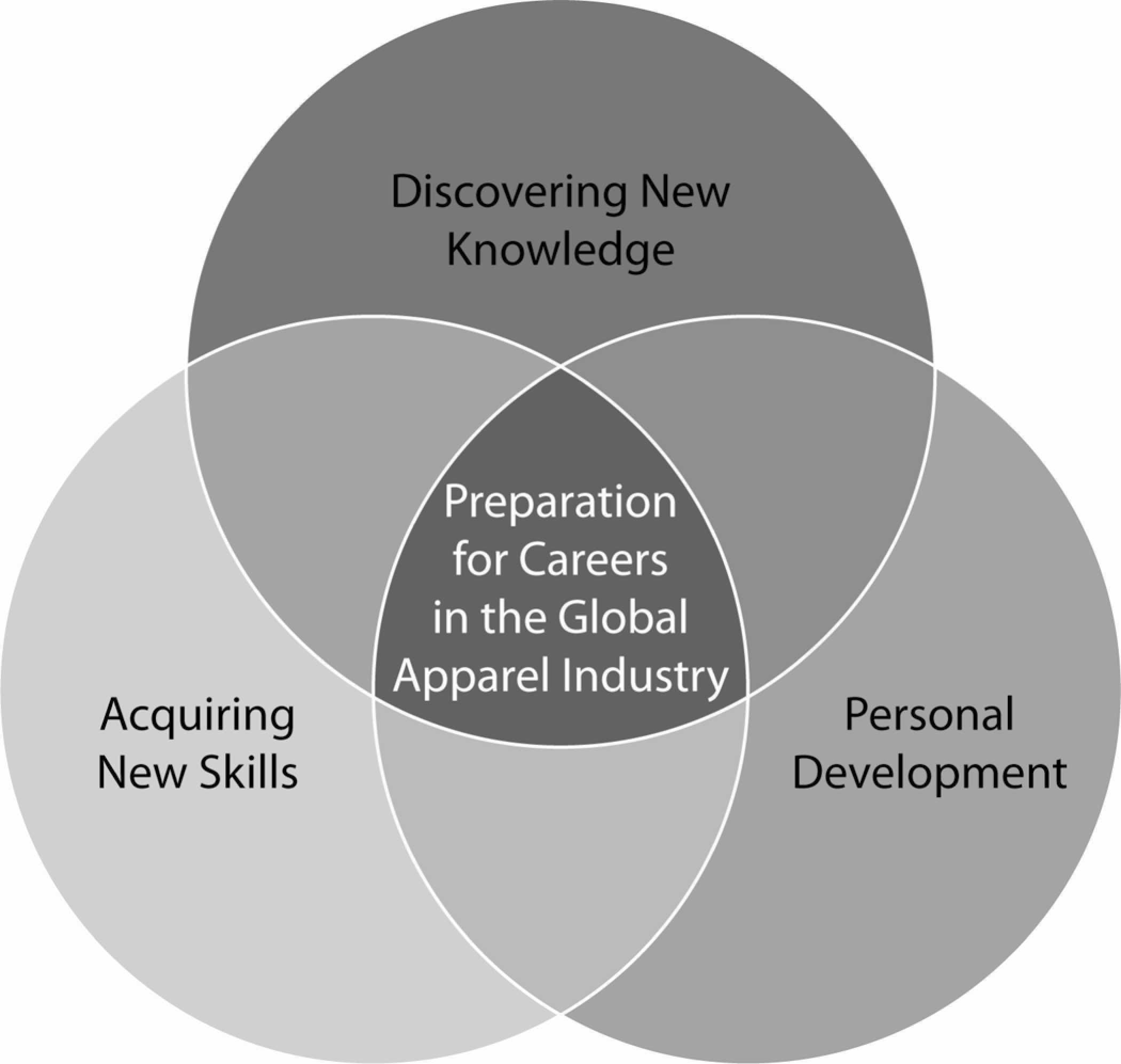
Student learning outcomes of a virtual multinational team-based collaborative project.
Limitations and Future Project Development
In the future, the authors will work on developing new assignments that reflect changes in the global apparel industry (e.g., focus on sustainability). In addition, we plan to add new technology to enhance student computer-mediated communication (i.e., chat and, possibly, videoconferencing). In the first run of the project, technology was limited to the virtual learning environment’s discussion board (even though few teams opted to voluntarily use e-mail and chat in addition to the required technological platform). While use of password-protected learning environment where instructors can review and intervene in all teams' intercourses can be viewed as an advantage, it also sets limitations to participant interaction as asynchronous nature of the technology slows down the communication process. Another interesting direction for the project would be to diversify participating cultures and/or languages; for example, by including countries that do not have English as a native/primary language. To increase student motivation and participation rate, more research is needed to understand why students might choose not to get involved in a virtual collaboration project. It is important to prepare students to the project by sharing previous participants' feedback and completing a short cross-cultural communication training to ensure positive experience and effective learning.
It is important to explore whether and how participants' cultural background and other demographic information might affect computer-mediated communication and virtual team dynamics. Such exploration, while beyond the scope of this research, might contribute to a greater understanding of cross-cultural communication in a technology-assisted environment. Collecting additional information on virtual collaboration participants, such as academic standing, professional experiences (e.g., working experience and internship), technology proficiency, travel, and relevant demographic characteristics offers new research venues to advance our knowledge about factors important to consider when developing and implementing educational projects based on cross-cultural virtual collaboration.
Footnotes
The authors declared no potential conflicts of interest with respect to the research, authorship, and/or publication of this article.
The authors received no financial support for the research, authorship, and/or publication of this article.