







Abstract
In light of the growing interest in socially responsible apparel consumption, this study examined the effect of fiber origin, fiber production method, and price on consumer purchase preferences for cotton apparel. Using data collected from a nation-wide telephone survey and conjoint analysis, the relative importance of product attributes and the potential market shares for products with different levels of each attribute were estimated. Analyses based on the average of each respondent’s part-worth utilities indicated that price is the most important criterion for cotton apparel with a relative importance value of 58.5%. The importance values for U.S.-grown fibers with transparency and fibers grown with sustainable farming methods were 30% and 11.5%, respectively. Cotton apparel with the combination of the aforementioned attributes was estimated to garner 32% of market share among U.S. consumers. Cotton apparel made from U.S.-grown fibers with transparency, using sustainable farming methods and offered at a medium price level accounted for a 7% market share. In general, the results indicated that consumer placed greater importance on fiber transparency relative to sustainable farming.
Keywords
Introduction
Sustainability, transparency, verification, and certification—once emerging trends, these are now keywords that permeate the textile and apparel industry of the 21st century. As a result, leaders in all channels of the industry are scrambling to identify ways to most effectively respond to these trends (Marquardt, 2010). As Cotton Incorporated (2010a, p. 1), a nonprofit cotton promotion organization, points out “(t)he ongoing media blitz about the eco-movement, Al Gore’s global warming documentary film An Inconvenient Truth, and recently-released scientific reports are raising the American consumer’s consciousness to new heights of awareness about global warming and environmental issues affecting our planet-and our lives.” These efforts have raised public awareness about the relationship between consumer consumption choices and the impact on the environment. Consequently, much attention has been placed on green consumption or environmental concern in today’s market environment. This environmental focus has also extended to the apparel industry. Cotton apparel is of particular interest to this study since cotton is an integral part of the global apparel supply chain, accounting for over 52% of the worldwide demand for apparel fiber in 2004 (Kadolph, 2007). In addition, domestic cotton producers are looking for ways to market cotton apparel and textile products that highlight attributes related to how and where the cotton is grown (Bayer CropScience, 2011).
In addition to concerns regarding how products are made, consumers are also interested in where products are made. The local movement, originally fueled by environmental concerns (Kingsolver, 2007), has gained strength from the 2009 economic downturn that brought attention to the power of supporting local enterprises. In addition, a recent Harvard Business Review study showed that today’s consumers have increased their demand for simple, easy-to-understand, transparent, and ethical business governance (Bhaduri & Ha-Brookshire, 2011; Flatters & Willmott, 2009). All of these consumer demands for green, local, or transparent products are based on the growing trends toward socially responsible consumption (SRC) that concerns both social and environmental aspects of consumption (Ha-Brookshire & Hodges, 2009).
Sustainability in the business setting is defined as “development that merits the needs of the present without compromising the ability of future generations to meet their needs” (World Commission on Environment and Development, 1987, p. 8). The business literature emphasizes that the triple bottom lines of sustainability—social, environmental, and economic dimensions—must be considered when seeking sustainable business practices with a balanced approach to all three aspects (Sikdar, 2003). At the sixth annual organic exchange sustainable apparel conference, industry leaders from all segments of the apparel supply chain agreed that sustainability is not just an “option.” Rather, sustainable business practices are the wave of the future and must be given immediate attention (Marquardt, 2010). The development of the Wal-Mart Sustainability Index is one example of business response to this trend. The index was developed to create a more transparent supply chain so consumers could assess products' sustainability easily (Walmart, 2010). As seen with the Wal-Mart Sustainability Index, although sustainability and transparency are separate concepts, they can also go hand in hand.
So, if this is the wave of the future, how can businesses successfully make sustainable efforts with transparency? What information is needed for businesses to effectively identify consumers and satisfy their needs and wants for more socially responsible apparel consumption? To identify issues related to sustainability and transparency in all segments of the textile and apparel supply chain is beyond the scope of this study. In an effort to provide insight to one specific segment, U.S. cotton growers, this research focused on two aspects of socially responsible apparel consumption related to growing cotton. They are (a) traceability of the cotton back to the farm it was grown on (transparency) and (b) the farming method used to grow the cotton (sustainable or conventional methods). Previous research indicates that “(t)he interest in sustainable apparel is particularly pronounced among the younger demographic, which has grown up with organic food and farmers markets” (Marquardt, 2010, p. 28). However, sustainability could mean different things to different consumers and consumers in different age groups may desire different aspects of sustainability. In addition, little research examined the importance of transparency as it relates to apparel consumption. Consequently, this study was designed to investigate trade-offs being made between two specific aspects of SRC choices (transparency of U.S. grown cotton and sustainability) for cotton apparel, using a nationwide, general population of consumers beyond young adults.
Review of Literature
Cotton and Sustainability
Each segment of the textile and apparel industries, such as fiber, textile, apparel, and retail, makes important contributions to the production and marketing of textile and apparel products, and, potentially, to sustainability. Thus, examining all segments of the textile and apparel supply chain simultaneously is almost impossible in one study. In fact, the diversity within any given segment of the supply chain requires a need for focused studies. For example, within the fiber industry, there are producers of both natural and manufactured fibers, each with their own unique set of issues related to sustainability and transparency. Even among natural fiber producers (e.g., cotton, flax, wool, and silk), there are variations in the issues confronting the producers of each type of natural fiber.
Thus, this research specifically focused on cotton and cotton apparel, and SRC related to cotton and cotton apparel. We focus on cotton because cotton makes important economic, social, and environmental impacts on the U.S. economy in unique ways. Thus, cotton and cotton apparel offer an excellent context for understanding SRCs. First, economically, the United States is one of the leading cotton producers in the world, followed by China and India, producing a total of 12.2 million bales in 2009 (Cotton Incorporated, 2010b). In 2010, U.S. Department of Agriculture (USDA) reported that U.S. farmers have planted over 10.3 million acres in cotton crops, a 15% increase over 2009 (Cotton Incorporated, 2010c). In addition, U.S. cotton is considered to offer better quality than cotton produced from China and India, in terms of fiber length (Kadolph, 2007). Thus, U.S. cotton attracts buyers from all over the world. In 2009, the United States exported cotton including yarns and fabrics up to U.S. $5 billion (Office of Textile and Apparel, 2010).
Second, cotton has a social impact on U.S. consumers in today’s marketplace. It is the fiber of choice among U.S. consumers (Cotton Incorporated, 2011). Particularly, after September 11, 2011 (or 9/11), U.S.-grown cottons have been in a high demand by socially conscious consumers who are interested in saving domestic jobs, increasing economic activities within the United States, and buying locally (Ha-Brookshire & Norum, 2011). For these consumers, buying U.S.-made or U.S.-grown products is an act of patriotism and social responsibility (Ha-Brookshire & Norum, 2011).
Third, cotton is an important crop when discussing the environmental impact of farming practices in the United States. Other than organic cotton, most cotton, including pima and Supima®, are grown from genetically modified (GM) seeds. In fact, 88% of the acreage of U.S. upland cotton in 2009 was planted with GM seeds (U.S. Department of Agriculture [USDA], 2010). In the past, conventional upland cotton was highly criticized for its negative environmental impact during the growing process. Over time, producers of GM cotton seeds have developed new variations of GM seeds that require less pesticides, insecticides, and water usage during the growing process, thereby reducing the environmental impact of cotton farming and contributing to sustainable farming practices (USDA, 2010). Cotton farmers have directed their attention toward not only utilizing these GM seeds but also developing more sustainable cotton farming techniques. The primary idea behind sustainable farming is to enhance productivity and provide profitability while minimizing the environmental impact (Cotton Incorporated, 2010d). With new developments in GM seeds, and growing interest in sustainable farming, cotton seed producers, cotton farmers, and even state agricultural agencies have expressed interest in understanding how consumers view the importance of socially responsible attributes, such as sustainability and transparency, when purchasing cotton apparel. 1
Cotton and Socially Responsible Consumer Behavior
Consumer behavior related to sustainable products can be analyzed through the socially reponsible consumer behavior (SRCB) literature. SRCB is defined as behavior in which the consumer bases his or her decision on a desire to minimize or eliminate any harmful effects and to maximize any beneficial impacts on society throughout the prepurchase to the postconsumption stages (Ha-Brookshire & Hodges, 2009). As social awareness among consumers has increased, products' social and environmental impacts have been important criteria for their consumption choices.
In the cotton marketplace, researchers have explored the labeling of various fiber attributes that may appeal to consumers or to selected segments of consumers (Hustvedt & Bernard, 2008; Hustvedt & Dickson, 2009; Hustvedt, Peterson & Chen, 2008). The growth of the organic cotton market, to some extent an outgrowth of the organic food market, has provided much of the impetus for the research in this area. This research stream has been broadened to explore the concept of SRC choices other than organic, such as sustainable and locally grown/produced products. This research development reflects growth in a consumer segment that has been referred to as lifestyles of health and sustainability (French & Rogers, 2006).
Using a mail survey of U.S. health and natural foods, Hustvedt and Dickson (2009) found that 38% of the consumers in the sample (N = 377) considered organic fiber content when forming their apparel purchase intentions. These consumers were described as having positive attitudes toward organic and sustainable agricultural products and buying locally. They also viewed themselves as environmentally and SRCs. To further investigate the value of fiber labeling practices, Hustvedt and Bernard (2008) compared consumers' willingness to pay for different fiber types (biodegradable cotton fibers and polylactic acid fibers made from corn fibers) and different production methods (conventional farming with GM seeds, organic farming with non-GM seeds, and conventional farming with non-GM seeds). Using an auction format for data collection, and a convenience sample of university students, the study found that the respondents were less likely to buy apparel products made of fibers derived from corn relative to cotton. Instead, consumers were willing to pay the greatest premium for apparel made of fibers produced organically with non-GM seeds, followed by apparel made of fibers produced conventionally, yet using non-GM seeds. Although demographic characteristics have not been found to be strong predictors of consumer attitudes toward the environment (Hines, Hungerford, & Tomera, 1986), the results of this study showed that men were significantly more likely to pay a higher price for socks made from U.S. fibers than women. Hispanic consumers were less interested in organic or non-GM seed production methods compared to other races/ethnicities.
In addition to SRCB related to fiber types and fiber production methods, some businesses have used place (or location) as a focal point in their branding efforts to respond to the local movement trend. For example, a group of wineries in California launched successful place-based marketing and regional branding strategies, specifically targeting “consumers who are anxious to know where products come from” (Bruwer & Johnson 2010; Dimara & Skuras 2005, p. 91). Products with local growers' signatures or stamps have become popular as consumers were able to immediately picture the actual beneficiaries of their responsible consumption choices. Since September 11, 2001, the popularity of domestically produced/grown products has been increasing across product categories (Lee, Hong, & Lee, 2003). Similarly, in cotton consumption, Hustvedt and Bernard (2008) also found that consumers were willing to pay a premium for an apparel product made from Texas fibers relative to imported fibers.
Gap in the Literature
Although previous studies have provided important insights into consumers' purchase/consumption intentions toward the fiber production method and origin of cotton fibers, when all of these various sustainable practices are presented at once, it is unknown how consumers trade-off different product attributes and make the final purchase decision within the budget constraints. Sometimes, consumers may put the highest weight on fibers grown from non-GM seeds over domestically grown fibers. Other times, consumers may consider sustainable farming practices as the most important evaluative criterion over U.S. cotton. For example, if all else was equal, do consumers prefer an apparel product that is made of cotton of unknown origin (without transparency) grown through sustainable farming techniques, or would they prefer an apparel product made of U.S. cotton (with transparency) grown though conventional farming techniques? The answers to these questions are still being explored and are not straightforward (Ha-Brookshire & Norum, 2011).
To fill this gap in our understanding, the study was designed to investigate trade-offs consumers make between different aspects of SRC choices to help identify potential market niches. More specifically, the objectives of the study were to (a) identify the relative importance of selected attributes in purchase preferences, (b) determine how consumers trade-off different price levels versus the product attributes they most desire, and (c) estimate the potential market shares for products with various socially responsible product attribute combinations. Although it is expected that consumers may prefer the most sustainable products at the lowest possible price, it is unknown how important price is relative to other SRC attributes when all of these factors are considered simultaneously. Thus, the relative importance of SRC attributes in consumers' purchase preferences and the degree of trade-offs given budget constraints were the focus of this study. Additionally, the market share analysis resulting from consumer trade-off analysis was expected to provide a concrete picture of U.S. consumers' preferences for socially responsible apparel products made of cotton. The answers to these study questions are expected to make significant contributions to the literature with clear and definitive results of consumer preferences for socially responsible cotton products.
Consumer Demand Theory
To achieve the study objectives, consumer demand theory was used as the theoretical framework for this study (Varian, 2009). Traditional economic theory provides a framework for analyzing consumer demand for goods and services. The specific framework used in this study is the characteristics model of demand, which is a variation of the traditional consumer demand model. In this model, consumers are expected to maximize their utility subject to their budget constraint from which demand functions for various goods and services are derived (Varian, 2009). Utility is derived from consuming goods such as food, housing, transportation, and apparel. A consumer’s utility function is defined as follows:

When product attributes are considered, consumers are viewed as deriving utility from the attributes of the goods rather than the goods themselves (Lancaster, 1966). This is similar to early work in marketing on consumer preferences among multiattribute alternatives and is the basis for the development of conjoint analysis as a statistical technique (Green & Srinivasan, 1978). These perspectives are based on the assumption that consumers make purchase decisions by considering multiple attributes of a product simultaneously. Thus, letting

Thus, consumer utility is derived directly from the attributes of the goods rather than the goods themselves. In economic theory, the utility function would be maximized subject to budget constraint. From a marketing perspective, price is considered to be one of the various attributes a consumer would consider when making a purchase. Thus, the utility function estimated in this study included price, as well as other product characteristics related to the objectives of this study. The inclusion of price recognizes that consumers do make choices within the limitations of a budget constraint. That is, although they may desire certain attributes in a product, consumers are not necessarily willing to pay any price asked for those attributes.
Research Method
Conjoint Analysis
Conjoint analysis is used in this study, deriving its theoretical underpinnings from early works in economics and marketing (Green & Srinivasan, 1978). Conjoint analysis is useful in identifying how people value different attributes that make up an individual product or service, and it can be used to determine what combination of attributes have the greatest influence on respondents' preferences or decision making. In addition, conjoint analysis is frequently used to test customer acceptance of new product designs with different attributes or to reposition existing products by asking consumers to evaluate purchase criteria simultaneously (Malhotra, 2009). Finally, the output from the conjoint analysis helps estimate market share for new or existing products (Patetta, 2009).
Consequently, a consumer utility function was developed that included SRC attributes, for apparel products, that are emerging in the marketplace. The new product attributes included in this study are fiber production methods and U.S.-grown fiber with transparency. Other apparel product attributes, such as color, style, and fit, are not included as they are assumed to have already met the consumer needs (i.e., they are being held constant). Price is the only non-SRC attribute included in this study to reflect the consumers' budget constraint, and to evaluate trade-offs being made between the preferred attributes and the product price by consumers.
To conduct the conjoint analysis for this research, the following steps were taken. First, we selected a 100% cotton button down shirt for men, and a blouse for women as sample apparel products. That is because apparel itself is too broad as a product category. In addition, a button down shirt is an apparel item that typically contains cotton, yet does not have a great deal of styling variations. Second, we determined the levels for each SRC attribute. First, fiber origin with transparency had two levels: (a) U.S.-grown fibers with transparency and (b) unknown fiber origin with no transparency information. Although transparency in textile and apparel manufacturing could be applied throughout the manufacturing and assembly process, in this study, we have focused on the transparency of fiber in order to keep the identity and integrity of the fiber origin. Also, the transparency of domestically produced (U.S.) cotton is of interest in this study, not the transparency of cotton produced outside the United States. Production methods also had two levels: (a) conventional production method and (b) sustainable production method. These are the two possible ways of cotton farming with GM seeds. Finally, price had three levels: (a) low, (b) medium, and (c) high. These three price levels represent typical U.S. retail markets of mass, mid-tier, and high-end.
Next, 12 profiles of apparel products were created. Each profile was created from a combination of attribute levels from all or some of the constituent attributes. The total number of profiles was obtained by multiplying the number of levels of each product attribute (2 × 2 × 3 = 12). Finally, survey questions were created to ask the respondents to rate their preferences for each product profile on a scale of 1–5, with 1 being least preferred and 5 being most preferred. From the conjoint analysis, individual utility functions were estimated. Additionally, part-worth estimates were obtained for each respondent in the sample. These estimates were used to calculate the relative importance of each attribute and to the market share (Patetta, 2009).
Sample and Data Collection
Primary data were collected from a nationwide sample using a telephone survey. The actual phone interviews were conducted by a professional market research firm, and each phone survey lasted approximately 15–20 min. Although, in today’s market environment, a telephone survey may lose part of the coverage, it is still considered an effective survey mode for general population surveys (Dillman, Smyth, & Christian, 2009). Since the goal of this study was to reach the general population, a telephone survey was deemed appropriate. The sampling frame was established through random-digit-dialing. Participants were screened based on two criteria: the participant had to be (a) 21 years of age or older and (b) identified as the primary shopper for apparel in the household. The data were collected over a 1-month period in September 2009.
Measures
Dependent Variable
Preferences
The study’s only dependent variable is relative consumer preferences for a long-sleeve button down shirt (for men) or blouse (for women) with selected attributes. A shirt or blouse was selected since it was assumed to be a commonly purchased item, had more price variation than a knit t-shirt, and shirt or blouse was used in prior conjoint analysis research using apparel (Dickson, Lennon, Montalto, Shen, & Zhang, 2004). The telephone interviewer read “For the next few questions, we would like to you evaluate two descriptions a long-sleeve button-down shirt (or blouse). The first description I read will be for shirt A and the second will be for Shirt B. Of the two, please indicate which you would prefer to purchase as well as the strength of your preference” over the phone. The participants evaluated all possible combinations of the 12 profiles, 2 at a time (a traditional full-profile conjoint where respondents are shown every possible combination of levels from all three attributes in a pairwise design). The task order was randomized to distribute order bias among the experimental conditions. The participants responded to each of the 12 different product profiles on a rating scale with endpoints 1 and 5, where 1 = strongly prefer shirt A and 5 = strongly prefer shirt B. The number of responses for each task was equal to the sample size (n = 500).
Independent Variables
Cotton production method
The two levels of fiber production methods are conventional farming and sustainable farming of cotton. To facilitate respondents' understanding, we provided a definition of sustainable farming practices—“a process that reduces the use of pesticides, water, land, and energy compared to conventional farming practices. This process may or may not use genetically modified seeds.” (Cotton Incorporated, 2010d). Each production method is coded as “1” if sustainable farming and “0” if conventional farming.
Fiber origin with transparency
The two levels of fiber origin with transparency are U.S.-grown fiber with transparency and unknown fiber origin with no transparency information. The participants were provided with the following transparency information: “transparency refers to the availability of information on the entire route a garment follows from cotton field to the retail store. The identity and location of producers will be available through a certification process.” These statements on transparency were developed by the researchers based on a business dictionary and current business practices found for other agricultural products offering transparency certifications (Transparent, 2010). Each level of fiber origin with transparency was coded as “1” if cotton was grown in the United States with complete transparency and “0” if otherwise.
Price
Three price levels of low, medium, and high are operationalized as actual retail values of $20, $50, and $80, respectively. $50 represents an average price for a long-sleeved button down shirt and the other two prices serve as low-price and high-price options that could be found in today’s apparel marketplace.
Results
Totally, 500 responses were obtained. Approximately half the sample (50.2%) was over the age of 55. The majority of the sample was female (79.0%) and married (59.0%). Approximately 40% of the sample (44.4%) had a household’s annual income before taxes between US$25,000 and US$74,999. Each region of the United States was fairly evenly represented: Northeast (27.8%), Midwest (28.4%), South (22.4%), and West (21.4%). See Table 1 for sample and U.S. population characteristics. Compared to the U.S. population with respect to income, region, and race (U.S. Census Bureau 2011a, 2011b), this sample had slightly higher incomes, less representation from the south, and less representation from minorities, particularly Hispanics. In this sample, 3% of the households identified themselves as Hispanic, whereas in the U.S. population over 14% of the household are Hispanic (of any race). Since respondents were selected based on age, and whether they were the primary apparel shopper, it was anticipated that the characteristics related to gender, marital status, and age would not mirror that of the U.S. population, and therefore comparison statistics were not included for these variables.
Sample Characteristics
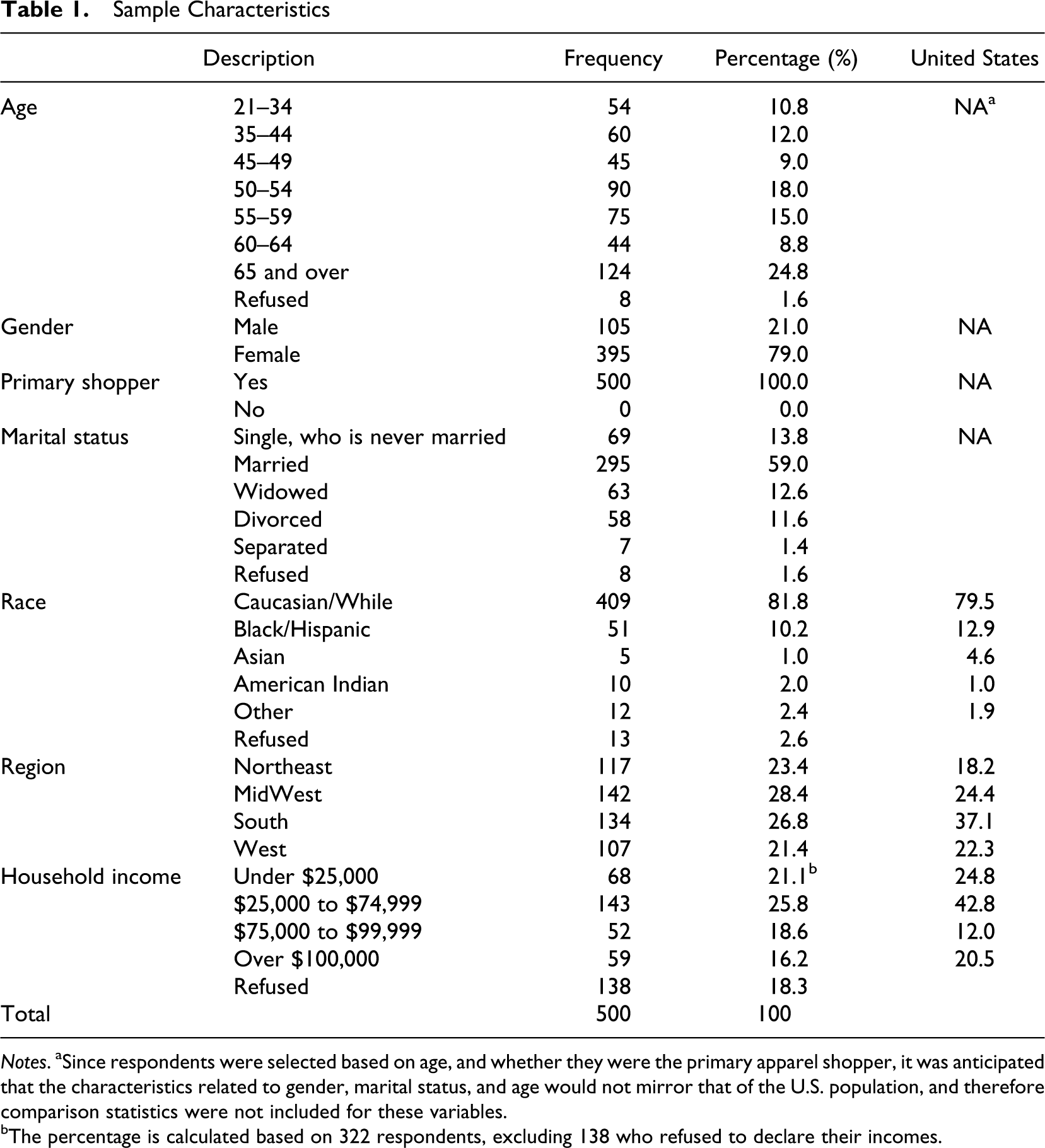
Notes. aSince respondents were selected based on age, and whether they were the primary apparel shopper, it was anticipated that the characteristics related to gender, marital status, and age would not mirror that of the U.S. population, and therefore comparison statistics were not included for these variables.
bThe percentage is calculated based on 322 respondents, excluding 138 who refused to declare their incomes.
Data Analysis
Ordinary least squares (OLS) regression analysis is used in conjoint analysis. This method is recommended when dummy variables are included in the statistical model (Malhotra, 2009; Patetta, 2009). In this study, conventional farming method, unknown fiber origin with no transparency information, and mid-price point are considered control levels of each variable. Thus, they are coded as “0” and removed from the equation. Finally, the study equation is formulated as follows:
A separate statistical model (or utility function) was estimated for optimal fit for each of the 500 respondents. The output included part-worth utilities for each attribute level and importance values (or a % utility range; Patetta, 2009). The part-worth utilities are the regression coefficients from the OLS estimation, measuring the respondent’s relative preference for a particular attribute level (Malhotra, 2009; Patetta, 2009). Importance values showed how important each attribute is in predicting product preference for a respondent relative to the other attributes. The initial output from the conjoint analysis contained estimates for each individual respondent and provides the data for the final results. As Patetta (2009) points out, the amount of output from the conjoint analysis can be “voluminous” when using samples size of 150 or larger. In the situation with large samples, Louiviere, Eagle, and Cohen (2005) recommend performing a market simulation using the aggregated predictions from each respondent, and this was the approach taken is this study.
Based on the initial output, the statistical analysis software (SAS) version 9.2 yielded the average importance values across 500 respondents and the expected market share for each hypothetical product profile. These results were calculated based on macro functions available in the latest version of SAS 9.2. In much of the past research using conjoint analysis, researchers typically analyze part-worth utilities at the individual’s level, not at the aggregate or macro level (e.g., Hustvedt & Dickson, 2009). As market researchers become more interested in how average consumers trade-off different attributes, beyond each individual consumer’s preference trade-offs, the conjoint analysis at the aggregate level become more established. In this study, a maximum utility model (the most common method) was used to simulate market shares, assuming “each respondent will buy the product with probability for which he/she has the highest utility” (Patetta, 2009).
Results
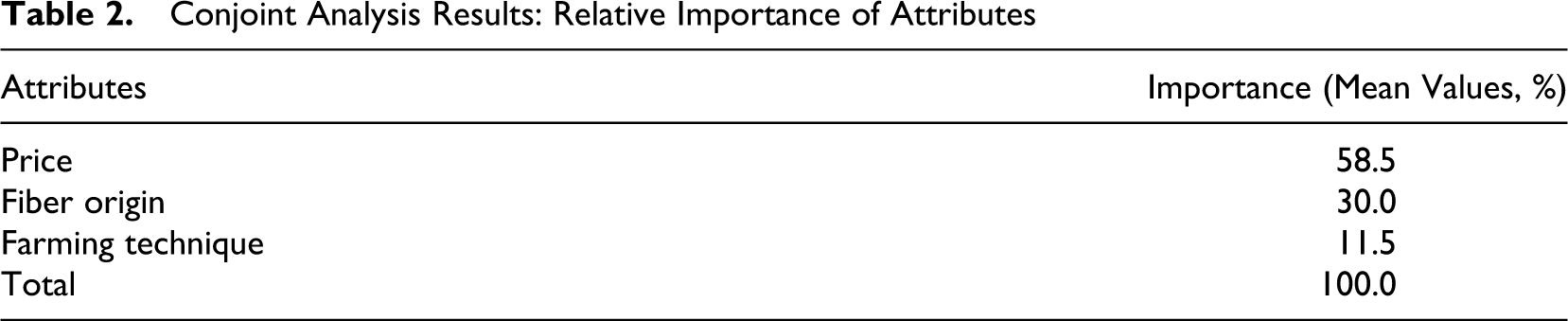
The summary results of relative importance values of attributes (Research Question a) indicate that price (58.5%) is the most important variable in predicting preferences across respondents, followed by U.S.-grown fiber with transparency (30.0%). Farming technique (11.5%) is the least important variable in predicting preferences according to the study sample. Table 2 illustrates the relative importance of SRC attributes as mean values.
Conjoint Analysis Results: Relative Importance of Attributes
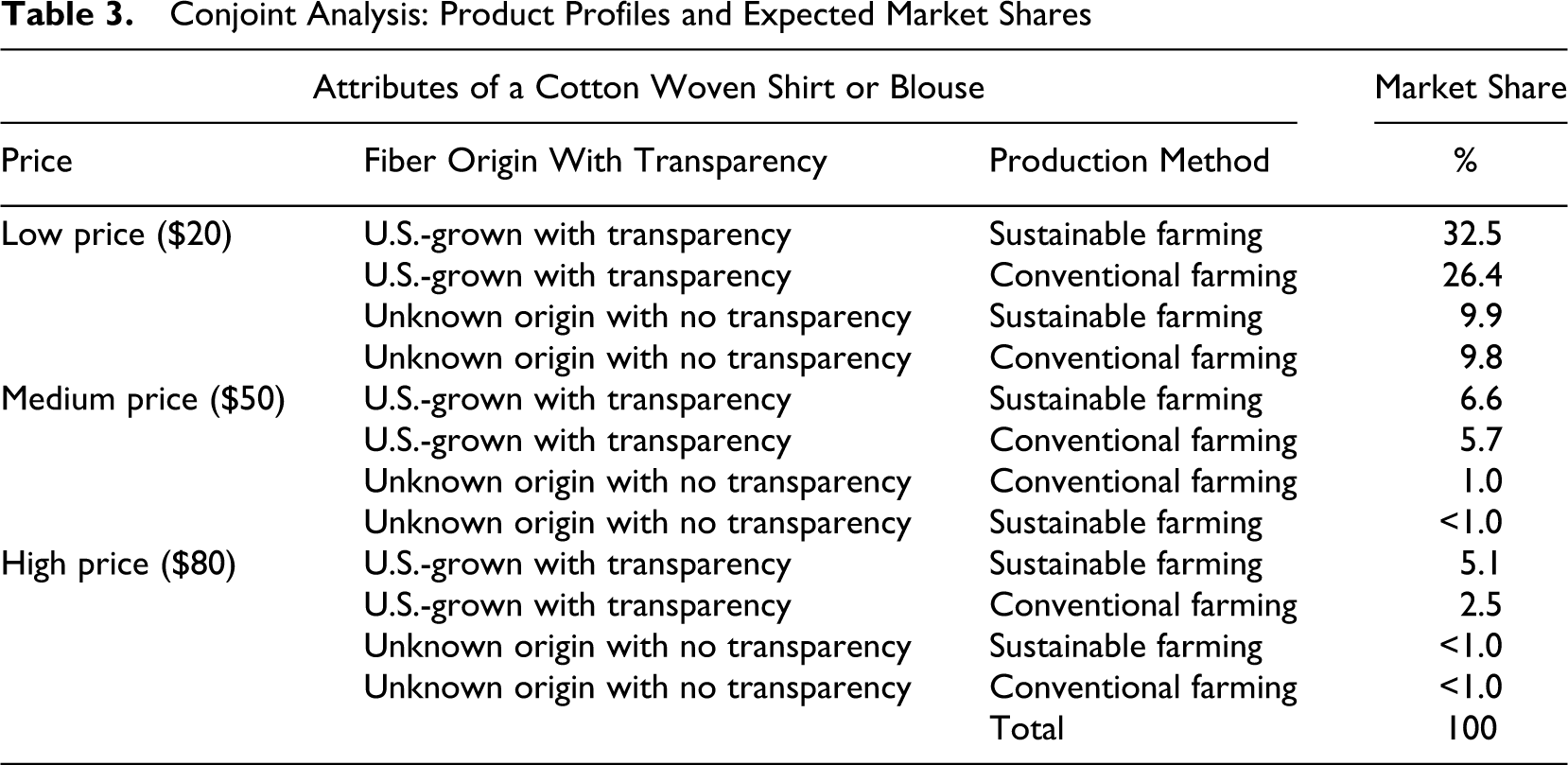
Next, the market share simulation for consumer trade-offs between different price levels and the product attributes (Research Questions b and c) indicates that a $20 cotton woven shirt or blouse made of fibers grown in the United States with complete transparency, using sustainable farming methods would appeal to the greatest portion of consumers, yielding almost one third of the market share (32.2%). The second largest market share (26.4%) is a $20 cotton woven shirt or blouse made of fibers grown in the United States with transparency, using conventional farming methods. In fact, low price seems important for consumers' purchase preference as it accounts for 78.3% of the overall market share, regardless of fiber origin with transparency and farming techniques.
At the medium or average price level ($50 at retail), a cotton woven shirt or blouse made of fibers grown in the United States with complete transparency and sustainable farming method captures 6.6% market share and the same product with conventional farming method results in only 5.7% market share. When the same shirt has unknown fiber origin with no transparency information, regardless of farming techniques, only 1.1% of consumers prefer such products.
Finally, at the high price level ($80 at retail), a cotton woven shirt or blouse made of fibers grown in the United States with complete transparency and sustainable farming has 5.1% of the market share and the same product with conventional farming technique results in only 2.5% market share. When the same shirt has unknown fiber origin with no transparency information, regardless of farming techniques, less than 1% of consumers prefer such products. Table 3 shows the expected market shares for 12 different product profiles and Figure 1 summarizes the market share data for all product profiles with an estimated market share of 5% or greater.
Conjoint Analysis: Product Profiles and Expected Market Shares
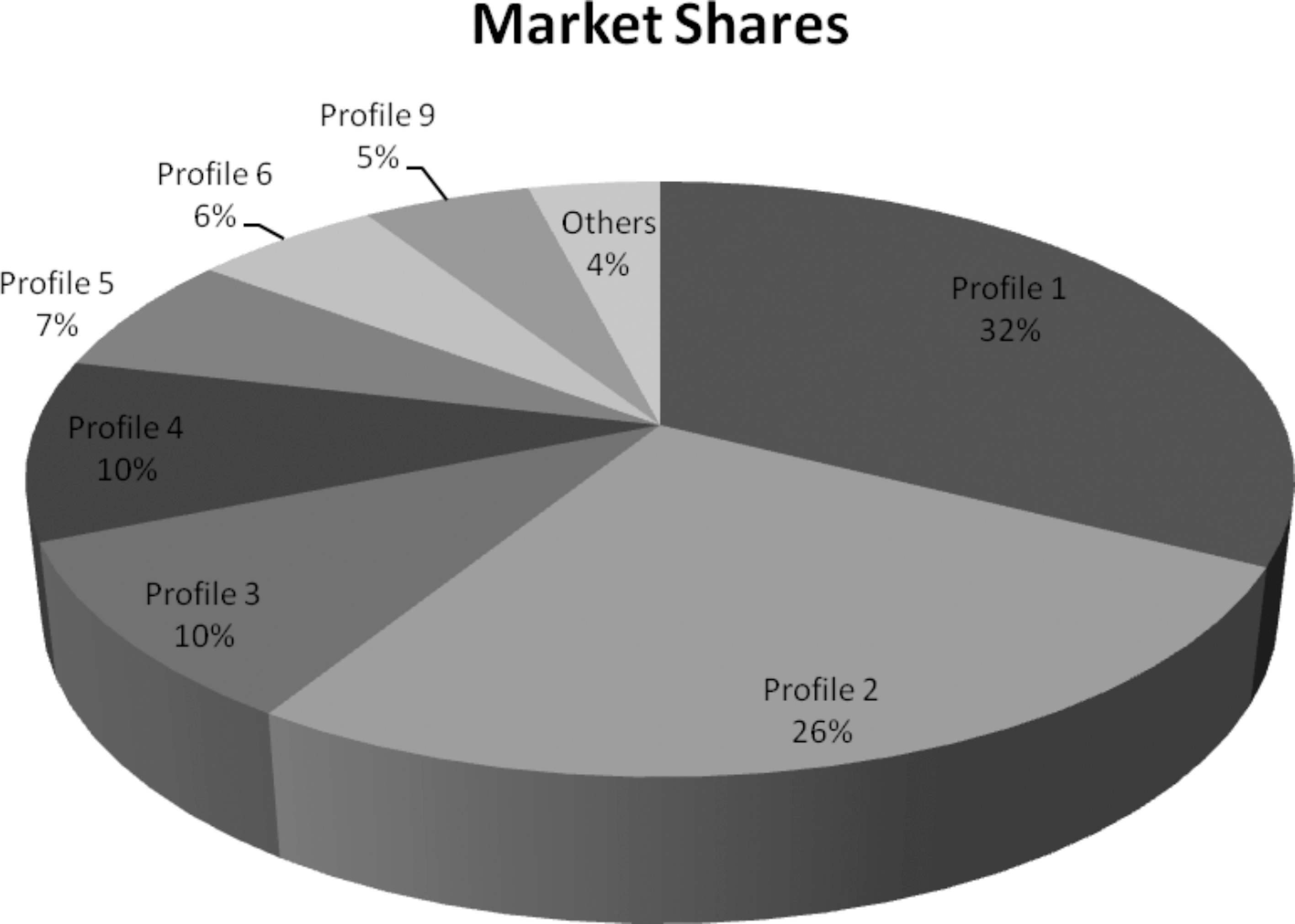
Market shares of cotton apparel with different socially responsible attributes. Note. Profile 1 (low price, U.S.-grown fiber, sustainable farming); Profile 2 (Low price, U.S.-grown fiber, conventional farming); Profile 3 (low price, unknown fiber origin, sustainable farming); Profile 4 (low price, unknown fiber origin, conventional farming); Profile 5 (medium price, U.S.-grown fiber, sustainable farming); Profile 6 (medium price, U.S.-grown fiber, conventional farming); Profile 9 (high price, U.S.-grown fiber, sustainable farming).
Discussions and Conclusions
In response to the popularity of socially responsible products and increasing consumers' demands for such products, this study was designed to investigate the relative importance of two socially responsible attributes with respect to purchase preferences, and the potential market shares for those products. Using a nationwide telephone survey and conjoint analysis research method, the study revealed several important findings and implications.
First, the results of relative importance values of product attributes show a particularly interesting finding. That is, U.S.-grown fibers with transparency contribute 28.5% to consumer preferences for apparel products, compared to the contribution of sustainable farming practice (11.5%) to those products. This result suggests managers whose mission is to create and communicate their brand identities and product attributes may want to highlight the fact that the fibers used in their apparel are from the United States with complete transparency rather than the fact that they are grown through sustainable farming techniques.
Second, the importance of U.S. fiber origin with transparency also suggests a need for creating a new certification or verification process to document the transparency. If the whole supply chain of cotton apparel can be traced from the farm where the seeds were planted, to the mill where cotton fibers are ginned, to the factories where cotton fibers are spun into yarn, made into fabric, and finally, to where they are transformed into a final apparel product for consumers, this process can be documented into a certification verifying the complete transparency from farm to consumer. As has been done with other agricultural products, local growers' signatures or stamps may need to be developed so that consumers can easily picture the actual beneficiaries of their responsible consumption choices.
Third, the results from the market share analysis indicate that consumers want it all in a cotton apparel product—low price, U.S.-grown with transparency, and sustainable production method. Yet, consumers seem to have different importance values for each attribute. A product with all of these attributes would be difficult for many businesses to offer because of the costs associated with documenting transparency and conducting sustainable farming practices. However, the findings may help businesses decide on which attribute to put a higher emphasis relative to others when the budget is limited. For example, for a greater portion of market share, businesses may want to focus on U.S.-grown fibers with transparency rather than fibers produced through sustainable techniques. That is because even if sustainable farming is preferred, when fiber origin is unknown, fewer than 10% of consumers seem to prefer such products. When making a trade-off between U.S.-grown cotton with transparency and sustainable production, it seems that the focus should be on products made from U.S.-grown cotton with transparency rather than sustainability. The trade-off depends on the economic feasibility of combining both attributes into one product, and the characteristics of the market segment that a particular business is trying to attract. Given whatever combination of attributes a product possesses, these results provide insight into the potential market share such a product could garner and, thus, have important implications for product development for socially responsible apparel products.
This study makes several contributions to the literature. First, the study provides some insight into U.S. consumers' preferences for socially responsible attributes in cotton apparel products. The results specifically show how much consumers prefer, or do not prefer, socially responsible cotton products when price is considered. The findings also show the estimated proportion of consumers in the United States who would like socially responsible attributes in cotton apparel products at different price points. These results could be an important decision-making factor for businesses and marketers. Second, the study results also support classic consumer demand theory in that consumers indeed seem to try to maximize their utility within their budget constraints and make trade-offs when deciding purchase preferences.
Third, the study incorporates what has become a widely accepted definition of sustainability to discuss cotton fibers. The majority of previous research has focused on organic cotton and has excluded nonorganic cotton that may meet the three criteria of social, environmental, and economic dimensions of sustainability. This research investigates cotton fibers grown from GM seeds with different fiber origins and fiber production methods that may have different sustainability impacts beyond organic fibers. Fourth, this research focuses on the concept of transparency. To our knowledge, this is the first study investigating consumer preference trade- offs for U.S.-grown cotton with transparency and sustainability in an apparel product at three different price level (low, medium, and high).
Finally, using the cutting edge statistical technique available today, the study clearly delineates the importance values of fiber origin with transparency and production method that consumers trade-off when price is considered at the aggregate level. The study also shows macro-level market shares of cotton apparel products with different sustainability attributes and provides powerful insights into the viability of such products in the marketplace. These results are unavailable in the fiber/apparel areas to our knowledge.
As much as the study findings reveal interesting and practical results regarding consumer trade-offs with respect to cotton apparel preferences between different SRC choices, the study has limitations and, therefore, offers future research opportunities. First, because this study includes only two attributes of SRC choices, it would be fruitful to further investigate consumers' willingness to pay for other socially responsible attributes, such as product disposal methods and recyclability. A comparison of consumer preferences between organic cotton and cotton grown from GM seeds would also be helpful for our understanding of SRCs.
Second, although this study shows that consumers prefer a product made of U.S.-grown fibers with transparency, an increase in premium price that consumers are willing to pay starts to negatively affect and eventually outweighs the utility they receive from such products. However, the study results do not show what would be the exact premium consumers are willing to pay for different SRC attributes. In addition, the importance of price may be overstated since there were three levels of prices included in the profiles and only two levels of the other attributes. The results also do not include the cost of maintaining transparency of U.S. cotton fibers. Thus, a further investigation is necessary to identify such turning points and the cost to maintain transparency among U.S. fiber growers, to help businesses develop precise pricing strategies. This effort would help researchers investigate transparency for more definitive results that could directly help businesses and marketers.
Third, as this study focused on U.S. fiber origin with transparency, further research that simultaneously analyzes the impact of country of manufacturing origin and fiber origin would contribute to a better understanding of today’s consumers' perceptions and purchase intentions for sustainable products. Finally, in order to identify a segment of consumers who are willing to pay a premium price for various socially responsible products, different survey modes (such as interviews and other self-administered surveys), data analysis techniques (such as cluster analysis), or other market segmentation tools are recommended.
Footnotes
Notes
The authors declared no potential conflicts of interest with respect to the research, authorship, and/or publication of this article.
The authors disclosed receipt of the following financial support for the research, authorship, and/or publication of this article: Funding for this project was awarded in part through research grants and/or in-kind support awarded to the authors by Bayer CropScience, Missouri Department of Agriculture, and Issues and Answers.