






Abstract
Preparing fashion merchandising students for the evolving digital landscape of the fashion industry is an educational challenge. This study investigated a potential solution to this challenge by integrating Google Digital Garage's certification with experiential activities. In a convergent parallel mixed-methods study, data were collected from 171 undergraduate students across five semesters to examine the effects of this curriculum on digital confidence, knowledge retention, knowledge transfer, and perceptions. From these findings, four contributions are presented. First, students had significant gains in confidence across all digital competencies, in contrast to declines reported in public relations and entrepreneurship education. Second, students’ known visual-creative orientation led to stronger performance on knowledge-transfer tasks than on traditional assessments. Third, a trilateral identity, as consumers, learners, and emerging professionals, emerged as a resource for meaning-making. Lastly, a framework, the Fashion Merchandising Digital Confidence Model (FMDM), is introduced to guide digital skills education in fashion merchandising programs.
Keywords
Consumers’ use of digital devices has driven year-over-year growth in the e-commerce channel and led to the rise of omnichannel retailing (Balchandani et al., 2025). As digital technologies become increasingly embedded across customer experience and retail operations, they have transitioned from a competitive advantage to a foundational requirement (Balchandani et al., 2025; National Retail Federation, 2024). Fashion leaders are responding by prioritizing workforce upskilling and talent acquisition to keep pace with rapidly evolving digital systems (Balchandani et al., 2025). Despite the proliferation of digital technologies, a significant gap in digital skills persists within the retail workforce (Gallin et al., 2025; Sun & Ha-Brookshire, 2025). In the United States, 92% of jobs now require digital skills, yet approximately 33% of the workforce lacks the foundational skills needed to perform these roles (Gallin et al., 2025).
Industry initially responded with certification programs, and higher education followed suit, using them to fill digital learning gaps. However, research examining their effectiveness within higher education is limited and domain-specific to marketing and public relations, with no studies exploring retail merchandising programs. For example, no studies have examined certification programs within the context of fashion retailing programs, nor their impact on students’ confidence, knowledge retention, and transfer. Likewise, there is limited research on student outcomes when certification programs are combined with experiential learning (Jai, 2017; Sun & Ha-Brookshire, 2025). Moreover, there is a lack of understanding of how students retain and transfer knowledge beyond the initial completion of certification, as well as their attitudes toward such programming (Lee et al., 2023; Meng et al., 2018). These gaps create uncertainty about whether certification programs simply provide another credential for students’ resumes or truly impact learning. These gaps are particularly noteworthy in retail merchandising programs.
Research in retail merchandising programs has identified the same digital gaps. In a study examining advisory board contributions to fashion retail programs, board members interviewed cited digital skills as a weakness across the industry and a top priority for academic programs (Alexander et al., 2024). A study by Sun and Ha-Brookshire (2025) found that, particularly in the fashion industry, digital skills demands varied significantly among fashion retailers, with no universally accepted definition of essential digital competencies. In this study, it was suggested that one way to prepare students for an industry with wide-ranging digital skill needs is to build students’ digital skill efficacy.
Given the increasing demand for digitally proficient graduates in retailing, this study examined the impact of an experiential learning curriculum with Google Digital Garage certification on students’ confidence, knowledge retention and transfer, and perceptions (Sun & Ha-Brookshire, 2025). From the findings, four key contributions emerged. First, the teaching procedure used in this study improved confidence across all digital competencies, which is more promising than findings from similar studies that reported declines in student confidence. Second, fashion merchandising students’ known visual-creative orientation was found to benefit learners in digital skills contexts, with students outperforming on activities involving knowledge transfer through visual and creative means. Third, fashion merchandising students were found to draw on a trilateral identity as consumers, learners, and emerging professionals simultaneously, a previously unrecognized meaning-making resource in digital skill contexts. Lastly, the Fashion Merchandising Digital Confidence Model (FMDM) is proposed to guide faculty in embedding digital certification into fashion merchandising curricula.
Literature Review
Experiential Learning Theory as a Framework for Digital Competency Development
Developed by David A. Kolb (1984), experiential learning theory provides the foundational framework for understanding and fostering learners’ development of practical skills through hands-on experiences and reflection. Kolb's four-stage learning cycle encompasses concrete experience (engaging in real-world experiences or examples), reflective observation (reflection on the experience), abstract conceptualization (developing understanding of concepts from experiences), and active experimentation (application of concepts in new situations). Research has consistently demonstrated the effectiveness of experiential learning approaches in higher education (Canhoto & Murphy, 2016; Lee et al., 2023). In digital marketing education contexts, Lee et al. (2023) demonstrated the effectiveness of experiential learning projects for teaching Instagram marketing strategies, in which students engaged with real-world applications. Their study revealed that experiential approaches enhanced both theoretical understanding and practical skill development in social media marketing, competencies increasingly demanded by employers in the retail and merchandising sectors. Similarly, Meng et al. (2018) investigated the impact of Google Analytics certifications on public relations students and found measurable learning gains and favorable attitudes toward experiential instruction methods.
Self-Efficacy Theory and Confidence in Digital Skills Development
Originated by Bandura (1977), self-efficacy theory explains how learner confidence influences motivation, persistence, and achievement. Educational research has shown that students with higher confidence in digital skills are more willing to engage with new technologies, persist longer when encountering technical difficulties, and achieve stronger learning outcomes (van Deursen & van Dijk, 2015). This is particularly significant to this study, as fashion merchandising students will encounter unfamiliar technologies and complex technical concepts on the job.
Although research has shown that building confidence in digital skills is vital, current educational practices in fashion programs reveal significant gaps between student preparation and industry expectations (Holm, 2024; Jai, 2017; Sun & Ha-Brookshire, 2025). Sun and Ha-Brookshire's (2025) research on digital readiness identified “digital efficacy,” individuals’ confidence and abilities in digital skills, as a key factor for student and industry success with the digital transformation of the industry. This industry-specific evidence reinforces the theoretical importance of confidence-building in preparing students for careers in digitally transformed retail environments.
Industry Context: Digital Skills Gaps in Retail and Merchandising
The digital transformation of the fashion industry has created an urgent demand for graduates with specific digital competencies in e-commerce platform management, digital marketing, data analytics, and omnichannel customer experience design (Kumar, 2024; National Retail Federation, 2024; Sun & Ha-Brookshire, 2025). Despite industry demands, current fashion merchandising curricula have been slow to integrate comprehensive digital skills education. Most programs continue to emphasize traditional merchandising functions while treating digital components as supplementary rather than core competencies (Jai, 2017; Sun & Ha-Brookshire, 2025). This educational lag has created a significant disconnect, as highlighted by adjacent industries facing similar issues (Balchandani et al., 2025; Gallin et al., 2025).
The unclear and varied digital competency expectations across the industry complicate the development of digital skills within fashion programs. While digital skills are universally expected in retail careers, there is no widely accepted set of digital competencies, as retailers prioritize digital skills based on their unique business models and marketing strategies. This variability creates challenges for faculty who must prepare students for an industry where digital skill requirements are both inconsistent and constantly evolving (Sun & Ha-Brookshire, 2025). As such, building students’ digital confidence may be an effective way to prepare them for this uncertain digital landscape. Previous studies found that digital confidence is a predictor of learning success and professional readiness (Bandura, 1977; van Deursen & van Dijk, 2015) and could be essential for developing the persistence and adaptability needed to master new technologies in diverse retail environments.
The Emergence of Professional Certification Programs in Higher Education
Integrating industry-sponsored certification programs into higher education curricula represents an emerging trend in professional preparation. Technology companies have developed comprehensive certification programs to address skill gaps in digital marketing and e-commerce (Elad, 2024). Research on integrating professional certification programs into academic curricula remains limited (Cowley et al., 2021; Laverie et al., 2020; Spiller & Tuten, 2019). Cowley et al. (2021) found that Google Analytics and Google Ads Fundamentals were the most adopted certification programs; the primary motivations for adoption among faculty members were alignment with curriculum and industry expectations. However, very few studies have examined the impact on student learning when such programs are combined with experiential learning (Brown-Devlin, 2021; Muthuswamy & Sudhakar, 2023).
Brown-Devlin's (2021) conceptual research explored how to integrate Google certifications with experiential learning elements in advertising; however, it does not provide empirical findings on outcomes like students’ confidence, knowledge retention, or knowledge transfer. Muthuswamy and Sudhakar (2023) examined marketing students’ self-reported learning outcomes after completing certification programs and experiential learning activities. Students reported positive outcomes, such as enhanced job-specific skills, increased perceptions of workplace readiness, and higher levels of digital marketing competency. However, this study did not include external validation, such as quizzes and assignments, to confirm students’ reports, nor did it specifically measure students’ confidence, knowledge retention, or knowledge transfer. Moreover, neither study examined this integrated approach within domain-specific contexts, such as the fashion industry or within fashion merchandising programs.
Google Digital Garage was selected in the present study because it is a software with international reach adopted across the fashion industry (Google, 2024; Kumar, 2024). Second, the program's content is not domain-specific, making it easy to apply to merchandising contexts. Third, the content structure is flexible, self-paced, and can be completed in less than a week, making it easy to weave into existing coursework. Fourth, the program was designed for beginners, allowing those who are new to this content area to master basic skills. Lastly, Google Digital Garage is free and accredited by an international body of digital marketing scholars (Google, 2024), removing financial barriers and ensuring content remains current and industry-aligned. While alternative certification programs exist, none meet all the criteria. For example, Google Analytics focuses narrowly on data analytics, and HubSpot requires paid institutional access.
Although existing studies demonstrate the effectiveness of professional certification programs, they focus on outcomes rather than the learning process afforded by experiential learning. This limited scope overlooks how certification experiences influence students’ confidence, knowledge retention, and the transfer of learning beyond the course. Although findings from other domains, marketing, public relations, and entrepreneurship, are encouraging, they fail to address the nuances of fashion merchandising education or its learners.
To address these gaps, the present study employs a convergent parallel mixed-methods design grounded in experiential learning theory (Kolb, 1984) and self-efficacy theory (Bandura, 1977) to examine how Google Digital Garage certification, coupled with experiential learning, impacts fashion merchandising students’ knowledge of and confidence in digital skills. This theoretical framing is crucial given the need to build students’ digital confidence to prepare them for an industry with an ever-evolving digital landscape (Sun & Ha-Brookshire, 2025). To explore the role of Google's Online Marketing Challenge in shaping students’ learning experiences and professional development, the following research questions were developed to guide this study:
Does the Google Digital Garage certification project significantly increase fashion merchandising students’ self-reported confidence in digital competencies?
Do students who complete the Google Digital Garage certification demonstrate knowledge retention?
Can students successfully transfer Google Digital Garage knowledge to real-world business applications?
How do fashion merchandising students perceive the professional value of Google Digital Garage certification for career preparation?
Teaching Procedure
Project Structure and Implementation
Google Digital Garage is an industry-recognized certification that covers digital skills relevant to the fashion industry, including search engine marketing, social media strategy, display advertising, email marketing, and analytics. The certification was scaffolded into a 16-week project with four sequential assignments (Google Series). Each Google Series required: 1) completing a part of the certificate, 2) reflective journaling, and 3) quizzes. Series one and three included experiential activities in which students applied concepts by creating content for local fashion retailers using Canva (See Figure 1). Detailed submission guidelines and rubrics were provided to ensure consistency across student work. The project implementation included approximately 10–15 min per week dedicated to project support, with discussion of badge topics and experiential activities woven into regular class discussions.
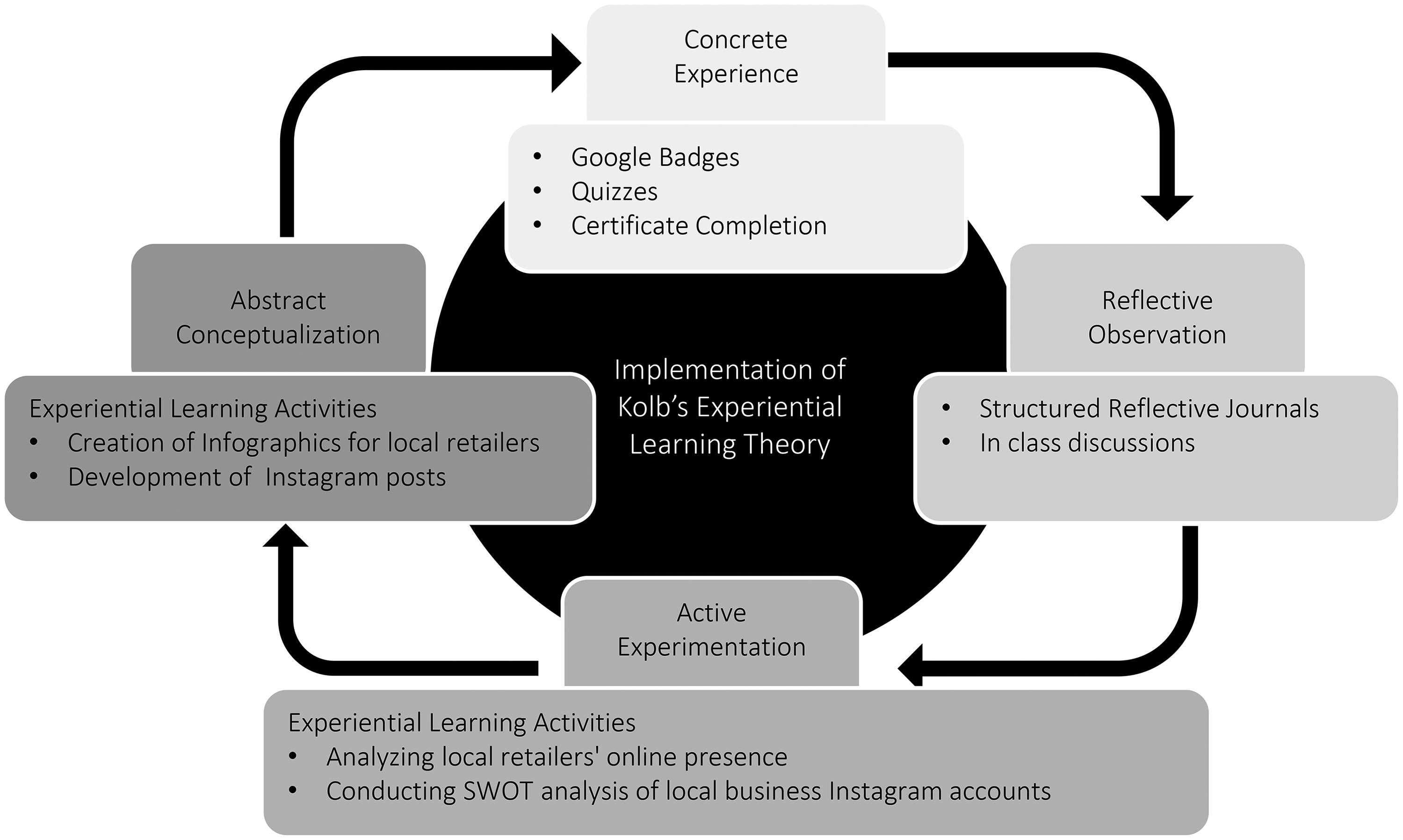
Alignment of Course Activities with Kolb's Experiential Learning Cycle. Note. The figure shows how course activities map onto Kolb's Experiential Learning Cycle, linking each stage to tasks such as Google badges, reflective journals, infographics, and SWOT analyses.
The four Series covered different digital skills: (1) Online Business Fundamentals (weeks 2–4): focused on online business strategy, search engine optimization (SEO), web presence, and search visibility, with students creating an infographic for local retailers; (2) Social-Mobile-Local Marketing (weeks 5–7): focused on social media marketing, mobile optimization, and localized marketing strategies; (3) Digital Marketing Communities (weeks 8–10): focused on email marketing, display advertising, and video content optimization, with students creating an Instagram SWOT analysis and social media campaign for a local retailer; (4) Analytics and Global Expansion (weeks 11–13): focused on analytics fundamentals and data interpretation. Upon completion, students took the final Google Digital Garage certification exam and posted their certificates on LinkedIn (see Figure 1).
Application of Kolb's Experiential Learning Theory
The implementation of the teaching intervention aligned with Kolb's (1984) experiential learning cycle (see Figure 2). Certification modules and quizzes provided concrete experience, structured journaling enabled reflective observation, and certification activities facilitated abstract conceptualization by connecting theory to practice. Visual content creation for local businesses fostered active experimentation.
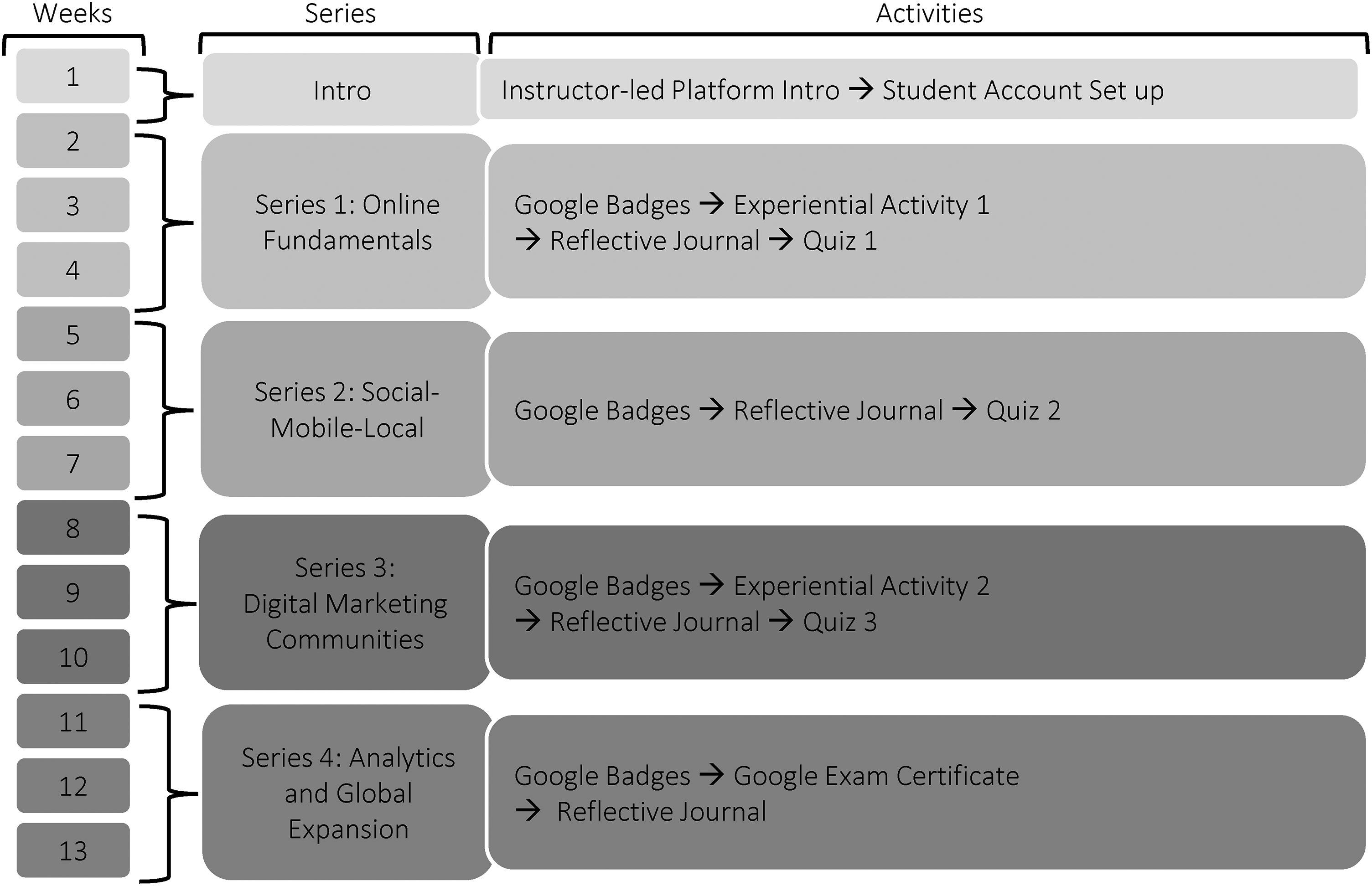
Weekly Sequence of Instructional Series and Associated Activities. Note. The figure shows the sequence of each instructional series and the flow of associated activities, including Google badges, experiential work, reflective journals, quizzes, and the final exam certificate.
Methodology
Research Design Overview
This study employed a mixed-methods design, a well-established pedagogical research method used to examine student learning outcomes in fashion merchandising (Gam & Banning, 2011; Shephard, 2023) and digital education (Meng et al., 2018). Specifically, a convergent parallel mixed-methods approach was employed, gathering quantitative data from closed-ended items in pre- and post-surveys, open-ended items in post-surveys, prompts in student journals, and instructor observations. Under this methodological framework, quantitative and qualitative data were collected simultaneously, compared, and combined in analysis (Creswell & Creswell, 2018). This methodological approach was selected because it provided comprehensive data collection and analysis that addressed the research questions. That is, quantitative data provided insights on how teaching interventions impacted student confidence, learning, and attitudes, and qualitative insights added depth and nuance.
Researcher Reflexivity
The researcher served as the course instructor throughout the study, bringing 17 years of experience in fashion merchandising pedagogy. This insider perspective informed the interpretation of student experiences while necessitating deliberate attention to potential bias. Rigor was maintained through triangulation across multiple data sources and the systematic application of Spiggle's (1994) interpretive framework to ensure that findings emerged from the data rather than assumptions.
Participants
Participants were undergraduate students enrolled in e-Fashion, a three-credit-hour course in the Interior Design and Fashion Merchandising program at a four-year southeastern university. A convenience sampling approach was used, with all enrolled students invited to participate. Prior to data collection, approval was obtained from the university's Institutional Review Board (IRB). Participation was entirely voluntary, and students were informed that they could decline participation or withdraw from the study at any time without penalty. The course meets three times weekly for 50 min each, consisting of two face-to-face sessions and one online session, and serves as an upper-level elective with no prerequisites. Undergraduate students (171) participated in the study across five semesters from Fall 2021 through Fall 2023. Participants were predominantly female (96%) and upper-class students, with the following distribution: sophomores (3%), juniors (36%), and seniors (61%).
Data Collection
Quantitative Data Sources
Pre-Post Surveys
The survey instruments were grounded in Bandura's (1977) self-efficacy theory and Sun and Ha-Brookshire's (2025) digital efficacy suggestion for building digital skills. Each semester, pre-surveys were administered in the first week of class before the project was introduced, and post-surveys were administered in the last week of class after the project was completed. Both surveys included identical 5-point Likert scale confidence measures (“not at all confident” to “extremely confident”) for five digital skills: Google Analytics, Creating an Online Presence, Google Ads, E-commerce Fundamentals, and Social Media for Retailers (RQ1). The post-survey also included a closed-ended 5-point Likert satisfaction measure (“very dissatisfied” to “very satisfied”) for the certification program and experiential activities (RQ3).
Quizzes
Three of the quizzes administered in the course were modified to assess knowledge retention (RQ2) and were proctored two weeks after the completion of series 1, 2, and 3. The first quiz, “Online Business Fundamentals,” had two matching sections, each with six prompts to capture students’ understanding of online retail strategies (e.g., “Match the strategy used by online retailers to capture consumers’ attention online to the most appropriate example”). The second quiz, “Social-Mobile-Local Marketing,” included multiple-choice and matching questions on location-based marketing and social media platform selection (e.g., “Review the following social media marketing scenarios and identify which of the Top 7 social media sites would be best to use, considering their end goal and customer base”). The third quiz, “Digital Marketing Communities,” included two multiple-choice questions that measured students’ comprehension of advanced digital marketing concepts (e.g., “Identify the role of mobile marketing in e-commerce”).
Qualitative Data Sources
Reflective Journals
A reflective journal was collected after the completion of each series; therefore, four journals were collected per student per semester. In these journals, students documented their learning experiences using three prompts: (1) provide a brief (2–4 sentence) summary of each badge's content, (2) identify “the most helpful thing they learned,” and (3) describe “the most difficult” concept or skill.
Post Survey Open-Ended Questions
The post-survey included open-ended questions to capture further students’ attitudes and perceptions of the Google Digital Garage Assignment. Sample open-ended questions included “Provide a BIG takeaway from the Google Digital Garage Project” and “How do you think this certification will impact your career preparation?” These post-survey open-ended questions, along with the reflective journals, were designed to capture the reflective observation component of Kolb's (1984) experiential learning cycle, eliciting qualitative insights into students’ attitudes, learning processes, key takeaways, and areas of difficulty.
Instructor Observations
The instructor maintained an observational journal throughout all five semesters of data collection. The journal observations included student engagement, learning progression, challenges encountered, and reflections on how to improve the project and its implementation.
Data Analysis
Following the guidelines of the convergent-parallel mixed-methods approach, data analysis followed a convergent design, in which quantitative and qualitative data were analyzed independently before integration (Creswell & Creswell, 2018). Quantitative data from the pre- and post-survey confidence measures were analyzed using independent-samples t-tests. Data from quizzes and experiential learning activities were assessed by calculating the mean scores. Qualitative data from reflexive journals, open-ended questions from the post-survey, and instructor observational notes were analyzed according to Spiggle's (1994) guidance for analyzing and interpreting qualitative data in consumer research. Pseudonyms were provided to protect participants’ anonymity. These data sources provided a thick description of student experiences, capturing not only their actions but the meanings they attributed to learning at Google Garage. Spiggle's (1994) framework calls for seven operations in data analysis: categorization, abstraction, comparison, dimensionalization, integration, iteration, and refutation. NVivo was used to organize data during these operations.
Categorization involved identifying and classifying data units using both deductive and inductive reasoning. This served as the foundational step for abstraction, identifying shared patterns across categories, and folding them into higher-order theoretical concepts. The next operation, comparison, occurred in two stages: 1) initial comparison to identify emerging patterns, and 2) comparing existing data with developed categories to determine fit. Next, dimensionalization deepened conceptual understanding of categories by identifying category boundaries and dimensions, and by showing how category properties varied across the data. These dimensions illuminated relationships across categories and supported the integration operation phase, in which category relationships were mapped and further synthesized. Throughout the analysis, iteration enabled cycling back through operations as understanding of categories evolved. Refutation procedures were used throughout the data analysis to systematically compare emerging interpretations with contradictory data, prompting the revisiting of analytical operations to refine and strengthen the thematic categories.
This framework was selected because it provides systematic procedures for qualitative analysis and is designed for consumer research contexts, making it well-suited to investigating students’ experiences as consumers of knowledge and users of digital tools. The framework offers a way to analyze and make meaning of the learning process and students’ perceptions toward it, making it ideal for analyzing detailed, contextually situated student reflections. The researcher served as the sole research instrument, with trustworthiness established through systematic iteration, deliberate refutation procedures including negative case analysis, and transparent documentation of analytical operations rather than through interrater reliability measures designed for positivist research paradigms.
Mixed Methods Analysis
Following independent analysis of quantitative and qualitative information, findings were systematically compared to identify points of convergence, divergence, and complementarity. This integration occurred both during data interpretation and in the presentation of findings, where quantitative results and qualitative themes were displayed side-by-side to facilitate direct comparison. The integration of multiple data sources enabled a comprehensive examination of each research question, ensuring data triangulation (Patton, 2015; Spiggle, 1994). Across quantitative and qualitative data, points of similarity strengthened confidence in the findings (validation). At the same time, differences prompted a deeper investigation of contextual factors, and complementary findings expanded understanding beyond what either method alone could reveal (expansion). This process validated and deepened students’ understanding of their digital learning experiences (Creswell & Creswell, 2018).
Quantitative data were compared with qualitative student reflections to determine whether statistical findings aligned with students’ self-reported experiences and behaviors. Research Question 1, students’ confidence in digital skills, was addressed through pre- and post-survey confidence measures, students’ reflective journals, and post-survey open-ended questions. The second set of research questions captured insights into students’ knowledge retention and transfer. Research Question 2a was measured by examining knowledge retention from quiz results. Research Question 2b, knowledge transfer, was addressed by closed-ended information from quizzes, with open-ended information from reflective journals, and post-survey open-ended questions. Research Question 3, which investigated students’ perceptions of the project's values and their attitudes toward digital certifications in fashion merchandising careers, was collected through reflective journals and post-survey closed- and open-ended information.
Findings
Quantitative Findings
Pre- and Post Survey Confidence Measures
Post-survey respondents reported significantly higher confidence across all five digital retailing competencies than pre-survey respondents, indicating statistically significant improvements across all five competency areas. The most substantial improvements were in Google Analytics, where confidence increased from 3.46 to 4.52 (t = −8.02, p < .001, d = 1.05), Creating an Online Presence, which increased from 3.85 to 4.73 (t = −7.51, p < .001, d = 0.98), and Google Ads, which increased from 3.67 to 4.57 (t = −7.22, p < .001, d = 0.94). Significant increases were also observed for E-Commerce Fundamentals, which increased from 4.09 to 4.68 (t = −5.17, p < .001, d = 0.68), and Social Media for Retailers, which increased from 4.23 to 4.71 (t = −4.51, p < .001, d = 0.60), see Table 1.
Pre- and Post-Survey Confidence Scores by Digital Competency.
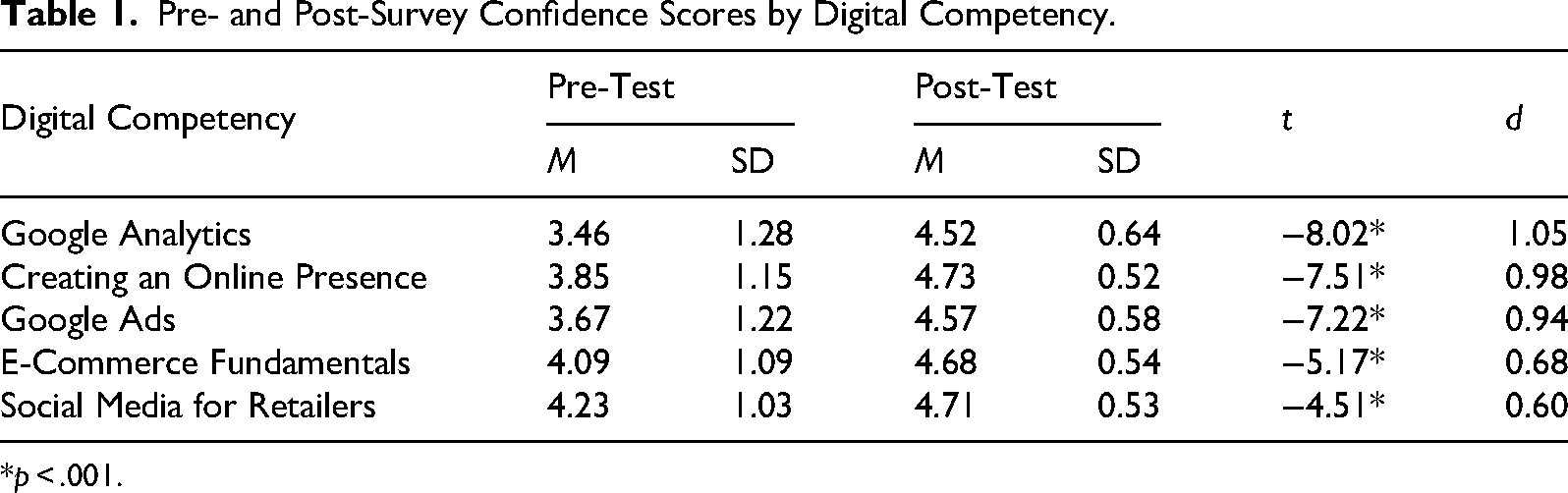
*p < .001.
Quizzes
The first quiz, the “Online Business Fundamentals” quiz, assessed foundational digital marketing strategies and had an overall mean score of 87% (SD = 7.72). The first matching question, on e-commerce retailing concepts, achieved a mean score of 88% (SD = 7.20), and the second matching question, focused on customer engagement tools, achieved a mean score of 85% (SD = 8.04). On the second quiz, “Social-Mobile-Local Marketing,” the mean score across was 89% (SD = 6.11). The multiple-answer question on location-based marketing had a mean score of 93% (SD = 5.08), and the matching questions about social media platforms had a mean score of 85% (SD = 7.28). The last quiz, “Digital Marketing Communities,” had a mean score of 90% (SD = 7.80). Students had a mean score of 87.7% across all three quizzes.
Experiential Learning Assignments
The first experiential activity in Series 1, “Online Business Fundamentals,” focused on creating infographics for local retailers and had a mean score of 91.8% (SD = 6.46). The second experiential assignment in Series 3, which involved conducting an Instagram SWOT analysis and creating content for local businesses, achieved a mean score of 95.7% (SD = 3.37). The mean grade across all activities was 93.7% (SD = 3.37). The data demonstrate that students retained content from Google Digital Garage certification badges and successfully applied this knowledge in real-world business settings.
Across all semesters, 96.5% of students successfully passed the final Google Digital Garage certification exam, earning the Google Digital Garage Certificate. Post-survey data revealed that 83% of students were “satisfied” or “very satisfied” with the project. Along these lines, 90% of students “strongly agreed” that the Google Digital Garage Certificate should be a requirement for Retail and Merchandising majors.
Qualitative Findings
From the thematic analysis, three primary themes regarding student perceptions emerged: (1) Engaging Learners, (2) Digital Skill Perspectives, and (3) Preparing for the Future.
Engaging Learners
Students consistently described the Google Digital Garage Project as an engaging and enjoyable learning experience. As one student, Sharon, shared, “It was a cool way to learn about e-commerce.” Students particularly valued learning from real-world examples, as reflected in the following quote from Stella: “The real people they had in video segments who have used the garage tactics, and they had a positive impact on their business.” Students also found joy in connecting content to personal experiences, with Lucy commenting, “[As a consumer] learning how Google ads function and how they are used to target shoppers was exciting.” The topics identified as the most interesting and relevant were search engine optimization (SEO), web analytics, keywords, and retargeting, which were also the areas to which students gravitated to in class discussions.
Digital Skill Perspectives
Students experienced the project through multiple lenses, developing confidence as learners, applying skills as industry professionals, and gaining awareness as consumers of digital marketing strategies. From the learner's perspective, students developed confidence through connecting learning content to real-world business success examples. As Parker shared, “Every time Google garage-related material is applied to real-world situations. It made me realize how important this material is, and it gave me confidence.” The connection between perceived value and confidence was consistent across student responses.
Students currently working in positions with digital responsibilities reported increased confidence and competency. Sarah, a student managing social media for their employer, noted, “I work with a house plan website and post on their Facebook and Instagram, and I can now say I successfully understand Google Analytics.” Students consistently identified SEO, analytics, keywords, and retargeting as the most essential skills for their current roles in the industry.
As consumers, students developed an increased awareness of digital marketing strategies and became more informed. Leona reflected, “Retargeting was my biggest takeaway… because I experience it multiple times a day. I now understand why I see products or similar products that I’ve viewed on a website following me on other websites and across social media platforms.” This sentiment mirrors that of most students, as many reported a better understanding of retargeting's impact on their purchase decisions.
Preparing for the Future
Students perceived the Google Digital Garage Project as a valuable preparatory activity that increased their marketability. Martha noted, “I think that today's employers are advancing in technology and are looking for candidates who know how to work websites and conversions and things like that. So, by completing this certificate, I think that it can help me in pursuing a job after I graduate.” Students viewed the certificate as valuable throughout all phases of job searching, with Mike sharing, “I will talk about what I have learned [from Google Digital Garage] when interviewing for jobs.”
Students with diverse career goals found value in the certification. Lila, a student planning on corporate employment, shared, “This program showed me more about websites and online companies than I have ever learned. I took away a lot from this certification, and I am glad that it was required for this course to complete.” Similarly, Lola, a student interested in entrepreneurship, stated, “I have always wanted to start selling clothes through the Internet, so a lot of the information I have learned from this will help me a lot with doing so.” These students reveal that across diverse career goals, they perceived the certification as professionally valuable.
Discussion
Findings reveal that fashion merchandising students gained greater confidence in their digital skills upon completing the assignment, unlike students in similar studies in adjacent disciplines (Kassean et al., 2015; Meng et al., 2018), suggesting that discipline-specific characteristics and pedagogical approaches fundamentally shape digital learning outcomes. Three patterns that distinguish fashion students’ digital learning experiences are shared below.
Digital Learning in Fashion Merchandising
Fashion merchandising students demonstrated sustained increases in confidence across all five digital skills, contrary to existing literature (Kassean et al., 2015; Meng et al., 2018). Meng et al. (2018) reported a decline in public relations students’ confidence during Google Analytics certification. Kassean et al. (2015) found that experiential learning activities among entrepreneurship students resulted in significantly lower self-efficacy. In contrast, fashion students’ confidence grew consistently, with substantial gains in Google Analytics (3.46 to 4.52) and Creating an Online Presence (3.85 to 4.73), achieving 96.5% completion versus a typical 48.13% (Celik & Cagiltay, 2024). This divergent trajectory suggests that the integration of pedagogical approaches, combining experiential learning, discipline-specific activities, and certificate programming, shaped these outcomes.
Students performed significantly better on visual-creative applications (M = 93.7%, SD = 3.37) compared to traditional knowledge assessments (M = 87.7%, SD = 7.72). The Instagram SWOT analysis and social media content creation activities achieved a mean score of 95.7%, demonstrating the successful transfer of analytical digital concepts through visual and creative expression. This pattern diverges from business education contexts where students typically perform better on standardized tests than application-based assignments (Meng et al., 2018). Thematic analysis also revealed students’ preference for creative and visual learning (Theme 1), suggesting that creative and visual applications of digital skills are engaging and foster deeper learning as reflected in improved retention and transfer.
Fashion merchandising students tapped into their lived experiences when learning digital skills, making meaning of content through three different lenses: 1) consumers, 2) learners, and 3) emerging professionals. Theme 2 documented the emergence of the trilateral perspective in students’ reflective journals as they connected what they learned to online shopping, social media experiences, classroom projects, and their roles as retail associates or interns. This pattern contrasts with similar studies of public relations and business students, which found that connections were not made from all three perspectives (Cowley et al., 2021; Meng et al., 2018). These findings suggest that fashion students’ trilateral identity serves as a pedagogical resource, enabling connections not observed in prior studies within other academic fields.
The Fashion Merchandising Digital Confidence Model
Sustained confidence growth, visual-creative superiority, and trilateral identity activation are not isolated phenomena but interconnected components that contributed to student success. The Fashion Merchandising Digital Confidence Model (FMDM) synthesizes these findings into a framework explaining digital skills development in fashion merchandising education (Figure 3). The FMDM comprises four interdependent parts, embodying a Gestalt principle in which the whole exceeds the sum of its parts. The FMDM is needed to guide effective digital education for fashion merchandising students by explaining how learner characteristics, pedagogy, content, and platforms should work together within discipline-specific contexts, rather than relying on universal best-practice learning principles.
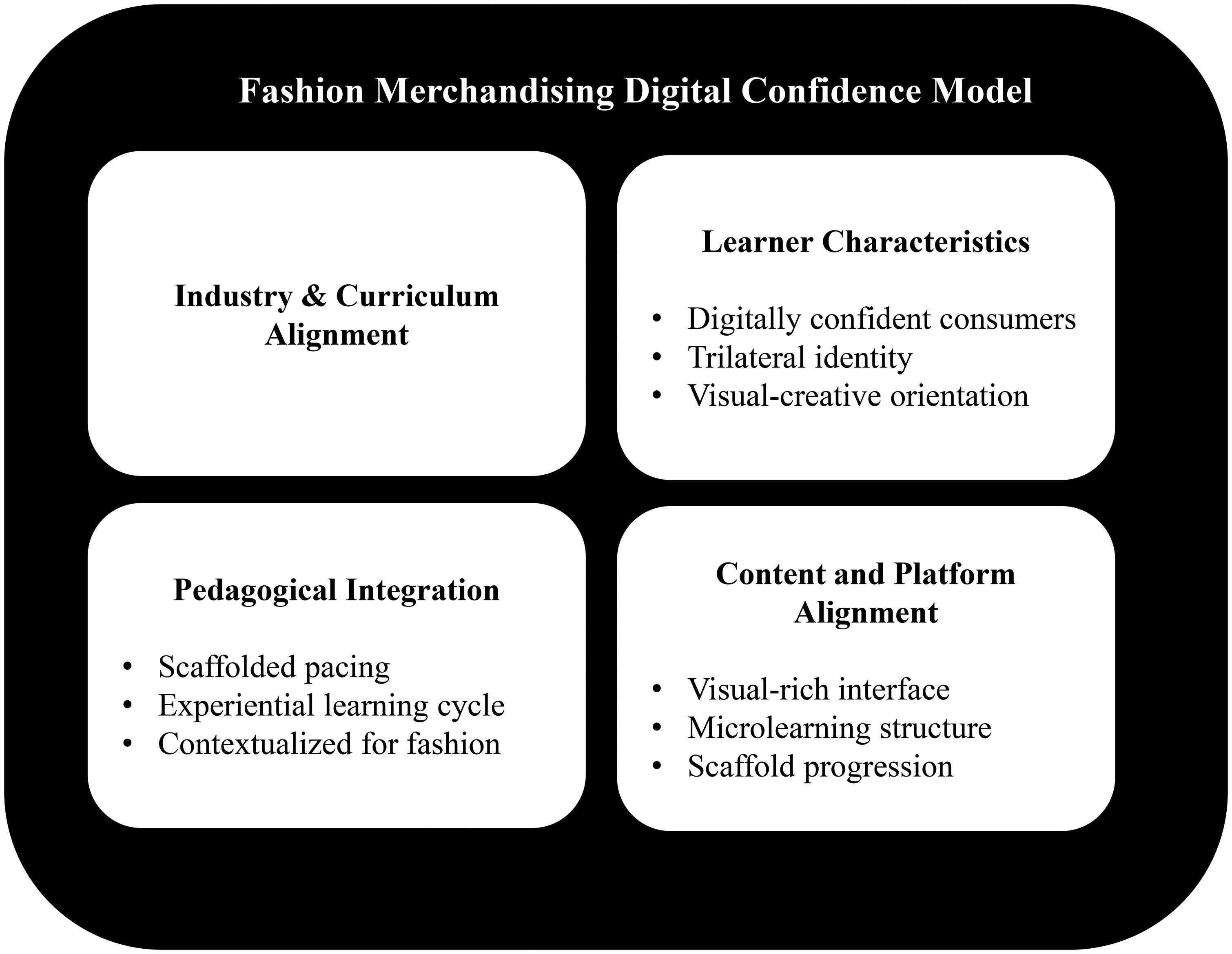
Fashion Merchandising Digital Confidence Model. Note. The figure above outlines the four key components of the Fashion Merchandising Digital Confidence Model (FMDM).
The fashion industry's digital skill standards, as well as a fashion merchandising program's curriculum, should inform the placement, depth of knowledge, and content areas of digital skill assignments to ensure alignment between industry and classroom expectations. This study's assignment focused on a broad range of digital skills (analytics, SEO, social media) because they were applicable across diverse retail contexts and aligned with one of the program's course objectives focused on building digital efficacy (Sun & Ha-Brookshire, 2025).
Digital skill development should accommodate the three distinct attributes of fashion merchandising students that emerged from this study: pre-existing consumer confidence in digital platforms, a trilateral identity (consumer-learner-professional perspectives), and a visual-creative orientation. Students should be encouraged to reflect on their pre-existing digital skills as consumers to build foundational digital confidence. Activities should prompt students to draw on their unique trilateral perspective (student, consumer, and emerging professional) to connect learning to authentic experiences, fostering personal connections to the content. Assignment elements should allow students to exercise creativity and convey digital learning through visual means. The visual and creative orientation should not be interpreted as universally superior, but as particularly effective when aligned with the characteristics of fashion merchandising learners.
The scaffolded timeline used in this study wove certification completion into the experiential learning process, providing students with pacing that prevented learning fatigue, created time for deep learning, and allowed for meaningful reflection. The experiential learning activities filled gaps that online certification programs fail to address, such as engaging students’ trilateral identity and leveraging their strengths as visual and creative learners through reflective observation and active experimentation. This structure aligned well with learner characteristics, fostering student confidence, sustaining engagement, and providing opportunities for personally meaningful learning through trilateral identity activation and visual-creative expression of digital skill learning.
Effective digital skill development requires content and platforms to align with disciplinary expectations and learner characteristics. In this study, Google Digital Garage provided students with concrete experiences through real-world industry examples; however, it was not domain-specific to the fashion industry. This gap was addressed by implementing assignments and quizzes that tied certification concepts to the fashion industry, allowing students to apply their tri-lateral perspective and communicate their digital skills through creative and visual means. The platform features of Google Digital Garage also aligned with learner characteristics and pedagogical practices found to be helpful in this study: a visually rich interface, a microlearning structure, and a scaffolded badge system. This dual alignment, contextualized content, and platform design enabled knowledge retention, knowledge transfer, and confidence beyond what certification implementation alone could achieve.
Conclusions and Limitations
While Kolb's (1984) experiential learning theory is interdisciplinary, opportunities for students to tap into their learner characteristics can amplify learner outcomes. Fashion merchandising students’ trilateral identity served as a resource for reflective observation, and the visual-creative orientation of assignments in abstract conceptualization appeared to amplify knowledge retention, knowledge transfer, and confidence beyond what was found in similar studies. Likewise, these findings extend self-efficacy theory (Bandura, 1977) by revealing that confidence differs substantially across disciplines when the same intervention (certification) is implemented. While PR and entrepreneurship students experienced a decline in confidence during certification programs (Kassean et al., 2015; Meng et al., 2018), fashion students’ confidence grew. This divergence suggests that confidence development is not solely intervention-dependent; rather, the alignment of pedagogical approach, learner characteristics, and the disciplinary context significantly impacts confidence building. The FMDM synthesizes these theoretical insights, providing guidance for those seeking to embed digital skills education in fashion merchandising programs.
The outcomes observed in this study are consistent with the characteristics of Google Digital Garage that made it suitable for this context, its breadth of content, beginner-friendly design, visual interface, and flexible structure aligned with both the fashion merchandising curriculum and the learner characteristics identified in this study. Practical guidelines derived from this study are provided for fashion merchandising educators considering the integration of digital certification. First, when vetting certification programs, ensure they are fee-free, beginner-friendly, industry-accredited, and flexible enough to be woven into existing coursework. Second, the FMDM further suggests that certification selection and/or supportive assignments should not only align with the fashion merchandising curriculum but also provide learners with opportunities to draw on their experiences as students, consumers, and emerging professionals, fostering trilateral identity activation. Third, platform design warrants consideration. For this study, the microlearning structure and visually rich interface of Google Digital Garage were well-suited to the visual and creative orientation of fashion students.
The research design of this study was mixed-methods, making it challenging to ensure that the teaching intervention was the sole reason for students’ confidence gains. There may be alternative causal explanations; therefore, future research should employ controlled experimental designs that compare pedagogical approaches (certification-only, experiential activities-only, and an integrated approach) to isolate the effects. This study observed students from one institution's fashion merchandising program, which may limit the generalizability of these findings to other disciplines. Future research should examine the FMDM's applicability across institutions and disciplines with similar learner characteristics, as well as across various digital certification platforms. This study demonstrates that digital skills education outcomes depend on discipline-specific alignment rather than universal best practices. The FMDM reveals how fashion merchandising students’ trilateral identity, visual-creative orientation, and consumer confidence function as pedagogical resources when embedded in the curriculum. These findings offer transferable principles for educators working with visually oriented, consumer-facing, or practitioner-identity learners.
Footnotes

Funding
The author received no financial support for the research, authorship, and/or publication of this article.
Declaration of Conflicting Interests
The author declared no potential conflicts of interest with respect to the research, authorship, and/or publication of this article.