







Abstract
By European standards Scotland is a violent country with a disproportionate number of its homicides occurring in Glasgow. In addition to its devastating health and social impact, homicide imposes a considerable financial burden. The extent of the cost has been based on 2003 estimates for England and Wales. This study aimed to test a method for developing preliminary estimates of the cost of homicide in Glasgow from 2002 to 2009, based on four cost categories: lost output, incarceration cost, investigation cost, and cost of physical and emotional impact. Findings suggested that the previous cost estimate of £1.46 million underestimated the cost of homicide in Glasgow for the same year (2003, £1.52 million) and each subsequent year up to 2009 (£1.55 million-£1.68 million). Appropriate costing information is crucial in informing violence prevention policy, practice, and evaluation. A number of methodological considerations have been identified that will enable more thorough cost estimates in the future.
Introduction
Interpersonal violence has blighted Glasgow for over a century (Davies, 1998, 2007). The image portrayed by the media is that of a city built on a violent reputation, particularly the presence of violent young street gangs or “teams” who engage in recreational violence, often involving sharp weapons. The impact is not only the large number of hospital admissions from lacerations, puncture wounds, and head trauma but also the significant number of homicides. Indeed, Glasgow, or more specifically the Strathclyde Police Force area, accounted for 64% of Scottish homicides in 2010-2011 (Scottish Government, 2011). While this violence exacts a toll on the health and well-being of individuals, families, and society, it is also associated with a significant financial burden. An understanding of the financial impact of violence is important in economic analyses of prevention measures and ultimately in the decision making process around policy and practice regarding violence prevention. This study describes preliminary work testing a method to calculate cost estimates of homicide in Glasgow from 2002 to 2009.
The Extent of Violence in Scotland
While the burden of violence in Scotland is not as great as, for instance, the United States, it is becoming a persistent problem. This is highlighted by recent statistics from the United Nations Office on Drugs and Crime (UNODC) in which it was shown that Scotland has the highest police-recorded total assault rate in the world (1655.1 assaults per 100,000 population) compared with, for instance, Colombia (63.4 per 100,000) and South Africa (1188.0 per 100,000) both of which have the highest homicide rates in the Americas and Africa regions, respectively (Heiskanen, 2010). Variation in the percentage of assaults reported may well play a part in explaining these surprising figures; however, homicide reporting is much more reliable and it was found that Scotland had the joint highest homicide rate (2.2 per 100,000) in Western Europe (with Finland and Portugal; UNODC, 2010). Furthermore, there was considerable difference between Scotland and its closest British neighbors: England and Wales (1.2 per 100,000) and Northern Ireland (1.4 per 100,000).
Epidemiological studies by Leyland (Leyland, 2006; Leyland & Dundas, 2010) provide greater insight into the homicide rate in Scotland. For instance, there was an 83% increase in the homicide rate between 1981 and 2003 (Leyland, 2006). Furthermore, Leyland and Dundas determined the most at-risk group were men aged 15 to 44 in routine occupations (12 times higher than in professional/managerial occupations) and living in the most deprived quintile of areas (31.9 times higher than those living in the least deprived quintile). Indeed, Leyland and Dundas report that such inequalities in the social patterning of homicides not only exceed those in other countries but are also greater than for other causes of death in Scotland. Moreover, it was found that homicide rates were significantly higher in Glasgow (14.0 per 100,000) when compared to Scotland as a whole (Leyland, 2006), which is consistent with Glasgow’s violent history (see Davies, 1998, 2007; Patrick, 1973) and the label it acquired in 2004 as “The Murder Capital of Western Europe” (see Martin, 2004).
Measuring the Financial Burden of Homicide
Since 2000, two major studies on the overall cost of crime have been undertaken in England and Wales (Brand & Price, 2000; Dubourg, Hamed, & Thorns, 2005). In examining the work of Brand and Price four large cost categories emerged, including the following:
Lost output due to homicide (human capital): The determination of an individual’s foregone present and future income due to homicide.
Incarceration costs: The total cost of housing an offender in the prison system
Investigation costs: All costs associated with the criminal investigation relating to a homicide
Costs of physical and emotional impact: These intangible costs attempt to quantify victim pain, grief, suffering, and lost quality of life.
Specifically, it was found that in 2003 a homicide cost £1.46 million while a wound ranged from £8,000 to £21,000 (see Dubourg et al., 2005).
A similar approach has been utilized in Australia (see Mayhew, 2003); however, Scotland has not undertaken such an exercise and has relied on the figures generated for England and Wales, which may not truly reflect costs in Scotland (Detective Chief Superintendent John Carnochan, head of the Scottish Violence Reduction Unit, personal communication). Until now, the only economic studies on the cost of violence in Scotland have been undertaken by the National Health Service (NHS), which largely deals with injuries rather than homicides. For instance, the Chief Medical Officer for Scotland reported that violence was estimated to cost between 3% and 6% of the NHS budget—about £400 million (see Moss, 2008).
Relevance of Costing Estimates to Violence Prevention Policy and Practice
Economic analysis makes a significant input in the decision-making process regarding public policy and practice in the area of violence prevention (Waters et al., 2004). More specifically, such information aids the allocation of resource by allowing the selection between competing uses (Swaray, Bowles, & Pradiptyo, 2005) that may be similar in their outcomes (i.e., potential to reduce rates of violence). Such decisions often use the results of cost-benefit analysis, which is dependent on the availability of good estimates of costs (i.e., the cost of homicide or injury) to estimate the financial savings associated with the reduction in violence brought about through violence prevention measures. Thus, the current study tests a method to estimate preliminary annual costs of homicide in Glasgow between 2002 and 2009, focusing on costs outside NHS estimates (i.e., criminal justice, etc.). Glasgow has been chosen as the test site for this approach, due to the disproportionate number of Scottish homicides that occur in the city.
Method
All anonymized homicide data, including dates, location, and age of both the victim and offender, were supplied by the Violence Reduction Unit (VRU) in conjunction with Strathclyde Police. Similar to the approach devised by Brand and Price (2000; see also Dubourg et al., 2005; Mayhew, 2003) four main categories were examined and will be described in turn.
Lost Output Due to Homicide (Human Capital)
To calculate lost output, data on average age of death, pension age, and average annual salary were used. Lost output was only calculated for victims, not offenders. The human capital assumption of “full employment” was used for the lost output calculation. “Full employment” states each individual values his or her time equal to the wage he or she could earn on the open market. Therefore, if a victim is unemployed at the time of homicide, he or she is handled as if a full-time wage was lost (McIntosh, Clarke, Frew, & Louviere, 2010). The average age of death was calculated yearly from the VRU data. The current pension age of 65 years, which coincides with the average retirement age in the United Kingdom (Office for National Statistics [ONS], 2012) was used as the stopping point in calculating years of output lost.
Salary data on mean, annual, full-time income for Glasgow City was used from the Annual Survey of Hours and Earnings (taken from the ONS). Annual salaries were available yearly from 2002 to 2009. The annual discount period was calculated by subtracting the annual average age of death from the pension age. The present value of future income lost was calculated using a real discount rate of 3.5% (taken from HM Treasury). If the discount period was greater than 30 years, a discount rate of 3.0% was used for years 31+ (taken from HM Treasury). To calculate the annual total income lost, individual lost future income was multiplied by the number of deaths for the given year.
Incarceration Costs
Incarceration costs were calculated using data on annual incarcerations, inmate cost, and incarceration sentence length. The average incarceration time of 6 years was constructed from 2008-2009 prison system data provided by the Justice Analytical Services division of the Scottish Government. Data were also provided for annual incarceration costs from 2002 to 2009. Due to the average sentence length for homicide, future costs for incarceration had to be calculated for homicides that occurred after 2004 (i.e., the incarceration extended beyond 2009). The future cost of incarceration was projected as £30,431, which was an average of 2002 to 2009 costs. The average was used because of limited fluctuation in the cost between 2002 and 2009. Incarceration costs were calculated by 6 years of costs using available costs and projected costs (beyond 2009) where necessary.
Investigation Costs
Total investigation costs were determined using data on the cost of criminal investigations and the number of homicides per year. The VRU and Strathclyde Police Force offered the most recent data on criminal investigation costs. Specific cost data were available for the period 2007 to 2009. Due to a large fluctuation in the data over those 3 years, the average investigation cost of £61,870 was calculated based on the 2007-2009 costs and used to estimate investigation costs for 2002-2006 as no data were available for these years.
The total cost of a criminal investigation was the sum of the following individual costs (not available separately): police officer salary, overtime, police force support salary, overtime, support services departmental expenses, identification parades, forensics, internal/external lab fees (including DNA processing), scene examination, casualty surgeon, vehicle/equipment hire, communications, interpreters, and other allowances.
Costs of Physical and Emotional Damages
The estimates of physical and emotional impact on victims, also displayed as intangible costs, were taken from Dubourg et al. (2005). According to the authors, these estimates were an improvement on the Brand and Price (2000) estimates due to the new methodology used. Whereas Brand and Price used willingness-to-pay (WTP) of society to avoid traffic fatalities to estimate the WTP value of avoiding homicides, Dubourg et al. calculated costs by determining the number of Quality Adjust Life Years (QALYs) that would be lost as a result of a homicide. The number of QALYs lost was then combined with a value of £81,000/QALY (Dubourg et al., 2005) and total estimate per homicide was determined. These cost estimates were only adjusted for inflation from 2002 to 2009. The inflation rate used was 1.96% (the average annual Consumer Price Index from 2002-2009; taken from the ONS).
There have been many different methods used for calculating the intangible costs associated with violence (see Table 1). WTP is a type of revealed preference study that asks individuals how much money he or she would be willing to part with to avoid a particular incident (i.e., a homicide or road accident). Value of Statistical Life (VSL) studies impute a cost of life from other areas, such as the job market. This can be done, for example, by comparing wage compensation to job risk (as jobs that are higher risk typically pay more) to determine what the personal value of a life is. As demonstrated in Table 1 WTP methods surrounding crime can provide a great range of intangible costs. And while VSL has a tighter range (comparatively), there is still debate on which is the most appropriate VSL model to use to determine intangible costs associated with crime (see Dolan, Loomers, Peasgood, & Tsuchiya, 2005). The QALYs approach from Dubourg et al. (2005) was taken for two reasons. First, it provides the most conservative estimate for intangible costs (see Table 1). Second, the approach used by Dubourg et al. was the most recent estimate of the intangible cost associated with homicide for Britain.
Methods of Estimating Intangible Costs Associated With Violence (Presented in £ Million).
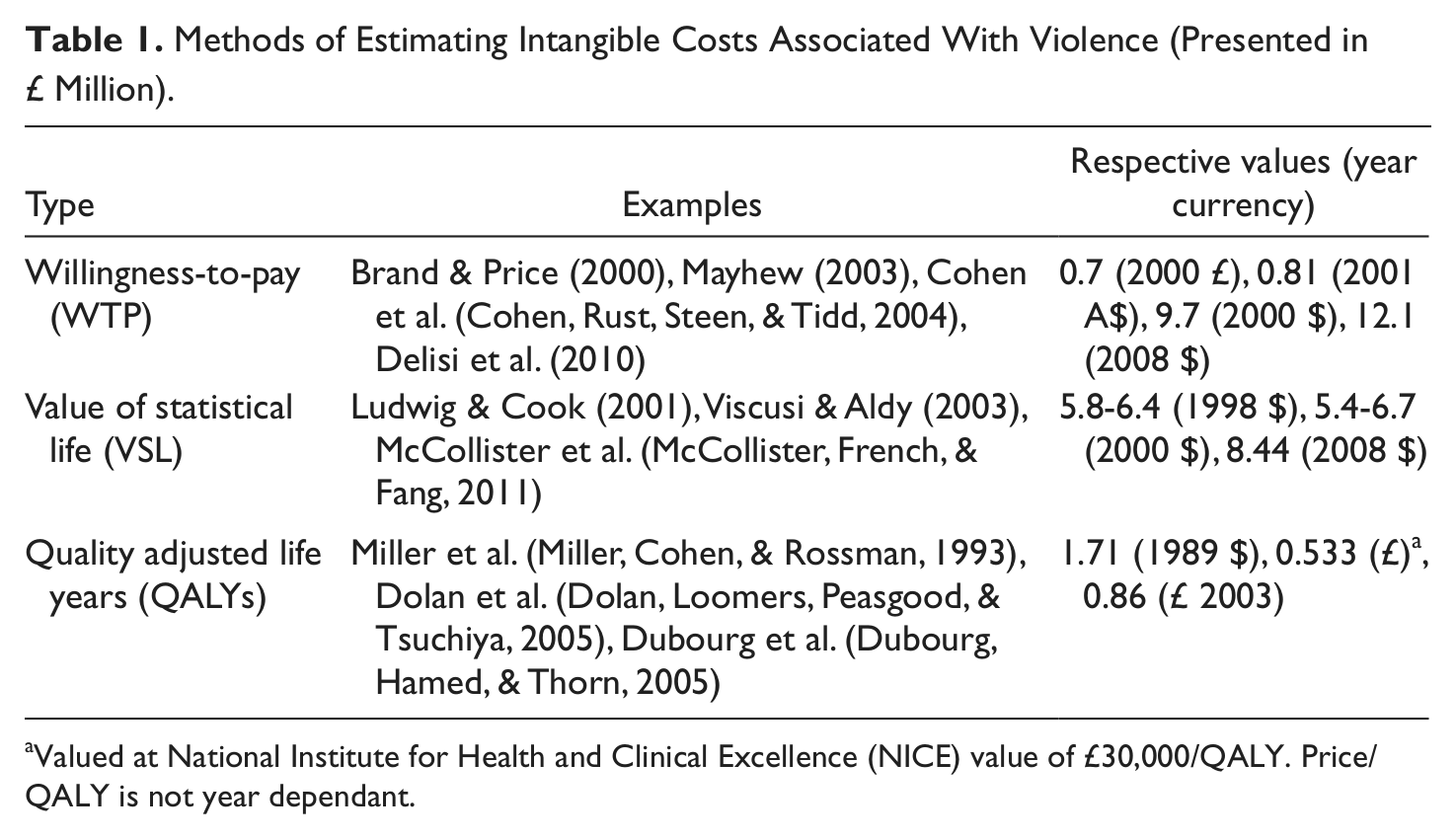
Valued at National Institute for Health and Clinical Excellence (NICE) value of £30,000/QALY. Price/QALY is not year dependant.
Results
Lost Output Due to Homicide (Human Capital)
The itemization of the lost output calculations is presented in Table 2. Annual average income increased each year from 2002.
Lost Output (Human Capital) 2002-2009 (Monetary Values Presented in £ Thousand).
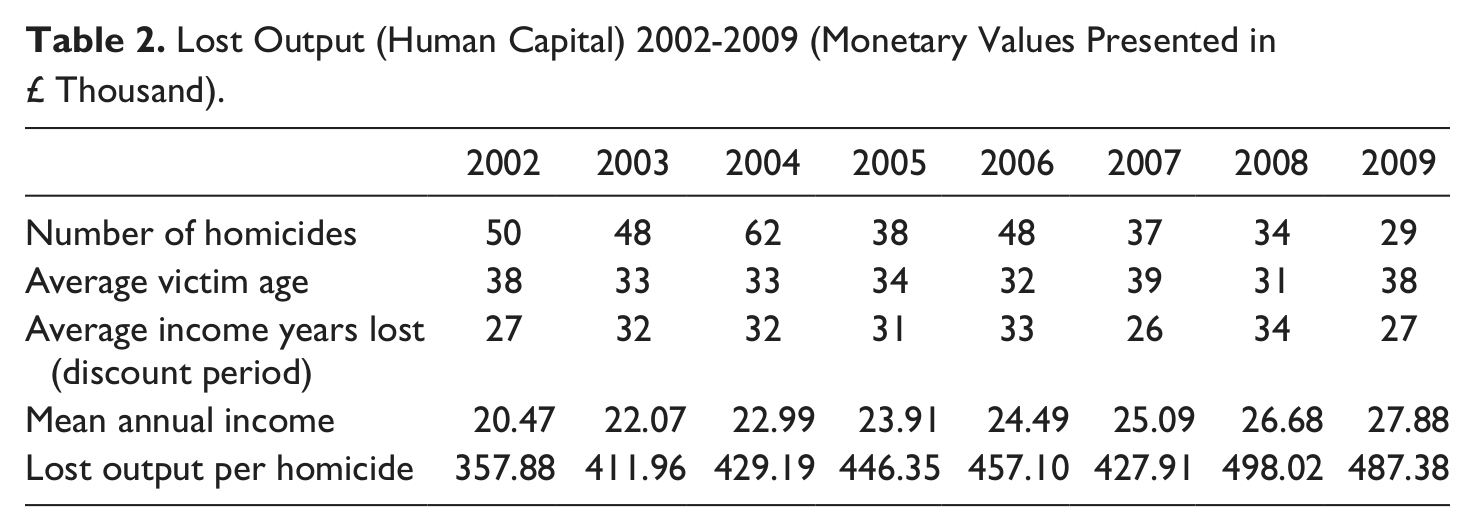
The average age of the victims over the study period was approximately 35 years, ranging from 31 (2005) to 39 (2007). Figure 1 displays a positive skew in the age distribution of the victims with a modal age band at 25-29. Within the raw data (not presented) the annual skew patterns were similar to the combined age distribution (Figure 1) with two irregularities in 2005 and 2008: a negative skew with the modal age band at 40-44 years in 2005, and an approximately normal distribution with the modal age band at 35-39 years in 2008. The annual mean and median of missing-age data was 35%, with the range of 41% (2009) to 27% (2008).
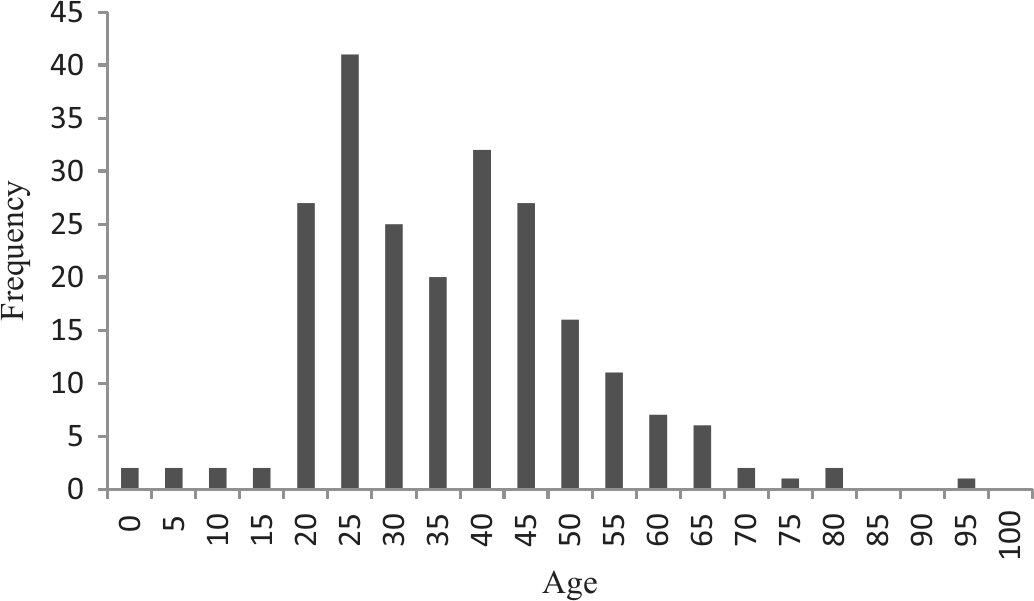
Distribution of age for victims of homicide in Strathclyde 2002-2009.
The change in victim age corresponds to the decrease in the cost of lost output per homicide from 2006 to 2007 and 2008 to 2009. Lower total lost outputs corresponded with years where victims were, on average, older. For example, average income increased £600 (2.3%) from 2006 to 2007 and average victim age increased 7 years, which were associated with a 7% total reduction in lost output. Lost output per homicide had an overall increasing trend.
Incarceration and Investigation Costs
The annual costs of incarceration and per homicide investigation costs are presented in Table 3. The mean incarceration time served for homicide (including nonlife sentences) was 2,192 days (6.005 years). The average incarceration cost ranged from £179, 980 (2002) to £185, 750 (2006). Incarceration costs did fluctuate over time. The smallest change was 0.3% (2004 to 2005) and the largest was 4.4% (2007 to 2008). Investigation costs for the years that data were available show an inconsistent decreasing trend of 1.9% between 2007 and 2008 and 47.1% from 2008 to 2009.
Incarceration and Investigation Costs 2002-2009 (Monetary Values Presented in £ Thousand).
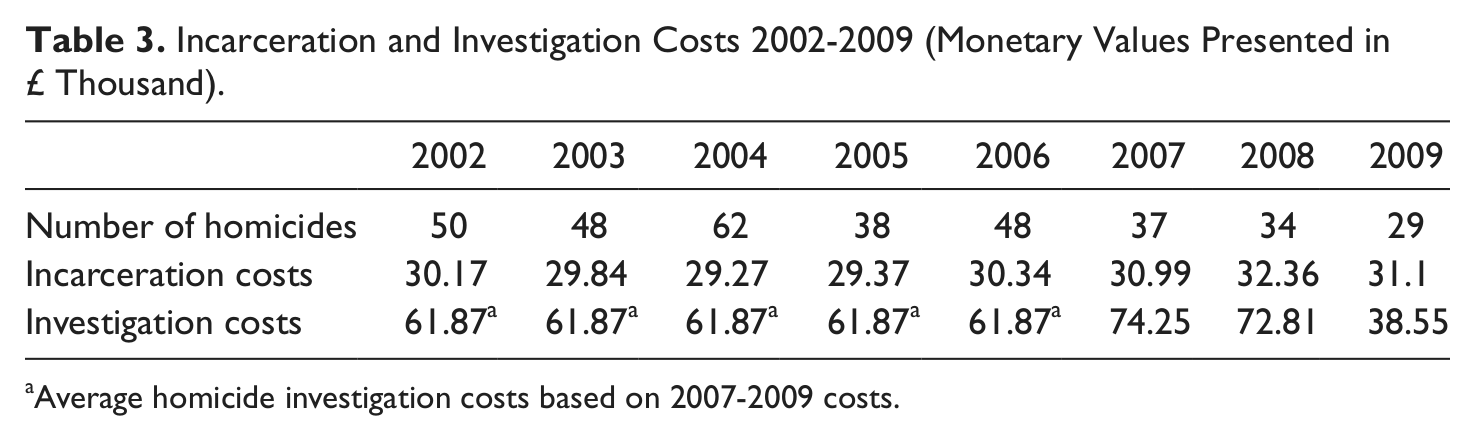
Average homicide investigation costs based on 2007-2009 costs.
Costs of Physical and Emotional Damages
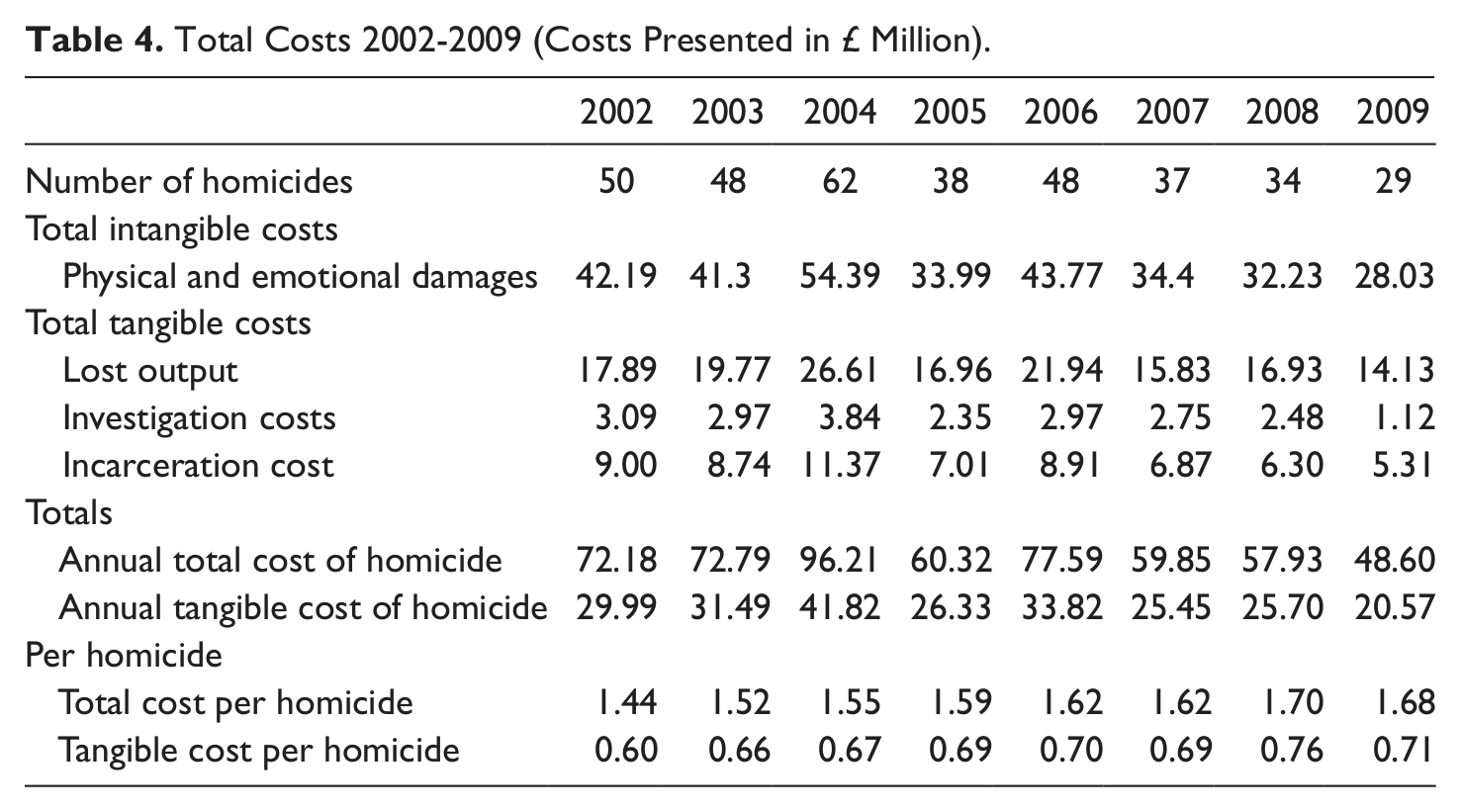
The cost of physical and emotional damages ranged from £843,000 (2002) to £966,650 (2009). As costs of physical and emotional damages were directly modified from Dubourg et al. (2005) no individual table was created; however, the total annual cost for physical and emotional damages are shown under intangible costs in Table 4.
Total Costs 2002-2009 (Costs Presented in £ Million).
Total Costs
The overall cost summary is presented in Table 4. The cost per homicide had a range of £1.45 million (2002) to £1.70 million (2008). The peak year for violent homicides in Glasgow was 2004 with 62, and a total cost of approximately £96 million. In 2009 there were fewest homicides (29) and also the lowest total cost of £46 million. On average, tangible costs accounted for 43% of the total per homicide cost. Within tangible costs, lost output accounted for an average of 64% and incarceration accounted for an average of 27%. Tangible costs presented in Dubourg (2003) were £0.598 million per homicide, while the same year tangible costs per homicide in Glasgow were £0.656 million. The largest difference between the two estimates was the criminal justice system cost from Dubourg (£0.144 million/homicide) and the combined investigation and incarceration cost for Glasgow (£0.244 million/homicide).
Discussion
The aim of the current study was to test a method based on the approach of Brand and Price (2000) to estimate preliminary costs of homicide in Glasgow. Until recently, the cost of homicide in Scotland was based on dated estimates for England and Wales (2003 estimate of £1.46 million; Dubourg et al., 2005). While this was useful, it did not properly estimate the cost for the corresponding year (2003, estimated here at £1.52 million) and presents an underestimation of the current cost (2009, estimated here at £1.68 million).
The results indicate that homicide numbers have been generally declining from the high of 62 in 2004, culminating in a low of 29 in 2009. Although beyond the scope of this article, this reduction does coincide with the formation of the Scottish Violence Reduction Unit, which adopts a Public Health approach to violence prevention in Scotland (see VRU, 2006). In 2004, the cost per homicide was approximately £1.55 million and the total cost for violent homicides (62) was almost £96 million. In contrast, in 2009 only 29 violent homicides were recorded, and the cost per homicide was greater by almost £130,000 (£1.68 million) with the total cost being £48 million.
Relevance to Policy and Practice
The Scottish Government has identified violence as a key policy issue and is committed to supporting violence prevention initiatives to combat Scotland’s violent reputation. Thus, Scotland-specific cost estimates of homicide are necessary for economic analyses of violence prevention efforts, which can inform the decision-making process regarding public policy and practice (Waters et al., 2004) and allocation of resource (Swaray et al., 2005).
More broadly, however, the study adds to the evidence base regarding the economic analysis of violence. Along with Dubourg et al. (2005) and Mayhew (2003), the current study suggests that the approach of Brand and Price (2000) offers a useful and appropriate means of estimating costs associated with the outcomes of violence. There are, nonetheless, lessons to be learned with regards the nature of the recording of the data necessary for such costing and economic analyses, such as the availability of reliable investigation costs for which it was necessary to estimate 2002-2006 annual costs based on 2007-2009 data.
Limitations of the Study
Although the current study has provided preliminary estimates for the cost of homicide in Glasgow, which may be more representative for Scotland, there are some differences between our methods and those applied to create estimates for England and Wales (Brand & Price, 2000; Dubourg et al., 2005). First, those studies used a more thorough costing scheme. For example, within the category of criminal justice system (CJS) costs, they included the individual costs of police activity, prosecution, magistrates’ court, crown court, jury service, legal aid, nonlegal aid defense, probation services, prison services, and other CJS costs and overheads. In contrast, our study employed only large encompassing categories (e.g., investigation costs) without a monetary breakdown for each category as a result of the way in which the necessary data was provided. Also, we did not include small value costs for homicides (e.g., health care expenditures, estimated at £708 per homicide by Dubourg et al., 2005). These figures were not included as health service involvement in cases of homicide is very sporadic (Detective Chief Superintendent John Carnochan, Director of VRU, personal communication) and the inclusion of the small monetary cost would not have a profound impact on the overall cost. Consequently, the current figures represent a lowest reasonable preliminary estimate of the cost of homicide in Glasgow.
While the data used in the calculation were based on reliable and credible sources (i.e., VRU, Strathclyde Police, Home Office) there are a number of issues that may lead to an under- or over estimate of the cost of homicide. First, data used on physical and emotional impact were taken directly from Dubourg et al. (2005). However, given the difference in homicide rate between England and Wales (1.2 per 100,000 in 2008; UNODC, 2010) and Glasgow (14.0 per 100,000 in 2003; Leyland, 2006) and the differences in average life expectancy (male in the East End of Glasgow: 54 years; male in Scotland: 75.2 years, male in England: 77.9 years, male in Wales: 81.3 years; taken from ONS). The estimate of intangible costs for England and Wales were likely not appropriate estimates for Glasgow.
In calculating incarceration costs, we were limited in our ability to use other data to extrapolate the costs of the sentences for those imprisoned after 2004 (therefore released after 2010 based on sentencing averages). Due to the relatively small fluctuation in incarceration costs, especially comparative to investigation costs, it was decided that it was most appropriate to use an average for projected costs (i.e., costs of incarceration post-2009). Nonetheless, future work on projecting future incarceration costs will need to be undertaken.
In addition, it will be necessary to determine specific investigation costs from 2002 to 2006 rather than base them on the 2008 and 2009 figures, which changed from £72,810 to £31,100, possibly resulting from the Force Efficiency Drive due to budget cuts. This reduction affected aspects such as the amount of overtime that could be worked and reduced the use of specialists for investigations unless necessary (VRU, personal communication). Given the 47% drop in costs from 2008 to 2009, it is possible that the average cost of £61,870 imputed for 2002 to 2006 is an underestimate, and the actual cost may be closer to the 2007 and 2008 costs.
Due to its exploratory nature, this study was only able to calculate point estimates of the costs of homicide. As a result, not only were standard deviations in the data not available but statistical tests for significance could not be performed. Future work will need to examine fluctuations in the data, whether it is through statistical analysis or sensitivity analysis.
Finally, previous estimates (Brand & Price, 2000; Dubourg et al., 2005; Mayhew, 2003) have been based on the costs for a country rather than a single city as in the current study. Glasgow was considered an appropriate location to test the method and undertake preliminary analysis because it accounts for a disproportionate number of homicides in Scotland. While this focus on Glasgow may limit the generalizability of the findings to the whole of Scotland, it should represent a more reliable indicator of the cost of homicide than the figures for England and Wales and also highlights the necessity for Scotland-specific estimates.
Future Work
Continuing work on this project will address a number of the methodological issues raised during the creation of the preliminary estimates.
A new lost output calculation to account for natural death (i.e. not homicide related) in the population. This will aid the “full employment” until pension age assumption.
A better prediction of future incarceration costs for prison sentences that conclude beyond the study period.
Similar to Brand and Price (2000) and Dubourg et al. (2005) a thorough costing scheme will be utilized. This will allow for more accurate cost estimates as well as better comparisons to those estimates for England and Wales.
Costs related to perpetrators will be examined. Inclusion of these costs provides more complete estimates of the total cost of homicide and violence.
Scotland-specific estimates will be created for the costs of physical and emotional impact instead of continuing to use estimates for England and Wales.
Undertake sensitivity analysis to account for uncertainty in costs
The approach will be extended across Scotland and will account for more forms of violence (not just homicide).
Conclusion
In conclusion, homicide in Glasgow and Scotland as a whole represents a considerable health, social, and financial burden on individuals, families, and society. The implementation of attempts to prevent violence, while taking the toll on health and well-being as its focus, are often determined by cost. Until now, the cost of homicide in Scotland has often utilized outdated figures for England and Wales. The current study outlines a method to calculate the preliminary cost estimates of homicide in Glasgow from 2002 to 2009. It is evident that the England and Wales figures are underestimations of the current conservative cost estimates for homicide in Glasgow. Accurate financial estimates for the burden of homicide provide important information for policy and practice with regards to decisions concerning investment in violence prevention initiatives. Thus, further development of the project along the lines outlined will enable more thorough estimates to be calculated, from which it will be possible to undertake evaluative techniques—such as cost-benefit analysis—for violence prevention initiatives in Scotland.
Footnotes
Declaration of Conflicting Interests
The author(s) declared no potential conflicts of interest with respect to the research, authorship, and/or publication of this article.
Funding
The author(s) received no financial support for the research, authorship, and/or publication of this article.