







Abstract
Residence restrictions, which prohibit sex offenders from living within close proximity to places where children congregate, have grown popular. Participants (n = 255) were asked to participate in a survey rating and comparing their perceptions of residence restrictions for drunk drivers and sex offenders. Residence restrictions were seen as more punitive for DUI offenders than for sex offenders, though a majority of the sample viewed making either offender leave their home as punishment. Those who believed that most sex offenders would reoffend were significantly less likely to view these policies as punitive. Older respondents and those who knew someone convicted of a crime were also less likely to view residence restrictions as punitive. The results of the current study indicate that although many of the respondents were not optimistic about the effectiveness of residence restrictions in reducing victimization, those policies still garnered considerable support.
Sexual offending remains a substantial social and political problem. There were over 63,000 reports of child sexual abuse made to Child Protective Services in 2010 (U.S. Department of Health and Human Services, 2010), and in that same year, 180,380 sexual assaults of individuals over the age of 12 are estimated to have occurred (Bureau of Justice Statistics, 2010a). Sexual violence brings enduring consequences for victims, their families, and communities. In response, the public has rallied around punitive sex offender policies with the hope that vigilance and restriction will deter sex crime (LaFond, 2005; Leon, 2011; Lieb & Nunlist, 2008).
Despite a significant decline in both official and victim reports of sexual assault in recent years (Finkelhor & Jones, 2006), there has been a considerable movement toward legislative responses to sex offenders. Scholars argue that much of this political action is driven by public condemnation of sex offenders and critique of prior sex offender policy. Juxtaposed against this public outrage is a substantial increase in the number of media accounts pertaining to sexual abusers (Leon, 2011; Sample, 2001). Fears about sex crime and concerns that the justice system historically treated these offenders too leniently led to calls for harsher punishments.
In addition to tougher sentencing, sanctions that restrict the rights and privileges of those convicted of crimes have gained popularity (Travis, 2005). These civil sanctions include denial of welfare benefits, public housing, student loans, certain occupational licenses, and voting rights. Since civil sanctions exist outside of traditional sentencing schemes, it is often argued that they are not punitive. However, the consequences of such sanctions mirror those of usual sentencing practices and are often referred to as invisible punishments (Travis, 2005).
One example of an increasingly popular civil sanction is the proliferation of residential restrictions for sex offenders, which prohibit them from living within close proximity to places where children congregate, such as schools. Proponents assert that such laws are necessary management tools to protect children and other vulnerable citizens from recidivistic sexual violence. Opponents of these restrictions argue that despite the claimed lack of penal intent, the actual effect is extremely punitive, and such measures do little if anything to protect potential victims because most abused children are molested within familial or trusted relationships (Leon, 2011; Levenson, 2010; Levenson & D’Amora, 2007; Zgoba, 2004). Despite the prominence of sex offender policy in the past 20 years, scholars have only recently begun to examine the public’s view of these laws. The extant research in this area suggests that the public is quite supportive of “get-tough” approaches to sex offender sentencing and management. However, few studies have examined whether members of the community view these new laws as a form of punishment.
Thus, the current exploratory study will examine two important questions pertaining to public perceptions of residence restrictions. First, does the public view residence restrictions as punishment? Scholars have argued that a residence restriction policy is just one type of “invisible sanction” applied to sex offenders. Despite the fact that the public was a considerable force behind the passage of these laws, public opinion on whether residence restrictions serve a punitive function has not been explored. Second, are perceptions about residence restrictions sex offender specific? To date, scholars have only begun to examine whether the public’s response to sex offenders is specific or whether punitive reactions from the public follow a general trend toward other criminals.
This exploratory study offers an opportunity to examine whether members of the public view sex offender residence restrictions as a form of punishment. To determine whether responses reflect a punitive response to sex offenders specifically, or to law breakers more generally, we also assessed whether respondents would view residence restrictions for DUI offenders as punitive. As scholars, policy makers, and the courts wrestle with constitutional questions, this study presents the views of those who may be most supportive of such initiatives—the public.
Visible and Invisible Punishments for Sex Offenders
Since 1980, the number of inmates detained in U.S. prisons has increased significantly, and at the end of 2010, there were over 1.6 million incarcerated prisoners (Bureau of Justice Statistics, 2010b). In addition, nearly five million criminal offenders were under probation or parole supervision (Bureau of Justice Statistics, 2010c). The use of incarceration as the preferred sentence for sex offenders has become more popular in recent years. According to Greenfeld (1997), sex offenders are the fastest-growing category of inmates. For example, from 1993 to 2002, the state prison population in Florida increased by half; in contrast, the number of incarcerated sex offenders during that period grew by 74% (Lucken & Bales, 2008). Nationally, 1 in 10 incarcerated inmates is serving time for a sexual offense (Harrison & Beck, 2006).
As sentences for sex offenders became more severe, criminal justice policy makers also began to introduce other types of sex offender–specific legislation. Sex offender registration became required in all 50 states in 1994 (“Jacob Wetterling Crimes Against Children and Sexually Violent Offender Registration Act,” 1994). The public dissemination of registry information began in 1996 (commonly known as “Megan’s Law”) and has increased awareness and concern about sexual criminals living in our communities. As a result, there are now at least 30 state laws that restrict where sex offenders can live (Meloy, Miller, & Curtis, 2008). Protective zones commonly prevent sex offenders from residing within 1,000 to 2,500 feet of venues such as schools, parks, playgrounds, and daycare centers, and some laws include school bus stops, arcades, amusement parks, movie theaters, youth sports facilities, or libraries (Levenson, 2010; Meloy et al., 2008; Nieto & Jung, 2006). It is estimated that thousands of municipal sex offender ordinances have been passed in cities, town, and counties (Levenson, Zgoba, & Tewksbury, 2007). They often exceed state laws by expanding restricted areas to 2,500 feet (almost a half mile) surrounding places frequented by children. Municipal sex offender zones can be found in most states, even those without statewide statutes. A domino effect of local laws results when one municipality passes an ordinance and then adjacent towns and counties increase their restrictions in an effort to prevent exiled sex offenders from migrating to their communities.
The collateral consequences of residential restrictions and the ways in which they impeded reintegration are well established. As buffer zones increase, so do transience, homelessness, and reduced employment opportunities (Levenson, 2008). Many sex offenders report that housing restriction laws forced them to relocate, that they were unable to return to their homes after incarceration, that they were not permitted to live with family members, or that they experienced a landlord refusing to rent to them or to renew a lease (Levenson, 2008; Levenson & Cotter, 2005; Levenson & Hern, 2007; Mercado, Alvarez, & Levenson, 2008). Many indicate that affordable housing is less available due to limits on where they can live and that they are forced to live farther away from employment, public transportation, social services, and mental health treatment. Young adults seemed to be especially impacted by these laws; age was significantly inversely correlated with being unable to live with family and having difficulties securing affordable housing (Levenson, 2008; Levenson & Hern, 2007). Family members of registered sex offenders (RSOs) also reported that residential restriction laws created housing disruption for them; larger buffer zones led to an increased chance of a housing crisis (Levenson & Tewksbury, 2009).
Self-report surveys of sex offenders have been corroborated by independent empirical research. A quickly growing body of evidence illustrates how residential restrictions profoundly diminish housing options for sex offenders. In Orlando Florida, it was found that 99% of all residential dwellings are located within 2,500 feet of schools, parks, daycare centers, or school bus stops (Zandbergen & Hart, 2006). The vast majority of residential territory in Nebraska and New Jersey is also located within 2,500 feet of a school (Bruell, Swatt, & Sample, 2008; Chajewski & Mercado, 2009; Zgoba, Levenson, & McKee, 2009). Affordable housing is especially impacted, since less affluent areas tend to be more densely populated and therefore homes are in closer proximity to places frequented by children. Of nearly 1 million residential parcels studied in Miami-Dade County, Florida, only about 4% of residential units were compliant with the overlapping state and local residence restrictions in effect, and only 1% had a monthly housing cost of US$1,250 or less (Zandbergen & Hart, 2009). In Nebraska, average home values were significantly lower within a buffer zone of 2,000 feet than outside the buffer zone (Bruell et al., 2008), and in Ohio, compliant addresses were also more likely to be located in less affordable census tracts (Red Bird, 2009).
Support for Residence Restrictions
The extent to which the public believes that residence restrictions impose punishment is an important question to ponder. Public abhorrence of sex offenders is well documented, and scholars have noted that members of the community are especially vocal about wanting tougher sanctions for this particular group of offenders (Roberts, Stalans, Indermaur, & Hough, 2003). In general, the public is supportive of enhanced punishment and specific legislation for sex offenders, believing that enhanced public scrutiny will deter sexual abusers from reoffending (Levenson, Brannon, Fortney, & Baker, 2007; Lieb & Nunlist, 2008; Mancini, Shields, Mears, & Beaver, 2010; Mears, Mancini, Gertz, & Bratton, 2008). Levenson, Brannon et al. (2007) found that 58% of residents surveyed in one Florida county viewed residence restrictions as an effective tool to reduce sexual victimization. Parents, compared to nonparents, reported higher levels of anger and lower levels of tolerance for sex offenders living in their neighborhoods. Mancini et al. (2010) found that 82% of respondents supported residence restrictions and that, once again, parents were especially supportive of these efforts. Levenson, Brannon et al. (2007) found that nearly three quarters of respondents reported that they would support such laws for sex offenders even in the absence of empirical evidence that they reduced sexual victimization.
Criminal justice actors respond very strongly to sex offenders as well. Nhan, Polzer, and Ferguson (2012) interviewed judges in California and Texas and found that they held notions about sex offenders that were similar to beliefs held by the public. Judges shared the view that sex offenses (SOs) were detestable, rehabilitation efforts were futile, and that punishment for sex offenders should be harsher. A survey of legislators explored politicians’ motivation for sponsoring sex crime prevention bills (Sample & Kadleck, 2008). Sex offenders were described by lawmakers as perverted, sick, compulsive, and untreatable, with 78% opining that sex criminals will almost surely reoffend. They expressed their belief that by endorsing these laws they were enacting what they perceived to be the demands of their constituents. Some scholars have noted that the swath of sex offender policies is largely symbolic; though the policy makers who devise them are not overly optimistic about their utility in crime prevention, they send a strong message that sexual violence will not be tolerated (Sample, Evans, & Anderson, 2011; Sample & Kadleck, 2008).
State and federal courts have split on whether residence restrictions are in fact punitive or whether they can be applied retroactively. For examples, state courts in Iowa, Illinois, Georgia, as well as the federal Eighth Circuit Court of Appeals, have upheld retroactive application of residence restrictions as nonpunitive regulatory schemes (Doe v. Baker, Ga. 2006; Doe v. Miller, 8th Cir. 2005; People v. Leroy, Il. 2005; State v. Seering, Ia. 2005). State courts in California, Indiana, and Kentucky and one federal district court in Ohio have held otherwise, noting that the restrictions impose punishment and can therefore not be applied retroactively (Commonwealth of Kentucky v. Baker, 2009; Mikaloff v. Walsh, N.D. Oh. 2007; People v. Mosley, Ca. 2008; State v. Pollard, In. 2009). These courts have reached opposite conclusions after applying the United States Supreme Court’s analysis in Smith v. Doe. Smith v. Doe, which held that registration requirements did not impose punishment and could be applied retroactively, set forth a nonexhaustive list of five factors for a court to weigh in determining whether a civil sanction imposes punishment for Ex Post Facto purposes. Those factors are whether the sanction (a) imposes an affirmative disability or restraint, (b) is analogous to a historical form of punishment, (c) promotes the traditional aims of punishment, (d) is rationally related to a nonpunitive purpose, and (e) is excessive in relation to the alleged nonpunitive purpose (Smith v. Doe, 2003). Absent a decision from the United States Supreme Court directly addressing the question of whether residence restrictions impose punishment, state and lower federal courts will continue apply Smith v. Doe’s five-factor test and reach opposite conclusions. The list of five factors set forth in Smith v. Doe is nonexhaustive, leaving open the possibility of courts considering additional factors that bear on the question, such as public opinion.
Public Outcry and Crime Policy
Legislative responses to sex crimes have been unprecedented. However, an impassioned public is often the driving force behind crime policy. Drunk driving laws are a notable example and provide a unique opportunity to examine public-driven crime policy in a non–sex offender context. In the past three decades, there has been considerable attention to alcohol-related vehicle injuries as a significant social problem. In 2010, there were 10,228 fatalities caused by alcohol-related motor vehicle accidents; this number represents 31% of the total number of motor vehicle accident deaths that year (National Highway Traffic Safety Administration, 2012). Of the 1,210 children under age 14 who were killed in motor vehicle crashes, 17% were caused by alcohol-impaired drivers. Drivers in fatal crashes who had a blood alcohol level exceeding .08 were 4 times more likely to have a previous conviction for driving while impaired than drivers with no alcohol in their system (National Highway Traffic Safety Administration, 2012). In Vermont, it was found that 21% of DUI offenders were rearrested for a new drunk driving offense within 5 years (Clements, 2002).
Members of the public appear to be concerned about drunk driving. National surveys reveal that 66% believe that penalties for driving under the influence (DUI) should be more severe (National Highway Traffic Safety Administration, 2010). These views have remained rather consistent over time; in 1999, 68% of those surveyed supported zero-tolerance policies for DUI and 73% thought that penalties should be more severe (National Highway Traffic Safety Administration, 1999). In addition, public awareness of drunk-driving laws is widespread; over 80% of those surveyed have heard of blood alcohol level cutoffs, though less than a third could correctly identify the level in their state. Over 80% viewed drinking and driving as a threat to their personal safety (National Highway Traffic Safety Administration, 2010).
Much like sex offender policies, a motivated public has been the driving force behind legislation aimed at drunk drivers. Mothers Against Drunk Driving (MADD) was formed in 1980 by parents of children killed in alcohol-related accidents and altered the national paradigm of DUI as socially unacceptable (Mothers Against Drunk Driving, 2008). They successfully lobbied legislatures for increased drinking ages, lower blood alcohol thresholds, and tougher penalties for violators. Each state now consistently defines blood alcohol levels for DUI offenses at .08 and enforces zero-tolerance laws that revoke the license of drivers under the age of 21 who are arrested for drunk driving (Insurance Information Institute, 2008). Most states have laws holding sellers and servers of liquor accountable for the damage and injuries a drunk driver causes. Despite awareness and support for DUI laws, many people continue to engage in the behavior. Remarkably, 20% of drivers surveyed admitted to having driven within 2 hours of drinking alcohol, 40% believed that they would be unimpaired after consuming 3 drinks, and 24% of young adult male drivers rode with a driver they believed to be impaired (National Highway Traffic Safety Administration, 2010).
Purpose of the Current Study
In spite of the popularity surrounding residence restrictions for sex offenders, few studies have examined how the public views these policies. Therefore, the purpose of this study was to survey the public to determine whether they perceive residential restrictions as punitive. Scholars, policy makers, and courts have disagreed about whether residence restriction policies serve as punishment or postsentence management techniques. Public views on the matter remain underexplored. In this study, we also sought to understand whether perceptions of residence restrictions as punishment were different for DUI and SO crimes. The purpose of this analysis was to determine whether views about residence restrictions were sex offender specific, or rather, indicate a general level of punitiveness.
Because sex offenders living in communities are publicly identified, we hypothesized that restrictions for sex offenders would be viewed as less punitive. As well, because a substantial proportion of the population admits to having driven after drinking, we surmised that these laws would be seen as more punitive for DUI offenders. Thus far, sex offenders are the only class of criminals to be subject to residence restrictions laws. Therefore, we believe that this study will serve as a social barometer regarding perceptions of such laws and that these data can assist lawmakers and legal advocates to make informed decisions.
Method
Participants
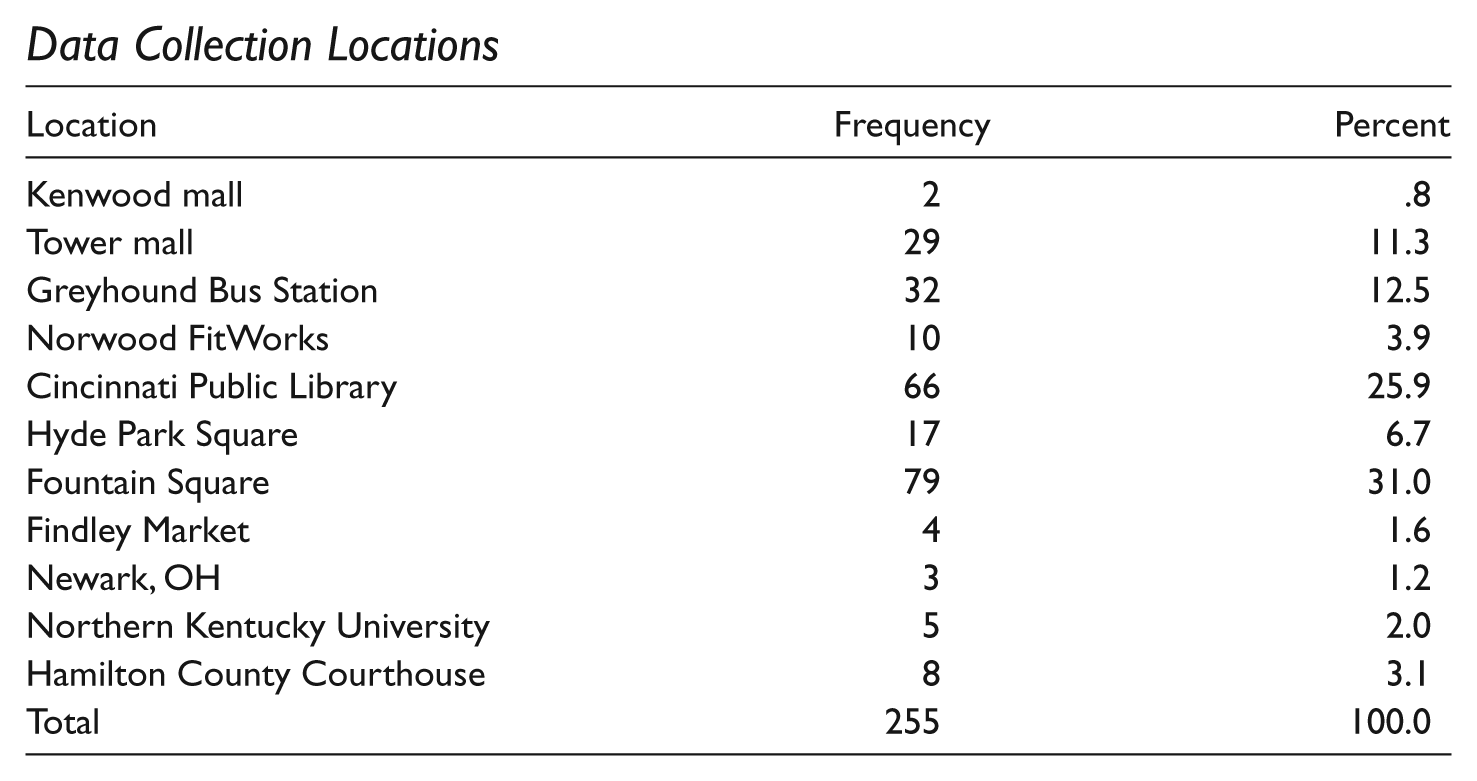
Participants were recruited during late 2007 and early 2008 in public venues (see Appendix 1) in Hamilton County, Ohio, by research assistants who handed out surveys and requested participation in the study. A total of 255 individuals agreed to participate. The mean age of the sample was 37 (median = 33, modes = 18 and 24, SD = 14). Gender was evenly split. Slightly more than half (55%) of participants were white, and 35% were black. The rest were Asian, Hispanic, or Native American. The sample participants were fairly well educated, with 11% reporting high school completion, 35% reporting that they had some college education, and 48% reporting that they completed a bachelors’ or graduate degree. About 40% earned less than US$25,000 per year, 29% earned between US$25,000 and US$50,000, and 30% earned over US$50,000. Slightly more than a third were currently married (36%), and 51% were single (never married). Over half (51%) reported that they were parents, and the mean number of children was 1.4; 37% had minor children living in their homes. Because the total pool of potential candidates was unknown (it was impossible to estimate how many individuals were present in the locations), research assistants were unable to calculate how many individuals declined to participate or how many were unable to be recruited in the locations. Therefore, the response rate is unknown. Also unknown is whether survey participants differed in significant ways from nonparticipants.
We were, however, able to compare our sample to the population of Hamilton County, Ohio, and the census information was obtained from the Ohio Department of Development (Office of Strategic Research, 2005). Our sample appears to be representative of the population, though African Americans were slightly overrepresented. In 2004, Hamilton County Ohio was home to 814,611 people, 73% of whom were white. About 28% had obtained a high school degree and 54% had attended college or graduate school. The median age was 36 and the median income was just under US$41,000. It was reported that 50% of the adults in the county did not have children. Table 1 illustrates the characteristics of the sample and the survey items.
Demographic Characteristics and Variables Used in Multivariate Analysis.
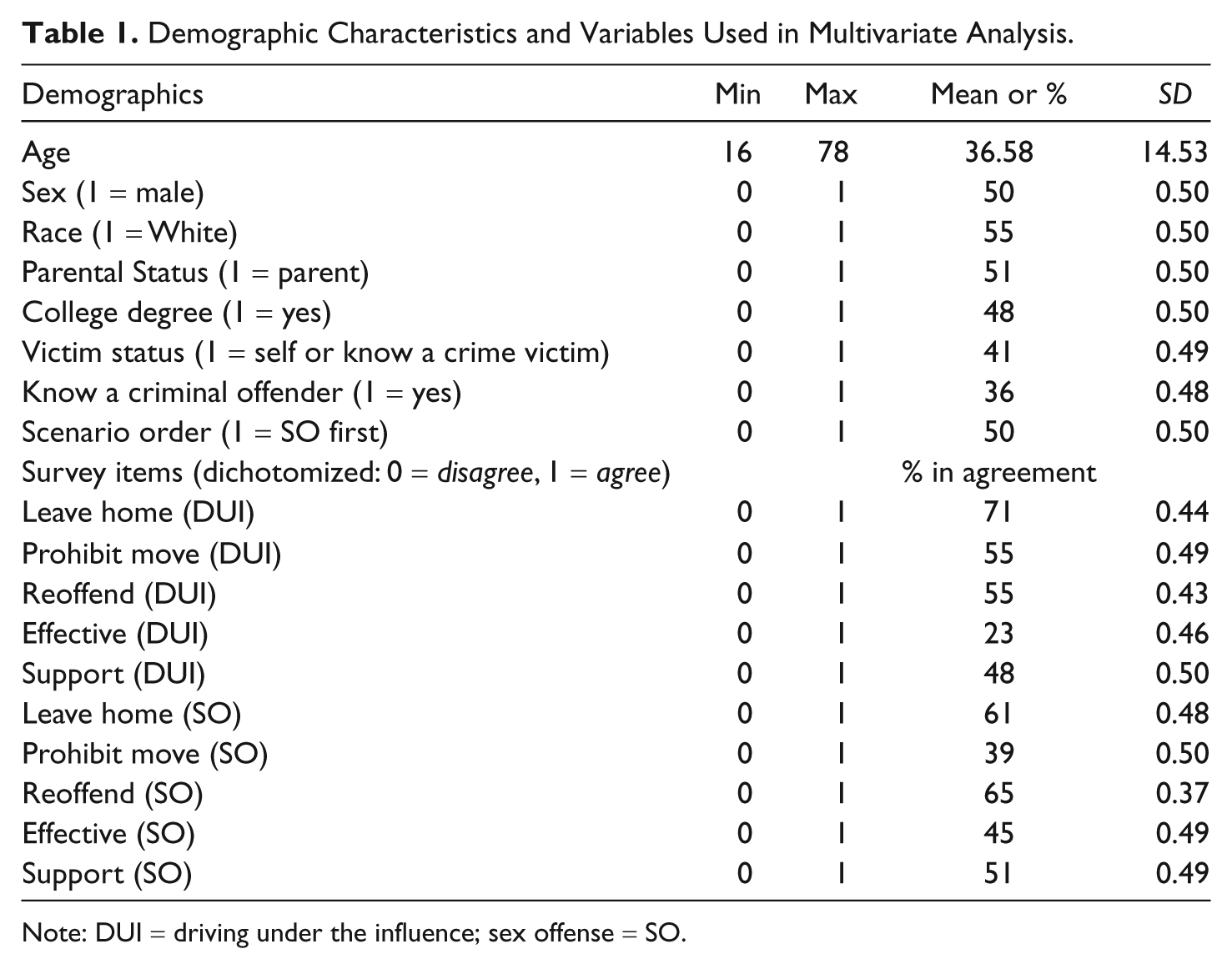
Note: DUI = driving under the influence; sex offense = SO.
Data Collection
Respondents were invited to complete the survey in the public locations described in Appendix 1. They were approached by the research assistants and asked to take 5 to 10 min of their time to read two brief scenarios (Appendix 2) and answer a few brief questions. Four research assistants were trained to conduct the interviews without suggesting how the respondents should answer. The research assistants were provided with a script to follow during their initial interactions with the participants. Efforts were made to collect data during various times of the day and different days of the week to obtain a diverse sample. About 86% of the surveys were collected during a weekday and 14% on weekends over a period of 4 months between December 2007 and March 2008. About a third (34%) was collected during morning hours and 66% were collected in the afternoons.
Instrumentation
The survey instrument was developed by the authors for the purpose of collecting data regarding perceptions of residential restrictions as punishment. The survey was created by developing two scenarios, one depicting a young adult convicted of DUI and the other depicting a young adult who had sexual relations with a teenager and was convicted of an SO (see Appendix 2). The participants were given a written survey and were asked to answer a series of five questions after each scenario by rating their agreement on a Likert-type scale of 1 to 5 (strongly disagree to strongly agree). The survey questions are listed in Table 2.
Participant Responses to Survey Scenarios (Full Likert-Type Scale Responses).
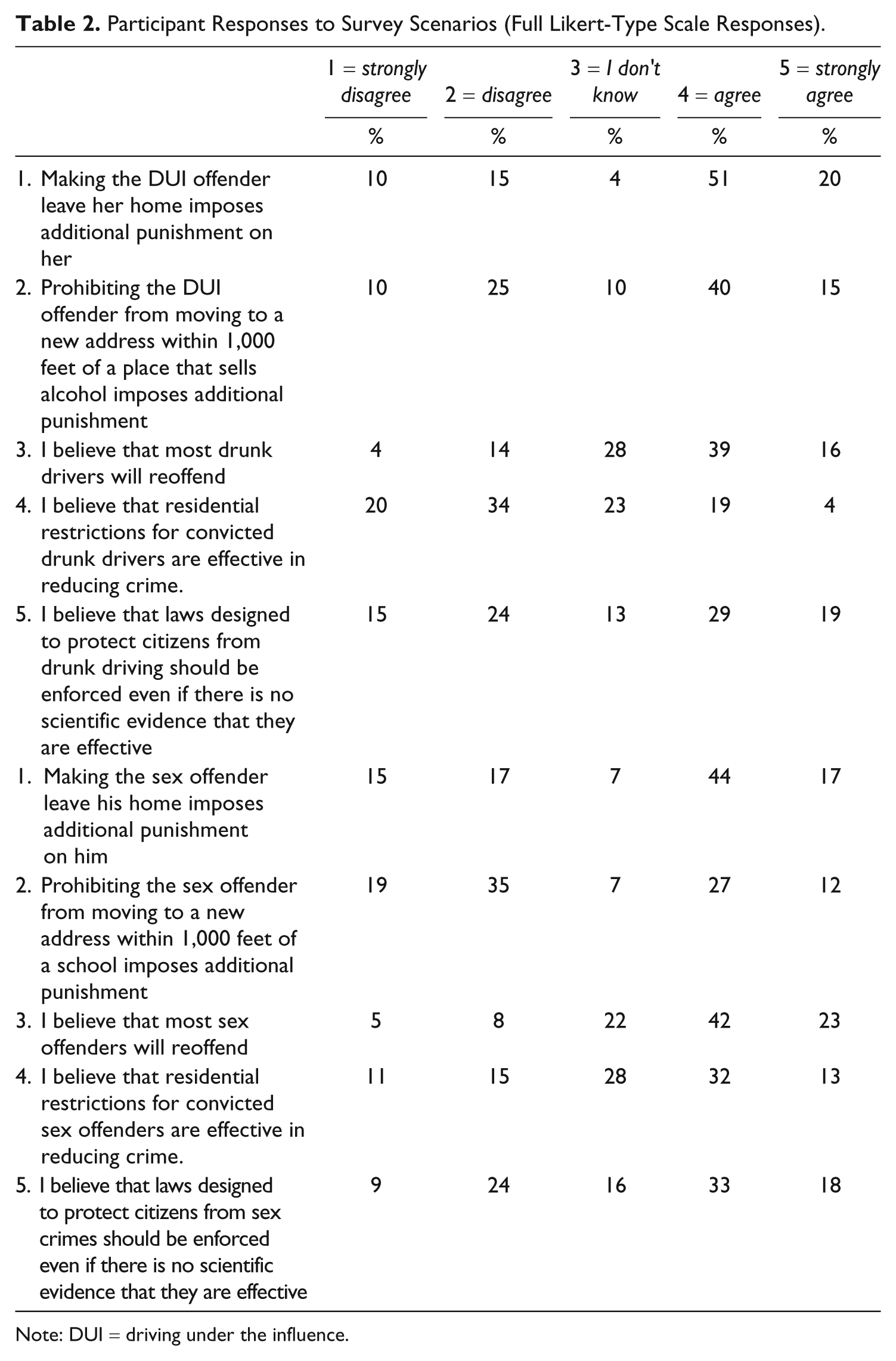
Note: DUI = driving under the influence.
Dependent Variables
There are two main dependent variables of interest in this study, and they are repeated for both sex offenders and DUI offenders (together equaling four dependent variables). Leave home refers to the belief that making an offender leave his or her home due to residence restrictions is a form of punishment. Prohibit move refers to the belief that prohibiting an offender from moving to a new address within 1,000 feet of either a school or a place that sells alcohol is a form of punishment. For the multivariate analyses, the survey measures were dichotomized, where 1 = Yes and 0 = No. This was done because we were ultimately less interested in the degree of agreement than whether participants were in agreement or not.
Independent Variables
To examine how respondents viewed crime and crime policy, we examined three important independent variables. With Reoffend, we assessed whether respondents thought offenders were likely to reoffend. They were asked the following question: “I believe that most sex offenders/drunk drivers will reoffend.” For the multivariate analyses, Likert-type scales were collapsed and dichotomized for the multivariate analysis, where agree and strongly agree = Yes (1) and disagree and strongly disagree = No (0).
To determine whether respondents thought that residence restrictions were effective social policy, they were asked to respond to the following prompt: “I believe that residence restrictions for sex offenders/convicted drunk drivers are effective in reducing crime.” In the logistic regression analyses, Likert scores were collapsed into a dummy variable, effective, where 1 = Yes and 0 = No.
Research has indicated that some individuals support crime policy even when there is no evidence showing its effectiveness. To assess this possibility in this sample, participants were asked to respond to the following: “I believe that laws designed to protect citizens from sex offenders/drunk drivers should be enforced even if there is no scientific evidence that they are effective.” Ordinal responses were recoded in a dummy variable, support, where 1 = Yes and 0 = No.
We were also interested in examining how social-demographic variables influence perceptions about the punitiveness of residence restrictions. To that end, we included the following variables: Age refers to the age of the respondent and is a continuous measure. Gender (1 = Male, 0 = Female) and race (1 = White, 0 = non-White) were also included. Parental status was recorded, whereby 1 = parents and 0 = nonparents. In college degree, we recorded whether the respondent had obtained a bachelor’s degree or higher (1 = Yes, 0 = No).
To measure the effect of prior experience with the criminal justice system, we also examined two additional variables. Victim status refers to whether the respondent or someone close to the respondent was a victim of crime (1 = Yes, 0 = No). Know offender reports whether someone close to the respondent had been convicted of a crime (excluding traffic violations; we assumed that “close to” would also capture oneself). Answers were also dichotomized, where 1 = Yes and 0 = No.
Finally, in order to assess any bias that might occur depending on which scenario was seen first, half of the surveys displayed the DUI scenario first and the other half depicted the SO scenario first. Thus, the variable scenario order (1 = sex offender scenario first, 0 = DUI offender scenario first) was also included in the multivariate models.
Data Analysis
First, descriptive statistics were generated to illustrate participant perceptions about residential restrictions as punishment. Then, mean ratings for each item were calculated, and correlations were analyzed to determine the relationship between perceived punishment for DUI and SO crimes. The t tests were used to compare mean scores on perceptions of punishment, with significant differences identifying disparities. Finally, we used logistic regression to examine whether respondent characteristics and views of crime policy predicted tendencies to view residential restrictions as punitive. In this set of analyses, the Likert-type scale measures were dichotomized because of sample size and for ease of interpretation. “I don’t know” responses were coded as missing.
Results
Participants’ responses to the scenarios are listed in Table 2. The majority of respondents considered making a SO or a DUI offender leave their home after conviction to be punitive. A majority (55%) agreed or strongly agreed that restricting where a DUI offender could live imposes additional punishment, but only 39% believed that restricting where a sex offender lives constitutes additional punishment. A minority believed that residential restrictions would be effective in reducing crime for either group, but about half believed that laws designed to protect citizens should be enforced even in the absence of empirical evidence.
We then evaluated the similarities between responses to the DUI and SO scenarios (see Table 3). The mode (most common answer) was the same for Questions 1, 3, and 5 in each scenario. However, more participants agreed that residence restrictions were punitive for drunk drivers (mode = 4) than for sex offenders (mode = 2). As well, fewer participants agreed that residence restrictions would be effective in reducing drunk driving (mode = 2) than sexual assault (mode = 4). We then utilized Spearman’s rho and paired-sample t tests to examine correlations between answers and to determine whether there were significant differences in the mean answers for the parallel questions pertaining to each scenario. All of the correlations were robust, and all were statistically significant. All of the items demonstrated significant differences between means, indicating that although there was a generally positive association between perceptions of punishment for the two different types of offenders, there were discrepancies in the strength of the ratings. Specifically, participants were significantly more likely to agree that residence restrictions were punitive for DUI offenders, but less likely to agree that drunk drivers will reoffend, that residential restrictions would prevent repeat DUI offending, or that DUI laws should be enforced without scientific evidence of their effectiveness.
Mean Differences and Correlations Between Responses to DUI (Driving Under the Influence) Offender and Sex Offender Scenarios on Parallel Questions.
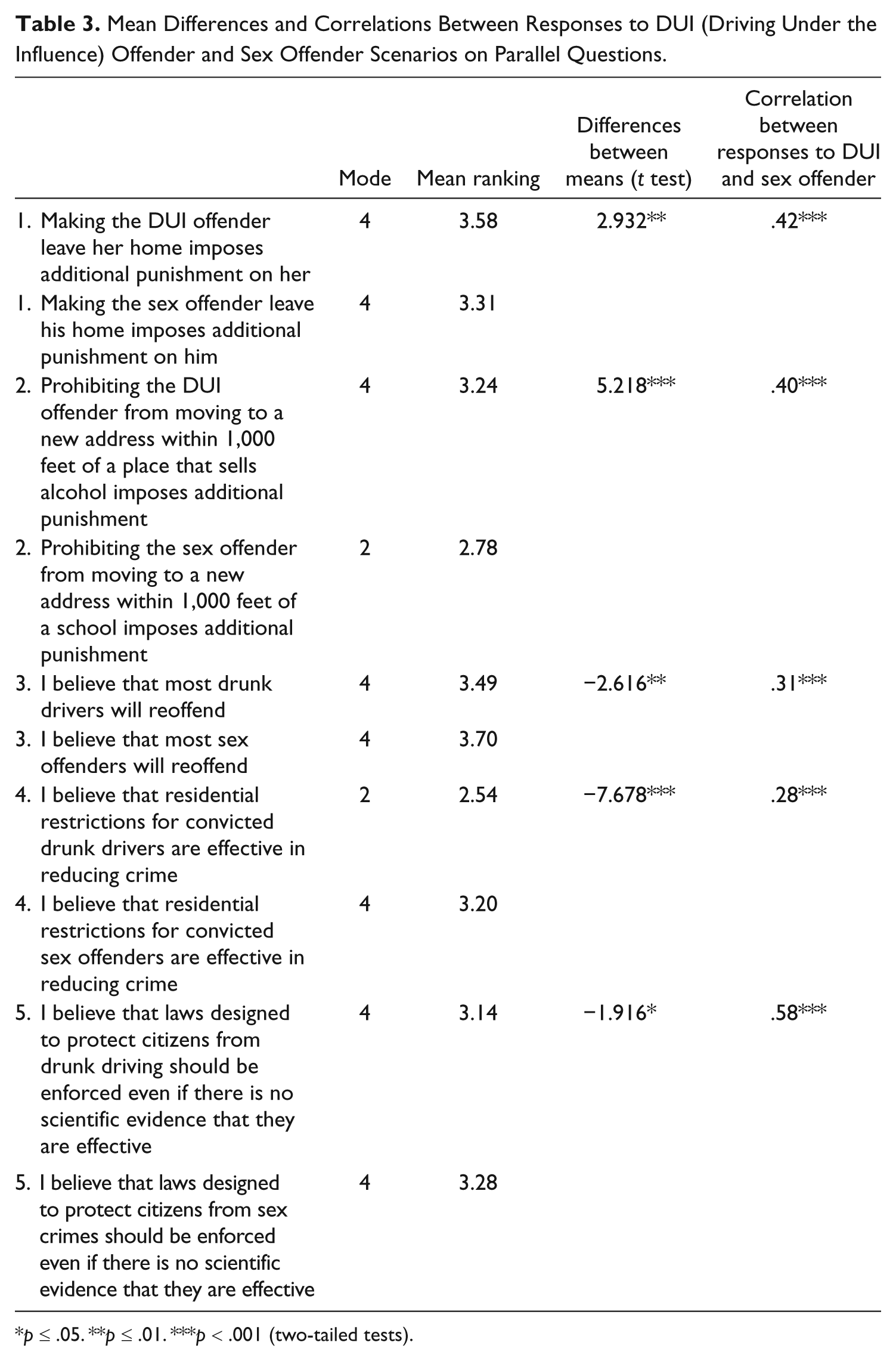
p ≤ .05. **p ≤ .01. ***p < .001 (two-tailed tests).
Half of the participants were given a survey with the SO scenario first, and the other half saw the DUI offender scenario first. We examined whether the order in which the scenarios were presented made a difference in participants’ responses by comparing mean differences in ratings between the two conditions. Because multiple t tests can lead to spurious findings, the Bonferroni technique was used to test the statistical significance of multiple comparisons. This method involves adjusting the significance threshold for rejecting the null hypothesis and is calculated by dividing the alpha level by the number of comparisons (Vogt, 2005). In this case, the significance level, p < .05, was divided by 10, which reflected the number of items that were tested for each group comparison (.05/10 = .005). Using this conservative threshold, only one item was statistically significant. When participants saw the sex offender scenario first, they were less likely to agree that laws designed to protect the public from drunk drivers should be enforced even in the absence of scientific evidence of their effectiveness (t = −2.816, df = 253, p = .005). However, when we examined the impact of the order in which the scenarios were presented in a multivariate context (see Tables 4 and 5), the results were not significant.
Perceptions of Residence Restrictions for Sex Offenders.
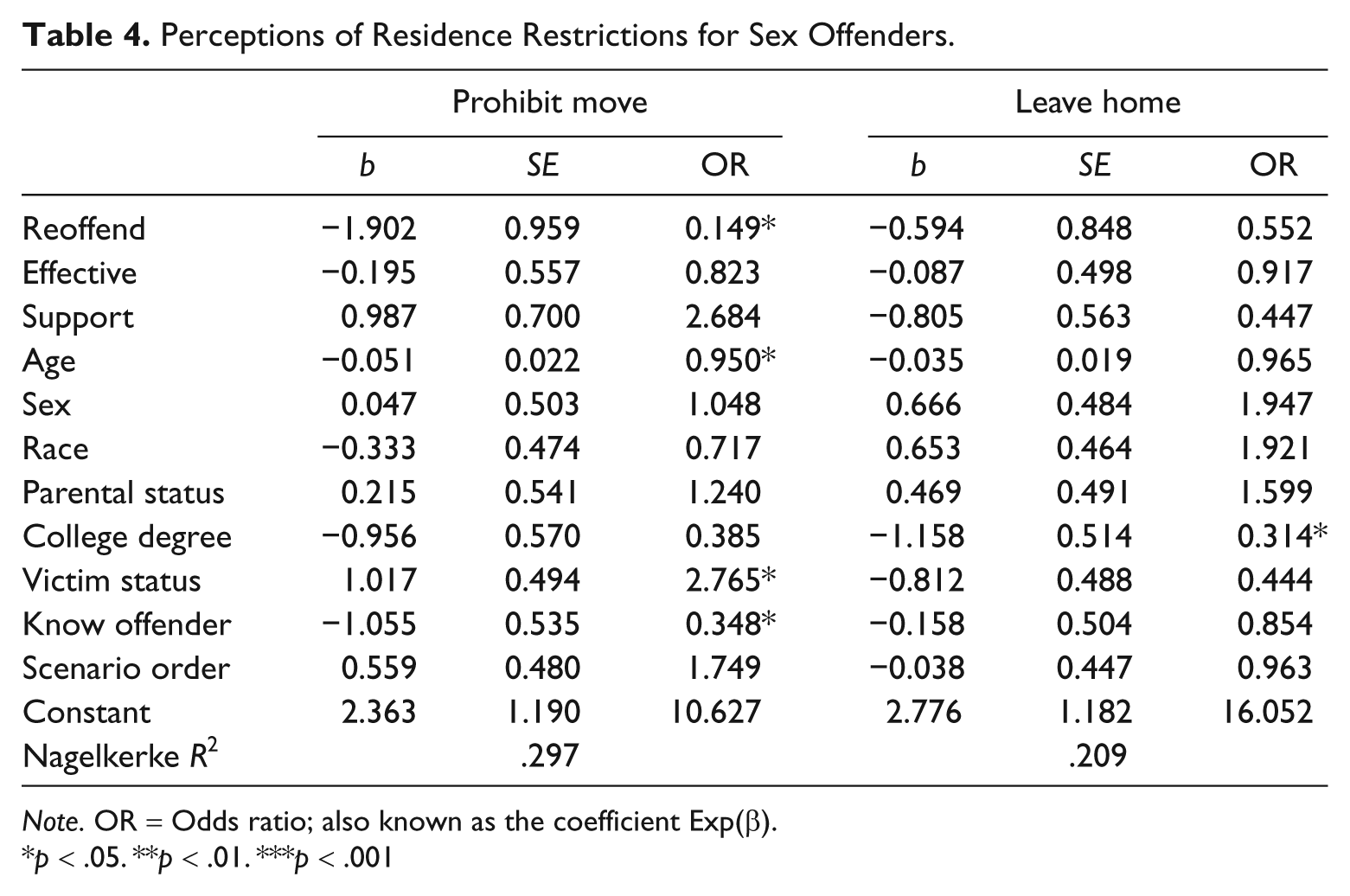
Note. OR = Odds ratio; also known as the coefficient Exp(β).
p < .05. **p < .01. ***p < .001
Perceptions of Residence Restrictions for DUI Offenders.
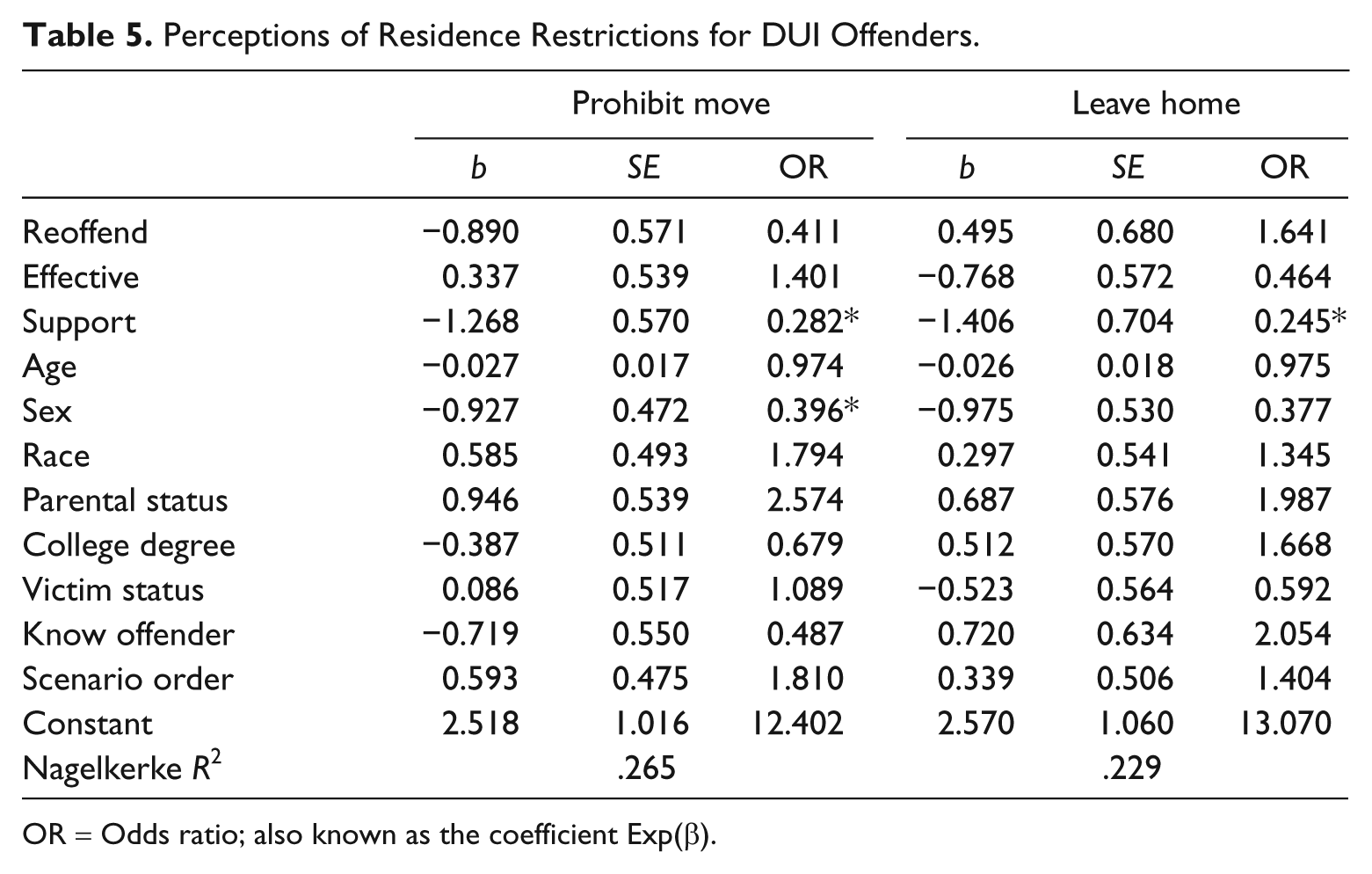
OR = Odds ratio; also known as the coefficient Exp(β).
Finally, we assessed whether views about the crime policies and demographic characteristics were related to tendencies to view residential restrictions for sex offenders as punitive. As shown in Table 4, respondents who believed that most sex offenders would reoffend were significantly less likely to view policies that restricted where sex offenders can live as punitive (OR = .149). In addition, older respondents (OR = .950) and those who knew someone convicted of a misdemeanor or felony (OR = .348) were also less likely to view residence restrictions as punitive. Respondents with direct or indirect experiences with crime victimization were more likely to view residence restrictions as punitive. Specifically, participants with a victimization history were 2.8 times more likely to view housing prohibitions for sex offenders as imposing additional punishment. Only one variable was significantly related to viewing policies forcing sex offenders to leave home as punitive. Respondents with a college degree were 69% less likely to agree that this policy served as additional punishment (OR = .314).
A different pattern of findings emerged in the analysis of residence restrictions for DUI offenders (see Table 5). Respondents who reported that they would support policy enforcement even in the absence of scientific evidence showing its effectiveness were less likely to view housing prohibitions (OR = .282) and policies forcing offenders to move from their homes (OR = .245) as serving a punishment function. Sex was the only other variable to have a significant effect on views of punishment for DUI offenders. Males were significantly less likely to perceive residence restrictions as punitive (OR = .396).
Discussion
Our hypothesis that residential restrictions would be seen as more punitive for DUI offenders than for sex offenders was supported, though a majority of the sample participants viewed making either offender leave their home as punishment. We surmise that the discrepancy is related to society’s stereotypical portrayal of sex offenders; for instance, citizens are likely to believe that sexual abusers are strangers who tend to use force, aggression, or threats in the commission of a sex crime (Fuselier, Durham, & Wurtele, 2002). Fuselier et al. noted that the general public tends to believe child molesters are social misfits, strangers, or “dirty old men” (p. 272). Other research found that the public believes that most sex offenders are inevitable recidivists (Levenson, Brannon et al. (2007); Leon, 2011). Such beliefs may create an attitude in which people respond not only to their own fear of victimization but also to their need to see themselves as dissimilar to the offenders in question. Cognitive dissonance theory suggests that people engage in this type of thinking when discrepancies make them uncomfortable or when realities are not aligned with their own values or beliefs (Festinger & Carlsmith, 1959).
On the other hand, we know that about one fifth of the driving population engages in driving after some degree of drinking (National Highway Traffic Safety Administration, 2010). Cognitive dissonance may lead to a belief that “this could happen to me,” perhaps rendering the sample more sympathetic to the plight of drunk drivers and the potential consequences for a socially reprehensible but all too common behavior.
Another difference between SO and DUI crimes is that DUI is seen as a public health problem requiring prevention, treatment, and education initiatives in addition to a criminal justice response. As a result, emphasis has been placed not only on increased penalties but also on generating a societal commitment to responsible drinking behavior and recognizing the need for treatment for those with substance addiction problems. Conversely, approaches to sexual violence have been oriented almost exclusively toward criminal justice despite attempts to conceptualize sexual assault as a public health problem (Kaufman, 2006; Satcher, 2001; Tabachnick & Klein, 2011).
Some findings that emerged were unexpected. Chief among them was the finding that participants with a direct or vicarious victimization experience were more likely to view residence restrictions for sex offenders as punitive. This seems somewhat counterintuitive; we might expect that crime victims and their loved ones would advocate for more punitive responses. On the other hand, many crime victims know their perpetrator, so they might have a more humanistic approach to criminal offenders. Another surprising finding was that respondents who knew someone convicted of a crime were less likely to view housing restrictions as punitive. It was hypothesized that being acquainted with an individual involved in the criminal justice system would “soften” respondents’ approaches to penal policy. However, this notion was not supported. An alternative explanation is that contact with offenders puts the emphasis on visible punishments (e.g., prison time, probation, etc.) over invisible sanctions such as residence restrictions.
Sex offender residence laws have been based on fear, retribution, and political expediency. They are, however, unlikely to prevent the most common situations in which children are sexually abused, which is in the victim’s own home by someone well known to the family (Bureau of Justice Statistics, 2000). Intended to prevent access to children and deter recidivistic sex crimes, these laws remain unsupported by research and appear to have little effect in reducing a sex offender’s likelihood of reoffending (Colombino, Mercado, & Jeglic, 2010; Colombino, Mercado, Levenson, & Jeglic, 2011; Colorado Department of Public Safety, 2004; Duwe, Donnay, & Tewksbury, 2008; Minnesota Department of Corrections, 2007; Zandbergen, Levenson, & Hart, 2010). Still, research suggests that members of the public continue to support these endeavors. The results of the current study indicate that although many of the respondents were not optimistic about the effectiveness of residence restrictions in reducing victimization, those policies still garnered considerable support. It appears that empirically demonstrated effectiveness is not a requirement for support of certain crime policies.
High recidivism rates are frequently cited as a justification for residence restrictions (and other policies such as registration and community notification) despite research indicating that sex crime recidivism rates are lower than commonly believed. On average, between 5% and 14% of convicted sex offenders are rearrested for a new sex crime within 3 to 6 years of their release into the community (Bureau of Justice Statistics, 2003; Hanson & Morton-Bourgon, 2005). Contrary to assumptions that they are the most habitual criminals, sex offenders have been found to have some of the lowest crime-specific reoffense rates of all felons (Bureau of Justice Statistics, 2003; Sample & Bray, 2006). It is also typically believed that sex offenders cannot be rehabilitated, even though research indicates that properly designed treatment can result in significant decreases in reoffense rates (Hanson, Bourgon, Helmus, & Hodgson, 2009; Hanson et al., 2002; Losel & Schmucker, 2005). Heinous cases of stranger abductions and murders perpetrated by previously convicted sex offenders have provided the impetus for increasingly restrictive contemporary sex crime legislation, though it is estimated that sexually motivated kidnappings of children are statistically improbable events (Finkelhor, Hammer, & Sedlack, 2002).
Scholars have levied critiques against residence restrictions, arguing that such laws greatly diminish housing availability (Chajewski & Mercado, 2008; Zandbergen & Hart, 2006; Zgoba et al., 2009) and increase the incidence of homelessness, transience, and lifestyle instability (Levenson, 2008; Levenson & Cotter, 2005; Levenson & Hern, 2007; Mercado et al., 2008). Ironically, the collateral consequences of housing restrictions exacerbate the very factors known to increase criminal and sexual recidivism: unemployment, housing instability, and social isolation (Hanson & Harris, 1998; Kruttschnitt, Uggen, & Shelton, 2000; Schulenberg, 2007; Walberg, 2006; Willis & Grace, 2008, 2009).
The results of this study need to be viewed in light of several limitations. First, the sampling methodology was less systematic than might be ideal. We were limited not only by a lack of resources but also by a resistance of vendors to allow us to recruit candidates in public places. Ultimately, the sample appeared to be reasonably representative of those living in Hamilton County, but we were unable to calculate an actual response rate or to determine whether survey participants differed in important ways from nonparticipants. Second, the scenarios may have limited our ability to gauge the true climate related to perceptions of residence restrictions. We elected to make the survey short and concise in order to maximize participation, but in doing so we could not assess the participants’ reaction to a wider range of criminal scenarios. Third, the use of offenders of different gender (male sex offender and female DUI offender) may have affected the results as well. Respondents’ view of residence restrictions for offenders may be influenced by the offender’s gender, and punishments may be viewed differently for male and female offenders. Differences in the age and gender of the victim might also have altered the results. It is well established that citizens tend to show more leniency toward female offenders and to attribute more responsibility to older male victims (Cullen, Fisher, & Applegate, 2000; Rogers & Davies, 2007).
Though an exploratory study, this research lays the groundwork for some important “next steps” for researchers to consider. First, researchers should work to unpack the meaning behind perceptions of residence restrictions as punishment. Our working definition of perceiving residence restrictions as punitive assumed this view as a critique of the policy. There is an alternative explanation that we were unable to explore. Perhaps those respondents who viewed residence restrictions as imposing additional punishment may also view that punishment as justified, where sex offenders are deserving of any and all punishments they are administered. Second, future scholarship should consider diversifying the scenarios to include different gradations of offenders (repeat offenders vs. first time; “it could happen to anyone” lapses in judgment vs. more egregious crimes such as DUI homicide or predatory pedophilic behavior). Such an examination would provide a more comprehensive understanding of the complexities driving opinions about crime policy.
In summary, this study supports the notion that a large portion of citizens are in favor of residential restrictions for sex offenders, though some view the law as excessively punitive. It is difficult, however, to convey the complexities and potential unintended consequences to the public, when prevailing belief seems to align with the philosophy “if it saves one child, it is worth it.” Sociologist Robert Merton astutely cautioned that social policies can sometimes lead to paradoxical outcomes, which he termed the “law of unintended consequences.” When society overreacts to an apparent threat, and seeks to minimize that danger by drastically altering the social order, unexpected outcomes may occur. Collective values play a role in social movements, and sex offenders certainly epitomize popular concepts of good and evil—mobilizing robust forces that may ignore the more disadvantageous effects of change (Merton, 1936). For all of these reasons, the unintended consequences facilitated by sex offender policies are likely to be ignored by lawmakers and citizens hoping to deter sexual violence.
Footnotes
Appendix 1
Data Collection Locations
| Location | Frequency | Percent |
|---|---|---|
| Kenwood mall | 2 | .8 |
| Tower mall | 29 | 11.3 |
| Greyhound Bus Station | 32 | 12.5 |
| Norwood FitWorks | 10 | 3.9 |
| Cincinnati Public Library | 66 | 25.9 |
| Hyde Park Square | 17 | 6.7 |
| Fountain Square | 79 | 31.0 |
| Findley Market | 4 | 1.6 |
| Newark, OH | 3 | 1.2 |
| Northern Kentucky University | 5 | 2.0 |
| Hamilton County Courthouse | 8 | 3.1 |
| Total | 255 | 100.0 |
Appendix 2
Declaration of Conflicting Interests
The authors declared no potential conflicts of interest with respect to the research, authorship, and/or publication of this article.
Funding
The authors received no financial support for the research, authorship, and/or publication of this article.