







Abstract
In January 2020, New York implemented a bail reform law restricting judges’ discretion to set money bail for certain offense types. We used a controlled-interrupted time series (CITS) design to estimate the reform’s impact on pretrial recidivism. Leveraging the reform’s offense-based eligibility criteria, defendants were separated into treatment and control groups. By comparing recidivism pre- and post-reform and between the treatment and control groups, we were able to minimize confounding from coinciding changes. We evaluated the new law’s effect on multiple recidivism measures: any re-arrest, felony re-arrest, and violent felony re-arrest. In addition, we conducted subgroup analyses for high-risk defendants with recent criminal history. We found a statistically significant increase in violent felony re-arrests among the subgroup of individuals with recent criminal history.
In April 2019, New York signed into law the Bail Elimination Act, a reform law restricting judges’ discretion to set money bail or impose pretrial detention (i.e., remand into custody without bail; New York Senate, 2019). Prior to the law’s implementation, judges in New York could set money bail or detain people in all cases, regardless of the instant offense. After the law took effect, money bail and pretrial detention were eliminated for most misdemeanor and nonviolent felony offenses (Rempel & Rodriguez, 2019). Due to concerns related to public safety, six months later the law was amended to include bail and detention eligibility criteria related to a defendant’s criminal history, including whether the person had a separate pending case, was on probation or parole, or a prior history of felony convictions. Effectively, these changes ended New York’s brief experiment with an exclusively offense-based approach to reform (New York Senate, 2020). In this study, we evaluated the impact of New York’s initial offense-based reform on pretrial recidivism in New York City.
State Bail Reforms
Across the United States, pretrial reforms have been implemented in an effort to reduce reliance on money bail and pretrial detention. In New Jersey, a series of pretrial reforms were implemented, including: (a) restricting the use of pretrial detention to individuals at high risk of either flight or new criminal activity; (b) restricting the use of bail solely to individuals at high risk of flight; and (c) the addition of a pretrial risk assessment tool to inform judges’ decisions (Anderson et al., 2019). Together, these reforms eliminated the option of bail in nearly all cases. Using an interrupted time series analysis (ITSA), Anderson et al. (2019) found a reduction in misdemeanor arrests following reform and no change in other types of arrests.
In Philadelphia, the District Attorney announced that his office would no longer seek bail for 25 low-level felony and misdemeanor offenses. Using a difference-in-differences design to compare bail-eligible offenses to bail-ineligible offenses, Ouss and Stevenson (2023) found that the policy had no impact on the likelihood of pretrial re-arrest.
In Cook County, Illinois, the Chief Justice issued a court order (G.0. 18.8A) establishing a presumption of release for the large majority of felony defendants. Comparing matched samples of released defendants pre- and post-reform, Stemen and Olson (2020) found that the order was associated with a four percentage-point decrease in pretrial detention, but no change in pretrial re-arrest.
While not explicitly limiting judges’ ability to set bail, a new automated risk assessment tool was implemented to identify defendants suitable for pretrial release in Mecklenburg, North Carolina. Using an interrupted time series design, Redcross and Henderson (2019) found that the reform was followed by an 11 percentage-point decrease in money bail and a two percentage-point increase in pretrial re-arrest. However, the authors caution that this finding may be due to confounding from an increase in serious cases in the period following the reform’s rollout.
In Harris County, Texas, a court-ordered consent decree (Rule 9) mandated the pretrial release of a subset of misdemeanor offenses. Using a difference-in-differences design, Heaton (2022) evaluated the impact of the reform on misdemeanor cases compared with unaffected felony cases, and found no differences in 1-year re-arrest rates and modest decreases in 3-year re-arrest rates.
Focusing on New York, several studies have evaluated the impact of the state’s above-described bail reform law (Ropac, 2024; Ropac & Rempel, 2023; Wu & McDowall, 2024; Zhou et al., 2024). Two studies employed an inverse probability of treatment weighting (IPTW) design to estimate the effect of bail reform on 2-year recidivism rates: one focused on New York City (Ropac & Rempel, 2023) and the other on regions outside of New York City (Ropac, 2024). These analyses compared two groups: individuals who had bail set or were remanded pre-reform versus statistically similar individuals released post-reform (pre vs. post analysis), and individuals with bail set or who were remanded post-reform versus similar individuals released during the same time period (contemporaneous analysis). In New York City, Ropac and Rempel (2023) found a decrease in recidivism for bail-ineligible cases released under reform, but no significant effect for bail-eligible cases. Outside of New York City, Ropac (2024) found only minimal changes in recidivism. Despite regional differences, the subgroup analyses from both studies produced broadly consistent findings: bail reform reduced recidivism among defendants facing less serious charges and those with limited or no recent criminal history, but increased recidivism among defendants facing more serious charges and those with recent criminal histories.
Other studies used synthetic control analysis to estimate the effects of bail reform on crime in New York City and New York State. Zhou et al. (2024) examined the effect of reform on multiple incident-level crime types, including assault, theft, robbery, burglary, and drug crime. Findings showed no significant increases in New York City compared with the synthetically matched cities for all crime types except robbery. Wu and McDowall (2024) looked at the effect of the bail law throughout New York State on index crime. Results showed that while murder, larceny, and motor vehicle theft increased post-reform, the increases were not significantly different from those in the synthetically matched states.
Prior studies on the impact of New York’s bail reform law have several important limitations. IPTW studies may be biased due to the impact of COVID-19 as well as potential unobserved baseline differences between the samples (Ropac, 2024; Ropac & Rempel, 2023). For example, public data for New York City shows that the COVID-19 lockdown was accompanied by a significant decline in arrests, clearance rates, and prosecution rates, all of which had not fully returned to pre-pandemic levels by the end of the study period (Division of Criminal Justice Services [DCJS], n.d.; New York Police Department, n.d.). In addition, IPTW methods can only adjust for group imbalances caused by observable characteristics, but unobserved covariates may still be imbalanced and thus distort effect estimates (Pezzi et al., 2016).
Other concerns relate to the intervention period covered in the analysis. Zhou et al. (2024) had an intervention period of only 75 days (from January 1 to March 15, 2020) to avoid confounding related to COVID-19. During this time, only a small number of individuals would have been affected by the new bail eligibility requirements, making it difficult to detect the reform’s impact on overall crime. Wu and McDowall (2024) included the first full year after reform. This fails to account for July 2020 amendments, which significantly altered the reform law by introducing an array of new bail eligibility criteria. Furthermore, the inclusion of the COVID-19 era within the intervention period raises concerns about local variation across the synthetically matched states in response to the pandemic, given variation across states in the onset and severity of the COVID-19 pandemic as well as local government responses (McMinn & Crampton, 2021). As the disruptions to social and economic life were not uniform throughout the country, COVID-19 likely lead to differential impacts on crime rates across jurisdictions (Massenkoff & Chalfin, 2022).
On January 1, 2020, New York’s bail reform law introduced new eligibility criteria for the use of money bail and pretrial detention based solely on the instant offense type. Prior research on the effect of bail reform on crime has been mixed (Anderson et al., 2019; Heaton, 2022; Stemen & Olson, 2023), including research directly studying the effect of New York’s bail reform law (Ropac, 2024; Ropac & Rempel, 2023; Wu & McDowall, 2024; Zhou et al., 2024). However, to date, research on the offense-based reforms adopted in New York have lacked several important features, including (a) a direct assessment of the law’s impact on overall recidivism, (b) a local control group to better deal with confounding (e.g., related to differences in COVID-19 responses) (Shadish et al., 2002), and (c) subgroup analyses of high-risk defendants more likely to have been directly impacted by the reform (i.e., otherwise bailed absent the new eligibility criteria). To address these limitations, this study will use a controlled-interrupted time series (CITS) design to compare the reform’s effect pre- and post-reform and between bail-ineligible (treatment) and bail-eligible (control) cases. Subgroup analyses will also be conducted to estimate the effect on high-risk defendants with recent criminal activity who were more likely to have been bailed in the absence of the new eligibility criteria.
Method
Outcome Measures
We used publicly available pretrial data collected by New York’s DCJS and Office of Court Administration (OCA) for the purpose of studying the impact of bail reform (New York State Unified Court System, 2023). The dataset covers all statewide prosecutions of individuals 18 or older for fingerprintable offenses between 2019 and 2021, and includes recidivism measures of whether a defendant was re-arrested within 180 days or at any time before disposition, categorized by the seriousness of the re-arrest (misdemeanor, nonviolent felony, violent felony).
As the goal was to estimate the effect of the initial reform in New York City, the following data was excluded (a) cases prosecuted outside of New York City; (b) initiated after the reform law was amended in July 2020; (c) charged with low-level offenses not in New York’s criminal code; (d) where judges lacked the opportunity to set bail (i.e., cases disposed at arraignment or with a hold in another case), and (d) a small number of anomalies with bail set after the reform for bail-ineligible offenses. Our main analyses focused on the standardized 180-day pretrial re-arrest measures, as these were the only recidivism measures to account for variability in pretrial length. We used information about the seriousness of each re-arrest to construct the following time series data based on cohorts of defendants arraigned in a given month (the smallest unit of time available in the data):
Intervention Timing
The reform’s eligibility requirements were retroactive, which means that individuals who were in detention awaiting trial for an ineligible offense could apply for immediate release. Partly to avoid a “rush on the courts” from individuals applying for release at the same time, the OCA encouraged judges to implement the reform before its effective date (Abruzzese, 2019; Conviser, 2019; Yakin, 2019). Figure 1 shows bail-setting trends in the year before reform among individuals charged with a bail-ineligible offense. In both the general population and in the subgroup of offenders with recent criminal activity, a substantial decrease in the percentage of cases with bail set can be seen starting in November 2019. Consistent with these changes, we defined the pre-intervention period as January 2019 to October 2019 and the post-intervention period as November 2019 to June 2020.
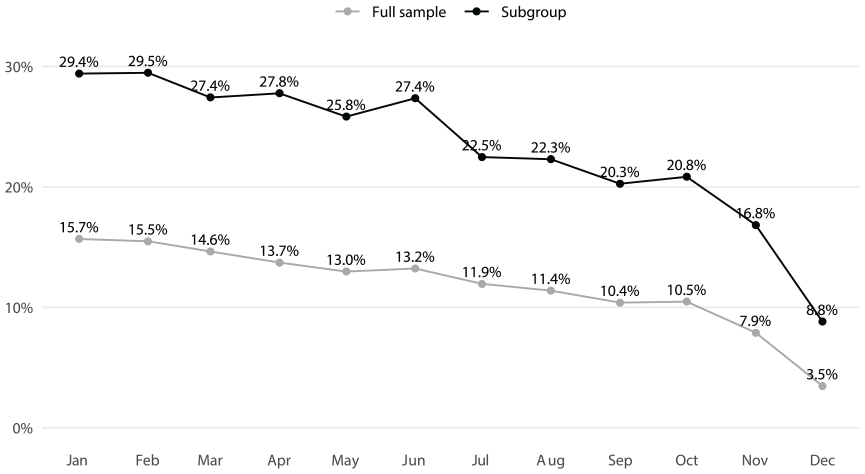
Bail-Setting Trends Among Defendants Charged With Bail-Ineligible Offenses in the Year Before Reform.
Treatment and Control Groups
To identify cases whose eligibility for bail was impacted by the reform, we relied on case information about the most serious charge at arraignment. Each case was coded as eligible or ineligible based on whether the prosecuted offense qualified for bail under the reform (New York Senate, 2019). This indicator variable was then used to separate all cases in our sample into treatment (bail-ineligible) and control (bail-eligible) groups.
Subgroup Analysis of Defendants With Recent Criminal Activity
Defendants with recent criminal activity were defined as having a pending case at the time of prosecution. Separate analyses were conducted for this subgroup, for several reasons. First, prior research has shown that defendants with a pending case who were mandatorily released under New York’s bail reform law had significantly higher rates of recidivism compared with matched defendants who had bail set pre-reform (Ropac & Rempel, 2023). Second, in the year before the reform, defendants with a pending case had bail set at nearly twice the rate of the overall population of bail-ineligible cases (23.7% vs. 12.1%), and thus were more likely to have been impacted by the reform (i.e., otherwise bailed absent the new eligibility criteria). Finally, in the dataset used for this analysis, the presence of a pending case was the only measure of criminal history that accounted for the recency of prior cases.
Descriptives and Bivariate Analysis
To assess balance in baseline demographics, we explored differences in the treatment and control groups across several variables previously shown to be associated with recidivism—race, gender, age, and poverty (Gendreau et al., 1996; Goodley et al., 2022; Katsiyannis et al., 2018). These measures were defined as percent male; percent Black; percent younger than 25; and percent in a high-poverty county (i.e., cases prosecuted in either the Bronx or Brooklyn, which ranked first and third, respectively, in percent living in poverty in New York State; New York State Comptroller, 2022). Monthly means and t-tests were presented for the baseline pre-intervention period (January 1, 2019–October 31, 2019). These analyses were then repeated for the subgroup of defendants with recent criminal history to estimate the impact among high-risk individuals who more likely to have been impacted by the reform.
Descriptive and Bivariate Analysis of Recidivism Before and After Reform
We conducted descriptive analyses for the dependent recidivism measures described above. For the treatment and control groups, the means of the monthly recidivism rates were presented across the two segments of the analysis: the pre-reform period (January 1, 2019–October 31, 2019) and the post-reform period (November 1, 2019–June 30, 2022). In addition, we performed independent sample t-tests to compare recidivism rates across the segments. These analyses were then repeated for the subgroup of defendants with recent criminal activity.
CITS Design
We used ITSA to estimate the impact of bail reform on aggregated monthly recidivism rates. ITSA is suitable for evaluating policy interventions when a single population is studied, the outcome is ordered in a time series, and multiple observations are captured in the pre- and post-intervention periods (Linden, 2015). In the absence of a true experimental design, ITSA is considered a strong quasi-experimental alternative (Shadish et al., 2002). With a single-group ITSA design, the impact of an intervention is estimated by using the period before the intervention as a counterfactual and adjusting for the pre-intervention trend (Linden, 2015). However, an important limitation of single-group ITSA is that it cannot rule out time-varying confounders not part of the pre-intervention trend; for example, other events occurring around the time of an intervention (Lopez-Bernal et al., 2018). One way to deal with this potential source of confounding is to include a control group that (a) is unaffected by the treatment and (b) shares confounders with the intervention (Bottomley et al., 2019).
To limit confounding from time-varying factors (e.g., changes related to COVID-19), we added an appropriate control group: individuals prosecuted for bail-eligible offenses in the same month and city. By estimating the effect of not only whether recidivism rates changed post-reform, but whether any changes differed between the treatment group (bail-ineligible) and control group (bail-eligible), this approach allowed us to isolate the causal effect of bail reform on recidivism.
We estimated the CITS models using segmented regression models, a common approach for estimating the effect of policy interventions (Linden, 2015; Lopez-Bernal et al., 2018). The segmented models included a time variable for study start (January 2019), a dummy variable for reform start (November 2019), a dummy variable for cohort assignment (bail-ineligible vs. bail-eligible), and interaction terms among these variables. Stata’s itsa command was used to estimate the models, which had the following general form:

where β0 represents the intercept of the control group pre-intervention, β1 the slope of the control group pre-intervention, β2 the change in level in the control group post-intervention, β3 the change in slope in the control group post-intervention, β4 the difference in the changes in level between the treatment and control group pre-intervention, β5 the difference in the changes in slope between the treatment and control group pre-intervention, β6 the difference in the changes in level between the treatment and control group post-intervention, and β7 the difference in the changes in slope between the treatment and control groups post-intervention. The itsa command relies on ordinary-least squares as opposed to ARIMA given its flexibility and broad applicability in the context of ITSA (Box et al., 2015; Linden, 2017). Because the reform was rolled out over time rather than all at once, our main parameter of interest was the difference in post-intervention slopes (β7), after adjusting for the difference in pre-intervention slopes (β5) (Linden, 2017). In plain terms, this tells us whether recidivism rates rose more steeply post-intervention in the treatment group (bail-ineligible) compared to the control group (bail-eligible) after accounting for pre-existing trends. Overall, our analytical strategy most closely resembles those of and Lawrence et al. (2022), Lu et al. (2021), Makin et al. (2019), and Sliva and Plassmeyer (2021).
CITS models are at risk of model misspecification from autocorrelation and seasonality (Bottomley et al., 2019; McDowall et al., 2019). Preliminary modeling suggested first-order autocorrelation in our recidivism measures. To address autocorrelation, we used the Prais–Winsten estimator, a recursive process using the generalized least-square method to estimate the coefficients and error autocorrelation of a model until the AR(1) coefficient converges (Bottomley et al., 2023). Corrected Durbin–Watson d statistics are presented as an indicator of how well the models address serial autocorrelation. The adjusted models all fell within an acceptable range (1.4–1.8) (Turner, 2020). We also tested for seasonality by estimating each model along with a set of monthly dummy variables (Wooldridge, 2009). As preliminary analyses showed no regular monthly variation, monthly dummy variables were not included in the final models.
One additional assumption in a CITS model is that the pre-intervention trends in the treatment and control groups run parallel to each other (the parallel trend assumption). This ensures that the trajectories of the groups had not already begun to diverge pre-intervention for reasons unrelated to reform. An advantage of our approach is that this assumption is verifiable within a CITS design (Lopez-Bernal et al., 2019). In addition to visually checking for parallel trends, we tested whether there was a statistically significant difference between the pre-intervention treatment and control group slopes (Linden, 2017).
Anticipatory Effects
While the clearest shift in bail-setting practices occurred in November 2019, trends in bail-setting showed that judicial practice may have been impacted as early as July 2019 (see Figure 1). This was consistent with steps taken by New York’s OCA, which by this time had already begun educating judges about the new bail eligibility requirements and encouraging judges to implement the reform before its effective date to avoid a “rush on the court” (Conviser, 2019). To account for these possible anticipatory effects, for all model specifications we conducted robust checks with this earlier July 2019 intervention date.
Results
Full Population
Descriptive statistics and t-tests comparing demographics in the treatment and control groups in the pre-intervention period are shown in Table 1. Compared with the control group, the treatment group included a substantially lower percentage of males, Black individuals, people below the age of 25, and those prosecuted in high-poverty counties. At baseline, this suggests that the treatment group was composed of individuals at lower risk of recidivism.
Baseline Demographics in the Full Population.

p < .05. **p < .01. ***p < .001.
We used a CITS framework to estimate the effect of New York’s offense-based bail reform on recidivism. Defendants were divided into treatment (bail-ineligible) and control (bail-eligible) groups based on whether they were charged with an offense that qualified for bail under the reform. In the treatment group, post-reform, the monthly average increased by 3.07 percentage points for any re-arrest (t = 2.22, n.s.), 4.51 percentage points for felony re-arrest (t = 3.45, p < .01), and 2.69 percentage points for violent felony re-arrest (t = 4.18, p < .01). In the control group, post-reform, the monthly average increased by 1.48 percentage points for any re-arrest (t = 1.72; n.s.), 2.34 percentage points for felony re-arrest (t = 2.68, p < .05), and 1.77 percentage points for violent felony re-arrest (t =3.91, p < .01). These bivariate estimates indicated that felony and violent felony recidivism rates increased post-reform in both the treatment and control groups.
Using multiple-group segmented regression models, we were able estimate not only whether recidivism rates increased post-reform, but whether those increases were significantly greater in the treatment group compared to the control group, while also accounting for pre-reform trends within each group. Findings from the CITS models were presented in Table 2, with model estimates graphically shown in Figure 2. Following the intervention, there were significant increases in the treatment group in the felony re-arrest trend (b = 1.13, p < .05) and violent felony re-arrest trend (b = .65, p < .01), while in the control group there were significant increases in the any re-arrest trend (b = .51, p < .05), felony re-arrest trend (b = .69, p < .05), and violent felony arrest trend (b = .34, p < .05). However, the difference in post-intervention trends between the groups—our main parameter of interest—was not statistically significant for each of the recidivism measures.
Controlled-Interrupted Time Series Models: Pretrial Re-arrest Among the Full Population (November Interruption).
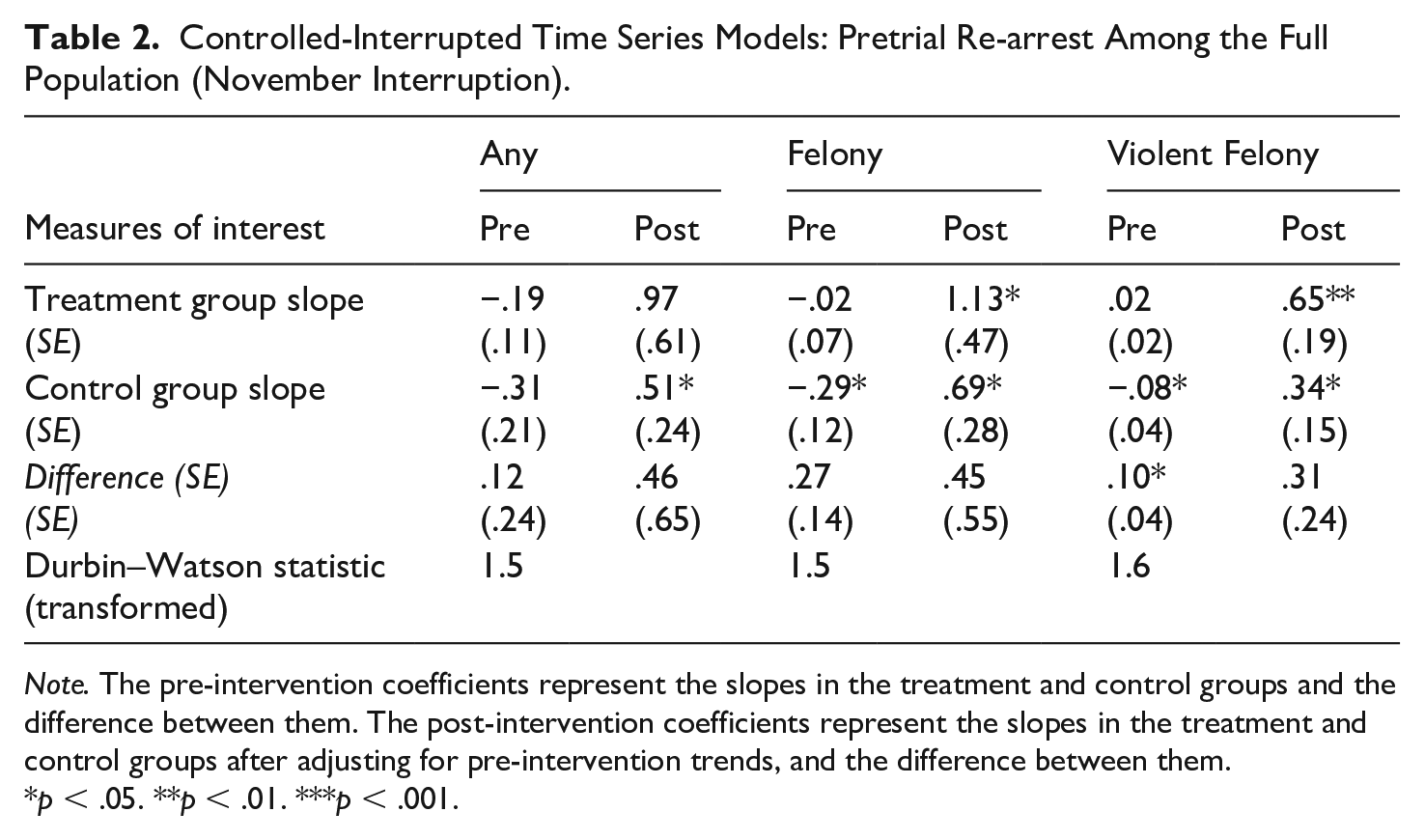
Note. The pre-intervention coefficients represent the slopes in the treatment and control groups and the difference between them. The post-intervention coefficients represent the slopes in the treatment and control groups after adjusting for pre-intervention trends, and the difference between them.
p < .05. **p < .01. ***p < .001.
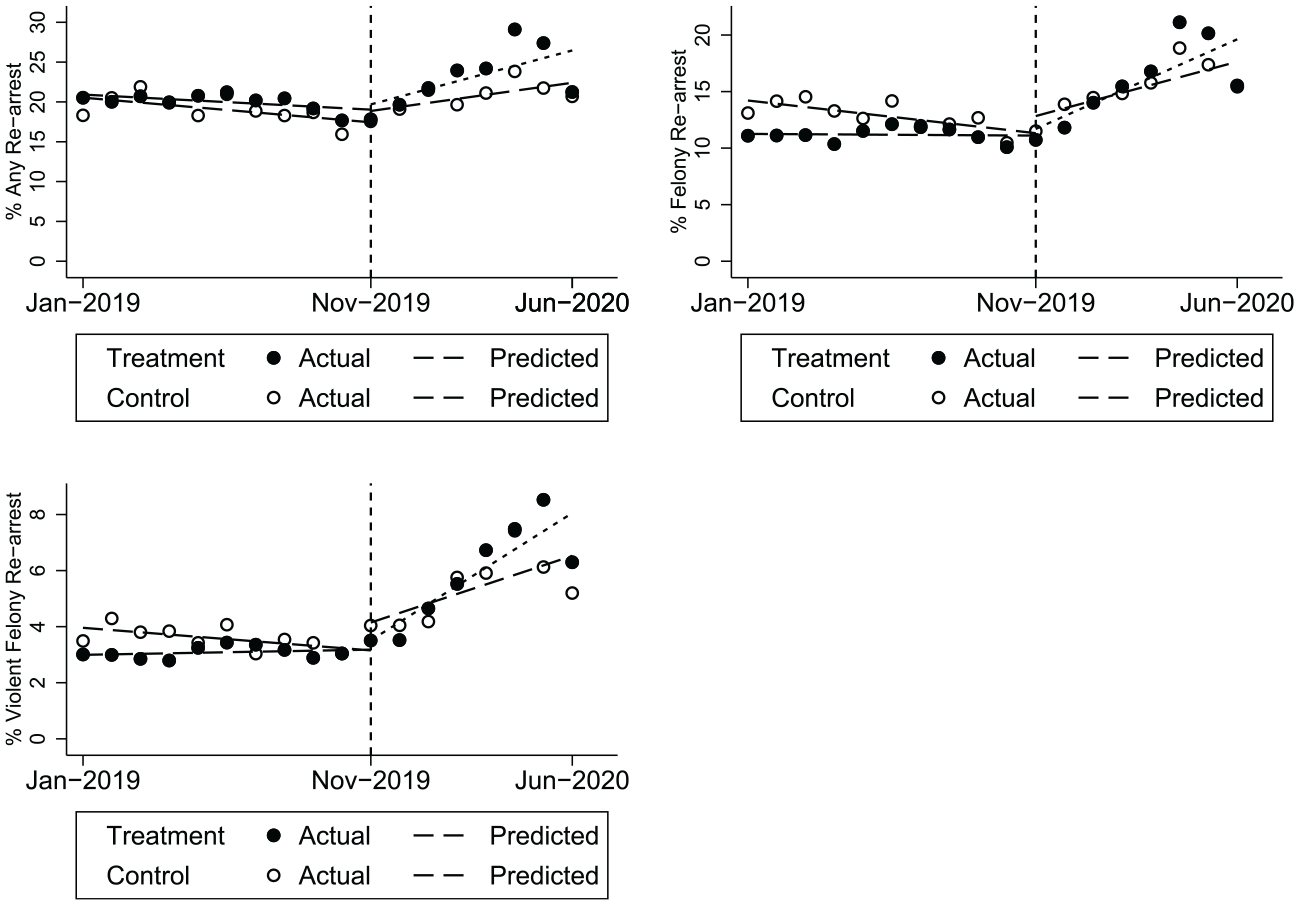
Controlled-Interrupted Time Series Models: Pretrial Re-arrest Among the Full Population (November Interruption).
Subgroup of Defendants With Recent Criminal Activity
Pre-existing bail-setting practices suggest that restricting the use of bail had a limited impact in the general population (see Figure 1). To estimate the effect for individuals more likely to have been affected by the reform (i.e., otherwise bailed absent the new eligibility criteria), we conducted subgroup analyses among individuals with recent criminal activity, defined as having at least one open pending case at the time of arraignment. Table 3 shows baseline demographics in the treatment and control groups for this subgroup. Overall, there were no statistically significant differences between the treatment and control groups.
Baseline Demographics in Subgroup With Recent Criminal Activity.
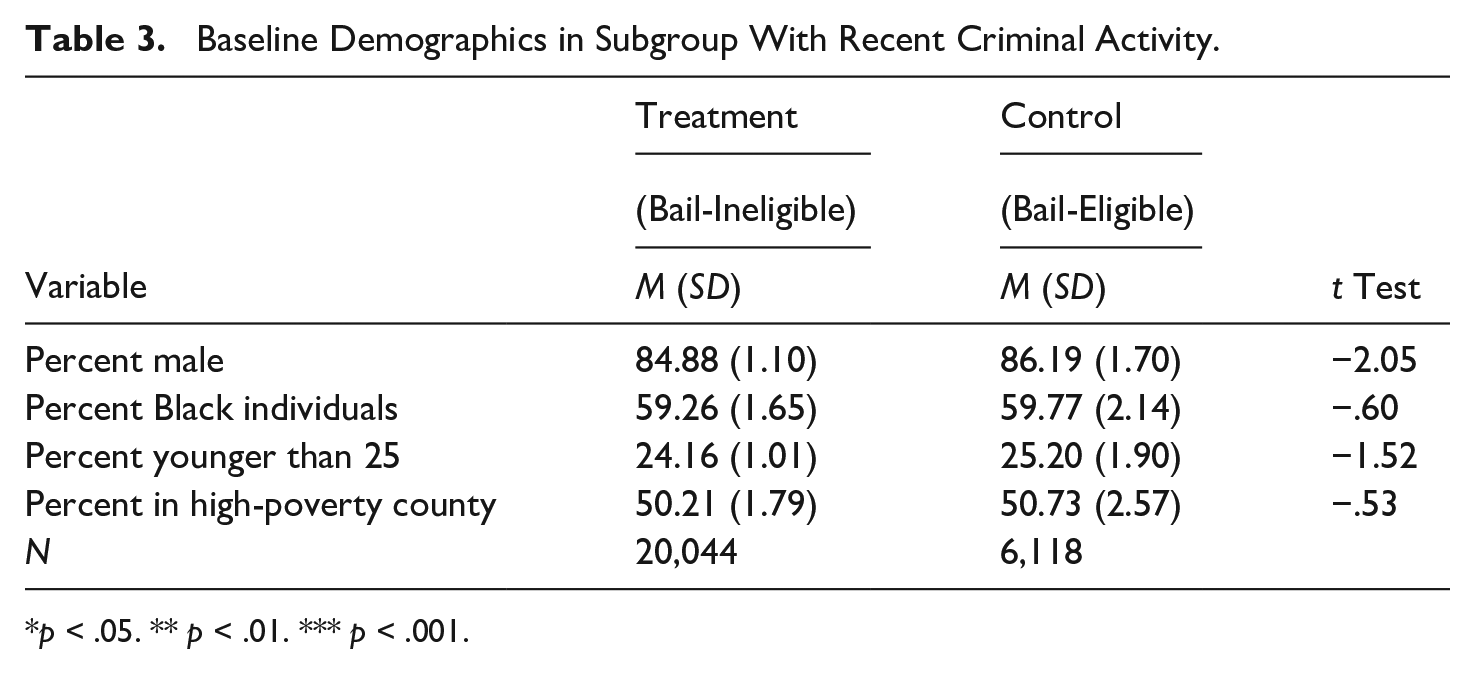
p < .05. ** p < .01. *** p < .001.
In the treatment group, following reform the monthly average increased by 7.72 percentage points for any re-arrest (t = 3.91, p < .01), 10.25 percentage points for felony re-arrest (t = 4.79, p < .01), and 6.28 percentage points for violent felony re-arrest (t = 5.09, p < .01). In the control group, post-reform, the monthly average increased by 2.46 percentage points for any re-arrest (t = 1.64, n.s.), 3.55 percentage points for felony re-arrest (t = 2.21, p < .05), and 3.18 percentage points for violent felony re-arrest (t = 4.16, p < .01).
Findings from the CITS models for the subgroup of individuals with recent criminal history are presented in Table 4, with model estimates graphically shown in Figure 3. Post-reform, there were significant increases in the treatment group in felony re-arrest (b = 2.08, p < .01) and violent felony re-arrest (b = .1.27, p < .001), whereas in the control group, there were also increases—albeit smaller—in felony re-arrest (b = 1.16, p < .05) and violent felony arrest (b = .54, p < .05). However, when the post-reform increases in the treatment and control groups were compared, the only statistically significant difference was found for violent felony re-arrest (b = .73, p < .05).
Controlled-Interrupted Time Series Models: Pretrial Re-arrest Among Subgroup With Recent Criminal Activity (November Interruption).
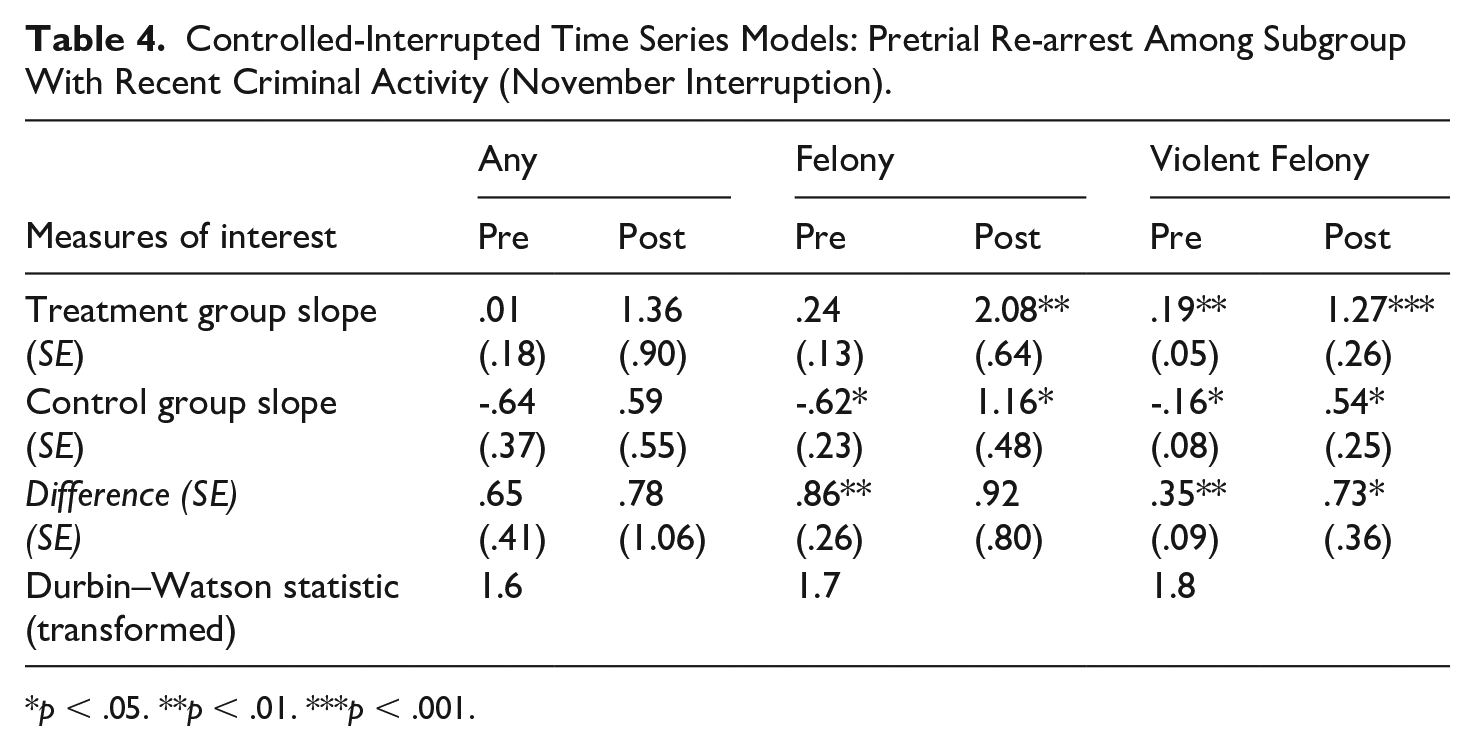
p < .05. **p < .01. ***p < .001.
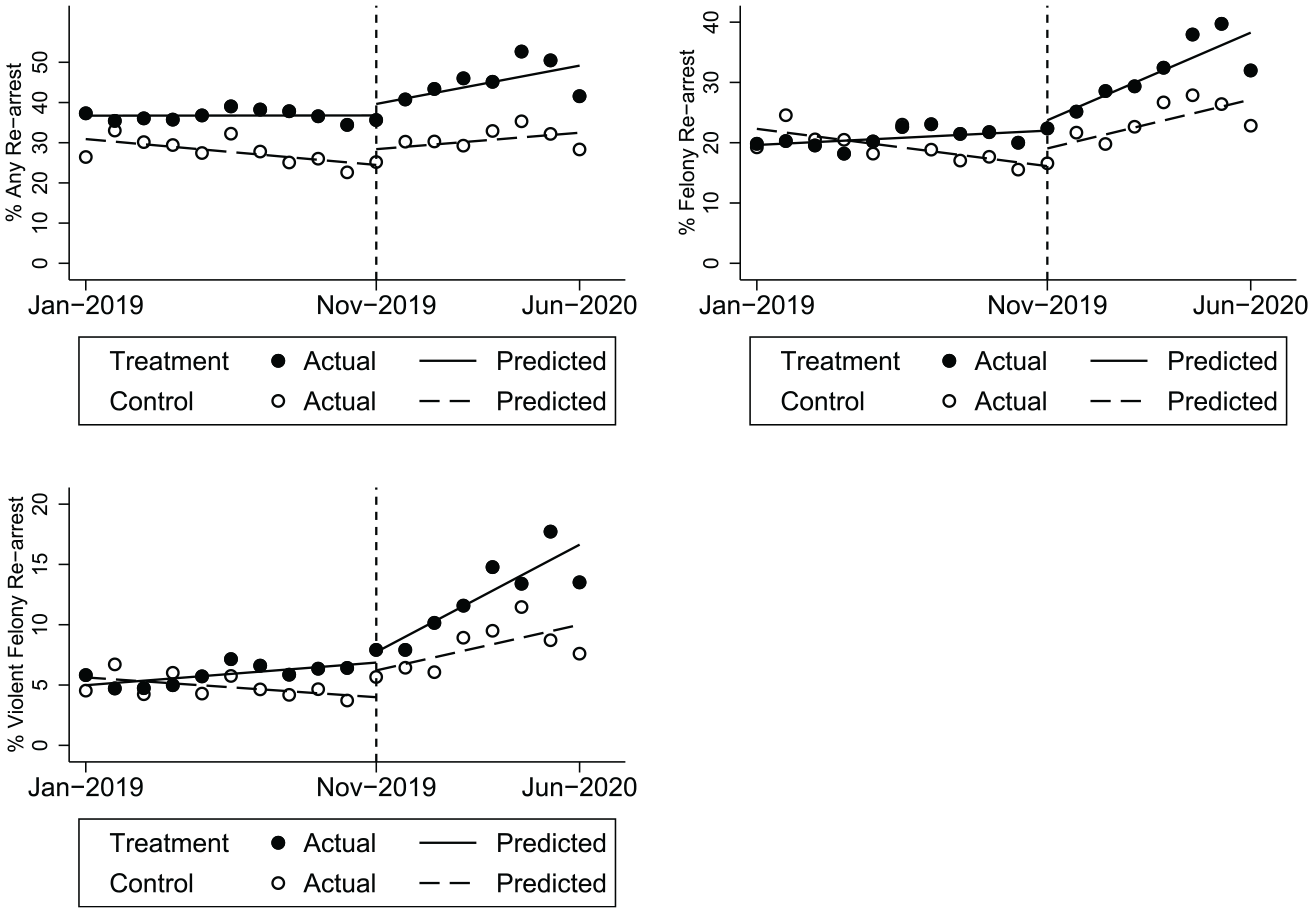
Controlled-Interrupted Time Series Models: Pretrial Re-arrest Among Subgroup With Recent Criminal Activity (November Interruption).
While this result indicates that post-reform violent felony re-arrests increased at a steeper rate in the treatment group than the control group, this divergence may have begun pre-reform, violating the parallel trends assumption. With CITS models, this assumption can be statistically tested by comparing pre-intervention trends. For violent felony re-arrests, the pre-intervention difference between the treatment and control groups was statistically significant (b = .35, p < .01), indicating that the finding may be biased due to nonparallel pre-intervention trends.
Anticipatory Effects
To account for possible anticipatory changes in bail-setting practices, we repeated our main analyses but moved the interruption date up from November 2019 to July 2019. For the full population, findings are shown in Table 5, with model estimates graphically presented in Figure 4. Post-reform, there were significant increases in the treatment group in felony re-arrest (b = .71, p < .05) and violent felony re-arrest (b = .45, p < .01), whereas in the control group, there were increases in any re-arrest (b = .38, p < .05), felony re-arrest (b = .52, p < .01), and violent felony arrest (b = .31, p < .01). No differences were found between the treatment and control groups.
Controlled-Interrupted Time Series Models: Pretrial Re-arrest Among Full Population (July Interruption).
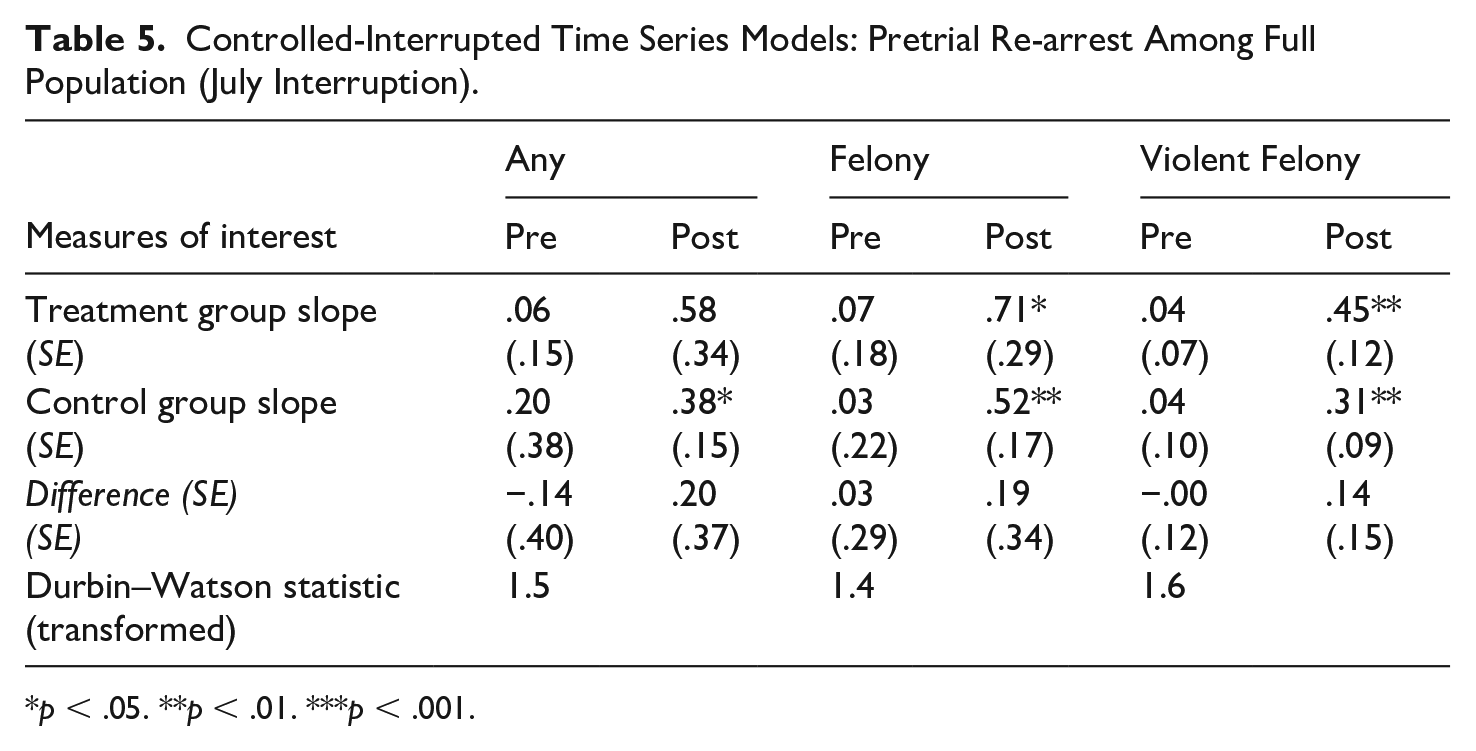
p < .05. **p < .01. ***p < .001.
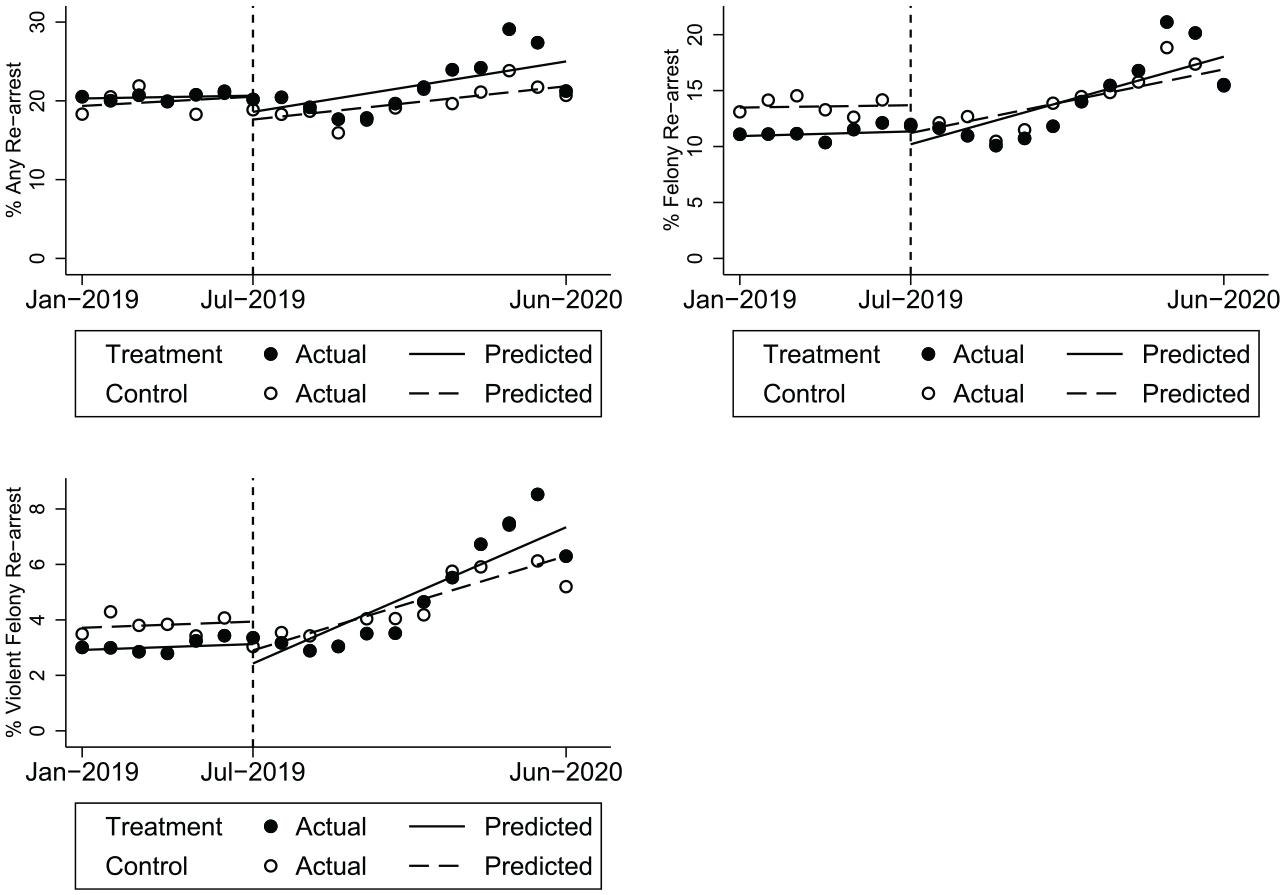
Controlled-Interrupted Time Series Models: Pretrial Re-arrest Among the Full Population (July Interruption).
For the subgroup with recent criminal activity, findings are shown in Table 6, with model estimates graphically shown in Figure 5. Following the reform, there were significant increases in the treatment group in any re-arrest (b = 1.12, p < .05), felony re-arrest (b = 1.51, p < .01), and violent felony re-arrest (b = 1.01, p < .001), whereas in the control group, there were smaller increases in any re-arrest (b = .63, p < .05), felony re-arrest (b = .88, p < .01), and violent felony arrest (b = .56, p < .001). As with the earlier models specified with a November interruption date, the only statistically significant difference between the treatment and control groups was for violent felony re-arrest (b = .45, p < .05). Importantly, however, with the earlier July interruption date, the difference in the pre-intervention violent felony re-arrest trends was not statistically significant (b = .28, p >.05), satisfying the parallel trend assumption.
Controlled-Interrupted Time Series Models: Pretrial Re-arrest Among Subgroup With Recent Criminal Activity (July Interruption).
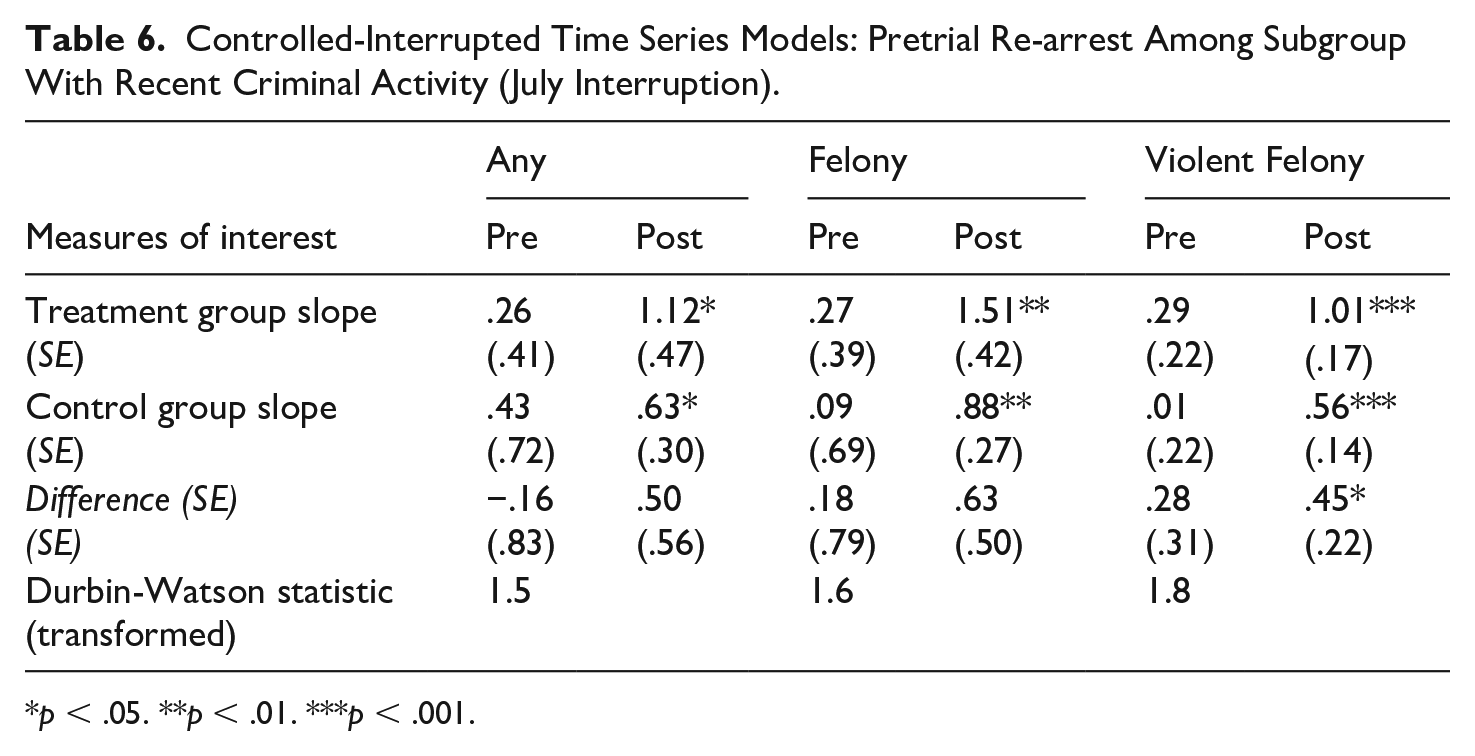
p < .05. **p < .01. ***p < .001.
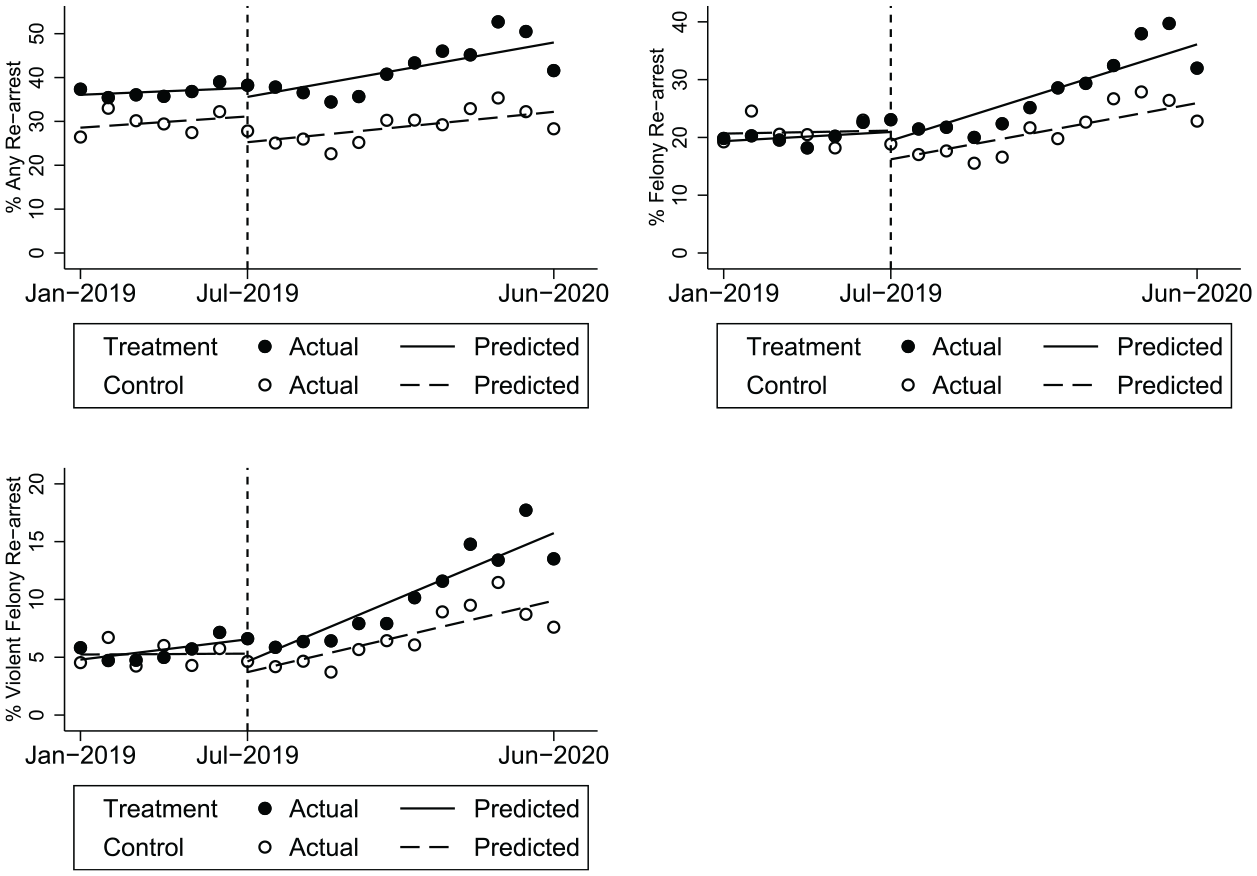
Controlled-Interrupted Time Series Models: Pretrial Re-arrest Subgroup With Recent Criminal Activity (July Interruption).
Discussion
In 2019, New York enacted a bail reform law limiting judges’ discretion to set bail or impose pretrial detention for certain offenses. Evaluating the impact of the new law was challenging due to the reform’s inclusion of additional provisions beyond the bail eligibility requirement, and the substantial disruptions to the criminal justice process caused by the COVID-19 pandemic shortly after the law took effect. To isolate the impact of the new law amid these changes, we used CITS models to compare recidivism rates before and after reform and between treatment (bail-ineligible) and control (bail-eligible) groups.
For the overall sample, we found that eliminating the option to set bail for certain offenses had no discernable effect on three measures of pretrial recidivism: any re-arrest, felony re-arrest, and violent felony re-arrest. However, because the likelihood of receiving bail was already low for the overall bail-ineligible population pre-reform, we sought to evaluate the impact of the new eligibility requirements in a high-risk population: individuals with recent criminal history defined as having a pending case. Pre-reform, these individuals were about twice as likely to have been bailed when charged with an ineligible offense, consistent with the inclusion in New York City pretrial risk assessment tool of “pending case” as a risk factor for pretrial misconduct (Peterson, 2020). For this subgroup, we found that the reform was associated within an increase in the rate of violent felony re-arrests, amounting to about three-quarters of a percentage point (b = .73, p < .05) per month over the post-intervention period.
In a CITS model, a significant difference in pre-intervention treatment and control trends would indicate a violation of the parallel trends assumption, potentially biasing the findings (Lopez-Bernal et al., 2018). For our main models, the interruption date was specified as November 2019 due to the sharp decrease in bail use around this time among ineligible offenses. With this model specification, among the subgroup of defendants with recent criminal activity we found that the pre-intervention trends in violent felony arrest were not strictly parallel, raising doubts about whether the post-intervention effect was causally related to the reform. However, when we ran robust checks to account for anticipatory changes in bail use evident in July, a similar increase in violent felony re-arrests of about one half of a percentage point per month (b = .45, p < .05) was found while the parallel trend assumption held—providing support for a causal interpretation of the findings.
Our results were broadly consistent with two prior matched-comparison group studies, which showed an increase in recidivism among a subset of high-risk defendants in New York City (Ropac & Rempel, 2023) and in upstate New York (Ropac, 2024). In contrast, two prior synthetic control group studies found that the reform had a null effect overall. Several features of these two studies may account for the divergent findings: (a) the outcome measures were aggregate-level incident crime as opposed to individual-level recidivism, (b) the control groups comprised jurisdictions outside New York, whose varying responses to the COVID-19 pandemic may have impacted crime differentially (Massenkoff & Chalfin, 2022), (c) the impact of the offense-based bail eligibility requirement was not isolated, and (d) high-risk subgroup differences were not explored.
Across the United States, various approaches have been taken to reduce reliance on bail, including establishing a presumption of release, adopting risk assessment tools, and requiring judges to consider a defendant’s ability to pay (Jorgensen & Smith, 2021). Unlike these approaches—which allow for broad judicial discretion to consider an individual’s criminal history—New York’s initial reform was based exclusively on the instant offense type. Although subsequent amendments reinstated discretion to consider certain aspects of a person’s criminal history (Rodriguez & Rempel, 2023), others shown to be associated with higher pretrial recidivism remain excluded from consideration (Ropac & Rempel, 2023).
For policymakers, the results point to a potential risk of the particular type of reform evaluated here—specifically, an exclusively offense-based approach to bail eligibility was found to be associated with higher risk of violent pretrial recidivism among defendants with recent criminal activity. To mitigate this risk, policymakers should consider alternative approaches to reform that either preserve judicial discretion to weigh an individual’s recent criminal history or include enhanced pretrial support and supervision for individuals with such risk factors.
Limitations
This study has several limitations. First, our outcome measures were restricted to pretrial recidivism within six months of arraignment. This approach allowed us to test whether restricting the option to bail or detain resulted in a reduced deterrent or incapacitative effect during the pretrial period (Yang, 2017). However, more than half of the cases were not resolved within six months (the median time to disposition was 170 days), meaning a significant portion of the overall time at risk for pretrial re-arrest was not captured. In addition, these measures did not account for the possible long-term criminogenic effects of pretrial detention following release (Dobbie et al., 2018; Gupta et al., 2016; Heaton et al., 2017; Leslie & Pope, 2017; Mueller-Smith, 2015). Second, the study did not directly test the effect of bail but rather the elimination of discretion to set bail based on offense type. While this approach allowed us to evaluate the law’s overall effect in practice, it also meant that the findings partly reflected how discretion was exercised by New York City judges during the study period. Third, although covariate balance between the treatment and control groups is not required within a CITS framework (Lopez-Bernal et al., 2018), differences in characteristics across these groups may introduce bias. While we observed substantial demographic differences in the full population, among the subgroup with recent criminal activity baseline demographics were balanced. That said, unobserved differences between groups remain a potential source of bias. Fourth, the dataset used here tracked only whether individuals were re-arrested pretrial, not the number of times a person was re-arrested. Finally, the CITS design assumes that pre-intervention trends would have continued in the absence of the reform—a counterfactual that cannot be verified.
Conclusion
Under New York’s initial bail reform law, discretion to set bail or impose pretrial detention was conditioned solely on offense type. Leveraging this straightforward rule, we were able to separate defendants into treatment (bail-ineligible) and control (bail-eligible) groups based on bail eligibility. CITS models were then used to compare recidivism rates before and after reform and between the treatment and control groups. While no effect was detectable in the general population, among defendants with a recent criminal history, we found a statistically significant increase in violent felony pretrial re-arrests. Importantly, the effect was found when compared with a credible counterfactual with similar baseline demographic characteristics and parallel pre-reform trends. Overall, the findings indicate that eliminating bail and pretrial detention for certain offenses—mostly misdemeanors and nonviolent felonies—was associated with increased violent pretrial recidivism among individuals with recent criminal activity. For policymakers, these findings suggest that bail reforms should either preserve judicial discretion to consider recent criminal history or provide enhanced pretrial support and supervision for individuals released with such risk factors.
Footnotes

Funding
The author(s) disclosed receipt of the following financial support for the research, authorship, and/or publication of this article: Arnold Ventures grant.
Declaration of Conflicting Interests
The author(s) declared no potential conflicts of interest with respect to the research, authorship, and/or publication of this article.
Data Availability Statement
Availability of Data and Code
All analyses were based on publicly available data and all code can be made available.