






Abstract
This pilot study explores judges’ perceptions of the Youth Assessment and Screening Instrument (YASI), a risk and needs assessment tool used in juvenile court disposition decisions. Survey data from 42 judges across three U.S. states reveal that while judges view these tools as beneficial for standardizing evaluations and supporting rehabilitation efforts, they expressed concerns that overreliance could overlook individual circumstances and may not adequately account for changes over time. Perceptions varied by judicial experience and gender, particularly regarding fairness, implementation support, and data accuracy. Judges emphasized the need for consistent training, quality assurance measures, and feedback from youth and families, offering recommendations to improve YASI’s utility and effectiveness. These findings contribute new insights into judicial perceptions of assessment tools and enhance understanding of how judges engage with structured decision-making instruments to improve judicial decision-making and youth outcomes in juvenile justice.
Introduction
Risk and need assessment (RNA) tools have become central to evidence-based decision-making in juvenile justice systems, with the majority of states having implemented standardized instruments to inform disposition decisions (Juvenile Justice Geography, Policy, Practice & Statistics [JJGPS], 2020). These actuarial tools, like the Youth Assessment and Screening Instrument (YASI) and Youth Level of Service/Case Management Inventory (YLS/CMI), are designed to provide data-driven information about a youth’s likelihood of reoffending and their criminogenic needs (Jones et al., 2016; Onifade et al., 2008; T. Scott et al., 2019). RNA tools offer significant advantages over clinical judgment alone, including improving consistency in decision-making, reducing bias, and enhancing youth outcomes (Goel et al., 2021; Jonnson & Viljoen, 2021; Maloney & Miller, 2015; Schwalbe, 2008; Viljoen et al., 2025). However, despite these potential advantages, there have been mixed views about the reliability and predictive validity of these tools, including the risk of perpetuating existing biases present in the historical data, and challenges in ensuring these tools work equally well across diverse populations (Barnes-Lee & Petkus, 2023; Berk, 2019; Garrett & Monahan, 2020; Jones et al., 2016; Viljoen et al., 2018). The effectiveness of RNA tools depends not only on their predictive accuracy, but also on how well they are understood, accepted, and utilized by actors who have access to their results (Applegarth et al., 2023; Shook & Sarri, 2007). When decision makers lack confidence in or understanding of these tools, they may disregard assessment results, apply them inconsistently, or potentially undermine the very benefits that these instruments provide, namely reducing bias and improving consistency, which is significantly diminished (McPhee et al., 2023; Vincent et al., 2012). Understanding judicial perceptions, in particular, is essential for ensuring effective implementation and addressing barriers to appropriate tool utilization in practice.
In juvenile court, where judicial discretion remains central, judges serve as the primary users of RNA information to inform disposition decisions. Research examining judicial perceptions of RNA tools remains limited, with few studies specifically including juvenile court judges in their samples (Jonnson & Viljoen, 2021; McPhee et al., 2023; C. K. Scott et al., 2017; Shook & Sarri, 2007). Among the existing studies, Shook and Sarri (2007) surveyed approximately 53 juvenile court judges and found general support for structured decision-making tools, though many judges reported overriding RNA recommendations based on their own assessments or external constraints. More recently, McPhee and colleagues (2023) conducted a hypothetical vignette-based experiment with judges and probation officers to examine how RNA results may influence home versus out-of-home placement decisions. Their findings suggest that decision makers often rely on RNA results as heuristic indicators of future delinquency, and that these interpretations are highly individualized and inconsistent across users. Overall, the available evidence suggests that judges generally recognize the value of these tools, viewing them as useful aids that can inform but not replace their judicial discretion in disposition decisions (Jonnson & Viljoen, 2021; C. K. Scott et al., 2017). Yet, perceptions of an RNA tool’s value and its frequency of use are positively related.
Some evidence suggests that judicial perceptions and implementation experiences may vary significantly based on individual characteristics such as experience level and demographic background (McPhee et al., 2023; Miller & Maier, 2008). To date, little is known about whether and how individual differences among judges in juvenile court shape their perceptions of these tools’ benefits, limitations, and reliability. This gap is particularly important because judges bring diverse professional experiences, training backgrounds, and perspectives to their roles, which may influence their adoption and use of evidence-based tools. Understanding this variation is useful for developing targeted training and implementation strategies that address diverse judicial needs and concerns (Applegarth et al., 2023; Garrett & Monahan, 2020; McPhee et al., 2023).
To address this gap, this study contributes to the field’s preliminary knowledge about RNA tools by revealing significant differences in how judges with varying experience levels and demographic characteristics perceive these tools. Specifically, this study focuses on judicial perceptions of the YASI, which is widely implemented across multiple states and represents one of the most commonly used standardized RNA tools in juvenile courts. The research questions include: (1) What do judges perceive as the primary benefits and limitations of using RNA tools? (2) What factors would increase judicial confidence in RNA reliability? And (3) what improvements do judges believe would enhance its effectiveness? In examining these research questions, this exploratory study aims to contribute to the limited but growing body of research on judicial perceptions of RNA tools. While the small sample precludes broad generalizability, findings from understudied populations and contexts are valuable for orienting future research, identifying patterns of further investigation, and informing training and implementation efforts in juvenile justice practice.
Method
Sample and Recruitment Procedures
This study was conducted following the protocol reviewed and approved by the Child Trends Institutional Review Board. Data collection took place over a 5-month period in 2025 with juvenile court judges in three states located in the Midwest and East Coast of the United States. These states were selected because they utilize the YASI in juvenile court disposition decisions, an instrument with demonstrated predictive validity for juvenile recidivism that has been widely adopted across multiple jurisdictions (Jones et al., 2016; Schneider, 2018; T. Scott et al., 2019). The survey was designed to deepen understanding of the circumstances under which judges perceive the YASI as beneficial or limited in making disposition decisions and to identify improvements judges believe would enhance its effectiveness.
This survey instrument was adapted from Garrett and Monahan’s (2020) survey methodology to examine criminal court judges’ perceptions of risk assessment tools in sentencing decisions. Their instrument included six close-ended questions examining perceptions of risk assessment, familiarity with assessment tools, frequency of use, reliance on judicial experience versus assessment results, availability of sentencing alternatives, and potential changes in sentencing practices. We adapted this framework for the juvenile justice context, modifying questions to focus specifically on the YASI and disposition decisions rather than adult sentencing. Response options for perceived benefits and limitations were expanded based on key themes identified in the juvenile risk assessment literature, including predictive validity across populations (Jones et al., 2016) and implementation challenges (Viljoen et al., 2018). This approach allowed us to build upon an established survey instrument while tailoring it to the unique context of juvenile court proceedings.
Given the absence of publicly available datasets identifying which judges oversee juvenile delinquency cases, court websites were systematically reviewed across all counties in the three selected states to compile contact information for court clerks. This process identified 431 judges who oversee juvenile delinquency cases across the three states. Court clerks were emailed and followed up by phone call to confirm the direct contact information for judges who oversee delinquency cases. Surveys were distributed via physical mail to the court’s physical location, addressed to the respective judge. Each mailed survey packet included a paper questionnaire, a pre-stamped return envelope, and a QR code linking to an online version of the survey. Participation was voluntary with no compensation provided. To be eligible for participation, judges were required to meet two criteria assessed through screening questions at the beginning of the study: (1) prior experience with the YASI in juvenile court proceedings, and (2) current oversight of delinquency cases. A total of 42 judges completed the survey across the three states, yielding a response rate of 9.7%, comprising the final analytical sample.
Survey Measures
Benefit response options included: (1) provides a standardized and objective evaluation of the youth’s risk level, (2) supports rehabilitation efforts by targeting or recommending interventions and services tailored to individual risk factors, (3) increases fairness and consistency in the disposition process, (4) promotes accountability and transparency in the justice system, (5) contributes to better outcomes by reducing recidivism rates, and (6) other benefits. Limitation response options included: (1) overreliance on risk assessments could overlook individual circumstances, (2) risk assessments may not adequately account for changes in behavior or circumstances over time, (3) risk assessments do not work equally well for all populations or contexts, (4) risk assessments may lead to labeling and stigma for youth, (5) risk assessments may perpetuate biases, (6) there is not enough support for justice professionals to understand how to use risk assessments correctly, (7) risk assessments are not based on high-quality, accurate data, (8) risk assessments lead to more restrictive dispositions, and (9) other limitations. In addition, judges responded to the optional open-ended question, “When have you found the YASI particularly helpful and unhelpful in making a disposition decision?”
Analytical Strategy
Given the exploratory nature of this study and the multiple comparisons conducted, findings should be interpreted as preliminary patterns warranting further investigation rather than confirmatory results. Descriptive statistical analyses were conducted for all study variables to examine patterns and relationships. Missing data were excluded from analyses and reported for each survey item that included a valid response. Inferential statistics included chi-square tests to examine associations with the gender variable and t-tests to assess relationships with years of judicial experience. For open-ended questions, responses were summarized and included in the results for additional context.
Results
Table 1 shows sample descriptives for the 42 juvenile court judges. On average, judges had 7.44 years (SD = 6.72) of experience as juvenile court judges, ranging from 0.5 years to 25 years. Respondents were predominantly male (54.8%) and White (83.3%).
Sample Descriptives (n = 42).
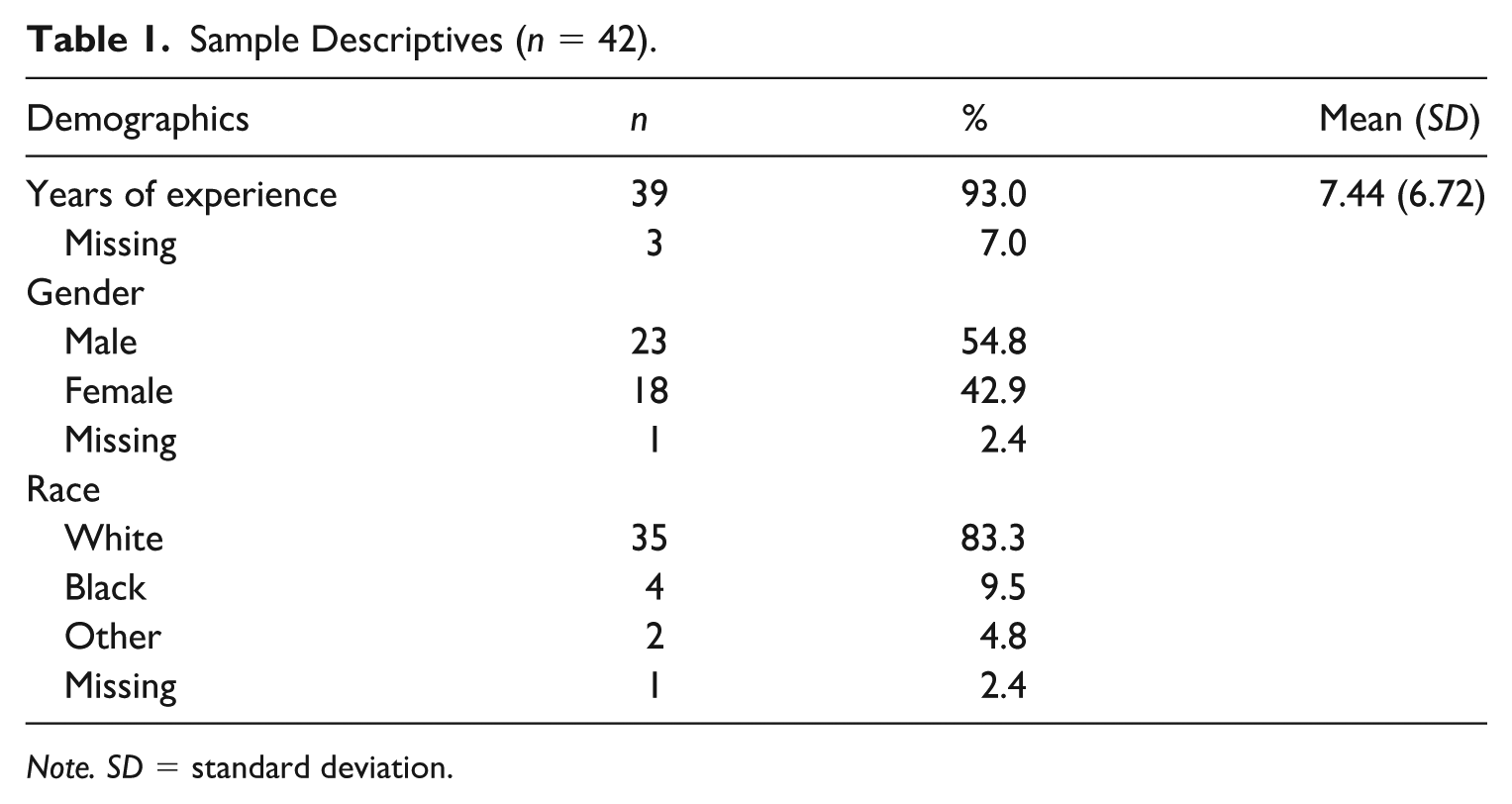
Note. SD = standard deviation.
Perceived Benefits and Limitations
Table 2 shows the perceived primary benefits and limitations of using the YASI in disposition decisions. For benefits (n = 41, 97.6%), judges most frequently identified providing a standardized and objective evaluation of the youth’s risk level (70.7%), followed by supporting rehabilitation efforts by targeting interventions and services tailored to individual risk factors (58.5%). The third most commonly cited benefit was increasing fairness and consistency in the disposition process (56.1%). Notably, female judges were significantly more likely than male judges to endorse increasing fairness and consistency in the disposition process (females = 14, males = 9, χ2 = 6.12, p < .05).
Benefits and Limitations of Using the YASI (n = 41).
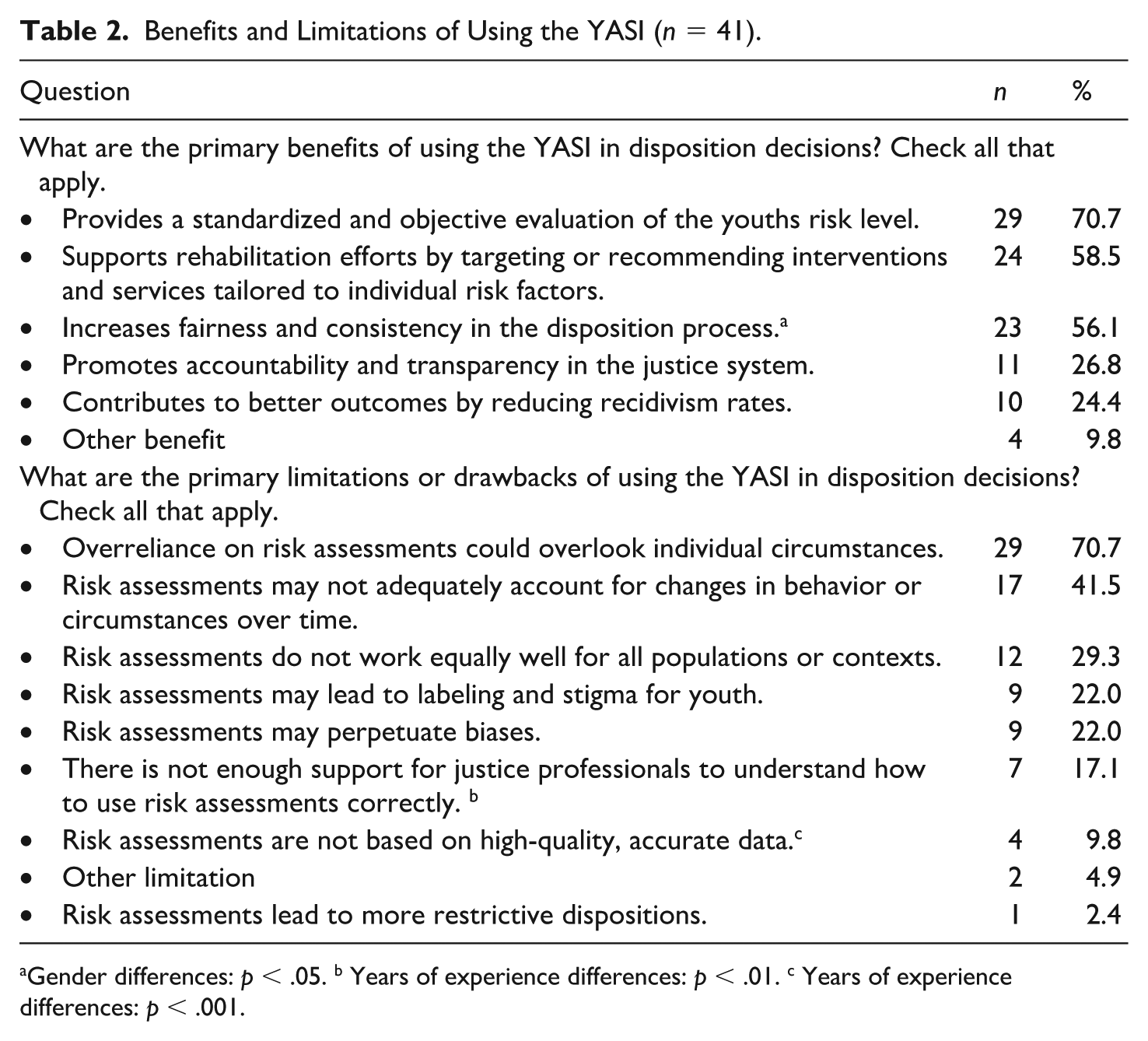
Gender differences: p < .05. b Years of experience differences: p < .01. c Years of experience differences: p < .001.
Regarding limitations or drawbacks of using the YASI (n = 41, 97.6%), the top response was overreliance on risk assessments could overlook individual circumstances (70.7%). Less than half of the sample also reported that risk assessments may not adequately account for changes in behavior or circumstances over time (41.5%), followed by risk assessments do not work equally well for all populations or contexts (29.3%). Notably, there were two statements that showed statistical differences by years of judicial experience. Judges who agreed that “There is not enough support for justice professionals to understand how to use risk assessments correctly” had significantly fewer years of experience (M = 3.20, SD = 0.58) than those who disagreed (M = 7.86, SD = 6.77), t(26.19) = 3.21, p < .01. Similarly, those who agreed that “Risk assessments are not based on high quality, accurate data” also had significantly fewer years of experience (M = 1.67, SD = 0.58) than those who disagreed (M = 7.72, SD = 6.77), t(35.65) = 5.08, p < .001.
In response to the open-ended question asked when judges found the YASI particularly helpful and unhelpful in making disposition decisions, judges (n = 16, 38.1%) described several contexts. Overall, judges perceive that risk assessments are helpful for supporting disposition decisions, providing information on family dynamics and mental health issues, and informing the selection of services. One judge noted that YASI is a piece of information they rely upon in making disposition decisions because more information leads to a more informed disposition. In addition, when risk assessments are incorporated into a comprehensive case planning approach, court orders are guided by a case plan that integrates input from the youth, the YASI, and the case workers’ knowledge of available resources. On the other hand, judges noted that the risk assessment tool is unhelpful for more serious cases. For example, one judge stated that the tool is “unhelpful in serious violent felonies that include specific intent elements or involve gun or sexual violence.” It can also be unhelpful when there appears to be significant information missing or the behavior of the youth does not match the risk level in the present.
Factors to Increase Confidence
Figure 1 displays the factors judges identified as most important for increasing their confidence in YASI reliability (n = 35, 83.3%). The most frequently endorsed factors were consistent training and certification requirements for professionals administering assessments (45.2%) and quality assurance measures to monitor and address any discrepancies or biases in assessment practices (42.9%). The third factor to increase judges’ confidence in the YASI is to incorporate feedback from young people and their families regarding the assessment process (40.5%).
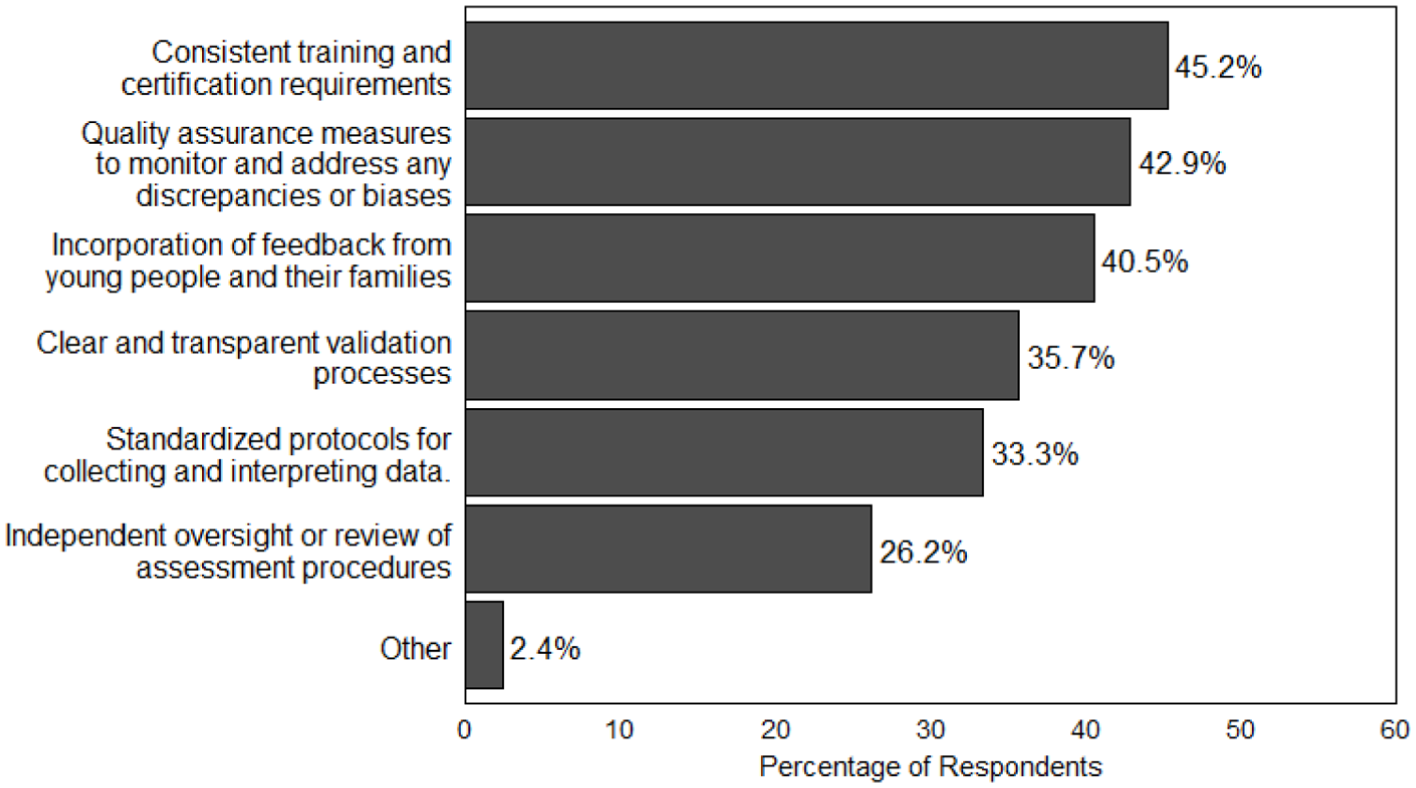
Plot of factors to increase judicial confidence in the YASI reliability (n = 35)
Risk Assessment Improvements
In response to the open-ended question about improvements to the YASI, judges (n = 12, 28.6%) proposed several enhancements to improve the utility and effectiveness of the YASI in juvenile court proceedings. First, they emphasized the need for improved inter-rater reliability to ensure consistent administration and scoring. Second, they recommended reducing assessment bias through more carefully constructed questions and comprehensive literacy evaluations of youth participants. Third, judges requested the inclusion of concise executive summaries to facilitate judicial review. Two judges specifically pointed out the “boilerplate language” of standard risk assessment terminology, with one explaining, Maybe have an easy glance summary section at the beginning so you can see it quickly and understand it when you know what you’re looking at, but don’t have to sift through what is quite a lot of boilerplate language.
In addition, judges identified two areas requiring enhanced attention: more comprehensive mental health screening and greater consideration of how socioeconomic disadvantage and child welfare system involvement may influence risk assessment outcomes.
Discussion
This study examined juvenile court judges’ experiences with the YASI through a survey of 42 judges across three states. The survey focused on three research questions: what judges perceive as the primary benefits and limitations of using the YASI, what factors would increase judicial confidence in the YASI’s reliability, and what improvements judges believe would enhance their effectiveness. While focused specifically on the YASI, the findings provide important insights into judicial perspectives on risk assessment implementation and use more broadly, with implications for understanding how judges perceive and utilize risk assessment tools in juvenile justice decision-making.
In terms of perceived benefits, judges most frequently identified the standardization and objective evaluation of youth risk levels as the primary benefit of using YASI, with approximately 71% endorsing this aspect. This aligns with prior research showing that structured tools help reduce reliance on potentially biased clinical judgment (Fine et al., 2024; Jonnson & Viljoen, 2021; C. K. Scott et al., 2017), thereby addressing long-standing concerns about inconsistencies in discretionary decision-making in juvenile justice. Other benefits of the YASI include the emphasis on supporting rehabilitation efforts through targeted interventions and increasing fairness and consistency in dispositions. Both benefits further underscore judges’ support for evidence-based approaches to juvenile justice. Particularly, female judges were significantly more likely to value fairness and consistency than male judges, which may reflect different experiences with discretionary decision-making. In part, female judges may tend to favor more structured and procedurally protective approaches in decision-making contexts, potentially due to both personal experiences and differing orientations toward fairness norms (Harris & Sen, 2019).
The equally high concern about overreliance of the YASI reflects ongoing tension in risk assessment literature between actuarial precision and individualized justice (Berk, 2019). This suggests that judges are attempting to balance evidence-based decision-making with the flexibility needed to address unique case circumstances. Furthermore, judges with more years of experience showed differences in their perceptions about the limitations of RNA. Newer judges were more likely than judges with more judicial experience to agree that there is not enough support for justice professionals to understand how to use these tools correctly and that these tools are not based on high-quality, accurate data. These preliminary findings suggest that newer judges may benefit from enhanced training, though this pattern requires validation with larger samples. Judges with more years of judicial experience appear to have developed greater confidence in both the underlying data and their ability to use risk assessments. This pattern may reflect the learning curve associated with risk assessment adoption, where initial skepticism decreases as judges gain experience interpreting results and observing outcomes over time (Hartmann & Wenzelburger, 2021).
The absence of individual-level differences across many other survey items itself is a meaningful finding. Judges largely converged in their perceptions of YASI’s core benefits and limitations, particularly the value of standardization and the concern about overreliance. This convergence suggests that certain experiences with the YASI may be systemic rather than shaped by individual characteristics, implying that key implementation challenges, such as clearer reporting formats and stronger training infrastructure, are likely to resonate across the judicial population broadly rather than among specific subgroups. It should be noted, however, that the limited sample size reduces statistical power to detect smaller individual-level differences, and the future research with larger samples should examine whether this convergence holds or whether more nuanced patterns emerge. Moreover, research may explore how judicial attitudes toward RNA tools relate to actual dispositional decision-making, specifically, whether judges who express greater confidence in the YASI make systematically different deposition decisions than those who are more skeptical.
The overall findings have several important implications for juvenile justice practice and policy. These findings suggest that trainings may benefit from emphasizing the appropriate role of risk assessments, the benefits and limitations of its use, and tools or guidance to support dispositional decisions. To increase judges’ confidence in the use of the YASI, judges identified consistent training and certification requirements, quality assurance measures, and incorporating feedback from youth and families. While the first two factors closely align with the best practices identified in the broader RNA literature for institutional support (Garrett & Monahan, 2020; Shook & Sarri, 2007; Viljoen et al., 2018; Vincent et al., 2018), the third factor raises important questions about the relationship between procedural justice elements and actuarial integrity. Judges’ preference for incorporating youth and family feedback may reflect a desire for procedural fairness in the assessment process, though how such input could be meaningfully integrated without compromising the evidence-based, objective nature of the RNA tools remains an open question for further research investigation.
Notably, judges’ comments that risk assessments are unhelpful for more serious cases suggest that once a youth is classified as high risk, judges face the complex challenge of determining a disposition. Research indicates that these cases may have a limited range of appropriate interventions available (Applegate et al., 2000; Petkus et al., 2022). This highlights the need for training programs to not only focus on the interpretation of risk assessment results, but how to effectively utilize this information when community-based alternatives may be insufficient and more intensive interventions are required. Judges’ suggestions for improvement, particularly the need for concise executive summaries, providing concrete guidance for tool developers and implementing agencies. Presenting key risk assessment information and interpretation may help to facilitate rapid judicial review while maintaining necessary technical accuracy.
Relatedly, policymakers should consider requiring systemic evaluation of judicial perceptions and user experiences with the RNA implementation processes. Regular feedback collection would create opportunities to address the specific quality concerns judges raised, including working with assessment developers (Applegarth et al., 2023) to create more carefully constructed questions and comprehensive literacy evaluations of youth participants, while simultaneously implementing quality assurance measures to improve inter-rater reliability and ensure consistent administration and scoring across different court contexts. Such systematic monitoring could also identify patterns where assessment results do not align with judicial observations (Petkus et al., 2022; Schaefer & Williamson, 2018), potentially revealing issues with tool calibration or implementation.
This study was designed as an exploratory investigation given the limited empirical research on judicial perceptions of RNA tools specifically, and the absence of validated survey instruments for this population. Rather than testing pre-specified hypotheses, the goal was to identify patterns and generate hypotheses that could inform future research. As such, the findings should be interpreted as preliminary in nature. The sample size of 42 judges is consistent with challenges in surveying judicial populations, which may introduce selection bias if responding judges differ systematically from non-responding judges in their experiences with or attitudes toward the YASI. This low response rate limits the generalizability of results and power to detect smaller effect sizes in subgroup analyses. In addition, the survey design did not allow for examination of how judges’ perceptions relate to their actual use of YASI results in disposition decisions. Future research should build upon these preliminary findings with larger, more representative samples to validate these patterns and examine additional indicators that may influence judicial perceptions and use of RNA tools.
Conclusion
RNA tools represent a significant advancement in evidence-based juvenile justice practice and procedural justice, but their effectiveness depends critically on user acceptance and appropriate implementation (Garrett & Monahan, 2020). Most research treats judicial users as a homogeneous group, potentially overlooking important individual differences that could inform more effective training and implementation strategies. Successful implementation and use of RNA tools will require ongoing attention to training, quality assurance, and institutional support that enable judges to use information effectively in disposition decisions while maintaining their essential judicial discretion. Our study’s preliminary findings underscore that effective use of RNA tools requires balancing the benefits of standardized evaluation with careful attention to individual circumstances and judicial discretion. RNA tools are only one component of evidence-based practice that must be integrated thoughtfully within broader court processes and judicial decision-making frameworks.
Footnotes

Funding
The authors disclosed receipt of the following financial support for the research, authorship, and/or publication of this article: This project is funded by the National Science Foundation, grant #2244705. Any opinions, findings, and conclusions or recommendations expressed in these materials are those of the authors and do not necessarily reflect the views of the National Science Foundation.
Declaration of Conflicting Interests
The authors declared no potential conflicts of interest with respect to the research, authorship, and/or publication of this article.
Data Availability Statement
The data that support the findings of this study are not available due to confidentiality protections for study participants.