






Abstract
The Czech Republic’s socialist-era neighborhoods are largely intact twenty years after the end of Communist Party rule. These buildings will be rehabilitated, but not replaced, because of financial and logistical constraints. In the context of the country’s accession to the European Union in 2004 and the recent global economic crisis, this essay questions what can and should be done in an effort to make these neighborhoods better places to live in the present and the future. It starts with a brief history of postwar housing construction and socialist-era design methodologies, exploring postwar architectural practice and innovations in construction technology that were connected to the industrialization of housing production. The role of the Baťa Company in the development of panelák technology is described. In the context of post-socialist rehabilitation efforts, the discussion addresses current housing policy including regulated rents and the shift in emphasis from renting to ownership. Government subsidies and grant programs are considered, as well as problems such as physical degradation and social segregation. The essay proposes that for the future the social and spatial ideas that were part of the original designs may be more important than the architectural style of individual buildings.
Twenty years after the end of Communist Party rule in former Czechoslovakia, its socialist-era residential neighborhoods are largely intact. Individual apartment buildings have been improved with new windows, better insulation, and brightly painted façades, but the era’s often maligned large-scale and repetitive building patterns remain. One particularly ubiquitous reminder of the past is the panelák or structural panel building—the prefabricated concrete apartment buildings that can be found in every city and town in the region. In these fully prefabricated buildings, every wall, floor, and ceiling panel is structural. Built by the thousands from the mid-1950s until the end of Communist Party rule in 1989, more than 30 percent of the inhabitants of today’s Czech Republic live in a panelák. 1
This housing legacy has become a challenge for the Czech Republic in the context of the country’s accession to the European Union (EU) in 2004 and the recent global economic crisis which slowed investment in housing construction and rehabilitation. Because of financial and logistical obstacles, postwar housing cannot be replaced en masse. As Czech architect Karel Maier writes, earlier ideas for “‘hard’ renewal by mass demolition and new replacement construction” have given way to plans for “upgrading” the existing housing stock. 2 At the same time, research by Czech sociologists and geographers has shown that some postwar neighborhoods are already suffering from physical decline and social problems including crime, unemployment, and segregation, particularly of Roma populations. 3 Thus, the question is what can and should be done in an effort to make socialist-era neighborhoods better places to live in the present and the future? This essay argues that potential solutions lie not only in improving the quality of public and shared spaces but also in an approach that integrates a historical understanding of the political, economic, and social logic that initially produced these buildings with a respect for the local patterns of everyday life that developed within them during and after socialism.
The necessity of asking such questions became clear while completing work on my recent book, Manufacturing a Socialist Modernity: Housing in Czechoslovakia, 1945-1960. 4 While I was writing, many of the buildings in the study were rehabilitated, leaving them altered and in some cases, barely recognizable. At the same time, other neighborhoods were showing signs of distress and lack of investment. This essay investigates the context and implementation of these changes since 1989. Starting with a brief history of postwar housing construction and socialist-era design methodologies, it proposes that as time passes the apartment blocks’ architectural style (of lack thereof) has become less important to their future livability than the social and spatial ideas that were part of the original designs. These included plans for walkable neighborhoods with parks, schools, shopping, community spaces, and public transportation, although in many cases the projects remained incomplete or poorly executed. Surprising to many, these architectural and urban planning strategies, as well as many prefabricated buildings themselves, have proven adaptable to the new political and social context of capitalism. Government subsidies and grant programs have paid for the rehabilitation of individual buildings and many neighborhoods have remained stable. Therefore, although architects long ago abandoned paneláks and other serial prefabricated building types, the socialist neighborhood as an urban typology is a legacy of state socialism worthy of further study and attention.
The Built Environment of Socialism
A common lament about the legacy of Communist Party rule in Europe is the damage done to the built environment. Particular ire is directed at what Hungarian historian Ivan T. Berend called “the expanding, grayish, prefabricated residential blocks” that constituted many postwar districts around the region. 5 These buildings were not just signs of increased production of new housing but also indicated the acceleration of urbanization in the region as residents moved from rural areas to towns and cities for work. According to United Nations statistics, 75 percent of the Czech population lived in urban areas in 1980, compared to only 54 percent in 1950. 6 These new residents were the first inhabitants of the industrially produced panelák districts, and many remain there today. 7
Scholars and the general public have long assumed that the Soviets were behind the spread of these concrete apartment buildings. This is not surprising given that much of what has been written about the postwar period focuses on high politics and Moscow’s directives to its satellites. 8 Among some architectural historians, outside influence and political pressure are often blamed for the gray, monotonous landscape. 9 Recent research by scholars working in a number of disciplines questions this top-down image of Soviet domination by focusing on the agency of local actors, the negotiations between the states and their citizens, and differences among regimes and national experiences. 10 For Czech and Slovak architects, the importance of what became known as the “Soviet model” depended on the prevailing political climate at a given time. However, with the exception of the socialist realist period in the early 1950s, architects were rarely pressured directly by politicians. 11 Instead, changes to professional and artistic practices were instigated locally by those who were sympathetic to the promise of the new socialist society, if not always to the operations of the Communist Party itself.
Some of the hallmarks of socialist-era architecture, such as prefabrication and mass production, actually pre-date state socialism by decades, especially in Czechoslovakia where the interwar building industry was among the most advanced in Europe. 12 Even the panelák itself has direct ties to capitalist-era experimentation in the Building Department at the famous Baťa Shoe Company, headquartered in the Moravian city of Zlín. Although professional life changed profoundly when a state-run system of architecture and engineering offices replaced private practice after the Communist takeover in 1948, the vast panelák neighborhoods in many Czech and Slovak cities are, in fact, the fulfillment of an interwar vision of modernity that emphasized the right to basic housing over the artistic qualities of individual buildings, in other words, function and efficiency over style. Thus, far from being pressured by Moscow to build standardized apartment blocks, many architects in Czechoslovakia embraced the opportunity to build housing on a scale and at a pace unknown before World War II.
Although widely associated with Soviet-style communism, large-scale prefabricated housing blocks were built in many European countries after 1945. They often became slums for the urban poor and immigrants in Western Europe. In the Soviet Union and the Eastern Bloc, the neighborhoods were home to young families and industrial workers. This is now changing in the Czech Republic and other post-socialist countries as slum conditions are beginning to emerge in areas where building maintenance and stable employment have been long-term problems. Even so, many postwar neighborhoods are popular and affordable options in the Czech Republic, especially in Prague and Brno where housing prices are high. 13
The use of prefabrication for mass housing was already a popular topic among avant-garde architects in Europe and the United States in the 1930s. Projects by German architects Ernst May and Walter Gropius and French architect Marcel Lods proved that despite individual successes, large-scale production would be much more difficult than anticipated. 14 Two French companies, Camus and Coignet, designed and built multistory structural panel buildings as early as 1948. The Camus system was used to rebuild sections of Le Havre in 1949 and the company reported building eight housing units a day around Paris by 1956. 15 Three hundred housing units in Evreux were built with the Coignet system in 1955. The following year these buildings appeared in the Czechoslovak journal Architektura ČSR (Czechoslovak Architecture), where the system was described as “similar” to Czechoslovak paneláks, although there is no evidence of any connection between the French companies and architects in Czechoslovakia. 16 Eventually the Camus Company achieved some success in Western Europe, producing 20,000 units a year in the 1960s. 17
Soviet architects working in state-run research institutes had also been experimenting with fully prefabricated multistory apartment buildings since the 1930s. Unlike many modernists who understood prefabrication as a method to bring quality design to more people, Soviet architects took a pragmatic approach to the technology. It was a possible solution to the widespread housing shortages that were hindering the economy and creating discontent among the population. Soviet architects made some progress with prefabrication techniques by the late 1940s, but they had still not found a viable nationwide technical solution to fully replace typical masonry construction. 18 In an interesting twist, the Soviet Union was the site of the Camus Company’s greatest success when, frustrated by a lack of results, the government commissioned the company to build 380 panel factories starting in 1959. 19 Thirty million Soviet housing units were eventually constructed using the Camus technology—a scale of industrialized housing production unknown anywhere else in the world at the time. 20 This massive building campaign was desperately needed. In 1960, more than 40 percent of the Soviet population still lived in communal apartments. With the production of new units, the number dropped to 20 percent by 1980, but as political scientist Henry Morton noted in 1984, “Soviet citizens suffer[ed] from the poorest housing of any industrialized nation.” 21 This was due in part to the small size and poor construction quality of the new units.
Housing in Czechoslovakia
Czechoslovakia, by comparison, was far ahead of the Soviet Union and the rest of the Eastern Bloc in the pace and quality of industrialized housing production by the 1950s. As early as 1948, architects working for Stavoprojekt, the new state-run system of architecture and engineering offices, designed standardized and typified housing blocks for mass production. The first buildings were built with traditional construction methods and contained modest, but comfortable, single-family, three- and four-room apartments with modern heating, plumbing, and appliances. Less than two years later, experimentation in an architectural research institute led to the design of the first Czechoslovak panelák. By 1960, the technology was widely embraced. Out of 42,301 apartments scheduled to be built in 1960, 7,061 were designated to be paneláks (17 percent) and 22,547 were to be built with a hybrid system using a prefabricated skeleton clad with nonstructural panels (53 percent); the remaining units were made with traditional methods. 22 By the mid-1960s, paneláks were the norm in Czechoslovakia and they remained the dominant housing type until 1990. Today there are 1,165,000 apartment units in 80,000 paneláks. 23
Among countries with an interest in industrial housing production, Czechoslovakia was unique for the speed and breadth of acceptance of the new technology and the willingness of some architects to ignore its limitations. This accelerated development can be linked to two particular circumstances. One was the legacy of the Baťa Shoe Company, famous in the 1920s and 1930s for its use of modernist architecture and construction techniques. The other was the nationalization and reorientation of architectural practice after the war when institutional changes to the profession made it possible to achieve the levels of centralization, standardization, and typification necessary for whole-building prefabrication on a massive scale.
The important role that Baťa architects played in the invention of panelák technology is surprising to people who primarily associate the company with the prosperous interwar years and the Baťa family’s decision to leave Czechoslovakia for Canada where they reestablished their global enterprise in the late 1930s. Company founder Tomáš Baťa earned the nickname the “Czech Ford” for his adoption of Fordist principles of mass production and his paternalistic approach to his employees. 24 His interest in mass production carried over into the town’s buildings, which were standardized like its other products. The distinctive Baťa architectural style featured exposed reinforced concrete modular frames with brick and glass infill, a combination first used in the company’s factory buildings and later for civic and residential construction. After Tomáš Baťa’s death in 1932, the company’s interest in architectural innovation continued under the leadership of Jan Baťa, Tomáš’s half-brother. The company’s sixteen-story headquarters, built in 1937, was one of the first skyscrapers in Europe. Designed by Vladimír Karfík, a Czech architect who had worked with Frank Lloyd Wright at Taliesin and in the offices of famous skyscraper designers Holabird and Root in Chicago, the building is best known for its “elevator office” that allowed Jan Baťa to move between floors without leaving his office chair. 25
During this time, the company also began to pursue aggressive research into prefabrication technologies. As Baťa expanded into Western Europe, Canada, the United States, Africa, and Asia, the company built twenty-five factory towns, always based on the Zlín model of concrete, brick, and glass standardized construction. 26 In the 1930s, the company even developed a kit to ship to each site that included formwork and machinery accompanied by Zlín-trained construction supervisors. 27 During World War II, architects Bohumil Kula and Hynek Adamec from the Baťa Building Department led research on the development of fully prefabricated duplex houses that would be quicker and cheaper to construct than traditional brick models, but with the same size, layout, and orientation. Small apartment buildings soon followed. At the end of the war, the remnants of the company were nationalized and renamed Svit. The Baťa name and many of its assets remained with the family in Canada. 28 In September 1948, six months after the Communist takeover, the Building Department at Svit, where Kula and Adamec still worked, was brought into the newly established Stavoprojekt system. Continuing with wartime experiments, this office became the epicenter of panelák research in the late 1940s and 1950s. This created the remarkable situation that the immediate precursors to the panelák—a building type synonymous with the failures of communism—were first designed for an aggressively capitalist company with connections to American industry.
Architectural Practice after 1948
Housing was one of Czechoslovakia’s most pressing concerns after World War II. Damaged cities needed emergency units to start reconstruction and newly nationalized industries required housing to attract workers. In this context, architects began promoting themselves as experts who could solve the housing crisis. As early as July 1945, just weeks after the liberation of Prague from German occupation, the leadership of the professional organization representing Czech architects, the Block of Progressive Architectural Associations (Blok architektonických pokrokových spolků or BAPS) began calling for the end of private practice. They proposed the consolidation of professional and material resources—collective work executed to regulated standards. Many factors led to this declaration, such as the country’s general move to the political left as a response to fascism, the desire for publicly funded building and reconstruction projects, and a progressive social agenda that carried over from the Great Depression. The lean years of the war also made steady state-funded employment even more attractive.
The establishment of Stavoprojekt in September 1948 ended private practice much sooner than expected. This new nationwide organization replaced all private firms by 1950. The first leaders of Stavoprojekt were chosen from an interwar generation of architects who had championed “scientific functionalism” in 1930s. This point of view further developed Russian and Western European avant-garde ideas about architecture as a scientific and quantifiable endeavor. 29 In the postwar context, these priorities fit well with the requirements of the planned economy. From the start, proponents of Stavoprojekt portrayed it as the fulfillment of an interwar desire for efficient, functional, and modern architecture. Standardization and typification of building types, especially for housing, were immediate goals. The concept was to create a limited number of options, classified by programmatic type and space needs, which could be repeated on any site. Stavoprojekt’s deputy director described the philosophy this way, “in order to transition the building industry from handicraft to production, we must transform our building sites into factories.” 30
The Panelák and New Neighborhood Design
In the early 1950s, the Communist government set out to find new construction systems that could solve the long-term housing shortages threatening the pace of proposed economic expansion, particularly in heavy industry. Architects and building engineers took up the charge and began systematic investigations of housing prototypes at the three work sites of the Institute for Prefabricated Buildings. The first was the former Building Department at Svit in Gottwaldov (formerly Zlín, the city was renamed to honor President and Party Leader Klement Gottwald), and later at offices in Prague and Brno. The institute tested four prefabricated construction technologies and compared them to determine which one was the cheapest, fastest, and most efficient. The alternative methods included large-block construction, a hybrid large-block and skeleton system, a skeleton and nonstructural panel assembly, and structural panel technology. By 1954, it was determined that the best long-term option for new housing was the panelák, a building made of structural panels and no skeleton, under development by Kula and Adamec in Gottwaldov.
Working in the same offices that they had occupied as Baťa employees, Kula and Adamec named their prototype the “G-building” (G-dům), with the letter G signifying Gottwaldov. After more than a decade of research for Baťa, Svit, and Stavoprojekt on prefabricated housing, the critical innovation in their panelák design was the solution for the joints. The reinforced concrete structural panels of the G-buildings were fastened together with staples, welded, and then sealed with mortar and a PVC gasket. 31 The first examples were three to five stories high and often grouped in small ensembles located among similarly scaled buildings within the existing fabric of cities (Figure 1). By the 1960s, the technology had progressed and the buildings expanded vertically to eight stories and more. By 1972, eleven series of building types had been introduced accounting for almost all of the 80,000 paneláks in the country today. 32 At the same time, neighborhood units also grew in size from a few residential buildings to large-scale developments constructed with amenities including shopping centers, schools, and recreational facilities. These were most often built on open land at the edge of existing cities and towns, but individual paneláks and small groups of buildings were also constructed to replace old or damaged buildings in historic city centers. By the early 1970s, it was not uncommon to build single developments with thousands of apartments in dozens of high-rises.
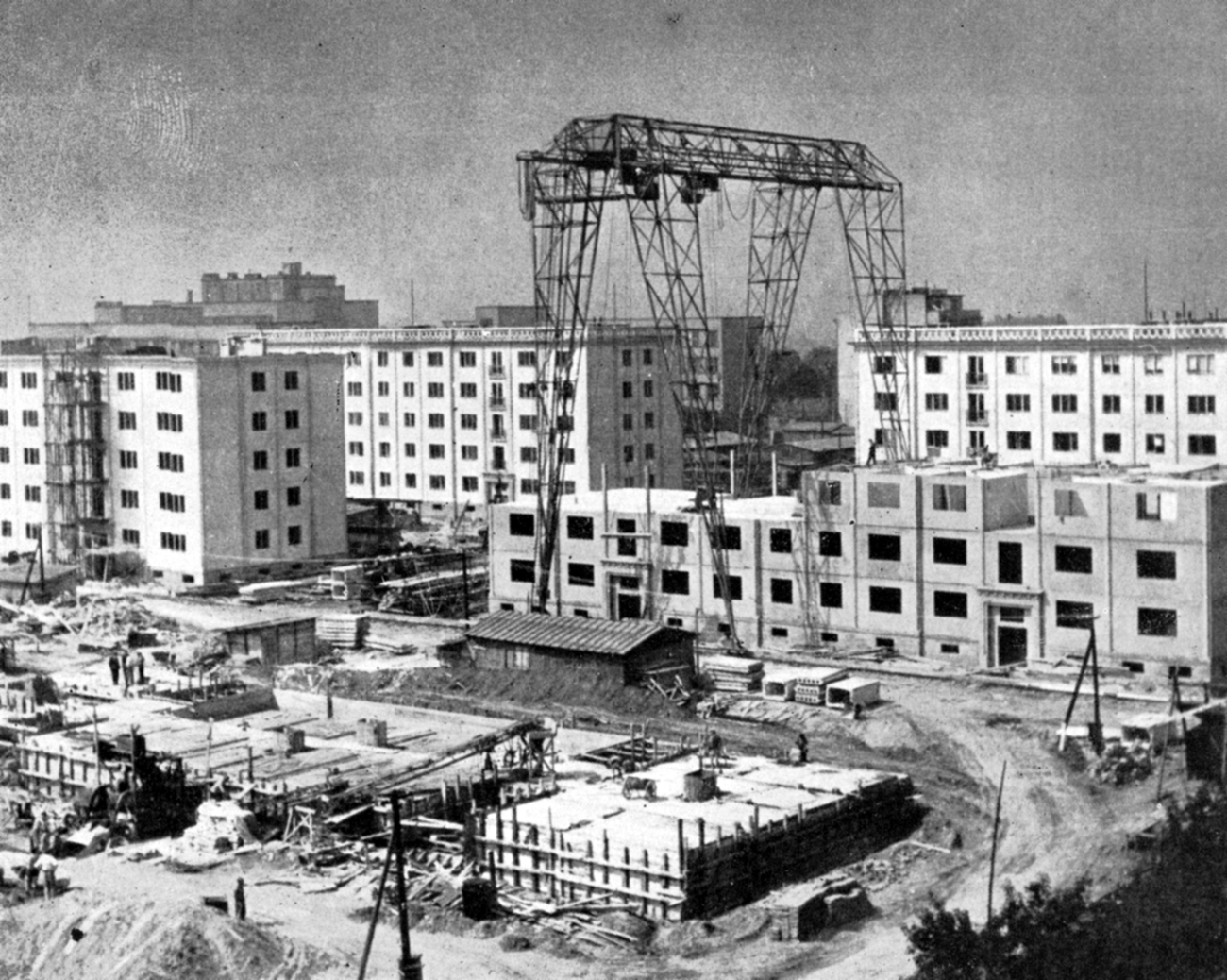
Paneláks under Construction in Prague, c. 1956 (From Architektura ČSR [1957])
At the start of the panelák building boom in the 1960s and 1970s, the standardized, typified, and prefabricated buildings were attractive to many people because they represented a modern socialist quality of life—functional and private interior spaces, new appliances and central heating, access to public transportation, and close to amenities. From the perspective of the planned economy and its need to track inputs and outputs within the system, these construction methods were preferred for a pragmatic reason—they offered an economical and efficient solution to the question of how to accelerate housing construction. Over time, however, the panels used in the buildings became thinner and flimsier, construction quality decreased, and many complained that paneláks were noisy, drafty, and poorly made.
The other emerging problem was the overall effect on the built environment. Panelák districts looked and felt separated from the older urban fabric around them by their scale, materiality, and urbanism. During the socialist period, this was not necessarily a problem, because the housing districts of the capitalist era were portrayed as chaotic, unsanitary, and inefficient for services and transportation. In comparison, socialist-era planning was conceptualized as logical, controlled, and optimized for everyday patterns of work and family life. Yet the question remained as to the fundamental architectural quality of the spaces being produced. On one hand, the repetition of a few building types over a large area showed the difficulty of creating good architecture and useable urban spaces with such technology. On the other, the argument can be made that the logic of these neighborhoods was sound from a long-term planning perspective and the problems had more to do with the outward appearance of the neighborhoods and the poor state of many buildings than with any fundamental flaw. In fact, current discourses on sustainability and green design call for many of the same strategies—higher density settlements, distributed services, public transportation, and parks—to be used in new developments to decrease sprawl, encourage walking, promote local shopping, and reduce traffic. In this sense, the challenge to the existing stock of paneláks was not whether the neighborhoods could be viable, but how to improve and maintain them to make them desirable under market conditions.
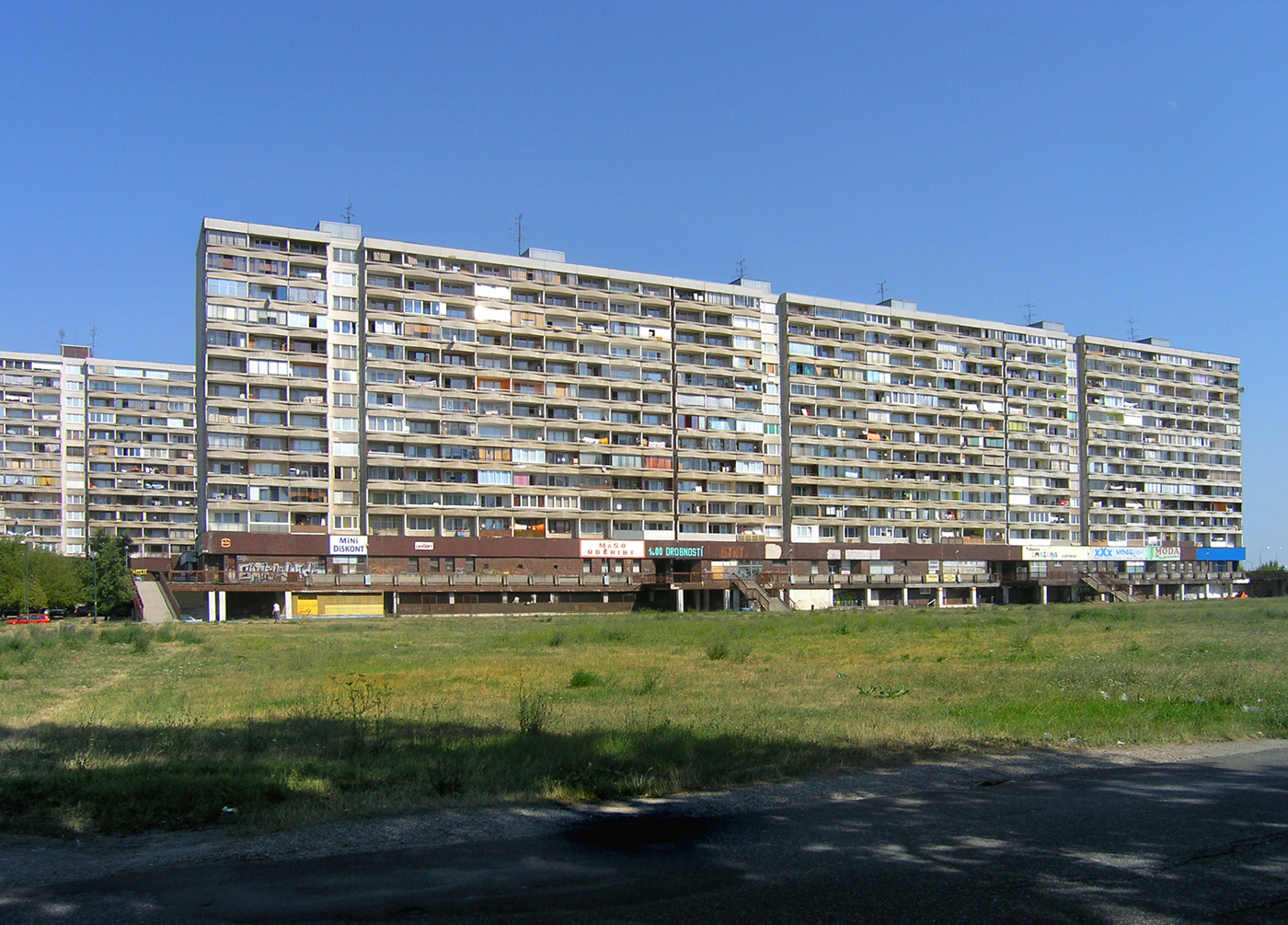
Paneláks in Petržalka Neighborhood of Bratislava (Photo by Pavel Hrdlička, Wikipedia)
Housing Policy after 1989
Despite any intelligent logic that one might find embedded in socialist urban planning and housing design, it was no panacea. After 1989, it was clear that socialist design practice had left the cities of the Czech Republic and the rest of the Eastern Bloc physically degraded, gray, and different than those in Western Europe, which had developed varied streetscapes and multiple housing types in the same forty-year span. Lack of maintenance and investment, as well as shoddy construction and a compromised construction industry, meant that many buildings were in need of repairs. In the case of paneláks built during the housing boom of the 1960s and 1970s, there were even concerns that the country would face a catastrophe with the “total decay of housing estates,” although this did not happen. 33 Public spaces had also been neglected. Dead grass, cracked sidewalks, broken benches, and abandoned playgrounds were common.
Yet these neighborhoods were home to millions of people whose lives and social networks were connected to and dependent on these communities. Amid the political and social upheaval of the early 1990s, many Czechs found stability in the sameness of their domestic spaces. This created a challenging situation for the government, which sought policies to protect the interests of large segments of the population who remained in their housing units and, at the same time, encourage investment and new construction to establish a private housing market and a path forward. The response was to approach the legacy of postwar housing as a crisis of the built environment that required incremental reconstruction rather than demolition. Home ownership and neighborhood stability were also emphasized. Since the early 1990s, the nationwide financing of such housing improvements has been a critical component of housing policy.
As one strategy against radical upheaval during the post-1989 transition, the government relied heavily on infrastructures and policies in place before 1989 to ease the economic burden of emerging market conditions in all segments of the economy, including housing. Such policies included subsidized utility costs, regulated rent, free health care, inexpensive public transportation, and the protection of key industries. As Lubomír Mlčoch, Martin Myant, and others have argued, this resulted in a hybrid economy in the 1990s characterized by what Myant terms “‘liberal-market’ approaches” to business and “‘social-democratic’ approaches” to social policies. 34 In the run-up to Czech accession to the EU in 2004, the country’s expenditures for the social programs became unsustainable. In response, the government privatized public utilities, increased direct foreign investment, and instituted pension reforms. Controversial health care user fees were introduced in 2008.
In this shift to liberal-market policies, housing was one sector of the economy that resisted reform. Because of concerns about the potential social and economic repercussions of large cost increases, politicians long protected the status quo by continuing regulated rents and implementing policies that allowed publicly owned housing units to be sold to tenants at low prices. Sociologist Martin Lux details these strategies in his 2009 book Housing Policy and Housing Finance in the Czech Republic during the Transition. As his research shows, since the early 1990s, low rents in the regulated market and artificially low ownership costs have created a dysfunctional housing market in the Czech Republic with privileged and unprivileged classes. 35 Privileged households, which include many working-class and elderly Czechs, pay regulated rent or own their housing, either acquired before 1989 or purchased at far below market rates in the ongoing process of privatization. 36 Without state subsidies, many of these households lack resources to maintain and improve their properties. Others can afford market-rate housing and benefit from a lack of means testing for regulated rents and policies allowing regulated apartments to be transferred between family members. 37 Unprivileged households consist of people who pay market rate for their housing at relatively high costs because of a lack of property availability and underpayment in the privileged market.
The history and current state of rent regulation illustrates some of the problems with the housing sector and the challenge of working within a system dominated by privileged households. Rent in state-owned housing was kept artificially low in the socialist period. In fact, rents did not go up from 1964 to 1990. As Lux and his colleague Petr Sunega write, in the socialist period, payment of this low rent guaranteed “unlimited occupancy rights in the form of a so-called ‘deed’ to the flat. No one spoke about ‘renting,’ but about the ‘personal use’ of a flat.” 38 This “quasi-ownership” could be “inherited or transferred to relatives, or exchanged with some other holders of user rights,” therefore the right itself became a commodity in the system. 39 The residents also paid for repairs and upgrades in their own units, another aspect of quasi-ownership.
After 1989, these deeds were protected. Regulated rents were increased, but at a pace slower than inflation, so the costs went down in real terms. The rents were also significantly lower than market rate. For new landlords who gained buildings through restitution, they owned the property but could not remove tenants who retained the inviolable rights to live in apartments or pass them down to family members, including from grandparents to grandchildren. The regulated rents were so low that they generated barely any money to invest in maintenance and upkeep. For this reason, landlords were allowed to neglect repairs citing the financial burden and the lack of a sustainable income stream. 40
Despite being very low, the rent itself became a point of contention. After some large rent adjustments in the 1990s, price increases were halted in 1999 because of political pressure. At the time, regulated rent was still only a fraction of market rate and few people gave up their regulated apartments even if they were small or in disrepair; this created stasis in the market. 41 In a survey conducted in 2001 for example, only 11 percent of respondents indicated their intention to move within three years. 42 After EU accession, there was more political will to make changes and deregulation began again in 2005. 43 After three years of increases of as much as 40 percent in regulated rents, the Czech Landlords’ Association reported in 2009 that rates were still only about 50 percent of market value. 44 After another year-long reprieve, market parity is finally expected this year in some areas and in early 2013 in cities where the difference between regulated rent and market rate is especially high, including Prague and other larger central Bohemian cities, as well as Ostrava and Most where high unemployment is contributing to anxiety. 45 Landlord and tenant associations are already predicting thousands of lawsuits as their constituencies try to negotiate new leases without any reliable data about what market rate rent is in particular neighborhoods. 46 Recent newspaper headlines have warned that many retirees will have to leave their apartments because they cannot afford the higher costs. 47
Postwar housing developments have large percentages of privileged households, including many people who remain in apartments they or their families occupied before 1989. This means that they are the most vulnerable to decline as rent deregulation is implemented. To combat this, Lux, Sunega, and others argue for targeted housing policies, such as housing allowances to assist those with high income-to-cost ratios to pay their housing expenses. 48 The concern is that rent deregulation will force people to move to lower quality accommodations as they are priced out of their current housing. At the same time, the deregulation may also accelerate the pace of deterioration in less desirable neighborhoods as real estate investors look to areas with the most profit potential or choose to profit without maintaining high-quality living standards.
A research team led by geographer Luděk Sýkora has already shown that some private investors purchased dilapidated housing estates from municipalities in order to rent them at high cost, and therefore high profit, to Roma and immigrant populations such as the Vietnamese who came in large numbers to Czechoslovakia in the 1970s. The investors buy the units and do not pay for upgrades or repairs, choosing instead to become a housing choice of last resort for those without other options. In a case study of one such housing development, Janov, in Litvínov in northern Bohemia, Barbora Benešová and Martina Křížková show how this has led to worsening physical condition of the buildings and public spaces, decreased property values, social segregation, and out-migration of long-time, middle-class residents. 49 Many of those who remain are retired and their families are choosing to give up the right to take over the units. They are being replaced by Roma, who now account for more than 50 percent of the residents, leading to problems in local schools, social conflict in public spaces, and a lack of services in the development. Janov was also the site of a November 2008 riot between local police and more than 500 right-wing demonstrators trying to attack the Roma residents. 50 The incident received worldwide attention because non-Roma residents appeared to cheer on the violence.
The situation is now again becoming a crisis in parts of the country. Large-scale and sometimes violent anti-Roma demonstrations occurred in Northern Bohemia in late summer 2011 after an attack by twenty Roma men on six ethnic Czechs spurred outrage. The intensity of the protests is due in part to an increase in the number of Roma arriving to the region, many of whom have been displaced from the housing market in Prague. In one town, Rumburk, local Roma formed their own security patrols to address perceived bad behavior within their community, particularly that of “newcomers who moved to prefabricated houses in one street.” 51 The experiences of these northern Bohemian towns illustrate the potential for ghettos to develop extremely quickly in post-socialist countries. Thus far, the Czech Republic is seeing only isolated examples, although the problems in Northern Bohemia might only be the start of a nationwide crisis as population demographics and neighborhood dynamics shift.
The Possibilities of Rehabilitation
As opposed to problems for renters, owner-occupants of properties in the Czech Republic have benefited from economic growth in the past decade. Unemployment is relatively low in most cities, the private housing market is maturing despite the recession, and the country held off on adoption of the euro currency insulating it from the worst of the current debt crisis. As part of the privatization schemes that peaked in late 1990s and continue today, many residents purchased their apartments at low prices directly from municipalities. These new owners form condominium associations and manage their own buildings, including collecting funds for renovations. After 2004, public money became available to assist such condominiums with exterior renovations and the improvement of public and shared spaces in and around the buildings. The most widely implemented program to date is the PANEL program (now NOVÝ PANEL). In place since 2004, the PANEL program provides subsidized loans for renovations of façades and shared spaces in paneláks such as stairways, elevators, front doors, and hallways; it was recently extended to other building types. 52 Only buildings owned by private citizens and run by condominium boards are eligible. Administered through the State Fund for Housing Development (Státní fond rozvoj bydlení), this program dispersed more than $225 million (4.1 billion Czech crowns) in 2009 alone. 53 A second program, the Green Savings Program (Zelená úsporám) began in 2009. Administered by the State Environmental Fund of the Czech Republic (Státní fond životního prostředí České republiky) and paid for with the sale of emission credits under the Kyoto Protocol, it provides direct grants for the installation of energy-efficient systems in single-family houses and apartment buildings. The program will pay out more than $1.3 billion (25 billion crowns) in grants by 2012. 54
The most popular fixes have been new vinyl windows, new elevators for higher buildings, and rigid polystyrene foam insulation on the façades. The façade work can be done on masonry buildings and paneláks. The process involves hanging thick sheets of insulting foam directly on the existing façade. Layers of surface finish and stucco are then applied and the buildings are painted in bright colors, often with multiple hues and patterns on a single façade (Figure 3). This process improves the thermal qualities of the buildings and, at the same time, provides a chance to brighten up the façades with colorful paint choices. 55 The differences can be surprising. In visits to the same sites from 2002 to 2008, the number of renovated buildings increased significantly, to the point that some buildings were barely recognizable in their new state. By May 2008, for example, all of the first G-buildings in Zlín and Prague had new façades.
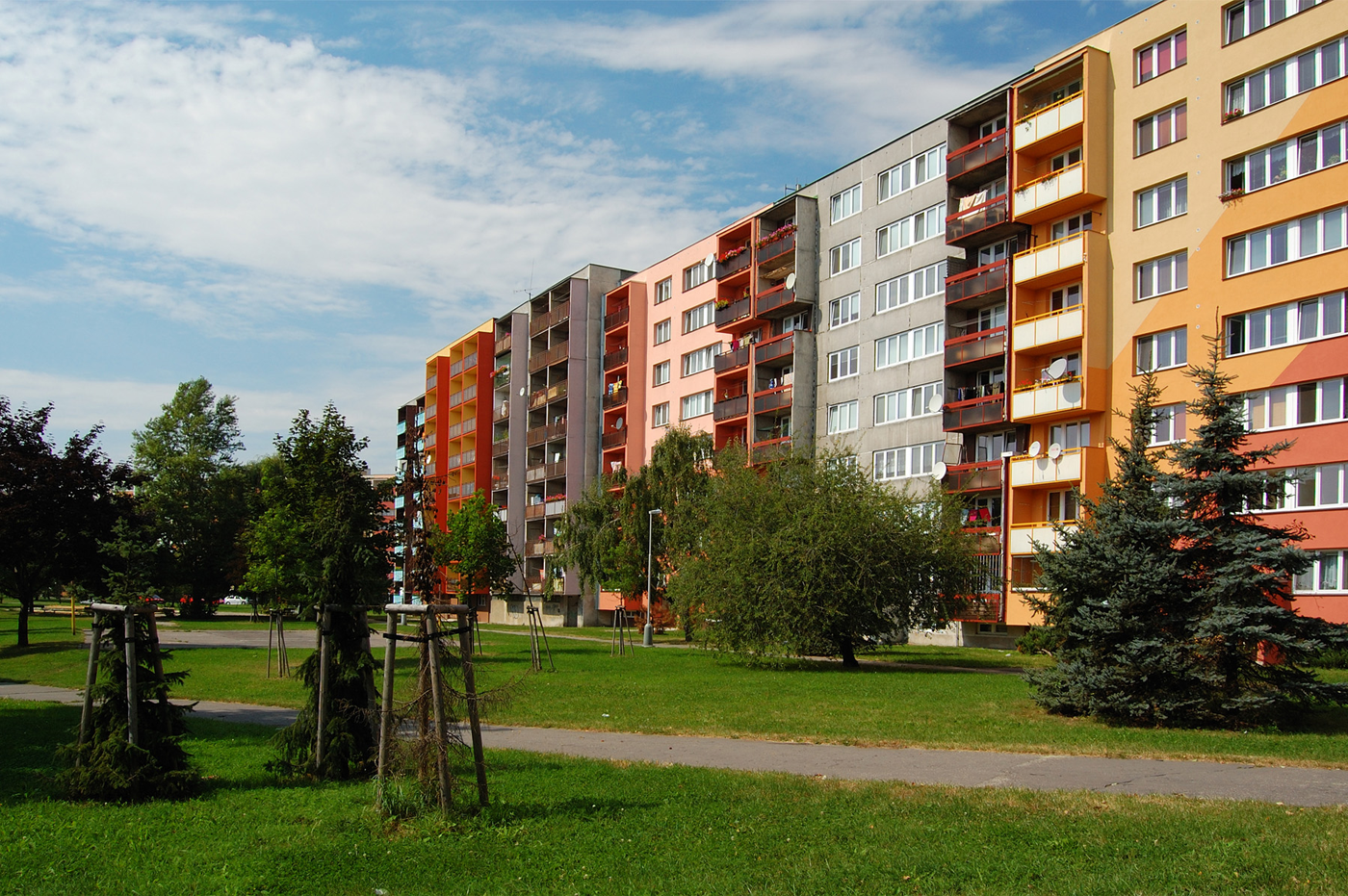
Renovated Panelák Façades in Ostrava (Photo by Petr Šmerkl, Wikipedia)
The visual results of these interventions are questionable, although many residents are proud of the new colors. Architect Eva Špačkovà, who worked for the city of Karviná near Ostrava on such paint schemes and teaches in the Department of Architecture at the VŠB-Technical University in Ostrava, spoke in a recent interview about the challenge of finding a unified approach to façade colors and the residents’ desire to create a sense of uniqueness for buildings in large housing estates.
It started with talk about how our grey housing developments are getting a new face. The question is whether this really improved the look of the developments as a whole. Hundreds of colors, contained in sample books of façade paints, were so enticing to use. It was always colors that the developments and the people who lived there were particularly missing. Of course many of the colorful schemes were used inappropriately—the tone of the colors, applied in unbecoming hues, with pattern choices that did not respect the tectonics of the buildings. Often a single good scheme is not successful because it is not located in the right context. The last point is that some façades of postwar buildings had interesting original color schemes, which responded architecturally to the object. It is really a shame that these original good façade schemes are being lost.
56
She goes on to talk about the resistance to “regulations and boundaries” for such renovations, since people equate this with socialist-era “lack of freedom.” Individuality is now prized above all else. She sees the possibility that a single unified scheme could be applied to a set of buildings that would be customized through details such as accents on doorframes, entryways, balconies, and loggias. In her words, this may be the only way to save the rehabilitated postwar developments from becoming “multicolored kitsch.” 57
From an outsider’s point of view, one of the most serious problems with this process, besides the issues of color and hue, is the loss of any sense of architectural proportion during this transformation. Without the definable edges of panels, and therefore scalable details, the buildings appear to be cartoon likenesses in the shape of apartment buildings with undifferentiated surfaces. This problem is even more acute for buildings originally designed with textured or colored surfaces since the polystyrene wraps the entire building in a single surface, erasing all of its tectonic details and altering the volumetric emphasis of the original texture and paint schemes. Often designs that originally emphasized the horizontal axis are rehabilitated and painted with a vertical color scheme that completely changes the architectural look and urban quality of the buildings.
Residents, however, seem to appreciate the changes to their buildings. If anything, the rainbow colors advertise the investment that someone has made in the property. This is sometimes literally in contrast to the rental buildings that are not eligible for government subsidies. For example, in Janov in Litvínov, the researchers noted that the mostly Roma buildings are still grey and unrehabilitated while many of the long-time residents live in buildings farther up the sloped site, which have been renovated with “colorful facades, glass-enclosed loggias, and new plastic windows.” 58 The landscaping is also maintained in the upper section and neglected in the Roma areas. These are outward and easily recognizable signs of the intangible social and cultural issues faced by the residents.
Other signs of long-term viability, and the resonance of socialist-era planning logic, can be found in the commercial patterns of some neighborhoods. Entrepreneurs rent many of the commercial spaces distributed through the neighborhoods for small stores, restaurants, and services such as barber shops and tanning salons. Many outlets of the small-scale retail network of groceries, drug stores, and butcher stops that were typical in the socialist period went out of business because of competition from big box retailers and chain supermarkets; however, niche businesses are attracted to some of the spaces. The high consumer demand for goods is due in part to the low cost of housing. This allows people to use their relatively high ratio of disposable income to shop, especially for items to improve their living spaces. 59 As one example, IKEA has opened very successful stores in Prague, Brno, and Ostrava. There are also companies that cater specifically to residents who want to replace the kitchen and bathroom combinations in their paneláks. They offer designs scaled to fit the specific dimensions of various panelák types, showing yet another benefit of the limited typologies of the socialist period.
Neighborhood Desirability
Beyond the possibilities for façade regeneration or improvement to the physical quality of an apartment, one must question whether or not people like living in postwar neighborhoods when given an opportunity to move. As researchers have argued, once the housing market shifts to a free-market model, there is a risk of slums and ghettos developing in vulnerable areas if the quality of the environment degrades disproportionately to the savings achieved by choosing or remaining in that neighborhood. Based on responses to a 2001 housing attitude survey, Lux, Sunega, and others found that Czechs were surprisingly satisfied with their housing; 64.5 percent of respondents considered their housing ideal and, as stated earlier, only 11 percent planned to move within three years. 60 The research also showed that owners of single-family houses and apartments in condominiums were by far the most satisfied and there was a strong trend toward a preference for home ownership over renting, even when it was shown to be more expensive over the long term. 61 Although this survey is ten years old, it does suggest that socialist-era housing concepts of smaller-sized units, shared public spaces, and convenient services may have traction in the face of liberal-market capitalism and its tendency to disproportionately reward the rich. New data sets will be available after the 2011 census to determine if EU accession and the global economic crisis have altered these points of view.
This satisfaction with housing may have its roots in the socialist period when these new apartments were part of the bounty promised by the regime (Figure 4). In interviews with researcher Jana Jílková from Ostrava University, families who moved into new apartments in the 1950s still remember feeling optimistic about the future when they arrived. Women who moved as children to Havířov, a town near Ostrava built with standardized masonry buildings and later expanded with paneláks, still recall the joy of taking their first baths in their new apartments after living in houses with no running water or indoor plumbing. 62 They recounted the ease of doing laundry in the buildings which had dedicated washing and drying rooms. Even when they discussed hardships, like trying to push baby strollers on the unpaved and muddy streets that were ubiquitous in the early years, they spoke with a sense that their sacrifice in the 1950s was for the greater good. 63 In the 2007 interviews, Jílková asked the women if they were “satisfied with their housing,” she writes that “the majority of them answered positively. . . . They did not complain about life in the apartment buildings, on the contrary, they liked the convenience of the shops and the more comfortable living spaces. [For them], the apartment felt like a home, not a dormitory.” 64 They spoke in particular about adapting their domestic “family rhythms” to their husbands’ work schedules and enjoying spending time together in the living room after dinner had been served in the kitchen. 65
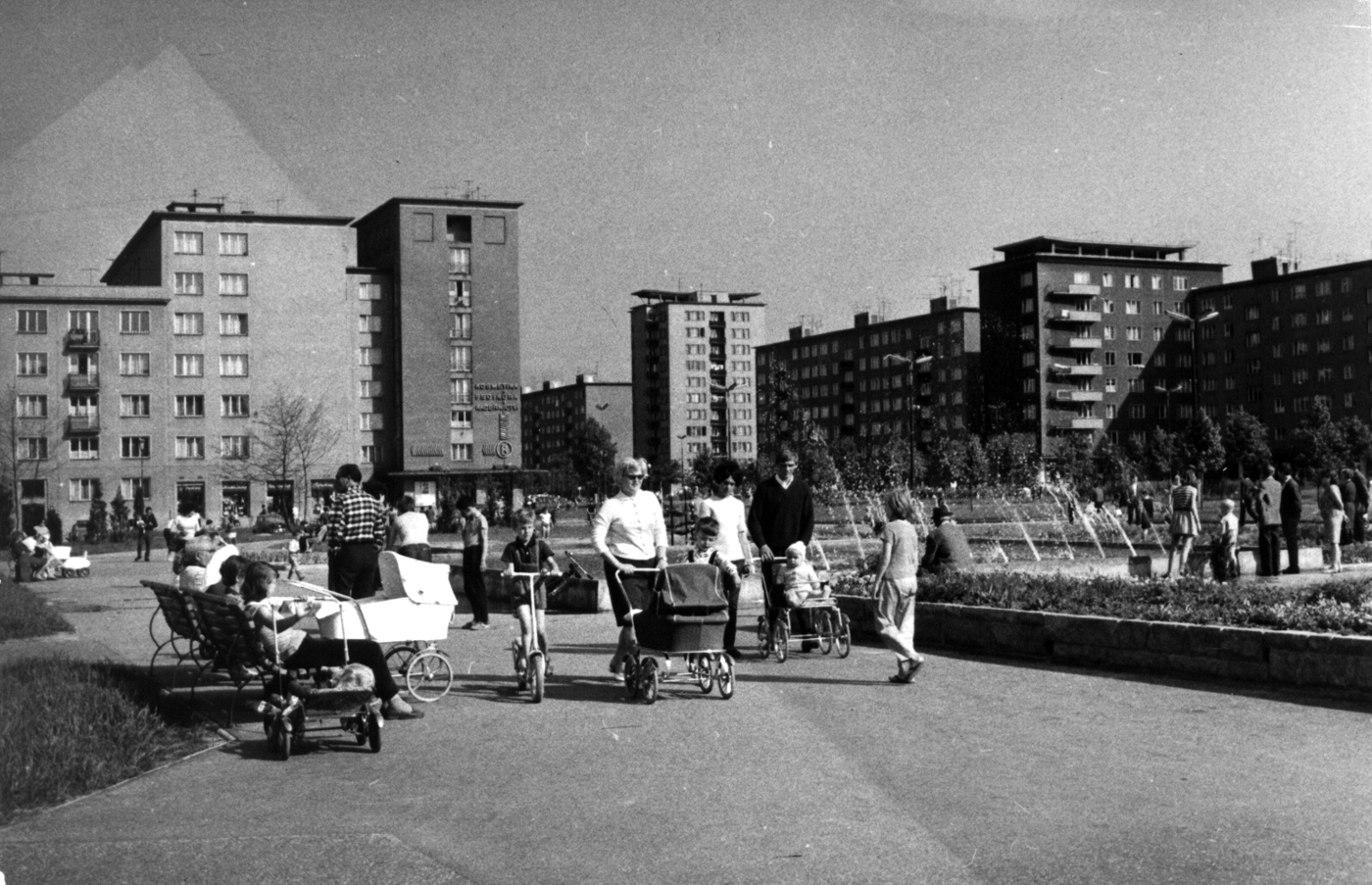
The Center of the Poruba Neighborhood in Ostrava in the 1960s
Eva Špačková and historian Martin Jemelka, also from VŠB-Technical University in Ostrava, came to similar conclusions in a 2008 survey they conducted in a large panelák district in Karviná near Ostrava. The neighborhood, Hranice, was constructed in the 1960s and 1970s at the edge of the city near a protected green zone. Designed by an architect from Stavoprojekt in Ostrava, it is mainly eight-story buildings with a few eleven- and thirteen-story towers and smaller buildings situated in an open green space. About 33 percent of its buildings had been renovated with new façades by the end of 2008, many more have been completed since. In keeping with the comprehensive nature of planning, the original design included two elementary schools, seven nursery schools, a central shopping area, and several small stores dispersed among the buildings. In recent years, three nursery schools and one elementary school have been closed because of a lack of students. There were also twenty-five sandboxes, five jungle gyms, eleven basketball courts, and two ping-pong tables included in the project. One problem for current residents is the lack of handicap accessibility and the poor quality of circulation paths around the neighborhood. With the exception of a new glass window on a bank, the shopping center inside the neighborhood has not been renovated and, according to Eva Špačková, leaves the impression that “time stopped in 1989.” 66
In a questionnaire distributed by mail and made available online to all 3,212 households in Hranice, Špačková and Jemelka asked residents about their experiences in the neighborhood. The work was part of a funded research project about potential revitalization projects for the neighborhood. The response to the survey was strong; 676 were returned (21 percent), the majority by mail. Špačková writes that “as the organizer of the questionnaire (anketa) the unusually energetic and active response of the residents to the questionnaire was very surprising to me. All of the returned questionnaires were correctly filled out, none were damaged, and often people used the space to express their own opinions.” 67 The activeness of the responses themselves was something that they took as an indicator of the potential for participation in neighborhood improvement discussions. In her summary of their findings, Špačková writes that “the respondents to the survey to a large extent showed that they are satisfied with life in the housing development and only a small number said that they wanted to move outside of the development. For the majority of residents the development is home (domov), the place where they have spent the most significant part of their life.” 68 One notable difference was the level of satisfaction among the respondents who used the computer survey. 69 They were generally less happy citing safety, the lack of a quiet atmosphere, and parking problems as reasons for their dissatisfaction. One possibility is that younger residents are more likely to use the computer version and feel less connected to the neighborhood than the people who moved in when it was first built.
Despite the high satisfaction levels, there were quality-of-life complaints from all of the respondents. This suggests that satisfaction levels do not necessarily correspond to the number or types of complaints, but is more about expectations. Complaints included noise, especially from the local bar and gambling parlor; the poor upkeep and state of the common spaces in the buildings and outside; too few restaurants open during the day; the need for larger and better maintained playgrounds; lack of police patrols at night; off-leash and aggressive dogs who run wild in the open spaces; and the difficult parking situation. 70 There were also requests for a pedestrian path from the development to a new chain grocery store, Kaufland, on its western edge (Figure 5). This indicates that the residents still walk to local stores and that they see Kaufland as part of their expanded neighborhood, a positive sign about the possibility of Hranice becoming more integrated with the spaces around it. As Špačková notes, none of these complaints are architectural problems per se. “Generally it is possible to say that the majority of imperfections in the housing development, according to the opinions of the residents, are not conditional on architectural solutions but rather on the unmaintained, disordered, and unsatisfactory control and commercial abuse of public space and the former civic facilities. Resignation as to the possible improvement of the architectural qualities of the environment is not the right conclusion to take from this, but rather the response should be persistence in solving the problems comprehensively in all of their complexities.” 71 From this survey, Špačková and Jemelka have made some proposals for regeneration including taking better advantage of the connection to open green spaces, improving services and oversight for aspects of everyday life such as parking, garbage collection, and dog ordinances, as well as the redesign and renovation of public spaces with the creation of a pedestrian “promenade” in the center of the neighborhood that will be the main architectural contribution to the revitalization. With such possibilities in mind, one must have optimism that the future of postwar housing developments will be more than as just grey reminders of the past.
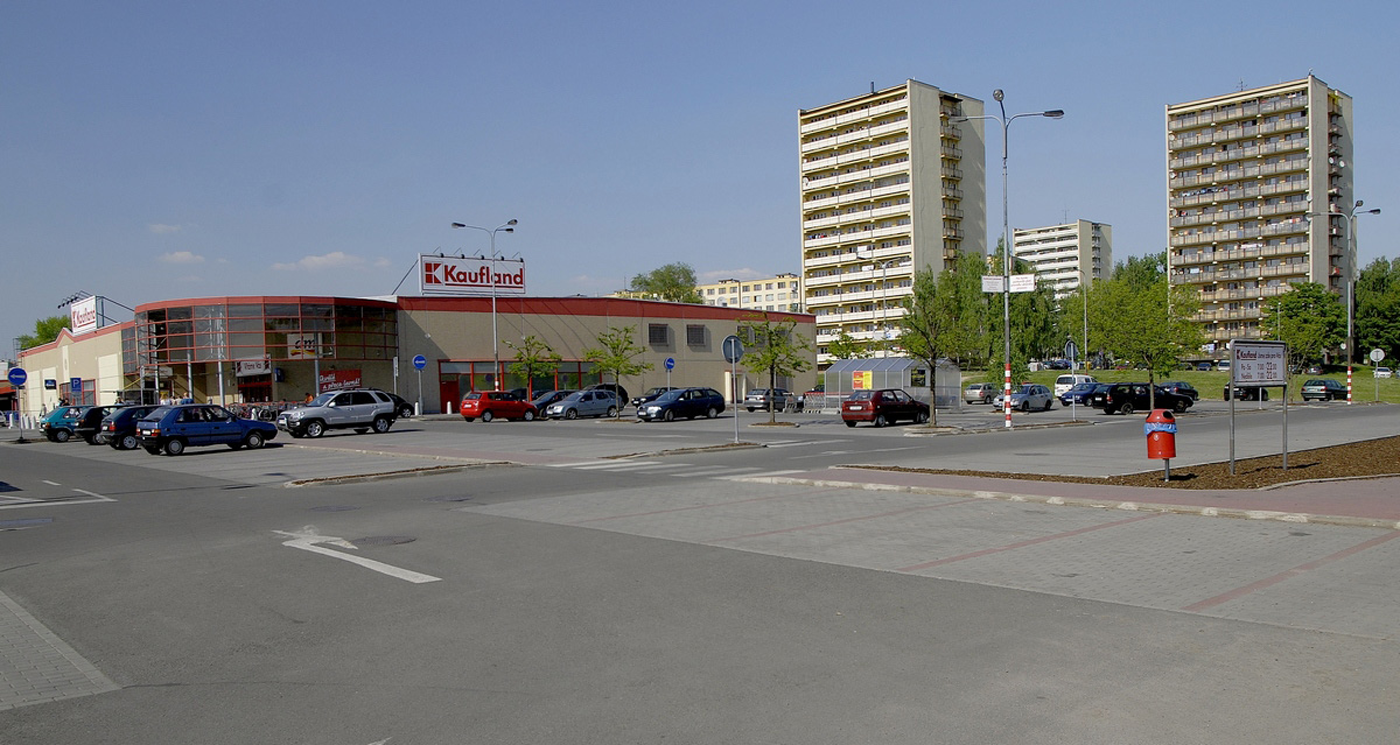
New Kaufland Grocery Store on the Edge of the Hranice Neighborhood in Karviná (Photo Courtesy of John Grzybek)
Conclusions
Although it is clear that paneláks were not designed to meet high aesthetic standards, they have achieved a range of other goals set by the architects working at Stavoprojekt from 1948 to 1990. To assume that architects in postwar Czechoslovakia would have preferred to operate with aesthetics as their most important criteria is to lose sight of the modern project as it was conceived by many socialist architects before and after World War II. These buildings provided millions of people with new apartments and within them they have formed communities and social networks that outlasted the communist regime. The current wave of renovations may improve thermal and noise conditions inside the buildings and enliven the public outdoor spaces, yet the most honest reflection of the success of paneláks may be that the neighborhood units, green spaces, and community infrastructure that was put in place since 1948 seems to be bolstered rather than weakened by the economic transition.
With the recent increase in new construction, Czech cities continue to grow and the edges are becoming more dense and less monotonous. High-end apartment buildings are appearing near postwar neighborhoods all over the country. This is due in part to the amenities that were built into their designs and that current real-estate developers will not build, such as schools, parks, shopping plazas, and transportation hubs. In Prague, the metro system has expanded in the past five years and the new stations extend the lines farther into the postwar neighborhoods, often with large big box shopping areas located next to the new stations. These areas were less desirable for decades because of their lack of reliable transportation connections to other parts of the city. Now residents can be in the city center in minutes and what was once marginal real estate has increased in value and desirability. In many ways, this is the fulfillment of the promise of socialist city planning that was never achieved by the previous regime.
This is not to dismiss the problems of the contemporary city. There are vulnerable populations, especially the Roma, who are not benefiting from government subsidies and renovated apartment buildings. The problematic legacy of socialist-era housing—the alienating open spaces, the lack of maintenance, the grey façades, the poor quality of construction—appear as opportunities for improvement in a case like Hranice in Karviná where, despite lifestyle complaints, many residents are satisfied with their housing. While at Janov in Litvínov, these same conditions contribute to social segregation and create a sense of despair among residents who see no path toward improvement in the current circumstances. As Lux, Sunega, Sýkora, and their colleagues have shown through their illuminating analyses of many aspects of the housing situation in the Czech Republic, current policies are still not addressing the most pressing issues in a comprehensive way. Without more attention to the fate of postwar neighborhoods as deregulation continues, it may be that the gains made in the past decade will be undermined in the long term as slums and ghettos emerge, just as they have in many other parts of the capitalist world.