







Abstract
In a departure from car-centered analyses of the automobility systems, this article highlights the importance of motorcycles and motorcycling in the mobility practices of socialist countries. For at least half of the existence of socialist mobility systems, and especially during the 1950s and 1960s, there were more motorcycles on the roads than cars. Motorcycling was important in commuting, for the mobility of lower-ranking administrative personnel in the countryside, and for mass tourism and leisure. Although in that era maintenance and repair practices were equally central to motorcycling and car-driving, the distinction between user-owner and mechanic was much more fluid in the case of motorcyclists. As a result, the centrality of maintenance and repair to socialist-era motorcycling offers an ideal opportunity to enrich current interdisciplinary conversations about breakdown, maintenance, and repair. Building on the car-centered research into maintenance and repair activities, I add additional material on the nature, types, and complexity of such practices for motorcycling. I outline nine forms of material engagement with motorcycles that reference, but transcend, the current dichotomies between necessity and pleasure, the formal and the informal, the technical and the aesthetic, and the repair of existing objects and the creation of new ones.
Introduction: Motorcycling as an epistemic “other” in studies of the socialist automobility system
The automobility practices and systems of socialist countries have received some attention in recent scholarship, 1 but although the existing literature touches on key aspects of automobility under socialism, almost all the relevant studies have focused on car culture, thus downplaying other forms of individual mobility such as motorcycling. This oversight is surprising since there is clear evidence that in socialist countries up to the end of 1960s the motorcycle was the main means of getting around on the roads and a key factor in “systems of automobility.” 2 Nevertheless, motorcycling during the socialist era and the transition out of socialism has remained largely overlooked. My article, by contrast, turns its attention to this form of mobility technology quasi-ignored by the literature. The questions that I shall try to answer are as follows. How does shifting away from a car-centered analysis of socialist societies change our understanding of automobility in that part of the world? What were the similarities and differences between car- and motorcycle-borne mobility? If maintenance and repair were so particularly important in the automobility of socialist societies that they came to be labeled “repair societies,” 3 how can the experience of those societies answer recent calls in the social sciences for more analytical and empirical attention to be paid to maintenance and repair practices? 4
To answer these questions, I build on Kurt Möser’s insights into the key association between automobility practices and maintenance and repair activities, as well as on studies of the sociology of maintenance and repair and of bodily alterations. 5 I diverge, however, from Kurt Möser’s car-centered analysis. I expand and elaborate our understanding of maintenance and repair, through a grounded description of these activities among past and present motorcycle users. Motorcycles were different socio-technical objects than cars; their maintenance and repair practices differed too. The empirical material that I have gathered reveals nine different forms of maintenance, repair, tinkering, and innovation that emerged out of motorcycle culture during socialism, some held in common with cars, some motorcycle-specific.
I place technology, maintenance and repair practices, and the shortage economy at the center of motorcycling under socialism. As Kurt Möser reminds us with regard to the mobility system of the German Democratic Republic (GDR), “it is essential to understand maintaining and repairing as another form of usage—not driving proper but working with one’s car, spending time with it, caring for it, looking after its needs.” 6 Repair, bricolage, and DIY activities were widespread features of the usage of goods and objects during socialism, and this was especially true of objects related to the automotive industry, including motorcycles. Analytically, this means that throughout this study I pay attention to how the specific affordances and limits of engines, spare parts, repair parts, and technical knowledge encouraged the formation of specific experiences of travel, leisure, regional economic integration, and social ties more generally during this era.
To gain insight into these issues, I have collected a variety of data about motorcycling in Romania. Socialist-era DIY magazines and national and comparative statistics helped me understand better the socialist automobility system and motorcycles’ position within it. Twenty-eight interviews with bikers and ex-bikers aged from fifty-four to eighty-four enabled me to locate motorcycling in their personal biographies and to understand the social networks they maintained in order to find replacement parts, knowledge, and mechanics during the socialist period. They were all men, as in Romania women were virtually absent from the motorcycling scene prior to the 1990s. Most of them could be described as skilled working-class individuals. Some had higher education degrees. I interviewed some of them during their trips in Bucharest and elsewhere. Visiting and carrying out in situ ethnographic conversations in their garages proved useful for understanding past and current motorcycle repair and modification projects. During such visits I also got the chance to see some of their tools and leftover parts, and to discuss photos of their past trips and former bikes. Becoming a certified mechanic in 2012, after a six-month intensive course, not only helped me have better conversations with bikers and mechanics but opened a window—through my charismatic sixty-two-year-old instructor—into the world of bikers, ex-bikers, mechanics, some of whom have been riding since the early 1970s. To get a sense of motorcycling during the 1950s, 1960s, and 1970s, I used memoirs, but I also got the chance to interview one biker and one mechanic who have been riding since the late 1940s. Police and secret police reports would probably have offered additional interesting and possibly different insights, but I did not have the chance to access them.
This has the following structure. In the next section, I offer a better understanding of the constitution and transformation of socialist societies as automobility systems by restoring motorcycles to their proper place, politically, economically, and culturally. For almost half of the socialist period, motorcycles surpassed cars in sheer numbers in Romania, the GDR, 7 Russia, 8 and Poland 9 —and perhaps in other socialist countries as well. The two following sections are about maintenance and repair. In the first I describe the cultural location and technological location of motorcycling repair in Romania, where the distinction between motorcycling user and mechanic was very thin. In the last section, I describe the diversity of maintenance and repair practices among motorcycle users.
Motorcycles and the Automobility System in Socialist Romania
Motorcycles used to occupy a central place in numerical terms during the first three decades of the socialist automobility system. In 1950s and 1960s Romania, motorcycles were more important than cars, 10 a situation similar to other socialist countries. Mariusz Jastrzab, for instance, indicates that, in Poland, between 1954 and 1964, although the number of cars increased greatly—from 242,000 to 1,752,000—“people were still buying motorcycles . . . as a car was still too expensive for the average family.” 11 In 1965, for instance, 160,000 motorcycles were sold in Poland, but only 34,700 cars. 12 The situation was similar in Czechoslovakia. In an article from 1950, readers of Svět motorů, a Czechoslovak automotive magazine, were told that, in the future, thanks to the socialist development of heavy industry, the car will become affordable for the working class, not just for the rich. 13 According to Kurt Möser, “the early predominance of motorcycles is a feature of German motorization before and after the war in the East, as well in the West.” 14 The number of cars surpassed that of motorcycles in the GDR only in 1972; in West Germany, the same development had already taken place in 1957. 15
The automobility system in Romania during the early socialist decades had its own specificities. Before and after World War II, Romania enjoyed a positive oil juncture. As Timothy Mitchell reminds us, Romania was one of the few countries in Europe and the world with significant oilfields and oil resources. 16 Nonetheless, this did not automatically translate into a significant expansion of the automobility system. 17 Immediately after the war, state policies directed investment toward the railway rather than the road system. In the 1950s, 90% of all transportation was rail-based. The road system gradually picked up as the communist period went on, reaching the same size as the railways, by the 1980s when transportation was forty-six percent road-based and forty-seven percent rail-based. 18 As Luminița Gătejel points out: “to the general thrust after the World War II [in Western countries] for more private and flexible use of time and space, socialism had nothing attractive to offer besides uniformity and collectivism.” 19
In urban areas, railway-based transportation dominated as well. A diplomatic report by the American Embassy in Bucharest noted the predominance of public transport, as well as the heightened visibility of motorcycling during the 1950s. The report explained that “people move around mainly by trams and less by buses and by Soviet-model trolley-buses. Cabs are singular occurrences, just like privately owned cars.” Interestingly enough, the report notes the presence of motorcycles as a means of individualized transportation: “A heightened number of motorcycles seem to circulate on Bucharest’s streets; motorcycling seems to have obtained a heightened prestige among the young cadre of the upper bureaucracy.” 20 Throughout the 1950s and 1960s, motorcycling was predominantly a form of utilitarian mobility and a substitute for the car. While car ownership did pick up on a very modest scale through the socialist period, motorcycles were much more visible, especially in the first two decades. Before domestic car and motorcycle manufacturing began in the 1960s, the statistics indicate that motorcycles clearly surpassed cars. Figures for the import of automotive equipment in selected years (Table 1) 21 indicate a definite predominance of motorcycles over cars prior to 1965. The same conclusion is reinforced by analyzing the number of cars and motorcycles sold to the population (Table 2). 22
The Volume of Automotive Equipment Imported into in Romania, 1959–1965
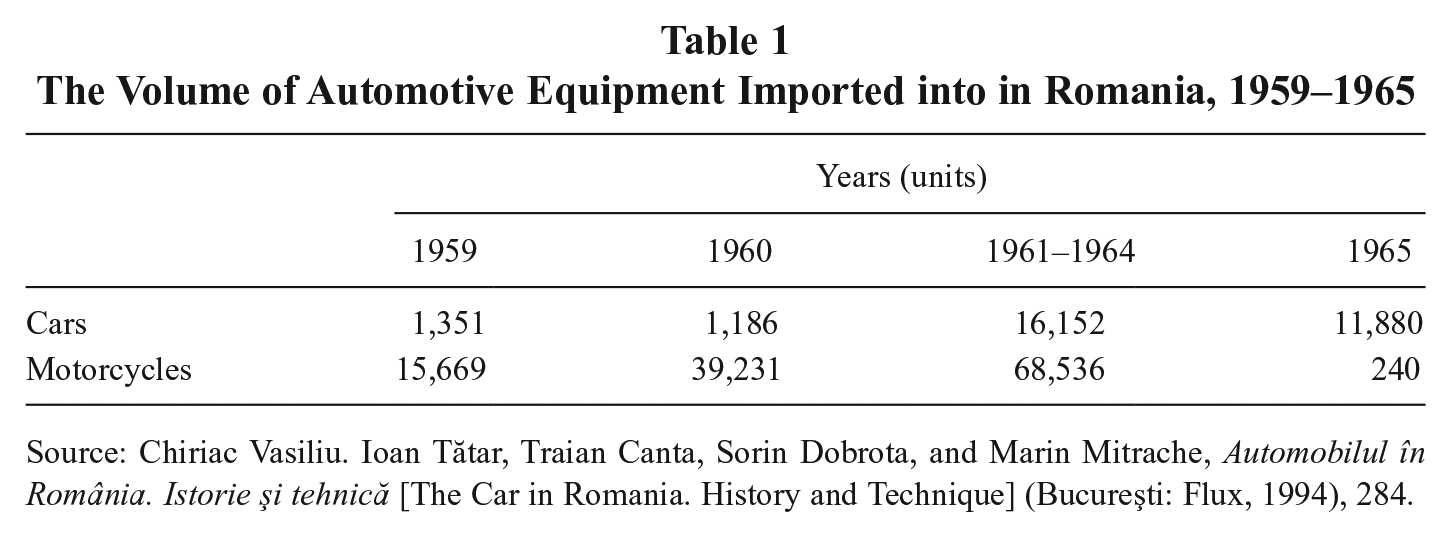
Source: Chiriac Vasiliu. Ioan Tătar, Traian Canta, Sorin Dobrota, and Marin Mitrache, Automobilul în România. Istorie şi tehnică [The Car in Romania. History and Technique] (Bucureşti: Flux, 1994), 284.
Cars and motorcycles sold to the Romanian population
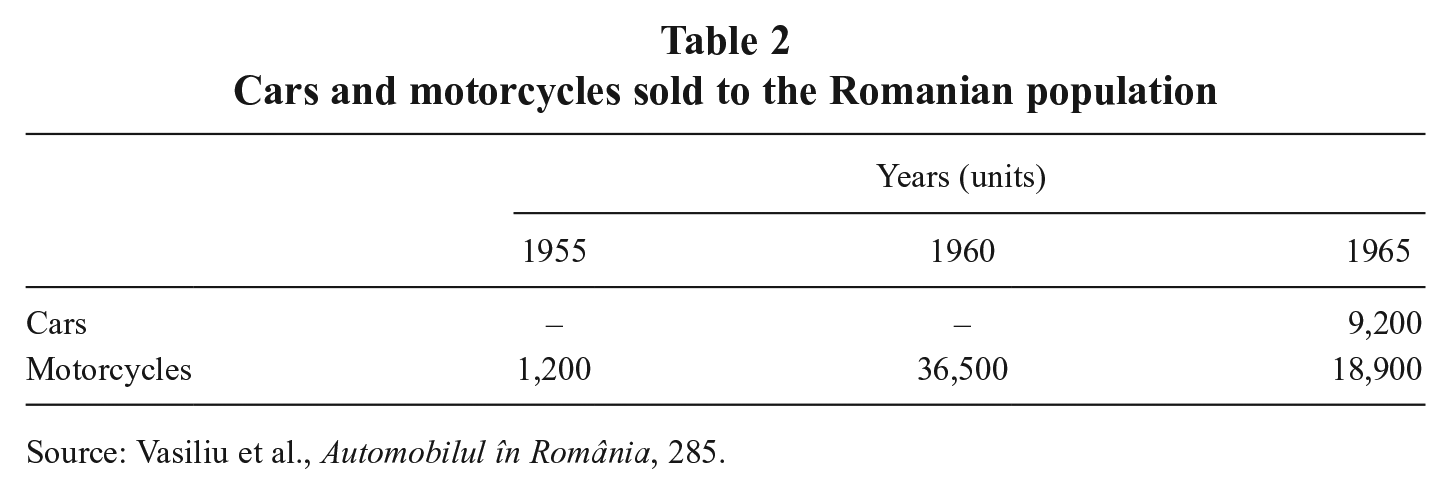
Source: Vasiliu et al., Automobilul în România, 285.
Prior to domestic car production, most cars were imported so that they could be allocated to public institutions for their activities. Motorcycles served a similar purpose with the notable difference that they were allocated to companies and the authorities in the countryside and small towns, rather than to central institutions. The motorcycles most widely used by local-level state authorities were imported from the USSR. They were resilient and thus particularly suited to use on country roads. A former geologist and biker, aged eighty-four at the time of the interview, told me that the topographic department where he worked in the 1960s owned a Dnepr sidecar motorcycle, produced in the Ukraine, which was used for field trips. Similarly, another man, aged sixty-five, employed by an agricultural holding that owned many vineyards, told me that, ever since he had been working there, the company had owned a Soviet motorcycle with a sidecar, which was shared by engineers and workers travelling to inspect the slopes. Another Soviet make was the Ij, which, prior to the rise to dominance of the domestic Mobra, was the most commonly sold motorcycle in Romania. Its sales peaked between 1960 and 1962 and it came in two types, with and without sidecar. 23 In the same period, some MZ motorcycles, produced in the GDR, were registered. 24 As many people whom I talked to remember, all these motorcycles were easy to maintain and repair, although they broke down quite often.
The relative importance and visibility of motorcycles may be attributed to several factors. Romanian territory witnessed the movements of the Romanian, German, and Soviet Armies during World War II. With the defeat of the German Army, a significant number of BMW and Zundapp motorcycles were left behind. Appropriated by the Romanian Army, they were later distributed to various state institutions. During the 1950s and 1960s, with the growth of COMECOM (Council for Mutual Economic Assistance), many motorbikes were imported from socialist countries. During the early 1960s, Romania also began to produce Carpaţi and, then, in the early 1970s, Mobra motorcycles in Braşov County, two light models (50 cc), which became instant successes. The low maintenance costs and the overall economic nature of moto-mobility also acted in their favor (see Figure 1). Within two years, the vast majority of the motorcycles sold to the population by the IDMS (State Company for the Distribution of Sports Goods) were produced domestically. 25 From that moment on, being a motorcyclist in Romania most likely meant owning a domestically produced Mobra, to such an extent that even today (although latterly as a joke), motorcyclists call each other “mobrists” and call their bikes “Mobras,” irrespective of the make.
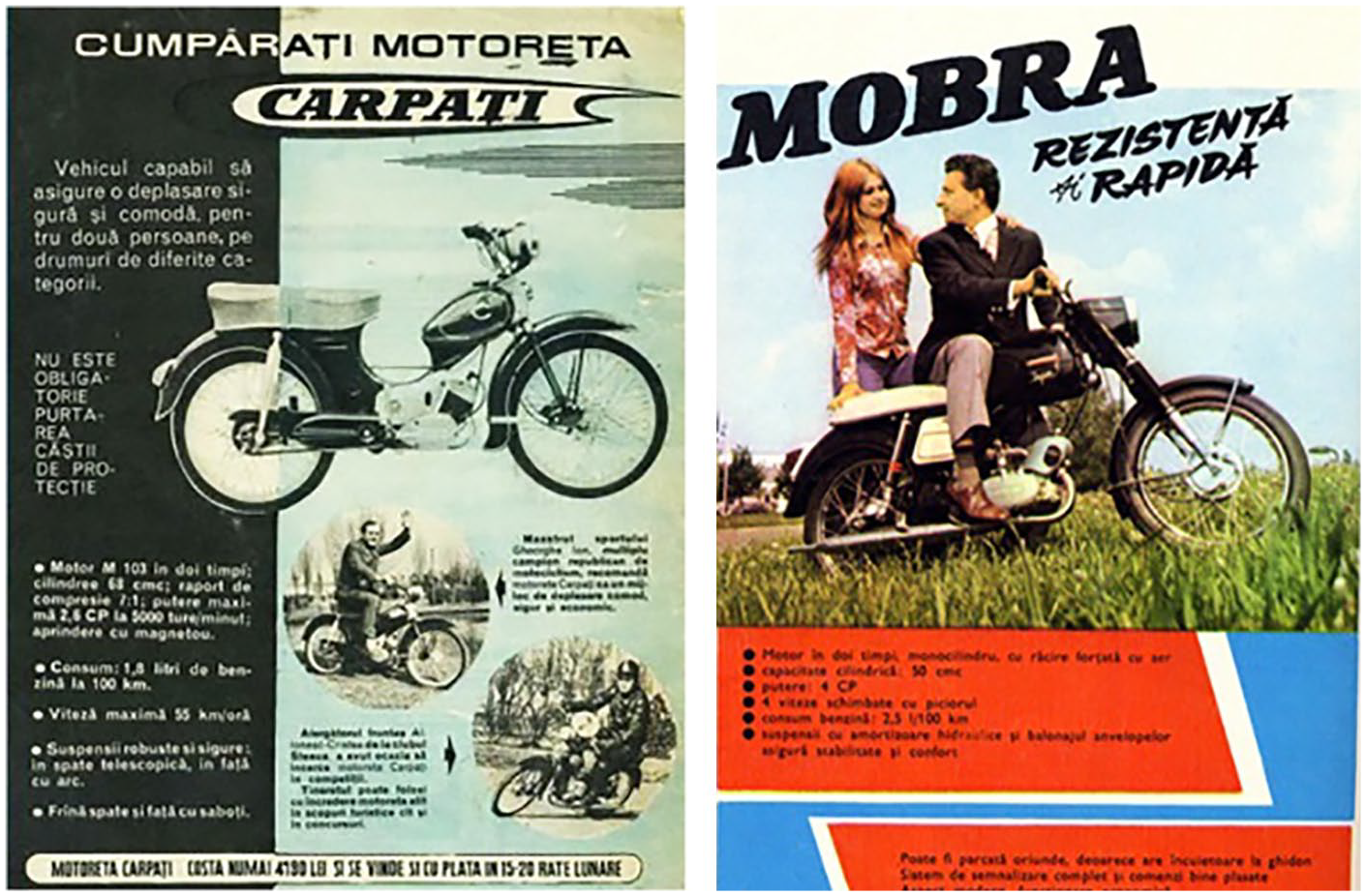
Ads for Carpaţi and Mobra motocycles, ca. 1975
The dynamics of the domestic production of automotive equipment were important in shaping the automobility system, as well as the imports. Unlike some other socialist countries (e.g., Albania, Hungary, and Bulgaria), Romania developed a car production sector. Together with the French company Renault, the Romanian Government developed a franchise to produce replicas of the Renault 5 and Renault 12 through Dacia Industries, established in 1968. Later, the production of the Lăstun, a 500 cc minicar, began at Dacia’s plant in Timişoara. One year later, Citroen, together with the Romanian state, began producing the Oltcit in Craiova, a city in southern Romania. There was also some production of buses and heavy-duty transport vehicles, although freight trains continued to carry most merchandise. 26
Motorcycles, along with buses, trains, and bicycles, were also important in supporting the industrialization of cities. As a result of what György Konrad and Ivan Szelenyi have called the “under-urbanization” of socialist countries—the tendency of the urban socialist industrial workforce to retain their rural households, rather than move to cities 27 —motorcycles, buses, trains, and bicycles were useful for transporting the large number of commuters who travelled from their homes in small towns or the countryside to their urban workplaces. It was in this context of commuting to work that the motorcycles left behind after the war and later those manufactured in communist countries contributed robustly to the regional economies of cities. As for car ownership, it was only the communist nomenklatura that could afford cars, especially Soviet-made ones. Romania, like most countries of the Soviet bloc, continued to have a low level of car ownership despite its fledgling car-manufacturing industry. Although production was significant, the high levels of exports and the reduced number of imported cars kept car ownership at levels below those of the rest of socialist countries (see Table 3). 28
Cars per 1,000 Inhabitants in European Countries, 1949–1989
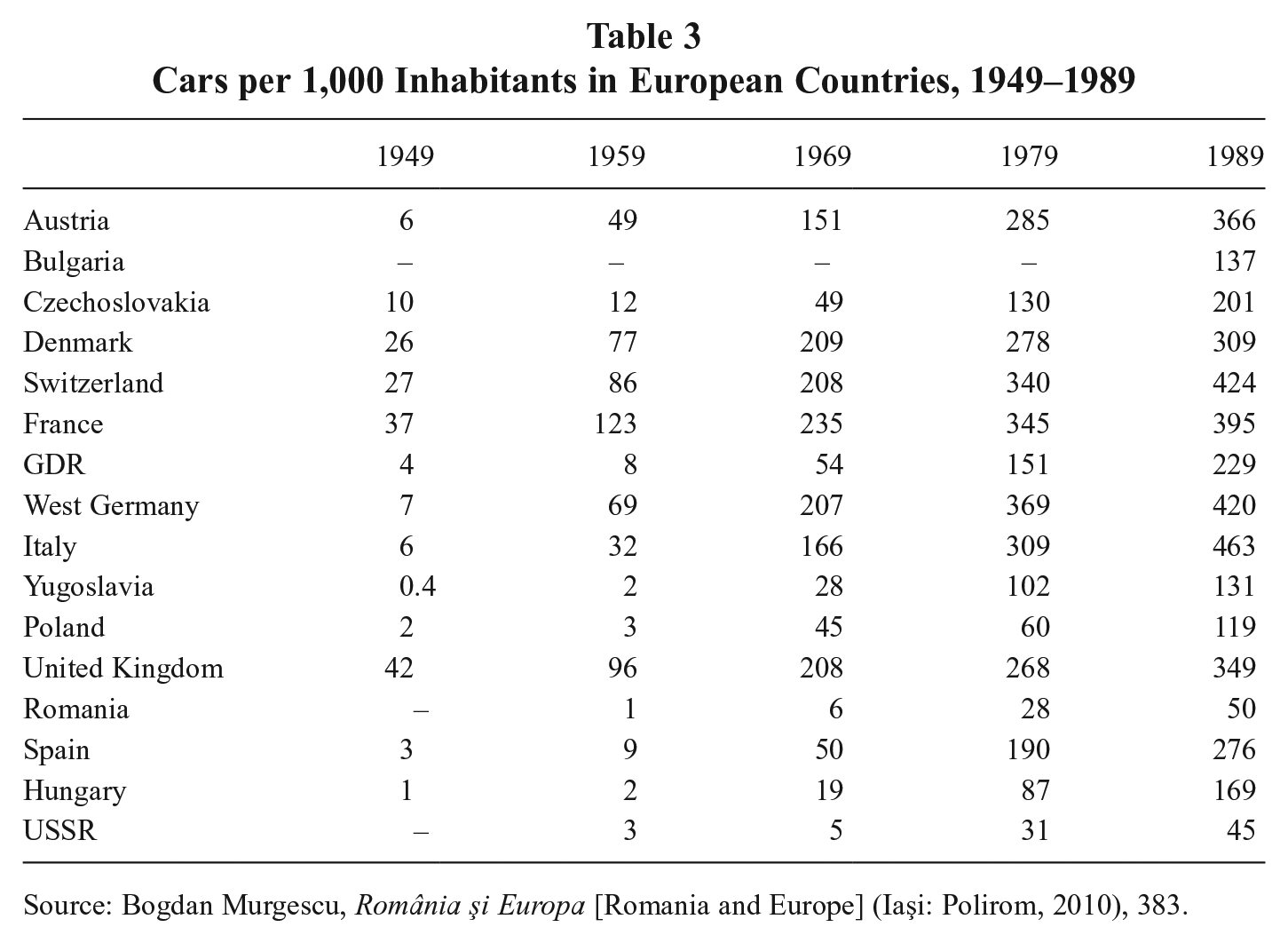
Source: Bogdan Murgescu, România şi Europa [Romania and Europe] (Iaşi: Polirom, 2010), 383.
The dominance of motorcycles over cars is also reflected in the commercial culture of those two decades. In the early 1960s, Sport magazine carried advertisements for portable radios, directed at people who wished to travel around the country during their holidays. In the picture the radio was associated with motorcycles. Twenty years later, during the 1980s, an advertisement in the Auto Almanah promoting the same radio to the same audience depicted it in relation to a car. Despite their extremely high desirability, however, cars were very difficult to purchase. In that context, the motorcycle was perceived as the poor person’s car, a cultural location noted by Reinhold Bauer for West and East Germany as well. 29 The socialist-era manufacturers and retailers of motorcycles presented them as a democratic and inclusive mean of mobility, sometimes setting them in contrast to the cars that predominated in Western countries, as was the case in Czechoslovakia 30 and the GDR. 31
In addition of being promoted by the socialist states as an alternative to car travel, of which there was very little in the early decades of socialism, motorcycling enjoyed the support of the state as part of family life (see Figure 2), mass tourism, and more generally, consumer socialism. 32 As Carolina Fiscke reports with respect to the Bergringrennen motorcycle race in the GDR during the 1970s, though one may see parallels here “the regime used public events, which seemingly offered an escape from the ubiquitous political indoctrination, to simultaneously satisfy the masses’ desire for escape from daily routines, and to control those who did not align themselves with the norms imposed on the society.” 33 Motorcycles were embedded in the promotion of mass tourism, as can be gathered from the September 1962 campaign ad for tourism and public heath that featured in the Sport şi Tehnică magazine (Figure 3). Part of the text reads “by train or comfortable buses, by motorcycles and bicycles, in elegant boats or even on foot, hundreds of thousands of people, young and old go on trips”—which is interesting as private cars are not even mentioned, whereas motorcycles are.
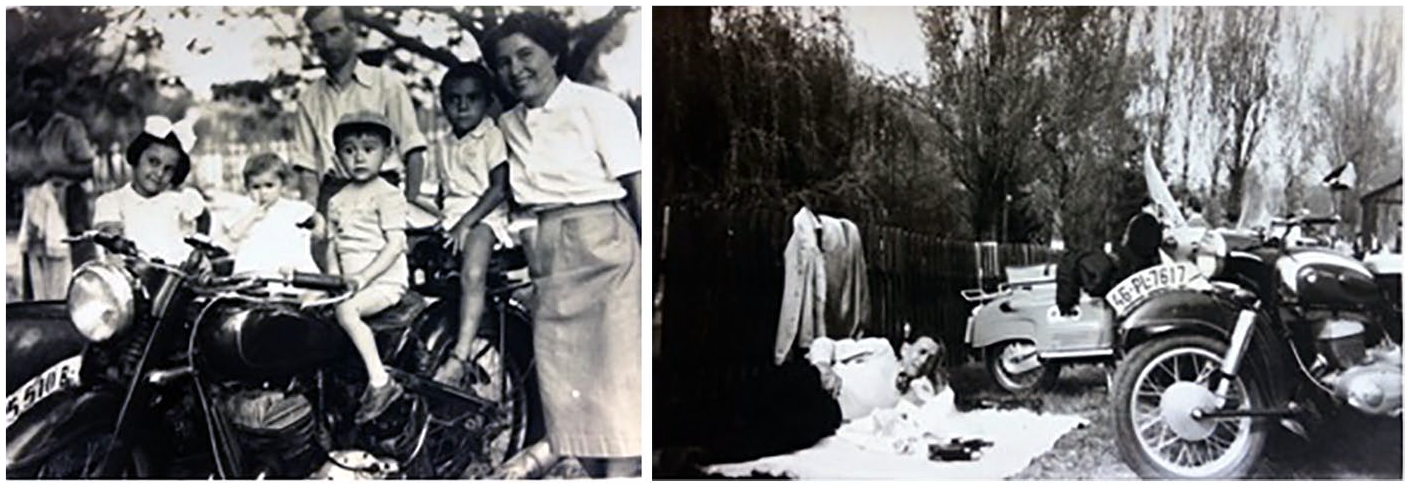
Photographs of family-centered motorcycling(taken in 1956 and 1967, respectively). Notice the portableradio in the picture on the right, on the blanket
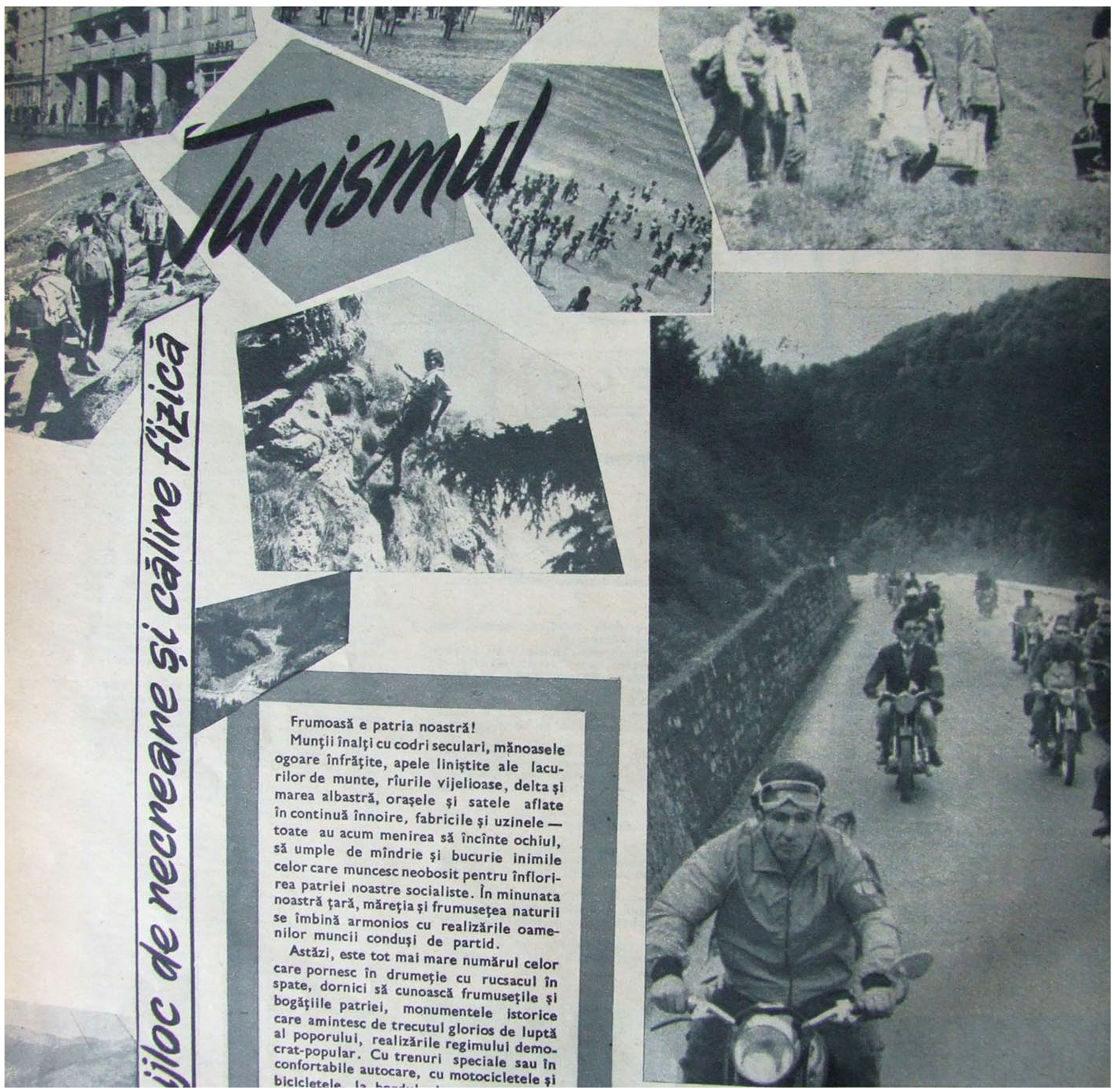
Mass tourism advertisement, referencing collective motorcycle rides
As the state encouraged moto-mobility through allocating imported bikes to state-owned companies, local authorities, and collective farms, it did not take long before they were integrated into working-class culture. This was facilitated by workers’ clubs, which played an important part in spreading use of the motorcycle and its cultural visibility within the general population. The factories and plants where workers’ motorcycling clubs flourished would routinely organize not only sports events and races but also trips and journeys in which anyone who owned a bike was welcome to participate. A popular magazine dedicated to automobile sports was founded in the 1960s (Sport și Tehnică, discontinued in 1977) that featured motorcycles and motorcycle trips in almost every issue.
Aside from skilled workers and technical and political personnel, the motorcyclists of that era were also lawyers, engineers, and medical doctors. Generally, they were people with higher education, but they also included mechanics and craftsmen. As far as the former, pre-socialist elite families were concerned, switching from cars to motorcycles allowed them to preserve some of their pre-war lifestyle. Several memoirs of that period link motorcycling to inner freedom and oblique criticism of the regime. Remembering his first motorcycle in the 1950s, an architect born in 1928 noted in his memoir that it was “the most faithful friend and it represented our chance to escape the daily nightmare of life under communism, a leisure opportunity, enjoying clean air in nature, getting to know the country, new places, and the means to live in nature. We spent the last day of [each week] in peace, chatting, barbecuing by a river in an excellent mood and forgetting Stalinism and socialist realism in arts and culture.” 34 Here, as elsewhere, motorcyclists of the 1950s enmeshed memories of their rides in narratives of freedom and escapism from a constraining political system.
With the rise in the number of cars in the 1970s and 1980s, the status of motorcycling changed. Although one could still encounter middle-aged couples riding sidecar motorcycles in the 1970s and 1980s, the car gradually took over. Motorcycling became relegated to a more marginal status. It became mainly a premarital, early adulthood form of mobility, preceding the acquisition of a car and often associated with risk-taking and recklessness. The same process was noticed in the USSR as well. 35 The image of respectability, progress, and sporting competition of earlier decades was quickly transferred to the private car. Shedding their previous connotations of pre-communist higher-class luxury, representations of cars became centered on the family, a positive association for the Romanian socialist state.
One senior motorcyclist linked the sexual connotations of motorcycling to practices of marginalization and cooptation by the state. A moto journalist since the 1970s, he recounted how during the 1970s and 1980s the meeting places of motorcyclists in Bucharest were close to the student dormitories, where it was easier to meet girls and also interact with foreign students. As the government was suspicious of these links and subsequently policed such places, the location of bikers’ meetings changed often, extending out to the margins of Bucharest. The same narrative of containment and removal was offered by another motorcyclist, a skilled industrial worker at the time (now retired), who remembered that in the 1980s he was profiled at each police checkpoint and asked for ID. That suggests that bikers were similar to other groups such as “dissidents, hippies, punks, yogis, nonconformist artists, squatters, pacifists, and religious dissenters,” who, according to Juliane Fürst, 36 shared that they “consciously wanted distance—spatial, mental, and ideological—from the regime under which they lived. And they wanted to achieve this aim by not doing rather than doing something.” The downgrading of the public image of motorcyclists after 1970 was most likely linked to the growth of the road network and in the cultural visibility of cars after Romania began to produce them. Thus, motorcycling gained more of an aura of masculinity, adventure, and sexual freedom, shedding many of its utilitarian, job-related connotations of earlier decades.
Socialist Motorcycling and Its Maintenance and Repair Public
Maintenance, repairs, and tinkering were central to the socialist mobility system. Studies of the consumer culture of the period indicate that socialist societies were, as Ekaterina Gerasimova and Sofia Chuikina nicely put it, “repair societies,” by which they mean “that the owner-user must first work on [the machine] to make it fully functional, accommodating the object to their needs and themselves to the object’s idiosyncrasies.” 37 That applied to both cars and motorcycles. As Lewis Siegelbaum indicates, there were also differences between them pertaining to: “the size of initial down payments, functions of the vehicles, and status accruing to their owners.” 38 Building on this observation and adding technological insights gathered from interviews with users and socialist-era moto-magazines, in this section I will outline the centrality and specificity of maintenance and repair practices for motorcycle culture.
Compared to car drivers, motorcyclists are more inclined to carry out maintenance and repair activities themselves. 39 Most of my interviewees mentioned that they felt much more “invited” to try to repair motorcycles than cars. One interviewee, a retired fifty-nine-year-old policeman who started as a Mobra owner in 1980, reflected on the fact that, while it never crossed his mind to repair his car by himself, he began repairing his bike soon after he purchased it and carried out all the maintenance operations, such as replacing sparkplugs or oil. The exposed engine of a motorcycle was approachable, facilitating visual and tactile interaction with it. Sight was not the only important sense in this kind of material interaction. 40 The design of two-stroke engines made them much more accessible to the hands so that they required less demanding bodily postures and physical operations than four-stroke engines or the fuel-injection motorcycles of today.
The centrality of maintenance and repair practices was also technologically driven. Compared to current motorcycles, the vast majority of those produced prior to the 1980s, especially the two-stroke engines that dominated the 1950s, 1960s, and 1970s biker culture in Romania, were technologically simple and easy to interact with. The components of their engines served one of three functions: ignition, carburetion, or lubrication. 41 Their simplicity made them accessible if one needed to engage with them—and they worked on simple principles, or at least principles that were simple for their users. This was nicely captured by one motorcyclist, now in his late sixties. Evoking his past motorcycles, he explained that “two-stroke engines were simpler [compared to the four-stroke variety], anybody could learn how to fix them. Basically, you had a carburetor, a compression device, and an ignition. No valves, no camshaft, so no camshaft chain. If you were not stupid, you could do a lot by yourself.” As the key mechanical principles were intuitive, motorcyclists could engage with engine breakdowns through simple cause-and-effect cognitive reasoning—learn the causes and repair them. Thanks to a combination of technological accessibility, thrift, and male-bonding, most repairs were carried out by bikers themselves, together with their neighbors and other bikers, instead of professional mechanics. This created a high degree of attachment between bikers and their machines.
The dividing line between motorcyclist and mechanic was therefore, generally speaking, blurred: most motorcyclists were forced to engage with their motorcycles often and to take part in collective repairs of their peers’ motorcycles. Of course, not all bikers were equally knowledgeable about engines in the past, but many were able to attend to substantial maintenance and repair operations. Possession of more highly developed mechanical skills attracted the attention of others, as well as prestige and marginal gains. One older, working-class, “veteran” motorcyclist, known inside the community for his passion for MZ motorcycles, recounted a trip to the GDR, the country where these bikes were produced. Since he travelled from Romania all the way to the GDR carrying a set of tools, he initiated interactions with German MZ motorcyclists and volunteered to fine-tune their brakes, clutches, and anything else he found in need of repair. He accepted beer and their company in exchange for these small services. 42 There are numerous other instances of such exchanges and conversions of mechanical capital into social capital. To this day, during the annual meeting of “communist motorcycles,” collective ritual repair sessions are still in evidence. In one that I attended (Figure 4), out of thirty bikes, eleven were fine-tuned and repaired. “Veterans” offered advice to the amateur mechanics and enjoyed the respect of the newcomers, who were docilely willing to learn from them.
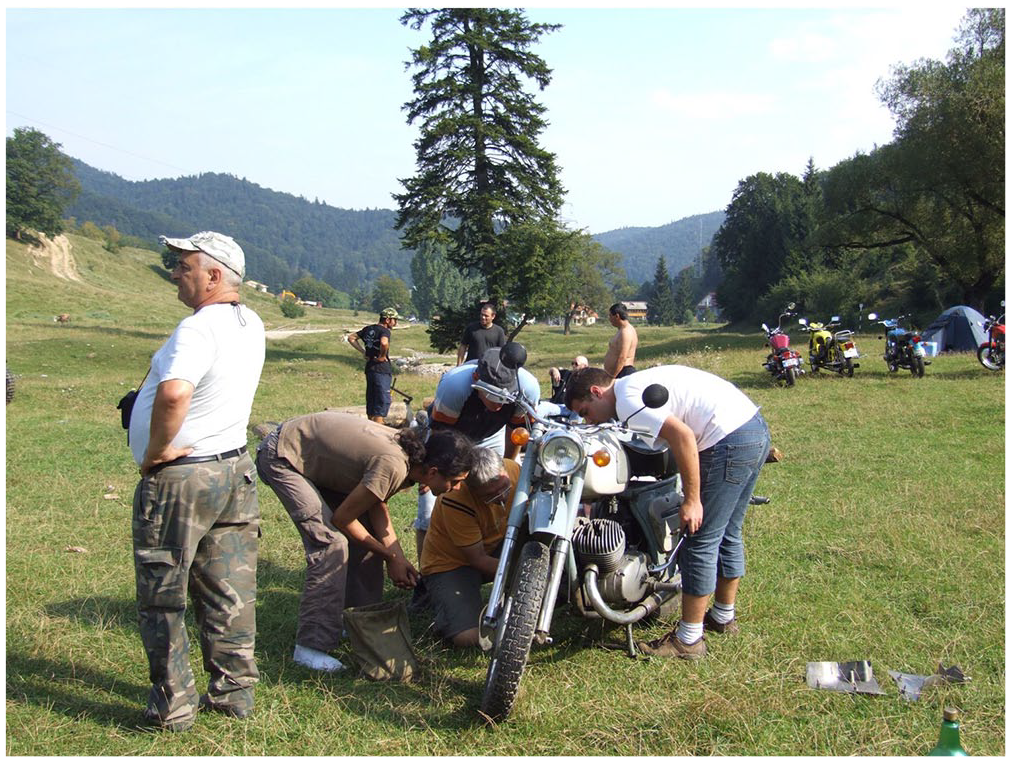
“Communist” motorcycles annual meeting, Prahova County, 2012
The interviews revealed that most often, these activities were collective, based on shared technical knowledge and improvisations. The practice of maintenance and repair was socially validated by participants in social gatherings surrounding the mechanical activities. The peers participating in repairs included other bikers, neighbors, and mechanics present at the scene. Material interaction with motorcycles was collectively managed, in order to find spare parts, share knowledge, learn improvisation and make new contacts with other amateur mechanics. Once motorcyclists began their social careers, they received support from other members of the community in handling motorcycles as technological objects. Most often, this consisted in learning regular maintenance operations such as fine-tuning the carburetor and clack valves, fixing the ignition timing, greasing the chain, and replacing sparkplugs. Soon enough, usually within two years, most bikers learned to do these things for themselves.
An additional feature of motorcycling experience was that leisure trips were collective, rather than solitary, rides. A story published in the July 1962 issue of Sport şi Tehnică magazine 43 covered a trip made by sixty bikers, organized by the employees’ club of the Voinţa factory in Bucharest. The story is embedded into narratives of the growth of agriculture and industry, but also covers pastoral sights and experiences of nature: “Motorcycles are curbed at the edge of the forest and bikers unpack their luggage to have lunch in the green meadow. The portable radios deliver songs. Fun is at its peak.” Some of these trips were organized by groups of peers and friends who shared a passion for motorcycling; others were organized by clubs made up of factory employees or sports clubs sponsored by factories.
According to the interviewees, bikers’ weekly meetings and trips were also occasions when maintenance and repairs got done. Music festivals, attended by many motorcyclists, were also opportunities for doing maintenance and repair. The same ex–police officer mentioned earlier, a young adult in the 1980s, recounted how during meetings in his hometown, motorcyclists chatted about how to dismantle parts and how to fix different kinds of breakdown. During those meetings, they exchanged personal histories of motorcycle breakdowns and repairs: “We used to meet as a gang and share what we had been doing to our motorcycles. This is how we used to get them fixed. We got so skilled that we could take the engine to pieces on a table and then put it all back together.”Another source of knowledge about do-it-yourself repairs and maintenance were the technical and automotive magazines of the post-war period. Whereas nowadays, in the fuel injection era, automotive magazines focus on comfort, safety, and sensitivity to commands, during the post-war period magazines contained substantial technical information, as well as general articles about combustion, carburetion, and tools and other do-it-yourself advice useful for maintenance.
It is noticeable, therefore, that the centrality of maintenance and repair practices was related to technology. Socialism overlapped with a good part of the carburetion-based technological cycle that dominated motorcycle design until the 1990s. A specific factor for socialist countries, including Romania, was, however, the shortage economy. Shortage meant not only an undersupply of many consumer goods, but also unpredictable and improvised cycles of manufacture, as companies often lacked the raw materials necessary for steady production. 44 This economic architecture forced people to seek constant contacts that would enable them to obtain goods, maintain relations, and be active in the informal economy. The same was true for the socialist system of automobility, which was likewise defined by “shortages, privileges, waiting lists, a certain type of sociability around the car, and the special role mechanics occupied in this system.” 45 Not just car use, but motorcycle use too was based on dense social interaction and dense networks of support, the recycling and circulation of spare parts, and knowledge of repair and maintenance.
Nine Forms of Maintenance and Repair Activities
As Alejandro De Cross-Corzo reminds us, maintenance and repairs do not simply re-create objects, but often lead to innovation. 46 This was especially true in Romania since there was a relative shortage of replacement parts during state socialism, which made people value spare and used parts much more than in other economic and cultural contexts. Motorcycle parts often acquired extra life, beyond the length of time that they were normally designed for. So, just like motorcycles and cars themselves, spare parts acquired object biographies and “social lives.” 47 Motorcyclists had extensive knowledge about who owned spare parts, who might be willing to exchange a used part, and who had formerly owned a particular piece.
I will turn next to a detailed analysis of this web of objects, owners, knowledge, and exchange that underwrote the maintenance and repair culture and outline a comprehensive set of nine material interventions that emerged from the empirical material. They are ordered from simple to complex in terms of the knowledge and labor required. Some, like maintenance or accessorization are transhistorical, as they have been documented in many countries; others, such as hybridization or the construction of “assemblage motorcycles,” are specific to certain periods of the socialist era. The complexity of such operations exceeds the continuum suggested by Kurt Möser between “technical interventions, officially approved” and “aesthetic interventions, officially disapproved.” 48 Some almost blur the line between maintenance, repair, and improvisation on the one hand, and the creation of new, composite technological objects, opening up interesting questions about the sociology of maintenance and repair. I will discuss each below.
First, there were simple maintenance operations, such as replacing a burned-out light bulb, changing the oil, replacing friction pads, lubrication, the adjustment of the brake wires and the clutch cable. These represented material engagements of an average level of complexity, thus making it easy for bikers to carry out the interventions themselves.
Second, there were accessorizations and redecorations, the “nonessential surplus” that created distinction and prestige through technical-aesthetic interventions. 49 The “sportization” of cars, mentioned by Kurt Möser, 50 extended to bikes and bikers as well, especially since the state supported motorcycle racing. These included replacing the motorcycle’s seat or handlebars or fitting different wheels than those stipulated by the manufacturers. Redecorations, most often, meant adding windshields, or different mirrors, seats, and other “expressive” visible parts to the motorcycles. Technically, they were less invasive and rather simple.
Third, many bikers engaged in what might be called “restorative repair,” by which I mean addressing inbuilt manufacturing defects, especially for the Mobra motorcycles produced in Romania from 1971. Although there were upgrades in 1973 (the Mobra S) and in 1981 (the Mobra Turist), they had some weak design spots, especially connected with the front fork, rear suspension, battery, oil leakage, and power cables. Although the manufacturer tried to address these shortcomings in the later models, the owner-users did not wait and it was they who improvised and identified ways to fix the flaws. Sometimes, users would use parts extracted from other makes of motorcycles that were compatible with the Mobra. This resembles the situation with regard to Trabant cars as described by Kurt Möser, 51 who says that users found ways to address the known faulty parts of brand new cars on their own.
Fourth, extensions and enhancements meant gaining additional comfort through functional improvements. A representative example was the addition of extra suspension, the installation of better and handier electric ignition, enhancing the interior volume of the engine or bolting on supports for luggage. Other customizations were the enlargement of the tank from 15 to 20 liters in order carry more fuel, as in the 1980s gas was rationed to one full tank per month.
Fifth, there were customizations. Like extensions and enhancements, they were more complex and substantive interventions. They were aesthetic and/or technical means of individualizing bikes. They involved transformations of the frame, as well as of the engine and other mechanical parts. A good example is the story of a mechanic, nicknamed “The Professor” among the bikers whom I interviewed, who ran a customization workshop in the basement of the apartment building where he lived. From the 1980s to the present he has been a real “institution” among bikers. He transformed his first Mobra into an off-road bike. Then, he specialized in transforming Ij models. He bought them broken, repaired them, customized them into choppers and sold them. These arrangements were part of the socialist era “second economy” 52 : he was working in a factory where he could use the company’s metal lathes, milling machines, tool-grinding machines, and blowpipes for his interventions. He worked on the bikes after factory work hours ended, using raw materials that he bought and carried in his backpack. 53
Sixth was the pair of sudden breakdowns and serious malfunctions. Breakdowns required higher levels of technical knowledge and cognitive ability if problems were to be diagnosed and solved while on the road. Owner-users addressed breakdowns collectively with other bikers with whom they travelled or whom they befriended. This peer-based form of maintenance and repair developed in order to compensate for the scarcity of service stations under socialism and forced bikers to acquire technical knowledge. Many motorcyclists travelled together because they would then be in a better position to handle repairs.
Seventh was the refurbishment of old parts. It was a complex operation. After wearing out, camshafts, cylinders, combustion chambers, suspensions, and pistons were refilled with molten metal and then, through lathe operations, brought back to their original dimensions. Because spare parts were difficult to find and costly, bikers would take the old parts to workshops and factories that restored them to close to their initial condition.
The complexity of knowledge and heuristic value increased substantially for the last two forms of material intervention to be found among socialist bikers. The eighth type of repair was the hybridization of different vehicles. Hybridization involved “interspecies” implants based on the portability of parts not only between different makes of motorcycles but between motorcycles and cars. With the rise of domestic production of the Mobra, a true cottage industry of such transplants emerged. The case of a former mechanic, now aged sixty-five, whom I also interviewed several times is illustrative. He explained some of his past interventions in a motorcycling magazine. He explained that Mobra motorcycles supported Jawa and CZ handlebars. Some accessories from CZ and Zundapp 50 motorcycles fitted them as well. MZ and Jawa K-175 sixteen-inch back wheels could be used. Custom-made pistons and carcasses with wings (ideal for quicker cooling) were cast in order to replace factory-made Mobra carcasses. He also produced exhaust pipes copied from various motorcycle magazines, as well as backlights made out of wood. He substituted, for instance, the front light with a tractor light, because tractor lights were larger. 54
Such transfers were made not only between different types of motorcycles but also between cars and motorcycles. Mechanics learned quickly that some car parts could be used for bikes. One common occurrence, according to several interviewees, was the transplanting of valves from Soviet Lada car engines (which were easy to find) to Soviet Dnepr motorcycle engines (which were rather rare). Similarly, the piston of a Czechoslovak-made Skoda S100 could be used in a GDR-made Simson motorcycle. The distribution chain of the Skoda S100 and S105 worked well in Ij motorcycle engines. The gas tap of the GDR-made Trabant could be transferred to MZ, Simson, Mobra, and Hoinar motorcycles. 55 The culture of hybridization was supported by popular technical magazines that spread information about how to fix your own motorbike. Later on, during the 1980s, West German motorcycling magazines arrived in Romania. They represented a further source of knowledge for the local customization of bikes. A mechanic of that era explained some of these transformations. He was particularly proud of the transformation of a Soviet Ij Jupiter 5 motorcycle into a Honda 1000F. He kept the engine and gearbox from the Ij and transferred them to a new, Honda frame that he made himself, using a picture in a magazine. First he produced the mold, then cast the steel frame. 56
To further elaborate on hybridization, let me introduce the instructor on the mechanics course that I attended. A man in his mid-sixties, has been the “hub” of an extensive network of folk mechanics and owners of carburetor-engine motorcycles since the early 1980s. He often carried out repairs in sessions that attracted many people and were a combination of standup comedy performance and mechanics pedagogy. To this day, he asks the people whose machines he services to leave him the used parts. When I started to hang out with him after the mechanics course was over, I realized that he was involved in many barter exchanges, asking for objects and technical operations in exchange for repairs. In one instance he fixed and balanced the carburetors of a Kawasaki ZZR 250 in exchange for handlebar grips part manufactured on a lathe owned by an acquaintance of his. Offering examples from his youth, he encouraged us, his students, to improvise, to use heuristics and be thrifty. On one occasion, when I asked him to replace the handlebar from my own Harley-Davidson bike, he asked me to give him the old part so that he could use it for his Honda. As the handlebar was thicker than his Honda would take, he modified the piece, installed it and then began to brag about his “Honda with a Harley handlebar.”
The ninth form of maintenance and repair, even more complex than hybridization, involved “assemblage motorcycles.” This is a native term and I borrow it from the memoirs of an old biker. 57 Assemblage motorcycles were fairly specific to the period between the end of World War II and the import of motorcycles from the USSR (early 1960s). What the person who coined this term meant was that motorcycles were constructed by piecing together parts from different models and makes, leading to the creation of “new,” fully hybrid machines that could not be truly slotted into or pigeonholed as a particular brand. The motorcyclist who coined this term explained, describing his second, assemblage motorcycle, as follows: “it was Swiss, with an [English-made] Brown gearbox and English rims and the battery installation and the magneto were open-choice, could have been Bosch. Apparently, the bike, together with another 40 units, had been ordered by the Leonida Dealership—the largest automotive dealer in pre-war Romania—for the security services of the World War II head of state. But, because of changes in the alliance system of the state, they had never been delivered and were sold off by the dealership prior to nationalization.” 58
Pre-communist motorcycling resources continued to shape the dynamics of the early socialist period. There were small, concentrated clusters of technical skill, information, and social interaction. One person, whom I interviewed extensively, told me how prior to World War II he had worked together with his father in their own automotive repair shop. His father, apparently, was a respected figure; he also headed the automotive mechanics association in Bucharest in the 1930s. In 1950 the workshop was nationalized, becoming part, together with other service stations, of Cooperativa Automecanica. Father and son continued to work in the same premises but under the supervision of the cooperative. The son (my interviewee) had meanwhile become a motorcycle racer with outstanding results. In 1953 and 1954, he won the national championship, while continuing to work with his father. Their workshop also acted as a hub for many motorcyclists in Bucharest. They duplicated spare parts for motorcycles produced in Eastern and Western Europe that could not be imported. For instance, in order to prolong the life of engines, they would cast pistons to replace ones that were worn, sometimes piecing together “assemblage motorcycles” out of the spare parts that they acquired.
The wide range of maintenance, repair, tinkering, improvisatory, and creative activities covered here exceeds, it may be noticed, the categories previously described in the literature on maintenance and repair—aesthetic, technical, formal, informal, and so on. This wide spectrum of material engagements reinforces Kurt Möser’s point that tinkering, maintenance, and repair represent distinct new forms in their own right, different from the initial purposes of technological objects. 59 Möser distinguishes between (Eastern) material transformations made out of necessity and (Western) pleasure-seeking customization, 60 but necessity versus pleasure is helpful only up to one point. For instance, motorcyclists were (and still are) often attracted by the beauty of engines themselves, not necessarily by their accessories. While the distinction has some validity, it is obvious from the examples that I have outlined above that there are more relevant dimensions.
Conclusions
In this article, I have argued that most research into the automobility system during socialism has primarily centered on cars and ignored motorcycles. Motorcycles were, at least during the early socialist decades, more important numerically than cars, and they fulfilled important workforce, leisure, tourism, and even administrative roles. The presence of machines left over after World War II, imports from other socialist countries, and the rise of domestic production from the 1960s preserved a central role for the motorcycle in the automobility system in Romania well into the 1980s. Covering this gap and omission creates a different and more nuanced image of how automobility changed under socialism.
I have also argued that motorcycling during socialism created a strong maintenance and repair culture. Socialist societies have been described as “repair societies” and automobility was a prime location of repair practices. Existing studies have, again, focused on car repairs, thus limiting the universe, extent, and nature of repair practices. For motorcycles, maintenance and repair was even more important. The exposed nature of their components, their relative technological simplicity, and frequent breakdowns made motorcyclists knowledgeable about the technological aspects to such an extent that the distinction between user and mechanic was rather irrelevant. The usage of these machines relied on a unity between thinking and doing, 61 on the “reflexive embodiment” 62 generated at the intersection of engine design with the social organization of the moto-mobility system.
Throughout this study, I have approached the technological components of motorcycles and the maintenance and repair practices associated with them as an entry point into “a more synthetic perspective, bringing into our conceptions of machines all sorts of nontechnological elements.” 63 Focusing the analytic effort on motorcycles and their users’ material engagements with them is a window onto issues of agency and structure during socialism that complicates our understanding of such societies as socio-technical systems, rather than simply political systems. Although I have only touched upon these issues, this study may enrich the discussion about other spaces and practices of negotiation with state hegemony, such as yoga and nudists in Romania, 64 hippies in Soviet Estonia, 65 or punk rock in the GDR. 66 To give just one example, one study nicely documents the impact of the growth of the domestic automobile industry on the expansion of mass tourism in 1970s and 1980s Romania. Yet, by that time, motorcycles had already been playing that same role in tourism for several years, as one can see from the organization of factory outings on motorcycles in the 1950s and 1960s, and contemporary advertisements for radio-sets. 67 Implicitly, then, this study enlarges our understanding of socialist societies as consumer societies. 68
The material that I have gathered enriches the existing knowledge about repair culture during socialism. Stephen Graham and Nigel Thrift have suggested that maintenance and repair have been insufficiently studied and are likely to receive much more attention. 69 The socialist period might be an ideal setting for studying such topics. Engaging with Kurt Möser’s analysis of maintenance and repair, and paying closer attention to technology and technical knowledge, I have suggested that one may identify a wide variety of material engagements that have been rather bypassed by existing studies. Such material interventions relied on extensive technical knowledge that circulated among peers, engineers, mechanics, and “simple” users. As I explained in the previous section, a rich maintenance and repair culture was facilitated both by the technological vision of manufacturers, who did not black-box the engines and motorcycles, and by a shortage of replacement parts. With the advent of electronic fuel injection motorcycles worldwide from the 1990s, the increased availability of replacement parts, the liberalization of trade after the end of socialism, and the attempts of motorcycle dealers to keep customers dependent on their repair shops, that culture and the knowledge that it relied on have shrunk in the last two decades in Romania, and probably in other ex-socialist countries as well.
Footnotes
Acknowledgements
I would like to thank Steven E. Alford, Suzanne Ferriss, Robbie Peters, Adrian Deoancă, Juris M. Milestone, Juliane Fürst, Josie McLellan, and Steven Jackson for the suggestions on this research project. Wendy Bracewell, Krzysztof Jasiewicz, and the two anonymous reviewers offered insightful comments that greatly helped me improve this text. I presented an earlier version in the panel “What Will an Anthropology of Maintenance and Repair Look Like?” (organized by Juris M. Milestone), held at the 2014 Annual Meeting of the American Anthropological Association in Washington, DC.
