







Abstract
Collaboration among professionals is a vital component for successful inclusion of students with disabilities. In many cases, teacher preparation programs assume that teacher candidates know how to collaborate without explicit instruction or authentic practice and, therefore, omit coursework on collaboration. Alternatively, some programs may require coursework in collaboration but that coursework may exclude candidates from any other programs. In this article, we describe candidate outcomes from a course about collaboration that was taught in two ways: (a) as a co-taught course with faculty and candidates from social studies and special education and (b) as a course in the special education program that included only faculty and candidates in special education. Candidates in both groups constructed pre- and post-course concept maps about collaboration. We conducted both quantitative and qualitative analyses to determine depth, breadth, and complexity of understanding of collaboration as well as growth in these areas. Findings and implications are discussed.
Following legislation that increased the participation of students with disabilities in general education classrooms (e.g., IDEA, Every Student Succeeds Act), collaborative problem-solving and co-teaching have become increasingly prominent recommendations to support these students. Special and general educators work together to design and deliver instruction that is appropriate for all learners. Co-teaching is a unique form of this collaboration that is related specifically to instruction. Though evidence in support of co-teaching is mixed (see Murawski & Swanson, 2001; Scruggs, Mastropieri, & McDuffie, 2007), it is garnering much attention in schools. According to Friend and Cook (2013), co-teaching is a service delivery option for providing specialized services to students with disabilities or other special needs while they remain in their general education classes. Co-teaching occurs when two or more professionals jointly deliver substantive instruction to a diverse, blended group of students, primarily in a single physical space. (p. 163)
Implicit in this definition is the idea that teachers with various perspectives, areas of expertise, and experiences are expected to plan and teach together for the benefit of their shared students. Missing from general conceptions of co-teaching are the requisite skills and dispositions needed to implement co-teaching practices, such as developing a collaborative relationship with an individual from a different professional background and being able to effectively resolve conflict. As Kloo and Zigmond (2008) state, “simply putting two teachers . . . in a room and telling them to work together does not accomplish the lofty goals described by advocates of coteaching” (p. 14). It is important to note that the skills to become an effective collaborator are not intuitive and must be developed both during pre-service and in-service teacher training (Jacobowitz & Michelli, 2008).
Collaboration in Teacher Preparation
The idea to model collaboration and co-teaching in teacher preparation programs is described in a review by Nevin, Thousand, and Villa (2009) who argue “that how professors perceive each other and interact with one another is a neglected aspect of university life and should not be ignored” (p. 572). Given the increasing need to develop the skills necessary to participate in collaborative partnerships such as co-teaching, it is logical that teacher preparation programs would include instruction and practice opportunities in these areas. Harvey, Yssel, Bauserman, and Merbler (2010), however, conducted a national survey of teacher preparation programs and found that, although many programs offered courses in special education and the characteristics of students with disabilities, few employed co-teaching models of instruction or offered courses on collaboration. Though all respondents in this research stated collaboration was important to teacher preparation, few programs had resources allocated to support it. Such a failing leads to a lack of preparation for teachers as they enter the field expected to utilize these skills (Harvey et al., 2010). Planned experiences and coursework for teachers and teacher candidates to gain an authentic understanding of effective collaboration have been infrequent (Scruggs et al., 2007) and anachronistic (Pugach, Blanton, & Correa, 2011). While many teacher education programs may include field experiences focused on collaboration (Fullerton, Ruben, McBride, & Bert, 2011), it is not clear that they do so in ways that model the time-intensive, long-term collaboration in which these teachers will engage in their schools.
Although there are reports of increased manifestations of co-teaching and collaboration among faculty members, research on the area is still developing. In a review of the research on collaborative teaching in higher education teacher preparation programs, Nevin et al. (2009) found four position papers that addressed a wide variety of theoretical frameworks, five studies with program descriptions, two quantitative or mixed methods studies, and three qualitative studies. One quantitative study compared candidates’ grades and found “no discrepancies” between co-taught and individually taught online and face-to-face courses (Collis, Andernach, & van Diepen, 1996). The other quantitative studies evaluated the differences in candidates’ attitudes and knowledge after a co-taught versus an individually taught course. No significant differences were detected between the two groups on an attitudinal scale but a qualitative analysis indicated a heavier emphasis placed on lesson planning and instructional processes for the co-taught group (Nowacek & Blanton, 1996). It is notable, however, that both of these studies provided only limited attention to student outcomes about the content area and not collaboration, itself. Further, these studies are now two decades old. Nevin et al. (2009 concluded, “There were no models for research that assess the impact on student achievement when professors co-teach” (p. 573). That conclusion suggests that attention to the relationship between research and teaching preparation practices that foster teachers’ abilities to employ high-leverage practices is needed in efforts to prepare teachers to collaborate and co-teach.
Developing Ideas of Collaboration
Teacher preparation programs combine a series of courses and field placement activities to develop the values, beliefs, and tools that programs then hope teachers will use in their classroom practice. The coherence between the instruction teachers receive and how they implement what they have learned has been explained using the ideas of activity theory (Engeström & Miettinen, 1999; Grossman, Smagorinsky, & Valencia, 1999). Activity theory describes learning and knowledge as occurring through labor in a joint, collective activity (Engeström & Miettinen, 1999). According to Vygotsky (1925), “We are conscious of ourselves because we are conscious of others; and in an analogous manner, we are conscious of others because in our relationship to ourselves we are the same as others in their relationship to us” (p. 275). Vygotsky goes on to identify several components of human behavior that are different from animal behavior. He cites Darwin’s identification of animal behavior as controlled by inherited experience and inherited experience times personal experience. For human behavior, Vygotsky also includes historical experience, social experience, and doubled experience. Doubled experience is the conceptualization of behavior or experience in one’s mind first that is then played out in behavior. In other words, “labour is repeated, in the movements of the hands and the changes produced in the material being worked on, what had already been done beforehand in the worker’s imagination” (Vygotsky, 1925, p. 252). This doubled experience or imagination can only be captured by the use of words and examined to understand the perception of the social experience as it exists in this doubled experience. In his theory, Vygotsky likens human behavior to a funnel into which the outside world sends an infinite number of stimuli and the individual must sort and determine how to respond. This response, or behavior, is then determined by the factors of inherited, personal, historical, social, and doubled experience.
Researchers have applied Vygotsky’s original theory to various fields of human endeavor, including education and teacher learning. In educator preparation, activity theory supports understanding of the ways teacher candidates adopt and use conceptual tools (e.g., principles, frameworks, and ideas about teaching and learning) and practical tools (e.g., classroom practices, strategies, and resources) from teacher preparation programs. Further, activity theory frames the way we can examine teacher candidates’ practices within the contexts, the social and historical experiences, and within the ways teacher candidates learn about these tools, their communities of practice, and how their use is governed by their level of appropriation of the tools. Appropriation is the level of adoption and use of tools within a given context (Grossman et al., 1999). Given the variables of context and prior beliefs, appropriation exists at varying levels. At Level 1, candidates do not appropriate tools because they either do not know enough about them, they do not fit with their beliefs, or the context is not conducive to the learning or use of the tool. At Level 2, teachers have only adopted a label for the tool and cannot use it in context or identify its critical features. Level 3 is when teachers understand a tool at a superficial level but, again, cannot implement it effectively. At Level 4, teachers understand and know the critical features of a tool, and at Level 5, they can seamlessly incorporate it into their teaching (Leko & Brownell, 2011).
Researchers (e.g., Grossman et al., 1999; Valencia, Martin, Place, & Grossman, 2009) have used activity theory to guide analysis in several longitudinal studies of pre-service teachers in general education. They found that pre-service teachers appropriated tools for their instructional practice even if their student teaching experiences did not support these tools, as long as teacher educators provided support and encouraged reflection. These teachers also drew on what they had learned in their preparation program but mostly after their second year of teaching. Based on a study of special education pre-service teachers, Leko and Brownell (2011) theorized that teachers were able to appropriate tools related to reading instruction when they had (a) access to the knowledge, (b) confidence in their abilities, and “most important, (c) opportunities to apply the knowledge and tools in practice with adequate support and feedback” (p. 247). In summary, researchers in education who have applied activity theory find that access to the knowledge and skills as well as opportunities for practice are critical to appropriation.
Grounded in the theoretical framework of activity theory and the need for teacher candidates to have both access to the knowledge and skills about collaboration and the context within which to practice them, the first and second authors, faculty in special education and secondary social studies education, implemented a co-taught course on consultation and collaboration that included teacher candidates in both secondary social studies and special education. This theoretical foundation allowed us to examine the ways teacher candidates were provided and used practice opportunities for collaboration. Before the present investigation, only special education teacher candidates were required to complete a course on collaboration. Beginning in the spring of 2013, we co-taught one section of this course each spring semester (co-taught sections). Additional sections of the collaboration course continued but were taught by special education faculty only and included only special education teacher candidates (independently taught sections).
Our research aim was to determine whether there were differences in the conceptual understanding, and therefore the level of appropriation, of collaboration between teacher candidates enrolled in the co-taught, co-program course (CT group) and teacher candidates enrolled in the independently taught, special education only course (I group). Specifically, we sought to answer the following research questions:
Method
After receiving approval from the Institutional Review Board, this study was conducted in a large, graduate teacher preparation program at a public university in the mid-Atlantic region over a 2-year period. Candidates in these programs typically received eligibility for a state teaching license in addition to a Master of Education (MEd) degree.
Participants
This study included a total of 66 participants across four sections of the “Consultation and Collaboration” course. Two sections included both special education (n = 8, 12) and social studies (n = 10, 8) teacher candidates. These were the co-taught sections (CT group). Two additional sections included only special education candidates (n = 15, 13). These were the independently taught sections (I group). All candidates were enrolled in graduate teacher education programs and working on their initial teaching licensure; however, 32 teacher candidates (ranging from 30%-40% of students in each section) were already working in schools as either provisionally licensed teachers or as long-term substitutes. Participants ranged in age from approximately 22 to 42 years of age. Forty-two of the participants were female.
Consultation and Collaboration Course
The first author, a special education faculty member, and the second author, a secondary social studies faculty member, co-developed and co-taught the CT group sections of the course. Both faculty members had experience in K-12 public school settings as well as with co-teaching in these settings. The first author taught the I group sections that included only special education teacher candidates. The number of contact hours for each course section was the same, though the duration of the terms varied. The co-taught sections met weekly for 2 hours and 40 minutes during each week of the 16 week spring semester. The independently taught sections were conducted in summer sessions of 6 weeks, with three meetings of 2 hours and 40 minutes per week. Though the duration of the summer course was a concern, we determined that the instructor, and therefore course content, was the more significant variable to hold constant.
Both courses
The requirements for the course were similar across both types of sections. In each course, the content was broken into three themes: (a) effective collaboration skills, (b) co-teaching and instruction, and (c) Individualized Education Program (IEP) development. Assignments included completing tasks in a group and reflecting upon the group process, developing content area lesson plans using a variety of co-teaching models, and writing an IEP for a student described in case study documents. Classes for both groups were conducted in a similar manner with an initial lesson provided by the instructor(s), followed by practice opportunities and work sessions.
Co-taught course
The co-taught classes included examples of instruction and strategies within the context of social studies instruction that were taught by the second author. For example, when the first author conducted a lesson on effective vocabulary strategies for students with disabilities, the second author modeled examples of the instruction in a secondary social studies lesson.
Independently-taught course
In the independently taught course, the first author conducted the same lesson on vocabulary strategies and provided examples from a variety of content area lessons. Additionally, when studying group process skills, in the co-taught class, Authors 1 and 2 would often role-play examples and nonexamples for candidates and candidates would work in groups with candidates from different preparation programs. In the independently taught course, the first author would describe examples and nonexamples or would script interactions and special education candidates would work in groups with other special educators. A full description of the co-taught course can be found elsewhere (Pellegrino, Weiss, & Regan, 2015). The independently taught course included the same content as the co-taught course.
Measures
To measure teacher candidates’ conceptual understanding of collaboration and its change following completion of the course, we used the concept mapping and analysis procedures described by Miller et al. (2009). Concept maps are a graphical representation of the ideas and connections one has related to a topic (Miller et al., 2009; Novak & Gowin, 1984). In the first meeting of each course section, following explicit instruction on the creation and use of concept maps, teacher candidates created an individual, original concept map with collaboration as the central concept. They were tasked to include everything they understood about collaboration within the map. These were their pre-course maps. In the last meeting of each course section, teacher candidates were given their original concept maps and asked to review and revise them in whatever way they deemed necessary. These were the post-course maps.
Variables
We evaluated the concept maps using both quantitative and qualitative measures. The quantitative measures used to conceptualize understanding in concept maps were (a) the number of unique nodes (items, terms) included in the entire concept map to indicate the breadth of understanding of a concept; (b) the number of connections or links between nodes (arrows or lines connecting items) to indicate the complexity of understanding of a concept; and (c) the number of levels (connected items from the center) from the central concept to indicate the depth of understanding of the concept (Miller et al., 2009; Morine-Dershimer et al., 1992; Novak & Gowin, 1984). See Figure 1 for an example of a concept map.
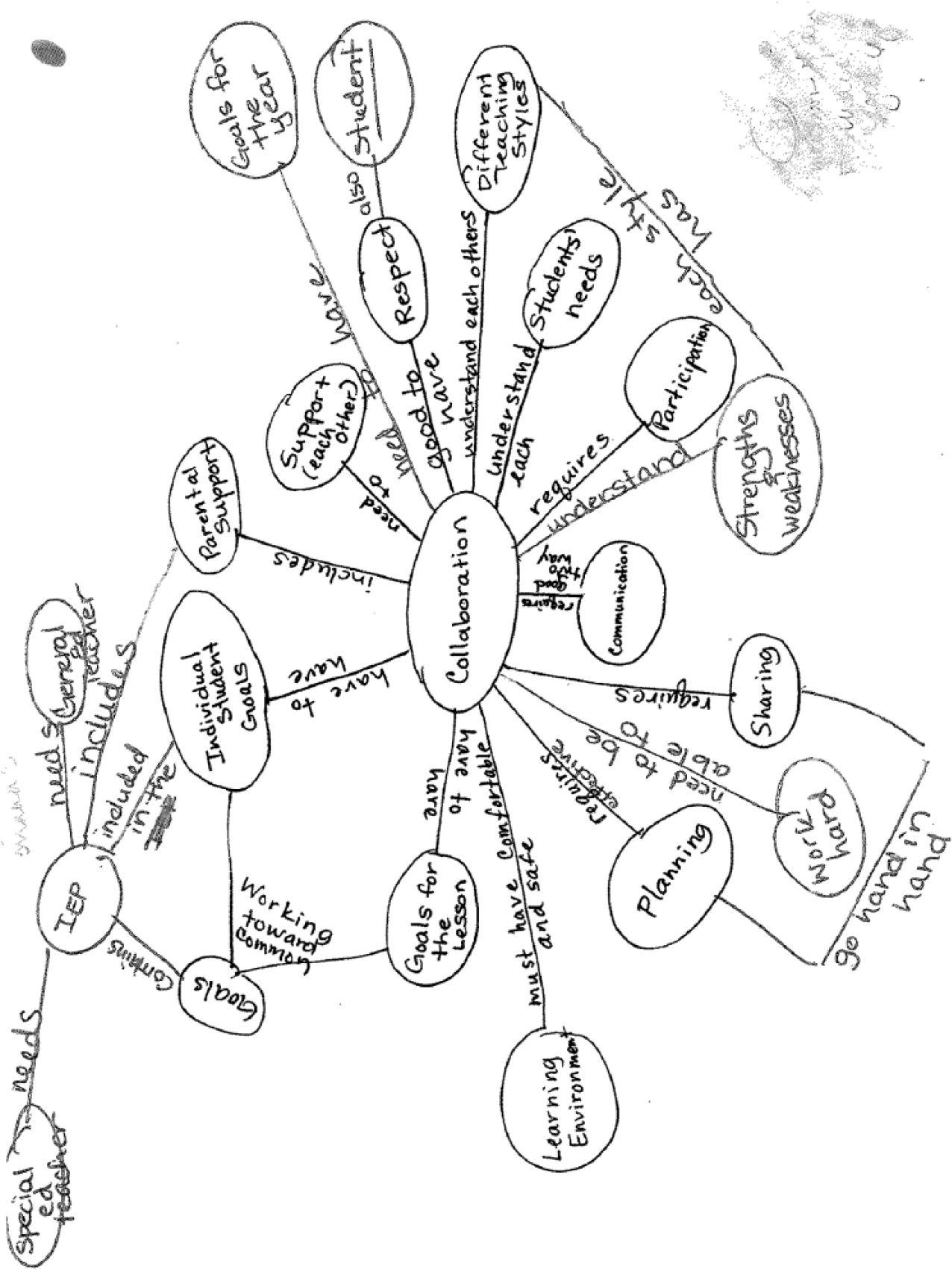
Concept map example.
Data collection procedure
In the first meeting of every course, the first author conducted a lesson for approximately 20 minutes on the creation and use of concept maps. Following instruction, teacher candidates were given a topic (e.g., lunch) and asked to create a simple concept map with everything they understood about lunch. When the concept maps were completed, the candidates shared the maps with partners and received feedback from their peers and the faculty member(s). When the practice opportunity was completed, each candidate received a blank sheet of paper, was directed to put collaboration as the central concept of the map on the paper, and given 20 minutes to create a concept map that included all of their knowledge and understanding about collaboration. At the end of 20 minutes, the first author collected the maps and kept them in a file folder. Candidates did not see the concept maps again until the final session of the course.
In the final meeting of each course, the first author distributed the original concept maps to the teacher candidates and directed them to review the concept maps to determine if any revisions, additions, or deletions were necessary. If they decided to make revisions, candidates were directed to use a pen or pencil that was different from the one used in their original concept map. Again, candidates were given 20 minutes to complete the review, and the concept maps were collected.
Data analysis
For the quantitative analysis, the first and second authors scored all concept maps by counting the number of nodes, connections, and levels of each pre- and post-concept map.
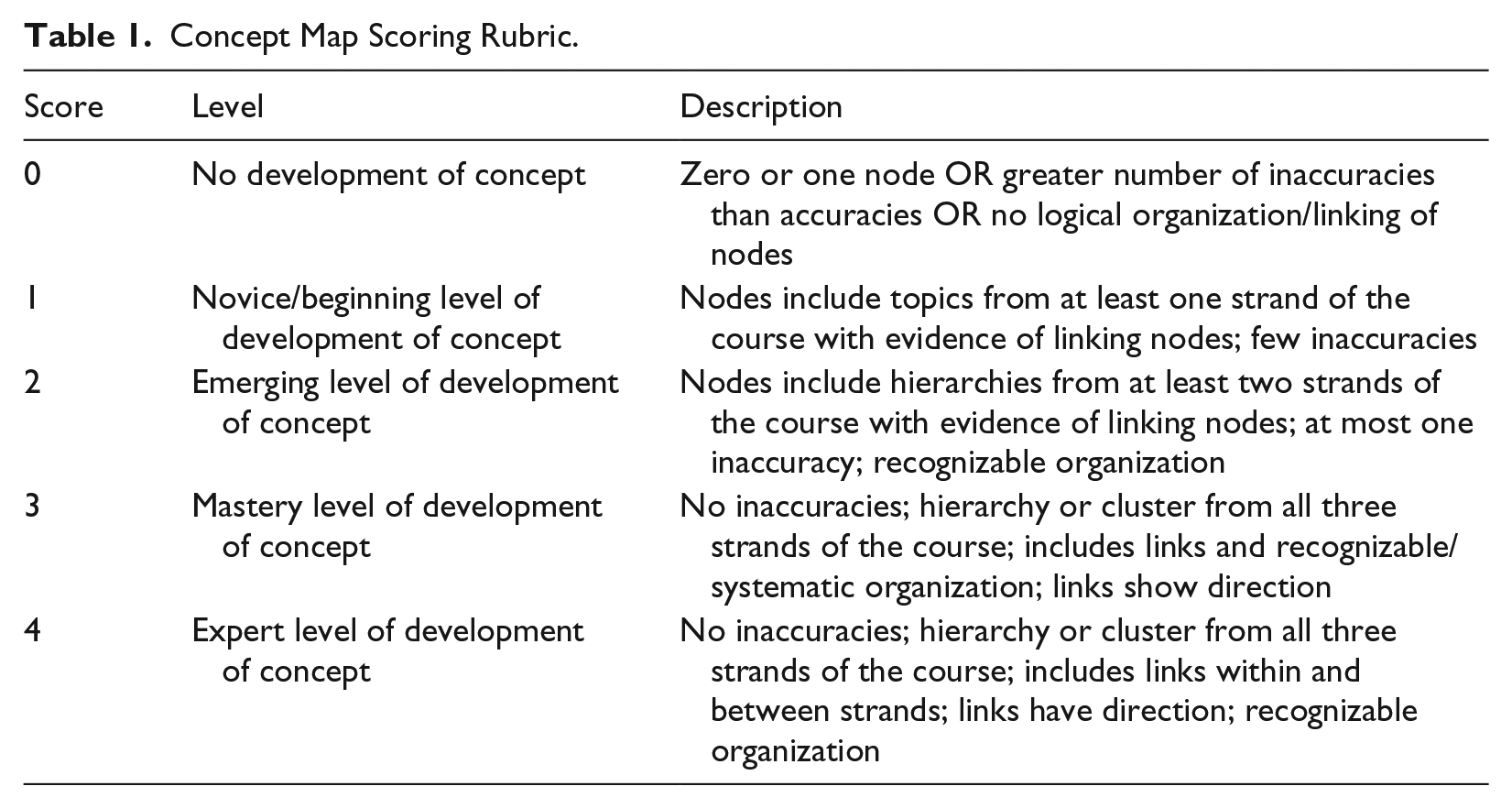
Using the procedures of Miller et al. (2009) as a guide, we developed a rubric to qualitatively analyze the concept maps. See Table 1 for the final rubric description. Rubric development occurred in several steps. First, we collected the lesson plans for all sessions and copied the lesson objectives and vocabulary terms into a Word document. Second, we organized these lesson objectives and terms into the three strands of the course: (a) group process and communication skills, (b) lesson planning and instructional strategies, and (c) IEP development. Third, we assigned rubric levels that included descriptions of content, accuracy, organization, and links (Miller et al., 2009). For example, to earn a score of 2 (emerging level of development of concept), a concept map would have to include hierarchies from at least two of the strands of the course with linking nodes between ideas, no more than one inaccuracy, and a recognizable organization. We defined a hierarchy as a group of connected nodes whose top-most node is linked directly to the primary node (Greene et al., 2013). Using this rubric, both authors scored four concept maps and used these as training guides for scoring of the rest of the concept maps. The first author scored each post-course concept map. The second author scored 20% of the concept maps. Reliability was calculated using the number of agreements / total number of concept maps × 100. Reliability was 95%.
Concept Map Scoring Rubric.
Results
All quantitative data was entered into SPSS for analysis. Our research questions revolved around differences between the CT group and the I group on measures within the concept maps, including nodes, connections, and levels. Table 2 includes group descriptive statistics for each variable.
Descriptive Statistics by Group.
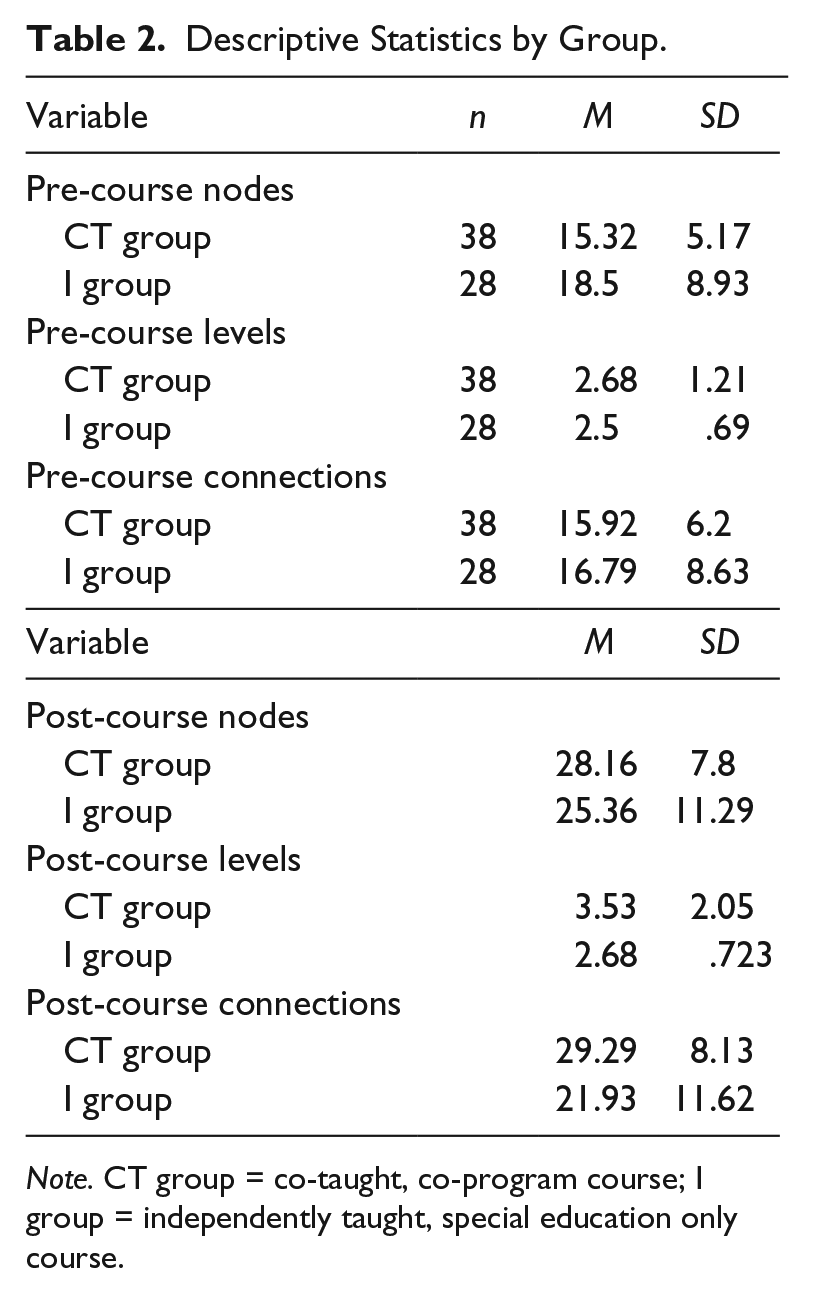
Note. CT group = co-taught, co-program course; I group = independently taught, special education only course.
Research Question 1
In addressing the first research question, whether there were differences in the post-course concept maps of the groups on all variables, we initially conducted independent-samples t tests on pre- and post-course nodes, connections, and levels. Levene’s test for equality of variance was significant for all variables in this analysis. Therefore, we proceeded with a more conservative analysis that made no assumptions about equality of variance, using the Mann-Whitney U test. Table 3 includes these results. No significant differences were found between groups on any of the pre-course variables nor on the post-course variables of nodes and levels. There was a statistically significant difference favoring the CT group on the connections variable.
Pre- and Post-Course Comparisons Between Groups.
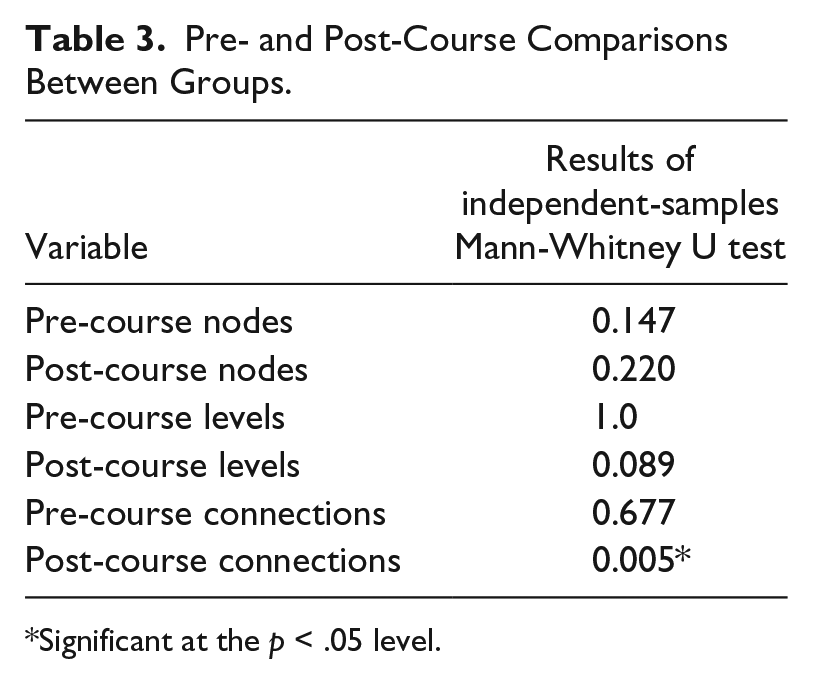
Significant at the p < .05 level.
Research Question 2
To understand growth in concept development for each group, we created a difference score by subtracting the pre-course from the post-course value for each of the three variables. We conducted independent-samples t tests to compare the difference scores of nodes, connections, and levels between the two groups. Table 4 includes these results. There were statistically significant differences favoring the CT group on all three variables.
Growth Comparisons (Difference Scores) Between Groups.
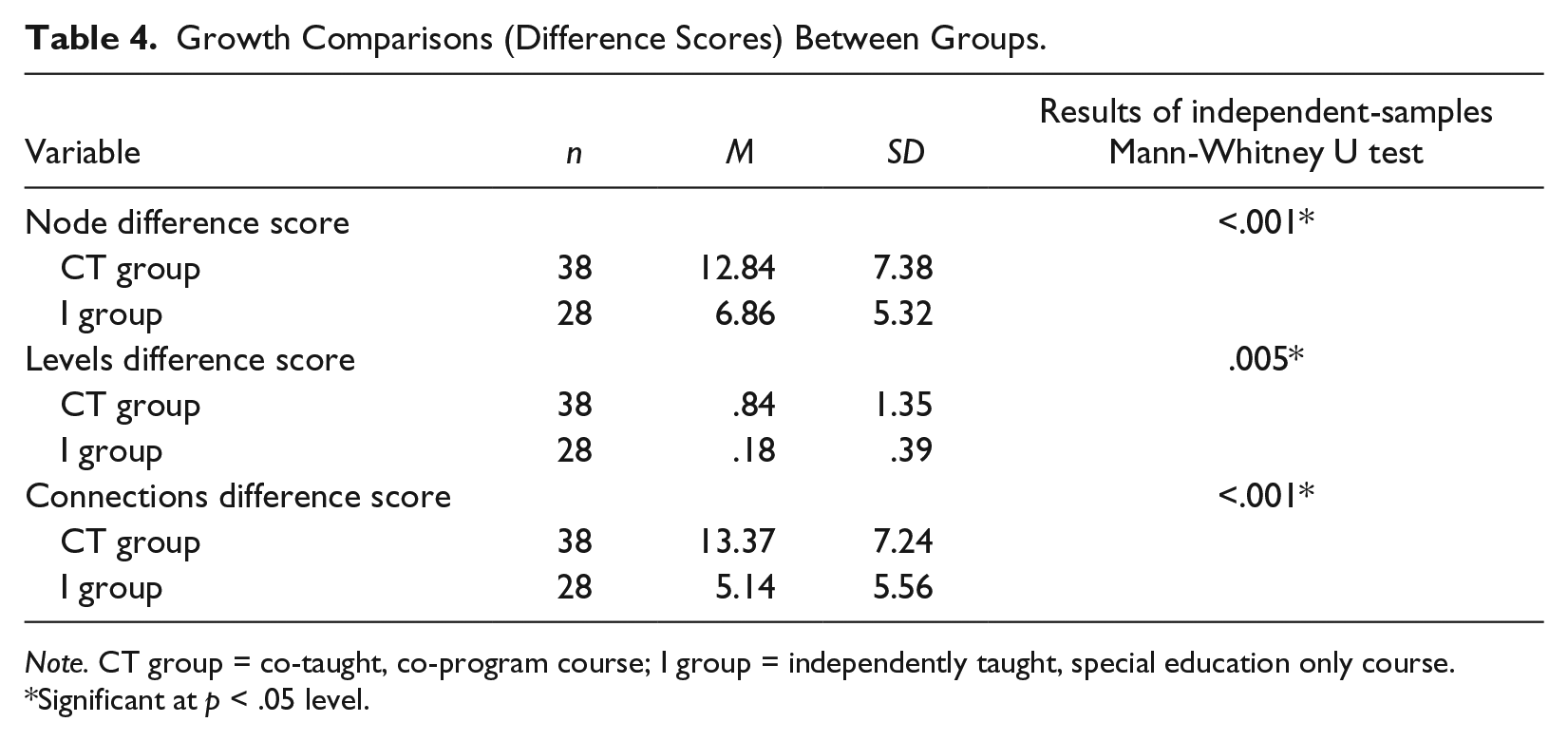
Note. CT group = co-taught, co-program course; I group = independently taught, special education only course.
Significant at p < .05 level.
Research Question 3
Last, to answer the third research question, how do the two groups compare on the content, accuracy, and organization of their understanding of collaboration, we examined the occurrence of levels on the scoring rubric. No concept map in either group scored a 4, representing an expert level of development of the concept of collaboration. A score of 3 indicated the candidate had no inaccuracies in his/her concept map, included hierarchies from all three strands of the course with links between them, and organized the map in some recognizable way. The CT group had a distribution from 0 to 3, with 50% scoring a 1 or beginning level of development. Thirty-seven percent of the CT group scored a 2, an emerging level of development of the concept of collaboration. Alternatively, the I group’s distribution ranged from 1 to 2, 82% of the I group scored a 1 and 18% scored a 2. See Table 5 for results.
Post-Course Rubric Scores by Group.
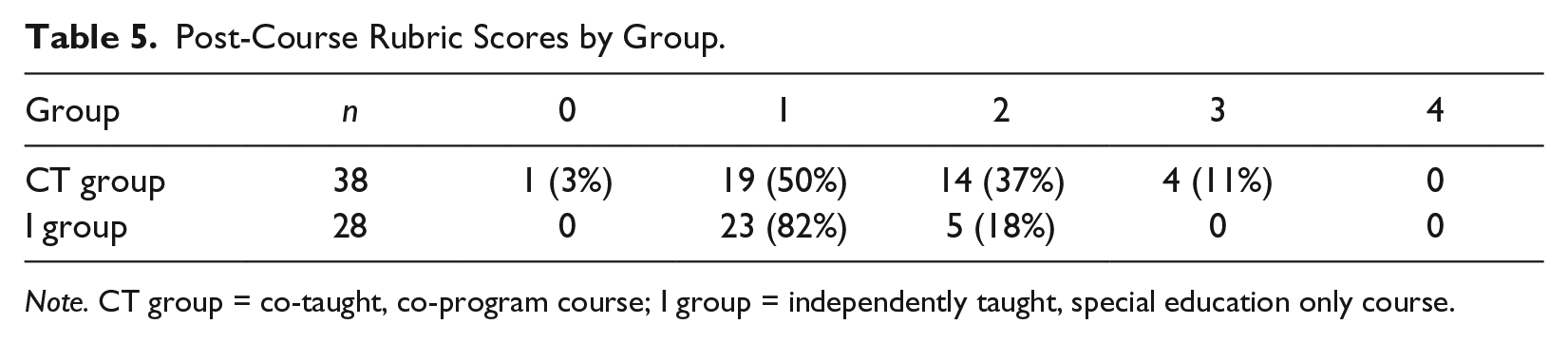
Note. CT group = co-taught, co-program course; I group = independently taught, special education only course.
Discussion
As more K-12 students with disabilities receive their instruction in general education classrooms, and continue to struggle on performance measures (U.S. Department of Education, Office of Special Education Programs, 2012), transformation in how instruction is delivered in those classrooms is necessary. That change may be promoted by providing opportunities in which teachers and teacher candidates learn to work with other education professionals to plan and deliver instruction for the benefit of all learners. And these opportunities must move beyond teaching general educators to read and interpret IEPs, and supporting special educators’ acquisition of content knowledge in the discipline of their co-teachers. Instead, attention to the nature and processes of collaboration as well as tools and strategies to work with professionals should be fundamentally part of teachers’ professional training and development. Unfortunately, heretofore, teacher preparation has done little to include explicit training on collaboration and co-teaching and opportunities for joint, collective practice even while collaboration in planning and teaching is becoming a ubiquitous expectation for teachers (Friend & Cook, 2013). Furthermore, while attention to co-teaching as a manifestation of teacher collaboration may be part of a prospective special educator’s program of study, general educators do not typically get the same preparation (Harvey et al., 2010). The current structure fails to promote connections between teachers who are working with some of the most vulnerable populations of youth and does not provide the opportunity for teacher candidates to appropriate the conceptual underpinnings of collaboration at any level (Grossman et al., 1999).
By applying activity theory to the challenge of how teacher candidates understand collaboration, we developed a co-taught course for teacher candidates from both special education and secondary social studies education that included opportunities for authentic practice in joint activities within which to learn to apply the knowledge and skills of collaboration within a social context that would allow authentic practice (Engeström & Miettinen, 1999; Vygotsky, 1925). Our purpose was to help these students appropriate the pedagogical and conceptual tools of collaboration for use in their teaching practice by providing instruction in collaboration within a context that required candidates to collaborate with others who were from different professional programs. We did so in ways and through tasks similar to what they would face in a school setting including developing lessons for diverse groups of learners and IEPs from case study data (Grossman et al., 1999). When we compared the CT group’s with the I group’s understanding of collaboration through pre- and post-course concept maps, we found few differences in absolute score comparisons; however, there were significant differences on all variables when examining growth.
Data from our research, for example, indicated that the teacher candidates in the co-taught course included elements from all three strands in their post-course concept maps in more specific and robust ways than those from the individually taught course. Not only did they include these elements, but they made connections between, for example, how awareness of the group process enables appropriate and effective use of collaborative strategies and tools to facilitate IEP development. Additionally, our data showed us that the candidates in the co-taught course made specific use of disciplinary norms and themes to apply to collaborative practices. Not only is this an authentic means of how collaboration happens in schools, but it also represents a broader conceptual understanding of collaboration we believe is an important link to actually practicing effective collaboration.
We conclude from the combination of these measures that the candidates in the co-taught course group who participated in activities within a collective environment that included those outside their own discipline grew in their understanding of the conceptual underpinnings and tools of collaboration, attaining a higher level of appropriation than those who practiced collaboration with only those within their own discipline. Though this result would seem intuitive, it is often not considered in the coursework to prepare teachers.
Limitations
The number of teacher candidates who participated in this study was small. Larger studies may provide greater insight and more stability into the variables under consideration. In addition, the independently taught classes, although containing the same number of contact hours, were carried out in an intensive, shorter summer session. The extent to which the shorter number of weeks in the independently taught classes affected results remains unclear. Finally, all of the general education teachers were preparing for the area of social sciences at the secondary level. It is possible that general education teachers preparing to teach in other disciplines or to teach younger students may respond differently to the different instructional models employed in this study.
Implications for Teaching
Teaching and teacher preparation are complex endeavors. According to activity theory, the interaction of teachers’ and teacher candidates’ beliefs, preparation, and the context within which they learn and work have an impact on the instruction they ultimately provide (Grossman et al., 1999). From within that environment, teachers are challenged to work with diverse learners far more often than ever before. Moreover, this work is done in a climate of accreditation requirements and accountability evaluations that makes their work all the more challenging in many respects. The aims of this study were to examine how teacher preparation programs might attend to the context of instruction in developing conceptual understanding and inclination toward appropriation of collaboration in those enrolled in these courses that were similar in objectives, but fundamentally different in delivery. The model we set out to enact—one in which teacher educators practice co-teaching as a means to deliver instruction on collaboration and candidates are given the opportunity to practice skills with candidates from different professional programs—appears to have supported the general and special education candidates toward a richer conceptual understanding of collaboration and how working together to plan and deliver instruction can be appropriated.
It is important to recognize that teacher candidates may not be prepared to work with the diversity of students in their classrooms through traditional course and clinical work alone (Scruggs et al., 2007) nor do they typically experience working with other teacher candidates outside of their disciplines (Friend & Cook, 2013; Goddard, Goddard, & Tschannen-Moran, 2007). And as collaboration between educators becomes more common in schools (Appleby, Adler, & Flihan, 2007; Nevin et al., 2009; Pratt, 2014; Pugach et al., 2011), it is important to recognize that the knowledge and skills to become an effective collaborator are not at all intuitive (Arthaud, Aram, Breck, Doelling, & Bushrow, 2007). These skills must be developed within coursework and clinical experiences (Friend & Cook, 2013; Levine, 2006). According to Harvey et al. (2010), “(t)eacher training institutions . . . have a responsibility to ensure that all teacher educators, especially pre-service teachers, are well prepared to meet the challenges of inclusion in the face of NCLB and IDEA requirements” (p. 25). Though the findings of our study evaluate the conceptual understandings of collaboration, we would argue that teacher preparation programs need to build these understandings through authentic practice opportunities so that pre-service teachers then have a conceptual foundation upon which to develop their skills in schools.
Footnotes
Declaration of Conflicting Interests
The author(s) declared no potential conflicts of interest with respect to the research, authorship, and/or publication of this article.
Funding
The author(s) received no financial support for the research, authorship, and/or publication of this article.