






Abstract
Early childhood teachers increasingly serve dual language learners (DLLs) with or at risk for disabilities, yet many report limited preparation to address their complex linguistic and learning needs. Professional learning grounded in culturally and linguistically responsive practices (CLRPs) and practice-based learning (PBL) has been proposed as a means of supporting teachers in developing responsive instructional practices. This review examined 19 empirical studies that met the inclusion criteria and focused on professional learning designed to prepare teachers to support DLLs with or at risk for disabilities from birth to age 8. Professional learning most frequently addressed linguistic responsiveness and instructional strategies and incorporated PBL components such as coaching and modeling. These programs improved teachers’ knowledge and beliefs, whereas changes in instructional practices and child outcomes were mixed. Evidence remains limited and largely focused on in-service PD, highlighting the need for stronger integration of CLRP and sustained PBL opportunities in future professional learning.
Keywords
Introduction
Across the United States, the number of dual language learners (DLLs) is increasing, and these numbers are expected to continue rising (U.S. Census Bureau, 2024). In the early childhood (EC) years specifically, approximately 33% of children under the age of 6 and 15% of public-school students in first and second grade are classified as DLLs (National Center for Education Statistics, 2024). All EC teachers will likely serve DLLs, including DLLs with disabilities, over the course of their professional careers (Ortiz & Robertson, 2018); however, scholars have questioned teachers’ readiness to respond to the complex and varied learning needs of this population (Bowman et al., 2001; Castro & Artiles, 2021; Zepeda et al., 2011).
Characteristics of DLLs
DLLs refer to a heterogeneous group of bilingual children and second language learners. This group includes children who are exposed to and have opportunities to develop two languages simultaneously from birth (i.e., simultaneous bilinguals). It also includes children who begin learning a second language after first developing a home language other than English, often because they are primarily exposed to the home language until they enroll in EC programs where English is the primary language of instruction (i.e., sequential bilinguals; Paradis et al., 2021). DLLs come from a wide range of racial, ethnic, cultural, linguistic, and socioeconomic backgrounds, contributing to the rich diversity of early learning environments (Durán et al., 2016, 2021).
The presence of DLLs in EC classrooms can offer important educational and social benefits. For example, classrooms serving DLLs are more likely to foster children’s deeper understanding of diverse cultural perspectives (García & Ortiz, 2008), promote cross-cultural communication skills, and help prepare children to participate in a global economy (U.S. Department of Health and Human Services & U.S. Department of Education [HHS & DOE], 2017).
However, simply including DLLs in classrooms does not automatically lead to these benefits. Rather, teachers play a critical role in creating classroom environments and implementing CLRPs that enable DLLs to benefit from bilingualism and linguistic diversity while reaching their full academic potential (Callahan & Gándara, 2014). This role becomes even more critical for DLLs with or at risk for disabilities, who often require additional instructional support to address both language development and learning needs.
Professional Learning for Supporting DLLs With Disabilities
Despite the importance of this role, many EC teachers report limited preparation for effectively supporting DLLs. For example, without a solid understanding of dual language development and the language acquisition process, EC teachers may struggle to distinguish between delays caused by a disability and those that are part of typical second language acquisition (J. E. González et al., 2022). As a result, some teachers may hesitate to assess or refer DLLs for further evaluation (Liu & Leko, 2025). This uncertainty may contribute to the underrepresentation of DLLs in early intervention and special education programs compared to their monolingual peers (Artiles & Ortiz, 2002; Rueda & Windmueller, 2006).
Furthermore, without appropriate training and practice, many EC teachers may lack the knowledge and skills necessary to provide differentiated instruction that supports both DLLs’ language development and content learning (Castro & Artiles, 2021). Consequently, compared to monolingual English-speaking peers, young DLLs often exhibit lower levels of language and early literacy skills in both their home language and English (Hoff et al., 2014; Marcella et al., 2014). They are also more likely to demonstrate reduced kindergarten readiness and make limited academic progress when receiving special education services (Castro & Artiles, 2021; Grasparil & Hernandez, 2015; Zetlin et al., 2011). These persistent challenges underscore the urgent need to strengthen EC teachers’ professional learning to effectively support DLLs with or at risk for disabilities.
CLRP for DLLs With Disabilities
In response to these challenges, Ortiz and Robertson (2018) identified core competencies required for teachers working with DLLs with disabilities and emphasized CLRPs as foundational to effective instruction. CLRP calls for the deliberate integration of cultural relevance and linguistic responsiveness into all aspects of instructional planning and delivery (Klingner et al., 2015; Lucas et al., 2008). Scholars often conceptualize CLRP across four interrelated dimensions: (a) cultural knowledge, (b) language and linguistic responsiveness, (c) instructional and assessment practices, and (d) social interaction and relationship-building (Linan-Thompson et al., 2018).
The cultural knowledge dimension highlights the integration of diverse perspectives, values, traditions, and norms into the curriculum (Linan-Thompson et al., 2018). The language and linguistic dimension emphasizes the flexible and purposeful use of language to facilitate learning (Linan-Thompson et al., 2018). The instructional and assessment dimension refers to the strategies teachers use to deliver content effectively and monitor student progress (Linan-Thompson et al., 2018). Finally, the social dimension encompasses how teachers build relationships with students, engage families, and communicate expectations within culturally responsive classroom environments (Linan-Thompson et al., 2018). Together, these dimensions underscore the importance of equipping teachers with the knowledge and skills necessary to implement instruction that is both equitable and responsive to DLLs with disabilities.
In classroom practice, CLRP is often enacted through instructional and linguistic decisions that shape how instruction is delivered to DLLs. Effective teachers tend to view bilingualism as a strength, possess knowledge of second language acquisition, respect the use of home languages, and differentiate instruction in ways that affirm students’ cultural and linguistic identities (Lucas et al., 2008; Rodríguez et al., 2014). Findings from research reviews also highlight the importance of maintaining and supporting bilingual development for DLLs with disabilities. G. A. Cheatham et al. (2012) reviewed comparison studies examining bilingual instruction and related interventions and concluded that maintaining and developing both the home language and English is a critical component of culturally and linguistically appropriate services. Soto and Yu (2014) reported findings supporting bilingual approaches for DLLs who require augmentative and alternative communication (AAC). More recent syntheses (e.g., Crowe et al., 2021; Hur et al., 2020) extend this evidence base, indicating that bilingual instruction can promote English early literacy development among DLLs with or at risk for disabilities without hindering home language growth.
Beyond decisions regarding the language of instruction, research also highlights the importance of a well-designed core curriculum and evidence-based instruction aligned with CLRP principles, with additional supports layered as needed (Buysse et al., 2014; T. González & Artiles, 2015). Such supports may include understanding DLLs’ diverse cultural backgrounds, building meaningful relationships with DLLs in the classroom, providing explicit vocabulary instruction, offering supplemental instruction in students’ primary languages, and using visual and contextual scaffolds (August et al., 2021; Boyle et al., 2015; LaForett et al., 2013; Orosco & Klingner, 2010). In addition, teachers may scaffold academic content, incorporate explicit linguistic supports, and design learning experiences that connect to students’ prior knowledge and lived experiences to enhance engagement and comprehension (August & Shanahan, 2017; Gay, 2002; Moll, 1992; Ortiz & Artiles, 2010).
PBL as a Mechanism for Developing CLRP
Although the literature provides substantial guidance regarding the knowledge and skills teachers need to implement CLRP for DLLs with disabilities, translating this knowledge into effective classroom practice remains a significant challenge. The presence of conceptual guidance does not necessarily ensure its enactment in instruction. For example, Scott et al. (2014) found that even when teacher preparation curricula were aligned with CLRP principles, teacher candidates demonstrated limited progress in translating conceptual knowledge into inclusive instructional practices. Similarly, Barrio (2021) reported a disconnect between preservice teachers’ expressed beliefs about culturally responsive teaching and their actual implementation of CLRP in inclusive classroom settings. Together, these findings highlight a persistent theory-to-practice gap in teachers’ professional learning.
To address this gap, scholars increasingly emphasize PBL as a mechanism for strengthening teachers’ instructional competence. PBL engages teachers in scaffolded opportunities to enact targeted instructional practices in authentic or simulated contexts, supported by modeling, feedback, and structured reflection (Leko et al., 2023). Through repeated cycles of enactment and analysis, teachers develop pedagogical skill, professional judgment, and adaptive expertise necessary for responsive teaching (Brownell et al., 2019).
These features are particularly critical for preparing teachers to support DLLs with disabilities, whose learning needs often require the integration of knowledge about language development, disability, and cultural context. Modeling allows teachers to observe how experienced educators make instructional decisions that simultaneously address linguistic and learning needs (Grossman et al., 2009). Targeted feedback helps teachers refine their use of scaffolding strategies, home-language supports, and differentiated instruction to address disability-related learning needs (Brock & Carter, 2017). Structured reflection may support teachers in adapting evidence-based practices to the linguistic, cultural, and developmental profiles of individual learners (Nagro et al., 2017; Nagro & Monnin, 2022). By shifting professional learning from knowledge transmission to the supported enactment of instructional practices, PBL may provide a promising framework for developing teachers’ capacity to implement CLRP effectively for DLLs with disabilities.
Current Study
Supporting DLLs with disabilities requires teachers to integrate knowledge of language development, disability, and CLRP into their instruction. Prior research has highlighted the importance of practice-based approaches within teachers’ professional learning to support the implementation of these practices. However, despite this growing body of scholarship, it remains unclear what kinds of professional learning opportunities have been studied to prepare EC teachers to support DLLs with disabilities, what content these learning opportunities include, how they are implemented, and what outcomes have been examined. For these reasons, we conducted a scoping review to systematically map the existing empirical literature on professional learning for EC teachers working with DLLs with disabilities. This review addressed the following research questions:
Method
Search Strategy
The current review study adhered to the Preferred Reporting Items for Systematic Reviews and Meta-Analyses extension for Scoping Reviews (PRISMA-ScR; Tricco et al., 2018). See Figure 1 for the search and selection process. We used three phases to identify articles for inclusion in the review. In the first phase, we conducted electronic searches in three databases (Academic Search Premier, Education Resources Information Center [ERIC], and PsycINFO) through January 2025. We applied filters to limit articles to those that were published in peer-reviewed journals and written in English. We did not apply a publication date filter to avoid unnecessarily narrowing the scope of eligible studies. We developed search terms to capture key participant characteristics (e.g., DLLs, “multilingual learners”, preschooler) and teacher education programs (e.g., “teacher education,” “teacher preparation,” “professional development”). We provided an example of the search strategy used for one database in Supplemental Text 1.
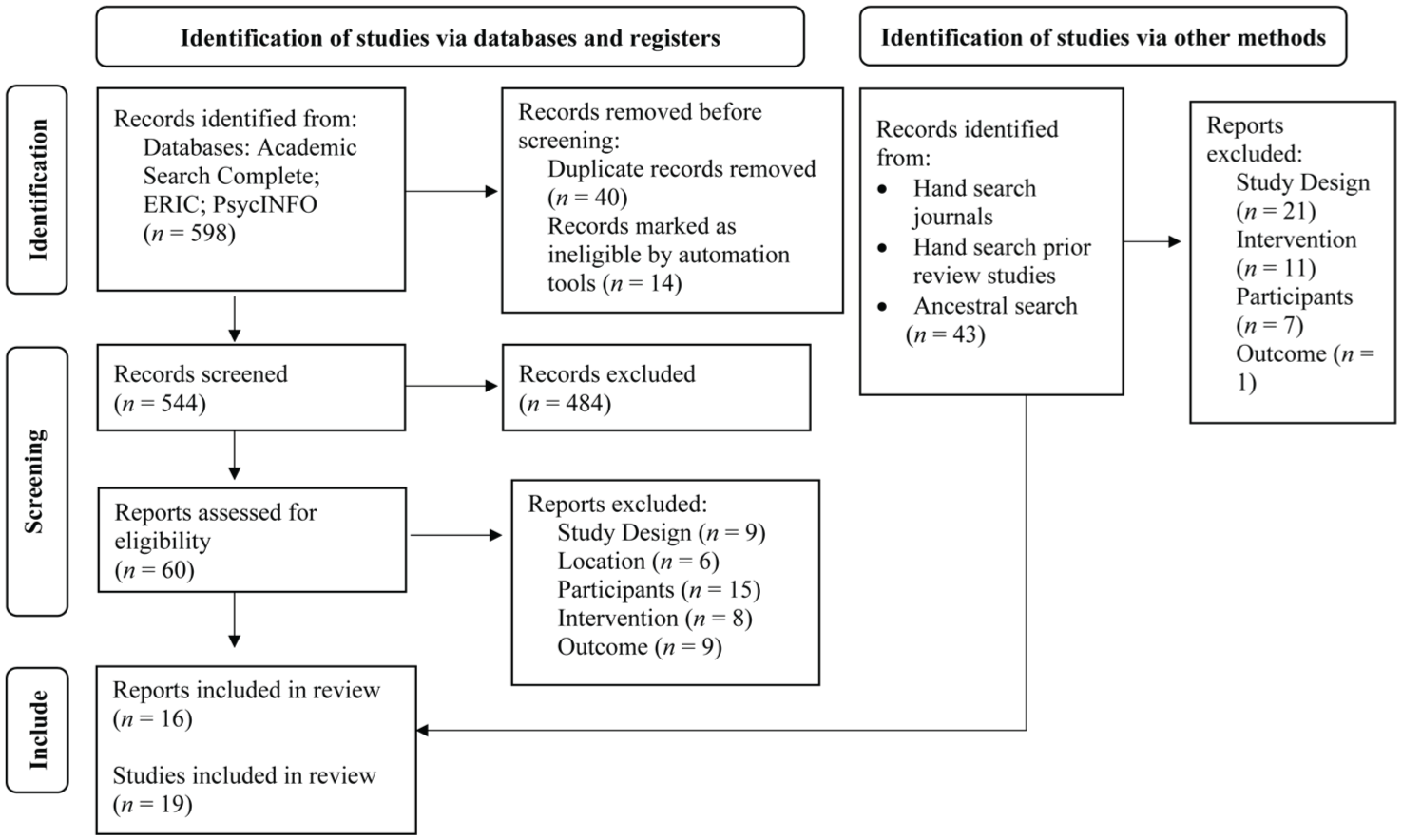
Preferred reporting items for systematic reviews and meta-analyses extension for scoping reviews flow diagram of search procedures (PRISMA-ScR; Tricco et al., 2018).
In the second phase, we conducted a “snowball method” (Greenhalgh & Peacock, 2005), which involved both forward and backward searches, to identify any additional articles that were not identified in the first phase. The snowball search was conducted in February 2025. In the third phase, we conducted a hand search of journals focused on teacher education and EC education, based on the expertise and research experience of the authors (i.e., Journal of Early Childhood Teacher Education; Journal of Early Intervention; Teacher Education and Special Education; Teacher Education Quarterly; and Topics in Early Childhood Special Education) to locate any neglected resources. The hand search was conducted in March 2025.
Inclusion and Exclusion Criteria
The studies included in this review had to meet the following criteria. First, they had to be written in English and published in peer-reviewed journals. Second, studies were required to be empirical research conducted in the United States, including quantitative, qualitative, or mixed-methods designs; review articles were excluded. Third, we employed the PICO framework to guide the development of the inclusion criteria. For participants (P), studies had to include pre- or in-service teachers who served DLLs with or at risk for disabilities from birth through age 8. The intervention (I) of interest was professional learning programs designed to prepare teachers to work with DLLs with or at risk for disabilities within this age range. We defined professional learning programs as systematic and ongoing learning opportunities intended to enhance preservice and/or in-service teachers’ knowledge, skills, beliefs, and instructional practices related to supporting DLLs with or at risk for disabilities from birth to age 8. We did not require a comparison condition (C) for inclusion. For outcomes (O), we required studies to report teacher outcomes and/or child outcomes. For qualitative studies, inclusion required an examination of teachers’ perspectives, experiences, or perceptions related to these professional learning programs.
Study Selection
We entered all resources into Microsoft Excel (Microsoft Corporation, 2021) for screening, coding, and analysis. The screening process included two stages. The first stage involved reviewing titles and abstracts to exclude resources that clearly did not meet the inclusion criteria and identify articles needing further examination. The first author screened 100% of the resources, while the fourth author randomly selected and screened 30% of the resources. Interobserver agreement (IOA) was calculated using the formula: agreement / (agreement + disagreement) × 100%. The average IOA at this stage was 100%. In the second stage, the first author reviewed the full texts of the articles identified in the first stage to determine their eligibility. The fourth author randomly selected and independently reviewed 30% of the full-text articles to assess agreement. The average IOA at this stage was 96%.
Data Extraction
The first author developed a detailed coding manual and data extraction form to answer the research questions. All coding categories were clearly defined with descriptions, operational definitions, and illustrative examples to ensure consistency, transparency, and alignment with our study’s conceptual foundations. To address the first research question, we coded contextual features of each study, including the type and setting of the EC program, teacher education program, the characteristics of participating children, teachers, and teacher educators.
To address the second and third research questions concerning what content teachers were trained in, we coded the content knowledge provided in professional learning programs according to four dimensions of CLRP. To examine how teachers were equipped, we coded the features of PBL opportunities embedded within the programs, as modeling, feedback, analysis, and reflection. We coded any information that did not fall within these features as “Other.” To address the final research question, we extracted data on teacher- and child-level outcomes reported in the included studies.
After developing the coding form and manual, the first author conducted a 1-hr training session with the fourth author to train them on how to extract data using these tools. During this session, we jointly coded a sample resource and discussed any discrepancies. Following the training, the fourth author independently coded two additional resources. The IOA for the two practice reports was 97% and 100%, respectively. Given the high level of agreement, the fourth author independently extracted data from 10 resources (66.7% of the total), which were randomly selected. The IOA for data extraction ranged from 93% to 100%. We held weekly meetings to monitor progress and resolve any discrepancies.
Data Synthesis
We used descriptive quantitative methods to summarize program contexts for the first research question. To address the second and third research questions, we revisited and refined the coding framework, including reexamining all entries initially coded as “Other.” We compared codes and identified areas of similarity and overlap to refine, expand, and reorganize the categories. Through this iterative process, we restructured and recategorized the data to more accurately represent the substantive practices teachers were trained to implement and the mechanisms through which they were prepared to enact those practices with DLLs with disabilities.
We addressed the final research question by summarizing the findings reported by the original study authors. We estimated effect sizes for group-based intervention studies using Hedges’ g to correct for small-sample bias. For studies reporting post-treatment scores and standard deviations (SDs) for both treatment and control groups, we computed mean difference effect sizes directly. When means or SDs were unavailable, we estimated effect sizes from reported t-test or F values. When sufficient statistical information was unavailable, we reported the outcomes directly from the original studies. Due to substantial between-study heterogeneity in professional learning programs, instructional methods, outcome measures, and study designs, further statistical analyses (e.g., meta-analysis) were not appropriate.
Results
Our search yielded 641 reports, of which 15 met the inclusion criteria. One study included special education teachers working with DLLs with disabilities but did not specify the ages of the children served by those teachers. Given the limited number of empirical studies in this area and the possibility that these teachers worked with young DLLs from birth to age 8, we chose to include this report, bringing the total number of reports reviewed to 16. One of the included reports (Mathes et al., 2007) contained four separate studies. Therefore, a total of 19 studies were included in this review. These comprised 15 group-based intervention studies, three mixed-methods studies, and one single-case design study. All reviewed studies focused exclusively on in-service teacher professional development (PD) programs; no studies involving preservice teacher preparation met the inclusion criteria. The length of the professional learning programs ranged from 8 weeks to 3 years. However, because many studies did not provide detailed information regarding the frequency, duration, or length of individual sessions, it was not possible to determine the dosage of the professional learning programs. The following section presents a detailed description addressing the four research questions. It should be noted that teachers often held multiple roles and DLLs often presented with multiple disabilities. In addition, most studies included multiple components and reported multiple outcomes, resulting in a total number of subcomponents that exceeded the overall number of studies.
Research Question 1: Characteristics of the Participants
Table 1 shows the characteristics of teacher and child participants. Across the 16 studies that reported the number of teacher participants in post-analysis, a total of 590 teachers were included. Two studies involved bilingual teachers (Spanish and English; n = 29), one study involved special education teachers (n = 36), and the remaining studies included general education teachers (n = 525). Across the 16 studies that reported child participant numbers, a total of 3,153 DLLs ranging from preschool through second grade were included. Nearly all DLLs were reported to come from families where Spanish was the home language (17 of 19 studies; 89%). The remaining two studies did not specify the languages spoken by DLLs and only reported that children spoke various languages at home. Eight studies (42%) included DLLs (n = 1,515) identified as being at environmental risk due to poverty or low socioeconomic status.
Characteristics of the Studies and Participants.
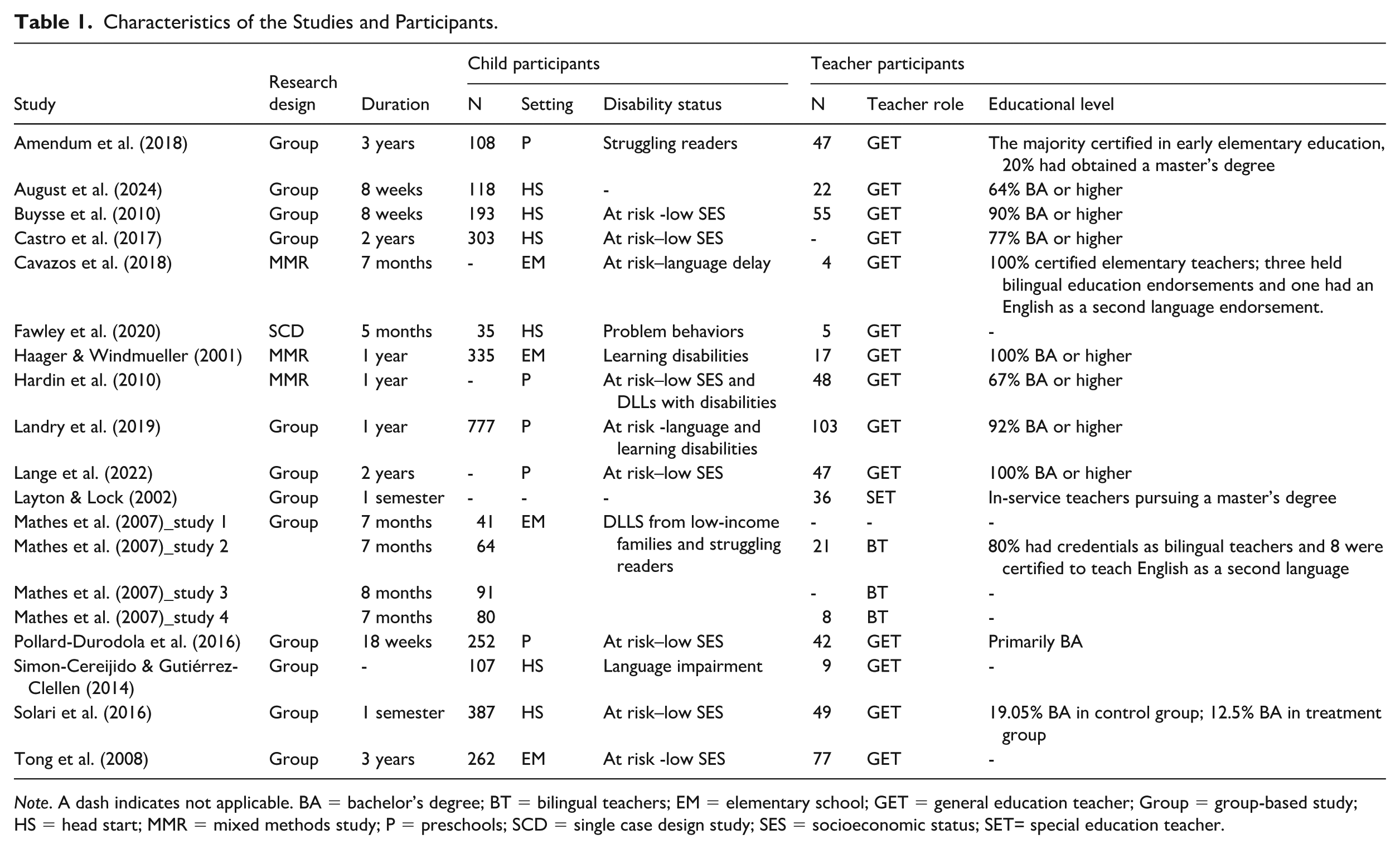
Note. A dash indicates not applicable. BA = bachelor’s degree; BT = bilingual teachers; EM = elementary school; GET = general education teacher; Group = group-based study; HS = head start; MMR = mixed methods study; P = preschools; SCD = single case design study; SES = socioeconomic status; SET= special education teacher.
Research Question 2: CLRP-Related Content
Primary studies focused on enhancing teachers’ ability to support DLLs’ academic performance, including language, literacy, and mathematics. Tables 2 and 3 present the content covered in the PD programs. Four studies reported that the content of the PD programs was tailored to teachers’ needs and motivations to strengthen their competence in working with DLLs with or at risk for disabilities (through observations of teachers’ instructional practices; assessments of teachers’ knowledge and skills related to DLL instruction; consideration of the instructional goals and contextual characteristics of teachers’ practice settings; August et al., 2024; Buysse et al., 2010; Cavazos et al., 2018; Hardin et al., 2010).
Professional Development Components and Culturally and Linguistically Responsive Knowledge.
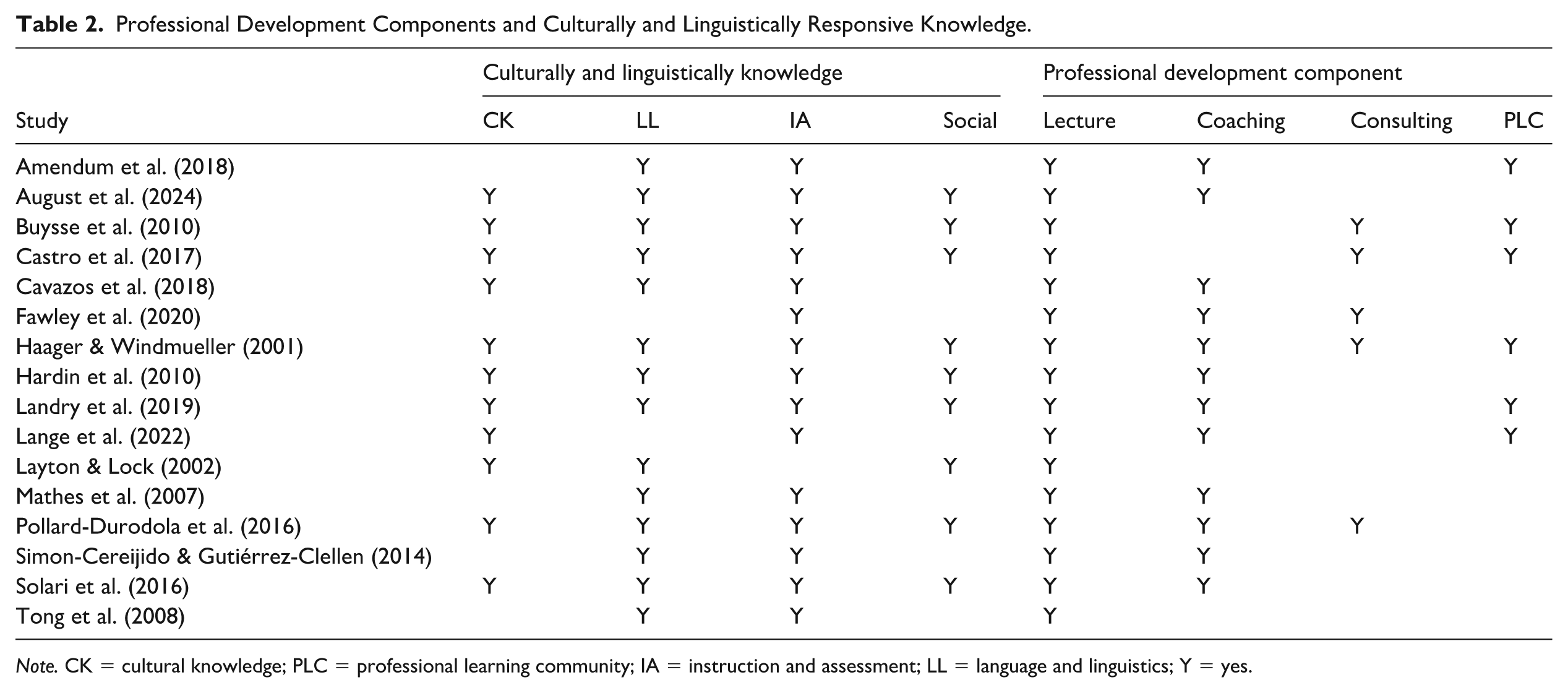
Note. CK = cultural knowledge; PLC = professional learning community; IA = instruction and assessment; LL = language and linguistics; Y = yes.
Instructional Practices Covered in Professional Development Programs.
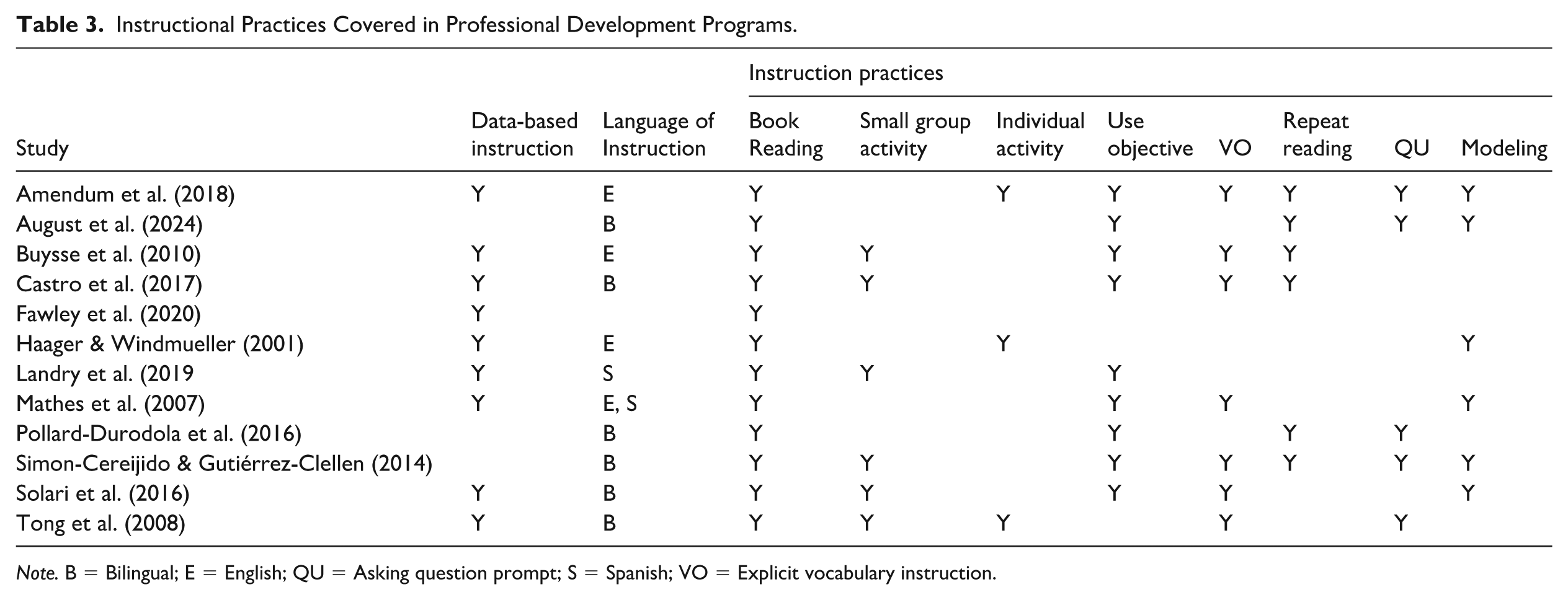
Note. B = Bilingual; E = English; QU = Asking question prompt; S = Spanish; VO = Explicit vocabulary instruction.
Instructional and Assessment Strategies
Researchers in 15 studies (79%) trained teachers to conduct book reading activities, followed by small-group activities (n = 6, 32%). In two studies (11%), teachers were specifically trained to deliver individualized instruction for DLLs with disabilities. Within these contexts, teachers applied a range of literacy-focused teaching strategies, including the use of visual supports (e.g., picture cards, images, videos, teacher gestures; n =12, 63%), explicit vocabulary instruction (e.g., providing clear definitions and directions; n = 10, 53%), modeling (n = 8, 42%), repetition (e.g., repeating key words; rereading books; n = 6, 32%), and questioning techniques to elicit children’s responses and sustain interaction (n = 5, 26%). Researchers in 12 studies (63%) trained teachers to make data-based decisions. This involved analyzing children’s initial assessment data and conducting ongoing assessments to monitor progress and make necessary adjustments to enhance learning outcomes.
Bilingual Development
In 17 studies (89%), researchers trained teachers to support children’s bilingual development through various strategies: fostering a bilingual learning environment (e.g., providing books and print materials in both English and Spanish; n = 6, 32%); making cross-linguistic connections (e.g., explicitly highlighting similarities, differences, or links between the two languages; n = 6, 32%); incorporating core vocabulary in both languages (n = 5, 26%); and leveraging children’s home language to bridge learning and support identity (e.g., allowing a child to explain an idea in Spanish before providing the English counterpart; n = 3, 16%).
Cultural Knowledge
Researchers in 11 studies (58%) provided teachers with cultural knowledge to enhance their understanding of students’ cultural, ethnic, and social identities. This included content on understanding global issues related to cultural diversity and highlighting the benefits of bilingualism (n = 9, 47%); introducing strategies for identifying and incorporating cultural practices (n = 5, 26%); fostering understanding and respect for differences in culture, environment, expectations, and values (n = 5, 26%); and providing information on how language development and cultural differences affect nondiscriminatory assessment and instructional processes (n = 1, 5%). Researchers primarily translated cultural knowledge into support for teachers in selecting appropriate books that reflected children’s cultural and linguistic identities (n = 5, 26%).
Social and Relationship Building
Researchers encouraged teachers to build relationships with students, foster a classroom environment that supports these connections, and strengthen family engagement in nine studies (47%). Specific strategies included sending materials home and encouraging parents to reinforce school-based instruction in Spanish with their DLLs (n = 6, 32%); strategically grouping DLLs and organizing peer tutoring to foster relationships and support learning between DLLs and non-DLLs (n = 3, 16%); and involving parents in training sessions where they shared their needs with researchers and teachers (n = 2, 11%). The researchers, however, did not provide detailed descriptions of the specific instructional or engagement strategies used to help teachers respond to families’ identified needs, nor did they clearly describe how teachers’ responsiveness to those needs was evaluated.
Research Question 3: PBL Features
We categorized PD programs into three components: lecture-based training, follow-up support (i.e., coaching, consulting), and participation in professional learning communities (PLCs). Lecture-based training served as a foundation for building teachers’ knowledge, while follow-up coaching, consulting, and/or PLC provided opportunities to practice and apply newly acquired knowledge. We defined coaching as a process in which teachers are observed during instruction and receive performance feedback from an expert. Consulting, by contrast, refers to a process without expert observation, in which the expert responds to teachers’ questions after instruction has been implemented. We defined a PLC as a component in which teachers collaboratively planned, implemented, observed, and analyzed instruction while continuously revising practices introduced during lecture-based training and reteaching based on their reflections.
Table 2 presents the components of PD programs. Across all 19 studies, researchers in two studies (11%) provided lecture-based training only. Researchers in 15 studies (79%) combined lecture-based training with follow-up coaching, and five studies (26%) included follow-up consultation. Researchers in six studies (32%) integrated lecture-based training with follow-up support and a PLC; among these, three studies (16%) involved teachers working in groups of 6–8 participants who met biweekly, and two studies (11%) facilitated collaboration among colleagues from the same or nearby centers within a PLC. Haager and Windmueller (2001) was the only study to facilitate collaboration between general and special education teachers. Supplemental Table 1 presents the primary learning activities conducted through follow-up support and PLCs.
Modeling
In seven studies (37%), researchers provided modeling for teachers, defined as demonstrations of specific instructional strategies that help teachers understand how to implement a practice without requiring deconstruction or detailed analysis. Four studies (21%) offered both in-person and video modeling, two studies (11%) provided video modeling only, and one study (5%) included in-person modeling.
Feedback
Teacher educators and/or peers in 17 studies (89%) observed teachers and provided individualized feedback to improve implementation fidelity and instructional quality through collaborative problem-solving. Castro et al. (2017) additionally reported providing feedback aimed at facilitating changes in teachers’ attitudes and dispositions toward practice. Four studies reported using structured protocols or observation tools to guide observations and provide feedback related to the instructional content teachers were learning. Teachers received oral feedback in 12 studies (63%) and additional written feedback in two studies (11%). In two studies, teacher educators provided teachers with real-time instructional guidance through a “bug-in-ear” system, in which teachers wore Bluetooth earpieces to receive feedback while teaching.
Analysis
In nine studies (47%), researchers provided teachers with video analysis opportunities, allowing them to reflect on and analyze instructional practices through video recordings. Two types of video analysis were reported: (a) teachers recorded their own instructional episodes for review, growth measurement, or feedback from teacher educators (n = 9, 47%); (b) teachers analyzed intentionally selected example videos provided by educators to illustrate key concepts (n = 3, 16%).
Collaborative Lesson Planning
Researchers in 11 studies (58%) provided collaborative lesson planning development opportunities to teachers. In eight studies (42%), teachers developed lesson plans with teacher educators following a cyclical process: teachers and the teacher educator collaboratively selected a content topic, teachers then independently developed lesson plans that incorporated the specific instructional strategies learned through the professional learning program, received feedback from the educator, revised the plans, implemented them in their classrooms, and subsequently received additional feedback based on observation and reflection to support further refinement. In three studies (16%), teachers collaborated with colleagues or other participating teachers to create lesson plans, were observed by their peers, and received feedback during the PLC.
Research Question 4: Effects on Teacher and Child Outcomes
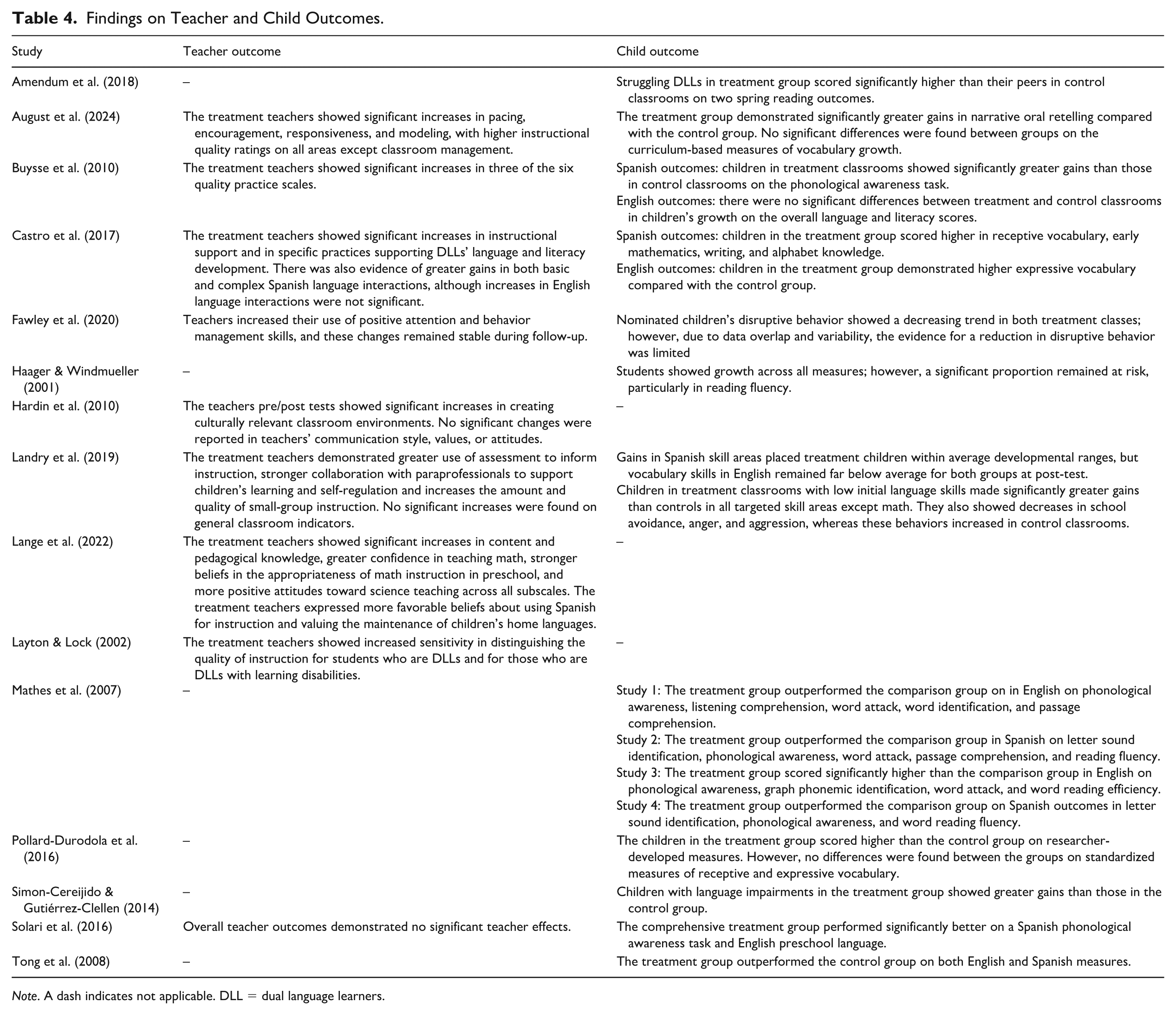
Table 4 summarizes the descriptive findings related to teacher and child outcomes. PD programs consistently improved teachers’ knowledge and beliefs about supporting DLLs with and without disabilities, whereas the effects on teachers’ practices were mixed. The effects on child outcomes were also mixed; gains in Spanish generally exceeded those in English.
Findings on Teacher and Child Outcomes.
Note. A dash indicates not applicable. DLL = dual language learners.
Effects on Teacher Outcomes
Ten studies reported teacher outcomes, including beliefs about working with DLLs (n = 2, 11%), knowledge of working with DLLs (n = 3, 16%), and pedagogical practices for working with DLLs (n = 8, 42%). Researchers mainly employed surveys to capture changes in teachers’ beliefs and knowledge (e.g., Teacher Knowledge Survey of Reading in English and Spanish; Knowledge of Math Development Survey). Teachers reported significant gains in content and pedagogical knowledge, with effect sizes ranging from g = 0.2 (knowledge of mathematics; Lange et al., 2022) to g = 2.68 (knowledge of bilingualism; Layton & Lock, 2002) and demonstrated more favorable beliefs toward integrating children’s home languages and culturally relevant practices (Cavazos et al., 2018; Lange et al., 2022; Layton & Lock, 2002).
Researchers in four studies used standardized and/or researcher-developed observational tools to assess teachers’ practices (e.g., Classroom Observation Toolkit; Early Language and Literacy Classroom Observation [ELLCO]; ELLCO Addendum; ELLCO-DLL), and the effects on teacher practice were mixed. This pattern was consistent across studies that implemented lecture-based training followed by ongoing support, as well as those that combined lecture-based training with follow-up support and PLCs: while teachers showed improvements in general classroom practices, gains in specific language and literacy practices were small or nonsignificant. Supplementary Table 2 presents the measures and effect sizes for teacher outcomes from the studies that provided sufficient information for calculation.
Effects on Child Outcomes
Fifteen studies (79%) reported child outcomes. Among these, 14 studies (74%) examined children’s language and literacy development and learning, two studies (11%) assessed social-emotional competencies, and two studies (11%) investigated changes in mathematics skills. For language and literacy outcomes, nine studies (47%) utilized standardized assessment instruments (e.g., Peabody Picture Vocabulary Test [PPVT]; Expressive One-Word Picture Vocabulary Test [EOWPVT]; Woodcock Language Proficiency Battery [WLPB]). Four studies (21%) used researcher-developed measures, and two studies (11%) conducted language sample analyses (e.g., number of different words, total vocabulary). In five studies, children in the treatment groups demonstrated significant gains in language and literacy outcomes compared to those in the control groups across all measures (Amendum et al., 2018; Mathes et al., 2007 Studies 2 and 4; Simon-Cereijido & Gutiérrez-Clellen, 2014; Solari et al., 2016). The remaining studies reported mixed findings.
Eight studies (42%) examined children’s Spanish literacy skills, with most reporting positive effects. Among the four studies in which instruction was delivered bilingually, all found improvements in children’s Spanish code-related skills, except for Tong et al. (2008), who reported a negative effect (g = –0.43) for Spanish word attack skills assessed on standardized assessments. Across the five studies assessing children’s Spanish receptive and/or expressive vocabulary, effects were uniformly positive regardless of the language of instruction, with effect sizes ranging from g = 0.07 (receptive vocabulary; Solari et al., 2016) to g = 0.25 (receptive vocabulary; Castro et al., 2017).
In contrast, effects for English language and literacy measures were more variable and generally smaller in size than for Spanish measures. Effect size estimates for English code-related skills varied widely from g = –0.23 (letter-name identification; Mathes et al., 2007, Study 3; Tong et al., 2008) to g = 1.24 (phonological awareness; Mathes et al., 2007, Study 1). Supplementary Table 3 presents the measures and effect sizes for child outcomes from the studies that provided sufficient information for calculation.
Discussion
The purpose of this research review was to summarize empirical research on professional learning designed to support EC teachers to work with DLLs with or at risk for disabilities from birth through age eight. Across the 19 studies reviewed, all professional learning programs focused on in-service teacher PD only. Aligned with prior meta-analysis studies of PD (e.g., Didion et al., 2026; Donath et al., 2023), influencing child outcomes appears to be substantially more difficult than influencing teacher outcomes. Although PD generally improved teachers’ knowledge and beliefs about working with DLLs with or at risk for disabilities, the impact of PD programs on teachers’ use of specific CLRP-related strategies was small or nonsignificant. Similarly, the effect of PD programs on children’s outcomes was mixed, which constrained our ability to draw clear conclusions about the proximal and distal effects of these PD programs.
CLRP-Related Content and Child Outcomes
Consistent with prior research, the CLRP-related content most frequently addressed in PD involved the language and linguistic responsiveness dimension (e.g., J. P. Cheatham & Allor, 2012; Crowe et al., 2021; Hur et al., 2020). Most studies included instructional strategies designed to support bilingual development, such as providing books and print materials in both English and Spanish to create bilingual learning environments, making cross-linguistic connections when teaching vocabulary, and incorporating vocabulary instruction across languages.
However, although more than half of the studies included some discussion of cultural diversity, relatively few provided concrete guidance on how teachers might integrate students’ cultural experiences, values, or community knowledge into instructional planning. Similarly, fewer than half of the studies included explicit training related to building relationships with families or fostering meaningful family engagement. This imbalance across CLRP dimensions suggests that professional learning programs may emphasize instructional strategies that are more readily observable in classroom practice, such as vocabulary instruction or structured literacy activities. In contrast, the cultural and relational aspects of CLRP may be more difficult to operationalize within professional learning programs. These dimensions may also require deeper reflection on teachers’ beliefs, assumptions, and interactions with families and communities, which may extend beyond the scope of short-term PD initiatives (G. A. Cheatham & Hart Barnett, 2017).
Patterns observed in children’s outcomes may also be interpreted through the lens of CLRP. Our review found that children’s outcomes in Spanish language and literacy were generally more favorable than those in English. Several studies suggested that these results may reflect the alignment between instruction and children’s linguistic and cultural contexts, which is a core principle of CLRP. Because many DLLs in the reviewed studies came from households in which Spanish was the primary language, instructional approaches delivered in Spanish or through bilingual instruction may have leveraged children’s existing linguistic resources and reinforced learning experiences across home and school contexts. These findings align with those of prior studies (Barnett et al., 2007; Serafini et al., 2022) and suggest that instructional approaches that acknowledge and build upon children’s home languages may play an important role in supporting language and literacy development among DLLs with or at risk for disabilities.
However, these findings may also suggest that growth was more readily observed in Spanish language and literacy outcomes than in English outcomes. It is possible that DLLs required additional time to transfer language and literacy skills across languages, particularly when outcomes were assessed in English using standardized measures, as cross-linguistic transfer among bilingual learners may develop gradually over time (Hammer et al., 2011). In addition, many reported improvements appeared to occur primarily at the word level. Given the more transparent orthography of Spanish relative to English, early word-level gains may have been more readily detectable on Spanish assessments (van der Velde Kremin et al., 2016).
PBL and Teacher Outcomes
Consistent with prior research, most studies in this review incorporated modeling, feedback, and follow-up PBL opportunities (e.g., coaching, consultation) that enabled teachers to apply knowledge gained from lecture-based training (e.g., Brock & Carter, 2017; Desimone & Garet, 2015; Zetlin et al., 1998), or some combination of these. Despite prior research demonstrating the effectiveness of PBL in improving teachers’ instructional practices (e.g., Kraft et al., 2018; Kretlow & Bartholomew, 2010), findings from the current review were less promising than expected. Although some studies reported improvements in teachers’ general classroom practices, gains in the implementation of specific CLRP-related instructional strategies were less evident. One possible explanation is that, while many PD programs introduced concepts related to CLRP for DLLs with disabilities, fewer studies clearly described how teachers were taught to implement specific instructional practices. For example, teachers were often encouraged to identify and incorporate families’ cultural practices and involve parents in sharing their experiences and needs with teachers. However, the specific instructional strategies used to help teachers respond to families’ cultural practices and needs, the methods used to support implementation, and the measures used to evaluate the effectiveness of these practices were often insufficiently described.
Second, effective PBL typically requires targeted feedback to support teachers’ reflection, instructional adjustment, and ongoing improvement of instructional practice. Although most studies described the format through which feedback was delivered (e.g., in-person, “bug-in-ear”), only four studies reported using structured protocols or observation tools to guide the observation and feedback process. Furthermore, limited information was provided regarding the specific types and content of feedback used to facilitate teachers’ learning and implementation of instructional practices. This lack of detail makes it difficult to determine the extent to which practice-based supports were implemented with sufficient quality, consistency, and intensity to promote meaningful changes in teachers’ instructional practices.
A third possible explanation is that the duration and frequency of professional learning may have been insufficient. Many of the reviewed studies did not consistently report the length or frequency of professional learning sessions, making it difficult to determine the overall dosage of professional learning implemented across studies. Another possible explanation relates to measurement limitations. Standardized measures of teachers’ practice may not adequately capture the nuanced instructional strategies designed for DLLs with disabilities. In several studies where teacher outcomes were assessed using researcher-developed measures, more positive results were reported (Buysse et al., 2010; Castro et al., 2017; Tong et al., 2008). In addition, only four studies reported that professional learning programs were developed based on teachers’ identified needs, which may have contributed to more positive outcomes. Limited growth on outcomes may reflect a misalignment between professional learning content and teachers’ needs, motivation, or school contexts.
Consistent with prior literature, the effectiveness of PLCs varied (Stoll et al., 2006; Vescio et al., 2008). In several studies, researchers provided teachers with opportunities to collaborate with coaches and peers within PLCs; however, the researchers offered limited detail about how PLCs were structured and facilitated. This constrained our ability to form a comprehensive understanding of their design and implementation, or to compare teacher outcomes between those who received follow-up support (i.e., coaching, consultation) plus PLCs and those who received follow-up support only, thereby limiting our ability to draw a clear picture of the effects of PLCs on teacher outcomes. This lack of clarity raises important questions about the quality of discourse and interaction within PLCs, as well as the backgrounds of the peers involved (e.g., their prior experiences, knowledge, and beliefs about working with DLLs with disabilities) (Brownell et al., 2016; Kennedy, 2016).
Limitations
First, prior studies have demonstrated that the quality of studies in the gray literature may affect results. Limiting inclusion to peer-reviewed journal articles in our review may have increased the risk of publication bias (e.g., Chow & Ekholm, 2018; Cumming et al., 2023). Constraints related to time and available personnel, however, restricted the review to peer-reviewed journal publications. Second, the heterogeneity of the PD programs limited our ability to conduct more advanced statistical analyses and to identify evidence-based practices. As the first review in this area, to our knowledge, the primary goal of this study was to map the existing empirical literature; however, future reviews should incorporate study quality indicators and conduct additional statistical analyses.
Implications for Future Practice
Our study provides several implications for future professional learning programs. First, although we aimed to summarize both preservice teacher preparation and in-service PD programs, the search process identified only in-service PD programs. More systematic efforts are needed to integrate these competencies into preservice teacher preparation programs. In addition, only three studies included special education teachers or bilingual educators. Because DLLs with disabilities are often served in inclusive settings, professional learning programs should provide opportunities for general education, special education, and bilingual educators to engage in collaborative learning and implement culturally and linguistically responsive instructional strategies designed to support DLLs with disabilities (Alvarado et al., 2021; Division for Early Childhood, 2014; Scott et al., 2014). Preparing general education teacher candidates with these competencies is particularly important, as they often serve as the first point of support and decision-making for DLLs who may be experiencing academic difficulties or suspected disabilities (Gomez-Najarro et al., 2023).
Second, across the four dimensions of CLRP, the social dimension, particularly relationship building with DLLs and their families, was less frequently addressed in the reviewed studies. Effective family engagement extends beyond speaking the same language or celebrating cultural traditions; it involves actively partnering with families to understand children’s experiences, draw on families’ knowledge, and collaboratively support children’s learning and development (Division for Early Childhood, 2014; Liu & Leko, 2025). Future professional learning programs should therefore more intentionally incorporate strategies that prepare teachers to build culturally responsive relationships with families. Such efforts may help teachers better understand students’ linguistic and cultural backgrounds, inform instructional decision-making, strengthen home–school partnerships, and respond more effectively to families’ needs.
Implications for Future Research
There are several implications for future research. First, one challenge in conducting this review was the broad conceptualization of professional learning, which made it difficult to identify studies that met the inclusion criteria. In addition, considerable variability existed across the included studies in terms of the professional learning components provided and the instructional strategies taught to teachers. Future research should therefore provide clearer descriptions of the content taught within professional learning programs, as well as the specific strategies used to operationalize that content in classroom practice.
Second, although components of PBL (e.g., modeling, feedback) were commonly described across the included studies, the specific instructional strategies and implementation procedures of PBL were often unclear (e.g., the specific strategies that were modeled; the nature of the feedback teachers received). Future studies should provide more detailed descriptions of PBL components and implementation procedures to support clearer interpretation, replication, and evaluation of their effectiveness. In addition, future research should adopt longitudinal and experimental designs to examine how specific components of professional learning (e.g., duration, content focus, and coaching intensity) affect changes in teachers’ instructional practices and children’s developmental outcomes.
Third, the findings of this study suggest that children’s gains may have been more readily detected in Spanish than in English, potentially due to differences in linguistic development, cross-language transfer processes, and the linguistic characteristics of assessment measures. Future research should therefore develop and evaluate assessment approaches that more sensitively reflect DLLs’ language and literacy development across bilingual contexts and are responsive to CLRP for DLLs with or at risk for disabilities. Ideally, these instruments should be normed on DLL populations and demonstrate equivalence across multiple languages.
Future studies should also explore mediating and moderating factors that influence PD effectiveness, including teachers’ prior experiences, beliefs, and program contexts. Mixed-methods approaches could help illuminate the complex processes by which teachers translate knowledge into practice and the role of contextual supports or constraints in these processes. In addition, research is needed to examine how family engagement can be effectively integrated into PD and how such partnerships influence teacher practices and child outcomes.
Conclusion
This review summarized empirical research on professional learning designed to support EC teachers working with DLLs with or at risk for disabilities from birth to age 8. The findings indicate that existing efforts focus primarily on in-service PD and generally improve teachers’ knowledge and beliefs. However, evidence of consistent changes in instructional practices and child outcomes remains limited. Examined through the lenses of CLRP and PBL, the findings highlight the need for more comprehensive professional learning that integrates culturally and linguistically responsive content with sustained practice-based opportunities. Strengthening these areas may better prepare teachers to support DLLs with or at risk for disabilities in EC settings.
Supplemental Material
sj-docx-1-tes-10.1177_08884064261459920 – Supplemental material for Professional Learning for Young Dual Language Learners With Disabilities: A Review Study
Supplemental material, sj-docx-1-tes-10.1177_08884064261459920 for Professional Learning for Young Dual Language Learners With Disabilities: A Review Study by Serena Jinxiu Liu, Melinda Marie Leko, Mary T. Brownell and Laura R. Gomez in Teacher Education and Special Education
Footnotes

Funding
The authors received no financial support for the research, authorship, and/or publication of this article.
Declaration of Conflicting Interests
The authors declared no potential conflicts of interest with respect to the research, authorship, and/or publication of this article.
Supplemental Material
Supplemental material for this article is available online.
Author Biographies
References
Supplementary Material
Please find the following supplemental material available below.
For Open Access articles published under a Creative Commons License, all supplemental material carries the same license as the article it is associated with.
For non-Open Access articles published, all supplemental material carries a non-exclusive license, and permission requests for re-use of supplemental material or any part of supplemental material shall be sent directly to the copyright owner as specified in the copyright notice associated with the article.
