






Abstract
Objective:
To identify and describe behavioral interventions to promote sexual and reproductive health among US active duty military service members.
Data Sources:
Systematic searches of PubMed, CINAHL, and PsychINFO (N = 1609 records).
Inclusion Criteria:
English-language articles published between 1991 and 2018 and retrieved using search terms related to military service, interventions, and sexual and reproductive health.
Exclusion Criteria:
Articles excluded if not empirically based, not published in peer-reviewed journals, did not sample active duty US military personnel, and did not examine the effectiveness of specified preventive sexual or reproductive health intervention(s).
Data Extraction:
Teams of paired authors extracted study rationale; aims; design; setting; description of the intervention; measures; sample demographics; clinical, behavioral, and psychosocial outcomes; and conclusions.
Data Synthesis:
Given the heterogeneity of studies, narrative synthesis was performed.
Results:
Fifteen articles met inclusion criteria: 10 focused on sexually transmitted infection (STI) acquisition and/or unintended pregnancy and 5 on sexual assault. Studies that assessed clinical outcomes found that interventions were associated with lower rates of STIs and/or unintended pregnancy. Significant effects were found on knowledge-related outcomes, while mixed effects were found on attitudes, intentions, and behaviors.
Conclusions:
Current evidence on the effectiveness of sexual and reproductive health interventions in the US military is limited in quality and scope. Promoting sexual and reproductive health in this population is critical to maintaining well-being among servicemembers, their families, and the communities surrounding military installations.
Objective
There are nearly 1.3 million active duty servicemembers in the US military serving both nationally and abroad of which 82.3% are enlisted and 17.7% are officers. Demographically, enlisted active duty members tend to be male (84.1%) and young (51.7% aged 25 years or younger; only 4.8% aged 41 years or older). 1 In general, younger adults are at considerable risk for sexually transmitted infections (STIs) 2 and unintended pregnancy. 3 In fact, STI incidence rates are relatively high in the US military, 4 and from 2012 to 2018, the rates of chlamydia, gonorrhea, and syphilis increased among servicemembers. 5 Women are more likely than men to have been diagnosed with an STI over the course of their service (22% receive a diagnosis per medical record review compared to 3.3%), though this may be in part due to less testing and underdiagnosis among men. 4 Across the service branches, between 6.0% (Air Force) and 11.1% (Army) of female servicemembers give birth within the first 24 months on active duty. 6 Unintended pregnancy rates are especially high in young, single active duty women. 7,8
STIs adversely affect individual health and well-being 9 and may limit the ability of servicemembers to deploy or place other restrictions on their military service (eg, human immunodeficiency virus, HIV). 10 Unintended pregnancy among military personnel has been linked with negative physical and mental health outcomes for mothers and babies and concerns from women about military career advancement. 11 Unintended pregnancy may also disrupt military operations when women must be removed from certain roles and/or be medically evacuated out of theater. 12 Additionally, determining the exact prevalence of military sexual trauma can be difficult 13 but is generally accepted to be a significant concern, and these health risks impact the individual (ie, physical and mental health), unit, and organization. 14 Epidemiological and descriptive studies of sexual and reproductive health (SRH) in the US military have concluded that interventions are needed to keep servicemembers healthy and to maintain mission readiness, that is, the physical and mental capability of an individual to perform their assigned job or mission. 5,7 Health-risking sexual behaviors such as binge drinking and multiple sexual partners, 15 –17 as well as challenges to proper contraceptive use, 18 are well-documented among military personnel. Servicemembers may also face unique challenges 19 –21 to maintaining SRH including military policies regulating sexual behavior, 22 lack of access to standardized sexual health education, 6,23,24 barriers to seeking health-care despite access, 25 and relatively high rates of sexual harassment and assault. 26,27 These challenges also serve as intervention targets for improving SRH in this population.
Civilian interventions to promote SRH, and to reduce health-risking sexual behaviors and sexual assaults, have been well studied. 28 –30 Reviews suggest such interventions tend to have large effects on SRH knowledge and smaller effects on attitudes, behavioral interventions, and sexual health-related behaviors. In military settings, programs have been developed to promote SRH, but the consensus 31 –34 is that these efforts often lack sufficient funding, time, and/or resources to conduct rigorous process evaluation and outcomes studies. We sought to review existing peer-reviewed literature pertaining to SRH interventions for active duty personnel, to characterize these efforts, and suggest future directions for research in the context of recent methodological and technological developments to advance the field and promote health and well-being for servicemembers and the families.
Methods
Data Sources
A systematic review was conducted in accordance with the Preferred Reporting Items for Systematic Reviews and Meta-Analyses. 35 The Critical Appraisal Skills Programme (CASP) checklist for randomized controlled trials was utilized to guide the reporting of study methods and results, including condition assignment/randomization, estimations of treatment effects, and clinical outcomes. 36 PubMed, CINAHL, and PsychINFO were searched for peer-reviewed, English-language research articles published from January 1991 through December 2018. Eligible articles assessed the effectiveness of specified SRH prevention interventions among active duty US military personnel. There were no exclusions based on sex or age of the participants. The search was limited to articles published in 1991 or later because at that time the US military began the process of allowing women into combat positions, 37 representing a shift in the context of SRH in the military. Key search terms were based on verified Medical Subject Headings terms and other key words. Our search strategy included a combination of terms related to military populations, intervention designs (eg, “clinical trial,” “education,” etc), and SRH (see Table 1).
PubMed Search String.
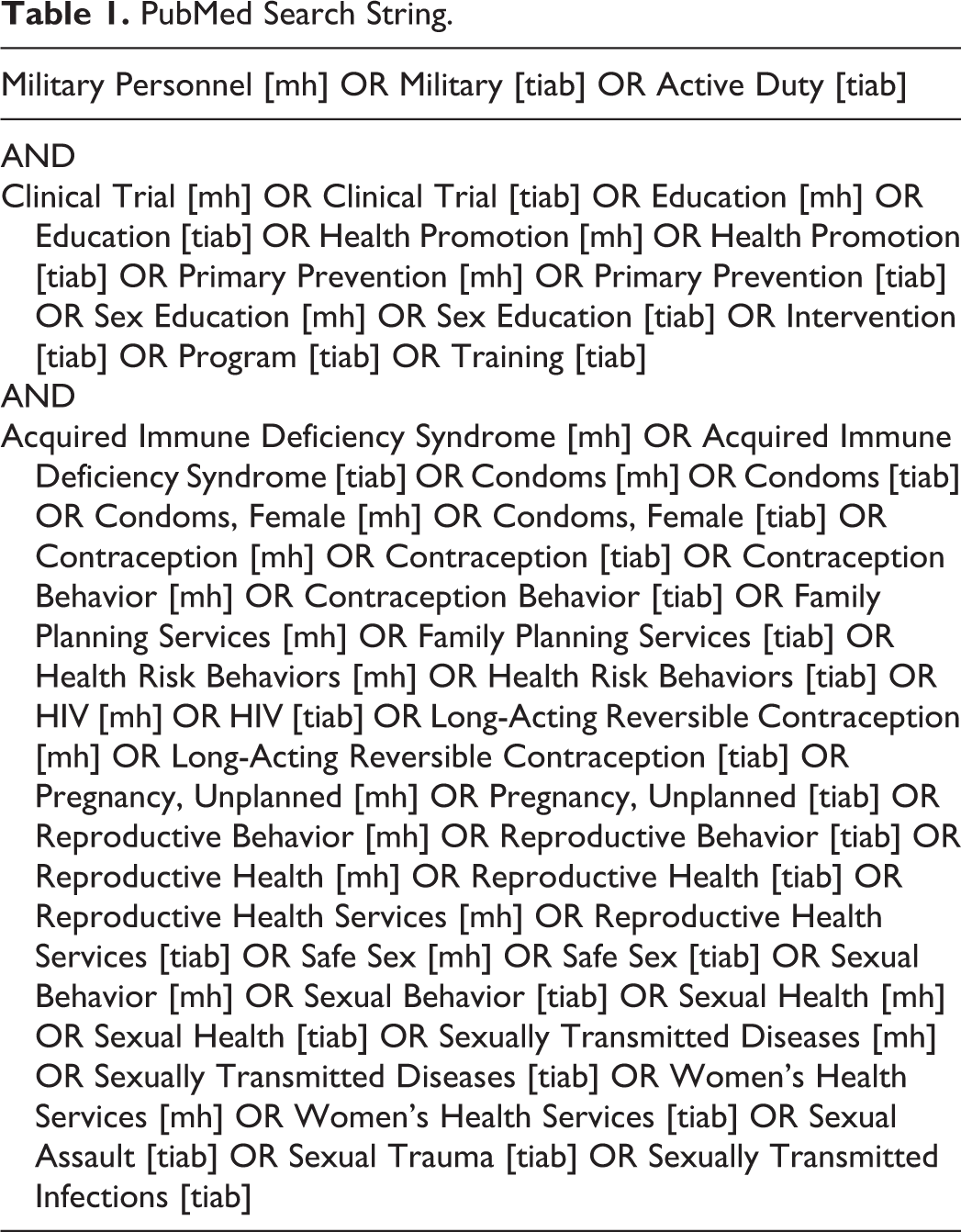
Inclusion and Exclusion Criteria
Our initial search yielded 2028 records. The first author reviewed the records for duplicates and removed 412 duplicative articles. The remaining 1609 articles were examined by another member of the research team who excluded those that were (1) published before 1991 (n = 79), (2) not available in English (n = 3), (3) not pertaining to active duty military personnel (n = 765), (4) not based on samples of US military personnel (n = 273), (5) not related to an SRH topic (n = 176), (6) not evaluating the effectiveness of a specified intervention(s) or training(s) (n = 273), or (7) not an empirical article from a peer-reviewed publication (n = 25). The review moved sequentially through the exclusion criteria, and the article was excluded based on the first exclusion criterion that was met. Once an article met one of the exclusion criteria, it was not evaluated further to determine whether or not it met other exclusion criteria. Full-text versions of all 15 articles that met inclusion criteria were acquired. See Figure 1 for more details.
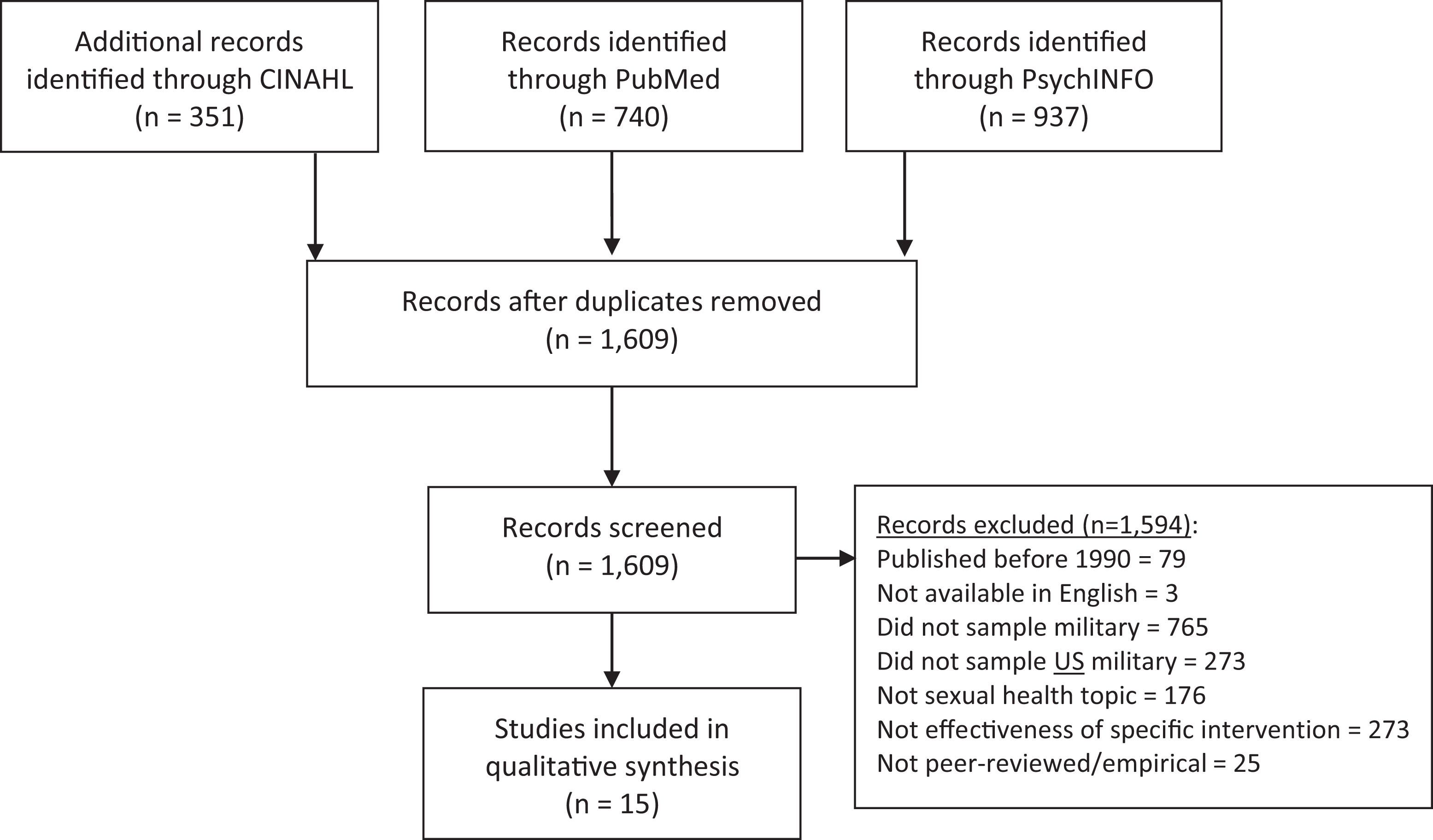
Preferred Reporting Items for Systematic Reviews and Meta-Analyses (PRISMA) flow diagram for inclusion and exclusion of records identified in systematic search for interventions to promote sexual and reproductive health among US active duty military servicemembers.
Data Extraction
Study methods (eg, design, sample), results, and conclusions were extracted from each included article and entered into a spreadsheet. For consistency, a single member of the authorship team (C.N.) extracted information from all 15 articles. The articles were then divided between other authors (S.E.V., R.R.L., B.C., and M.F.C) who independently extracted information a second time. Primary and secondary extraction summaries were reconciled and combined into a master extraction spreadsheet that served as the primary source for data analysis.
Data Synthesis
The master spreadsheet was then used to characterize the studies and summarize the results and conclusions. The methodological quality of all included articles was assessed using the CASP assessment tool for Randomized Clinical Trials to inform analysis and interpretation. 36
Results
Sexually Transmitted Diseases and Unintended Pregnancy
Study settings and samples
Ten articles focused on interventions and outcomes pertaining to negative SRH outcomes: prevention of STI/HIV infection 38 –44 (n = 7; n = 5 with Marines and n = 2 with Army personnel), prevention of unintended pregnancy 45,46 (n = 2 with Navy personnel), or both 47 (n = 1 with Marines; see Figure 2). Two interventions were delivered at Army bases in the United States, 38,44 2 were delivered shipboard, 42,45 2 were delivered in Naval Hospitals (1 in the United States and 1 in Italy), 46,47 1 was delivered to Marine recruits, 43 and 3 articles reported on an intervention delivered to Marines at training school. 39 –41 Nine (83%) of 10 studies 38 –44,46,47 were conducted prior to and/or during the year 2000, while 1 pregnancy prevention intervention was conducted from 2004 to 2005. 45
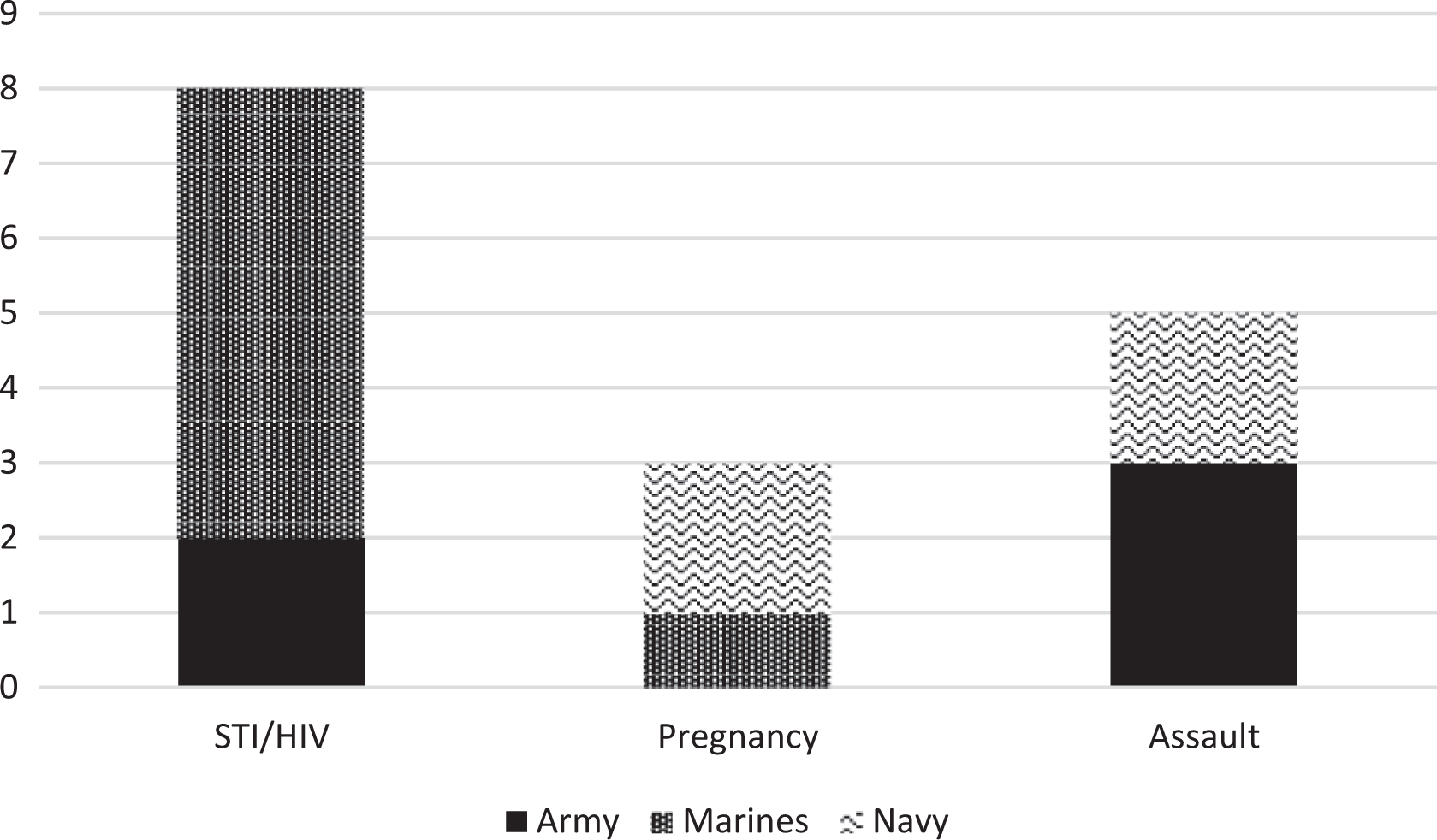
Article topics by military service branch.
The 3 articles that included unintended pregnancy as an outcome were conducted with all-female samples (N = 198 single, junior-enlisted sailors, 45 N = 173 unmarried sailors, 46 N = 2157 Marine recruits 47 ) and one study focused on STI/HIV outcomes (N = 1712 Marine recruits). 43 Other articles focused on STI/HIV were conducted with samples that were either all male (N = 3911 soldiers, 38 N = 584 deployed Marines, 42 N = 400 STI clinic attendees 44 ) or comprised of ≥90% males (N = 176, N = 400, and N = 802 Marine trainees 39 –41 ). Of note, 1 sample included 61% active duty soldiers as well as 21% National Guard and 19% Army Reserve 38 ; thus, this study was not exclusively comprised of active duty personnel. All 10 studies had exclusively or primarily young adult samples with the mean or median age (when reported) ranging from 20 to 23 years (see Table 2 for demographics by article).
Characteristics of Published Articles Meeting all Eligibility Criteria (N = 15) Organized Alphabetically by Topic Area.
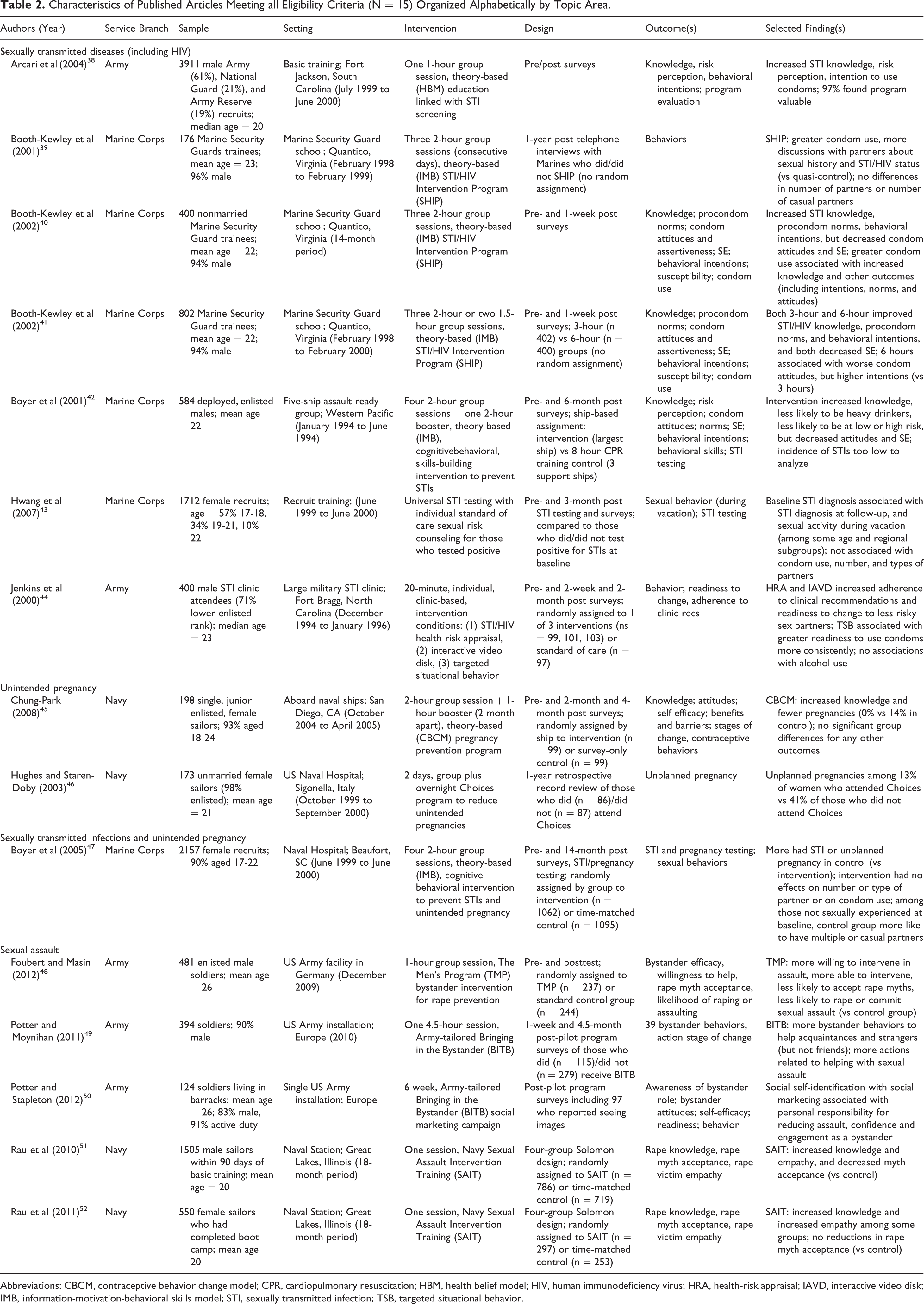
Abbreviations: CBCM, contraceptive behavior change model; CPR, cardiopulmonary resuscitation; HBM, health belief model; HIV, human immunodeficiency virus; HRA, health-risk appraisal; IAVD, interactive video disk; IMB, information-motivation-behavioral skills model; STI, sexually transmitted infection; TSB, targeted situational behavior.
Study designs
Eight (83%) of 10 studies utilized a pre-/posttest design, 38,40 –45,47 but only 2 utilized random assignment to compare (1) 3 clinic-based interventions 44 to reduce health-risking attitudes and behaviors to each other and a standard care control and (2) an STI and unintended pregnancy prevention 47 intervention or time-matched control. One other study utilized a pre/post design and compared a group-based STI prevention intervention at the ship level 42 (not randomly assigned), while others compared groups to which participants had not been randomly assigned at pre/post assessments, including those who received 3-hour or 6-hour STD/HIV Intervention Program (SHIP) 41 and those who did or did not test positive for an STI at baseline 43 (and thus, did or did not receive STI counseling). Two studies utilized pre-/posttest designs but did not have a comparison or control group. 38,40 Two utilized only postintervention assessments (no pretest) but compared those who did and did not receive the intervention including telephone interviews with those who did or did not attend SHIP 39 and a record review of those who did or did not attend Choices 46 (a pregnancy prevention program).
Although all of the articles provided P values for inferential statistical tests, few provided any type of measure of effect size. Four articles 38,42,43,47 using logistic regression provided odds ratios and confidence intervals, 2 articles reported correlation coefficients, 40,46 and 1 reported standardized regression coefficients 42 for linear regressions.
Intervention characteristics
Seven articles clearly identified a theoretical model on which the intervention was based, including 1 STI/HIV intervention based on the health belief model, 38 4 STI/HIV interventions 39 –42 and 1 combined STI/HIV and pregnancy intervention based on the information-motivation-behavioral skills (IMB) model, 47 and 1 pregnancy prevention intervention based on the contraceptive behavior change model. 45 Seven articles 39 –42,44,46,47 (including 3 by the same group 39 –41 utilizing a similar sample for analysis) explicitly noted that content was either created or adapted specifically for use within military populations. A few articles noted that the interventions being examined were required or mandatory training or eligible military personnel, but no articles explicitly stated that study assessments were required; thus, participation in study-related activities was either explicitly or assumed to be voluntary in nature.
Outcomes
All of the articles (n = 10) included at least 1 behavioral or clinical outcome. Five articles prospectively explored clinical outcomes such as STI diagnosis 42,43,47 or unintended pregnancy 45 –47 during follow-up periods between 3 and 14 months. Eight articles 39 –45,47 evaluated some type of behavioral outcome such as contraceptive or condom use, while 4 assessed behavioral intentions 38,40 –42 (including 3 that also explored behavioral outcomes). Five articles presented data on STI/HIV 38,40 –42 or pregnancy and contraceptive knowledge, 45 while 6 assessed mediating factors such as risk perception and attitudes. 38,40 –42,44,45
Selected outcomes are described in Table 2. Notably, of the 5 studies that assessed knowledge, 38,39 –41,45 all found increases among those exposed to the interventions. Similarly, of the 4 that were able to assess clinical outcomes 43,45 –47 (ie, Chlamydia trachomatis, Neisseria gonorrhoeae, Trichomonas vaginalis, or unplanned pregnancy), all found lower rates of STIs and pregnancy among those who were exposed to the intervention(s) as compared to those who were not, though only 2 employed random assignment at a group 45 or individual 47 level. Findings were more mixed with regard to intervention effects on behaviors and behavioral mediators (eg, attitudes and norms) such that some studies found no association, while others found associations between exposure to the intervention and some behaviors or mediators but not others. One unexpected but consistent finding was that exposure to STI/HIV prevention interventions tended to decrease attitudes toward condoms and self-efficacy in condom use.
Sexual Assault
Study settings and samples
Five articles focused on interventions or outcomes pertaining to sexual assault (see Figure 2). Three were delivered at US Army bases in Europe, 48 –50 while 2 were delivered at Naval Stations in the United States. 51,52 When reported (n = 2), data were collected in the 2000s, with the most recent outcome data from 2010 49,50 or earlier.
One training was delivered and evaluated separately for male (N = 1505) 51 and female (N = 550) 52 sailors, while the others (when gender composition of the sample was reported) were comprised of entirely (N = 481) enlisted male soldiers or mostly males (83% 50 and 90% 49 of 124 and 394 soldiers, respectively). Of note, one study included nonactive duty personnel (9% non active duty) 50 but were included in the review, since the majority of the sample was active duty. When reported (n = 4), the mean age of the study sample ranged from 20 to 26 years (see Table 2 for demographics by article).
Study designs
Only one study utilized a complete pre-/posttest design and random assignment of male soldiers to a bystander intervention 48 or standard control. Two studies utilized a 4-group Solomon design, where some male and female sailors 51,52 were assigned to complete pre- and posttests, while some completed posttests only (random assignment was used to assign sailors to Sexual Assault Intervention Training [SAIT] or a time-matched control). Two utilized posttest assessments only and employed a variety of group assignment strategies including comparing those who did or did not receive a bystander intervention 49 or a social marketing campaign. 50
Most of the outcome analyses are conducted using analysis of variance, though other tests were used where appropriate, such as χ2. 49,50 In addition to all the articles presenting P values (with the exception of the content analysis), some provided measures of effect size including Cohen d 48 and η2. 49,51
Intervention characteristics
Three interventions were based on bystander interventions 48 –50 that had been previously implemented in college settings. Four articles 49 –52 explicitly noted that content was either created or adapted specifically for use within military populations.
Outcomes
Only 2 studies assessed the effects of the intervention on behavioral outcomes 49,50 (ie, acting as a bystander with regard to sexual assault during the follow-up period). Another study explored the likelihood of acting as a bystander. 48 The most commonly assessed outcomes were knowledge 51,52 and attitudes. 48,50 –52
Of those studies that assessed behavior, both studies found that those who were exposed to bystander intervention 49,50 content were more likely to engage in bystander behaviors than those who were not. However, both studies were based on retrospective analysis (no random or prospective assignment to groups). One study examined bystander intentions 48 and found increased willingness to be a bystander among those exposed to intervention content versus those in a randomly assigned control group. Of the 2 studies that assessed knowledge 51,52 both found increased knowledge. Interventions were found to improve other mediators such as attitudes and self-efficacy to serve as a bystander. 48,51,52
Conclusions
From 1991 through 2018, we found only 15 published articles examining the effectiveness of specified preventive sexual health and behavior interventions among US active duty personnel. Most of the studies evaluating interventions to prevent STIs and unintended pregnancy collected data in or prior to 2000, and, while some sample sizes were relatively large, interventions were evaluated over relatively short time frames at a single base or small contingent of ships that may reflect the transient nature of military populations (both military researchers and participants) who are frequently deployed or subject to permanent changes in station (ie, relocating to a different duty location) 53 potentially making it difficult to sustain research studies.
STI prevention studies were conducted with Army and Marine personnel which is consistent with relatively higher rates of STIs compared to other service branches. 5 Pregnancy prevention studies conducted with Naval and Marine personnel may reflect the cost and resources required to remove a pregnant woman from theater, 54 especially when on board a ship or submarine. The fact that these studies are conducted with young, enlisted individuals reflects the relatively high rates of negative SRH outcomes among this demographic group 2,3 as well as the overall composition of the military. 55 Several studies included only male or only female participants and focused on gender-specific content, which is in line with previous research suggesting that gender-specific interventions may be more effective than combined programs. 15
Overall, studies that assessed clinical outcomes (ie, positive STI or pregnancy test) found that the interventions were associated with lower rates of STI and/or unintended pregnancy. Consistent with reviews of sexual health interventions in civilian populations, 28 –30 large effects were also found on knowledge such that the interventions increased participant’s knowledge of the topic(s) covered within the intervention. Also, consistent with previous literature, there was more variability in terms of behavioral outcomes and behavioral mediators such that many interventions affected some attitudes, norms, or behaviors but not others that were studied. The studies varied in methodological rigor, with some lacking a pretest and few designs that included a randomly assigned control or control group, but the most methodologically sound studies showed promising results.
One interesting finding that appeared in 3 different articles was the unexpected negative effects of STI prevention programs on condom attitudes and self-efficacy, 40 –42 such that participants receiving an ostensibly procondom intervention reported poorer condom attitudes and lower self-efficacy to use condoms. In those same studies, effects were found on other outcomes (such as behavioral intentions to use condoms) in expected, positive directions. The authors suggested that comprehensive discussions of both advantages and limitations of condom use may have served to highlight some of the more negative aspects. 40,42 This warrants further exploration to determine whether these changes in attitudes and self-efficacy are ultimately motivating individuals to use condoms more frequently or if they are undermining the aims of the interventions.
Many of the interventions examined in this review were grounded in health behavior change theory (eg, IMB model) and were either developed or adapted for use in the context of the military. For example, the bystander social marketing campaign was adapted from an intervention initially developed and evaluated on college campuses. 50 The content of the social marketing (eg, poster photos) was adapted utilizing survey and focus group methods with Army troops to translate college-based images to military-based images. Given the unique challenges to SRH in military settings, 19 –21 and the importance of culturally adapting and tailoring behavioral health interventions, 56 it seems critical that any interventions targeted at military populations begin with formative and/or translational work (eg, expert review, stakeholder interviews) that will enhance the relevancy of content and delivery and provide a framework for dissemination and implementation within the military infrastructure.
Many of the individuals entering the armed services are young adults between the ages of 18 and 24. 55 This time frame represents a critical period in which individuals may engage in high rates of health-risking sexual behaviors such as sex with casual partners 57 and less contraceptive use. 58 Interventions that provide high-quality, relevant information and training to promote SRH among active duty personnel may promote well-being and mission readiness among active duty servicemembers and their families. It is also worth exploring the effects of developing prosexual health norms and behaviors during this time period on career trajectories, relationships, and post-active duty health and health care.
Limitations
PubMed, CINAHL, and PsychINFO were searched for this systematic review. The military may have other resources that are not indexed in these databases and/or may possess outcome data that have not been made publicly available and, thus, were not included in this review. Except for a few studies that received laboratory STI and/or pregnancy results or examined medical record data, most studies relied on self-report for all or many of their outcomes. Thus, the inherent limitations of self-report (eg, social desirability bias) are pertinent to most of the studies in this review and may be even more relevant in the military setting, where there are limitations on privacy. Although most studies indicated that participation in survey or other assessments for study purposes was completely voluntary, it was sometimes difficult to determine whether or not the training program under evaluation was or was not mandatory. Additionally, even if the training was not explicitly mandatory, it is worth exploring within the hierarchical nature of the military, how mandatory trainings and/or promotion of such interventions by military leadership at various levels might impact individual’s motivation to participate and, ultimately, SRH outcomes.
Future Directions
This search yielded few published studies examining effectiveness of specified SRH interventions in the US military, and the existing studies are quickly becoming outdated. More work is needed to evaluate current efforts to improve SRH in military populations and to determine where additional efforts are needed. The interventions reviewed here consistently considered how to adapt interventions utilized in the civilian world (eg, bystander sexual assault intervention on college campuses) to military settings. This requires an understanding and appreciation of unique elements of military culture, as it pertains to health care and, specifically, SRH. 53 Consideration must also be given to implementation concerns, including efforts to evaluate and sustain interventions in a very transient population, where active duty servicemembers are frequently subject to deployment or permanent changes of station (ie, relocating to a different duty location). Regular relocations or high rates of turnover over short periods of time may make it difficult for researchers to oversee a study from initiation to conclusion, and it may be difficult to retain study participants over longer data collection and follow-up periods.
The interventions included in this review were generally implemented on a relatively small scale (eg, a single base over a specific time frame). In recent years, there have been trends in both civilian 59 and military 32 populations to deliver behavioral health interventions utilizing technology, including web and mobile applications. Although the reliance on technology presents challenges including lack of sufficient Internet connectivity in certain locations (eg, submarines), it also offers an opportunity to reach a wider audience and, when done well, to engage the user outside of classroom or health-care settings. This may allow us to reach individuals when they most need information or support (eg, as they are preparing to go on leave). Future research should consider leveraging this trend to broaden the reach of SRH interventions for increasingly technologically savvy military personnel.
In Summary
Active duty military servicemembers and their families are located in all 50 US states and across the globe. 60 Promoting SRH among active duty military is critical to supporting the health and well-being of military servicemembers and their families and ensuring mission readiness. 5,7 Given the close relationship between military installations and surrounding communities, promoting health of active duty military may improve public health both for those on military installations and in surrounding communities. 61 This systematic review identified only 15 peer-reviewed articles evaluating the effectiveness of specified SRH interventions for active duty US military between the publication years of 1991 and 2018.
Moving forward, scientists and clinicians interested in promoting SRH among US servicemembers will need to conduct additional intervention outcome evaluation studies. As we know from the studies reviewed here, and more recent publications, these studies must also consider the unique military cultural context and infrastructure. Given the limited scope of the reviewed studies, future work should also focus on dissemination and implementation, and continued evaluation, beyond a single base or ship. Future research should employ efficient and rigorous study designs and consider the transient nature of the population when planning studies to investigate program outcomes in order to utilize resources more effectively. Further, studies will need to address the cost-effectiveness and effects on mission readiness in order to determine the value of supporting such programs in the context of the broader mission of the US military.
So What?
What is already known on this topic?
Sexually transmitted infections and unintended pregnancy are prevalent in the US military and can undermine mission readiness, that is, the physical and mental capability of an individual to perform their assigned job or mission. Research suggests interventions are needed to promote sexual and reproductive health among US active duty servicemembers.
What does this article add?
This review highlights the limited number of published research articles evaluating behavioral interventions to reduce health-risking sexual behaviors in the US military. Findings from the few published studies are synthesized, and suggestions are offered to advance research.
What are the implications for health promotion practice or research?
Active duty military servicemembers and their families are located in all 50 US states and across the globe. Promoting sexual and reproductive health among active duty military is critical to (1) supporting the health and well-being of military servicemembers and their families, (2) maintaining mission readiness of the armed services, and (3) promoting public health on military installations and in surrounding communities.
Footnotes
Authors’ Note
This article was authored by employees of the United States government. Any views expressed herein are those of the authors and do not necessarily represent the views of the United States government or the Department of Defense. C.N. and R.R.L are Commissioned Officers in the United States Air Force. B.C. is a Commissioned Officer in the United States Army. J.D.Q. is a Commissioned Officer in the United States Navy. C.N is now pursuing a medical degree at the Uniformed Services University of the Health Sciences (USU) in Bethesda, Maryland. B.C. is pursuing a PhD in Clinical Psychology at USU. Portions of this review were presented at the 2019 Society of Behavioral Medicine annual medicine in Washington, DC. All authors have participated in the work and approved the manuscript.
Declaration of Conflicting Interests
The author(s) declared no potential conflicts of interest with respect to the research, authorship, and/or publication of this article.
Funding
The author(s) received no financial support for the research, authorship, and/or publication of this article.
