







Abstract
Purpose
To explore the social context of physical activity (PA) among active Black women, we examine the patterns of PA engagement and the benefits of social support in PA maintenance.
Design
A cross-sectional study design and descriptive phenomenological approach were used to examine social support and lived experiences of active Black women.
Setting
The study setting was an online survey of active Black women, ages 21 to 71 years who were recruited from across the United States.
Participants
This secondary data analysis was conducted among a sample of 187 active Black women who maintained PA for ≥6 months. The mean age was 41 ± 12.3 years, 83.4% completed some college, 37.7% were married, and 30.0% had children.
Measures
Participants self-reported ‘with whom’ they engaged in PA and provided qualitative responses about their strategies for PA maintenance. Descriptive statistics were used to examine between-group differences among demographic characteristics and PA variables by category of PA engagement using SAS 9.4. Descriptive phenomenology was used to explore social support themes across and within categories of PA engagement.
Results
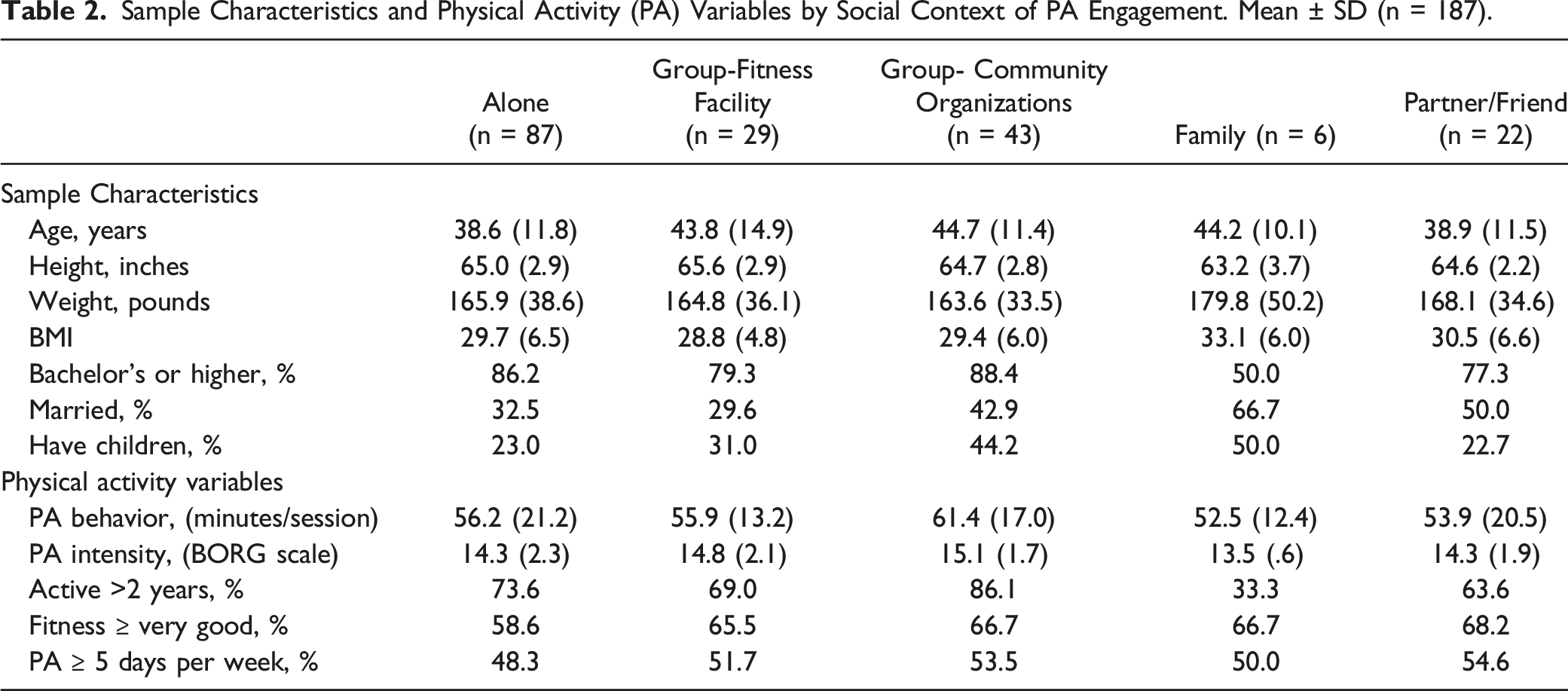
On average, the active Black women in this study reported engaging in 57.0 ± 18.9 minutes of moderate intensity leisure-time PA per session. Most engaged in PA alone (n = 87), with a group (n = 72), or with another individual (n = 28). Social context themes within categories included: alone – self-management, groups - motivation and accountability, family – values health, and friends – shared interests in PA. Subthemes across social context categories included: who? - people, what and how? - types of social support, and where? – place of social support.
Conclusions
Our findings suggest that some Black women may need added social support from others beyond family and friends, while other Black women may prefer additional self-management skills. Nonetheless, this study provides data for developing hypotheses about the mechanisms by which social context may facilitate PA maintenance among Black women. Therefore, intervention studies targeting PA maintenance among Black women should include an in-depth query of social support needs.
Keywords
Introduction
Current public health campaigns addressing increased physical activity (PA) participation have been largely unsuccessful in creating sufficient and sustainable PA change among Black women, who are disproportionately affected by cardio-metabolic diseases.1,2 In fact, only 27.5% of Black women meet the national Physical Activity Guidelines of 150 minutes of moderate to vigorous PA per week. 3 Despite the low prevalence of Black women engaged in sufficient leisure-time PA, some are engaging in health-enhancing levels of PA in the face of known barriers.4-6
The social context, in the form of social support, appears to be an important construct that may promote long-term PA and health among active Black women, but further exploration is needed.7-11 Research on social support utilized by Black women have tended to focus on familial or friendship-based connections.12,13 Although some previous studies suggest that family members tend to provide long-term emotional support while friends or health care professionals provide short-term informational or appraisal (ie feedback on progress towards stated goals) support, 14 family members may also be a source of negative or discouraging behaviors. 15
This study builds on Harley et al’s (2009) finding (N = 15) that social networks of active Black women consisted of both existing and new social relationships connected to their exercise behaviors.
4
To the best of our knowledge, our study is the first to investigate an extended range of social support from family, friends, social PA groups, and facility-based fitness groups used by
Methods
Design
Data for this secondary data analysis were derived from an online survey conducted between June and November 2017 among Black women recruited from across the United States via advertisements placed in multiple channels such as mass emails, flyers, social networks, social media and word of mouth. The inclusion criteria were women, age 18 or older who self-identified as Black or African American and maintained PA for at least the past 6 months. 16 After an online screening process, eligible participants read the IRB approved informed consent document and electronically agreed to participate in the study.
Sample
Our sample included 187 active Black women with complete data pertaining to the social context and qualitative responses from the original survey published elsewhere (N = 290). 17
Measures
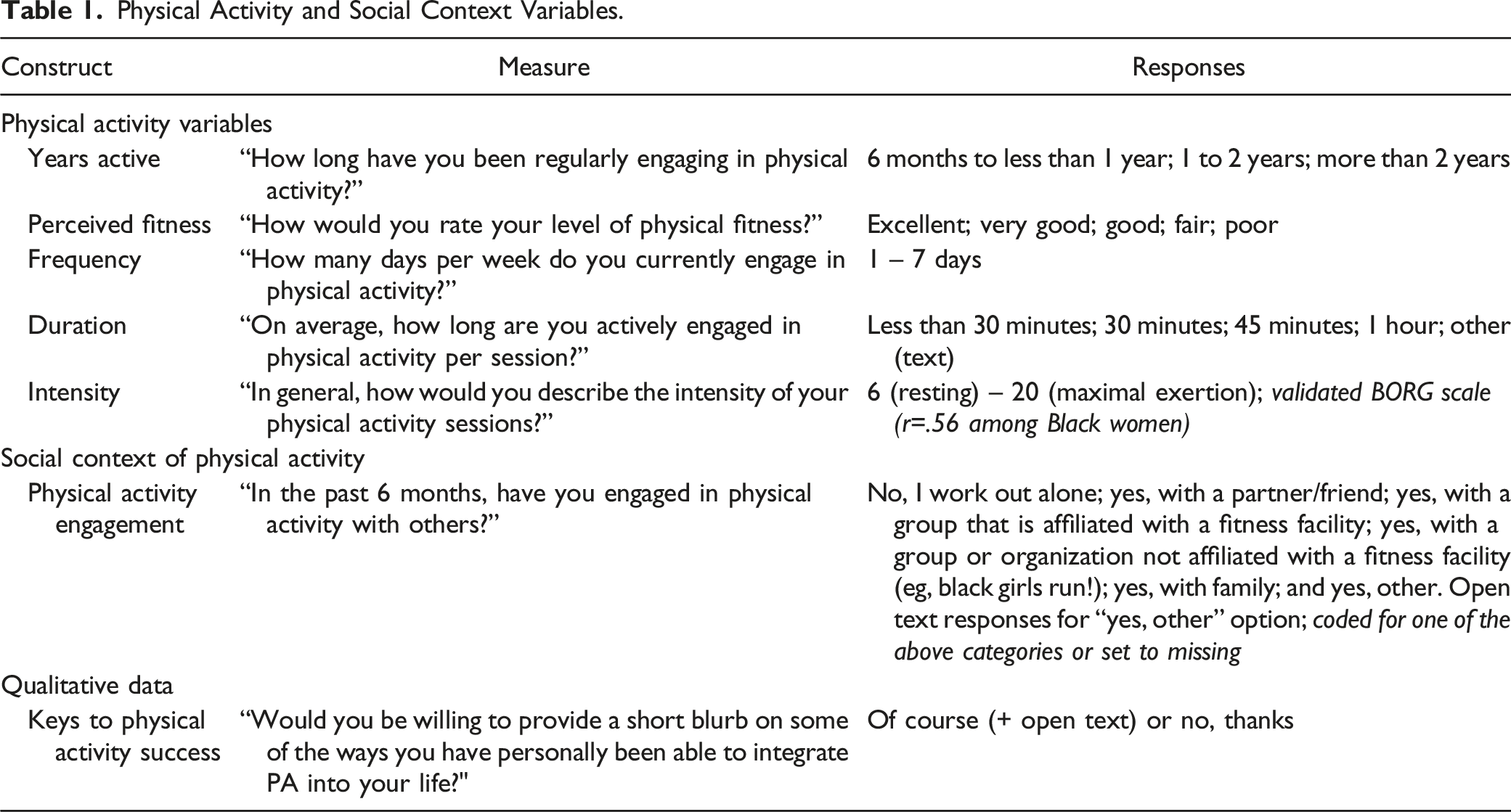
Physical Activity and Social Context Variables.
Analysis
Continuous variables were calculated as means and standard deviations, while categorical variables were summarized as frequencies and percentages.
Linear and logistic regression models were performed to examine differences between demographic characteristics and PA variables by category of PA engagement (SAS 9.4). Statistical significance was set to P < .05.
A descriptive phenomenological approach was used to examine the lived experiences of Black women who engage in regular PA.20,21 This approach allowed for a broad range of experiences about PA to be described to gain insight into strategies used to overcome barriers or leverage facilitators of PA behavior change. Specifically, the following three steps were performed to examine the lived experiences of Black women within categories of ‘with whom’ they engaged in PA to provide context of their social environments. Step 1: 187 narrative responses of Black women’s successful PA integration experiences were collected through an open-ended question at the end of our survey. Step 2: All open-ended responses were read and coded to compare and contrast strategies used to integrate PA into their lives. We (OA and PB) examined the experiences across categories of engagement to identify similarities and within categories to identify strategies that may be unique to the context of “with whom” one engages in PA. Step 3: We identified themes across and within the context of PA engagement to elucidate the lived experiences of Black women actively engaged in PA.22,23 Data were examined within the categories that the women chose as their primary form of PA engagement with others. The broad categories of engagement with others were based on the social support literature expanding the options beyond family and friends to include social PA groups, fitness facility-based groups or alone.4,12,13 Common subcategories of social support (eg, emotional, instrumental, informational and appraisal support) were identified among the responses within and across the social context of PA engagement. One investigator (OA) read through all responses within each of the categories of PA engagement and made notes of reoccurring approaches used by the participants. A second investigator (PB) reviewed the themes and participant responses to corroborate the interpretation of the themes. Any discrepancies were discussed to reach consensus on the themes.
Results
Sample Characteristics
Sample Characteristics and Physical Activity (PA) Variables by Social Context of PA Engagement. Mean ± SD (n = 187).
Social Context of PA Engagement Within and Across Category
To explore the social support landscape of Black women, we examined the respondents’ perceived keys to successfully integrating PA into their daily lives within and across categories of PA engagement (see Appendices).
Overarching Themes Within Social Context of PA Engagement
Alone
Black women who engaged in PA alone endorsed planning and self-monitoring but were less likely to endorse a need for social support to maintain the behavior. However, the following selected responses also included the enjoyment of participating in a variety of activities with others.
“I set a daily reminder on my phone. This helps me to feel accountable for doing my workouts. I use an activity tracker to help [me] maintain my goals. I make a good effort to avoid snacking on junk food, I monitor my water intake and sometimes I use CBT* methods when it comes to my junk food or unhealthy food cravings.”
*CBT is likely to refer to cognitive behavior therapy which is a form of psychotherapy that aims to modify thoughts, emotions, and behaviors (Merriam-Webster, n. d.)
Groups
Among Black women engaged in PA with a group, elements of collectivism in the form of giving and receiving support and accountability were common themes. Groups appeared to be important for continued motivation for PA. Other subcategories included self-monitoring and adopting small changes towards achievement of goals.
“I find activities I love. I like group classes to meet others and keep me accountable. I like encouraging others to exercise. The main thing I love how exercise makes me feel and look!! I would encourage others to find something they enjoy doing and that they can continue to do.”
Family
Although few Black women chose family as primary form of engagement, the overarching theme of this category was staying healthy for one’s family, either to be able to care for them or as a role model.
“When I do it with my family it is considered family time. I like to be healthy, and I want my family to be healthy. We usually hike together as a family and go to the YMCA to do things like rock climbing and working out. We like to also do martial arts together.”
Friends
The term ‘friend’ was used broadly to describe individuals with whom Black women engaged in PA. The friend/partner was described as individuals with similar interests in PA that could be a ‘friend’, neighbor, co-worker, or members of an online community or fitness classes. These data suggested that friends were often but not always supportive. Fun, friendly activities or competitions were also endorsed by this group. “(I) join in Fitbit challenges with friends and it makes me want to do more.”
One participant statement illustrated that friends are not always supportive. “If you listen to other people, you will lose motivation.”
Overarching Themes Across Social Context of PA Engagement
Our next research question relates to participants’ perceptions about how they have been successfully active. Three overarching themes across categories of the social context of PA engagement emerged were: (1) People (ie, who provided support?), (2) Types of Support (ie, what type of support was provided and how), and (3) Place of Support (ie, where was the support provided?).
People
Participants noted that people helped them stay active. Several terms made up this category including people, partner, friends, co-workers, classmates, groups, and instructor. “People” was the nonspecific term used most often.
“Get involved with a community that will push you with your physical activity goals. Surround yourself with like-minded individuals that are willing to put in the time and effort to reach said goals with you.”
Types of Support
Black women experienced support in several ways that they perceived to contribute to their success maintaining PA. Many women sought or provided encouragement, motivation, accountability and in some cases instrumental support such as baby sitting.
“I started out walking, then started running. When you get active you meet other people who want the same lifestyle. I’ve met so many people that enjoy running just like I do. We motivate and encourage each other, and we enjoy getting together for a run.”
Place of Support
Black women received in-person and virtually support. In-person support was described as attending fitness classes (eg, yoga, spin, boot camps), participating in community-based group activities (eg, hiking, Black Girls Run! Girl Trek), and going to the gym. Virtual support was reported as using social media, virtual support groups, and virtual challenges to aid them in their fitness goals. However, virtual support was mentioned less often compared to in-person support.
“My goal is to inspire as many people that I can to stay physically active. I plan my workouts daily and usually post a social media pic to show my accountability that I have done the work. I have also put support groups together for those looking for help in areas of workouts, nutrition and Encouragement. We all have to start from somewhere, I just want to help people get to their finish!”
Discussion
The purpose of this study was to describe the lived experiences of active Black women who reported being long-term maintainers (≥6 months) of PA and their perceived ‘keys to success’ within the social context of their PA engagement. Based on the function of social networks,11,24,25 our overall findings provide greater insight into the social networks for PA among active Black women and the ways in which social support may bolster long-term maintenance of PA in this group.
Our results showed that most respondents took part in PA alone followed by those engaged with others in gym- or community-based PA. There was also a considerable number of Black women who engaged in PA with a friend, family member, or personal trainer. These findings are in alignment with the qualitative work of Harley et al, 4 2009 (N = 15) on the role of companionship in PA, which similarly reported “co-workers, family members, friends, husband/partner, trainer/fitness instructor, church members, and exercise group members” as key companions. 4 The desire of Black women to engage in PA with others was also highlighted by Nies et al 22 1999 (N = 16), which reported quotes from Black women expressing the social norm of exercising with others for motivation and accountability. 22 In contrast, our results revealed that a large proportion of Black women engaged in PA alone, which may indicate greater self-efficacy and/or intrinsic motivation. Therefore, the need to engage with others to sustain PA behaviors maybe less important to our participants than for Black women who seek activity companions. 26 More research is needed to understand the value, depth, and role of the social context for Black women engaging in PA, particularly for those who exercise alone.
Within the social context of PA engagement of this qualitative analysis, we observed unique strategies for integrating PA into daily life. Among Black women who engaged in PA alone, it appeared that strategies such as self-monitoring and planning were more important than emotional support compared to smaller studies of social support. 4 It is possible that Black women who have achieved PA self-efficacy may not need companionship to engage in regular PA. It is also possible that Black women are aware of the time constraints of their peers 15 and therefore focus on self-regulating strategies to remain active. Among those engaged in groups, it appeared that reciprocal accountability and motivation were important strategies for continued PA participation. Although several studies have found group-based PA to be beneficial for enhancing regular participation,27-29 we did not ascertain the motivation for participation in groups in our study. While family is often seen as a primary source of social support for PA among Black women,9,12,13,22 few in our study reported engaging in PA with family members. However, these women did express valuing their health or the health of their family members as motivation to engage in regular PA. Lastly, among those engaged in PA with friends, it appeared that having support from and participating with someone with a similar interest was important for the integration of daily PA. However, not all friends provided positive reinforcement of PA behaviors. These findings are similar to other studies that have reported a range of social support from friends.8,12,13,22,30 Sallis et al., (1987) reported that support for exercise from friends in the form of ‘exercising together’ was important among active individuals as well as those desiring to become more active. 12 Furthermore, Johnson et al., (2014) also found that rural Black women participating in weight loss trial reported that friends provided support by joining in exercise with participants even if it required altering their schedule. 13 This study also found that Black women with Class II obesity (BMI≥35 kg/m2) reported receiving less support from friends compared to those with Class I obesity (BMI:30.0 - 34.9 kg/m2). Lastly, Hubbell et al., (2020) reported only positive support from friends suggesting a shift in social norms for PA among Black women. 30
Across categories of PA engagement, it appeared that ‘people’ was the most important factor for Black women engaging in PA long-term. The roles of ‘people’ ranged from a PA partner to those providing instruction and were similar to the four companionship roles that emerged from focus groups with active Black women.
4
Secondly, we found that Black women received support in the form of encouragement and motivation through accountability
Strengths and Limitations
A strength of this study includes a large and geographically diverse sample of Black women who have maintained PA for more than 6 months in contrast to women who discontinue PA within 6 months post behavioral intervention. Although this study provides a greater understanding of the breadth of social support experienced by active Black women, the survey-based qualitative assessment constrained clarification of the narratives about long-term PA success strategies is a limitation.
Conclusions
This study highlights many social benefits of being physically active with an expanded network of individuals beyond family and friends. Our findings suggest that bolstering the social context of PA participation may be important for targeting Black women who desire social support for PA. More research is needed to examine the mechanisms by which social support facilitates long-term PA among Black women. In particular, longitudinal data are needed to explore the characteristics of PA companions (ie, age or level of experience), motivation (ie, why engage in PA alone or PA groups), goals, and the role that PA groups play in driving participation (ie, facilitation of PA, safety). Despite the health benefits of physical activity, the prevalence of participation in sufficient amounts of physical activity among Black women remains below the National Physical Activity Guidelines. Evidence suggests that social support is important for the initiation of physical activity, but less is known about the role of social support for maintenance of long-term physical activity behaviors in this population. The study extends the examination of the social environment by using a descriptive phenomenological approach to understand the context of social support for long-term physical activity among Black women and the strategies used to successfully maintain the behavior. This study describes the engagement in physical activity beyond family and friends as sources for social support. Developing strategies that support long-term engagement in physical activity among Black women is important to buffer the disparate health conditions experienced by this population. This study provides information on the social context for engaging in physical activity which can be used to design better social support systems of physical activity interventions for long-term maintenance. Future research is needed to further explore the details of social relationships that enhance physical activity sustainability.SO WHAT? Implications for Health Promotion Practitioners and Researchers
What Is Already Known on This Topic?
What Does This Article Add?
What Are the Implications for Health Promotion Practice or Research?
In Brief
Despite the known benefits of physical activity (PA) in the prevention of chronic diseases, many Black women remain insufficiently physically active. However, some Black women, described as positive outliers, are able to engage in regular PA long-term. Although social support is important for the initiation of PA, social support less clear in PA maintenance. Therefore, the purpose of this study was to explore the social context of active Black women. A descriptive phenomenological approach was used to examine social support and lived experiences of 187 active Black women via an online survey. We found that the majority engaged in PA alone followed by engagement with a group or with a partner. Social context themes included self-management, motivation and accountability, valuing health, and shared interests in physical activity. Our findings suggest that participation in PA with others may be important for PA maintenance of some, but not all Black women.
Footnotes
Acknowledgments
We would also like to thank Dr. Janice Johnson Dias for her critical review and the survey respondents without whom this work would not have been possible.
Author Contribution
OA participated in the design of the study, the data collection, the data analyses, and drafting of the manuscript. AK participated in the data collection and editing of the manuscript. MWG and MS participated in the editing of the manuscript. PB participated in the qualitative data analysis and editing of the manuscript.
Declaration of Conflicting Interests
The author(s) declared no potential conflicts of interest with respect to the research, authorship, and/or publication of this article.
Funding
The author(s) disclosed receipt of the following financial support for the research, authorship, and/or publication of this article: This study was supported in part by The University of Alabama at Birmingham (UAB) Department of Epidemiology and the Washington University in St. Louis, Center for Diabetes Translation Research (Grant Number P30DK092950 from the NIDDK). Dr. Amber Kinsey was supported by UAB Nutrition Obesity Research Center T32 Fellowship program (T32DK062710). The opinions expressed are those of the authors and not necessarily those of the NIDDK nor any other organizations with which the authors are affiliated.
Ethical Approval
Eligible participants read the University of Alabama’s IRB approved (E170201008) informed consent document and electronically agreed to participate in the study.

Appendix ASocial Context of PA Engagement,Key Themes of Maintenance Success,and Selected Quotes from Active Black Women (n = 187).
Social Context of PA Engagement, Key Themes of Maintenance Success, and Selected Quotes from Active Black Women (n = 187). BGR! denotes Black Girls Run!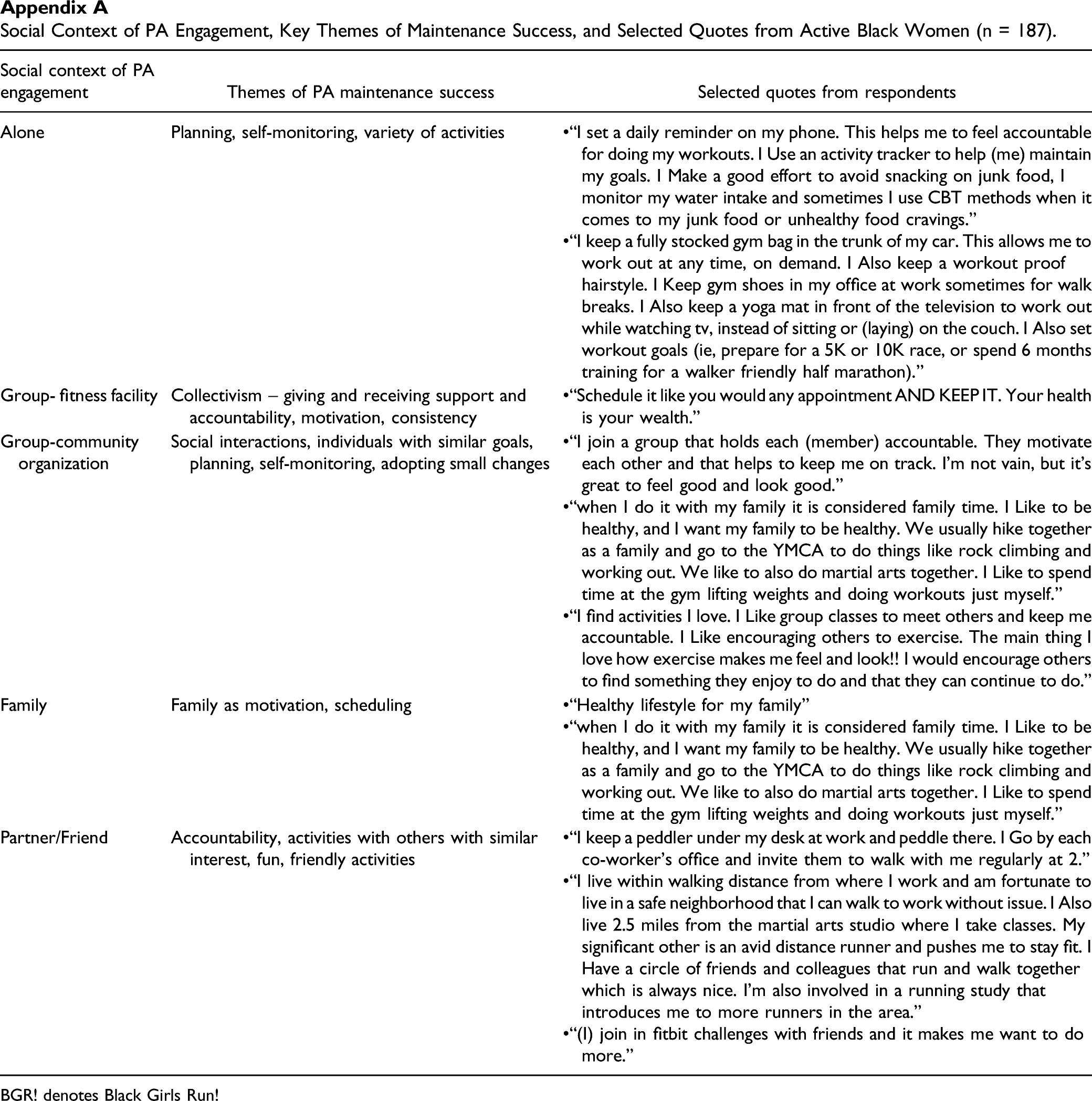
Social context of PA engagement
Themes of PA maintenance success
Selected quotes from respondents
Alone
Planning, self-monitoring, variety of activities
•“I set a daily reminder on my phone. This helps me to feel accountable for doing my workouts. I Use an activity tracker to help (me) maintain my goals. I Make a good effort to avoid snacking on junk food, I monitor my water intake and sometimes I use CBT methods when it comes to my junk food or unhealthy food cravings.”
•“I keep a fully stocked gym bag in the trunk of my car. This allows me to work out at any time, on demand. I Also keep a workout proof hairstyle. I Keep gym shoes in my office at work sometimes for walk breaks. I Also keep a yoga mat in front of the television to work out while watching tv, instead of sitting or (laying) on the couch. I Also set workout goals (ie, prepare for a 5K or 10K race, or spend 6 months training for a walker friendly half marathon).”
Group- fitness facility
Collectivism – giving and receiving support and accountability, motivation, consistency
•“Schedule it like you would any appointment AND KEEP IT. Your health is your wealth.”
Group-community organization
Social interactions, individuals with similar goals, planning, self-monitoring, adopting small changes
•“I join a group that holds each (member) accountable. They motivate each other and that helps to keep me on track. I’m not vain, but it’s great to feel good and look good.”
•“when I do it with my family it is considered family time. I Like to be healthy, and I want my family to be healthy. We usually hike together as a family and go to the YMCA to do things like rock climbing and working out. We like to also do martial arts together. I Like to spend time at the gym lifting weights and doing workouts just myself.”
•“I find activities I love. I Like group classes to meet others and keep me accountable. I Like encouraging others to exercise. The main thing I love how exercise makes me feel and look!! I would encourage others to find something they enjoy to do and that they can continue to do.”
Family
Family as motivation, scheduling
•“Healthy lifestyle for my family”
•“when I do it with my family it is considered family time. I Like to be healthy, and I want my family to be healthy. We usually hike together as a family and go to the YMCA to do things like rock climbing and working out. We like to also do martial arts together. I Like to spend time at the gym lifting weights and doing workouts just myself.”
Partner/Friend
Accountability, activities with others with similar interest, fun, friendly activities
•“I keep a peddler under my desk at work and peddle there. I Go by each co-worker’s office and invite them to walk with me regularly at 2.”
•“I live within walking distance from where I work and am fortunate to live in a safe neighborhood that I can walk to work without issue. I Also live 2.5 miles from the martial arts studio where I take classes. My significant other is an avid distance runner and pushes me to stay fit. I Have a circle of friends and colleagues that run and walk together which is always nice. I’m also involved in a running study that introduces me to more runners in the area.”
•“(I) join in fitbit challenges with friends and it makes me want to do more.”
Elements of Social Support Perceived as Keys to Maintenance of Physical Activity Among Active Black Women (n = 187).
Elements of Social Support Perceived as Keys to Maintenance of Physical Activity Among Active Black Women (n = 187).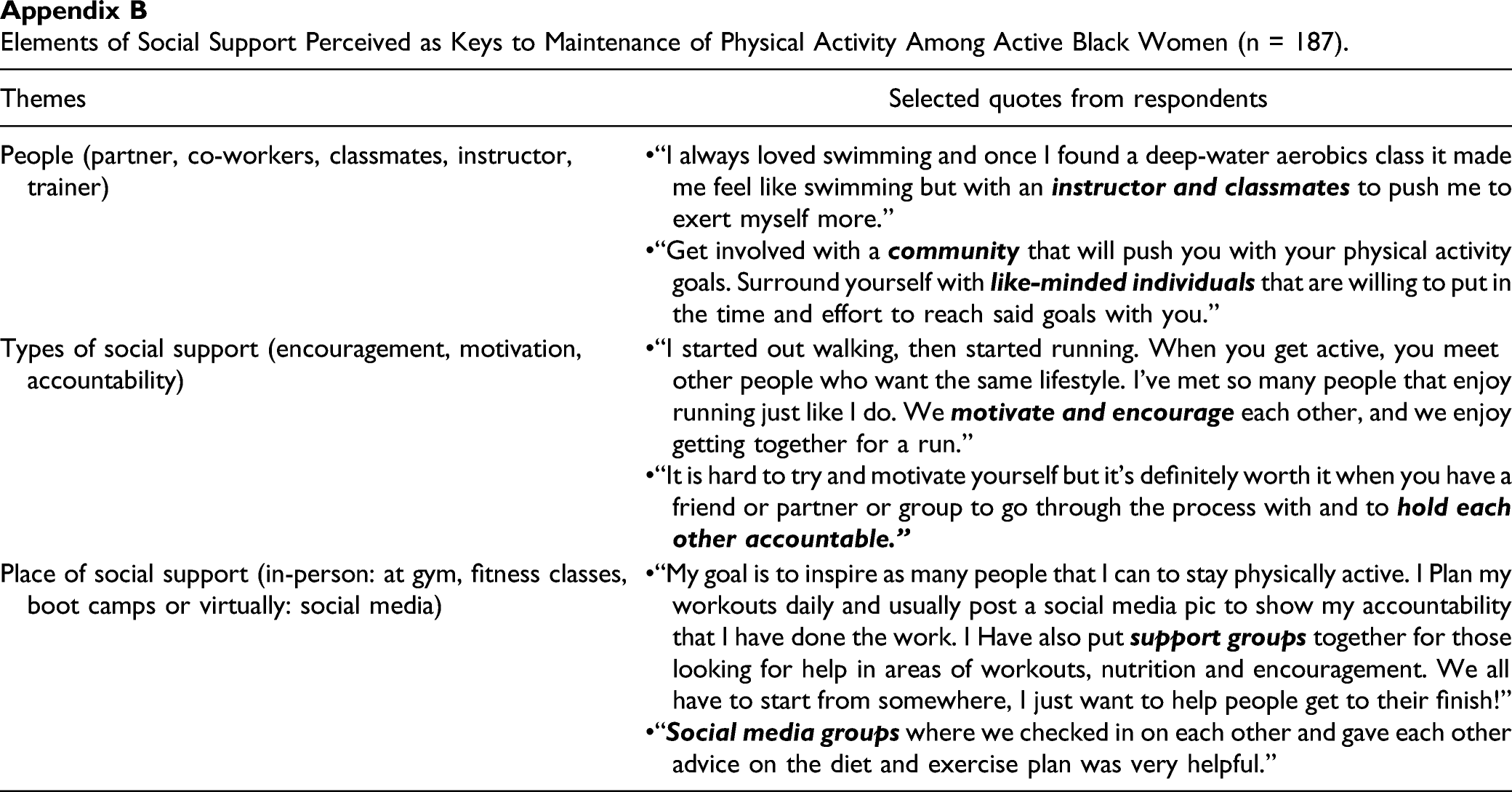
Themes
Selected quotes from respondents
People (partner, co-workers, classmates, instructor, trainer)
•“I always loved swimming and once I found a deep-water aerobics class it made me feel like swimming but with an
•“Get involved with a
Types of social support (encouragement, motivation, accountability)
•“I started out walking, then started running. When you get active, you meet other people who want the same lifestyle. I’ve met so many people that enjoy running just like I do. We
•“It is hard to try and motivate yourself but it’s definitely worth it when you have a friend or partner or group to go through the process with and to
Place of social support (in-person: at gym, fitness classes, boot camps or virtually: social media)
•“My goal is to inspire as many people that I can to stay physically active. I Plan my workouts daily and usually post a social media pic to show my accountability that I have done the work. I Have also put
•“