







Abstract
Purpose
To inform food retail interventions, this study explored food shopping strategies employed by people constrained by limited budgets but residing in an urban environment offering numerous retail options.
Approach
Qualitative study incorporating semi-structured interviews and shop-alongs.
Setting
East Harlem, New York City.
Participants
37 East Harlem residents participated in interviews, of whom 15 participated in shop-alongs.
Methods
Interviews and shop-alongs were conducted in English, Spanish, and Mandarin Chinese. Interview transcripts were analyzed using a grounded theory approach. Data from shop-alongs were used to supplement interview findings.
Results
Participants shopped 1-2 times at an average of 4 retail locations per week. Two key themes emerged: (1) planning trips and choosing venues; and (2) shopping experiences and perceptions of stores. Price was the primary driver of store choice, followed by product quality and variety. Substantial time was invested in shopping. Most English- and Spanish-speaking participants shopped in East Harlem. Chinese American participants shopped in Chinatown due to language concordance, availability of culturally-preferred foods, and proximity to other services.
Conclusion
East Harlem residents invested substantial planning, time and effort in food shopping to acquire sufficient food for their households on limited budgets. These findings offer insight into how residents interact with food environments and key drivers of decision-making about food shopping that affect decisions about where to shop and what to purchase.
Keywords
Purpose
Across the United States, people with low household incomes and people who are members of racially, ethnically, or linguistically minoritized groups experience disparities in diet and illnesses that are driven by a diverse array of environmental, social, and economic factors.1-3 Data from New York City (NYC) reflect these national trends, with non-Hispanic Black/African American (Black), Hispanic/Latinx (Latine), and some Asian American New Yorkers at higher risk of diet-related and chronic diseases.4-6 Furthermore, some research suggests that neighborhood food environment contributes to these disparities, both nationally7-9 and in NYC.10,11 People of color and marginalized populations are more likely to live in under-resourced neighborhoods, 12 with an inequitable food landscape caused by decades of racist and discriminatory federal, state, and local policies.13-15
While food systems research is plentiful, studies exploring individual shopping preferences and practices are limited, 16 especially in neighborhoods where food insecurity is high despite plentiful food retail options. Extant research typically has posited that shopping behaviors are driven by price and the proximity of retailers to the home.16-18 Yet evidence has been mixed, with some research demonstrating that product quality, food preferences, store familiarity, and other factors can supersede proximity and price.19,20 Furthermore, as gentrification transforms the urban landscape, long-term residents of neighborhoods with greater concentration of low income households are forced to contend with a changing retail environment in which low-cost grocery stores may be replaced by high-cost specialty markets and other retail outlets that cater to a new, higher earning population. 21 More nuanced studies of the social and environmental factors that influence individuals’ food choices and purchases are needed to develop a clearer understanding of how people acquire food that aligns with their household and cultural preferences and budgets within these neighborhoods.13,17,19,22,23 Applying a health equity framework to qualitative and participatory research methods is critical to developing this evidence base.24,25 Such research can support the design of initiatives that better respond to people’s preferences and needs.
Toward this end, the New York City (NYC) Department of Health and Mental Hygiene (Health Department)’s Harlem Bureau of Neighborhood Health (Harlem Bureau) designed and implemented a qualitative study of food shopping among racially, ethnically, and linguistically diverse residents of NYC’s East Harlem neighborhood. Although East Harlem offers numerous food retailers, barriers to grocery shopping persist, resulting in a local food environment akin to a “food mirage.”21,26 This paper describes study findings related to residents’ experiences with the local food environment, including where they shopped for food and why as well as their typical shopping patterns. The purpose of sharing this work is to support the development and implementation of food retail interventions and related approaches and policies to shape local food environments and increase access to affordable, healthy, and culturally-appropriate foods.
Methods
Design
This qualitative study was conducted from February to May 2018 and was approved by the Health Department’s Institutional Review Board. The study included semi-structured, in-depth interviews and shop-alongs. The study design, setting, participants, interview methods (including interview questions), and results related to food insecurity have been described in detail elsewhere. 27 This paper reports the shop-along methods and results pertaining uniquely to shopping behaviors from both shop-alongs as well as interviews.
Setting
East Harlem is a dynamic, diverse NYC neighborhood located in upper Manhattan with a population of 118,409 people, of whom 50% identify as Latine, 31% as Black, 11% as White, and 6% as Asian American. More than one-fifth (22%) of East Harlem residents are foreign-born, with 18% having limited English proficiency. 28 East Harlem residents have high rates of chronic disease, including a higher rate of diabetes (20%) than New Yorkers overall (12%), and a higher rate of premature mortality than NYC overall. 28 Nearly one-quarter (23%) of residents live in poverty, with 35.2% of East Harlem residents receiving federal Supplemental Nutrition Assistance Program (SNAP) benefits, 38.5% paying more than one-third of their income on monthly rent and 22.4% identifying as food-insecure, which is higher than the national and city average29,30 East Harlem offers many food retail options, including five farmers markets offering fresh produce that often accept SNAP and other benefits. However, small corner stores, known as bodegas, outnumber supermarkets 17 to 1. Additionally, 28 food pantries currently operate in East Harlem.
Participants
The study sought to recruit a minimum of 30 participants, with sufficient numbers of participants across languages as well as in the age groups of 18 to 64 and 65 or older to allow for analyses by subgroups (e.g. English speakers aged 18-64, English speakers aged 65 or older). Participants were required to reside in an East Harlem zip code (10029 or 10035), be 18 years or older, be the main food shopper and food decision-maker in the household, and speak English, Spanish, or Mandarin Chinese (Mandarin). Study participants were recruited through printed flyers distributed throughout the community and Harlem Bureau programs. Participants recruited via Bureau sources were limited to 30% of the total sample.
Data Collection
Interviews were conducted by four research team members: two researchers interviewed participants in English, one in Spanish, and one in Mandarin. Interviews were audio-recorded and lasted 90 minutes and participants were compensated with a $20 gift card. Interview methods and results focused on food insecurity have been described in detail elsewhere.
27
Briefly, the interview guide included the following sections: food shopping and decision-making; food environment, family, and community; food security; and health. At the conclusion of the interview, the research team member invited participants to participate in a shop-along, during which that same researcher would accompany them to observe a routine grocery shopping trip. Participants who consented to this part of the study identified a date, time, and location for the shop-along. Per the shop-along protocol, researchers asked for informed consent to audio record the shopping trip and take photos. Researchers instructed participants that they should shop as they normally would, including visiting multiple shopping venues. During the shop-along, researchers asked participants to describe their actions as they navigated the store and selected items for purchase. The protocol also included a guide for researchers to note their own observations, including names of shopping venues visited, time spent at each location, modes of transportation used, amount of money spent, payment method, food vouchers or federal assistance used, and other observations related to the neighborhood food environment (Figure 1). Participants received an additional $20 gift card for completing the shop-along. Shop-along tracking form.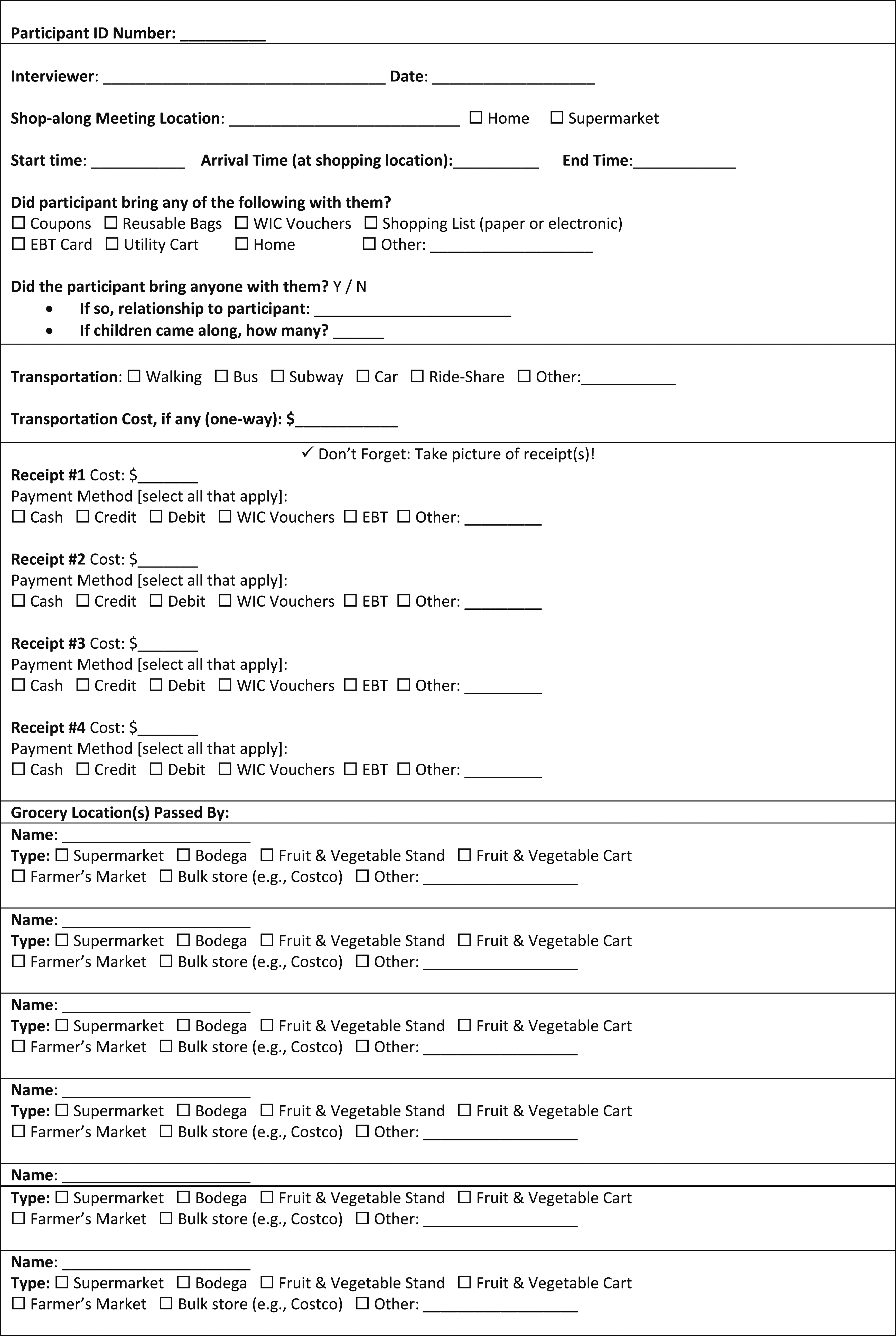
Analysis
Interview transcripts were coded and analyzed in Atlas.ti using a grounded theory approach. Codes were organized into broad thematic topics and cross-case analyses were conducted. Researchers reviewed the shop-along audio files, notes, and photos (if applicable) following each shop-along and wrote a detailed summary. Data from the shop-alongs were used to triangulate and supplement the findings from the interviews by comparing the main themes that arose from the interviews to the main themes from the shop-alongs.
Following completion of preliminary data analysis, study participants were invited to the Harlem Bureau to a study reflection session, which served as a “member check”, to hear about study findings, discuss the findings, and share their thoughts and feedback with the researchers. During this session, participants were asked to discuss whether the results reflected their thoughts and experiences and given the opportunity to share additional thoughts and reflections.
Results
Select Demographic Characteristics of East Harlem Residents Participating in In-Depth Interviews (n=37) and Shop-Alongs (n=15).
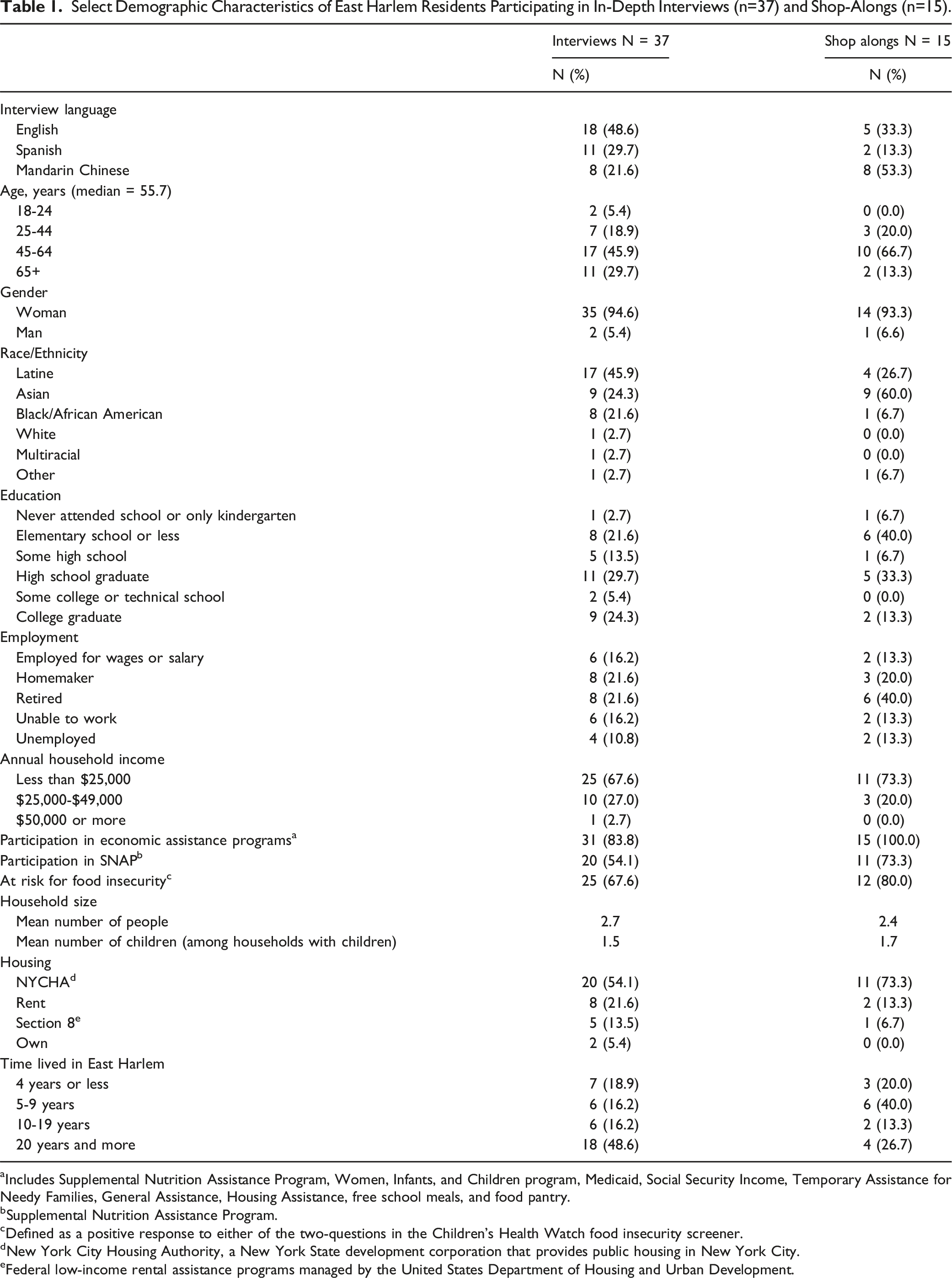
aIncludes Supplemental Nutrition Assistance Program, Women, Infants, and Children program, Medicaid, Social Security Income, Temporary Assistance for Needy Families, General Assistance, Housing Assistance, free school meals, and food pantry.
bSupplemental Nutrition Assistance Program.
cDefined as a positive response to either of the two-questions in the Children’s Health Watch food insecurity screener.
dNew York City Housing Authority, a New York State development corporation that provides public housing in New York City.
eFederal low-income rental assistance programs managed by the United States Department of Housing and Urban Development.
Frequency
Most people shopped between one and two times per week, at five stores, on average, over the course of all the shopping trips. Many participants shopped alone and traveled by foot or public transportation, using a personal cart to carry groceries to maximize the number of bags they could transport during one trip. Older people, in particular, shopped two to three times per week and planned their shopping around other errands, such as medical appointments.
Store Type
All participants shopped at supermarkets, and many (but not all) also shopped regularly at other types of stores including dollar stores, fruit and vegetable stores, a wholesale retailer, specialty stores, and food pantries. The principal driver for shopping at dollar stores was low prices. Although some participants shopped regularly at dollar stores for staple items like bread and eggs, some reported buying only snack foods and candy in this setting. Others avoided dollar stores due to concerns about quality. Several participants reported shopping at fruit and vegetable stands, especially during summer “because fruits and vegetables are fresh at that time.” Similarly, some participants preferred butcher shops for meat because the meat “is fresher” – completely visible to customers and not pre-packaged – as compared to other stores, in which it was hard to tell how old the meat was. There is a wholesale retailer in East Harlem that requires a monthly membership and is located on the perimeter of the neighborhood. Some participants found the membership fee to be prohibitive, whereas others reported sharing a membership and buying there in bulk because it was “cheaper.” Bodegas, or corner stores, are commonly found in East Harlem and sell a range of packaged foods and snacks, drinks, and a small selection of fruits and vegetables, but participants reported shopping only for snacks and drinks in these settings. Similarly, they shopped for snacks and drinks at chain pharmacies. Many participants also reported “shopping” at food pantries, which served as important locations for food acquisition for this sample, with some pantries providing fresh fruit and vegetables and others offering canned goods. Many participants utilized pantries regularly (weekly or bi-weekly) for a consistent supply of food. Pantry use is further described in a previous publication. 27
Location
Most Black and Latine participants shopped in the neighborhood, often at locations that were within walking distance. Shopping outside of the immediate neighborhood was rare for most Black and Latine participants. There were only two exceptions: one woman who shopped in downtown Manhattan, near her workplace, due to both convenience and preference and another woman who shopped in Central Harlem for vegetables that often were unavailable in East Harlem, like collard greens. She felt downtown stores offered higher quality and greater variety of groceries compared to vendors near her home. In terms of culturally important foods, Latine participants reported ample availability in East Harlem. For instance, some participants noted that Mexican specialty stores “sell the majority of Mexican foods.” However, Black and Chinese American participants had more difficulty finding culturally important foods in the neighborhood. One participant, who identified as Black, described shopping for vegetables in Central Harlem, a historically African American neighborhood, which “caters to Black folk and if I want Black food, like those [collard] greens, I go over there.” Chinese American participants primarily shopped in Chinatown, a neighborhood in downtown Manhattan located approximately 6.5 miles south of East Harlem and on the same subway line. Participants used public transportation to travel to Chinatown and their reasons for traveling this distance included language access as well as the desire to be able to purchase their preferred produce, protein, and other food items, as East Harlem lacks a Chinese grocery store.
Planning Shopping Trips and Choosing Shopping Venues
Prices were the primary drivers of which stores most participants selected. Participants sought out stores that offered affordable prices as well as frequent sales and deals. Many participants described comparing prices in stores and among circulars (“ad papers”) to find the best deals. This process did not always work out: one participant described feeling let down when they traveled “out of [their] way” for a sale when the sale item was unavailable. Participants invested substantial time and effort in this planning process, adding to the time and energy they spent traveling to multiple stores in order to stay within their food budget. One participant described her routine: “What I do, I get the ad paper. And…if I see Fine Fare is on sale, I got to Fine Fare […]Like Fine Fare, Key Foods, any store that has ad papers. If I see the sale, I mark it down…that’s where we grab our bargain. That’s what I do” (Interview (conducted in English), woman, non-senior).
During shop-alongs, researchers observed participants using a variety of strategies to save money. For example, when shopping for meat, participants often looked for family-sized value packs and meats that had a lower cost per pound. One researcher’s shop-along notes described a participant’s keen focus on price: “[The participant was] familiar with prices and noted that prices were going up. The only items she bought were meat (main bulk of purchases), bread, and toiletries. She did not use a list and was focused on buying meat; this was where she spent the most time trying to find savings and get a deal.” (Shop-Along Notes (conducted in English), woman, non-senior)).
Quality and variety were also important considerations. Participants sought high-quality meat and produce and voiced concerns about the quality of meat and produce offered on sale. While East Harlem has a variety of stores, many participants noted the lack of a single store where they could find everything they needed that offered products that were both high in quality and affordable. Some participants referenced Pathmark – a large chain grocery store that had been centrally located in the neighborhood but closed in 2015 after the building was sold to developers– as the store that had once served as their primary shopping venue. As described by one participant, Pathmark was “the main big [store] in that area that a lot of people had to go to.” Some participants felt that since its closing, no single store served as an adequate replacement. Consequently, participants explained they had no choice but to visit multiple stores to find the best deals. Some participants continue to feel the absence of a major food retailer, such as one senior who noted: “Since Pathmark left, it seemed like I, I just haven’t been used to shopping in the neighborhood…” (Interview (conducted in English), woman, senior).
Participants raised concerns about the quality of food available in East Harlem compared to other neighborhoods. Some shared a perception that neighborhood supermarkets had poorer quality and less variety of produce and healthy food brands. One participant described needing to visit “other neighborhoods sometimes to get better quality types of food.” Similarly, the participant who shopped downtown near her job in lower Manhattan noted that she preferred “organic food,” which she said was not available near her home.
Participants who shopped in Chinatown noted the abundance of fresh produce, meat, and fish in grocery stores and markets. Participants felt that having language-concordant vendors and access to culturally important food items of high quality at affordable prices was worth the time, effort, and cost of traveling out of the neighborhood. Researcher notes from shop-alongs illustrated the value of these foods to Chinese American participants. During one shop-along, a participant “bought a great deal of seafood, such as crabs, fish, and frozen clams. Also, she purchased preserved radish and preserved chili bamboo shoots.” Another participant “purchased some bamboo leaves to make Chinese sticky rice dumplings (zongzi)… since the Dragon Boat festival is approaching.” This participant also planned to visit a physical therapist following the shopping trip because she was experiencing shoulder pain. Indeed, many Chinese American participants described traveling to Chinatown not only for food but also to socialize and access health and social services.
Experiences while Shopping and Perceptions of Stores
Participants described a range of likes and dislikes about their shopping experiences in East Harlem. In general, they expressed more positive than negative feelings about stores. Among the characteristics they liked were low prices and sales, customer service and staff friendliness, appealing produce displays, cleanliness, and convenience. One participant described the fruit and vegetable display at a store as “catching” and another described a store as having “a variety of things and they’re clean.” One participant described the staff at stores in the neighborhood as “friendly” and another noted, “if you don’t see something… they help you look for stuff.”
Participants expressed negative feelings about long lines, high prices, and poor customer service. They also described frustration with false advertisements of sales and poor quality of foods, which could lead to distrust of the shopping venue. A participant elaborated by sharing her experience buying packages of meat in which only the meat on the top was “fresh” and the majority of the meat not visible was not “usable.” One participant shared an experience of unknowingly purchasing expired yogurt: “These yogurts are on sale, they’re two for a dollar, so great. But I was about to eat that yogurt. So I saw the expiration date… So it was three days expired from the day that I bought it. So I went to the supermarket and I spoke to the manager… This was for my kids. I told them to at least give me my money back. They said, ‘I’m sorry, because it’s already opened.’” (Interview (conducted in English), woman, non-senior).
Two participants reported experiences of racism while shopping. A Latine man described being followed by staff while shopping and a Chinese American man described being mocked for his accent.
Some participants shared experiences at food pantries. Opinions were mixed, with some participants describing the food at pantries as “good and healthy” while others said they “don’t like it a lot.” In parallel, some participants reported receiving fresh fruits and vegetables at pantries, while others acquired only canned goods.
Discussion
Summary
This qualitative research adds to the extensive body of literature about healthy food access and food environments by employing a nuanced approach to exploring how residents who are constrained by limited budgets navigate an environment offering numerous food retail options. Thirty-seven in-depth interviews and 15 shop-alongs conducted in three languages among a racially and ethnically diverse group of low-income East Harlem residents highlighted cost as the primary driver of shopping behaviors and grocery purchases. Participants invested substantial time in grocery shopping, including researching prices before setting out on shopping trips. The use of circulars to find deals allowed participants to compare prices for similar items between stores but also compounded the amount of time they invested in shopping trips. They typically shopped one or two times per week, visiting an average of five locations per week that included a variety of store types, including supermarkets, dollar stores, and specialty stores. In addition, participants often shopped at multiple stores during one outing, often on foot, contributing greatly to the substantial amount of time spent on planning and shopping for food. Quality was also a key concern, second only to price, and particularly important to participants regarding where to purchase fresh meat, fish, and produce. Although most participants purchased the majority of their groceries within the neighborhood, Chinese American and some Black participants traveled beyond East Harlem to acquire culturally important foods. Finally, customer service mattered to participants, with some participants discussing experiences with discrimination or unfair treatment at stores, but also many noting positive experiences with customer service.
Cost also drew participants to non-conventional food shopping venues, like dollar stores, where some participants regularly shopped for perceived high-priced items like milk and bread. Previous research has shown that low-income shoppers regularly visit dollar stores, both in urban and rural environments, and that a higher level of food insecurity may be linked to dollar store use.31,32 Interestingly, while bodegas are abundant in East Harlem and offer staple foods like milk, bread, canned foods, and a limited variety of fruits and vegetables, participants described shopping at these outlets only for snacks and drinks and did not consider bodegas as a location for food shopping. This is consistent with findings from earlier work in NYC overall 33 and the Bronx. 34
Shop-alongs and interviews with Chinese American participants, in particular, reinforced earlier work highlighting that preference for culturally-appropriate foods at affordable prices may supersede concerns about store proximity to the home.16,35 Considering that food pantry use was common among participants, advocates may explore increasing the availability of culturally-relevant foods within pantries to accommodate the diverse ethnic groups living within the neighborhood. In East Harlem, inclusion of Chinese ethnic foods and Black ethnic foods may be especially important, given that Latine participants reported that they could find most of their preferred cultural foods within the local food retail environment and given that Black and Chinese residents represent a significant portion of the East Harlem population.
The shop-along component of this study provided the research team with context and insights related to the data collected in interviews. Strategies observed during shop-alongs illustrated a constant balancing act between satisfying preferences, such as availability of organic foods and linguistic and cultural concordance of retailers, and recognizing budgetary and logistical constraints, like proximity to home or not having a vehicle. Consistent with earlier research,17,36 this study found that some participants planned grocery shopping around other routine activities, such as medical appointments. Chinese American participants, in particular, planned around trips to language-concordant service providers.
The analyses presented here complement an earlier paper examining experiences with and strategies for coping with food insecurity. 27 Findings from that work illustrated a variety of economic, social, and logistical difficulties that participants faced in managing intermittent or chronic food insecurity and cited feelings of frustration with an unjust system. The present study provides an in-depth picture of residents’ shopping patterns and strategies. Shop-along data provided a more nuanced picture of the inordinate amount of time, energy, and planning that food shopping required on participants’ constrained budgets. These findings are striking, particularly considering that physical access to food is not a barrier to food shopping in East Harlem. While there are a number of local programs and initiatives that aim to increase affordability of foods,37-39 like the Health Bucks program in NYC, these findings can be used to support efforts to improve the food environment in East Harlem to ensure access to healthy and affordable foods. Furthermore, given the ongoing interest in developing and strengthening healthy food retail programs, 40 our study may provide useful information for considering how neighborhood residents shop for food and use different types of stores. This information can be useful in designing and shaping such interventions so that they leverage customers’ existing shopping patterns. Resident perspectives and opinions of such interventions should be solicited to ensure that the specific needs of the neighborhood are met.
This study was implemented prior to the onset of the novel coronavirus 2019 (COVID-19) pandemic, which severely impacted food availability and worsened food insecurity among communities of color nationwide, 41 including in NYC. 42 The pandemic resulted in business closures throughout NYC, including East Harlem and – notably – Chinatown, reducing availability and raising prices of staple and specialty items alike. 43 In parallel, inflation has been rising dramatically, impacting food prices and changing consumer spending patterns. 44 The majority of participants in this study received SNAP or other federal assistance to support grocery purchases, but even as SNAP increased benefits by 12.5% in October, 2022 – a proportion equal to $104 more per month ($939 rather than $835) for a family of four – it is not clear that this increase has kept pace with inflation. 45 Furthermore, in March 2023, temporary increases to SNAP benefits that were put in place as emergency allotments to alleviate hunger during the novel coronavirus 2019 (COVID-19) pandemic were halted. 46 This change resulted in every household receiving at least $95 less per month, while some households saw a $250 monthly reduction in SNAP benefits. Overall, daily SNAP benefits now average only $6.10 per person. Finally, many NYC neighborhoods continue to gentrify at a rapid pace, leading to new retailers to displace older, familiar ones to serve emerging higher-income population pockets in neighborhoods throughout the city.47,48 These circumstances suggest an exacerbation of the difficulties faced by participants in this study. Considering that price was the key driver of shopping behaviors, it is likely that these participants currently invest even more time and effort in grocery shopping than they did at the time of data collection.
Limitations
This study has several limitations. Although the study participants reflected the rich ethnic and linguistic diversity of East Harlem, the sample was a convenience sample of residents who self-selected to participate. Additionally, interviews were conducted during weekdays, which may have been a barrier to people who are unavailable during weekdays. Interviewers were available to conduct interviews after 5
Conclusion
This research highlights the extensive planning, substantial time and significant effort expended by East Harlem residents toward the purpose of acquiring sufficient food for their households on limited budgets. Given that East Harlem offers numerous food retail options, these findings underscore the need for food environment policy and programming to consider the nuances of food shopping strategies among diverse urban populations. Public health practitioners seeking to support individuals striving to stretch their budgets to prepare healthy meals for themselves and their families should examine local food environments closely to gain insight into programs to improve food availability and increase purchase and consumption of health foods among a diverse population. Shopping behaviors are driven by a constellation of factors including price, proximity, product quality, food preferences, store familiarity, and linguistic and cultural attributes. Findings show that even in a food environment that offers numerous retail options, residents invested substantial time and effort to stretch their limited food budgets by planning for shopping trips and visiting multiple retailers, often multiple times, each week. To improve local food environments, public health policymakers and practitioners must consider the nuances of food shopping strategies to ensure high quality, culturally-relevant foods are available and affordable within a variety of store types and locations where residents feel comfortable shopping. Notably, residents’ visits to many different types of stores and frequent use of circulars provide insights that can be woven into food retail interventions.SO WHAT?
What is already known on this topic?
What does this article add?
What are the implications for health promotion practice or research?
Footnotes
Acknowledgments
We would like to thank all of the people who participated in this study and allowed us to tell their stories and learn from their experiences. Thank you to Anthony Fonseca, Juan Pablo and Guillermo Polanco for their assistance in carrying out this project. Thank you to Diana Ballesteros Gonzalez, Feng Zhao, Jessie Lopez, Alyssa Creighton, Caitlin Falvey, Nana Bonah, and TYTHE Design for helping us reconvene participants to share back our findings. We are also thankful to Jennifer Pierre and Stephanie Farquhar for their input on this project/paper. Finally, we would like to thank the countless community and nutrition-based partners who provided valuable feedback and guidance for this project. This project was supported by the New York City Department of Health and Mental Hygiene and by a New York State Department of Health’s Creating Healthy Schools and Communities grant.
Declaration of Conflicting Interests
The author(s) declared no potential conflicts of interest with respect to the research, authorship, and/or publication of this article.
Funding
The author(s) received no financial support for the research, authorship, and/or publication of this article.
