







Abstract
For regulating emotion, it has been shown that people benefit from being flexible in their use of emotion regulation strategies. In the current study, we built on research focused on regulatory flexibility with respect to emotions to investigate flexibility in the use of self-regulatory strategies to resolve daily self-control conflicts. We investigated three components of flexibility: (1) metacognitive knowledge, (2) strategy repertoire, and (3) feedback monitoring. In a 10-day experience sampling study, 226 participants reported whether they had, within the past hour, experienced a self-control conflict of initiating an aversive activity, persisting in it, or inhibiting an unwanted impulse in response to a temptation. Results support the hypothesis that higher levels of all three components of flexibility are associated with higher levels of success in managing daily self-control conflicts, except for strategy repertoire and feedback monitoring in conflicts of persistence. Results also support the hypothesis that higher levels of trait self-control are associated with higher levels of metacognitive knowledge and feedback monitoring for conflicts of initiation, but not for conflicts of persistence and inhibition. We found no evidence of an association between trait self-control and strategy repertoire. These findings demonstrate the importance of flexible strategy use during daily self-control conflicts.
Introduction
In everyday life, often multiple times a day, people encounter situations in which they have to control themselves: They may feel tempted by something pleasant that stands in conflict with personal goals, like a delicious piece of cake that should not be eaten because it is fattening and unhealthy. Or they may feel resistant to start or continue with an activity that helps them advance a personal goal but does not seem like fun, such as working out when they would rather stay on the couch. In these situations, people experience internal conflicts between what they believe they should do and what is inherently pleasurable to them (Hofmann et al., 2009).
To resolve such conflicts, people have to exercise self-control, that is, to regulate their thoughts, feelings, and actions that would otherwise move them away from long-term goals (Duckworth et al., 2016). People vary in how well or poorly they routinely self-regulate when facing self-control conflicts. More formally, trait self-control is a person’s tendency to exercise self-control across time and task domains (Tangney et al., 2004) or a person’s capacity to resist desire (Hofmann et al., 2012). Trait self-control is associated with greater academic success (Duckworth & Carlson, 2013; Mischel et al., 1989; Véronneau et al., 2014), healthier eating behavior (Churchill & Jessop, 2011; Forzano & Logue, 1992; Lawrence et al., 2012; Nederkoorn et al., 2010), lower levels of stress (Nielsen et al., 2020), better health, higher wealth, and a lower propensity to develop a drug addiction and become involved in crime (Moffitt et al., 2011).
Despite substantial evidence that self-control is associated with a range of adaptive outcomes, relatively little is known about the specific processes by which self-control influences behavior. One possibility is that people’s use of self-regulatory strategies influences how well they can resolve self-control conflicts. Indeed, studies of responses to self-control conflicts have identified a range of strategies people use to resolve those conflicts, including focusing on either positive or negative outcomes of two experimental tasks (Roney et al., 1995), goal setting (Locke & Latham, 2002, 2006), implementation intentions (Gollwitzer, 1999), self-reward (Humphrey et al., 1978; Mahoney, 1974), reappraisal, or distraction (Mischel & Baker, 1975; Mischel et al., 1989; see Hennecke & Bürgler, 2020, for a review). Beyond these reactive strategies are strategies that can be deployed to prevent self-control conflicts from occurring in the first place, namely situation modification (modifying a situation to make self-control easier, for example hiding a temptation away from sight) and situation selection (avoiding situations in which self-control is more difficult and/or searching out situations that accommodate successful self-control, like studying in a quiet library; Duckworth et al., 2014; Gross, 1998). A particularly comprehensive study of self-regulatory strategies, in terms of the number of different strategies considered, included 19 different strategies people spontaneously use to help themselves persist in aversive activities in their everyday lives (Hennecke et al., 2019). What has been neglected in research on self-regulatory strategies so far is the possibility that strategies might vary in their efficacy depending on the situation they are used in. Therefore, flexibility in using strategies might be just as, or even more important, than the expert but inflexible use of one specific strategy across situations.
Regulatory flexibility
In their review of research on emotion regulation and coping, Bonanno and Burton (2013) describe a misguided assumption that certain coping strategies are inherently adaptive (e.g., problem-focused coping), and other types inherently maladaptive (e.g., emotion-focused coping) as the fallacy of uniform efficacy. For example, it had been assumed that emotion-focused coping would generally lead to worse outcomes than problem-focused coping for a multitude of outcomes, such as subjective distress as well as physical and mental health (e.g., Kohn, 1996). Evidence showed, however, that in certain situations, for example, when individuals are dealing with uncontrollable stressors like breast cancer or chronic pain, emotion-focused coping strategies can lead to lower levels of pain, physical impairment, and depressive symptoms (Austenfeld & Stanton, 2004). On the basis of these findings, regulatory flexibility was posited as a potentially important ability or skill to help individuals deal with stressors across a variety of situations. It is defined as the ability to flexibly adapt behavior across different (here, stressful) situations (Bonanno & Burton, 2013). Supporting the hypothesis that regulatory flexibility is equally if not more important than the ability to use any single coping strategy, several studies showed positive effects of coping flexibility regarding post-traumatic stress disorder (Levy-Gigi et al., 2016; Rodin, Bonanno, Knuckey, et al., 2017; Rodin, Bonanno, Rahman, et al., 2017), depression (Kato, 2016; Rodin, Bonanno, Rahman, et al., 2017), and life satisfaction (Chen et al., 2018; Reed, 2016).
In the same manner as situations that trigger emotions, situated self-control conflicts differ with regard to their characteristics (e.g., their demands, Hennecke et al., 2019). Accordingly, what might be true for emotion-triggering situations might also be true for self-control conflicts: People might benefit from regulatory flexibility by being able to deploy strategies that fit specific conflicts as they arise. Despite borrowing from emotion regulation work the idea that flexibility is beneficial, we contend that regulating emotional responses also differs from regulating responses to self-control conflicts in some ways: First, the goal of emotion regulation can be purely hedonic and immediate (Tamir, 2009), whereas self-regulation during self-control conflicts, by definition, always serves non-hedonic long-term goals (e.g., to stay slim, save money). Second, and more importantly, in a self-control conflict the ultimate target of regulation is not an affective response. In fact, many self-regulatory strategies do not target a person’s affective response to a self-control conflict, for example, making plans, setting (sub-)goals, or reasoning in favor of a target behavior. Accordingly, we consider investigating the role of regulatory flexibility in this different regulatory domain a novel and important research endeavor.
Regulatory flexibility with regard to emotion regulation has been conceptualized and operationalized in different ways, for example, as strategy repertoire (Pearlin & Schooler, 1978), cross-situational variability in strategy use (Westman & Shirom, 1995; Williams, 2002), or strategy-situation fit (Cheng, 2001; Mischel, 2004; Watanabe et al., 2002; see Cheng et al., 2014, for a review and meta-analysis). In their model, Bonanno and Burton (2013) have proposed three components of regulatory flexibility, namely (1) context sensitivity, (2) strategy repertoire, and (3) feedback monitoring (see also Hennecke & Bürgler, 2020). We closely follow Bonanno and Burton’s model by investigating the role of strategy repertoire and feedback monitoring during self-control conflicts, but we also deviate from it by only investigating metacognitive knowledge as a specific facet of context sensitivity. Context sensitivity has been defined as “the ability to perceive impinging demands and opportunities from the situational context […] and to determine the most appropriate regulatory strategy in response to those demands and opportunities” (Bonanno & Burton, 2013, p. 594). In line with this definition, operationalizations of context sensitivity have assessed whether individuals choose the most effective strategies for a given emotion regulation context (Bonanno et al., 2004; Levy-Gigi et al., 2016; Rodin, Bonanno, Rahman, et al., 2017). We refrained from using this operationalization for two reasons: First, with regard to self-control, there exists little reliable knowledge to judge a priori what constitutes an effective strategy in a given context, at least for the wide range of strategies considered in our research. Second, this operationalization focuses on the outcome of context sensitivity, namely choosing a strategy that fits with a given context, but not on the process of context sensitivity that leads to this outcome. Given that we could not operationalize fit, we decided to instead focus on a construct that could be considered a facet of this process and turned to well-specified models of metacognitive knowledge.
Metacognitive knowledge. Metacognitive knowledge refers to people’s knowledge about cognitive tasks and the cognitive strategies that will be effective in solving them (Flavell, 1979). With respect to self-regulated learning, metacognitive knowledge about cognitive strategies has been shown to be beneficial for performance on tasks such as problem solving, text comprehension, and general academic performance (Donker et al., 2014; Kostons & Van der Werf, 2015; Swanson, 1990). In our perspective, the concept of metacognitive knowledge can be applied to self-control as well and it captures a facet of Bonanno and Burton’s (2013) concept of context sensitivity: For a person to be able to distinguish which strategy fits which situation, they need to be able to draw on knowledge about this conflict as well as potential strategies to resolve the conflict. Even though context sensitivity has to be executed in the very moment of experiencing a self-control conflict, the knowledge a person draws upon to decide on which strategy fits the current situation, should exist before the conflict occurs. This knowledge might have been acquired from past experiences or adapted from observing or communicating with other people. We think that the more a person knows about the nature of an upcoming conflict and how to deal with it through self-regulatory strategy use, the better the chances are that a context-sensitive strategy choice is possible in the moment. In particular, the ability to anticipate situations in which self-control conflicts may occur, the awareness of strategies that are suitable in these situations, and knowledge about implementing them given situational affordances should predict self-regulatory success.
Strategy repertoire. To respond strategically to varying demands of different self-control conflicts, a certain range of strategies, a strategy repertoire, from which an optimal strategy can be selected should also be necessary (Bonanno & Burton, 2013). We know from prior work on coping that having a larger repertoire of strategies contributes to reductions in stress (Pearlin & Schooler, 1978) and depression (Lam & McBride-Chang, 2007). A larger repertoire of self-control conflict resolution strategies should be similarly beneficial for self-regulation when facing such conflicts. Consistent with this prediction, one study examined the effects of three self-regulatory strategies, self-monitoring, self-reward, and planning on academic performance measures (including quiz scores and grade point average) and found that an intervention group who had received training in all three of those strategies performed better than intervention groups who had received training in either self-monitoring alone, or self-monitoring and self-reward together (Greiner & Karoly, 1976). Having a repertoire of strategies for managing self-control conflicts positions people to choose the best strategy and should positively impact success in dealing with those conflicts.
Feedback monitoring. Once a strategy has been selected in line with situational affordances and constraints based on metacognitive knowledge, the efficacy of that strategy is monitored through attention to feedback about progress toward resolving the self-control conflict. This feedback can aid with the decision about whether to stay the course or, exercising flexibility, shift to a different strategy (Bonanno & Burton, 2013). As with the other components of regulatory flexibility, feedback monitoring has not yet been studied with respect to the monitoring of strategies used in daily self-control conflicts. However, monitoring has been found to be beneficial for goal pursuit more generally (Harkin et al., 2016). There is also an extensive literature on self-monitoring in the field of self-regulated learning highlighting its importance to successful pursuit of academic goals (e.g., Zimmerman & Campillo 2003; Zimmerman & Paulsen, 1995). In that literature, self-monitoring (sometimes referred to as self-observation) is the process by which people track their own learning behavior, the strategies used for learning, and the effects these strategies produce on learning, such as if one is able to reach one's goals and if the strategy is effective in achieving that goal, as well as the conditions that a task is performed in (Zimmerman, 1990; Zimmerman & Paulsen, 1995; Zumbrunn et al., 2011). Self-observation furthermore incorporates knowledge from prior, similar learning situations, for example how one was able to solve a problem in the past (Zimmerman & Campillo, 2003), making it possible to use information gathered in past situations in a current, similar situation. Lastly, being able to make changes to their strategies based on the information gathered from self-observation is another aspect closely related to self-observation (Schunk, 2005), as well as in feedback monitoring as described by Bonanno and Burton (2013). In terms of managing self-control conflicts, feedback monitoring is the mechanism by which people know whether the current course of action is likely to succeed and, if not, return to metacognitive knowledge to inform the selection of an alternative strategy from their repertoire.
The current research
The goal of this study was to gain insight into the importance of the three components of regulatory flexibility, namely (1) metacognitive knowledge, (2) strategy repertoire, and (3) feedback monitoring, in resolving everyday self-control conflicts. We tested two hypotheses. First, we hypothesized that higher levels of the three components of flexibility would be associated with higher levels of success in managing daily self-control conflicts. Second, we hypothesized that if regulatory flexibility is associated with success in daily self-control conflicts, its three components should also be associated with trait self-control, an indicator of the ability to effectively self-regulate.
To assess people’s experiences regarding self-control conflicts as broadly as possible and for internal replication of our findings, we included three types of self-control conflicts: Initiating an aversive activity, persisting in an aversive activity, and inhibiting unwanted impulses (Hennecke et al., 2019; Hoyle & Davisson, 2016). We assessed people’s experiences during these three types of self-control conflicts in their daily lives, deploying the experience sampling method. This method is suitable for assessing people’s experiences with high ecological validity and has recently become popular for the study of self-control in daily life (e.g., Friese & Hofmann, 2016; Hennecke et al., 2019; Hofmann et al., 2012; Milyavskaya & Inzlicht, 2017).
Method
We first report how we determined our sample size, all data exclusions, and all manipulations. Only measurements used in the study that are relevant to this article are included. The full codebook including all variables assessed in this study is provided in the supplemental online materials via the Open Science Framework (https://osf.io/gfrby/). The open data and other materials, as well as additional analyses, can also be accessed via the link above. The study was not preregistered and includes exploratory analyses, which are clearly labeled as such. All data were collected in a manner consistent with ethical standards for the treatment of human subjects and the study was approved by the ethics committee of the University of Siegen.
Participants
Given that a priori power analyses for studies with many repeated measures are difficult to perform, we based our target sample size on previous research with similar research questions and study designs (Friese & Hofmann, 2016; Hennecke et al., 2019; Hofmann et al., 2012; Milyavskaya et al., 2015; Milyavskaya & Inzlicht, 2017), which had sample sizes between N = 101 and N = 287. We aimed at recruiting a sample of 250 participants. Recruitment efforts included advertising in lectures and seminars for psychology and educational sciences at the University of Siegen, official student mailing lists of the University of Siegen, the official Facebook and Twitter page of the University of Siegen, official Facebook groups of the University of Siegen, and advertisements in several local newspapers as well as a local radio-station. Recruitment lasted around six weeks, with a sample size of N = 261 participants signing up to participate in the study. Out of those 261 participants, N = 245 completed the baseline questionnaire, and N = 235 successfully coupled their smartphones with the application we used for experience sampling (Movisens; movisens GmBH, Version 1.4.8). N = 226 participants completed at least one of the daily experience sampling questionnaires. Out of the daily observations, 58, 21, and 18 observations for conflicts of initiation, persistence, and inhibition, respectively, were excluded from the analysis. This was the case because people reported having used more strategies than three standard deviations above the mean (rounded up) in those single measurement occasions (initiation: M = 2.87, SD = 2.90, persistence: M = 2.90, SD = 2.61, inhibition: M = 2.39, SD = 2.07; the means reported are the grand-means unless otherwise specified). We chose to remove these outliers because in our opinion it is unlikely that a participant used that many strategies in a single self-control conflict and suspected that those instances might not have been accurately filled out. We chose this cautious approach also because those single instances would have the potential to drastically alter a person’s repertoire. We did not base this decision on previous research or theoretical findings, which is why we chose the very lenient cut-off point of three standard deviations above the mean. The results of analyses including these outliers can be found in the supplemental online materials. Overall, the results do not differ meaningfully and only one finding that is not significant when excluding the outliers would have been significant when including them.
To participate in the study, participants had to own an Android smartphone (since the app used for the ESM part of the study is only available for Android operating systems) and they had to be at least 18 years old. Participants responded to 71% of the daily questionnaires they received, but because of minor technical difficulties with the app, 13% of the daily questionnaires did not reach the participants. As we were not able to distinguish if a questionnaire did not reach a participant because they turned off their phones, their phone ran out of battery, or because of technical problems with the app, those 13% mentioned include all three possible cases. The age of the 226 participants (64% female, 35% male, 1% other gender) with at least one daily questionnaire completed in the experience sampling part of the study was between 18 and 62 years (M = 26.0, SD = 7.7). Fifty percent had completed the highest school track in Germany and 33 percent had completed a university degree or a degree from a university of applied sciences. Forty-five percent of participants reported being employed with an average work load of 17.1 h per week (SD = 12.9). Five percent participated in exchange for course credit and 95% participated in exchange for financial reimbursement (up to €50, based on the number of daily questionnaires the participant filled out during the study).
Procedure
Individuals interested in participating in the study were directed to a website that included the following information about the study: Duration, compensation, confidentiality, exclusion criteria, potential risks, and their tasks during the study. Participants were then able to directly register for the study online, filling out the confidentiality agreement, providing necessary personal information, and giving informed consent to participate in the study. After registering for the study, participants received an initial e-mail containing a personalized link to the baseline questionnaire (presented in LimeSurvey). After they had completed the baseline questionnaire, we contacted participants with an e-mail that contained a QR-code that could be scanned with the Movisens app (available for free on the Google Play Store), allowing them to participate in the experience sampling part of the study. We also attached a detailed manual on how to install and use the app to this e-mail. Participants were then able to choose one of three different time windows during which they would receive their daily questionnaires, either 7 a.m.–9 p.m. (15%), 8 a.m.–10 p.m. (29%), or 9 a.m.–11 p.m. (56%). From then on, participants received eight daily questionnaires over the course of 10 days, at random times during the day within their chosen time window, with a minimum of 1 h between questionnaires. Upon receiving a questionnaire, participants could either accept or dismiss the questionnaire, or alternatively delay it for up to 10 min. If participants did not fill out a minimum of 60 questionnaires during the initial 10-day period, an 11th day was added to the experience sampling assessment, which was the case for 51% of the participants. Once participants had finished the experience sampling part of the study, they received one last e-mail thanking them for their participation and giving information about when they would receive their course credit or payment.
Baseline measurement
Trait self-control. We measured trait self-control with the German translation (Bertrams & Dickhäuser, 2009) of the Brief Self-Control Scale (Tangney et al., 2004), which includes 13 items, answered on a 7-point scale (1 = does not apply at all to 7 = fully applies; M = 4.16, SD = 1.01, range from 1.62 to 6.77, α = .87).
Experience sampling measurements
Type of conflict experienced. The initial question of each experience-sampling questionnaire asked participants if they had experienced, within the last hour, a self-control conflict because they had to either initiate an aversive activity (21.1%, N = 2435), persist in an aversive activity (9.3%, N = 1066), or inhibit an unwanted temptation (8%, N = 927). At about two-thirds of measurement occasions, participants reported not having experienced any of these three conflict types (61.6%, N = 7094). We used filler questions to keep the questionnaires about the same length, irrespective of whether or not a conflict had been experienced.
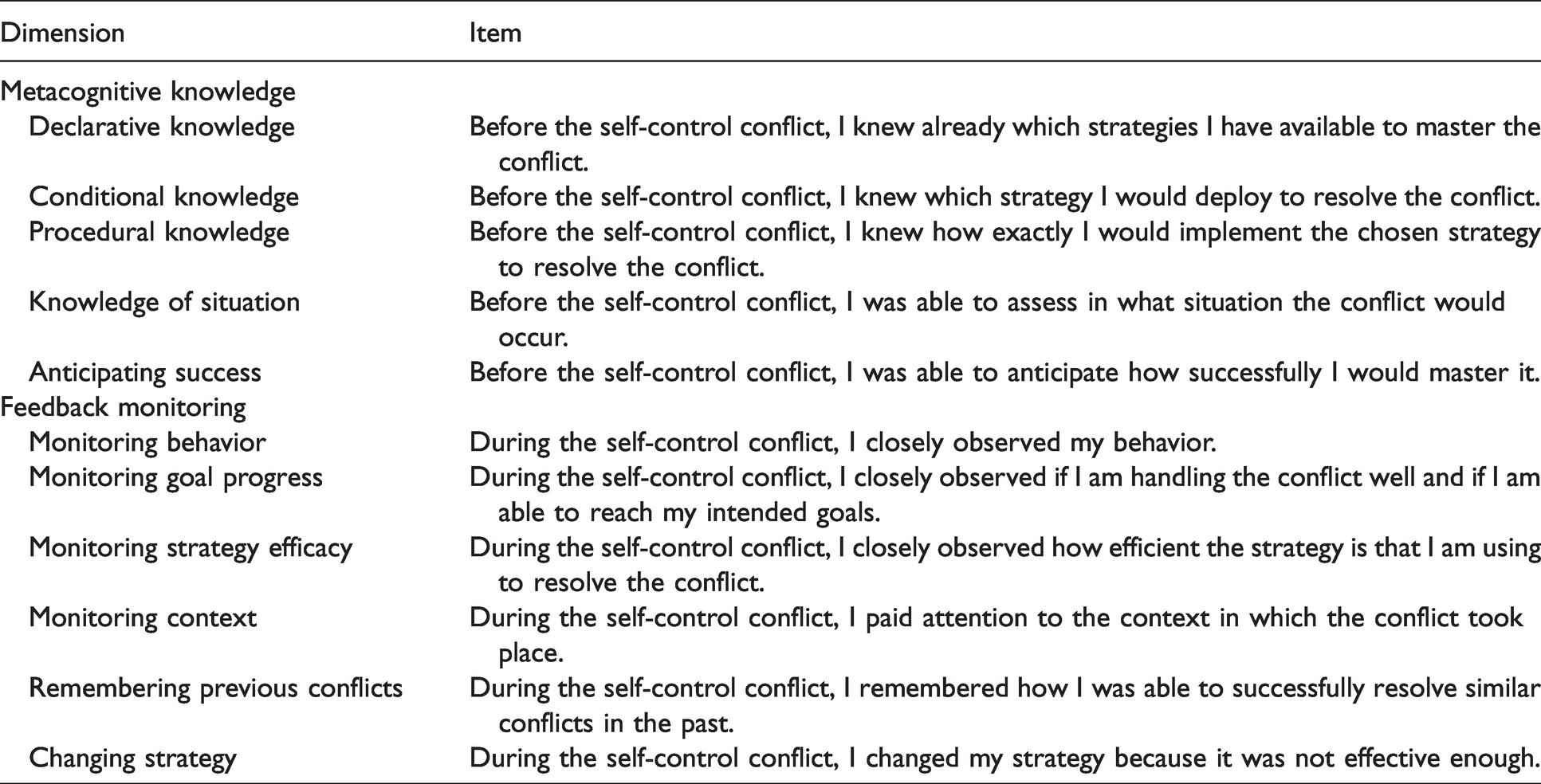
Metacognitive knowledge. We used five items to measure metacognitive knowledge regarding a daily self-control conflict that happened in the past hour, including “Before the self-control conflict, I knew already which strategies I have available to master the conflict.” and “Before the self-control conflict, I knew which strategy I would deploy to resolve the conflict.” The items were adapted from the first component (metacognitive knowledge) of the three general components of metacognition and self-regulated learning (Pintrich et al., 2000). The full list of items can be found in Table 1. The items were answered on a scale of 1–7 (1 = disagree strongly to 7 = agree strongly). To test the psychometric properties of the scale, we performed a confirmatory factor analysis in R with the package “lavaan,” version 0.6-5 (Rosseel, 2012), which allowed for the analysis of clustered data. The analyses only included random intercept models, as random intercept and slope models were not supported in the version of the package used for the analysis. The scale for metacognitive knowledge showed an acceptable fit with a comparative fit index (CFI) of .963, a Tucker–Lewis index (TLI) of .925, an root mean square error of approximation (RMSEA) of .089, 90% confidence interval (CI: .081, .097), and a standardized root mean squared residual (SRMR) of .036. The indicators showed significant positive factor loadings, with standardized coefficients ranging from .63 to .84.
Items used to assess metacognitive knowledge and feedback monitoring.
Strategy repertoire. To assess participants’ repertoire of self-regulatory strategies, we asked them, given that they had just indicated having experienced a self-control conflict, which strategies they used to resolve that self-control conflict. Participants could select multiple strategies from a list that, depending on the experienced conflict type, included up to 26 different types of strategies. These different strategies are shown and briefly described in Table 2. Strategies that could be used in conflicts of persistence were mostly taken from Hennecke et al. (2019), but complemented with additional strategies for conflicts of persistence, as well as—given that participants indicated having the respective other type of conflict—strategies for conflicts of initiation and inhibition. These additional strategies were previously identified in a pilot study (Hennecke et al., in preparation) using the day reconstruction method (Kahneman et al., 2004). In this study, Hennecke et al. (in preparation) asked participants (N = 192; Mage = 27 years, SDage = 9.1 years, 74% women) if they had experienced one or more of the three types of self-control conflicts during different episodes throughout the day, and if so, which type, and whether they had used any strategies to resolve these conflicts. Participants then described these strategies briefly, resulting in 521 descriptions of different strategies. After multiple iterations of coding, the researchers arrived at a coding system that was able to categorize each single reported strategy with fair to good agreement beyond chance (Kappa = .60; Fleiss et al., 1981; Hennecke et al., 2019 for a similar method). Note, that not all strategies were available for each type of conflict. For example, the strategy “substituting the temptation” clearly only applies to conflicts of inhibition and not to conflicts of initiation and persistence, whereas the strategy “task enrichment” (adding some kind of positive stimulus input to the activity, e.g. listening to music while at the gym) only applies to conflicts of initiation and persistence and not to conflicts of inhibition. Moreover, some strategies were slightly reworded to fit the type of conflict people reported having experienced in the last hour.
Self-regulatory strategies used in conflicts of Initiation (I), Persistence (P), and Inhibition (H), grouped according to the process model of self-control (Duckworth et al., 2014).
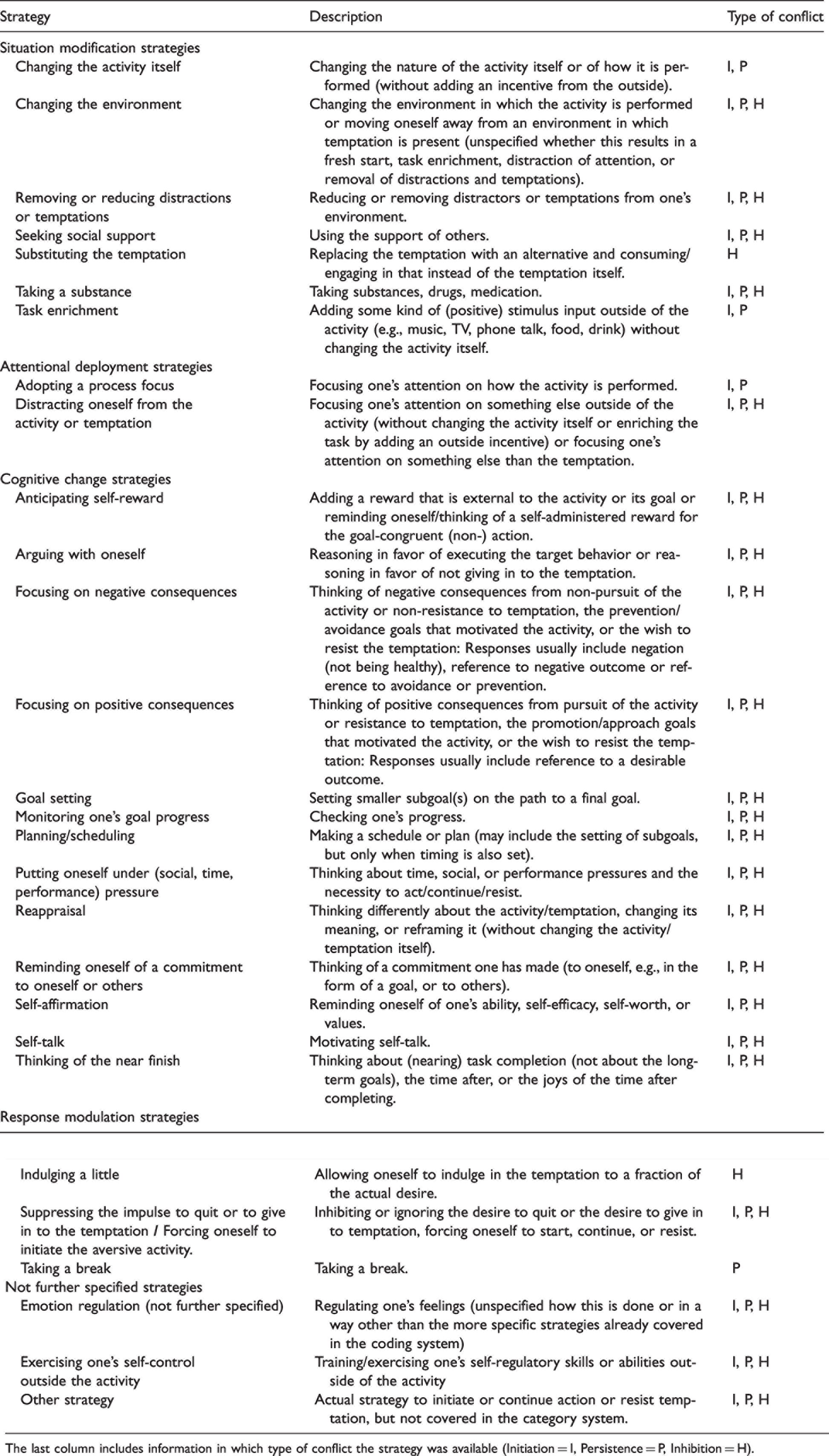
The last column includes information in which type of conflict the strategy was available (Initiation = I, Persistence = P, Inhibition = H).
We operationalized strategy repertoire as the total number of different self-regulatory strategies a person used over the course of the study, separately for each type of self-control conflict (initiation: M = 9.08, SD = 5.52; persistence: M = 5.95, SD = 5.13; inhibition: M = 4.85, SD = 4.35). Given that more conflicts experienced allowed the person to display a larger repertoire and that the number of experienced conflicts correlated highly with strategy repertoire (initiation: r = .58, persistence: r = .73, inhibition: r = .75), we included the number of total conflicts experienced for each type of self-control conflict as a control variable in the analyses including strategy repertoire.
Feedback monitoring. To assess feedback monitoring, we used the construct of self-monitoring as described in the self-regulated learning literature (e.g. Zimmerman, 1990; Zimmerman & Paulsen, 1995; Zimmerman & Campillo, 2003). Six items measured the extent to which people monitored feedback during a daily self-control conflict, for example “During the self-control conflict, I closely observed my behavior” and “During the self-control conflict, I closely observed if I am handling the conflict well and if I am able to reach my intended goals.” The full list of items can be found in Table 1. The items were answered on a scale of 1–7 (1 = disagree strongly to 7 = agree strongly). To test the psychometric properties of the scale, we performed a confirmatory factor analysis, which showed a good fit with a CFI of .974, a TLI of .957, an RMSEA of .053, 90% CI (.047, .059) and an SRMR of .02. All factor loadings were significant and positive, ranging from .32 to .75.
Success in daily self-control conflicts. To measure the extent to which participants resolved their daily self-control conflicts successfully, we used the average of two items, namely participants’ subjective success reported in resolving the conflict and participants’ satisfaction with how the conflict was resolved. We measured subjective success (initiation: M = 4.66, SD = 1.96, persistence: M = 5.02, SD = 1.64, inhibition: M = 4.24, SD = 2.20) with the items “How well did you manage to initiate this activity?”, “How well did you manage to persist in this activity?”, or “How well did you manage to resist the temptation?”, depending on which type of conflict the participant had experienced. The items were answered on a 7-point scale (1 = not well at all to 7 = very well). We measured satisfaction with how the conflict was resolved (initiation: M = 4.61, SD = 1.97, persistence: M = 4.82, SD = 1.74, inhibition: M = 4.63, SD = 1.97) with the items “How satisfied are you with how well you managed to initiate this activity?”, “How satisfied are you with how well you managed to persist in this activity?”, or “How satisfied are you with how well you resisted the temptation?”, depending on which type of conflict the participant had experienced. The items were answered on a 7-point scale (1 = not satisfied at all to 7 = very satisfied). The two items, subjective success and satisfaction, for each conflict type were correlated with r = .78 for conflicts of initiation, r = .76 for conflicts of persistence, and with r = .65 for conflicts of inhibition. We used the average of the two items as a measure of success for every reported daily self-control conflict (initiation: M = 4.64, SD = 1.86, persistence: M = 4.92, SD = 1.58; inhibition: M = 4.44, SD = 1.90).
Data structure and analysis. We used data collected at the level of observations that was assessed during the daily experience sampling (level 1) and data at the person-level that was assessed with a baseline questionnaire or total values of variables computed over the course of the experience sampling part of the study, such as people’s strategy repertoire, or the total number of conflicts they had experienced (level 2). We calculated multilevel linear regressions in R using the ‘lme4' package, version 1.1-21 (Bates et al., 2015). As advised by Enders and Tofighi (2007), level-1-predictors were group-mean centered and level-2-predictors were grand-mean centered. We used maximum likelihood estimation as opposed to restricted maximum likelihood estimation as advised by Field (2017) and Peugh (2010), as we used model comparisons and were mainly interested in the fixed effects of the models. We compared random intercept with random slope models (containing both random intercepts and random slopes) for each multilevel analysis and chose the more conservative intercept model, unless the random slope model showed a significantly lower AIC. The random intercept model allows between-people differences in the mean of the predictor variable, while the random slope model allows between-people differences in both the mean of the predictor variable and the slope of the regression line. Regression weights (B) can be interpreted in the same way in both models, as these are averaged regression coefficients across individuals. It is also possible that random intercept and slope models did not converge, meaning that R was not able to calculate an optimal solution for the model. In those cases, the random intercept model was chosen. Multilevel models were only used if at least one of the variables was assessed at level 1. We used semi-partial correlations to analyze the association between two level-2-variables.
Results
Descriptives
During the study, participants reported, on average, 11.79 conflicts of initiation (SD = 8.85), followed by, on average, 5.33 conflicts of persistence (SD = 5.08), and, on average, 4.63 conflicts of inhibition (SD = 4.88). The three most frequently reported types of activities people wanted to initiate as part of the self-control conflict were studying (32.6%, N = 791), transportation/commuting (14.6%, N = 355), and job-related activities (10.6%, N = 258). The three most frequently reported types of activities people wanted to persist in as part of the self-control conflict were studying (50.6%, N = 539), job-related activities (14%, N = 149), and attending a seminar/lecture (9.9%, N = 105). The three most frequently reported types of temptations people experienced as part of the self-control conflict were food (47.3%, N = 437), media usage (11.6%, N = 107), and sleep (10.7%, N = 99). Correlations among and descriptive statistics for key study variables are presented in Table 3. Because we detected significant interactions between the predictor variables and the moderator variable “type of conflict,” this information is presented for each type of conflict separately.
Correlations among and descriptive statistics for participant means of key study variables.
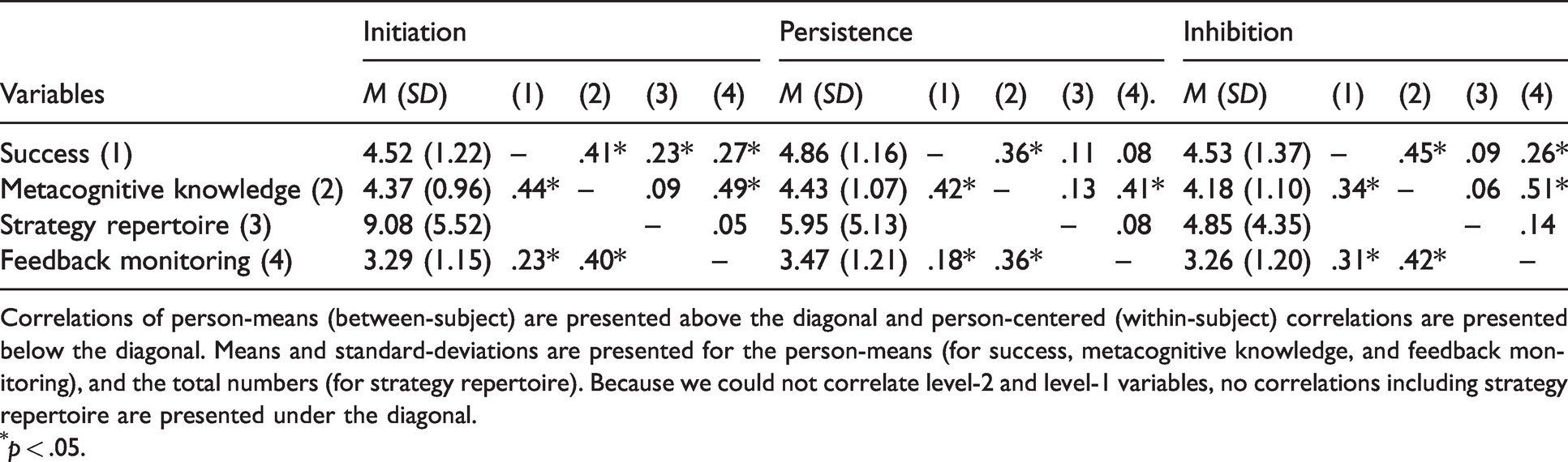
Correlations of person-means (between-subject) are presented above the diagonal and person-centered (within-subject) correlations are presented below the diagonal. Means and standard-deviations are presented for the person-means (for success, metacognitive knowledge, and feedback monitoring), and the total numbers (for strategy repertoire). Because we could not correlate level-2 and level-1 variables, no correlations including strategy repertoire are presented under the diagonal.
p < .05.
Effects of flexibility on self-regulatory success
We first analyzed whether metacognitive knowledge, strategy repertoire, and feedback monitoring had effects on self-regulatory success. Note, that we collected these data across three different types of self-control conflicts (initiation, persistence, and inhibition). While we did not have hypotheses assuming differences in the effects of metacognitive knowledge, strategy repertoire, and feedback monitoring across the three types of conflicts, we nevertheless wanted to control for conflict type and explore the robustness of effects across conflict types. We therefore added conflict type as a predictor and moderator to the analyses. To make the models as concise as possible, we furthermore added metacognitive knowledge and feedback monitoring simultaneously as predictors into the same model, along with the possible moderator conflict type. We did not include strategy repertoire in this model because different types and numbers of strategies were available for each type of conflict, making possible interactions of strategy repertoire difficult to interpret.
To analyze the effects of metacognitive knowledge and feedback monitoring on self-regulatory success, we conducted a multilevel linear regression analysis with the outcome self-regulatory success, the predictors metacognitive knowledge and feedback monitoring, the moderator conflict type, and interactions of both metacognitive knowledge and feedback monitoring with conflict type. Given that conflict type was a nominally scaled variable with three levels, we calculated two models: In the first model, we entered two dummy-coded variables indicating the experience of conflicts of persistence (coded as 0 if this was not the conflict type experienced, coded as 1 if it was) and of conflicts of inhibition (coded as 0 if this was not the conflict type experienced, coded as 1 if it was). Accordingly, conflicts of initiation served as the reference category here. As this model does not include the direct comparison of effects for conflicts of persistence vs. conflicts of inhibition, we calculated a second model with two dummy-coded variables indicating the experience of conflicts of initiation (coded as 0 if this was not the conflict type experienced, coded as 1 if it was) and of conflicts of inhibition (coded as 0 if this was not the conflict type experienced, coded as 1 if it was). Accordingly, conflicts of persistence served as the reference category in this second model. We report the comparison between conflicts of persistence and inhibition from this model in the main text. Detailed results of the first model can be found in Table 4. In both cases, the random intercept models showed the best fit. There were significant and positive main effects of metacognitive knowledge and feedback monitoring on self-regulatory success and feedback monitoring furthermore interacted with conflict type to predict self-regulatory success. Along with the simple slopes, these results can be interpreted as follows: The effects of metacognitive knowledge were positive and significant for all three types of conflict (initiation: B = 0.58, p < .001; persistence: B = 0.56, p < .001; inhibition: B = 0.49, p < .001). There was no significant interaction effect for metacognitive knowledge in conflicts of persistence compared to conflicts of initiation (B = −0.02, p = .681) or conflicts of inhibition compared to initiation (B = −.09, p = .136), as well as for conflicts of inhibition compared to conflicts of persistence (B = −0.06, p = .359).
Multilevel linear regression analyses with the outcome self-regulatory success and the predictor metacognitive knowledge and feedback monitoring, the moderator variable conflict type (initiation, persistence, inhibition), and the interactions between metacognitive knowledge or feedback monitoring and conflict type.
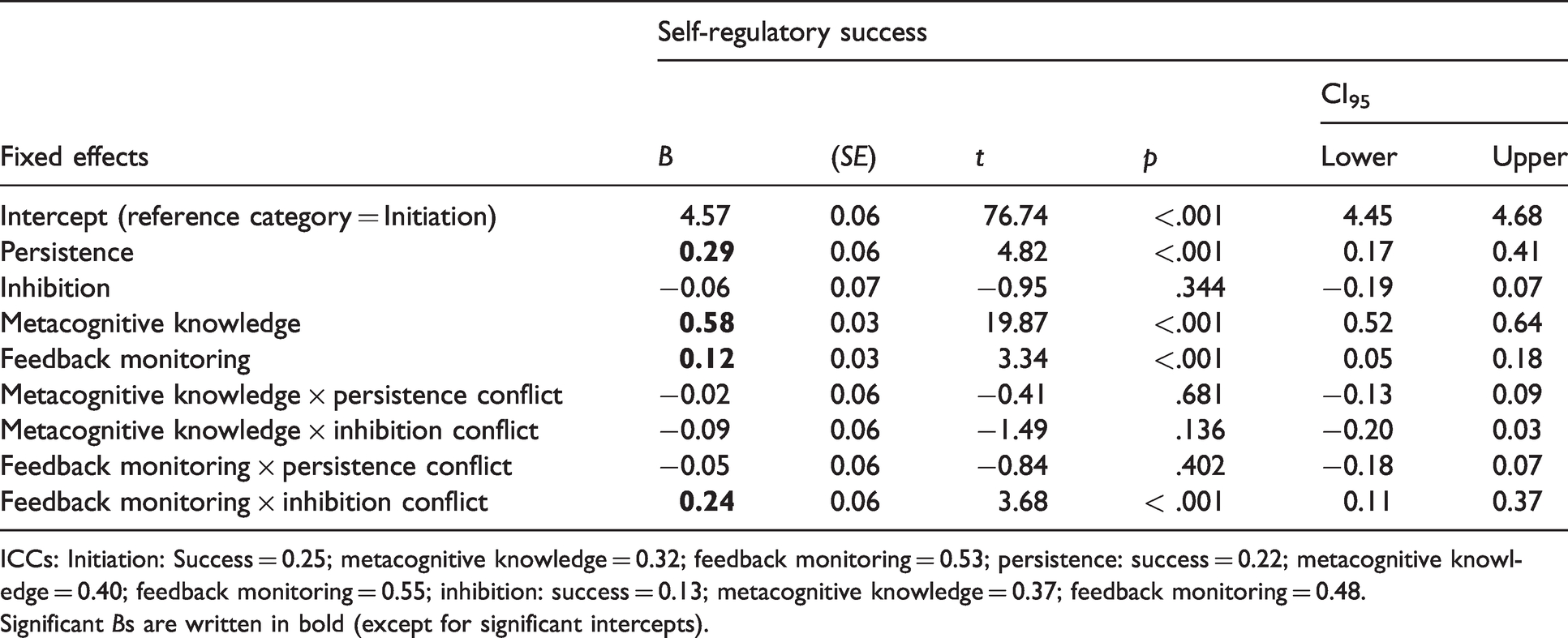
ICCs: Initiation: Success = 0.25; metacognitive knowledge = 0.32; feedback monitoring = 0.53; persistence: success = 0.22; metacognitive knowledge = 0.40; feedback monitoring = 0.55; inhibition: success = 0.13; metacognitive knowledge = 0.37; feedback monitoring = 0.48.
Significant Bs are written in bold (except for significant intercepts).
The effects of feedback monitoring were positive and significant for conflicts of initiation (B = 0.12, p = .001) and conflicts of inhibition (B = 0.35, p < .001) but not for conflicts of persistence (B = 0.06, p = .247). As indicated by the significant interaction effects, the effect of feedback monitoring was significantly larger for conflicts of inhibition than for conflicts of initiation (B = 0.24, p < .001) and conflicts of persistence (B = 0.29, p < .001). The effect of feedback monitoring did not differ between conflicts of initiation and conflicts of persistence (B = −0.05, p = .402). Figure 1 shows the predicted levels of success for situations in which people have an average level of feedback monitoring and with levels of feedback monitoring 1 SD above or below the intraindividual average. In all tables, the ICCs of the variables are displayed. These show how strongly observations within the same person resemble each other. For success in daily self-control conflicts, we see for example that the ICCs are higher for conflicts of initiation (0.25) and persistence (0.22), than for conflicts of inhibition (0.13), meaning that observations in the variable success are more similar within one person for conflicts of initiation and persistence than for conflicts of inhibition.
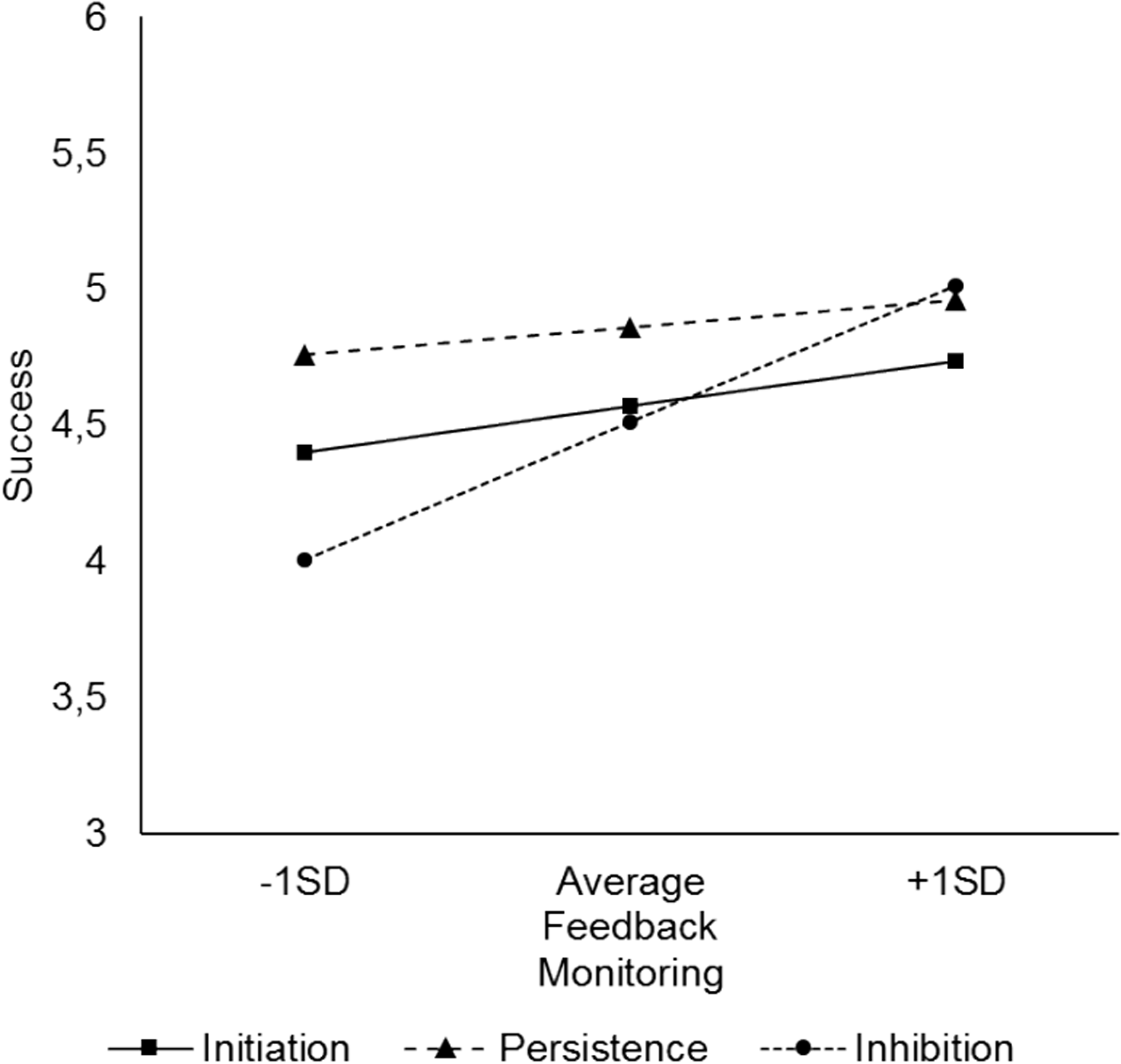
Predicted levels of success for situations in which people have an average level of feedback monitoring and with levels of feedback monitoring 1 SD above or below the average, moderated by type of conflict (initiation, persistence, inhibition). Note: Includes the non-significant regression line for conflicts of persistence.
For reasons stated above, for the analysis of strategy repertoire, we computed three separate multilevel linear regression analyses for each type of conflict, with the predictor strategy repertoire, the outcome self-regulatory success, and the number of experienced conflicts as a control variable, given that it was highly correlated with the number of strategies in a person’s repertoire. For all three models, the random intercept and slope models did not converge, or they did not show a better fit than the random intercept models. Strategy repertoire significantly predicted success in daily self-control conflicts for conflicts of initiation (B = 0.06, p < .001) and conflicts of inhibition (B = 0.08, p = .002), but not for conflicts of persistence (B = 0.03, p = .100, see Table 5). Figure 2 shows the predicted levels of success for situations in which people have an average level of strategy repertoire and with levels of strategy repertoire 1 SD above or below the intraindividual average.
Multilevel linear regression analyses with the outcome self-regulatory success and the predictor strategy repertoire, separately for the three types of self-control conflicts.
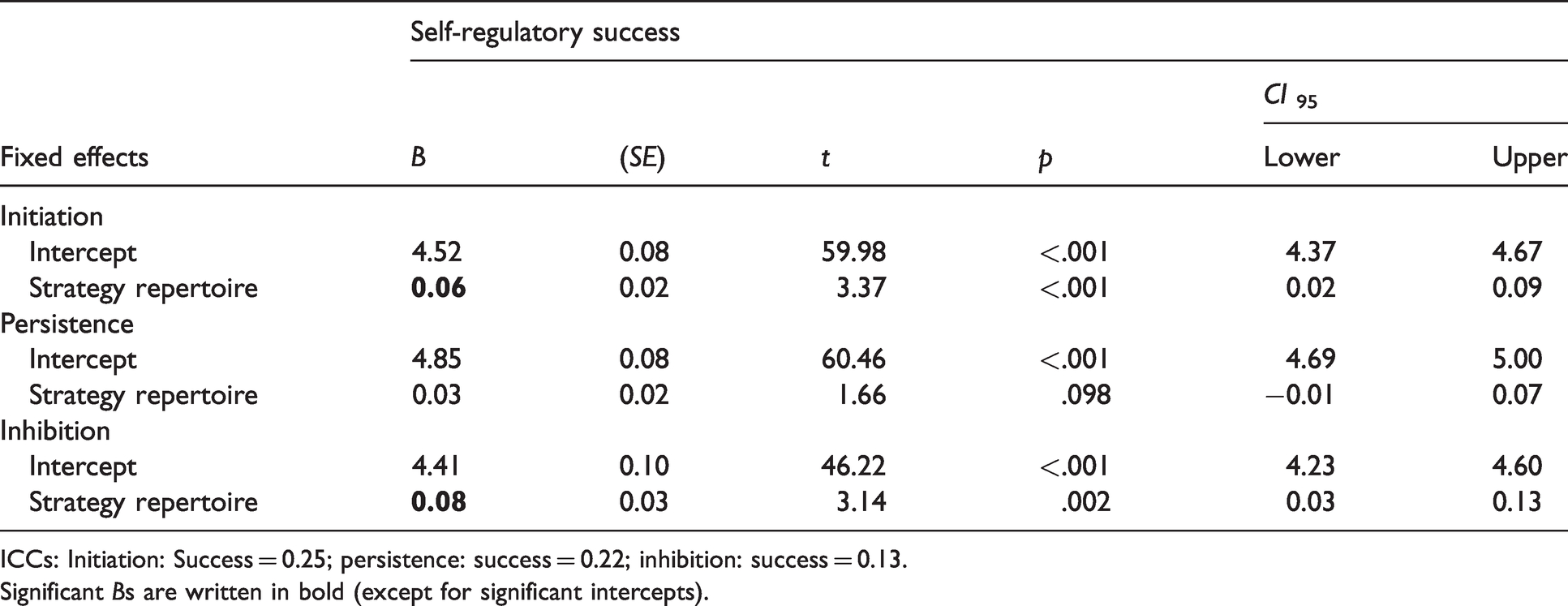
ICCs: Initiation: Success = 0.25; persistence: success = 0.22; inhibition: success = 0.13.
Significant Bs are written in bold (except for significant intercepts).
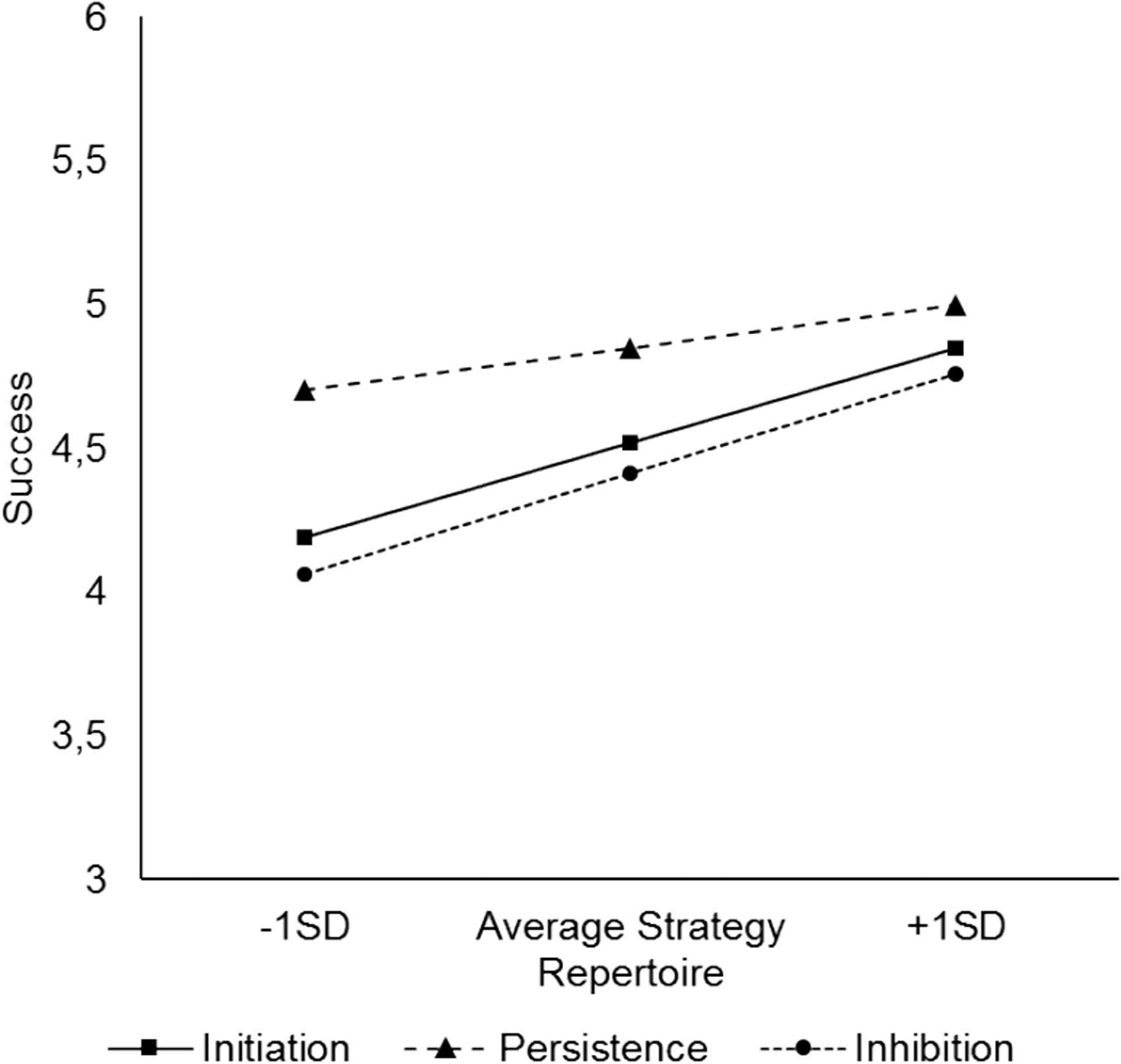
Predicted levels of success for situations in which people have an average strategy repertoire and with a strategy repertoire 1 SD above or below the average. Separately for conflicts of initiation, persistence, and inhibition. Note: Includes the non-significant regression line for conflicts of persistence.
Effects of trait self-control on flexibility
Next, we analyzed whether trait self-control predicts metacognitive knowledge, strategy repertoire, and feedback monitoring during self-control conflicts. To test if trait self-control predicts metacognitive knowledge, we calculated a multilevel linear regression analyses with the outcome metacognitive knowledge and the predictor trait self-control, the moderator conflict type, and the interaction between trait self-control and conflict type. Again, in a first model, conflicts of initiation were used as the reference category, to which the effects of two dummy-coded variables indicating the experience of conflicts of persistence or conflicts of inhibition were compared. Analogous to the analyses regarding success, we also calculated a recoded model of this analysis to get all possible comparisons of conflict types. The slope model did not converge, we therefore report results of the intercept model. Detailed results of the first model are presented in Table 6, the comparison between conflicts of persistence and inhibition not included in this model is reported here. No significant interactions were detected, the interaction not reported in the table was non-significant as well (B = 0.00, p = .952). However, the simple slopes showed significant effects for conflicts of initiation (B = 0.16, p = .007), but not for conflicts of persistence (B = 0.10, p = .141) and conflicts of inhibition (B = 0.09, p = .161).
Multilevel linear regression analyses with the outcome metacognitive knowledge, the predictor trait self-control and the moderator variable type of conflict as well as the interaction between trait self-control and type of conflict.
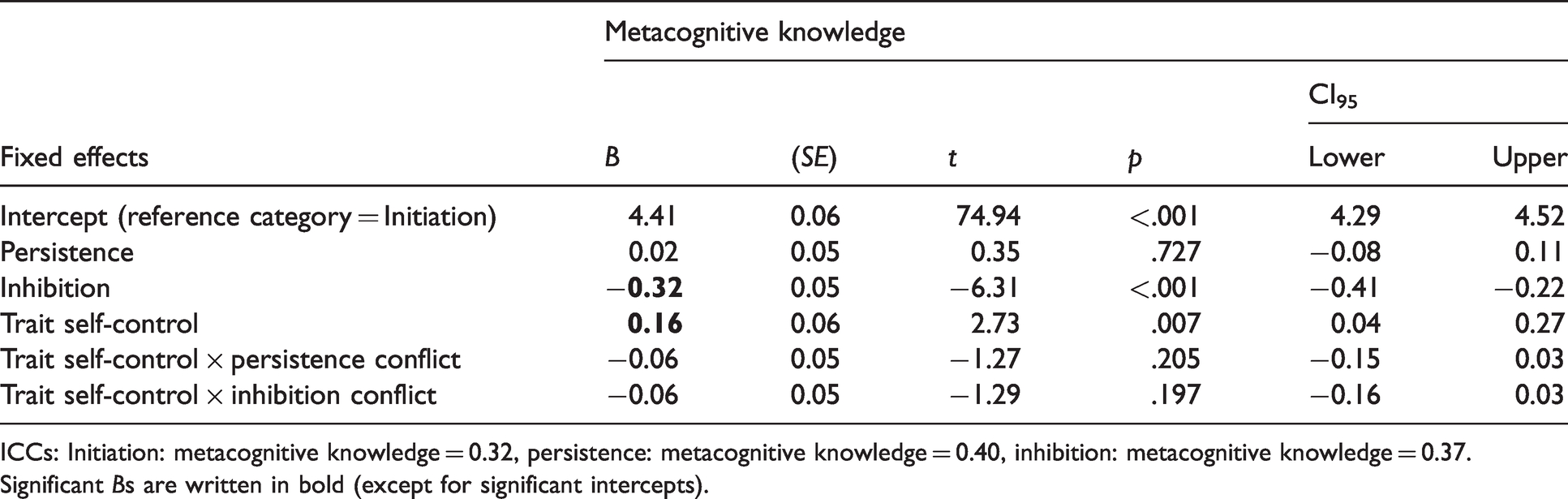
ICCs: Initiation: metacognitive knowledge = 0.32, persistence: metacognitive knowledge = 0.40, inhibition: metacognitive knowledge = 0.37.
Significant Bs are written in bold (except for significant intercepts).
To analyze if trait self-control is associated with strategy repertoire, we calculated semi-partial correlations between strategy repertoire and trait self-control, while controlling for the effect of the total number of experienced self-control conflicts. We found no significant correlations in any of the three types of conflicts (initiation: sr = −.06, p = .372, persistence: sr = −.03, p = .673, inhibition: sr = −.03, p = .607).
To test if trait self-control predicts feedback monitoring, we calculated a multilevel linear regression analyses with the outcome feedback monitoring and the predictor trait self-control, the moderator conflict type, and the interaction between trait self-control and conflict type. Again, in a first model, conflicts of initiation were used as the reference category, to which the effects of two dummy-coded variables indicating the experience of conflicts of persistence or conflicts of inhibition were compared. Analogous to the analyses regarding success, we also calculated a recoded model of this analysis to get all possible comparisons of conflict types. The intercept model showed the best fit. Detailed results of the first model are presented in Table 7, the missing comparison between conflicts of persistence is reported here. The simple slopes were significant only for conflicts of initiation (B = 0.20, p = .004), but not for conflicts of persistence (B = 0.10, p = .177), and conflicts of inhibition (B = 0.10, p = .191). A significant interaction indicated that trait self-control had a smaller effect on feedback monitoring in conflicts of persistence (B = −0.10, p = .014) and conflicts of inhibition (B = −0.10, p = .015), than in conflicts of initiation. The effects were similar for conflicts of inhibition and conflicts of persistence (B = 0.00, p = .958).
Multilevel linear regression analyses with the outcome feedback monitoring, the predictor trait self-control and the moderator variable type of conflict as well as the interaction between trait self-control and type of conflict.
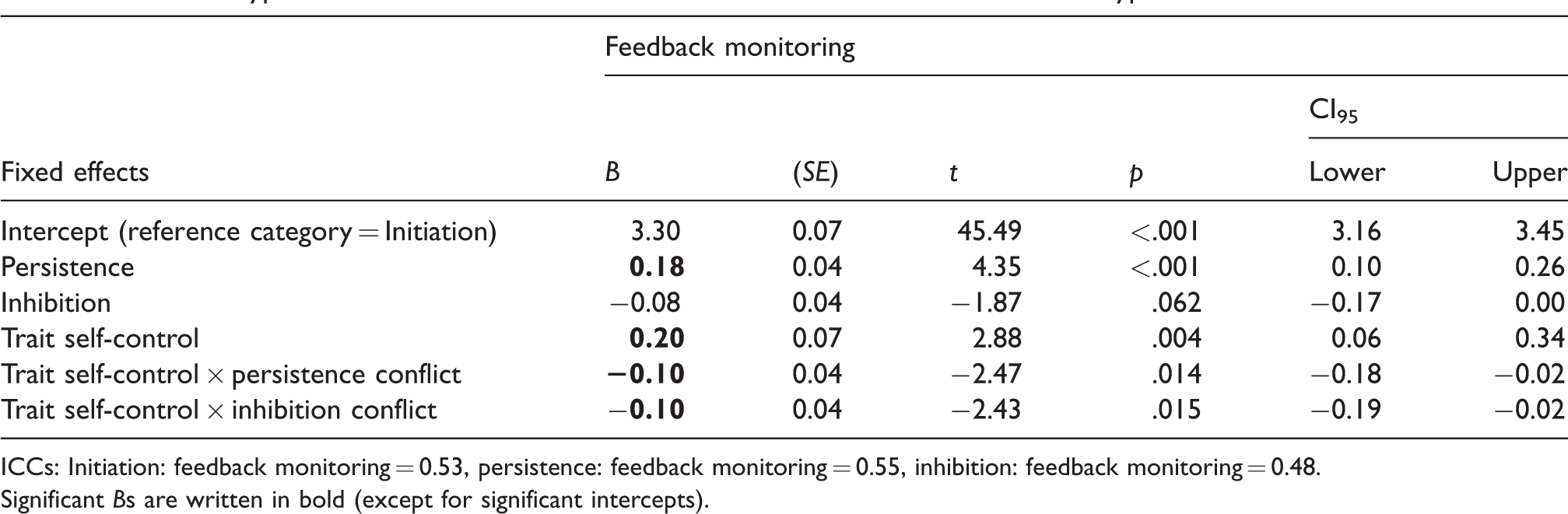
ICCs: Initiation: feedback monitoring = 0.53, persistence: feedback monitoring = 0.55, inhibition: feedback monitoring = 0.48.
Significant Bs are written in bold (except for significant intercepts).
Exploratory analyses
Above, we have operationalized strategy repertoire as the total number of different strategies deployed by a person during the study (controlling for the number of self-control conflicts reported by that person). One basic assumption behind the hypothesis that a large strategy repertoire is beneficial is that individuals can flexibly choose between different strategies for different types of situations. A large strategy repertoire might furthermore allow a person to simply use more strategies per individual conflict, which, in turn, might help them to resolve each individual conflict better. Having more strategies at one’s disposal may also help with each individual conflict because people may be better able to switch strategies within a given conflict, should the strategy they start with during a conflict prove unsuccessful. If these ideas are true, then the number of strategies used per conflict should positively correlate with subsequent self-regulatory success. Conversely, throwing various strategies at a single conflict may also indicate a form of volatility or indicate an overall low ability to choose strategies that match the current demands. In this case, the number of strategies per conflict should negatively correlate with subsequent self-regulatory success.
To explore the association of the number of different strategies used in each reported self-control conflict and subsequent self-regulatory success in that specific conflict, we took the number of different self-regulatory strategies a person reported using during each individual self-control conflict (overall: ICC = 0.30, M = 2.51, SD = 1.9; initiation: ICC = 0.33, M = 2.51, SD = 1.98; persistence: ICC = 0.39, M = 2.75, SD = 2.09; inhibition: ICC = 0.26, M = 2.20, SD = 1.57), and computed a multilevel linear regression analysis regressing self-regulatory success on the group-mean centered number of strategies used during that particular self-control conflict. Type of conflict was included as the moderator variable and we also included the interactions between number of strategies and conflict type. In the first model, conflicts of initiation were again coded as the reference-category, to which we compared the effects of two dummy-coded categories and we also computed a second model with conflicts of persistence as the reference category, to which we compared the effects of two dummy-coded categories (initiation and inhibition). The random intercept and slope model showed the best fit. Detailed results are presented in Table 8. The simple slopes showed significant and positive effects of strategies per conflict for all three types of conflict (initiation: B = 0.26, p < .001; persistence: B = 0.14, p < .001; inhibition: B = 0.48, p < .001). As indicated by significant interaction effects, the effect was significantly smaller for conflicts of persistence than for conflicts of initiation (B = −0.11, p = .003) and significantly larger for conflicts of inhibition than for conflicts of initiation (B = 0.22, p < .001) as well as for conflicts of persistence (B = 0.33, p < .001). These results showed that in conflicts of inhibition, using more strategies per conflicts is the most helpful, followed by conflicts of initiation, and the least helpful in conflicts of persistence. This might have been the case because of the higher percentage of cognitively taxing activities reported in conflicts of persistence (50.6% mentioned studying in conflicts of persistence, compared to 32.6% in conflicts of initiation), which could have led to a high cognitive load if a person used too many different strategies during those conflicts, diminishing the beneficial effects of using more strategies during a single self-control conflict. Figure 3 shows the predicted levels of success for situations in which people use an average number of strategies per conflict and with numbers of strategies per conflict 1 SD above or below the intraindividual average.
Multilevel linear regression analyses with the outcome self-regulatory success and the predictor strategies per conflict, the moderator variable conflict type (initiation, persistence, inhibition) and the interactions between strategies per conflict and conflict type.
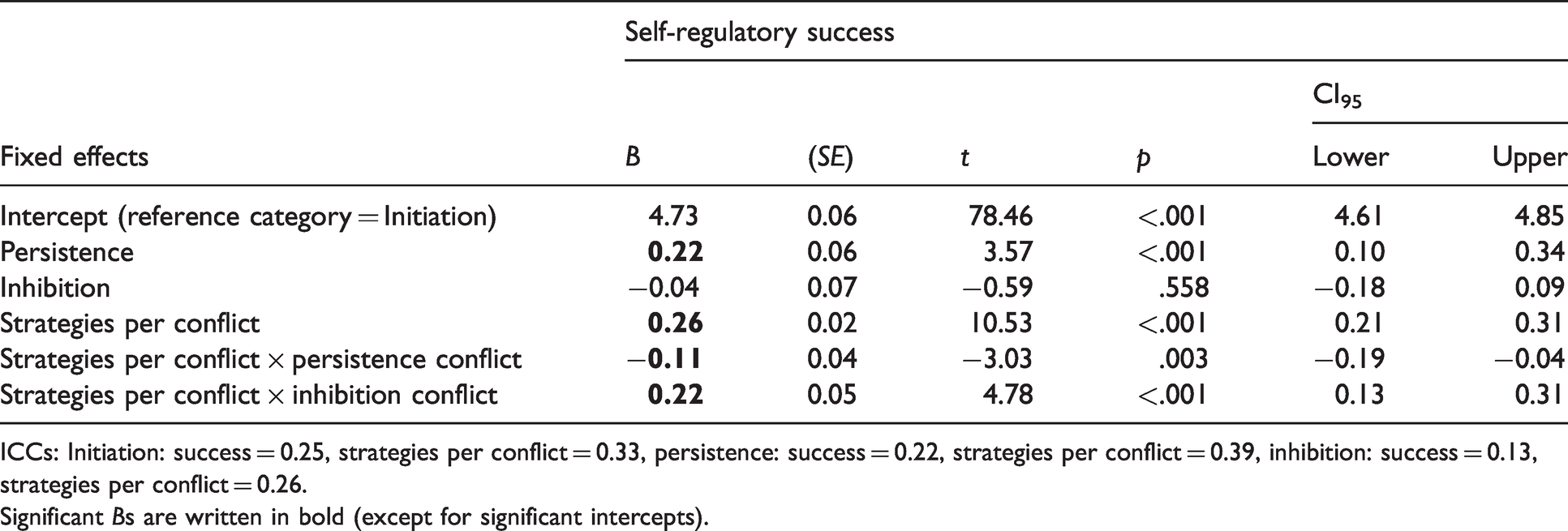
ICCs: Initiation: success = 0.25, strategies per conflict = 0.33, persistence: success = 0.22, strategies per conflict = 0.39, inhibition: success = 0.13, strategies per conflict = 0.26.
Significant Bs are written in bold (except for significant intercepts).
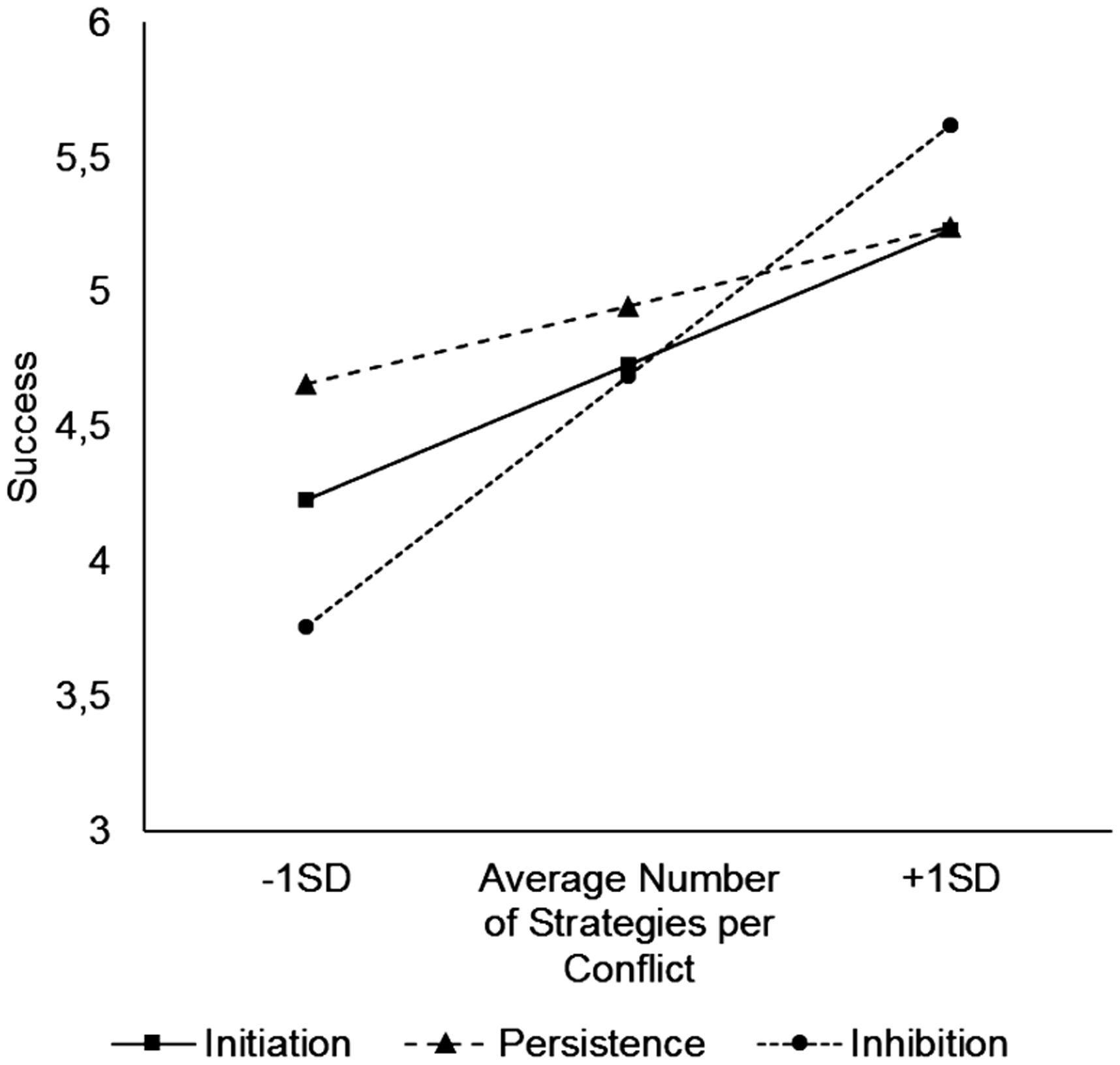
Predicted levels of success for situations in which people have an average number of strategies per conflict and with the number of strategies per conflict 1 SD above or below the average, moderated by type of conflict (initiation, persistence, inhibition).
Lastly, we wanted to explore a new idea that came up based on the results of our hypotheses tests reported above. As reported, we found no significant effects of trait self-control on strategy repertoire. One possible explanation for this is, that trait self-control and strategy repertoire might represent two different and largely independent roads leading to the successful resolution of daily self-control conflicts. People who are low in trait self-control could offset their disadvantage with a larger repertoire of strategies, whereas people who are high in trait self-control might, for example, already experience fewer problematic desires in the first place (Hofmann et al., 2012), thereby not having to rely on a large tool box of self-regulatory strategies (Hennecke et al., 2019). To explore this idea, we calculated different models with the outcome success and the predictors either trait self-control or strategy repertoire (for each type of conflict separately). We then calculated a model for each type of conflict that included both predictors simultaneously, to see if the effects of each predictor still remained when controlling for the other. Table 9 displays models with separate and models with simultaneous predictors side by side. Again, as in all other calculations that included strategy repertoire, the number of conflicts experienced (for the specific type of conflict) was added as a control variable. We report intercept models because they showed the best fit or because the slope models did not converge. Supporting the idea that trait self-control and repertoire benefit momentary self-control independently, their simultaneously estimated effects remained significant. The effect of trait self-control on success in conflicts of inhibition was only significant in the models with both predictors added simultaneously.
Comparison of models including the outcome success and the predictors trait self-control and strategy repertoire, either in separate models or simultaneously in one model.
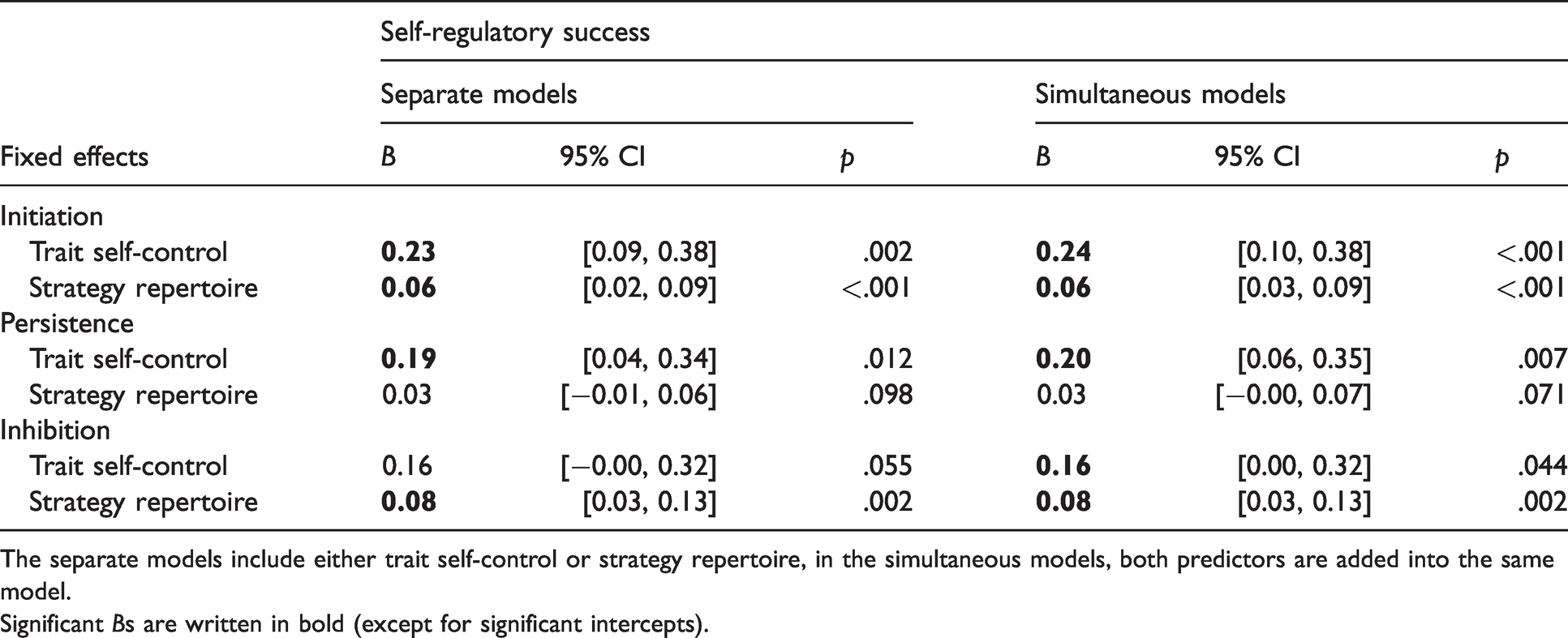
The separate models include either trait self-control or strategy repertoire, in the simultaneous models, both predictors are added into the same model.
Significant Bs are written in bold (except for significant intercepts).
Discussion
Unfortunately, self-control conflicts are not rare in people’s daily lives. In our study, participants reported having had to initiate or persist in an aversive activity or to resist a temptation at nearly 40% of all measurement occasions. But people have means of combating such conflicts. As previously shown, they deploy a variety of self-regulatory strategies, some of which can be quite effective (e.g., Duckworth et al., 2016; Hennecke et al., 2019). Ultimately, self-regulatory success may, however, not be solely determined by the successful mastery of singular strategies, but by the degree to which a person can flexibly respond to the specific demands imposed by a given self-control conflict. Such regulatory flexibility may include three components: Having metacognitive knowledge regarding a conflict (as a facet of context sensitivity), having a large repertoire of strategies to choose from, and monitoring feedback about the effectiveness of a strategy used in order to maintain the strategy if successful or to change it if unsuccessful. The first goal of this study was to investigate if these three components of regulatory flexibility are indeed associated with success in daily self-control conflicts.
Using experience sampling, we were able to show that metacognitive knowledge, strategy repertoire, and feedback monitoring, significantly predicted success in all three types of self-control conflicts, with two exceptions: We were not able to confirm the association between a larger strategy repertoire as well as feedback monitoring and success in conflicts of persistence. A possible reason for the non-significant results for strategy repertoire in conflicts of persistence is the high typicality of (or in other words: lack of variance in) self-control conflicts of persistence: In most observations and likely as a consequence of our sample, participants reported that studying was the type of activity they tried to persist in (50.6%, N = 539). In conflicts of initiation, studying was also reported the most, but with a much lower percentage (32.6%, N = 791). The main reason why a larger repertoire of strategies should prove effective is that it should allow people to choose strategies fitting specific situations and demands. However, if people only experience the same, or very similar self-control conflicts, there can be no benefits of a larger repertoire of strategies. In addition, in situations that occur frequently, like studying does for students, behavior tends to be, to a large degree, dictated by habits. This implies that controlled processes as they are required for the conscious use of self-regulatory strategies should be more difficult to execute (Dijksterhuis & Aarts, 2010; Wood & Neal, 2007; Wood & Rünger, 2016). Hence, a person’s repertoire of self-regulatory strategies may have been less impactful for self-regulatory success in conflicts of persistence, given their high typicality.
We must mention that for conflicts of inhibition, the temptation which people tried to resist most often, “food”, was reported at a similarly high rate (47.3%, N = 437). We nevertheless found an effect of strategy repertoire for conflicts of inhibition. It may be the case that certain activities or temptations are sufficiently different within their categories to warrant different regulatory strategies. In other words: Self-control conflicts involving food-related temptations may come in a wider variety of forms than self-control conflicts involving the need to persist in studying. Clearly, this explanation is speculation at this point and further research is needed to establish for which types of activities or temptations a large strategy repertoire is the most beneficial.
In addition, there was no effect of feedback monitoring on success during conflicts of persistence. Again, a large number of people had reported the same type of activity as part of the persistence conflict, namely “studying”. The lack of an effect might be attributable to the fact that feedback monitoring is less beneficial during complex as opposed to simple tasks (Van Gog et al., 2011). Studying might incorporate such complex tasks and a high cognitive load, thereby rendering feedback monitoring less effective.
The second goal of this study was to investigate if trait self-control is associated with metacognitive knowledge, strategy repertoire, and feedback monitoring. We were able to show that higher levels of metacognitive knowledge as well as feedback monitoring are associated with higher levels of trait self-control for conflicts of initiation, but not for conflicts of persistence or inhibition. One reason this might have been the case is because of the much lower number of observations in conflicts of persistence and inhibition, compared to conflicts of initiation. We also could not confirm an association between trait self-control and strategy repertoire, which we have already addressed in the exploratory analyses. These analyses suggest that strategy repertoire and trait self-control could be two different roads people can take to successfully handle self-control conflicts. In addition, people high in trait self-control might be more likely to use proactive strategies to prevent self-control conflicts from occurring (Ent et al., 2015). We only assessed self-control conflicts people actually experienced; strategies successfully preventing conflicts were therefore not counted towards the strategy repertoire.
Another exploratory analysis revealed that the number of different strategies used during a single self-control conflict was associated with higher success in resolving that conflict. This suggests that a larger repertoire of strategies might not only be beneficial because it allows the person to choose the most fitting strategy to resolve a self-control conflict, but because it simply allows the person to use more different strategies in a single self-control conflict. Using more strategies in a single self-control conflict may, in turn, be helpful in the sense of a “dosage” effect if multiple strategies are used concurrently. For example, focusing on the positive consequences of completing an activity may be helpful, but additionally, regulating one’s emotions may be even more helpful (Hennecke et al., 2019). A higher number of strategies used may also indicate strategy switches during an ongoing self-control conflict, which may respond to the feedback that a given strategy is not successful, further attesting to the importance of feedback monitoring. If focusing on the positive consequences of completing the activity appears not to be helpful, the person might, within the same conflict, switch to regulating their emotions.
Generally, flexibility should be advantageous for self-control conflicts through the same mechanism that renders it advantageous in the context of emotion regulation, namely by allowing the person to choose strategies that meet varying situational demands. We hope that our research can prevent researchers in the field of self-control from repeating the same mistake committed by researchers in the field of emotion regulation who had, for a long time, committed the fallacy of uniform efficacy (Bonanno & Burton, 2013).
Limitations
The present study has some limitations, some of which were technical in nature: The application used for the experience sampling part was only available for Android smartphones. Participants needed their own smartphones to complete the daily questionnaires, meaning not everyone willing to participate was able to do so. This could make the results of the study less generalizable. Our decision to have participants use their own smartphones was based on the otherwise increased cost and effort associated with using study smartphones. We also expected that having participants use their own smartphone would be less intrusive, allowing our results to more accurately reflect the natural lives of participants. Lastly, in order to receive a study smartphone, participants would have needed to come to the university. This additional requirement could have kept some individuals from participating, further hurting the generalizability of the study.
Another constraint on the generalizability of our findings stems from the fact that a large proportion of participants were students. Students encounter certain types of conflicts more often than the general population, such as conflicts of initiation and persistence with regard to studying. They also encounter a narrower range of conflicts. A replication of our study in a population of working adults, who experience more varied self-control conflicts due to responsibilities and experiences such as raising children, housekeeping, and coordinating schedules, would address this limitation and perhaps show stronger effects as a result of greater variability in contexts and conflicts.
Another limitation of this study is its reliance on self-report measures. Although self-report is a commonly used method for assessing self-control, its predictors, and outcomes, be it as a state or trait (e.g., Converse et al., 2019; Hofmann et al., 2012; Milyavskaya et al., 2015), more objective measures would be desirable. For example, strategy use might sometimes be hard for individuals to remember, or strategy use might have been nonconsciously motivated (e.g. Shah, 2005). Self-report measures are also restricted to assessing only the strategies participants used consciously as well as participants’ subjective experiences of their own metacognitive knowledge and feedback monitoring. While these are clear shortcomings, note, however, that many of the variables we were interested in, can be quite difficult to assess objectively and nonobtrusively, especially in more ecologically valid everyday settings like ours. Many of the strategies participants reported using were intrapsychic strategies. Whether a person thinks of the positive consequences of persisting during an unpleasant task is impossible to see as an outside observer or capture with mobile devices. It might have been possible to instruct or capture (e.g., through a lexical decision task or other measures of cognitive accessibility) the use of such intrapsychic strategies in a controlled laboratory setting, but we would have sacrificed the ecological validity of the experience sampling method. The same is true for our outcome, self-regulatory success, for which more objective measures (e.g., grades, weight, etc.) have been used before (e.g., Crescioni et al., 2011; Duckworth et al., 2019). Given that we wanted to include the variety of self-regulatory challenges people face in their daily lives, across goals and contexts, however, no single objective outcome measure appeared useful.
A conceptual limitation is our operationalization of context sensitivity through metacognitive knowledge. Even though we think the two are related, metacognitive knowledge only represents a particular facet of context sensitivity. Accordingly, our operationalization does not fully reflect the way context sensitivity has been operationalized in the theoretical literature we base our definition of “flexibility” on. Further research is needed to better understand how people context-sensitively choose a fitting strategy in the moment and how this is related to metacognitive knowledge.
Future directions and conclusion
One important aspect of flexibility that future research should address is what situational factors moderate the efficacy of specific self-regulatory strategies. Self-regulatory strategies differ on various dimensions. They can be either proactive or reactive (Williamson & Wilkowski, 2019); they can target cognitive, motivational, affective, or behavioral processes (Hennecke et al., 2019); and though some strategies are effortless, automatized, and habitual (Gillebaart & De Ridder, 2015), others can require conscious effort. It is likely that many different situational factors moderate the efficacy of any given strategy, whereas the same situational variables might not influence the efficacy of another strategy. One example is strategies that increase cognitive load (e.g., monitoring one’s goal progress or enriching a task with something pleasant), which might be less effective in already mentally demanding activities (e.g., studying for an exam). The efficacy of strategies that do not increase cognitive load or even reduce it (e.g., reducing distractions, planning/scheduling), in contrast, should not be moderated by mental demands of the aversive activity (Hennecke & Bürgler, 2020).
In the field of emotion-regulation and coping, strategy flexibility was also researched in laboratory settings. In a study by Levy-Gigi et al. (2016), participants were able to choose either reappraisal or distraction when confronted with either high- or low-intensity negative emotional pictures. In this paradigm, choosing reappraisal for low-intensity pictures, but choosing distraction for high-intensity pictures was seen as the context sensitive choice. Flexibility was calculated by subtracting the proportion of distraction choice in the low intensity pictures from the proportion of distraction choice in the high intensity pictures. Study designs like these could be another way of researching strategy flexibility and provide one possible approach to test select moderators that qualify the efficacy of specific strategies. Another possibility is to operationalize flexibility through variability, for example as cross-situational variability in strategy use (Westman & Shirom, 1995; Williams, 2002), which describes changes in strategy use across different situations, or as intraindividual variability (Nesselroade, 2001), which could be used to study fluctuations in strategy use over time. Another option would be to operationalize flexibility in a similar fashion to emodiversity, for example as the variety and relative abundance of self-control strategies (Benson et al., 2018). These operationalizations focus primarily on the effects that flexibility has on a specific outcome and less on the underlying processes that lead to flexibility. Generally, it seems most worthwhile to incorporate multiple operationalizations of flexibility in future studies and to also research how those different operationalizations relate to each other.
Given that self-regulatory flexibility is associated with self-regulatory success, it seems valuable to also study how people can increase their repertoire of strategies, how they can learn to select strategies that suit a specific context, how they accumulate metacognitive knowledge, and how they can better monitor their strategy use regarding daily self-control conflicts. Ultimately, research on self-control should be used to develop trainings and interventions to help people better manage daily self-control conflicts by utilizing the right strategy in the right situation. The results of this study suggest that success in daily self-control conflicts depends on whether a person has metacognitive knowledge with respect to that conflict, a large enough repertoire of strategies to choose from, and whether a person monitored feedback of the conflict, and, if necessary, made changes to the strategy used during the self-control conflict.
Our findings about the benefits of regulatory flexibility and its components are in line with theory and research in the field of emotion regulation and coping (e.g., Bonanno & Burton, 2013; Burton & Bonanno, 2016; Chen et al., 2018; Levy-Gigi et al., 2016; Rodin, Bonanno, Rahman, et al., 2017) as well as self-regulated learning (e.g., Amato-Zech et al., 2006; Chang, 2007; Donker et al., 2014; Kostons & Van der Werf, 2015; Thiede et al., 2003; Schunk, 2005; Swanson, 1990; Zimmerman & Campillo, 2003; Zimmerman & Paulsen, 1995). With respect to self-control, this study provides new insights into how people go about resolving daily self-control conflicts, namely how self-regulatory flexibility in strategy use relates to the resolution of self-control conflicts, how trait self-control relates to self-regulatory flexibility, and how both relate to success in the self-management of behavior.
Footnotes
Acknowledgments
The authors would like to thank Alina Jung, Janine Riekeberg, Korbinian Kiendl, Christoph Schild, and Momme von Sydow for their support during data collection or their feedback on an earlier version of the manuscript. Results of this study were presented at the 2019 Motivation Psychology Colloquium in Berlin.
Data accessibility statement

Declaration of conflicting interests
The author(s) declared no potential conflicts of interest with respect to the research, authorship, and/or publication of this article.
Funding
The author(s) disclosed receipt of the following financial support for the research, authorship, and/or publication of this article: This research was supported by a research grant (#100019_179207/1) from the Swiss National Science Foundation awarded to Marie Hennecke.
Ethical approval
The study was approved by the ethics committee of the University of Siegen (ER_6_2019).