







Abstract
The Baby-Friendly Hospital Initiative (BFHI) was launched in Croatia in 1993. By 1998, 15 of 34 maternity facilities were designated “Baby-Friendly.” Introduction of hospital bags, violating the International Code of the Marketing of Breastmilk Substitutes, led to a standstill in the BFHI. The aim of this article is to describe the successful reintroduction of the BFHI in Croatia between 2007 and 2015. After hospital bags were abolished in 2007, UNICEF Croatia undertook an assessment of BFHI implementation. All maternity facilities were invited by UNICEF and the Ministry of Health to join the renewed BFHI. UNICEF materials were translated and training for trainers, assessors, coordinators, and hospital staff held. By June 2015, 30 of 32 (94%) maternity facilities, providing care to 89% of newborns, were Baby-Friendly. Nine maternity hospitals have been renovated and 2 new hospitals have been built. Exclusive breastfeeding rates have risen 16% at 0 to 2 months (from 51% in 2007 to 67% in 2014) and 14% at 3 to 5 months (from 32% in 2007 to 46% in 2014). Fourteen “Breastfeeding-Friendly” primary care practices have been designated, 166 breastfeeding support groups are in operation, criteria for Mother-Friendly care are being piloted in 2 maternity facilities, and “Ten Steps in the Neonatal Intensive Care Unit” are being introduced. The BFHI provides an excellent opportunity for revitalizing breastfeeding protection, promotion, and support in all settings. Recognition and support of the BFHI by the Croatian government was crucial for implementing the BFHI, whereas the marketing practices of the breast milk substitutes industry are an ongoing challenge.
Keywords
Background
A History Lesson
“Every cloud has a silver lining.” The cloud that hovered over Croatia from 1991 to 1995 was the War of Independence, which saw a quarter of its territory occupied and 20,000 people killed. 1 Amid the conflict, the United Nations International Children’s Emergency Fund (UNICEF) was the first international organization to set up an office in Croatia. At the same time, the Ministry of Health (MoH) established a “Committee for the Coordination of Assistance and Healthcare for Children in Emergency Situations.” Together, they launched, in 1993, a “Program for the Promotion of Breastfeeding in Croatia,” with the Baby-Friendly Hospital Initiative (BFHI) at its core. 2
All hospitals in Croatia took up the challenge, thanks to the enthusiasm of health care providers, UNICEF’s good reputation, and strong project leadership. In 1996, the first “Baby-Friendly” hospital in Croatia was designated, in the city of Rijeka. By 1999, 15 of the then 34 (44%) maternity facilities were “Baby-Friendly,” placing Croatia in third place in Europe, following Sweden and Norway. The remaining hospitals were working toward Baby-Friendly status, all having at least 4 “Steps” implemented (Figure 1). Although 40% of babies born in 1998 were delivered in Baby-Friendly facilities, it is of note that they were predominantly small hospitals, with less than 2500 births per year. Only 2 of the 6 larger hospitals achieved Baby-Friendly status, with the remaining hospitals struggling to implement the initiative. As a leader in the region, Croatia trained health professionals from neighboring Slovenia and Macedonia and had plans, in 1998, for introducing the “10 steps” into the primary care setting.
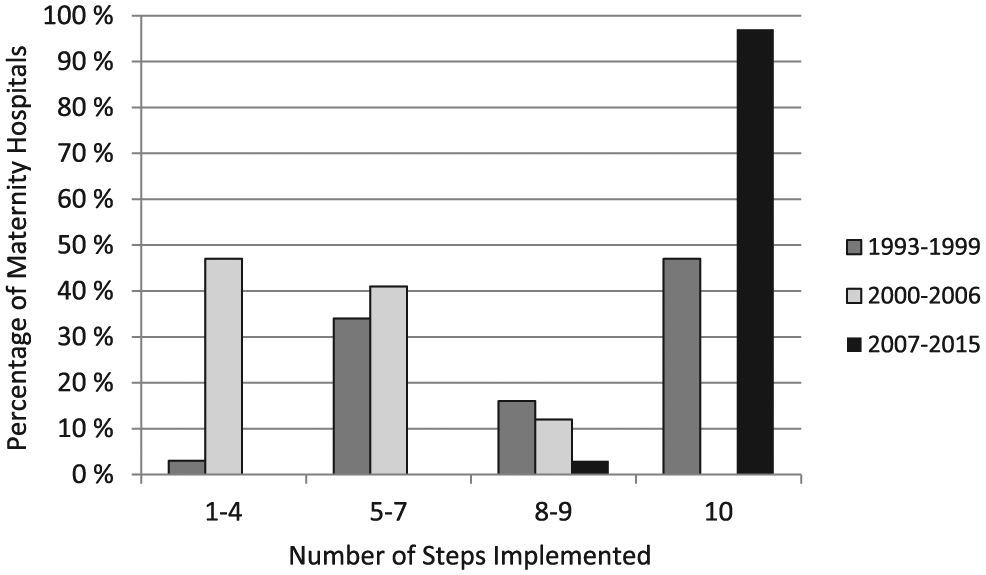
Percentage of Hospitals (n = 31) According to Number of Implemented Steps Over 3 Time Periods.
A constant threat to the protection, promotion, and support of breastfeeding in Croatia has been the pressure and influence from pharmaceutical companies to market breast milk substitutes. The Croatian government succumbed to this pressure, at the end of 1998, when it decided to endorse hospital discharge packs (Family Service’s “Happy Baby” packs), which were in violation of the International Code of the Marketing of Breastmilk Substitutes (Code). These hospital giveaways contained advertising materials for breast milk substitutes and solicited mothers’ personal details for subsequent mail-outs. Consequently, UNICEF withdrew its support of the BFHI and hospital standards fell, with none of the Baby-Friendly hospitals renewing their designation over the next decade. In an attempt to address this situation, a “Law for the Protection and Promotion of Breastfeeding in the Republic of Croatia” was drafted the following year but never processed.
International policies are a great opportunity to revitalize country initiatives, and so it was with the announcement of the Global Strategy for Infant and Young Child Feeding. This decisive document, together with the United Nations’ Convention on the Rights of the Child, proved a strong basis for building a case for breastfeeding in Croatia. In response to its periodic report as a member state, Croatia received a letter of recommendation in 2004 from the United Nations Committee on the Rights of the Child, encouraging compliance with the Code and promotion of breastfeeding. This gave strength to 2 national documents published in 2006, dealing with population health, which emphasized the importance of the BFHI and led to the formation of a National Breastfeeding Committee (NBC). Intense lobbying by the NBC resulted in the Croatian MoH finally withdrawing its support for the hospital discharge packs, which was confirmed by an official letter sent to all maternity units in September 2007.
The aim of this article is to describe the successful reintroduction of the BFHI in Croatia between 2007 and 2015, including challenges encountered along the way, so that other countries may benefit from the shared experience.
Methods
Setting
Croatia is a country of 4.3 3 million inhabitants in which 39 292 children were born in 2014. 4 There are currently 32 maternity facilities, of which one is a private hospital. Perinatal mortality is 3.5 per 1000 (birthweight ≥1000 g). 4 Women stay in the hospital 3 to 5 days following a vaginal birth and caesarean birth, respectively. The average caesarean birth rate is 19.1%. 4 Following discharge, women and babies are cared for by community nurses and primary care pediatricians and gynecologists.
Early 2007, UNICEF Croatia undertook a baseline assessment of BFHI implementation based on 27 of 34 returned self-assessment questionnaires. None of the previously designated Baby-Friendly hospitals were implementing all 10 steps, with only 15% of hospitals implementing step 3 (inform pregnant women), 18% implementing step 2 (training of health professionals), 37% implementing step 6 (exclusive breastfeeding) and step 10 (refer to support groups), and less than 50% implementing step 4 (skin-to-skin) and step 7 (rooming-in). Self-assessment questionnaires are subjective (ie, result in positive bias), and therefore the true state of affairs was considered even worse. All hospitals were distributing formula-promoting discharge bags, and formula was being obtained through donations.
Vital Role of UNICEF
In 2007, UNICEF Croatia began a 6-year “Young Child Development Program,” encompassing positive parenting and optimal infant feeding, with a strong emphasis on renewing the BFHI. A national BFHI Project Team was formed and coordinators assigned (Figure 2). The role of the Project Team was to plan and coordinate activities on the implementation and preservation of the BFHI and approve external assessments of maternity facilities. The Project Team was led by a national coordinator, employed part-time by UNICEF, who also served as president of the NBC. Since Croatia is a relatively small country, most members of the NBC are also members of the BFHI Project Team. This aids communication and coordination but increases the workload for individual members, who work largely on a voluntary basis.
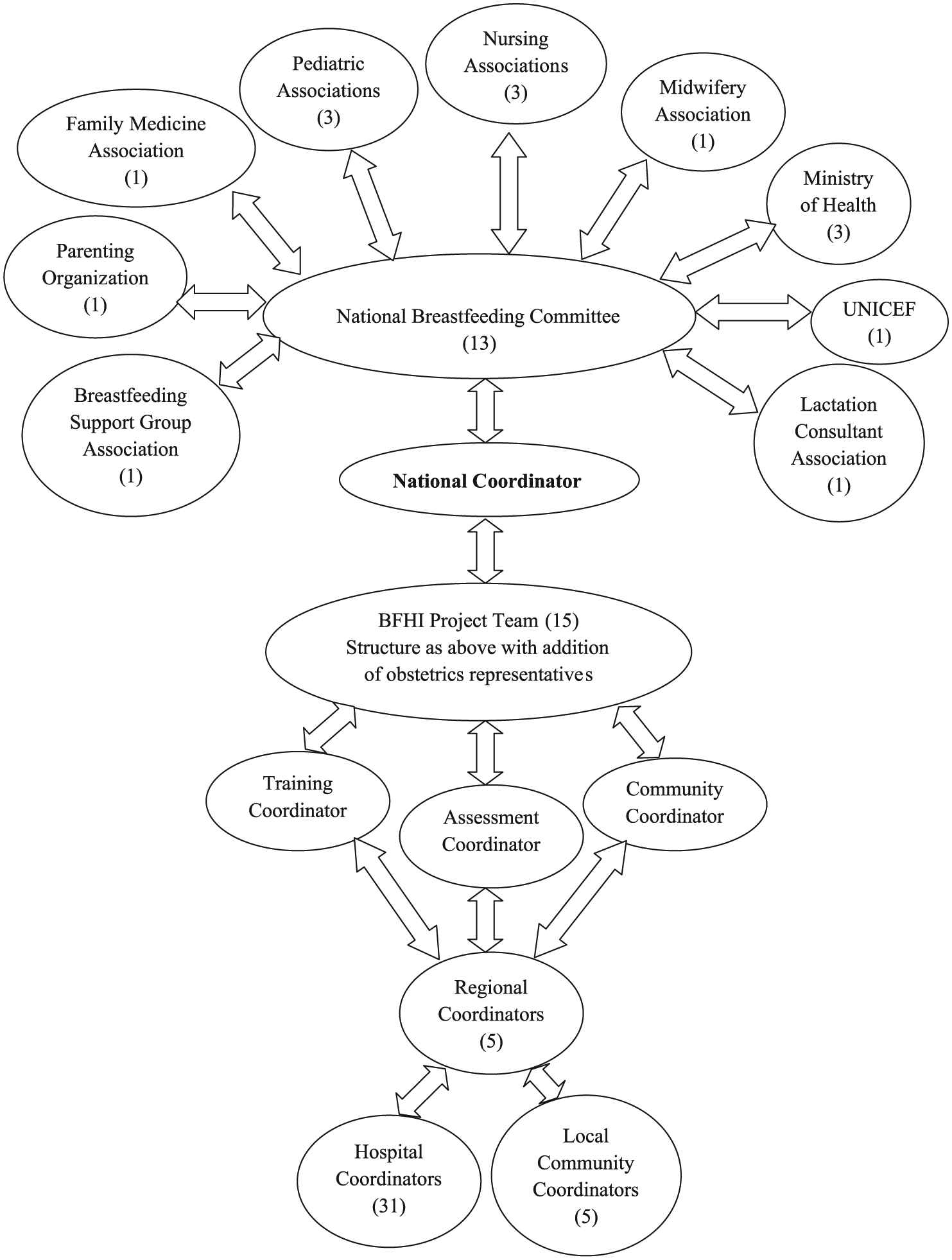
Structure of Breastfeeding Coordination in Croatia.
Getting the Ball Rolling
All public maternity facilities in Croatia were invited by UNICEF and the MoH to join the renewed BFHI. This was done in writing and also through a friendly visit by the National Breastfeeding Coordinator and a UNICEF representative. All hospitals accepted the invitation. Hospital directors were then asked to nominate a BFHI coordinator and set up a BFHI working group, which also included the regional BFHI coordinator. In some settings, the BFHI “A Course for Decision Makers” was held. 5
Training and Assessment/Reassessment
The 2006 preliminary version of the revised, updated, and expanded BFHI was translated by UNICEF Croatia and training for trainers, assessors, and coordinators was held. The 10 steps were not modified in any way. Regional coordinators then organized with hospital coordinators training of staff using the UNICEF/World Health Organization 20-hour course. 6 Multiple 20-hour courses were often held in the one facility to incorporate at least 80% of the staff. Courses were intended for all health professionals, whereas non–health professionals, working in the maternity facility, were given a 2-hour presentation by the hospital coordinator. In addition to maternity personnel, staff from the hospital’s pediatric ward were also invited to attend the course free of charge, as were the local community nurses. Training expenses were mainly covered by UNICEF Croatia. Each maternity facility was provided with multiple copies of the translated 20-hour course handbook and encouraged to keep a readily available copy on each ward. Model policies and other breastfeeding promotional materials were shared between hospitals. Nursing staff proficient in Baby-Friendly practices would visit other hospitals to share their experience with colleagues.
Prior to formal assessment, the regional coordinator visited the hospital at least once to conduct an informal assessment and discuss with staff obstacles to implementation of the 10 steps and how obstacles could be overcome. The self-appraisal and monitoring tools of the BFHI proved very useful for this purpose. 7
Results
As of June 2015, 8 years after revitalization of the BFHI, 30 of 32 (94%) maternity facilities in Croatia carry the Baby-Friendly designation (NICU, Mother-Friendly, and human immunodeficiency virus criteria were not assessed), providing Baby-Friendly care to 89% of newborns. The remaining public hospital, a tertiary referral center, is nearing completion of the process, after having enabled additional training—in the form of a 90-hour International Board-Certified Lactation Consultant course—to its key staff members. There is one private maternity facility in Croatia, with caesarean birth rates above 50% and routine bottle feeding, precluding BFHI implementation. Fortunately, less than 1% of annual births occur in this facility. During the process of BFHI implementation, 9 maternity facilities have been renovated to enable 24-hour rooming-in, and 2 new maternity hospitals have been built, thanks to the support of the Croatian government and local authorities. Reassessments are conducted in Croatia every 3 to 5 years, and 14 maternity facilities have, so far, reinstated their Baby-Friendly status.
It is estimated that around 20 assessors, 40 trainers, and 36 coordinators were trained at the initial training event held in 2007. In total, more than eighty 20-hour hospital courses were organized and held throughout Croatia since 2007, involving more than 2700 health professionals. More than 50 audits/visits by regional coordinators were conducted and 6 meetings held between the national coordinator and hospital coordinators.
Breastfeeding duration has not increased significantly since the reintroduction of the BFHI in Croatia, consistent with other studies conducted in countries with high breastfeeding initiation rates, 8 but exclusive breastfeeding rates have risen. Recent national data on exclusive breastfeeding rates, published by the Croatian Public Health Institute, show an increase of 16% at 0 to 2 months (from 51% in 2007 to 67% in 2014) and a 14% increase at 3 to 5 months (from 32% in 2007 to 46% in 2014 ), which we credit primarily to the BFHI.
Spinoffs from the BFHI
Breastfeeding-friendly primary care practices
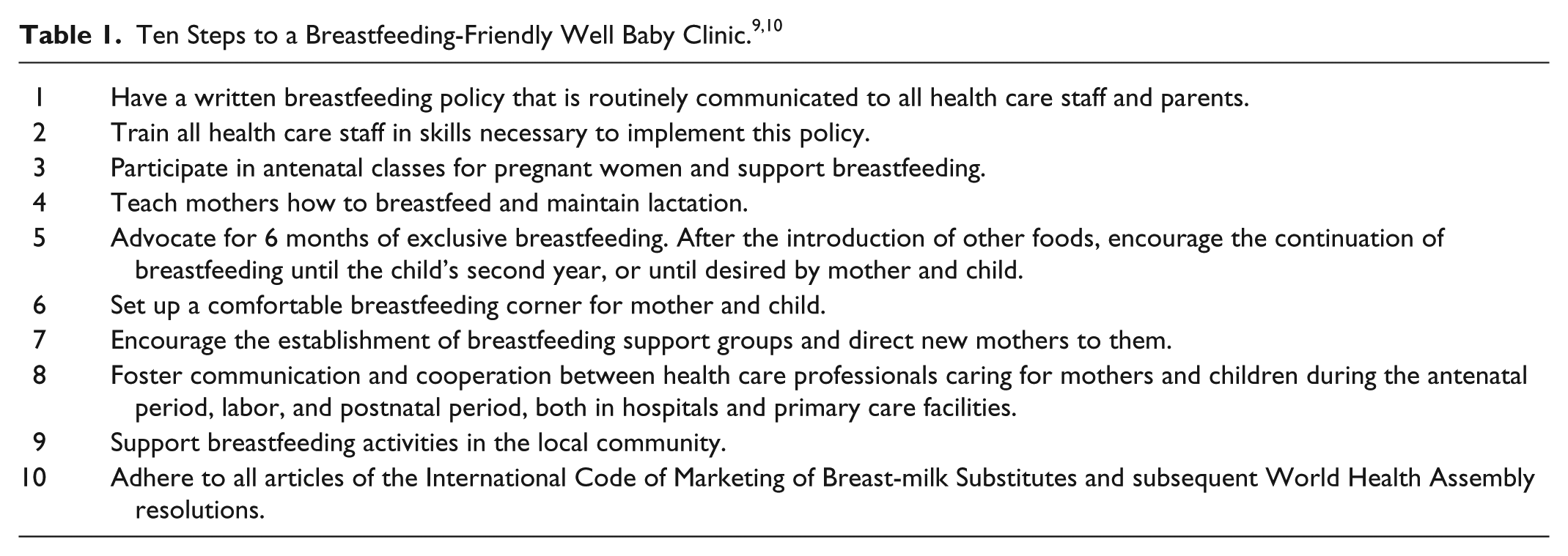
The BFHI, with its clear, practical, logical format and proven efficacy, provides an excellent template for replication in different settings. Hence, in 2008, the 10 steps were reintroduced to the primary health care setting in Croatia (Table 1), aimed at primary care pediatricians and family doctors.9,10 The BFHI self-assessment questionnaire, 20-hour course, and external assessment forms were modified to suit the primary care setting. Eleven assessors were trained. The course is held annually and is financed by UNICEF. So far, 20 primary health care teams (doctor and nursing staff) out of a total of 248 pediatric practices have completed the training, of which 14 (13 pediatric and 1 family medicine practice) have received the designation. This model of primary care has been included in the Republic of Croatia’s National Health Strategy for the period 2012 to 2020.
Mother-friendly care
While almost all maternity facilities in Croatia are “Baby-Friendly,” there are problems related to obstetric care, mainly due to violations of women’s reproductive health and human rights. This led to the inclusion of the Mother-Friendly Hospital Initiative (MFHI) 11 in the National Breastfeeding Program for the period 2014 to 2016, since it was felt that true “Baby-Friendly” care must include the well-being of mothers. Unlike the BHFI, the MFHI does not have universally accepted criteria for implementation, self-evaluation, and assessment. Hence, we decided to begin with a pilot programme in 2 Croatian maternity hospitals with the aim of developing criteria for MFHI implementation by the end of 2015. The recently published criteria for Mother-Friendly care, developed by the International Federation of Obstetricians and Gynaecologists, will aid us in this endeavor. 12
Ten steps in the NICU
Since 2013, UNICEF Croatia has focused its activities on breastfeeding promotion in the NICU. A national survey revealed that breastfeeding practices vary considerably between units and that health professionals’ knowledge in this area is insufficient. Hence, in March 2015, a 20-hour breastfeeding course for neonatal staff was held, based on “Expert Group Recommendations” for expansion of the BFHI into neonatal intensive care, 13 which was attended by over 100 participants from Croatia and neighboring Serbia, Bosnia/Herzegovina, and Slovenia. A DVD with recorded presentations and a translation of the “Expert Recommendations” have been provided to all neonatal units. Currently, the MoH and UNICEF are furnishing all NICUs with recliners and wraps to enable “kangaroo care,” and practical skills workshops are being planned.
Breastfeeding support groups (BSGs)
Common to all settings is the need for ongoing infant feeding support following hospital discharge; hence, in 1995, breastfeeding support groups were set up in Croatia. These are jointly led by community nurses and experienced mothers—considered an original Croatian model of support 2 —who meet on a regular basis, either in private homes or in community facilities. Early 2007, 16 BSGs were registered with the Croatian Association of BSG, whereas currently there are 166 BSGs throughout Croatia (Figure 3), with interest growing following a recent UNICEF-sponsored series of breastfeeding workshops for community nurses.
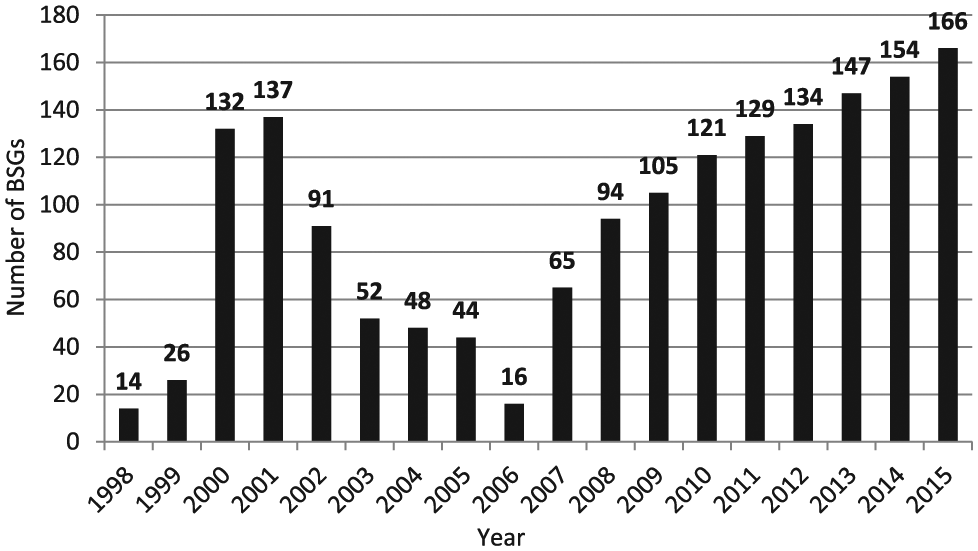
Number of Breastfeeding Support Groups (BSGs) in Croatia.
Discussion and Conclusion
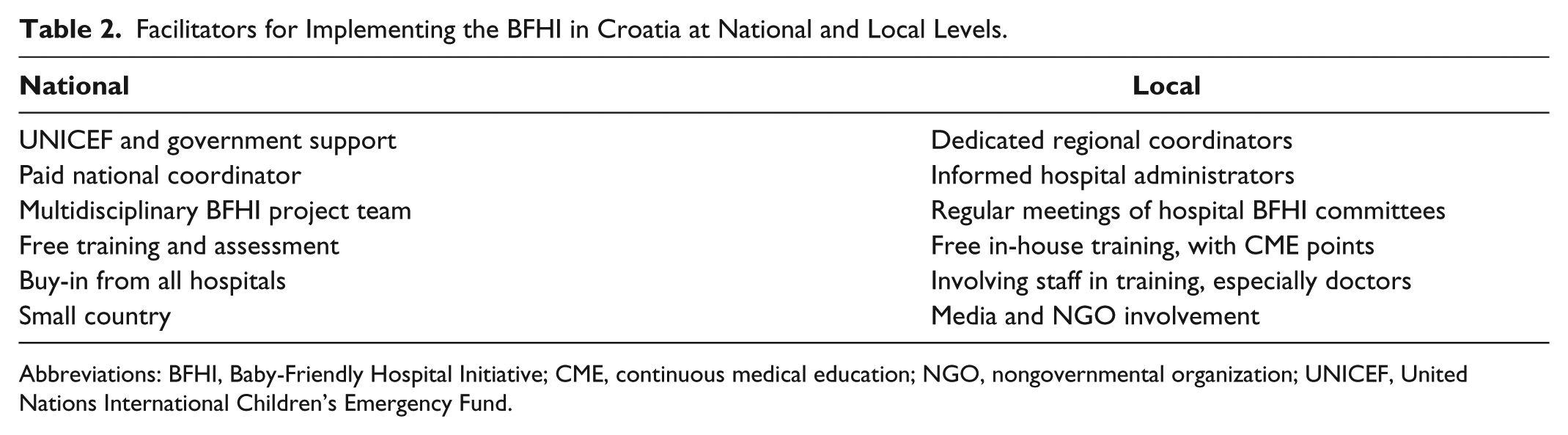
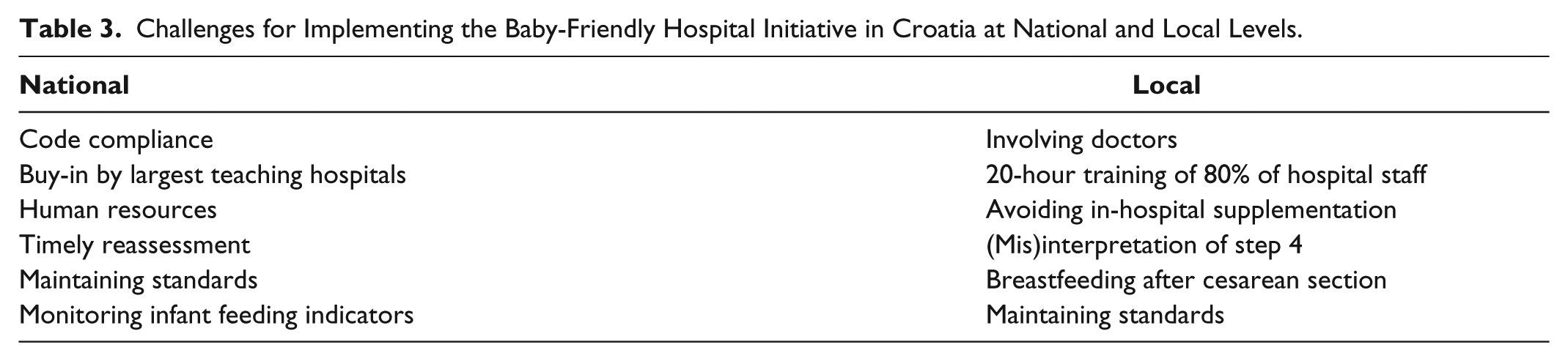
Key facilitators and challenges in implementing the BFHI in Croatia are presented in Tables 2 and 3. The events and findings described in this article are context specific and therefore may not be applicable to other settings. However, our experience is in line with results of an integrative review, 14 which found that strong recognition and support of the BFHI by the government was the most frequently reported facilitator at the sociopolitical level, whereas the most frequently reported barriers were the aggressive marketing practices of the breast milk substitutes industry. Having an NBC in Croatia, to whom the MoH refers for assessment of any infant feeding materials, has helped keep these practices under control.
Facilitators for Implementing the BFHI in Croatia at National and Local Levels.
Abbreviations: BFHI, Baby-Friendly Hospital Initiative; CME, continuous medical education; NGO, nongovernmental organization; UNICEF, United Nations International Children’s Emergency Fund.
Challenges for Implementing the Baby-Friendly Hospital Initiative in Croatia at National and Local Levels.
An ongoing, vital challenge is the maintenance of Baby-Friendly standards in maternity facilities. This is being addressed through ongoing involvement of the BFHI project team with UNICEF through its new project focusing on at-risk children. Given the time- and resource-bound limits of this collaboration, negotiations are currently under way with the Croatian Agency for Quality and Accreditation in Health, in the hope that they will provide ongoing support for external assessors and trainers, as well as introduce the BFHI into the hospital accreditation procedure.
Finally, by creating a wider breastfeeding discourse, involving all segments of society, not just the health sector, we hope to re-create a breastfeeding culture that will embrace and sustain the protection and support of breastfeeding dyads.
Footnotes
Acknowledgements
We thank UNICEF Croatia for their generous support, especially Gorana Dojčinović. We are grateful to the Ministry of Health, especially Dr Sanja Predavec, for having faith in us. We thank all BFHI educators, assessors, and coordinators for giving so willingly of their time and all health professionals who embraced the BFHI.
Authors’ Note
This report is the subjective view of the authors and does not necessarily reflect the policies or views of UNICEF Croatia or the Croatian government.
Declaration of Conflicting Interests
The authors declared the following potential conflicts of interest with respect to the research, authorship, and/or publication of this article: J.G. is the National Breastfeeding Coordinator. I.Z.-G., A.P.B. and M.S. are voluntary members of the National Breastfeeding Committee and consultants to UNICEF Croatia. All authors declare no competing interests.
Funding
The authors received no financial support for the research, authorship, and/or publication of this article.