







Abstract
Background:
Over the past 2 decades, southern states in the United States have recorded the lowest breastfeeding rates. It is not known whether awareness of breastfeeding laws and provision of resources play any role in their breastfeeding practices.
Research aims:
The aims were (a) to describe awareness of breastfeeding laws and provisions by students and employees of institutions of higher learning in the state of Georgia, (b) to describe awareness by race and ethnicity, and (c) to determine factors associated with awareness of breastfeeding laws and provisions among students and employees within Georgia institutions of higher learning.
Methods:
A cross-sectional online survey of students (n = 1,923) and employees (n = 1,311) associated with five institutions within the University System of Georgia (N = 3,271) was completed. Convenience sampling was used. Data were collected through Qualtrics. Chi-square test was used to examine differences between groups, while logistic regression was used to examine associations.
Results:
Participants included 33.3% undergraduate, 26.2% graduate students, 24.6% staff, 14.2% faculty, and 1.7% administrators. Over two thirds were female and white. Almost one third reported having a child or children. Awareness of breastfeeding laws and provisions was very low among respondents, with 26.6 and 9.6% aware of federal and state provisions, respectively. While less than 10% were familiar with the Baby Friendly Hospital Initiative program, 52.6% reported their institution provides a supportive environment for breastfeeding. Being a student and being a minority were negatively associated with awareness of laws and provisions that support breastfeeding.
Conclusion:
The need for focused efforts on increasing awareness of legislative and institutional provisions and support for breastfeeding exists.
Keywords
Background
Breastfeeding is recognized as the optimal form of feeding for the human newborn. This has been endorsed by leading health institutions and organizations including the World Health Organization (WHO, 2015), the American Academy of Pediatrics (AAP, 2012), and the Surgeon General of the United States (U.S. Department of Health and Human Services [USDHHS], 2011a), among others. Surprisingly, these recommendations and endorsements of breastfeeding have not translated into universal breastfeeding in the United States, particularly in the southern region (Centers for Disease Control and Prevention [CDC], 2016). Although breastfeeding rates have increased since the turn of the 21st century, they fall short of the recommendations by the AAP (2012) and the WHO (2015) and particularly the Healthy People 2020 goals for breastfeeding initiation, duration, and exclusivity (CDC, 2013; USDHHS, 2011b). The rate of breastfeeding initiation in 2016 within the southeastern region is 52.0% to 75.3%, compared to 73.0% to 94.4% within other regions of the United States (CDC, 2016). Similar trends were observed for continued breastfeeding at 6 and 12 months and exclusive breastfeeding rates at 3 and 6 months. These disparities threaten the ability of the United States to achieve the Healthy People 2020 goals (USDHHS, 2011b). Various reasons have been ascribed to the low breastfeeding rates in the United States, including lack of role model, lack of time, embarrassment to breastfeed in public, cultural preference to formula feed, and lack of support in the home and/or place of work and lack of acceptance in the general society (Anstey et al., 2018; Gross et al., 2015; Majee, Thullen, Davis, & Sethi, 2017). This may be due to a lack of knowledge of resources and rights to breastfeed at the workplace (Galtry, 2015; Majee et al., 2017).
Key Messages
It is important to understand population knowledge of various laws and resources that support successful breastfeeding; however, there is dearth of knowledge about this topic among members of institutions of higher learning.
In all, 52.6% of participants reported their institution provides a supportive environment for breastfeeding.
Overall, students, younger participants, and minorities were less familiar with federal and state laws, as well as community and institutional resources that protect and support successful breastfeeding.
There is a need for changes in existing policies and education at institutions of higher learning to create awareness of laws and resources that support successful breastfeeding among students and employees of these campuses.
Even though there are both federal and state laws protecting mothers’ right to breastfeed in public (HG.org Legal Resources, 2017; State of Georgia, 2017), society has not been very welcoming or open to see mothers breastfeed in public (Gurley-Calvez, Bullinger, & Kapinos, 2018; Melnitchouk, Scully, & Davids, 2018; Pound et al., 2016). This could be due to a lack of awareness of existence of laws that support and protect a mother’s right to breastfeed (Gurley-Calvez et al., 2018; Pound et al., 2016). For example, within both the Fair Labor Standards Act (U.S. Department of Labor, 2011) and the Patient Protection and Affordable Care Act (PPACA, 2010), federal laws require employers with at least 50 employees to provide “reasonable break time for an employee to express breast milk for her nursing child for 1 year after the child’s birth” and provide “a place, other than a bathroom, that is shielded from view and free from intrusion from coworkers and public to express breast milk,” among others (Raju, 2014, p. 423). In Louisiana, researchers studied workplaces with more than 50 employees; they reported that only 47.8% of employers reported knowledge of a breastfeeding law (Alb, Theall, Jacobs, & Bales, 2017). Employers with more than 100 employees were over four times more likely to be aware of breastfeeding laws and/or in the process of implementing provisions that support breastfeeding compared to their counterparts with fewer employees (Alb et al., 2017). In a study by Bai, Gaits, and Wunderlich (2015) in New Jersey, hospitals were significantly more likely to have provisions and resources that supported breastfeeding for their employees in accordance with the U.S. Federal Reasonable Break Time for Nursing Mothers Law (PPACA, 2010; Raju, 2014). They suggested that most employers may not be aware of these laws and therefore do not implement the requirements within the workplace.
Importantly, over 50% of women of childbearing age are employed outside the home and return to work or school immediately after delivery before their own milk production is well established (Rojjanasrirat & Sousa, 2010); they may need the support of either the workplace or school to choose and be successful with breastfeeding. Unfortunately, little information exists on the situation at university campuses across the United States. To achieve the Healthy People 2020 goals for breastfeeding, it is important for mothers irrespective of their sociocultural background or place of work to be aware of existing laws and provisions that protect and support breastfeeding at the workplace, school environment, and societal support (Majee et al., 2017; Melnitchouk et al., 2018; Raju, 2014; Schwarz, 2013).
There is limited research examining the awareness of breastfeeding laws and provisions within the United States, even among those of higher income and education, who are reported to have higher breastfeeding rates. Therefore, a need exists to examine the level of awareness of federal and state breastfeeding laws among individuals with higher education to ascertain how they influence their breastfeeding practices. The study aims were (a) to describe awareness of maternity leave laws, breastfeeding laws and provisions by students and employees of institutions of higher learning in the state of Georgia; (b) to describe awareness by race and ethnicity; and (c) to determine factors associated with awareness of breastfeeding laws and provisions among students and employees within Georgia institutions of higher learning.
Methods
Design
A cross-sectional online study conducted through Qualtrics was chosen to address study aims because it is cost-efficient, offers convenience, is time-efficient and provides a wider reach (Creswell, 2013; Evans & Mathur, 2005). All methods and procedures were reviewed and approved by the Human Subject Institutional Review Board of the University of Georgia.
Setting
The survey was conducted online via Qualtrics among institutions within the University System of Georgia (USG). USG comprises public colleges and universities in the state of Georgia, located in the southeastern United States, and overseen by a Board of Regents, whose members are appointed by the governor of the state (USG, 2018c). USG is ranked as the sixth largest university system in the United States in terms of total student enrollment. Institutions within the USG are divided into four categories: research universities, state universities, state colleges, and regional universities. The racial/ethnic breakdown of the student and faculty population within USG is as follows: white (50.2% vs. 71.7%), black or African American (26.7% vs 9.6%), Asian (8.9% vs 12.5%), Hispanic/Latino (8.4% vs 31.0%), and Others (5.8% vs 3.2%) (USG, 2018b). The average age of the students is 23.6 ± 7.5 years, and the faculty is years (USG, 2018a).
Sample
The target population was the undergraduate and graduate students, staff, faculty, and administrators of institutions within the USG. The inclusion criteria were being at least 18 years old and either student or employee of an institution within the USG. The exclusion criterion was not being a resident of the state of Georgia. Convenience sampling was used. Prior to data collection, an email was sent to the designated research and planning officers of all 30 colleges and universities within USG to solicit their policies regarding members of the institution participating in a research study and potentially providing the email contacts of individuals affiliated with the institution or sending a link to the survey through their member listserv(s). Out of the 30 colleges and universities within the USG, 15 responded to this inquiry, but only five agreed to either provide an email list (two institutions) or send the survey link through the campus listserv (three institutions). A total of 3,271 responses were received from members of the five institutions the survey was sent to within the USG. A majority of participants (90.7%) were affiliated with two large research institutions that compose only about 20% of all enrolled students and about 49% of all employees within USG (Georgia Tech, 2017; University of Georgia, 2017; USG, 2017).
Measurement
The survey opened with a brief description of the study and expectations of participants. A survey of 48 close- and open-ended questions was developed (by AKA and NM) in consultation with a psychometrician, along with extensive literature review (see Supplemental Materials 1). The draft survey was reviewed by three individuals with expertise in human lactation and health policy and subsequently pilot tested with 15 participants (seven undergraduate and five graduate students, and three staff) for content validity. After review of the pilot data and revision of a number of questions for clarity, the survey was finalized and distributed to target participants.
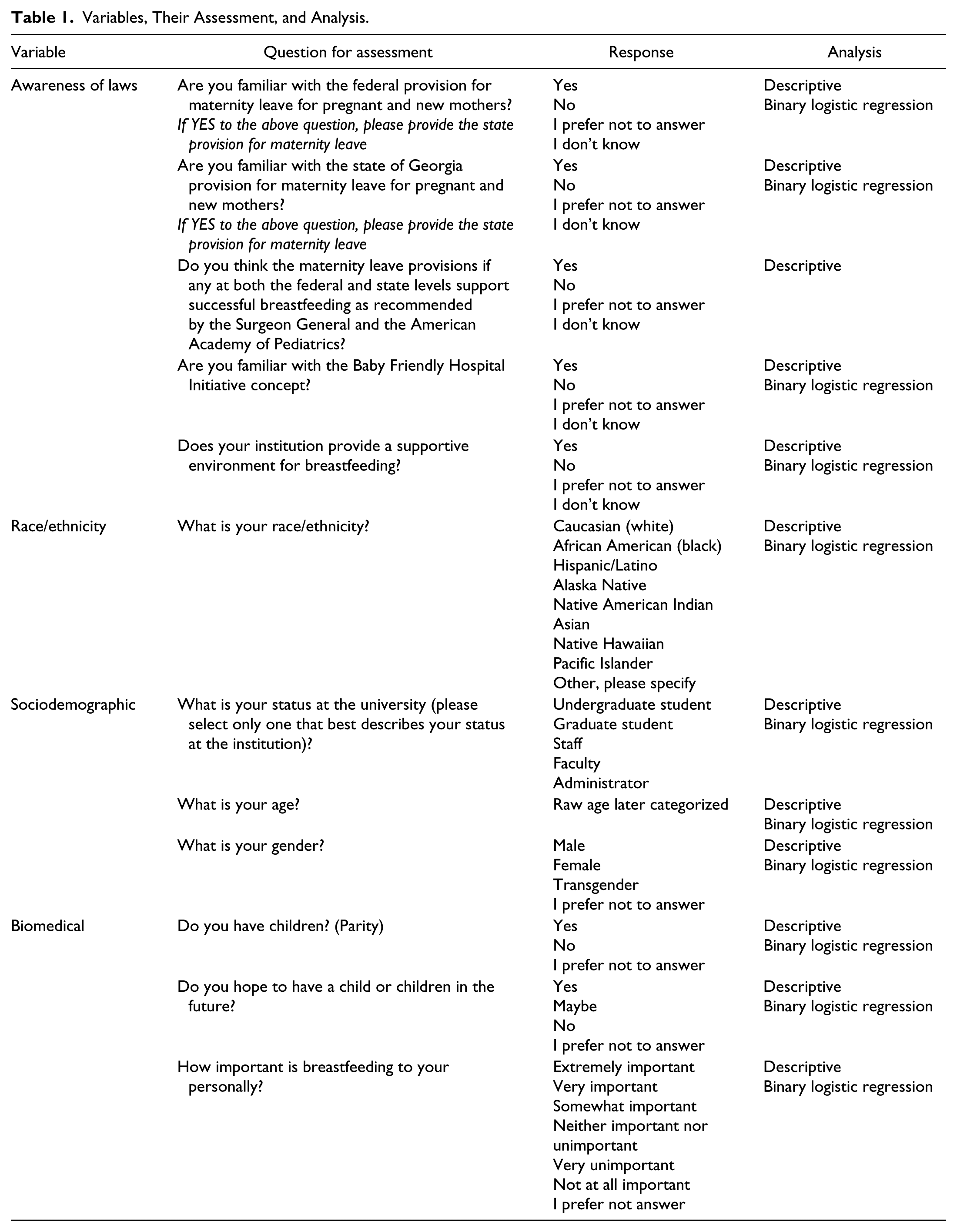
Awareness of maternity leave laws, breastfeeding laws, and provisions was assessed via these questions: “Are you familiar with the federal provision for maternity leave for pregnant and new mothers?” “Are you familiar with the state of Georgia provision for maternity leave for pregnant and new mothers?” and “Are you familiar with the Baby Friendly Hospital Initiative concept?” The responses to these questions were categorical, including Yes, No, I prefer not to answer, and I don’t know (Table 1). Demographic variables assessed were participants’ status at the institution, gender, age, race/ethnicity, parenthood, and importance of breastfeeding, while the other study variables reported were determined to best reflect breastfeeding laws and provisions that support successful breastfeeding (see Supplemental Materials 1).
Variables, Their Assessment, and Analysis.
Data Collection
The survey was conducted over a 5-month period, September 2016 to January 2017. Consent of participants was obtained by clicking “Yes” to the question “I agree to participate in this survey,” following their reading of the consent script. Invitations containing a link to the survey hosted by Qualtrics were sent directly to students, staff, faculty, and administrators of the two institutions that provided unidentified email list of their members to the lead investigator, while the survey link was sent to the contact persons of the three institutions that preferred to send the email through their own system. The difference in the mode of circulation of the survey to the target participants had to do with institutional policy regarding access to emails of members of their community. While two of the institutions were willing to make available the email list to the lead investigator upon institutional review board approval of the study protocol, the practice of the other three institutions was to send the survey through their system.
Data Analysis
All data were downloaded from Qualtrics and imported into IBM SPSS for Windows (2016, Version 23.0) for all analysis. For analyses, p ⩽ .05 was used as the criterion for statistical significance. Aims 1 and 2 were analyzed using descriptive statistics. Bivariate analysis using chi-square test was used to examine differences between participant status at the university, race/ethnicity, and awareness of laws and provisions that support successful breastfeeding.
Due to the categorical nature of the data in Aim 3, univariate logistic regression was performed on each of the awareness of laws and provisions that support breastfeeding variables with each of the covariates (status at the university, age, gender, race/ethnicity, education, have children, intention to have children, and how important is breastfeeding) to examine possible associations. Covariates found to be significant at p < .1 with the variable were subsequently entered into a multivariate logistic regression model to examine their independent association with the variable adjusting for institution of affiliation and complete years of education. Odds ratio (OR) and the corresponding 95% confidence intervals (CIs) were calculated and reported.
Results
Description of Study Participants
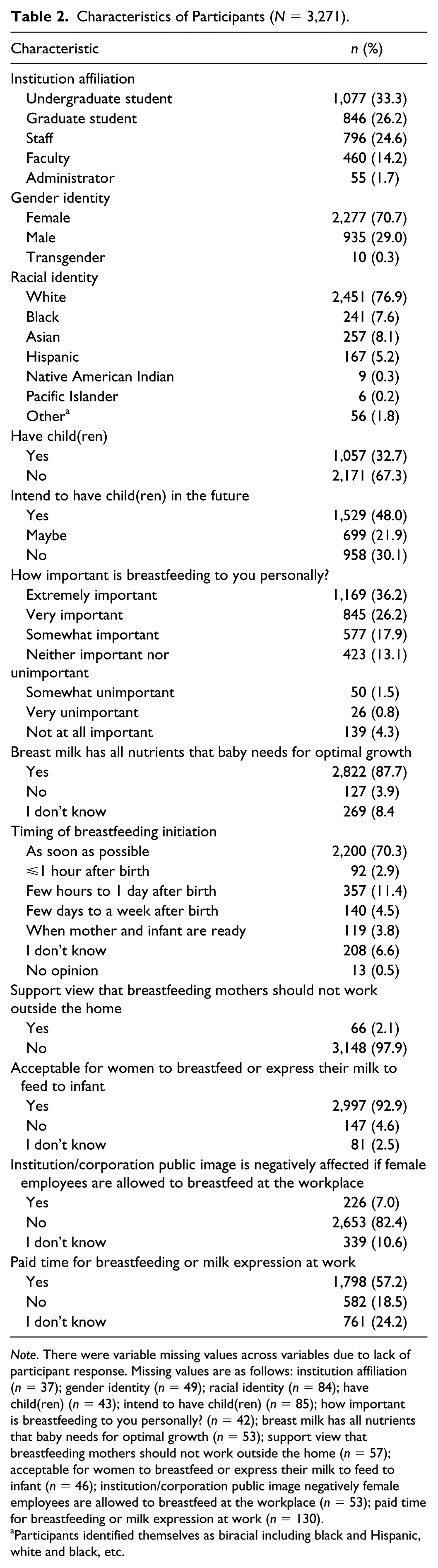
Most (33.3%, n = 1,077) of the respondents were undergraduate students, and only 1.7% (n = 55) were administrators. The majority of respondents were females (Table 2). Almost one third and half of respondents reported to have a child(ren) or plan to have a child(ren) in the future, respectively (Table 2).
Characteristics of Participants (N = 3,271).
Note. There were variable missing values across variables due to lack of participant response. Missing values are as follows: institution affiliation (n = 37); gender identity (n = 49); racial identity (n = 84); have child(ren) (n = 43); intend to have child(ren) (n = 85); how important is breastfeeding to you personally? (n = 42); breast milk has all nutrients that baby needs for optimal growth (n = 53); support view that breastfeeding mothers should not work outside the home (n = 57); acceptable for women to breastfeed or express their milk to feed to infant (n = 46); institution/corporation public image negatively female employees are allowed to breastfeed at the workplace (n = 53); paid time for breastfeeding or milk expression at work (n = 130).
Participants identified themselves as biracial including black and Hispanic, white and black, etc.
Aim 1: Awareness of Laws and Provisions That Support Breastfeeding
Overall, a quarter and a tenth of respondents reported familiarity with federal and state of Georgia law or provision for maternity leave that support successful breastfeeding, respectively (Figure 1). This was significantly higher among faculty and administrators (Figure 2). Of the participants who reported to be familiar with federal law or provision for maternity leave, 78.3% (669/854) said there is no specific federal law but mothers rely on provisions in the Family Medical Leave Act (FMLA) of 1993 and the Pregnancy Discrimination Act of 1978 during pregnancy and breastfeeding, while 1.7% (14/854) mentioned provision for breastfeeding at the workplace and public, the remaining 20% (171/854) gave inaccurate responses. To the question “Do you think the maternity leave provisions, if any, at both the federal and state levels support recommendations by the Surgeon General and the AAP for successful breastfeeding?”, under a tenth of participants responded in the affirmative (Table 3). Fewer than a tenth of respondents to the survey reported familiarity with the Baby Friendly Hospital Initiative (BFHI) concept, out of which 70.3% (192/273) said there was a certified Baby Friendly Hospital close to their place of residence. A significantly higher percentage of faculty (p < .0001) were familiar with the BFHI concept compared to others (Figure 2). Among participants whose affiliated institution provides a supportive environment for breastfeeding, 55.2% (625/1132) reported availability of rooms for breastfeeding or milk expression, breastfeeding or pumping breaks for nursing mothers (37.3%, n = 422), while 5.6% (n = 63) reported provision for extended leave for breastfeeding mothers.
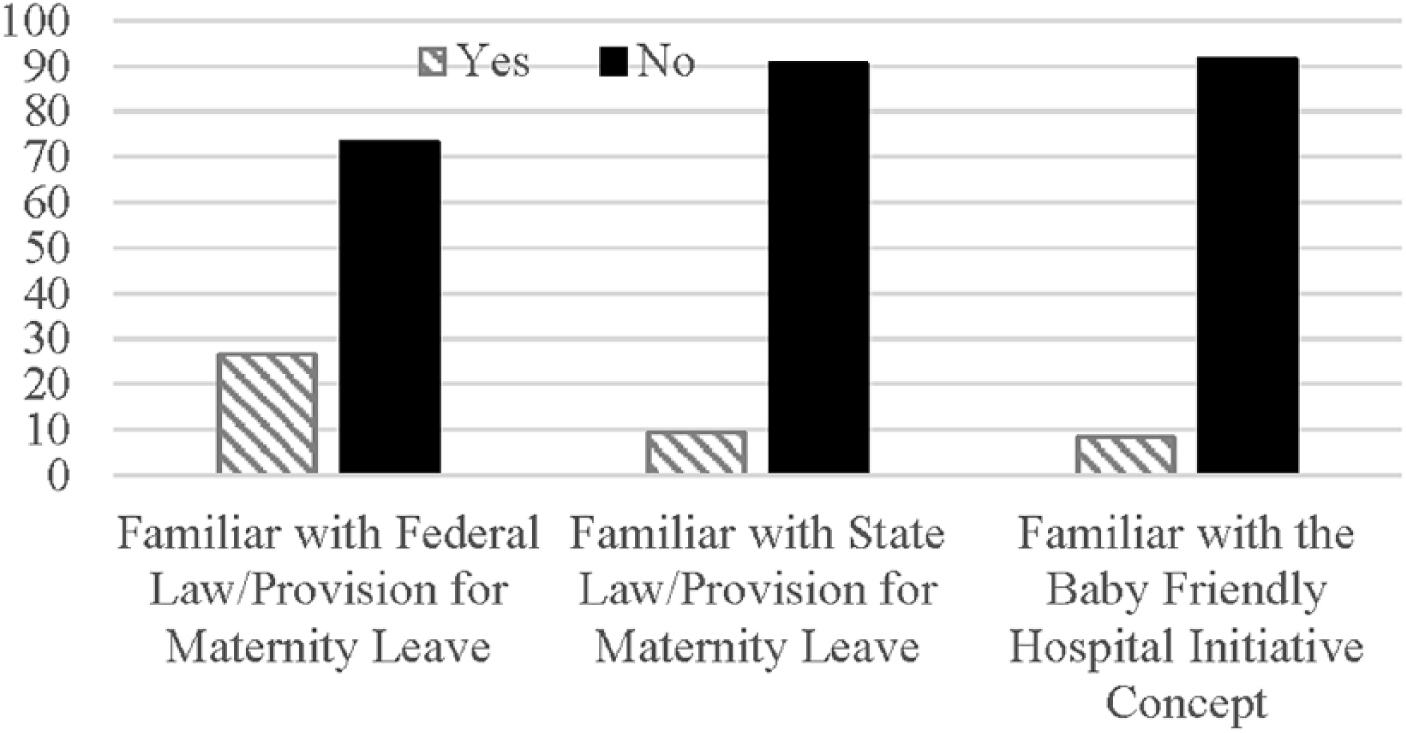
Respondents awareness of laws/provisions that support breastfeeding.
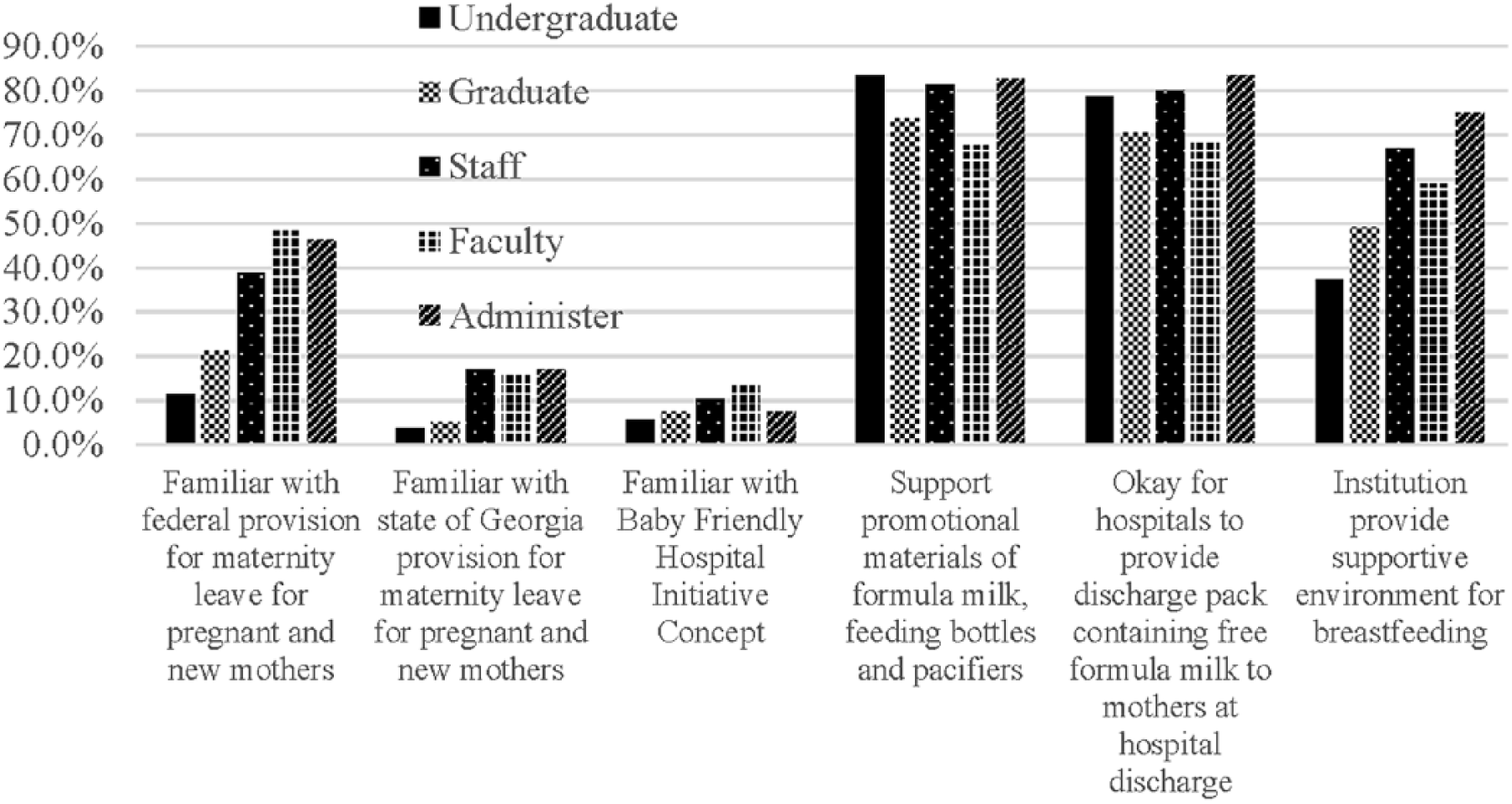
Awareness of laws and provisions supportive of successful breastfeeding by status at institution.
Participants’ Awareness of Laws and Provisions That Support Breastfeeding (N = 3,271).
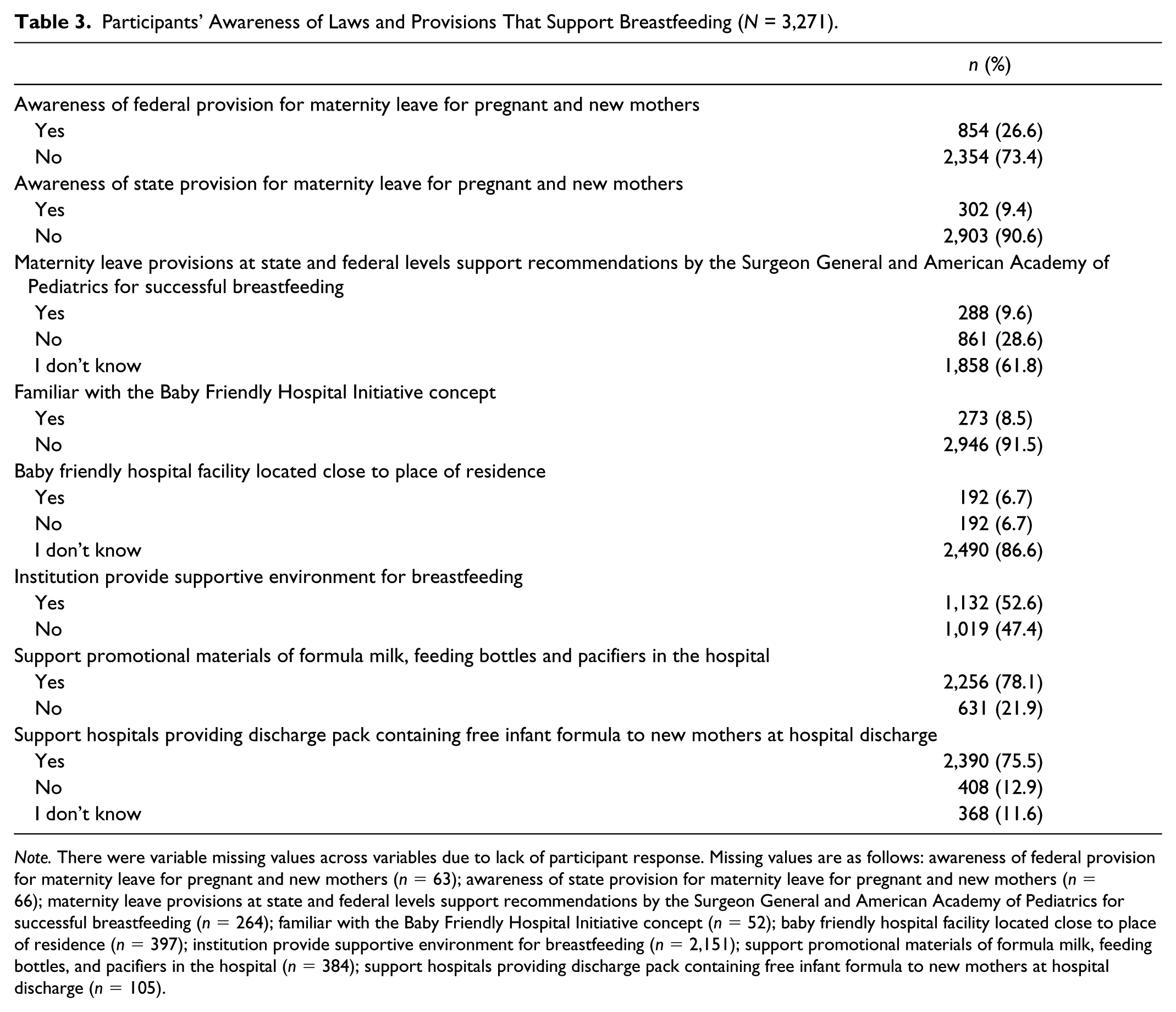
Note. There were variable missing values across variables due to lack of participant response. Missing values are as follows: awareness of federal provision for maternity leave for pregnant and new mothers (n = 63); awareness of state provision for maternity leave for pregnant and new mothers (n = 66); maternity leave provisions at state and federal levels support recommendations by the Surgeon General and American Academy of Pediatrics for successful breastfeeding (n = 264); familiar with the Baby Friendly Hospital Initiative concept (n = 52); baby friendly hospital facility located close to place of residence (n = 397); institution provide supportive environment for breastfeeding (n = 2,151); support promotional materials of formula milk, feeding bottles, and pacifiers in the hospital (n = 384); support hospitals providing discharge pack containing free infant formula to new mothers at hospital discharge (n = 105).
Aim 2: Awareness of Laws and Provisions That Support Breastfeeding by Race/Ethnicity
Overall, Caucasians were more aware of laws and provisions supporting successful breastfeeding except for the BFHI concept, which was higher among blacks (Figure 3), while significantly more Caucasians were familiar with federal (p < .0001) and state (p < .001) laws that support breastfeeding. Significantly more blacks (p < .0001) were familiar with the BFHI concept compared to participants of other racial and ethnic background. There was no significant difference in the proportion of participants who reported their institution provide a supportive environment for breastfeeding by race/ethnicity (p = .069). Whereas a significant proportion of blacks (p = .014) compared to the other race/ethnicity expressed their support of promotional materials of formula milk, feeding bottles and pacifiers in the hospital, over two thirds of participants were okay with hospitals providing discharge packs with no racial/ethnic difference (p = .122).
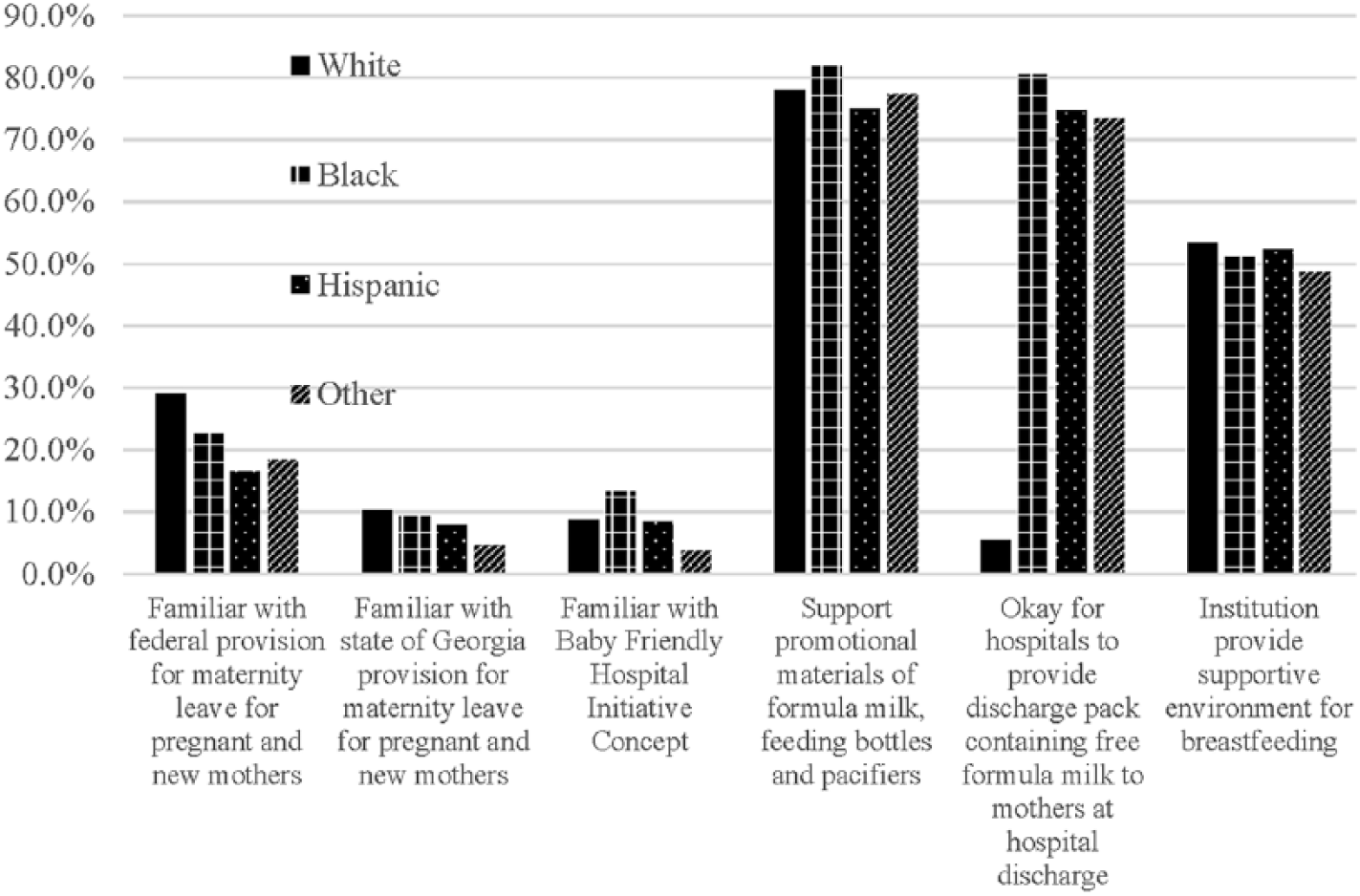
Awareness of laws and provisions supporting successful breastfeeding by race/ethnicity.
Aim 3: Factors Associated With Knowledge of Laws and Provisions for Successful Breastfeeding
Predictors of awareness of laws and provisions in support of successful breastfeeding are presented in Table 4. In the univariate analyses, the odds of familiarity with laws and provisions supporting successful breastfeeding were consistently lower among students, individuals younger than 35 years old, and those with minority status. The odds of familiarity with BFHI concept were lower among students, those less than 25 years old, those without a child, and those perceiving breastfeeding as unimportant (Table 4). The odds of familiarity with BFHI concept were higher among females and blacks. Also, being a student was associated with lower odds, whereas being a staff member or administrator was associated with higher odds to report their institution provides a supportive environment for breastfeeding in the univariate analysis (Table 4).
Predictors of Awareness of Laws and Provisions for Supporting Successful Breastfeeding.

Note. There were variable missing values across variables due to lack of participant response. Adjusted variables in the multivariate model: institution, complete years of formal education.
Hosmer and Lemeshow test: χ2 = 6.744, p = .564. bHosmer and Lemeshow test: χ2 = 9.375, p = .312. cHosmer and Lemeshow test: χ2 = 4.515, p = .808. dHosmer and Lemeshow test: χ2 = 8.853, p = .355. eHosmer and Lemeshow test: χ2 = 5.849, p = .664. fHosmer and Lemeshow test: χ2 = 15.660, p = .058. gHosmer and Lemeshow test: χ2 = 4.024, p = .855.
In the adjusted logistic regression analysis, less likely predictors of familiarity with federal law and provisions for maternity leave for pregnant and new mothers included being an undergraduate student, graduate student, or staff compared to faculty, being a minority compared to white, and not having a child compared to having child(ren), while those 25 to 44 years old compared to 55 years and older and females compared to males were more likely to be familiar with this law and provision (Table 4). Being a female compared to male and not having a child compared to having children were associated with higher odds of familiarity with state laws and provision for maternity leave for pregnant and new mother. Younger age compared to 55 years and older and being female compared to male were associated with lower odds of familiarity with maternity leave provisions at both the federal and state levels to support successful breastfeeding in the multivariate logistic regression. Whereas being younger than 44 years compared to 55 years and older, female compared to male, and black compared to white were associated with higher odds of familiarity with the Baby Friendly Hospital concept, being a graduate student or staff member compared to faculty and not having a child compared to having children were less likely predictors. Being a staff member or an administrator compared to faculty was associated with higher odds, whereas female compared to male and not having a child(ren) compared to have children were associated with lower odds to report the institution provides supportive environment for breastfeeding (Table 4). The odds for support of promotional materials of formula milk, feeding bottles, and pacifiers were higher for participant age younger than 55 years compared to older, female compared to male, and breastfeeding not being important compared to breastfeeding being important. Participant being younger than 55 years compared to 55 years and older, female compared to male, and report breastfeeding to be unimportant compared to breastfeeding to be important were associated with higher odds to agree with the statement “Ok for hospitals to provide discharge pack containing free formula” in the multivariate logistic regression.
Discussion
Breastfeeding is considered optimal nutrition for infants (AAP, 2012; USDHHS, 2011a; WHO, 2015); therefore, it is important to encourage and support new mothers in initiating and continuing breastfeeding of their newborns. The majority of new mothers are employed outside of the home or in school, and it is essential that they have support to continue breastfeeding when returning to work or school (Froh et al., 2018; Wallenborn, Perera, Wheeler, Lu, & Masho, 2018; Wambach & Chambers, 2018). The desire to breastfeed and be successful may be dependent on the provisions at the work/school environment and resources available to them as mandated by federal and state laws. However, many are not aware of federal or state legislative provisions for maternity leave nor of community or institutional supports for breastfeeding (Alb et al., 2017; Bai et al., 2015). Our results suggest similar trends among members of a large academic system in the southeastern United States.
Although the majority of our participants valued breastfeeding as an important infant feeding option, they were less aware of laws and provisions that support successful breastfeeding. While new mothers may take 12 weeks of leave under FMLA, this is not necessarily paid unless the employee has accrued annual or sick leave or has short-term disability insurance (Guerin, 2015). Therefore, some new mothers, especially those in low-paying jobs, may be unable to take the maximum amount of leave under FMLA. It is possible that respondents viewed the fact that FMLA is unpaid leave as not necessarily supporting successful breastfeeding because of the potential loss of associated income. There is a need for research that examines the interplay between familiarity with breastfeeding laws, work environment, household income, and successful breastfeeding practices, particularly among young mothers returning to work or school.
While participants valued the importance of breastfeeding, this is not reflected by the breastfeeding rates in the United States, particularly among young and new mothers (CDC, 2016). It is possible that these participants were not familiar with best practices for supporting the initiation and continuation of breastfeeding. For example, pacifiers are ubiquitous in American society, so an untrained and/or well-informed person may not find them problematic for breastfeeding (Buccini, Perez-Escamilla, Paulino, Arauio, & Venancio, 2017). However, the BFHI sets as one criterion that no pacifiers or artificial nipples be given to breastfeeding babies (Baby-Friendly USA, 2017). Few participants were familiar with the BFHI, so it is possible that participants were not aware of practices that can deter mothers from breastfeeding, such as receiving free infant formula or artificial teats. Although breastfeeding rates happen to be higher among individuals with higher educational background, there is a paucity of information on their awareness of laws and provisions that support successful breastfeeding. Currently, research that examines breastfeeding knowledge, perception, and belief is limited among populations with a higher educational background and regarding the contribution to racial disparities in breastfeeding rate (Dodgson, Bloomfield, & Choi, 2014; Jefferson, 2015; Vari et al., 2013). So far, interventions have focused on providing breastfeeding support to mothers, which has contributed to general breastfeeding rates in the United States, but racial disparities still exist (Dodgson et al., 2014; Jefferson, 2015, 2017).
Students and younger respondents had lower odds of familiarity with laws and provisions that support breastfeeding. This is a very important finding, as the majority of the respondents in these groups were of childbearing age with intentions of future parenthood and the need to support breastfeeding their newborns. This finding is likely influenced by low incidence of students reported to be parents, who therefore may not find the need to look into their rights or available provisions to ensure successful breastfeeding. Educating or informing this demographic about breastfeeding-related laws and provisions as well as their rights to breastfeed or express their milk within the academic setting and workplace may facilitate more women choosing to breastfeed and for longer duration. Since the majority of the females in academic institutions fall within the reproductive age, it is important for authorities to continue to inform and educate the student population, especially on the resources available to them, the benefits of breastfeeding, and perceptions about breastfeeding, which often deter breastfeeding while in school.
Finally, about one third of participants believed that their institution provided a supportive environment for breastfeeding. Females were less likely compared to males to view their institution as supporting breastfeeding, which is an important observation. This finding is very important to inform policy changes in academic institutions, particularly among the student body. This will ensure successful breastfeeding among young adults and meeting the Healthy People 2020 goals for breastfeeding as the majority of the females in these institutions fall within the reproductive age. Authorities could work with student governments and other student organizations at the various campuses to inform and educate their student bodies about breastfeeding resources and provisions available to them. Anecdotally, WEB (coauthor) has known faculty members and graduate students who hung curtains in office windows or used a small storage closet as space to express milk at one of the participating institutions (American University Washington, 2018; Nkrumah & Gbagbo, 2018; Welek, 2015). Also, particularly undergraduate students have used either the office or lab space of AKA (the lead author) to express their milk. This may be the result of these individuals not being aware of breastfeeding rooms on their campuses or the site may be farther away from their office space or lecture halls (Equal Opportunity Office—University of Georgia, 2018). It is possible that respondents expected more accommodations for nursing or pumping human milk and therefore did not feel supported by the institution. To be compliant with federal law requiring employers to provide for and make accommodations for mothers who choose to breastfeed their newborns, these institutions, some of which already have breastfeeding rooms, should provide appropriate signage. Institutions of higher education could also send out regular email communications to members of their communities about the availability of breastfeeding resources and accommodations to serve as reminders. Future research should determine the most effective messages and channels for each segment of the population within institutions of higher education, particularly students. There is a need for increased awareness of legislative, community, and institutional supports to increase rates and duration of breastfeeding among this population. Finally, future research should determine additional barriers to breastfeeding unique to this work and educational setting that can be addressed by institutions of higher learning.
Limitations
We utilized a convenience sample of participants, which was not representative of all members of the USG community or of all institutions of higher learning in the United States. Due to the limited sample size from smaller colleges, it was not possible to examine differences in awareness of federal and state laws supportive of breastfeeding in rural versus urban areas or by institution. This distinction may be important, as the majority of counties in Georgia and most southeastern states are considered rural. Similarly, it was not possible to examine differences among different types of institutions of higher education within Georgia, as respondents were associated with only five (16.7%) of the 30 USG colleges and universities at the time of the survey. It is likely the high parental status of administrators, faculty, and staff compared to undergraduate and graduate student respondents influenced our findings. Because of the limitations associated with the study, findings presented should be interpreted with caution.
Conclusions
Overall, awareness of both federal and state laws and provisions that support successful breastfeeding was low among employees and students of five universities within the USG. There is a need for intervention to improve awareness of laws and provisions that support breastfeeding on university campuses to make breastfeeding more attractive to the younger generation. Further studies are needed to explore our findings in more detail.
Footnotes
Acknowledgements
The authors thank all the participants for their time and contribution to the study. Our appreciation also goes to the research officers at the institutions that participated in the study for either providing email lists to use or forwarding the link to the survey to their members. We also thank Marina Tandoh for contributing to and reviewing the initial survey questionnaire.
Declaration of Conflicting Interests
The authors declared the following potential conflicts of interest with respect to the research, authorship, and/or publication of this article: The authors do not have any financial relationship with any organization, and no funding was received from any organization for the conduct or publishing of this work.
Funding
The authors disclosed receipt of the following financial support for the research, authorship, and/or publication of this article: The project was supported by the Georgia Agriculture Experimental Station (GEO00820)

References
Supplementary Material
Please find the following supplemental material available below.
For Open Access articles published under a Creative Commons License, all supplemental material carries the same license as the article it is associated with.
For non-Open Access articles published, all supplemental material carries a non-exclusive license, and permission requests for re-use of supplemental material or any part of supplemental material shall be sent directly to the copyright owner as specified in the copyright notice associated with the article.
