







Abstract
Keywords
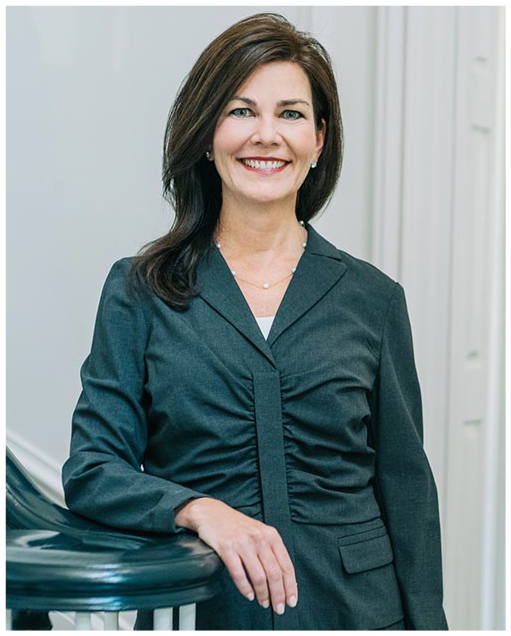
Leah S. Aldridge, JD, IBCLC, Licensed Lactation Consultant
I have great respect for the past. If you don’t know where you’ve come from, you don’t know where you’re going. I have respect for the past, but I’m a person of the moment. I’m here, and I do my best to be completely centered at the place I’m at, then I go forward to the next place. (Angelou, 2011/2014).
I will begin where I’ve come from.
I was breastfed by a mother who was the first La Leche League leader in the state of Florida, USA. I went on to study English at the University of Virginia, USA, and law at Emory University School of Law. I practiced healthcare transactional law with a large firm in Atlanta, Georgia, USA, for many years. And then everything changed. I gave birth to my first child, Isabelle. I transformed from high-flying corporate attorney to breastfeeding mother as I learned to surrender to the age-old truths of my body and to honor the relationships between my baby girl and me, her mouth and my breast. My journey was distinctly female and undeniably fierce.
Three children and 10 years later, I became an International Board Certified Lactation Consultant (IBCLC) and merged my identities as a lawyer, breastfeeding mother, women’s health clinician, and advocate. No matter your particular role in the lactation field, armed with science, spiritually reinforced by the elemental power and joy of helping baby to breast, we each must heed the call to protect, promote, and support breastfeeding families (IBCLC, 2018; World Health Organization [WHO], 1989) and to move our communities to “the next place.”
Where is the “next place” in law and policy? Let’s look where we have come from, be centered in today, and commit to moving forward. This year is the 41st anniversary of the WHO (1981) International Code for the Marketing of Breast-Milk Substitutes (IC) and we see much progress and much work still to do. Lactation activists are working on policies as disparate as: establishing milk banking in Muslim countries in light of the milk kinship tenet (Ong, 2021); overcoming racial disparities in breastfeeding in the USA (Bartick et al., 2017; Segura-Pérez et al., 2021); protecting incarcerated parental rights to breastfeed in Canada (Paynter, 2018); implementing the WHO IC (addressing the dangers of human milk substitutes; WHO, 2020) and the Baby-Friendly Hospital Initiative (Baby-Friendly USA, 2018; Hudson, 2019); advocating for breastfeeding families in custody issues in Australia (Australian Association for Infant Mental Health, 2015); advocating for acceptance of breastfeeding in public in the United Kingdom (Morris et al., 2016); advocating for safe clinical care through licensure laws in the USA (Aldridge, 2021) and in other countries, for example, Indonesia (Pramono & Mariska, 2017); enhancing breastfeeding education curricula for healthcare professionals in the USA (American Association of Family Physicians [AAFP], 2019; Meek et al., 2019; Rodriguez & Shattuck, 2017); and advocating for workplace breastfeeding laws worldwide (IBFAN, 2020; Taylor et al., 2020).
The breadth of our policy work reflects the universe of need, but also necessarily fragments our collective impact. Similarly, we, the lactation community, are fragmented. Breastfeeding is not only vulnerable because of the ease of separating a lactating parent and child (Chetwynd, 2021), but because of the separating and parsing of our breastfeeding families and lactation personnel into smaller and smaller identity-based tribes, each with their own battle cry. Almost every breastfeeding practice, intervention, and recommendation must now be recast according to identity, and each competency assigned to a credential, creating a tribalism which risks progress on common policy goals.
To be “centered at the place we are,” we can acknowledge that we exist in a fractured political climate, without surrendering to the challenges of the day. We exist in the tension between acting globally versus nationalistically, between crafting policies that address the needs of the majority versus the needs of persons who are marginalized. Breastfeeding lives in the tension between the rights of the parent and of the child. Consider that in 1990 at the World Summit for Children, breastfeeding was considered by many feminists as a “woman’s right,” independent of a child’s right (Latham, 1997, pp. 403–404; Meier & Labbok, 2009) while, today, some feminists decry breastfeeding itself as anti-choice and anti-woman (Símonardóttir & Gíslason, 2018; Wolf, 2010), and others lament the erasure of women in advocacy for gender inclusive language in lactation (Jameson, 2019). Let us be called to unity by the words of Cornel West, Professor Emeritus at Princeton University, who urges us away from division and tribalism to “talk not at the level of identity but at the level of integrity, of decency, of honesty or truth seeking and of justice seeking. . .” (The Federalist Society, 2020, 13:43).
Looking to the future, we must find the common ties that bind us and move forward together on issues that unite us and our voice. While no singular aspect of lactation policymaking has equal worldwide effect, every breastfeeding parent—no matter their race, color, national origin, physical or intellectual ability, sex, or gender—requires safe, physical space and time to breastfeed, evidence-based information, and support. Many breastfeeding parents also require clinical care. Let us come together as one “warm chain of support” (World Alliance for Breastfeeding Action [WABA], 2021) to ensure that temporal and physical space, education, support, and clinical care are available, by focusing on issues which address the needs of the many, for example, family leave policies, workplace pumping laws, and laws improving access to lactation care for all. As Emily Bronson noted at the 12th Breastfeeding and Feminism International Conference: Breastfeeding as Social Justice: From Crucial Conversation to Inspired Action: “This movement could improve the embodied consequences of inequalities and lead toward greater social justice.” (Bronson, 2017, pp. 792–793).
What is possible if we act with tenacity to build, layer by layer, the structures that all of our breastfeeding families need? After achieving licensure for the clinical lactation care professional—the IBCLC—in the state of Georgia, USA (Aldridge et al., 2021), our team of breastfeeding advocates worked to pass the most comprehensive workplace pumping law in the USA, which offers paid break time for employees to express breastmilk or to breastfeed (Employer Obligation to Provide Time for Women to Express Breast Milk for Infant Child, 2020; Paid Break Time and Private Location for Expression of Breast Milk, 2020). Notably, the Georgia law eclipses the protections in the USA’s federal PUMP for Nursing Mothers Act (2020). We also worked zealously and succeeded in passing legislation that offers Medicaid recipients access to the clinical services of licensed lactation consultants for the first time in Georgia history (Medicaid Coverage for Lactation Care and Services and Postpartum Care, 2020). These Georgia successes are not attributable to expensive lobbyists or to national or international organizational support, but to local, grassroots advocates working together to address the needs of the many. Our work, however, is far from done.
Imagine what the world could look like one generation from now if, instead of devolving into tension and tribalism, we joined our voices together to protect and promote the millions of breastfeeding families in the world. Let us hold that image in our collective consciousness; let it inspire us, and then let us make it so, together.
Footnotes
Author’s Note
Ms. Aldridge is a long term advocate of the International Board Certified Lactation Consultant (IBCLC) in improving health outcomes through education, practice, law, and policy.
She has been a volunteer member of the Board of Directors of HMHBGA for over 15 years, serving as Board President from 2014–2016. She is a current Board Member Emeritus of HMHBGA. Ms. Aldridge also currently serves as a volunteer Board Member for the National Lactation Consultant Alliance, Inc. (NLCA) and as a Member of the Lactation Consultant Advisory Group to the Secretary of State of Georgia, USA.
Disclosures and Conflicts of Interest
The author declared the following potential conflicts of interest with respect to the research, authorship, and/or publication of this article: Ms. Aldridge led the advocacy efforts on behalf of Healthy Mothers, Healthy Babies Coalition of Georgia, Inc. (HMHBGA) for the passage of the Georgia Lactation Consultant Practice Act.
Funding
The author received no financial support for the research, authorship, and/or publication of this article.
