







Abstract
Background:
It is medically known that breast milk is an important source of nutrition for the growth and development of babies. Following the February 6, 2023 Earthquake in Turkey, calls for breast milk donation were made on social media to meet the milk needs of babies whose mothers passed away.
Research Aims:
The aim of this study is to examine breast milk donation calls during the disaster period from a bioethical perspective and analyze the challenges and potential solutions specific to Turkey.
Methods:
We designed an internet-based qualitative research study. The research data were obtained from Twitter posts about breast milk donation during the earthquake period between February and April, 2023.
Results:
We identified two main contexts regarding breast milk donation: culture and belief, and health. The main themes within culture and belief were culture and religion. The main themes within health were misinformation, infection risk, alternative food, milk bank organizations, and allergy risk.
Conclusion:
The study emphasizes that cultural norms strongly influence breast milk donation. In bioethics, milk donation during disasters should prioritize the social needs of infants while considering societal values. It is important to emphazise that despite misinformation, breast milk remains the best source of infant nutrition.
Background
Breast milk is medically recognized as a critical source of nutrition, containing bioactive compounds that are essential for infant growth and development. When breastfeeding is not possible or is insufficient, standard commercial infant formula can serve as an alternative, particularly for newborns. Despite available substitutes, breast milk remains the recommended first choice (Martin et al., 2016). The World Health Organization (WHO) advises exclusive breastfeeding for the first 6 months, while the American Academy of Pediatrics (AAP) recommends continuing for at least 12 months. Similarly, the Academy of Nutrition and Dietetics endorses exclusive breastfeeding for 6 months, followed by continued breastfeeding in combination with complementary foods for an additional 6 months (Academy of Nutrition and Dietetics [AND], 2015; AAP, 2012; WHO (55th World Health Assembly), 2012).
Breast milk is widely recognized as the optimal source of nutrition for newborns. According to the Turkish Neonatology Society, when alternatives are necessary, direct breastfeeding is prioritized, followed by feeding with expressed breast milk and, finally, infant formula as a last resort (Bilgen et al., 2018). Globally, neonatal deaths within the first 4 weeks of life remain a major public health concern, often stemming from preventable causes. This underscores the need for educational programs aimed at both healthcare professionals and caregivers, with a focus on improved clinical practices and the health benefits of breastfeeding (WHO, 2002).
With advances in medicine, the critical role of breast milk in infant health has gained widespread recognition. As wet nursing declined in the West, milk banks—institutions that collect donated breast milk and distribute it to infants in need—emerged in the early 20th century to provide donor milk, which is nutritionally superior to infant formula. Today, numerous milk banks operate, both for profit and nonprofit, particularly in Western countries such as the United States (Cassidy, 2022; Moro, 2018). While Islam does not oppose wet nursing, many Islamic countries have approached the establishment of donor milk banks with caution. This hesitation stems from concerns about unknowingly creating “milk sibling” relationships—babies who are not biologically related but have been breastfed by the same woman—which would prohibit future marriages under Islamic law (Maheshwari et al., 2022). The Islamic world’s caution toward organized milk banks stems directly from the Quran and Hadiths, which prohibit marriage between individuals connected through “milk kinship”—a familial bond formed between a baby and the wet nurse (a lactating woman who breastfeeds a baby that is not her own)—as well as the wet nurse’s biological relatives (The High Council of Religious Affairs under the Presidency of Religious Affairs of Turkey/Diyanet İşleri Başkanlığı Din İşlleri Yüksek Kurulu, n.d.). Although formal milk banks have not been established in Islamic societies due to these concerns, community-based initiatives grounded in benevolence, altruism, and social responsibility have emerged to provide breast milk to infants in need.
According to the 2018 Turkey Demographic and Health Survey, breastfeeding is widespread in Turkey, with a prevalence rate of 98% (Hacettepe University Institute of Population Studies, 2018). When breastfeeding is not possible or breast milk is insufficient, various approaches are used to obtain it. However, factors such as the widespread availability of infant formula, limited family awareness, the absence or scarcity of milk banks, and inadequate professional counseling, contribute to difficulties in accessing breast milk (Kadıoğlu & Hotun Şahin, 2014). Natural disasters, such as earthquakes, also contribute to difficulties in accessing breast milk. Following the February 6, 2023 earthquake in Turkey, which claimed approximately 50,000 lives, many surviving infants, particularly those under 6 months, struggled to obtain breast milk. This lack of adequate nutrition during a critical developmental period posed serious health risks (Medical Association of Turkey/Türk Tabipleri Birliği [TTB], 2023).
During the disaster period, feeding challenges among infants whose mothers had died, or who had been weaned from breast milk, emerged as a significant social concern. In response, both local and national breast milk donation campaigns were launched, particularly through social media, as a demonstration of collective societal will. While some groups supported the breast milk donation campaigns, others, due to their beliefs or cultural values, voiced concerns about the potential for “milk sibling” marriages, leading to disagreement on the issue. Although the importance of breast milk for infants is widely acknowledged, opposing views shared on social media have brought bioethical value conflicts to the forefront. These discussions underscore the tension between public health priorities and cultural or religious concerns, making these ethical dilemmas more visible. There are no donor breast milk banks in Turkey. Following the February 6, 2023 earthquake in Turkey, calls for breast milk donation on social media, initiated by concerned citizens acting out of social responsibility to meet the milk needs of infants whose mothers had died, sparked debate among individuals with opposing views rooted in health, religion, and cultural values. Therefore, the aim of this study is to examine breast milk donation calls during the disaster period from a bioethical perspective and to analyze the challenges and potential solutions specific to Turkey.
Key Messages
Although the importance of breastfeeding is well-recognized in Turkey, religious and cultural factors pose challenges to breast milk donation.
Practical solutions are needed for issues such as how donor milk will be obtained, stored, and delivered for both healthy and sick infants.
If a policy on breast milk donation is to be developed in Turkey, it is essential for healthcare professionals and representatives of institutions or organizations reflecting the cultural values of different cultural factions within society to work collaboratively in a manner that does not compromise societal values.
Design
This study was designed as an internet-based qualitative study. In line with the research topic, the data source was selected from the social media platform formerly known as Twitter, now referred to as X. On this platform, users can create text-based posts, engage in discussions around specific topics using hashtags (#), and access content by searching for relevant keywords. Therefore, it was chosen as the most appropriate data source for conducting content analysis.
Setting and Relevant Context
Wet nursing is a culturally and religiously accepted practice in Turkey. This practice reflects a form of social solidarity developed to support the growth and development of infants with limited or no access to breast milk. In addition to wet nursing, the concept of milk siblinghood has emerged as a distinct social reality shaped by cultural norms. In Islam, milk siblinghood is regarded as equivalent to biological siblinghood. For this reason, marriage between milk siblings is strictly prohibited. Additionally, various religions hold distinct views regarding the concept of milk siblinghood.
The earthquake disaster in Turkey led to widespread social chaos and a crisis that was difficult to manage. Access to healthcare services was also significantly disrupted. In particular, the inability of infants, whose mothers died in the earthquake, to access breast milk, their primary source of nutrition, reached an alarming level from a public health perspective. As a result of the disruptions caused by the scale of the earthquake, particularly in aid coordination, calls for breast milk donation were made on social media, driven by public concern and social responsibility to protect infant health. Although these calls were criticized on religious and cultural grounds, they were also supported due to their recognized importance for infant health.
Within the scope of this study, social media posts related to breast milk donation were identified exclusively on the platform X. Although other social media platforms were also examined, no relevant posts related to the research topic were found during the data collection period. This has been attributed to the fact that X is regarded as the most suitable platform for users to express their thoughts and emotions through written text. In contrast, other social media platforms are primarily designed for photo-based content. Furthermore, even in WhatsApp groups involving the researchers, both during and after the earthquake period, no messages related to breast milk donation were observed. Therefore, data collection was limited solely to the platform X.
Sample
The sample consists of publicly accessible social media posts about “breast milk donation” for infants whose mothers died in the aftermath of the February 6, 2023 earthquake, which resulted in approximately 50,000 deaths. Following the earthquake, 192 social media posts were identified and included in the dataset.
Data Collection
The research data were collected from Twitter posts about breast milk donation shared during the earthquake period between February and April, 2023. The Turkish keywords “breast milk,” “milk donation,” “breast milk donation,” “breast milk bank,” and “milk donation during earthquakes” were used to retrieve relevant posts.
Data Analysis
The data were analyzed using content and thematic analysis methods. Social media posts relevant to the research topic were initially recorded in chronological order based on their posting dates. The research team included both a medical doctor and a philosopher. Both researchers hold doctoral degrees in the field of the History of Medicine and Ethics. Accordingly, both researchers contributed to the interpretation of the data during the analysis process, drawing on their respective academic backgrounds.
During the data analysis process, both researchers initially conducted independent coding of the data. The independently generated codes were then compared and reconciled to establish a set of common codes. In some cases, multiple statements were found to align with a single code. Taking into account the study’s conceptual framework, the coding process resulted in the identification of context, main themes, and sub-themes. For each sub-theme, the most compelling and representative statement was selected for inclusion in the findings.
Throughout the systematic analysis, the data were anonymized. Statements were categorized according to relevant themes and coded as follows: culturally related expressions were labeled “C,” religious expressions “R,” and health-related expressions “H.”
Results
Following the February 6, 2023 earthquake in Turkey, a range of social opinions regarding breast milk and breastfeeding were expressed. The first post related to the topic was identified on February 8, 2023, and the last on February 18, 2023. The highest levels of interaction occurred during this period. A total of 192 posts were identified and coded within this time frame. Posts that were off-topic or did not directly express an opinion on the subject were excluded from the analysis.
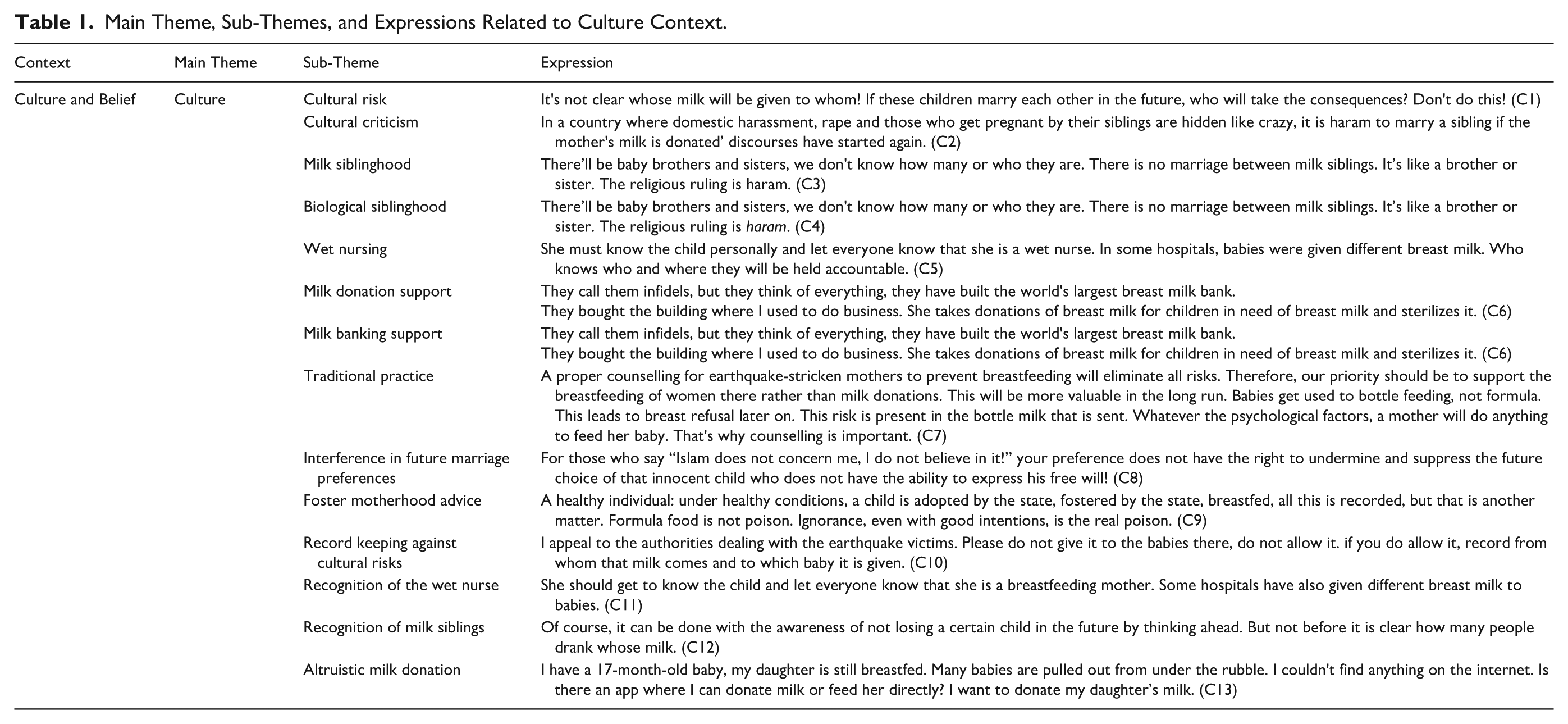
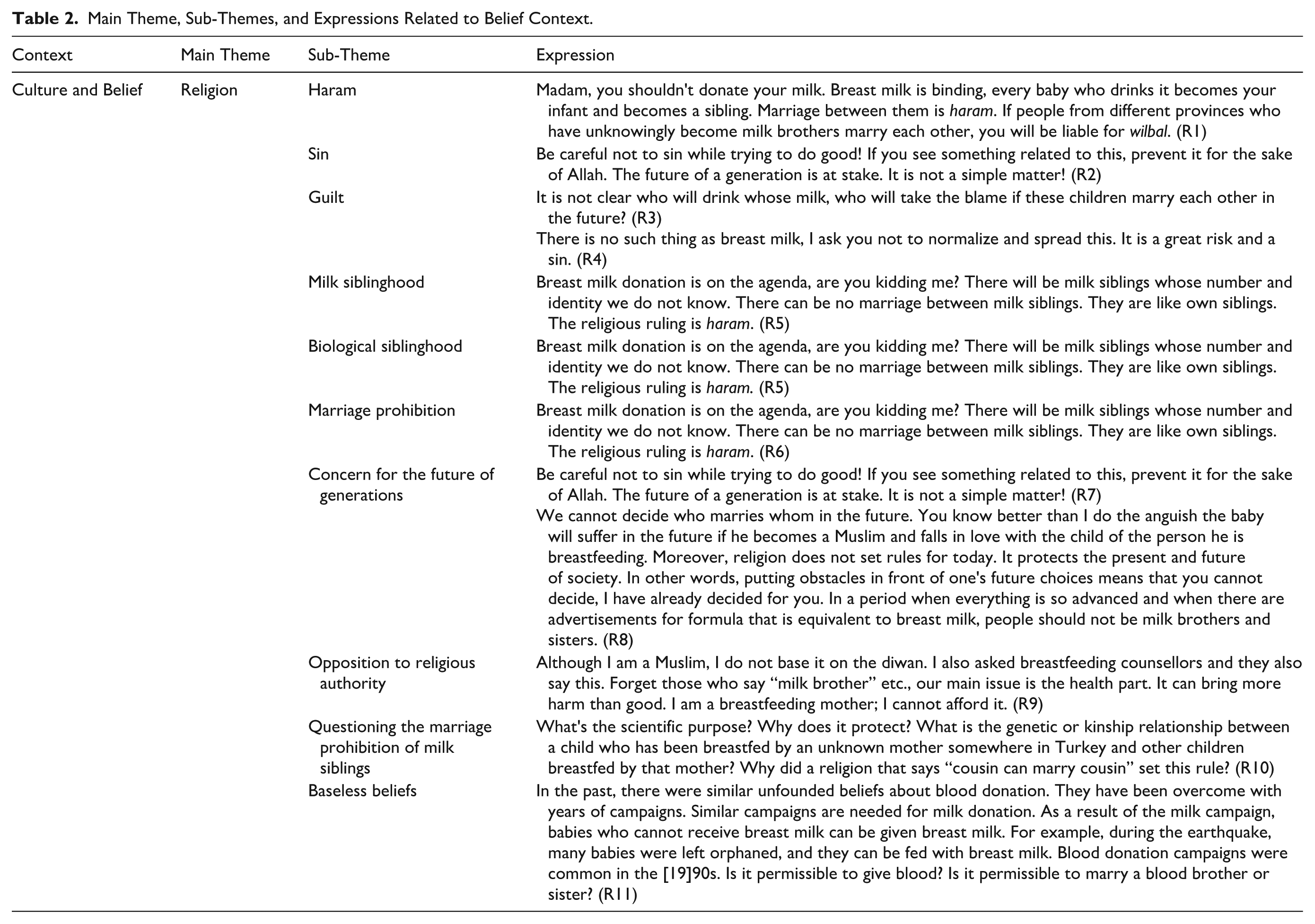
The data were analyzed using content and thematic analysis. The contexts, main themes, and sub-themes, presented in Tables 1 to 3, were identified. Representative expressions corresponding to these themes are also provided in the tables.
Main Theme, Sub-Themes, and Expressions Related to Culture Context.
Main Theme, Sub-Themes, and Expressions Related to Belief Context.
Main Themes, Sub-Themes, and Statements in the Context of Health.
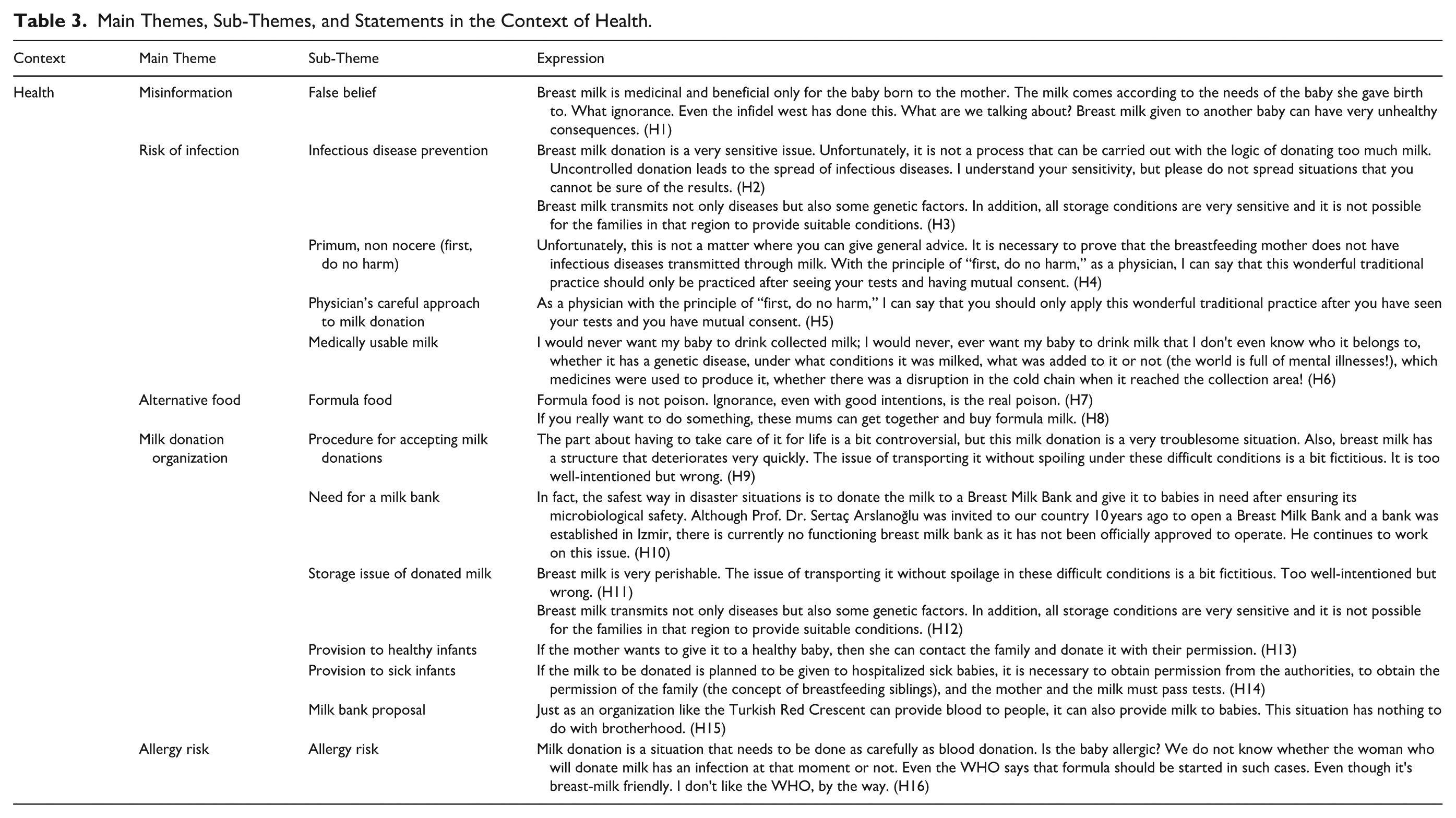
Table 1 presents sub-themes such as cultural risk, cultural criticism, and milk siblinghood under the main theme of “Culture,” within the broader context of “Culture and Belief.” For each sub-theme, the most compelling statement was selected and included in the table under the heading “Expression.” This table illustrates the cultural dimension of breast milk donation as reflected in the analysis of social media posts.
Table 2 presents sub-themes such as sin, guilt, and marriage prohibition under the main theme of “Religion,” within the broader context of “Culture and Belief.” For each sub-theme, the most compelling expression was selected and included in the table under the heading “Expression.” This table illustrates the relationship between religion and breast milk donation, as reflected in the analysis of social media posts.
Table 3 presents sub-themes such as formula feeding, infectious disease prevention, and “primum, non nocere” (“first, do no harm”) under the main themes of “Misinformation,” “Risk of Infection,” “Alternative Feeding,” “Milk Donation Organization,” and “Allergy Risk,” within the broader context of health. For each sub-theme, the most compelling expression was selected and included in the table under the heading “Expression.” This table illustrates the relationship between breast milk donation and health, as reflected in the analysis of social media posts.
When Tables 1 to 3 are evaluated collectively, it becomes evident that cultural, religious, and health-related perspectives on breast milk donation are interrelated and mutually influential. As a result of this interaction, the topic has emerged as a subject of public discourse on the social media platform. Figure 1 summarizes this interaction by illustrating the contextual framework, main themes, and sub-themes identified in the tables.
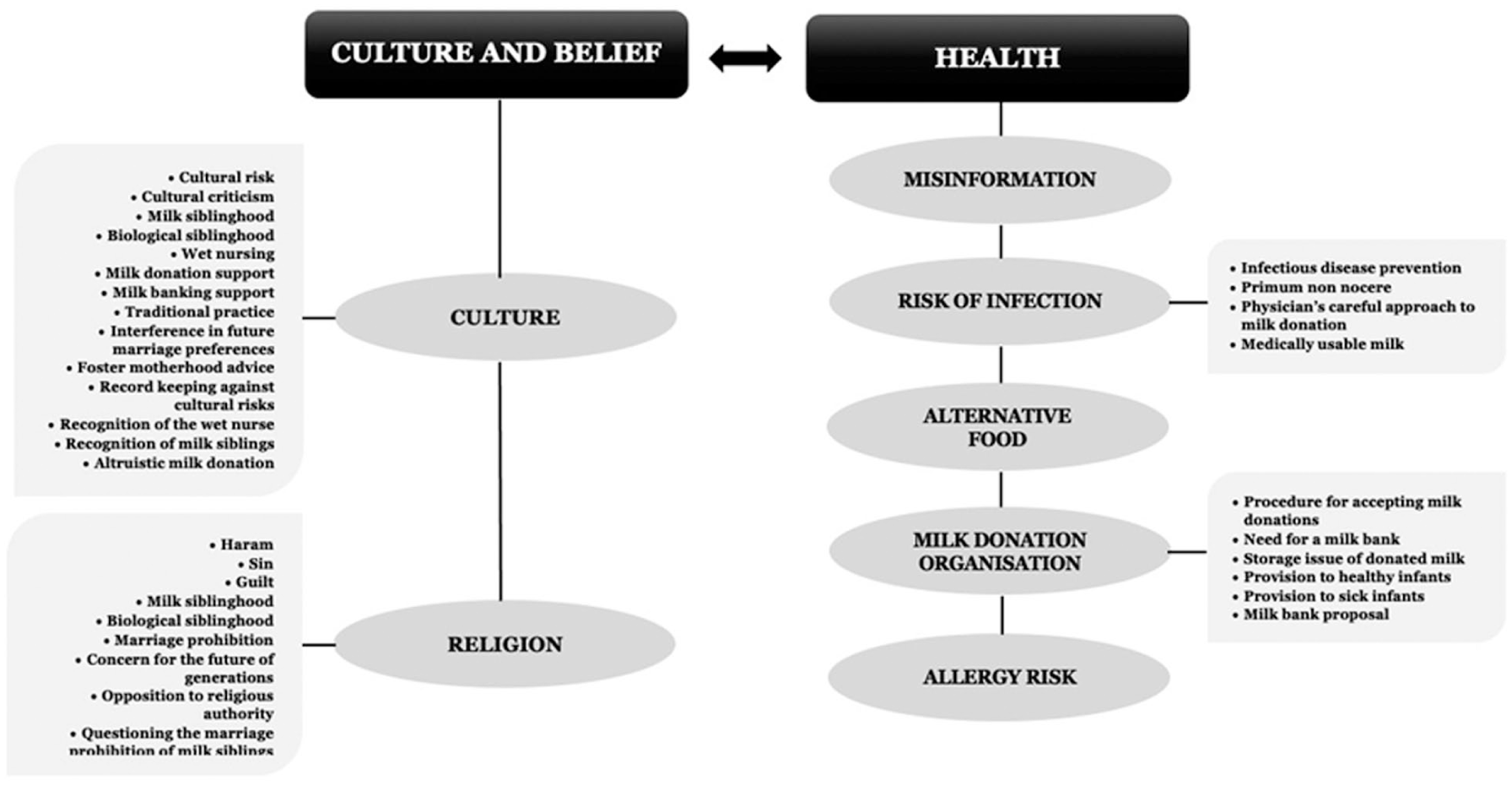
The interaction between context, main themes and sub-themes.
It was observed that perspectives on breast milk and its donation were shaped not only by health considerations but also by cultural and religious beliefs. The analysis revealed that the discussions primarily focused on themes such as culture, religion, misinformation, infection risk, alternative feeding, milk donation organizations, and allergy risk. It was found that cultural and religious themes were particularly influential in shaping public views on the issue.
Discussion
Bioethics is a multidisciplinary field that evaluates health-related issues not only through scientific principles but also within the context of cultural and religious values. Health-related decisions and practices are shaped by individuals’ cultural backgrounds and belief systems. Therefore, in addition to universal bioethical principles—such as autonomy, beneficence, non-maleficence, and justice—bioethics must also take into account cultural and religious sensitivities, as well as narrative approaches. In this way, ethical decision-making acquires a more inclusive character that respects both universal and local values (Mbugua, 2012; Roest et al., 2021; Spitale et al., 2025). In this study, we identified cultural, religious, and health-related issues within the bioethical framework of breast milk donation for infants in need during natural disasters, such as the 2023 earthquake in Turkey.
Awareness of the importance of breastfeeding dates back to ancient times, as evidenced by the 25,000-year-old Venus of Willendorf figurine, which is believed to symbolize fertility and breastfeeding (World History Encyclopedia, n.d.; Yüksel & Bal Yilmaz, 2021). Although evidence is limited, early humans are believed to have breastfed their infants during the first months after birth (Yüksel & Bal Yilmaz, 2021). In ancient times, breast milk was considered sacred and essential for infant survival. In civilizations such as Egypt, Babylon, Rome, and Greece, infants without access to maternal breastfeeding were fed by wet nurses or with stored milk. The Code of Hammurabi (c. 1800 BCE) includes regulations on wet nursing, reflecting its significance in society. In ancient Egypt, it was believed that breast milk was linked to immortality, and the Ebers Papyrus emphasizes breastfeeding up to 3 years of age, for health benefits. In medieval Western societies, breast milk was highly valued, and wet nurses frequently met this need, sometimes receiving special privileges. (Papastavrou et al., 2015; Yüksel & Bal Yilmaz, 2021). In Islam, breastfeeding is based on religious principles, and wet nurses are selected with great care. They are considered equivalent to biological mothers, and marriage to the biological children of the wet nurse is prohibited (Gilad & Moran, 2007; Papastavrou et al., 2015). Historically associated with wet nursing, milk donation was commonly practiced to meet the nutritional needs of infants and was supported across various cultures. Research indicates that it was particularly common among the Turks, during the Ottoman Empire, and in Renaissance Europe (Bayındır Gümüş & Yardımcı, 2021; Güneş, 2019; Sağlam Tekir, 2019; Şahin Utku, 2020). The long standing historical legacy of breastfeeding has embedded the value and symbolic significance of breast milk into social life, culture, and belief systems. This is reflected in the research findings presented in Tables 1 and 2, viewed through cultural and religious perspectives.
Table 1 highlights that both wet nursing and milk donation are perceived as cultural practices, and that milk kinship, emerging from milk donation, is culturally regarded as equivalent in significance to biological kinship. This cultural understanding likely contributes to the socially cautious attitude toward marriage between milk siblings. According to the analysis in Table 2, the theme of religion frequently emphasizes that marriage between milk siblings is regarded as sinful or religiously prohibited. However, it is also noteworthy that some posts challenge this belief, describing it as unfounded or even expressing views that question or reject religious authority. Based on the analysis of Tables 1 and 2, it can be concluded that, in the context of social media posts, cultural and religious perspectives on breast milk donation are closely aligned, often overlapping or indistinguishable from one another.
It is reported that approximately 2.7 million children die each year as a result of malnutrition. Optimal breastfeeding could save the lives of nearly 1 million children under the age of 5. Breast milk is regarded as a natural food source that can meet all the nutritional needs of infants under 6 months of age. Although the health, nutritional, developmental, and psychological benefits of breastfeeding are universally recognized, nutrition-related challenges are an inevitable consequence during periods of disaster (Hirani et al., 2021). Indeed, the same issue was observed during the earthquake disaster in Turkey on February 6, 2023.
Wet nursing or breast milk donation is considered one of the viable options for infant feeding during emergencies and disasters. Although it is debated from cultural, religious, and health perspectives—both positively and negatively—it is widely regarded as a practice that prioritizes infant welfare and ensures their safety. This approach is adopted because it addresses a critical societal need and offers a practical solution during emergency conditions. This preference is often attributed to the failure of organizations responsible for safeguarding infant health to operate effectively during disaster periods (Smith & Iellamo, 2020). The European Milk Bank Association (EMBA) organized a webinar approximately 3 months prior to the earthquake in Turkey. The webinar highlighted the importance of breast milk in emergencies and disasters, and proposed solutions to the associated challenges. Notably, this webinar represents a significant initiative likely to draw the attention of health authorities (Much et al., 2022). The study's findings also revealed that some citizens responded to the nutritional challenges faced by infants in the earthquake zone during the acute phase of the disaster by calling for breast milk donations, which in turn sparked discussions on social media. This response appears to have emerged due to the observed organizational and management challenges faced by health authorities in all areas—including infant nutrition—during the acute phase of the disaster.
Issues such as safeguarding infant health, providing emotional support, and ensuring adequate nutrition are all fundamentally linked to breastfeeding. Therefore, emergencies and disasters present significant challenges that hinder the effective management of these critical aspects (Feitosa & de Carvalho Torres, 2023). In such situations, infants and young children are at increased risk of morbidity and mortality due to malnutrition. This is because adverse environmental conditions, unsafe food sources, unmet household needs, misconceptions about breastfeeding, improper storage and distribution of donated breast milk, and psychological trauma all contribute to compromised nutrition during disaster periods. Breastfeeding is widely recognized as the most reliable form of infant nutrition. It should be supported and encouraged under all circumstances, as it significantly reduces the risk of infectious diseases and mortality, particularly among infants in emergency settings. When breastfeeding is disrupted, relactation, wet nursing, or breast milk donation should be considered as alternative strategies. If these alternatives are not feasible, the use of infant formula is recommended. For infants over 6 months of age, the introduction of appropriate complementary feeding is advised (Bilgin & Karabayır, 2024). In its policy statement, the AAP emphasized the importance of breastfeeding during emergencies and disasters, placing strong emphasis on ensuring access to safe and healthy breast milk. Additionally, in the algorithm proposed for scenarios in which the mother and infant are either together or separated, donor milk is strongly recommended as a viable option for infant feeding (AAP, 2020).
Wet nursing has historically functioned as a social phenomenon across many cultures. While its purposes have varied across cultures, its primary role has consistently been to preserve and safeguard the health of infants unable to breastfeed from their biological mothers. Today, donor milk banking, which exists in many countries worldwide, is regarded as a modern evolution of the wet nursing tradition, reflecting a contemporary form of social solidarity (Marinelli, 2020). The establishment of milk banks in Islamic countries, where donated breast milk is provided to infants in need, remains a controversial issue due to religious and cultural considerations. A 2024 study by Hikmawati and Pramono on donor milk practices in Indonesia concluded that both donor and recipient mothers encountered negative experiences, largely due to the absence of formal regulations and the lack of an established milk bank. The study further emphasized that to prevent the recurrence of such negative experiences, collaboration between Islamic authorities and healthcare professionals is essential to address and resolve the existing challenges (Pramono & Hikmawati, 2024). According to the study findings, some participants advocated for documenting milk sharing to prevent potential cultural issues and supported the creation of a structured sharing program. Under the theme of milk donation organization, breast milk banking was supported through sub-themes such as “procedures for accepting donations,” “the need for milk banks,” and “proposals for establishing milk banks.” However, critiques also emerged under sub-themes including “challenges in preserving donated milk,” “access for healthy infants,” and “access for sick infants.” These criticisms underscore the practical challenges and operational limitations faced in the daily functioning of milk donation systems. This highlights the need for practical solutions, particularly concerning the storage of donated milk and the criteria for its distribution to both healthy and sick infants.
Although there is generally no negative attitude toward breast milk donation from a health perspective, as seen in Table 3 the posts emphasize several medical considerations related to the donation process and the safe delivery of milk to infants in need. Some posts also highlight the importance of managing this process through a formal system or organized structure.
Most of the world’s major religions and belief systems do not object to breast milk donation. Accordingly, Christianity, Buddhism, and Hinduism encourage breast milk sharing, and it has been suggested that even among Jehovah’s Witnesses—who prohibit human to human blood transfusions—there are no strict prohibitions on sharing breast milk. According to Islamic belief, milk sharing is regarded as a morally commendable act, breastfeeding is strongly encouraged, and numerous verses in the Qur’an emphasize its importance. In Islam, breastfeeding another woman’s child is considered a virtuous deed, although the commercial sale or inappropriate use of breast milk is discouraged. While breast milk donation is seen as virtuous in Islam, it is also noted that if a donor mother breastfeeds a child under the age of 2 on five or more occasions, that child is considered a milk sibling to her biological children, and future marriage between them is prohibited (Bayındır Gümüş & Yardımcı, 2021). The findings of this study indicate that attitudes toward breast milk and milk donation are significantly shaped by health, cultural norms, and religious beliefs. The research identified several key concepts under the religious theme related to milk donation, including: biological siblinghood, marriage prohibition, opposition to religious authority, guilt, sin, haram (forbidden), and milk siblinghood. These concepts are generally framed in ways that discourage or prohibit milk donation, although within the sub-theme of “baseless beliefs and the marriage prohibition of milk siblings,” such views are subject to criticism (Tables 1–3).
Within the context of culture and belief, the concept of milk siblinghood has been recognized as a subject of controversy. There appears to be no clear consensus on how milk siblinghood is established, whether it results from drinking expressed milk, directly suckling, or is influenced by genetic considerations. In 1997, the European Fatwa and Research Council was established in Ireland in response to the growing needs and concerns of Muslims living in Western countries. In 2004, the Council ruled that donor milk provided to preterm infants in neonatal intensive care units, when the mother’s milk is unavailable, does not establish a familial or milk kinship bond (Bayındır Gümüş & Yardımcı, 2021).
The composition of breast milk can vary between individuals. Additionally, variations in nutrient concentration can occur within the same individual between the beginning and end of a single breastfeeding session. The process involves selecting healthy donors, collecting and labeling the milk, screening for infectious diseases, pasteurizing the milk, storing it at appropriate temperatures, transporting it safely, and ensuring its delivery to infants in need. Each of these steps must be performed with meticulous care to guarantee the safety and quality of the donated milk (Unger & O’Connor, 2024). In this context, practices aimed at ensuring infant health have been standardized, and formal guidelines have been developed. One of the prominent themes identified in the research findings was the risk of infection. Under the theme of infection risk, the following sub-themes emerged: protection from infectious diseases, the principle of “primum, non nocere,” physicians’ cautious approach to milk donation, and the concept of medically safe breast milk. Infection risk remains a critical concern in the context of breast milk donation. Therefore, it is essential to assess and monitor the milk processing and distribution procedures within milk banks. Moreover, questions regarding whether pasteurization alters cultural perceptions, and whether this should be communicated to the public, require further exploration. As a potential solution to religious and cultural concerns, the practice of matching milk donors and recipients based on the infant’s gender (e.g., male infants receiving milk from mothers with male children, and female infants from mothers with female children) could be explored as a culturally sensitive approach warranting further study.
The study also underscored the potential allergy risks associated with donor breast milk from a medical standpoint. Additionally, within cultural and religious contexts, discussions have emerged around whether marriages between milk siblings or cousins pose greater risks from cultural, religious, or genetic perspectives. This issue has been critically examined by taking into account both the cultural and health-related dimensions of milk sharing and donation, particularly in societies where familial ties and genetic factors carry considerable weight.
One of the strengths of this study is its ability to capture the perspectives of individuals—who were otherwise difficult to reach for face-to-face interviews due to timing and contextual constraints—through their social media posts, and to analyze these views using qualitative methods within the highly specific context of breast milk donation during disasters.
Therefore, future research should incorporate attitudinal studies with clearly defined samples—such as women, healthcare professionals, or policymakers—to explore perspectives on breast milk donation to infants in need during disaster situations. Findings from such studies, grounded in well-defined sampling criteria, could inform policy interventions designed to address infant nutritional needs through breast milk donation in disaster settings.
Limitations
The limited number of relevant posts on the platform X substantially constrained the scope and depth of the available data. Due to the narrow sample group and the inherent nature of qualitative research, the findings of this study are not generalizable; thus, these factors are considered limitations of the research. Additionally, the inability to determine the cultural and religious backgrounds of individuals whose social media posts were analyzed represents another limitation of the study.
Conclusion
Within the scope of the study, it was observed that cultural norms significantly influenced attitudes toward breast milk and breastfeeding. From a bioethical standpoint, breast milk donation during natural disasters, such as earthquakes, or other emergencies should be addressed through rational discourse grounded in societal needs. The responsibilities involved in the collection, storage, and use of breast milk are critical from a public health perspective. The refusal of breast milk donation for religious reasons, particularly within cultural and religious contexts, reflects underlying value conflicts from an ethical perspective. These tensions should be addressed thoughtfully to balance public health benefits with respect for cultural and religious beliefs.
Within the health context, addressing the theme of misinformation, it is important to reaffirm that breast milk remains the most optimal source of nutrition for infants. Regarding the theme of infection risk, screening donor mothers and their milk for infectious agents, followed by proper pasteurization, is effective in minimizing infection risks. Under the theme of alternative feeding, when breast milk is unavailable, safe and nutritionally adequate alternatives must be provided. Therefore, pasteurized donor milk should be prioritized; in its absence, formula may be used, although the superior nutritional value of pasteurized breast milk over formula should be emphasized. Concerning allergy risk, it is essential that breast milk, particularly donor milk, be administered under medical supervision to safeguard infants from potential allergic reactions.
The conclusion drawn under the theme of Milk Donation Organization is the necessity of establishing structured systems to coordinate the collection, storage, and distribution of breast milk. In this context, the reintroduction of breast milk banks in Turkey may be reconsidered, prioritizing the nutritional needs of infants while also respecting prevailing social and cultural values.
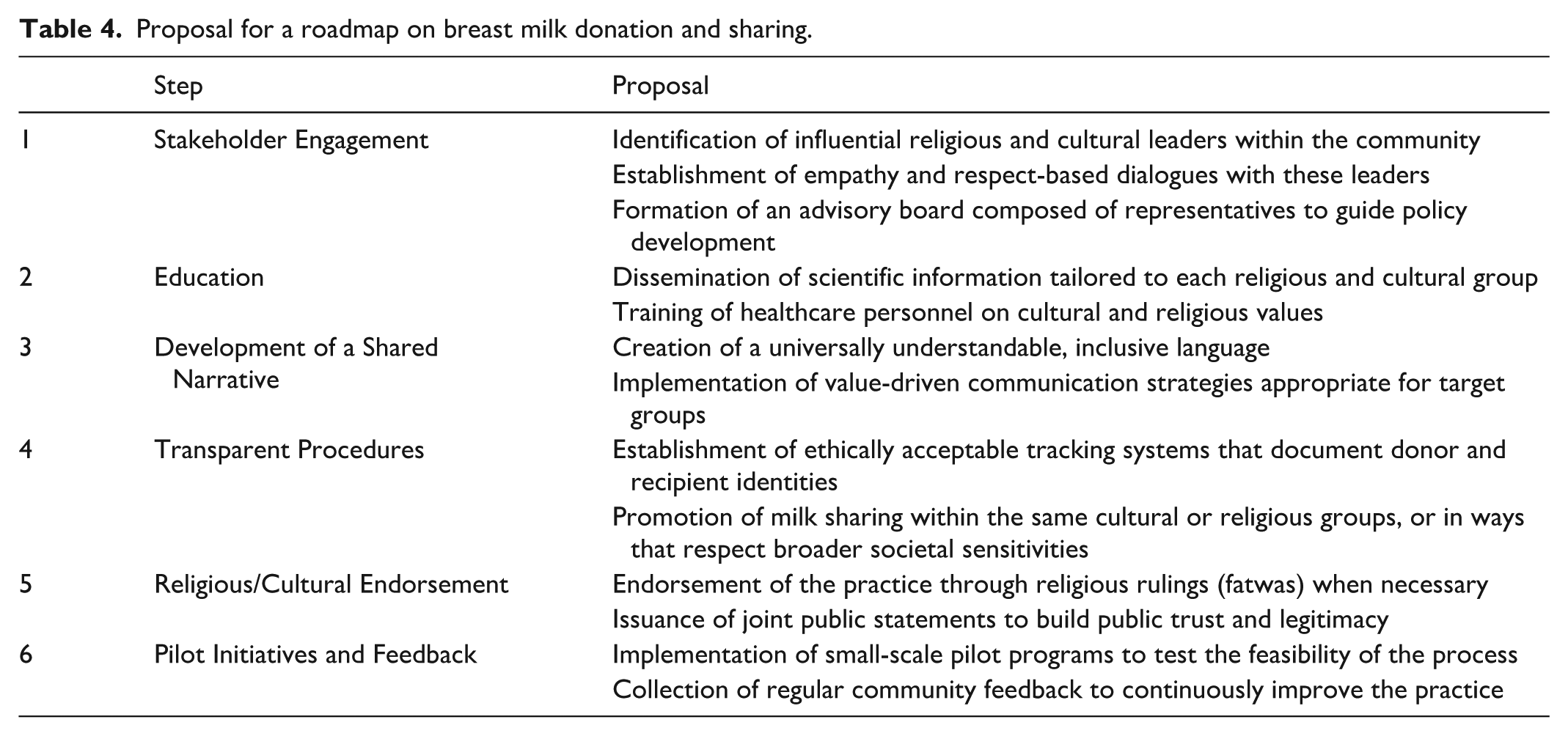
Finally, the study’s findings underscore the vital importance of collaboration between health authorities and religious and cultural leaders to ensure that breast milk donation is perceived as ethically and culturally acceptable during emergencies, such as the February 6, 2023 earthquake in Turkey. Such collaboration should aim to harmonize healthcare practices with religious beliefs and cultural values to enhance public health outcomes. The success of these efforts relies on transparency, mutual respect, and ongoing dialogue. Based on the study’s findings, developing a roadmap to address potential religious and cultural barriers to breast milk donation and sharing during disasters and other challenging circumstances would be beneficial, with the overarching goal of protecting infant health (see Table 4).
Proposal for a roadmap on breast milk donation and sharing.
Footnotes
Authors’ Note
This study was orally presented titled “Bioethical Analysis of Social Media Posts on Breast Milk Donation Following the February 6, 2023 Earthquake in Turkey: A Qualitative Study,” September 11–13, 2023, at the 10th Bioethics Congress organized by the Turkish Bioethics Association, Samsun/TURKEY.

Ethical Considerations
The research data were obtained from a social media platform open to public access. Therefore, ethics committee approval was not required.
Author Contributions
Funding
The authors received no financial support for the research, authorship, and/or publication of this article.
Declaration of Conflicting Interests
The authors declared no potential conflicts of interest with respect to the research, authorship, and/or publication of this article.