







Abstract
Background:
Breastfeeding is universally recognised as the best nutrition for infants, yet women’s public breastfeeding experiences are shaped by cultural norms, privacy concerns, and social judgments, and no valid scale currently exists to measure these behaviours.
Research Aim:
The aim of this study is to develop a valid and reliable instrument to measure mothers’ behaviours towards breastfeeding in public.
Methods:
This methodological study included 390 mothers with breastfeeding experience. The final version of the scale subjected to analysis consisted of 17 items. The scale’s construct validity was evaluated using Exploratory Factor Analysis, item validity was assessed by comparing the mean scores of the upper and lower 27% groups, and model fit was tested through Confirmatory Factor Analysis. The reliability of the scale was analysed using Cronbach’s alpha reliability coefficient, item–total correlation, and split-half reliability.
Results:
The scale demonstrated a four-factor structure, with good model fit indices (RMSEA = 0.064; GFI = 0.91; CFI = 0.94) and a Cronbach’s alpha coefficient of 0.89.
Conclusion:
The study demonstrated that the Breastfeeding Behaviour in Public Scale is a valid and reliable instrument for evaluating mothers’ behaviours towards breastfeeding in public.
Key Messages
Mothers’ experiences, confidence, and concerns related to breastfeeding in public play a critical role in breastfeeding continuation. Avoiding breastfeeding in public may lead to shorter breastfeeding duration; however, there has been no valid and reliable tool to systematically assess these behaviours and experiences.
This study developed and validated the Breastfeeding Behaviour in Public Scale, which demonstrated strong psychometric properties with four subdimensions and 17 items.
The findings revealed that mothers’ public breastfeeding behaviours are influenced by anxiety, visibility concerns, and social pressures.
This study provides a reliable instrument that offers a foundational framework for assessing cultural and social barriers to public breastfeeding. While developed within a specific cultural context, it serves as a basis for future international validation studies aimed at normalizing breastfeeding and supporting maternal and child health.
Background
Breast milk is the healthiest food for infants, and breastfeeding is the primary means of providing it. Breastfeeding mothers, particularly during the first 6 months of exclusive breastfeeding, typically feed their babies every 2–3 hours. The short intervals between feedings require mothers to breastfeed during many daily activities, which often requires them to breastfeed in public places such as buses, parks, or restaurants (Morris et al., 2016). However, depending on the cultural rules and social perspectives surrounding them, mothers may hesitate to breastfeed in public (Amir, 2014). A public space that is supportive and accepting of breastfeeding in one part of the world may present obstacles in another (Dowling et al., 2012).
Although it is universally acknowledged that breast milk is the best nutrition for infants, women’s breastfeeding experiences in public are shaped by social norms, perceptions of privacy, and societal judgments (Buldum et al., 2025; Dündar et al., 2023; Grant et al., 2022; Kaya et al., 2019; Morris et al., 2016; Timurturkan, 2020). In Türkiye, breastfeeding behaviour is encouraged by healthcare institutions and professionals. However, breastfeeding in public is restricted by cultural norms regarding the perception of privacy and social expectations, as well as reasons such as the traditional family structure. Previous studies conducted in Türkiye show that mothers frequently adopt strategies such as seeking secluded areas, postponing breastfeeding, or avoiding breastfeeding in public areas due to the fear of social judgment (Aksu et al., 2025; Dündar et al., 2023; Satılmış et al., 2022). In fact, women in many countries, not only in Türkiye, avoid breastfeeding in public for similar reasons. In a study conducted in Australia, women stated that breastfeeding in public was their right; however, they practised it only in places they considered “appropriate.” Participants reported preferring quiet and safe locations to avoid disturbing others and to prevent being judged, and many noted that they usually covered their breasts while breastfeeding (Sheehan et al., 2019). Studies conducted in different countries reveal that women adopt similar public breastfeeding strategies. The most common strategies include moving to private areas, making efforts to ensure privacy during breastfeeding, delaying breastfeeding, or covering the breast (Buturović et al., 2017; Coomson & Aryeetey, 2018; Grant et al., 2022; Hauck et al., 2021). These findings highlight that similar social pressures and privacy concerns shape women’s public breastfeeding experiences across different cultures, yet the strategies adopted and the level of societal acceptance vary across countries. Cultural pressures and social judgments may lead mothers to avoid breastfeeding in public, introduce supplementary feeding earlier than recommended, or shorten breastfeeding duration (Nyaloko et al., 2020).
Therefore, promoting and supporting breastfeeding in public is crucial to ensure the continuation of breastfeeding and to increase breastfeeding rates (Amir, 2014). However, the cultural acceptability of public breastfeeding should also be considered. For this reason, in order to increase social acceptability and support, and to normalise breastfeeding in public, it is necessary to identify cultural barriers and develop context-specific solutions (Nyaloko et al., 2020).
Breastfeeding in public is a complex phenomenon influenced not only by observable behaviours but also by underlying attitudes, perceptions, and sociocultural pressures. While this study focuses on behavioural aspects, these behaviours are understood within a broader psychosocial context. Individuals' positive or negative evaluations of social behaviours constitute a significant personal component in the formation of behavioural intentions (Şahin et al., 2016). In this context, attitudes towards breastfeeding in public are shaped by beliefs regarding the expected outcomes of this behaviour, and play an explanatory role in understanding intentions to breastfeed in public. The degree to which mothers perceive breastfeeding in public as a desirable or socially supported behaviour, when considered alongside the social pressures they face, may influence their tendency to engage in this behaviour. Although studies on breastfeeding in public have been present in the literature for many years, they have predominantly employed quantitative approaches (Buturović et al., 2017; Coomson & Aryeetey, 2018; Dündar et al., 2023; Foss & Blake, 2018; Nyaloko et al., 2020; Zhao et al., 2017). Thus, data on women’s behaviours regarding breastfeeding in public remain limited. In this study, these behaviours are defined as social and cultural pressures, perceived social norms, expectations regarding privacy, expected reactions from others, and the acceptability of the visibility of breastfeeding in public areas. Therefore, behaviours such as seeking private areas or covering the breast while breastfeeding can be interpreted not merely as individual preferences, but as potential behavioural responses to social expectations internalised within a specific cultural context. Measuring breastfeeding behaviours through a valid scale could provide valuable guidance for future interventions. However, no scale has yet been developed, either nationally or internationally, to assess breastfeeding behaviours in public. The consistent findings across different countries suggest that this newly developed scale can be adapted into other languages by considering cultural variations, thereby contributing to the promotion of breastfeeding by enhancing its visibility in society. Moreover, it could serve as a valuable tool for health professionals—particularly nurses and midwives—in planning education and counselling services regarding breastfeeding.
Methods
Aim
The aim of this study was to develop a valid and reliable instrument to measure mothers’ behaviours towards breastfeeding in public.
Research Design
The research was conducted using a methodological scale development and validation design. The study population consisted of mothers who applied to a public hospital. The sample size was determined according to the principle that “the sample size in scale validity and reliability studies should be at least ten times the number of items in the scale” (DeVellis, 2017, 136). Since the initial item pool contained 39 items, a sample of 390 mothers was planned. The study was conducted with 390 mothers between September 1, 2024 and May 15, 2025. The inclusion criteria for the study were: (a) being aged 18 years or older, (b) having at least one previous or current breastfeeding experience, (c) being a Turkish citizen with Turkish as a native language to ensure linguistic and cultural homogeneity during the scale development process, and (d) volunteering to participate in the study. The scale is designed to cover both the performance and avoidance of breastfeeding behaviours in public areas, including decisions to refrain from breastfeeding due to discomfort or social pressure. Therefore, prior experience of breastfeeding in public was not required as an inclusion criterion. Mothers of foreign nationality were excluded to prevent potential semantic misunderstandings and to maintain the cultural integrity of the initial item pool.
Scale Development Stages
The standard procedures for scale development were followed (Acar Güvendir & Özer Özkan, 2022; Carpenter, 2018; DeVellis, 2017). First, an item pool was generated through an extensive literature review. The initial item pool consisted of 39 items derived from a comprehensive review of qualitative and quantitative studies examining breastfeeding in public. These items included themes such as discomfort, privacy, social judgment, visibility, and avoidance behaviours. The items were formulated to reflect common behaviours and social strategies defined in the literature. Thus, a comprehensive coverage of the concept of breastfeeding behaviour in public was ensured. (Amir, 2014; Bürger et al., 2022; Cook, 2016; Dündar et al., 2023; Ghaisani & Susilastuti, 2016; Grant, 2016; Grant et al., 2022; Haas et al., 2022; Morris et al., 2020; Nyaloko et al., 2020; Russell & Ali, 2017; Zhao et al., 2017).
To evaluate clarity, comprehensibility, and strength, the opinions of seven experts (three academic nurses, two academic midwives, and two breastfeeding consultants) were sought. Each item was rated on a 4-point Likert scale from 0 (not appropriate at all) to 4 (highly appropriate). Expert opinions were analysed using the Davis technique, and the Content Validity Index (CVI) was calculated for each item (Davis, 1992). After calculating the CVIs for all items, their values were summed and divided by the number of items to obtain the CVI of the overall item form. The CVI of the form was found to be 0.86. This value was deemed appropriate since a CVI above 0.80 indicates sufficient content validity (Polit & Beck, 2006). Some textual revisions were made based on expert recommendations, and the scale was finalised.
Procedure
The research data were collected using a questionnaire consisting of seven items regarding the participants’ demographic characteristics (such as age, number of children, and breastfeeding experience) and the Breastfeeding Behaviour in Public Scale (BBPS). The scale was structured as a 5-point Likert-type scale, ranging from strongly disagree (1) to strongly agree (5).
The researchers explained the aim and content of the study to mothers who had applied to the hospital for any reason. Data were collected from mothers who voluntarily agreed to participate in the study through self-report.
Ethical Considerations
For the conduct of the study, written approval was obtained from the Non-Interventional Clinical Research Ethics Committee of Aydın Adnan Menderes University Faculty of Nursing and from Aydın Women’s and Children’s Hospital. All stages of the research were conducted in accordance with the Declaration of Helsinki.
Data Analysis
The study data were analysed using SPSS (Version 25.0) and AMOS software. Descriptive statistics were presented as percentages, means, and standard deviations.
Construct validity of the scale was evaluated with Exploratory Factor Analysis (EFA), item validity was examined by comparing the mean scores of the upper and lower 27% groups, and model fit was tested through Confirmatory Factor Analysis (CFA). In EFA, the factor loadings of items were examined to determine under which factors they clustered. Varimax orthogonal rotation was applied to identify whether the items loaded onto separate factors. The suitability of the data for factor analysis was assessed using the Kaiser-Meyer-Olkin (KMO) test and Bartlett’s Test of Sphericity (BTS). A KMO value between 0.5 and 1.0 and a significant Bartlett test result (p < 0.05) were considered as indicators that the sample was suitable for factor analysis. Item loadings of ≥ 0.30 were accepted as adequate.(Büyüköztürk, 2020) The cut-off points for model fit indices were set as χ²/df ≤ 5; RMSEA ≤ 0.080; GFI ≥ 0.90; CFI ≥ 0.90; and NFI ≥ 0.90 (Evci & Aylar, 2017).
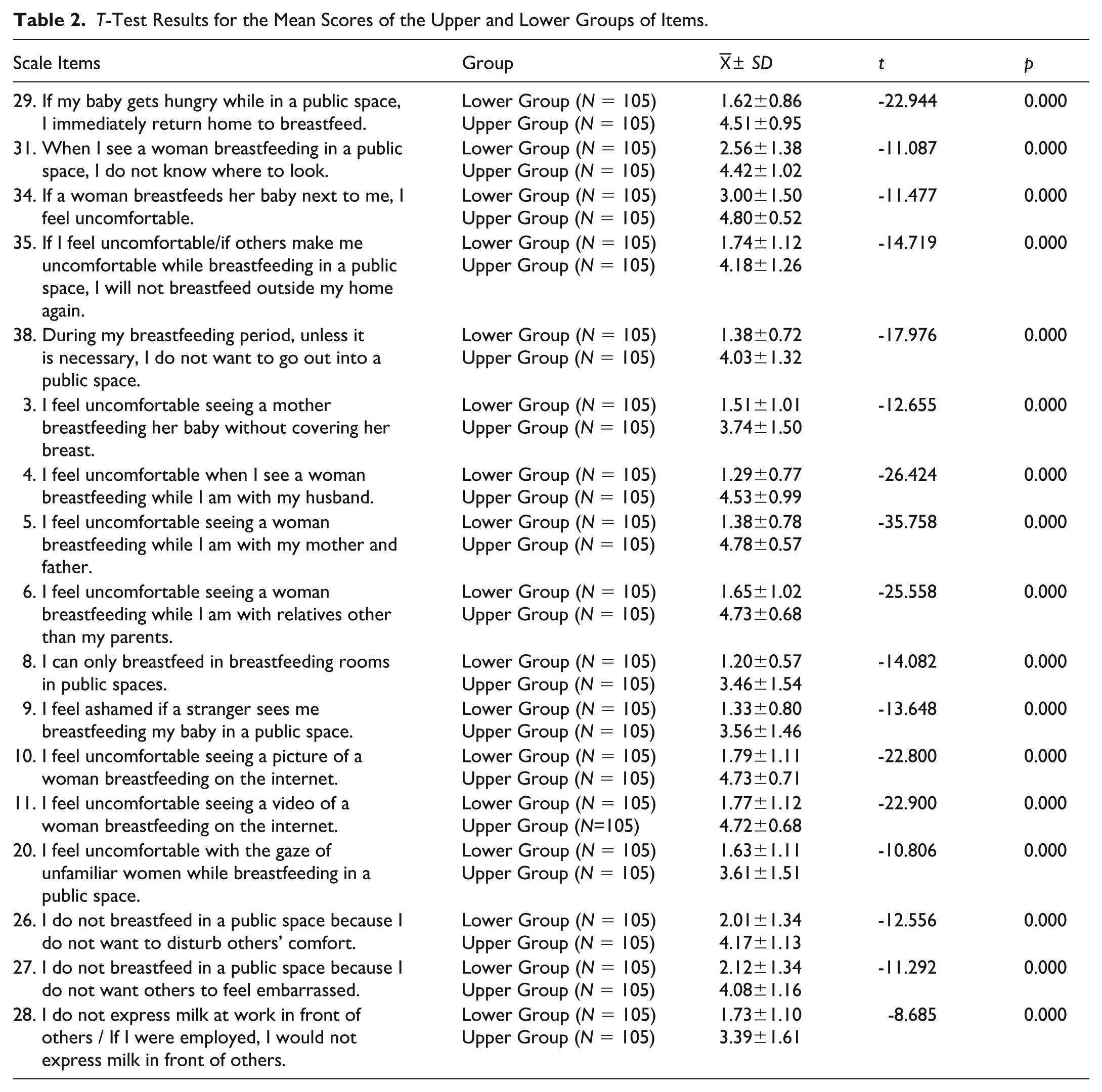
The discriminatory power of the scale’s subdimensions and individual items was assessed through independent sample t-tests based on the mean differences between the upper and lower 27% groups.
Reliability was evaluated through Cronbach’s alpha coefficient, item–total correlations, and split-half reliability. Correlation coefficients of 0.10–0.29 were interpreted as low, 0.30–0.49 as moderate, and ≥ 0.50 as high levels of reliability (Cohen, 1988). A significance level of p < 0.05 was adopted for all statistical analyses.
Results
Sociodemographic Characteristics of Participants
The mean age of the participants was 30.27 ± 7.54 years. Of these, 63.6% had a primary or secondary school education. Nearly three-quarters (72.6%) were housewives, and 48.5% reported receiving information about breastfeeding. Most mothers had two children (37.9%) or one child (36.7%). Overall, 78.5% of participants reported that they had previously seen a woman breastfeeding in public.
Findings of Exploratory Factor Analysis
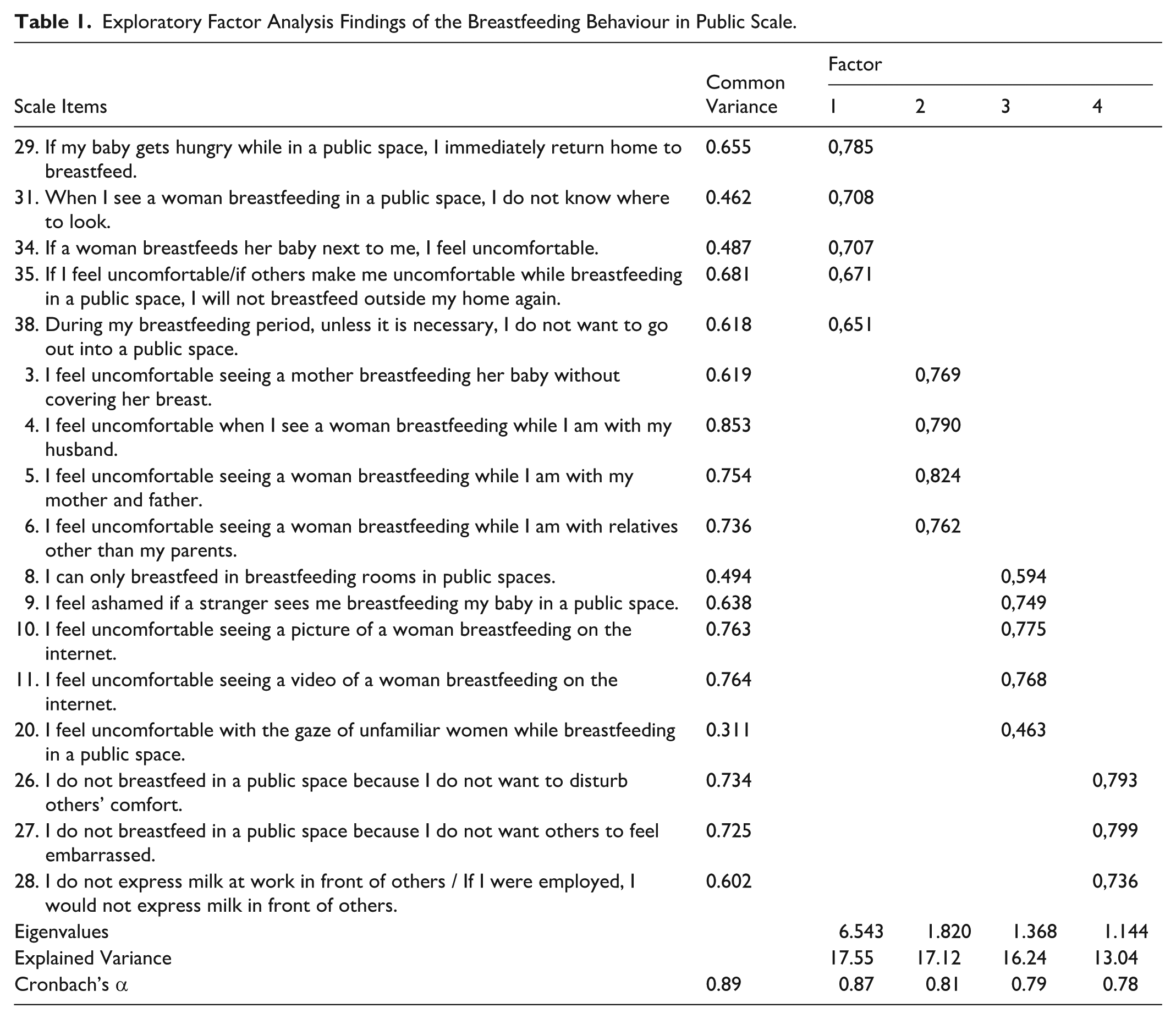
Analysis of the initial 39-item form showed a general Cronbach’s alpha of 0.75. Examination of factor loadings revealed that 22 items had loadings below 0.30. These items (Numbers 1, 2, 7, 12, 13, 14, 15, 16, 17, 18, 19, 21, 22, 23, 24, 25, 30, 32, 33, 36, 37, and 39) were removed, and the analysis was repeated with the remaining 17 items, yielding a Cronbach’s alpha of 0.89.
KMO sampling adequacy was found to be 0.867, while Bartlett’s Test of Sphericity produced χ² = 3395.107; p = 0.000. These results confirmed that the dataset was appropriate for factor analysis and had a meaningful correlation matrix.
Assessment of eigenvalues (Table 1) demonstrated a four-factor structure with eigenvalues greater than 1.00. EFA results indicated that the 17-item scale explained 63.95% of the total variance. The five items loading onto the first factor ranged from 0.651 to 0.785. For the four items under the second factor, loadings ranged between 0.762 and 0.824. The eigenvalues of the factors ranged between 6.543 and 1.144, accounting for 17.55%, 17.12%, 16.24%, and 13.04% of variance, respectively. The Cronbach’s alpha value for the entire scale was 0.89, while the subscales ranged between 0.78 and 0.87 (Table 1). Since all item loadings were within acceptable thresholds and no cross-loading items were found, the factor structure was deemed appropriate.
Exploratory Factor Analysis Findings of the Breastfeeding Behaviour in Public Scale.
The upper and lower 27% groups were compared to assess item discrimination following EFA. A total of 105 participants formed each group. Independent sample t-tests revealed statistically significant differences (p < 0.05) for all items, indicating that the scale effectively differentiated between mothers with high and low levels of public breastfeeding behaviour (Table 2).
T-Test Results for the Mean Scores of the Upper and Lower Groups of Items.
Findings of Confirmatory Factor Analysis
CFA was conducted using AMOS to confirm the factor structure identified through EFA. The analysis revealed that the structural model of the BBPS was significant (p < 0.05), with items and subdimensions appropriately associated with the overall scale. As shown in Table 3, modifications were performed sequentially for variables that weakened model fit. The residual covariance with the highest value was modified, and the final model is presented in Figure 1. Since all factor loadings were greater than 0.30, each item was found to serve the intended construct. After modification, notable improvements were observed in fit indices.
Structural Model Fit Indices of the Breastfeeding Behaviour in Public Scale.
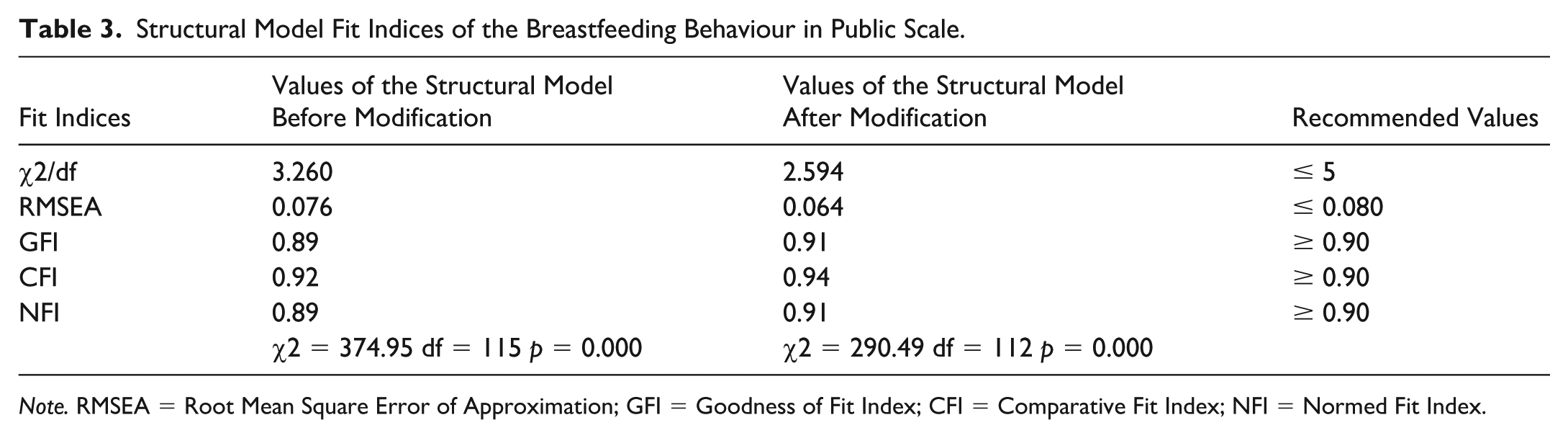
Note. RMSEA = Root Mean Square Error of Approximation; GFI = Goodness of Fit Index; CFI = Comparative Fit Index; NFI = Normed Fit Index.
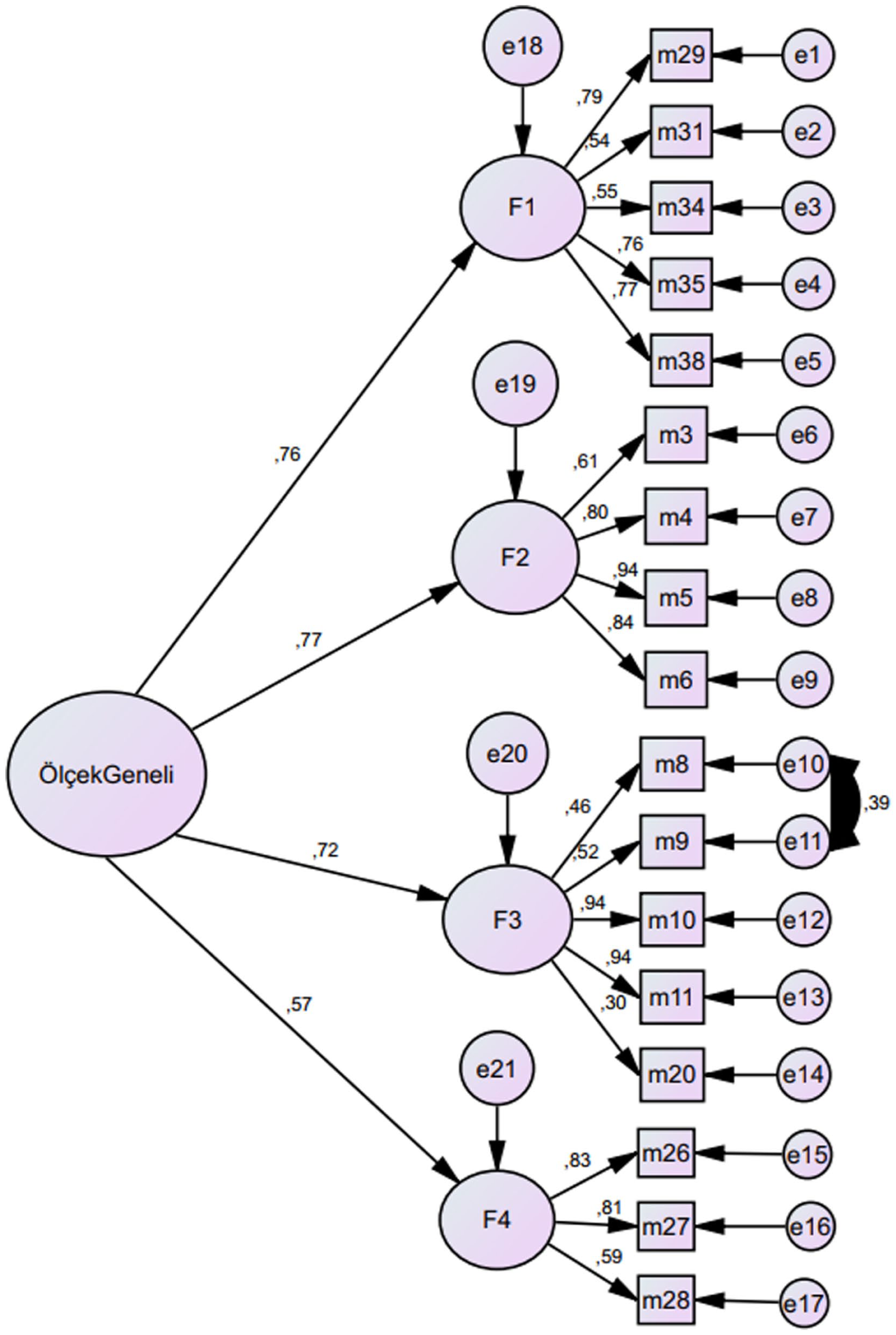
Path diagram of the breastfeeding behaviour in public scale (confirmatory factor analysis).
Reliability Analysis Findings
The Cronbach’s alpha for the scale was 0.89. Subscale alphas were as follows: “discomfort with witnessing breastfeeding in public” (0.87), “anxiety about breastfeeding in public” (0.81), “visibility concerns during public breastfeeding” (0.79), and “avoidance of breastfeeding shaped by social reactions” (0.78) (Table 1). Item–total correlations ranged between 0.399 and 0.706 (Table 4).
Reliability Findings of the Breastfeeding Behaviour in Public Scale.
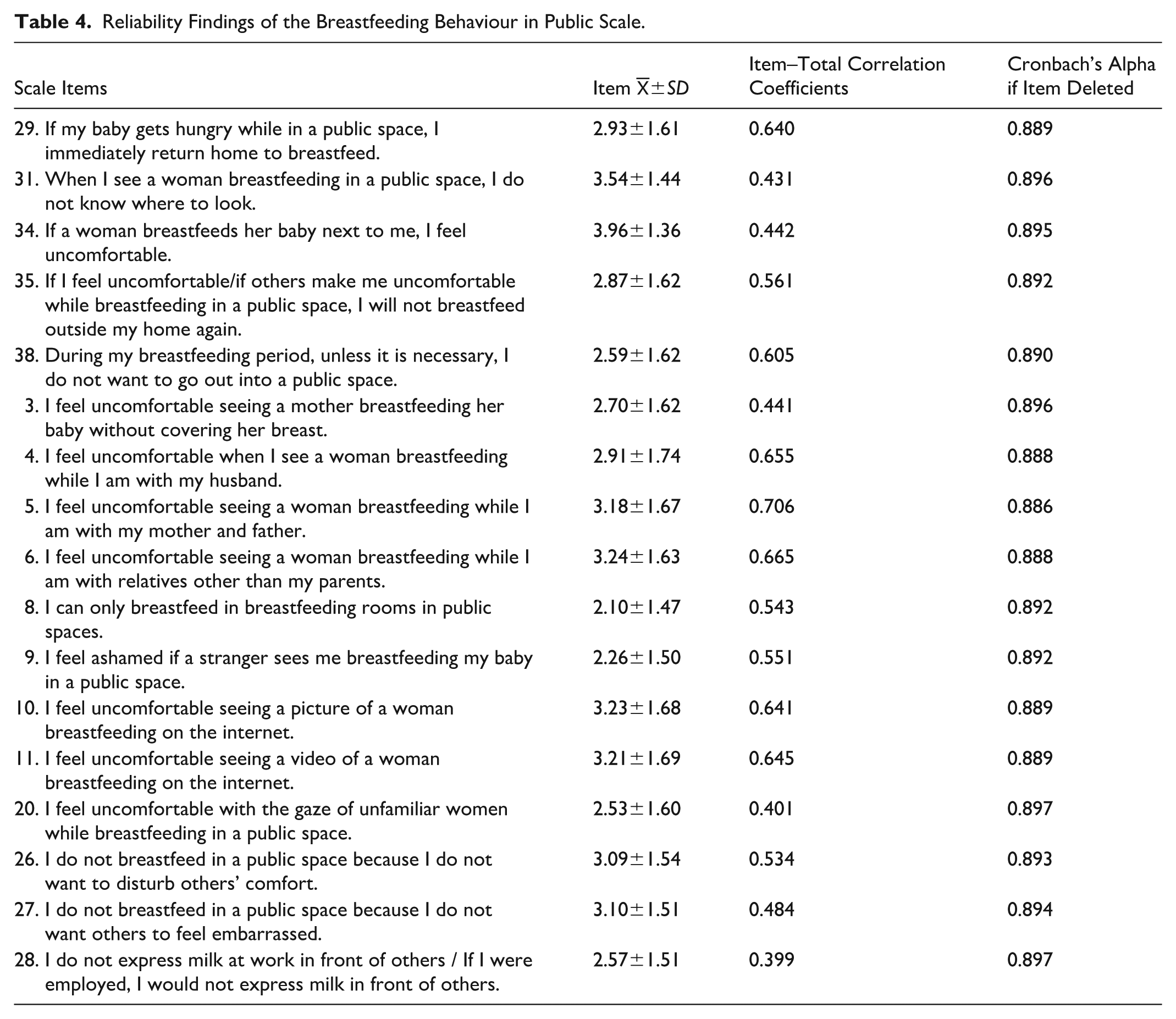
Split-half reliability analysis showed a correlation of 0.573 between the two halves. The Spearman-Brown coefficient was 0.728–0.729, and the Guttman Split-Half coefficient was 0.717. These results indicated a high degree of internal consistency between the two halves, supporting the reliability of the scale.
Discussion
This methodological study involving 390 mothers with breastfeeding experience demonstrated that the Breastfeeding Behaviour in Public Scale (BBPS) is a valid and reliable measurement tool. Importantly, this is the first scale in the international literature developed specifically to evaluate breastfeeding behaviour in public, contributing significantly to the field.
The BBPS consists of 17 items under four subdimensions. The first subdimension, anxiety about breastfeeding in public, encompasses items reflecting discomfort or avoidance behaviours when mothers breastfeed in public. These behaviours reflect social unease, shyness, anxiety, or internal limitations experienced by mothers. Similar emotional responses are supported by previous studies in which mothers reported experiencing fear of negative judgment and embarrassment while breastfeeding in public (Buldum et al., 2025; Buturović et al., 2017; Coomson & Aryeetey, 2018; Dündar et al., 2023; Grant et al., 2022; Hauck et al., 2021; Kaya et al., 2019; Morris et al., 2016; Timurturkan, 2020). There are three primary factors that can directly influence the intention of a behaviour: behavioural attitudes, subjective norms, and perceived behavioural control (Ajzen, 1991). Therefore, women’s self-identity, their knowledge of breastfeeding, and moral norms influence breastfeeding behaviour (Wu et al., 2025).
The second subdimension, discomfort with witnessing breastfeeding in public, represents negative emotions felt when seeing another woman breastfeed. This finding indicates that internalised social norms also shape mothers' reactions to the breastfeeding behaviours of other women, creating a cultural climate that hinders the normalisation of breastfeeding in public areas. Mothers may prefer to formula-feed their infants due to the fear of social disapproval when breastfeeding in public (Vari et al., 2013). The long-term consequence of restricting breastfeeding behaviour solely to the home environment is the early cessation of breastfeeding (Scott et al., 2015). Therefore, increasing the visibility of breastfeeding in public will contribute to both maternal–infant health and breastfeeding rates.
The third subdimension, visibility concerns during public breastfeeding, includes five items that highlight mothers’ sensitivity and need for privacy when being observed while breastfeeding. This dimension reveals that concerns regarding body visibility, privacy, and social surveillance strongly influence breastfeeding behaviours in public areas. During the act of breastfeeding, the visibility of the female breast increases. The female breast is assigned meanings across various dimensions, such as cultural, religious, social, and medical (Timurturkan, 2020). Consequently, the meanings attributed to the breast at cultural, social, and individual levels affect breastfeeding behaviour.
The final subdimension, avoidance of breastfeeding shaped by social reactions, consists of items describing mothers’ avoidance of breastfeeding or milk expression due to external pressures, embarrassment, or the perceived comfort of others. These behaviours can be evaluated as adaptation strategies developed by mothers to conform to socially restrictive environments, rather than a lack of motivation or knowledge regarding breastfeeding. While breastfeeding in public areas, mothers may experience negative behaviours such as stares, negative comments, and various body language gestures directed at themselves or another mother (Grant et al., 2022). Such negative experiences lead either to the avoidance of breastfeeding in public spaces or the use of breastfeeding covers to mitigate the reactions of strangers.
Item analysis confirmed that all items had correlations above 0.30, reflecting strong item validity (Özbaşı, 2022). Furthermore, the significant differences observed between the upper and lower 27% groups confirmed that the scale effectively discriminates between mothers with differing levels of breastfeeding behaviour. Total scores on the scale range from 17 to 85, with higher scores indicating more positive behaviours towards breastfeeding in public.
Initial CFA results revealed that NFI and GFI values were not within acceptable limits (Evci & Aylar, 2017). After model refinement and statistical adjustments, subsequent CFA analyses yielded fit indices within acceptable ranges, confirming good model fit. The overall Cronbach’s alpha was 0.89. Subscale alphas ranged between 0.78 and 0.87, all above the accepted threshold of 0.70, confirming the reliability of the scale (Büyüköztürk, 2020).
The BBPS allows for a multidimensional evaluation of breastfeeding behaviour in public, considering not only maternal attitudes but also social environment, cultural values, and societal norms. It captures behavioural tendencies, visibility concerns, social pressure, privacy perceptions, and responses to environmental reactions. The findings highlight that breastfeeding is not only an individual choice but also a social and cultural experience.
Despite its significant contributions, this study has several limitations. First, the study was conducted at a single centre in Türkiye, which may limit the generalisability of the findings to other populations with different social norms and attitudes towards breastfeeding in public. Additionally, the exclusion of mothers of foreign nationality to maintain cultural homogeneity may not reflect the applicability of the scale to multicultural populations. Gendered language (e.g., “mothers,” “women”) was used throughout the manuscript and the scale development process. While this reflects the current linguistic and cultural framework of the study setting, we acknowledge that it may not fully encompass the experiences of all individuals who breastfeed or chestfeed. Future research should consider using more inclusive terminology to reflect diverse gender identities. Finally, although the BBPS demonstrates strong psychometric properties, its application in different settings warrants further cross-cultural validity studies by testing the scale in diverse cultural contexts and revising the item language to enhance inclusivity.
Conclusion
The validity and reliability analyses showed that the Breastfeeding Behaviour in Public Scale consists of 17 items and four subdimensions, with psychometric properties at an acceptable standard. The brevity of the scale is an advantage, suggesting that it holds significant potential for application in diverse clinical and social settings, provided that it is further validated in different cultural contexts. Promoting public breastfeeding is essential for extending breastfeeding duration. Understanding mothers’ behaviours towards breastfeeding in public may help prevent breastfeeding from being confined to private spaces.
It is anticipated that studies using this scale will contribute to fostering more positive maternal behaviours regarding public breastfeeding. Moreover, it is important that the scale be used alongside other instruments measuring related factors, such as gender perceptions, which are believed to influence breastfeeding behaviour in public. Future studies should also evaluate the scale’s validity and reliability in different populations.
Footnotes

Ethical Considerations
For the conduct of the study, written approval was obtained from the Non-Interventional Clinical Research Ethics Committee of Aydın Adnan Menderes University Faculty of Nursing and from Aydın Maternity and Child Diseases Hospital.
Author Contributions
Funding
The authors received no financial support for the research, authorship, and/or publication of this article.
Declaration of Conflicting Interests
The authors declared no potential conflicts of interest with respect to the research, authorship, and/or publication of this article.
Data Availability Statement
The dataset generated and analysed during the current study are not publicly available due to participant confidentiality but are available from the corresponding author on reasonable request.