






Abstract
Background:
Young mothers (≤ 24 years) consistently face substantial challenges that result in lower breastfeeding initiation and continuation rates than adult mothers.
Research Aim:
To evaluate young mothers’ breastfeeding knowledge, attitudes, and practices in South Korea, and to examine the relationships among these variables.
Methods:
From March to April 2025, a nationwide cross-sectional survey was conducted among 170 mothers aged ≤ 24 years at the time of childbirth. Breastfeeding knowledge was measured using a modified 10-item scale, breastfeeding attitudes were assessed using a 20-item scale, and breastfeeding practices were classified according to the World Health Organization infant feeding classification. Data were analyzed using descriptive statistics, t tests, analysis of variance, and Pearson’s correlations.
Results:
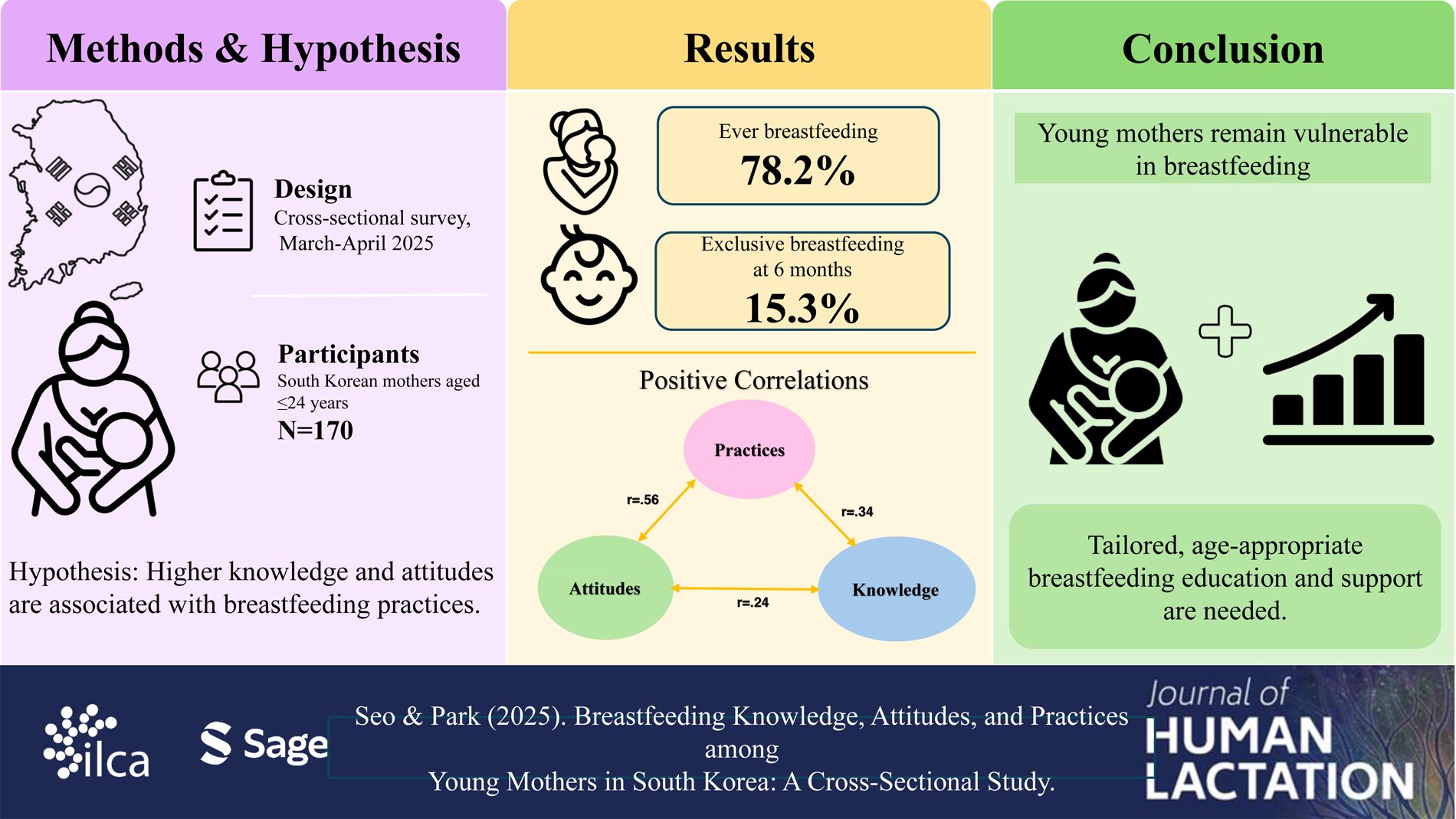
The ever-breastfeeding rate was 78.2% and the exclusive breastfeeding rate at 6 months was 15.3%. The mean breastfeeding knowledge score was 5.10 ± 2.33 (out of 10), and the mean breastfeeding attitude score was 67.27 ± 16.42 (out of 100). Significant positive correlations were observed between breastfeeding knowledge, attitudes, and practices (knowledge–attitudes: r = .24; knowledge–practices: r = .34; attitudes–practices: r = .56; all p < 0.01).
Conclusion:
Breastfeeding knowledge and attitudes were positively associated with breastfeeding practices among young mothers. These findings support the development of targeted breastfeeding education and support programs for this population.
Key Messages
Research on breastfeeding in South Korea has focused mostly on adult mothers, overlooking how young mothers (≤ 24 years) experience breastfeeding, and what factors affect their practices.
The study found that only about 78% of young mothers ever breastfed, and fewer than one in six exclusively breastfed at 6 months. Their breastfeeding knowledge and attitudes were also lower compared with those of adult mothers.
Mothers with more knowledge and more positive attitudes were more likely to continue breastfeeding.
This research fills an important gap by providing rare evidence on breastfeeding among young mothers in South Korea, and highlights the need for age-specific education and support programs.
Introduction
Breastfeeding is one of the most cost-effective strategies for improving infant survival and maternal health. The World Health Organization (WHO) and United Nations Children’s Fund (UNICEF) recommend initiating breastfeeding within the first hour of birth, exclusively breastfeeding for 6 months, and continuing breastfeeding for up to 2 years or beyond, as mutually desired by mothers and infants (UNICEF & WHO, 2018).
Globally, the rate of exclusive breastfeeding (EBF) increased from 37.1% in 2012 to 48.0% in 2023, approaching the 2025 target of 50% (UNICEF & WHO, 2023). However, South Korea has moved in the opposite direction; according to studies based on the Korea National Health and Nutrition Examination Survey, the 6-month EBF rate declined from 42.8% in 2010–2012 to 13.1% in 2019–2020 (Chung et al., 2018; Hong et al., 2023; Huh et al., 2021).
Breastfeeding rates among young mothers (≤ 24 years), including those in South Korea, are particularly low. Although adolescence (10–19 years) and young adulthood (20–24 years) represent distinct developmental stages, both groups may experience vulnerabilities related to early parenthood. In this study, young mothers were defined as women aged 24 years or younger at the time of childbirth, based on the age definition of youth in the Framework Act on Youth (Republic of Korea, 2014). While the overall rate of having ever breastfed is 90.2% among all mothers in Korea, the rate is only 78.9% among those aged ≤ 24 years (Ministry of Health and Welfare [MOHW], 2025). Similar gaps have been reported in other countries (Buckland et al., 2020; Osterman, 2024).
Breastfeeding offers well-established benefits for both infants and mothers. For infants, it provides optimal nutrition and immune protection, lowering risks of infectious diseases, chronic conditions, and sudden infant death syndrome, while supporting neurodevelopment (Berger et al., 2020; Thompson et al., 2017). For mothers, it promotes postpartum recovery, reduces risks of breast and ovarian cancers and metabolic diseases, and supports mental health (Borra et al., 2015; Kody & Sukartiningsih, 2023).
Globally, young mothers breastfeed at lower rates than adult mothers due to cultural norms, socioeconomic constraints, limited support, and lower self-efficacy (Forste & Hoffmann, 2008; Sipsma & Jones, 2015). Studies in Mali, Turkey, and Latin America highlight the roles of community expectations, family support, and breastfeeding-friendly policies (Bicchieri et al., 2021; Can et al., 2025; Channell Doig et al., 2024).
In South Korea, research has largely focused on adult mothers, addressing prevalence, influencing factors, and specific groups (Kang, 2023; Kim et al., 2011; O. G. Lee, 2014; Park et al., 2000). Very few studies target young mothers, leaving gaps in understanding their breastfeeding behaviors and needs.
Multiple interacting factors contribute to the gap between young and adult mothers. Individually, unintended pregnancy, higher risks of obstetric complications, and limited participation in prenatal care reduce opportunities for breastfeeding counseling (Mohammadian et al., 2023; Yas et al., 2023). Interrupted education lowers health literacy, while psychosocial stress and low self-efficacy hinder continuation (Wambach & Cohen, 2009). Socioeconomic disadvantages restrict the time and resources required for breastfeeding (Forste & Hoffmann, 2008), while stigma and weak social support erode confidence (Hashim et al., 2025). Systemically, Korean maternity services remain adult-centered with few programs tailored to adolescents (J. H. Lee, 2022).
Identifying factors that strongly influence breastfeeding practices is essential to improving breastfeeding rates. Multiple studies have highlighted maternal knowledge and attitudes as the variables most closely linked to breastfeeding behavior (Kullmann et al., 2021; O. G. Lee, 2024). However, research specifically focusing on young mothers in South Korea remains limited. As this group differs from adult mothers in life-course stage and socio-psychological vulnerability, studies documenting their breastfeeding status and associated determinants are urgently needed to support age-appropriate, evidence-based interventions. The benefits of breastfeeding may prove even more critical for young mothers and their children, as they are often more vulnerable to health risks, socioeconomic disadvantages, and psychosocial stressors. However, their breastfeeding rates remain lower than those of adult mothers. This paradox highlights the urgent need for targeted strategies to address these disparities.
Hence, this study aimed to assess breastfeeding knowledge, attitudes, and practices among young mothers in South Korea and analyze their associations with participant characteristics. The purpose of the study was to provide insights and data that support the development of tailored programs promoting breastfeeding equity for young mothers.
Methods
Research Design
A descriptive cross-sectional design was used to examine breastfeeding knowledge, attitudes, and practices, as well as the correlations among these variables, among Korean mothers aged 24 years or younger at childbirth. In this study, young mothers were defined as women aged 24 years or younger at the time of childbirth, based on the age definition of youth in the Framework Act on Youth (Republic of Korea, 2014). This study was approved by the Institutional Review Board of the Chungbuk National University (CBNU-2024-A-0006-C2).
Setting and Relevant Context
In South Korea, some young mothers, particularly unmarried mothers, reside in protective facilities that provide housing and basic support during pregnancy and early childrearing. These facilities may also offer health education and parenting support, including information related to infant feeding. This context is important for understanding breastfeeding experiences among young mothers.
Participants
Participants were recruited nationwide between March 31 and April 13, 2025. Recruitment notices were posted on bulletin boards accessible to residents of protective facilities for unmarried young mothers following approval from facility directors. Although recruitment was open to facilities nationwide, respondents were primarily from facilities located in the Seoul Metropolitan Area. At the same time, the announcement was disseminated through social media channels targeting young mothers across the country. Participants were recruited using convenience sampling from eligible women who had given birth at age 24 or younger. At the time of the survey, there were no specific restrictions on the duration breastfeeding since childbirth, in order to capture a wide range of breastfeeding experiences among young mothers. A total of 173 responses were initially collected; after excluding three incomplete questionnaires, 170 responses were included in the final analysis. Participation in the survey was voluntary and anonymous.
Measurement
Participants’ sociodemographic, obstetric, health-related, and child characteristics were collected using a structured self-report questionnaire. Breastfeeding knowledge was assessed using a 10-item scale modified by Ban (2014). The scale showed internal consistency reliability of KR-20 = 0.64.
Breastfeeding attitudes were assessed using the Korean version of the Breastfeeding Attitude Scale developed by Jeong (1997), based on Choler’s (1976) Maternal Attitude Scale. The scale comprises 20 items in three domains: cognitive (seven items), behavioral (six items), and affective (seven items). Responses are rated on a 5-point Likert scale from 1 (“strongly disagree”) to 5 (“strongly agree”), with higher scores indicating more positive attitudes toward breastfeeding. The instrument has been used in studies of Korean mothers and has shown acceptable reliability. In the original study by Jeong (1997), Cronbach’s α was .76; in the present study, Cronbach’s α was .93.
Breastfeeding practices were assessed according to infant age using a five-item questionnaire on infant feeding patterns. Feeding practices were classified according to the WHO infant feeding categories described by Helsing (1985), which consist of five feeding levels: (1) exclusive breastfeeding, (2) breastfeeding more frequently than formula feeding, (3) breastfeeding and formula feeding equally, (4) breastfeeding less frequently than formula feeding, and (5) exclusive formula feeding. In this study, Levels 1–4 were classified as continued breastfeeding because these categories involve the provision of breast milk, whereas Level 5 was classified as breastfeeding discontinuation, indicating exclusive formula feeding.
Data Collection
After reading the electronic information sheet, eligible mothers provided consent via Google Forms. The researcher personally verified each consent form via telephone and sent a text message containing an individual survey link. The online questionnaire required approximately 15 minutes to complete, and a small mobile gift card was provided upon submission as a token of appreciation. All items were mandatory, resulting in no missing data. Responses were stored on an encrypted, password-protected drive accessible only to the researcher.
The online consent form specified the study’s purpose, voluntary participation confirmation, confidentiality assurance, and participants’ right to withdraw without penalty. Data were collected anonymously and stored in accordance with institutional data protection policies.
Data Analysis
Data were analyzed using SPSS (Version 28.0). Assumptions of normality (Kolmogorov–Smirnov test) and homogeneity of variance (Levene’s test) were assessed and met. Descriptive statistics (frequency, percentage, mean ± SD) summarized participant characteristics and breastfeeding knowledge, attitudes, and practices. Differences in breastfeeding knowledge, attitudes, and practices according to participant characteristics were examined using independent t tests, one-way ANOVA, and chi-squared tests. Scheffé’s post-hoc comparisons were conducted using significant ANOVA results. Pearson’s correlation coefficients were used to assess correlations between knowledge, attitudes, and practices. Statistical significance was set at p < 0.05.
Results
Knowledge and Attitudes Scores and Differences in Breastfeeding Knowledge and Attitudes by Participant Characteristics
The demographic and obstetric characteristics of the participants are presented in Table 1. The mean knowledge score was 5.10 ± 2.33 (range: 0–10), and the mean attitude score was 67.27 ± 16.42 (range: 20–100). Differences in breastfeeding knowledge and attitudes according to participant characteristics are presented in Table 2.
Demographic and Obstetric Characteristics of Participants (N = 170).
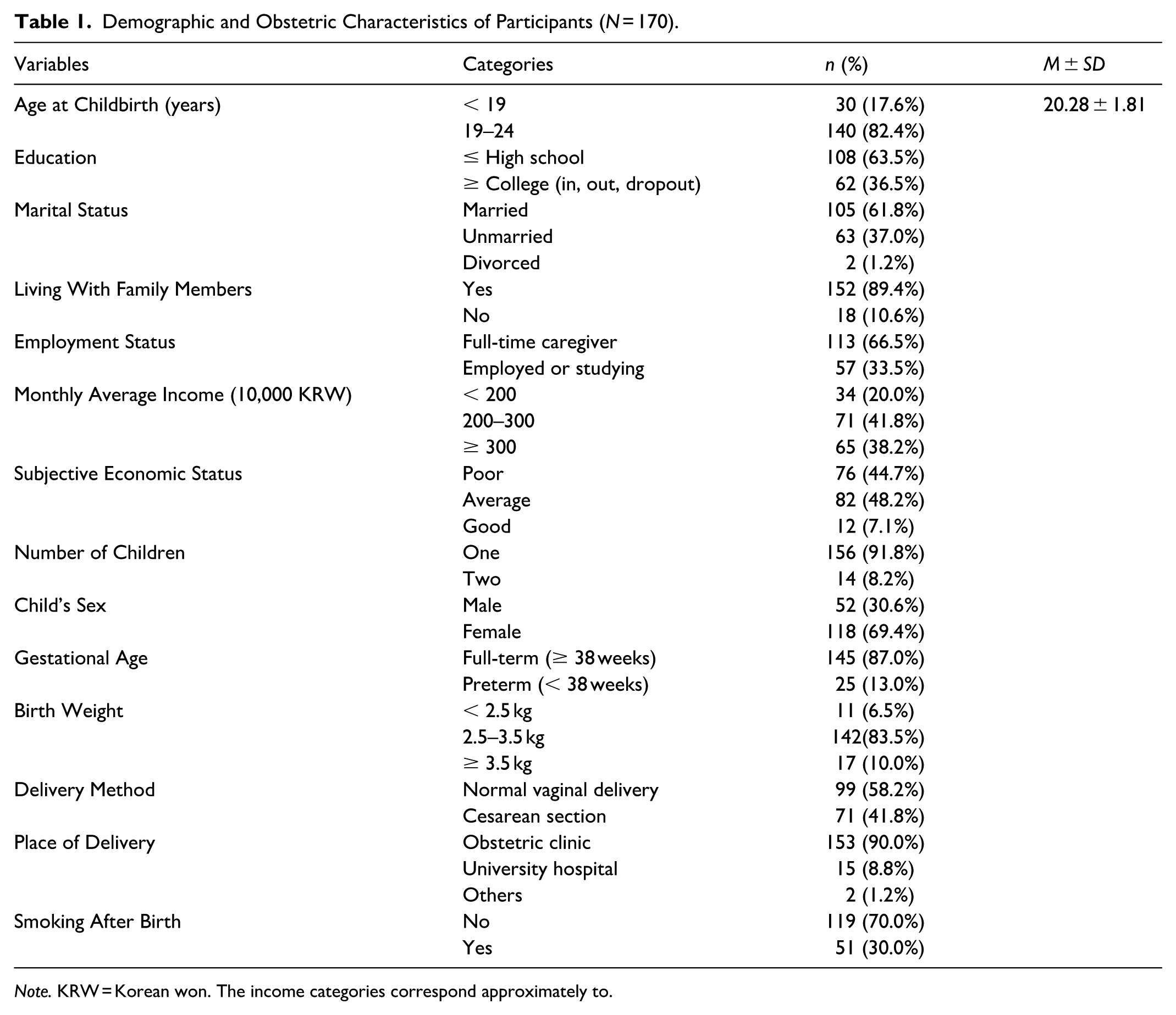
Note. KRW = Korean won. The income categories correspond approximately to.
Differences in Breastfeeding Knowledge and Attitudes by Participant Characteristics (N = 170).
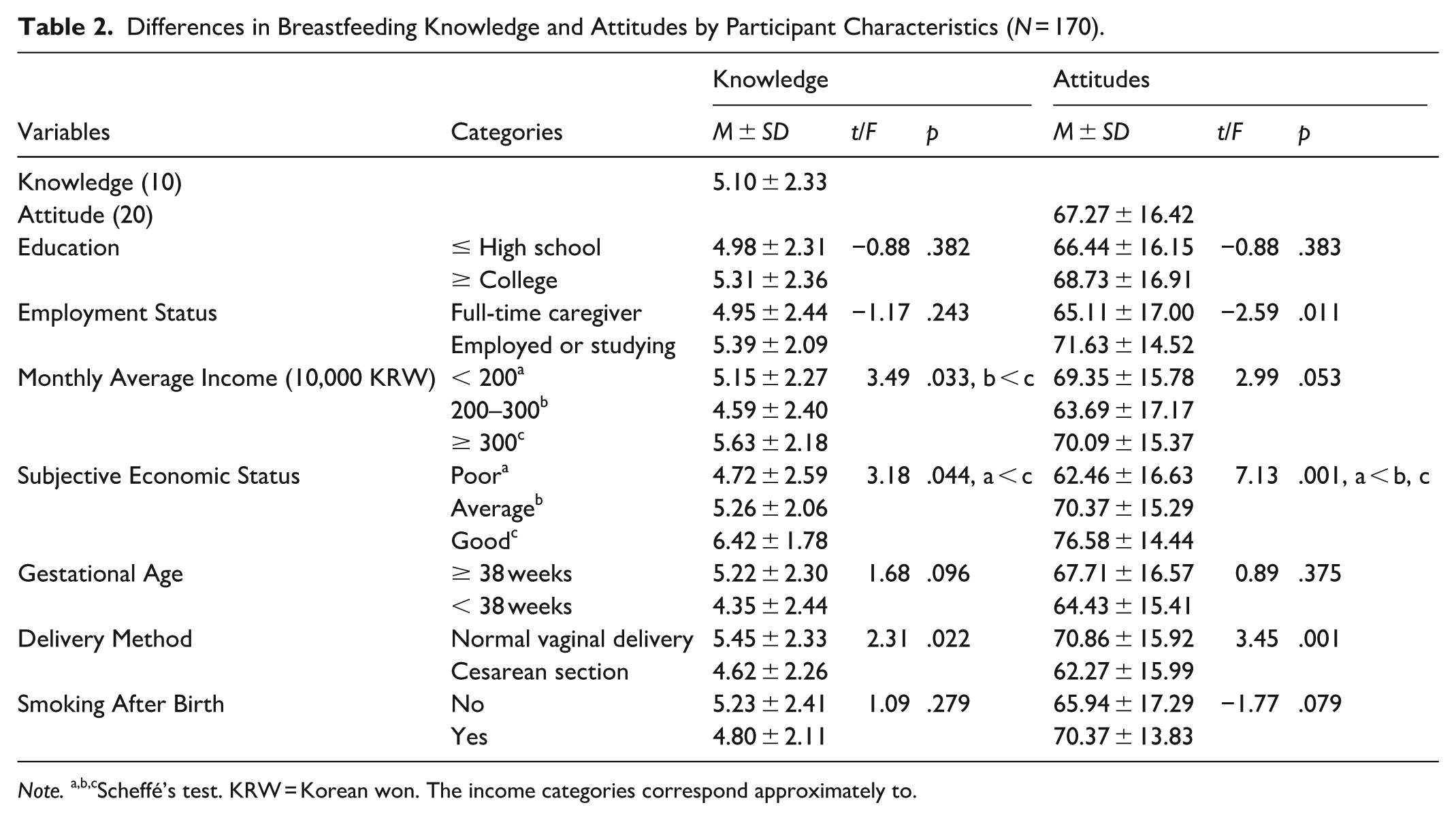
Note. a,b,cScheffé’s test. KRW = Korean won. The income categories correspond approximately to.
Significant differences in breastfeeding knowledge were observed according to monthly average income (F = 3.49, p = 0.033), perceived subjective economic status (F = 3.18, p = 0.044), and delivery method (t = 2.31, p = 0.022). Higher knowledge scores were observed among participants with a monthly income of KRW 3 million (≥US$2,100) or more, those who perceived their economic status as “good,” and those who had vaginal deliveries.
Breastfeeding attitudes differed significantly according to employment status (t = −2.59, p = 0.011), perceived subjective economic status (F = 7.13, p = 0.001), and delivery method (t = 3.45, p = 0.001). Participants who were employed or studying, those who perceived their economic status as “average” or “good,” and those who had vaginal deliveries reported more positive breastfeeding attitudes.
Breastfeeding Practice
Table 3 presents breastfeeding practices according to infant age. Among the 170 participants, the ever-breastfeeding rate was 78.2%. Any breastfeeding rates declined from 75.3% at 1 month to 27.6% at 12 months, with only 2.9% continuing beyond 1 year. Exclusive breastfeeding rates were 48.8% at 1 month, 31.8% at 3 months, and 15.3% at 6 months.
Breastfeeding Practices by Infant Age (N = 170).
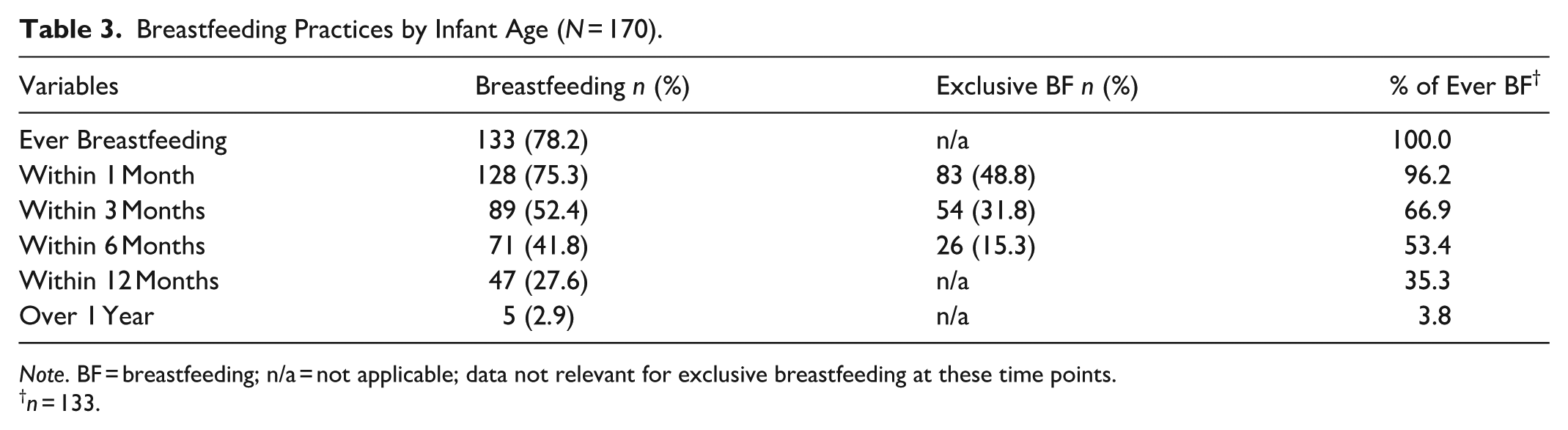
Note. BF = breastfeeding; n/a = not applicable; data not relevant for exclusive breastfeeding at these time points.
n = 133.
Differences in Breastfeeding Practice by Participant Characteristics
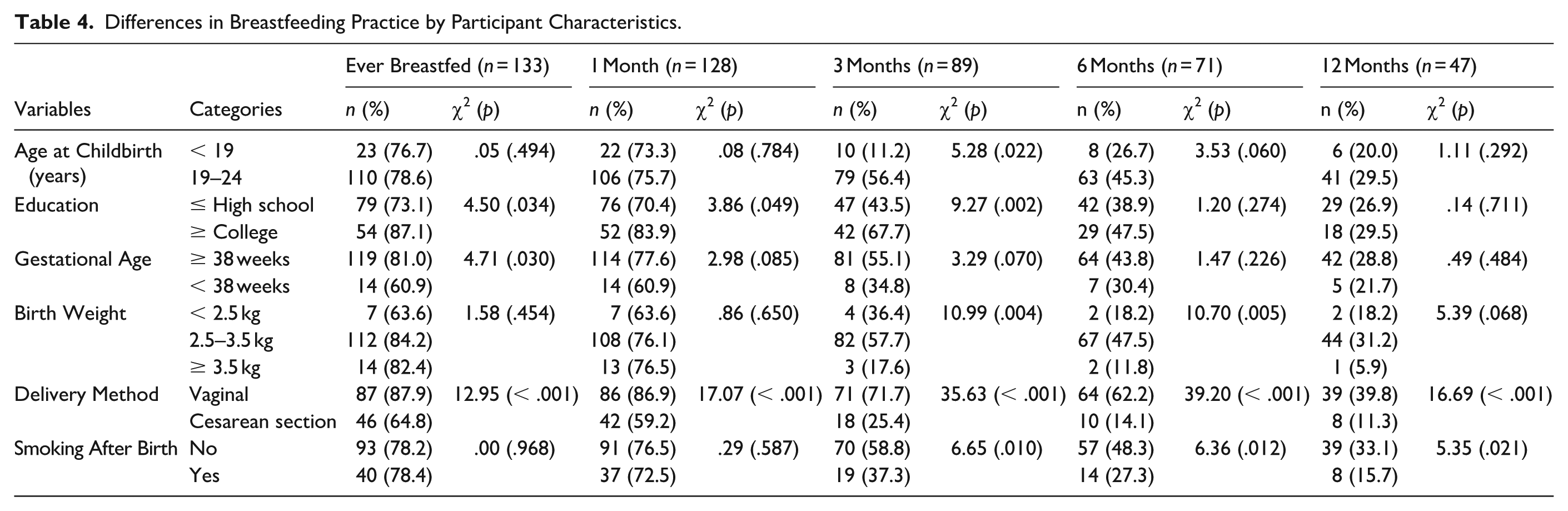
Table 4 presents differences in breastfeeding practices according to participant characteristics. Breastfeeding practices varied significantly according to gestational age and delivery method. Across postpartum time points, breastfeeding continuation showed consistent significant associations with delivery method and postpartum smoking status. Mothers who delivered vaginally consistently had higher breastfeeding rates at all time points. Similarly, non-smokers generally reported higher rates of breastfeeding continuation at multiple time points. Additional significant associations were observed with education level, monthly income, maternal age at childbirth, and infant birth weight across several postpartum periods.
Differences in Breastfeeding Practice by Participant Characteristics.
Correlations Among Knowledge, Attitudes, and Practices
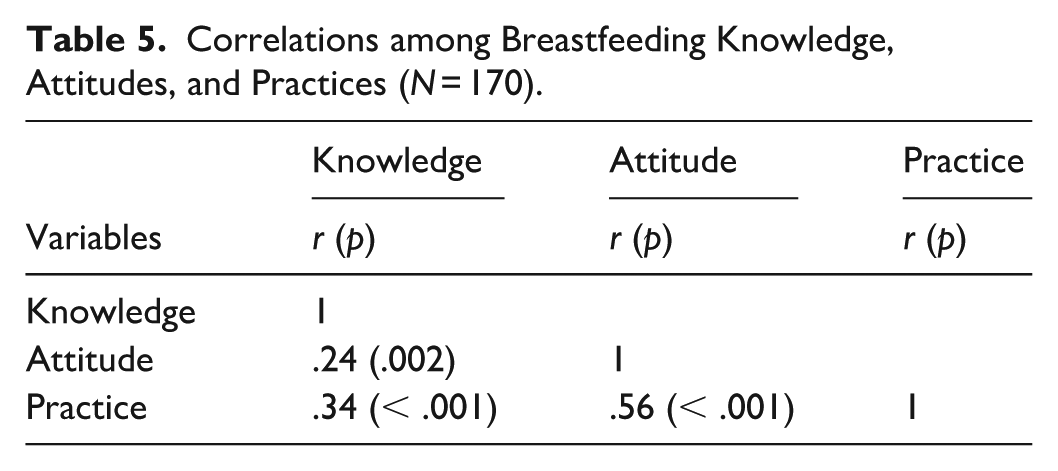
Table 5 presents the correlations among breastfeeding knowledge, attitudes, and practices. Knowledge was positively correlated with attitudes (r = .24, p = 0.002) and practices (r = .34, p < 0.001). Attitudes were also positively correlated with practices (r = .56, p < 0.001). These findings indicate that higher breastfeeding knowledge and more positive attitudes were associated with better breastfeeding practices.
Correlations among Breastfeeding Knowledge, Attitudes, and Practices (N = 170).
Discussion
The purpose of this study was to examine breastfeeding knowledge, attitudes, and practices among young mothers in South Korea. The findings showed that breastfeeding knowledge and attitudes were positively associated with breastfeeding practices. In addition, breastfeeding practices differed according to several maternal and obstetric characteristics.
In our study, the ever-breastfeeding rate among young mothers in South Korea was lower than that reported in recent national surveys, underscoring that young mothers constitute a vulnerable subgroup with respect to breastfeeding (Korea Disease Control and Prevention Agency, 2023; Korea Institute for Health and Social Affairs, 2021; MOHW, 2025). Similar age-related disparities have also been documented. For example, Osterman (2024) reported markedly lower initiation among mothers younger than 20 years than among those aged 40 years or older, and global evidence also indicates reduced breastfeeding among young mothers (Buckland et al., 2020). Potential drivers include limited prenatal preparation for childbirth and parenting, underdeveloped decision-making autonomy, insufficient provider-led breastfeeding guidance, and weak social support systems (Yas et al., 2023). These factors highlight the need for developmentally tailored and socially supportive interventions.
Breastfeeding continuation from 1 to 12 months showed consistent associations with delivery mode and postpartum smoking status. Vaginal delivery was associated with more sustained breastfeeding across time points, and nonsmokers were more likely to continue breastfeeding, suggesting that both clinical pathways and modifiable health behaviors shape breastfeeding continuation. Socioeconomic indicators, maternal age at childbirth, and infant characteristics were also associated with breastfeeding continuation at various time points, reinforcing the multilevel nature of breastfeeding determinants that should be considered in intervention design.
Breastfeeding knowledge among young mothers appeared to be lower than that reported in previous studies of rural and general maternal populations (Ban, 2014; Son, 2007). This finding aligns with those of Wambach and Cohen (2009), who reported that adolescents receive fewer structured prenatal education opportunities and less accurate information from their families and peers. Differences in knowledge according to income, perceived economic status, and delivery method suggest that both objective and subjective socioeconomic conditions may influence access to breastfeeding information and engagement with learning opportunities.
Breastfeeding attitudes also appeared less positive than those reported in studies of adult mothers (S.-B. Lee, 2024; Shim & Kang, 2017; Son, 2007). Hashim et al. (2025) noted that young mothers may internalize negative societal perceptions and stigma, fostering less favorable attitudes toward breastfeeding. In this study, attitudes differed according to employment or educational status, perceived economic status, and delivery method, suggesting that both social context and clinical experiences may shape attitudinal formation.
Breastfeeding knowledge, attitudes, and practices were positively correlated, indicating that young mothers with greater knowledge and more positive attitudes were more likely to engage in breastfeeding practices. While this pattern supports a conceptual link among knowledge, attitudes, and practice, causal inferences cannot be made from cross-sectional data. Nevertheless, the findings suggest that interventions should integrate knowledge building with attitude-shaping components tailored to the developmental and social needs of young mothers.
The evidence supports prenatal education as an effective tool for encouraging breastfeeding among young mothers. Pinho-Pompeu et al. (2023) demonstrated that prenatal breastfeeding education improves knowledge and attitudes, leading to increased practice. Capitalizing on young mothers’ high engagement with mobile technology, mobile-based modules combined with continuous, nonjudgmental counseling improved technique, self-efficacy, and emotional stability (Çelik & Toruner, 2024). Internet-based approaches (J. H. Lee et al., 2021) further emphasize the value of programs designed around their specific needs. Given young mothers’ sensitivity to evaluation by authority figures and peers (Fredrick & Luebbe, 2024; Kherani et al., 2022) and generally lower health literacy (Mancone et al., 2024), breastfeeding education should adopt listener-centered communication, plain language materials, and individualized information delivery. Building peer support components and ensuring ongoing follow-up may further enhance program effectiveness.
Limitations
This study had several limitations. First, young mothers were defined as those aged 24 years or younger in accordance with the Korean policy context, encompassing both adolescents and young adults. As this definition differs from that used in many international studies—which typically define adolescence as younger than 20 years—direct comparisons should be interpreted with caution. Future analyses restricted to mothers aged 19 years or younger may help clarify age-specific patterns. Second, although recruitment was conducted nationwide through online channels, participants recruited from residential facilities were primarily located in the Seoul metropolitan area. Accordingly, the findings should be interpreted in light of this distribution. Third, the breastfeeding knowledge instrument showed modest internal consistency (KR-20 = 0.64) and was not fully congruent with tools used in other studies, which may limit direct comparability and attenuate the observed associations. Fourth, breastfeeding variables were retrospectively self-reported, introducing the possibility of recall bias and social desirability effects. Future research could be strengthened by incorporating objective verification, such as medical records or lactation consultant logs, or by using prospective data collection.
Conclusion
This study provides empirical evidence on breastfeeding knowledge, attitudes, practices, and related participant characteristics among young mothers in South Korea—a population that has been largely overlooked in research. The findings indicate that young mothers remain a vulnerable group in breastfeeding practice, and that breastfeeding knowledge and attitudes are positively associated with breastfeeding practices. These results support the development of tailored, age-appropriate breastfeeding education and support programs for young mothers, and may serve as foundational data for future intervention development.
Footnotes
Acknowledgements
This study was conducted as part of the author’s master’s thesis at Chungbuk National University under the supervision of Professor Seungmi Park.

Ethical Considerations
This study was approved by the Institutional Review Board of Chungbuk National University (IRB No. CBNU-2024-A-0006).
Consent to Participate
Informed consent was obtained from all participants prior to participation in the study.
Author Contributions
Funding
The authors disclosed receipt of the following financial support for the research, authorship, and/or publication of this article: This work was supported by the National Research Foundation of Korea (NRF) grant funded by the Ministry of Education (RS-2023-00250613).
Declaration of Conflicting Interests
The authors declared no potential conflicts of interest with respect to the research, authorship, and/or publication of this article.
Data Availability Statement
The data that support the findings of this study are available from the corresponding author upon reasonable request.*