







Abstract
Recent work on communities of color has elaborated on the concept of system avoidance, which is the avoidance of institutions that keep formal records, such as banks, hospitals, and law enforcement. In this paper, I provide a feminist intersectional analysis of system avoidance by examining whether and how kinship structures shape crime reporting to the police within the “master” categories of race, gender, and class. Using the National Crime Victimization Survey (NCVS) 2002–2019, I show that among Latinx and white respondents, women are more likely than men to report personal experiences of violence to the police only if they have children living in the home. Among Black respondents, however, women are more likely than men to report personal experiences of violence to the police regardless of whether or not they have children. Household income and relationship to perpetrator further shape these associations, the most telling of which is that Latinas are no more likely than Latinos to report violence to the police when they know the offender. By examining crime reporting data through the lens of family structure, this study sheds light on a “paradox of protection,” the thin line in which women alternatively call the police to protect their families from violence, or refrain from calling the police to protect their families from criminalization.
In 2019, 41 percent of violent crimes in the United States were reported to the police, which is about average for the past few decades (Morgan and Truman 2020). Criminologists and social psychologists consider violent crime reporting to the police as a form of help-seeking that can prevent future violence, connect people to victim services, and enhance the deterrent capacity of the criminal–legal system (Skogan 1984; Xie and Baumer 2019a). There is abundant evidence, however, that for people of color, state institutions such as the police are a source of danger (Gurusami 2019), and that reporting crime to the police can exacerbate violence (Crenshaw et al. 2015; Richie 2012; Ritchie 2017). For example, young African American women who report violent victimization to police are sometimes dismissed or other times are revictimized by law enforcement agents (Richie 2012, 2017). This type of structural racism and police brutality may deter people of color from reporting experiences of violence (Bell 2017; Desmond, Papachristos, and Kirk 2016).
Early schools of thought conceptualized crime reporting to the police as a cost–benefit calculation (Skogan 1984), an approach that does not take into account structural racism (Bell 2017), normative conditions, social networks, or emotions (Xie and Baumer 2019a). Structural racism impacts crime reporting because despite the colorblind language in criminal law and in police training, poor communities of color intuit that “the law operates to exclude them from society” (Bell 2017, 2054). This sociolegal exclusion, paired with police violence, sends a clear message to communities of color that the police are a dangerous and violent institution, therefore, decreasing the likelihood that violence will be reported to the police (Desmond, Papachristos, and Kirk 2016). Normative conditions—for example, norms around masculinity—discourage help-seeking behavior among men for myriad issues such as depression, substance abuse, or medical issues (Addis and Mahalik 2003; Xie and Baumer 2019a). Young people may refrain from reporting violence to the police due to norms within their peer networks or because they prefer to solve problems in other ways (Brunson and Wade 2019). Finally, crime reporting is suppressed in areas of high immigrant concentration due to fear of deportation (Gutierrez and Kirk 2017). Thus, crime reporting to the police is shaped by structural racism and hegemonic gender ideologies, as well as highly punitive and racially targeted immigration enforcement practices (Baumer 2002; Xie and Baumer 2019b; Zaykowski, Allain, and Campagna 2019).
In this paper, I contribute to dominant understandings of community–police relations by providing a systematic feminist intersectional analysis. Specifically, I consider the reporting or not reporting of violence in light of the literature on system avoidance, which is the avoidance of record-keeping institutions such as hospitals, banks, and law enforcement (Brayne 2014). More specifically, I ask, What can an intersectional analysis tell us about system avoidance? Do women and men equally avoid record-keeping institutions? In this paper, I shed light on how race, class, gender, and kinship structures intersect to shape system avoidance, which I operationalize as violent crime reporting to the police. To unpack whether and how system avoidance operates for women and men across racial groups and kinship structures, I analyze data from the National Crime Victimization Survey (NCVS), 2002–2019. Informed by intersectional theory (Collins 1998b, 2020; Crenshaw 1991), I estimate the likelihood of violent crime reporting to the police in subgroups by race/ethnicity, whether or not the respondent lives with children in the home, and by gender. By doing so, I focus on intracategorical differences, to examine disparities in crime reporting within the traditionally examined “master” categories of race, gender, and class (Else-Quest and Hyde 2016; McCall 2005).
Through a series of logistic regression models, I find that overall, white and Latina mothers report violence to the police at much higher rates than white and Latino fathers. White women and Latinas without children, however, report violence to the police as infrequently as white men and Latinos. Black women, on the other hand, report violence to the police about twice as often as Black men regardless of whether they have children living in the household. Further, Latinas are no more or less likely than Latinos to report a crime to the police when they know the perpetrator. By applying an intersectional analysis to the concept of system avoidance, this paper sheds light on the complex and nuanced relationship between communities of color and law enforcement.
Literature Review
System Avoidance
An emerging literature on system avoidance (Brayne 2014) shows that criminal–legal contact in the form of street stops, arrest warrants, and periods of incarceration results in the avoidance of surveilling institutions—institutions that keep formal records, such as schools, hospitals, and banks (Brayne 2014; Fong 2019; Goffman 2009; Haskins and Jacobsen 2017). A number of mechanisms link criminal–legal contact with the avoidance of surveilling institutions. Many young men of color, for example, especially those living in poor neighborhoods, are subject to disproportionate surveillance and have low-level warrants for technical violations of probation such as for drinking or breaking curfew (Goffman 2009). Goffman (2009) argues that these young men are “on the run,” and that avoiding jail “has become a daily occupation” (Goffman 2009, 339). Now that criminal histories are routinely recorded on the Internet and are very difficult to remove, and parents with online criminal records purposefully avoid involvement in their children’s school or in social circles that might prompt an Internet search for their name (Lageson 2016). Even in the absence of criminal–legal contact or a criminal record, undocumented immigrants in the United States experience the daily stress of potential deportation; thus, they must navigate day-to-day life in a way that avoids even routine interactions with authorities, and must be selective in terms of when and under what circumstances they access or activate social services (Abrego and Schmalzbauer 2018). In this body of literature, the system-avoidance consequences of immigration enforcement are often referred to as “chilling effects” (Alsan and Yang 2019; Watson 2014). The chilling effects of immigration enforcement reverberate beyond undocumented individuals: Even U.S.-born Latinos and Latinos with legal status express fear of police and fear of deportation (Aranda, Menjívar, and Donato 2014; Asad 2020; Menjívar et al. 2018; Patler and Gonzalez 2021).
However, people who have had criminal–legal contact or are vulnerable to deportation do not uniformly avoid systems. There is some evidence, for instance, that women, especially Black women and Latinas, tend to call the police at higher rates than men (Zaykowski, Allain, and Campagna 2019), suggesting that engagement with systems and surveilling institutions, and especially the police, is at least in part shaped by gender. Because childcare is disproportionately imposed on women, and because mothers tend to act as liaisons between families and institutions (Menjívar 2002; Terriquez 2012), mothers’ system avoidance might backfire by cutting off families from important services or by arousing suspicion about fitness for motherhood (Fong 2019). These gender differences in system avoidance are clear in a study about participation in children’s schooling: Haskins and Jacobsen (2017) find that while paternal incarceration diminishes fathers’ participation in schooling, it is not as significant for mothers’ participation. Also examining experiences after incarceration, Gurusami (2019, 129) notes that formerly incarcerated mothers “locate the state as a primary danger in their children’s lives”; however, rather than completely avoiding systems, mothers use a variety of context-specific strategies to secure resources for their children while also protecting their families from state intervention (Gurusami 2019). In another example, mothers in Fong’s (2019) study alternatively share with and conceal information from Child Protective Services (CPS). Rather than completely avoiding contact with CPS, mothers share some information to secure resources, but strategically conceal other information to avoid scrutiny or the judgment of being an unfit mother (Fong 2019).
Mothers have long been employing strategies of selectively engaging formal systems or evading them to make ends meet. Edin and Lein (1997) interviewed 379 low-income Black mothers in Chicago, Boston, Charleston, and San Antonio. Their respondents reported selectively sharing information with child support officials—sometimes sharing the identity of the father of one child but not of the other, or pretending not to know who the father was. These mothers predominantly preferred informal arrangements with fathers that enabled higher quantities of financial and material support (rather than formal court-ordered arrangements), which had the added benefits of bolstering the paternal identity and goodwill of the father. However, when fathers did not comply, “the formal system was crucial to mothers who evaded it because they used it as a negotiating tool, threatening to turn in a father if he failed to honor his informal agreement” (Edin and Lein 1997, 162). In a more recent study, Gurusami (2019) highlights a tension that exists for low-income mothers: Mothers take action to provide for their families, even though doing so potentially puts them at odds with the state. Fathers, on the other hand, may be less frequently in the position in which they must choose whether to provide for and protect their children or whether to follow the law. Both women and men without children are not put in this position at all.
These existing studies, paired with what we know about system avoidance, suggest that men’s ties to and reliance on systems may be more tenuous than women’s, and that these differences may be shaped by kinship structure in important ways. In the next section, I elaborate on how gendered expectations of child-rearing might shape the avoidance or the engagement with systems.
Parenting and Kinship Structure
Kinship structures may shape system avoidance because parents are held accountable for protecting their children from immediate harm, future harm, and the consequences of harm (Nomaguchi and Milkie 2020). For this reason, parents might engage with institutions such as schools, hospitals, and social services more than do nonparents to adequately provide for their children. There is persistent inequality, however, in the distribution of parenting along the lines of gender, and despite women’s advances across sectors, women continue to do disproportionate amounts of work inside the home (Scarborough, Sin, and Risman 2019). Specifically, cultural expectations paired with structural constraints impose primary childcare responsibilities on mothers (Crittenden 2001; Ruppanner et al. 2021; Scarborough, Sin, and Risman 2019). Because of this, system engagement or system avoidance may be shaped by kinship structures in specifically gendered ways. In fact, because child-rearing is done overwhelmingly by women, mothers (but not fathers) have emerged as key players in activating law enforcement to enact what they believe is good parenting, to solve problems within the household, or to access other institutional resources (Bell 2017; Goffman 2009; Rios 2011). Consequently, mothers have been characterized as part of the “youth control complex” alongside other institutions such as police, schools, and social service agencies (Rios 2011).
Although families are diverse both within and across racial and ethnic groups, both historically and today, Black and Latinx families have dramatically lower levels of wealth, and operate with much more constrained resources than do white families (Bhutta et al. 2020; Krivo and Kaufman 2004). Possibly because of this, Black and Latinx families are more likely than white families to live with multiple generations within a household and to live with extended kin (Hall, Musick, and Yi 2019; Simms, Fortuny, and Henderson 2009). For these same reasons, paid formal childcare may not be an option, so low-income Black and Latina mothers are more likely to both seek help and provide help by “other-mothering” children who are not theirs biologically (Burton and Hardaway 2012). Other-mothering involves caring for, supervising, and advising children of friends or relatives (Burton and Hardaway 2012).
There are further distinctions among Latinx, Black, and white households, demonstrating vastly different life experiences along the lines of race and ethnicity. According to 2019 data from the U.S. Census Bureau, about 61 and 75 percent of Latinx and white children, respectively, live in households with two married parents, while only 38 percent of Black children do (Anderson, Hemez, and Kreider 2022). Further, nearly half of the Black children live with a single mother, compared with only 14 percent of white children and 24 percent of Latinx children. In contrast, less than 5 percent of children across all racial and ethnic groups live with single fathers (Anderson, Hemez, and Kreider 2022). This does not mean, however, that fathers are not involved or participating in children’s lives. In an interview-based study with low-income Black mothers, Haney and March (2003) show that men are involved in their children’s lives in a number of ways—whether these are biological fathers, or what respondents term “real fathers,” who, regardless of biological connection, are present in and contribute to their children’s lives. Thus, similar to other mothers, there are also other fathers, meaning those who “presented other fathering as a response to their experiences of loss—as a way to support themselves and their children in the sheer absence of biological fathers” (Haney and March 2003, 471). Unlike other-mothering, however, biological fathers and other fathers tend not to meet (Haney and March 2003), and thus, we can understand the relationship as one managed by mothers and not necessarily involving a permanently cohabitating father figure.
In addition to variations in household structure, there are further racial and ethnic differences in family ideology. For instance, some studies find that Black mothers expect to both work and mother (Dean, Marsh, and Landry 2013; Dow 2016), and count on their extended families and communities to help with childcare—an approach that Dow (2016) calls integrated mothering. In a study with formally incarcerated Black mothers living in a reentry organization, other-mothering and integrated motherhood are in contrast to hegemonic ideologies of motherhood, which are constructed using a white, heteronormative, middle-class, and non-system-involved frame of reference. Hegemonic ideologies of motherhood posit that fathers are responsible for breadwinning, that mothers are responsible for child-rearing, and that employment conflicts with motherhood (Collins 1998a; Dow 2016, 180).
Racialized Orientations Toward Policing
Ideologies of the family may intersect with and be shaped by racialized vulnerabilities, and perceptions of vulnerabilities, vis-à-vis the criminal–legal system and the immigration enforcement system. For instance, in a Minneapolis-based study, researchers find that Black respondents perceive police violence as more severe and persistent than do white respondents (Phelps, Robertson, and Powell 2021). In another study, based on interviews with low-income Black mothers in urban parts of New York and North Carolina, Elliott and Reid (2019, 204) show that while some mothers report that police presence makes them feel safer, others revealed that “law enforcement and sometimes schools were not there to protect their children and might instead unfairly target and criminalize them.” Indeed, Black mothers are ambivalent about the presence of police and law enforcement in communities. Even teenage respondents express this duality: Although teenage respondents across Black, white, and Latino high-crime neighborhoods express high levels of legal cynicism, they also say that more policing and more law enforcement would make the street and their communities safer (Carr, Napolitano, and Keating 2007). Unlike previous researchers, Carr and colleagues do not find variations in negative dispositions along the lines of race and ethnicity or gender. Taken together, however, these studies show that while youth and adults in high-crime neighborhoods do not necessarily feel safe with the police or protected by the police, they see few other avenues for addressing issues of violence in their communities.
Because about 63 percent of Latinx children live in immigrant families (Fry and Passel 2009), Latina mothers and Latinx families face an additional, or at least different, level of scrutiny from the increasingly entangled immigration enforcement and criminal–legal systems. Fear of deportation shapes the behaviors, attitudes, and vulnerabilities of both documented and undocumented Latinx: Although many Latinx residents are U.S. citizens, they are disproportionately surveilled by the immigration enforcement system and are more likely to live in mixed-status households or communities (Lopez and Castañeda 2022; Menjívar 2021). In the social and political imagination, illegality is strongly associated with “looking Mexican” (Flores and Schachter 2018; Menjívar 2021). Thus, even Latinx who are U.S. citizens or have other documentation status perceive that they are vulnerable to deportation (Asad 2020). Fear of deportation is associated with lower willingness to report crimes (Alcalde 2010; Becerra et al. 2017; Muchow and Amuedo-Dorantes 2020), and undermines confidence that police and courts would treat Latinx fairly (Becerra et al. 2017). That being said, there is also evidence that immigrant-friendly sanctuary policies in the 1980s and 1990s increased the likelihood that Latinxs who experienced violence would report it to the police (Martínez-Schuldt and Martínez 2021). Studies also show that people who are perceived as undocumented are more likely to experience wage theft from employers and are more vulnerable to violent victimization, due to the belief that they will not file a police report (Caraballo and Topalli 2023; Fussell 2011).
In addition to dealing with deportability threat (Fussell 2011), a structural reality that both undocumented immigrants and documented immigrants of first and second generations must also contend with is the “immigrant bargain” (Schmalzbauer and Andrés 2019; Smith 2005). The immigrant bargain is “the expectation that sacrifice by parents will be redeemed and validated through the children’s achievement” (Smith 2005, 109), and is characterized by feelings of indebtedness to families (Schmalzbauer and Andrés 2019; Smith 2005). While this expectation exists in both immigrant and nonimmigrant families, “the life-defining sacrifices of migration convert it into an urgent tale of moral worth or failure” (Smith 2005, 109). Thus, immigrants who have experienced violence whether in the household or in the community might not call the police out of indebtedness to their families and wanting to avoid the criminalization that may accompany calling the police.
Data and Methods
To provide a feminist intersection analysis of system avoidance, I rely on publicly available data from the NCVS (2020) Concatenated File, 1992–2019, Study Number 37698. The NCVS is the only nationally representative database on victimization, and it has the advantage of including details about the incident, such as whether the victim was injured, whether the offender was known to the victim, whether victimization was reported to the police, how the police found out about the crime, and the household structure of the victim. The NCVS was redesigned in 2016, and the pseudostratum code, which approximates the Primary Sampling Unit (PSU), is blank in the revised files. To properly account for stratification in the NCVS data, 2016 data are left out of the analysis (NCVS 2020; Shook-Sa, Couzens, and Berzofsky 2015).
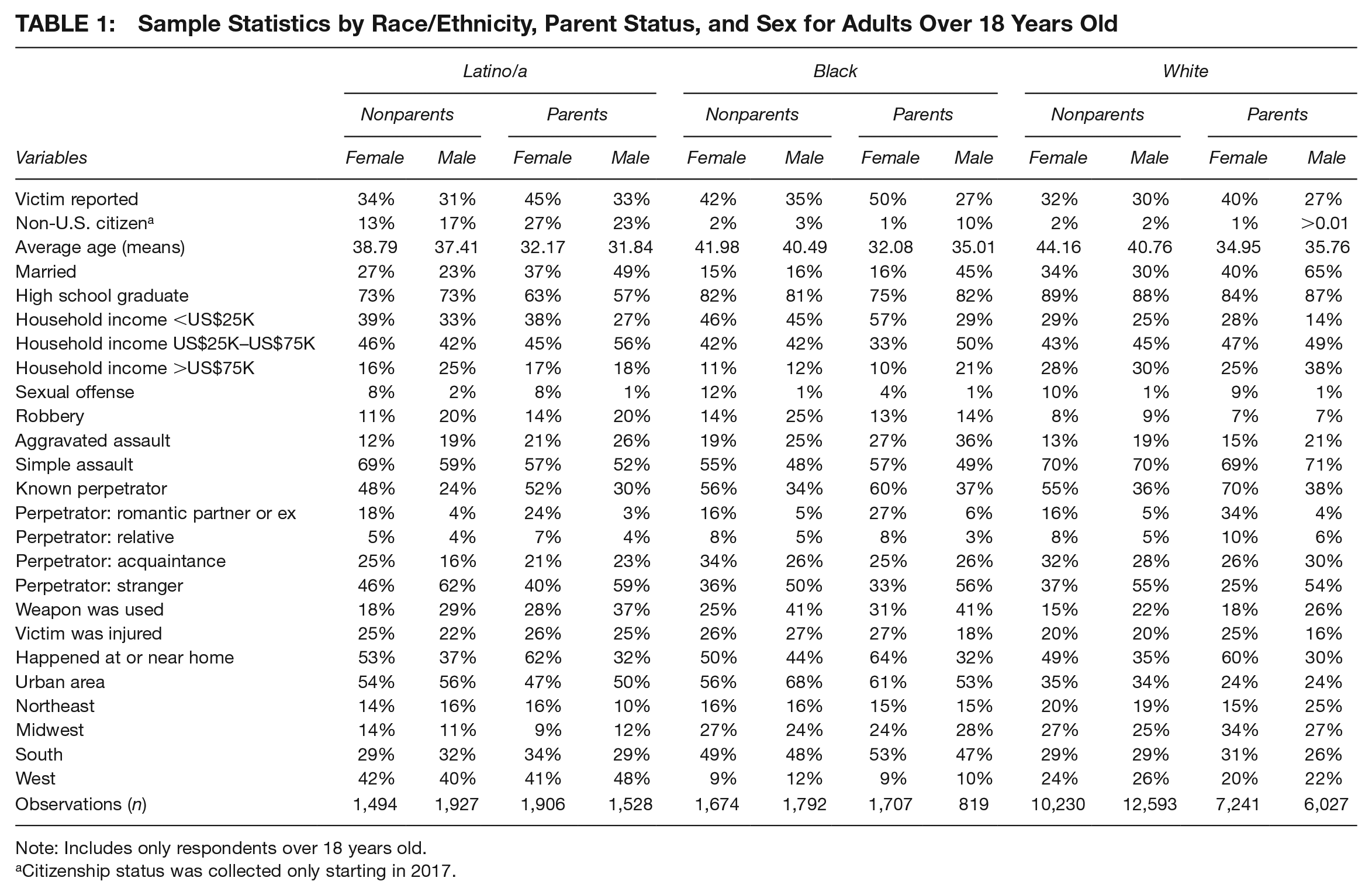
The analytic sample for this study is limited to Latinx, Black, and white adults over 18 years old who were victims of a violent crime between 2002 and 2019. The NCVS provides weights to account for differences in the sample and population, survey nonresponse, and the multistage cluster sample design. These included preadjusted weights that account for whether the victimization was a “series crime,” meaning violence that is a repeated occurrence (Brostos et al. 2022; Shook-Sa, Couzens, and Berzofsky 2015). In the next section, I describe some of the descriptive statistics for a few subgroups, which are displayed in Table 1.
Sample Statistics by Race/Ethnicity, Parent Status, and Sex for Adults Over 18 Years Old
Note: Includes only respondents over 18 years old.
Citizenship status was collected only starting in 2017.
Measures
Crime Reported to Police
The dependent variable is whether the person who experienced violence reported the crime to the police. I code this variable as 1 if they reported the crime to the police, and 0 if they did not report the crime, including if the victimization was reported by a household member, passerby, or someone else. Table 1 shows that the percentage of respondents who report experiences of violence to the police ranges from 27 percent among Black and white fathers to nearly 50 percent among Latina and Black mothers.
Citizenship
Citizenship is included in the survey starting in 2017. For the years when it was asked, about 27 percent of Latina mothers and 23 percent of Latino fathers are non-U.S. citizens, compared with 13 and 17 percent of nonparent Latinx. For the most part, Black and white respondents are U.S. citizens, except for Black fathers, of whom about 10 percent are noncitizens.
Sex/Gender
The summary statistics in Table 1 are disaggregated by gender, but in the models, gender is accounted for as a dichotomous variable (1 = female, 0 = male).
Race and Ethnicity
I code race and ethnicity as mutually exclusive categories: Latinx, non-Hispanic Black, and non-Hispanic white, which I refer to as “Latinx,” “Black,” and “White,” respectively. Other racial groups that are not Hispanic are excluded.
Kinship Structure
Models are estimated in subgroups by respondents who have children living in the household and respondents who do not. In the rest of the paper, I use the terms parents, mothers, and fathers as shorthand to reference “respondents who live with children in the household,” although many of the respondents might indeed be parents of adult children or parents of children that live in other households.
Relationship to Perpetrator
Table 1 shows a series of dichotomous variables indicating whether the perpetrator was a romantic partner or former romantic partner of the person who experienced violence, an immediate family member or other relative, a casual acquaintance, a stranger, or whether the relationship was unclear/could not be determined. In the statistical models, the relationship to offender is included as a single dichotomous variable (1 = offender is known, 0 = offender is a stranger).
Type of Victimization
Everyone included in the study indicated to an NCVS interviewer that they had experienced violence in the preceding 6 months. In the main models, these are coded categorically as sex offenses, aggravated assault, robbery, or simple assault, which is the reference category (Xie and Baumer 2019b). Table 1 shows that across groups, simple assault was the most common type of victimization. Female respondents were much more likely than male respondents to tell interviewers that they experienced sexual assault, which is consistent with prior research that women are more vulnerable to sexual violence (De Coster and Heimer 2021). Also consistent with prior research, Black and Latinx respondents were more likely than white respondents to be victims of robbery (which is usually stranger-perpetrated) and aggravated assault (Krivo, Peterson, and Kuhl 2009).
Individual Characteristics
I include age as a continuous variable. I limit the sample to adults 18 years and older to compare adult parents and adult nonparents. Further covariates include marital status (1 = married, 0 = not married) and education (1 = high school graduate, 0 = did not finish high school). For respondents who were under 20 years old, the head of household’s educational attainment was used instead (Berzofsky et al. 2014; Zaykowski, Allain, and Campagna 2019). Latina mothers and Latino fathers are the least likely to have a high school education, at 63 and 57 percent, respectively. Across groups, parents are 5–8 years younger than nonparents, and while fathers were much more likely to be married than mothers, the marriage gap between men and women was more similar among nonparents.
Household Income
Household income was missing for about 25 percent of the observations; therefore, the missing values were imputed from the prior interview captured in the person-level file (Zaykowski, Allain, and Campagna 2019). In the models, household income is coded as a continuous variable representing household income categories with 1 = less than US$5,000, and 14 = more than US$75,000. In the descriptive tables, I report summary statistics across three categories: less than US$25,000, between US$25,000 and US$75,000, and more than US$75,000.
Incident Characteristics
I code whether the offender used a weapon (1 = yes, 0 = no), whether the respondent was injured (1 = yes, 0 = no), and a dummy variable for whether the incident happened at or near the home (1 = yes, 0 = no) or in an urban area, where on average, crimes are more likely to be reported to the police (Rennison, Dragiewicz, and DeKeseredy 2013). I also include a series of variables indicating whether the respondent resides in the Northeast, Midwest, or Western United States, with the U.S. South as a reference region.
Analytical Strategy
I analyze the data in four steps. First, I illustrate gaps in crime reporting by parents and nonparents using basic summary statistics. Then, using a logistic regression model, I estimate the associations between gender and violent crime reporting by Latinx, Black, and white subgroups of parents and nonparents, while controlling for covariates associated with crime reporting. Third, because women are more likely than men to experience violence by known perpetrators, and analyzing all violent victimizations together might provide some confounding results, I reestimate these models for the outcomes of stranger and nonstranger violence. Fourth and finally, I estimate a final set of logistic regression models with interactions between whether the respondent was female and whether the respondent lived in a household with low, medium, or high income. I use results from the regression models to estimate the predicted probabilities of violent crime reporting for each group (Long and Mustillo 2021).
Results
Results show that the often-cited gender differences in violent crime reporting—that women report violence to the police at higher rates than men—are magnified, and largely driven, by differences between mothers and fathers. These findings are consistent for white respondents across model specifications, and also consistent across Latinx, Black, and white respondents when examining stranger-perpetrated violence, which makes up about half of violent victimizations. In general, however, Black women report experiences of violence to the police about twice as often as Black men, regardless of parent status, and Latina mothers refrain from reporting when they know the offender. As a robustness check, I test whether these patterns remain clear even when analyzing data within low-, medium-, and high-income households. In what follows, I expound on the results for each subgroup.
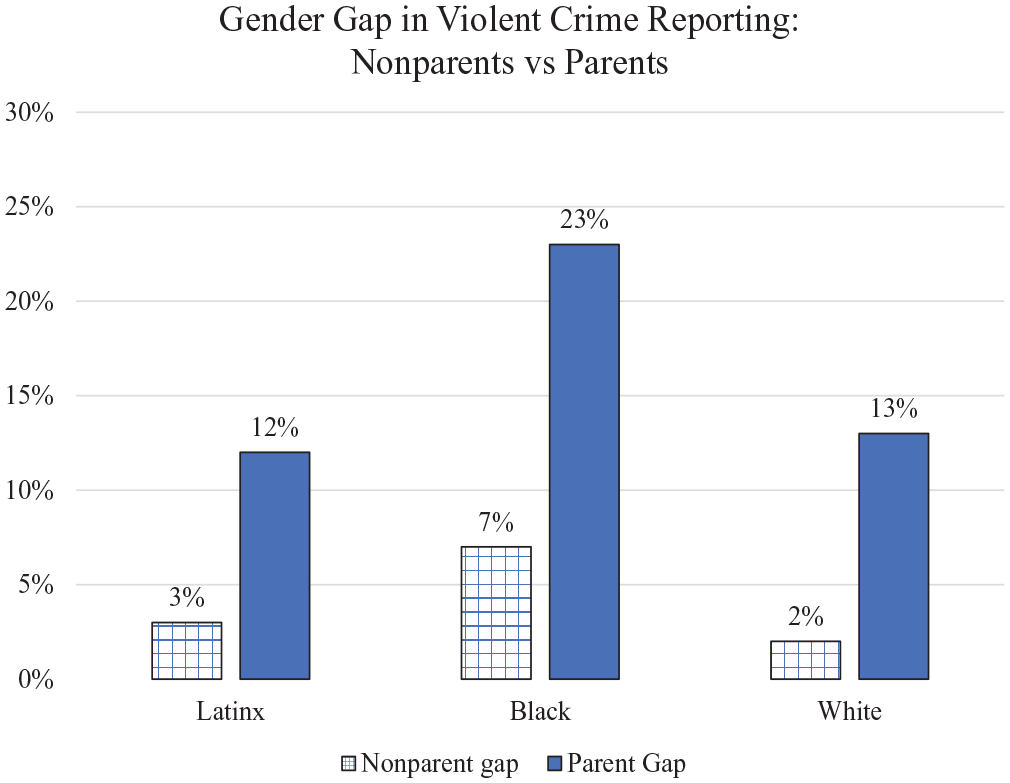
The gender gap in violent crime reporting among Latinx, Black, and white parents is 3 to more than 6 times larger than the gender gap in violent crime reporting among nonparents. On average, Latinx, Black, and white mothers report 12, 23, and 13 percent more crimes than Latinx, Black, and white fathers, respectively. These gaps are significantly bigger than the 3, 7, and 2 percent gaps in reporting between nonparent Latinx, Black, and white women and men, respectively. The violent crime reporting gender gaps between parents and nonparents are illustrated in Figure 1.
Gender Gap in Violent Crime Reporting: Parents Versus Nonparents
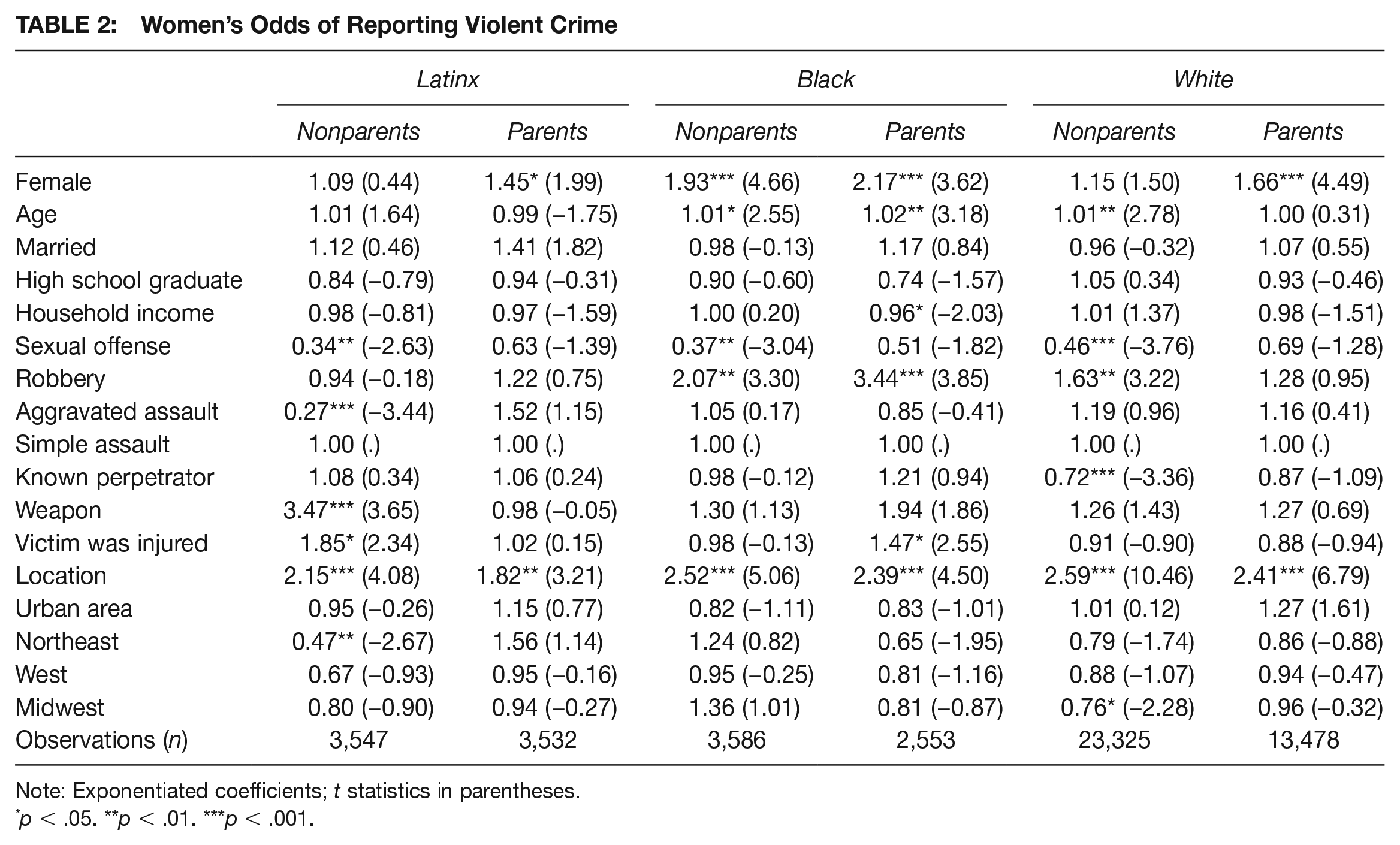
The crime reporting gender gap between mothers and fathers is robust to the inclusion of covariates associated with crime reporting, shown in Table 2. Interestingly, violent crime reporting among nonparent Latinx and white respondents is not significantly different. For Black respondents, significant gender differences remain even among nonparents, although the female coefficient is slightly smaller for nonparents than for parents (1.93 vs. 2.17).
Women’s Odds of Reporting Violent Crime
Note: Exponentiated coefficients; t statistics in parentheses.
p < .05. **p < .01. ***p < .001.
Previous research has found that single women with children are at highest risk of violent victimization, and that married women are less vulnerable to violent victimization whether or not they have children (Lauritsen and Schaum 2004). Thus, the higher reporting among mothers might be explained in part by higher rates of victimization of separated or divorced mothers specifically (DeKeseredy and Schwartz 2009; Lauritsen and Heimer 2009). Because of this, I checked whether divorced/separated or never married mothers were more likely to report; among Latina mothers and white mothers, the proportion of violent crime reported to the police was similar across married, divorced/separated, and widowed/never married mothers. Thus, marital status does not seem to be associated with whether Latina mothers report the crime to the police. Black mothers who were separated/divorced, however, reported to the police 10 percent more than other groups (married, or widowed/never married), but among Black women without children, divorced or separated women were slightly less likely than married women to report violent crime (55 percent vs. 51 percent). Thus, although the higher reporting among Black mothers might be in part related to higher risk of victimization among those who are unmarried, this does not apply to women without children. These tables are available upon request.
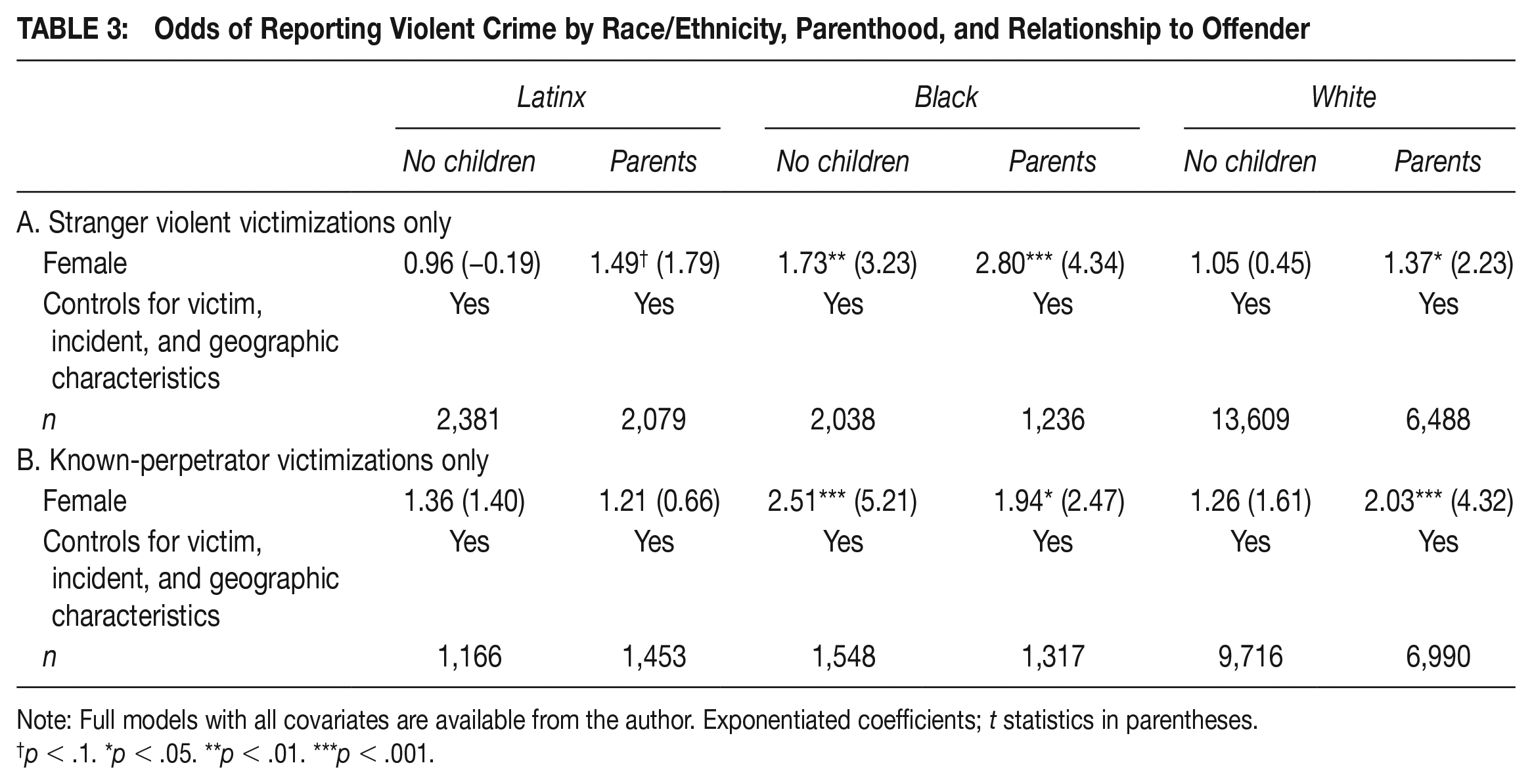
In further analysis, I find that when examining only stranger-perpetrated violence, mothers report to the police more than fathers across all groups, net of other predictors of crime reporting (see Table 3). Even among Black respondents, in the stranger-violence-only model (Table 3, panel A), the gender gap is larger among parents. Among known-perpetrator victimizations (nonstranger violence), however, patterns differ by racial and ethnic group. For Latinx victims, there is no significant gender gap in violent crime reporting when the offender is known to the victim. This means that Latinas, whether or not they have children, report violence as infrequently as Latinos do when they know the offender. Among Black respondents, the gender gap in violent crime reporting is larger among nonparents than among parents, a reversal of a trend we saw previously, that parenthood widens the gender gap. Finally, white respondents follow the expected pattern that mothers report significantly more violent crime than fathers, but there are no significant gender differences in reporting among nonparents.
Odds of Reporting Violent Crime by Race/Ethnicity, Parenthood, and Relationship to Offender
Note: Full models with all covariates are available from the author. Exponentiated coefficients; t statistics in parentheses.
p < .1. *p < .05. **p < .01. ***p < .001.
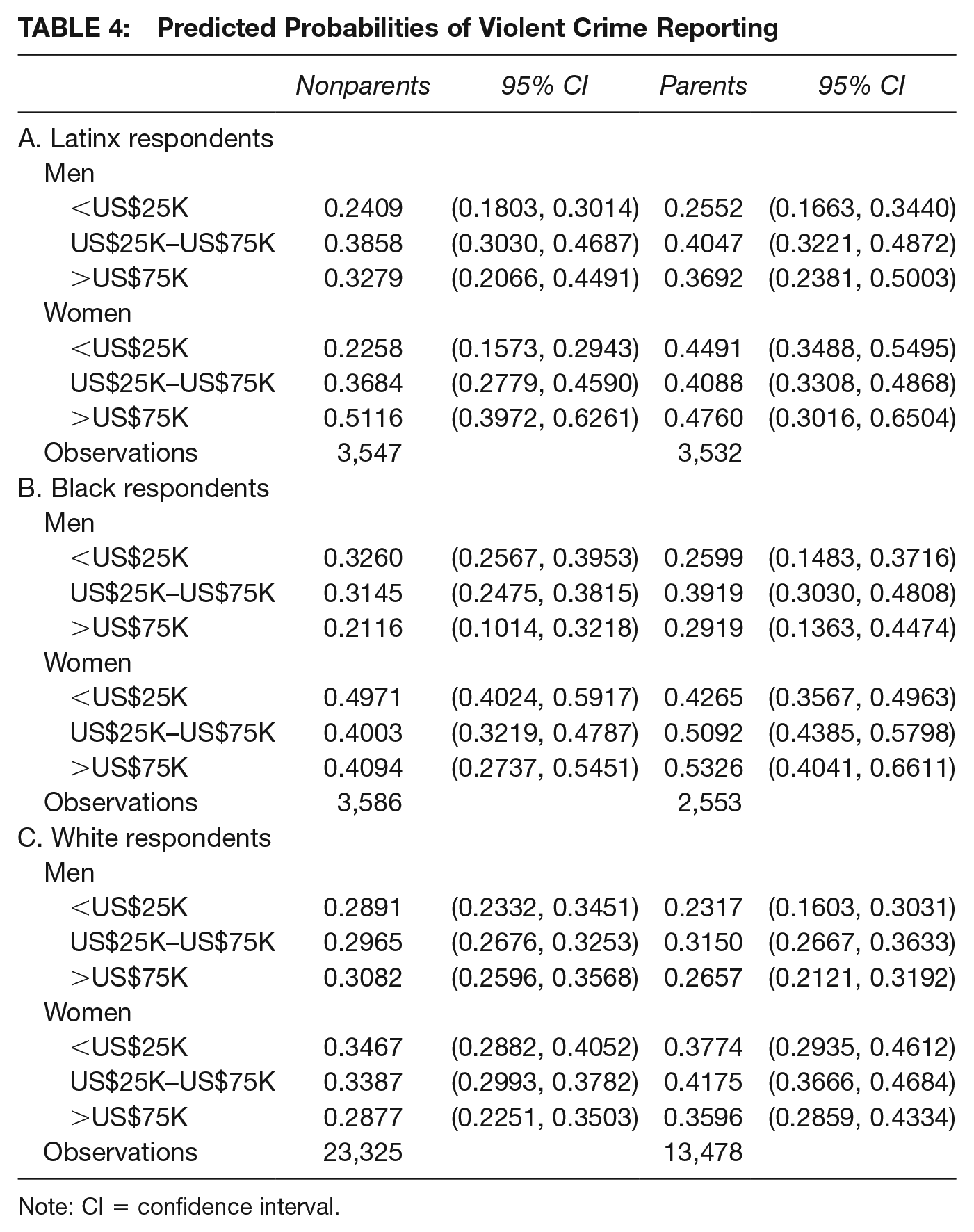
Finally, it is possible that these different gender gaps across racial and ethnic groups can be explained by variations in household income. However, analysis of crime reporting by subgroups shows that parenthood widens the gender gap in crime reporting for white respondents across low-, medium-, and high-earning households, and that the gender gap in crime reporting remains large for Black respondents across household income categories. For Latinx families, however, there is more variation in the gender gap across income categories: The gender gap is highest among low-income Latinx parents and nonexistent for medium-earning households regardless of parent status. Table 4 shows predicted probabilities of crime reporting across each of these groups and helps answer two questions about parenthood and crime reporting: (1) What is the association between household income and crime reporting for women and men who do not have children? (2) Is parenthood associated with crime reporting within income and gender categories, and to what extent?
Predicted Probabilities of Violent Crime Reporting
Note: CI = confidence interval.
Latinas in low- and medium-income households without children report crime marginally less than Latinos without children. Panel A of Table 4 shows that parenthood provides a significant boost in crime reporting for low-income Latinas, whose probability of crime reporting increases from 0.23 to 0.45 for parents. In contrast, for Latinos, parenthood is associated with only a marginal increase in crime reporting, from 0.24 to 0.26. Thus, for low-income Latinx respondents, parenthood creates a gender gap. High-income Latinas without children report significantly more than their male counterparts (0.55 compared with 0.33). Among this highest earning group, parenthood increases the probability that Latino fathers report by 4 percent, and decreases the probability that Latina mothers report by 4 percent. Thus, parenthood attenuates the gender gap in crime reporting for the highest earning Latinos. The gender gaps in crime reporting among parents and nonparents across low-, medium-, and high-earning households are illustrated in Figure 2.
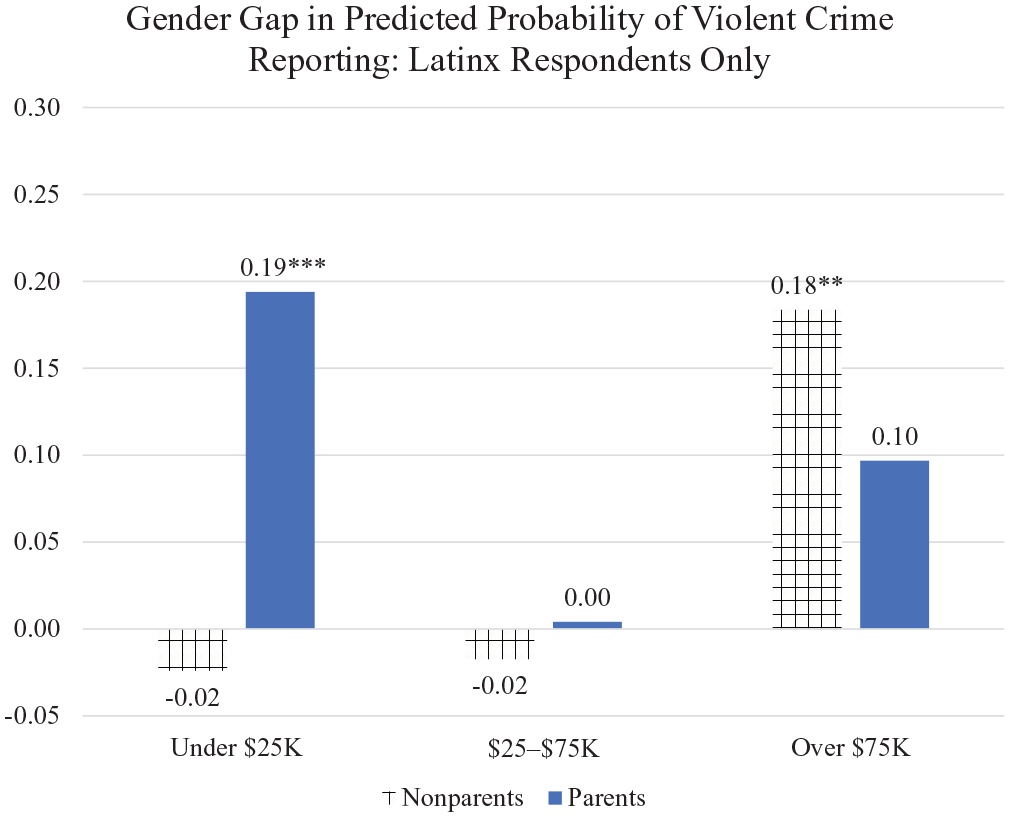
Gender Gap in Crime Reporting by Low-, Medium-, and High-Income Latinx Respondents
Among Black respondents, in all income categories, women report violent crime significantly more often than men. Interestingly, although there is a very significant gender gap in crime reporting among nonparents, parenthood affects Black women and Black men in similar ways: Parenthood decreases crime reporting among lowest earning Black women and men, and increases crime reporting among highest earning Black women and men. Although parenthood provides a slightly larger boost for women than men, the gender gap among Black parents and nonparents is similar. The gender gaps in crime reporting among Black respondents are illustrated in Figure 3.
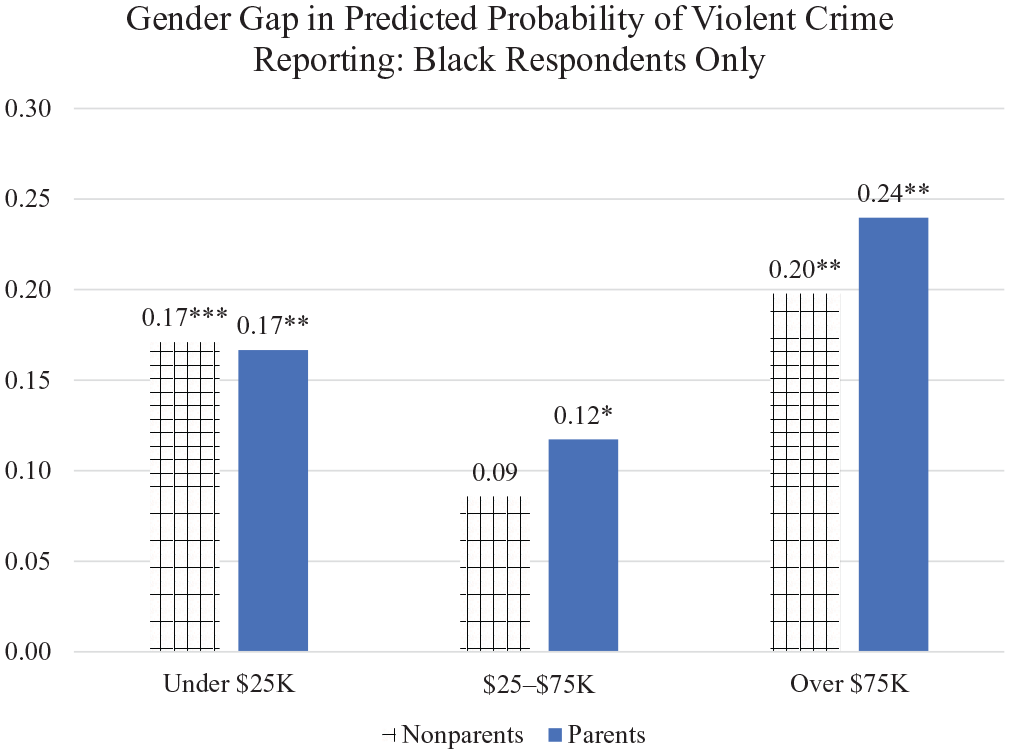
Gender Gap in Crime Reporting by Low-, Medium-, and High-Income Black Respondents
Finally, although white women without children report to the police more than men in low- and medium-income households, in high-income households, they report less. More specifically, low-income women report significantly more than low-income men, though this difference is not significant for medium-income white respondents, and reverses direction for the highest income respondents. These findings, that are illustrated in figure 4, show that among white respondents, the gender gap in violent crime reporting gets smaller as household income increases. Parenthood, however, widens the gender gap in crime reporting. The gender gap in crime reporting is largest among low-income parents, and gets smaller with medium-income parents, and is smallest for high-income parents. In households with and without children, the gender gap is smallest at the highest levels of income.
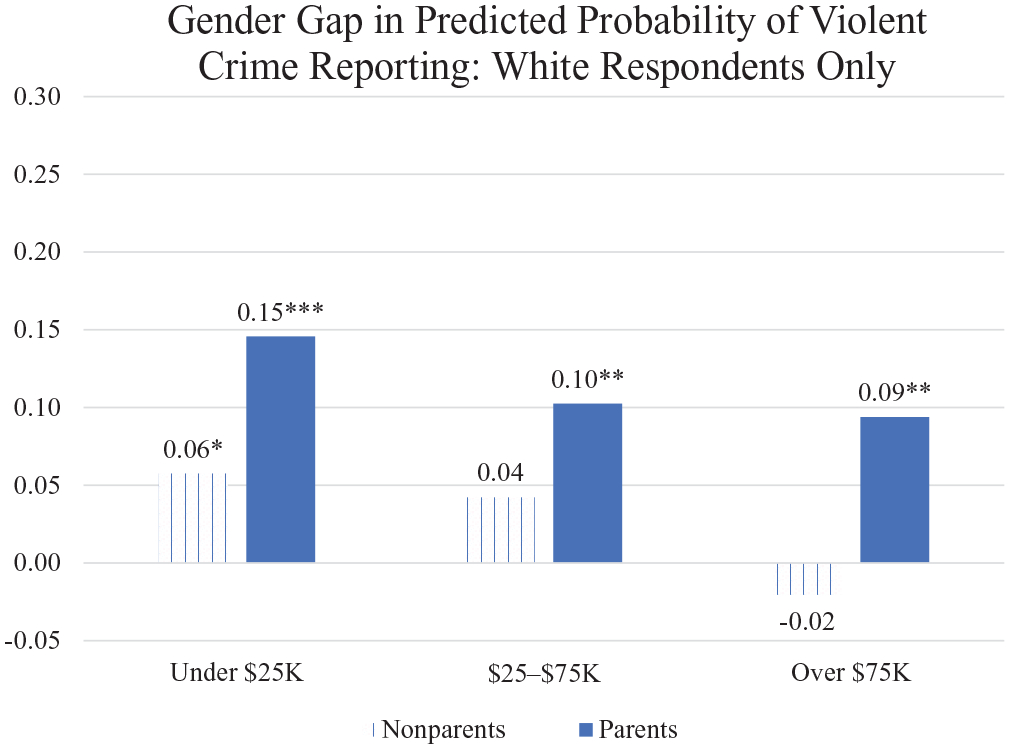
Gender Gap in Crime Reporting by Low-, Medium-, and High-Income White Respondents
Discussion and Conclusion
Social scientists and policy makers have a strong interest in understanding whether and under what circumstances people avoid systems and institutions. A growing body of work shows that system avoidance may be exacerbated by contact with the criminal–legal system, whether through street stops, low-level warrants for arrest, or online criminal records (Brayne 2014; Goffman 2009; Lageson 2016). A gendered analysis shows that rather than entirely avoiding systems, system-involved women (whether formerly incarcerated or caught in the dragnet of surveilling institutions such as CPS) tend to alternatively engage or disengage with institutions to strategically secure resources while also protecting themselves and their families from state intervention (Fong 2019; Gurusami 2019; Haskins and Jacobsen 2017). By using an intersectional feminist lens, I show in this paper that women and men avoid systems differently and under different circumstances, and that kinship structures are consequential for shaping system avoidance along the lines of gender as well as race/ethnicity.
The findings in this paper both support and complicate current understandings of system avoidance and specifically of how communities of color relate to law enforcement. On the one hand, existing research shows that low-income Black and Latina mothers tend to call the police at high rates due to internalized perceptions of good parenting (Rios 2011), to solve problems within the home or access institutional resources (Bell 2016) or to exert control over their male partners (Goffman 2009). Thus, by showing that Latina, white, and Black mothers call the police at higher rates than fathers, my findings support previous work. On the other hand, while there is something about living with children in the home that increases crime reporting among Latinas and white women, Black women report at higher rates than Black men regardless of whether they have children in the home. This means that the structural, social, or psychological drivers of violent crime reporting among Black women are not necessarily shaped by whether or not they have children living in their household. Further, Latinas do not report any more or less than Latinos when they know the perpetrator, showing that there are limits to when and under what circumstances Latina mothers are willing to contact law enforcement.
This study has two primary implications for advancing the sociological understanding of system avoidance. First, I provide evidence that the gender differences in system avoidance, as measured by violent crime reporting to the police, are for the most part driven by differences among parents. Although it is commonly accepted that women who experience violence are more likely to report to the police than men (Rennison 2010; Zaykowski, Allain, and Campagna 2019), I show that white women and Latinas without children report just as infrequently as white men and Latinos. These findings point to the importance of examining gendered roles within families as an explanatory factor in system avoidance, rather than gender or gender differences in themselves. Existing literature on family and kinship structures can help shed light on these findings. Hegemonic ideologies of motherhood were developed with white middle-class families as a reference point, and support that women’s sphere of influence is within the home, that men’s is at work, and that women should dedicate themselves wholly to her children (Christopher 2012; Dow 2016). Even if mothers reject these hegemonic ideologies, they are still dominant cultural scripts that are imposed on women and are supported by social and economic structures that women cannot simply “opt out” of. Thus, these hegemonic ideologies impose childcare and responsibility for a child’s safety on mothers, boosting violent crime reporting not only to protect her children from exposure to violence but also as a way to protect herself in her role as a mother: If she cannot take care of her children, then who will?
That Black women report crime more often than Black men regardless of parent status might seem to undermine the argument that gender differences in crime reporting are driven by differences between mothers and fathers. However, there is extensive evidence that although Black families are diverse among a number of axes, Black children are much more likely to live in a household headed by a single mother, and Black women are more likely to be “other mothers,” which includes caring for, supervising, and advising children that are not biologically theirs. What this means is that the role of “mother”—the person who runs the household and takes care of children—is likely shared across Black women in communities whether or not they have children of their own. These findings are important because they shed light on a new dimension of crime reporting: Rather than being driven only by individual or situational characteristics, violent crime reporting to the police may be associated with one’s role within families and communities. And again, although Black women do not necessarily adhere to stereotypical roles, patriarchy is a structural and ideological reality, and women have been conditioned from early on to assume caretaking and men have been conditioned to avoid it and/or dismiss its importance (Hunnicutt 2009).
The second implication in this study has to do with how punitive immigration policy affects crime reporting. Latina mothers are more likely than fathers to report stranger violence, but Latina mothers are not more likely than fathers to report known-offender violence, which suggests that mothers refrain from reporting a violent victimization when there is a risk that someone they know in their community, whether a romantic partner or ex, a family member, or an acquaintance, will then be questioned by Immigration and Customs Enforcement. Punitive immigration enforcement has increased the social isolation of Latinas whether they are documented, undocumented, or liminally legal, and especially Latina immigrant women with children (Abrego and Menjívar 2011). “Liminally legal” refers to immigrants who have a Temporary Protected Status, which grants temporary legal status for a period of time but does not guarantee citizenship. Although many Latinas are not immigrants, one of the reasons that the Latinx population in the United States grew so quickly over the past few decades is from increased immigration and increased fertility (Landale and Oropesa 2007), so even Latinx with legal status are likely part of multigenerational and mixed-status households and communities (Hall, Musick, and Yi 2019; Lopez and Castañeda 2022).
By providing an intersectional analysis of system avoidance, this paper joins a body of recent work that centers motherwork and the expectation that women care for children (absence, for the most part, of social support) as a key mechanism that creates and reproduces gender inequality and gendered vulnerability. Consistent with prior research, this study shows that mothers are key players in mobilizing law enforcement, and adds that other mothers might be just as important, even if they do not have biological children of their own. However, rather than framing these mothers as part of the “youth control complex” (Rios 2011), perhaps we can better understand high rates of crime reporting among mothers as an indication of increased vulnerability, lack of alternative ways to solve problems, or as a “parenting strategy of last resort” (Elliott and Reid 2019, 201; Richardson, Johnson, and St. Vil 2014). In the current context in which women are just as likely, if not more likely, than men to experience violence, this study points to another alarming social fact that women without children are just as unlikely as men without children to report violence to the police.
Footnotes
Author’S Note:
Special thanks to Becky Pettit for ongoing mentorship, and for continuous feedback on many drafts of this manuscript. Thank you to René Flores, Karen Lee, Maria Carolina Aragão, Ken-Hou Lin, Javier Auyero, Nestor Rodriguez, and Michael Young for comments on early drafts the paper and encouragement throughout the process. Jody Miller, Rod Brunson, Min Xie, and Karen Heimer and the rest of the Racial Democracy, Crime, and Justice Network provided invaluable support, guidance, and resources in the final stages of the project. Barbara Risman, Rhacel Parrenas, Gender & Society editorial team, and anonymous reviewers: I am deeply grateful for your critical, constructive, and generative comments on the manuscript, and for pushing me to think more clearly and more precisely about the framing and contribution of this paper.

Marta Ascherio is an assistant professor in Criminal Justice Sciences and Latin American and Latino Studies at Illinois State University.