







Abstract
The study was carried out to examine the influence of gender and length of service on Emotional Intelligence of School Academic Administrators in India. The descriptive research design was employed to carry out the study. A sample of 200 school academic administrators, working as Chief Education Officers, Zonal Education Officers, Principals of Higher Secondary Schools, Principals of District Institute of Education and Trainings and Head Teachers of High Schools were selected. The sample subjects were selected from four districts of Kashmir, India by using Stratified Random Sampling Technique. Emotional Intelligence Scale standardized by Nadeem and Naaz (2015) was employed to collect the data. Percentage, mean, standard deviation and t-test were used to analyse the data. The results revealed that both gender and length of service affects the emotional stability of school academic administrators in India.
Introduction
Reformation of school education institutions in the twenty-first Century requires capable administrators to renovate institutions into independent/self-sufficient organizations that construct an advanced learning atmosphere for teachers as well as for the students (Singh, 2005). Reformation and redesigning of school education institutions need skilled administrators with high degree of managerial aptitude, emotional intelligence and administratorship effectiveness (Slaski, 2001). Work performance of academic administrators are highly influenced by their emotional competencies, since they are expected to participate in more interpersonal interactions throughout the course of their education. Academic administrators with high emotional competencies encourage staff members and motivate them for better academic accomplishments. Emotional intelligence acts as an evaluation tool for academic administrators to select right person for right job. The ability of emotional intelligence to predict a person's success in different performance areas is of significant relevance in the professional and educational practice, even though the validity of emotional intelligence may be a topic of controversy in the academic community. Academic administrators with a high level of emotional intelligence had a better functionality in their institutions. Academic administrators who acknowledge their beliefs and emotions are capable of executing their jobs more efficiently. Emotional intelligence is one of the significant predictors of job performance among academic administrators in educational contexts (Mahdinezhad, Shahhosseini, Kotamjani, Bing & Hashim, 2017:954)
Review of literature
Della and Sungoh. (2019) revealed a significant difference in emotional intelligence of male and female teachers. Female teachers were found higher in emotional intelligence as compared to male ones. Choudhary and Choudhary (2013) revealed that emotional intelligence is highly influenced by gender. Mishra and Laskar (2013) stated no difference in emotional intelligence with respect to experience and gender. Bansibihari and Surwade (2006) stated that emotional intelligence of male and female teachers is significantly different. However, female teachers were found emotionally stable than male teachers.
Rationale of the study
Emotional Intelligence is the ability which enables us to understand and identify own emotions as well as of others (Bardach, 2008). It plays a significant role to promote emotional and intellectual growth (Barling et al., 2000). The high performance of administrators in the academy is directly related to the emotional intelligence (Malviya, 2017:3–4). According to Bar-On (2004), the theory of emotional intelligence has its origins in the work of Maslow (1954, 1950), Leeper (1948) and Wechsler (1939). While exploring the link between Emotional Intelligence and administratorship, the concentration area has been the corporate settings. A few studies examined emotional competencies that influenced school administrators’ ability to lead effectively, particularly in the setting of school administrators (Bardach, 2008). Effective educational administrators possess better capacity to recognize, understand, assimilate and express emotions among themselves and others. Kumari (2017) stated that, “To achieve the important organizational task, the administrators are required to use more of their own and also that of the followers’ emotional cortex to a much greater extent. It can be achieved if a leader is intelligent emotionally” (p. 21).
Objectives of the study
The study was conducted with the following objectives:
To study the Emotional Intelligence of school academic administrators of South Kashmir in relation to gender and length of service. To compare the Emotional Intelligence of school academic administrators of South Kashmir in relation to gender and length of service.
Hypotheses
Following hypotheses were formulated for the present investigation:
Male and Female school academic administrators differ significantly on various dimensions of Emotional Intelligence. Junior and Senior school academic administrators differ significantly on various dimensions of Emotional Intelligence.
Research design and instrumentation
The present investigation was carried out to evaluate the Emotional Intelligence of School Academic Administrators in South Kashmir in relation to Gender and Length of Service. The study was carried out using the descriptive research method. The study is quantitative in nature. The information regarding the sample, the instruments and their descriptions, and the statistical method utilized for data analysis for the present investigation is mentioned below.
Population and sample
The population of the study comprised school academic administrators who are popularly classified in the state as Chief Education Officers (CEOs), Zonal Education Officers (ZEOs), Principals of District Institute of Education and Training, Principals of Higher Secondary Schools and Head Teachers of High Schools. The classification of academic administrators in the state is hierarchical in nature and each academic administrator has distinct responsibilities and functions. The chief education officer is considered as the top academic administrator of the school at district level under whose guidance and administratorship, every affair of the school system in the district is monitored. The CEO is responsible for all the administrative and educational matters in the district. Being head of the education department, a CEO is expected to inspire, lead, guide and direct the members of administrative, instructional and support services team in setting and achieving the highest standards of excellence so that each learner enrolled in the district is provided with a complete, valuable, meaningful and personally rewarding education. Similarly, the Zonal Education Officer heads an educational zone in a district and is responsible for all the academic and administrative affairs in the zone. A ZEO acts under the administrative control of CEO who plays an active role in maintaining the academic quality in all the schools located in zone in coordination with the cluster heads. The Zonal Education Officer is also responsible for efficient physical inspection and management of all the schools in the zone.
In his capacity of being head of the institute, the role of school Principal/Head Teacher is to provide administratorship, direction and coordination to the school. The main focus of the Principal / Head Teacher is to develop and maintain effective educational programmes within the school to promote the improvement of teaching and learning. The school Principal / Head Teacher strives to create a climate in the school which fosters student and teacher growth to a larger extent.
As per the available information from the Directorate of School Education Kashmir, India, there are 184 school academic administrators which include 01 Chief Education Officer, 01 Deputy Chief Education Officer, 01 Principal of District Institute of Education and Trainings, 12 Zonal Education Officers, 44 Principals of Higher Secondary Schools and 125 Head Teachers of High Schools in Anantnag District. There are 81 school academic administrators which include 01 Chief Education Officer, 01 Deputy Chief Education Officer, 01 Principal of District Institute of Education and Trainings, 06 Zonal Education Officers, 20 Principals of Higher Secondary Schools and 52 Head Teachers of High Schools in District Kulgam. Similarly, there are 54 school academic administrators which include 01 Chief Education Officer, 01 Deputy Chief Education Officer, 01 Principal of District Institute of Education and Trainings, 04 Zonal Education Officer's, 10 Principals of Higher Secondary Schools and 37 Head Teachers of High Schools in District Shopian. Similarly, there are 111 school academic administrators which include 01 Chief Education Officer, 01 Deputy Chief Education Officer, 01 Principal of District Institute of Education and Trainings, 08 Zonal Education Officer's, 29 Principals of Higher Secondary Schools and 71 Head Teachers of High Schools in Pulwama District, Kashmir, India. The breakup of the population is as under:
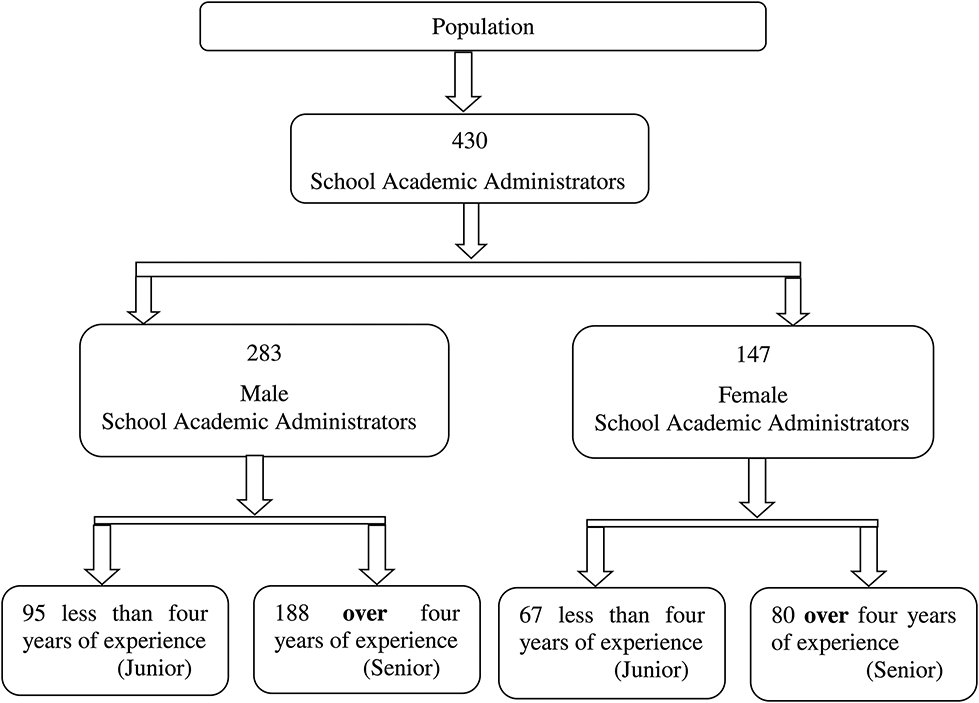
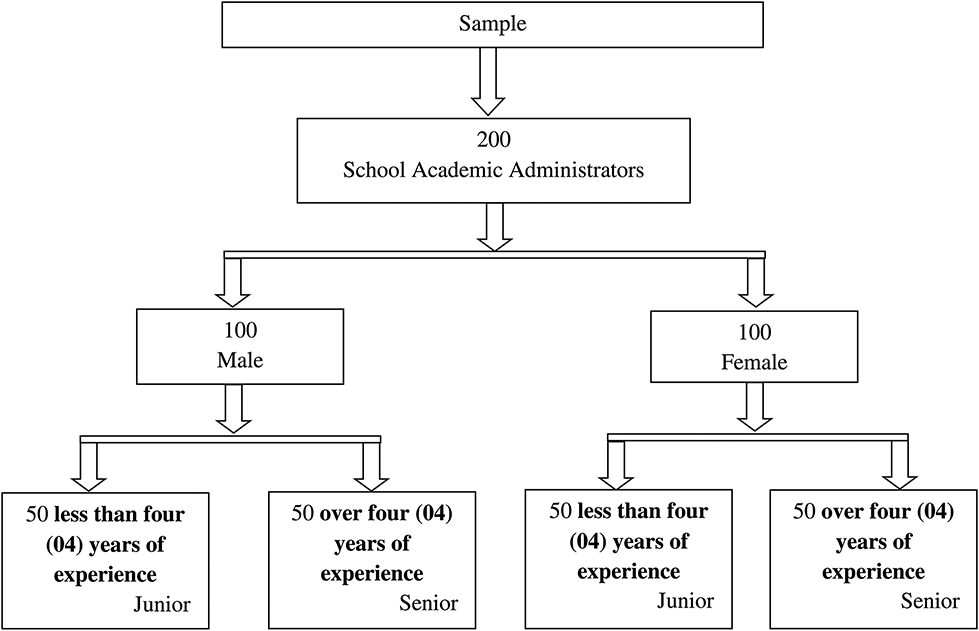
The population in the study was classified on the basis of gender and length of service. Among the male academic administrators 95 were found as junior and 188 were found as senior academic administrators. Similarly, among the female academic administrators 67 were found as junior and 80 were found as senior academic administrators. The investigators did not select the sample subjects directly from male or female strata's, but the investigators randomly selected the male sample subjects each from junior and senior sub-strata and similarly, female sample subjects were also selected each from junior and senior sub-strata. Consequently, the study is based on a sample of 200 school academic administrators drawn through disproportionate stratified sampling technique. The sample subjects were classified and drawn on the basis of gender and length of service. The breakup of the sample selected for the study is as under:
Research tool
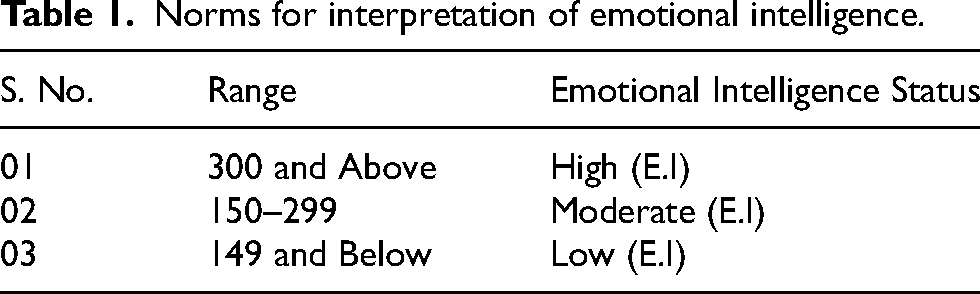
Emotional Intelligence Scale developed and standardized by Nadeem and Naaz (2015) was employed. Initially, the scale consisted of ninety-five items circulated over nine dimensions and was administered to 210 sample subjects. After expert rating, analysis and pilot study, the scale was finally based on eighty-five (85) items and nine dimensions or factors which include “Self-awareness, Trustworthiness, Adaptability, Emotional self-control, Empathy, Interpersonal communication/Interpersonal influence, Initiative/Achievement drive, Managing relations and Optimism”. The scale is highly valid and reliable. The validity and reliability co-efficient of the scale is 0.85 and 0.81 respectively. The norms for interpretation of emotional intelligence are reflected in the table that follows (Table 1).
Norms for interpretation of emotional intelligence.
Procedure of data collection
In order to build a relationship with the sample subjects and gain their participation for the study, the investigator made a physical contact with them before the actual study was conducted. However, before the actual study was commenced, the location of offices/institutions of the academic administrators was verified. Besides, the availability and working hours of the academic administrators were also determined by the investigators before actual study was conducted. The investigators later on established a physical contact with the sample subjects during office hours in their office chambers/ institutions. The sample subjects were assured that the data to be collected will be kept confidential and shall be used for research purposes only. This was deemed vital because, without their active participation, neither the respondents to the questionnaires under ideal circumstances nor their willingness could have been obtained. The data were gathered by using a standardized questionnaire which was handed over by the investigators to the sample subjects physically in their office chambers. Some of the respondents filled the questionnaire immediately and returned the same to the investigators instantly. However, a sizeable number of sample subjects returned the questionnaires within weeks’ time.
Statistical treatment
In light of the objectives of this investigation, the obtained data was put to statistical treatment by using various statistical techniques like percentage statistics (for ascertaining the levels of Emotional Intelligence, of School Academic Administrators), Mean, Standard Deviation, t-test (to find out degree of difference among Male and Female, Junior and Senior School Academic Administrators on Emotional Intelligence) The results were depicted in the form of pie charts, bar diagrams as well as in tables.
Results
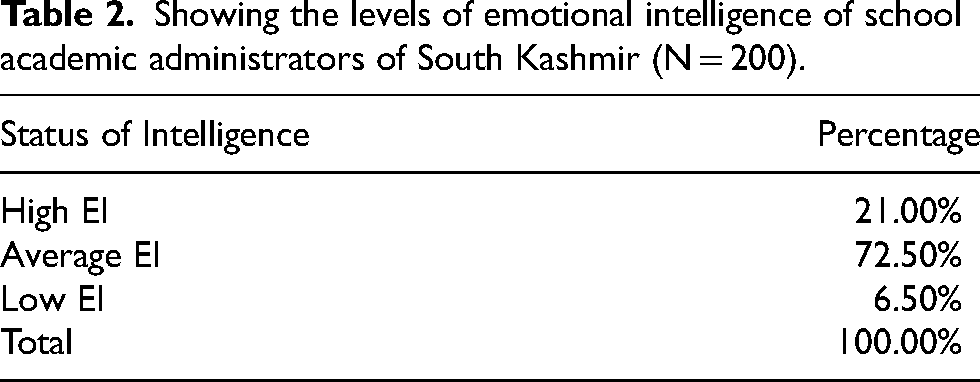
Table 2 depicts the levels of emotional intelligence of school academic administrators. The data reveals that 21.0% school academic administrators were found to be high on emotional intelligence, where as a significant percentage 72.5% were seem to have average emotional intelligence. It was observed that a very small percentage (6.5%) of school academic administrators were found low emotional intelligence Figure 1.
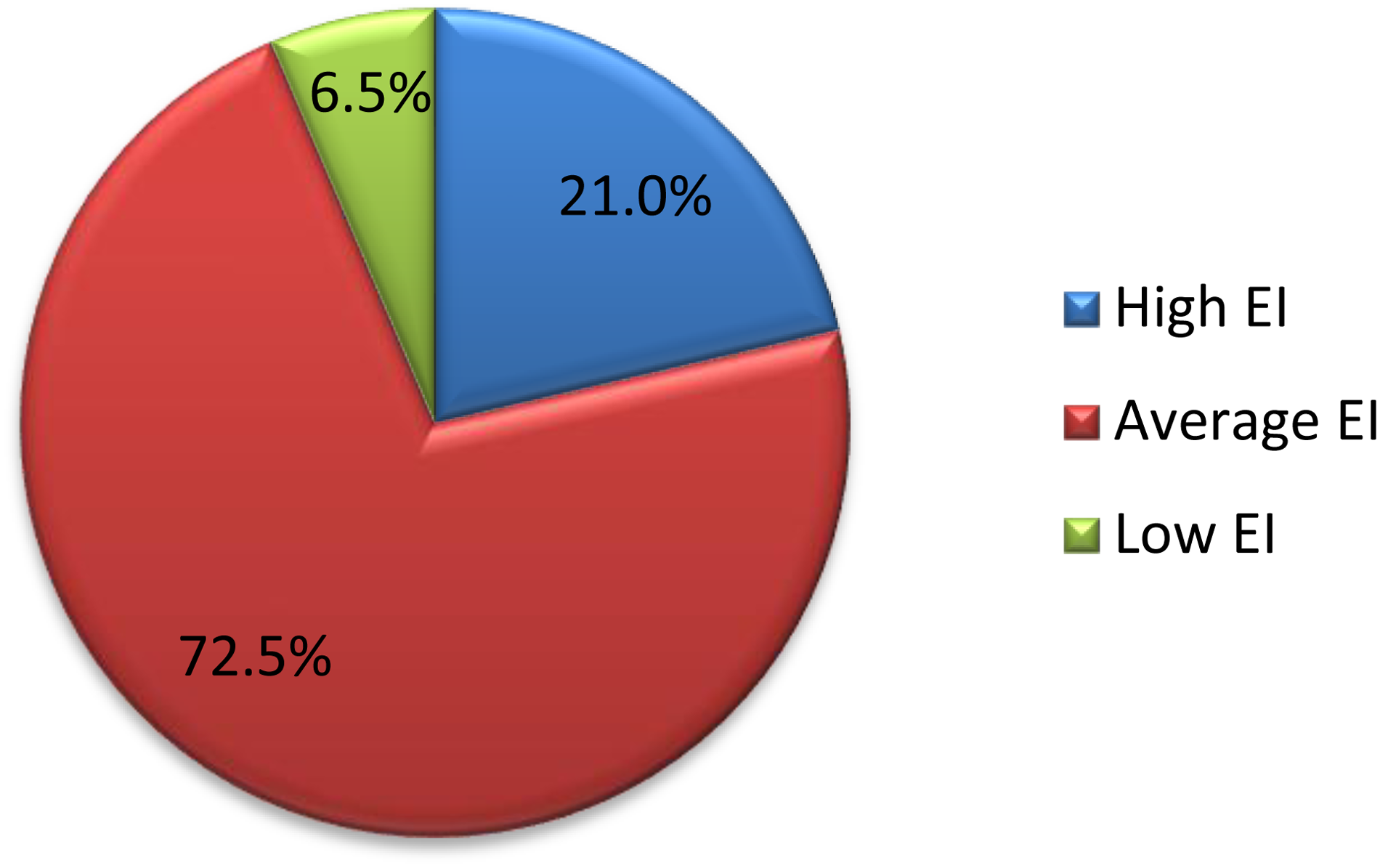
Graphical representation of Emotional Intelligence of School Academic Administrators.
Showing the levels of emotional intelligence of school academic administrators of South Kashmir (N = 200).
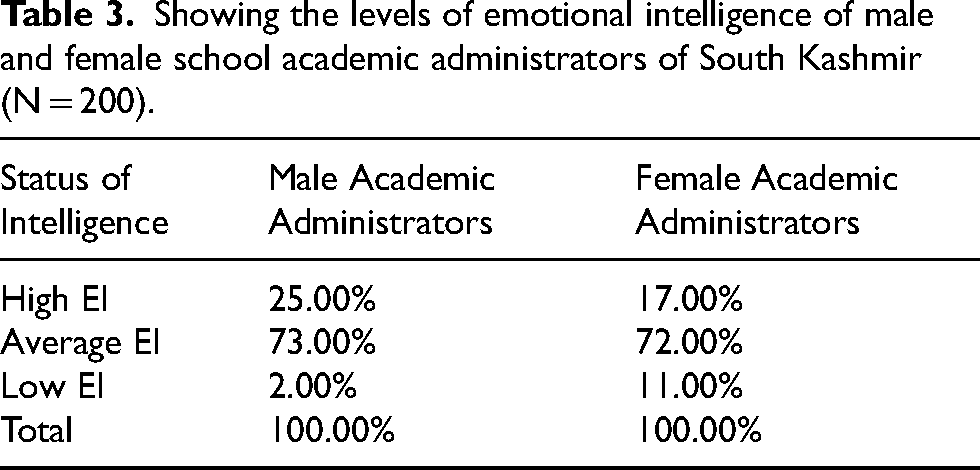
A quick look at Table 3 shows the levels of emotional intelligence of male and female school academic administrators. The data depicts that 25.0% male school academic administrators were found to possess high emotional intelligence, whereas 17.0% female school academic administrators fall in this category. The data reveals that a sizeable percentage of 73.0% male school academic administrator's and almost a similar percentage of 72.0% female school academic administrators were found to have average emotional intelligence. It is worthwhile to note that in the below average category, a very small percentage (2.0%) is that of male school academic administrators as compared to female administrators whose percentage is relatively much higher (11.0%). The analysis further reveals that since a significant percentage of male school academic administrators possess high emotional intelligence as compared to their female counterparts Figure 2. Therefore, it may be inferred that gender of the academic administrators is an important factor that conditions the emotional intelligence of school academic administrators Table 4.
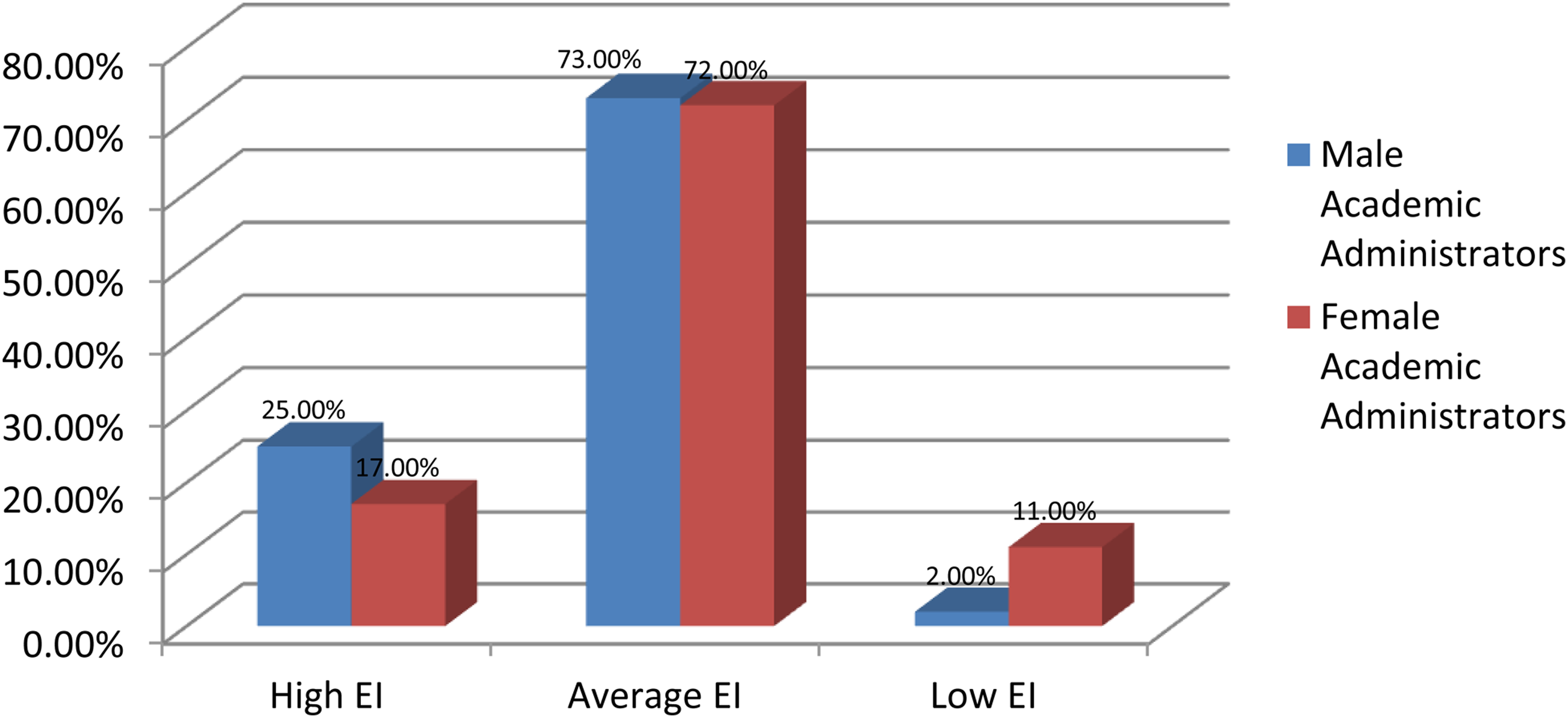
Graphical representation of Emotional Intelligence of male and female School Academic Administrators.
Showing the levels of emotional intelligence of male and female school academic administrators of South Kashmir (N = 200).
Showing the levels of emotional intelligence of junior and senior school academic administrators of South Kashmir (N = 200).
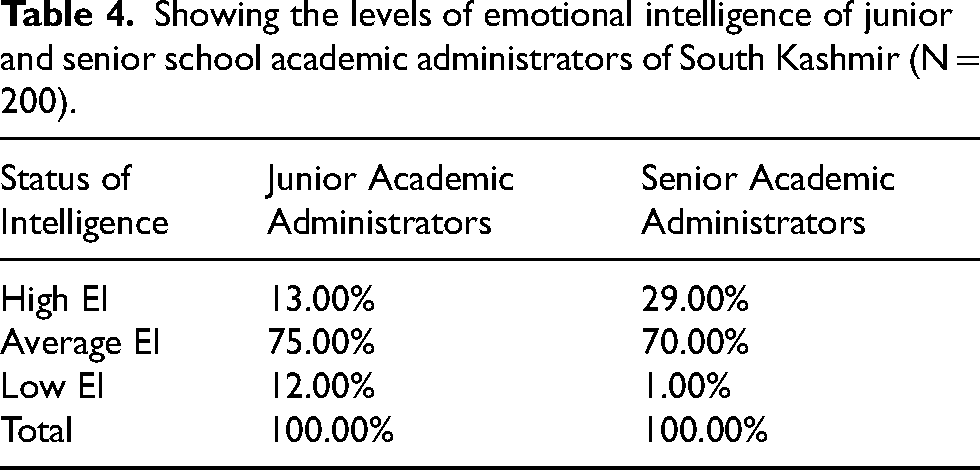
The above table shows the emotional intelligence school academic administrators in relation to their length of service. The data reveals that 13.0% junior school academic administrators were found to have high emotional intelligence, whereas 29.0% senior school academic administrators fall in this category. It was observed that a significant percentage (75.0%) of junior school academic administrators and 70.0% senior school academic administrators were found to exhibit average emotional intelligence. It was further observed that a small amount (12.0%) junior and only 1.0% senior school academic administrators possess low emotional intelligence. The analysis further reveals that since a significant percentage of senior school academic administrators possess high emotional intelligence as compared to the junior administrators. Therefore, it may be inferred that length of service of the academic administrators is an important factor that conditions the emotional intelligence of school academic administrators.
In view of the above results, (Objective No. 1) “To study the Emotional Intelligence of School Academic Administrators of South Kashmir in relation to gender and length of service” stands realized Figure 3.
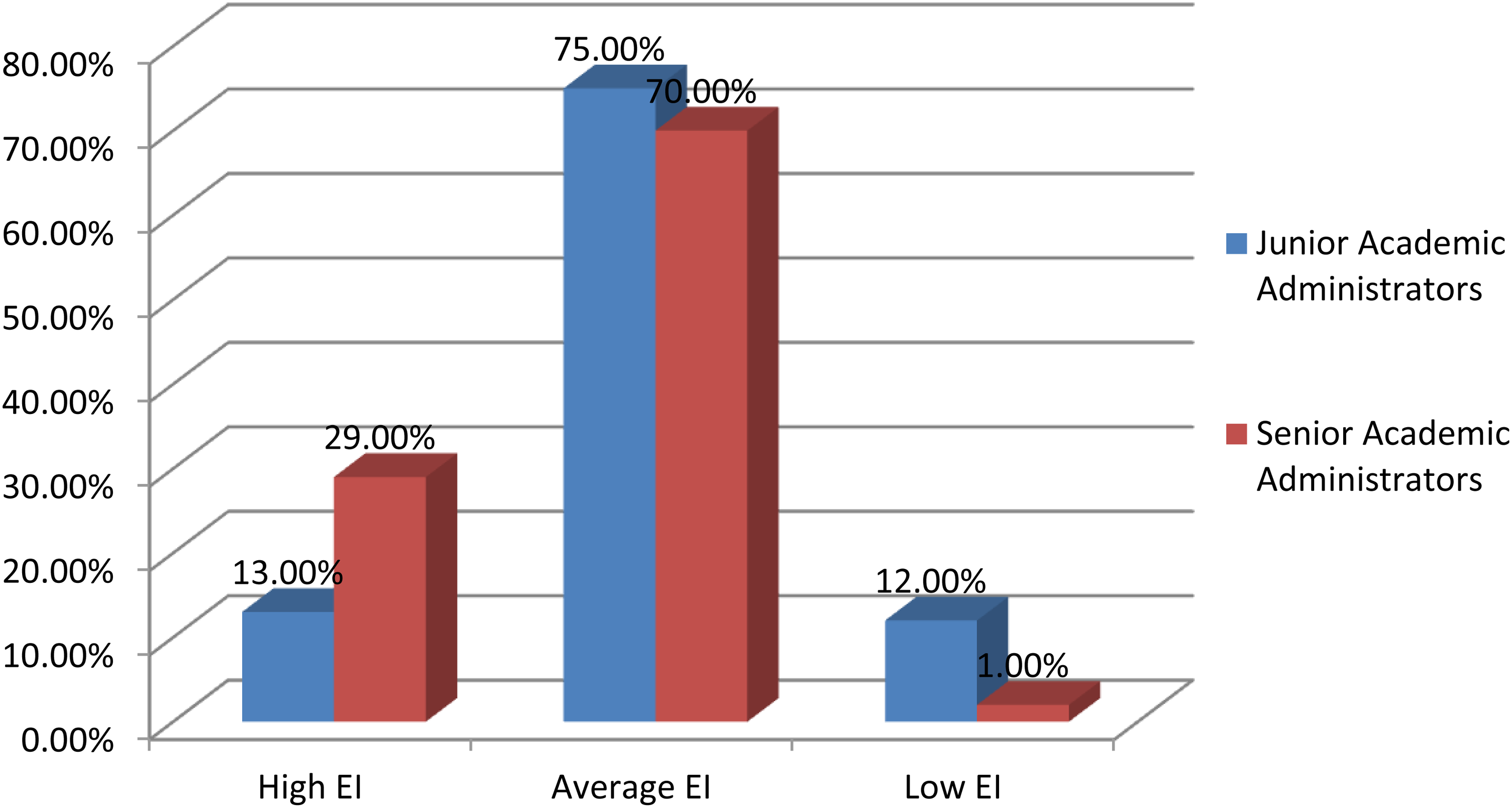
Graphical representation of the levels of Emotional Intelligence of junior and senior School Academic Administrators.
A perusal of Table 5 shows the significance of mean difference between male and female school academic administrators on Various Dimensions of Emotional Intelligence. The results reveal that male and female school academic administrators differ significantly on self-awareness, adaptability, emotional self-control, empathy, interpersonal communication and managing relations dimensions of emotional intelligence. These results indicate that male academic administrators show more adaptability, effective interpersonal communications and are well versed in managing the professional relationships as compared to the female academic administrators. The results also indicate that female administrators are effective in self-awareness and empathy and emotional self-control. The results further revealed that there is no significant difference between male and female school academic administrators on trustworthiness and initiative drive and optimism dimension of emotional intelligence. However, the overall mean score of the school academic administrators favours male administrators which indicates that male school academic administrators are more emotionally stable than their female counterparts. The obtained t-value on overall dimension of emotional intelligence came out to be 2.04 which is significant at 0.05 level of significance. From the empirical evidence mentioned above, the hypothesis No. 1 “Male and Female School Academic Administrators differ significantly on various dimensions of Emotional Intelligence” stands accepted.
Comparison of male and female school academic administrators on various dimensions of emotional intelligence (N = 200).
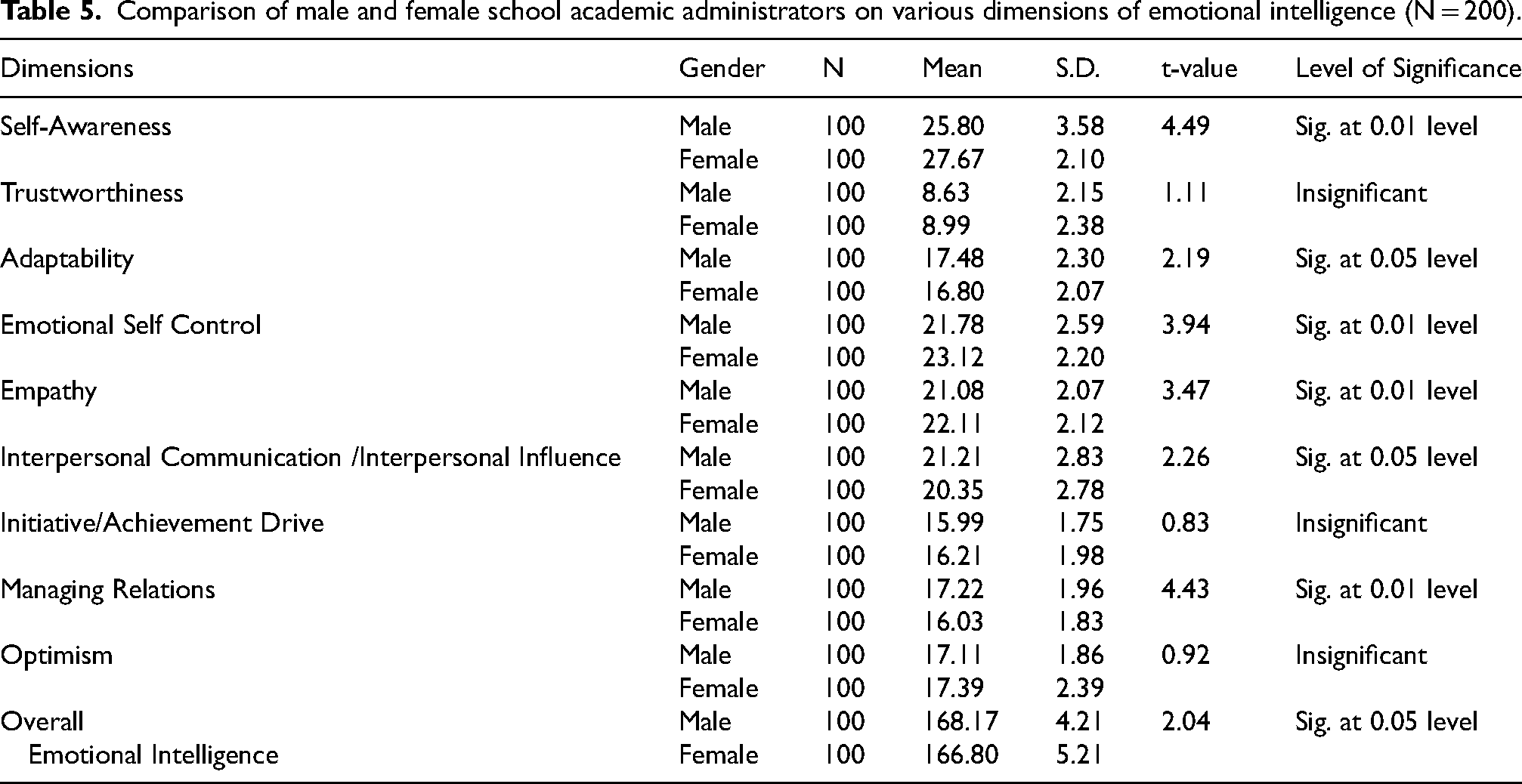
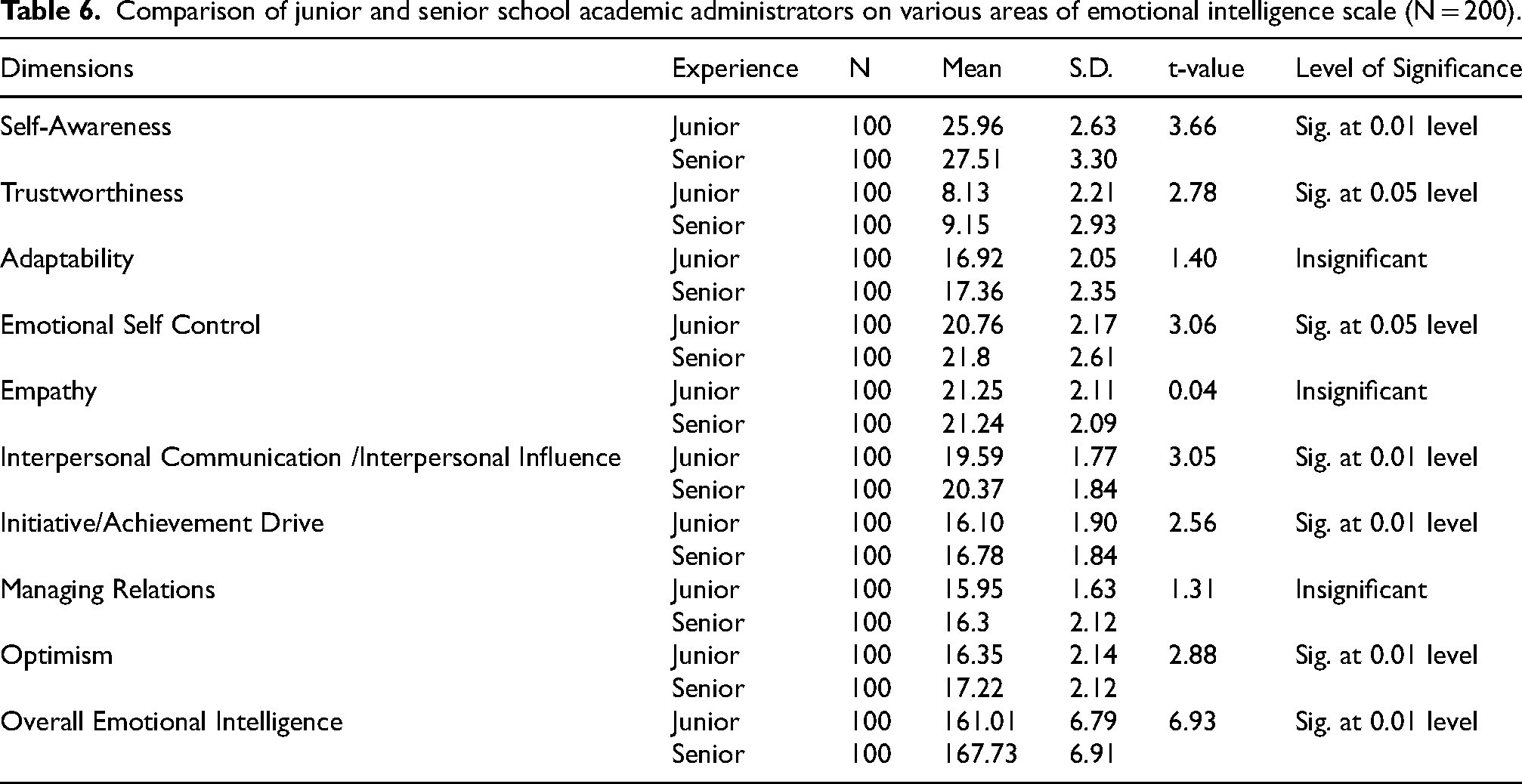
Table 6 depicts that junior and senior school academic administrators differ significantly on various dimensions of Emotional Intelligence. The results revealed that junior and senior academic administrators differ on overall emotional intelligence dimension. The obtained t-value came out to be 6.93, which is significant at 0.01 level of significance. The mean difference favours the senior school academic administrators with mean value (M = 167.73) which reveals that senior school academic administrators establish a good control on various dimensions of Emotional Intelligence than the junior school academic administrators with mean value (M = 161.01). The results indicate that senior school academic administrators establish good control on Self-Awareness, Trustworthiness, Emotional Self Control, Interpersonal Communication /Interpersonal Influence, Initiative/Achievement Drive and Optimism. Whereas no insignificant difference was reported between junior and senior school academic administrators on Adaptability, Empathy and Managing Relations dimensions of emotional intelligence. In the light of above results, the hypothesis No. 2 which reads as “Junior and Senior School Academic Administrators differ significantly on various dimensions of Emotional Intelligence” stands accepted.
Similarly, in view of empirical evidences mentioned above, the objective No.2, “To compare the Emotional Intelligence of School Academic Administrators of South Kashmir in relation to gender and length of service” stands accomplished.
Comparison of junior and senior school academic administrators on various areas of emotional intelligence scale (N = 200).
Finding and discussion of the results
From the descriptive analysis, it was found that 21.0% of school academic administrators possess high emotional intelligence. It has also been found that a majority of academic administrators (72.5%) who are working in the school education departments in the existing districts of South Kashmir possess average level of emotional intelligence. However, a very less percentage (6.5%) of administrators display low levels of emotional intelligence. These findings are in line with the findings of Kamassi, Manaf & Omar (2019) who reported high level of emotional intelligence among administrators. These findings are in line with the findings Martinaa et al., (2015) who confirmed low and average emotional intelligence among managers.
These results indicate that a small amount of school academic administrators exhibit better emotional control in terms of self-awareness, adaptability, trustworthiness, emotional self-control and optimism. So, emotional intelligence among school academic administrators merits attention from planners and practitioners so that through various extension activities, workshops, seminars, etc the academic administrators who possess low emotional stability can be helped to develop the emotional make up for their professional growth as well as for the growth of their institution and students.
The data further depicts that 25.0% male school academic administrators exhibit high emotional intelligence than their counterparts whose percentage was significantly low (17.0%). It has also been found that both male and female school academic administrators equally exhibit moderate level of emotional intelligence. The male administrators displayed (73.0%) while as female academic administrators have 72.0% emotional intelligence. Pertinent to mention here that a very less amount of male school academic administrators (2.0%) possesses low emotional intelligence than the female school academic administrators with a significant percentage of (11.0%). These findings are in line with the findings of Shahzad and Bagum (2012) who found a significant difference between male and female university students on emotional intelligence. Male participants demonstrated higher level of emotional intelligence as compared to females.
From these results, it can be conferred that male academic administrators are quite open and straight forward in their communication and dealings with their colleagues and subordinates. They speak clearly and believe in honesty and truthfulness. They easily convince others and are in a position to cope with new environment. They seem to be enduring whose thinking styles are always loaded with positive thoughts. In contrast the female academic administrators who score low on emotional intelligence feel it difficult to describe even their feelings. They do not know about their strengths and are not in a position to control the difficult situations while working in any academic organization. They also find it difficult to adjust with their colleagues and are not able to adapt to the changes in the environment.
From the descriptive analysis, it was found that a significant percentage (29.0%) of senior academic administrators possess high emotional intelligence. Whereas, a relatively less percentage (13.0%) of junior school academic administrators fall in this level. The results also revealed that a sizeable percentage (70.0%) of senior and (75.0%) junior school academic administrators possess average emotional intelligence. The results also showed that 1.0% senior and 12% junior school academic administrators have low emotional intelligence. These results indicate that senior academic administrators were found to have good emotional adjustment than their counterparts. These results indicate that senior academic administrators are very clear in their academic and administrative affairs. They seem to be very honest in their dealings and possess the ability to convince others. The senior academic administrators seem to be very confident about their abilities and strengths. They are ready to take initiatives and or accept new interventions in order to realize their commitments. As academic administrators, they are able to focus on others when they listen their concerns or suggestions. They are readily able to engage in any meaningful interaction with their subordinates. Senior school administrators are good at social communications who deal calmly with the emotional outbursts of others. They are clear about their goals and values and seem to resist negative thoughts and think of positive alternatives. They do not mix their feeling and emotions with their professional issues. They seem to be goal oriented who work tirelessly for realizing the objectives and goals of their institution. They are able to adjust to new situations and are in a position to cope with new environment. The senior academic administrators who are emotionally balanced do not easily give up when they are interested to accept or introduce new interventions. They seem to be organized and careful in their work. They are loaded with optimism who resist negative thoughts and explore positive and meaningful alternatives. They never allow their feeling to influence their decisions and actions.
In contrast, the junior academic administrators who exhibit low emotional seem to be half hearted who find it difficult to keep themselves motivated while discharging their duties. They are not in a position to encourage or console their colleagues or their subordinates whenever they feel bad. They are not in a position to sympathize others. The junior academic administrators also find it difficult to adjust their professional life according to the changing circumstances. They are not straightforward due to which they find it hard to say ‘no’ when they are not in a position to help others. They like to remain aloof and do not share their intimate feeling with their colleagues and friends. They are also not in a position to handle problems or difficulties in their occupational affairs in a cool and composed manner. They also find it difficult to move beyond problems, anger and annoyance of the past. They seem to be half hearted and conservative due to which they are not in a position to accept new ideas or grab new opportunities. These findings are in line with the findings of the Majid and Mattoo (2018) who found that senior and junior administrators differ significantly on various dimensions of emotional intelligence. Senior administrators have good emotional maturity as compared to junior counterparts.
Educational Implications
The role of school academic administrators in the present academia is changing and demands of the profession are increasing day by day. Such demands require preparation, confidence and commitment. The administrator of an institution is the key figure to meet the demands of the profession. School administrators need to explore, update and develop skills like empathy, optimism, managing relations, etc. to manage complex and ever-changing challenges in order to meet the necessities of the profession. The present work was designed to examine the emotional intelligence of school academic administrators of South Kashmir in relation to gender and length of service. Significant differences have been reported between junior and senior academic administrators. Similarly, significant differences were also found between male and female school academic administrators on various factors of emotional intelligence viz. emotional self-control, managing relations, empathy, adaptability, self-awareness, interpersonal communication /interpersonal influence. Senior as well as male school academic administrators have been found to exhibit better emotional intelligence than junior and female school academic administrators. Therefore, efforts should be made to raise the level of emotional intelligence of female as well as junior academic administrators through various programme of sensitization as well as capacity building. Since emotional intelligence among male and senior academic administrators were found high as compared to their female and junior counterparts so the state can utilize the experiences and expertise of senior administrators in developing the emotional makeup of junior and female academic administrators. There is a significant positive relationship between emotional intelligence and administrator-ship behaviour so we need to have emotionally balanced administrators who may administer their institutions effectively and efficiently which in turn can help the academia in imparting quality education to the children at school level. Various intervention programmes, success stories, personal experiences of senior and male academic administrators can be utilized for channelizing the emotional make-up of junior academic administrators so that their emotional intelligence can shoot up and shall be in a position to administer their institutions effectively. Various national and state level agencies like National Council for Education Research and Trainings (NCERT), State Council of Education Research and Trainings (SCERT), State Institutes of Education (SIE's), District Institute of Education and Trainings (DIET's) should organize special training courses, so that the emotional makeup of the administrators can be put forward to a productive level.
Footnotes
Declaration of conflicting interests
The authors declared no potential conflicts of interest with respect to the research, authorship, and/or publication of this article.
Funding
The authors received no financial support for the research, authorship, and/or publication of this article.

Author biography