







Abstract
This study examines how middle leaders in Qatari government schools interpret and enact their roles within a persistently centralised policy environment. Using Q methodology, 26 subject coordinators from seven schools sorted 41 statements designed to capture intrapersonal, relational and contextual influences on middle leadership. By-person factor analysis produced four shared viewpoints: (F-1) the pragmatic professional sustained confidence through self-directed learning while navigating compliance demands, (F-2) the constrained professional described administrative overload and limited authority that reduced time for core leadership work, (F-3) the autonomous professional emphasised judgements based on student needs and localised discretion, with less reliance on wider networks and (F-4) the collaborative professional relied on peer cooperation and collective routines as the basis of their influence. Across the viewpoints, an instructional leadership role remained visible, yet participants differed in how they constructed professional agency, mobilised relationships and experienced centralisation in curriculum and evaluation. The findings suggest that reforms relying on tighter mandates risk narrowing middle leadership into compliance routines. They also indicate that middle leaders’ improvement capacity can be strengthened by participatory decision structures, institutionalised collaboration and preparation for curriculum leadership that is matched with formal authorisation to contribute.
Introduction
A typical educational system worldwide has become one that operates within a bureaucratic paradigm (Romanowski and Du, 2020). It is often characterised by a hierarchical structure that values conformity and efficiency (Farchi and Tubin, 2019; Zhang et al., 2022). If we are to view leadership scholarship through a complexity lens, it becomes clear that the requirements for a knowledge era, including adaptability, continuous learning and fluidity, are incompatible with the fixed rules and cultures of these mechanistic institutions (Uhl-Bien et al., 2007). Despite decades of advocacy for decentralisation, centralised control continues to define educational governance (Lumby, 2019). School leaders get caught up within these bureaucratic systems and face constraints to their professional agency, specifically that hierarchical authority and prescribed standards limit their ability to take discretionary action (Uhl-Bien and Marion, 2009). A central challenge for school leaders in such contexts is to shift their conceptions of leadership from a mechanistic worldview towards a contextual and organic perspective (Rosenhead et al., 2019).
The Qatari educational system provides one example of this conflict between reform rhetoric and structural reality. The Education for a New Era reform, which was launched in 2004, sought to decentralise ministry authority and promote school autonomy through the establishment of independent schools, which are publicly funded institutions granted operational autonomy over curriculum, instruction and staffing (broadly analogous to charter schools in the United States) (Romanowski and Du, 2020). Although the reform initially expanded on local decision-making, further policy shifts gradually reinstated ministerial oversight and reduced school-level discretion. The Ministry of Education and Higher Education has since reasserted its regulatory role over curriculum, pedagogical practices and evaluation, which has resulted in the dissolution of the independent school model and facilitated a return to centralised governance (Chaaban et al., 2021a; Romanowski and Du, 2020). This re-centralisation has produced a policy environment that is persistently dominated by top-down directives and limited by institutional flexibility. The reform, designed externally and modeled on Western decentralised frameworks, assumed a level of capacity and institutional readiness that did not exist locally, and teachers and principals struggled to exercise the autonomy it demanded. This mismatch between the borrowed model and the local context provided the conditions under which ministerial reassertion was justified (Romanowski and Du, 2020).
Within this structured context, middle leaders, typically titled subject coordinators or heads of department in government schools (Chaaban et al., 2025), play an important role in educational reform, especially that they are responsible for curriculum implementation (Gurr, 2019; Li et al., 2018). Positioned between senior leadership and teachers, they act as key intermediaries who must translate policy into practice (Zhou and Deneen, 2020; Zhang et al., 2022). This middle position creates inherent tensions for middle leaders who must navigate ministerial accountability and instructional leadership responsibilities (Irvine and Brundrett, 2016; Marshall, 2012). With limited agency, middle leaders are constantly directed towards compliance and administrative tasks, and their influence becomes limited within the instructional domain rather than the organisational or systemic level (Gurr and Drysdale, 2013; Hall, 2018; Lipscombe et al., 2025).
Despite a growing body of research on middle leadership, most empirical studies are situated in Western contexts, and evidence from Arab Gulf systems remains limited (Chaaban et al., 2025; Lipscombe et al., 2025). More critically, existing research has tended to examine what middle leaders do rather than how different leaders subjectively interpret and experience the same structural conditions. This limits our understanding of why some middle leaders sustain professional agency while others experience constraint, a question that is particularly pressing in centralised systems where leaders have little room to exercise independent professional judgement.
This study examines how middle leaders in Qatar navigate these structural and relational constraints and how they interpret their roles within a persistently centralised system. It employs Q methodology research as a systematic approach to studying subjectivity that focuses on individual beliefs, attitudes and viewpoints (McKeown and Thomas, 2013). It is further organised around a conceptual framework that comprises three interconnected dimensions: intrapersonal (e.g., identity and personal beliefs), relational (e.g., interactions with peers and senior leaders) and institutional (e.g., policy constraints and organisational structures). Together, these dimensions provide a comprehensive lens for understanding middle leaders’ perspectives and experiences of their leadership roles in the Qatari educational system. It is guided by the following research questions:
How do middle leaders understand their leadership roles in relation to intrapersonal, relational and contextual influences within centralised Qatari schools? How do emerging viewpoints reveal tensions between externally defined instructional demands and local pedagogical aspirations?
The significance of this study lies in its capacity to render visible the tacit processes through which middle leaders reconcile external mandates with local pedagogical realities. It offers empirical grounding for policies that seek to understand how middle leaders negotiate the constant struggle to balance structural demands against their professional roles. Moreover, the Q methodological lens foregrounds middle leaders’ culturally situated experiences, thereby offering policymakers with evidence on how centralised reforms are interpreted, enacted and even resisted within school contexts.
Literature review
Conceptualising the middle leader
Generally, middle leaders assume formal responsibilities and duties of leadership at a level situated between the principal (or senior leadership) and classroom teachers (Grootenboer et al., 2015; Zhang et al., 2022). Their roles have historically shifted from middle managers to middle leadership to reflect their increasing engagements in curriculum development, professional learning responsibilities and strategic planning over purely administrative tasks (Harris et al., 2019). However, irrespective of nomenclature, the critical question remains not whether middle leaders matter but under what conditions and in what ways they are able to perform their roles most effectively (Farchi and Tubin, 2019; Gurr, 2019).
The structural position of the middle leader inherently generates dual accountabilities and responsibilities. They are located at the meso-level and act as critical brokers or bridges who facilitate organisational goals between senior management and frontline teaching staff (Marshall, 2012). They are conceptually framed as sandwiched between priorities, structures and power relations and practically subjected to competing organisational and relational demands (Irvine and Brundrett, 2016; Zhou and Deneen, 2020). In this sense, they are required to reconcile the requirements of hierarchical power with the professional language of collegiality and teamwork within their departments (Zhou and Deneen, 2020).
In navigating these dual demands, middle leadership practices generally fall into three integrated categories: teaching and leading, managing and facilitating as well as collaborating and communicating (Grootenboer et al., 2023). Several studies that contrast middle leaders in successful and less successful schools indicate that while all middle leaders engage in administrative tasks, those in the effective schools, which typically provide clearer rules and sufficient resources, perform both administrative and pedagogical duties (Farchi and Tubin, 2019). Some of these pedagogical functions include designing school-based curricula (Li et al., 2018), setting clear and measurable goals and promoting collaborative cultures within the department (Highfield and Rubie-Davies, 2022). Conversely, in highly mandated systems, middle leaders risk being relegated to “conduits of compliance” rather than innovators (Ainsworth et al., 2024). Their main responsibilities become limited to implementing policy agendas and focusing solely on the instructional dimension (Gurr and Drysdale, 2013).
Conceptual framework
This study adopts a three-dimensional conceptual framework that is based on our view of leadership as a complex practice shaped by interactions within and across personal, relational and contextual systems (Clarke, 2013; Uhl-Bien et al., 2007). We refute the idea of the solo-heroic leader and conceptualise leadership as a relational act that is embedded in institutional structures (Chaaban et al., 2025). These three domains capture how middle leaders interpret, enact and experience their leadership roles within a specific socio-cultural context.
The intrapersonal dimension focuses on middle leaders’ internal capacities and self-beliefs that guide their leadership roles. It includes their beliefs on their professional competence, confidence in guiding teachers and their ability to make sound leadership decisions. Middle leaders draw upon their values and principles while balancing them with the demands of centralised policies (Lifshitz-Assaf, 2018). They demonstrate professional agency through self-reflection, continuous learning and a commitment to professional growth (Chaaban et al., 2021b; Eteläpelto et al., 2013). Motivation is also an important component of this dimension, whereby middle leaders view their leadership position as a means to influence educational improvement and contribute to national educational reform (Chaaban et al., 2023). This dimension also recognises the challenges that middle leaders may face as a result of unclear responsibilities and limited authority (Irvine and Brundrett, 2017).
The relational domain captures the socio-cultural and interpersonal dynamics that influence middle leaders’ roles. It is grounded in relational leadership theory, which views leadership as emerging through social interactions rather than as static individual traits (Uhl-Bien et al., 2007). Middle leaders work within a network of relationships and their effectiveness depends on the quality of these relationships, specifically with senior leaders who support the implementation of educational plans and teachers who enable shared goal-setting and professional learning (Zhang et al., 2022). Middle leaders also engage with parents and students to measure teaching quality and departmental progress. This relational positioning often requires balancing upwards accountability with downwards responsibility and horizontal collaboration, which makes relational skills a defining feature of effective middle leadership roles (Chaaban et al., 2025).
The contextual domain addresses the structural and cultural environment in which middle leaders operate. It includes institutional policies, resource allocation, curriculum development and evaluation systems that provide both constraints and affordances (Li et al., 2018; Gurr, 2019; Shaked and Schechter, 2017). For instance, centralised decision-making and financial directives can restrict middle leaders’ flexibility, specifically when policies are unclear and government frameworks are constantly shifting (Romanowski and Du, 2020). The common challenges of workload pressures, administrative demands and accountability expectations can also limit the time middle leaders have to reflect and innovate (Chaaban et al., 2025). However, a supportive school culture that values collaboration and provides access to professional development can enhance their leadership capacity (Gurr, 2019).
Importantly, these three dimensions do not operate in isolation. Intrapersonal beliefs about professional agency are reinforced or constrained by the quality of relational networks, which are themselves influenced by the contextual conditions in which middle leaders operate.
Methodology
Q methodology (Q) was applied in this study to uncover middle leaders’ perspectives and experiences of their leadership roles, particularly operating within a centralised educational system. Q offers a systematic means to examine human subjectivity by blending quantitative and qualitative techniques (McKeown and Thomas, 2013). It enables researchers to investigate individuals’ internal frames of reference by analyzing how they rank or sort a structured set of statements that reflect diverse opinions on the topic under study (Watts and Stenner, 2012). As a participant-centered approach, Q focuses on grouping people rather than variables and provides a holistic understanding of collective viewpoints within a population. This methodological integration reduces researcher bias and captures participants’ authentic cognitive patterns, including their values, belief and opinions. In this study, we followed established procedures set by Watts and Stenner (2012) to collect and analyze data. These steps included: (1) Q-sample development, (2) Participant selection, (3) Q-sorting activities, (4) Factor analysis and (5) Factor interpretation.
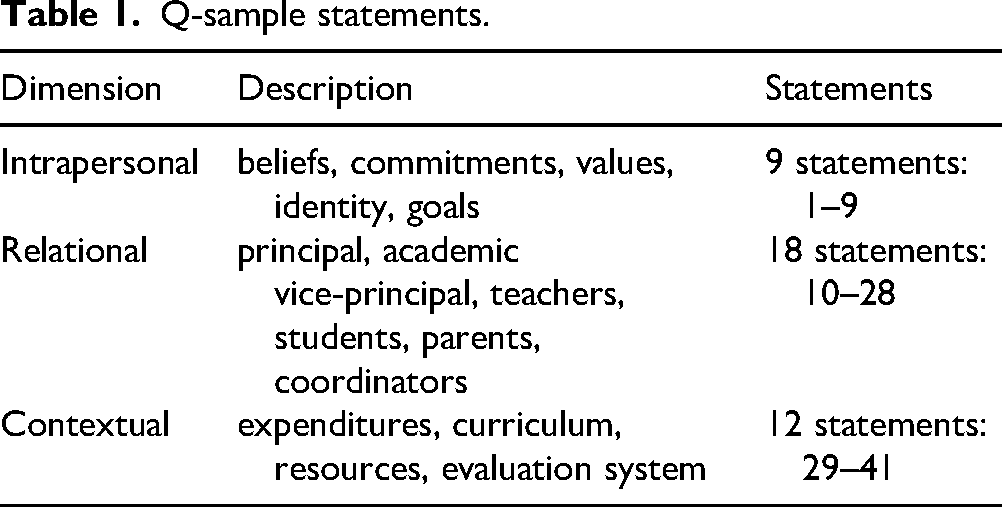
Step 1. Q-sample development. The Q sample is the main research instrument and encompasses the structured set of statements that participants rank during the sorting process (Brown, 2019). Its construction begins with the development of the concourse, which is a comprehensive pool of potential statements that reflect the diversity of discourse surrounding the topic under investigation. We developed our concourse from conversational sources, including interviews with three middle leaders, and from informational sources derived from academic literature and policy documents (Watts and Stenner, 2012). The resulting concourse constituted 102 statements, which were then culled with attention to redundant and marginal statements. This process resulted in the final Q sample consisting of 41 statements covering a balanced distribution of perspectives across the identified intrapersonal, relational and contextual dimensions, as shown in Table 1.
Q-sample statements.
Step 2. Participant selection. Participants are selected strategically to represent diverse and relevant viewpoints on the research topic (Brown, 2019). Upon receiving ministerial and institutional review approvals (#), we sent an email invitation to all government schools, inviting key subject coordinators to take part in this study. Seven schools responded to the email invitation, and 26 middle leaders were recruited. The demographic profile of our sample comprised of middle leaders ranging from 25 to 60 years of age, with teaching experiences spanning 3–30 years and middle leadership tenures between 1 and 22 years. The sample also included both Qatari nationals (N = 17) and citizens of Arab countries (N = 9).
Step 3. Q-sorting activities. Participants systematically ranked the Q sample on a quasi-normal grid according to their perspectives (see Figure 1). The grid included a scale ranging from (+5) most agree to (−5) most disagree. The first author visited the schools that agreed to participate and ensured a supportive environment for data collection. During these visits, the first author explained the Q sorting processes and clarified any questions. Participants first reviewed all 41 statements and sorted them into preliminary categories of agreement, neutrality and disagreement, before assigning each statement to its precise position on the grid. Throughout the sorting activity, participants were encouraged to reflect on their choices and modify their placements to better represent their unique views. Upon completion, the sequence and order of statements for each participant were recorded for subsequent factor analysis. Participants then filled in a post-sorting activity where they elaborated on their choices of the most agreed and most disagreed statements.

Sorting grid.
Step 4. Factor analysis. We performed factor analysis on the collected Q-sort data to uncover shared viewpoints among participants. The Q-sort data from the 26 participants were imported into KADE, a user-friendly open-source application specifically designed for Q research (Banasick, 2019). KADE's platform facilitated a by-person factor analysis, making use of centroid factor extraction and Varimax rotation to reduce data dimensionality and highlight prominent patterns of subjectivity (Watts and Stenner, 2012). We selected an optimal factor solution based on established criteria, including interpretability, simplicity and the distinctness and stability of factors, complimented by statistical benchmarks, including eigenvalues >1.00, percentage of explained variance and a minimum of two Q sorts per factor with significant loadings (Watts and Stenner, 2012).
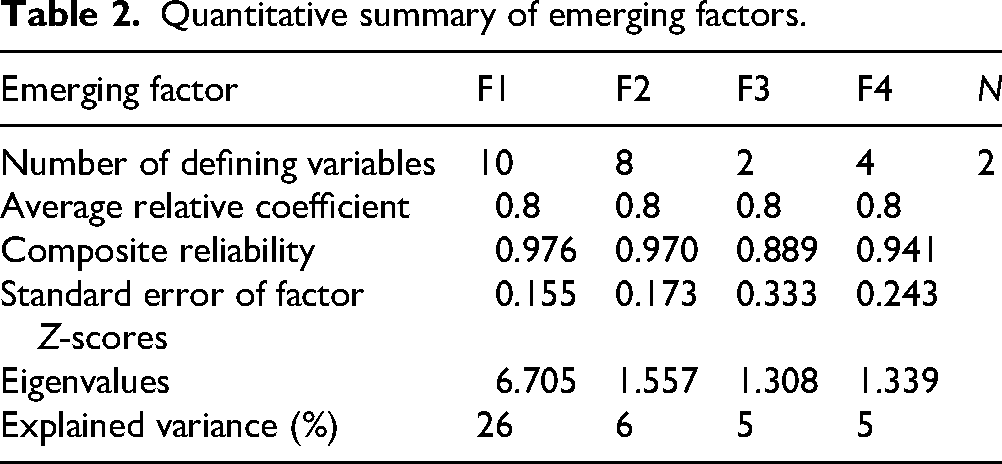
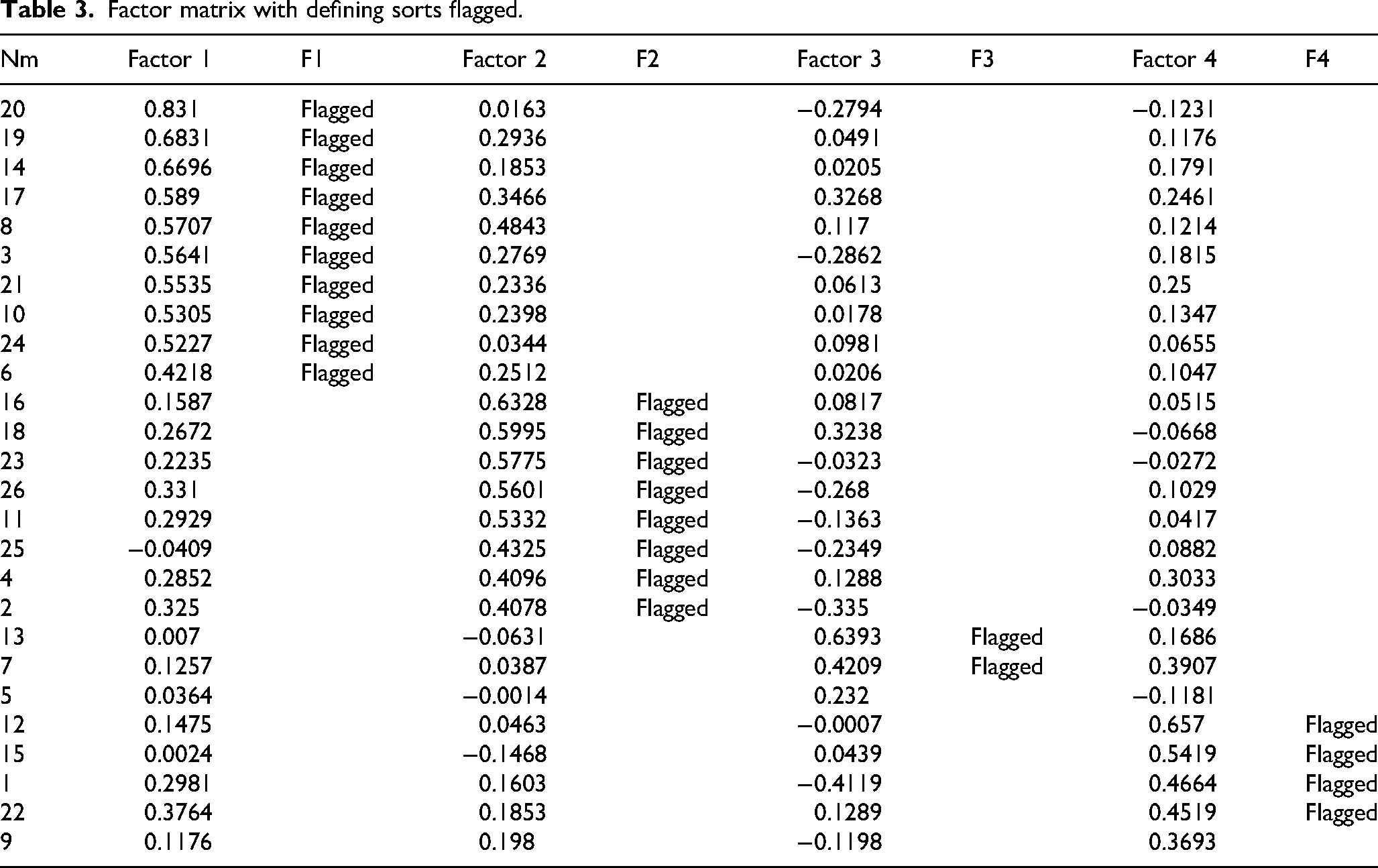
We found a four-factor solution to be optimal. The four factors were flagged based on the eigenvalues and explained variance thresholds: Factor 1 (17%), Factor 2 (12%), Factor 3 (6%) and Factor 4 (7%) (see Table 2). Each Q sort was assigned loading scores on all four factors, which indicates the degree of association between a participant's sort and the corresponding factor. Factor loadings are quantitative measures reflecting how strongly each participant represents a particular factor. A loading above ±0.40 (as per conventional standards) on any factor, accompanied by low loadings on other factors, identifies a participant as a defining sort for that factor. For instance, Participant 20's loading on Factor 1 was 0.831, which designates this person as a definitive representative of Factor 1's perspective. Participants 5 and 9 were identified as null participants (no significant loading on either factor at p < .01) and were therefore excluded from the factor arrays and all subsequent Q factor interpretations (see Table 3).
Quantitative summary of emerging factors.
Factor matrix with defining sorts flagged.
Step 5. Factor interpretation. This final step involved interpreting the factors generated through the factor analysis. KADE combined all Q sorts with significant loadings on the same factor and created an idealised factor array that represented a composite perspective through weighted averaging. We proceeded with the interpretation process both abductively and iteratively, starting with an in-depth analysis of each factor array and informed by the post-sorting elaborations. This step also included the identification and examination of distinguishing and consensus statements, as well as the most and least endorsed items within each factor. By comparing these statements across factor arrays, we provided insights into key differences and areas of agreement, thereby enabling the construction of comprehensive narratives that reflected the participants’ subjective perspectives.
Results
In this section, we present the four factors. The table in the appendix provides a succinct comparison of the factors across emerging themes.
F-1: The pragmatic professional
Ten participants shared the viewpoints expressed in Factor 1 (F-1), accounting for 26% of the opinion variance. Figure 2 presents the idealised Q sort for F-1. These participants viewed their middle leadership roles as primarily relational. Their main emphasis was on teachers’ professional development and collegial work, while acknowledging the presence of certain constraints imposed by centralised policies and heavy administrative demands.
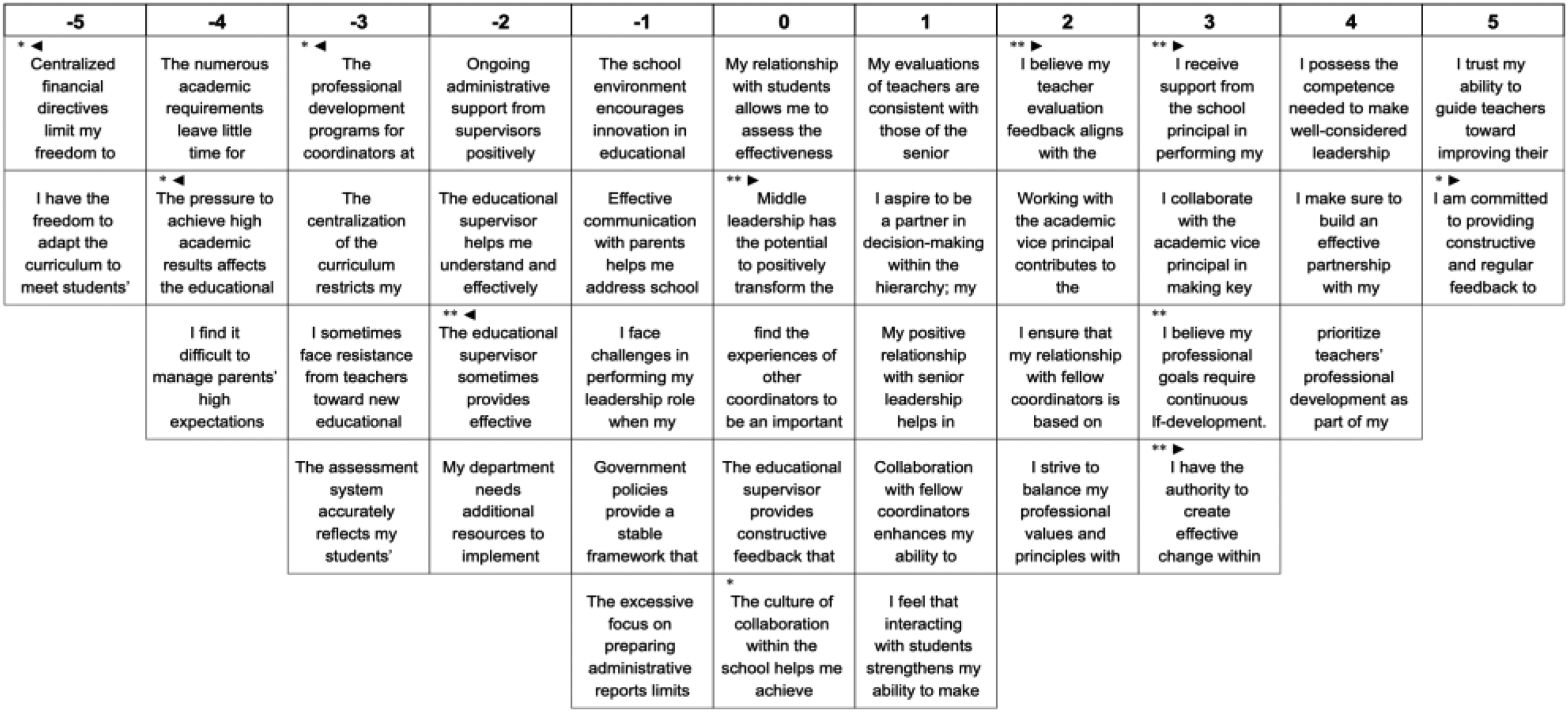
F-1 factor array.
On the professional development front, F-1 participants asserted strong confidence in their ability to guide teachers to improve classroom practices (1; +5). They emphasised regular, constructive feedback as central to their leadership role (17; +5) and prioritised teacher learning as part of their daily leadership practices (8; +4). They reported building strong relationships with their teachers to pursue shared goals (16; +4), otherwise their professional development initiatives would not be trusted. To further consolidate their credibility, they engaged in continuous self-development to improve their own skills (9; +3). At the same time, they were sceptical about the effectiveness of formal training opportunities, particularly those offered by the ministry (41; −3), and so depended on self-initiated professional learning opportunities.
On assessment and evaluation, F-1 participants largely aligned their evaluative practices with broader standards. They valued the consistency between their teacher evaluation feedback and the ministry's evaluation standards (34; +2) and ensured their judgements remained in harmony with their senior leadership team (13; +1). F-1 participants grounded their evaluative approach in personal competence, as they judged themselves capable of making well-considered leadership decisions (2; +4). Their evaluative confidence was further reinforced through reflective planning, as they acknowledged the intensity of administrative and academic demands that often limited their time for deep reflection (37; −4). Thus, a balance between compliance and reflection characterised their evaluative stance.
Their relational leadership roles were reciprocated by the support they received from senior leaders. With such support from their principals (10; +3), they aspired to be partners in decision-making within the school hierarchy rather than simply carry out directives (5; +1). These positive ties with senior leaders helped them initiate new educational initiatives (14; +1). Moving down the hierarchy, they collaborated with academic vice principals in decision-making (11; +3) and worked with them to implement school plans (12; +2). Such collaborations gave them a sense of authority and legitimacy to effect change within their departments (7; +3). Horizontally, they described their relationships with fellow coordinators as cooperative rather than competitive (20; +2) and viewed such collaborations as a resource for overcoming school challenges (19; +1). Yet they judged the school environment as only mildly encouraging of innovation (38; −1).
F-1 participants were pragmatic about supervisory and ministry roles. Educational supervisors, as they are called in this context, are ministry representatives who oversee policy implementation and teacher evaluations. According to F-1 participants, supervision from the ministry was perceived as uneven and at times contradictory. While the educational supervisor can provide helpful guidance (26; −2), their interventions often limited autonomy and restricted participants’ ability to effectively apply the requirements of the national curriculum (27; −2). In effect, they strongly opposed the idea that they have the freedom to adapt the curriculum to meet their students’ needs (32; −5) and agreed that curriculum centralisation restricts their ability to tailor learning to the local context of their schools (31; −3). They also identified performance demands as another major constraint, such that the pressure to achieve high academic results negatively affected the educational climate within their departments (35; −4). To mitigate such external pressures, they sought to strike a balance between their professional principles and the demands of centralised policy (4; +2). This combination of confidence and pragmatism positioned them as reflective professionals who maintain their integrity while navigating systemic realities.
F-2: the constrained professional
Eight participants shared the viewpoints expressed in Factor 2 (F-2), accounting for 6% of the opinion variance. Figure 3 presents the idealised Q sort for F-2. Participants loading on this factor voiced concern over limited autonomy and inconsistent institutional support. They saw their leadership as relational but differed considerably depending on whether they were interacting with teachers, fellow coordinators or senior leaders.
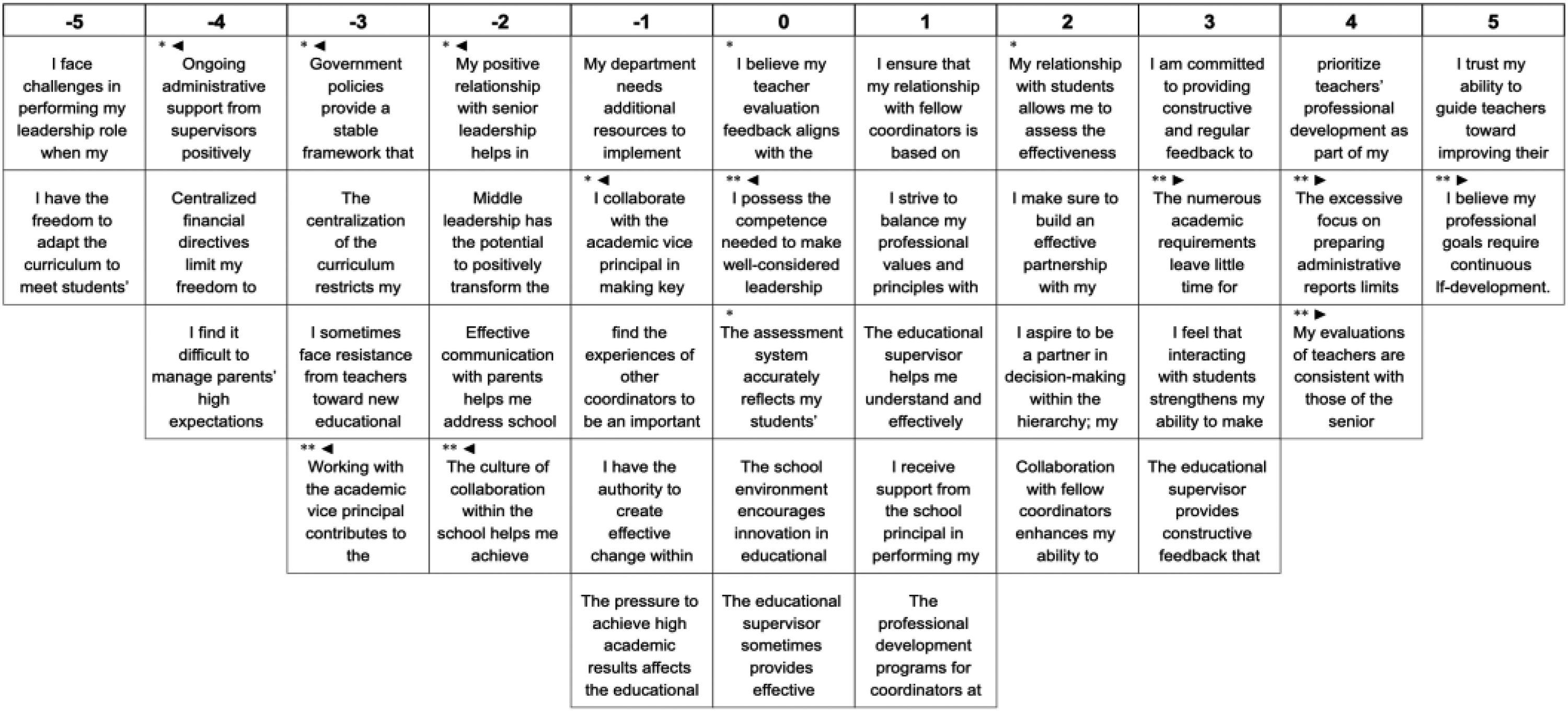
F-2 factor array.
F-2 participants demonstrated a strong belief in their instructional leadership capacity. They trusted their ability to guide teachers towards improving classroom practices (1; +5), and prioritised teachers’ professional learning as a key element of their daily leadership practice (8; +4). To achieve shared goals in their departments, they were committed to providing constructive and regular feedback to teachers (17; +3), and worked to build effective partnerships with them (16; +2). Despite their generally positive orientation towards collaboration, they acknowledged that teacher resistance to new educational directives occasionally challenged their leadership efforts (18; −3). To sustain their credibility and influence, they emphasised continuous self-development as essential to meeting their professional goals (9; +5). Along similar lines, collaboration with fellow coordinators was also seen as a meaningful source of support. Such relationships with peers were seen as grounded more in cooperation than competition (20; +1), which enhanced their ability to overcome school-level challenges (19; +2).
F-2 participants were the most vocal about structural and bureaucratic restrictions on their autonomy. They felt that the heavy emphasis on preparing administrative reports limited their ability to focus on core leadership tasks (36; +4) and that numerous academic requirements reduced time available for reflection and planning (37; +3). Their sense of empowerment was further constrained by limited authority to enact meaningful change within their departments (7; −1). They strongly disagreed that they had the freedom to adapt the curriculum to meet students’ needs (32; −5) and confirmed that curriculum centralisation restricted their departments’ ability to respond to local contexts (31; −3). Financial rigidity also featured prominently in their concerns, as centralised directives were seen to limit their discretion in allocating resources (30; −4). These restrictions contributed to a broader sense of disillusionment about the potential of middle leadership to transform Qatar's educational system (3; −2). Participants did not believe that current government policies provide a stable or supportive framework for well-informed decision-making (40; −3). Altogether, the picture that emerges is one of a system that affords little space for local judgement or adaptive leadership. Within this system, their self-perceptions as competent leaders remained moderate. They neither over- nor under-estimated their ability to make sound leadership decisions (2; 0), which reflected self-awareness towards their leadership capabilities.
F-2 participants also reflected cautious engagement with senior leadership. They aspired to be active partners in decision-making rather than passive implementers of directives (5; +2) and appreciated receiving some support from their principals in performing their duties (10; +1). However, they did not perceive close collaboration with vice principals in key decisions (11; −1), as their interactions were more procedural than participatory and did not contribute meaningfully to implementing school plans (12; −3). Accordingly, they felt that the school's collaborative culture offered limited help in achieving departmental goals (39; −2). At a broader level, F-2 participants reported that their responsibilities were often unclear (6; −5), and they received inconsistent administrative support from ministry supervisors (15; −4). Despite these limitations, they acknowledged that educational supervisors occasionally provided constructive feedback that supported their work (28; +3). Still, their overall stance towards senior and supervisory leadership was one of cautious realism: support existed but lacked consistency, and decision-making structures remained top-down.
F-3: The autonomous professional
Two participants shared the viewpoints expressed in Factor 3 (F-3), accounting for 5% of the opinion variance. Figure 4 presents the idealised Q sort for F-3. This factor revealed a distinct perspective defined by a sense of professional autonomy and self-reliance. F-3 participants perceived their leadership as grounded in direct relationships with students and teachers, where instructional guidance and classroom realities shaped their decisions. In contrast, collaboration with coordinators and supervisors played a limited role in their professional practice, as they preferred to lead independently within their own departments.
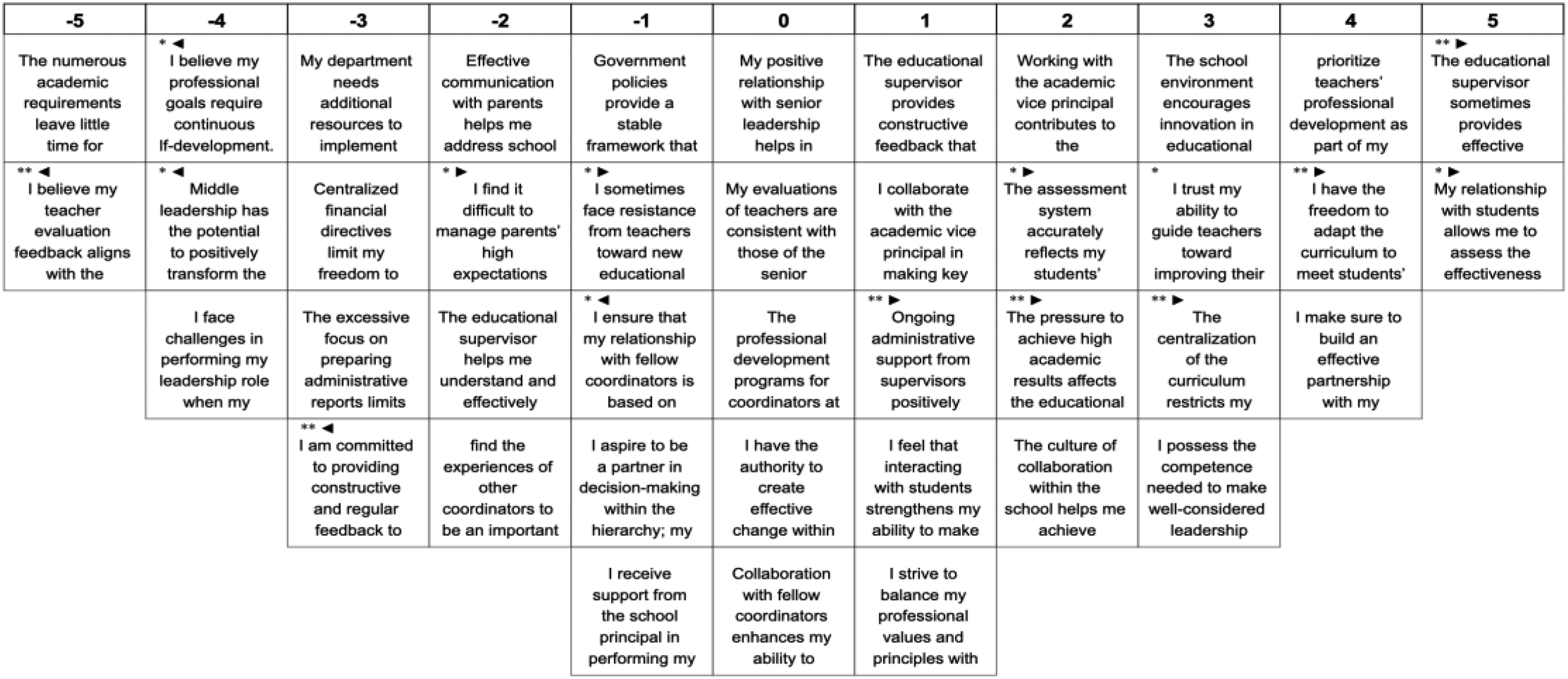
F-3 factor array.
The defining feature of F-3 participants’ viewpoints was their reflective engagement with students, which revealed their strong sense of professional autonomy. They believed that their relationships with students allowed them to assess instructional quality within their departments (24; +5). These interactions were essential for making informed and accurate educational decisions (25; +1), based on understanding students’ experiences. They trusted the assessment system to reflect students’ performance and inform their decisions (33; +2). Despite recognising that curriculum centralisation restricted their flexibility (31; +3), they still felt confident in exercising their professional judgement and decision-making competence (2; +3). For these participants, leadership meant confidently navigating centralised systems to serve their students’ learning needs, even amidst ongoing pressure to achieve high academic results (35; +2). Their attentiveness to students’ experiences positioned them as middle leaders who prioritised authentic learning over bureaucratic compliance.
Their focus on students was reinforced by a sense of autonomy as instructional leaders. They perceived themselves as having the freedom to adapt the curriculum to meet students’ needs (32; +4) and viewed their school environments as supportive of innovative leadership practices (38; +3). At the same time, they distinguished themselves from participants in other factors by downplaying the limitations typically associated with bureaucracy. They disagreed that administrative reporting constrained their leadership (36; −3) or that academic requirements left little time for reflection and planning within their departments (37; −5). Their scepticism about the broader impact of middle leadership on national reform efforts (3; −4) further reinforced their focus on leading within their departments and addressing students’ immediate learning needs.
F-3 participants approached their relationships with teachers through collaboration and trust. They prioritised teachers’ professional development as a central part of their leadership (8; +4) and worked deliberately to build effective partnerships with teachers to achieve shared goals (16; +4). The broader school culture of collaboration supported these efforts and helped them sustain departmental success (39; +2). However, they clearly differentiated their developmental role from their evaluative one. They rejected the idea that their teacher evaluation feedback should align with ministry-approved standards (34; −5), with a preference for contextual and independent judgement. They also reported less emphasis on providing constant feedback (17; −3), viewing professional growth as a shared responsibility rather than a top-down process. Interestingly, they placed little importance on their own self-development (9; −4). Nonetheless, they maintained trust in their ability to guide teachers towards improving instructional practice (1; +3).
F-3 participants expressed cautious engagement with external supervision and peer collaboration. They acknowledged that administrative support from ministry supervisors was not instrumental on their ability to lead the department effectively (15; +1). While these supervisors sometimes provided effective support and constructive feedback that contributed to their leadership performance (28; +1), at other times, they imposed interventions that limited F-3 participants’ autonomy (26; +5). Ministry supervisors also had little effect on their ability to apply the national curriculum (27; −2). Their engagement with fellow coordinators was similarly limited. They did not rely on peers as a major source of support (20; −1) or professional learning (21; −2). Vertical collaboration, particularly with the vice principal, was modest, as they contributed somewhat to implementing school plans (12; +2) and participated in occasional decision-making with them (11; +1). These patterns suggest that F-3 participants valued independence and preferred leading within their immediate professional circles rather than through hierarchical or peer-driven networks.
F-4: The collaborative professional
Four participants shared the viewpoints expressed in Factor 4 (F-4), accounting for 5% of the opinion variance. Figure 5 presents the idealised Q sort for F-4. These participants constructed their leadership roles around peer collaboration and departmental teamwork, combined with a cautious stance towards external evaluation and parental pressures.
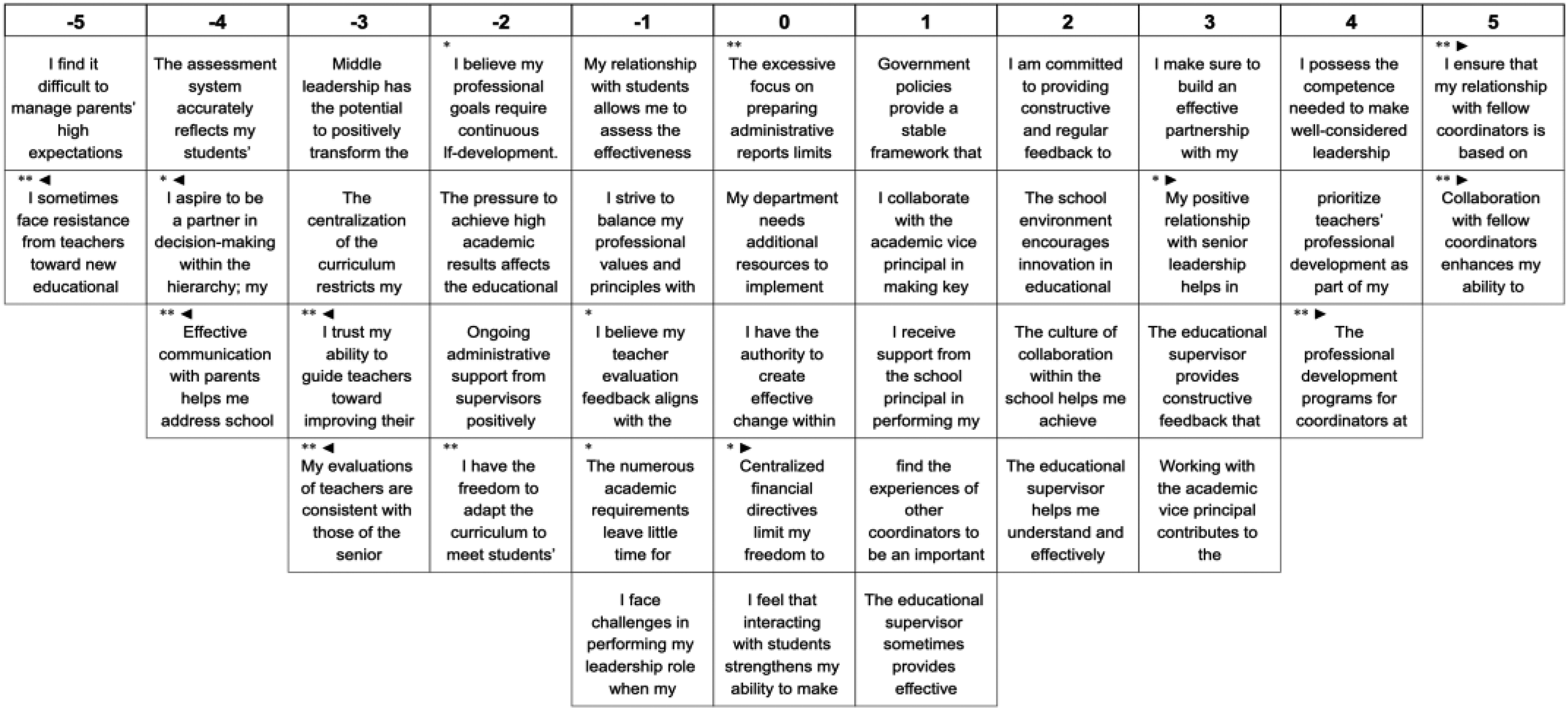
F-4 factor array.
Collaboration with peers was the most prominent feature of this factor. F-4 participants placed a high value on collegial cooperation and ensured that their relationships with fellow coordinators are based on support and cooperation rather than competition (20; +5). A collaborative culture, according to F-4 participants, supports their departmental goals (39; +2) and enhances their ability to overcome school challenges (19; +5). They also drew on the experiences of other coordinators as a helpful, though not central, source of learning for improving their leadership practices (21; +1) and professional development programs for coordinators served as another important source that strengthened their skills and confidence (41; +4).
They extended the same collaborative approach within their own departments. They prioritised teacher professional development as part of their daily leadership practices (8; +4), built partnerships with teachers to achieve shared goals (16; +3) and committed to providing teachers with regular constructive feedback (17; +2). They sometimes faced resistance from teachers towards new educational directives (18; −5), yet trusted their competence in making sound leadership decisions (2; +4). Together, these viewpoints portrayed leaders who relied on collective effort and professional learning communities to drive departmental improvement.
With respect to senior leadership, F-4 participants experienced both supports and constraints. Positive relationships with senior leaders helped initiate educational initiatives (14; +3), and collaboration with the academic vice principal contributed to implementing school plans (12; +3). They reported modest support from principals and vice principals in day-to-day duties (10; +1; 11; +1). At the same time, they did not aspire to be mere implementers of orders, and they showed some reluctance towards being positioned as hierarchical partners (5; −4). They judged the school environment as somewhat encouraging of innovation (38; +2) and saw the collaborative culture as beneficial for achieving goals (39; +2). Overall, their ties with leaders were practical and project-focused rather than hierarchical.
F-4 participants expressed a positive stance towards supervisory and policy structures. They acknowledged the importance of constructive feedback that they received from ministry supervisors in developing their leadership performance (28; +3) and applying curriculum requirements (27; +2). They were also moderately confident that government policies offered a stable framework for decision-making (40; +1). More importantly, they disagreed that curriculum centralisation was a constraint to their ability to adapt to local conditions (31; −3). Their only concern pertained to the failure of the assessment system to reflect students’ actual performance in ways that informed their decisions (33; −4). These positions indicate trust in supervisory input and policy implementations, though paired with scepticism about the assessment system.
Discussion
This study explored how middle leaders in Qatari government schools interpret and enact their leadership roles within a persistently centralised policy environment. The study used Q methodology to capture participants’ subjective viewpoints and identify their shared perspectives on their middle leadership roles (McKeown and Thomas, 2013; Watts and Stenner, 2012). The four-factor solution shows that middle leadership in this context does not take a single form. Middle leaders occupy the same structural position, yet they draw on different intrapersonal, relational and contextual interpretations when they translate policy into practice. The results align with scholarship that positions middle leaders as meso-level brokers who work under dual accountabilities and occupy a sandwiched position between senior leaders and teachers (Irvine and Brundrett, 2016; Zhou and Deneen, 2020; Zhang et al., 2022). This tension intensifies in centralised systems where hierarchy and prescribed standards narrow discretionary space and privilege compliance over adaptation (Chaaban et al., 2025; Lumby, 2019). At the same time, the results show that middle leaders do not respond to these pressures in uniform ways. The factors reveal distinct leadership approaches. Each approach reflects a different way of reconciling professional intent with institutional constraint. These differences are best understood through the three dimensions of the conceptual framework, namely how leaders construct their professional identity and agency in the intrapersonal dimension, how they mobilise relationships in the relational dimension and how they experience and respond to centralisation in the contextual dimension. Across the four factors, this pattern can be read through a paradox of control in which middle leaders attempt to sustain agency while mandates and accountability tighten and constrain the very discretion that improvement work requires (Branson et al., 2016; Marshall, 2012).
The conceptual framework treated leadership as practice shaped through interaction across intrapersonal, relational and contextual domains (Clarke, 2013; Uhl-Bien et al., 2007). The four factors represent configurations across these domains rather than fixed categories of leadership quality. This matters in a context where reforms often assume that clearer directives and tighter monitoring will translate into improved practice. In Qatar, the policy system promoted autonomy in reform discourse, yet governance later returned to stronger central control, which reinforced top-down demands at the school level (Chaaban et al., 2021a; Romanowski and Du, 2020; Zhou and Deneen, 2020). Middle leaders therefore operate within a system that expects translation of policy, yet constrains their key decision spaces.
Across the four factors, results show that a shared instructional purpose remains visible. Each viewpoint links middle leadership to improving teaching and supporting teacher learning, even though the means by which they show such influence differ. Our results align with studies that situate middle leaders as key actors in influencing instructional practices through departmental leadership, teacher development and coordination of teaching and learning work (Grootenboer et al., 2015; Harris et al., 2019; Zhou and Deneen, 2020). This consensus indicates that variation across factors cannot be explained solely through a commitment to teaching improvement, despite this being a central middle leadership role. Variation is better understood through how leaders interpret agency, how they use relationships and how they experience institutional systems (Eteläpelto et al., 2013).
Uneven agency and identity work across factors
In the intrapersonal domain, confidence and professional agency are distributed unevenly. Pragmatic professionals (F-1) and collaborative professionals (F-4) express strong confidence in their decisions and in their capacity to influence practice. Constrained professionals (F-2) also claim instructional capacity, yet their self-assessment becomes moderated by unclear responsibilities, bureaucratic overload and limited authority. Autonomous professionals (F-3) present a different intrapersonal profile. They frame competence through self-reliance and student-grounded judgement, while they place less emphasis on self-development as a leadership requirement. They utilise a strategy known as “filtering,” where they actively screen or subvert top-down mandates to ensure they align with their personal educational values and student-learning evidence (Lifshitz-Assaf, 2018; Zhou and Deneen, 2020). In practical terms, this was reflected in their rejection of ministry-aligned evaluation standards and their reported freedom to adapt the curriculum to student needs, even while acknowledging that centralisation formally restricts such flexibility.
These intrapersonal differences matter because they show that confidence is not a uniform attribute and that it is produced through different sources. For pragmatic professionals, it is reinforced through reflective practice and self-learning within compliance boundaries. For collaborative professionals, it is reinforced through team-based learning and collective routines. For constrained professionals, it is constrained by administrative conditions that narrow leadership space. For autonomous professionals, it is reinforced through closeness to student learning evidence rather than through external validation. The uneven distribution of confidence and professional agency across the four factors reflects the established understanding that middle leadership is a situated social construct, which is influenced by the specific tensions and expectations of the local institutional environment (Lifshitz-Assaf, 2018; Lipscombe et al., 2025).
Relational infrastructure and the limits of networked influence
In the relational domain, all factors rely on relationships with teachers, but they diverge in the breadth and function of networks. Pragmatic, constrained and collaborative professionals emphasise teacher partnerships and regular feedback, and treat relationships as a primary mechanism for influencing instructional improvement (Grootenboer et al., 2015; Zhou and Deneen, 2020; Zhang et al., 2022). Autonomous professionals also value teacher partnership, yet they distinguish their developmental role from that of evaluative work and reduce the need and expectation for providing constant feedback. By decoupling development from evaluation, they attempt to preserve a sense of “professional accountability” that protects their team's autonomy from the intrusive surveillance often associated with centralised, top-down mandates (Ainsworth et al., 2024).
The strongest divergence emerges in horizontal networks, which reflect similar results in extant literature (Highfield and Rubie-Davies, 2022; Shaked and Schechter, 2017). Collaborative professionals construct leadership around high levels of peer cooperation, shared routines and a collaborative school culture that enables them to achieve departmental goals. Pragmatic professionals maintain collaboration with other coordinators, but it functions as a support rather than the core infrastructure of their leadership. Constrained professionals endorse collaboration in principle, yet they describe weaker vertical collaboration and a less supportive culture that limits what relationships can achieve against workload demands. This lack of relational support frequently results in a state of “administrative entrapment,” where the middle leader's potential as a change agent is lost to “educational clerkship” and the simple management of bureaucratic routines (Shaked and Schechter, 2017). Among constrained professionals, this was evident in their strong agreement that administrative reporting limited their ability to focus on core leadership tasks and those academic requirements reduced the time available for reflection and planning, alongside limited authority to enact meaningful change within their departments. Autonomous professionals keep relational work closer to the department and rely less on coordinators and supervisors, which narrows the leadership network even when departmental relationships remain strong, and raises questions about how localised influence travels across the organisation (Uhl-Bien et al., 2007; Zhou and Deneen, 2020).
Centralisation and contested legitimacy
In the contextual domain, the shared condition is centralisation, yet the felt impact ranges from constraint to accommodation. Constrained professionals experience the strongest structural constraint. They describe administrative reporting and academic requirements as reducing their time for planning and reflective work, alongside limited curriculum flexibility and unstable support. Pragmatic professionals also experience centralisation as constraining, particularly in curriculum adaptation and results pressures. They respond by navigating policies carefully and balancing professional principles with centralised demands. Autonomous professionals complicate a simple constraint narrative. They recognise centralisation pressures, yet describe freedom to adapt curriculum and downplay the limiting effects of bureaucracy on their daily leadership work, which suggests that discretion can be locally constructed even when formal policy space is narrow (Rosenhead et al., 2019). Collaborative professionals interpret the same institutional system as more supportive. They report less stress towards the central system, value supervisory feedback for developing their leadership practice and applying curriculum requirements and reject the idea that centralisation prevents local adaptation.
A final cross-factor contrast concerns legitimacy in evaluation and policy alignment. Pragmatic professionals align evaluation feedback with ministry standards and seek coherence with senior leadership expectations. Autonomous professionals reject that alignment and prefer contextual judgement, which signals a different basis of legitimacy that is anchored in localised professional authority rather than institutional standards. Collaborative professionals show greater trust in supervisory and policy structures, yet express concern about assessment representation of student performance, which indicates that alignment does not necessarily equate to uncritical acceptance of all system tools. Constrained professionals sit between these poles. They express instructional intent and a desire to be partners in decision-making, but they describe policy and decision structures as top-down and insufficiently supportive, which weakens the conditions under which legitimacy can be enacted as influence (Ainsworth et al., 2024; Irvine and Brundrett, 2017; Lipscombe et al., 2025).
Implications
In light of these patterns, this study recommends reconsidering how the middle leadership role is positioned within school decision-making structures. Middle leaders should not be engaged primarily as implementers of top-down decisions. Instead, their role needs to be made substantively effective within schools through structural arrangements that require school leadership teams to adopt participatory and relational forms of leadership, in which middle leaders are recognised as partners in sense-making and school development. This also requires formal recognition of the middle leader's role as a relational bridge between senior leadership and teachers, and the design of school structures that strengthen these relational networks. The four viewpoints indicate that many middle leaders resist, question or feel constrained by centralised policies and their implementation, which suggests that positioning middle leaders as peripheral to decision-making undermines professional agency and limits the improvement potential of middle leadership.
Accordingly, it is recommended that policy development, particularly in relation to curriculum design and adaptation, follow a more bottom-up orientation in which school-level expertise is incorporated into ministry-level decisions. The results suggest that most coordinators do not perceive themselves as having a meaningful role in shaping the curriculum, which appears to be partly a consequence of centralised policy structures that exclude them from these processes. If systems aim to activate the curriculum leadership dimension, middle leaders must be prepared for curriculum work and formally authorised to contribute to this space. Practically, this could involve a structured professional development programme focused on curriculum development and improvement, followed by mechanisms that enable them to apply this learning through curriculum planning and review cycles.
To foreground the relational dimension more explicitly, the study further recommends establishing formal collaborative structures led or co-led by middle leaders, such as curriculum development committees and joint planning teams. These structures would institutionalise horizontal collaboration among teachers and coordinators, and vertical collaboration between coordinators, principals and vice principals. Within such structures, middle leaders can use dialogue, joint reflection and shared decision-making to connect policy expectations with classroom realities, and to enact the relational core of the conceptual framework through everyday routines of school improvement.
Conclusion
This study has several limitations that should be considered when interpreting the results. First, the study was based on a relatively small P set drawn from a limited number of government schools. While this is consistent with Q methodology, which seeks to identify shared viewpoints rather than produce statistically generalisable claims, the four factors should be read as configurations of subjectivity within this context rather than as population estimates (McKeown and Thomas, 2013; Watts and Stenner, 2012). Second, the viewpoints reflect the boundaries of the Q sample. The concourse and the final set of statements structured what participants could rank and therefore shaped the form in which perspectives were expressed. Third, the study captured only middle leaders’ accounts. The findings do not include the perspectives of principals, academic vice principals, teachers or ministry supervisors, and therefore cannot fully explain how relational tensions are mutually produced across role groups. Future studies are needed that take these perspectives into account so that the interactional and organisational conditions influencing middle leadership can be examined from multiple viewpoints.
Despite these limitations, the study contributes to understanding middle leadership in centralised education systems by showing that it is not experienced as a singular role with predictable practices. Instead, middle leadership is enacted through distinct configurations across intrapersonal, relational and contextual domains (Clarke, 2013; Uhl-Bien et al., 2007). Across the four factors, a shared instructional purpose remained visible, yet the pathways through which leaders pursued influence differed. These differences were shaped by uneven distributions of confidence and professional agency, by variations in the breadth and function of relational networks and by contrasting interpretations of centralisation as constraint or accommodation. In closing, the study suggests that policy and school leadership approaches that treat middle leaders as implementers of top-down decisions are unlikely to mobilise the full improvement potential of this role. Middle leaders are positioned at a critical interface between policy expectations and classroom realities, and their contribution depends on the degree to which they are authorised to act, supported through relational infrastructures and engaged as partners in sense-making and development.
These observations extend beyond Qatar. Across diverse educational systems where top-down policy directives limit middle leaders’ professional discretion, the patterns discussed in this study, including compliance entrenchment, uneven agency and constrained relational networks, are likely to resonate. The four factors suggest that activating the improvement potential of middle leadership in centralised contexts depends less on the specific reform agenda and more on whether structural conditions allow leaders to exercise judgement, build relationships and contribute meaningfully to curriculum work. Recognising the plurality of middle leader viewpoints is therefore not only an analytical outcome. It is a practical requirement for designing leadership structures, curriculum processes and professional learning arrangements that can operate effectively within centralised systems.
Footnotes

Ethics approval
Ethical approval was obtained from Qatar University's Institutional Review Board (QU-IRB 312/2025-EA). Permission to Reproduce Material from Other Sources: This article does not reproduce copyrighted material from other sources requiring permission.
Funding
The authors received no financial support for the research, authorship and/or publication of this article.
Declaration of conflicting interests
The authors declared no potential conflicts of interest with respect to the research, authorship and/or publication of this article.
Data availability statement
The data that support the results of this study are available from the corresponding author upon reasonable request.
Author biographies
Appendix. Comparison across the four factors and three domains
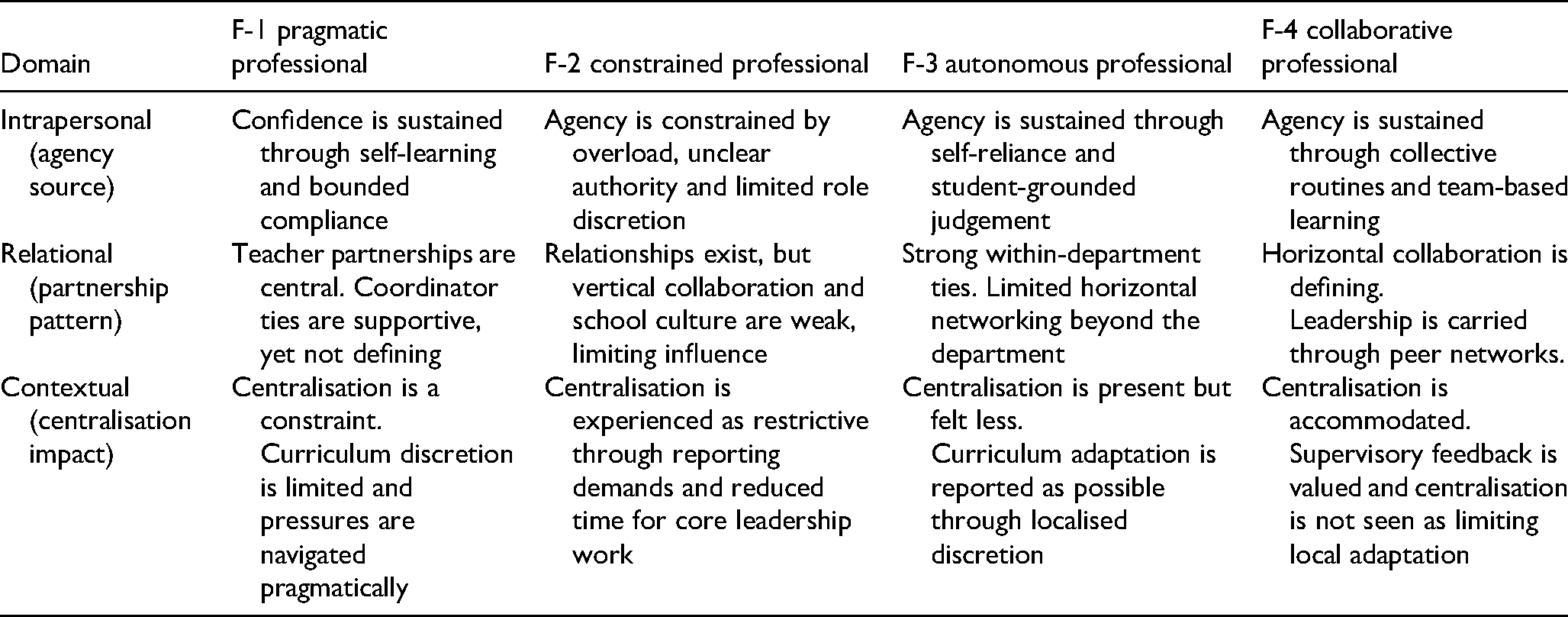
| Domain | F-1 pragmatic professional | F-2 constrained professional | F-3 autonomous professional | F-4 collaborative professional |
|---|---|---|---|---|
| Intrapersonal (agency source) | Confidence is sustained through self-learning and bounded compliance | Agency is constrained by overload, unclear authority and limited role discretion | Agency is sustained through self-reliance and student-grounded judgement | Agency is sustained through collective routines and team-based learning |
| Relational (partnership pattern) | Teacher partnerships are central. Coordinator ties are supportive, yet not defining | Relationships exist, but vertical collaboration and school culture are weak, limiting influence | Strong within-department ties. Limited horizontal networking beyond the department | Horizontal collaboration is defining. Leadership is carried through peer networks. |
| Contextual (centralisation impact) | Centralisation is a constraint. Curriculum discretion is limited and pressures are navigated pragmatically |
Centralisation is experienced as restrictive through reporting demands and reduced time for core leadership work | Centralisation is present but felt less. Curriculum adaptation is reported as possible through localised discretion |
Centralisation is accommodated. Supervisory feedback is valued and centralisation is not seen as limiting local adaptation |