






Abstract
The study aimed to identify key conditions, content components and stages in preparing future teachers for school management in Kazakhstan's educational system. It used document analysis, a structural-functional approach, SWOT analysis and modelling to explore teacher management training. The findings revealed the fragmented nature of management training for future teachers, classifying key management functions (analytical, planning, communicative, organisational and control). The study proposed a phased model for teacher management training, including motivation, knowledge acquisition, simulation and school practice. It highlighted opportunities and barriers within the higher education system and pointed out the lack of a systematic approach to developing managerial competencies. The results suggest modernising educational programmes by adding compulsory school management courses, enhancing management practice opportunities and shifting teacher training towards educational leadership. The proposed model could inform updates to bachelor's programmes, development of variable modules and in-service training systems in Kazakhstan's pedagogical universities.
Keywords
Introduction
The preparation of future teachers for school management emerges as a distinct area of pedagogical science, requiring thorough theoretical understanding (Kitikar and Levchenko, 2021; Mynbayeva and Yelbayeva, 2020). Amidst the transformations within the education sector, the role of educators capable of not only delivering high-quality instruction in academic subjects but also effectively performing managerial functions in general secondary education institutions is growing. Increasing demands on school management and the need for leaders who can organise staff, foster a positive educational environment, and ensure the coherence of educational and upbringing processes are setting new benchmarks for the system of professional development for teaching staff. The theoretical foundations for preparing for managerial activities must include the acquisition of knowledge about the structure and functions of school administration, the development of managerial competencies and the cultivation of leadership qualities, communication skills and organisational culture. It is also important to consider the interrelation between teaching experience and managerial practice, which allows future professionals to view the educational process in a holistic dimension, ensuring the effectiveness and development of the educational institution.
The interrelation between teaching experience and managerial practice is essential in preparing future educators for school management. Teaching experience equips educators with practical insights into classroom dynamics, student needs, and daily challenges, fostering empathy, problem-solving skills, and strong pedagogical practices. These skills provide a solid foundation for transitioning into managerial roles, where educators must apply strategic thinking, team coordination, and resource management to lead effectively. By integrating teaching experience with managerial competencies, teacher preparation programmes can help educators bridge the gap between their classroom expertise and the broader responsibilities of school leadership, ensuring that future school leaders not only manage efficiently but also lead with empathy and a deep understanding of the educational environment. This holistic approach enhances both teaching and management, ensuring that the educational process remains cohesive and effective at all levels.
Scholarship on preparing teachers for school management has developed along several intersecting lines of inquiry, though without always being brought into direct conversation with one another. A first cluster of studies addresses the systemic and institutional dimensions of managerial preparation. Kim et al. (2021), Mynbayeva and Yelbayeva (2020) and Ospanova (2024) collectively argue that managerial competence cannot be developed in isolation from the broader institutional and cultural environment in which teachers work. Kim et al. emphasise that structural, cultural and resource factors within schools shape how managerial skills are acquired, while Mynbayeva and Yelbayeva demonstrate – in the specifically Kazakhstani context – that democratic governance models depend on teachers already possessing skills in planning, coordination and strategic thinking. Ospanova extends this argument by showing that such skills must be integrated into initial teacher education rather than deferred to postgraduate professional development. Together, these studies make a compelling case that managerial preparation is an institutional and policy challenge, not merely a curricular one.
A second, partially overlapping strand engages with the digital transformation of educational management. Kitikar and Levchenko (2021), Starkey (2020) and Tanak (2020) each approach this from different angles: Kitikar and Levchenko focus on digital literacy as a component of managerial competence; Starkey foregrounds the organisational challenges of managing change in digitising environments; and Tanak demonstrates, through the TPACK model, that effective integration of technological, pedagogical and content knowledge supports managerial thinking. What unites these contributions is the claim that digital competence and managerial competence are no longer separable – a point that has significant implications for how teacher education programmes are structured, yet which, as several of these authors note, remains underimplemented in most national curricula.
A third, more contested strand concerns the relationship between pedagogical practice and managerial development. Wolff et al. (2021) and O'Meara and Jaeger (2023) raise an important tension here. Wolff et al. show that effective classroom management – itself a managerial act – is grounded in the kind of situated professional awareness that develops through accumulated teaching experience, suggesting a degree of continuity between pedagogy and management. O'Meara and Jaeger, by contrast, argue that the development of genuine leadership capacity requires deliberate training in reflection and critical thinking that goes beyond what ordinary classroom practice produces. Pande and Bharathi (2020) partially bridge this divide by proposing design thinking as a framework that cultivates both pedagogical autonomy and strategic vision simultaneously. Whether teaching experience is sufficient preparation for managerial responsibility, or whether it must be actively supplemented, remains an open question in the field – and one that the present study's proposed model directly addresses.
Finally, the comparative dimension of the literature, represented by Želvys et al. (2023), points to the significance of cultural and national context in shaping how management education models travel and adapt. Their finding that Lithuania and Kazakhstan share certain structural features in teacher preparation, while diverging in cultural approach, suggests that imported models cannot be applied wholesale – a caution that informs the design choices made in the theoretical framework developed here.
Despite the aspects highlighted by the aforementioned authors, gaps included insufficient attention to specific models of school management in the context of different cultural and regional conditions. There is a limited number of studies that would analyse in detail the impact of technological innovations on the managerial competencies of future teachers, particularly in the context of the digitisation of education.
The aim of the research was to theoretically substantiate and conceptualise approaches to preparing future teachers for performing managerial functions in schools, taking into account the specifics of the educational system of the Republic of Kazakhstan. The objectives of the research were to conduct a theoretical analysis of the regulatory and legal framework in the field of education in the Republic of Kazakhstan to identify the level of representation of managerial competencies in the training of future teachers, to determine the structure and content of the teacher's managerial functions as a component of professional activity, applying classification-systematic and analytical approaches, and to develop a theoretical model for preparing future teachers for school management, and to formulate recommendations for improving pedagogical education taking into account the challenges of school management.
Materials and methods
The theoretical study is based on the application of a number of interrelated methods aimed at identifying the essence, structure and ways to improve the training of future teachers to manage general secondary education institutions in the Republic of Kazakhstan. The study used content analysis of the regulatory framework in the field of education, in particular the Law of the Republic of Kazakhstan No. 319-III ‘On Education’ (2007), the State Programme for the Development of Education and Science of the Republic of Kazakhstan for 2020–2025 (Decree of the…, 2021), as well as the standard educational programme for bachelors in the speciality ‘Pedagogy and Methodology of Primary Education’ (2019). The above documents were chosen because of their normative weight, relevance and decisive influence on the content and structure of teacher training in Kazakhstan.
The method of classification and systematisation of teacher's managerial functions, applied in this study, was adapted from the works of Liu et al. (2023), Bell and Bell (2020) and Orland-Barak and Wang (2021). These researchers identified key managerial competencies necessary for effective leadership in educational settings, including strategic planning, communication, team coordination, and control. However, in this study, the method was not merely applied mechanically but critically examined to adapt it to the specifics of the Kazakhstani education system. This approach allows not only for the classification of functions but also for their integration into teacher training, which is essential for developing future school leaders.
The choice of this method was driven by the need for clear organisation and systematisation of the managerial functions of teachers. However, as noted in the literature, the application of such classifications must take into account the cultural and institutional characteristics of each country. Consequently, in this study, a critical examination was carried out to assess the relevance of the identified competencies to the real requirements and context of the Kazakhstani educational environment. This ensures that teacher preparation is more relevant and effective, aligning it with the current challenges of school management in modern conditions.
The content analysis of these documents was carried out in several stages. Initially, the documents with the greatest impact on the content and structure of teacher education programmes were selected. During the analysis, a coding framework was created that allowed for the identification of references to key concepts such as ‘leadership’, ‘management’, ‘strategic planning’, ‘team coordination’ and ‘school management’. This enabled the categorisation of the texts according to these concepts and revealed the frequency of their mention in the documents. The main trends and gaps in the representation of managerial competencies were then identified, which became the basis for developing the theoretical model for the preparation of future school leaders.
To structure the necessary knowledge and skills related to school management, the method of classification and systematisation was applied. This allowed for the identification of the key management functions of a teacher, namely analytical, planning, communicative, organisational and control functions, which formed the foundation for the development of the competency core for future school managers.
In this study, a SWOT analysis was employed to assess the current state of teacher training for management in Kazakhstani universities. The factors selected for the analysis, training programme, teacher competencies, state policy, practical training and infrastructure were identified based on their direct relevance to the effectiveness of teacher preparation for managerial roles. These factors were chosen after a thorough review of existing educational frameworks, policies and practices in Kazakhstan. Specifically, the analysis focused on the following: the structure and content of the teacher training programmes as outlined in national educational documents (such as the Law of the Republic of Kazakhstan No. 319-III ‘On Education’ (2007)); the qualifications and competencies of teachers as outlined in the relevant academic standards and the policy directions set by the Ministry of Education. The training programme factor was analysed based on a review of official curricula, while teacher competencies were evaluated in the context of the regulatory documents that define the professional standards for educators. The state policy aspect was examined through national and regional educational policy documents, and practical training was evaluated based on available internship programmes and practical placements in schools.
In addition, a comparative analysis was carried out of teacher preparation programmes for managerial roles in countries such as Finland, Singapore, the United Kingdom and Canada. These countries were selected due to their experience in reforming teacher education systems and their high results in international assessments. The comparative analysis revealed successful models for integrating managerial competencies into teacher education programmes and provided recommendations for adapting these models to the Kazakhstani context.
The final stage of the study involved the application of predictive modelling to determine potential models for integrating managerial components into teacher preparation. This allowed for the creation of a theoretical model for preparing future teachers for managerial roles, which included stages such as motivational involvement of students in managerial activities, formation of basic knowledge in educational management, modelling managerial situations in the educational process and managerial practice at school with elements of independent planning and coordination of activities.
The theoretical model of future teacher management training proposed in this study was developed based on an analysis of school management courses, content analysis of key Kazakhstani educational documents, SWOT analysis and comparative studies of international best practices. The model's structure was informed by transformational leadership, distributed leadership and instructional leadership theories, which emphasise the integration of leadership competencies with pedagogical practice. Data from regulatory documents and international examples highlighted gaps in current teacher training programmes and provided justification for the model's focus on motivational engagement, leadership skills and collaborative decision-making. The model not only serves as a practical recommendation for improving teacher education but also contributes theoretically by linking managerial competencies to established leadership theories, aiming to prepare teacher-leaders who can manage schools effectively while maintaining strong pedagogical standards.
Results
Theoretical framework: educational leadership and management scholarship as a basis for teacher managerial preparation
The preparation of future teachers for school management cannot be reduced solely to the acquisition of administrative skills or procedural knowledge. It requires a clearly articulated theoretical foundation rooted in contemporary educational leadership and management scholarship. Drawing on established theoretical traditions allows for a more systematic understanding of what managerial competence means in pedagogical practice and how it can be purposefully developed within teacher education programmes.
One of the foundational theoretical perspectives informing this study is transformational leadership theory, originally developed by Burns (1978) and later adapted to educational contexts by Leithwood et al. (2020). Transformational leadership posits that effective school leaders do not merely manage operations but actively inspire, motivate and develop the capacity of their staff to achieve shared educational goals. Applied to teacher preparation, this framework suggests that future teachers should not be trained as passive executors of administrative decisions but as proactive agents of institutional development capable of influencing the school's culture, climate and strategic direction. This theoretical lens directly informs the motivational and value-oriented stage of the proposed model, where students are encouraged to perceive themselves as contributors to school governance rather than isolated classroom practitioners.
Complementing this is the theory of distributed leadership (Spillane, 2006), which reconceptualises school management as a collective, practice-based activity shared across multiple actors within the organisation rather than concentrated in a single formal leader. From this standpoint, every teacher potentially performs managerial functions by coordinating peer interactions, mentoring less experienced colleagues, facilitating working groups or contributing to curriculum planning. This framework directly supports the structural logic of the classification presented in this study – the analytical, planning, communicative, organisational and control functions attributed to teachers are not exceptional but constitute an inherent dimension of professional activity at all levels of the school hierarchy.
Equally relevant is the concept of instructional leadership (Robinson et al., 2008), which emphasises the direct connection between managerial decision-making and the quality of teaching and learning outcomes. Research in this tradition consistently demonstrates that the most effective school leaders are those who maintain deep engagement with pedagogical processes, supporting teachers’ professional development, setting high learning expectations and using data-informed approaches to evaluate progress. For teacher preparation programmes, this means that managerial training should not be isolated from pedagogical content but should be interwoven with it, enabling future teachers to perceive management and instruction as mutually reinforcing rather than competing domains.
Systematic analysis of these theoretical frameworks reveals a consistent pattern: all three traditions converge on the notion that managerial readiness is not a separate professional layer added on top of teaching competence but is constitutively embedded within it. This insight carries direct analytical implications for evaluating the current state of teacher education in Kazakhstan. The regulatory documents examined – the Law on Education, the State Programme for 2020–2025 and the standard bachelor's curriculum – were assessed not merely in terms of whether they mention management-related topics, but against the benchmarks established by these theoretical frameworks: to what extent do they support the development of transformational agency, distributed leadership practices and instructionally grounded decision-making in future teachers?
This analytical lens exposes a fundamental structural misalignment. The existing normative framework treats managerial functions as the exclusive domain of formally appointed school administrators, effectively severing the conceptual link between teaching practice and organisational leadership. In doing so, it contradicts the well-established theoretical consensus that high-quality educational management is inseparable from deep professional engagement with the instructional process. The absence of compulsory courses in educational management, the marginal status of leadership development within bachelor's programmes and the lack of structured mentoring in managerial contexts are not incidental gaps – they reflect a systemic theoretical deficit in how the professional role of the teacher is conceptualised within Kazakhstan's higher education policy. By grounding the analysis in these theoretical frameworks, the present study moves beyond a descriptive inventory of existing programme contents towards a substantive evaluation of their adequacy relative to internationally validated standards of teacher leadership development. The theoretical model proposed in subsequent sections is constructed in direct response to the gaps identified through this analysis, integrating the principles of transformational, distributed and instructional leadership into a coherent, stage-based preparation pathway for future teachers.
The theoretical framework in this study serves as both the conceptual foundation and the analytical lens for evaluating teacher preparation for school management in Kazakhstan. This framework is not introduced after the analysis but rather guides the analysis from the outset, ensuring that the study is rooted in established theories of leadership and management. Drawing on transformational leadership theory (Burns, 1978; Leithwood et al., 2020), distributed leadership (Spillane, 2006) and instructional leadership (Robinson et al., 2008), this section provides a systematic understanding of what managerial competence entails in pedagogical practice and how it should be developed within teacher education programmes. These theories are used to critically assess the existing teacher education policies and practices in Kazakhstan, identifying gaps and misalignments in the current system.
For instance, transformational leadership, which emphasises inspiring and motivating staff to achieve shared educational goals, directly informs the motivational and value-orientated stages of the proposed model. Similarly, the theory of distributed leadership emphasises that leadership should be a collective and practice-based activity, aligning with the model's focus on shared leadership functions within schools. Instructional leadership theory connects managerial decision-making with teaching quality, which reinforces the model's emphasis on integrating management and pedagogy. By embedding these theoretical perspectives into the analysis of Kazakhstan's educational documents, the study moves beyond simple description and provides a robust critique of the regulatory framework, demonstrating how these frameworks could inform the development of managerial competencies in teacher education. The theoretical model proposed later in the manuscript is constructed in direct response to the gaps identified through this analysis, ensuring a coherent, stage-based approach to preparing future teachers for leadership roles in schools.
Analysis of regulatory documents and educational programmes in the Republic of Kazakhstan
The transformation of Kazakhstan's educational system necessitates a shift in the professional profile of teachers, requiring them to develop not only subject-specific knowledge but also managerial competencies. Teachers must evolve from being mere transmitters of knowledge to active participants in school management processes, working alongside administrators to plan, organise and control the development of educational institutions. As highlighted by Leithwood (2021), modern pedagogy stresses the importance of developing teachers as leaders, equipped with strong decision-making and teamwork skills, to enhance both teaching quality and school performance. Pedagogical leadership, therefore, plays a crucial role in influencing the school's development through collaboration with colleagues, a view supported by Spillane (2006), who conceptualises leadership as a collective activity distributed across school staff. Educational management must focus on optimising resources to achieve learning goals, a point emphasised by Bell and Bell (2020), who argue that effective management is central to improving educational outcomes. The integration of managerial thinking, project management and communication skills into teacher training is essential for developing a strategic workforce capable of leading schools in Kazakhstan, as noted by several studies on teacher leadership and educational reforms.
Educational management, as a dynamic field, requires an approach that combines systemic, cognitive, ethical, cultural and technological dimensions. Effective management involves understanding the educational organisation as a system that interacts with its social environment and focuses on achieving strategic objectives through resource coordination. Teachers, as key players in this system, must be equipped with skills in managing cognitive loads, promoting ethical leadership and fostering an inclusive, multicultural educational environment. Moreover, mentoring and the integration of artificial intelligence (AI) into management practices play vital roles in supporting teachers’ professional growth and improving administrative efficiency. The development of soft skills such as critical thinking, emotional intelligence and conflict resolution is crucial for teachers to navigate the complexities of modern educational management and ensure the sustainability of educational systems.
The Law of the Republic of Kazakhstan No. 319-III ‘On Education’ (2007) defines the general principles of the organisation of education in the country, the structure of the system and the rights and responsibilities of participants in the educational process. Its provisions interpret managerial activity exclusively as a function of administrative staff – the school headteacher, their deputies, the institution's founder, as well as local education authorities. At the same time, the law enshrines the right of teaching staff to professional development and participation in project activities, which potentially creates a foundation for the development of elements of educational leadership but does not formalise it within the structure of training. The State Programme for the Development of Education and Science of the Republic of Kazakhstan for 2020–2025 (Decree of the…, 2021) contains strategic guidelines for the renewal of pedagogical education. The programme identifies goals for strengthening the practical training of future teachers, improving the quality of teaching and the digitisation of education. However, the competency-based approach to teacher training is not accompanied by a clear consideration of managerial components. Direction 7, ‘Formation of a Professional Community of Teachers of a New Type’, mentions the need to develop leadership skills, but these are mostly interpreted as interpersonal rather than managerial. Formulations such as ‘development of teacher initiative and responsibility’ are not specified within individual courses, modules or forms of training. Thus, despite the declared strategic course towards the formation of teacher-leaders, there is no clear regulation of the content of managerial training and the mechanisms for its implementation in higher education.
The typical educational programme for bachelor's degree preparation in the specialisation ‘Pedagogy and Methodology of Primary Education’ (2019), approved by the Ministry of Education and Science of the Republic of Kazakhstan, includes the study of the fundamentals of pedagogy, psychology, subject teaching methodology, teaching practice, as well as general education disciplines. However, the content of this programme lacks courses directly related to the management of the educational process or the organisation of team work. None of the compulsory subjects cover topics such as managing change in the educational environment, conflict resolution within a team, analysis of internal school information or the basics of school administration. In the list of optional courses offered as a variable component, in some higher education institutions, particularly Abai Kazakh National Pedagogical University, South Kazakhstan State Pedagogical University and L.N. Gumilyov Eurasian National University, the discipline ‘Management in Education’ is encountered, but its status is not compulsory, and its content depends on the academic autonomy of the institution. In most cases, students receive basic training focused solely on teaching activities in the classroom, without considering the need to be included in the school's management team. The examination of these documents provides grounds for concluding that at the level of basic higher education in Kazakhstan, systematic preparation of future teachers for school management is not part of the official educational policy. Managerial competencies of teachers are considered an optional or postgraduate component of professional development, rather than an integral part of bachelor's programmes. This situation creates a number of risks for staffing the middle level of school management, hinders the development of young teachers as potential leaders of change and limits the personnel reserve of headteacher positions in educational institutions.
The lack of systemic integration of managerial training in Kazakhstan's teacher education programmes poses several risks. Without mandatory courses in school management, strategic planning and conflict resolution, teachers are ill-equipped to assume leadership roles in schools, thereby hindering the development of young teachers as potential leaders of educational change. The absence of a well-defined framework for managerial education within the core teacher training curriculum limits the pool of candidates for middle and senior management roles within schools, thus affecting the overall strategic development of the educational system.
The current state of teacher education in Kazakhstan calls for substantial reform. The integration of managerial training at the bachelor's level, alongside subject-specific knowledge and pedagogical skills, is essential for preparing teachers to meet the challenges of school autonomy and the demands of a rapidly digitising educational environment. This necessitates the introduction of compulsory courses in educational management, pedagogical leadership and school administration to better equip teachers with the skills needed to engage in school governance and strategic decision-making. Only through these reforms can Kazakhstan's educational system develop a cadre of teacher-leaders capable of driving innovation and effectively managing schools in the twenty-first century.
The key regulatory documents, such as the Law of the Republic of Kazakhstan No. 319-III ‘On Education’ (2007), the State Programme for the Development of Education and Science of the Republic of Kazakhstan for 2020–2025 and the Standard Educational Programme for Bachelors in Pedagogy and Methodology of Primary Education (2019), define the main principles of organising education, the structure of the education system, and the rights of participants in the educational process. However, despite their importance for the overall organisation of education, these documents do not give due attention to the inclusion of managerial competencies in teacher preparation programmes.
The analysis of these documents revealed that, despite strategic goals focused on improving the quality of education and the implementation of digital technologies, teacher preparation for managerial functions remains peripheral in educational policy. For example, the state programmes and standard educational guidelines primarily emphasise the development of pedagogical skills, but the inclusion of courses on school management, leadership or strategic planning in bachelor's degree programmes is virtually unregulated. This creates gaps in the preparation of teachers for managerial roles, as they are trained solely in pedagogical methodologies without developing the necessary knowledge and skills in educational management. Consequently, the existing regulatory documents do not ensure the systemic integration of managerial competencies into teacher preparation, limiting teachers’ ability to effectively perform leadership functions in educational institutions.
To support this conclusion, a content analysis was conducted on key policy documents, such as the Law of the Republic of Kazakhstan ‘On Education’, the State Programme for the Development of Education and Science for 2020–2025 and the Standard Educational Programme for Bachelors in Pedagogy and Methods of Primary Education. The content analysis was carried out using a coding framework developed from the literature on teacher leadership and educational management. This framework included predefined categories such as school management, leadership development, strategic planning and digital integration. Each document was thoroughly reviewed to identify references to these categories, and the frequency and context of these references were recorded. For example, while the Law on Education frequently mentions the importance of pedagogical training, references to leadership or management training were minimal or vague. Similarly, the State Programme for Education and Science outlines broad goals related to educational improvement but lacks specific directives for integrating managerial competencies into teacher education.
Through this analytical process, it became clear that while the regulatory documents set out strategic goals for educational improvement, they do not provide concrete guidance or requirements for developing managerial competencies in teacher training. This analysis underscores the need for systemic reform in Kazakhstan's teacher education policies to address the gaps in training future educators for leadership roles within schools.
Structure and content of teacher's management functions as a component of professional activity
The teacher must be able to use a variety of tools to collect and analyse data, such as observation, surveys, testing and other methods that allow for informed decisions to be made about adjustments to learning activities. The planning function focuses on the teacher's ability to develop strategies and tactics to achieve educational goals. This includes creating long- and short-term work plans, planning curricula and timetables, setting priorities in learning and organising the learning process in a way that is effective and flexible. An important aspect is the ability to predict the development of the educational process, taking into account changes in regulations, technological innovations and other factors. The communicative function is the ability of a teacher to interact effectively with students, parents, colleagues and school administration. The study by Liu et al. (2023) determines that a teacher should have oral and written communication skills, as well as be able to resolve conflicts, resolve misunderstandings and establish a positive atmosphere in the team. In addition, communication is an important component of working with other participants in the educational process, such as psychologists, social workers and other professionals, which helps to improve the social climate in the school.
The organisational function includes the teacher's ability to coordinate the learning process, organise classes and monitor performance. This also includes organising extracurricular activities, planning and coordinating the work of methodological associations, working with parents, and providing conditions for the development of students and teaching staff. The teacher must be able to use a variety of resources to optimise work, organise the learning space and provide students with the necessary materials and teaching aids. The controlling function includes the teacher's ability to monitor the implementation of learning tasks, assess students’ achievements and adjust the educational process if necessary. It also involves assessing and monitoring the implementation of the curriculum, preparing students for tests, exams and other activities that allow them to assess the level of knowledge. In addition, the control function includes tracking the effectiveness of pedagogical methods and the impact of external factors on the learning process (Bell and Bell, 2020).
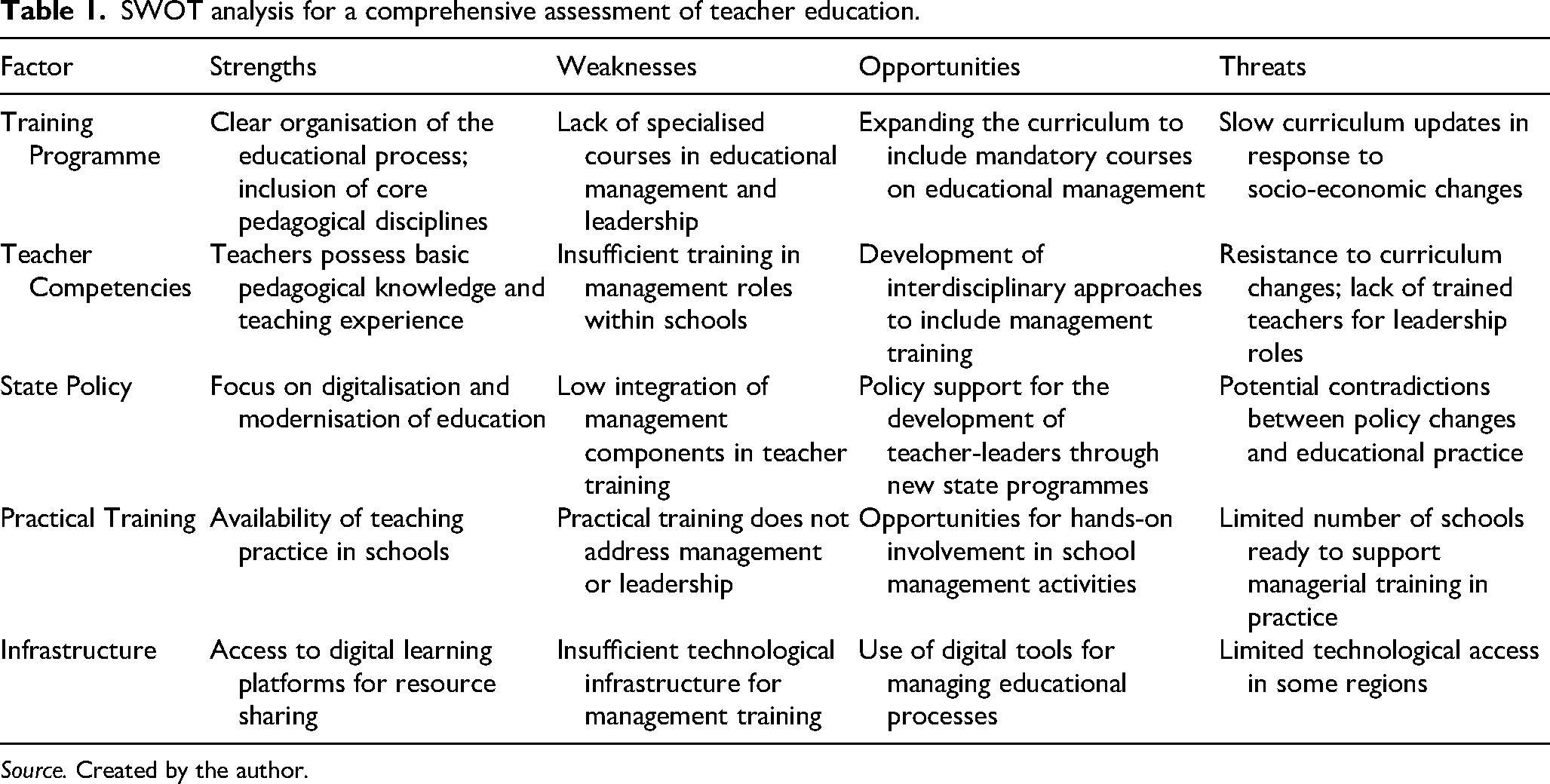
The use of the method of classification and systematisation in the training of future teachers allows to clearly define the managerial functions and relevant competences necessary for the successful performance of managerial tasks at school. Such a classification creates a basis for the formation of the content of the competence core of a future school manager, as it identifies the key managerial competences that should be developed in the process of teacher education. In particular, it allows for the inclusion of courses in educational management, leadership and other relevant disciplines in bachelor's degree programmes, which will contribute to a holistic approach to teacher-leadership training. Taking these functions into account in teacher training makes it possible not only to expand the competencies of teachers, but also to ensure effective management of the educational process at the school level, thus contributing to improving the quality of education in general. Summarising the results of the analysis of approaches to training future teachers in school management, it is advisable to conduct a SWOT analysis, which allows a comprehensive assessment of the current state of this training. This approach enables to identify not only internal advantages and limitations, but also external opportunities and threats that may affect the effectiveness of the educational process. Taking into account the identified trends, scientific approaches and recommendations of researchers, Table 1 presents the relevant SWOT analysis.
SWOT analysis for a comprehensive assessment of teacher education.
Source. Created by the author.
The SWOT analysis reveals significant gaps in Kazakhstan's teacher education system, particularly in relation to managerial competencies. While the strengths of the system lie in its clear organisation and the focus on core pedagogical skills, there is a clear lack of focus on managerial training. The weaknesses identified, such as the lack of specific courses on management and leadership, point to a systemic issue where teacher education does not align with the increasing demands for teacher leadership in school management. The opportunities for reform include the potential to expand the curriculum to incorporate essential management courses, integrate digital tools into management training and foster collaboration between schools and universities to offer practical management experiences. However, these opportunities are tempered by threats, including resistance to curriculum changes, limited institutional readiness to support managerial training and the challenge of rapidly updating the curriculum in response to evolving educational needs. Moreover, the absence of clear policy direction regarding the integration of management competencies into teacher education further exacerbates these challenges. While there is some support for leadership development, the lack of formalised regulations or standardised training pathways leaves teachers inadequately prepared for management roles.
While Kazakhstan's education system has made significant strides in digitalisation and modernising pedagogical approaches, there remains a critical gap in the preparation of teachers for school management. The integration of managerial competencies into teacher education is essential to meet the evolving demands of school leadership. Addressing this gap requires systematic reforms to curricula, the inclusion of compulsory courses on educational management and the creation of practical training opportunities in school leadership. By aligning teacher education with the demands of modern educational management, Kazakhstan can cultivate a new generation of teacher-leaders capable of driving positive change within schools.
In addition, the method made it possible to see that the teacher training system lacks not only individual disciplines, but also a general conceptual approach to the role of the teacher as a change agent. This means that changes should begin not with adding individual topics to the curriculum, but with rethinking the professional profile of the teacher: from the implementer of methodological instructions to a decision-maker in the school community. The analysis also made it clear that preparing teachers for management should not be limited to knowledge of management or administration, but should include the development of such complex skills as strategic thinking, facilitation of collective processes, conflict mediation and working in conditions of uncertainty. This, in turn, requires new approaches to practice, supervision and methodological support in the process of professional development. Thus, the SWOT analysis made it possible not only to identify structural shortcomings in the preparation of teachers for managerial activities but also to outline the directions of its transformation through the integration of content, organisational and conceptual changes into the system of higher teacher education in Kazakhstan.
In Finland, management training is an integral part of master's degree programmes for teachers, with a focus on educational leadership, innovative school management and critical thinking in management decisions. For example, at the University of Helsinki, students take the module ‘Educational Leadership and School Development’, which involves analysing management cases, developing change strategies and doing group projects aimed at developing school culture (Results from TALIS…, 2025). In Singapore, the National Institute of Education, which operates under the Nanyang Technological University, offers a specialised programme called ‘Management and Leadership in Schools’, which is mandatory for teachers intending to pursue leadership positions. However, it is important to note that not all teachers may aspire to take on such roles, nor is it necessary for all educators to plan for leadership positions in order to contribute effectively to the educational environment. This distinction highlights the need for flexibility in teacher development programmes, ensuring that professional growth is supported for all educators, whether they aim for leadership roles or not (Institutional Profile…, 2025).
This programme combines the study of management theory with practical assignments, crisis simulations, school strategy development, and digital resource management. Considerable attention is also paid to the development of ethical leadership and intercultural competence in a multinational society. In the UK, teacher training universities, such as the University of Exeter and the UCL Institute of Education, integrate educational management courses into undergraduate programmes, which is reflected in modules such as ‘School Leadership and Policy’, where students learn the basics of strategic planning, school analytics and team management. An important component of the British model is the mentoring system: each future teacher is assigned to an experienced mentor–administrator during the teaching practice, which promotes professional growth and managerial thinking. Canada, in particular the province of Ontario, has introduced courses in educational administration and institutional development into teacher education programmes. The University of Toronto, for example, includes a module on ‘Education and Leadership in Diverse Classrooms’ in its ‘Initial Teacher Education’ programme, which covers management in an inclusive environment, resolving ethical dilemmas in management and using data to make educational decisions. In addition, digital platforms such as Brightspace are actively used to assess management competencies through case studies, projects and online teamwork.
Thus, the experience of these countries demonstrates effective models for integrating management training into teacher education, covering theoretical knowledge, practical training, digital tools and the development of leadership and ethical qualities of future teachers.
A theoretical model of preparing future teachers for school management and recommendations for improving teacher education
The obtained results of the analysis of approaches made it possible to formulate a generalised theoretical model of future teacher management training, which reflects the relationship between the stages of training, teaching methods, means of implementation and digital platforms that contribute to the formation of managerial competencies. The developed model takes into account both pedagogical and digital components of the educational process and is focused on improving the quality of future teachers’ professional development in the context of school transformation. Its structural elements are summarised in Figure 1.
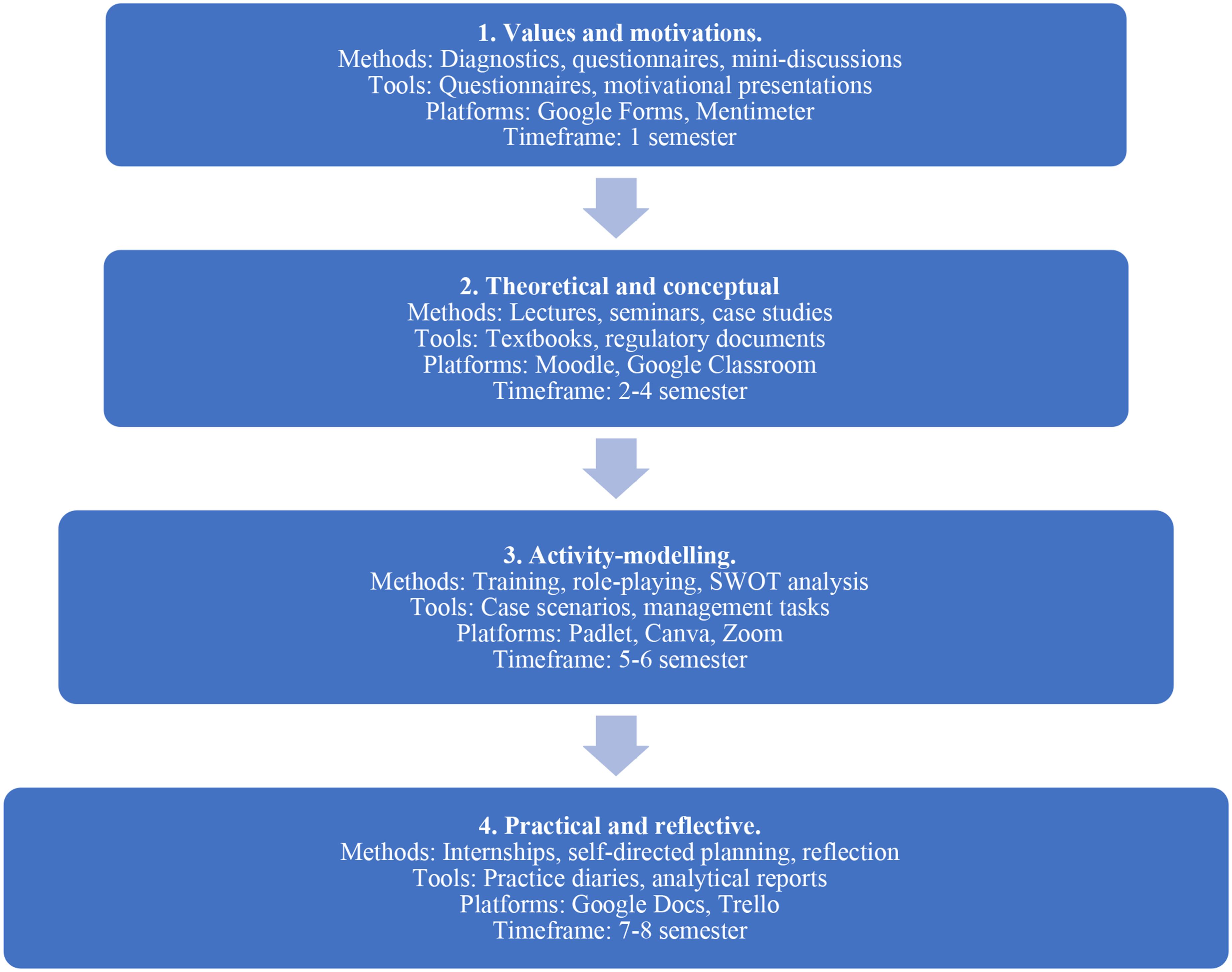
Theoretical model of future teachers’ management training in school settings: stages, methods, tools and digital platforms.
The graphical representation of the model of management training of a future teacher demonstrates a holistic and consistent organisation of the process, which covers all key aspects of professional development – from motivation to real managerial experience. Taking into account the methods, tools and platforms at each stage allows for the integration of technologies, innovative forms of learning and practice-oriented approaches, which are important conditions for the formation of a competent teacher-leader. This model helps to create conditions for the development of independence, strategic thinking and organisational skills of future teachers, which are necessary for the effective functioning of the school.
In the final phase of the study, which deals with the theoretical foundations of preparing future teachers for school management in the context of the education system of the Republic of Kazakhstan, the key role was played by the formulation of recommendations. It was found that managerial competence cannot be developed sporadically or only in postgraduate studies. It should be integrated into the entire educational process at the bachelor's level, starting with the formation of motivation for managerial activity, familiarisation with the specifics of school administration, mastering the tools of educational management and ending with the reflection of one's own experience during practice.
Based on the findings from the document analysis, SWOT analysis and comparative studies, several recommendations are proposed to enhance teacher education in Kazakhstan, particularly in preparing teachers for managerial roles. The document analysis revealed gaps in the integration of managerial competencies within teacher preparation programmes, with a primary focus on pedagogical skills rather than management. This finding supports the recommendation to integrate cognitive load principles into teacher education, as future teachers must develop the ability to design the educational process with consideration for cognitive economy. For instance, when creating presentations, planning lessons or structuring information, teachers should be trained to minimise cognitive overload for both themselves and their students. This recommendation is directly linked to the findings of the content analysis, where the lack of training in educational design and cognitive load management was identified as a key shortcoming in current teacher preparation programmes.
Additionally, the SWOT analysis highlighted the absence of a clear ethical framework within teacher education, which corresponds to the finding that ethical training is under-represented in Kazakhstani teacher preparation programmes. Given the increasing complexity of educational leadership, it is recommended to incorporate ethical decision-making into both management and pedagogical courses. This will allow future teachers to develop reflective thinking and be better prepared to handle real-life ethical dilemmas, such as conflicts of interest or issues of non-discrimination. This recommendation follows from the analysis of the regulatory documents, which, while emphasising pedagogical quality, provide limited guidance on ethical leadership.
Furthermore, the comparative analysis of international practices in Finland, Singapore, the UK and Canada revealed that intercultural competence is crucial for effective school leadership, especially in multicultural educational environments like Kazakhstan's. The analysis of Kazakhstan's educational documents showed that teachers are often unprepared to handle linguistic and cultural diversity in the classroom. Therefore, it is recommended to include courses on intercultural communication and inclusive thinking in teacher education programmes. This will equip teachers with the necessary skills to adapt educational materials and practices to diverse student populations, a key finding from the document and comparative analysis.
One of the effective mechanisms for preparing teachers for managerial activities is the introduction of mentoring as a mandatory component of pedagogical practice. It is recommended to create institutional models in which experienced teachers act as supervisors and coordinators of students’ professional development. In particular, as part of the pedagogical practice, a student can accompany a mentor during pedagogical councils, analysis of monitoring data or development of a school development plan. This will contribute to a deeper understanding of the managerial specifics of the educational environment and the formation of an active professional position. Given the dynamics of the digital transformation of education, the integration of artificial intelligence into the managerial aspects of pedagogical activity is of particular relevance. It is recommended to include courses on digital educational technologies in the curriculum, including an introduction to AI tools such as automatic data analysis (e.g., using Learning Analytics), personalisation of the educational process or creation of adaptive tests. For example, a practical task could include designing a school dashboard based on Google Workspace for Education or using the Moodle platform to monitor student performance. It is also important to emphasise the need to develop soft skills in future teachers as a key component of managerial competence. It is recommended to introduce interdisciplinary trainings on the development of emotional intelligence, critical thinking, facilitation and conflict mediation skills. For example, as part of a course on pedagogical ethics or psychology, interactive modules on solving managerial dilemmas, modelling crisis situations in a school team or simulation training in teams can be conducted.
It is advisable to structure the development of such competences within the model of management training, which consists of four stages: motivational, cognitive, training and practical. At the motivational stage, students are involved in discussing leadership in education through cases, discussions and examples from real school life. At the cognitive stage, they study the structure of the educational system, regulations and management models. The training stage involves participation in project work, modelling management situations and the use of educational simulations. The practical stage is implemented in the form of participation in the school's management processes under the guidance of a mentor. The development of such modules should be based on digital resources (e.g., Edmodo, ClassDojo) that allow for the development of digital literacy and flexible skills at the same time. The changes should also affect the professional standard of the teacher. Based on the analysis of its current version, it is recommended to consolidate managerial competencies related to educational planning, working with digital tools, participation in school decision-making, project management and teamwork. This will provide a regulatory framework for the implementation of a new paradigm of teacher education focused on leadership, innovation and digital transformation. In summary, the formulation of recommendations within the study serves not only as a scientific reflection, but also as a specific tool for transforming the educational training of teachers in Kazakhstan. The proposed changes can ensure the training of a new type of teacher – a competent, ethically responsible, digitally literate and managerially mature specialist capable of adapting to the complex multicultural and information overloaded environment of a modern school.
The model for preparing future teachers for managerial roles in schools suggests that teachers should be not only educators but also active participants in management processes. However, this statement sparks discussions, as many experts believe that the main factor influencing the quality of education is pedagogical practice rather than the managerial functions of teachers. Proponents of this approach argue that the most critical aspects of education are not only leadership qualities and managerial competencies but also the teachers’ ability to effectively organise the educational process, plan lessons, structure information and accommodate the diversity of students. Many of the recommendations presented in the model essentially support this viewpoint, emphasising the improvement of pedagogical skills such as creating presentations, lesson planning, adapting educational materials to linguistic diversity and actively using digital technologies. This suggests that, while the importance of managerial skills is acknowledged, the quality of teaching remains equally essential for successful educational practice. It is important for teacher education to encompass both the development of managerial competencies and the strengthening of pedagogical foundations that ensure a high level of teaching and meet the needs of students in the context of a changing educational landscape.
The preparation of future teachers for performing managerial functions in schools requires a theoretical substantiation and conceptualisation of approaches that integrate the development of managerial competencies into the broader framework of teacher education. This integration involves aligning teacher preparation programmes with the evolving demands of school management, ensuring that teachers are not only equipped with pedagogical knowledge but also with the skills needed for leadership, decision-making and strategic planning within the school environment. Key theoretical foundations should include an understanding of school administration, organisational structures, leadership theories and resource management. By incorporating these elements into teacher training, future educators can be better prepared to assume managerial responsibilities and contribute to effective school governance.
Discussion
The findings of this study reveal significant insights into the preparation of future educators for school management in Kazakhstan, emphasising the integration of educational leadership concepts, digital technologies and critical thinking. While the results align with existing literature on the importance of developing managerial competencies, the study moves beyond mere confirmation of previous research by critically examining the gaps in Kazakhstan's teacher education system. For example, the finding that effective teacher preparation cannot be limited to traditional pedagogical training alone resonates with the work of Leithwood (2021), who emphasises the need for leadership development in teachers, but it also highlights a critical disconnect in Kazakhstan's educational policies. Despite the strategic goals of enhancing educational quality and integrating technology, the existing programmes do not sufficiently address leadership and management training, which the study reveals as a crucial shortcoming.
The study also found a close correlation between the development of managerial competencies and teachers’ ability to adapt to dynamic educational environments. This finding is consistent with the work of Bellibaş et al. (2021), which underscores the importance of distributed leadership and instructional leadership in improving teaching quality. However, while this alignment confirms the relevance of these leadership models, the study critically identifies that the current Kazakhstani teacher education framework fails to integrate these models into the curriculum in a systematic way. Distributed leadership, for instance, is scarcely represented in the regulatory documents analysed, and the lack of practical leadership training in teacher education means that teachers are often unprepared for the collaborative and multifaceted roles required of them in school management.
The research results confirmed the thesis that effective preparation of educators for school management could not be limited to traditional forms of teaching alone, which aligned with the conclusions of Taylor and Colet (2023) regarding the necessity of transitioning from the development of teaching to educational competencies through practice-orientated approaches. Furthermore, the SWOT analysis conducted in the study reveals that while digital tools are increasingly integrated into education, the systematic integration of digital leadership competencies remains insufficient. Pettersson (2021) and Anthony et al. (2022) argue that digitisation is a driving force for educational transformation, yet the study shows that Kazakhstan's teacher preparation programmes are only beginning to incorporate these elements into their curriculum. The findings suggest that future educators need more than just familiarity with technology; they need to be equipped with the managerial skills to use digital tools effectively for strategic planning and resource management in schools.
The results also indicated that a key condition for the effective acquisition of the fundamentals of school management was the ability for self-reflection and self-regulation. This coincided with the provisions outlined in the work of De Bruin et al. (2020), which emphasised the need to align cognitive load with self-regulation strategies in learning. During the analysis, it was noted that students with a higher level of self-reflection demonstrated greater activity in modelling managerial situations. The role of educators in interacting with students as leaders and managers was considered through the lens of fostering social integration and a sense of belonging within the educational environment. This means that educators, in their managerial capacity, must not only impart knowledge but also create an atmosphere of support and inclusivity, helping students feel engaged and valued within the school community. Such interactions contribute to the overall development of both students and the educational institution, ensuring a positive and productive learning environment.
The study reaffirms the importance of self-reflection and ethical leadership in effective school management, concepts that were similarly emphasised by Ibrahim and El Zaatari (2020) and Alam (2022). However, the analysis goes further by suggesting that teacher preparation programmes must include structured opportunities for reflection on managerial decisions, particularly in multicultural contexts, where diversity poses unique challenges. This recommendation is rooted in the study's findings, which show that teachers in Kazakhstan are often unprepared for the challenges of managing multicultural classrooms, a gap that can be addressed by incorporating intercultural competence and ethical decision-making into teacher training. The research confirmed the need to update the content of pedagogical education, taking into account intercultural aspects, which aligned with the concept of multicultural experience outlined in the work of Maddux et al. (2021). The development of leadership qualities in the context of school management occurred more effectively under conditions of practical modelling of managerial situations, which is in line with the approach to experimental entrepreneurship outlined in the research by Bell and Bell (2020).
The role of mentoring and professional support in preparing for managerial activities was revealed in the work of Orland-Barak and Wang (2021), which noted that the support of experienced educators positively influenced readiness for managing educational processes. This conclusion was also confirmed by the results of the conducted research; the presence of mentors significantly increased students’ confidence in making managerial decisions. Adaptability to new conditions in the educational environment, particularly in the context of distance learning, also proved to be significant. This aspect was the subject of research by Quezada et al. (2020), which described the response of pedagogical programmes to the COVID-19 pandemic. The results confirmed that the flexibility of training programmes was crucial for the successful acquisition of managerial skills. The application of artificial intelligence tools in the preparation of educators for school management demonstrated the potential for developing strategic thinking, which aligned with the conclusions of Su and Yang (2023), who proposed a conceptual model for the use of ChatGPT in education. The possibilities of using generative AI as a means of supporting the educational process were also considered, which corresponded to the aspiration to prepare future educators for digital transformation. The conducted research led to the conclusion that one of the priorities was the need to develop the ability for strategic planning in pedagogical management. This approach corresponded to the views of Chiu and Chai (2020), who considered the sustainable development of curricula as a factor in the autonomy and motivation of learners. In turn, the work of Tsiligiris and Bowyer (2021) emphasised the importance of developing personal qualities, which confirmed the need to cultivate soft skills in the process of preparing educators for managerial activities.
The study of the professional development of heads of educational institutions revealed that the contextualisation of managerial practices remained an important factor in effective management, which aligned with the position of Brauckmann et al. (2023) and Perisic et al. (2023), who emphasised the significance of considering the local context in enhancing professional competence. Within the conducted research, it was noted that programmes that took into account the specifics of the educational environment contributed to a deeper understanding of managerial functions. No less important was the issue of digital literacy and its impact on the managerial readiness of future educators. As noted in the research by Al Kurdi et al. (2020), the adoption of learning technologies was determined by the level of intrinsic motivation and institutional support. Particular attention in the research was paid to innovative approaches, including the use of virtual reality, which allowed for the creation of simulation models of managerial situations. This approach corresponded to the generalisations presented in the work of Marougkas et al. (2023), which highlighted the potential of virtual reality (VR) technologies for the development of practical skills in pedagogical education.
In summary, while the study's findings align with established theories of transformational and instructional leadership, they also provide a critical evaluation of the gaps in Kazakhstan's teacher preparation system. The findings suggest that there is a need for a more integrated approach that combines pedagogical training with managerial competencies, ensuring that future teachers are equipped not only to lead classrooms but also to play active roles in school governance and development. The study calls for a systemic overhaul of teacher education that places as much emphasis on leadership as on teaching skills, making the case for a more interdisciplinary approach that combines leadership, technology, and ethical practices.
Conclusions
In the course of the study, a holistic view of the state and potential of management training of future teachers in the system of teacher education of the Republic of Kazakhstan was formed. The theoretical analysis of key educational documents, such as the Law of the Republic of Kazakhstan No. 319-III ‘On Education’, the State Programme for the Development of Education and Science for 2020–2025 and the standard educational programme for bachelors, showed the fragmentation of the inclusion of managerial competencies in the structure of higher teacher education. The managerial function of a teacher is not fixed by law, which hinders the formation of a teacher as an active participant in school management. The use of the classification method made it possible to develop a structural model of the teacher's managerial functions, identifying analytical, planning, communicative, organisational and control components. This provided the basis for defining the competence core of a pedagogical manager, which can be integrated into the curriculum through new courses or modules. The SWOT analysis helped to comprehensively assess the training conditions in the context of strengths, weaknesses, opportunities and external threats. It identified the need for institutional changes, including the development of new programmes that integrate the management component into the educational process.
The built theoretical model of management training, which includes the stages of value and motivational involvement, training in the basics of management, modelling of management situations and management practice at school, helps to outline the strategic direction of improving teacher education in Kazakhstan. This model is based on an interdisciplinary approach, combining pedagogy, psychology, management theory and educational management. The use of the method of formulating recommendations made it possible to propose specific measures, including the development and approval of a basic course on the basics of school management for bachelor's programmes, involvement of students in elements of school self-management, inclusion of management tasks in pedagogical practice and training of tutor-mentors who accompany the development of management skills of future teachers. The results of the study confirm that effective preparation of future teachers for school management requires not only a change in the normative focus, but also the introduction of a structured interdisciplinary approach to the development of managerial competence.
This study seeks to develop a comprehensive model for preparing future teachers for managerial roles within schools. It specifically addresses the theoretical conceptualisation of teacher preparation, the representation of managerial competencies in policy documents and the assessment of teacher training programmes. By examining these components, the study aims to offer practical recommendations for integrating managerial training into teacher education.
Footnotes

Ethical considerations
The author confirms that all research complies with the ethical standards and laws of the country where it is conducted. A study was approved by the Ethics Commission of Zhetysu University named after Ilyas Zhansugurov, No. NP00394.
Funding
The author received no financial support for the research, authorship and/or publication of this article.
Declaration of conflicting interests
The author declared no potential conflicts of interest with respect to the research, authorship and/or publication of this article.
Data availability statement
The author confirms that the data supporting the findings of this study are available in the article.
Author biography