







Abstract
Introduction:
To help understand and better meet the needs of its membership, the Endourological Society (ES) conducts an annual membership survey. The purpose of this article is to report the findings of the third annual census of the ES.
Materials and Methods:
A 39-question Qualtrics survey was distributed to ES members around the time of the 41st World Congress of Endourology and Uro-Technology (WCET). Questions were divided into three categories including demographics, engagement, and the WCET. Responses were analyzed and are reported to facilitate the society’s ability to respond to the needs of its membership.
Results:
Of the 1730 dues-paying members of the ES, 458 questionnaire responses were obtained (26.5% response rate). The average age of respondents was 50.2 years, 91.5% were male, and 63% completed a fellowship. Of these, 59% of respondents were in academic practice spread across 64 different countries. The most common procedure performed by respondents was complex retrograde endoscopy (83%) followed by percutaneous nephrolithotomy (76%). The majority of respondents (89%) participated in clinical research. Most respondents (96.3%) felt that the ES had an impact on their professional development.
Conclusions:
The survey results demonstrate that the ES has a broad international involvement and has a significant impact on its members’ professional development. Importantly, the results also suggest avenues to increase impact by (1) encouraging broader participation including younger physicians; (2) prioritizing affordable and desirable meeting locations; (3) reducing session overlap; and (4) improving virtual connectivity and language services so that more members worldwide can participate in ES offerings.
Introduction
The Endourological Society (ES) is a multinational, non-profit organization with over 1730 members across the globe. The society was founded in 1983 with the important goal of promoting the advancement of minimally invasive techniques to surgeons throughout the world.
An important part of a thriving society is to understand and respond to the needs, goals, and aspirations of its membership. The ES has conducted two prior surveys of its membership in 2021 and 20221,2 Following a 1-year hiatus because of the cancellation of the 2023 World Congress of Endourology and Urotechnology (WCET), the third annual ES census was circulated in conjunction with the 2024 WCET in Seoul, South Korea.
The purpose of this article is to report the results of the third annual census of the ES and to evaluate membership demographics, engagement with the society’s resources, and involvement in the WCET. By reviewing responses, the ES aims to more effectively meet the needs of its membership.
Materials and Methods
Using Qualtrics XM (Qualtrics, Provo, Utah), a 39-question survey was constructed with input and oversight from the 6 members of the Endourological Society Data Committee and the board of the ES (see Supplementary Data). Questions were divided into segments, including questions related to society demographics, world engagement, and the annual meeting of the World Congress of Endourology and Urotechnology (WCET). This survey was distributed to all 1730 members of the ES following the 41st WCET in Seoul, South Korea. Survey responses were recorded from August 20, 2024, to November 8, 2024, at which time the survey was closed.
Responses were completely anonymous and given voluntarily by ES members. For this reason, this survey was exempt from the requirement for IRB review.
Questions were presented to members with various answer formats, including single-option, multiple-option, and open-ended responses. Members were only prompted to answer questions that were potentially relevant to them. Display logic was used to ensure question relevancy. For example, those who responded to the question “What is your employment status?” with “not employed,” “in training,” or “retired” would not be asked to clarify their employment model.
After the survey was officially closed, both completed surveys and partially completed surveys were included in the analysis. Responses were tabulated by Qualtrics, and the number and type of responses were recorded. Responses were provided to members of the ES Data Committee for evaluation and construction of this article. Responses from the 2024 census were also compared to the 2021 and 2022 censuses. All responses were stored within an encrypted database maintained on a firewall-protected network.
Results
Demographics
Age, gender, race, and ethnicity
Of the 1730 individuals who paid ES membership dues in 2024, 458 responses were obtained, yielding a 26.5% survey response rate. The average age of respondents was 50.2 years, with a range of 30 to 75 years. Most respondents were male (91.5%), while only 7.7% of respondents were female, and 0.7% preferred not to specify. The most commonly reported ethnicity was White (45.2%), followed by Asian or Asian American (21.9%), Hispanic or Latino (14.5%), Middle Eastern or North African (9.4%), Black or African American (6.4%), and 5% who identified as another ethnicity or preferred not to specify. Members were also asked how well they felt the ES promoted engagement of individuals from a broad spectrum of backgrounds. Most members thought this was done “very well” to “adequately” (89.9%), and 10.1% thought it was promoted “poorly” or “very poorly.”
Practice years and training
Approximately 1 in 4 respondents reported working in practice >25 years (26%). When the remaining respondents, practicing between 1 to 25 years, were divided into 5-year increments, group percentages ranged from a low of 12% (6–10 years in practice) to a high of 17% (11–15 years in practice) (Fig. 1). Of respondents, 63% completed an endourology/laparoscopy/robotics fellowship, with 3% in current fellowship training.
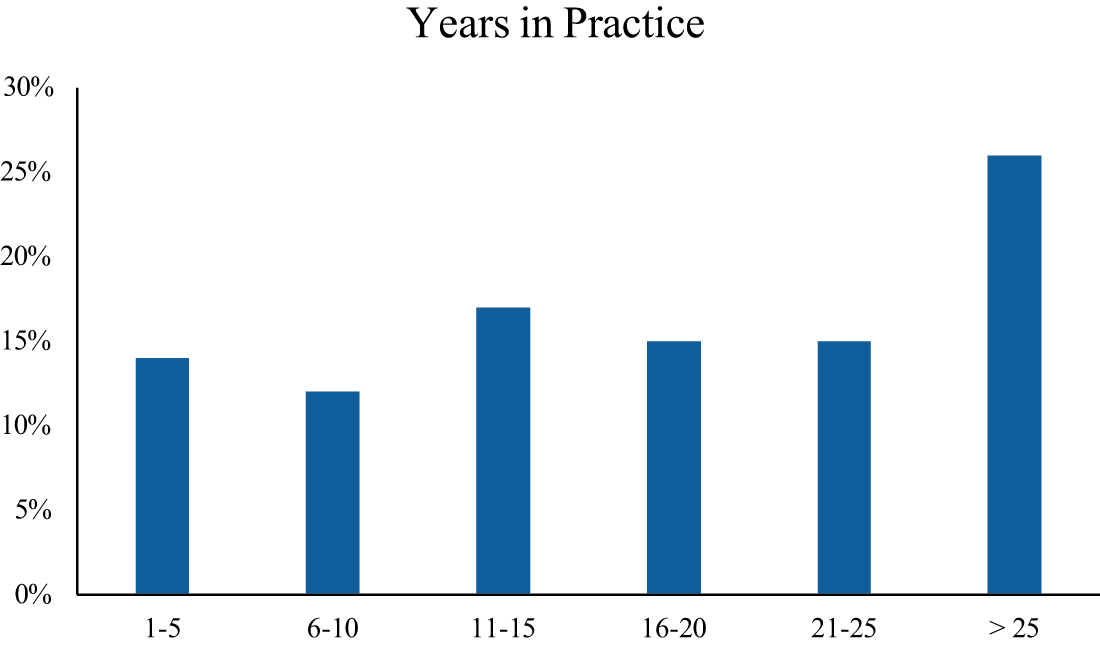
Percentage of survey respondents stratified by number of years in practice.
Practice setting and scope
In terms of employment status, most respondents work full-time (91%), while 7% work part-time, 1% are in training, and 1% are retired. Regarding the employment model (Fig. 2), more than half (59%) are in academic practice, followed by solo private practice (17%), large group private practice (11%), multispecialty group (7%), military (2%), and other (2%). 30% of respondents are hospital-employed, 10% are government-employed, and 3% work at an academic satellite location. Endourologists practiced in 64 different countries across the globe: 38.4% from North America, 23.1% from Asia, 19.7% from Europe, 14.6% from South America, 3.4% from Africa, and 0.8% from Australia (Fig. 3). Respondents offered a wide range of skills and expertise, with the most common practice being complex retrograde endoscopy at 83%, followed by percutaneous nephrolithotomy at 76%, and medical management of stone disease at 72% (Fig. 4).
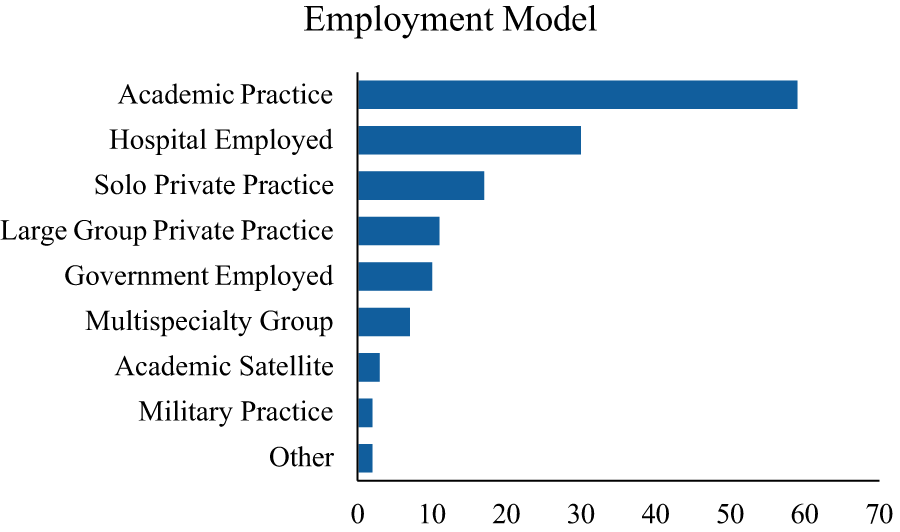
Employment model of survey respondents.
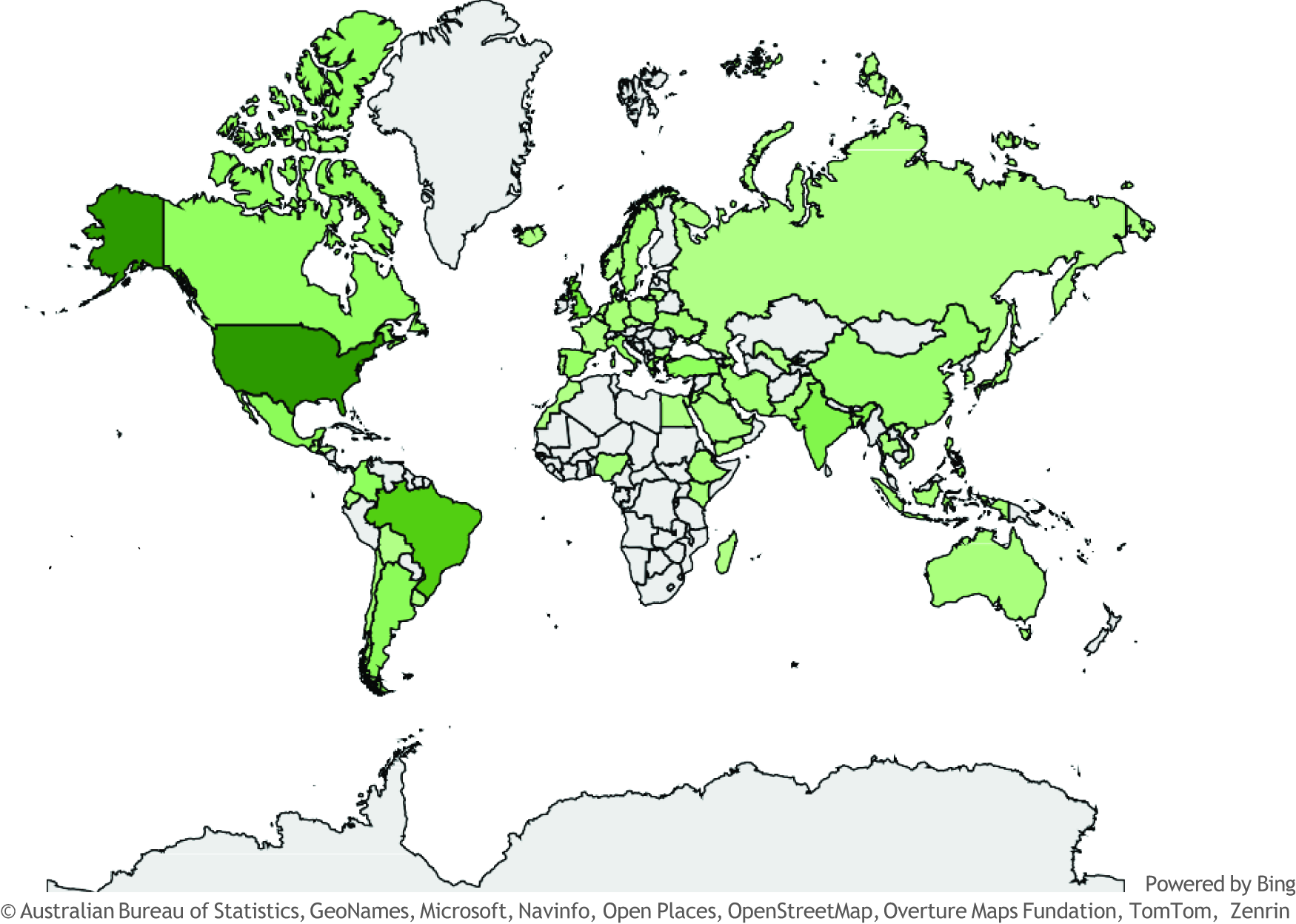
World map demonstrating countries of practice for Endourologic Society survey respondents. A darker shade indicates a greater number of respondents.
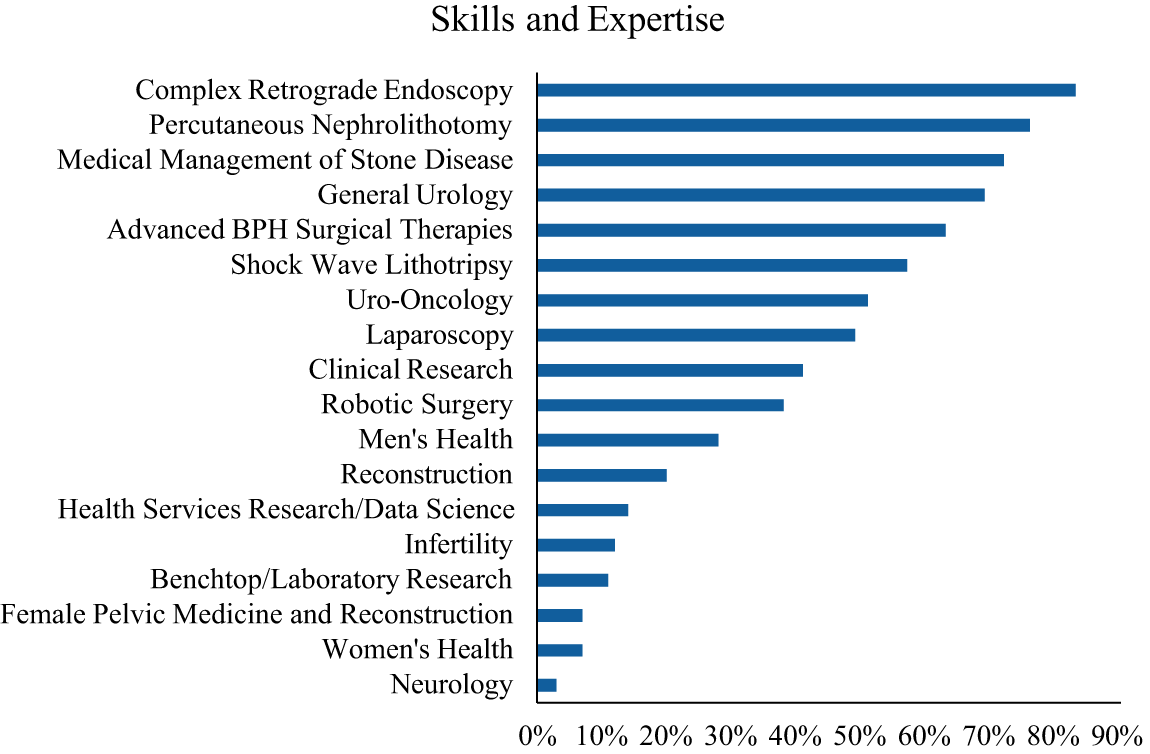
Skills and expertise offered in practice by the respondents.
There were 346 respondents who engage in research within their practice. Most respondents engaged in clinical research (89%), followed by quality improvement projects (40%) and health services research (25%). Less commonly, respondents engaged in translational research (19%), data science (e.g., machine learning, artificial intelligence) (18%), and benchtop/laboratory science (15%) (Fig. 5).
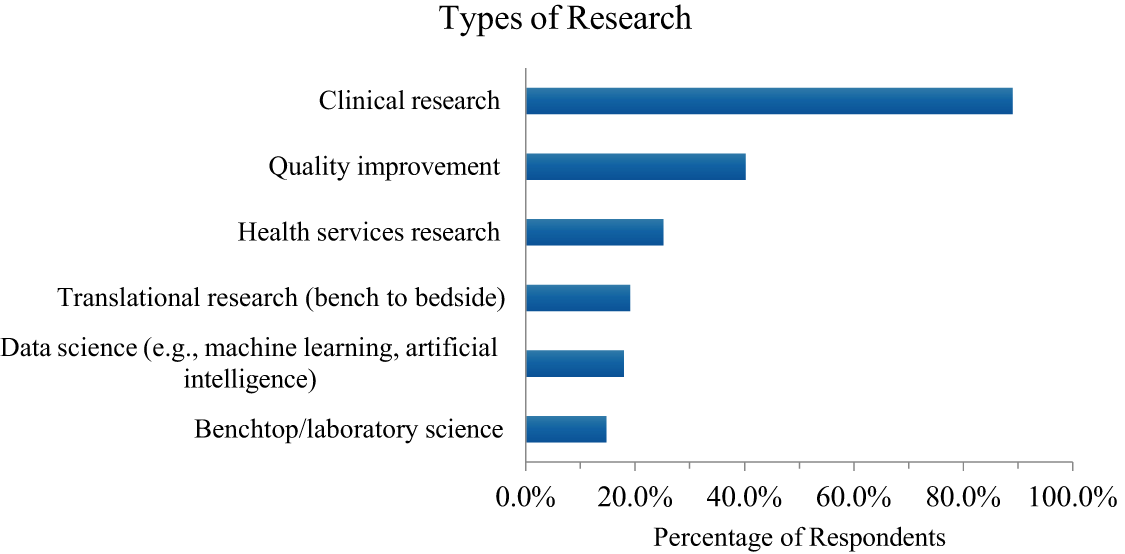
Different types of research engaged in by survey respondents.
Engagement
Many society members (43.3%) reported participating in ES events such as conferences, webinars, and workshops 2–3 times a year; 3.0% reported never attending any events; 31.5% attended once at most; and 22.3% attended 4 or more times a year. When ranking access to resources provided by the ES (i.e., journals, educational materials, guidelines, and podcasts), most respondents reported having average to excellent access (92.1%). Only 7.8% reported having poor or very poor access to ES resources. Members were also asked how often they visited the ES website or utilized its resources. The majority of respondents (74.8%) visited the website at least occasionally, while 25.2% visited rarely or not at all. Among the various ES resources, journals and research publications were the most used, with 83% of members reporting their use. This was followed by podcasts and webinars (47.1%), clinical guidelines and best practices (44.9%), online or in-person courses (33.9%), networking events and conferences (33.1%), newsletters and email updates (24.0%), mentorship programs (5.5%), discussion forums and online communities (5.8%), or other resources (1.1%). The most reported barriers to resource access were time zone differences for attending live events (47.5%), financial constraints (42.9%), travel restrictions (32.6%), lack of awareness about available resources (31.2%), language barriers (9.0%), limited internet access (2.0%), or other additional barriers (11.0%).
Individual satisfaction with education and networking opportunities was described as follows: 62.8% were satisfied or very satisfied, 31.1% were neutral, and 6.6% were dissatisfied or very dissatisfied. Only 29.1% of ES members reported contributing to any society initiatives such as research projects, committees, and volunteer activities. Despite most individuals not being involved in society initiatives, 79.1% of members still felt they had sufficient opportunities in which to be involved. Of the 70.8% who did not participate in these activities, 36.2% expressed interest in engaging in research collaboratives such as the Clinical Research Office of the Endourological Society and the Team of Worldwide Endourological Researchers. 25.6% expressed interest in educational initiatives and 18.9% in committees. The remaining 19.3% chose not to be involved in society activities. 96.3% of survey respondents felt that the ES had some form of impact on their professional development, with that impact being considered moderate to extremely significant for 78.8% of survey respondents.
World congress of endourology and urotechnology
In gathering insights on the WCET meeting, the 2024 census shed light on key barriers to participation and areas for enhancement for future meetings. Notably, 233 respondents (over 50%) reported they did not attend the most recent WCET meeting. Among those who provided reasons for non-attendance, the most cited issues were location, cost, and timing. Specifically, 23 respondents mentioned the location as a deterrent, emphasizing the need for more accessible or desirable destinations. Additionally, 19 respondents cited financial limitations, including high registration fees and travel expenses, while 15 respondents pointed to timing conflicts, with preferences for meetings in the fall rather than summer.
Engagement-related concerns also emerged: 14 respondents noted they would be more likely to attend if offered opportunities to present, moderate, or serve on committees. Program structure was another point of dissatisfaction. Attendees reported that overlapping sessions, particularly between plenaries and posters/videos, limited their ability to engage with all content. Multiple respondents recommended compressing the schedule and improving session coordination (Fig. 6).
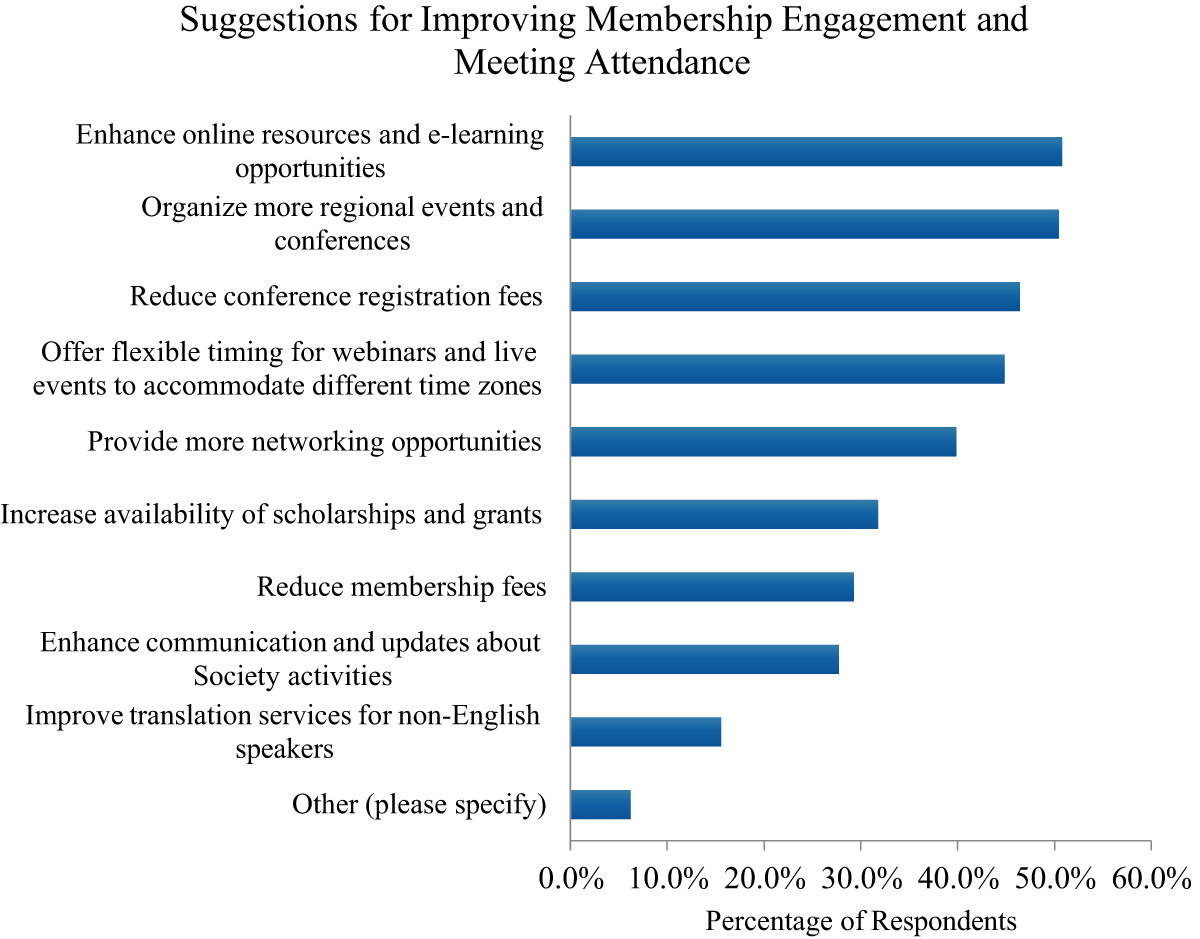
Potential areas for improving membership engagement and meeting attendance.
Technological enhancements were another consistent theme. Thirteen responses advocated for virtual options, including livestreaming sessions and recording content for on-demand access.
There was also strong support for a meeting app, digital posters, and simultaneous translation, particularly to support non-English speakers and international attendees. A notable suggestion was to eliminate printed posters in favor of eco-friendly digital formats.
Finally, interest in networking and peer learning opportunities was strong. The majority of respondents expressed potential interest in mentorship programs (76%) and small-group sessions grouped by clinical subspecialties, with structured discussions led by facilitators (65%).
Discussion
The results of the third annual census highlight several important characteristics of the ES. According to the 2024 American Urologic Association (AUA) Census, the median age of urologists was 54 years. 3 The ES membership is aging, with the mean age of respondents increased by 2 years to 50, in comparison to the first and second ES censuses.1,2 The society should seek to recruit and encourage participation of young urologic graduates to ensure a robust society in the future.
One of the primary strengths of the ES organization is its global reach to 64 different countries across the world. The ES has been successful in North America, Asia, and Europe; however, Australia, the Middle East, Africa, and South America represent fertile locations for continued growth. In 2024, the majority of respondents continue to hail from North America, but the overall percentage has dropped considerably from 46.4% to 38.4% compared to the second ES census. 2
Although the number of women entering urology residencies has increased dramatically, with 42.2% of matched residents being female in the United States in 2025, 4 the number of female respondents to the ES survey remained similar at 7.7% compared to 8.2% in the previous census. 2 The most recent 2024 AUA census reported women constitute 12.1% of practicing urologists. 3 This represents an opportunity to understand the differences in female membership between the two organizations and look for areas to improve. However, it is also important to note that of the 54 respondents in practice 1–5 years, over 20% were female, which represents a substantial increase compared to the 12.5% in practice 6–10 years. This suggests that the number of female society members is increasing.
Contrary to trends seen in physician practices in the United States at large, where the number of individuals in solo private practice is decreasing, 5 the number of ES survey respondents in solo private practice increased by 7.4% since the second ES census. 2
An important finding of this survey is the significant dedication to continued innovation demonstrated by the 89% of members who participate in clinical research. In addition, 40% conduct quality improvement studies and 25% perform health services research. The substantial dedication of ES members to perform research will certainly continue to advance the field. Even though 70.8% of individuals reported not participating in any ES initiatives, 79.1% stated that they felt that they had sufficient opportunity to be involved.
More than 50% of those who responded to the census did not attend the 2024 WCET. For comparison, in the previous censuses, 54% of respondents did not attend the 2019 WCET, and 63.2% did not attend the 2022 WCET.1,2 Despite the WCET taking place in Seoul, South Korea, only two ES members from South Korea completed the survey. This may highlight potential regional barriers to survey completion.
The survey data highlights a disconnect between the current WCET meeting format and participants' needs regarding access, engagement, and structure. High costs, travel challenges, and limited involvement opportunities serve as major barriers to broader attendance. The responses underscore a desire for deeper involvement in the meeting’s content and planning. Moreover, the overlap of sessions and lack of interactive formats may limit the educational value for some participants. However, the need to compress the meeting and avoid overlapping sessions may limit the number of individuals who can be actively involved in the meeting. Moving towards digital poster formats reflects a growing sustainability awareness in the membership as well as the migration of younger members towards digital content. The enthusiasm for virtual tools, mentorship, and inclusive leadership signals that many members are seeking greater value and connection through the WCET beyond passive attendance. These preferences indicate a broader interest in building community and sharing knowledge beyond traditional lecture-style presentations.
Conclusion
The ES continues to meet the needs of its worldwide membership, represented by 64 different countries. The members of the society remain highly dedicated to advancing the field through 89% of respondents contributing to clinical research. Furthermore, the society has had a profound impact on its members, with 96.3% of society members reporting an impact on professional development. The ES continues to offer abundant opportunities for involvement, as attested by 79.0% of respondents.
The society also recognizes the need for improvement in several areas. This survey highlights a need to involve a greater number of young urologists from all walks of life. To improve future WCET meetings, organizers should prioritize accessible, affordable locations, with financial aid options such as travel grants, discounted registration for certain participant levels/tiers, and early planning notifications. Ensuring diverse faculty representation and transparent pathways for committee involvement can help increase engagement, especially among early-career professionals and international members. In addition, future surveys should characterize responses based on age, practice type, and location to improve society fulfillment of member needs. Also, future surveys could specifically ask members their preference on meeting locations to optimize meeting attendance.
Logistical improvements should include reduced session overlap, interactive learning formats, and better time management to ensure visibility of all content. Investment in virtual accessibility (e.g., livestreaming, recordings, meeting apps) and language services will broaden participation. Lastly, establishing year-round engagement via mentorship programs, regional collaboration, and member feedback loops will reinforce value and inclusivity within the endourology community.
Footnotes
Supplemental Material
Abbreviations Used
References
Supplementary Material
Please find the following supplemental material available below.
For Open Access articles published under a Creative Commons License, all supplemental material carries the same license as the article it is associated with.
For non-Open Access articles published, all supplemental material carries a non-exclusive license, and permission requests for re-use of supplemental material or any part of supplemental material shall be sent directly to the copyright owner as specified in the copyright notice associated with the article.
