







Abstract
Emotional labor research largely focuses on client-facing occupations. However, employees across occupations engage in emotional labor when they perceive that specific types of emotional communication are required to align with organizational expectations. The current two-week daily survey study of 42 employees was conducted at a small website development company to examine relationships between employees’ emotional labor, physical health, and psychological well-being. Results indicated that daily emotional labor surface acting was significantly negatively related to daily psychological well-being and daily physical health. However, daily emotional labor deep acting was not significantly related to daily psychological well-being or daily physical health. After aggregating emotional labor across days, results revealed a significant positive relationship between emotional labor and burnout. This study enhances organizational awareness of the relationship between emotional communication expectations and employees’ psychological and physical health. Research-driven practices are detailed to ameliorate the negative side effects of emotional labor communication demands.
The Impact of Daily Emotional Labor on Health and Well-Being
Part of “work” not often outlined in job descriptions involves communicating emotions. Organizations generally emphasize rational decision-making processes and work-related tasks; however, the workplace also necessitates the performance, negotiation, and ongoing management of emotions (Tracy & Malvini Redden, 2020). Employers frequently have explicit and implied rules concerning appropriate emotional expressions at work, and employees are expected to communicate emotions in specific ways as organizational members (Riforgiate & Komarova, 2017). Management of emotions as part of one’s job performance is termed emotional labor (Grandey et al., 2013) and has implications for how employees suppress or accentuate emotions through communication displays and consequently how they experience work.(Figure 1) Hypothesized paths and temporal logic of study.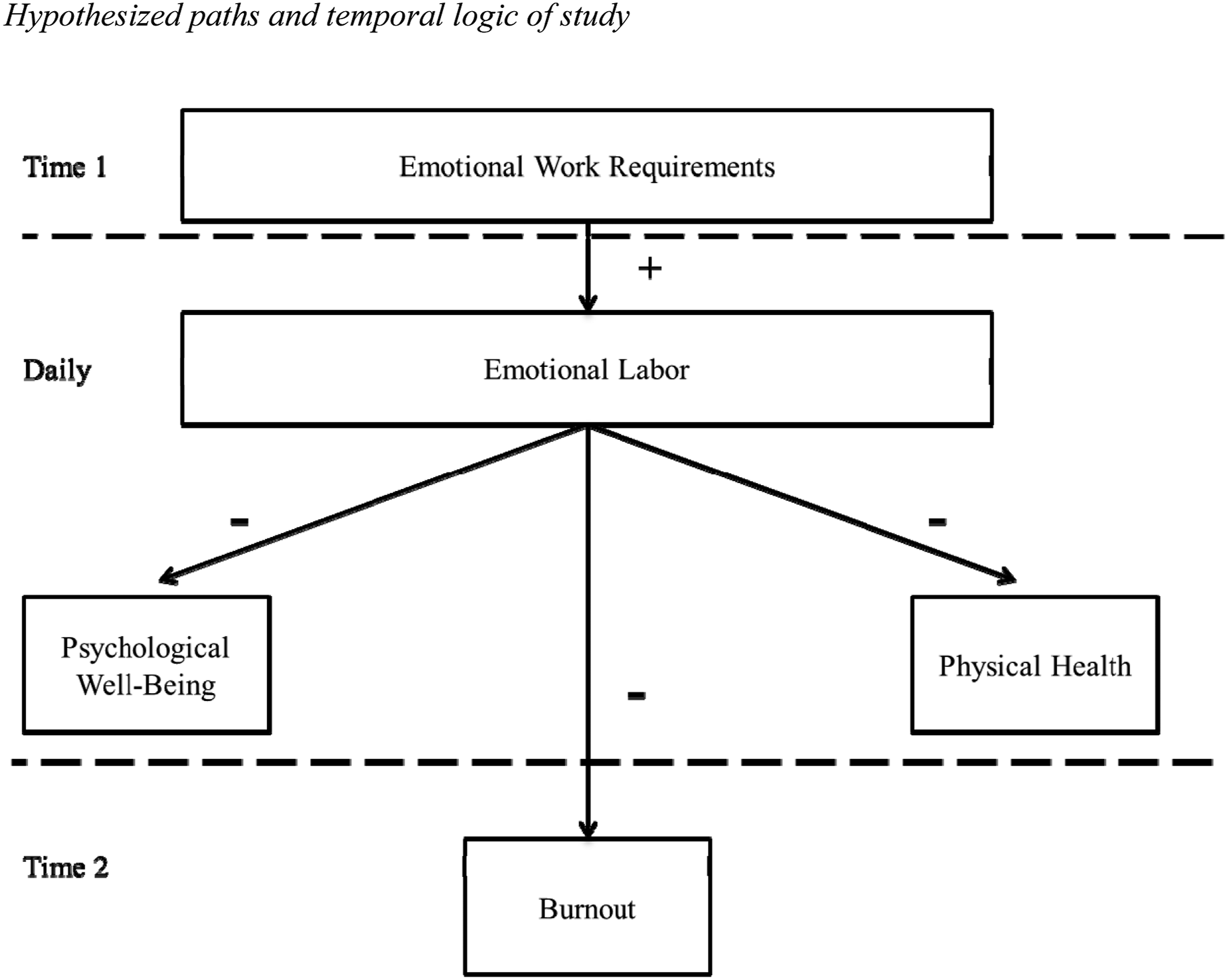
Emotional labor has been widely conceptualized and studied (Grandey & Melloy, 2017; Riforgiate & Tracy, 2021), demonstrating the salience of this topic to organizational life. This study enters this larger conversation to make three important contributions to enhance understanding about the communication of emotions in organizational life. First, we address calls to explore emotional labor more broadly across organizational types by considering employee interactions at a small website development company. Second, we employ a daily survey over a two-week period to address emotional labor on a daily and cumulative level to nuance findings of existing cross-sectional data and qualitative field research. Finally, our study allows us to empirically explore the links between the communication of emotions, physical health, and psychological well-being over a two-week period. In the following sections, we review pertinent research to situate the contributions of our study, detail our methods and findings, and offer implications of our results.
Emotional Labor
Hochschild’s (1983) work exploring airline attendants and bill collectors introduced the concept of emotional labor as “the management of feeling to create a publicly observable facial and bodily display” (p. 7). 1 Her conceptualization of emotional labor focused on the effort required for individuals to externally express organizationally prescribed emotions that benefitted the organizational bottom line, which she believed could be detrimental to the employee. Taking a slightly different approach, Ashforth and Humphrey (1993) adjusted the conceptualization of emotional labor to focus more on observable behaviors without regard to the felt emotions, defining emotional labor as “the act of displaying the appropriate emotion” (p. 90). From this perspective, emotional labor could become effortless as it became automatic and routinized for employees and therefore engaging in emotional labor would not necessarily be harmful. Last, Morris and Feldman (1996) contended that emotional labor is the “effort, planning, and control necessary for expressing organizationally desired emotion during interpersonal transactions” (p. 987). Thus, they returned to a stance closer to that of Hochschild, describing internal tensions resulting from organizational expectations. This study draws upon Morris and Feldman’s conceptualization of emotional labor such that we are interested in the expression and suppression of emotions based on requirements of one’s job.
The expectation or requirement to express or suppress specific emotions is particularly important for jobs requiring regular interactions with others, whereby employees are the face of the company with which customers interact (Biron & van Veldhoven, 2012). For example, cruise ship (Tracy, 2000) and hotel employees (Shapoval, 2019) produce and communicate emotions to create a particular experience for customers, while other service industry employees such as IT help desk (Wang et al., 2020) and service call center workers (Ishii & Markman, 2016) engage in emotional labor to help customers resolve issues. Even in public service positions such as correctional officers (Tracy, 2007), fire fighters (Scott & Myers, 2005), municipal court judges (Scarduzio, 2011), and airport transportation security agents (Malvini Redden & Scarduzio, 2018), emotions are managed to encourage specific responses from others.
As described, emotional labor has been explored extensively in service roles and in high emotional contexts (Grandey & Melloy, 2017; Humphrey et al., 2015). However, other workplace contexts have expectations for emotion displays embedded in organizational cultures. Expectations for how employees should communicate emotions are developed through members’ socialization into the organization and perpetuated through daily interactions (Kramer & Hess, 2002). Importantly, employees communicate specific types of emotions at work based on their perception of display rules even if emotional labor is not explicitly required (Kammeyer-Mueller, et al., 2013).
Therefore, our study takes up Miller and Koesten’s (2008) call asserting that “attention to emotion in the workplace should be spread over a larger number of organizational sectors” to provide “a nuanced understanding of the norms for professional relationships and the communication of emotion within those relationships” (p. 27). To this end, the current study furthers understanding of emotional labor by exploring employee perceptions of emotional labor in a website development company. This study adds to other researchers’ understanding of emotional labor experienced by IT employees including Rutner and Riemenschneider’s (2015) study explaining how emotional labor surface and deep acting are associated with different conflict management styles and Rutner et al, (2008) study of the relationship between positive and negative emotional dissonance (emotional labor requiring performing emotions that are not felt) related to work exhaustion, job satisfaction, and turnover intentions.
Even employees whose work does not directly involve creating emotions for clients or managing others’ emotions still experience emotional labor when they believe particular emotions are expected by the organization. Ruther and Riemenschneider (2015) confirmed that “emotional labor theory holds true in the population of IT professionals” (p. 246). Therefore, this study responds to Grandey and Melloy’s (2017) call for further research to better understand workplace settings in which employees are likely to have greater role identification and more intrinsically motivating work. Better understanding the prevalence and effects of emotional labor across different types of organizational contexts builds a case to enhance workplace practices and organize tasks to benefit both employers and employees, while extending emotional labor theory.
Further, both qualitative and quantitative work contributes to understandings of emotional labor. Qualitative ethnographic field methods have been used longitudinally to explore employee experiences over time, capturing organizational processes and structures influencing emotional labor experiences (e.g., Malvini Redden & Scarduzio, 2018; Rivera, 2015). Additionally, qualitative work contributes employee narratives and perspectives that add knowledge of the lived experience of emotional labor (e.g., Rivera & Tracy, 2014; Tracy, 2000).
While there is a wealth of quantitative information on the relationships between emotional labor, psychological well-being, physical health, and burnout, most of this research has been cross-sectional in nature (Hülsheger & Schewe, 2011). Cross-sectional studies ask respondents to report the extent to which they typically engage in emotional labor activities and how they typically feel regarding their emotional exhaustion levels, physical health symptoms, and other indicators of well-being at a given point in time. This cross-sectional approach allows for a general understanding of global, systemic relationships but fails to capture the intricacies of everyday life. Only recently have scholars begun to quantitatively capture the effects of emotional labor that occur daily (e.g., Diestel et al., 2015; Sanz-Vergel et al., 2012; Scott et al., 2012; Wagner et al., 2014). This study employs a daily survey design to examine how the experience of emotional labor on a given day relates to physical health and psychological well-being on that same day. The findings further explore how daily emotional labor over time is related to global perceptions of burnout to provide a more nuanced understanding of emotional labor and offer practical implications.
Emotional Work Requirements and Daily Emotional Labor
To the extent that one’s work requires the expression or suppression of certain emotions, it is logical to assume that an individual will engage in emotional labor. That said, Ashforth and Humphrey (1993) note that emotional labor constitutes a form of impression management that occurs during a service transaction to the extent that individuals deliberately attempt to modify their communication behaviors to influence social perceptions of themselves and to foster certain interpersonal climates. Of course, impression management occurs beyond service transactions. Daily emotional management often involves the interpretation of unstated expectations and adjusting communication to accentuate positive emotions and suppress or reframe negative emotions (Kammeyer-Mueller et al., 2013; Rutner et al., 2008). As such, even if emotions are not dictated by one’s organization, individuals may still engage in the regulation of their emotions—likely based on societal norms—to manage others’ impressions. Indeed, individuals with greater emotional intelligence, (i.e., a set of skills “relevant to the accurate appraisal and expression of emotion in oneself and in others, the effective regulation of emotion in self and in others, and the use of feeling to motivate, plan, and achieve in one’s life” [Salovey & Mayer, 1990, p. 185]) would be expected to engage in the expression or suppression of emotions to appear favorable to others. We argue that within the workplace, emotional labor will be greater to the extent that individuals perceive such emotional regulation and communication as a work requirement, regardless of societal expectations, emotional intelligence, or other factors beyond organizational mandates.
Daily Emotional Labor and Health Outcomes
Communicating emotional displays congruent with one’s felt emotions is generally beneficial. Social interactions enhance well-being (Kammeyer-Mueller et al., 2013), and genuine spontaneous emotional labor also increases job satisfaction (Humphrey et al., 2015). Emotional labor can positively affect employee mental well-being because feelings of satisfaction, pride, and security can increase when employees engage more in their jobs (Brotheridge & Grandey, 2002). Additionally, displaying emotions can also create those emotions; therefore, forcing a smile can evoke happiness (Grandey, 2000).
Although emotional regulation can result in positive outcomes, interacting with others is likely to lead to distress at times (Miller & Koesten, 2008). In a meta-analytic research review, Hülsheger and Schewe (2011) found that individuals who engaged in emotional expressions that were different from felt emotions experienced greater levels of burnout, psychological strain, and psychosomatic complaints. Additionally, “faking” emotions is related to increased intentions to leave employment and actual worker turnover (Grandey & Melloy, 2017).
The negative impact of emotional labor can be partially understood through tenets of the job demands-resources model (JD-R; Bakker & Demerouti, 2007; Demerouti et al., 2001), which assumes that job characteristics can be classified as being either job demands or job resources. Job demands include any aspect of the job requiring sustained physical and/or mental effort and are therefore associated with psychological costs. Examples of job demands include time pressures, dealing with difficult customers, or situations or requirements that affect employees emotionally, such as perceived work requirements to perform emotional labor. Demands for emotional displays can vary based on how often emotional management is required, the number and range of emotions, the length and intensity of the display, and the extent to which the emotional displays are different from the emotions one actually feels (Morris & Feldman, 1996). The greater the requirement, intensity, and variation of the emotional display from one’s actual feelings, the greater the experienced job demand.
Conversely, job resources are functional and reduce job demands or their impact. For example, social support from coworkers, job autonomy, and feedback from one’s supervisor constitute job resources. According to the JD-R model, job stress or burnout will occur when job demands are too high and/or job resources are too low. Thus, excessive regulation of one’s emotions may be deemed a chronic job demand that may lead to negative outcomes for an employee. Indeed, health problems have been shown to result due to job demands exhausting employee mental and physical resources (Bakker et al., 2003).
Of course, job demands in the form of the need to regulate and modify one’s emotions changes daily, with some days requiring fewer emotional labor requirements (e.g., days with fewer interactions) or less effort on the part of the employee (e.g., days where moods match the organizational display rules). It would be expected that problems associated with excessive job demands would vary accordingly. In line with this, Judge et al. (2009) found daily negative effects of emotional labor on employees’ well-being. Additionally, in an experience sampling study of 78 bus drivers, Wagner et al. (2014) found that emotional labor was related to greater emotional exhaustion, work-to-family conflict, and insomnia. With these points in mind, we hypothesize that the more that individuals engage in emotional labor on a given day, the lower their psychological and physical well-being will be for that particular day, both compared to their own health and well-being on other days as well as compared to others who may be engaging in different levels of emotional labor on those same days. Thus, we offer the following hypotheses:
The actual managing of emotions in performing emotional labor occurs through either surface acting or deep acting (Morris & Feldman, 1996). In surface acting, one regulates emotional expressions and fakes the emotions communicated; while in deep acting, one tries to change cognitive processes to actually feel the emotions required (Grandey et al., 2013). Specifically, surface acting takes additional effort to “fake” emotions, requires greater concentration, and reduces job satisfaction (Bhave & Glomb, 2016), while deep acting generally results in more positive outcomes because the emotions felt align with the emotions displayed (Morris & Feldman, 1996). However, the converse can also be true—surface acting can be beneficial (e.g., improving work attitudes) and deep acting can be detrimental (e.g., leading to greater exhaustion) depending on individual personality and contextual factors (Grandey & Melloy, 2017).
White-collar website development employees may have additional job resources compared to other types of front-line workers in high emotional contexts. These resources may allow employees to buffer emotions and reduce negative consequences of emotional labor on psychological and physical health. To extend understanding of how surface and deep acting function in office contexts compared to previous research on service work, we explore the experience of white-collar employees with the following question:
Engaging in daily emotional labor may take its toll on an individual over time. Wharton (1999) suggested that incessant emotional labor can lead to the fusion of an employee’s work and his or her self. This fusion, over time, can result in the employee experiencing an inability to feel any emotions (Maslach & Jackson, 1986). This draining of energy and resources due to job strain can lead to emotional exhaustion (Shaufeli & Enzmann, 1998). Based on this, and consistent with the JD-R model, we hypothesize the following:
Method
Participants and Procedure
Sample Size and Response Rates of Business Departments at Different Points of Data Collection.
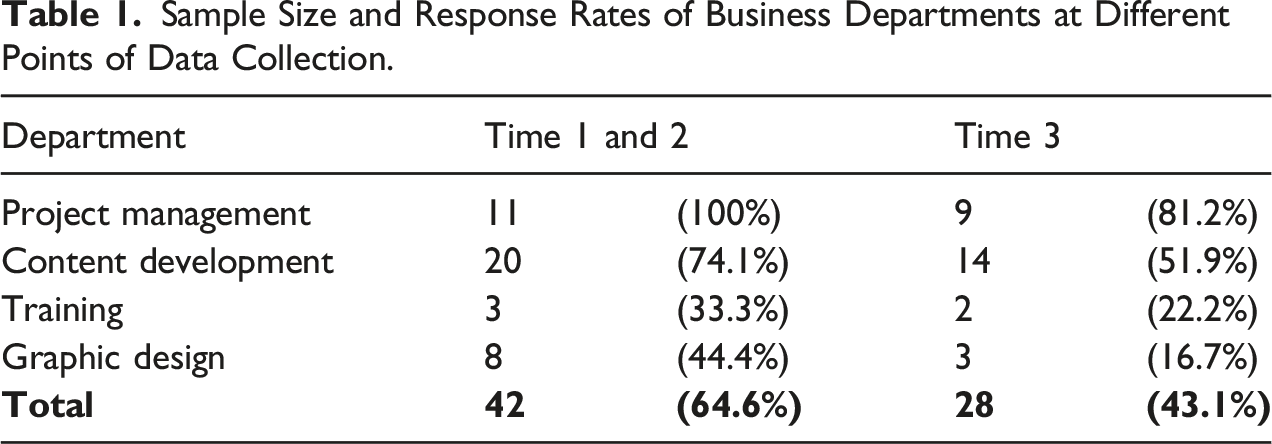
The study proceeded in four phases. First, managers invited employees to participate in exchange for entry into a drawing conducted by the researchers for an iPad mini. Managers told employees that organizational researchers from the local university were conducting a study examining a variety of workplace perceptions and behaviors. The managers informed them that organizational leadership was supportive of the research and that employees were allowed to complete the surveys on company time, but that their participation was completely voluntary and that they (the managers/organization) would not be privy to the data. Beyond inviting employees to participate, the managers were not involved in the study. Second, employees were requested to complete a survey asking about their perceptions of their work requirements involving emotional labor. Third, employees were asked to respond to a survey at the end of their workday for 10 consecutive working days (i.e., two consecutive working weeks). The two-week period was chosen: (a) at the recommendation of Reis and Wheeler (1991) who argued in favor of a two-week record-keeping period to reflect a realistic snapshot of someone’s social life that can be generalized to other parts of their life, (b) in line with the methodology of other studies examining within-person variation in work-related constructs (e.g., Culbertson et al., 2012), and (c) because longer periods produce problematic increases in participant attrition (Ilies et al., 2007). In this phase of data collection, employees were asked to respond to measures of emotional labor, physical health, and their psychological well-being for that day. The average employee provided data on 6.45 occasions (SD = 2.86). Finally, employees were asked a week later to indicate the extent that they felt burned out from their jobs.
Measures
Perceived emotional requirements at work
The extent to which employees perceive that their organization requires the expression or suppression of emotions was assessed with the Emotion Work Requirements Scale developed by Best et al., 1997. Four items assessed employees’ perceptions about the requirement to display positive emotions [sample item: “Expressing feelings of sympathy (e.g., saying you ‘understand,’ you are sorry to hear about something)”]. Three items assessed perceptions regarding the requirement to hide negative emotions [sample item: “Hiding your anger or disapproval about something someone has done (e.g., an act that is distasteful to you)”]. Response options ranged from 1 (Not at all) to 5 (Always required). Whereas some scholars have formed composites separately assessing emotion expression and suppression, we combined all items into a single measure to assess overall perceived emotional requirements. The coefficient alpha for this measure was .77.
Emotional labor
Daily emotional labor was assessed using Brotheridge & Lee, 1998 6-item Emotional Labor Scale, modified to reflect participants’ experiences that particular day. Participants were asked to report the extent to which they did certain things during the day in question. Three items measured surface acting (sample item: “Resisted expressing my true feelings”) and three items measured deep acting (sample item: “Tried to actually experience the emotions that I must show”). Responses were recorded on a scale ranging from 1 (not at all) to 5 (a great deal). The coefficient alpha for overall measure was .88. The coefficients alpha for the subscales of surface and deep acting were .94 and .95, respectively.
Daily psychological well-being
Psychological well-being was assessed with items adapted from the Positive Affective Well-being Scale created by Hess et al., 2005. Employees were asked to indicate the extent to which they agreed that seven items (Motivated, Cheerful, Enthusiastic, Lively, Joyful, In Good Spirits, and Energetic) described how they were feeling at that moment. Responses ranged from 1 (strongly disagree) to 7 (strongly agree). The coefficient alpha for this measure, averaged across all measurement occasions, was .95.
Daily physical health
Daily physical health was assessed using Schat et al. (2005) Physical Health Questionnaire. Five items were adapted to assess how an employee felt that day (sample items: “Today, I got headaches when there was a lot of pressure on me to get things done” and “I felt tired today”). Responses ranged from 1 (strongly disagree) to 7 (strongly agree). The coefficient alpha for this measure, averaged across all measurement occasions, was .60.
Burnout
Burnout was assessed using the Maslach Burnout Inventory (MBI; Maslach & Jackson, 1986), 22 statements of job-related feelings that concern the three subscales of burnout: emotional exhaustion, depersonalization, and sense of personal accomplishment. The MBI has been tested and validated using large samples of service professionals from a broad range of occupations (sample items: “I feel emotionally drained from work” and “I feel burned out from my work”). Response options ranged from 0 (never) to 6 (daily). The coefficient alpha for this measure was .89.
Results
Means, Standard Deviations, and Correlations among Study Variables.
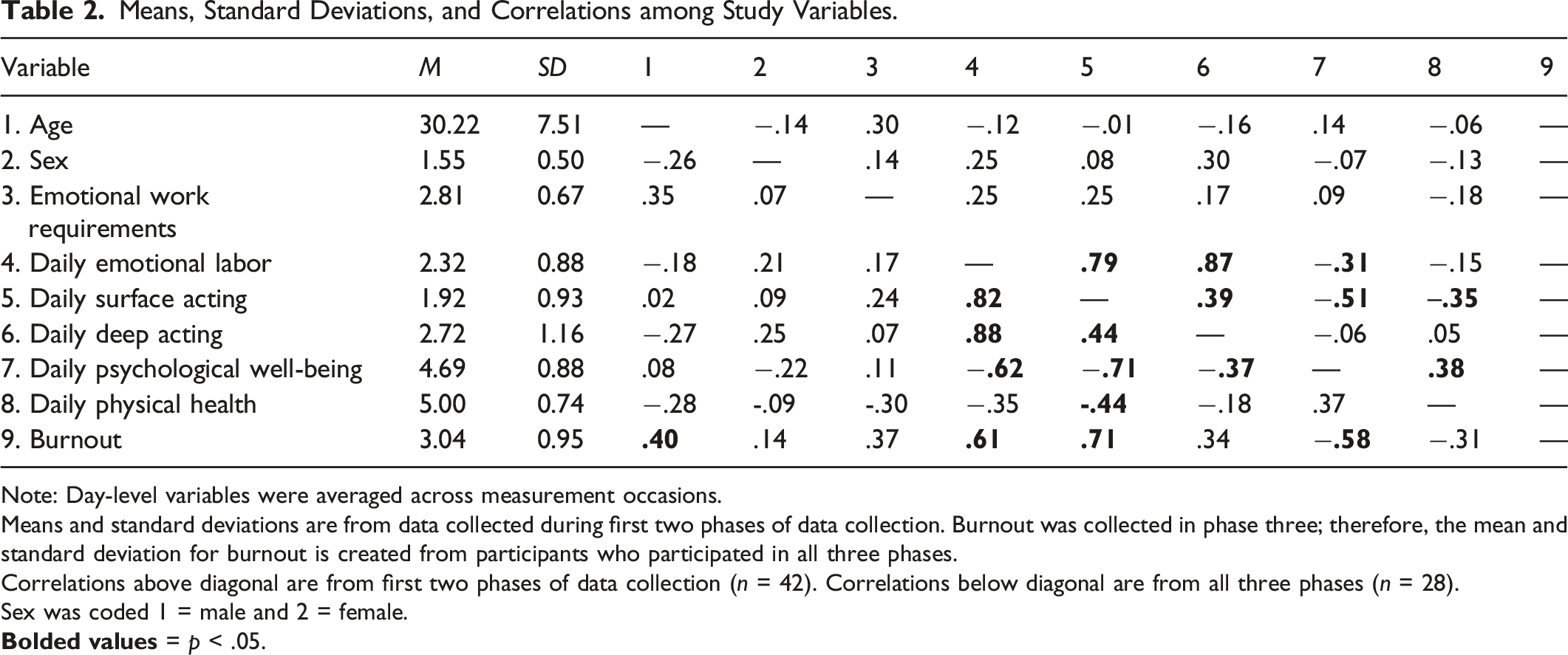
Note: Day-level variables were averaged across measurement occasions.
Means and standard deviations are from data collected during first two phases of data collection. Burnout was collected in phase three; therefore, the mean and standard deviation for burnout is created from participants who participated in all three phases.
Correlations above diagonal are from first two phases of data collection (n = 42). Correlations below diagonal are from all three phases (n = 28).
Sex was coded 1 = male and 2 = female.
Before testing the hypotheses, we calculated the percentage of within-individual variance for emotional labor, psychological well-being, and physical health (Hoffmann et al., 2000). To determine this, we ran null analysis of variance models with emotional labor (separated as surface acting and deep acting), psychological well-being, and physical health as the outcome variables. We then computed intraclass correlations to estimate the amount of between- and within-person variance for each. For emotional labor, we found that 27.4% of the variance in responses was attributable to within-person differences. Furthermore, 32.0% of the variance for surface acting and 27.0% of the variance for deep acting was attributed to within-person variance. Greater percentages of variance for psychological well-being and physical health were attributed to within-individual variance (65.7% and 63.5%, respectively). These estimates suggest that multilevel modeling is appropriate for the examination of our hypotheses.
Hypothesis 1 predicted that the perceived emotional work requirements employees face will be positively related to their perceived daily experience of emotional labor. To test this hypothesis, an intercepts-as-outcome model was created where emotional work requirements was entered as a level 2 predictor, while daily emotional labor was entered as a criterion. The results suggest there is no relationship between emotional work requirements and daily emotional labor (β01 = .34, SE = .20, t(40) = 1.67, p = .10). Similar results were found when separating surface acting from deep acting (surface acting: β01 = .37, SE = .21, t(40) = 1.72, p = .09; deep acting: β01 = .32, SE = .27, t(40) = 1.18, p = .24). Therefore, Hypothesis 1 was not supported. Summary of Multilevel Modeling Analyses. Note: Model 1 outcome- Daily Emotional Labor. Model 2 outcome- Daily Psychological Well-Being. Model 3 outcome- Daily Physical Health.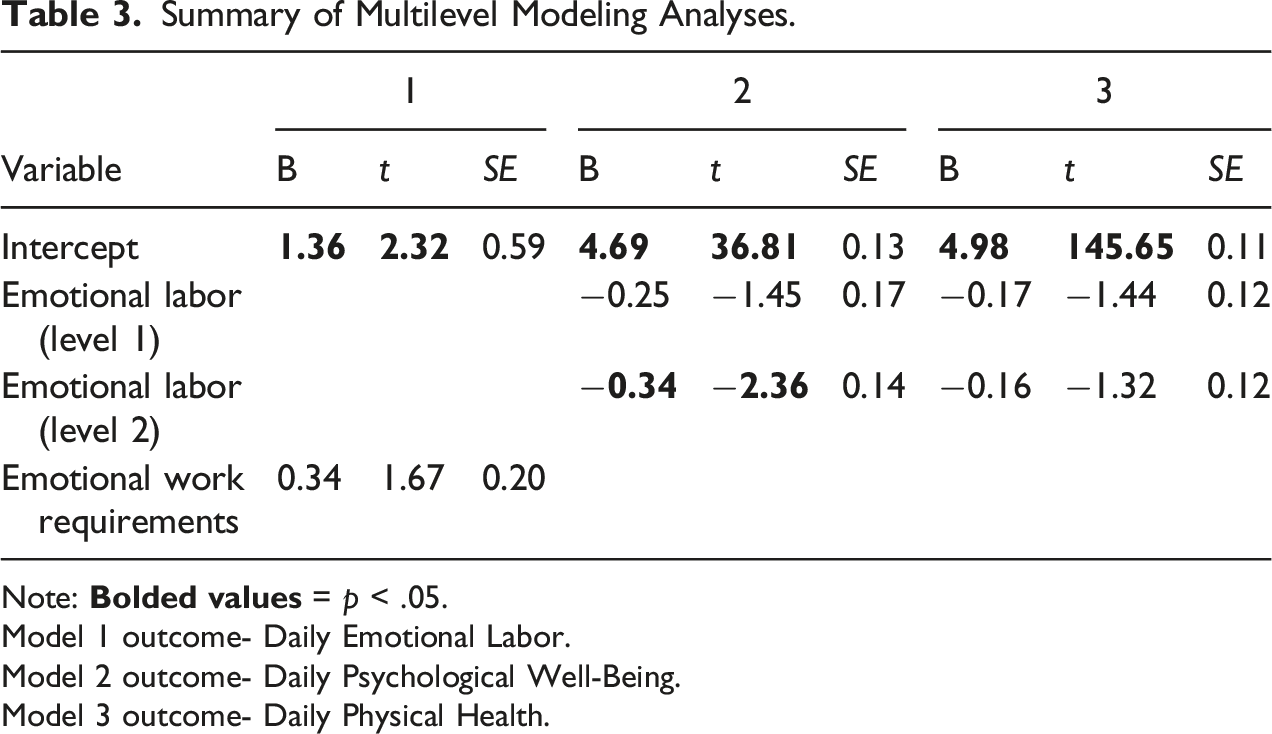
We also examined Hypotheses 2 and 3 for surface acting and deep acting separately to test our research question. Again, we ran four separate intercepts-as-outcomes models using HLM seven software to test the within- and between-person relationships between surface and deep acting and the outcomes of psychological and physical well-being. Results revealed that surface acting was negatively related to daily psychological well-being within- (β10 = −.43, SE = .15, t(41) = −2.87, p < .01) and between-person (β01 = −.50, SE = .12, t(40) = −4.19, p < .001). Furthermore, we found support for a negative relationship between surface acting and daily physical well-being at a between-person level (β01 = −.27, SE = .11, t(40) = −2.49, p = .02), but not at the within-person level (β10 = −.12, SE = .09, t(41) = −1.31, p = .20). However, when examining the within- and between-person relationship, deep acting was neither related to daily psychological well-being (β10 = −.01, SE = .13, t(41) = −0.04, p = .97; β01 = −.07, SE = .12, t(40) = −0.60, p = .55) nor to daily physical health, (β10 = −.16, SE = .12, t(41) = −1.31, p = .20; β01 = −.01, SE = .10, t(40) = −0.11, p = .92).
Thus, a different picture emerges regarding our hypotheses. Whereas Hypothesis 2 was partially supported in that there was no within-person relationship between emotional labor and psychological well-being but there was a significant negative between-person relationship for the two variables, and Hypothesis 3 regarding physical health failed to receive any support, our further analyses suggested that some relationships were masked by combining surface acting and deep acting. Specifically, when the effects of surface acting and deep acting were separated, we found evidence that surface acting was related to psychological well-being both within- and between-persons. Furthermore, we also found support for a between-person relationship between surface acting and physical health. Deep acting was not associated with either outcome at the within- or between-person level.
Hypothesis 4 predicted that perceptions of daily emotional labor would be positively related to burnout. Because higher-level variables cannot be predicted by lower-level variables in multilevel modeling (Raudenbush et al., 2011), Hypothesis 4 was tested by aggregating emotional labor scores across days and examining the correlation between emotional labor and burnout at the person level. The results found a significant positive relationship between emotional labor and burnout (r = .61, p < .001, n = 28). Therefore, Hypothesis 4 was supported. When examining surface and deep acting separately, similar results as those for earlier hypotheses emerged, with a significant relationship emerging between burnout and surface acting (r = .71, p < .001) but not with deep acting (r = .34, p = .08).
Discussion
This study explored the relationship between employees’ emotional labor and physical health and psychological well-being over the course of 2 weeks. We hypothesized that employee perceptions of work requirements to perform emotions would be positively related to their daily experience of emotional labor. Our results did not support this prediction. It is possible that employees in this website development firm viewed work requirements involving emotion expressions as politeness behaviors that came naturally (deep acting) or as necessary to manage impressions in general (vs. specific to one’s organization). Whereas there may not have been organizational requirements to engage in emotional labor, perhaps they did so due to societal expectations to express and suppress certain emotions to present themselves favorably to others.
Another possible explanation is from the finding that engaging in positive emotions often makes individuals happier (Brotheridge & Grandey, 2002) and is linked to positive physical effects (Grandey, 2000). As such, it may be that individuals simply engage in such actions despite an organizational requirement or societal expectation to do so, simply for their own benefit. This may be especially true in jobs where there is limited human connection, such as those in which some or all of work is performed remotely. Individuals may choose to present a positive façade for others as a source of joy simply for themselves. We encourage future researchers to examine the motives for the engagement in emotional labor beyond organizational and societal requirements to better determine psychological precursors to emotional labor experiences.
Additionally, communication technology may have served as a job resource where employees could minimize face-to-face communication, making emotional work requirements easier to manage. In technology firms, such as a website design company, organizational characteristics may shape expectations such that customer and even coworker interactions occur more frequently through mediated channels (i.e., emails and instant messages) compared to face-to-face interactions. Indeed, the departments in which participating employees worked were project management, content development, training, and graphic design, areas where work, including communication, is largely conducted on computers. Emotions are easier to manage or mask in asynchronous text-based communication because nonverbal cues are limited and messages can be revised before being sent. While work requirements to express specific emotions may have been present, the ability to delay or mask emotional responses using technology may have reduced the overall emotional labor experienced. Therefore, the employees may have been aware of the requirements to perform emotions yet did not have to perform the emotions communicatively in the moment compared to service workers in client-facing positions. We encourage future research to test these possibilities.
We found that perceived daily emotional labor was significantly negatively related to perceived daily psychological well-being between individuals but not within individuals. Further analyses separating emotional labor into surface and deep acting, however, revealed a slightly different conclusion. Specifically, we found that surface acting, but not deep acting, has immediate effects on perceived psychological well-being, both between and within individuals. In other words, when people were aware that they were faking emotions they did not feel, this had immediate consequences for how they felt mentally. This both connects with and provided a triangulation point for qualitative work highlighting the connection between emotional labor and burnout such as Tracy’s (2007) research on correction officers and Rivera’s (2015) work pertaining to border patrol agents. Additionally, individuals who engaged in more surface acting reported lower psychological well-being compared to individuals who engaged in less surface acting. Moreover, our results suggest that this effect of surface acting on psychological well-being can build over time as evidenced by our finding that surface acting was significantly related to increased experiences of burnout over time.
Whereas we found that perceived daily emotional labor was related to perceived daily psychological health, it appears that physical health is more resistant to immediate effects. Specifically, we found that surface acting during the day did not have an impact on someone’s physical health that day. However, when an individual reported more surface acting over time, they also reported feeling less healthy. It may be that the effect of surface acting must accumulate for it to affect one’s physical health.
Implications
Taken as a whole, these findings offer interesting theoretical and practical implications. Theoretically, this daily survey study provides further support for existing cross-sectional data by confirming negative relationships between perceived emotional labor surface acting and perceived psychological and physiological well-being, as well as a positive relationship between emotional labor and burnout. Considering a website development company, this study highlights that emotional labor occurs in everyday workplaces and has psychological and physiological health implications.
While it was surprising that emotional work requirements were not significantly positively related to emotional labor, this may be due to increasing technology use to manage emotions and relationships or hiring screening practices for skilled workers, particularly in technology-focused organizations. Future studies should explore technology use as a management tool for emotional expressions at work. Further, research considering other factors that contribute to physical health, such as sleep quality (Diestel et al., 2015), and act as a buffer from negative consequences of emotional labor is also warranted.
This study also offers practical implications for organizational and individual practices. One overarching practical implication is the need to recognize that no job that involves communication is free from emotional labor and the related consequences. In this study, white-collar employees still reported experiencing negative consequences from perceived emotional labor involving surface acting. This supports Miller and Koesten’s (2008) research conclusions; it is not realistic to assume that only front-line employees experience emotional labor. Even behind-the-scenes employees benefit from healthier workplace practices.
In terms of implications for employers, first, organizations should be cognizant of the negative side effects of emotional labor in reducing perceived daily psychological and physiological well-being and increasing experiences of burnout. These consequences are detrimental to employees while negatively influencing productivity, worker attendance, and organizational healthcare costs. Even in non-service industry organizations, employers should be aware that employees perceive expectations about emotional rules and those perceptions have consequences. Acknowledging that there are perceived emotional expectations in even seemingly neutral work environments provides organizations an impetus to offer resources and foster practices that allow workers to reduce surface acting. Employers can offer training to help employees understand and communicate their emotions as well as healthcare resources that include access to mental health and wellness components.
Second, employers can structure work to allow employees to communicate genuinely and reduce the need for surface acting. We found that surface acting, not deep acting, had deleterious effects on psychological and physical well-being. This is in line with Gopalan et al.’s (2013) finding that surface acting was related to increased emotional exhaustion and lower life satisfaction whereas deep acting yielded no such relationships. One helpful way to reduce the amount of surface acting necessary would be to leverage communication technologies that provide time and space for employees to process emotions and not have to fake nonverbal cues. Text-based technologies can allow employees to outwardly express their emotions in private yet continue to navigate the work that must be completed. In addition, having an awareness of the stressful nature of some interpersonal experiences and using technology to create a proactive means to circumvent problems would be beneficial.
However, we also recognize that technology-based solutions are complex and may not work in all contexts. While IT workers may appreciate time to calm down and process emotions when engaging in complex work tasks, other occupations may not benefit. For example, while technology could potentially buffer call center workers from hostile customers, Ishii and Markman (2016) found that employees who had phone interactions reported higher job satisfaction and lower burnout compared to those who used leaner communication channels such as instant messages when working to solve client concerns. The use of technology in relation to emotional labor warrants further exploration, particularly with the increase of remote work arrangements.
Other potential structural changes using technology could reduce the strain of emotional labor but require further exploration. For example, van Jaarsveld and Poster (2013) reported that some call centers use computerized emotion detector systems to analyze emotions based on voice pitch, tone, cadence, and word usage. The intent of such systems is to alert supervisors to highly disgruntled customers that drain the emotional capacity of employees in dealing with such extreme cases. The supervisors can intervene in the call or spread the more emotionally difficult interactions across multiple individuals, sparing the employee, and being more responsive to the irate customer. While this offers a potential solution, this procedure could create additional stress among employees who feel constantly monitored. More research is needed on how emotional labor and different technology structures could enhance understanding of ways to reduce emotional labor experiences.
Third, employers can reduce the need for surface acting by structuring uninterrupted work time and breaks during the workday. Uninterrupted work time allows employees the opportunity to naturally express emotions, enhance creativity and innovation (Schulte, 2014), and can increase experiences of flow where employees are engrossed in their work and experience positive engagement (Fullagar & Kelloway, 2009). Additionally, allowing time in the workday for breaks away from work tasks provides a job resource for employees and is positively related to employees’ ability to regulate emotions (Througakos et al., 2008).
Fourth, employers can evaluate and revise hiring practices to help identify employees who authentically feel the emotions required for the position; this can increase employee alignment with work emotional expectations and reduce negative emotional labor side effects. Employee alignment with work allows employees to engage in more authentic emotions and, if necessary, employees are better able to align deep acting emotional labor with their work identity. As Bhave and Glomb (2016) note, jobs where emotional labor is “consistent with key social and/or personal identity characteristics” are more satisfying and beneficial for employees (p. 734). However, hiring processes can make discerning employee alignment difficult as both employers and employees work to present a positive image during the interview(s) (Huffcutt et al., 2015). It is interesting that this study found no relationship between employee perceptions that work required emotional expressions and perceptions of daily emotional labor, yet surface acting emotional labor reported by employees contributed to lower perceived physical and psychological health and burnout. Employees may see emotional labor as simply part of the job more generally. Employers may benefit from making emotional requirements transparent and describing the organizational culture to encourage applicants to self-screen before applying or accepting a job offer.
While employees have less ability to create structural changes to their work, there are steps they can take to reduce the negative effects of surface acting on their health. When employees start to realize they are faking emotions, they can use practices that help them process these emotions. For example, if possible, the employee could step away from the emotional situation by taking a quick break or a short walk to a different area to acknowledge the emotions they are feeling and calm down without having to fake the emotional expression in the moment.
A second effective strategy is for employees to identify trusted co-workers who offer social support and talk through emotional experiences (Grandey & Melloy, 2017). Importantly, it is healthy and beneficial for employees during these social support interactions to acknowledge and work through problems rather than to ruminate (recalling the same problems repeatedly) (Boren, 2014). Using communication to reframe the emotional situation with trusted others, then identifying and using conflict communication strategies to mitigate the conflict can also reduce negative emotional experiences in the future.
Third, employees can identify external resources that provide emotional support. This may be a non-work social support network or even mental health counseling. Practices allowing employees to take breaks from work are important to buffer against deleterious effects of emotions (Througakos et al., 2008); these may include deep breathing techniques, meditation, mindfulness practices, or taking a quick rest. Finally, employees can mentally note or use journals to identify situations that are particularly emotional or stressful. Once these situations are identified, employees can proactively plan communication strategies to mitigate the stress.
Limitations
The results of this study offer important implications for how to reduce the negative psychological and physiological effects of emotional labor. It is also important to discuss limitations and suggest ways to build on this line of research. First, our use of self-report measures leaves open the possibility that the relationships we found were unduly biased by common method variance (Podsakoff et al., 2003). However, it is important to bear in mind that the variables we were examining on a daily basis are ones best assessed by the individual in question. Thus, utilizing other sources to provide assessments of these variables was not an option. Nevertheless, by collecting our data at different points in time and varying the response options, we attempted to minimize possible common method variance.
Second, although we assessed emotional labor and physical and psychological health and well-being at various times over the course of 2 weeks, our data remain correlational and therefore do not allow us to make causal inferences. It is possible that rather than emotional labor leading to lower psychological well-being, the reverse could be true. That is, lower psychological well-being may have made it necessary for individuals to engage in more effort to regulate their emotions in organizationally approved ways. Additional longitudinal research designed to tease out causal patterns would enhance understanding in this area. In addition, it would be worthwhile to measure other variables that could influence this relationship, such as emotional intelligence or personality and contextual factors, to further explore the engagement of emotional labor and its consequences.
A third potential limitation of our study is that our method did not capture the contours of what daily emotional expression and labor looks like. Whereas we were able to assess the extent to which respondents engaged in surface and deep acting, we did not assess which emotions were experienced or whether they were positive or negative in nature. For example, one item asked whether the respondent resisted expressing their true feelings, yet it is unclear what particular feelings were suppressed. Future research could augment our findings by asking not only, “how much?” but also “what kind?” of emotions are felt, displayed, and suppressed during the workday.
Finally, while our study is strengthened by the applied sample, all employees were from the same organization. Although the participants varied by their specialty areas and general demographics, it remains unclear the extent to which the findings from this study will generalize to employees from other organizations. Moreover, we did not ask some questions of the respondents that would have helped tease out some of our relationships. Namely, we did not ask about the use of communication channels or the extent to which their jobs and daily interactions were face-to-face versus online. In addition, we do not know if sub-cultures exist in the organization that may influence emotional labor. Future research should continue to explore other organizational contexts and ask these important questions regarding channels and sub-cultures to extend and substantiate current findings.
Conclusion
This study considered daily survey information from employees who worked for a software development company. Findings answered calls for exploring different types of organizational contexts and extended understanding of emotional labor by analyzing employee responses from a website development company. Employees indicated that perceived emotional labor involving surface acting (faking emotions) negatively influenced psychological and physiological health, which over time increased experiences of burnout. Considering the prevalence of emotional labor in work and the associated consequences, it is fruitful to further explore ways to ameliorate negative outcomes and maximize practices that capitalize on the benefits of emotional labor.
Footnotes
Acknowledgments
We would like to thank the editor Rebecca Meisenbach, Ph.D., and our anonymous reviewers for their time investment and thoughtful feedback that significantly strengthened this manuscript. Additionally, we would like to acknowledge and thank Clive J. A. Fullagar, Ph.D., for his assistance in the study design, data collection, and early analysis of the data. Portions of these study findings were presented as a poster at 2019 annual meeting of the European Association of Work and Organizational Psychology, Turin, Italy. The views expressed in this study are those of the authors and do not reflect the official policy or position of the Department of the Army, DoD, or the U.S. Government.
Declaration of Conflicting Interests
The author(s) declared no potential conflicts of interest with respect to the research, authorship, and/or publication of this article.
Funding
The author(s) received no financial support for the research, authorship, and/or publication of this article.
