







Abstract
The effect of communication visibility on employee behaviors has garnered attention for the widespread use of enterprise social media; yet, this research has rarely considered the typical employee behavior of innovation behavior. This paper explores the relationship between communication visibility and innovation behavior. In addition, the underlying mechanism and boundary conditions are examined drawing on communication visibility theory, regulatory focus theory, and voice literature. Data were collected in a field experiment from a Chinese enterprise. It was found that communication visibility was positively associated with innovation behavior, and the positive association was mediated by voice behavior. Meanwhile, the positive indirect effect of communication visibility on employee innovation behavior was strengthened by promotion regulatory focus. Our research expands our understanding of the outcome behaviors of communication visibility and provides valuable management implications by shedding light on measures to promote innovation behavior.
An increasing number of enterprises are implementing enterprise social media (ESM) to facilitate workplace communication and collaboration. ESM refers to web-based platforms that allow workers to interact, post, view, and broadcast information to everyone in organizations (Leonardi et al., 2013). Such platforms include such as Yammer, IBM Connections, and Jive (Sun et al., 2019). Compared with traditional communication tools at work (e.g., e-mail, teleconferencing, and instant messaging), ESM enables employees’ communication to be shared by a wider audience. Therefore, employees may work in an environment with a higher level of communication visibility (Leonardi, 2014). Communication visibility describes the extent to which third parties easily see what content others exchange and with whom they share the content (Chen et al., 2020b; Leonardi, 2015). It is a hallmark of computer-mediated communication (Quan-Haase et al., 2005) and has markedly influenced the ways in which people work (Leonardi et al., 2013; Stohl et al., 2016; Treem et al., 2020). This indicates that employee behaviors in the workplace may be influenced by communication visibility. Because of the important effect of employee behaviors at work on organizational efficiency, many scholars have concentrated on extending our understanding of the effects of communication visibility on employee outcome behaviors in the workplace (Chen et al., 2020b).
A few studies have explored the outcomes of communication visibility. These studies show that communication visibility is conducive to more new ideas. For instance, a qualitative study conducted by Leonardi et al. (2013) showed that communication visibility led to knowledge sharing, more innovative products, and service innovation. Research also showed that communication visibility affected meta-knowledge (Leonardi, 2015). Sun et al. (2019) found a significant positive relationship between communication visibility and employee creative performance from the perspective of knowledge transfer. In addition, Chen et al. (2020b) suggested that communication visibility could influence employee creativity based on communication visibility theory. Such new ideas resulting from communication visibility are indispensable for employee innovation behavior. Innovation behavior refers to behaviors through which employees can generate or adopt, and then implement, new methods and ideas (Lukes & Stephan, 2017). Thus, communication visibility might have a relationship with innovation behavior. However, theoretical studies have yet to deeply examine the direct relationship between communication visibility and subsequent innovation behavior. It is significant to explore whether communication visibility is the antecedent of innovation behavior as innovation behavior facilitates individual effectiveness and organizational effectiveness (Woodman et al., 1993; Wu & Parker, 2011). The examination of the relationship between communication visibility and innovation behavior in this study may offer a new way to improve organizational efficiency.
Communication visibility may not influence innovation behavior directly. As mentioned above, innovation behavior mainly consists of idea generation and idea implementation (Wu & Parker, 2011), so these two stages should be considered in the process of explaining the relationship between communication visibility and innovation behavior. It is likely that communication visibility leads to a certain behavior which is conducive to idea generation. Then, such behavior can promote employees to implement these new ideas. These roles played by this behavior are similar to voice behavior. Voice behavior is defined as the expression of challenging and change-oriented ideas to improve organizational operations (Van Dyne & Lepine, 1998). Because voice behavior introduces changes to work by means of identifying problems and expressing different opinions from those of the majority in the organization (Chen et al., 2020a), it is critical to idea generation. Further, other organizational members may be urged to implement these ideas by voicers (Nemeth, 1986). Hence, voice behavior might be a bridge between communication visibility and innovation behavior.
To ascertain voice behavior as the mediator, this paper combines communication visibility theory with Morrison’s (2014) framework of the determinants of employee voice. Communication visibility theory proposes that communication visibility helps employees know about “who knows what” and “who knows whom” (Leonardi, 2015). Such characteristics help employees accurately infer problems in organizations and know more about coworkers’ preferences and about networks. Furthermore, communication visibility is conducive to the effectiveness of employee voice and good relationships with others (Chen et al., 2020b). Morrison’s (2014) framework of the determinants of employee voice emphasizes that whether the voice is effective or hurts relationships with others will influence the likelihood of employee voice. Therefore, it is inferred that communication visibility might be conducive to employee voice behavior. Further, Chen et al. (2020a) showed that voice behavior facilitated idea generation and that the resources accompanied by voice behavior were conducive to turning employees’ suggestions into actual innovative behaviors. Therefore, this study examines the mediating effect of voice behavior to explain how communication visibility affects innovation behavior.
In addition, whether communication visibility leads to innovation behavior through voice behavior depends on employees’ personality characteristics, such as their regulatory foci. Regulatory focus theory proposes that human behavior is dependent on promotion focus and prevention focus (Higgins, 1997). Promotion-focused employees are sensitive to gains, but prevention-focused employees are sensitive to loss (Arazy & Gellatly, 2012). Different regulatory foci lead to different attitudes toward voice behavior. Compared with prevention-focused employees, promotion-focused employees are more sensitive to positive outcomes (Arazy & Gellatly, 2012) and more likely to engage in voice behavior to obtain gains. We propose that regulatory foci may provide a boundary of our model (see Figure 1). Theoretical model.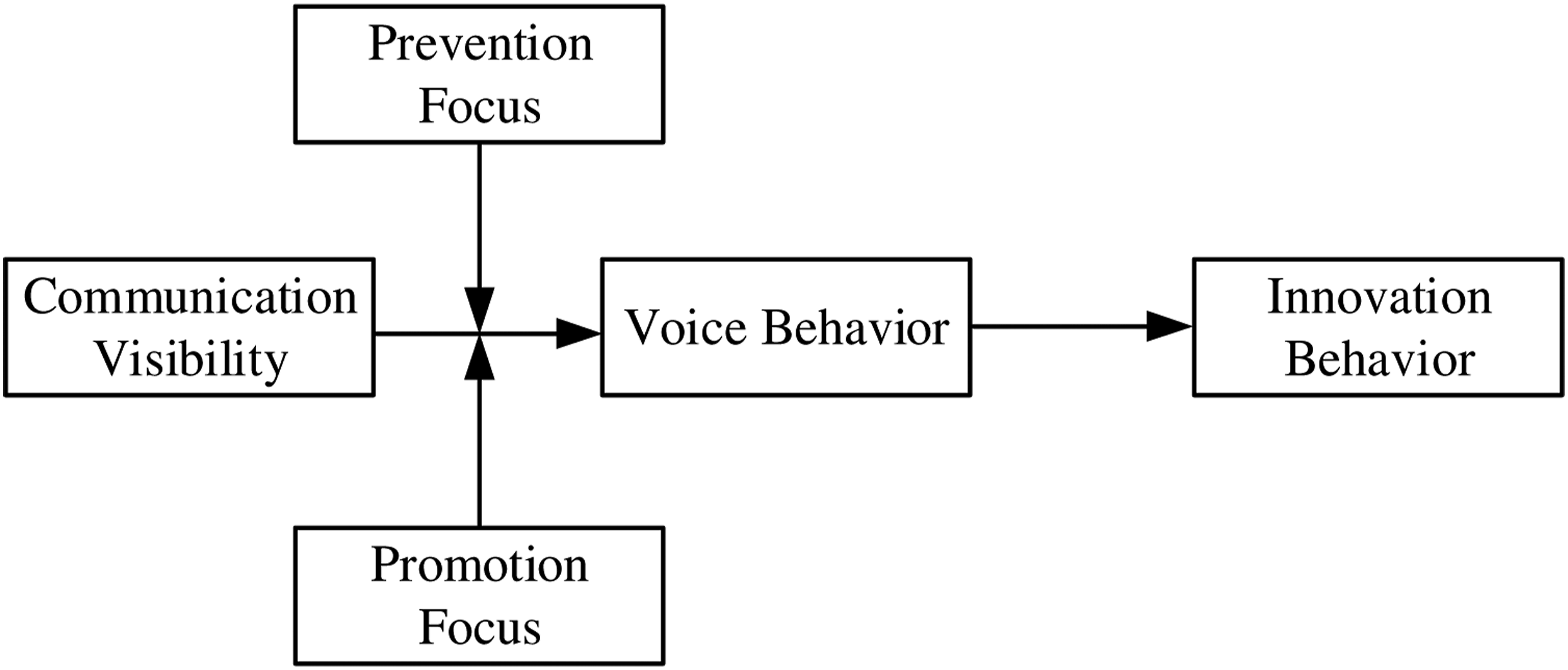
This study makes several theoretical contributions. First, it enriches our understanding of the positive outcomes of communication visibility. Although some studies have suggested that communication visibility benefits product and service innovation (Leonardi, 2014), scant empirical research has examined the effect of communication visibility on employee innovation behavior. This research provides empirical evidence for the relationship between communication visibility and innovation behavior. In addition, it expands the research scope regarding factors influencing employees’ innovation behavior.
Second, this research considers one possible mediating mechanism in the relationship between communication visibility and its outcomes by considering the concept of voice. In doing so, we combine communication visibility theory with Morrison’s (2014) framework of the determinants of employee voice, responding to the call to extend the application of communication visibility theory (Leonardi et al., 2013). Further, this study provides evidence on the critical role of communication visibility on voice behavior.
Third, by considering employee personal characteristics, our research extends the current understanding of the boundary conditions under which the effects of communication visibility manifest. The results offer insights to the communication visibility literature by recognizing the moderating role of promotion regulatory focus in the positive relationship between communication visibility and innovation behavior. This also suggests that there may be a boundary of communication visibility theory.
Finally, this study is conducted by a field experiment in a real existing service rather than in a makeshift service laboratory setting or where participants would be asked to assume a hypothetical scenario of the use of ESM. With this approach, we obtain a unique data set of objectives to investigate how communication visibility relates to employee innovation behavior. Our research achieves a higher level of validity (Hamari, 2017) and provides a further step to study communication visibility and employee behaviors.
Theoretical Background and Hypotheses
Communication Visibility and Employee Voice Behavior
Voice behavior is an important factor that can improve organizational efficacy (Chen et al., 2020a). Many theoretical perspectives have been used to explore the antecedents of voice behavior, such as leader–member exchange (Burris et al., 2008), climate (Morrison et al., 2011), proactive personality (Wijaya, 2019), and voice efficacy (McAllister et al., 2007). However, existing literature neglects the effect of communication visibility on employee voice behavior. We contend that communication visibility is likely to improve employee voice behavior.
Communication visibility theory suggests that communication visibility helps third parties know about “who knows what” and “who knows whom” (Leonardi, 2014, 2015). Leonardi (2015) termed these two characteristics “message transparency” and “network translucence.” We propose that communication visibility may increase employee voice behavior through both of these aspects. Message transparency enabled through ESM may help employees see the content of their coworkers’ communication messages, including work assignments and project updates (Leonardi, 2015). Employees may then know more about the problems in their workplace and can thus determine how to interact with voice receivers in a more appropriate way through observing their actions. Thus, voice content may be germane, useful, and more acceptable for the voice receivers when employees engage in voice behavior. This would enhance the probability of receivers’ acceptance of employee voice and increase employees’ perceptions of the efficiency of this voice behavior. Morrison (2014) proposed a framework of the determinants of employee voice, which highlights that employee voice will be affected by their perceptions of whether their voice will be effective. Noelle-Neumann (1974) also suggested that individuals assess what the winning viewpoint is likely to be. They are likely to use voice when their opinions are dominant. Thus, we predict that communication visibility positively influences employee voice behavior.
On the other hand, network translucence means that ESM allows employees to observe communication and make inferences regarding linkages among their coworkers (Leonardi, 2014). Translucence helps employees understand how people and activities are interrelated (Chen et al., 2020b). Engelbrecht et al. (2019) posited that network transparency implies apparent social networks. Knowing the structure of others’ social networks may provide signals of trust and credibility (Chen et al., 2020b; Liang et al., 2020; Walther et al., 2009). Therefore, network translucence facilitates cultivating a good interpersonal relationship climate. Under such a climate, employees may not worry about the negative effect of voice behavior on their relationships with others. Morrison’s (2014) framework proposes another important determination for employee voice—the judgment of whether their voice will hurt relationship with others. If employees perceive fewer risks, they will be more likely to enhance voice behavior. In line with this reasoning, it is reasonable to propose that communication visibility enhances employee voice behavior.
The Mediating Effect of Employee Voice Behavior
Through its effect on employee voice behavior, communication visibility is likely to increase employee innovation behavior. Innovation behavior is based on an individual’s engagement in collecting and applying new approaches and ideas in work (Wu et al., 2014). Accordingly, innovation involves both generating ideas and an interactional process of refining and implementing ideas (Wang et al., 2015). Empirical studies suggest that employee innovation behavior can be cultivated by voice behavior. For example, Liang and Shu (2017) proposed that voice is necessary for team innovation. Furthermore, Chen et al. (2020a) suggested that voice behavior further encouraged employees to implement the new ideas proposed by voicers who received greater status and respect. Therefore, we propose that communication visibility enhances employee voice behavior and employees will engage in innovation behavior through a high level of voice behavior.
The Moderating Effect of Regulatory Foci
Regulatory focus theory proposes that human behavior is dependent on promotion focus and prevention focus (Higgins, 1997). Employees with different regulatory foci will engage in various behaviors. Liang et al. (2013) noted that regulatory foci contribute to an in-depth understanding of the information system behavior of individuals. Thus, we propose that the relationship between communication visibility and voice behavior may be affected by regulatory foci.
Communication visibility allows employees to come up with voice content effectively, but whether employees are willing to voice depends on their regulatory foci. Promotion-focused individuals are driven by growth and development needs (Hetland et al., 2018) and are concerned with their hopes, wishes, and aspirations, focusing on benefits and achievements. Further, they tend to perceive the environment as benign and adopt risky strategies (Zhou et al., 2012) and are more sensitive to positive outcomes (Arazy & Gellatly, 2012). When the level of communication visibility is high, employees with a promotion focus are motivated to utilize the message transparency and network translucence environment for more gains. After obtaining effective information related to work in the environment, they are not afraid to risk speaking out and are likely to regard voice as a chance to gain. By contrast, individuals with a prevention focus concentrate on loss and avoiding punishing, and they apply conservative as well as risk-aversive processing styles (Crowe & Higgins, 1997). Though such employees can obtain much information and identify the problems related to their work with communication visibility, they are not willing to speak out. This is because a prevention focus may drive them to maintain the current situation and make them less likely to take a risk, resulting in less probability of voice behavior. On the basis of the discussion above, we posit:
Prior research has shown that regulatory foci facilitate the innovation process. In sum, we propose that communication visibility has an indirect relationship with innovation behavior through voice behavior, with the relationship moderated by regulatory foci. This moderated mediation model explains why and when communication visibility leads to innovation behavior. To test this moderated mediation model, we formulate the following hypotheses:
Research Methodology
Research Context and Design
Data were collected in a field experiment at CBM (a pseudonym), a large enterprise in the service industry with over 1000 employees in Northeast China. We have traced this enterprise for 10 years and conducted in-depth interviews with its CEO and employees many times to understand the research setting. This enterprise has adopted the Enterprise WeChat as its ESM. Enterprise WeChat is currently one of the most well-known ESM platforms in China (Song et al., 2019). Some studies support that enterprise social media usage ensures communication visibility among employees (Deng et al., 2021). CBM combines the traditional version of Enterprise WeChat with special practice, which is conducive to a high level of communication visibility. Therefore, CBM is an appropriate venue to test the research model.
Before our field study, all employees at CBM had used Enterprise WeChat. It was a simple version with limited functions, and employees used it only for simple collaboration, such as sending files to their coworkers. In addition, this process often happened person-to-person, so employees as the third party were less likely to know what had been communicated among their coworkers. In December 2016, the enterprise decided to implement a new function of Enterprise WeChat called “DB” (short for “Dissipation Bar”) for wider internal communication. This function can decrease negative effects of work invisibility including less interpersonal trust among coworkers and work duplication (Cramton et al., 2007; Leonardi, 2014). Employees were encouraged to freely post via DB to share knowledge or anything related to the workplace. For instance, there were posts about asking others for help related to work or how to improve organizational service efficiency. The content of these posts could be seen by all organization members in CBM. Thus, anyone could respond to these posts (e.g., likes, dislikes, or comments) after someone posted via DB, similar to publicly available social media technologies such as Twitter and Weibo. In addition, routine communications among employees were also allowed on the DB platform. Therefore, employees could read the information other coworkers posted to one another and see the connections among them after the introduction of new functions. Employees could know more about “who knows whom” and “who knows what,” implying that employees in this treatment group were working in a work environment with a much higher level of communication visibility than employees in the control group.
Fortunately, the enterprise did not apply this new function to all of the employees. Five departments (human resources, operations, finance, administration, and marketing) were randomly chosen to use it initially, and the other departments (security and customer service) continued to use the old simple version of Enterprise WeChat. Three months after the DB platform was implemented in five departments, we contacted 189 participants from the treatment condition (divisions implementing DB) and 157 participants from the control condition (divisions not implementing DB), selected randomly. A general overview of the research was provided (e.g., explanation about communication visibility), but we did not disclose specific research hypotheses. Participants in both groups were asked to complete questionnaires based on recent perceptions of message transparency and network translucence while using Enterprise WeChat. Voice behavior, innovation behavior, regulatory foci, and demographic information were measured in the questionaries. Of these participants, 256 provided usable responses, yielding a response rate of 73.99%. The relatively high response rate was due to communication among the authors, participants, and the CEO, as well as the small monetary incentives (e.g., coupons). There were 154 participants in the treatment condition and 102 participants in the control condition. To statistically test for demographic differences between the treatment group and control group, we conducted chi-squared tests. The results showed that these two groups showed no significant differences in age (χ2 = 7.98, p>0.05), education (χ2 = 4.64, p>0.05), gender (χ2 = 0.04, p>0.05), and tenure (χ2 = 7.97, p>0.05). Overall, 59.66% of the participants were male, and proportions according to age range were as follows: 20–25, 22.36%; 26–35, 59.07%; and over 36 years, 18.57%. Their main work tenure was over 5 years (37.07%), and the primary education level was undergraduate degree (54.27%).
Measurements
Data Analysis and Results
Descriptive Statistics
Means, Standard Deviations, and Correlations among Variables.
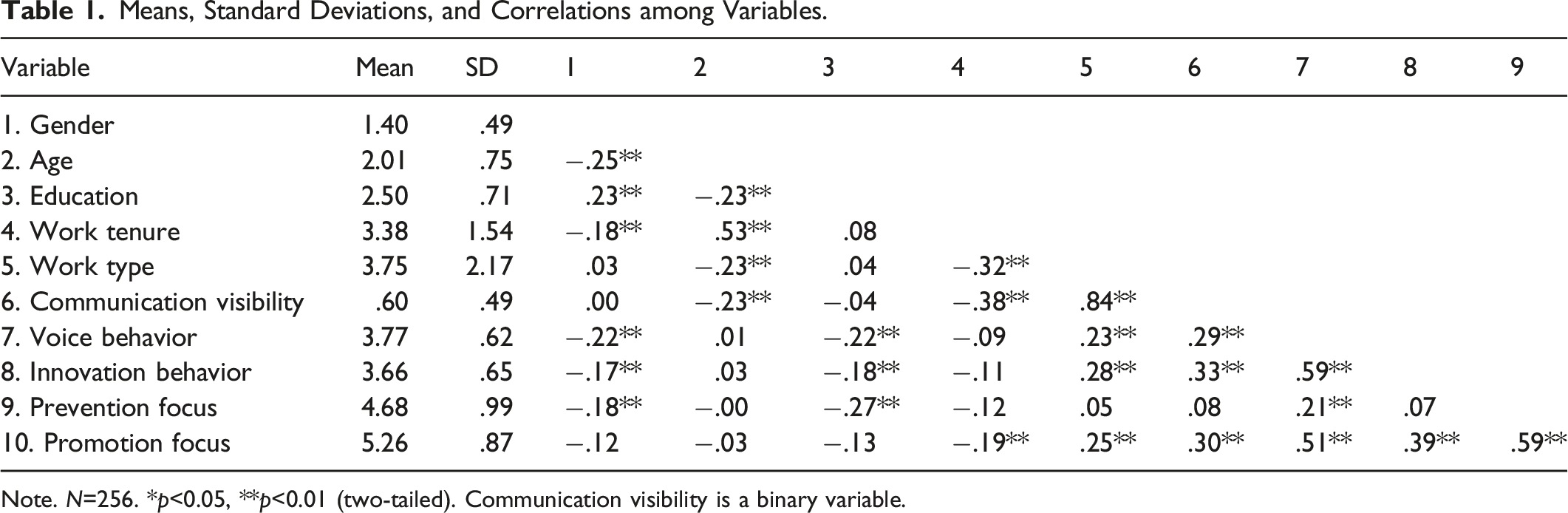
Note. N=256. *p<0.05, **p<0.01 (two-tailed). Communication visibility is a binary variable.
Confirmatory Factor Analysis
Model Fits of Measurement Models.
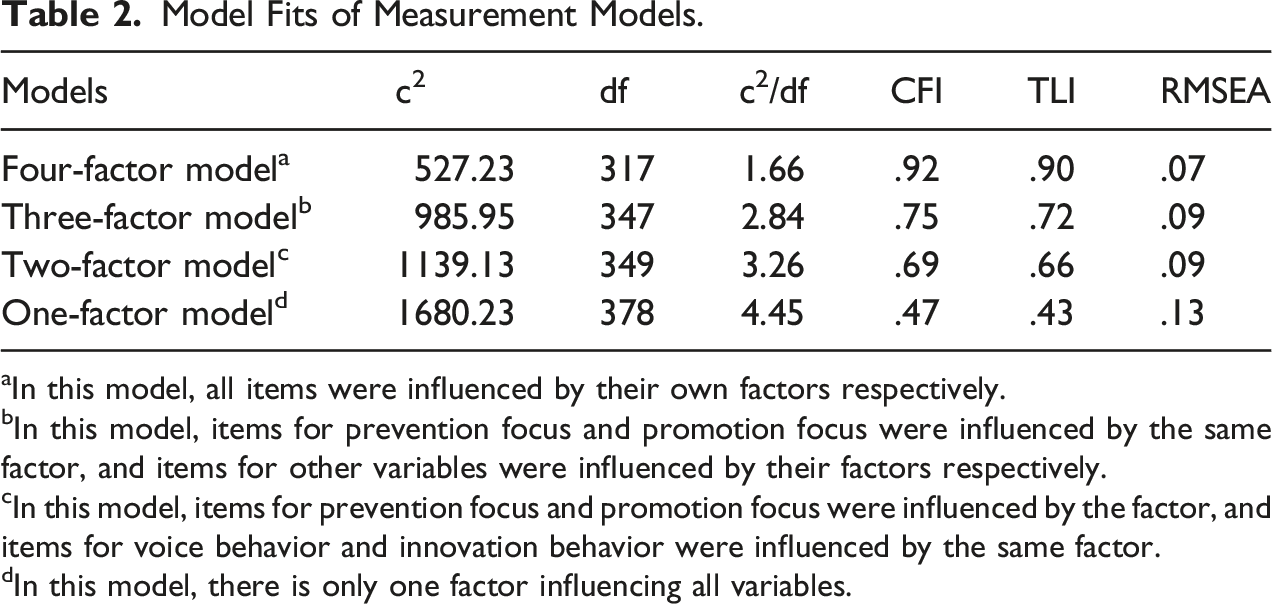
aIn this model, all items were influenced by their own factors respectively.
bIn this model, items for prevention focus and promotion focus were influenced by the same factor, and items for other variables were influenced by their factors respectively.
cIn this model, items for prevention focus and promotion focus were influenced by the factor, and items for voice behavior and innovation behavior were influenced by the same factor.
dIn this model, there is only one factor influencing all variables.
Hypotheses Testing
Regression Results.
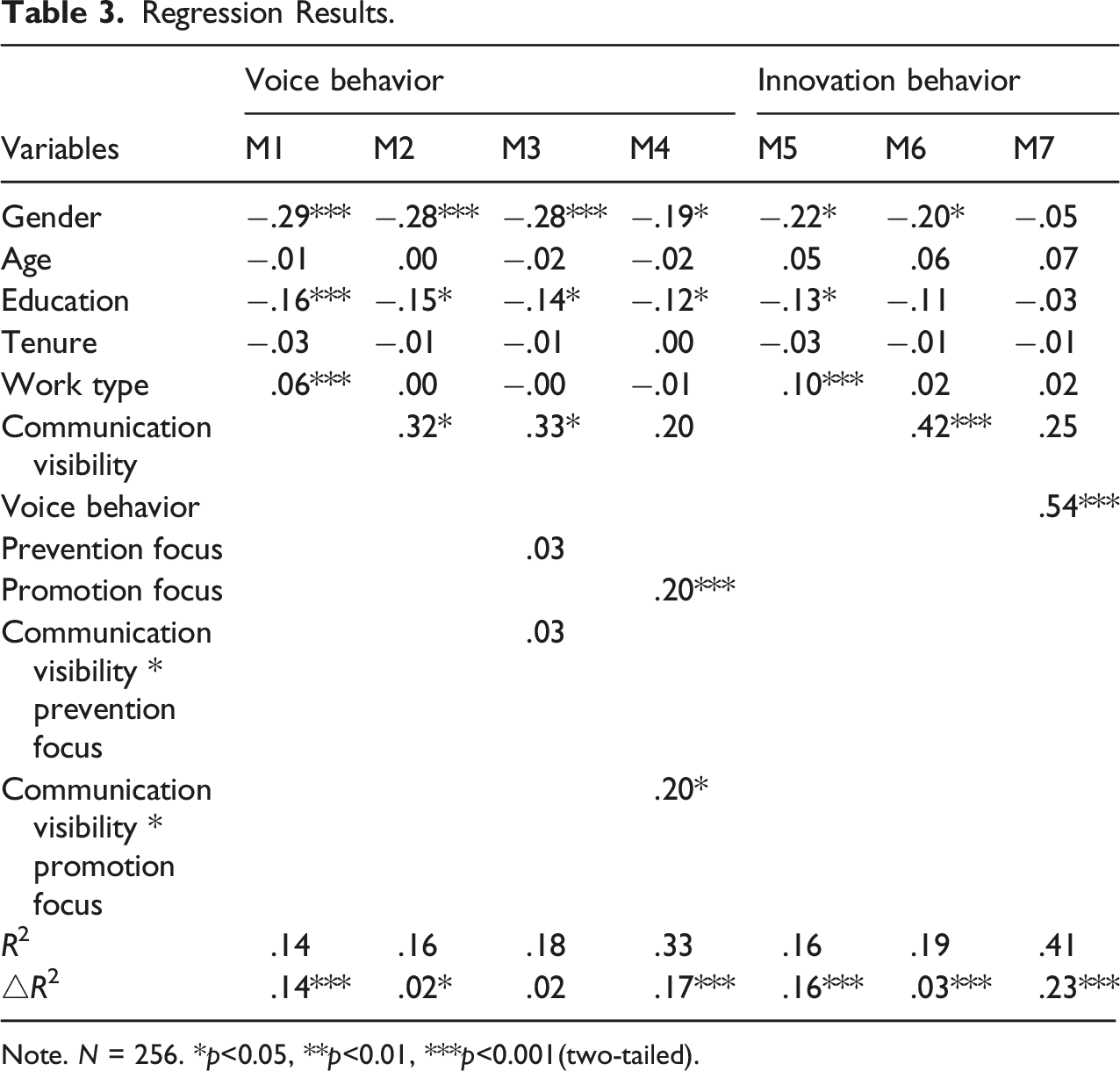
Note. N = 256. *p<0.05, **p<0.01, ***p<0.001(two-tailed).
Hypothesis 2 proposed that voice behavior mediates the relationship between communication visibility and innovation behavior. Analyses revealed that communication visibility was positively related to voice behavior (b = .32, p < .05) and innovation behavior (b = .42, p < .001) (see Table 3). When voice behavior as the mediator variable was added into the model, voice behavior had a significant positive impact on innovation behavior (b = .54, p < .001). However, the effect of communication visibility on innovation behavior was not significant (b = .25, n.s.).
We further tested the indirect effect between communication visibility and innovation behavior using procedures recommended by Hayes and Preacher (2013). The results showed that communication visibility had an indirect effect on innovation behavior through voice behavior (b =.17, SE = .08, 95% CI [.01, .34]). The 95% confidence interval excluded zero, indicating that voice behavior mediated the relationship between communication visibility and innovation visibility. Hence, Hypothesis 2 was supported.
Table 3 shows the results of the moderated hierarchical regression analysis for Hypothesis 3a. The interaction between communication visibility and promotion focus was significant and positive for voice behavior (b =.20, p < .05, see Table 3). A simple slope analysis showed that communication visibility had a stronger positive relationship with voice behavior when promotion focus was high (1 standard deviation above the mean) (simple slope = .41, p < .05). However, another simple slope analysis showed that communication visibility did not have a significant relationship with voice behavior when promotion focus was low (1 standard deviation below the mean) (simple slope = −.00, p >.05, see Figure 2). Therefore, Hypothesis 3a was supported. We then used the same method to examine Hypothesis 3b. The interaction between communication visibility and prevention focus was not significant for voice behavior (see Table 3, Model 3). Hence, Hypothesis 3b was not supported. The interactive effect of communication visibility and promotion focus on voice behavior.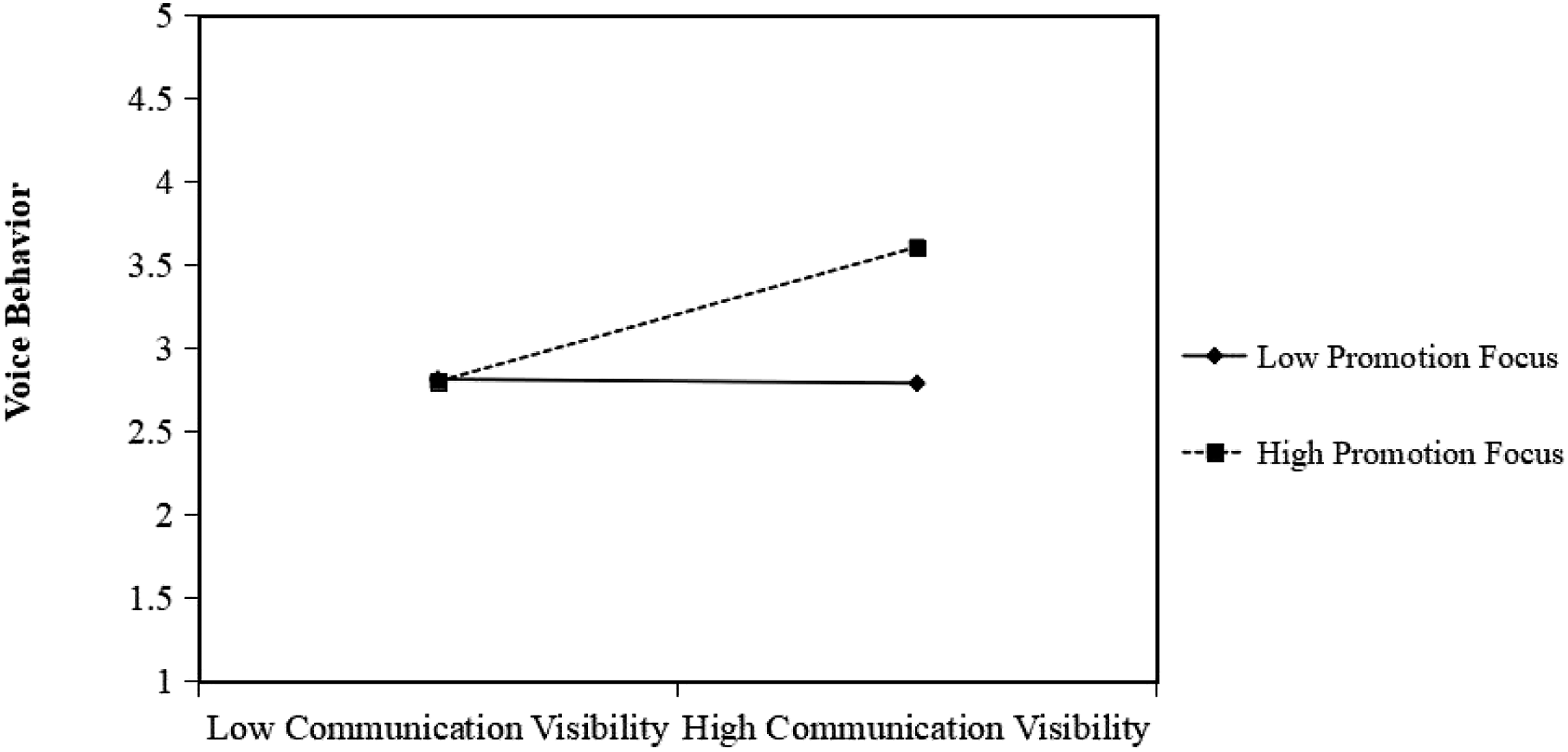
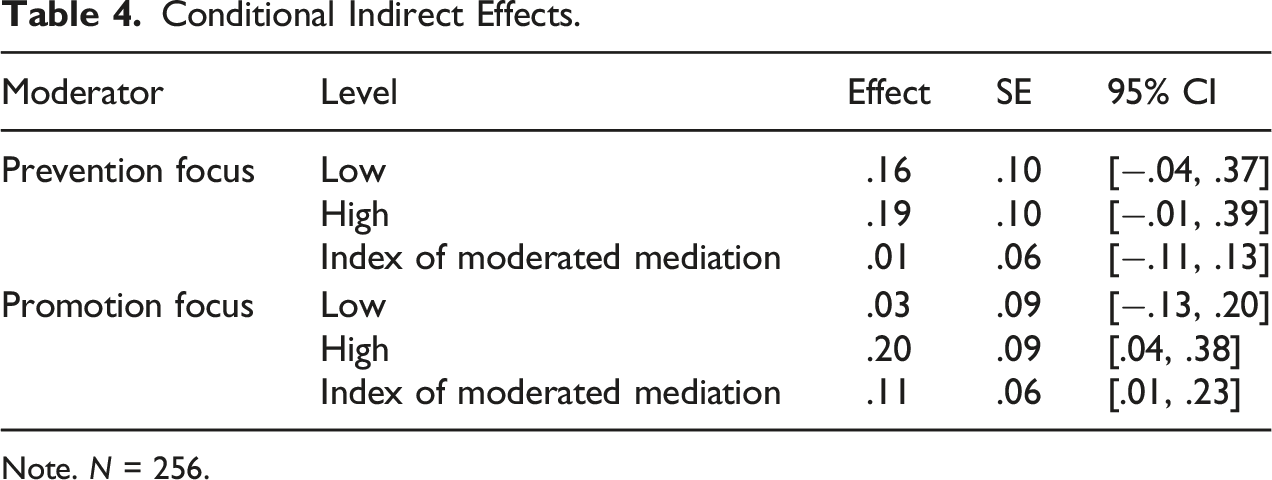
Conditional Indirect Effects.
Note. N = 256.
We followed the same procedure in testing Hypothesis 4b (see Table 4). The results showed that when prevention focus was high, communication visibility had a nonsignificant indirect effect on innovation behavior through voice behavior (indirect effect = .19, SE = .10, 95% CI [−.01, .39]). When prevention focus was low, the mediated model was also nonsignificant (indirect effect = .16, SE = .10, 95% CI [−.04, .37]). The index of moderated mediation was not significant (indirect effect = .01, SE = .06, 95% CI [−.11, .13]). Therefore, Hypothesis 4b was not supported.
Discussion
Our study advances the study of the effect of communication visibility on employee behaviors. First, our results from a field experiment show that communication visibility was positively related to employee innovation behavior. Existing communication visibility literature mainly focuses on the relationship between communication visibility and knowledge sharing (Leonardi, 2015). Our results add to this by confirming that employee voice behavior can also be explored in the communication visibility field, and that voice may serve as the mechanism to explain the relationship between communication visibility and innovation behavior. It contributes to the study of how to improve employee voice behavior and innovation behavior. Second, we found that regulatory foci moderated the relationship between communication visibility and voice behavior. Individuals with a promotion focus engaged in more voice behavior when the level of communication visibility was high, leading to more innovation behavior. However, the effect of prevention focus on the relationship between communication visibility and employee innovation behavior was nonsignificant. These results suggest that there is a boundary to the applicability of communication visibility theory. Not all individuals can obtain the positive outcomes of communication visibility. Differences in how individuals evaluate communication visibility affect the extent to which the outcomes of communication visibility are positive or negative (Gibbs et al., 2013). These results also help explain why communication visibility leads to both knowledge sharing and knowledge hiding (Chen et al., 2020b). Below, we discuss the theoretical and practical implications of our research and suggest future research directions.
Theoretical Implications
Our research provides several important theoretical implications to the literature on communication visibility and organizational behavior. First, this paper contributes to communication visibility theory by building the linkage between communication visibility and innovation behavior. Although previous studies conducted within communication visibility theory have suggested that communication visibility can lead to more innovative products and services (Leonardi, 2014), our knowledge of the possible effects of communication visibility on employee innovation behavior is limited. This paper bridges this gap by proposing and substantiating the link between communication visibility and innovation behavior. Moreover, this paper expands our understanding of the positive outcomes of communication visibility. Our results suggest that communication visibility theory can not only be applied in the knowledge sharing literature (e.g., Leonardi, 2015), creativity literature (Chen et al., 2020b), and stress literature (Ding et al., 2019), but also be extended to the innovation behavior literature. By doing so, we are echoing the call for researchers to refine and extend the application of communication visibility theory (Leonardi, 2014).
Second, the research supports the mediating role of voice behavior in the relationship between communication visibility and innovation behavior. Previous research has paid little attention to the mediation process of how communication visibility influences its outcomes (e.g., Leonardi, 2014, 2015). By integrating communication visibility theory and Morrison’s (2014) framework of the determinants of employee voice, this paper introduces the mediating role of voice behavior in the relationship between communication visibility and innovation behavior. Our research extends the understanding of the mechanism by which communication visibility affects individual outcomes. It also provides a new direction for exploring employee voice behavior from a technological perspective. In addition, the findings suggest that visible communication information in the workplace is conducive to idea generation and idea implementation. This lends further support to the argument that a creative idea can be implemented by employees who propose it (Chen et al., 2020a) and provides a more complete explanation for the whole process.
Third, our results suggest that there may be a boundary to the application of communication visibility theory. Communication visibility theory has assumed that all users in the visible environment are likely to enhance the awareness of who knows whom and who knows what (Leonardi, 2014, 2015), but it has overlooked this boundary conditions. Our results signify that not all individuals are motivated by communication visibility. The effect of communication visibility on promoting innovation behavior via voice behavior is stronger when promotion focus is high. However, employees with a high prevention focus do not show the significant relationship between communication visibility and innovation behavior via voice behavior. We provide empirical evidence that promotion focus leads to employees in a visible work environment engaging in voice behavior and innovation behavior. Thus, the outcomes of communication visibility are influenced by individual characteristics, supporting the perspective of Gibbs et al. (2013). This may provide possible explanations to reconcile some inconsistent results in ESM literature including the effect of communication visibility on knowledge sharing and knowledge hiding (Ellison et al., 2014; Leonardi & Meyer, 2014).
Finally, this paper also answers the call concerning the need to adopt an integrated analysis framework to provide a more comprehensive perspective about how the work environment affects employee innovation behavior (Anderson et al., 2004; Ward, 2004). This study constructed a moderated mediation model, integrating the visible working environment and individual regulatory foci within the same theoretical model. By doing so, the path of influence with respect to innovation behavior is expanded to explain how communication visibility influences innovation behavior through voice behavior for employees with different regulatory foci.
Practical Implications
This study provides some valuable guidelines for practitioners. Our study suggests that communication visibility improves employee innovation behavior via voice behavior. To foster employee innovation behavior, leaders should attach importance to communication visibility when adopting ESM in the workplace. They should increase employees’ awareness of ESM communication visibility, for instance, by setting up regulations to facilitate message transparency and network translucence at work. Further, enterprises that have not implemented ESM should consider introducing it to the workplace to promote employees’ voice behavior and innovation behavior.
In addition, not all employees who work in a high level of communication visibility will engage in voice behavior and innovation behavior. To improve employee voice behavior and innovation behavior, organizations who have adopted ESM should use strategies that can improve the promotion focus of employees. Thus, enterprises should not only pay attention to communication visibility afforded by ESM, but also consider the positive roles of promotion focus in the technological work environment when they engage in personnel selection.
Limitations and Future Research
This study has some limitations, which present opportunities for future research. First, the measurement of employees’ actual perceptions of communication visibility should be considered through a distinctiton between observer and actor perspectives. This study concentrated on employees’ roles as observers, especially emphasizing what has been seen by employees. However, employees also play the role of actors because their posts can be read by coworkers. Although we have stressed employees’ roles as observers in our experiment, it is more rigorous to measure the level of communication visibility in the two groups. On the other hand, it is better to compare the differences in communication visibility between the two groups when considering whether the use of Enterprise WeChat can effectively reflect communication visibility. Although we have interviewed some managers and employees to ensure their perceptions of communication visibility, it is more rigorous to take the measurement of communication visibility into consideration.
Second, the nature of employee voice may affect communication visibility. When employees choose to engage in voice via posts, the content of communication visibility is changed. This means that the visible communication information may contain voice information, which does not support our conclusion. However, we collected data in the initial stage of the implementation of DB platform, where voice via posts may be risky and uncertain. Hence, the content of posts was mainly about knowledge sharing or help seeking as proposed by scholars (Leonardi, 2015). This implies that communication visibility should not be confused with voice information in our study, and it would be better to uncover the effect of voice visibility on employee behaviors in future research.
Third, we measured variables through self-report, raising the possibility of common method bias. Although prior research on innovation behavior has utilized the same measurement method (Donate & de Pablo, 2015), more objective measurements of behaviors are needed. For example, the ESM platform’s server-side data can be used in future study. This could help figure out the process of innovation behavior and explore which processes of innovation behavior are influenced by communication visibility.
Footnotes
Acknowledgments
We would like to send our sincere gratitude to MCQ Editor Dr Rebecca Meisenbach, the MCQ team, and the anonymous reviewers for their helpful comments and guidance. Their insightful suggestions and comments have helped us immensely in improving our manuscript.
Author’s Note
Liang Liang, School of Management, Harbin Institute of Technology, Heilongjiang, China; Xue Zhang, School of Management, Harbin Institute of Technology, Heilongjiang, China; Guyang Tian, School of Management, Harbin Institute of Technology, Heilongjiang, China; Yezhuang Tian, School of Management, Harbin Institute of Technology, Heilongjiang, China.
Declaration of conflicting interests
The author(s) declared no potential conflicts of interest with respect to the research, authorship, and/or publication of this article.
Funding
The author(s) received no financial support for the research, authorship, and/or publication of this article.
Author Biographies