






Abstract
Background
During long-term disruptive events, employees face sustained ambiguity that challenges their understanding of organizational conditions.
Purpose
This study examines how perceived organizational information visibility relates to employee uncertainty and job satisfaction. We treat information visibility as an organizational communication practice that structures the perceived informational environment and examine whether perceptions of that environment, rather than information quality or content, shape uncertainty and, in turn, employees’ work evaluations.
Research Design
We tested a mediation model in which uncertainty explains the relationship between organizational information visibility and job satisfaction.
Study Sample
The study used survey data from a nationally representative sample of U.S. employees (N = 609) collected during the COVID-19 pandemic.
Data Analysis
Data were analyzed using structural equation modeling.
Results
Higher perceived information visibility was associated with lower uncertainty and greater job satisfaction. Uncertainty partially mediated the relationship between visibility and job satisfaction.
Conclusions
These findings suggest organizational information visibility operates by structuring the conditions under which employees encounter information, thereby influencing employees’ evaluations of their work.
The onset of the COVID-19 pandemic in 2020 introduced abrupt disruptions to the workplace, fundamentally altering the dynamics of communication, information flow, and job structures across the globe. As organizations scrambled to adapt to sudden shifts towards remote work, enhanced health and safety protocols, and fluctuating operational demands (Galanti et al., 2021; The Lancet, 2020; Thompson, 2020), the importance of effective communication within organizations became increasingly evident. These disruptions extended well beyond a few weeks, persisting for months. Initially, the rollout of vaccines sparked hope for a return to pre-pandemic work environments (Miller et al., 2021). However, spreading mutations of the virus necessitated ongoing mitigation strategies (CDC, 2022), suggesting permanent changes in many workplaces, especially those capable of operating remotely (Parker et al., 2022). At the same time, organizations faced the dual challenge of managing the immediate crisis and maintaining operational continuity, putting communication strategies to the test.
Under such conditions, organizations can make information more or less visible, thereby influencing how members perceive and respond to organizational and environmental challenges. Scholars have conceptualized information visibility in at least two related but distinct ways. One dominant stream of research treats visibility as a technological affordance, emphasizing how communication technologies enable organizational members to see one another’s activities, knowledge, and interactions (Leonardi, 2014; Treem & Leonardi, 2013). A second stream conceptualizes information visibility as an organizational communication practice that reflects how information is made available, approved for sharing, and accessible within organizations, with or without reliance on specific technologies (Stohl et al., 2016). This study adopts the latter perspective. Taking this stance allows us to examine how organizational approaches to managing information shape employees’ psychological experiences and evaluations of their workplace, independent of specific platforms or tools. Importantly, through visibility as an organizational communication practice, organizations shape informational environments in which certain cues are more or less observable for employees to understand organizational conditions. In this way, visibility does not simply increase the amount of available information. Rather, it shapes how employees evaluate their work and work environment.
Information visibility is consequential not only because it enables coordination and knowledge sharing, but because it influences what organizational members can know, interpret, and anticipate about their workplace. As such, information visibility is closely tied to employees’ experiences of uncertainty, or a psychological state characterized by self-perceived lack of knowledge (Hogan & Brashers, 2009). Uncertainty is typically heightened during moments of organizational change (Allen et al., 2007), including crises, making it a theoretically central outcome through which information visibility may exert its influence on members.
Despite growing interest on information visibility, prior research has primarily focused on functional outcomes such as efficiency (Yang et al., 2021), knowledge sharing (Chen et al., 2020), and innovation (Liang et al., 2022), with less attention to how visibility practices shape employees’ attitudinal and psychological experiences like job satisfaction. Examining employees’ psychological experiences and evaluations about their work and workplace therefore extends visibility research beyond instrumental outcomes to consider how organizational communication practices are experienced and assessed by members, particularly under conditions of prolonged disruption.
In this study, we use the term long-term disruptive events to refer to extended periods of organizational disruption characterized by sustained uncertainty, evolving informational environments, and ongoing demands for interpretation of information. While the COVID-19 pandemic represents a particularly salient example, long-term disruptive events are not limited to global crises. They may also include industry-wide disruptions, prolonged organizational restructuring, mergers and acquisitions, or other extended periods in which employees face persistent ambiguity about organizational conditions and future trajectories. By conceptualizing visibility as an organizational communication practice that structures the informational environment rather than as a context-specific response to crisis, this study offers insights that extend beyond the COVID-19 pandemic to a broader range of organizational contexts characterized by sustained ambiguity and change. At the same time, the pandemic provided a sustained highly ambiguous period within which the informational environment became especially consequential.
By integrating theories from organizational and interpersonal communication, this study extends theorizing on information visibility in three ways. First, building on prior work that conceptualizes visibility in terms of availability, approval, and accessibility (Stohl et al., 2016), this study examines how employees’ perceptions of the informational environment created through information visibility practices relate to uncertainty and job satisfaction, beyond communication frequency, volume, or content alone. Second, it identifies employee uncertainty as a key mechanism linking visibility to employees’ evaluative experiences, demonstrating how the informational environment shapes employees’ ability to understand and anticipate organizational conditions. Third, it extends prior research on visibility beyond functional outcomes such as coordination and knowledge sharing to examine how visibility practices influence employee psychological and evaluative experiences during sustained disruption. Using survey data from a nationally representative sample of U.S. employees collected during the COVID-19 pandemic and analyzed with structural equation modeling, this study demonstrates how visibility practices are associated with employee experiences by structuring the informational environment through which employees encounter organizational information, which in turn relates to their experiences of uncertainty.
We next review relevant literature on information visibility and uncertainty to develop hypotheses, then outline the methodological approach and analytical strategy, and finally present the results and discuss their theoretical and practical implications.
Theory
Visibility as a concept encompasses a range of phenomena associated with “seeing and being seen” (Brighenti, 2007, p. 326). This study adopts the perspective of information visibility as an organizational communication practice (Flyverbom, 2019; Flyverbom et al., 2016) through which organizations structure the informational environment in ways that allow information to be encountered and used within the workplace. Organizations manage information visibility through various practices that reflect different goals and priorities (Scott & Kang, 2024). Specifically, organizations shape visibility by structuring the availability, approval, and accessibility of information (Stohl et al., 2016). We focus on employees’ perceptions of these practices, capturing how organizational approaches to managing information are experienced as conditions that influence whether information can be encountered, shared, and used by employees.
Information visibility operates through these three interrelated components in distinct ways (Stohl et al., 2016). Availability refers to the extent to which information is generated, recorded, and retained such that it can become visible. Approval reflects the institutional and normative conditions under which information is permitted to be shared or disclosed. Accessibility refers to the level of difficulty in retrieving and interpreting the information (ter Hoeven et al., 2019). These attributes of organizational information visibility determine not only whether information is present within the organization, but also whether it can be encountered and used.
As an organizational communication practice, visibility structures the informational environment through the availability, approval, and accessibility of information. This environment then influences the likelihood that employees encounter information relevant to understanding organizational conditions. In doing so, visibility may influence the extent to which employees experience uncertainty, defined as a self-perceived lack of knowledge about their work environment (Brashers, 2001; Hogan & Brashers, 2009). By increasing the availability of relevant information, signaling its legitimacy, and reducing barriers to access, visibility creates an informational environment that supports employees’ efforts to understand organizational conditions. These three attributes of visibility enable the interpretive processes through which employees construct understanding of the organizational conditions, without explicitly determining how information is ultimately interpreted.
As such, visibility and uncertainty are conceptually distinct. Visibility concerns employees’ perceptions of the characteristics of the organizational informational environment based on organizational communication practices, whereas uncertainty reflects employees’ perceived lack of knowledge of organizational conditions. Greater visibility may increase the likelihood that employees observe relevant information, but it does not guarantee understanding of that information or certainty surrounding the workplace (Stohl et al., 2016). Employees may still interpret information differently, observe conflicting cues, or experience ambiguity despite greater visibility.
Overall, information visibility may reduce uncertainty by structuring the informational environment in which employees observe and use organizational information. This leads to our first hypothesis:
As perceived organizational information visibility increases, employee uncertainty will decrease.
The extent to which employees experience uncertainty is consequential because it shapes how they evaluate their work and organizational conditions. Importantly, uncertainty is not necessarily always aversive such that people always seek to reduce it. Research on uncertainty management suggests that individuals may experience uncertainty as negative, neutral, or even preferable, depending on the context and perceived consequences of knowing more (Babrow, 2001; Brashers, 2001; Griffin & Grote, 2020). During prolonged or threatening situations, individuals may tolerate or maintain uncertainty as a coping strategy, especially when additional information is conflicting, emotionally taxing, or difficult to interpret (Hogan & Brashers, 2009).
Although uncertainty may be tolerated or even preferred in some contexts, the present study focuses on contexts involving sustained organizational ambiguity in which employees must form ongoing evaluations of their work environment. In such contexts, maintaining uncertainty may be less adaptive even if desired because it limits employees’ ability to form clear evaluations of their work and workplace. Prior research consistently links workplace uncertainty to less favorable job attitudes, particularly in contexts characterized by disruption or instability (Bordia et al., 2004; Rafferty & Griffin, 2006). When employees perceive insufficient knowledge about organizational conditions or future developments, they face greater difficulty forming stable evaluations of their work environment.
Employee job satisfaction captures these evaluative consequences. Job satisfaction is defined as the broad, ongoing evaluative judgment of one’s work and organization, rather than reactions to specific events, that integrates both affective and cognitive assessments (Sessa & Bowling, 2020). Because job satisfaction reflects a global evaluation rather than a reaction to a single event, it depends in part on employees’ ability to form stable assessments of their work environment. Uncertainty is expected to undermine job satisfaction not because it is aversive, but because it destabilizes the evaluative basis on which job satisfaction is formed.
As such, we propose our next hypothesis:
As employee uncertainty increases, job satisfaction also decreases.
These arguments suggest that uncertainty serves as a key mechanism linking information visibility to job satisfaction. Information visibility shapes the informational environment within which employees encounter organizational information, influencing the extent to which they experience uncertainty about their work environment. In turn, uncertainty shapes employees’ ability to form stable and positive evaluations of their work and organization. Uncertainty is therefore expected to explain the relationship between information visibility and job satisfaction. Accordingly, we propose the following mediation hypothesis:
Uncertainty mediates the relation between perceived organizational information visibility and job satisfaction.
Information visibility may also relate to job satisfaction directly through employees’ broader evaluations of their work environment. As a communication practice, visibility shapes the informational environment within which employees form impressions of their organization. When information is perceived as available, approved, and accessible, organizational conditions may appear more coherent, navigable, and interpretable, supporting more stable evaluations of the workplace. Importantly, this pathway is conceptually distinct from the uncertainty-based mechanism. Whereas uncertainty reflects employees’ perceived ability to understand and anticipate organizational conditions, the direct relationship reflects employees’ broader assessment of their workplace experience. Therefore, information visibility may be associated with job satisfaction both indirectly, through its influence on uncertainty, and directly, by shaping the informational environment under which employees evaluate their work environment. This leads to our final hypothesis:
As perceived organizational information visibility increases, job satisfaction also increases.
We combine these hypotheses into an overall conceptual model, where information visibility influences job satisfaction through the mediating mechanism of uncertainty (see Figure 1). Conceptual model: Information visibility, uncertainty, and job satisfaction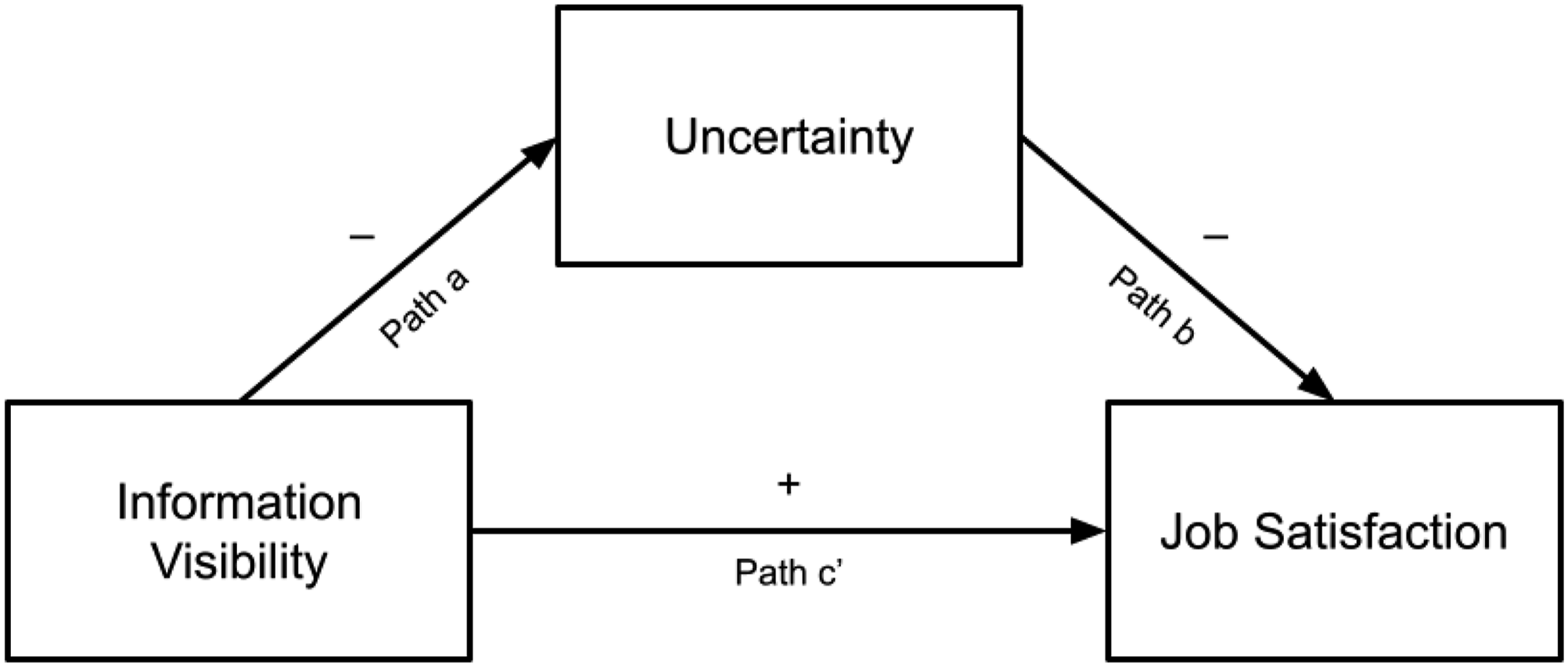
Method
Procedure
To test the hypotheses, we administered an online survey using Qualtrics. Cross-sectional data were collected utilizing Qualtrics Online Panels, which enabled recruitment of a large and diverse sample of employed adults in the United States. Qualtrics panels also facilitated access to participants who were screened, compensated, and monitored for data quality. Quota sampling procedures were used to approximate the demographic distribution of the U.S. workforce (e.g., age, gender, education, ethnicity), improving the representativeness of the sample (Bureau, n.d; 2020 Annual Averages ‐ Household Data ‐ Tables from Employment and Earnings, n.d.).
The survey was piloted before the full launch to refine question wording and organization, increasing the clarity and face validity of the instrument. The data were collected between September 2021 and October 2021, a period characterized by continued uncertainty and organizational disruption during the middle to later stages of the COVID-19 pandemic, allowing us to capture employee perceptions under sustained, rather than acute, disruption. Approval for the research protocol was obtained from a university’s Institutional Review Board.
At the beginning of the survey, participants responded to several questions explicitly referencing the COVID-19 pandemic and its impact on their workplace to situate respondents within a shared context of prolonged disruption. Subsequent measures of information visibility, uncertainty, and job satisfaction assessed participants’ general perceptions of their workplace informational environment and experiences as they existed during this period, without reference to a specific event.
Participants
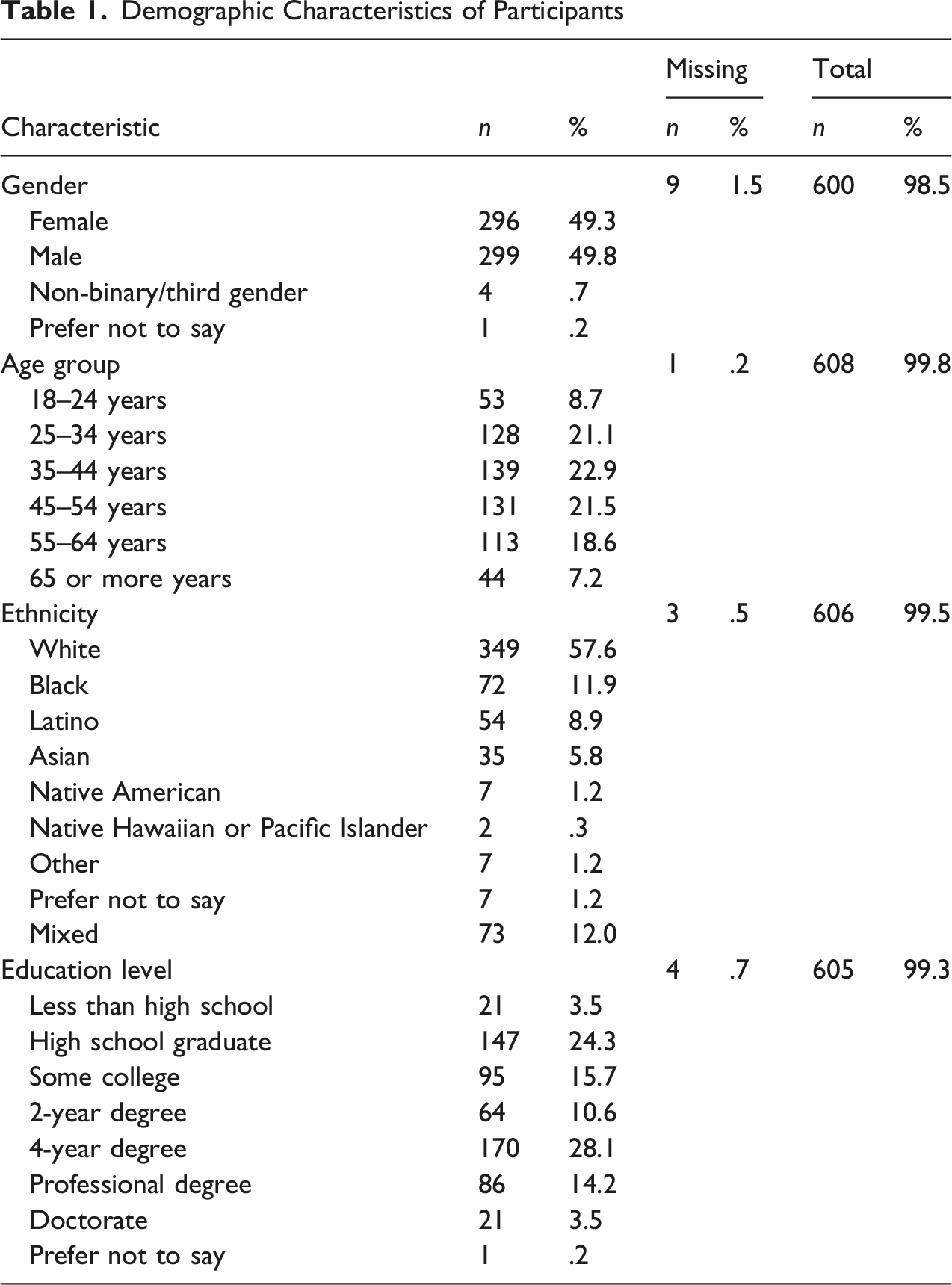
Participants were screened using the following criteria: (1) they must be an adult (18 years of age or older), (2) they must live in the United States, (3) they must read and write English, (4) they must be currently employed either full- or part-time, and (5) they must agree to participate after reading an informed consent form. Of the 2,888 people who initiated the survey, 609 participants (21.1%) consented to participate, met the screening and quota criteria, completed the questionnaire, and passed the attention checks.
Analysis
Analyses were conducted in R using the lavaan package. We first estimated confirmatory factor analyses (CFAs) to assess the dimensionality of the focal constructs and to evaluate whether the indicators of information visibility reflected a single underlying latent construct.
To test the hypothesized relationships, we estimated a structural equation model (SEM) in which information visibility predicts job satisfaction both directly and indirectly through uncertainty. Modeling constructs as latent variables allows for the estimation of relationships among theoretical constructs while accounting for measurement error.
Structural equation models were estimated using maximum likelihood with robust standard errors, and full information maximum likelihood was used to handle missing data. Indirect effects were evaluated using bias-corrected bootstrap confidence intervals (N = 5,000). Model fit was evaluated holistically using multiple indices including the comparative fit index (CFI), Tucker-Lewis index (TLI), root mean square error of approximation (RMSEA), and standardized root mean square residual (SRMR). While commonly cited guidelines suggest cutoff values for fit indices (Hu & Bentler, 1999), more recent methodological work cautions against rigid reliance on such thresholds, emphasizing that fit indices should be interpreted in combination and in light of model complexity, sample characteristics, advantageousness of certain indices (e.g., SRMR), and theoretical expectations (e.g., Niemand & Mai, 2018; Ximénez et al., 2022). Accordingly, we interpret model fit based on the overall pattern across indices rather than strict adherence to any single cutoff criterion. Because the inclusion of demographic controls did not substantively alter the pattern of results, we report the more parsimonious model without controls.
To assess the potential impact of common method bias, which could affect the observed relationships among self-reported measures (Manata & Boster, 2024), we performed Harman’s single-factor test via confirmatory factor analysis in which all observed indicators loaded onto a single latent factor (Podsakoff et al., 2003). Recent work cautions that such tests are limited and should not be interpreted as definitive evidence on the presence or absence of CMV (Baumgartner et al., 2021; Manata & Boster, 2024), while more advanced CFA-based techniques rely on strong assumptions and often require design features (e.g., marker variables or multiple methods) not present in the current data (Podsakoff et al., 2024). Accordingly, we treat this analysis as a diagnostic check rather than a conclusive test of CMV.
Measures
Perceived Information Visibility
Nine items from ter Hoeven et al.’s (2019) short scale were used to measure perceptions of information visibility of one’s workplace. Items 1, 2, and 3 concerned perceived availability of the information. Items 4, 5, and 6 dealt with perceived approval to share the information. Items 7, 8, and 9 were about the perceived accessibility of the information. The short scale is “used as a general measure of organizational information visibility, rather than the long scale, which explores the theoretical subdimensions” (ter Hoeven et al., 2019, p. 9), indicating it is intended as a global measure of information visibility. The text asked respondents to indicate how often they find the statements true. Base text read, “My workplace…”, and sample items (one from each factor) included: “…keeps records of information that lead to critical workplace decisions”; “…shares information when it has societal benefits”; “…makes sure that employees can easily acquire information” (1 = Rarely, 5 = Always,
Uncertainty
Uncertainty about one’s workplace was measured using nine items adapted from prior studies (i.e., Bordia et al., 2004; Rafferty & Griffin, 2006; Schweiger & Denisi, 1991). Items 1, 2, and 3 concerned strategic uncertainty. Items 4 and 5 dealt with job-related uncertainty. Items 6, 7, 8, and 9 were about change-related uncertainty. Sample items included: “I am often uncertain about the business environment in which the workplace will have to exist”; “I am uncertain about the future of my position in the workplace” (1 = Strongly disagree, 5 = Strongly agree,
Job Satisfaction
Job satisfaction was measured using 15 items from (Warr et al., 1979) scale. Items 1, 3, 5, 13, and 15 concerned “working conditions extrinsic satisfaction” (p. 136). Items 2, 6, 8, and 14 were about “job itself intrinsic satisfaction” (p. 136). Items 4, 7, 9, 10, 11, and 12 dealt with both “intrinsic and extrinsic features” regarding “individual recognition and management behavior” (p. 136), which Warr and colleagues called employee relations satisfaction. Base text asked participants, “How satisfied or dissatisfied are you with the following features of your present job?” Sample items included: “The working conditions”; “The recognition you get for good work”; “The freedom to choose how you work” (1 = Very dissatisfied, 5 = Very satisfied,
Demographic Characteristics
Gender, age, education level, and ethnicity were included as control variables in robustness checks. Gender was dummy coded such that the category with the greatest number, Male, was the reference group (n = 299), while Female (n = 296) and Non-binary/Third gender (n = 4) were included in the analyses. For age, we asked participants to provide their birth year, and we subtracted this from the year the survey was conducted (2021) to obtain an approximate age in years. Education level was included as a 7-point scale (1 = Less than high school; 2 = High school graduate; 3 = Some college; 4 = 2 year degree; 5 = 4 year degree; 6 = Professional degree; 7 = Doctorate). Ethnicity was dummy coded with the largest category, White, (n = 349) as the reference group compared to Black (n = 72), Asian (n = 35), Hispanic (n = 54), Other (n = 16; combined from the Native American (n = 7), Native Hawaiian or Pacific Islander (n = 2), and Other (n = 7) categories), Mixed (n = 73; participants who selected more than one ethnicity), and No Answer (n = 10; combined from those who selected Prefer not to say (n = 7) and those who did not select a response (n = 3)) categories.
Results
Descriptive Statistics
Demographic Characteristics of Participants
Descriptive Statistics: Means and Observed Correlations for Composite Study Variables
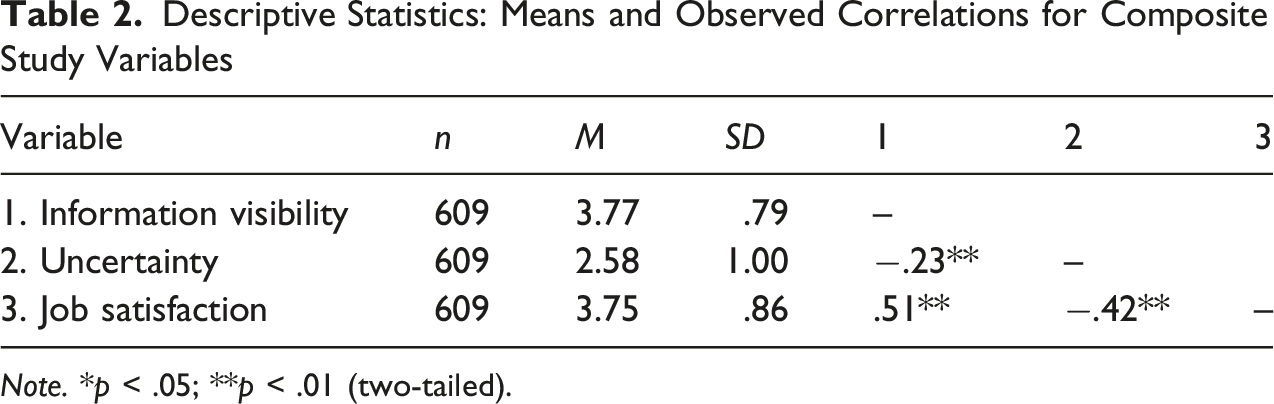
Note. *p < .05; **p < .01 (two-tailed).
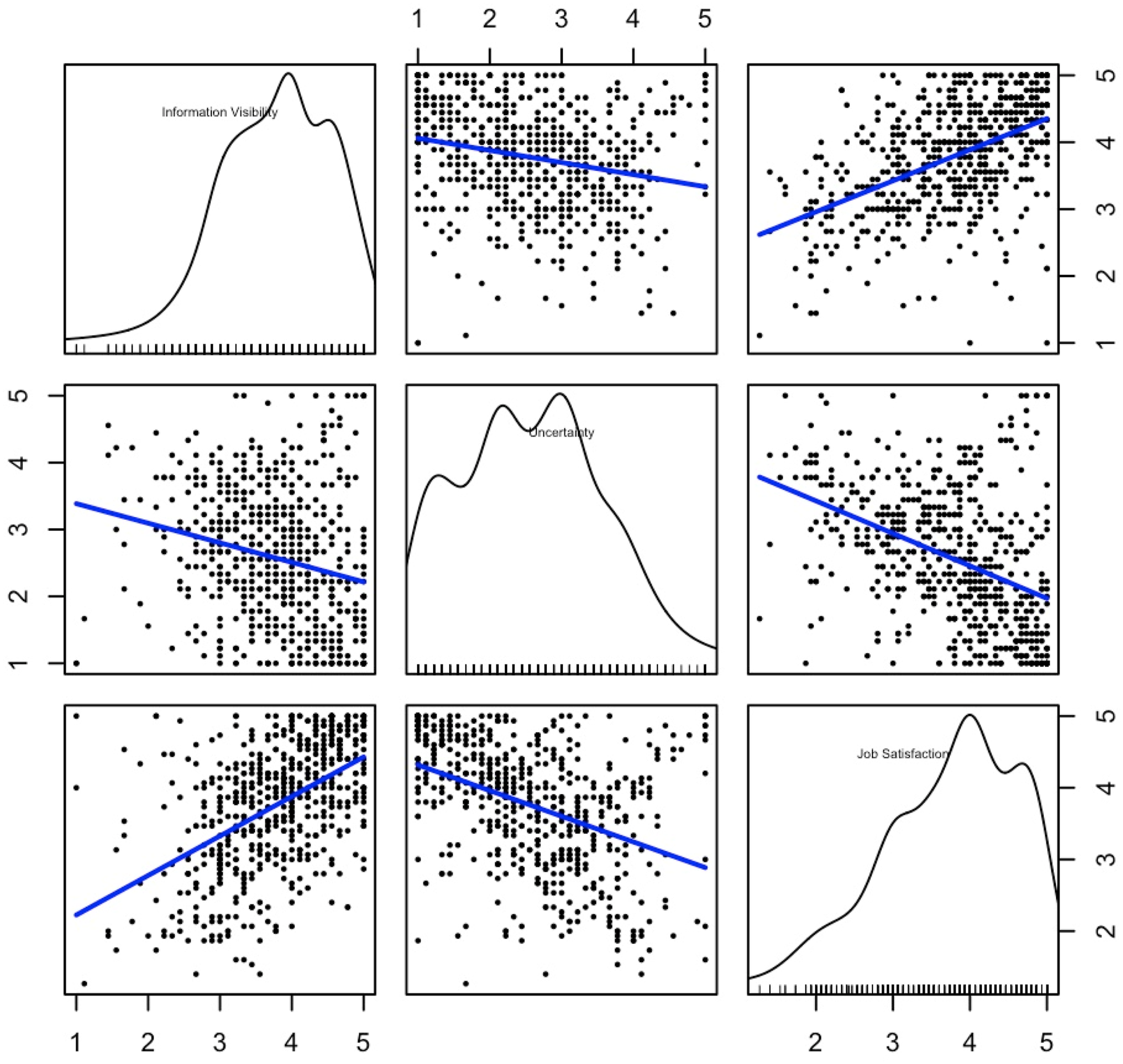
Density plots and scatterplots of the study variables
Measurement Models
We first examined information visibility using confirmatory factor analysis. A three-factor model representing information availability, accessibility, and approval demonstrated good fit to the data, χ
2
(24) = 20.88, p = .65, CFI = 1.00, TLI = 1.00, RMSEA = .00, and SRMR = .02. The three first-order factors were highly correlated (r = .75–.88), suggesting substantial overlap among the dimensions. Together with both ter Hoeven et al.’s (2019) design of the short scale as a holistic measure and the items’ strong internal consistency (
Standardized Factor Loadings and Indicator Reliability
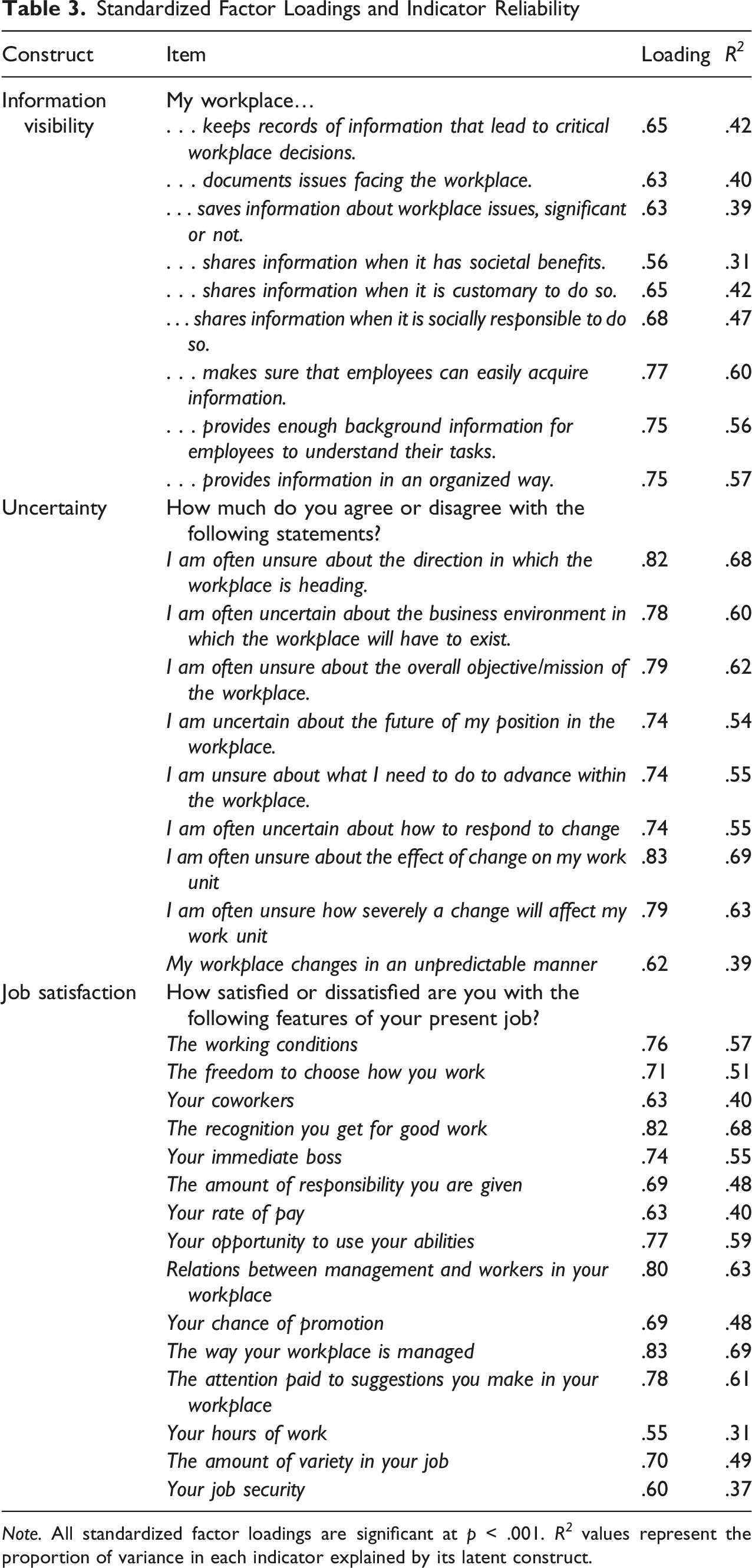
Note. All standardized factor loadings are significant at p < .001. R 2 values represent the proportion of variance in each indicator explained by its latent construct.
Latent Correlations and Construct Validity
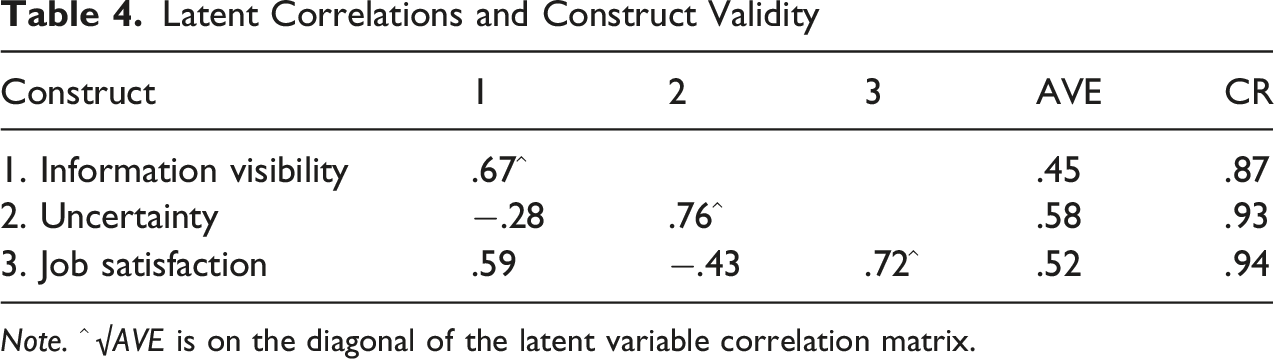
Note. ^
Finally, we conducted Harman’s single-factor test to assess the potential influence of common method bias. The single-factor CFA model demonstrated very poor fit to the data (CFI = .60, TLI = .57, RMSEA = .12, SRMR = .13) and fit substantially worse than the hypothesized measurement model (CFI = .93, TLI = .92, RMSEA = .05, SRMR = .05). Although this comparison suggests that a single latent factor does not adequately account for the covariance among the measures, such tests are limited and should be interpreted as diagnostic rather than definitive evidence regarding common method bias (Podsakoff et al., 2024).
Structural Models for Hypothesis Testing
We estimated a structural equation model treating all three variables, information visibility, uncertainty, and job satisfaction as single-factor latent constructs. The model had adequate to good fit to the data, χ 2 (492) = 1,322.66, p < .001, CFI = .93, TLI = .92, RMSEA = .05, and SRMR = .05. RMSEA and SRMR values fall within commonly accepted ranges, supporting acceptable model fit despite CFI/TLI values below more stringent thresholds.
In this model, organizational information visibility was negatively associated with uncertainty (β = −.28, p < .001), providing support for H1. Uncertainty was negatively associated with job satisfaction (β = −.29, p < .001), providing support for H2. Information visibility also exhibited a positive direct association with job satisfaction (β = .51, p < .001), providing support for H4. The indirect effect of information visibility on job satisfaction via uncertainty was statistically significant (standardized indirect effect ab, β = .08, p < .001, 95% CI = [.06, .17], N = 5,000 bootstrap samples), indicating partial mediation and providing support for H3. These findings are robust to the inclusion of demographic controls.
Given that these are cross-sectional data, we estimated an alternative structural model in which we reversed the causal order: job satisfaction predicted uncertainty, which in turn predicted perceived information visibility. This alternative model demonstrated poorer fit to the data than the hypothesized model (CFI = .91, TLI = .91, RMSEA = .06, SRMR = .12), particularly with respect to residual fit (SRMR). In contrast, the hypothesized model exhibited acceptable-to-good fit across indices (CFI = .93, TLI = .92, RMSEA = .05, SRMR = .05). These findings suggest that the data are more consistent with the proposed theoretical ordering, while recognizing that causal inferences cannot be definitively established.
Discussion
This study advances theorizing on information visibility by examining visibility as an organizational communication practice that structures the informational environment under which employees encounter and evaluate information. Building on prior conceptualizations of visibility as the availability, approval, and accessibility of information (Stohl et al., 2016), our findings suggest that information visibility operates as an antecedent to employee uncertainty and job satisfaction. These findings indicate that employee experiences are associated not only with the amount or content of information available within organizations, but also whether that information can be located, accessed, and used.
Consistent with this perspective, uncertainty emerges as a central mechanism linking information visibility to job satisfaction. The findings suggest that visibility matters in part because, as a communication practice, it shapes the informational environment in ways that influence whether employees experience uncertainty about their work and work environment. When information is perceived as more available, approved, and accessible, employees are more likely to detect and leverage information related to understanding circumstances at work. Greater visibility is associated with lower perceived uncertainty and, in turn, more favorable job evaluations.
Beyond positioning uncertainty as a mechanism, these findings also contribute to research on uncertainty in organizational contexts. Much prior work in organizational communication has focused on the deliberate information-seeking strategies individuals use (e.g., Sias & Wyers, 2001; Woo et al., 2023) and management communication practices that provide information (e.g., Bordia et al., 2004) to reduce uncertainty. In contrast, the present findings suggest that uncertainty is also influenced by perceptions of the broader informational environment, specifically the extent to which information is available, approved for sharing, and accessible within the organization. This extends existing perspectives by highlighting how organizational communication practices shape employees’ experiences of uncertainty through the informational environment they create.
In addition to this indirect pathway, information visibility was also directly associated with job satisfaction. This direct relationship suggests that visibility may influence employee experiences beyond its role in facilitating communication, coordination, or information exchange. As a communication practice, visibility structures how information becomes available and usable within employees’ work environment. The resulting informational environment may influence employees’ broader workplace perceptions independent of their experience of uncertainty. More specifically, visibility may contribute to employees’ sense that organizational conditions are sufficiently coherent and interpretable to form stable evaluations about their workplace. In this way, visibility may support broader organizational intelligibility even when uncertainty is not fully resolved. Accordingly, the direct visibility-satisfaction pathway is conceptually distinct from the uncertainty-based mechanism. Whereas uncertainty focuses on employees’ perceived ability to understand and interpret organizational conditions, the direct relationship reflects employees’ evaluations of the workplace as a coherent and navigable environment. These findings indicate that visibility relates to job satisfaction both through uncertainty and through general evaluations of organizational conditions.
Although this study was conducted during the COVID-19 pandemic, the relationships observed are not specific to this context. As an organizational communication practice, information visibility is performed across a wide range of organizational settings, including periods of relative stability. At the same time, long-term disruptive events such as the COVID-19 pandemic represent contexts in which these informational conditions become particularly consequential (Bordia et al., 2004; Lian et al., 2022; Rafferty & Griffin, 2006). Under sustained ambiguity and evolving organizational conditions, employees rely more heavily on available, approved, and accessible information to evaluate their work environment. The pandemic likely amplified the consequences of visibility rather than fundamentally altering the underlying relationships. Conversely, in more stable organizational contexts characterized by lower levels of sustained ambiguity, these effects may be comparatively attenuated because employees may rely less heavily on visibility when established expectations and prior organizational knowledge provide additional interpretive stability.
Prior theoretical work has suggested that information visibility may not always produce clarity, particularly under conditions of information overload or “inadvertent opacity” (Stohl et al., 2016, p. 133). However, empirical work examining visibility as an organizational-level phenomenon has found more consistent positive associations between visibility and related constructs such as transparency (ter Hoeven et al., 2019). The present findings align with this latter work. When visibility is conceptualized as an organizational communication practice that structures the informational environment characterized by availability, approval, and accessibility, it is associated with lower uncertainty rather than increased ambiguity.
In sum, these findings extend prior research by demonstrating that information visibility is linked not only to instrumental outcomes such as knowledge sharing (Chen et al., 2020; Treem & Leonardi, 2013) and innovation (Liang et al., 2022), but also to employees’ evaluative experiences. Overall, these findings suggest that visibility influences employee uncertainty and job satisfaction through the workplace informational environment it creates.
Practical Implications
From a practical standpoint, these findings suggest that organizations should focus not only on the sheer volume or frequency of communication, but also on structuring the informational environment through which employees encounter organizational information. Managers can ensure that information is available, approved for sharing, and accessible in ways that employees can use it to evaluate their work environment. Information visibility is not simply a matter of “communicating more,” but of ensuring that information is perceived as accessible, legitimate to share, and meaningfully available. During prolonged periods of uncertainty, such as organizational change or crisis recovery, these conditions may help stabilize employees’ evaluations of their work environment even when uncertainty cannot be fully eliminated.
These findings are particularly relevant for organizational leaders navigating extended periods of ambiguity. Rather than treating communication as the transmission of information, managers should attend to how information is organized and made available within the organization. Efforts to ensure that relevant information exists, can be shared without unneeded constraint, and can be readily accessed may reduce employees’ uncertainty and support more favorable job evaluations. In this sense, effective communication during disruption depends on structuring the conditions under which employees can interpret organizational information.
Although this study was conducted during the COVID-19 pandemic, the implications extend to a broader range of organizational contexts characterized by sustained change, such as restructuring, mergers, or industry disruption. These contexts similarly require employees to form ongoing evaluations of their work environment despite incomplete information. The present findings suggest that visibility practices are particularly consequential in such settings because they shape the informational environment that employees rely on to evaluate organizational developments. At the same time, the COVID-19 pandemic represents a high-intensity context characterized by heightened uncertainty and information sensitivity. In more stable environments, employees and managers alike may rely more heavily on established routines and prior organizational knowledge rather than on visibility practices to interpret organizational conditions. On the other hand, in more unpredictable settings, the value of information visibility may be amplified, as employees rely more heavily on available, approved, and accessible information to evaluate their work environment. As such, the strength of the relationships observed here may reflect, in part, the heightened stakes associated with a global health crisis. At the same time, because visibility reflects an ongoing practice rather than a crisis-specific intervention, investments in visibility during periods of relative stability may provide employees with a more reliable informational environment when organizational conditions inevitably become less predictable.
Limitations and Future Directions
This study has several limitations that guide future work. First, the cross-sectional, self-report design raises the possibility of common method variance (CMV), which cannot be fully ruled out. Recent work emphasizes that CMV is multifaceted and not easily eliminated through any single procedural or statistical remedy, and that commonly used post hoc tests provide only limited evidence regarding its influence (Podsakoff et al., 2024). As such, the observed relationships may be inflated or attenuated by shared method effects. At the same time, concerns about CMV should be considered alongside the overall measurement quality and theoretical coherence of the model, rather than treated as a singular threat that invalidates findings (Manata & Boster, 2024). Future research would benefit from incorporating multi-source or longitudinal designs to more definitively separate substantive relationships from method-related variance.
Second, the use of cross-sectional data limits our ability to draw causal inferences. Although the hypothesized model demonstrated better fit than an alternative specification, the directionality of relationships cannot be definitively established. Longitudinal and experimental designs would allow future research to examine how changes to the informational environment influence uncertainty and job satisfaction over time.
Third, the measurement of information visibility captures employees’ perceptions of organizational information-sharing practices at the organizational level (ter Hoeven et al., 2019). This conceptualization treats the organization as a collective actor and does not capture variation in visibility across interpersonal or network-level interactions. Alternative approaches grounded in technological affordances conceptualize visibility as emerging from interactions among actors within a system. Future research should further develop and integrate these perspectives, examining how organizational-level visibility practices and interpersonal visibility dynamics (van Zoonen et al., 2022) jointly shape employees’ informational environments. In addition, future work may examine how the relationship between information visibility and uncertainty varies under different organizational conditions and information environments, particularly in contexts characterized by fragmented or conflicting information.
Fourth, although this study focuses on uncertainty as an individual-level outcome, information visibility may also be understood as shaping the informational cues that employees draw upon when interpreting their work environment. In this sense, visibility structures the informational environment under which broader processes of organizational interpretation may occur. Future research may more directly examine how visibility contributes to collective processes of organizational interpretation (e.g., Maitlis & Sonenshein, 2010; Weick, 2012) across different levels of analysis.
Finally, although the data were collected during the COVID-19 pandemic, this context represents a theoretically meaningful case of sustained uncertainty rather than a unique setting. Employees’ absolute levels of uncertainty may differ in post-pandemic contexts; however, the underlying dynamics linking the informational environment to uncertainty and job satisfaction are likely to extend to other contexts characterized by ongoing disruption. Future research should replicate these findings in non-crisis environments to assess their generalizability and stability over time.
Conclusion
This study highlights the role of information visibility as a central organizational communication practice influencing how employees experience uncertainty and evaluate their work environment during prolonged disruption. Rather than emphasizing the volume or frequency of communication, the findings demonstrate the importance of how organizational informational environments are structured in ways that allow employees to encounter and use information to evaluate their work conditions. By shaping whether and how employees engage with organizational information, visibility influences both the extent to which employees experience uncertainty and how they evaluate their work environment.
These findings underscore the importance of considering not only communication quantity or content, but also how organizational informational environments and practices support employee evaluation under conditions of sustained ambiguity. Future research should continue to examine how these communication practices operate across different organizational contexts and levels of analysis, including how visibility contributes to broader processes of organizational interpretation and coordination.
Footnotes
Acknowledgments
The authors would like to thank Editor Matthew Koschmann, Associate Editor Kerk Kee, and the anonymous reviewers for their constructive feedback, thoughtful guidance, and intellectual engagement throughout the review process.

Funding
The authors received no financial support for the research, authorship, and/or publication of this article.
Declaration of Conflicting Interests
The authors declared no potential conflicts of interest with respect to the research, authorship, and/or publication of this article.