







Abstract
Insufficient and poor sleep quality significantly impacts the health and quality of life of persons with end-stage renal failure (ESRF) on hemodialysis. This study explored the effectiveness of teaching patients on hemodialysis, Benson’s relaxation technique. Seventy-one persons on hemodialysis in Iraq were randomly assigned to either the experimental or the control group. The experimental group received training and encouragement to use the Benson relaxation technique. The Pittsburgh Sleep Quality Index (PSQI) score was collected for all the patients before and after the intervention. After 8 weeks a repeated measurement of the post-test on sleep quality was done for both groups. The experimental group showed a statistically significant pre- and post-test difference. The findings suggest that Benson’s relaxation approach improves the quality of sleep for persons on hemodialysis.
Persons with End Stage Renal Failure (ESRF) who are on hemodialysis experience a substantial symptom burden. Among the most disturbing symptoms they often have is poor sleep quality (Alshammari et al., 2023). They often have difficulty falling asleep and staying asleep, and they have reduced quality of sleep. Insomnia and poor sleep quality are associated with a variety of chronic conditions and early mortality (Mixson et al., 2023). Closely linked to their poor quality of sleep is daytime fatigue. Unfortunately, ESRD is a worldwide problem that is expected to increase in prevalence. Globally, and in Iraq, kidney transplants remain unavailable to many if not most patients with ESRD. In addition, treatment-resistant depression, which is itself often accompanied by poor sleep, is common in persons with ESRD on hemodialysis (Pan et al., 2019).
In addition to depression, several biological consequences of ESRD and hemodialysis are related to sleep quality, such as high levels of blood urea and creatinine, insufficient parathyroid hormone, and elevated blood pressure (Mirghaed et al., 2019). In addition, sleep apnea syndrome, disturbed breathing, restless leg syndrome, pain, itchiness, and anxiety are common and contribute to sleeplessness.
Various non-pharmacological interventions are helpful to persons with ESRD on hemodialysis, among them are yoga, acupuncture, music, aromatherapy, mind distraction, visualization, guided imagery, massage, meditation, and relaxation. So far, several studies have shown Benson’s relaxation treatment (BRT) helpful in reducing tension, anxiety, and depression in persons on hemodialysis. Several of these studies have been done in the Middle East, but none in Iraq (Abu Maloh et al., 2022; Meawad Elsayed et al., 2019; Rambod et al., 2013). Relaxation training is safe, simple, and affordable.
Enhancing the quality of sleep for patients has the potential to positively affect their mental well-being and overall clinical outcomes. As there are often many contributing factors to poor sleep quality for persons on hemodialysis, a comprehensive assessment and approach is important. The existing literature remains inadequate in comprehensively documenting and analyzing the sleep quality of those who undergo hemodialysis in Iraq.
Benson’s relaxation method is simple and easy to teach, and a form of it may already be performed by some nurses working with persons on hemodialysis (Imanian & Ramezanli, 2022). Benson’s relaxation techniques involve deep breathing and progressive relaxation to promote a state of relaxation and reduce stress levels. This study investigated the effects of Benson’s Relaxation Technique on hemodialysis patients’ sleep quality in Iraq.
Method
This study randomized patients to two groups, one received the research intervention, and the other, a control group, that received the standard of care, with a pre- and post-test design. The setting of the study was patients affiliated with two hemodialysis units at the Al-Hussien teaching hospital in Al-Nasiriyah city, Iraq. Initially, 126 participants were identified; however, 53 of these patients did not meet the inclusion criteria and were excluded. The remaining 71 patients were divided into the two groups (the experimental group had 35 patients and the control group of 36) patients. The inclusion criteria for this study were being at least 18 years of age and receiving hemodialysis at least twice a week for 3 to 6 months. The exclusion criteria were diagnosis of unstable hypertension, arrhythmia, cardiac angina, congestive heart failure, acute cerebrovascular accident, or hepatic failure before or during the study period. The presence of physical restrictions that were a barrier to learning the intervention was an additional exclusion criterion, as well as any emotional distress in the previous month.
Benson’s Relaxation Technique (BRT)
According to Benson and Klipper (1975), the Benson Relaxation strategy is designed to counter the fight or flight response to stress. The technique is believed to lower blood pressure and improve cardiac health. It involves a daily practice of 10–20 minutes, once or twice a day. The experimental group in this study was taught and encouraged to practice Benson’s relaxation technique for 20 minutes twice per day for 3 weeks.
The nurses and physicians in this study were kept blind to the measured outcomes and the assignment of participants to either the intervention or control group. Furthermore, the individual who was responsible for teaching the BRT technique was unaware of the objective of this study. The data collectors were unaware of the intervention and who was in the experimental group. The statistician doing the data analysis was deliberately kept blind to the allocation of participants to the groups.
The instruments used in this study were a questionnaire designed for this study and the Arabic version of the Pittsburgh Sleep Quality Index (Suleiman et al., 2010). The questionnaire used for the study included the participant’s age, sex, level of education, marital status, residency, and presence of chronic diseases. The Pittsburgh Sleep Quality Index (PSQI; Buysse et al., 1989) is a self-report survey to evaluate the quality of sleep and disruptions experienced within a period of 1 month. Nineteen separate elements contribute to the estimation of seven "component" scores. These scores are based on subjective sleep quality, sleep latency, sleep duration, habitual sleep efficiency, sleep disruptions, usage of sleeping medication, and daytime dysfunction. The total score is calculated by the sum of its seven components and ranges from 0 to 21. A total PSQI score of 5 is indicative of poor sleep quality, while good quality of sleep is shown by a total PSQI score of < 5. As for the reliability and validity, several studies examined the psychometric properties of the scale. The first review by the developers revealed an internal reliability of a = .83, a test–retest reliability of .85 for the global scale, a sensitivity of 89.6%, and a specificity of 86.5% (Buysse et al., 1989: Suleiman et al., 2010).
The Intervention Group
The trained interventionist explained the technique to each patient in a clear and precise manner. Simultaneously the interventionist assessed the patient’s performance of the technique and gave feedback to the participants to improve their skill in carrying out the technique. Following the training session, the patients were instructed to practice the approach for the next 2 days. Next, the patients repeated the method under the supervision of the interventionist to confirm their proficiency. Additionally, the researcher contacted the participants twice a week on phone to address any issues, reinforce the procedure, provide support, and ensure adherence.
The patients in the intervention group were also provided with an educational video on relaxation techniques. The interventionist visited the HD centers on a weekly basis to conduct the follow-up and offer necessary support regarding the implementation of BRT on the subjects. The patients in the control group took part in both the pre- and post-tests.
The first part was to prepare Hemodialysis patients to do Benson’s relaxation technique (Benson & Klipper, 1975) and the following steps were involved:
Explaining the steps of the relaxation technique to the patient.
Preparing a suitable place for the patient (quiet and light).
Preparing the required tools, such as a watch.
The second part was to implement Benson’s relaxation technique and the following stages were involved:
Positioning the patient in a comfortable position, such as sitting or lying down.
Asking the patient to close their eyes.
Asking the patient to relax all muscles, beginning from the soles of the feet and the rest of muscles, and moving forward, relaxing all parts of body.
Asking the patient to close their mouth and begin to breathe only through the nose and pronounce the word “one” quietly while exhaling.
Continuing for 20 minutes (patients were taught to monitor the time when opening eyes).
Checking the time by opening eyes and looking at the clock to estimate the time).
The Control Group
The control group participants completed the same pre-test including the Pittsburgh Sleep Quality Index (PSQI). After a period of 4 weeks, the control group participants were measured for the quality of sleep at the post-test. The control group did not receive Benson’s relaxation technique. Instead, they were only subjected to the standard treatment and care.
The data were collected using a questionnaire through direct interviews with patients for demographic variables and the Pittsburg sleep quality index scale. The data collection occurred between November 8, 2023 and February 8, 2024. The research participants were interviewed and were informed of the objective of the study. The demographic data were collected from all participants. The researcher got permission from all participants to record their responses, and saved those responses for data analysis.
Descriptive statistical tests (e.g., frequency, percentage, mean score, standard deviation) and inferential statistics and the Kolmogorov–Smirnov test (e.g., Cronbach α, Paired t test, and analysis of variance (ANOVA test) were used to analyze and interpret the data. These tests were conducted in SPSS (Version 26.0).
Results
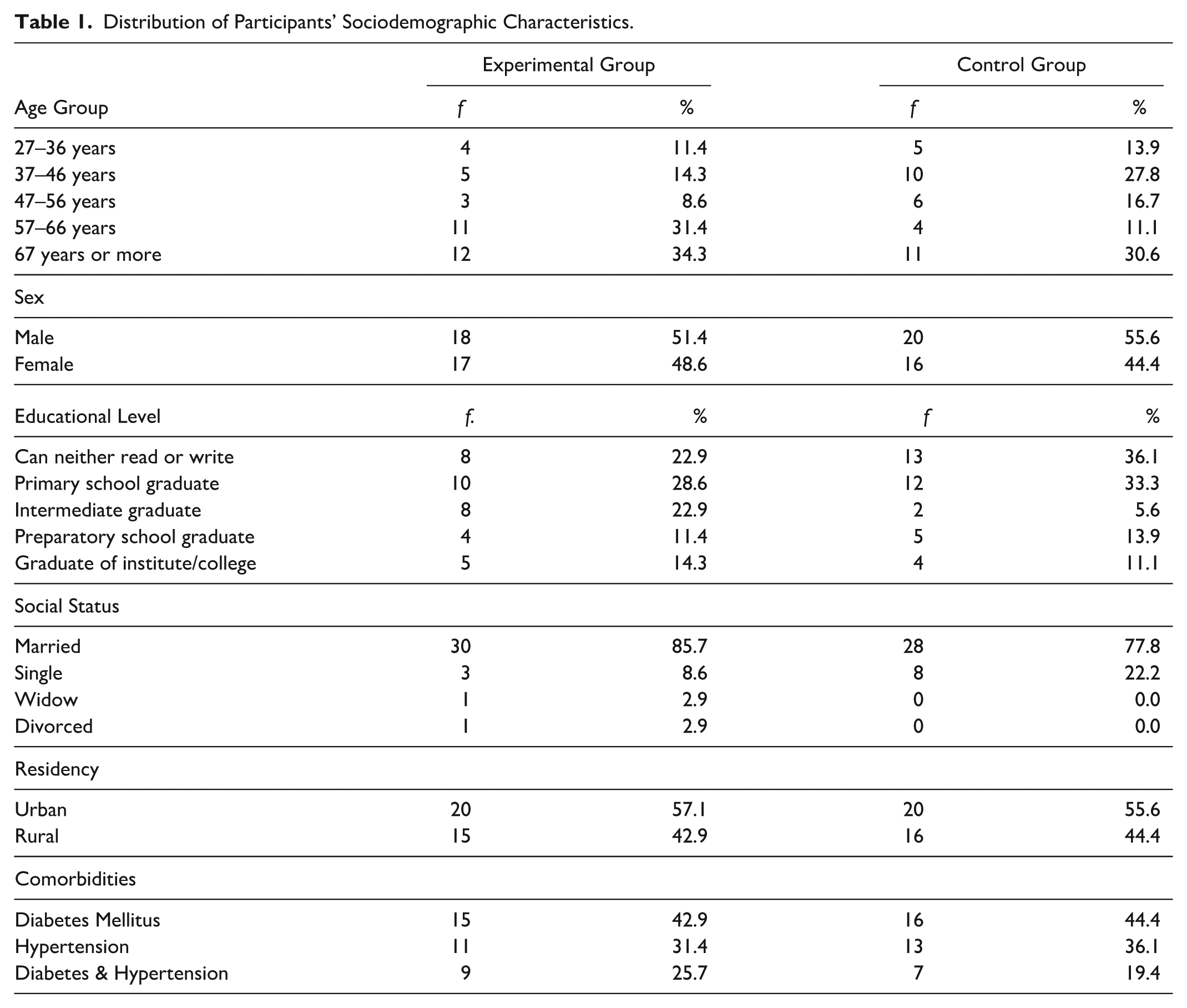
The sample for both groups was fairly evenly male or female and most reported being married (see Table 1 for the frequency and distribution of the sample divided into two groups). The educational level of most of the overall sample was at the intermediate level (about 3 years of secondary school) or less. The age of the control group was slightly younger than the intervention group. More of the sample (57.1 %) lived in urban than rural areas. Most of the sample also had diabetes, hypertension, or both.
Distribution of Participants’ Sociodemographic Characteristics.
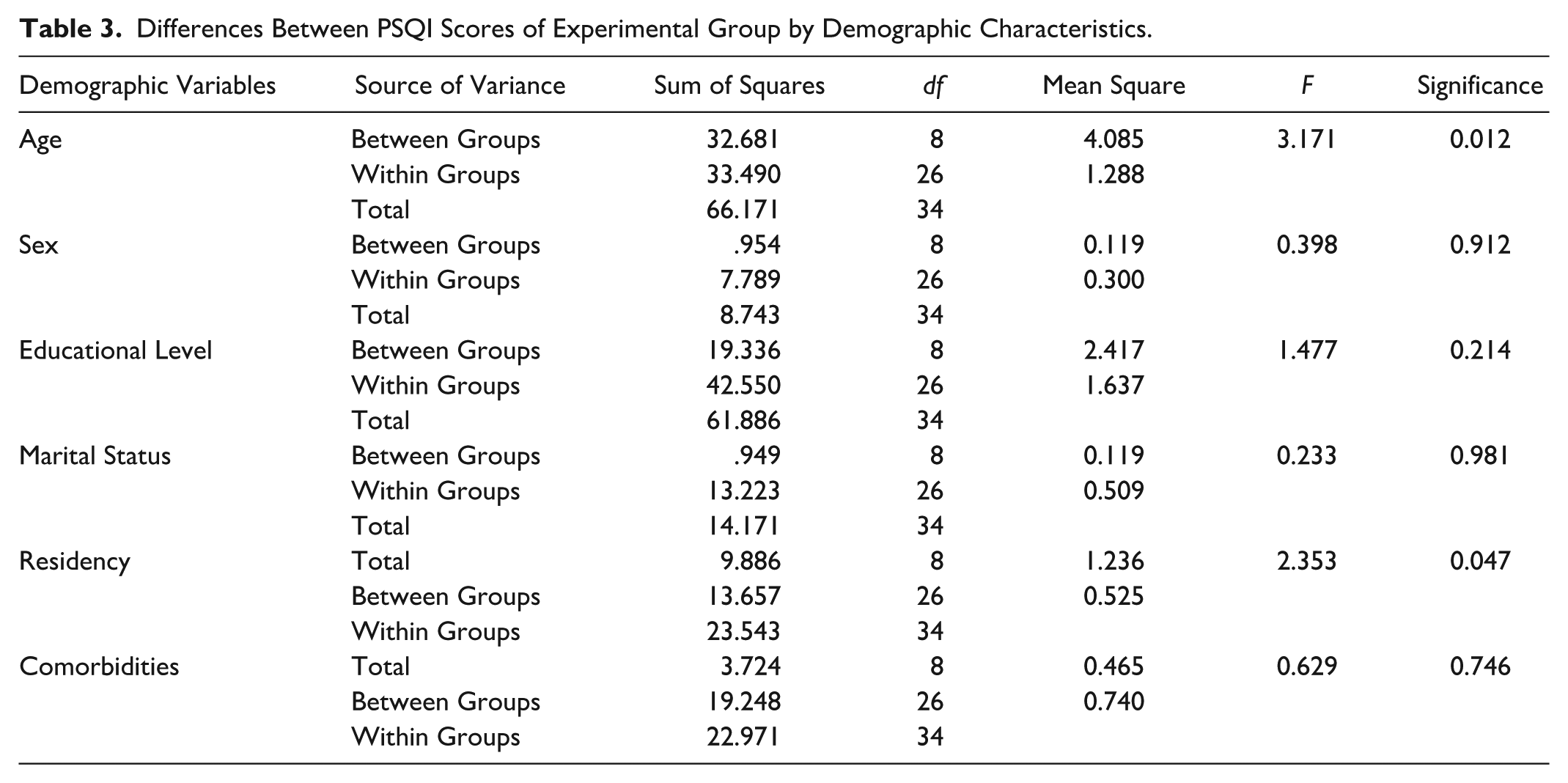
The PSQI score change of the intervention group showed a statistically significant improvement after Benson’s relaxation technique was taught and practiced (see Table 2). The mean and standard deviation of global PSQI at the pre-test was 16.27 ± 2.629, and 1.150 ± 0.319 at the post-test for the experimental group. Differences in the PSQI scores were analyzed for each demographic question (see Table 3). Analysis of covariance (ANCOVA) showed statistically significant differences between the two groups in terms of the scores of various sub-scales of the Pittsburgh Sleep Quality Index. These sub-scales were sleep disturbance, daytime dysfunction, the use of sleep medication, subjective sleep quality, and overall sleep quality. These differences were observed at the 8th week of intervention (p < .05).
Comparison of PSQI Items for the Two Groups at Pre- and Post-Test.
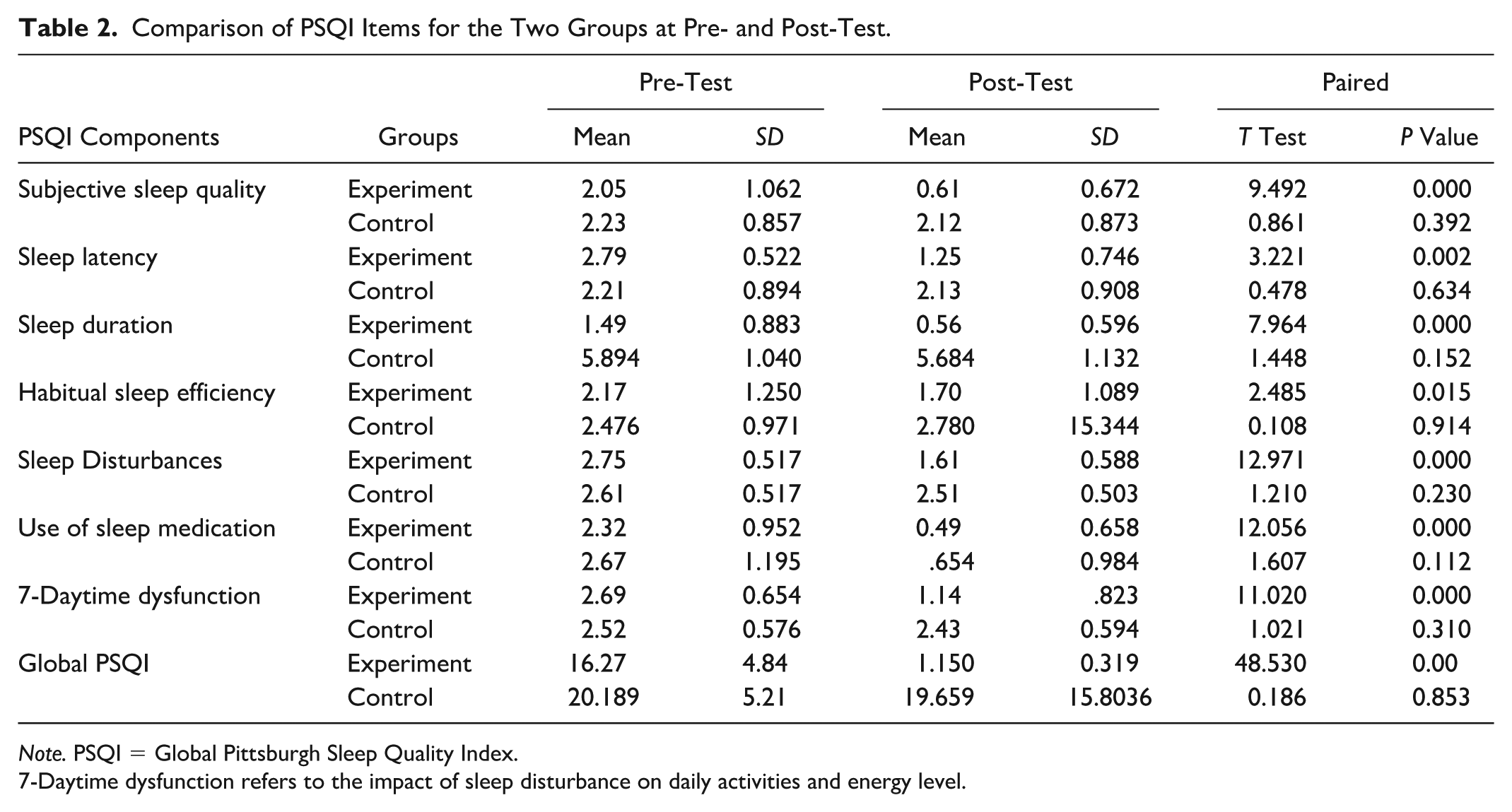
Note. PSQI = Global Pittsburgh Sleep Quality Index.
7-Daytime dysfunction refers to the impact of sleep disturbance on daily activities and energy level.
The findings of table 3 showed no significant differences between the PSQI of the experimental group at the post-test in terms of Incident Hemodialysis Patients’ demographic variables (e.g., sex, educational level, social status, and presence of chronic diseases). However, there were differences between the PSQI of the experimental group in the post-test with Incident Hemodialysis patients’ demographic variables (age p = .012 and residency p = .047).
Differences Between PSQI Scores of Experimental Group by Demographic Characteristics.
The tabulated data showed significant differences in all subscales, with the exception of the sleep medication utilized scale, before and after the implementation of technique. The statistical analysis showed a significant difference, as indicated by a p value of .323. Regarding the overall mean score of, there was a statistically significant improvement in the mean score of PSQI for sleep quality, with a p value of less than .001.
The present findings revealed no statistically significant differences in the PSQI in the post-test in the experimental group, in terms of demographic variables of Incident Hemodialysis patients, including sex, education level, socioeconomic status, and the presence of chronic diseases. The experimental group at the post-test and Incident Hemodialysis patients showed significant differences in the PSQI with respect to their demographic factors, specifically age (p = .012) and residency (p = .047).
Discussion
The purpose of this study was to explore if teaching people with hemodialysis Benson’s Relaxation Technique would improve their quality and duration of sleep. We also wanted to identify which patients did better using the technique. The key finding of this study were that the level of educational of the patient was a significant and favorable factor for learning the intervention and improving quality of sleep. In other words, a higher level of education was associated with stronger commitment to and conformity with practicing the Benson’s relaxation technique and improved sleep.
This study suggests that teaching Benson’s relaxation is a cost-effective intervention to help improve sleep for persons on hemodialysis in Iraq. The authors posit that older patients in Iraq on hemodialysis have physical and psychological changes that impact their ability to use Benson’s technique. Additionally, the implementation of the technique was found to be associated with residential location. The authors interpret this as related to cultural and environmental conditions in urban areas in Iraq, including heavy traffic, noise, and pollution, as interfering with the practice of the technique or its effectiveness.
Limitations of the Study
The main limitation of this study was compliance issues with instructions on relaxation techniques, possibly due to the unfavorable impact of their poor overall health. In addition, some participants reported that noise made both learning the technique and the practice of relaxation more difficult.
Implications of the Study
This research supports the use of a non-pharmacological intervention that nurses can teach their patients on hemodialysis, and which can help reduce their symptoms burden and improve the quality of their life. It is recommended that nurses work with their patients to develop customized approaches to care provision that enhance patient experiences and sleep quality using Benson’s relaxation technique (BRT). The research highlights the value of integrating BRT into the nursing education curriculum for hemodialysis patients, as it was found to significantly enhance the quality of sleep. This improvement in sleep quality has a profound impact on both the quality of life and communication abilities of these patients. It is important to equip nurses with the required skills and knowledge to provide guidance to hemodialysis patients to alleviate their fears, manage their expectations, and promote positive patient outcomes. This study lays the groundwork for future research efforts focused on extensively exploring the subject of patient sleep quality. Further research should explore other variables that can influence satisfaction, the effectiveness of specific treatments or training programs, and the enduring impact of nursing care on patient outcomes. This study has the potential to provide support for evidence-based practices and recommendations aimed at improving the overall hemodialysis setting for patients.
Conclusions
The present study emphasizes the significance of Benson’s relaxation technique in enhancing the sleep quality of patients undergoing hemodialysis. Therefore, it is recommended to plan educational workshops on this affordable and user-friendly relaxing approach to enhance the sleep quality of hemodialysis patients. Additional research is required to evaluate the effectiveness of this method in other populations of patients. Benson’s relaxation technique is an easy and inexpensive technique that should be learned by all patients because of its importance. This technique also reduces stress and expels negative thoughts, exerting a positive effect on improving sleep duration. The effectiveness of a relaxation technique to improve sleep in a patient population suggests that illness-related stress negatively impacts sleep and quality of life. It also suggests that the ability to reduce anxiety and stress should be considered a core skill that all nurses.
Footnotes
Declaration of Conflicting Interests
The authors declared no potential conflicts of interest with respect to the authorship and/or publication of this review.
Funding
The authors received no financial support for the authorship and/or publication of this review.
