






Abstract
Post-traumatic stress disorder (PTSD) symptoms are associated with addictive behaviors including problematic smartphone use (PSU). Drawing from existing theoretical models and empirical work, we examined the relation between PTSD symptoms, social/process-oriented smartphone feature uses, and PSU. Specifically, we examined the correlations between social/process-oriented smartphone feature uses with both PTSD symptom clusters (intrusions, avoidance, negative alterations in cognitions and mood, alterations in arousal and reactivity) and PSU and the mediating role of social/process-oriented smartphone feature uses in the relation between PTSD symptom clusters and PSU. The current study used data from a sample of 347 community participants recruited through Amazon’s Mechanical Turk platform. Correlation results indicated that process-oriented smartphone feature uses correlated significantly (positively) with all the PTSD symptom clusters and PSU. Further, mediation results indicated that process-oriented smartphone feature use significantly mediated the relationship between each PTSD symptom cluster and PSU. Beyond highlighting the role of process-oriented smartphone feature uses (e.g., watching videos/TV/movies, reading books/magazines, games) in the relation between PTSD symptoms and PSU, our findings suggest that efforts to reduce PSU among individuals with PTSD symptoms should integrate strategies for reducing process-oriented uses of smartphones.
Post-traumatic stress disorder (PTSD) symptoms are associated with addictive behaviors (e.g., Tull, Weiss, & McDermott, 2015; Weiss, Tull, Viana, Anestis, & Gratz, 2012; Weiss, Tull, Sullivan, Dixon-Gordon, & Gratz, 2015), including problematic smartphone use (PSU; Contractor, Frankfurt, Weiss, & Elhai, 2017). However, little research has examined factors that may explain PSU in relation to PTSD symptoms (Contractor, Weiss, Tull, & Elhai, 2017). Drawing from existing theoretical models and empirical research, we examined the relations among PTSD symptoms, process versus social-oriented smartphone feature uses, and PSU.
PTSD and PSU
PTSD is characterized by intrusions (e.g., nightmares), avoidance of internal and external reminders of the traumatic event (e.g., trauma-related thoughts or feelings), negative alterations in cognitions and mood (NACM; e.g., negative affect, feeling isolated), and alterations in arousal and reactivity (AAR; e.g., hypervigilance) following traumatic experiences (American Psychiatric Association, 2013). PTSD symptoms relate to several addictive behaviors including substance use, HIV/sexual risk, nonsuicidal self-injury, and disordered eating behaviors (Tull et al., 2015; Weiss et al., 2015; Weiss, Tull, Viana, Anestis, & Gratz, 2012). Recently, research has additionally indicated a positive relation between PTSD symptoms and PSU (Contractor et al., 2017).
PSU is characterized by the overuse of smartphones despite negative consequences such as functional impairment and stress (Demirci, Akgönül, & Akpinar, 2015; Elhai, Dvorak, Levine, & Hall, 2017). There are no official diagnostic criteria for PSU; however, it shares characteristics similar to that of other addictive behaviors (e.g., Ezoe et al., 2009; Shaffer, 1996). These characteristics include habitual overuse which may render it problematic (Kwon et al., 2013; van Deursen, Bolle, Hegner, & Kommers, 2015); functional impairment including impaired driving (Violanti, 1998), difficulties in real-life social engagement (Kuss & Griffiths, 2011), sleep difficulties, depression, and anxiety (Demirci et al., 2015; Elhai et al., 2017); withdrawal following cessation of use (Kwon et al., 2013) such as elevated heart rate (Clayton, Leshner, & Almond, 2015); and a reinforcement element embedded in smartphone use such as pleasurable experiences (Kwon et al., 2013; Song, Larose, Eastin, & Lin, 2004). This conceptualization of PSU is similar to the defining features of other addictive behaviors such as substance use (Fisher, Elias, & Ritz, 1998; Marlatt, Baer, Donovan, & Kivlahan, 1988; Shaffer, 1996), hence we draw from relevant PTSD-addictive behaviors literature as elaborated below.
Extrapolating from the PTSD-addictive behaviors literature (e.g., Keane & Wolfe, 1990; Khantzian, 1985; Stewart, 1996), the relation between PTSD symptoms and PSU can be conceptualized from three perspectives. First, from a positive reinforcement approach, individuals with PTSD symptoms may use smartphones to elicit, maintain, and/or increase positive affect, consistent with the cyber addiction pathway and the process-related gratification perspectives of technology use (reviewed in Billieux, 2012; Song et al., 2004). This, in turn, may lead to “wanting” behaviors characterized by a desire of even greater smartphone use (Robinson & Berridge, 2000; Song et al., 2004), increasing the likelihood of PSU (Yang & Tung, 2007).
Second, from a negative reinforcement approach, excessive smartphone use may function to counter or distract from negative affect stemming from trauma-related distress or symptoms, consistent with the impulsive pathway perspective of smartphone use (reviewed in Billieux, 2012; van Deursen et al., 2015). For instance, the Compensatory Internet Use theory (CIUT; Kardefelt-Winther, 2014), which proposes that individuals use technology as a compensatory behavior to regulate negative emotion, has empirical support in explaining PSU (Long et al., 2016; Wang, Wang, Gaskin, & Wang, 2015; Zhitomirsky-Geffet & Blau, 2016). Extending these findings, Contractor et al. (2017) found that PTSD symptoms related to PSU through an inability to control behaviors in the context of negative emotions (i.e., negative urgency).
Third, from a socialization approach, smartphone use may compensate for lack of real-life socialization, may make up for social life deficiencies, may help obtain reassurances in relationships, may satisfy interpersonal needs (e.g., affection), and may facilitate companionship and support (Chen & Katz, 2009; Rettie, 2008) among individuals with PTSD symptoms. This approach would be consistent with social usage and relationship maintenance pathway perspectives of technology use (reviewed in Billieux, 2012; Yang & Tung, 2007). Alternatively, individuals with PTSD symptoms may use their smartphones as a social avoidance strategy in uncomfortable social situations.
PSU and Smartphone Feature Uses
Smartphones have different uses such as productivity enhancement (e.g., reminders and e-mail), information-seeking (e.g., browsing the news), enhancement of personal status (e.g., improving future prospects with social media), relationship maintenance (e.g., getting in touch with individuals using social media), diversion/relaxation (e.g., pleasurable experiences), and entertainment (e.g., gaming; Bianchi & Phillips, 2005; Hoffner & Lee, 2015; Song et al., 2004; van Deursen et al., 2015). According to the Uses and Gratifications (U&G) theory, individuals use different media platforms (and different features of a specific media platform) to satisfy diverse social and psychological needs (Cheng, Liang, & Leung, 2015; Dhir, Chen, & Chen, 2017; Dimmick, Sikand, & Patterson, 1994; Dolan, Conduit, Fahy, & Goodman, 2016; Katz, Blumler, & Gurevitch, 1974; Lin, 1999). As an example, research indicates that sharing photos on Facebook is related to seeking affection and attention, disclosing and sharing information, engaging in habitual pastime, and a need to be a part of a peer group (Malik, Dhir, & Nieminen, 2016); tagging photos on Facebook is related to distinct gratifications such as feeling good and wanting to “like and comment”(Dhir et al., 2017), while using the Internet has been related to diverse needs including seeking entertainment, interpersonal connections, information, social influence, coordination, and exposure to events/news (Dhir, Chen, & Nieminen, 2017). Similarly, different smartphone feature uses may be driven by different motivations (van Deursen et al., 2015).
One widely used distinction in smartphone feature uses is between process- and social (content)-oriented uses (Dhir et al., 2017; Song et al., 2004; van Deursen et al., 2015). Process-oriented uses refer to the consumption of the media itself, drawing individuals away from the outside world (e.g., use of diversions), whereas social-oriented uses refer to use of the media in a way that keeps individuals connected to the outside world (e.g., social networking, messaging, phone calls, and maintaining social relationships; Dhir et al., 2017; Dolan et al., 2016; Elhai, Levine, Dvorak, & Hall, 2017; Song et al., 2004). There is some evidence that both process- and social-oriented uses play an important role in technology misuse. For instance, daily time spent on using a certain media (e.g., internet) to satisfy social- and/or process-oriented gratifications has been found to relate significantly to compulsive internet use (Dhir Chen, & Nieminen, 2015b, 2015c). Alternatively, other research suggests the utility and reliability of distinguishing among social- and/or process-oriented uses with several media/media features such as intensity of Facebook use (social connection was a signficant predictor; Dhir, Kaur, Lonka, & Tsai, 2017; only process-oriented gratifications were significant predictors; Dhir & Tsai, 2017).
Strong evidence supports a relation between process-oriented smartphone feature uses and PSU (Dhir, Chen, & Nieminen, 2015a; Elhai et al., 2017; van Deursen et al., 2015; Zhitomirsky-Geffet & Blau, 2016). For instance, entertainment-driven uses such as playing online games, surfing pornographic websites (Yang & Tung, 2007), unlocking new features, and receiving new notifications (Whang, Lee, & Chang, 2003) have been theorized to serve a positive reinforcement function, such that the positive affect that is elicited, maintained, or enhanced through these smartphone feature uses makes it more likely for an individual to engage in these behaviors again in the future. Some evidence suggests that certain smartphone feature uses may serve a negative reinforcement function, such that music may be used to manage negative emotions (Skanland, 2011) and online games may be used to escape from problems (Billieux, Maurage, Lopez-Fernandez, Kuss, & Griffiths, 2015; Williams, Kennedy, & Moore, 2011). Unsurprisingly, a study indicated a negative relation between life satisfaction and compulsive internet use (Dhir et al., 2015c). Thus, individuals may be more likely to use smartphone features excessively to escape/avoid aversive emotions and/or increase positive affect.
On the other hand, some evidence indicates that social-oriented smartphone uses may have a significant link to PSU (Lee, Chang, Lin, & Cheng, 2014; Lopez-Fernandez, Honrubia-Serrano, Freixa-Blanxart, & Gibson, 2014; Song et al., 2004). To compensate for real-life socialization, individuals may use calls, social networking sites (SNS), short message service, instant messaging, and e-mails (Billieux et al., 2015; Kuss & Griffiths, 2011; Williams et al., 2011; Yang & Tung, 2007). Chou and Hsiao (2000) indicated that communication pleasure was one of the strongest predictors of internet addiction, and Lopez-Fernandez et al. (2014) indicated that social-oriented smartphone uses were more prevalent than process-oriented smartphone uses among problematic smartphone users. Despite such mixed results regarding the comparative relation between process- and social-oriented uses of smartphones and PSU, consistently smartphone feature uses (particularly process-oriented uses) have related to PSU.
PTSD and Smartphone Feature Uses
Evidence from the PTSD-addiction literature in particular supports the role of process-oriented smartphone feature uses (e.g., internet/websites, music, games, taking pictures or videos, watching videos/TV/music, reading books/magazines) in relation to PTSD symptoms. Consistent with the affective processing model of negative reinforcement (Baker, Piper, McCarthy, Majeskie, & Fiore, 2004), evidence indicates that individuals with PTSD symptoms may engage in excessive behaviors such as PSU to reduce negative affect and/or increase positive affect (Marshall-Berenz, Vujanovic, & MacPherson, 2011; Weiss et al., 2015; Weiss et al., 2012). Referencing smartphones, its process-oriented feature uses may help to escape the physiological and/or psychological distress embedded in PTSD symptoms, consistent with the negative reinforcement model of smartphone use (reviewed in Billieux, 2012; van Deursen et al., 2015). Thus, the functional role of smartphones may be primarily that of mood repair and emotional regulation (Billieux, 2012; Billieux, Van Der Linden, D’Acremont, Ceschi, & Zermatten, 2007; Roberts, Pullig, & Manolis, 2015). Unsurprisingly, research indicates that the tendency to act impulsively when experiencing negative affect is related to both PTSD severity (Contractor, Armour, Forbes, & Elhai, 2016; Roley, Contractor, Weiss, Armour, & Elhai, 2017) and problematic mobile phone use (Billieux et al., 2007; Billieux, Van Der Linden, & Rochat, 2008).
Current Study
In the current study, we examined (1) the correlation between social and/or process smartphone feature uses with PTSD symptom clusters (intrusions, avoidance, NACM, and AAR) and PSU, and (2) the mediating role of social and/or process smartphone feature uses in the relation between PTSD symptom clusters and PSU.
Method
Procedure/Participants
The study was approved by the institutional review board of University of North Texas. Participants were recruited from Amazon’s Mechanical Turk (MTurk) platform (Buhrmester, Kwang, & Gosling, 2011). The study was a 30-min survey of an examination of the nature of smartphone use among individuals with stressful life experiences. Participants aged 18 years and older were screened for four inclusionary criteria: (1) living in North America, (2) working knowledge of the English language, (3) using a smartphone, and (4) experience of a stressful life event. Participants who met eligibility criteria provided informed consent and completed the survey on Psychdata (data collection platform). Participants received 75 cents for study participation.
Exclusions and Sample Characteristics
We obtained 520 participant responses through the MTurk platform. Nineteen participants attempted to answer the questionnaire twice/thrice; hence, these 40 duplicate responses were excluded (resulting sample size included 480 participants). This sample was further truncated by excluding 120 participants not meeting one or more of the inclusionary criteria, and 11 participants missing data on all measures, which amounted to a sample size of 349 participants. For the current study, we additionally excluded two participants who were either missing more than 70% item-level data on the PTSD Checklist for Diagnostic and Statistical Manual of Mental Disorders, Fifth Edition (DSM-5; ≥6 items; Posttraumatic Stress Disorder Checklist for DSM-5 [PCL-5]; Weathers et al., 2013), the Smartphone Addiction Scale–Short Version (≥3 items; Smartphone Addiction Scale–Short Version [SAS-SV]; Kwon et al., 2013), or the Smartphone Usage Scales (≥3 items; Elhai et al., 2016). Our final sample included 347 participants.
Average age of participants was 33.60 years of age (SD = 9.52; age range was 18–71 years), and majority were female (n = 199, 57.70%). Most were employed full time (n = 227, 65.80%) and averaged 15.31 years of schooling (SD = 2.43). The most prevalent worst traumatic events (upon which PTSD ratings were assigned) were unexpected death of a family member/close friend (n = 111, 32%), life-threatening accident (n = 48, 13.80%), and life-threatening illness (n = 33, 9.50%). Additional descriptive information is provided in Table 1.
Descriptive Information on Demographics and Psychopathology Constructs.
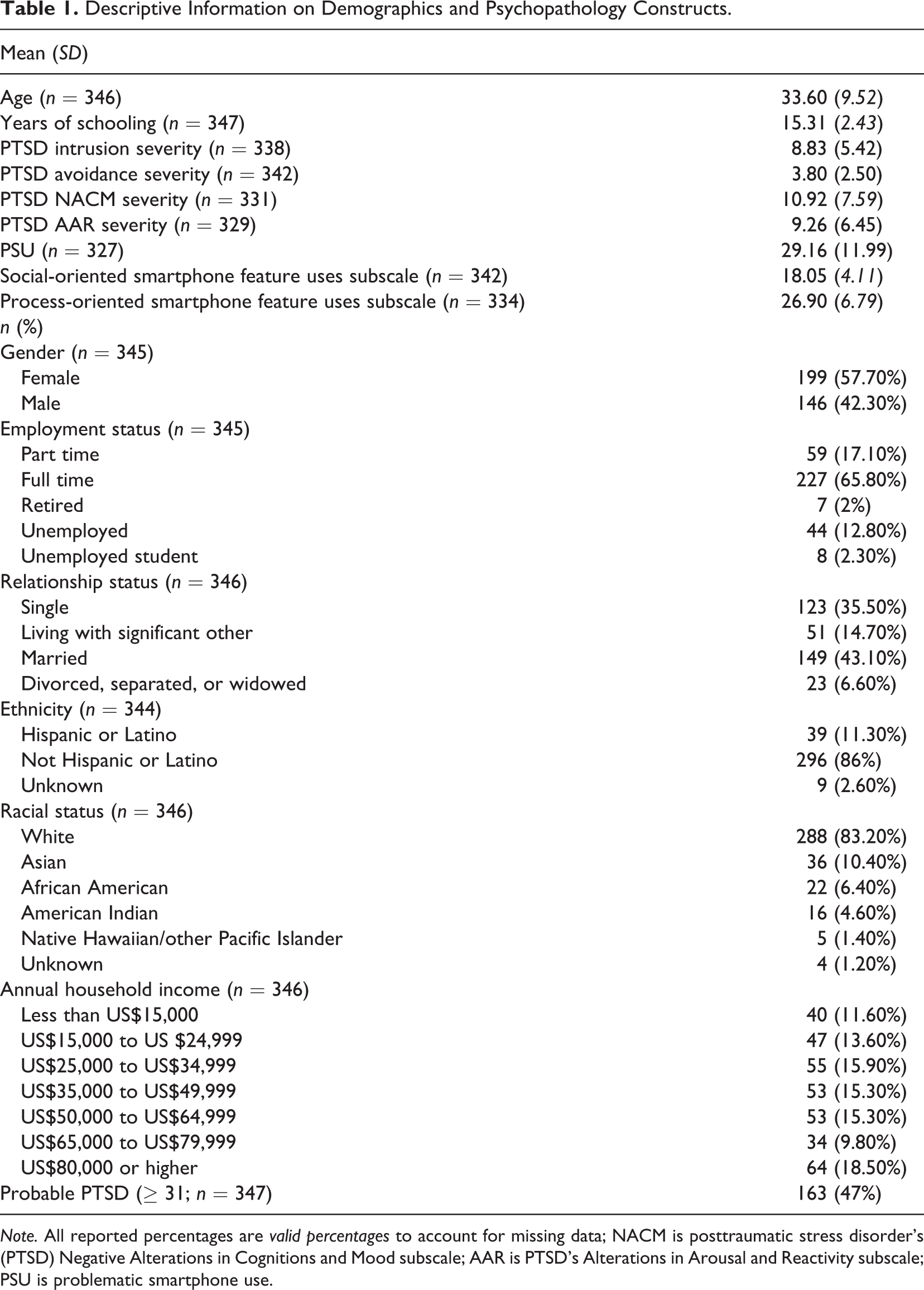
Note. All reported percentages are valid percentages to account for missing data; NACM is posttraumatic stress disorder’s (PTSD) Negative Alterations in Cognitions and Mood subscale; AAR is PTSD’s Alterations in Arousal and Reactivity subscale; PSU is problematic smartphone use.
Measures
Demographic information
Information regarding age, gender, income, educational level, employment status, and racial/ethnic status was obtained.
Stressful Life Events Screening Questionnaire (SLESQ)
The SLESQ is a 14-item self-report measure that assesses exposure to potentially traumatic events using dichotomous response options (“yes,” “no”; Goodman, Corcoran, Turner, Yuan, & Green, 1998). We added 3 items to address changes in PTSD’s DSM-5 Criterion A (e.g., clarifying whether one directly witnessed the trauma; Elhai et al., 2012). The SLESQ has good psychometric properties (Goodman et al., 1998). Participants were asked to specify their most distressing trauma.
PCL-5 (Weathers et al., 2013)
The PCL-5 is a 20-item self-report measure that assesses severity of PTSD symptoms referencing the past month. Response options range from 0 (not at all) to 4 (extremely). The PCL-5 has a recommended cutoff score of 31 or higher to identify probable PTSD diagnosis (Blevins, Weathers, Davis, Witte, & Domino, 2015; Bovin et al., 2016) and excellent psychometric properties (Blevins et al., 2015; Bovin et al., 2016; Wortmann et al., 2016). The PCL-5 symptom clusters include intrusions (5 items), avoidance (2 items), NACM (7 items), and AAR (6 items); their coefficient αs in the current study were .90, .89, .92, and .87, respectively. Participants completed the PCL-5 in response to the most distressing traumatic event endorsed on the SLESQ.
SAS-SV
The SAS-SV is a 10-item self-report measure assessing PSU using a 6-point Likert-type scale ranging from 1 (strongly disagree) to 6 (strongly agree; Kwon, Kim, Cho, & Yang, 2013). Item examples include missing planned work due to smartphone use, feeling impatient/fretful when not holding one’s smartphone, using one’s smartphone longer than intended, experiencing wrist/neck pain when using one’s smartphone, and not giving up one’s smartphone despite daily life impairment. The scale has good internal consistency (.91 in current study) and concurrent validity (Akın, Altundağ, Turan, & Akın, 2014; Kwon et al., 2013). The SAS-SV has a recommended cutoff score of 31 and higher for males, and 33 and higher for females to identify individuals with clinical levels of PSU (Kwon et al., 2013). Item-level responses were summed to create a total SAS-SV score.
Smartphone usage
This is a self-report measure assessing the frequency of 11 types of smartphone features including (1) video/voice calls (making and receiving), (2) text/instant messaging (sending and receiving), (3) e-mail (sending and receiving), (4) social networking sites (SNS), (5) Internet/websites, (6) games, (7) music/podcasts/radio, (8) taking pictures or videos, (9) watching videos/TV/movies, (10) reading books/magazines, and (11) maps/navigation. Responses are rated on a 6-point Likert-type scale, ranging from 1 = never to 6 = very often (Elhai et al., 2016). The current scale has been adapted from similar measures (Cheever, Rosen, Carrier, & Chavez, 2014; Hoffner & Lee, 2015). A Social-Oriented Uses subscale (coefficient α in current study = .66) included items 1–4, and Process-Oriented Uses subscale (coefficient α in current study = .76) included items 5–11 (Elhai et al., 2017; Elhai, Hall, Levine & Dvorak, 2017; van Deursen et al., 2015).
Data Analyses
Descriptive statistics for the primary variables are provided in Table 1. We first examined the assumptions of normality for all variables. Next, to examine Hypotheses 1 and 2, we conducted partial correlation analyses in SPSS 22 controlling for age and gender. Research has shown that PSU is associated with younger age (Demirci et al., 2015; van Deursen et al., 2015) and being female (Jeong, Kim, Yum, & Hwang, 2016). Further, consistently, evidence indicates that females have greater PTSD severity compared to males (Tolin & Foa, 2006); however, there are mixed findings regarding the relation between age and PTSD symptoms (Green et al., 1991; Norris, Kaniasty, Conrad, Inman, & Murphy, 2002). Lastly, age (Malik et al., 2016) and gender (Dhir & Torsheim, 2016; Malik et al., 2016) differences have been documented in the kind of user gratifications obtained from different media/media features.
Next, the Social- and Process-Oriented Smartphone Use subscales that significantly correlated with both PTSD symptom clusters and PSU were entered as mediating variables in the mediation models (Hypothesis 3). The four mediation tests (one for each PTSD symptom cluster) were examined as path analysis models using Mplus 8 (Muthén & Muthén, 1998–2011). We used the product of path coefficients approach for mediation analyses (MacKinnon, Lockwood, Hoffman, West, & Sheets, 2002), implementing the multivariate delta method to compute standard errors (MacKinnon, Fairchild, & Fritz, 2007); we bootstrapped standard errors with 1,000 replications (Bollen & Stine, 1990). The PTSD symptom cluster, the significant Social/Process-Oriented Smartphone Feature Uses subscale score(s) from the correlation analyses, and the PSU score were variables in each of the four mediation analyses. For each mediation model, the direct effects included the relationship between (1) the PTSD symptom cluster and PSU scores, (2) the PTSD symptom cluster and Social-Oriented and/or Process-Oriented Smartphone Feature uses subscale scores (significantly correlated with both the specific PTSD symptom cluster and PSU scores), and (3) the Social/Process-Oriented Smartphone Feature Uses subscale (significantly correlated with both the specific PTSD symptom cluster and PSU scores) and PSU scores. The effect of each PTSD symptom cluster on PSU accounting for the Social/Process-Oriented Smartphone Feature Uses subscale variable(s) (significant in the correlation model) were the indirect effects. We additionally controlled for the effects of gender (Jeong et al., 2016) and age (Demirci et al., 2015; van Deursen et al., 2015) on PSU (see Figure 1).
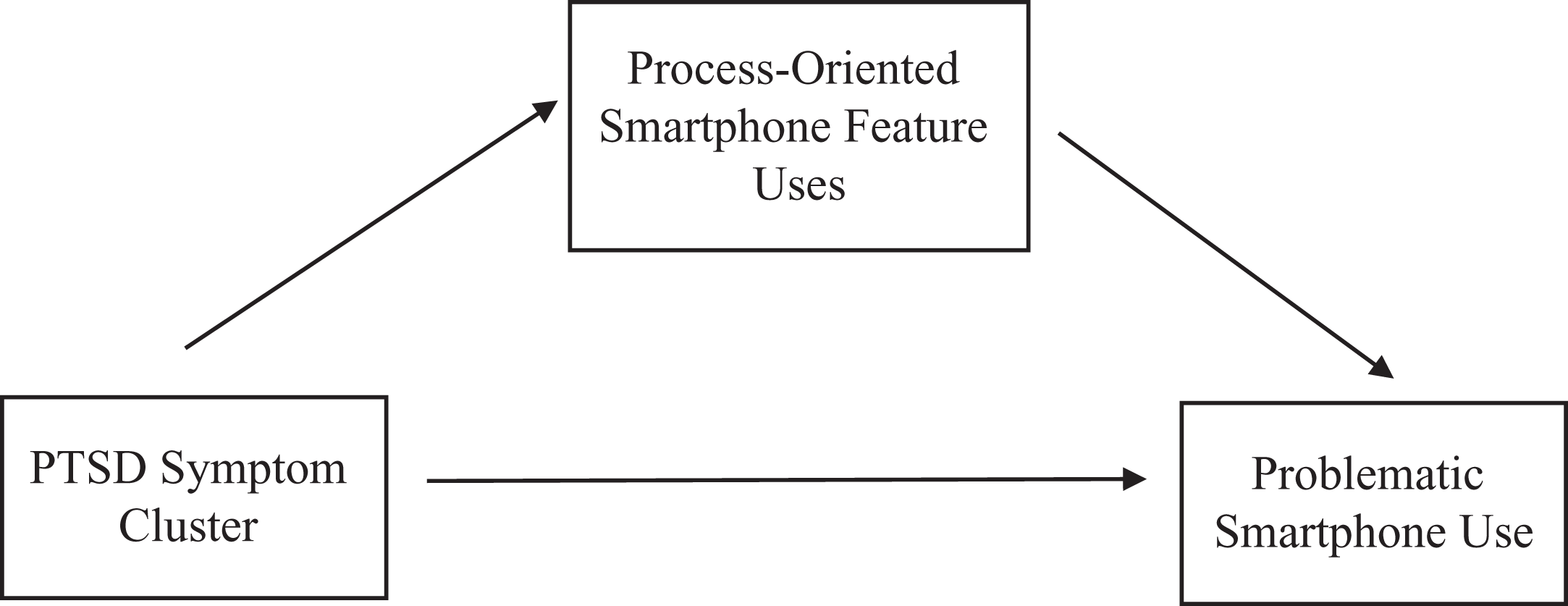
Diagrammatic representation of the mediation model.
Results
In the current sample, PTSD intrusion, avoidance, NACM, and AAR symptom cluster scores averaged 8.83 (SD = 5.42), 3.80 (SD = 2.50), 10.92 (SD = 7.59), and 9.26 (SD = 6.45), respectively. Overall, 47% of trauma-exposed participants (n = 163) met or exceeded the cutoff score for a possible PTSD diagnosis (Blevins et al., 2015; Bovin et al., 2016). Social- and Process-Oriented Smartphone Feature Uses subscale scores averaged 18.05 (SD = 4.11) and 26.90 (SD = 6.79), respectively. Further, the PSU score averaged 29.16 (SD = 11.99); 138 participants (39.80%) met or exceeded the cutoff score for clinical levels of PSU (Kwon et al., 2013). Based on benchmarks of skewness > 2 and kurtosis > 7 (Curran, West, & Finch, 1996), all PTSD, smartphone feature uses, and PSU scores were normally distributed.
Partial Correlations
Results indicated that all PTSD symptom clusters correlated significantly (positively) with the PSU score and with only the Process-Oriented Smartphone Features Uses subscale score (see Table 2). Further, results indicated that the Social- and Process-Oriented Smartphone Feature Uses subscale scores correlated significantly (positively) with the PSU score.
Correlations Between PTSD Symptom Clusters, PSU, and Smartphone Feature Uses Subscales.
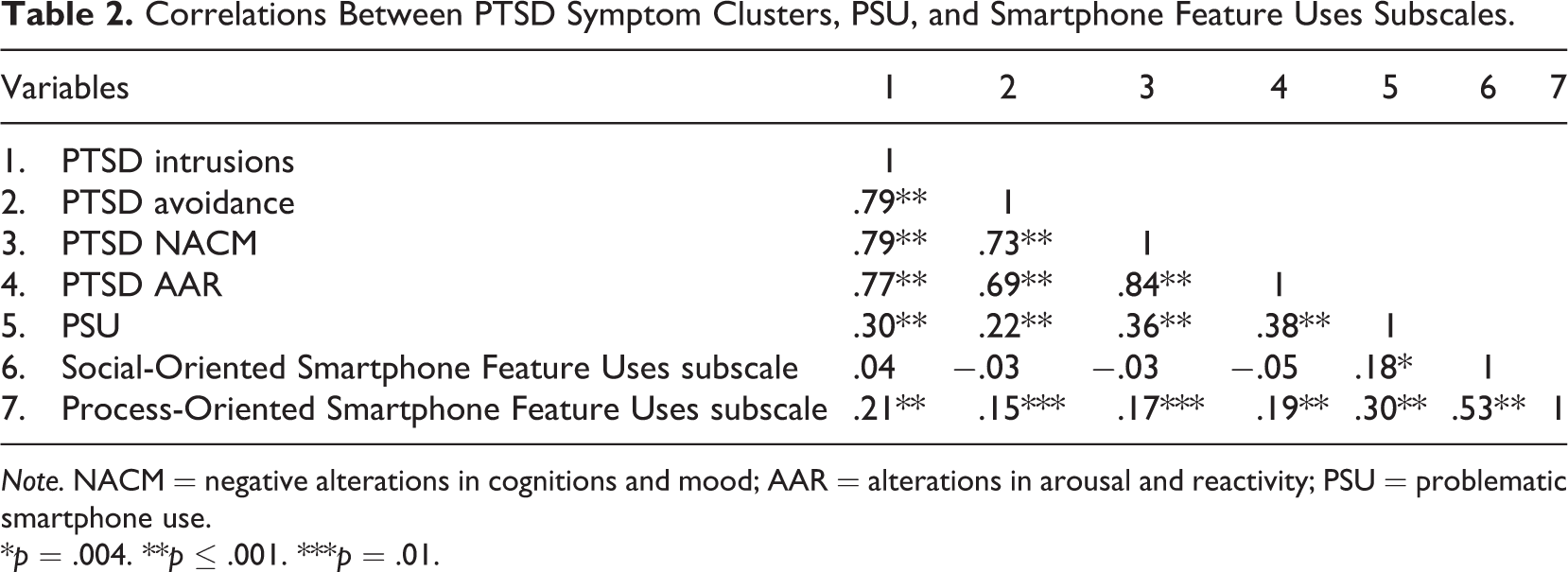
Note. NACM = negative alterations in cognitions and mood; AAR = alterations in arousal and reactivity; PSU = problematic smartphone use.
*p = .004. **p ≤ .001. ***p = .01.
Mediation Analyses
The Process-Oriented Smartphone Feature Uses subscale score significantly (positively) correlated with each of the PTSD symptom clusters and the PSU scores and thus was used as a mediator in all four mediation models with the PSU score as the dependent variable (see Table 3). In the first model, PTSD’s intrusion symptom cluster score was the independent variable (IV) and the Process-Oriented Smartphone Feature Uses subscale score was the mediating variable. Results indicated significant direct effects of PTSD’s intrusion symptom cluster score on the Process-Oriented subscale and PSU scores and that of the Process-Oriented subscale score on the PSU score. Age was a significant covariate in the model. The Process-Oriented subscale score significantly mediated the relationship between PTSD’s intrusion symptom cluster and PSU scores (β = .05, SE = .02, p < .001).
Direct and Indirect Effect Statistics of the Mediation Models.
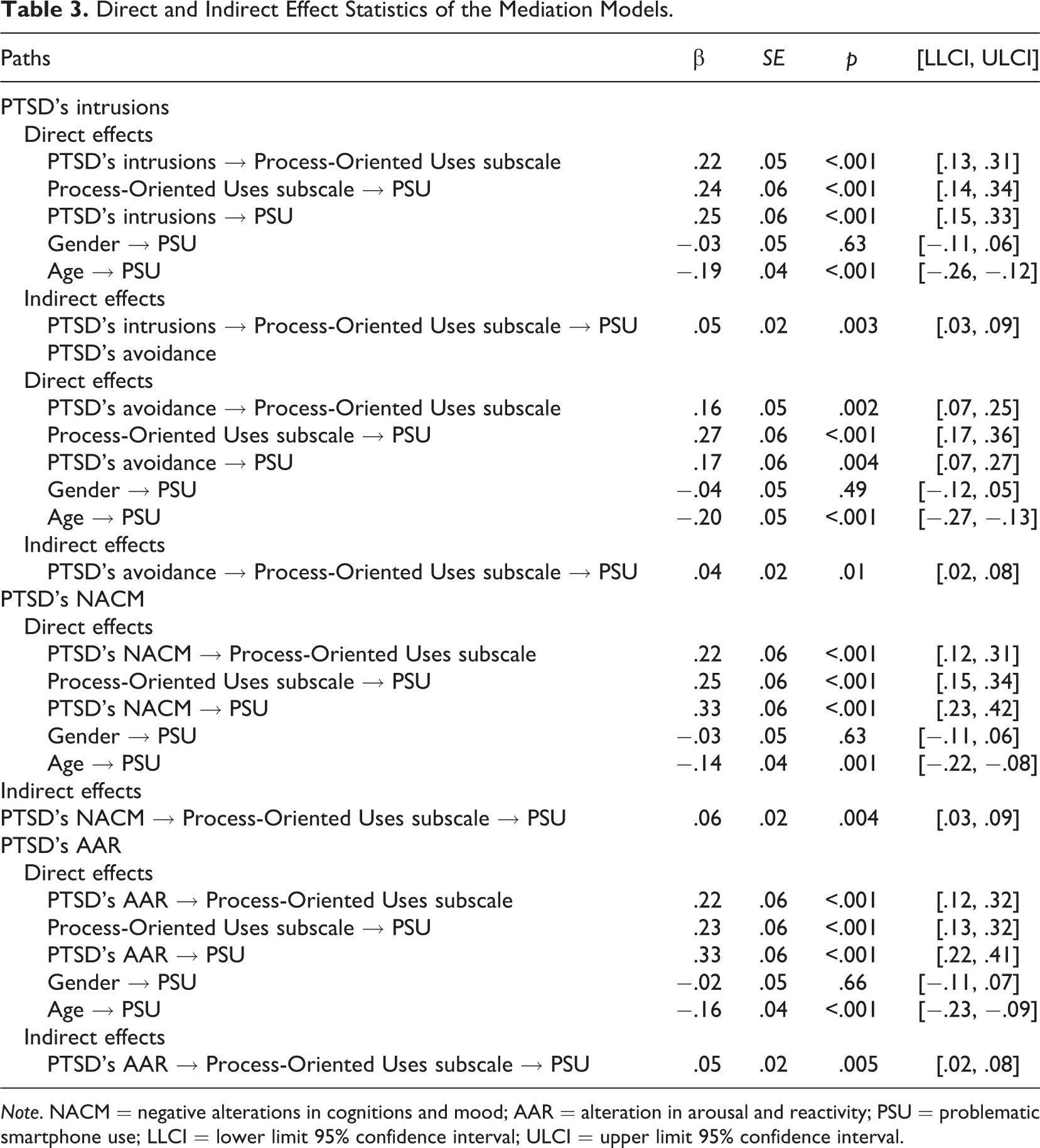
Note. NACM = negative alterations in cognitions and mood; AAR = alteration in arousal and reactivity; PSU = problematic smartphone use; LLCI = lower limit 95% confidence interval; ULCI = upper limit 95% confidence interval.
In the second model, PTSD’s avoidance symptom cluster score and Process-Oriented Uses subscale score were the IV and mediating variable, respectively. Results indicated significant direct effects of PTSD’s avoidance symptom cluster score on the Process-Oriented Uses subscale and PSU scores and that of the Process-Oriented subscale score on the PSU score. Age was a significant covariate in the model. The process-oriented subscale score significantly mediated the relationship between PTSD’s avoidance cluster and PSU scores (β = .04, SE = .02, p = .01).
In the third model, PTSD’s NACM symptom cluster score was the IV and the Process-Oriented Uses subscale score was the mediating variable. Results indicated significant direct effects of PTSD’s NACM symptom cluster score on the Process-Oriented Uses subscale and PSU scores and that of the Process-Oriented subscale score on the PSU score. Age was a significant covariate in the model. The Process-Oriented subscale score significantly mediated the relationship between PTSD’s NACM symptom cluster and PSU scores (β = .06, SE = .02, p = .004).
In the last model, PTSD’s AAR symptom cluster score was the IV and the Process-Oriented Uses subscale score was the mediating variable. Results indicated significant direct effects of PTSD’s AAR symptom cluster score on the Process-Oriented Uses subscale and PSU scores and that of the Process-Oriented subscale score on the PSU score. Age was a significant covariate in the model. The Process-Oriented subscale score significantly mediated the relationship between PTSD’s AAR symptom cluster and PSU scores (β = .05, SE = .02, p = .005).
Discussion
The current study examined the relations among PTSD symptoms, Social/Process-Oriented Smartphone Feature uses, and PSU among 347 trauma-exposed individuals recruited from Amazon’s MTurk platform. Consistent with past literature on addictive behaviors (Tull et al., 2015; Weiss et al., 2012, 2015) and PSU in particular (Contractor et al., 2017), greater severity of PTSD intrusion, avoidance, NACM, and AAR symptoms was associated with greater PSU. Extending prior research and consistent with Hypothesis 1, all PTSD symptom clusters significantly correlated with Process-Oriented Smartphone Feature Uses subscale. Further, consistent with Hypothesis 2, greater use of Social-Oriented (e.g., calls, texting) and Process-Oriented (e.g., music/podcasts/radio, watching videos/TV/movies, reading books/magazines) Smartphone Feature Uses correlated with PSU. Finally, consistent with Hypothesis 3, Process-Oriented Smartphone Feature Uses significantly mediated the relations between all PTSD symptom clusters and PSU. These findings suggest that individuals with greater severity of PTSD symptoms who report more use of Process-Oriented Smartphone Features may be at risk of PSU.
Consistent with study hypotheses, Process-Oriented Smartphone Feature Uses were significantly associated with each of the PTSD symptom clusters and accounted for their relations to PSU. Process-oriented smartphone uses may be highly reinforcing for individuals who experience PTSD symptoms; such positively/negatively reinforcing effects may contribute to greater PSU, probably rendering this as problematic over time. Indeed, process-oriented smartphone feature uses have been shown to have the strongest link to addictive smartphone behaviors (Dhir et al., 2015a; Elhai et al., 2017; van Deursen et al., 2015; Zhitomirsky-Geffet & Blau, 2016). Consistent with the cyber addiction and process-related gratification perspectives of technology use (reviewed in Billieux, 2012; Song et al., 2004), individuals with PTSD symptoms may rely on process-oriented smartphone feature uses to elicit, maintain, and/or increase positive affect, which, in turn, may lead to “wanting” behaviors (Robinson & Berridge, 2000; Song et al., 2004) and an increased likelihood of PSU (Yang & Tung, 2007). Alternatively, and consistent with the impulsive pathway perspective of smartphone use (reviewed in Billieux, 2012; van Deursen et al., 2015), individuals with PTSD symptoms may utilize process-oriented smartphone feature uses as a means of countering or distracting from PTSD-related negative affect and distress. However, while effective in the short-term, attempts to escape or avoid aversive emotions through process-oriented smartphone feature uses may lead to paradoxical long-term effects, exacerbating the frequency and severity of these distressing emotions (Hayes, Wilson, Gifford, Follette, & Strosahl, 1996) and increasing motivations for process-oriented smartphone feature uses in the future (because emotional avoidance is highly reinforcing; Fischer, Smith, Spillane, & Cyders, 2005).
Conversely, while, consistent with past research, both process- (Dhir et al., 2015a; Elhai et al., 2017; van Deursen et al., 2015; Zhitomirsky-Geffet & Blau, 2016) and social- (Lee et al., 2014; Lopez-Fernandez et al., 2014; Song et al., 2004) oriented smartphone uses were significantly related to PSU, social-oriented smartphone uses were not significantly associated with PTSD symptom clusters. Social-oriented smartphone feature uses may keep one connected to the real world, compensate for lack of real-life socialization, make up for social life deficiencies, help obtain reassurances in relationships, satisfy interpersonal needs, and/or facilitate companionship and support (Chen & Katz, 2009; Rettie, 2008), consistent with social usage and relationship maintenance pathway perspectives of technology use (reviewed in Billieux, 2012; Yang & Tung, 2007). Such functional uses of social-oriented smartphone features may not be applicable to individuals with PTSD symptoms.
To elaborate, individuals who experience PTSD symptoms may not desire social contact. For instance, research provides support for the co-occurrence of PTSD and social phobia (Orsillo, Heimberg, Juster, & Garrett, 1996; Orsillo et al., 1996; Zayfert, DeViva, & Hofmann, 2005), characterized by fear and/or avoidance of social situations (APA, 2013). This area of study underscores several etiological factors that may help to explain social avoidance in PTSD. Individuals with co-occurring PTSD and social phobia are more likely to report shame (Orsillo et al., 1996), which is a global negative evaluation of the self as flawed or defective (e.g., feeling inferior or less attractive than others; Lewis, 1971), increasing the perception of negative evaluation from others (Gilbert, Pehl, & Allan, 1994) and the appraisal of ambiguous events as indicative of rejection (Claesson & Sohlberg, 2002). These cognitive beliefs in turn may result in urges to withdraw or hide from others (Lewis, 1971). Guilt is another factor that has been shown to be heightened among individuals with co-occurring PTSD and social phobia (Zayfret et al., 2005). Guilt is characterized by negative evaluation of a specific behavior (e.g., regret, remorse; Lewis, 1971); this may lead to heightened self-focused attention and subsequently greater anxiety in social situations (Kagan, 2001). Future research is needed to examine whether social avoidance (e.g., social phobia) improves our understanding of (the nonsignificant) link between PTSD symptoms and social-oriented smartphone uses.
Implications
Results of the present study have important implications for theory and practice. Regarding theoretical implications, our findings are consistent with the U&G theory, which suggests that technology users make use of specific media platforms or their features to satisfy social and psychological needs (Cheng et al., 2015; Dhir et al., 2017; Dimmick et al., 1994; Dolan et al., 2016; Katz et al., 1974; Lin, 1999). Our results add to this theory by focusing on the functional utility of smartphone use in particular. Specifically, our results indicate that smartphone features uses vary as a function of clinical severity, with findings suggesting that severity of PTSD in particular is related to process- (but not social-) oriented smartphone feature uses. Future work is needed to examine whether these findings extend to other diagnostic features (e.g., depression, anxiety). Further, our results suggest that a single media (e.g., smartphone) has several different features, each of which may be related to different gratifications. For instance, individuals use Facebook to post or tag photos, and these uses are related to divergent gratifications (Dhir et al., 2017; Malik et al., 2016). Thus, the versatile uses of the smartphone device may increase the scope and frequency of its functional use, making it particularly vulnerable to PSU; this is an important area for future research. Lastly, our results indicate an important potential application of the U&G theory in explaining PTSD’s symptom maintenance. The functional and yet maladaptive use of smartphones may satisfy some gratifications/needs such as avoiding distress or increasing positive affect among individuals with PTSD symptoms, however detract from processing traumatic memories and facing the problems at hand. Such avoidance behaviors may maintain PTSD severity in the long run (Badour, Blonigen, Boden, Feldner, & Bonn-Miller, 2012; Foa & Rothbaum, 1985).
Regarding practical application, our findings indicate that both process- and social-oriented smartphone feature uses relate to greater PSU, suggesting that excessive use of smartphones—regardless of their process- or social-oriented functional role—elevates risk of PSU. Thus, it would be helpful for clinicians to assess the nature and extent of smartphone use (especially process-oriented uses) among individuals presenting with conditions linked to PSU, such as PTSD symptoms (Contractor et al., 2017). Assessment of the process-oriented smartphone features uses may help to identify individuals at elevated risk for co-occurring PSU and PTSD symptoms. From a remedial and prevention perspective, strategies for reducing process-oriented smartphone features uses among individuals who experience PTSD symptoms and report elevated use of this feature may be implemented when necessitated. Finally, it would be helpful for clinicians to be mindful of the potentially addictive nature of smartphone use, especially when “prescribing” PTSD smartphone apps, such as PTSD coach in clinical treatment.
Limitations and Future Directions
Several limitations warrant consideration. First, data were collected via self-report measures, which may result in response biases. For instance, responses to self-report measures may be influenced by an individual’s willingness and/or ability to report accurately on emotional responses. Future studies would benefit from the integration of objective measures to examine smartphone use by examining phone logs (Elhai et al., 2018). Second, collecting data via the Internet using an online format has disadvantages such as sample biases (because of self-selection) and lack of control over the research environment (e.g., no opportunity to clarify questions; distractions; Kraut et al., 2004), thus possibly limiting generalizability of results. Thus, future research that integrates other data collection methods (e.g., interviewing, focus groups) is warranted. That said, the MTurk recruitment platform may be a notable strength of our study. Research has shown that an MTurk subject pool is quite diverse compared to traditional Internet-recruited samples (Buhrmester et al., 2011), is representative of the population in demographic characteristics (Mischra & Carleton, 2017), and generates reliable data (Buhrmester et al., 2011; Shapiro, Chandler, & Mueller, 2013). Additionally, prevalence of mental health problems (e.g., traumatic events, anxiety, and depression) is similar to those found in epidemiological studies (Shapiro et al., 2013); in fact, some problems (e.g., gambling) have a larger prevalence rates (Mischra & Carleton, 2017).
Third, the subscale referencing social-oriented smartphone feature uses had less than optimal reliability (.66). Further, we attempted to model the two feature use subscales as latent factors (two-factor latent model) using confirmatory factor analyses; this model had inadequate fit indices, χ2(43, N = 346) = 224.41, p < .001, Comparative Fit Index (CFI) = .81, Tucker-Lewis Index (TLI) = .76, Root Mean Square Error of Approximation (RMSEA) = .11, Standardized Root Mean Square Residual (SRMR) = .07. Thus, future research needs to investigate and replicate this study using other distinct measures for each of these smartphone feature use variables. Fourth, the cross-sectional and correlational nature of the data precludes determination of the precise nature and direction of the relations examined. In particular, the extent to which PSU emerges as a consequence of PTSD symptoms and subsequent smartphone feature uses, as hypothesized, or contributes to PTSD symptoms and smartphone feature uses, remains unknown. Future research is needed to investigate the nature and direction of these relations through prospective, longitudinal investigations. Fifth, age was a significant covariate in the mediation model, such that younger age was related to greater PSU, consistent with prior research (Demirci et al., 2015; van Deursen et al., 2015). This suggests the need for assessing PSU among younger individuals in particular. Future research may clarify the inconsistency of our null effects for gender in relation to PSU as compared to prior research (Jeong et al., 2016).
Sixth, our finding that process- and social-oriented smartphone feature uses differentially relate to PTSD symptom clusters suggests that divergent smartphone feature uses may serve different functions for individuals; however, we were unable to examine this hypothesis. Future research that explores the functional role of smartphone use features (e.g., negative reinforcement, positive reinforcement, compensatory socialization) may inform theory, research, and treatment. Sixth, the current study utilized a variable-centered approach to examine the relations among PTSD symptoms, smartphone feature uses, and PSU. Such an approach does not account for the heterogeneity in smartphone uses within individuals. Given recent evidence indicating two classes of smartphone users (heavy and light; Elhai & Contractor, 2018) differentially related to PSU and clinical correlates (e.g., rumination), future investigations would benefit from examination of these subgroups in relation to PTSD symptoms, PSU, and their relation.
Footnotes
Authors’ Note
The original, anonymized data set from this study may be requested from Ateka Contractor.
Declaration of Conflicting Interests
The authors declared no potential conflicts of interest with respect to the research, authorship, and/or publication of this article.
Funding
The authors disclosed receipt of the following financial support for the research, authorship, and/or publication of this article: The article was supported, in part, by grants from the National Institute on Drug Abuse (K23DA039327; L30DA038349) awarded to the second author.