






Abstract
The outbreak of terrorist events often causes tremendous damage to the country and society and arouses high attention from the public and an overwhelming response on the microblogging platform. Predicting the influence of microblogging in the context of terrorist events and revealing its evolutionary mode can help counterterrorism departments foresee potential risks, take effective countermeasures in time, and provide a reference for reducing public panic caused by terrorist events. In this study, Word2Vec is combined with the K-means clustering technique to discover the topics of microblogging, and an emotion analysis of microblogging is performed. The user features, time features, and content features of microblogging in the context of terrorist events are extracted. The prediction model of microblogging influence based on the logistic regression model was constructed and evaluated. The experimental results showed that the prediction accuracy of the model was 85.8%, which had superior performance over other six classification models. In addition, the high-influence characteristics of microblogging in the context of terrorist events were analyzed and summarized. Finally, a quantitative method of the influence of a microblogging topic based on the h-index was proposed. The evolution pattern of the influence of a microblogging topic was analyzed. The results can help predict microblog entries of high influence, understand the intensity and variation of public concern over terrorist events, and assist counterterrorism departments in taking scientific decisions.
Keywords
As a severe kind of public emergency, terrorist incidents are characterized by suddenness and complexity. Compared with other types of emergencies, terrorist incidents not only cause serious bodily harm and economic loss but also pose a threat to social stability and security. Thus, once a terrorist incident occurs, it is often deeply concerned by the emergency management departments and regarded as a major public event with serious social damage. Thus, they are regarded as one of the major challenges that all mankind faces. The United Nations adopted a global counterterrorism strategy in 2006 to strengthen cooperation among nations and regions in order to prevent and combat terrorism. It is noteworthy that sometimes certain kinds of criminal violence are misjudged as terrorism and cause unnecessary anxiety. The emergency management departments need to find a reasonable balance between public safety and civil rights. Masco (2014) believed that the relationship between security and democracy is complex and worth exploring. With its extensive use, social media has been an important means of communication during public emergencies. Heverin and Zach (2012) proved that after the terrorist attacks, many people used social media platforms such as Facebook and Twitter to spread related information and opinions. Disaster researchers need to capture ephemeral information about crises before it vanishes (Palen et al., 2009). Thus, this study takes the information released on the social media platform as the expression of people’s emotions and thoughts.
Sina Weibo is the most influential microblogging platform in China. According to the 43rd China Internet development report released by the China Internet Network Information Center (CNNIC), the monthly active users of Sina Weibo reached 465 million by the first quarter of 2019. The microblogging usage rate was 42.3%, which increased 1.4% from the end of 2017 (CNNIC, 2019). As users can generate and share information as well as interact with each other on microblogging platforms conveniently at a low cost, the microblogging platforms promote the disclosure degree of emergency information and the speed of emergency response. For example, when a 7.0-magnitude earthquake struck the region of Jiuzhaigou in the Sichuan province on August 8, 2017, the official microblogging account of the national earthquake network of China was the first channel to publish the earthquake information. Similarly, a terrorist incident usually quickly triggers a large-scale discussion on the microblogging platform that promotes the interaction between online and offline users.
The information communication behavior of microblogging users can reflect the tendency and evolution pattern of public emotions, thoughts, and activities during the terrorist incident. By observing the microblogging information about the terrorist incident, this study uses machine-learning techniques to predict the influence of microblog entries and explores the characteristics and evolution of microblog entries with high influence. It is of great significance to reveal the public concern and understand the behavior pattern of the public in the context of terrorist incidents. This study can help the counterterrorism departments understand public opinion on the microblogging platform that may have high influence in the future, such that emergency disposal of terrorist incidents can be carried out in a planned manner at different phases and reduce panic caused by terrorist incidents. It is of great practical significance to comprehensively improve the ability of emergency response to terrorist incidents.
Related Research
Research on the Influence Factors of Microblogging Influence
Scholars have studied the influence factors of microblogging influence. Microblogging influence refers to the degree of influence brought by users’ publishing information on the microblog platform. The influence of microbloggers is also measured by their connectivity, popularity, and authority (Hagen et al., 2018) or the consistency between the topics/sentiment of the information published by the forwarders and that of the original information published by the microbloggers (An et al., 2021). The influence of a microblog is affected by multiple factors. Scholars have studied the influence factors of microblogs from different perspectives. In the early research, Li et al. (2012) have proposed a multilayer network model including the direct network layer and the indirect network layer to distinguish the communication influence of microblogs through explicit and potential user attributes. Some scholars also proposed an improved algorithm based on PageRank to evaluate the impact of the relevance of user tweets on user influence (Majer & Šimko, 2012). Other scholars used the content’s charm index of the microblog (MCI) and studied the relationship between the fan rate index and microblog user influence through MCI, obtaining the index model of the number of fans and the MCI (Zhu & Li, 2018). It shows that MCI increases slowly in the early stage but rapidly in the later stage. As the “like” feature on Facebook reflects the attention of users and the influence of posts, Dhir et al. (2019) examined the factors such as attitude, subjective norms, and perceived behavioral control that influence Facebook users’ “like” intention. Sun et al. (2018) introduced the three-dimensional influence model to build the calculation model of user influence. The accuracy and effectiveness of the model are verified. This model combines three kinds of data, such as user’s published content, forwarding commentaries, and other behavioral and emotional tendencies, together to build the influence computing model but lacks the basic attributes of users.
Research on the Prediction of Microblogging Influence
The research on microblogging influence prediction can be divided into two aspects. One is to predict the behavior of microblog users, mainly for the forwarding behavior of users. The influencing factors of forwarding behavior mainly include user features and content features. The characteristics of the user as a forwarder will affect the user’s forwarding behavior (Maleewong, 2016). Mahdavi et al. (2017) found that the microblogs about society rather than individuals are more easily forwarded. The second is to predict the popularity of microblog topic, which is to predict the microblog information and the impact of users under a specific tag based on the microblog content with the tag. The research methods of topic trend include the method based on infectious disease model and machine learning. In the application of the infectious disease model, Liu et al. (2016) put forward the Susceptible Antidotal Infected Removed model, which is an information dissemination model similar to an epidemic. In the application of machine-learning methods, Varshney et al. (2017) constructed a Bayesian network (BN) model through a social network chain to predict the future heat of potential topics in the community. In addition to the commonly used microblog topic prediction methods, Bora et al. (2015) constructed the “conductivity” attribute of the topic tag, introduced the physical concept into microblog information prediction, and predicted whether the topic could get viral transmission by calculating the second derivative of conductivity.
Research on Microblogging in the Context of Terrorist Events
On the social media platform, the definition of terrorist events is often related to people’s cognition of terrorist events. Reyes and Smith (2015) have shown that the media’s choice of different language expressions has an impact on the public’s judgment on terrorist events. Some sociologists have different views on terrorism. Masco (2014) considered the war on terror was a continuation of the Cold War and the government may overstate the dangers of terrorism that could panic the citizens. Then they can monopolize all the means of violence by controlling the emotions and imagination of the citizens (Masco, 2014). That is why terrorist attacks are rare, but people are always afraid. Anyway, for the sake of public safety, microblogging about terrorist events is still worth studying. The main research contents of microblog research based on emergencies include the research of the information dissemination mode (An et al., 2018), public opinion research, and information monitoring based on the microblogging platform. A terrorist incident is one of the most serious public emergencies. Generally, studies on microblogging about terrorist incidents focus on two aspects, that is, research on information monitoring in advance and public opinion after the terrorist incidents. In terms of information monitoring of terrorist events, through the Situation Awareness (SA) Theory, some scholars concluded that tweeting can improve the level of SA for terrorists to make decisions (Oh et al., 2011). Some scholars identified terrorists in social media to monitor terrorist events. Xie et al. (2016) and Kaur (2016) proposed to classify microblog accounts through a machine-learning classification model and identified terrorists and experts in the field of terrorists and terrorism research. Costantino et al. (2017) and Reddick et al. (2015) discussed information monitoring and extraction and privacy security issues under terrorist events.
In addition to the studies on issues that exist before the terrorist events, providing solutions and methods for postprocessing is also one of the important tasks. According to the Terror Management Theory (TMT) and Sense-Making Theory, the public may look for information and explanation after terrorist events to fill the cognitive gap caused by uncertainty. At this time, social networks are conducive to promoting sense-making after terrorist events, and tags are conducive to the formation of collective consciousness (Fischer-Preßler et al., 2019). An et al. (2018) explored the mode of information dissemination. Williams et al. (2017) confirmed through research that social media information after terrorist incidents can help provide key guidance information for leaders after the incident, which is of great significance to start the recovery process and develop defense capabilities. The research content of microblog information after terrorist events mainly includes information dissemination mode research and public opinion analysis of terrorist events. In terms of the public opinion analysis, Jones et al. (2016) found that negative emotions increased significantly after terrorist events.
To summarize, research on the prediction of microblog influence in specific situations and the prediction of microblog influence combining the internal and external characteristics of microblogs is insufficient. The prediction and evolution of microblog influence in the context of terrorist events are limited. In the research on the evolution of the thematic influence, there are few indicators to quantify the thematic influence, and empirical studies are needed. Therefore, the research on the prediction and evolution of microblog influence in the context of terrorist events is helpful to explore the tendency and changes of microblog influence in the specific situation of terrorist events and to explore the characteristics of high-influence microblogs in terrorist events. Furthermore, we can understand the behavior rules and concerned contents of the public in terrorist events and provide decision support for the relevant government departments to deal with the terrorist events during the event and to manage online public opinions.
Research Method
To study the prediction and evolution of microblogging influence in the context of terrorist events, this study constructs a prediction model of microblogging influence in terrorist scenarios using a machine-learning classification method and uses the K-fold cross-validation method to evaluate the prediction model. There are four main steps in the empirical study, that is, data collection, data preprocessing, topic extraction, and sentiment analysis, as shown in Figure 1.
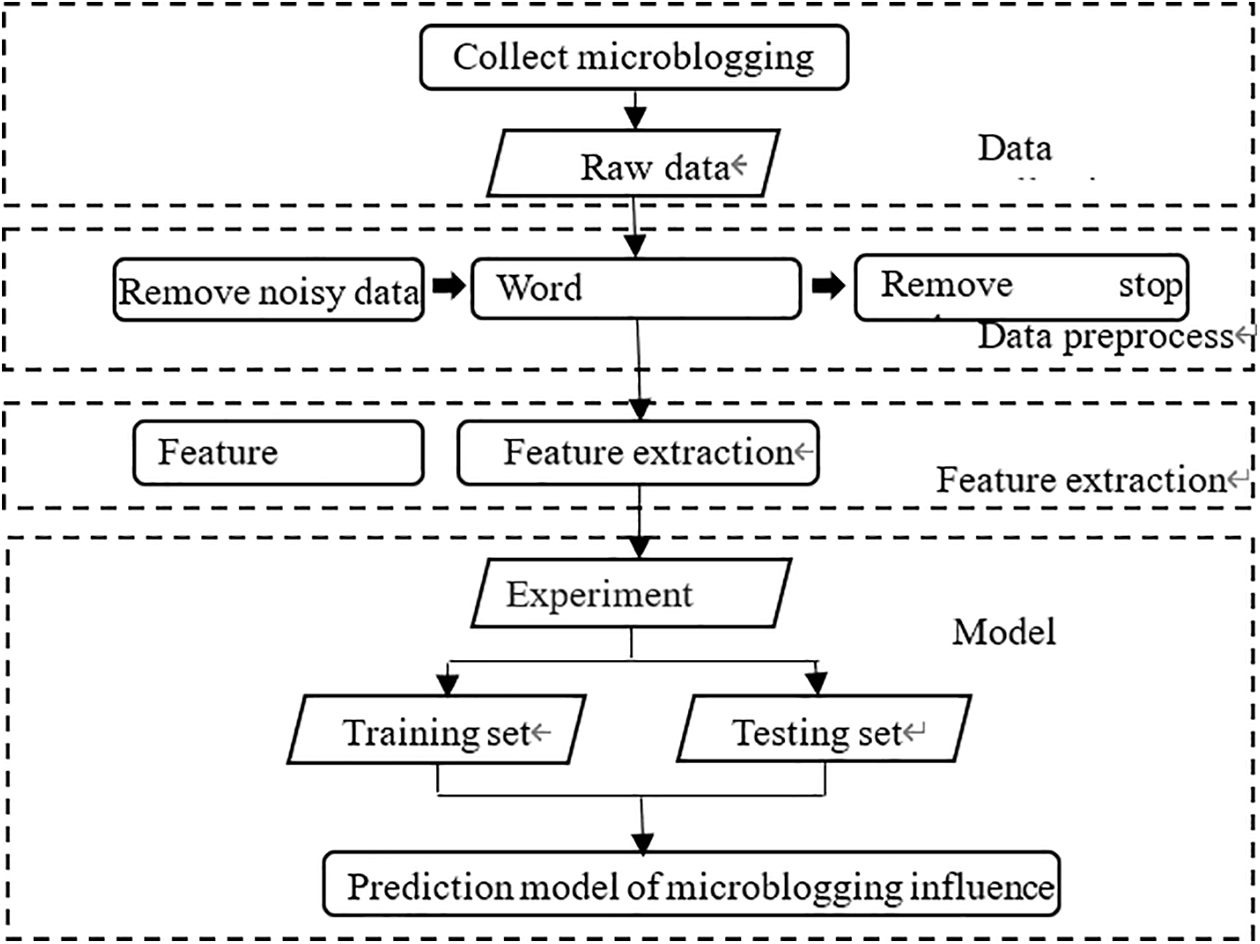
The construction process of the microblogging influence the prediction model in the context of terrorist events.
Preprocessing and Emotional Analysis
In this study, microblogging data were collected from Sina Weibo by Python-based crawlers. First, the microblogging texts were preprocessed to remove noisy data, segment sentences into words and phrases, and remove stop words. Second, the word2vec and K-means clustering techniques were used to determine the topics of the microblogging texts. The Term Frequency-Inverse Document Frequency (TF-IDF) algorithm was used to extract key feature words. The value of feature words of each microblog text is calculated by the TF-IDF method and arranged in descending order according to the TF-IDF value. According to the ranking results of feature words, the same proportion of feature words is extracted from each microblog entry as the key feature words and other relatively less important feature words are removed. To obtain a reasonable number of topics that are suitable for later analysis, we first tried to cluster the terms into 20–30 topics by the word2vec and K-means method. It was found that the clustering effect was the best, achieving high intracluster similarity and low intercluster similarity when the number of clusters was 25 after several rounds of experiments. Thus, a number of 25 topics were identified. They were further summarized into four categories, that is, reports of violent incidents and related derivative events, emotional expressions, topic discussions, and new public opinion events. Then, each topic was described by feature words and summarized. Third, we used the emotion dictionary to analyze the sentiment of the microblogging content. The existing sentiment dictionary was expanded, and a reasonable emotional polarity calculation rule was designed. The emotional polarity of each microblog entry was quantified, and the classification result of the emotional polarity was obtained. The formula for calculating the sentiment polarity of a microblog entry is shown in Equation (1).

There may be many emotions in one microblog entry, so the final emotional polarity needs to be determined using the strength of all these emotions. First, the microblogging content is divided into clauses according to punctuation marks and particular sentence patterns. The emotional tendency of each clause is determined by the combined weight of the emotional words, conjunctions, and emoticons. The emotional tendency of a microblog is the sum of the emotional tendency of each clause. Since the emotional modification of conjunctions and symbols is effective for the whole clause and not limited to the modification of single emotional words, multiplication is adopted.
Description of Microblogging Features
In terms of the distinguishing attributes, in order to better describe the features of microblogging in the context of terrorist events, the internal and external features of microblogging are considered. Finally, the three main categories of user features, time features, and content features are selected as the discriminating attributes of the microblogging influence prediction model in the context of terrorist events. After the comprehensive consideration of the influencing factors of microblogging and the characteristics of terrorist events, this study finally divided user features into four dimensions: authentication type, user location, user industry, and whether the user belongs to the public security system. The time feature includes two dimensions: the life cycle and the time span. The content features include the text structure, event keywords, text topic, and text sentiment. Among these features, the text structure features include the original entry or repost and whether the content contains a URL, a hashtag, an emoji, or a mention (“@”). Event keywords include location keywords, time keywords, behavior keywords, and figure keywords. There are also topical labels and sentiment polarity. Feature classification includes three main categories and 17 subcategories in total.
Evaluation of the Importance of the Individual Features
To analyze the relative importance of the individual features of microblogging, several logistic regression models were constructed, each of which omitted a certain feature. The relative importance of a feature was measured by the difference between the number of falsely predicted microblog entries by the influence prediction model omitting the feature in question and that by the constructed model including all the features. The relative importance of the ith feature (Weight(fi)) is calculated as shown in Equation (2).

where FPLR and FPi represent the numbers of low-influence microblog entries that were falsely predicted by the constructed model and by the model omitting the ith feature, respectively, as high-influence microblog entries. FNLR and FNi represent the numbers of high-influence microblog entries that were falsely predicted by the constructed model and by the model omitting the ith feature, respectively, as low-influence microblog entries. The greater the value of the relative importance of the feature is, the greater the relative importance of the feature.
Weight(fi) represents the relative importance of the ith feature. FPLR and FNLR, respectively, represent the numbers of microblog entries with low influence that are misclassified as high influence and the number of microblog entries with high influence that are misclassified as low influence by the microblogging influence prediction model. In this experiment, these two values are constants. FPi and FNi, respectively, represent the number of microblog entries with low influence that are misclassified as high influence and the number of microblog entries with high influence that are misclassified as low influence when the ith feature is omitted. The greater the value of the weight(fi) is, the greater the relative importance of the feature.
The Influence Tendency of Feature Values
To explore the high-influence features of microblogging in the context of terrorist events, the influence tendency of the feature values was proposed to study the relationship between the feature values and microblogging influence. First, we calculated the percentage of high-influence microblog entries among all the microblog entries when a feature took a specific value. Second, we calculated the percentage of high-influence microblog entries in the entire corpus. Third, we compared the difference between the two percentages, that is, the influence tendency of the feature value in question, which is calculated using Equation (3). In the equation, Impact(Vi) represents the influence tendency of the ith feature value, num(Vi) represents the number of microblog entries with the ith feature value, num(Vi|Vc = High) represents the number of high-influence microblog entries with the ith feature value, num(D|Vc = High represents the number of high-influence microblog entries, and num(D) represents the number of microblog entries in the entire corpus.

It is stipulated that when Impact (Vi) = 0, the eigenvalue has no influence tendency; when Impact(Vi) > 0, the eigenvalue has a high-influence tendency; and when Impact(Vi) < 0, the eigenvalue has a low-influence tendency. The larger the difference is from 0, the more obvious the influence tendency of the feature.
Measuring the Topical Influence Based on the h-Index
To illustrate the topical features of microblogging, this study proposed a method to measure the topical influence based on the h-index and revealed the evolutionary pattern of the influence of microblogging topics. The lifecycle of an event consists of four periods, that is, the initial period, the outbreak period, the recession period, and the calming period. The ith topic in the tth period was denoted as k(Qt), where t ∈ (1, 2, 3, 4). Then, we rank all the microblog entries regarding ki(Qt) in descending order according to their influence, that is, the sum of the number of reposts, comments, and praises. If the influence of the hth microblog entry is no lower than h and the influence of the h + 1th microblog entry is lower than h + 1, the h-index of the ith topic in the tth period equals h. The calculation of the h-index of the ith topic in the four phases is shown in Equation (4).

Results Analysis
Data Collection
This study investigated the case of the Kunming railway station attack. On the evening of March 1, 2014, a violent terrorist attack occurred at Kunming railway station in Yunnan Province, China. Several terrorists rushed into Kunming Railway Station Square and the ticket office with weapons and attacked many people, killing 29 and injuring more than 100. Then, the special police arrived, killing four terrorists and catching a terrorist. This was a serious violent terrorist event planned and organized by the separatist forces.
The microblog entries about “Kunming railway station terrorist attack event” were collected as the experimental data to analyze and predict the influence of microblogging. The experimental data come from the Sina Weibo platform. Based on the keywords “Kunming,” “pray for Kunming,” “God bless Kunming,” “violent attack on Kunming,” and “hacking at Kunming railway station,” this study collected 153,797 microblog entries from March 1 to March 31, 2014. The microblog influence is expressed as the sum of the number of forwards, comments, and likes for the microblog. The threshold value of a high-influence microblog is set to 10, that is, a microblog with an influence of at least 10 is regarded as a high-influence microblog, and a microblog with an influence of 0 is regarded as a low-influence microblog. Influence feature tags are added to the microblogs.
After preprocessing the data, a feature extraction method was used to extract the experimental data. Among the data, the specific date range of the four stages of the life cycle of terrorist events was determined according to the distribution of the microblog publishing time in the experimental data and other references.
Topic Identification and Sentiment Analysis in the Microblogging Texts
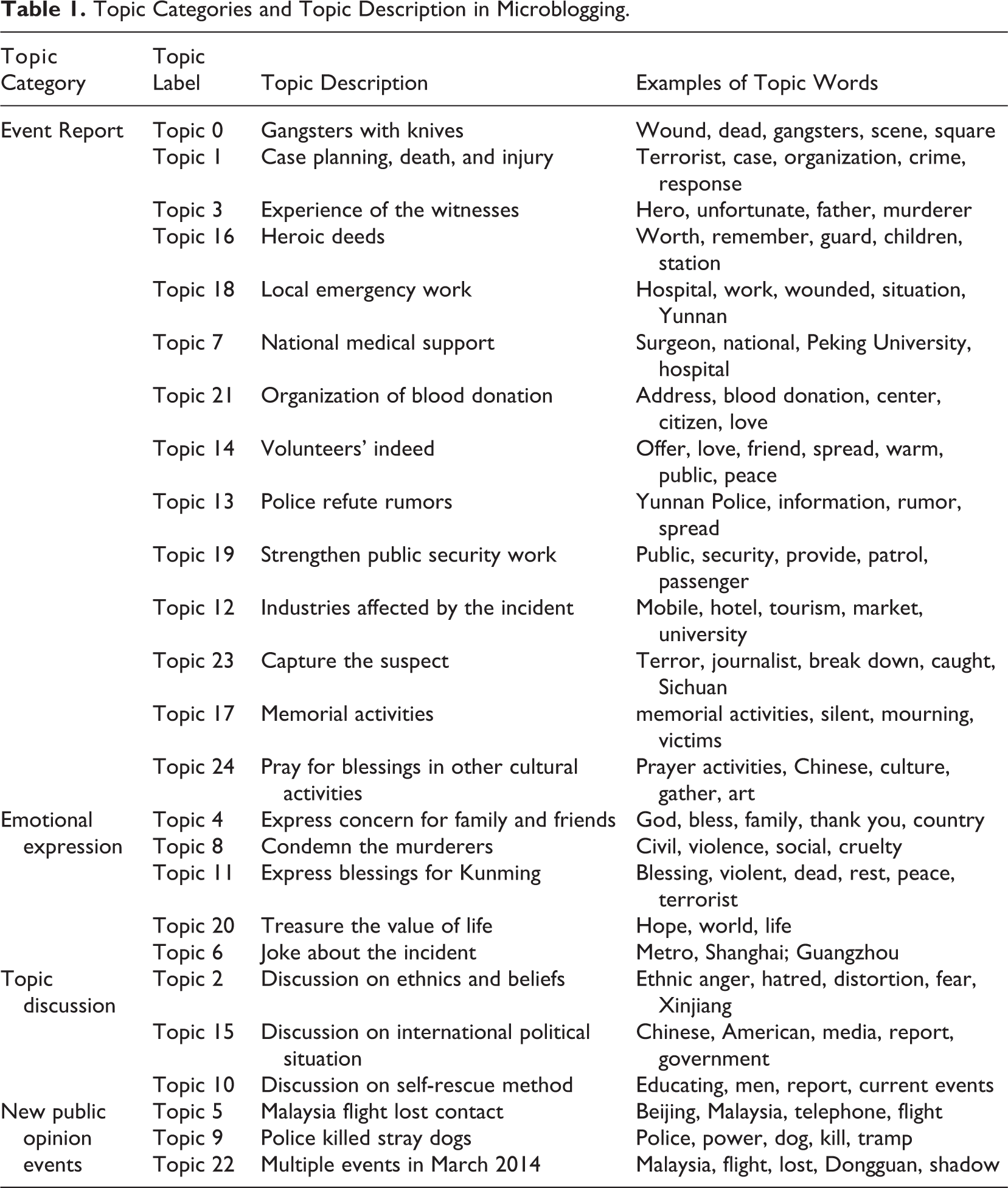
According to Table 1, this study extracted 25 topics from the microblogs and summarized these topics into four categories. The first category is the reports of terrorism and related derivative events. The theme of this kind of text is mainly based on specific events or behaviors. The theme words contain substantial information about people, places, and behaviors. The second category is emotional expression. The theme of this kind of text is mainly the publishers’ expressions, so the theme words include a large number of descriptions of moods. The third category is topic discussion. The theme of this kind of text is mainly the expressed opinion of the publisher, which is the discussion of what initiated the violent terrorist events. The fourth category is new public opinion events. In the process of discussing the violent attacks on Kunming Railway Station on the Weibo platform, there have been some public opinion events unrelated to the Kunming incident that caused people’s attention to focus on the Kunming incident again.
Topic Categories and Topic Description in Microblogging.
The calculations and statistics are carried out on the emotional tendencies of all the microblogging texts. Finally, the statistics of the text emotional tendency eigenvalues of the entire experimental corpus are shown in Table 2.
The Emotional Polarities of the Microblogs.

When there is more than one emotional tendency in a microblogging text, the result will reflect the emotion of the strongest emotional expression. According to the statistical data, the microblogging corpus has a positive emotional tendency as a whole. The microblogs expressing negative emotions, such as sadness and anger, also account for a large proportion of the total corpus. However, the microblogs with neutral emotional tendencies account for a relatively small proportion with respect to all three emotional tendencies. This result shows that in the face of terrorist events, the public expressed more positive emotions, such as blessings. For example, on the Weibo platform, topic labels with blessings such as “bless Kunming” and God bless Kunming were launched. In the overall positive emotional expression atmosphere, some microblogging publishers are more inclined to express negative emotions such as sadness and anger. The overall microblogging corpus also includes a certain number of neutral microblog entries.
Evaluation of the Microblogging Influence Prediction Model
In the microblogging influence prediction model, there are 15,575 experimental observations. Each observation contains 18 features. This study chooses the logistic regression model to build the prediction model of microblogging influence in the context of terrorist events. Ten-fold cross-validation is used to evaluate the performance of the influence prediction model. The accuracy, recall, F-measure, and receiver operating characteristic (ROC) curve are selected as the evaluation indices of the model. The effect of the microblogging influence prediction model in the context of terrorist events is shown in Table 3.
Confusion Matrix of the Microblogging Influence Prediction Model.
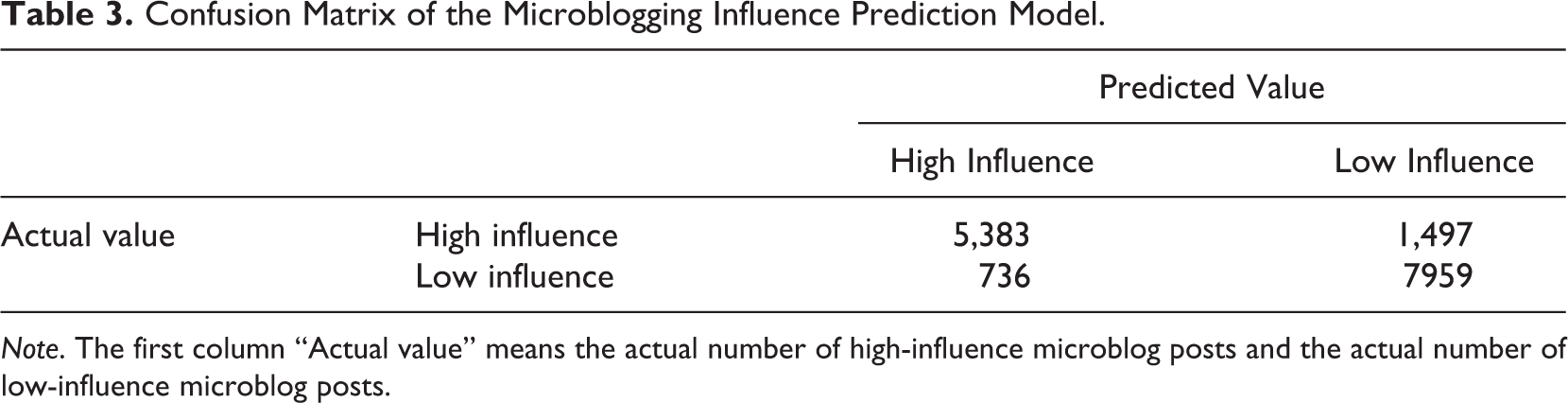
Note. The first column “Actual value” means the actual number of high-influence microblog posts and the actual number of low-influence microblog posts.
From the perspective of the classification attributes, the prediction accuracy of high-influence microblogging is 78.2%, and that of low-influence microblogging is 91.5%. The results of these experiments proved that the model predicts low-influence microblogging better than it predicts high-influence microblogging. Overall, 85.7% of the microblog influence is successfully predicted. It indicates that the model can effectively predict the microblog influence in the context of terrorist events.
To further evaluate the performance of the logistic regression model, this study uses the same experimental data; constructs microblogging influence prediction models based on the C4.5 decision tree, BN, naive Bayes, random forest, multilayer perceptron, and support vector machine methods; and compares the performance evaluation results of these models with the logistic regression (LR) model. The performance evaluation results of each model are shown in Table 4.
Performance Comparison Among Various Classification Models.
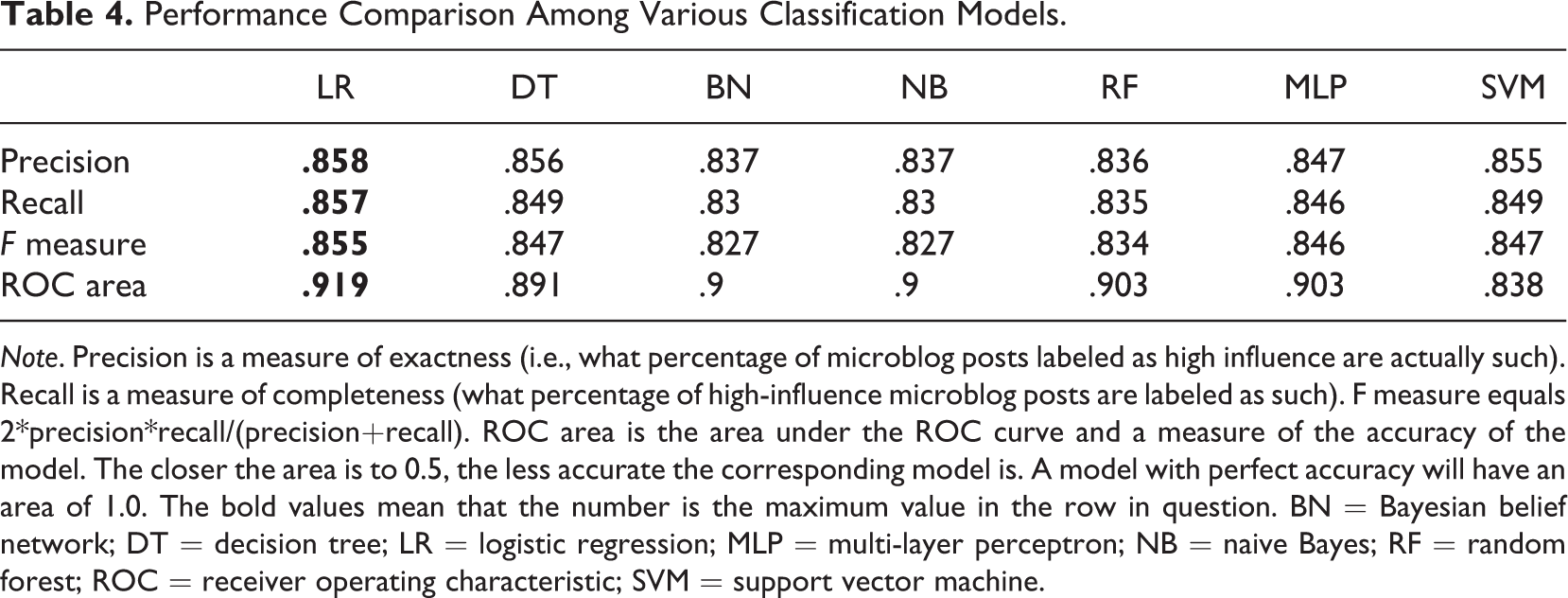
Note. Precision is a measure of exactness (i.e., what percentage of microblog posts labeled as high influence are actually such). Recall is a measure of completeness (what percentage of high-influence microblog posts are labeled as such). F measure equals 2*precision*recall/(precision+recall). ROC area is the area under the ROC curve and a measure of the accuracy of the model. The closer the area is to 0.5, the less accurate the corresponding model is. A model with perfect accuracy will have an area of 1.0. The bold values mean that the number is the maximum value in the row in question. BN = Bayesian belief network; DT = decision tree; LR = logistic regression; MLP = multi-layer perceptron; NB = naive Bayes; RF = random forest; ROC = receiver operating characteristic; SVM = support vector machine.
It is found that the prediction model based on the LR is better than other models in various evaluation indicators. The accuracy and recall rates of the LR model are 0.2–2.2 percentage points higher; the F1 value is 0.8–2.8 percentage points higher; and the area under the ROC is 1.6–8.1 percentage points higher than other models. It is confirmed that the LR model provides a sound microblogging influence prediction model in the context of terrorist events with satisfactory prediction effect.
Analysis of the Relative Importance of Microblogging Features
Using Equation (2), the relative importance of each microblogging feature is calculated and shown in Figure 2. The experimental results indicate that each feature of the model has a positive effect on the accuracy of the model. Among these features, the text structure, user industry, and user authentication type have the greatest impacts. For the multifeature combination classification model, to improve the accuracy of the classification model, it is necessary to comprehensively consider the influencing factors of the microblog influence, cover the different types of influencing factors as much as possible in the feature selection process, and improve the prediction ability of the microblog influence model. Overall, the relative importance of the microblog user characteristics is generally high and is followed by the microblog content characteristics and the microblog time characteristics. In addition, the internal features of the microblog text, including the topics and emotions of microblogging, are added to the microblogging influence prediction model to improve the prediction ability of the model to a certain extent. The results show that in the construction of the microblogging influence prediction model, we need to combine the external and internal characteristics of the microblog with specific application scenarios and build a comprehensive and targeted microblogging influence prediction model.
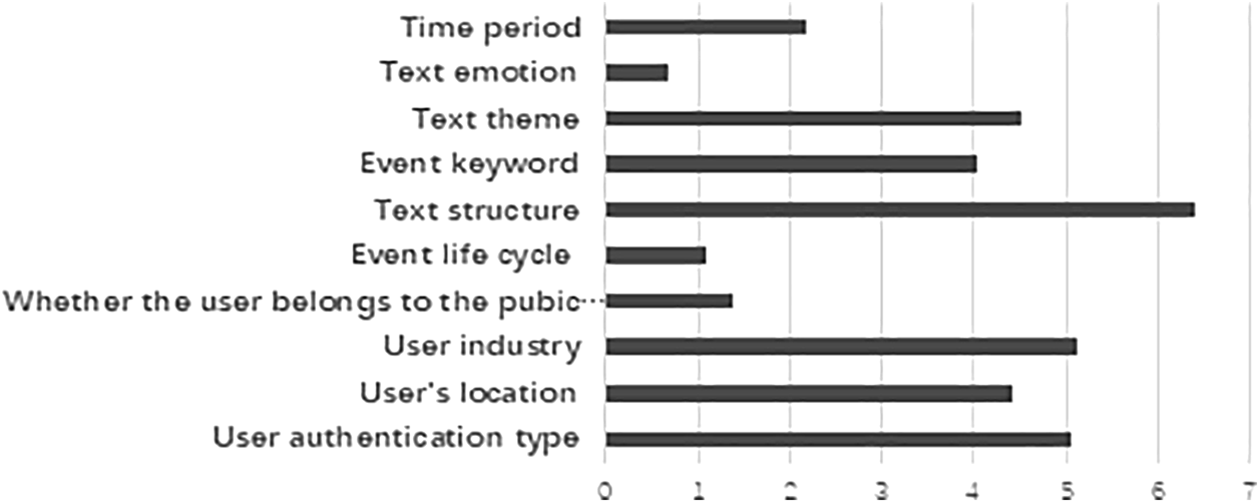
The relative importance of each microblogging feature.
The Influence Tendency of Microblogging Feature Values
Using Equation (3), the influence tendencies of microblogging features are calculated, and the final experimental results are shown in Table 5. The regional features of users list only some values with high-influence tendency.
The Influence Tendency of Microblogging Feature Values.
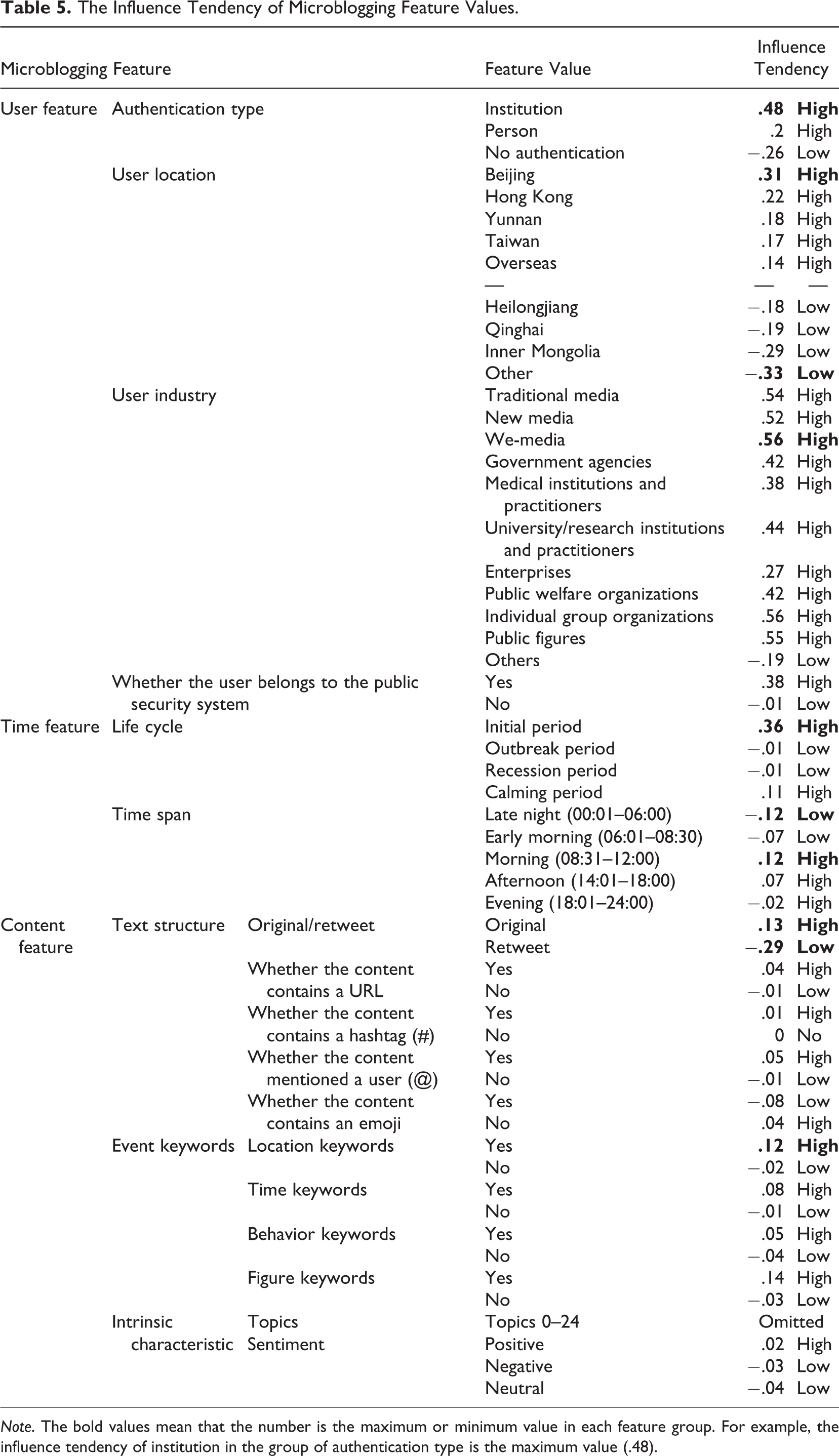
Note. The bold values mean that the number is the maximum or minimum value in each feature group. For example, the influence tendency of institution in the group of authentication type is the maximum value (.48).
From the perspective of user characteristics, the experimental results show that in the context of terrorist events, the influence of microblog entries by users with platform authentication is very high. Compared with certified users, noncertified users need to have advantageous publishing times, publishing contents, and other microblog elements to generate high-influence microblog entries.
In terms of users’ regions, Beijing, Hong Kong, and Yunnan tend to bring high influence. As we know, Beijing and Hong Kong are economically developed cities and own many government departments and media. Yunnan is the province where the investigated terrorist attack happened. This result shows that the location of microbloggers affects the degree of users’ attention to the event and the strength of the discourse. It also confirms the findings by Bisht and Toshniwal (2014) that users close to the event location are more likely to publish event-related information than remote users.
In terms of the user industry, the users that belong to the public security system show an obvious tendency of high influence. These users initially dealt with the terrorist events and followed up by issuing statements on strengthening public security, which aroused strong responses from the public and played an important role in all stages of the life cycle of terrorist events.
From the perspective of time features, during the life cycle of the event, the microblogs published in the initial stage provide the information that the public can easily access and start to consider; therefore, they have an obvious tendency of high influence. During the outbreak period, the number of related microblogs remained at a certain high level, the contents of these continuously generated microblogs were extensive, and the qualities were uneven. Therefore, the overall situation did not show a significant influence. During the recession period, the number of microblogs related to terrorist incidents remained at a low level, and netizens still talked about topics, but the extent was limited. According to the “echo effect” found by Jong et al. (2016), the outdated microblog information continues to spread after an event (Mahdavi et al., 2017). Therefore, the content and quality of the microblog information in the recession and the outbreak periods are basically consistent, and the overall trend is not influential. During the calming period, the public’s focus on the event decreased and plateaued. At this time, the amount of event-related information is very small, and the amount of low-quality information is greatly reduced. In terms of the publishing time, microblogs published in the morning, afternoon, and evening tend to have high influence, and those published from late night to early morning tend to have low influence. The experimental results show that microblogs published within users’ working hours are more likely to attract much attention, which confirms the impact of users’ work and rest routines on microblog information dissemination. In addition, the violent attack on Kunming railway station occurred at 9 pm, which had little influence tendency, and immediately attracted the widespread attention of netizens. Three hours after the incident, there was an obvious tendency of low influence, and the number of related microblogs decreased rapidly. This observation further suggested that in the process of microblog publishing, we should conform to users’ work and rest routines as much as possible and provide ideal conditions for microblog information dissemination.
From the perspective of content features, the influence tendency of the microblog publishing type is the most obvious. The content of the original microblog is of high quality and rich in information. However, in the process of forwarding microblogs, many users do not express their specific views, which makes it difficult to attract the attention of other users. In terms of other text structures, URL links can provide microblog users with the opportunity for extended reading; hashtags(#) can provide retrieval channels for the microblogging topics, thereby increasing the attention; the mention function(@) can remind other users to view the microblog information and enhance its communication ability; and microblog content with emoticons is focused on personal expression. According to the results of Mahdavi et al. (2017), the social content rather than the personal content in a microblog is more likely to be focused upon, so this kind of microblog tends to exhibit characteristics of low influence.
In terms of event keywords, microblogs with location, time, behavior, and figure keywords usually have a high-influence tendency. Furthermore, it is worth noting that the microblogs with positive emotions have good communication abilities in terrorist events. This observation shows that when experiencing terrorist events, the public is willing to face the problems brought by terrorist events with a positive attitude, such as praying for the victims.
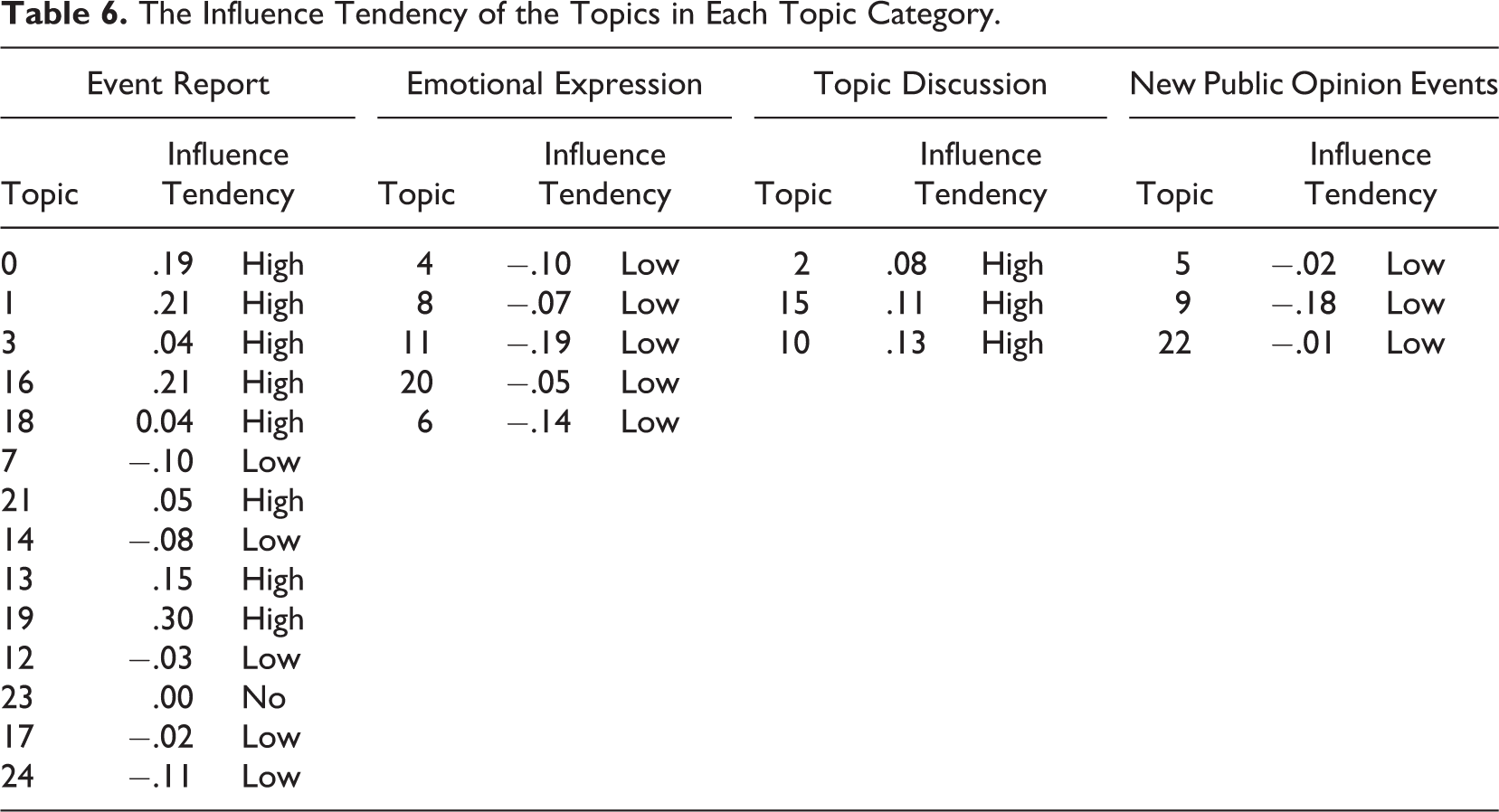
The influence tendency of the microblog topic features is shown in Table 6. It is seen that topics in the categories of event report and topic discussion tend to have high-influence tendencies while those of emotional expression and new public opinion events tend to have low-influence tendencies.
The Influence Tendency of the Topics in Each Topic Category.
Measuring the Influence of Microblogging Topics and Their Evolution Analysis
Using Equation (4), we calculated the microblogging influence of 25 topics in the initial, outbreak, recession, and calming periods of the violent attacks in Kunming railway station. The experimental results are shown in Table 7.
The Evolution of the Topical Influence in Each Phase.
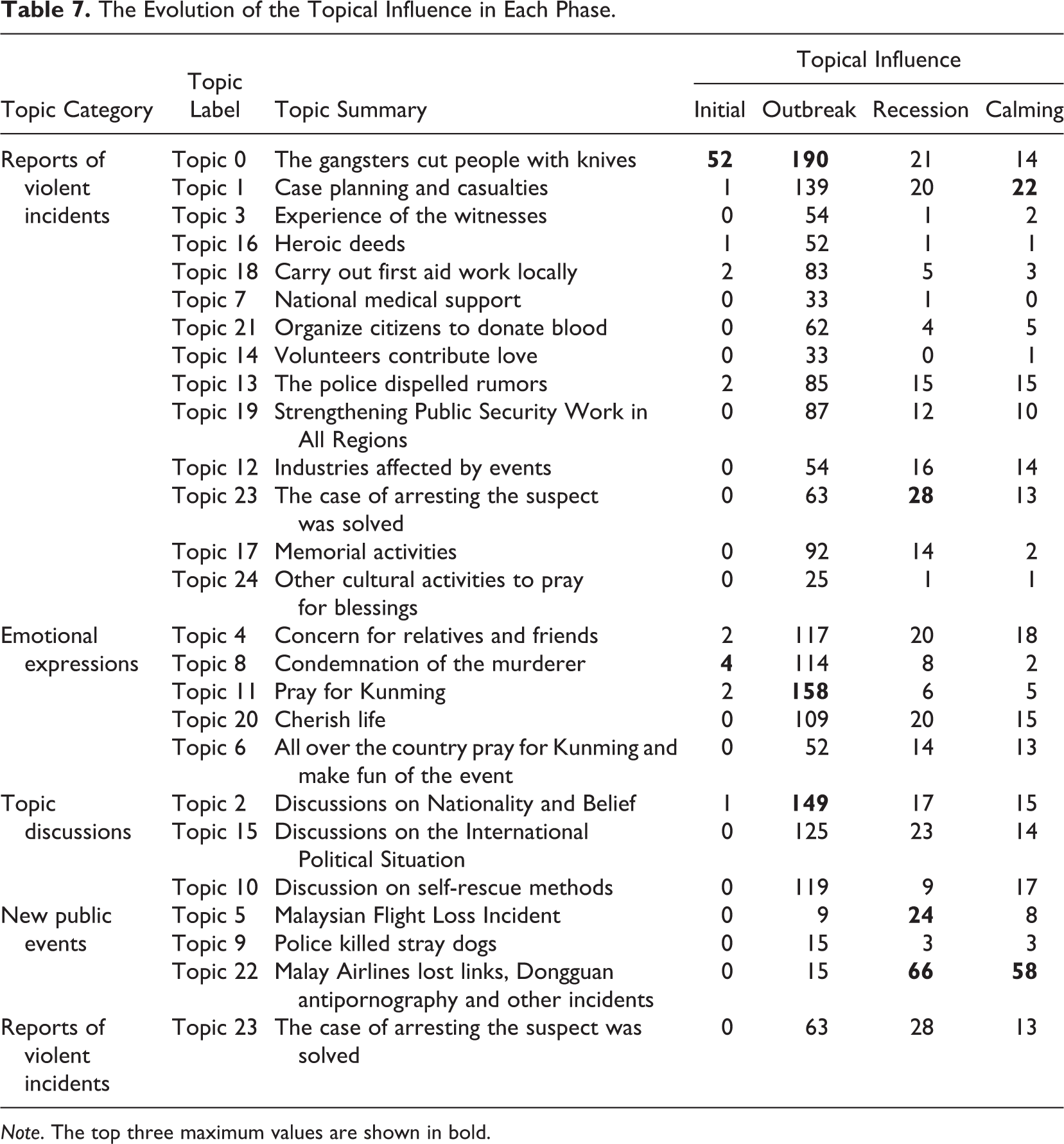
Note. The top three maximum values are shown in bold.
In general, the changes in the microblogging topic influence are basically consistent with the life cycle of terrorist events. In the initial stage of terrorist events, the microblog topic is singular and highly concentrated, with the first-time report as the main content. Subsequently, reports of death and injuries, first aid work, and other related reports began to appear. Some netizens began to express their emotions about the terrorist events. Reports of terrorist incidents and other topics quickly became the core topic. In the outbreak period, the scale of influence of new public opinion events is limited, which will be quickly inundated by a large amount of information from the outbreak of public opinion events with higher influence. In the recession period of terrorist events, the influence of topics related to terrorist events significantly declines, and the diversity of the topic content decreases compared with that during the outbreak period. The influence of different topics is also in line with the “echo effect” that the old microblog information is still spread after the event (Jong and Dückers, 2016). Then, new public opinion events break out and change the public’s focus. In addition, the influence of the new public opinion topics begins to increase. After the end of the terrorist event, the influence of related topics further decreases, and the number of topics remains stable. New public opinion events become the focus of the public’s attention. The influence of the text on the topic of terrorist events does change further.
Discussion
With the increasingly severe situation of international terrorism, China attaches increasing importance to counterterrorism. When the terrorist incident broke out, the incident information quickly spread on the microblogging platform and aroused high public attention, and the number of related microblog entries showed explosive growth. It is of great practical significance for relevant departments to monitor public opinion by predicting the influence of microblogging and analyzing the evolution of the influence of microblogging in the context of terrorist events. Therefore, this article studies the prediction model and evolution of microblogging influence in the context of terrorist events. The main findings of this study are as follows.
In terms of the prediction effect of microblog influence, the influencing factors in order of their importance are user characteristics, content characteristics, and time characteristics. In addition, the experimental results show that extracting microblogging features can improve the prediction effect of the model. In terms of the influence tendency of microblog characteristics, verified microblogging users, users located near the terrorist incident or in economically developed areas, users belonging to the media industry or the public security system, and public figures have stronger voices during terrorist incidents. Microblogs published at the beginning of terrorist events are more likely to attract attention, whereas those released during other stages should conform to the users’ daily routine as much as possible. Using the URL link and other functions provided by the Weibo platform or republishing the original microblog containing the key information can be more easily followed. Positive emotions are better spread. Topics that focus on society rather than individuals are more likely to attract attention. In addition, once a terrorist incident occurs, it will quickly trigger the public’s security needs, so immediately implementing security measures and strengthening the public’s self-help knowledge will help stabilize the public mood.
In terms of the evolution of the microblog theme and its influence, in the initial period, the main microblogging content was live reports, which is a single and strong theme. In the outbreak period, the number of microblogging topics grew rapidly and became more diverse. The report of terrorist incidents is still the focus of public attention. In addition, the public reaction to terrorist incidents is mainly reflected in the emotional expression and discussion of social issues. In the recession period, the number of microblogging themes remained stable, but their influence significantly declined, and the detection of terrorist incidents became the public’s focus. In addition, the public’s attention is gradually shifted by new public opinion events. In the calming period, the influence of relevant microblogs was extremely low, and new public opinion events became dominant. These findings are helpful for understanding the changing rules of the content and intensity of public attention on terrorist incidents and for providing guidance for the relevant departments to carry out public opinion management. Government intervention in opinion management does not mean control of speech. Attention should be paid to the relationship between public security and human rights (Goldstein, 2010).
The practical significance of this study lies in three aspects, that is, prevention of secondary events, the spread of useful and positive information, and confronting cyberterrorism. To be more specific, terrorist events not only could cause death and injuries but also secondary disasters in the social and economic fields, such as affecting the stability of the society, international trades, and so on. For example, after the 9/11 attack, the tourism, financial insurance, and air transportation industries in the United States all suffered an unprecedented blow, which also had a negative impact on the world economy, reducing the world economic growth rate by one percentage point in 2001 (Investopedia, 2021). After terrorist events, the prediction of the influence of microblogging can provide a prearranged planning or alternatives for possible social or financial losses. Second, the feature values of high microblogging influence tendency could help the spread of useful information. The tweeting behavior of the public enables them to be “digital volunteers” (Starbird & Palen, 2011). Some information is worth spreading by the public, such as the need for medical support, blood donation, and statements to squash the rumours. Dissemination of such information with characteristics of high influence can help spread useful information and better deal with terrorist incidents. Third, prediction of the influence of microblogging on different topics can be a step to fight against cyberterrorism. Cyberterrorists often postinformation about the thought of terrorism, weapon production, and terrorist incident planning to attract people to join terrorist organizations or activities. Identifying and reducing the spread of this kind of information can combat cyberterrorism. Meanwhile, it is found that microblog posts of positive emotions perform better in spread and influence. Thus, enhancing the influence of microblogging with positive emotion could help ease the panic of the public.
Conclusions
This study constructed a prediction model of microblogging influence in the context of terrorist events. Seventeen features in three aspects, that is, user, time, and content characteristics, were considered and extracted from the microblogging corpus. The Kunming railway station violent attack event was chosen as the case, and a total of 153,797 related microblog entries were collected. We found that the influence prediction model based on the LR can successfully predict 85.7% of the influence of microblogs and has superior performance compared with the other six classification algorithms. The text structure, user’s industry, and authentication type are the top three most important features among the 17 features. The influence tendency of the feature values has been proposed and calculated for each feature value, and we found that the We media, individual group organizations, platform accreditation, and users belonging to the public security system tend to exhibit high influence. The h-index was used to measure the influence of topics, and their evolutionary patterns were also explored. The findings can help counterterrorism departments effectively and rapidly predict high-influence microblogs and take preventive measures in advance to reduce the panic of the public caused by terrorist events.
Footnotes
Declaration of Conflicting Interests
The authors declared no potential conflicts of interest with respect to the research, authorship, and/or publication of this article.
Funding
The authors disclosed receipt of the following financial support for the research, authorship, and/or publication of this article: This work was supported by the National Natural Science Foundation of China (Grant no. 71921002), the Major Project of the Ministry of Education of China (Grant no. 17JZD034), the National Natural Science Foundation of China (Grant nos. 71790612, 71974202, and 71603189), and the world class discipline of the Ministry of Education of China “Library, Information, and Data Science.”