







Abstract
The problematic Internet use (PIU) has become a topic of special relevance since it is a problem that affects the whole world. It has been detected that the population at greatest risk is university students along with adolescents. At the same time, Spain is one of the countries with the highest PIU rate. The purposes of this article were to analyze the presence and degree of Internet addiction among university students and to check the sociodemographic factors that influence the PIU. To this end, 13 hypotheses were put forward and contrasted using a structural equation model. The study adopted a cross-sectional approach by applying the Internet addiction test to a sample of undergraduate students in southern Spain (n = 1,013). The results indicated a prevalence of PIU among students of almost 12.5% and with a moderate degree of addiction. In turn, the following hypotheses that had a significant effect on the PIU were supported: gender; field of knowledge; living in the parents’ home; Internet daily use for leisure; Internet daily use for academic purposes; number of social networks; sexual orientation; marital status. Finally, the main findings of the study were reviewed, and the main recommendations and implications for mitigating the negative effects of technology and enhancing the positive ones were established.
Today we live in increasingly dynamic and changing societies, where the approach to technology becomes paramount. The access they promote to a multitude of content means that there is an obvious concern about the problematic Internet use (PIU), technological devices, and social networks. Compulsive use of the Internet is a growing phenomenon of our time, especially in groups of young people (Błachnio et al., 2016; Buran-Köse & Doğan, 2019; Fioravanti et al., 2012). Various studies suggest that the excessive use of the Internet and technological devices significantly affects young people’s habits, lifestyle, and the way they relate to their environment (Anderson et al., 2016; Clements & Boyle, 2018; Koçak, 2019). In this sense, Weinstein and Lejoyeux (2010) collect several cross-sectional studies on samples of patients with a high comorbidity due to Internet addiction and relate them to psychiatric disorders, especially affective disorders (including depression), anxiety disorders (generalized anxiety disorder, social anxiety disorder), and attention deficit hyperactivity disorder (ADHD). Several factors predict PIU, including personality traits, family and parenting factors, alcohol consumption, and social anxiety.
Part of the abusive use of the Internet has much to do with social networks and the need to spread and expose oneself to others (Aparicio-Martínez et al., 2020). This practice is made even more assiduous by allowing young people to participate in games, both playful and gambling, offering them the opportunity to escape from stressful moments and anxiety (Seki et al., 2019; Sung et al., 2020). These facts, together with other very common variables in these ages such as the consumption of alcohol or other addictive substances, can have a negative impact on an even greater addiction to the Internet (Raia et al., 2019). There is no doubt that this type of addiction can lead to health problems that can have consequences involving the level of physical activity, depression, and musculoskeletal disorders, particularly in the neck and back (Alaca, 2019; Shields & Behrman, 2000). This same idea is highlighted in studies such as the one carried out by Abdel-Salam et al. (2019) to examine the prevalence between Internet addiction and eating attitudes and quality of life in university students, where a statistically significant, but weak, relationship was found between Internet addiction and obesity-related problems. In this sense, Koçak (2019) conducted a study to evaluate the relationship between Internet addiction and regular exercise and academic achievement in university students. The results of this research determined that regular physical exercise decreased Internet addiction and significantly decreased the time spent surfing the web.
From a gender perspective, studies of university students reveal that women are the most frequent users over men (Gómez et al., 2017; Malo-Cerrato et al., 2018; Mostafa et al., 2019; Taha et al., 2019). In the Spanish context, data from the survey ESTUDES 2018/2019 (Brime et al., 2019) in the 14–18 age-group (the report does not discriminate against the 18–25 age-group), compulsive use of the Internet was higher among women (23.4%) compared to men (16.4%), and these data can be associated with the findings of other studies that show a relationship between addiction and mood modification in young university women (Buran-Köse & Doğan, 2019). In this same survey, 99.8% of students aged 14–18 years had used the Internet in the past 12 months (abuse of the Internet, digital screens, and other information and communication technologies, etc.), and the prevalence of compulsive use of the Internet was 22.3% among students aged 18 years (the age at which university studies begin), as compared with 18.2% among students aged 14 years old.
The concern about this issue worldwide is significant since 1% of the general population and 4% of young people exhibit dysfunction in their daily life activities because of this (Rumpf et al., 2014). Furthermore, the term problematic Internet use or Internet addiction has been accepted as a significant global mental health problem since the American Psychiatric Association recommended the use of “Internet Use Disorder” in Section III of The Diagnostic and Statistical Manual of Mental Disorders, Fifth Edition (Yao & Zhong, 2014).
Literature Review
Addictive behaviors to the Internet and technological devices have been amplified by the emergence of social networks and the interaction they allow between users (Tenzin et al., 2019). At the European level, a study (Tsitsika et al., 2014) conducted in seven countries to investigate the prevalence of Internet addictive behavior and psychosocial characteristics of adolescents aged 14–17 years revealed that addiction was disparate between countries such as Iceland (7.9%) and Spain (22.8%). In addition, he noted that dysfunctional Internet behavior was more prevalent among adolescents with parents with lower educational levels, younger age of onset of Internet use, increased use of social networks, and involvement in gambling. Another subsequent study (López-Fernández et al., 2017) identified several risk factors for the increase in Internet and mobile device addictive behaviors in 18–29 year olds, including using mobile phones daily, being female, participating in social networks, playing video games, shopping and watching Internet TV programs, chatting and texting, and using mobile phones for download-related activities. In relation to predictive factors of addiction associated with belonging to families with different cultural and economic levels, De-Sola et al. (2017) concludes that although there are studies that find a direct relationship between families with higher cultural and economic levels and dependency and addiction, in others, the relationship is inverse.
Currently, studies on Internet addiction in university students (Baturay & Toker, 2019; Ching et al., 2017; Tsimtsiou et al., 2015) are aimed at assessing the dependence between this addiction, gambling addiction, and relationships with friends, family and teachers, neglect of daily tasks, impairment of sleep pattern, self-esteem or self-confidence, and social behaviors (Yen et al., 2007). All these variables may be aimed at raising the possibility that this disorder is an enhancer of other addictive behaviors or the result of other psychiatric diseases (Adiele & Olatokun, 2014).
Findings in Internet addiction studies are varied but follow a uniform pattern in terms of their relationship to certain sociodemographic variables, these include (i) studies linking gender to the PIU (Gómez et al., 2017; Malo-Cerrato et al., 2018; Mostafa et al., 2019; Taha et al., 2019); (ii) the linkage of age with the PIU has also been highlighted (Błachnio et al., 2016; Buran-Köse & Doğan, 2019; Fioravanti et al., 2012); (iii) studying in a specific field of knowledge has been linked to the PIU, where being enrolled in university degrees that do not belong to the area of health sciences is an influential factor (Fernández-Villa et al., 2015); (iv) religious belief is another factor binding the PIU determined by other work (Ahmadi & Saghafi, 2013; Lu et al., 2018); (v) parental influence has been an influential factor in Internet addiction (Casaló & Escario, 2019; De-Sola et al., 2017; Hassan et al., 2020); (vi) daily Internet usage time has been detected as one of the potential factors of the PIU (López-Fernández et al., 2017; Romero-Rodríguez & Aznar-Díaz, 2019; Ruiz-Palmero et al., 2019); (vii) other studies highlight the link between the number of social networks and Internet addiction (Marín-Díaz et al., 2019; Tsitsika et al., 2014); (viii) the type of device with which the Internet connection is made also influenced the presence of a PIU (Aygar et al., 2019; Derevensky et al., 2019; De-Sola et al., 2019); (ix) sexual orientation has been highlighted as an influential factor in PIU (Rafla et al., 2014; Seidenberg et al., 2017); (x) the sentimental state of people has been an indicator in the prevalence of Internet addiction (Ozgur et al., 2014).
Based on the different considerations about the impact of Internet addiction on the youth population and the adjacent problem about the increase of the PIU in the Spanish adolescent population, an unpublished study is highlighted which, unlike other previous research works, deals with the different effects and risk factors with greater incidence in the PIU in a large study sample. In this work, therefore, they were proposed as purposes: to evaluate the prevalence and degree of Internet addiction of university students and to identify the sociodemographic factors that influence the PIU by university students.
Hypotheses and Research Model
With the empirical support of previous studies, the different hypotheses have been established:
The hypotheses have been reflected in the hypothetical research model to be tested with Spanish university students (Figure 1).
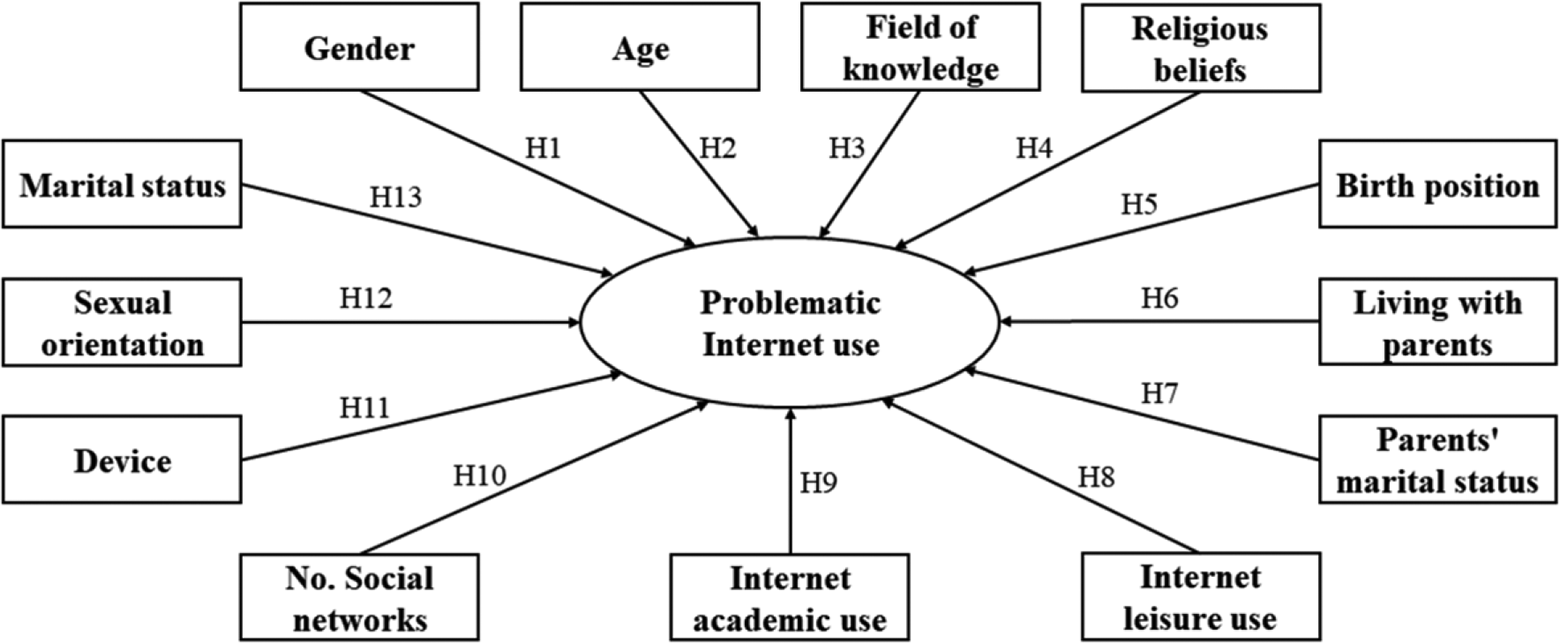
The hypothesized research model.
Method
Participants and Procedure
A cross-sectional design was used based on the application of an online survey distributed by the official student channel of the University of Granada (Spain), during February 2020. The sampling carried out was therefore one of convenience, where the students freely decided to participate and gave their informed consent after knowing the purpose of the research and informing about the anonymous processing of their data. The total student population at the time of data collection was 47,096 undergraduate students, according to official information from the Universidad de Granada.
The sample of undergraduate university students was composed of 252 men and 761 women (n = 1,013), aged between 17 and 35 years (M = 22.23, SD = 3.88). The sample decompensation between men and women is due to the fact that the number of registrations in university degrees in the branch of social sciences in Spain is greater in the population of women (Navarro & Casero, 2012). The division established by the World Health Organization (2017) was used for the grouping of age ranges and the division established by the University of Granada itself was used for the grouping into knowledge areas. Table 1 shows the frequency and percentage of the participants’ sociodemographic data (Table 1).
Sociodemographic Data.
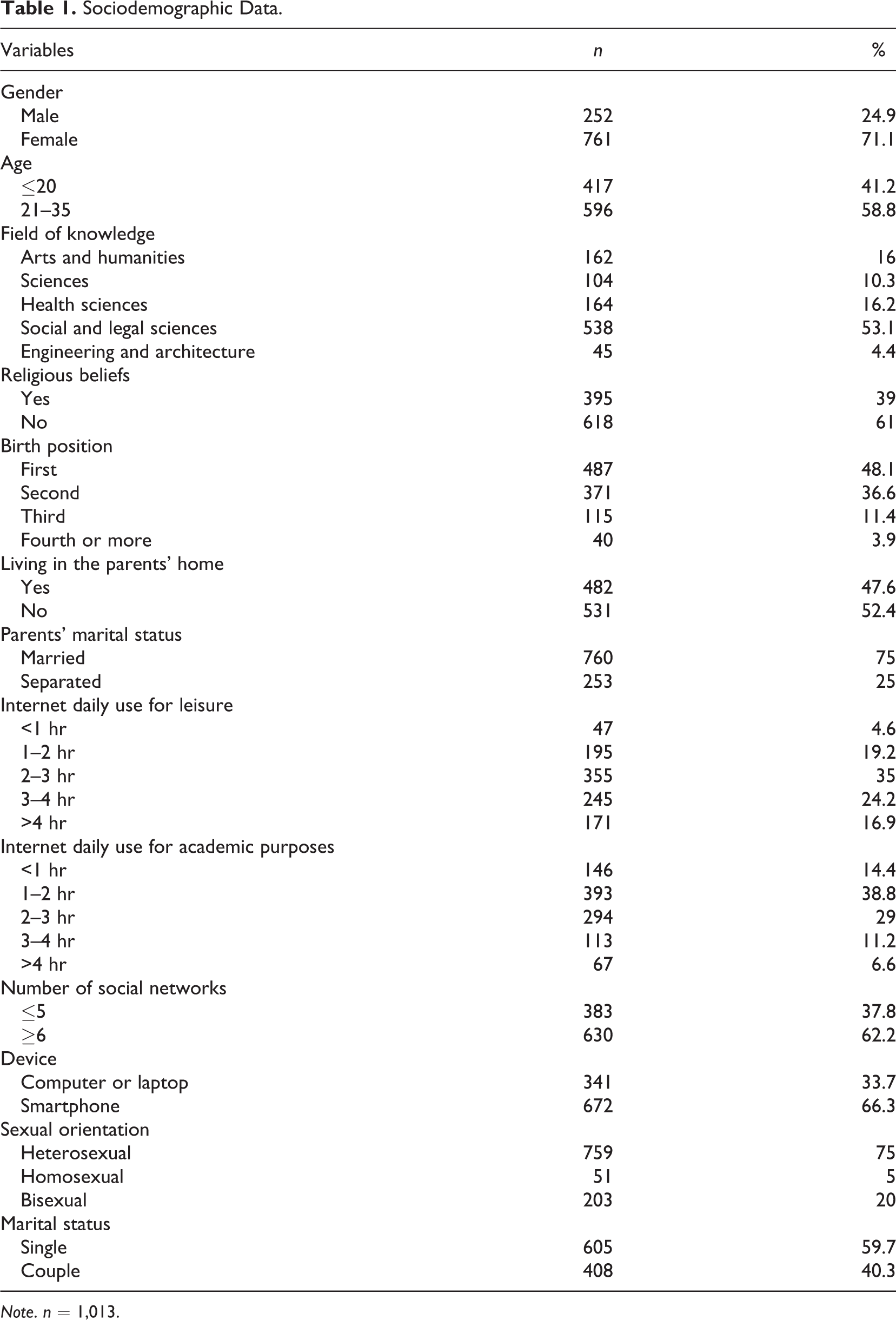
Note. n = 1,013.
Measure
The Internet Addiction Test (IAT) was applied to assess the degree of Internet addiction (Young, 1998). This instrument is the most widely used in Internet addiction studies (Aznar-Díaz et al., 2020). The psychometric properties and consistency of the Internet are adequate and have been adapted to the Spanish context (Puerta-Cortés et al., 2012). The degree of Internet addiction is evaluated from 20 items on a six-level Likert-type scale (where 0 = never and 5 = always). Scale scores range from 0 to 100 points, divided by addiction ranges: 0–30 = normal range, 31–49 = mild, 50–79 = moderate, 80–100 = severe. In this study, the clustering of Younes et al. (2016) and Mamun et al. (2019) was used to divide students into two groups: non-PIU (scores ≤ 49) and PIU (scores ≥ 50). The internal consistency obtained through Cronbach’s α coefficient was adequate (α = .894).
Data Analysis
The various analyses were performed using the IBM SPSS and IBM SPSS Amos Version 24 statistical packages (IBM Corp., Armonk, NY). With their use, the frequencies and percentages of the sociodemographic factors by each group were calculated (non-PIU or PIU), and it was checked if there were statistically significant differences between the groups by each sociodemographic factor. The T test was used for independent samples when it was a comparison between two groups and the analysis of variance test when there were more than two groups.
Prior to the establishment of the structural equation model (SEM), the hypothesis of multivariate normality based on the Mardia (1970) coefficient was confirmed. Subsequently, different model goodness-of-fit indices were calculated (Byrne, 2013): χ2, degrees of freedom (df), the ratio χ2/df; goodness-of-fit index (GFI), root mean squared error of approximation, normalized fit index (NFI), comparative fit index, and adjusted GFI. Hypotheses were contrasted using path analysis, where the relationship of each dependent variable to Internet addiction was established. Each relationship was tested to see if it was significant, so if it was significant, the hypothesis was supported, and if it was not significant, the hypothesis was rejected.
Results
The data regarding the degree of Internet addiction of the university students collected that the majority did not show worrying addictive behaviors (87.6%), being classified within the non-PIU group. However, 12.4% did have PIU (PIU group; Table 2).
Degree of Internet Addiction of University Students.
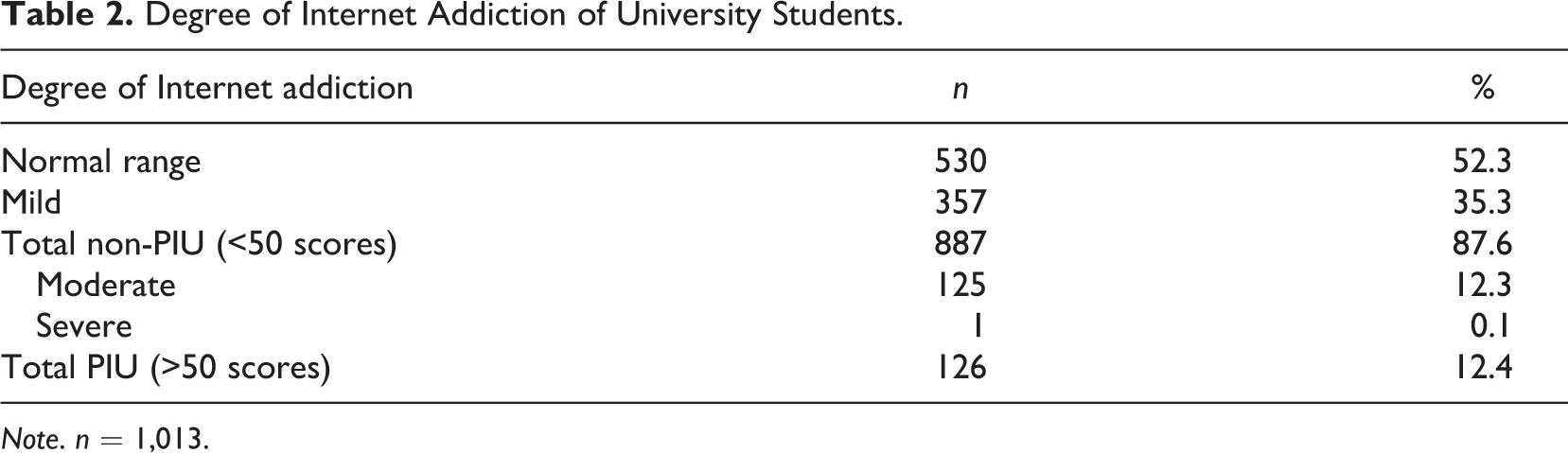
Note. n = 1,013.
Regarding the cases of PIU by each sociodemographic factor, significant differences were established between the population in some dependent variables. On the other hand, the largest cases were detected in proportion to the total number of samples in each population sector (Table 3). Thus, the highest prevalence rates of PIU were found in: males (13.9%), age 20 years or younger (14%), arts and humanities (20.07%), no religious belief (13.27%), first born (14.37%), not living with parents (13.94%), students with separated parents (13.44%), surfing the Internet daily for 3–4 hr for leisure purposes (20%), academic Internet use of less than 1 hr per day (17.1%), having six or more social networks (14.76%), connecting to the Internet with a smartphone (13.54%), being gay (25.49%), and single students (14.38%). However, significant differences were only established in field of knowledge (p = .005), Internet daily use for leisure (p = .000), number of social networks (p = .004), sexual orientation (p = .009), and marital status (p = .023).
Distribution of Cases of Non-PIU and PIU by Sociodemographic Factor.
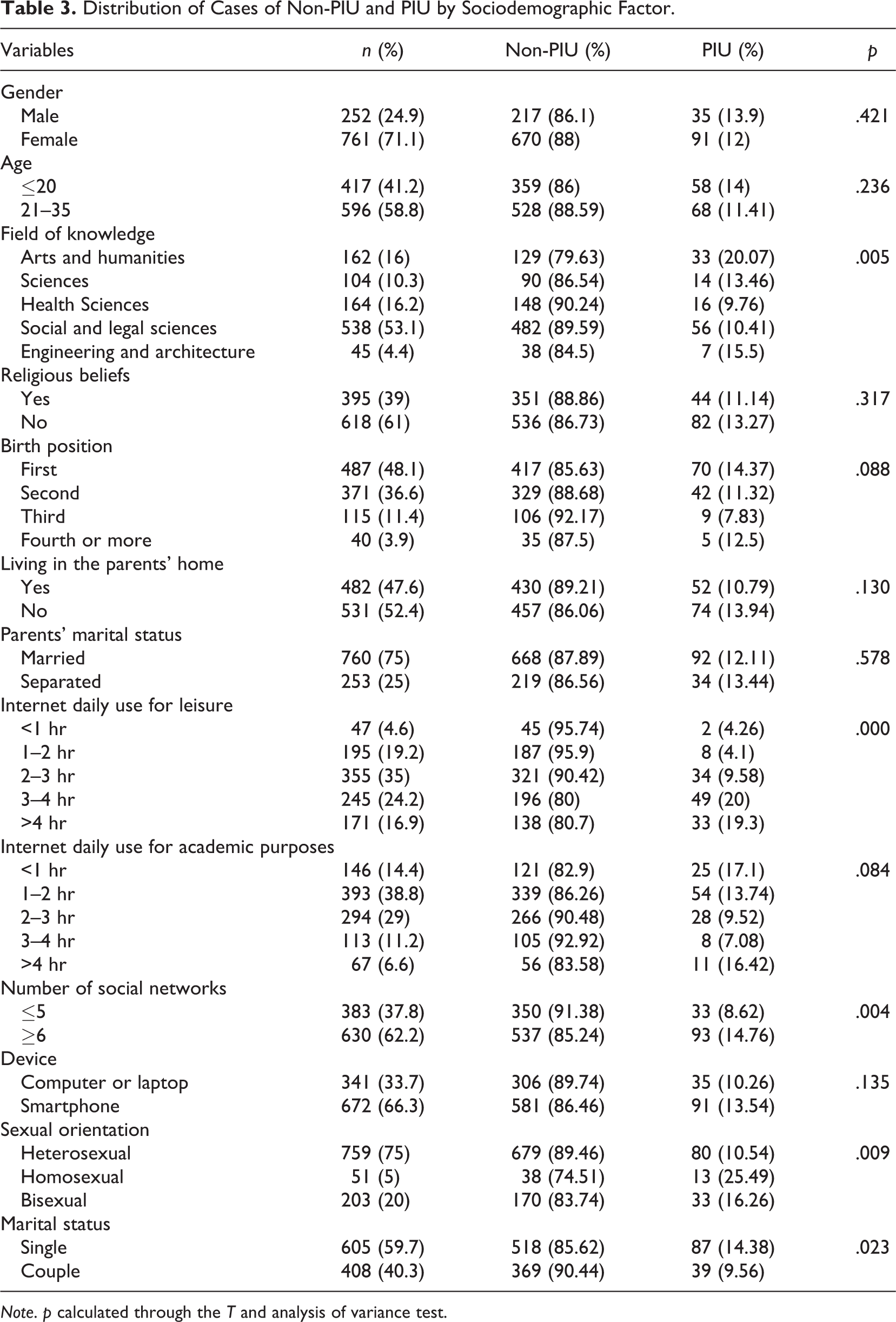
Note. p calculated through the T and analysis of variance test.
The Mardia coefficient obtained a value of −10.52, less than 440 as a result of p × (p + 2), where “p” is the number of variables (Bollen & Long, 1993). In this case, “p” was 20, corresponding to the total items of the IAT. So the hypothesis of multivariate normality was confirmed. In turn, the model’s goodness-of-fit indices were adequate (Table 4).
Goodness-of-Fit Measure.
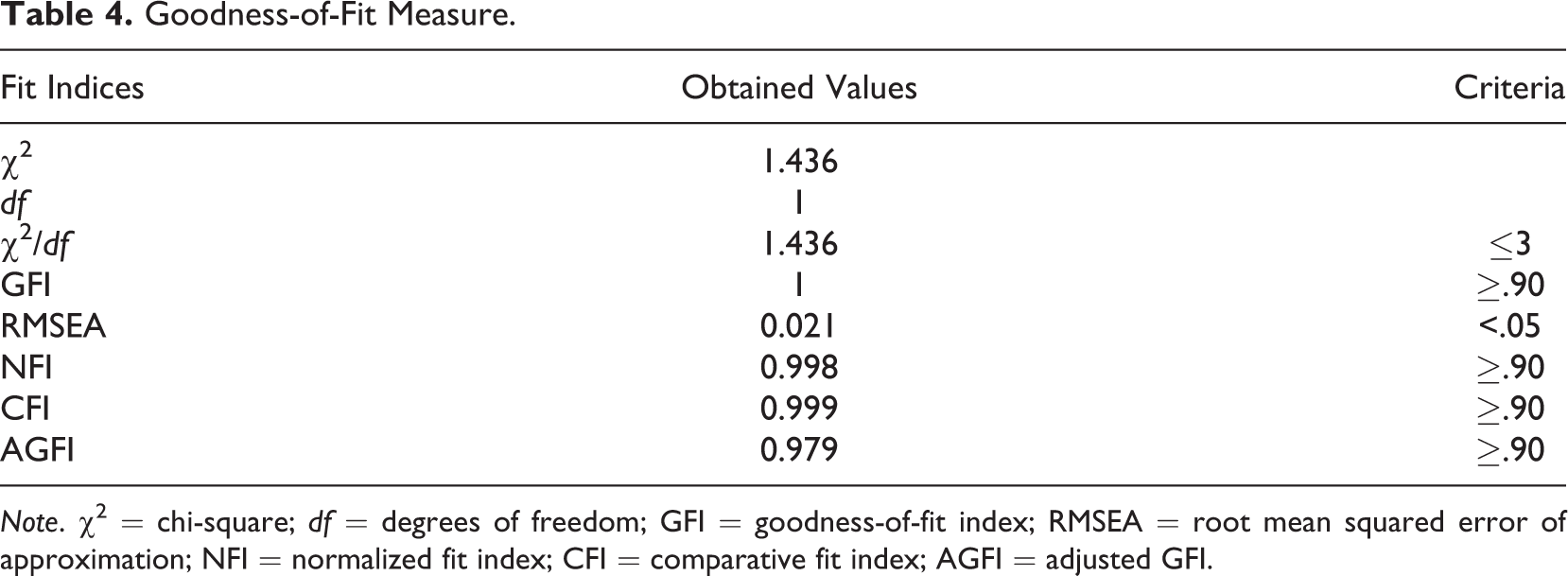
Note. χ2 = chi-square; df = degrees of freedom; GFI = goodness-of-fit index; RMSEA = root mean squared error of approximation; NFI = normalized fit index; CFI = comparative fit index; AGFI = adjusted GFI.
As for the contrast of hypotheses, a total of eight hypotheses of the 13 hypothetical relations initially proposed were finally supported. Thus, the relationship of the PIU with: gender (Hypothesis 1), field of knowledge (Hypothesis 3), lives with parents (Hypothesis 6); Internet daily use for leisure (Hypothesis 8), Internet daily use for academic purposes (Hypothesis 9), number of social networks (Hypothesis 10), sexual orientation (Hypothesis 12), marital status (Hypothesis 13; Table 5). The hypotheses that were not supported were rejected.
Hypothesis Testing Results.
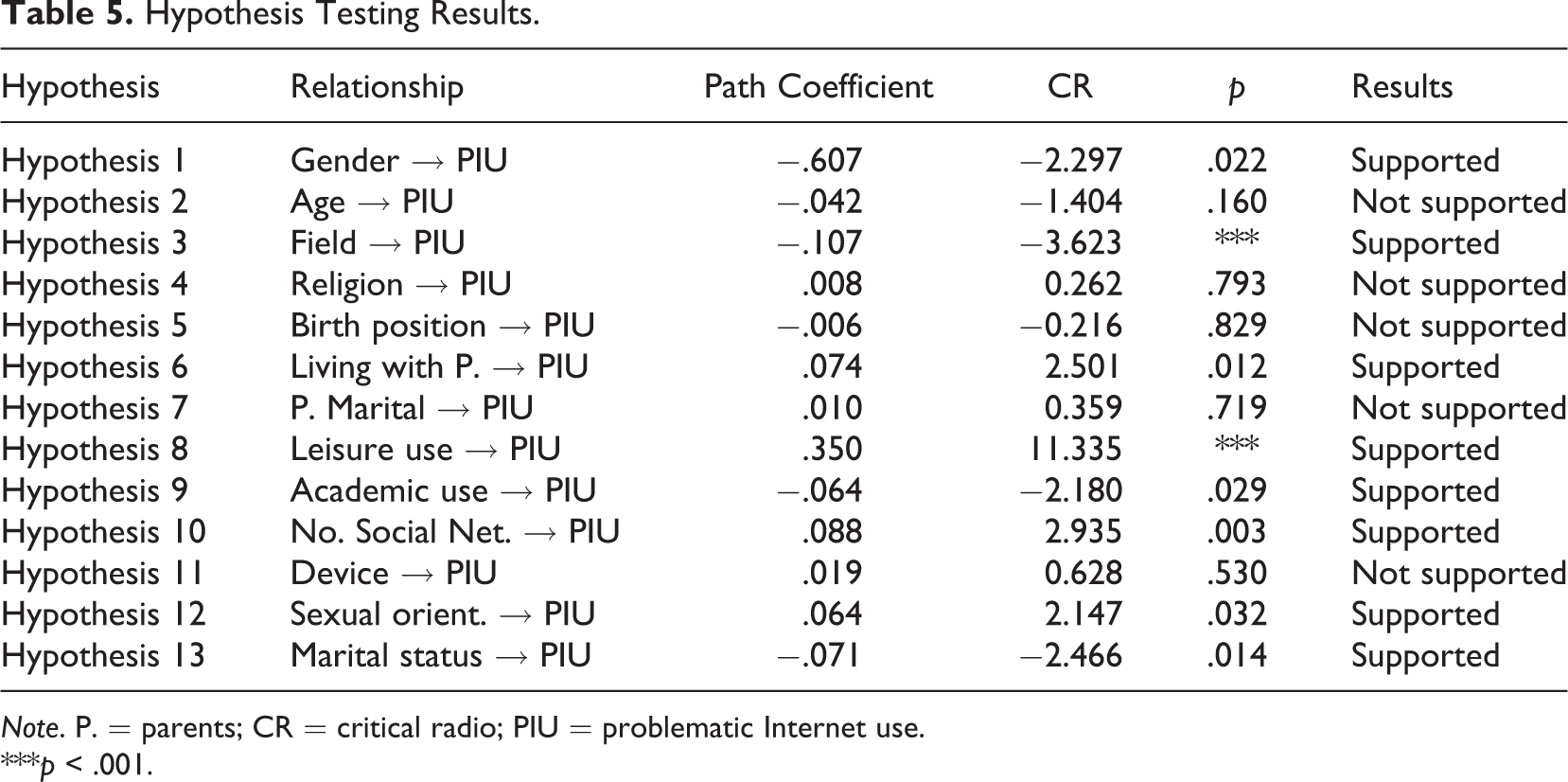
Note. P. = parents; CR = critical radio; PIU = problematic Internet use.
***p < .001.
Finally, in the SEM, the relationship between the dependent variables that were significant and the PIU was graphically exemplified (Figure 2). In this regard, only the trajectory and significance coefficients of the supported hypotheses were included (Hypothesis 1, Hypothesis 3, Hypothesis 6, Hypothesis 8, Hypothesis 9, Hypothesis 10, Hypothesis 12, and Hypothesis 13). The coefficient of determination (R2) of the model was .178, so a percentage of variation of 17.8% was estimated. Nonsignificant relationships are shown with discontinuous arrows.
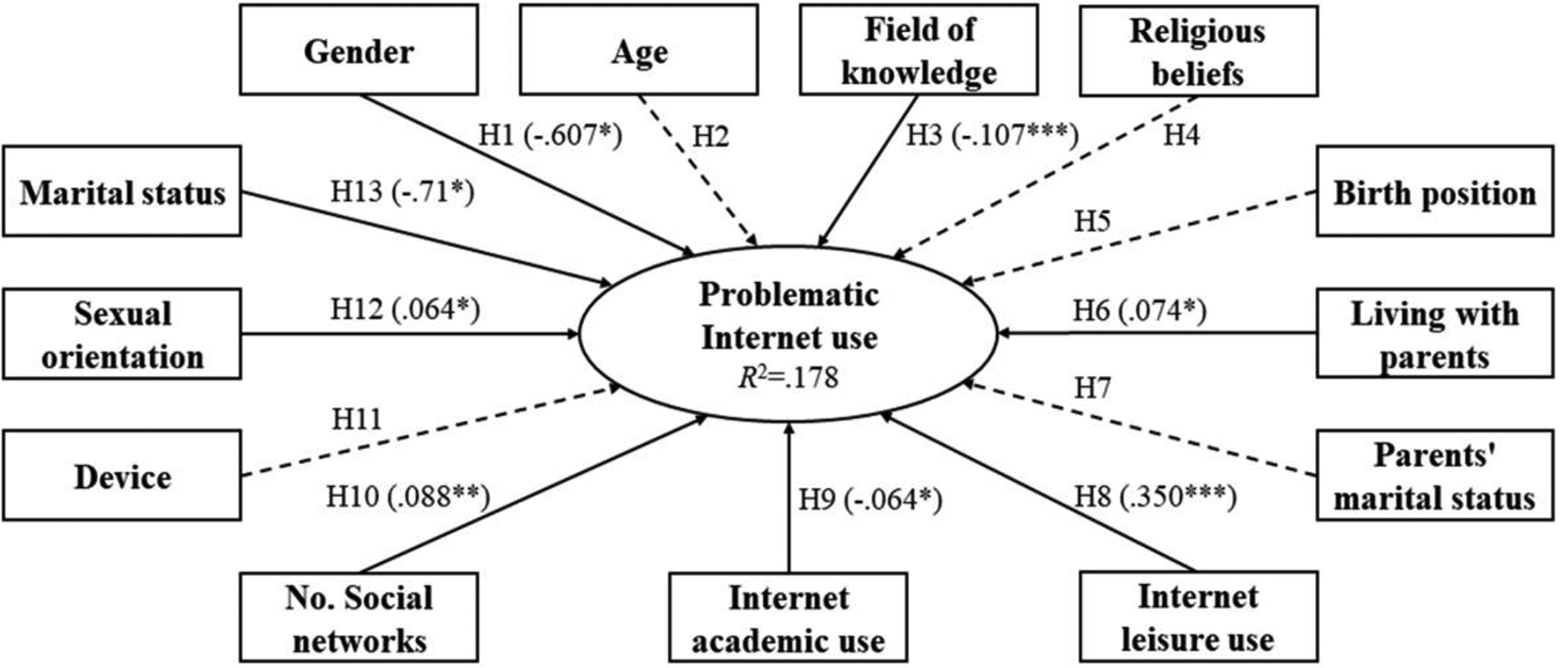
Structural equation model.
Discussion
The results indicated a prevalence of PIU of 12.4% in the population of undergraduate students at the University of Granada. In particular, almost all were moderate cases of Internet addiction. This represents a large percentage of the total population, and it is a current problem that must be addressed in order to reduce the number of cases of PIU. Thus, the PIU data are similar to the percentages obtained in studies of a similar nature (Brime et al., 2019), which warn of the occurrence of cases in the Spanish context. Therefore, it is essential to outline strategies to alleviate the high prevalence of PIU cases in Spain, in relation to other European countries where the rate is lower (Tsitsika et al., 2014).
In relation to the hypotheses raised, the gender hypothesis was supported (Hypothesis 1). Therefore, in the sample of Spanish university students, gender influenced the PIU. However, the largest cases occurred in the population of men versus women unlike previous studies (Gómez et al., 2017; López-Fernández et al., 2017; Malo-Cerrato et al., 2018; Mostafa et al., 2019; Taha et al., 2019). This provides an interesting avenue for study, as the data are contradictory, with the prevalence of one gender over another varying from population to population. So it is a data exclusive to specific populations that cannot be generalized.
As for age (Hypothesis 2), this hypothesis was not supported although other studies did show its influence with the PIU (Błachnio et al., 2016; Buran-Köse & Doğan, 2019; Fioravanti et al., 2012). However, the highest cases of PIU prevalence occurred in the age-group of 20 years or less, so it would affect the younger university population (Błachnio et al., 2016; Buran-Köse & Doğan, 2019; Fioravanti et al., 2012). So focusing on freshmen and even seniors in preuniversity education is key. Mainly to establish control mechanisms and education in the good use of technology in order to decrease addictive behaviors.
The hypothesis about the field of knowledge was supported (Hypothesis 3). Significant differences were found between the different areas where the university degrees of the University of Granada are grouped. Arts and humanities area had the highest PIU prevalence rate and the Health Sciences area had the lowest. This coincided with the study by Fernández-Villa et al. (2015), which indicated that belonging to a degree in an area not linked to Health Sciences is a mitigating factor in Internet addiction. This allows us to make conjectures about the different fields of knowledge. Likewise, studying a certain degree influences the fact of being able to develop a PIU, which may be due to the characteristics of each area of knowledge. For example, in Health Sciences, they are aware of psychological diseases such as Internet addiction (Yao & Zhong, 2014), this may be an influential factor in the low prevalence of students in Health Sciences compared to the other areas.
Regarding religious beliefs (Hypothesis 4), the main hypothesis was not supported. Although its relationship with the PIU had been established previously (Ahmadi & Saghafi, 2013). The data showed that students without religious beliefs had a higher rate of PIU. This could be due to the absence of religious values that may conflict with certain content on the web (Lu et al., 2018). So, according to the data, nonbelieving students might not have any problem consulting any kind of content and spend more hours surfing the Internet.
In the hypotheses concerning family influence (Hypothesis 5, 6, and 7), only Hypothesis 6 was supported (living in the parents’ home is a factor that has a significant effect on PIU). Thus, the influence of parents in the home was shown to be an influential factor in the PIU (Casaló & Escario, 2019; De-Sola et al., 2017; Hassan et al., 2020). In particular, not living in the parents’ house indicated a higher rate in the PIU, being positive the influence of the parents at home to decrease addictive behaviors in the network. This was related to the control exercised by parents over their children, imposing certain rules within the home, which do not apply if the student lives alone. On the other hand, although Hypotheses 5 and 7 were not supported, a higher prevalence of PIU was found in first-born children and students whose parents were separated. Being the first child brings with it certain family privileges and increased responsibility in the family. This may include certain family concessions, such as spending more time with electronic devices, unlike later children (second, third, fourth,…) who have greater parental control. In relation to separated parents, this implies that students rotate from one home to another, so control over Internet connectivity can be uneven between parents. Thus, inconsistency between the two households may result in a higher PIU rate according to the data in this study.
The two hypotheses on daily Internet use were supported (Hypotheses 8 and 9), which was in line with the studies highlighting the relationship between hours spent and PIU (López-Fernández et al., 2017; Romero-Rodríguez & Aznar-Díaz, 2019; Ruiz-Palmero et al., 2019). Regarding these data, it was curious that the academic dedication of less than 1 hr meant a higher rate of PIU, while the dedication of time to leisure with greater prevalence was 3–4 hr, establishing significant differences in this variable. Students who spend less daily Internet connection time on academic tasks may be because that time is actually spent on leisure, hence the higher prevalence of PIU. In contrast, it is not surprising that students who spend more time for leisure every day have a higher PIU rate.
This fact of spending daily time for leisure is closely related to social networks. The hypothesis regarding the number of social networks was supported (Hypothesis 10), highlighting that having six or more networks influences the development of a PIU. Furthermore, significant differences were found between the population with less than six and six or more. This linkage of social networks to the PIU has also been reflected in other work (Aparicio-Martínez et al., 2020; Marín-Díaz et al., 2019; Tsitsika et al., 2014). Also, spending daily time on the Internet for leisure has to do with the intensive use of different social networks. Among the most active currently by Spanish university students would be Instagram, TikTok, Facebook, and Twitter, being of interest to analyze in future studies the impact of each of them.
The hypothesis concerning the Internet connection device was not supported (Hypothesis 11). However, students who routinely connected through the smartphone had a higher prevalence rate of PIU. These data contrast with previous studies that did link device influence to the presence of addictive behaviors (Aygar et al., 2019; Derevensky et al., 2019; De-Sola et al., 2019). The ease of connection that the smartphone allows, due to the connectivity to the Internet from mobile data and its reduced size for use at any time and place, make this device also the most used by students. This allows for greater connectivity, which facilitates indiscriminate smartphone use and increased connection hours (Romero-Rodríguez & Aznar-Díaz, 2019). Although this study did not support the hypothesis that device type influences PIU, the data did link the prevalence of cases in smartphone connectivity, which may be a future study variable.
The hypothesis concerning sexual orientation was supported (Hypothesis 12), being a factor that influenced the PIU (Rafla et al., 2014; Seidenberg et al., 2017). As for the highest prevalence rate, it was obtained in students who expressed homosexuality as a sexual orientation. In addition, significant differences were found between the three population groups (heterosexual, homosexual, and bisexual). The main assumption supported by the data obtained was that heterosexuals had a lower prevalence rate in PIU. These data are of interest for studies related to gender and sexuality, where future studies affecting these facts may help to understand the reasons why this factor influences the development of Internet addictive behaviors.
Finally, the hypothesis on the relationship of students’ marital status to the PIU was supported (Hypothesis 13). This link of sentimental status with the development of a PIU (Ozgur et al., 2014) was supported mainly by students who indicated that they were single, where there were statistically significant differences from those with a partner. This influence may be due to the fact that the time available when a student is single is greater than when the student has a partner, which results in a greater connection to the Internet.
Limitations and Implications
The two main limitations of the study were the cross-sectional nature and convenience sampling. Having collected the data on a cross-sectional basis these hypotheses respond to a specific time and population, it would be necessary to apply a longitudinal study to check whether these patterns are repeated. However, the large sample collected from undergraduate students of different academic degrees and courses gives these data a great potential and a static picture of how undergraduate students currently are with respect to cases of addiction and variables that influence. On the other hand, using convenience sampling may mean that data cannot be generalized to the population. Nevertheless, it was appropriate to carry out this type of sampling since it was based on the individual freedom of the students to participate and this meant that the sample reached an optimal size, which may be representative of the study population.
These data have a number of future implications: (i) to continue the research on PIU in university students on a longitudinal basis, (ii) to analyze the reasons why a certain sector of the population obtains a higher rate of prevalence of PIU, (iii) to establish training measures to reduce the degree of Internet addiction based on the sociodemographic factors confirmed in the study’s hypotheses.
Conclusion
The PIU is a global problem that affects virtually all societies. Detecting risk patterns in the most vulnerable population is key to establishing mitigation measures. As researchers, we have an obligation to answer these questions in order to mitigate the negative effects of technology and enhance the positive ones.
In this article, we proposed to analyze the presence and degree of Internet addiction among university students, where we obtained the prevalence rate and the degree of PIU sustained by undergraduate university students in a specific university. At the same time, the sociodemographic factors that influenced the PIU were tested by contrasting 13 hypotheses. The support to eight of them verified some of the premises raised by previous studies. This undoubtedly represents an advance in Internet addiction studies, with a study in a specific context and with a large sample.
Therefore, emphasis should be placed on these fundamental aspects of the PIU that provide indicators for preventing this type of behavior. In a future where technology is used responsibly, we will not have to worry about these issues, but today it is a priority to address this topic of study.
Footnotes
Declaration of Conflicting Interests
The authors declared no potential conflicts of interest with respect to the research, authorship, and/or publication of this article.
Funding
The authors disclosed receipt of the following financial support for the research, authorship, and/or publication of this article: This article has been funded by the Vice-Rectorate for Research and Transfer of the University of Granada (Spain), program of precompetitive research projects for young researchers (reference: PPJIB2019-06).