Abstract
Since the outbreak of the Covid-19 pandemic, the use of video conferences in professional settings increased rapidly. Here, we examine how individual and situational characteristics jointly predict active behavior in video conferences (i.e., activating one’s webcam, small talk, contacting other attendees) between strangers. We focus on external networking as well as proactive and reactive online networking and social anxiety as individual characteristics and investigate how these interact with social norms (operationalized as proportion of other attendees using the webcam), in predicting our outcome variable active video conference behavior. An online vignette experiment with three conditions (social norms: 25 vs. 75% of other attendees using the webcam vs. offline) was conducted to analyze the self-reported likelihood of active video conference versus active offline behavior. Regression analysis was used to test the hypotheses. Results indicate that external networking is a positive and social anxiety a negative predictor of self-reported active video conference behavior. Furthermore, the likelihood of engaging in active (video conference) behavior differed between the three scenarios, with highest values in the offline scenario and lowest in the online scenario with only 25% of other attendees using the webcam. However, no interaction effects of social norms with social anxiety were found. Overall, the findings suggest that individual differences in networking tendencies and social anxiety and social norms influence active behavior in video conferences independently.
Introduction
The use of video conferences has rapidly increased since the outbreak of the Covid-19 pandemic (Briskman, 2020) when governments around the world initiated measures like lockdowns and social distancing rules to contain the virus. In turn, video conferences have become an important means for communication in people’s personal, academic, and professional lives (Morris, 2020; Oeppen et al., 2020).
Most studies that investigated the professional use of video conferences examined collaboration within organizations, in particular how digital teams can work together effectively (cf., Larson & DeChurch, 2020; Waizenegger et al., 2020). Furthermore, some papers focused on negative consequences like uncomfortable intimacy due to increased eye-contact or higher self-evaluation due to staring at one’s video (Bailenson, 2021), or the so-called zoom fatigue (Fauville et al., 2021; Wiederhold, 2020) that describes “the feeling of exhaustion associated with using video conferencing” (Fauville et al., 2021, p. 2).
Little is currently known, however, about how video conferences change how people interact and network with people outside their team or organization at business-related events like seminars or conferences although such external networking is important (Wolff et al., 2009). In the present study, we aim to fill this gap by examining both individual and situational predictors of active video conferencing behavior, which we operationalize as active behavior during the video conference (e.g., switching on one’s webcam, talking to other attendees) and after the video conference (e.g., contacting participants after the event). More specifically, we set out to investigate whether individual differences in networking tendencies and social are associated with active video conferencing behavior. We thereby focused on the question whether people who also build and maintain offline networks engage in more active networking behavior (Social Enhancement Hypothesis; Kraut et al., 2003) or whether people who shy away from talking to strangers offline engage in relatively more active networking behavior (Social Compensation Hypothesis; Chan, 2021; Valkenburg et al., 2005). As a situational factor that we expected to moderate these effects, we examined the percentage of other participants who turned their webcam on as manipulation of social norms. We addressed these questions in an online experiment using different vignettes for the norm manipulation and self-report measures for the individual factors.
Networking and Active Behavior in Video Conferences
Networking is defined as “behaviors that are aimed at building, maintaining, and using informal relationships that possess the (potential) benefit to facilitate work related activities of individuals by voluntarily granting access to resources and maximizing common advantages” (Wolff & Moser, 2010, p. 4; for an overview, see also Wolff & Moser, 2009). Research frequently distinguishes between internal and external networking (Wolff & Moser, 2009). Internal networking focuses on contact to colleagues within the same organization, whereas external networking focuses on contact with people from other organizations. Various cross-sectional and longitudinal studies have shown that networking has plentiful beneficial effects on career outcomes like informational benefits (Utz, 2016; Utz & Breuer, 2019), job search success (Van Hoye et al., 2009; Wolff & Moser, 2010), and career success (Forret & Dougherty, 2004; Wolff & Moser, 2009).
Networking is not limited to offline environments involving face-to-face interaction but is also possible in online environments—most prominently via social media use (Donelan, 2016; Power, 2015). Previous research revealed that especially the use of professional social networking sites like LinkedIn and the use of the microblogging platform Twitter are associated with networking and informational benefits for their users (Davis et al., 2020; Utz, 2016; for a recent review, see Anderl et al., accepted). Moreover, prior studies revealed that networking ability (Davis et al., 2020) and external networking (Utz & Breuer, 2019) are positively associated with LinkedIn use, in line with the Social Enhancement Hypothesis (Kraut et al., 2003). In addition to internal and external networking, prior work on online networking distinguished between proactive and reactive online networking. Proactive networking describes self-initiative behavior like sending out contact requests to other users, whereas reactive networking refers to accepting received contact requests. Both are very suitable for networking with external contacts (Baumann & Utz, 2021).
Here, we aimed at examining whether these relationships also generalize to active video conference behavior with strangers. The addition of the word active is important because the focus is whether people really try to become an active part in such video conferences. In the present study, this includes three different behavior patterns: turning on the own webcam, communicating with other attendees during the video conference, and contacting other attendees after the video conference is over. Since we focus on video conferences with strangers, we expect that external networking behavior predicts active behavior in video conferences, also because we consider contacting participants after the video conference a form of active video conferencing behavior:
The traditional networking scale items do either not mention online media or explicitly refer to face-to-face situations (Wolff & Moser, 2009). In contrast, the scales for proactive and reactive networking behavior on professional social networking sites like LinkedIn were specifically developed for online environments (Baumann & Utz, 2021). We expect that they also predict behavior in cue-richer video conferences (compared to text-based social networking sites).
We also expect an effect of situational norms. In particular, when more other attendees of the video conference turn on the webcam, the participants will also be more likely to turn on their own webcam due to the social norm (Cialdini et al., 1990; Deutsch & Gerard, 1955). More importantly, we expect that norms interact with networking. When most webcams are switched off, it might be even difficult for people scoring high on external networking to form an impression of the others and identify potentially useful networking partners; thus, the effects of networking abilities should be stronger in situations closer to face-to-face networking, i.e., when many others have switched on their webcams.
For the two indicators of online networking, we expect a different pattern. People engaging in proactive online networking are expected to show higher active behavior in video conferences regardless of social norms because they are highly communicative anyways and send contact requests just based on profile information also on social networking sites.
People engaging in reactive online networking are expected to show higher active behavior only when many others have turned on their webcam. They engage only in a relatively passive form of networking (accepting contact requests) and are therefore likely to experience problems interacting with or contacting people they do not even see.
Social Anxiety and Active Behavior in (Video) Conferences
Another important aspect to understand people’s behavior in video conferences can be individual differences in social anxiety, in particular anxiety towards unknown people. It is still a controversially discussed question whether people who have difficulties in connecting with others in offline environments benefit from connecting online (“poor-get-richer,” Social Compensation Hypothesis, Valkenburg et al., 2005) or whether people who are already good at connecting offline are also good at connecting online (“rich-get-richer,” Social Enhancement Hypothesis, Kraut et al., 2003). There is supportive evidence for both frameworks (cf., Abbas & Mesch, 2018; Valkenburg et al., 2006; Zywica & Danowski, 2008), leading to the assumption that the specific context is an important factor. In the context of professional social media use, Jones et al. (2016) reported that LinkedIn users scored significantly higher on anxiety than non-users. Baumann and Utz (2021) found evidence for both hypotheses in a study of LinkedIn users because they identified four types of (online) networkers. While there is much research on social networking site use and social anxiety, there is a lack of research on behavior in video conferences and social anxiety.
Video conferences share similarities with both offline contexts and with social networking sites: Like offline contexts, they require synchronous communication and, therefore, give participants less time to carefully craft and edit messages than asynchronous text-based communication (Mick & Middlebrook, 2015). Yet, video conferences may also provide a feeling of safety because people could simply turn their webcam off or pretend that they have internet problems. Furthermore, video conferences typically have a chat function to contact other attendees which is similar to messengers on social networking sites. In addition, this study also assesses the likelihood of contacting attendees of the video conference via e-mails or social networking sites afterward leading to even more similarity with social networking site use. Due to the similarities between video conferences with both offline interactions and social networking sites, we argue that in line with the Social Enhancement Hypothesis, less socially anxious professional should generally still have benefits over more socially anxious people during video conferences but that, consistent with the Social Compensation Hypothesis, this difference will be less pronounced than in an offline context. Regarding the former, we thus predict:
In the context of professional social networking sites, the variable knowing about the benefits of networking, a cognitive factor, also turned out as influential factor (Baumann & Utz, 2021). Knowing the benefits interacted with social anxiety when predicting networking. More specifically, people scoring higher on anxiety rather engaged in networking behavior when knowing about the benefits it provides. We assume to replicate this pattern for active video conferencing behavior during video conferences and predict
Since it is unrealistic to think that socially anxious people would suddenly be highly communicative just because the interaction happens in an online environment (for an overview of anxiety and the avoidance of communication with strangers see Duronto et al., 2005), we expect this interaction to hold mainly for contacting others after the video conference.
As a stronger test of the Social Compensation Hypothesis, active video conferences behavior should be compared to offline behavior. Such a preference for online over offline communication with increasing shyness has been demonstrated in other contexts (Pierce, 2009) Taking self-initiative to talk to others in video conferences might still feel awkward for socially anxious people but since there are also other communicating opportunities like using the chat function or contacting attendees online after the video conference, we predict:
Again, we expect this to hold especially for contacting others online after video conferences because this can happen via asynchronous online communication and provide a safer space for anxious individuals.
In addition to that, studies indicated that feelings of anxiety can be reduced by reciprocity and trust (Abbott & Freeth, 2008; Brailovskaia et al., 2018). When many others switch on their webcam, this helps to build rapport and trust. This leads to our last hypothesis:
Method
Study methods and hypotheses were preregistered on the Open Science Framework (OSF; https://osf.io; currently embargoed). The pre-data collection plan, study materials, raw data, and analysis script are available at https://osf.io/3ke7p.
Participants and Design
The online experiment had three conditions: videoconferences with either 25% or 75% of other attendees switching on their webcam and an offline meeting. Prior to data collection, a power analysis choosing the most conservational method was conducted with G*power (Faul et al., 2007), revealing a minimum sample size of N = 400 to find an effect of f = 0.25 (ANCOVA: Fixed effects, main effects and interactions). Since data collection was combined with an unrelated experiment that needed 600 participants, 601 participants 1 were recruited via Prolific (https://prolific.co/) on September 21. In accordance with our preregistered criteria, participants who did not give permission for their data to be analyzed (n = 0) or who reported that they did not use professional social media (n = 31) were excluded from the current analyses. All participants answered the integrated control item correctly. Thus, the final sample consisted of 570 participants (284 male, 283 female, three did not reveal; mean age = 34.03 years (SD = 10.42; 18–69)). LinkedIn was the most popular professional platform (94.6%), followed by Twitter (71.6%). The majority (53.2%) used professional social networking sites on a daily basis, followed by 30.9% once a week, and 20.7% once a month (5.4% used it less than once a month or almost not at all). Most participants (84.4%) were employed with mostly desk work (3.0% mostly manual work, 6.5% free-lancers, 6.1% students). Furthermore, the sample was highly educated: 17.4% reported a high school degree, 52.5% a bachelor’s degree, 22.3% a master’s degree, and 5.3% a doctorate as their highest degree. Work experience varied from less than a year (20.9%) to more than 10 years (14.6%), with most of the participants working between 1 and 3 years (32.1%) and between 3 and 10 years (32.5%). Exactly 50.0% of the participants had no managerial responsibility; 34.0% had managerial responsibility for one to five people and the rest (16.0%) for more than five people.
Procedure
The online survey was created with Qualtrics (https://www.qualtrics.com). After receiving information about the study and providing informed consent, the questionnaire started with demographic variables and a question about general social networking site use. Only participants who used at least one professional social networking site (Twitter, LinkedIn, or Xing) were randomly presented with one of the three scenarios (25% online scenario: 177, 75% scenario: 190, offline scenario: 203). After the description of the scenario, participants indicated how likely they would perform specific actions in these scenarios independent of potential guidelines for video conferences in their own organization. The next part of the questionnaire consisted of further scales (https://osf.io/3ke7p) as well as unrelated study measures and pretests, which were again the same for all participants. The relevant scales for this study are specified in the next part.
Independent Variable
Communication Scenario
For the simulated communication scenario, participants were asked to imagine that they were participating in a video conference or offline event, depending on the randomly assigned condition, with eight other people they had not met before. There were two versions of the video conference scenario, either with a low (25%) or high (75%) number of the other attendees having their webcam activated. This was also demonstrated with an illustration (see Appendix A).
Measures
Outcome Variables
Active Video Conference Behavior
Three items were developed to assess the likelihood of participants active behavior in video conferences (example item: “How likely is it that you would turn on your camera in this situation?”) or offline events (example item: “How likely is it that you will try to talk to the other participants of the event before it has officially started (e.g., in the form of small talk)?”), respectively. The exact wording for the items for active behavior in video conferences and offline events were adapted to fit the specific context of the vignette scenario (see Appendix A for the exact wording of all items). Moreover, two items described the participants’ likelihood of contacting others after the video conference/offline event (example item: “How likely is it that you will try to contact the other participants via social networking sites after the video conference/event?”). 2 Items were rated on a five-point Likert scale from 1 = “very unlikely” to 5 = “very likely”. Exploratory factor analysis (EFA) was conducted to test whether the two-factor solution distinguishing between an active video conference behavior during and after the event was suitable. Results indicate that the first three items have high loadings (>.40) on factor one and the last two items have high loadings (>.50) on factor two (see Appendix A) which confirmed prior considerations about the item structure and allows further testing of the hypotheses (H5b) which are based on this distinction.
Predictor Variables
External Networking
The external networking subscale of the short German version of the networking (Wolff et al., 2015) was used. The nine items (α = .90; example item: “I meet with acquaintances from other organizations outside of regular working hours.”) were answered on a four-point Likert scale from 1 = “never/very seldom” to 4 = “very often/always”.
Proactive and Reactive Online Networking
To assess proactive and reactive online networking, the scale by Baumann and Utz (2021) was used. Seven items assessed proactive online networking (α = .83; example item: “Getting contact recommendations makes networking easier and saves me time.”) and six items assessed reactive online networking (α = .79; example item: “Usually I accept contact requests no matter if I already know the person.”). Items were answered on a five-point Likert scale from 1 = “strongly disagree” to 5 = “strongly agree”.
Knowing About the Benefits of Networking
The scale by Baumann and Utz (2021) was used. Eight items (α = .86; example item: “A business network can give information about innovations in the own work environment.”) were answered on a five-point Likert scale from 1 = “strongly disagree” to 5 = “strongly agree”.
Social Anxiety
The seven items used by Baumann and Utz (2021, adapted from Mattick and Clarke, 1998) to measure anxiety towards unknown people were used to assess social anxiety (α = .90; example item: “I have difficulty talking with people higher in hierarchy”). The scale was rated on a five-point Likert scale from 1 = “strongly disagree” to 5 = “strongly agree”.
Control Variables
Acceptance of video conference tools
The scale by Bui et al. (2020) was used to control for the general acceptance of video conferences. The scale differentiates between four domains and indicated good reliability α = .80. However, an overall score was used in this study because the scale was only used as a control variable (example item: “I have sufficient skills to use VCT”).
Hierarchical Position
Since past research revealed that people higher in hierarchy are also more likely to show networking behavior (Forret & Dougherty, 2001; Michael & Yukl, 1993), we controlled for this variable. It was assessed with an ordinal variable ranging from 1 = “no managerial responsibility” to 6 = “managerial responsibility for more than 50 people.”
Statistical Analysis
For analysis of the data, RStudio (version 1.4.1717) was used. The hypotheses were analyzed by conducting multiple regression analyses and analyses of covariance for comparison of the two or three groups (depending on the specific hypothesis).
Results
Descriptive Statistics and Correlations of All Variables.

Note. M = mean; SD = standard deviation; α = Cronbach’s Alpha; vcb = video conference behavior; extra = external; pro = proactive; react = reactive; AVC = Acceptance of Video Conferences.
*p < .05; **p < .01; ***p < .001.
Hypotheses Tests
Regressions of Associations Between Independent Variables and Active Video Conference Behavior.

Note. AVC = Acceptance of Video Conferences; dependent variable for model 1–4: the values of active video conference behavior; dependent variable for model 5: the values of contacting others after the video conference.
All scales are mean centered.
*p < .05; **p < .01; ***p < .001.
Next, a second regression model with interaction effects between the networking scales and percentage of webcam use was calculated. Only for external networking, a significant interaction effect was found, which is illustrated in Figure 1 but not for proactive or reactive networking. In contrast to H1c which assumed that people scoring higher in external networking were more likely to show active video conference behavior when more other attendees activate their webcam, the results showed that the opposite pattern: people scoring high on external networking were more likely to use their webcam when only a small (vs. large) proportion of others did so. Regression graph showing the interaction effect of external networking x online scenario (25 vs. 75%) on the likelihood of active video conference behavior.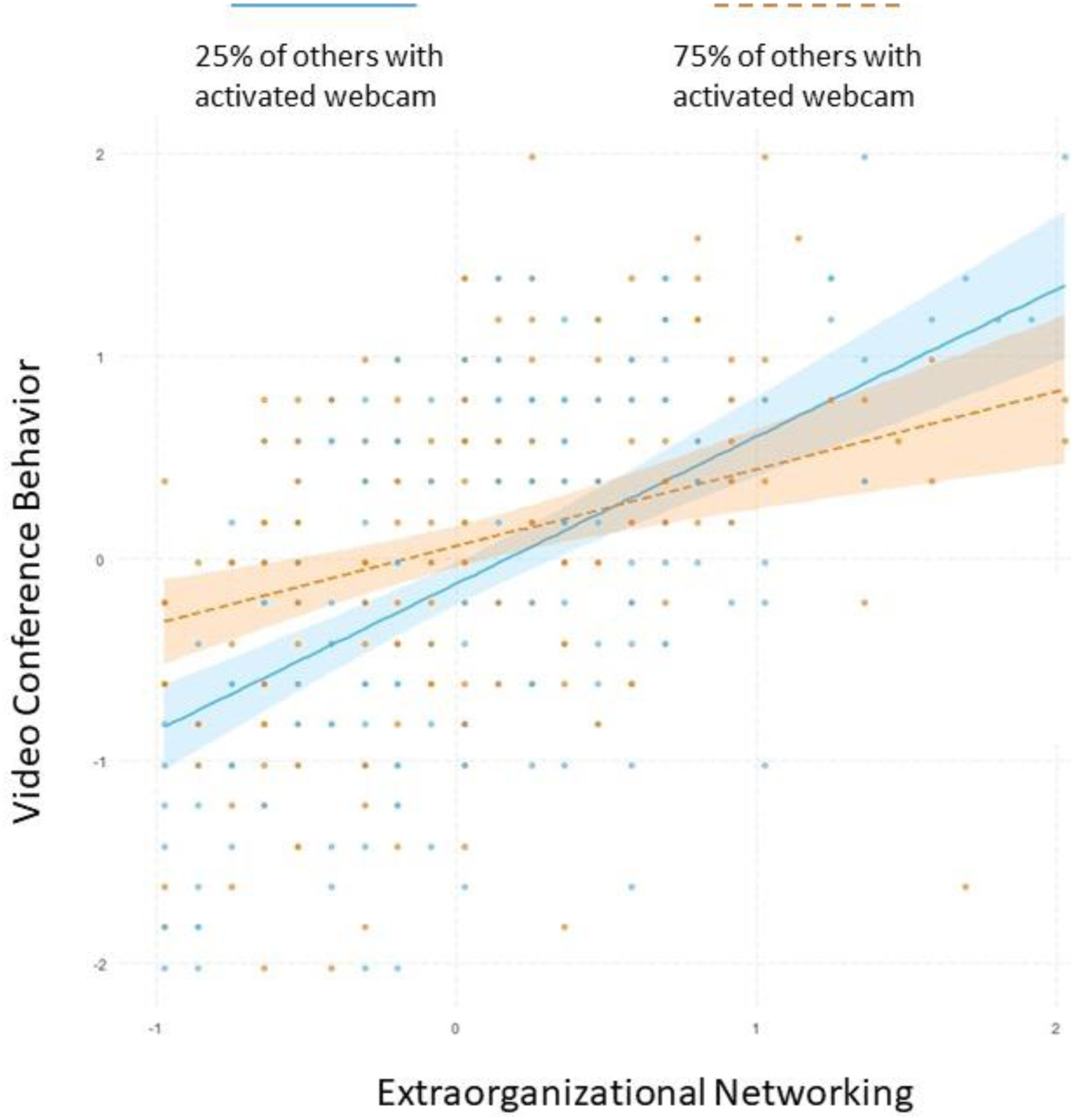
Findings were also in line with H1d that assumed that the effect of proactive networking was independent of the percentage of video camera users. In contrast, such an interaction effect was expected for reactive networking but not found. Thus, H1e must be rejected (see Table 2, Model 2). Moreover, proactive networking was no longer a significant predictor when interaction terms were included, whereas external networking remained a significant positive predictor. The control variables and reactive networking showed no significant effect on active video conference behavior for either model.
Another series of regression analyzes was conducted to test the effects of anxiety towards unknown people and knowing the benefits of networking on active behavior in video conferences (H2 and H3); full results are depicted in Table 2. In line with H2, higher values of social anxiety were related to less active video conference behavior. Knowing the benefits of networking was not a significant predictor, so H3 had to be rejected (see Table 2, Model 3). Next, the interaction effects between social anxiety and knowing the benefits of networking with percentage of webcam users were added; this interaction was not significant for anxiety, so H4 was not supported (see Table 2, Model 4,). To test H4a, the items for active video conference behavior were split to analyze the interaction effect between social anxiety and knowing the benefits of networking for active video conference behavior during the conference as well as after the conference (i.e., contacting other attendees online). However, no interaction effect was revealed for contacting attendees of the video conference afterward, so H4a had to be rejected (see Table 2, Model 5).
In order to test the last three hypotheses, which were related to a comparison of all three scenarios (25%, 75%, and offline), regression with social anxiety as independent active video conference behavior as dependent variable, and social norms as moderator variable were performed. 3 For H5, both online scenarios were combined and it was tested whether differences in social anxiety levels influenced active video conference/offline event behavior in the scenarios (F (2,567) = 57.27, p < .001, R2 = .17). Active behavior in video conferences was significantly predicted by social anxiety with t (567) = −9.77, β = −.34, p < .001 and the online versus offline condition with t (567) = 4.82, β = 0.33, p < .001. However, in contrast to H5, people high in social anxiety showed more, not less, active behavior in the offline scenario than in the online scenarios; H5 is thus rejected.
Furthermore, when only examining the items for contacting others after the video conference/offline event, the effect became stronger (F (2,567) = 85.21, p < .001, R2 = .23). Again, social anxiety (t (567) = −7.82, β = −.34, p < .001) and the online versus offline condition had a significant effect, t (567) = 10.80, β = .93, p < .001. Moreover, when only using the items for the likelihood of contacting others after an event, even more variance (23.11%) can be explained with F (2,567) = 85.21, p < .001. H5a predicted a stronger effect, but in the opposite direction, so this hypothesis must also be rejected.
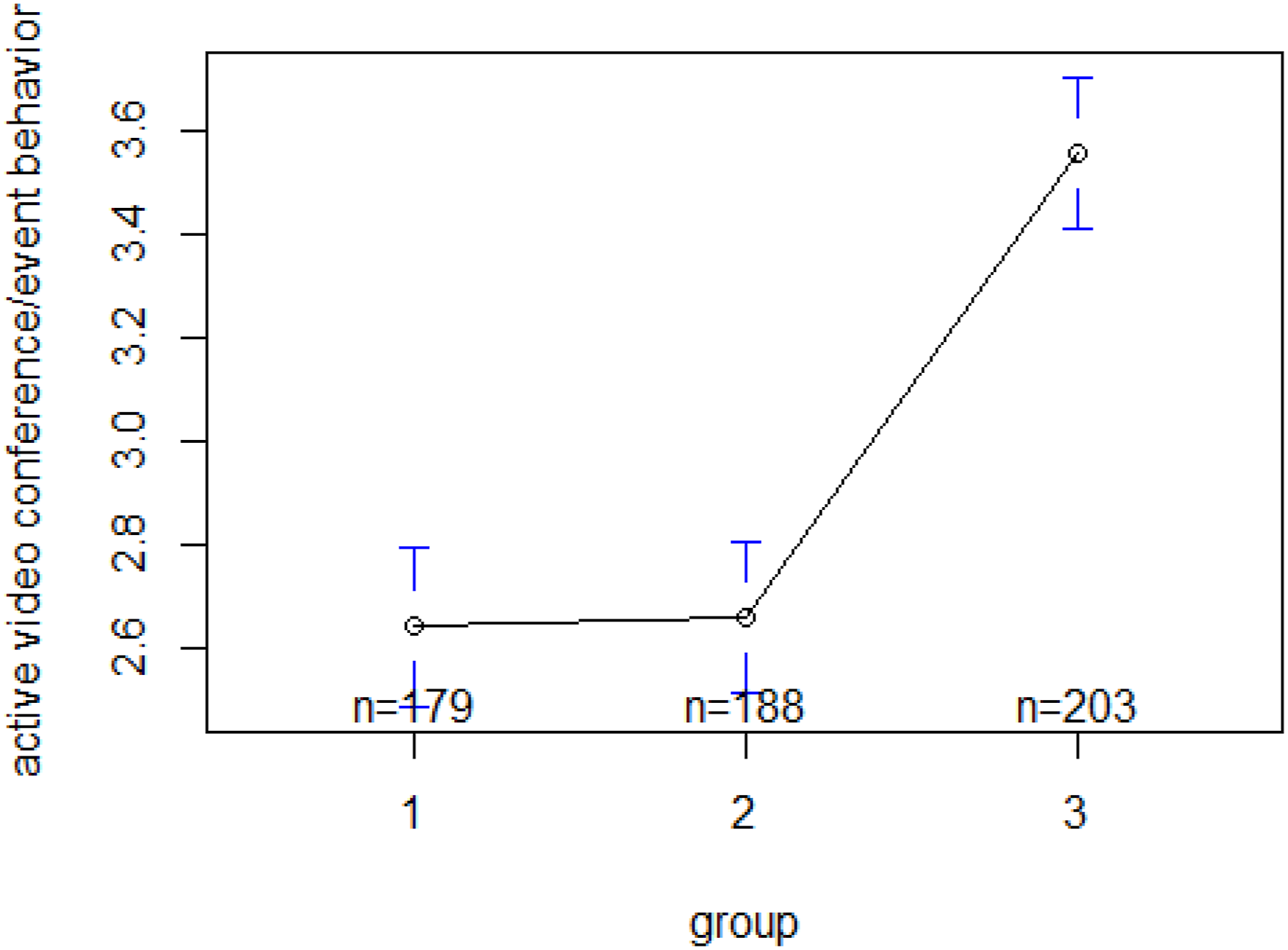
Finally, all three scenarios were compared with another regression to test whether the scenarios themselves and social anxiety resulted in different values in active behavior in video conferences/offline event (F (3,566) = 38.90, p < .001, R2 = .17). The inspection of the single regression coefficients showed that the difference between the 25% and the offline condition was significant with t (566) = 4.85, β = .39, p < .001; the difference between the 75% and the offline condition was also significant with t (566) = 3.46, β = .28, p < .001. The difference between the 25% and the 75% condition was not significant with t (566) = 1.40, β = .12, p = .163.
4
Therefore, H5b must also be rejected. See Figure 2 for a direct comparison of the adjusted means for each scenario condition. Adjusted means for active behavior in video conferences in each condition.
Overall Research Question
Regressions to Answer the Overall Research Question.

Note. AVC = Acceptance of Video Conferences; dependent variable: the values of active video conference behavior. All scales are mean centered.
*p < .05; **p < .01; ***p < .001.
Discussion
In this study, we aimed to detect interindividual and situational predictors of active behavior in professional video conferences, thereby extending prior work on video conferences to the domain of interacting with strangers (vs. team members or colleagues). We found that individual differences in networking tendencies predicted active video conference behavior. However, findings varied for the different aspects of networking. Results were most consistent for external networking, inconsistent for proactive networking and not significant for reactive networking. Social norms as situational predictors also mattered and interacted with external networking: Participants with low scores on external networking were more likely to show active video conference behavior in the vignette with more other attendees having activated their webcam, whereas participants with high scores on external networking showed more active behavior when few others had their webcam on. In contrast to our hypothesis, participants scoring higher in social anxiety were not more likely to show active behavior in video conferences compared to offline events; social anxiety, however, was related to less active video conferencing behavior.
Theoretical Contributions
Our work contributes to the field of networking research. As predicted, external networking consistently predicted active video conference behavior. This finding is interesting because the items of this scale describe mainly offline networking. Prior work has already demonstrated that this scale predicts LinkedIn use (Baumann & Utz, 2021; Utz & Breuer, 2019); we show that it also predicts behavior in video conferences. Work on networking often does not explicitly consider the medium; our results strengthen the assumption that there is a channel-independent component in networking.
We had expected that scales relevant for online networking behavior, proactive and reactive networking (Baumann & Utz, 2021), also predict active video conference behavior. We only found an effect of proactive behavior, and this effect disappeared when including the interaction terms with situational norms. Thus, the measures of proactive and reactive networking developed for building online networks seem to mainly cover platform-specific networking components.
Only external networking interacted with situational norms. Instead of the predicted stronger effect, we found an interesting cross-over pattern: As expected, people scoring low on external networking were more likely to show active video conference behavior when most others had switched their webcam on. Surprisingly, people scoring high on external networking showed even more active video conference behavior when only a minority had switched their webcam on. Future work could test whether they try to stimulate participation of others with their own active behavior.
Our work also contributes to the role of social anxiety and the Social Compensation Hypothesis. Social anxiety, more specifically, anxiety towards unknown people, was negatively related to active video conference behavior, and this effect was not compensated when people knew about the benefits of networking. In contrast to our expectations, anxious people preferred offline interactions over video conferences. We could thus not replicate the pattern found for professional social networking site use (Baumann & Utz, 2021), and the results are also not in line with the Social Compensation Hypothesis (Valkenburg et al., 2006), but rather support the Social Enhancement Hypothesis (Kraut et al., 2003). This indicates that behavior in professional social networking sites does not generalize to video conference behavior even though both social networking sites and video conferences are online environments. While we had assumed that video conferences provide similar benefits because people can switch off their video, use the chat, or can leave an uncomfortable situation immediately, the findings suggest that anxious people in fact shy away especially from the synchronous communication that requires on-the-spot reactions and makes it impossible to edit messages.
Relatedly, the observation that people high in social anxiety show rather active behavior during an offline event with eight other people than during an online video conference was surprising. Maybe offline events with eight persons are not scary and people high in social anxiety feel only uncomfortable at much larger offline gatherings. Future research could systematically vary group size to explore this question. However, this effect was found also for contacting people online (via LinkedIn or e-mail) after the video conference/offline event. It seems that people attending video conferences do not even think that video conferences can be utilized as a possibility for networking, and therefore, do not contact others afterward. Another possible explanation could be that video conferences do not create a feeling of personal connectedness and intimacy (Bailenson, 2021; Mesmer-Magnus et al., 2011; Zhu et al., 2011) to the other attendees, so participants are less likely to contact each other afterward.
Regarding situational factors, we found that social norms matter. Interestingly, the number of others switching on their webcam did not only predict the likelihood of switching on one’s own webcam, but also a range of other indicators of active video conferencing behavior, both during and after the video conference. Although research suggests that switching off one’s webcam can help to reduce zoom fatigue (Shockley et al., 2021), it might have negative effects on meeting outcomes and even the future career of individuals.
Inconsistent results were found for knowing the benefits of networking—ranging from weak positive correlations via non-significant to weak negative relationships—and active video conference behavior even though test power was high. We conclude that these are likely random effects and knowing the benefits of networking is not a relevant variable when predicting active video conference behavior. Reactive networking also did not predict video conference behavior. Although this finding is against our hypotheses, it seems plausible when considering that reactive networking refers to accepting contact requests, whereas our dependent variable focused more on proactive behaviors.
Practical Implications
Our results also have practical implications. Baumann and Utz (2021) stated that many employees are still not aware that online networking has similar benefits as offline networking (cf., Baruffaldi et al., 2017; Davis et al., 2020; Utz, 2016; Utz & Breuer, 2019). Thus, because online networking is a useful addition or compensation of offline networking, especially when offline networking is not possible due to a worldwide pandemic, people should become more aware of doing so. A study by Yang et al. (2021), that was published after the data collection of this study had started, also provided evidence that networking is important when working remotely. The study revealed that especially the so-called “bridging ties” to colleagues became weaker during the pandemic, whereas collaboration with familiar and well-known colleagues (“strong ties”) increased (Yang et al., 2021). Weaker bridging ties are important when it comes to creativity, innovation, and exposure to new ideas (Baer, 2010). Most people did not expect the pandemic to last for 2 years, but it turns out now that focusing too much on collaboration with close colleagues and not realizing that video conferences could be used as networking opportunities might come with long-term downsides. Moving away from focusing on negative effects of video conferencing such as zoom fatigue to potential positive effects of active video conferencing is thus important. The present study provides first evidence for video conferences as a possible tool to compensate the effect of working remotely.
When thinking about online networking, research focused on professional social networking sites so far. However, this study aimed to combine the online networking aspect and video conferences trying to figure out whether both have the same beneficial effects. Results showed that, at least so far, video conferences are not widely used for networking. The variable knowing the benefits of networking was no stable predictor of active behavior in video conferences, suggesting that people do not even think that video conferences may be helpful for networking. But the working environment changes and even if the pandemic is fully over, video conferences will stay because they offer people the opportunity to meet without traveling long distances (Brady & Pradhan, 2020; Olson & Olson, 2000). Therefore, organizations should become aware of the technical and communicational opportunities as well as the challenges that such online environments offer and, thus, more standards, rules, conventions, or norms should be established providing participants a direction on how to behave during video conferences. Maybe, if people start seeing video conferences like offline events and change their attitudes towards them, negative effects (i.e., zoom fatigue) could also be reduced. Furthermore, the study by Yang et al. (2021) stressed that engaging in networking is reduced when working remotely and organizations need to find new tools, for example, video conferences, to counteract this development.
The last point that should be highlighted relates to the results regarding social anxiety. It is important to become aware of the problem that people high in social anxiety are even more quiet and inhibited during video conferences than during offline events. Managers or people leading online meetings and events should try to compensate for this effect, for example, by trying to actively include rather shy participants in the interaction.
Strengths and Limitations of the Study
There are some strengths and limitations that will be discussed in the following. The first positive aspect is that any distorting effects regarding gender differences can be ruled out because of the balanced sample in this study. Moreover, the sample only included LinkedIn users and people who worked at least partially remotely during the past year which guarantees that the participants have experience with online networking and the online environment of video conferences.
A first limitation that must be considered when interpreting the results of this study is that the sample is rather well educated, with no participant without a high school degree. However, people with a higher educational degree are more likely to practice jobs in which video conferences are common. Besides, the proportion of men and women attending the study was equally distributed. Regarding the experimental vignettes, it should be noted that only hypothetical but not actual behaviors were assessed. Moreover, the individual characteristics and the dependent variable were assessed with self-report measures. So, we cannot rule out that participants may not have been able to correctly describe their skills or behavior, or might have given socially desirable answers. This limits the generalization of the results because it could be that participants overestimated their actual participation in video conferences. Future studies regarding this topic should try to replicate these findings in an experiment under more realistic circumstances. However, the vignette scenarios revealed expected effects (significant differences between the three groups). Regarding the items for measuring active video conference behavior the item structure was confirmed with an EFA. The reliability coefficients are just acceptable suggesting that future studies should slightly modify the items or create and validate a completely new instrument for assessing active behavior in video conferences.
Conclusion
We extended prior work on video conferencing by moving away from the effects of video conferences with close colleagues to video conferences with strangers. We showed that individual predictors play an important role; especially people high in networking skills and low in social anxiety engage in active video conference behavior. This rich-get-richer effect poses the risk of a further divide between skilled and less skilled employees. In a time of prolonged COVID-restrictions and a future with more virtual and hybrid meetings, helping people to view video conferences as networking opportunities becomes important.
Footnotes
Declaration of Conflicting Interests
The author(s) declared no potential conflicts of interest with respect to the research, authorship, and/or publication of this article.
Funding
The author(s) received no financial support for the research, authorship, and/or publication of this article.
Notes
Appendix
Illustrations that were used for the vignette scenarios. Note. On the left: scenario with 25% of other attendees with an activated webcam; on the right: scenario with 75% of other attendees with an activated webcam.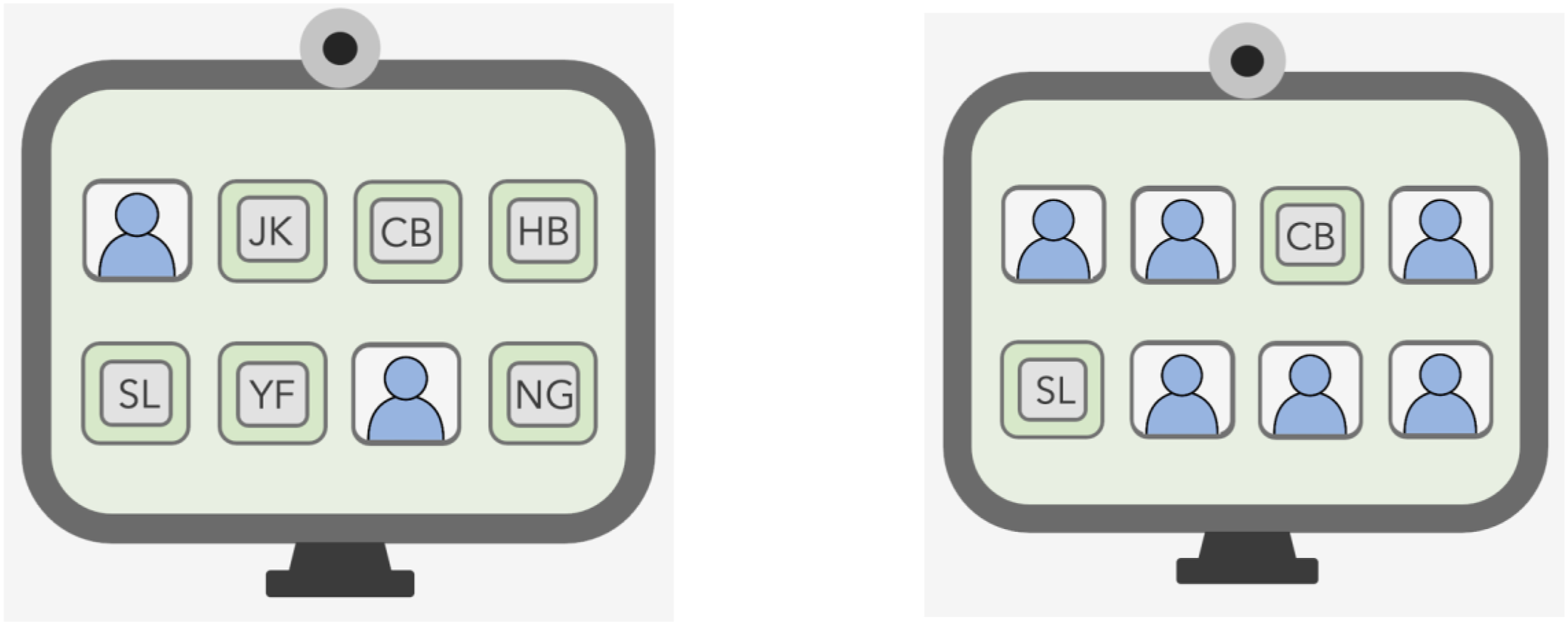
Item Structure and Factor Loadings of the Two-Factor Scale for Active Video Conference/Offline Event Behavior. Note. Items differed in the wording for the online and offline scenarios.
Nr.
Item
Factor loading
Scenario with 25% camera on
Scenario with 75% camera on
Offline scenario
Factor 1
Factor 2
Factor 1
Factor 2
Factor 1
Factor 2
1a
How likely is it that you would turn on your camera in this situation?
.599
.578
1b
How likely is it that you will self-initiatively try to talk to the other participants of the event before it has officially started (e.g., in the form of small talk)?
.761
2
How likely is it that you will try to talk to the other participants of the video conference before it has officially started (e.g., in the form of small talk)?
.991
.770
2b
How likely is it that you will self-initiatively try to talk to the other participants of the event during a break (e.g., in the form of small talk)?
.896
3
How likely is it that you will try to talk to the other participants of the video conference during a break (e.g., in the form of small talk)?
.469
.567
3b
How likely is it that you will try self-initiatively to talk to the other participants after the event (e.g., in the form of small talk)?
.644
4
How likely is it that you will try to contact the other participants after the video conference/event via social networking sites?
.768
.974
.716
5
How likely is it that you will try to contact the other participants after the video conference/event via other means such as e-mails?
.596
.539
.792
Differences between the means of active video conference behavior between the three scenarios. Note. 1 = scenario with 25% of other attendees using the webcam; 2 = scenario with 75% of the other attendees using the webcam; 3 = offline event scenario.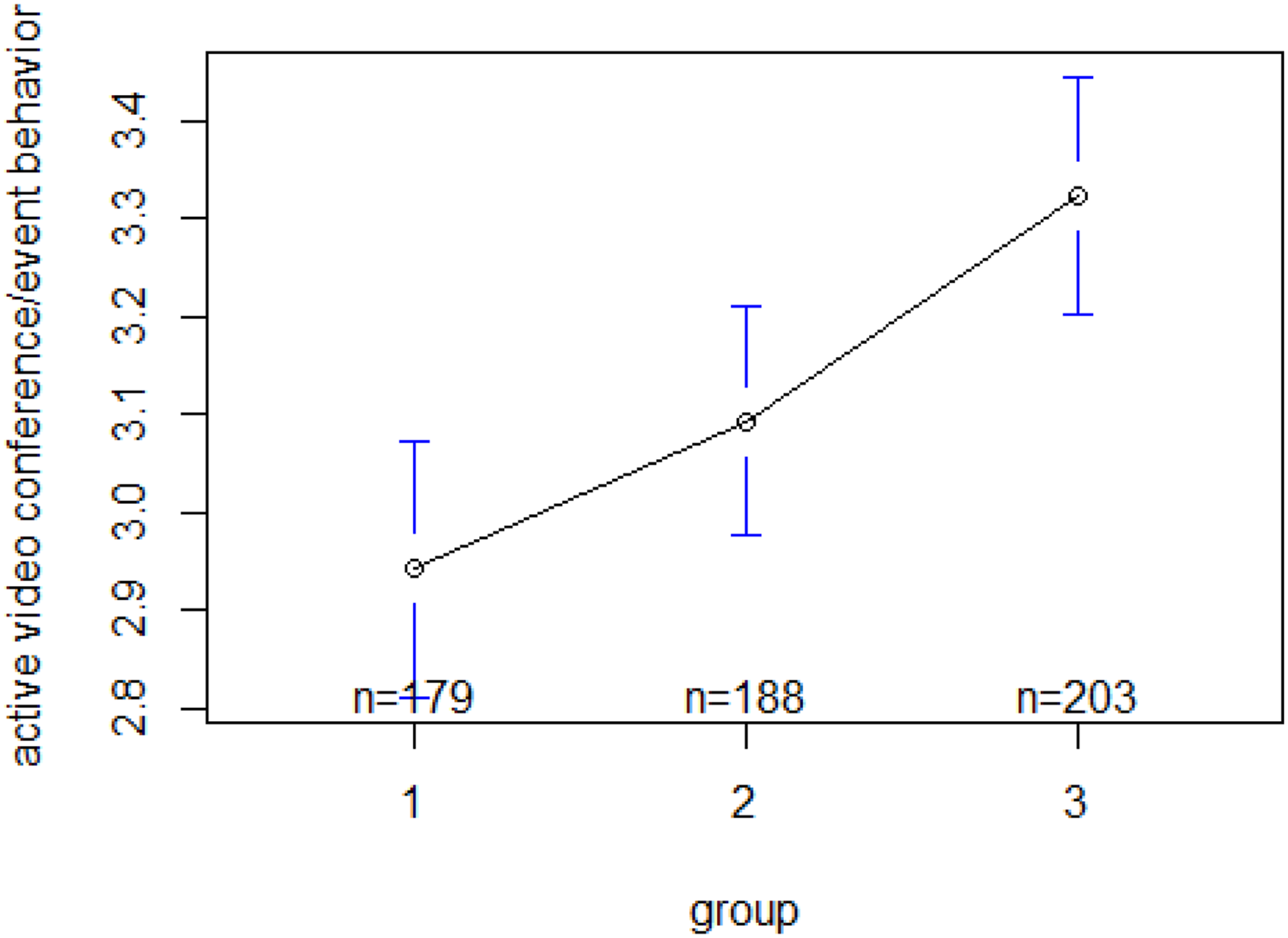
Differences between the means of contacting others after the video conference/event between the three scenarios. Note. 1 = scenario with 25% of other attendees using the webcam; 2 = scenario with 75% of the other attendees using the webcam; 3 = offline event scenario.