






Abstract
The potential for being “liked” on social networking sites to increase life satisfaction and reduce loneliness was tested in a nationally representative web survey and again over time. The initial sample was matched to U.S. Census percentages for sex, race, ethnicity, age, and region of residence in October of 2019 (N = 1250). A smaller group of respondents was surveyed in January and April of 2020, with the final wave occurring after the COVID-19 pandemic had begun (N = 665). Results suggest that having posts liked on sites including Facebook, Twitter, and Instagram contributes to life satisfaction, and life satisfaction mediates the influence of networked social likes on loneliness. Digital demonstrations of social support relate to thinking life is good, which can diminish perceived isolation. This was true in the lead-up to the pandemic, and in the midst of it, with social likes reducing loneliness by first increasing one’s sense of cognitive well-being.
U.S. citizens are lonely (DiJulio et al., 2018; Leland, 2022). Young Americans 18–22 are the loneliest (Cigna, 2018, 2020). They spend less time interacting in person, and more of it online, with reliance on computers, the Internet, and social networking sites all increasing significantly during the COVID-19 pandemic (Bouchillon, 2022; De’ et al., 2020). Three-fourths of citizens were using a social network at least once a day (Auxier & Anderson, 2021). One-third liked, shared, or posted content more than 10 times a day (Pew Research Center, 2021), and spending too much time social networking can spark feelings of inadequacy, from comparing oneself with curated versions of other people (Wirtz et al., 2021).
However, social networking has also been associated with feeling connected to friends and family, who can offer valuable social support (Deters & Mehl, 2012). Supportive interactions on these sites are suggested to increase life satisfaction as well (Oh et al., 2014), with “likes” as a reliable way of demonstrating social support (Carr et al., 2018; Wohn et al., 2016). Yet the benefits of being “liked” for cognitive and affective well-being are rarely tested, while a tendency to highlight the negative effects of social media use in general has prevented a thorough discussion of its merits from occurring (Bouchillon, 2022; Twenge, 2017, 2019). Past findings tend to rely on narrow collegiate samples as well, which led to the use of a nationally representative web survey, and a panel, to trace the implications of networked social likes for life satisfaction and loneliness in the U.S.
The initial sample is closely aligned with Census percentages on key demographics (e.g., sex, race, ethnicity, age, and region; see U.S. Census Bureau, 2019a, 2019b, 2019c). This should give it high external validity, allowing results to generalize to the population (Walter et al., 2019). Longitudinal surveys are also used to establish time order, which is a key step in showing causation (e.g., that being liked leads to increasing cognitive and affective well-being; see Wimmer & Dominick, 2014). And by April of 2020, the COVID-19 pandemic was underway, allowing this research to test whether being liked remotely relates to cognitive or affective well-being in a crisis. The potential for networked social likes to increase life satisfaction and reduce loneliness is tested.
The Construct of Subjective Well-Being
Defined as the combination of “feeling good and functioning well,” subjective well-being consists of both cognitive and affective components (Ruggeri et al., 2020, p. 1). The cognitive aspect of well-being is conceptualized in terms of life satisfaction, or evaluative judgments about the conditions of existence (Pavot & Diener, 1993, 2008). This entails a belief that “life is good, meaningful, and worthwhile” (Maddux, 2018, p. 3), with life satisfaction impacting, and being impacted by, affective states including loneliness. Loneliness is the perception of being isolated from other people (Cacioppo et al., 2015, p. 734), as a “gnawing, chronic disease without redeeming features” (Cacioppo & Cacioppo, 2012, p. 446). Loneliness is also related to irritability, depression, and increased chances of premature death (Cacioppo & Cacioppo, 2018; Miller, 2011).
Loneliness arises when social support is perceived to be deficient in some way (Weiss, 1973), with one-third of Americans reporting they were feeling lonely either “frequently” or “all of the time” during the coronavirus pandemic (Weissbound et al., 2021). Personal networks shrank, and this added to the sense of isolation (Kovacs et al., 2021). But increases in loneliness were less noticeable for those who were still interacting with family and friends (Kovacs et al., 2021). Younger generations relied more heavily on mobile phones and social networking sites to maintain these connections (Bouchillon, 2022; Huang et al., 2021). Feeling satisfied with electronic communication was related to diminished loneliness as well (Juvonen et al., 2021). But their study used a small (N = 295) and mostly female sample (83%). So the question of whether supportive digital interactions can reduce loneliness in the general population remains.
Associations Between Life Satisfaction and Loneliness
It is by now apparent that life satisfaction and loneliness are inversely associated (Andrew & Meeks, 2018; Ozben, 2013). Loneliness, as a negative affective state, seems to reduce optimistic thinking about life (Marttila et al., 2021; Tian et al., 2018). Feeling cut off from other people can lead individuals to evaluate their existence as worse, and this has been demonstrated in representative samples from countries such as China (Tian et al., 2018) and Finland (Marttila et al., 2021). Yet results from the United States have failed to materialize, which leads to hypothesizing that loneliness will be negatively related to life satisfaction in a group of respondents resembling U.S. Census percentages, and again over time. Demographic variables used to construct the initial sample are controlled for, given that life satisfaction can diminish past the age of 70 (Baird et al., 2010), and that women are generally more satisfied with life than men (Joshanloo & Jovanović, 2020). After accounting for these influences, loneliness should be inversely associated with life satisfaction (Marttila et al., 2021; Tian et al., 2018). Perceived isolation is suggested to degrade one’s experience of existence.
Research has also failed to establish a preeminent direction of influence between life satisfaction and loneliness, with studies from Turkey suggesting that positive evaluations of existence can be used to reduce perceived isolation (Ozben, 2013; Tümkaya et al., 2008). Findings from the U.S. support this notion, where thinking life is good appears to promote a sense of connectedness (Andrew & Meeks, 2018; VanderWeele et al., 2012). Life satisfaction should relate to diminished loneliness in a nationally representative sample, and over time (Ozben, 2013; Uram & Skalski, 2022). A research question is used to compare the size of the associations between these measures, to determine which direction of influence is more strongly significant. This would aid in thinking about a causal sequence (Wimmer & Dominick, 2014).
The Value of Being Liked on Social Media
Involvement in committed relationships can increase life satisfaction and reduce loneliness (Bucher et al., 2019; Hamermesh, 2020), with online modes of communication providing new arenas for establishing and maintaining social connections (Twenge, 2017). Facebook (Valenzuela et al., 2009), Twitter (Ndasauka et al., 2016), and Instagram use (Mackson et al., 2019) each contribute to life satisfaction at various points in past research. Perceiving some benefit of using social networking sites has also related to life satisfaction (Raza et al., 2020), as has social networking in general (Huang et al., 2021).
Satici (2019) found that Facebook users with more friends were particularly satisfied with life, while Oh and colleagues (2014) have shown that supportive interactions on social networking sites additionally contribute to life satisfaction. Likes are a good way of demonstrating social support (Carr et al., 2018), and users experience these likes as a good thing even when there is no implicit value associated with them (Wohn et al., 2016). But a reliable scale for networked social likes has yet to emerge, and the concept is often measured using single items instead (Scissors et al., 2016). These include the frequency with which one’s posts are liked, or by asking them to estimate how many likes a recent post received (Hong et al., 2017). Survey takers can also assess whether their posts receive more likes or fewer likes than other users (Carr et al., 2018).
For the present study, a three-item scale for social likes was created by bringing together single-item measures from past research (Carr et al., 2018; Hong et al., 2017). This is used to test the hypothesis that networked social likes will contribute to life satisfaction in a nationally representative sample, and again over time. Digital social support should improve one’s experience of existence (Juvonen et al., 2021; Oh et al., 2014), and having posts liked more frequently and heavily are expected to contribute to thinking about life optimistically (Huang et al., 2021). This would be evidence of the potential for networked social likes to increase cognitive well-being before a pandemic and during it.
Likes and Loneliness
Satici (2019) also found that Facebook users with more friends were less lonely, with Cipolletta et al. (2020) showing an increase in loneliness after users received no “likes” on Instagram. Wallace and Buil (2021) demonstrated that receiving more likes reduced the sense of loneliness, suggesting that “social exclusion may not manifest from a complete lack of social interaction, but rather may occur when individuals do not receive expected or desired feedback” (Hayes et al., 2018, p. 1). Other studies have failed to find an association between social networking in general and loneliness (Dienlin et al., 2017; Yavich et al., 2019), but networked social support appears to diminish perceived isolation (Lee et al., 2013; Lin et al., 2020). This leads to the expectation that likes will be inversely related to loneliness here (Mackson et al., 2019). Demonstrations of social support on social networking sites should curb any sense of being cut off (Carr et al., 2018).
Networked social support is suggested to have become especially important for subjective well-being during the pandemic (Juvonen et al., 2021). Citizens were relying on technology to communicate, and those who felt more satisfied with computer-based modes of social contact were better able to stave off loneliness (Juvonen et al., 2021). They maintained some semblance of social support, with demonstrations of support improving how individuals think about themselves and existence (Lin et al., 2020). This self-perception can also mediate the influence of networked social support on loneliness, for helping individuals feel more connected (Lin et al., 2020).
Likes are used as evidence of networked social support (Carr et al., 2018), and being liked on social networking sites has been positively associated with life satisfaction, which is one aspect of self-perception (Huang et al., 2021; Miller et al., 2019). Life satisfaction has been inversely related to loneliness as well (Andrew & Meeks, 2018; Oh et al., 2014; Pavot & Diener, 2008), which should allow networked social likes to address loneliness indirectly, through life satisfaction (Juvonen et al., 2021; Lin et al., 2020). Improving evaluative judgments about existence and how good it is should carry the influence of networked social support to greater reductions in loneliness.
Method
Wave 1 Full Sample (N = 1250) and Panelist Demographics (N = 665).
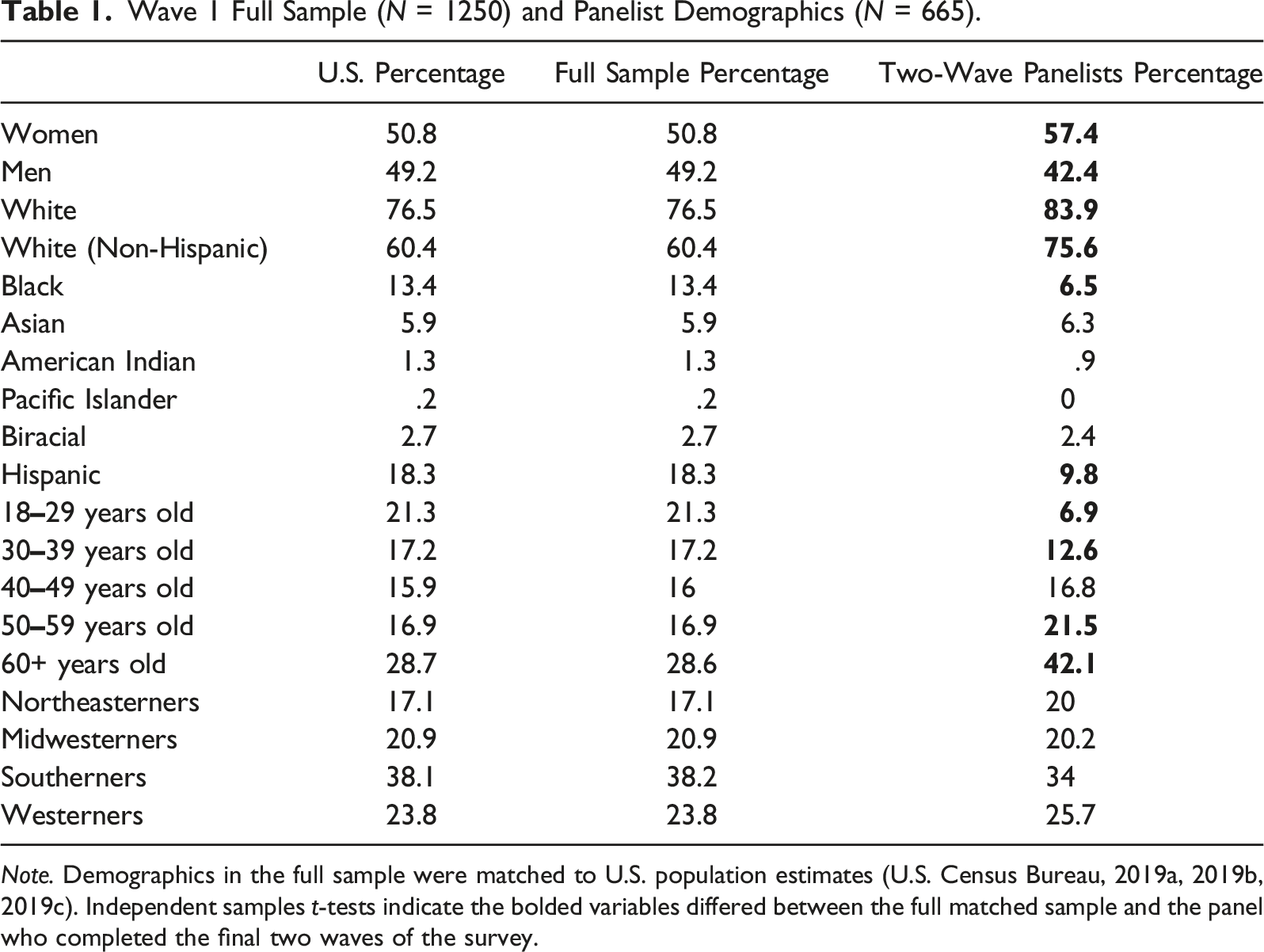
Note. Demographics in the full sample were matched to U.S. population estimates (U.S. Census Bureau, 2019a, 2019b, 2019c). Independent samples t-tests indicate the bolded variables differed between the full matched sample and the panel who completed the final two waves of the survey.
Control Variables
Demographic measures used to create the matched sample included sex (50.8% female), race (76.5% White), ethnicity (18.32% Hispanic), age (Mdn = 47, M = 47.52, SD = 17.51), and region of residence (38.16% Southern; see Table 1). Panelists who returned in January and April of 2020 were significantly more female (57.4%), Welch’s t (1364.89) = 2.82, p = .005; Whiter (83.9%), Welch’s t (1529.74) = 3.99, p < .001; less Hispanic (9.8%), Welch’s t (1676.84) = 5.38, p < .001; and older (Mdn = 57, M = 55.08, SD = 15.39), Welch’s t (1512.19) = 9.75, p < .001. Panelists who completed the second and third waves were also less Southern (34%), but this difference was not significant, Welch’s t (1384.13) = −1.82, p = .069, with sex, race, ethnicity, and region being represented using dummy codes in regressions.
Focal Variables
Social likes
Component Matrix for Social Likes Items.

Life satisfaction
Four items were drawn from Diener et al. (1985), and used to measure cognitive well-being. The items were presented as semantic differentials, with respondents being asked to choose between negatively and positively polarized options. Options were bounded on a 5-point scale, asking respondents to consider whether, “In most ways, the conditions of my life are: (a) not ideal/ideal; (b) poor/excellent; (c) unsatisfactory/satisfactory; (d) imperfect/perfect.” The four items were averaged in the full sample (Cronbach’s α = .877, M = 3.67, SD = .87), and in the panel during January of 2020 (Cronbach’s α = .908, M = 3.69, SD = .81) and April of 2020 (Cronbach’s α = .899, M = 3.73, SD = .77). They held together reliably.
Loneliness
Three items from Hughes and colleagues (2004) were used to measure loneliness, as a negative affective state. Respondents were asked to agree or disagree on a 5-point Likert scale as to whether, “(a) I lack companionship; (b) No one really knows me well; and (c) I feel isolated from others.” Responses held together reliably in the full sample (Cronbach’s α = .837, M = 2.49, SD = 1.05), and in January of 2020 (Cronbach’s α = .829, M = 2.34, SD = 1.0) and April of 2020 (Cronbach’s α = .832, M = 2.32, SD = .97).
Testing Assumptions
Multicollinearity was not an issue in regressions, as no tolerance values fell below .75, and no VIF values rose above 1.5 (see Hair et al., 1995). QQ plots indicate that linear relationships existed between the set of regressors and predicted outcomes. Scatterplots of standardized residuals with standardized predicted values appeared to be homoscedastic as well. To address the potential for heteroskedasticity to still exist, robust standard errors were used via the HC3 estimator in PROCESS and the MLR estimator in Mplus (Hayes, 2017; Muthén & Muthén, 2017). Little’s tests indicate data were missing completely at random for variables included in regressions in both the full sample, χ2 (3, N = 1018) = 1.07, p = .785, and in the panel over time, χ2 (10, N = 513) = 17.01, p = .074. This allows for the use of listwise deletion, which PROCESS specifically uses.
Paired Sample T-Tests of Variable Means for Panelists (N = 665).

Note. Paired samples t-tests and homogeneity of variance tests indicate that all measures are at least weakly stationary over time. No variable means significantly differed between January and April of 2020, and neither did variances. An elapsed value was used for the mean-difference test of age, to account for the three-month period between waves (.25 years).
Results
Regression Predicting Life Satisfaction in the Full Matched Sample (N = 1250).
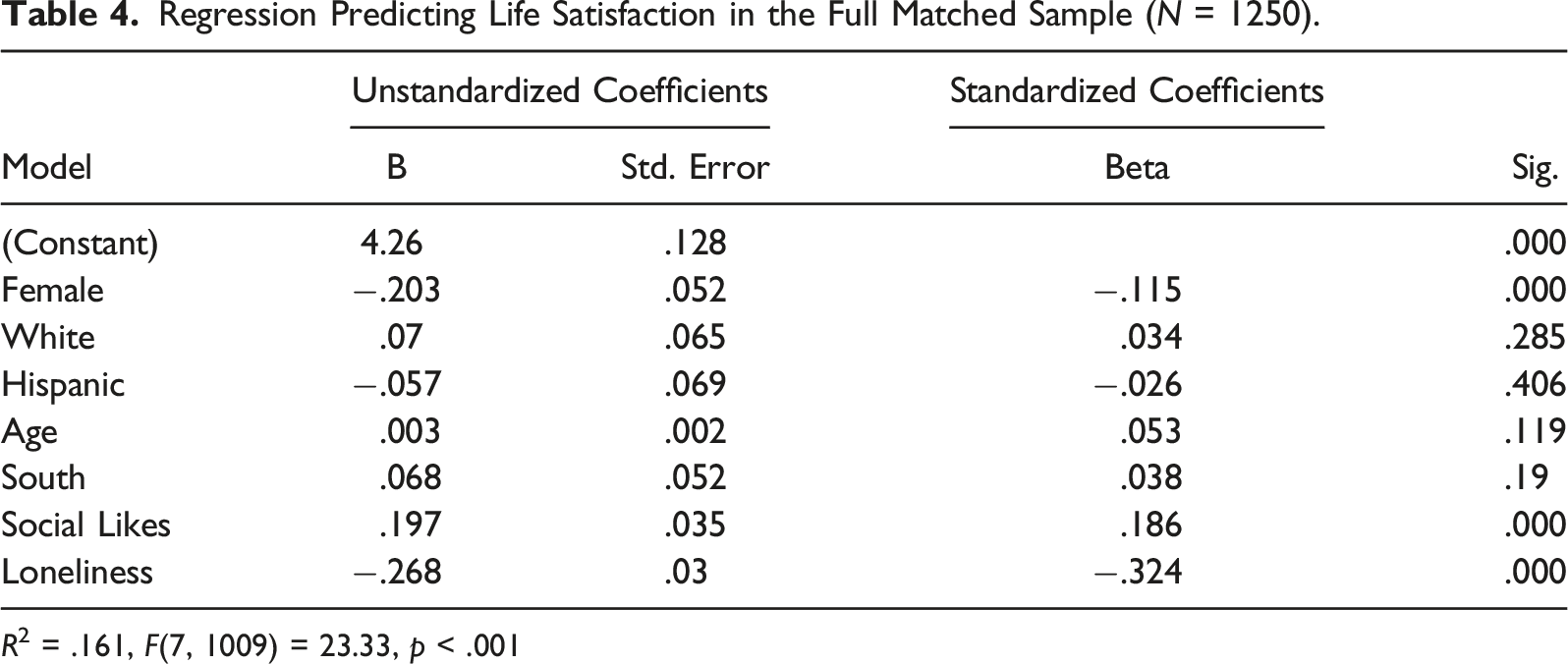
R2 = .161, F(7, 1009) = 23.33, p < .001
Regression Predicting Loneliness in the Full Matched Sample (N = 1250).
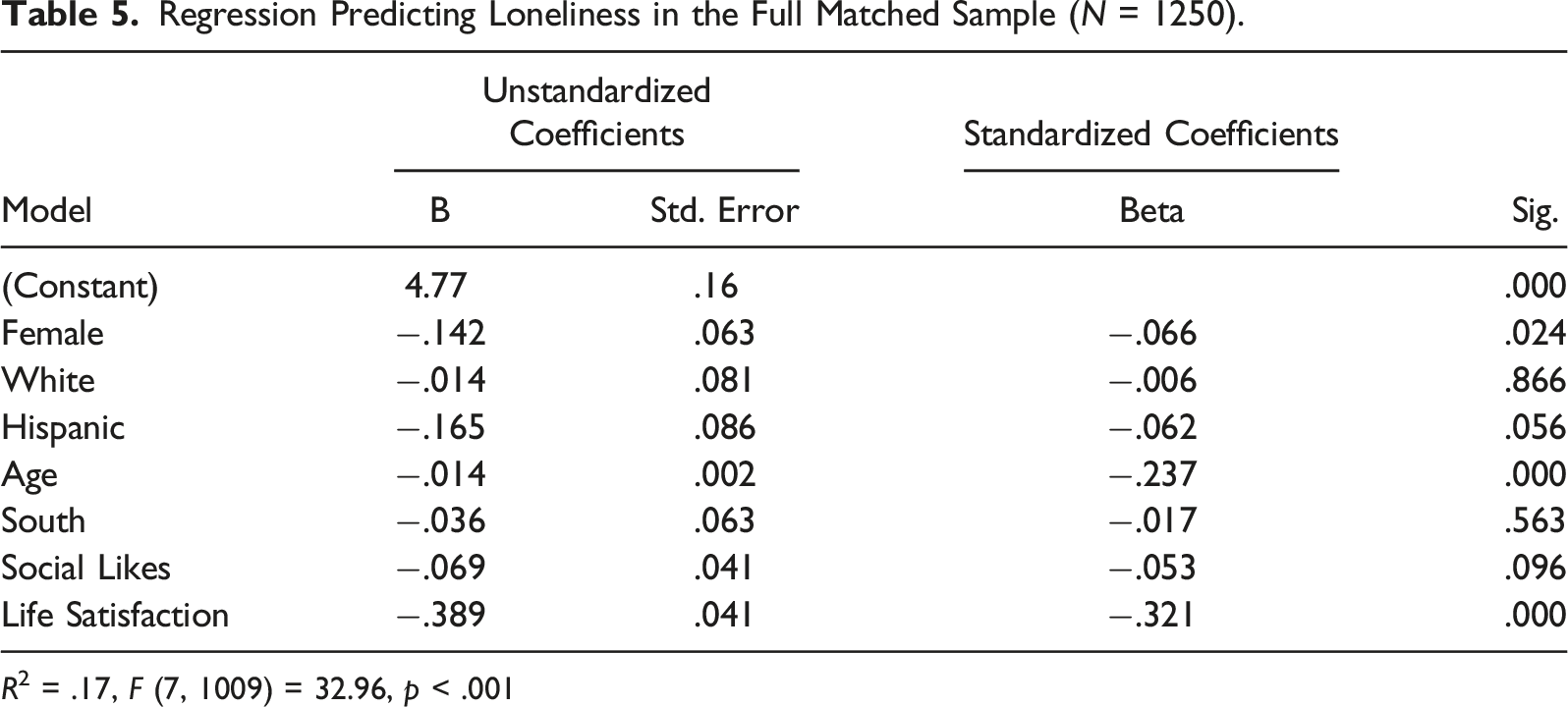
R2 = .17, F (7, 1009) = 32.96, p < .001
Research Question 1 asked which association was more strongly significant over time, from loneliness to life satisfaction, or the inverse, and this was tested using a cross-lagged panel in Mplus (see Figure 1; Muthén & Muthén, 2017). Respondent demographics were controlled for (e.g., sex, race, ethnicity, age, and region of residence), and measurement error was corrected for exogenous variables in the model. These corrections were allowed to covary, in accordance with the half-longitudinal approach, with regression residuals being permitted to covary as well (see Maxwell et al., 2011). Fit indices suggest the model depicts the data well, although the chi-square test of fit missed the cutoff for good fit, χ2 (15) = 77.15, p < .001. But this measure is closely related to sample size, and almost always significant in samples as large as this one (Schermelleh-Engel et al., 2003). Alternative fit indices demonstrate good fit (CFI = .943; RMSEA = .079, SRMR = .059; see Hu & Bentler, 1999), and results of a Wald test indicate the path coefficient from life satisfaction to reduced loneliness (γ = −.132, Γ = −.157, p < .001) was significantly larger than the one from loneliness to diminished life satisfaction (γ = −.07, Γ = −.054, p = .029; Wald χ2 = 4.41, p = .036). Life satisfaction predicts loneliness reduction more strongly than the inverse, with Figure 2 presenting the half-long model. Table 6 lists the focal associations therein. Hypothesized model. Half-longitudinal path model. Note. Asterisks are used to indicate significance values in the cross-lagged panel (* p < .05; ** p < .01; *** p < .001). Maximum-Likelihood Estimates in Half-Longitudinal Model.
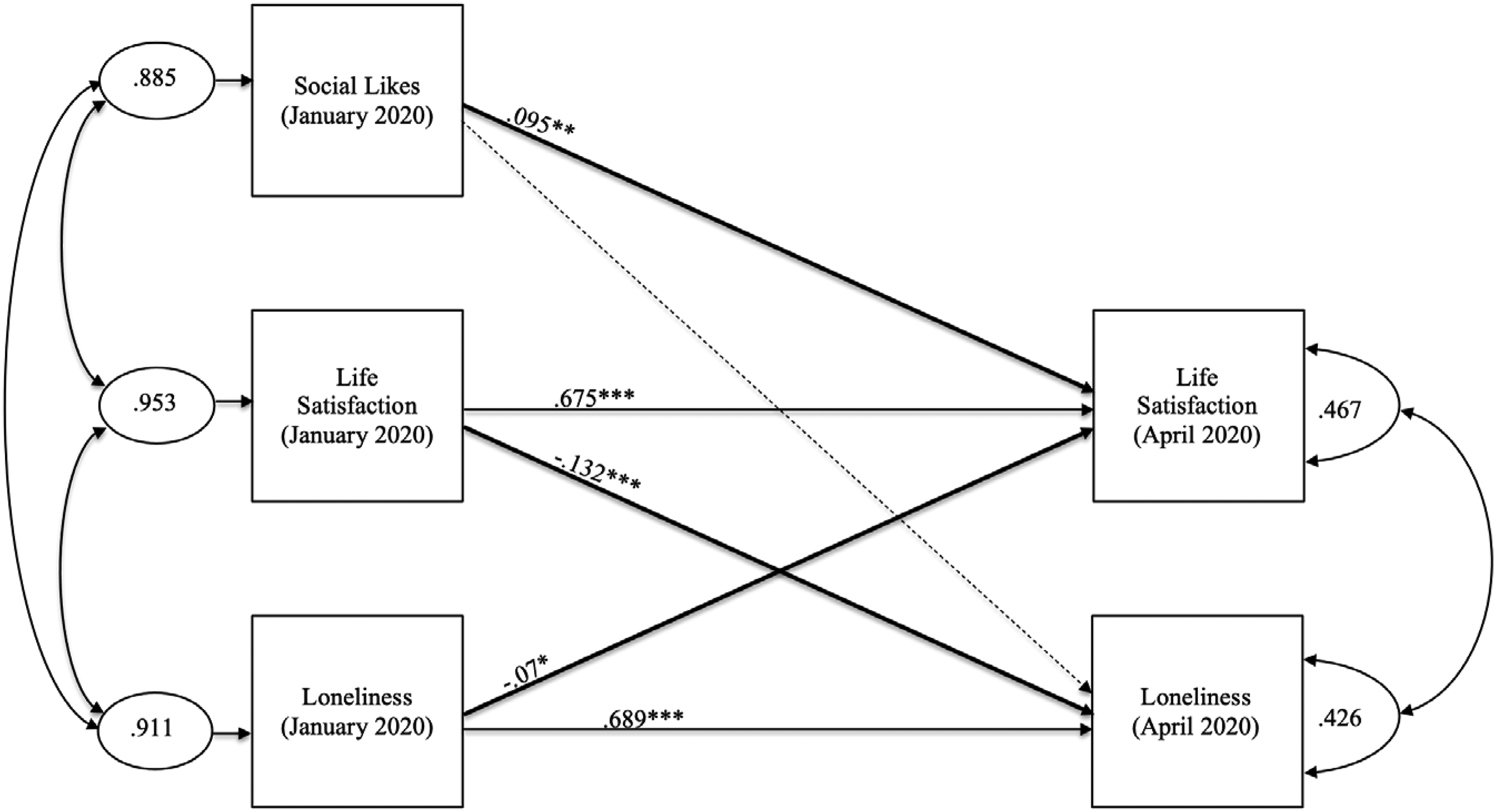
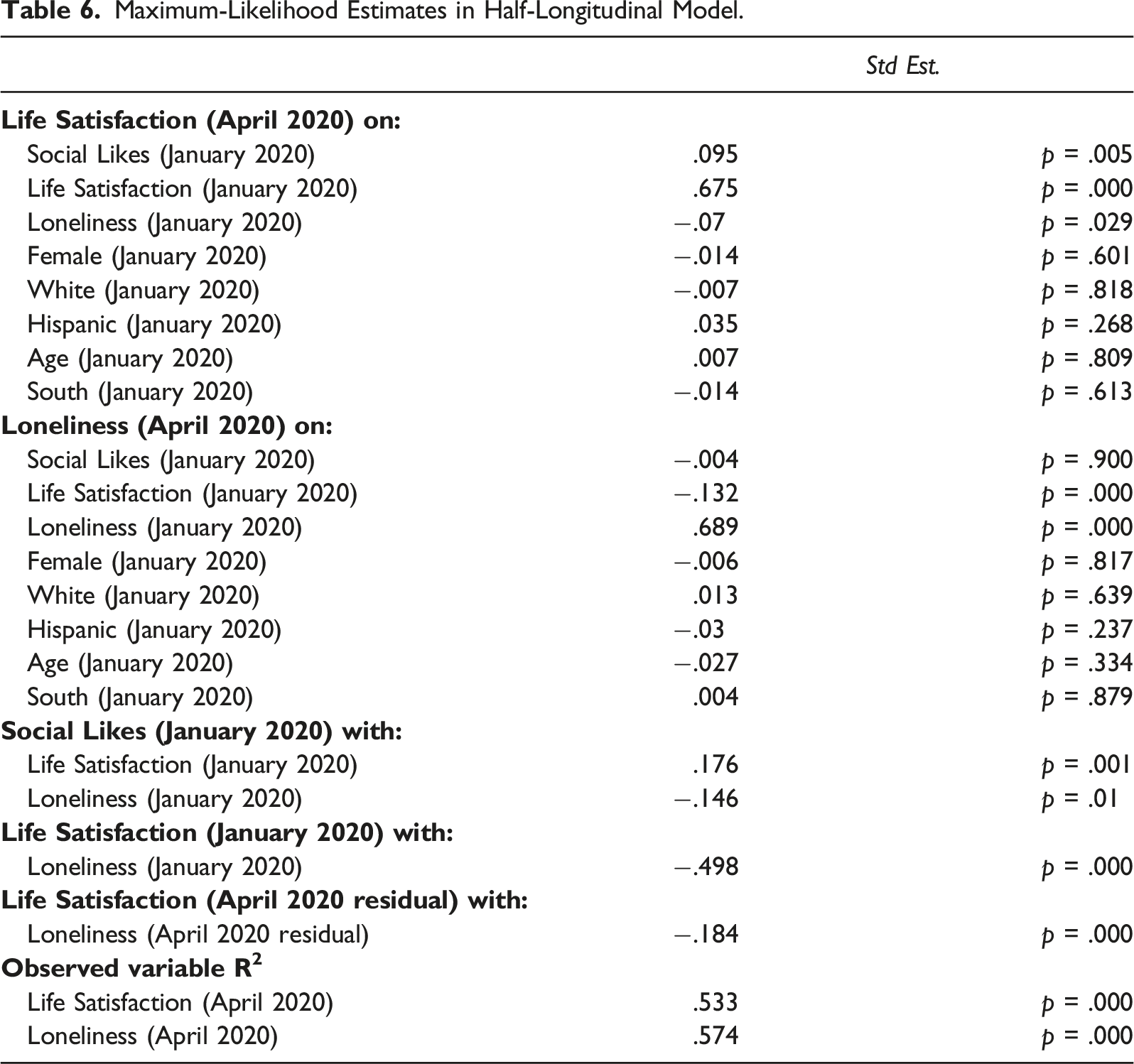
Hypothesis 3 predicted that having posts liked on social media would also relate to life satisfaction, and this was tested in both the full sample (see Table 4), and in the panel (see Table 6). Results from the matched sample indicate that being liked on social media was a source of life satisfaction in October of 2019 (β = .186, B = .197, p < .001), and this was true over time as well, between January and April of 2020 (γ = .095, Γ = .09, p = .005). Feeling appreciated on social networking sites predicted cognitive satisfaction with life even after the start of the pandemic (see Figure 2).
Hypothesis 4 predicted that having posts liked on social media would relate to diminished loneliness. This association was not significant in the full sample (β = −.053, B = −.069, p = .096; see Table 5), and being liked was not directly related to loneliness over time either, between January and April of 2020 (γ = −.004, Γ = −.005, p = .900; see Table 6, Figure 2). That said, networked social likes and loneliness were negatively correlated in January of 2020 (φ = −.146, p = .01).
Hypothesis 5 predicted that having posts liked on social media would reduce loneliness indirectly, through increasing life satisfaction. Results from the full sample using the PROCESS macro (Model 4) indicate that being liked did not have a significant direct effect on loneliness (β = −.053, B = −.069, p = .096). But it did have a significant total effect (β = −.126, B = −.162, p = .002), and there was a significant indirect effect as well, through increasing life satisfaction (point estimate = −.094, 95% CI [−.13, −.062]).
In the panel over time, being liked was not directly related to loneliness either (γ = −.004, Γ = −.005, p = .900), and it did not have a significant total effect (γ = −.022, Γ = −.026, p = .503). Yet indirect effects can exist even in the absence of direct and total effects (Hayes, 2017). Bootstrapping the bias-corrected confidence interval indicates that being liked on social media diminishes loneliness indirectly (γ = −.013, Γ = −.014, 95% CI [−.031, −.005]). Life satisfaction carries the influence of networked social likes to loneliness reduction.
Discussion
Few attempts have been made at tracing the impacts of networked social likes on cognitive and affective well-being, with the negative affective state of loneliness reaching epidemic proportions during the pandemic (Leland, 2022). A survey was matched to U.S. Census percentages in October of 2019 to address this, with a half-longitudinal panel being drawn between January and April of 2020. The potential for networked social “likes” to contribute to life satisfaction and reduce loneliness was tested, with the final wave of the survey being conducted after the COVID-19 pandemic had begun (Karni & McNeil, 2020).
In both the nationally representative sample and the panel, loneliness was inversely related to life satisfaction. Feeling cut off from other people can reduce the sense that life is good, but life satisfaction was negatively related to loneliness as well, and this was the stronger direction of influence. Thinking about existence in a positive way appears to improve one’s emotional state, specifically in terms of feeling less isolated, and this happens more often than loneliness undermines life satisfaction, although it still can.
Being liked on social networking sites was related to life satisfaction as well. Digital social support appears to improve one’s experience of existence. Yet likes were not directly related to loneliness, and the potential for networked social likes to reduce loneliness moves indirectly instead. Digital appreciation first contributes to thinking about life more positively, with life satisfaction spilling over to reduced loneliness in turn. These findings demonstrate that networked social likes, as a form of social support, relate to both cognitive and affective well-being, and the benefits of being liked can persist for months after the fact (Lee et al., 2013; Lin et al., 2020).
Yet to avoid the tendency for social networking to simply reinforce similar opinions, who these “likes” come from is also important, and research should look for ways of encouraging diverse social contact on social networking sites, and fielding diverse memberships. Older citizens tend to feel the loneliest, which makes social isolation particularly important to address for them (Hawkley et al., 2020). But a panel of older Americans here demonstrated its ability to improve life satisfaction and reduce loneliness through successful efforts of social networking. This was true in the full sample as well, and as a mode of communication, social networking sites are highly flexible. They have the potential to be used by young and old alike to improve their subjective well-being (Juvonen et al., 2021; Lin et al., 2020).
But limitations still exist here. Likes are assessed using self-reports, which could be prone to social desirability bias. An experiment is also necessary to show causation, with time order as a step in this direction (Wimmer & Dominick, 2014). It is more life satisfaction that predicts loneliness reduction than the inverse over time, and this allows networked social likes to reduce loneliness indirectly, through increasing life satisfaction. The phrasing of the social-likes prompt is also believed to be a strength, by referencing the three most popular social networking sites—Facebook, Twitter, and Instagram—while allowing for the inclusion of experiences from other networks. Across these settings, individuals who post successfully can increase their life satisfaction, and feel less lonely (Carr et al., 2018; Huang et al., 2021).
The social-comparative aspect of being liked is said to be key for operationalizing the concept (e.g., how many likes does one get compared to other users; see Carr et al., 2018). Yet the frequency of being liked and the average number of likes both loaded more strongly on the “likes” component here (see Table 2), indicating these elements are just as vital for its measurement, if not more so. These items also work better in combination, as they failed to remain stable over time when tested independently. This led to the use of a three-item scale for networked social likes, which was both reliable and stable, and is now contributed to the literature.
Networked social likes were initially included as an outcome in the cross-lagged panel, but this worsened model fit, and neither life satisfaction nor loneliness predicted being liked over time. So instead, likes are identified as the beginning of a probable causal sequence, with digital appreciation contributing to life satisfaction thereafter, which relates to feeling less lonely in turn. These are just two of the potential benefits of being liked, but the positive implications of social networking remain understudied in general. Future study should work to determine where “likes” are the most valuable, or which networks facilitate the largest increases in cognitive and affective well-being.
Footnotes
Declaration of Conflicting Interests
The author(s) declared no potential conflicts of interest with respect to the research, authorship, and/or publication of this article.
Funding
The author(s) received no financial support for the research, authorship, and/or publication of this article.
Data Availability
This data is available from the author by request.