






Abstract
Scholars have studied the relationship between incidental exposure (i.e., encountering political information unintentionally) and political participation. Nevertheless, the dynamic processes relating incidental exposure to political participation remain unclear. Building upon the political incidental news exposure (PINE) and social media political participation (SMPP) models, this study (N = 702) examines first- and second-level incidental exposure and its relationship to low-effort online and high-effort political participation. Furthermore, it examines whether perceived satisfaction from low-effort online participation moderates the relationship between incidental exposure and high-effort participation. Results suggest that second-level incidental exposure relates to greater low-effort online participation, which, in turn, opens a pathway to high-effort participation, especially when individuals perceive such participation as satisfying and able to address social and political issues. These findings provide a nuanced understanding of the pathways from incidental exposure to political participation, contributing to the broader literature on political communication and behavior in the digital age.
Keywords
Introduction
The current media environment enables individuals to encounter political information both intentionally and unintentionally. While some users actively search for information or customize their social media feeds, for example, to encounter information they want to consume, others accidentally stumble upon information without actively seeking it (Nanz et al., 2022). Although previous mass media environments in the 20th century allowed for the possibility of encountering information unintentionally, this possibility has increased in contemporary media environments with the emergence of new media technologies (Fletcher & Nielsen, 2018; Tewksbury et al., 2001). Specifically, people may unintentionally encounter political information online much more easily than before due to both social and algorithm curation; that is, through their social contacts who “like” and “share” content as well as through their usage history (Thorson & Wells, 2016; see also Gil de Zúñiga et al., 2017).
As political information becomes increasingly difficult to avoid in today’s media environment, understanding the consequences of such incidental exposure becomes even more important. An active and informed citizenry is central to the functioning of democratic society (Delli Carpini & Keeter, 1996), and scholars have long examined whether the Internet facilitates or hinders citizens’ political engagement. Building on this line of inquiry, research has turned its attention to incidental exposure as a potential driver of political participation. However, despite growing interest, the dynamic processes through which incidental exposure translates into political participation remain insufficiently understood (for an exception, see Matthes et al., 2020). This gap raises important questions about how, and under what conditions, unintentional encounters with political information may meaningfully contribute to democratic participation. Specifically, this study advances the existing research in three important ways.
First, instead of examining incidental exposure generally, this study differentiates between first- and second-level incidental exposure to political information, as considered in the political incidental news exposure (PINE) model (Matthes et al., 2020). Prior research has typically conceptualized incidental exposure as a single-dimensional construct, often without considering how individuals react after being exposed to the content. Moreover, many studies have included non-political content within this category. By distinguishing between passive scanning (first-level incidental exposure) and attention to encountered content (second-level incidental exposure) and focusing exclusively on political information, this study can speak more clearly to the processes relating incidental exposure to political participation.
Second, while numerous studies have examined various forms of political participation such as traditional vs. non-traditional and online vs. offline, this study also differentiates between low- and high-effort participation (see Knoll et al., 2020). This distinction is particularly important in the context of incidental exposure because individuals who encounter political information unintentionally typically devote only limited time, attention, or cognitive resources to it (Boczkowski et al., 2018). However, even in the case of first-level incidental exposure, the incidentally encountered information can serve as a heuristic cue that mobilizes individuals to engage in activities, such as clicking on or briefly interacting with content, that do not require substantial cognitive or physical effort (Heiss & Matthes, 2019). Prior research has long debated whether such low-effort activities function as superficial substitutes for high-effort participation (Christensen, 2011; Halupka, 2014; Morozov, 2009) or whether they can serve as legitimate gateways that stimulate further high-effort participation (Boulianne, 2015; Skoric et al., 2016). Although the social media political participation (SMPP) model proposes that incidental exposure may activate participatory goals that manifest across different effort levels, and that low-effort participation may open an indirect pathway from both first- and second-level incidental exposure to high-effort participation (Knoll et al., 2020), this remains empirically underexplored. By differentiating between these forms of participation, this study is able to investigate whether first- and second-level incidental exposure relate to high-effort participation indirectly through their relationship to low-effort participation.
Third, this study explores the role of perceived satisfaction as a potential moderator. Although there is considerable debate, both in the conceptual and empirical literature, regarding the relationship between low-effort online participation and high-effort participation, previous research largely has not considered the degree to which individuals perceive their engagement in low-effort participation as satisfying. This is important to consider, as some scholars have suggested that low-effort online participation, also referred to as “clicktivism” or “slacktivism,” might not lead to further meaningful engagement due to such behavior likely being enacted primarily as a low-cost means to obtain self-satisfaction (for a review, see Halupka, 2014). That is, although the SMPP model proposes that low-effort participation may open an indirect pathway from both first- and second-level incidental exposure, this may depend on perceived satisfaction. Specifically, when individuals find engagement in low-effort online activities to be personally satisfying, they may perceive that their civic responsibilities have been fulfilled and experience reduced motivation for more effortful engagement. By including perceived satisfaction as a moderator, this study examines the conditions under which incidental exposure either encourages or discourages high-effort participation through its relationship to low-effort online participation.
In addressing these gaps, this study seeks to offer a more nuanced understanding of how political participation unfolds following incidental exposure. Specifically, this study examines whether and how first- and second-level incidental exposure to political information relates to low-effort online and high-effort online and offline political participation. By considering the role of perceived satisfaction within the existing theorized model, this study hopes to clarify the potential indirect relationships between incidental exposure and high-effort participation.
Literature Review
Incidental Exposure and Political Participation
Early studies on information consumption assumed some level of intention. According to the uses and gratifications framework, for example, media users are assumed to be “active, purposeful, and selective in their media choices” (Krcmar & Strizhakova, 2009, p. 53). In other words, they take the initiative in selecting specific media content according to their goals and motivations (Rubin, 2009). Of particular relevance, those who actively consume media to learn about issues and public affairs experience greater political knowledge and engage in higher levels of political participation (Jung et al., 2011; Shah et al., 2005).
However, not all information acquired from the media results from active or goal-oriented intentions (Shahin et al., 2021). Indeed, people can come across information unintentionally, referred to as incidental exposure (Tewksbury et al., 2001). Moreover, as mentioned at the outset, this phenomenon has become more common in the new media environment due to the emergence of technologies that provide opportunities for people to stumble upon information (Fletcher & Nielsen, 2018; Tewksbury et al., 2001). In particular, there has been a growing likelihood of incidental exposure to information on social media compared to other types of media due to increased exposure to content via one’s social networks and usage history (Gil de Zúñiga et al., 2017; Thorson & Wells, 2016).
Scholars examining the effects of incidental exposure have focused on political knowledge and political participation. The first study of the effects of incidental exposure on the Internet was conducted by Tewksbury et al. (2001). The results of their study showed that the frequency with which people reported going online was related to a greater likelihood of incidental news exposure and, in turn, increased knowledge of current affairs. Subsequent research has shown that political participation is also a key outcome of incidental exposure, as knowledge gained from media consumption is a major driver of political participation (Delli Carpini & Keeter, 1996; Jung et al., 2011). Indeed, empirical studies have shown a positive relationship between incidental exposure and various forms of political participation (Heiss & Matthes, 2019; Kim et al., 2013; Valeriani & Vaccari, 2016; for a meta-analysis, see Nanz & Matthes, 2022a). Additionally, more recent research suggests the relationship between incidental exposure and political participation may vary by platform, specifically according to its architecture (i.e., how it shapes both social and algorithm curation), usage, and content (Lee et al., 2022), and that it may be reciprocal in nature, as political participation also plays a role in shaping an individual’s social media information environment (Lee & Xenos, 2022). However, not all results support the positive relationship between incidental exposure and political participation. For example, Yamamoto and Morey (2019) found that while political information seeking and political expression mediated the relationship between incidental exposure and political participation, the direct relationship between incidental exposure and political participation was negative. In sum, although the majority of studies report a positive relationship, the findings remain mixed and somewhat inconsistent.
One reason for the mixed findings could be the absence of a clear definition of incidental exposure (Matthes et al., 2020). Incidental exposure has been understood generally as accidental exposure to news without any information-seeking intention (Tewksbury et al., 2001). However, this does not consider whether individuals who experience incidental exposure pay attention to or ignore the encountered information. Indeed, not all individuals are deeply engaged when they come across information unintentionally (Bates, 2002) and experience a pause in their original information-seeking behavior (Erdelez, 1999; 2004). Furthermore, this definition does not differentiate between incidental exposure to political information and non-political information, such as information about sports, celebrities, or entertainment (Matthes et al., 2020), which should not be expected to result in greater effects on political outcomes (Lee & Kim, 2017).
Differentiating First- and Second-Level Incidental Exposure
To address these issues, and thus account for the mixed findings, the PINE model (Matthes et al., 2020) was presented as a theoretical framework. The PINE model offers a comprehensive framework for understanding how individuals engage with the political information they encounter unintentionally, conceptualizing incidental exposure as involving dynamic and multi-level processes. According to the PINE model, exposure should be differentiated into first- and second-level incidental exposure based on relevance appraisal; that is, users’ decisions about whether information is deemed relevant enough to warrant more effortful processing. Whereas first-level incidental exposure refers to the passive scanning of incidentally encountered political information that was judged as not relevant to the individual’s original intention, second-level incidental exposure refers to the deeper processing of incidentally encountered content that was judged as relevant to their original intention.
First- and Second-Level Incidental Exposure and Political Participation
While a substantial body of research has examined the relationship between incidental exposure and political participation (e.g., Heiss & Matthes, 2019; Kim et al., 2013; Valeriani & Vaccari, 2016; for a meta-analysis, see Nanz & Matthes, 2022a), few empirical studies have specifically tested the relationship between first- and second-level incidental exposure and political participation, and the findings thus far have been mixed. Specifically, using three different panel surveys, Nanz and Matthes (2022b) found inconsistent results regarding the relationship between first- and second-level incidental exposure and both online and offline political participation. The first, examining incidental exposure on social media during an election, found that second-level incidental exposure was only related to online political participation, whereas first-level incidental exposure was not related to either online or offline political participation. The second, examining incidental exposure on the Internet during an election, found that second-level incidental exposure was related to both online and offline political participation, whereas first-level incidental exposure was only related to online political participation. The last, examining incidental exposure on social media during a non-election period, found that second-level incidental exposure was related to online political participation, whereas first-level incidental exposure was related to both online and offline political participation.
Subsequent research by Matthes et al. (2025) utilizing a cross-sectional survey across 17 countries found that first-level incidental exposure was negatively related to social media-based political participation, while second-level incidental exposure was positively related to both social media-based and offline participation.
Furthermore, research by Rousseau (2024) found that second-level incidental exposure was related to online participation and subsequent incidental exposure. This highlights the important role of conscious attention to and deeper processing of incidentally encountered content in contributing to political participation.
Drawing across these findings, second-level incidental exposure appears to have a more consistent relationship to political participation, in particular online political participation, than does its first-level counterpart. However, the mixed findings suggest that further research is needed to better understand the effects of incidental exposure on political participation (Nanz & Matthes, 2022b).
From Incidental Exposure to Low- and High-Effort Political Participation
In the current media environment, the required skill level for Internet use has gradually decreased, and its functions have become more user-friendly and accessible for political participation (Beer, 2009). In other words, the Internet is designed to satisfy users’ connectivity needs and facilitate quick and easy repetition of certain actions, thus allowing people to participate in a manner that is less costly compared to traditional media (Ayres, 1999; Bennett et al., 2008; Kenski & Stroud, 2006). While some forms of political participation still require a significant amount of time and resources, the simplification of participatory processes has enabled low-effort political participation. This form of political participation involves engaging in activities that require minimal time, energy, or resources, such as clicking social buttons (e.g., “like” and “share”), posting comments, or signing online petitions. Such activities have been referred to as “clicktivism” or “slacktivism” (Halupka, 2014; Knoll et al., 2020). This stands in contrast to engagement in high-effort online and offline activities such as writing a political blog post and attending a political meeting, which require more time and energy (Knoll et al., 2020).
The SMPP model suggests potential pathways from incidental exposure to both low- and high-effort participation on social media (Knoll et al., 2020). Specifically, the SMPP model posits that when individuals incidentally encounter political content, they go through a series of cognitive processing stages to assess its relevance. If the content is deemed relevant, they then evaluate whether there is a discrepancy between the current state and a desired future state. If such a discrepancy is identified and the desired future state is perceived as attainable, the individual may experience formation and activation of a political goal. This process can lead to either low- or high-effort participation, depending on an individual’s appraisals and situational factors.
Therefore, drawing from the PINE and SMPP models, second-level incidental exposure can be expected to relate not only to low-effort online participation but also to high-effort online participation due to more effortful processing of the relevant content (Matthes et al., 2020, 2025; Nanz & Matthes, 2022b). However, it is less clear whether it can also be expected to relate to high-effort offline participation given the mixed findings of previous research (Nanz & Matthes, 2022b). Alternatively, because first-level incidental exposure does not demand significant cognitive resources, it is expected to relate only to low-effort online participation based on heuristic processing of the content (Matthes et al., 2020; see also Knoll et al., 2020), although it is important to note that the SMPP model (Knoll et al., 2020) does acknowledge the potential for first-level incidental exposure to relate to high-effort participation indirectly through low-effort participation (see below for our expectations regarding the indirect relationships between incidental exposure and high-effort participation). Therefore, the following hypotheses and research questions are posed:
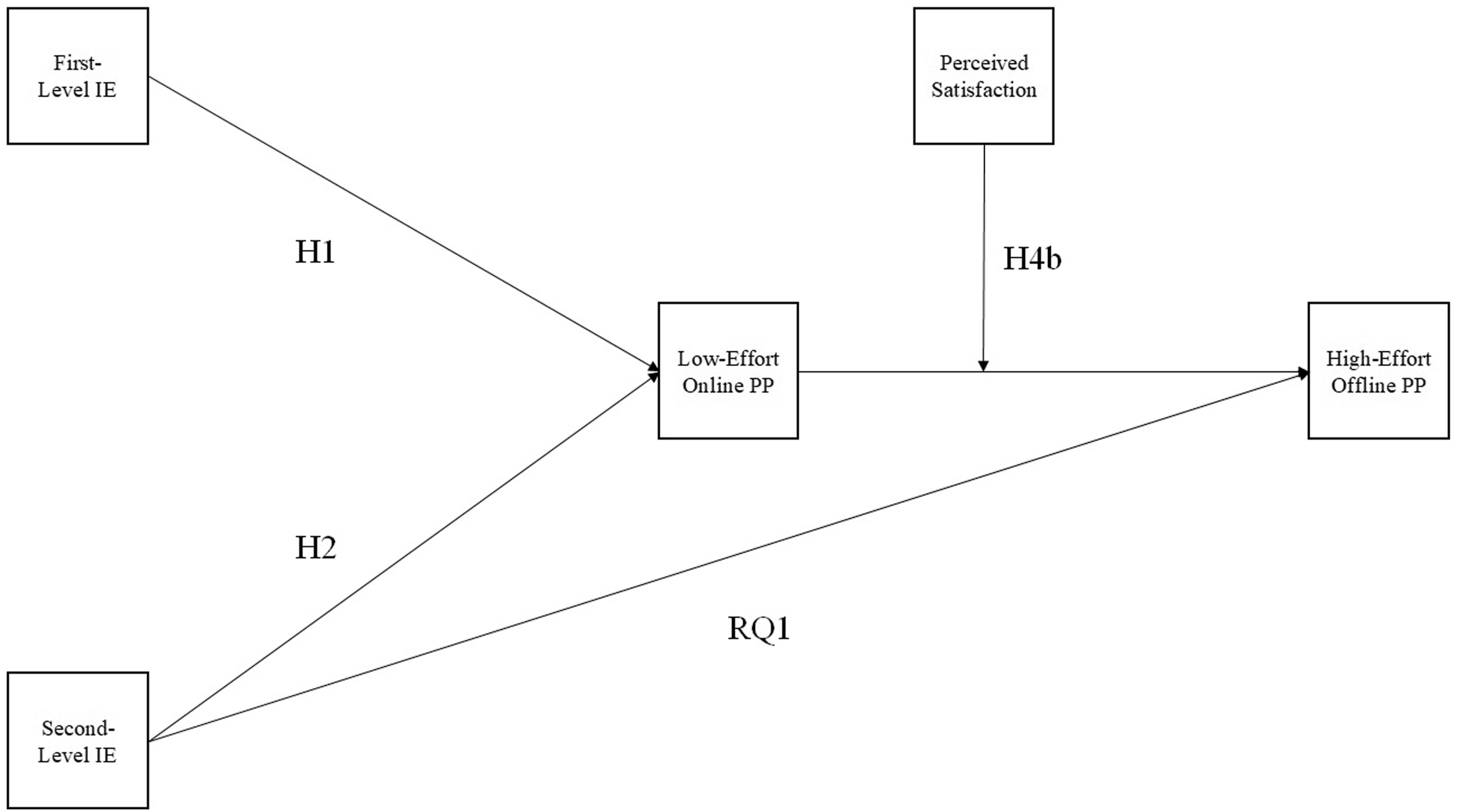
First-level incidental exposure will positively relate to low-effort online political participation.
Second-level incidental exposure will positively relate to low-effort online political participation.
Second-level incidental exposure will positively relate to high-effort online political participation.
From Low-Effort Online to High-Effort Political Participation
Regarding the relationship between low-effort online and high-effort online and offline participation, there are two perspectives to consider. Early theorizing offered a rather pessimistic outlook, dismissing low-effort online participation as a convenient, self-serving, and shallow substitute for more meaningful, high-effort participation (Christensen, 2011; Gladwell, 2010; Halupka, 2014, 2018; Madison & Klang, 2020; Morozov, 2009), hence the derogatory terms clicktivism and slacktivism.
However, critics of this early perspective suggested the possibility that low-effort online participation can be understood as a “legitimate political act” (Halupka, 2014, p. 116), with reports showing that such participation (e.g., “joining a cause group, posting a cause logo to a social profile, or writing about a cause on a blog”) occurs alongside higher-effort participation in activities such as volunteering, participating in events, and recruiting others to support causes rather than in place of them (Ogilvy Public Relations & Georgetown Center for Social Impact Communications, 2011). As Christensen (2011) explains, “it is at its worst harmless fun and can at best help invigorate citizens” as well as raise awareness about important causes.
This debate has sparked much empirical research. Survey data generally support a positive relationship between low-effort online and high-effort online and offline participation (for meta-analyses see Boulianne, 2015; Skoric et al., 2016). For example, Vaccari et al. (2015) found that lower-threshold online activities, such as expressing oneself politically, defined by their low associated costs, related to a greater likelihood of engaging in higher-threshold online and offline activities, such as contacting politicians, campaigning on social media, and attending events. These findings suggest that low-effort online participation may function as a gateway to high-effort online and offline political participation, highlighting its potential for mobilizing citizens.
However, experimental data reveal a more complicated picture regarding the nature of effects and the mechanisms involved. These studies have typically examined the relationship between engaging in a low-effort online activity to address an issue or cause and participants’ likelihood of complying with a subsequent request to engage in a higher-effort activity under various conditions. Specifically, Lee and Hsieh (2013) found that engagement in a low-effort online activity (i.e., signing an online petition) related to an increased willingness to engage in a high-effort activity (i.e., donating to a charity) when the request pertained to a similar cause. This provides additional evidence of a possible crowding in effect that perhaps can be explained by the desire to reduce cognitive dissonance and maintain self-consistency (see Lee & Hsieh, 2013).
In contrast, Schumann and Klein (2015) found that engagement in a low-effort online activity (i.e., writing a comment to be posted on a website) actually related to a decreased willingness to engage in a high-effort activity (i.e., attending a panel discussion) pertaining to the same cause and that this was attributed to increased perceptions that engagement in the low-effort online activity contributed meaningfully toward the goals of the advocacy group, in other words that it was efficacious (i.e., satisfaction of group-enhancing motives). 1 They also found that when feedback was given to participants suggesting that their engagement in the low-effort activity was efficacious, such engagement related to a decreased willingness to engage in a high-effort activity (i.e., participate in a demonstration). This provides evidence of a possible crowding out effect.
Wilkins et al. (2019) found a similar crowding out effect; however, this effect appeared to be limited to immediate participation pertaining to the same cause and among those with no prior history of online participation. Unlike Schumann and Klein’s (2015) study, in which participants in the experimental condition were asked to engage in the low-effort activity, participants in Wilkins et al. (2019) were asked to interact with the campaign website, “as if they came across it in real life.” Whereas some participants engaged in the low-effort online activity (i.e., sharing an article on social media), others simply clicked “continue.” This quasi-experimental design allowed Wilkins et al. (2019) to examine the interaction between engagement in a low-effort online activity and the efficacy feedback. They found that when feedback was given to participants suggesting that engagement in the low-effort online activity was efficacious, such engagement actually related to an increased willingness to engage in high-effort online and offline activities pertaining to other causes 1 week after the experiment had ended among those with a history of online participation and that this was attributed to increased perceptions that their engagement in the low-effort online activity was efficacious. This provides evidence that the crowding out effect may be conditional.
The Moderating Role of Perceived Satisfaction
The studies reviewed above suggest that individuals’ perceptions and beliefs, including perceived satisfaction (Schumann & Klein, 2015) and perceived efficacy (Wilkins et al., 2019) may play an important role both in explaining (i.e., mediating) and conditioning (i.e., moderating) the relationship between low-effort online participation and high-effort participation. Whereas perceived satisfaction captures an individual’s immediate experience of gratification, perceived efficacy captures an individual’s assessment of their capacity to make a difference through their low-effort online participation (see Bandura, 2001 for a general overview of self-efficacy; see Campbell et al., 1954; Niemi et al., 1991 for an overview of self-efficacy in the context of political participation).
While Wilkins et al. (2019) examined efficacy beliefs as both a mediator and moderator, Schumann and Klein (2015) only examined perceived satisfaction as a mediator. However, perceived satisfaction may also play an important role as a moderator. That is, in addition to the potential for low-effort online participation to lead to perceived satisfaction, the amount of perceived satisfaction experienced may also determine the degree to which low-effort online participation crowds out or crowds in high-effort participation (see Allen et al. (2018) for a similar discussion regarding the mediating and moderating role of perceived job satisfaction in the relationship between engaging in meaningful work and mental health). Moreover, while Schumann and Klein (2015) examined perceived satisfaction in the context of collective action, it may also play an important role in the context of “connective” action (Bennett & Segerberg, 2012). In today’s digital landscape, political participation often emerges from more fluid, loosely connected networks of politically likeminded others who share similar concerns about political issues, but who do not share a group identity (Bennett & Segerberg, 2012). Accordingly, perceived satisfaction may also be experienced as gratification of an individual’s personal desire to address social and political issues.
To theorize the role of perceived satisfaction in moderating the relationship between low-effort online participation and high-effort participation, the present study draws on the concept of satisficing. Generally speaking, individuals strive to make practical decisions and choices. However, factors including level of motivation as well as ability and opportunity limit their likelihood of assessing and considering all potential outcomes and making rationale choices (Simon, 1955). Specifically, satisficing is an efficient strategy that involves setting an acceptable standard and settling for the first satisfactory option, although it is not necessarily optimal (Brown, 2004; Richardson, 2017).
In the context of the current study, when low-effort online participation is perceived as satisfying and sufficient to fulfill one’s sense of responsibility to address social and political issues, individuals may feel less compelled to engage in high-effort participation. In other words, clicktivism may be more appropriately understood as mindset than as a behavior, with those who engage in low-effort online activities such as “liking,” “sharing,” and posting comments simply as a low-cost means of achieving self-satisfaction (see Halupka, 2014) as engaging in clicktivism. Accordingly, perceived satisfaction is expected to negatively moderate the relationship between low-effort online participation and both high-effort online and offline participation. Additionally, drawing across H1–H4, perceived satisfaction is also expected to negatively moderate the indirect relationship between first- and second-level incidental exposure and high-effort online and offline participation through their relationship to low-effort online participation.
Perceived satisfaction will negatively moderate the relationship between low-effort online political participation and high-effort online (H4a) and offline (H4b) political participation.
Perceived satisfaction will negatively moderate the indirect relationship from first-level incidental exposure to high-effort online (H5a) and offline (H5b) political participation.
Perceived satisfaction will negatively moderate the indirect relationship from second-level incidental exposure to high-effort online (H6a) and offline (H6b) political participation.
Figures 1 and 2 show the overall theorized moderated mediation models. Theorized model relating first- and second-level incidental exposure to high-effort online political participation. Theorized model relating first- and second-level incidental exposure to high-effort offline political participation.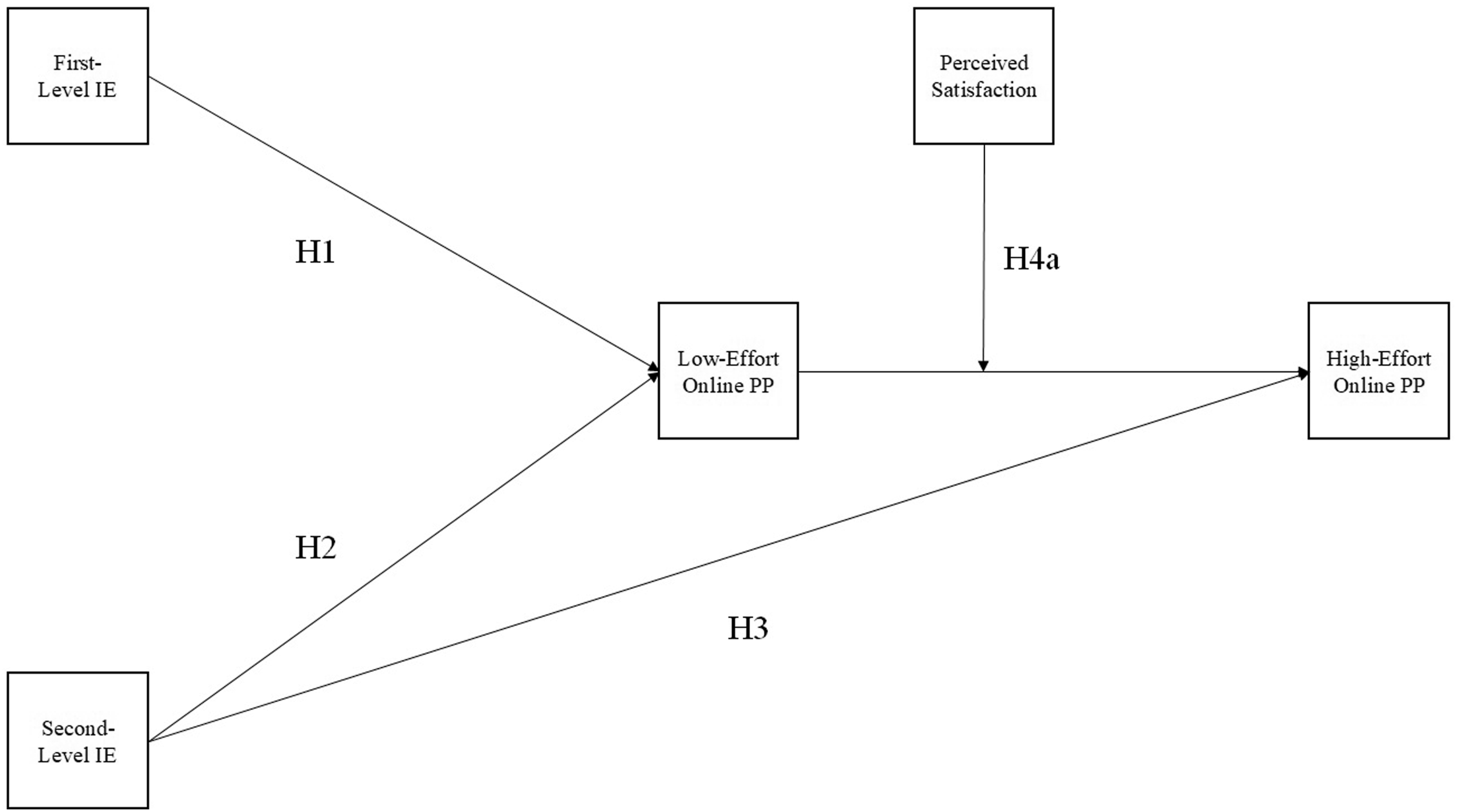
Method
Data
To test the proposed hypotheses and research question, this study used data from a national online survey conducted among adults in the United States in April 2024. Participants were selected from an online panel maintained by CloudResearch Connect, a crowdsourcing platform. To proportionally represent the U.S. population, this national sample was stratified by age, gender, income, race, and education, ensuring that the sample mirrors the distribution of these demographic variables according to the U.S. Census. The sample included 750 participants. After excluding respondents with invalid responses, 2 the final sample size for analysis was 695 respondents. Respondents’ average age was approximately 45 years (M = 45.37 SD = 15.98); 50% were male; 74% were White; the median education level was college graduate (B.S., B.A., or other 4-year degree); and the median household income was between $50,000 and $74,999.
Measures
First- and Second-Level Incidental Exposure
First- and second-level incidental exposure were each measured by six items (Nanz & Matthes, 2022b). Respondents were asked to indicate on a 5-point Likert scale how often they experienced various types of incidental exposure in the past week (1 = never, 5 = very often). An exploratory factor analysis (EFA) of the 12 items, conducted using principal axis factoring with an oblique (promax) rotation, supported the presence of two factors with eigenvalues above 1: first-level incidental exposure (eigenvalue = 3.449) and second-level incidental exposure (eigenvalue = 5.568). The factor loadings can be found in the Supplemental Appendix.
First-level incidental exposure included the following items: “I incidentally saw political information that I did not look at;” “I stumbled upon political content incidentally but did not engage with it;” “When I was shown political posts but wanted to see something different, I kept scrolling;” “I skipped the political content that I came across incidentally;” “I saw political posts that I ignored;” and “I kept on scrolling when I saw political posts incidentally on social media” (M = 3.50, SD = 0.85, Cronbach’s alpha = .90).
Second-level incidental exposure included the following items: “I saw political content incidentally and then looked at it more thoroughly;” “I found political content I dedicated attention to even though I did not search for it initially;” “Political content was incidentally shown to me and I took a closer look;” “I stumbled upon political information that caught my attention;” “After I saw political content incidentally, I took a closer look;” and “I looked attentively at political posts, which were shown incidentally to me” (M = 2.72, SD = 0.95, Cronbach’s alpha = .95).
Low-Effort Online and High-Effort Online and Offline Political Participation
Low-effort online and high-effort online and offline political participation were measured by 15 items (Knoll et al., 2020; Yamamoto & Morey, 2019). Respondents were asked to indicate on a 5-point Likert scale how often they engaged in various political activities during the past 12 months (1 = never, 5 = very often). Although we conceptualized low-effort online, high-effort online, and high-effort offline participation as three distinct constructs, EFA of the 15 items, conducted using principal axis factoring with an oblique (promax) rotation, supported the presence of only two factors with eigenvalues above 1: low-effort online participation (eigenvalue = 1.626) and high-effort online and offline participation (eigenvalue = 7.789). Additionally, two items did not load adequately (above .6) on either factor, and one item that was expected to load on the high-effort participation factor instead loaded on the low-effort online participation factor. Accordingly, these three items were excluded. An EFA of the remaining 12 items supported the presence of two factors with eigenvalues above 1: low-effort online participation (eigenvalue = 1.393) and high-effort participation (eigenvalue = 6.630). The factor loadings for the initial and final solutions can be seen in the Supplemental Appendix.
Low-effort online participation included the following items: “clicked ‘like’ about a political actor or cause,” “clicked ‘share’ about political information” and “posted short political comments” (M = 1.97, SD = 0.98, Cronbach’s alpha = .87). High-effort participation included the following items: “used email to contact a politician,” “wrote a political blog entry,” “made a campaign contribution,” “created a political group on social media,” “attended a political meeting, rally, demonstration, or speech,” “contacted a political candidate,” “worked for a political party or candidate,” “circulated a petition for a candidate or issue,” and “contributed money to a campaign” (M = 1.33, SD = 0.61, Cronbach’s α = .92).
Perceived Satisfaction
Perceived satisfaction was measured by three items generated by the authors that assessed the degree to which respondents perceived their low-effort online participation as satisfactory and sufficient. Respondents were asked to indicate their level of agreement on a 5-point Likert scale (1 = strongly disagree, 5 = strongly agree) with each of the following statements regarding their engagement in online behaviors such as clicking the “like” or “share” buttons, signing online petitions, and posting short political comments: “I feel these actions satisfy my desire to engage with social and political issues;” “I feel these actions allow me to sufficiently engage with social and political issues;” and “I feel these actions allow me to address social and political issues” (M = 3.06, SD = 1.04, Cronbach’s alpha = .86).
Control Variables
Based on previous research examining the relationship between incidental exposure and political participation, in addition to demographic characteristics (age, gender, education, income, and race), news media use (Chen et al., 2022) and political orientations, including political ideology (Chen et al., 2022; Yamamoto & Morey, 2019) political interest (Chen et al., 2022; Matthes et al., 2020; Nanz et al., 2025; Nanz & Matthes, 2022b; Yamamoto & Morey, 2019) and political efficacy (Chen et al., 2022; Nanz & Matthes, 2022b) were included as control variables.
News media use was measured by eight items. Respondents were asked to indicate on a 5-point Likert scale (1 = never, 5 = every day) how often they watched, read, or listened to the following media to get information and news about politics and elections: national network news (such as ABC, CBS, NBC, and PBS); radio news programs (such as NPR); political talk radio shows (such as Sean Hannity); national newspapers online (such as the NYTimes.com or USAToday.com); national newspapers in print (such as the New York Times or USA Today); local news on television; local newspapers online; and local newspapers in print (M = 1.91, SD = 0.75, Cronbach’s alpha = .82).
Political interest was measured by asking respondents to indicate their level of agreement on a 5-point Likert scale (1 = strongly disagree, 5 = strongly agree) with the following statement: “I am interested in politics” (M = 3.60, SD = 1.14). Political ideology was measured by asking respondents to indicate on a 7-point Likert scale (1 = very liberal, 5 = very conservative) where they fell on the ideological spectrum (M = 3.45, SD = 1.88). Political efficacy was measured by asking respondents to indicate their level of agreement on a 5-point Likert scale (1 = strongly disagree, 5 = strongly agree) with the following statements: “People like me can influence the government;” “I consider myself well-qualified to participate in politics;” “I have a good understanding of the important political issues facing our country;” “No matter whom I vote for, it won’t make a difference;” and “People like me don’t have any say in what the government does;” with the last two items reverse-coded (M = 3.23, SD = 0.82, Cronbach’s alpha = .77).
Analysis
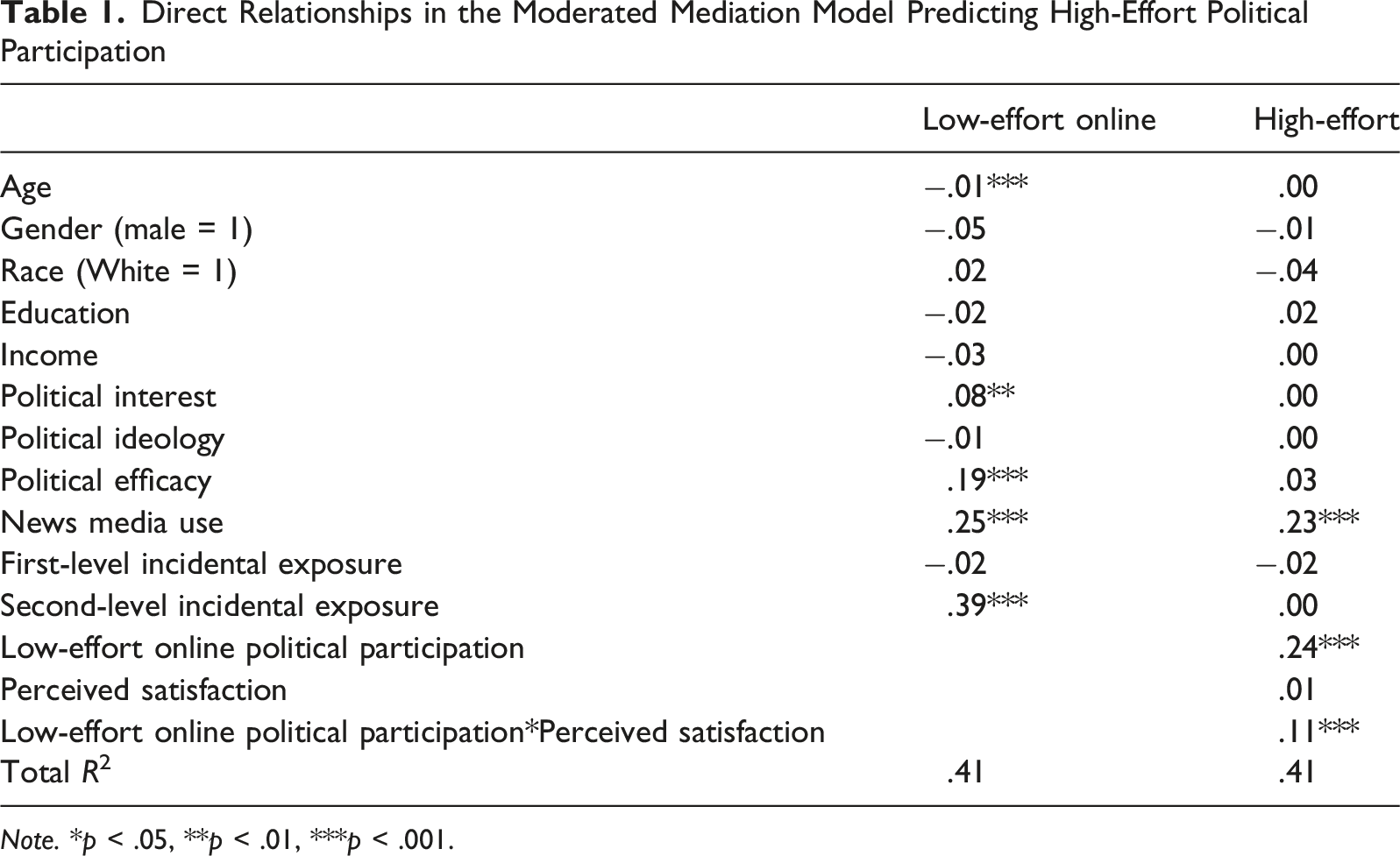
Direct Relationships in the Moderated Mediation Model Predicting High-Effort Political Participation
Note. *p < .05, **p < .01, ***p < .001.
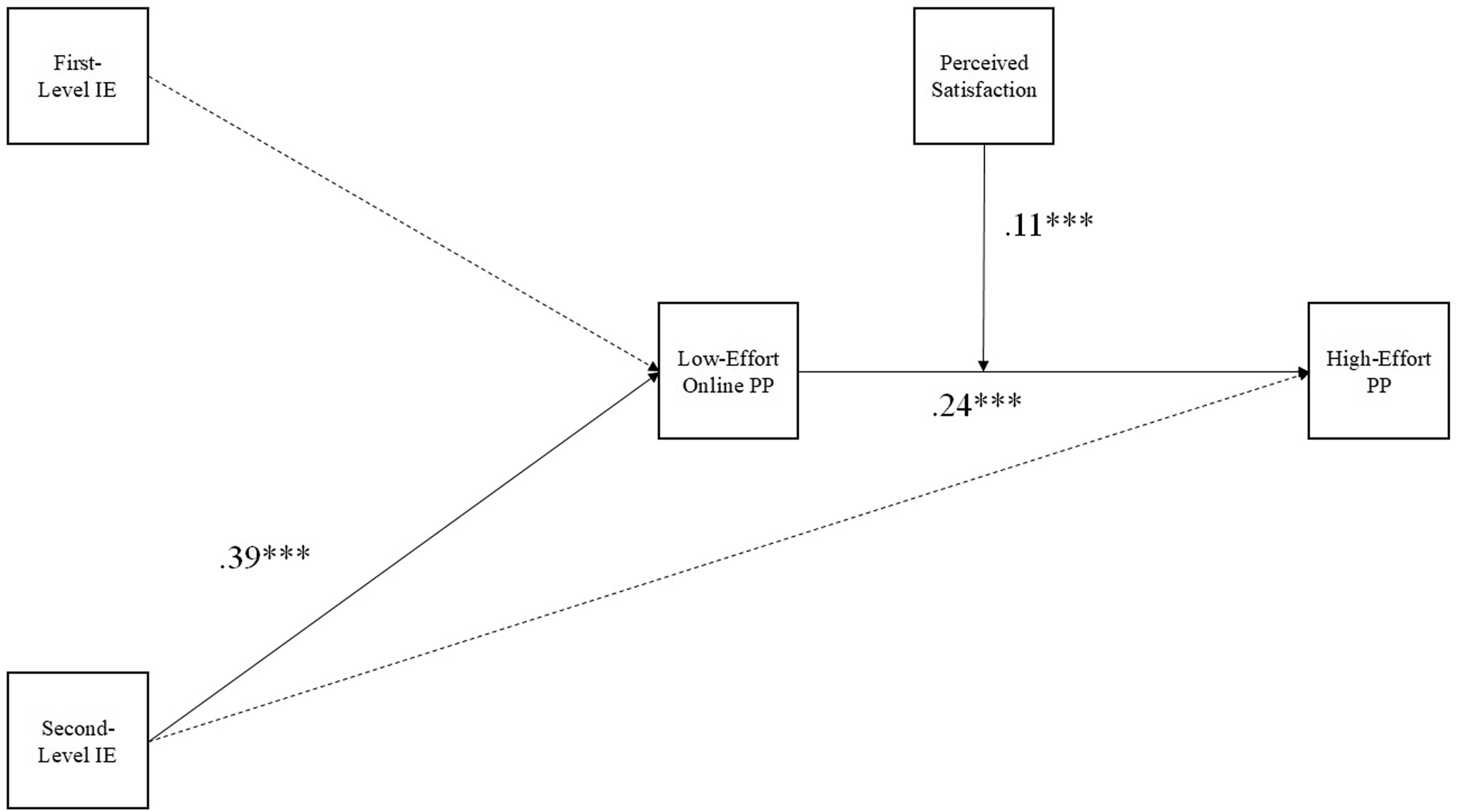
Final model relating first- and second-level incidental exposure to high-effort political participation.
Indirect Relationship between Incidental Exposure and High-Effort Political Participation at Different Levels of Perceived Satisfaction
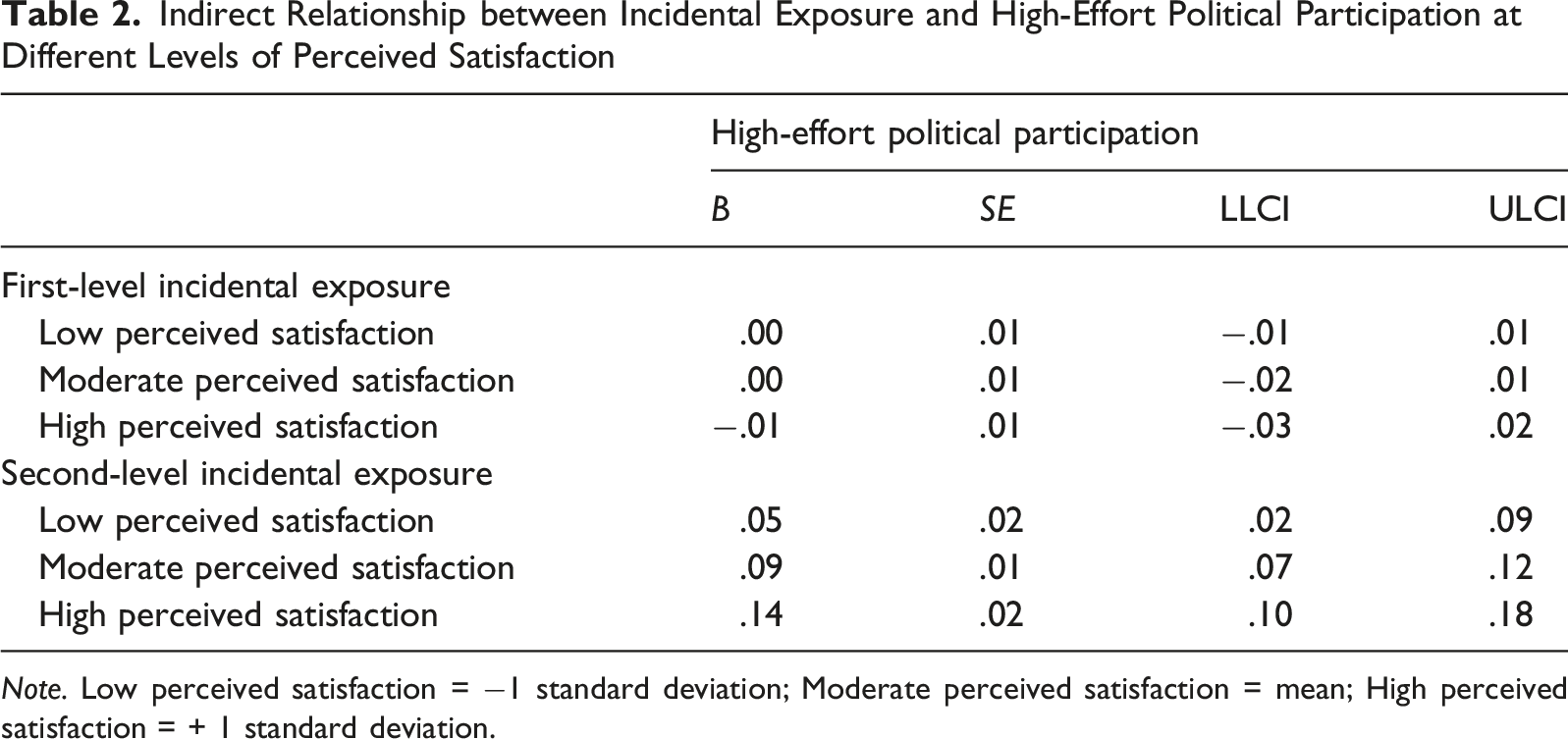
Note. Low perceived satisfaction = −1 standard deviation; Moderate perceived satisfaction = mean; High perceived satisfaction = + 1 standard deviation.
Results
The first hypothesis predicted that first-level incidental exposure would be positively related to low-effort online participation. Contrary to expectations, results did not show a statistically significant relationship between first-level incidental exposure and low-effort online participation (b = −0.02, SE = 0.04, p = .59).
The second hypothesis predicted that second-level incidental exposure would be positively related to low-effort online participation. As expected, results showed that second-level incidental exposure is related to higher levels of low-effort online participation (b = 0.39, SE = 0.03, p < .001).
The third hypothesis predicted that second-level incidental exposure would be positively related to high-effort online participation, and the research question asked whether second-level incidental exposure would be related to high-effort offline participation. However, because the EFA results did not support the presence of distinct high-effort online and offline participation factors, the analysis examined high-effort participation as a single outcome variable. Results did not show a statistically significant relationship between second-level incidental exposure and high-effort participation (b = 0, SE = 0.02, p = .84).
The fourth hypothesis predicted that perceived satisfaction would moderate the relationships between low-effort online participation and high-effort online and offline participation such that these relationships would be weaker at higher levels of perceived satisfaction. Results showed a significant conditional relationship between low-effort online participation and high-effort participation (b = 0.11, SE = 0.02, p < .001). However, contrary to expectations, these relationships were actually stronger at higher levels of perceived satisfaction. The results of the Johnson-Neyman analysis can be seen in Figure 4. Moderation effect of perceived satisfaction on the relationship between low-effort online political participation and high-effort political participation. The solid line represents the slope, and the dashed lines represent the upper- and lower-CI.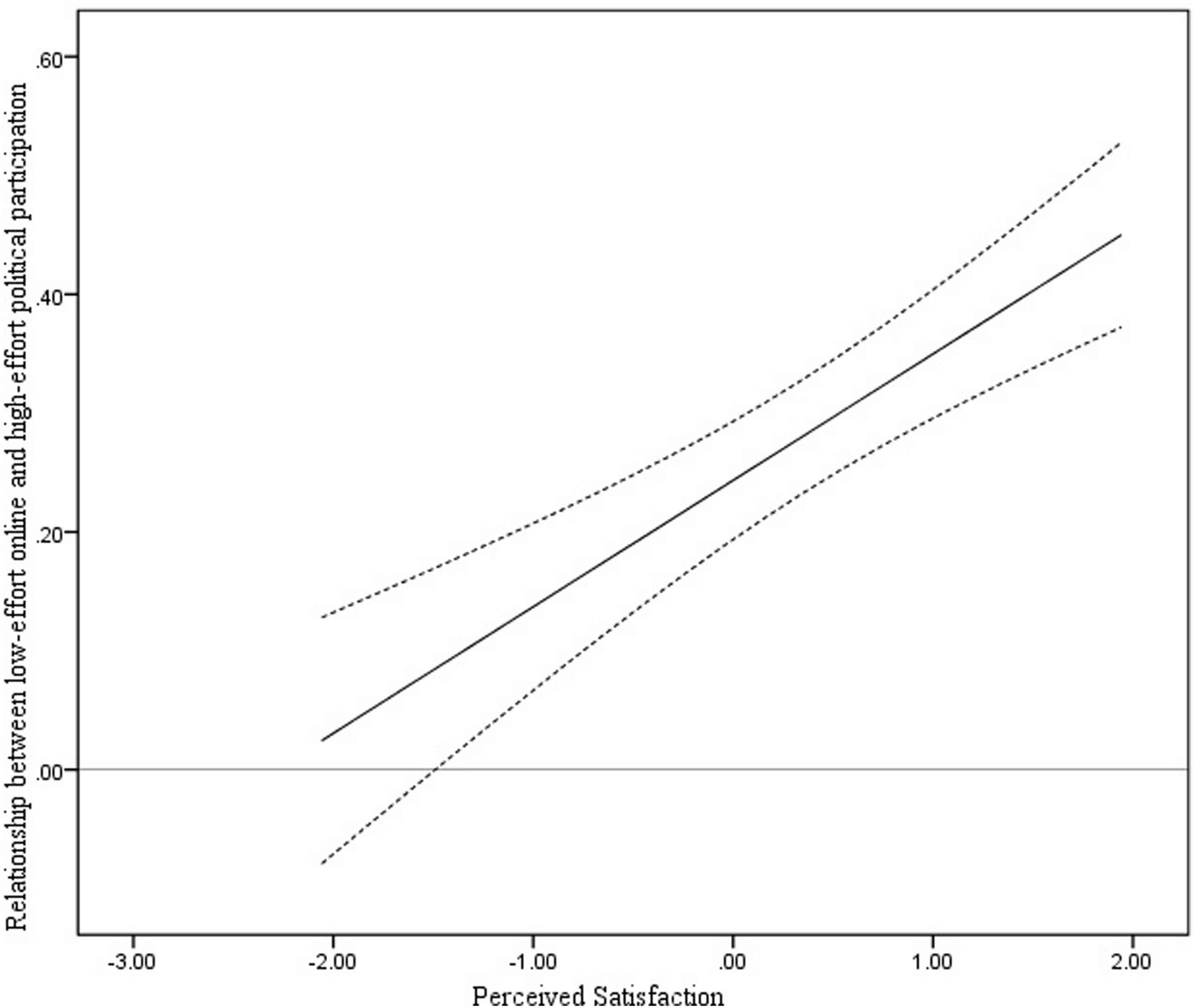
The fifth hypothesis predicted that perceived satisfaction would moderate the indirect relationships between first-level incidental exposure and high-effort online and offline participation such that these indirect relationships would be weaker at higher levels of perceived satisfaction. Contrary to expectations, results did not show a significant conditional indirect relationship between first-level incidental exposure and high-effort participation.
Finally, the sixth hypothesis predicted that perceived satisfaction would moderate the indirect relationships between second-level incidental exposure and high-effort online and offline participation such that these indirect relationships would be weaker at higher levels of perceived satisfaction. Results showed a significant conditional indirect relationship between second-level incidental exposure and high-effort participation (b = 0.04, SE = 0.01, LLCI = 0.02, ULCI = 0.06). However, contrary to expectations, this indirect relationship was actually stronger at higher levels of perceived satisfaction.
Discussion
This study aimed to understand whether and the degree to which first- and second-level incidental exposure to political information are related to low-effort online and high-effort political participation, conditioned by perceived satisfaction. The results of this study are summarized as follows. First, only second-level incidental exposure was significantly related to low-effort online participation while first-level incidental exposure was not. Second, second-level incidental exposure was not directly related to high-effort participation. Third, perceived satisfaction moderated the relationship between low-effort online participation and high-effort participation. Fourth, perceived satisfaction moderated the indirect relationship between second-level incidental exposure and high-effort participation. However, this moderated relationship was in the opposite direction as expected, with the relationship between low-effort online and high-effort participation as well as the indirect relationship between second-level incidental exposure and high-effort participation increasing in strength at higher levels of perceived satisfaction.
These findings offer some important contributions to the existing literature on incidental exposure. Specifically, they provide additional empirical evidence consistent with the relevance appraisal and deeper processing of incidentally encountered information, as only second-level incidental exposure was related to participation. They also suggest that low-effort online participation may play an important role in opening up a pathway from second-level incidental exposure to high-effort political participation.
Relatedly, they offer some important contributions to the existing literature on low-effort online participation. Specifically, beyond providing additional empirical evidence of the positive relationship between low-effort online participation and high-effort participation (e.g., Boulianne, 2015; Skoric et al., 2016; Vaccari et al., 2015), they suggest the unexpected but potentially important role of perceived satisfaction in strengthening this relationship.
Regarding this unexpected role of perceived satisfaction, it is possible that when individuals’ perceive low-effort online participation (i.e., “liking” a political actor or cause, “sharing” political information, posting short comments, and signing online petitions) as satisfying it may relate to changes in self-perception (i.e., Bem, 1967), such that they might come to see themselves as the type of person who takes action to address social and political issues. This may be particularly likely among those with at least moderate levels of involvement (i.e., the perception that the political issues or causes they are addressing are important, personally relevant, and/or central to their values). From a self-determination perspective (Deci & Ryan, 1985), such low-effort participation among these individuals can perhaps be understood as helping to internalize (among those who are moderately involved and whose motivation to engage in low-effort online participation was less self-determined) or reinforce (among those who are highly involved and whose motivation was more self-determined) an activist identity. This suggests the possible utility of activist organizations encouraging low-effort participation as a foot-in-the-door technique to increase the likelihood of more meaningful, high-effort participation in the future.
All of this is not to suggest that low-effort participation crowds in high-effort participation for all individuals and across all situations. Rather, it suggests that the perception of low-effort participation as satisfying is not necessarily problematic from a democratic standpoint, and that it may even be beneficial. Among those who are generally uninvolved, however, it may still be the case that when perceived satisfaction is high, low-effort online participation is more likely to be understood as clicktivism, or more broadly as satisficing behavior. Although our sample was matched to the U.S. population on key demographics, it is possible that those who are generally uninvolved are underrepresented in the data. Similar to Wilkins et al. (2019) consideration of prior history of activism, future research should examine level of involvement as an additional conditional factor.
While these findings suggest some valuable contributions, it is important to acknowledge some limitations. First, this study did not differentiate between intention-based and topic-based incidental exposure, as suggested by the PINE model. Intention-based incidental exposure occurs when users engage with media for purposes other than seeking news, while topic-based incidental exposure occurs when users engage with media to follow a specific political topic but are unintentionally exposed to another political topic. Future research should consider this distinction.
Second, this study did not consider incidental exposure to non-political content, which may have a lesser impact on political outcomes (Lee & Kim, 2017), as suggested by the PINE model. While non-political incidental exposure could distract individuals from their political goals, it may also influence outcomes such as learning and participation by shifting processing goals based on relevance (Matthes et al., 2020). Future research should consider both political and non-political content to fully understand incidental exposure.
Third, this study relied on cross-sectional survey data to estimate a mediation model, which requires two strong causal assumptions, the absence of unmeasured confounders for the indirect paths and the correct temporal ordering among the variables, that were not met. Although the proposed relationships among the variables in the model were based on existing theory (i.e., the SMPP and PINE models) and empirical research, supporting the estimation of a mediation model in the absence being able to confidently establish causality (see Hayes, 2013), the findings along with the contributions drawn from them should be interpreted with caution.
Specifically, in addition to unmeasured confounders that may account for some of the observed relationships in the model, our use of cross-sectional data does not allow us to establish with certainty that incidental exposure precedes political participation. Although existing empirical research relating first- and second-level incidental exposure to low-effort online (e.g., Matthes et al., 2025) as well as high-effort online and offline participation (e.g., Nanz & Matthes, 2022b) increases our confidence in the temporal ordering of incidental exposure and political participation, it is important to acknowledge the possibility that an individual’s past participation may increase the likelihood of incidental exposure (e.g., Thorson & Wells, 2016 as cited in Lee & Xenos, 2022) or that these variables may be reciprocally related (e.g., Lee & Xenos, 2022). Also, our use of cross-sectional data does not allow us to establish with certainty that low-effort online participation precedes high-effort participation. Although existing empirical research relating low-effort online participation to high-effort participation (e.g., Skoric et al., 2016) increases our confidence in the temporal ordering of low-effort online participation and high-effort participation, it is important to acknowledge the possibility that prior history of political participation may increase the likelihood of both, as suggested by Wilkins et al. (2019). Future research should consider using longitudinal survey designs that can account for participants’ previous political behaviors.
Fourth, this study relied on self-reported survey data. Although widely used, self-reported measures of media exposure often lead participants to underestimate the information they actually encounter, resulting in measurement inaccuracies (González-Bailón & Xenos, 2023). This is even more pronounced for brief or unmemorable encounters, such as first-level incidental exposure, because individuals often struggle to accurately recall momentary or passive exposure experiences (Nanz et al., 2025). Future research should incorporate alternative or complementary research designs to more accurately capture media exposure.
Despite these limitations, however, this study suggests the processes by which incidental exposure may relate to high-effort participation. Specifically, it suggests that second-level incidental exposure may relate to high-effort participation through its relationship to low-effort online participation, particularly when individuals perceive such participation as satisfying.
Supplemental Material
Supplemental material - From Trivial to Meaningful: The Moderating Role of Perceived Satisfaction in the Relationship Between Incidental Exposure and Political Participation
Supplemental material for From Trivial to Meaningful: The Moderating Role of Perceived Satisfaction in the Relationship Between Incidental Exposure and Political Participation by Jinwan Kim and Melissa R. Gotlieb in Social Science Computer Review.
Footnotes

Ethical Considerations
This study received ethical approval from the Texas Tech University IRB (approval #IRB2024-195) on March 14, 2024.
Funding
The authors disclosed receipt of the following financial support for the research, authorship, and/or publication of this article: This work was supported by Virginia and Choc Hutcheson Endowment and Formby Mayes Student Research Endowment from Texas Tech University.
Declaration of Conflicting Interests
The authors declared no potential conflicts of interest with respect to the research, authorship, and/or publication of this article
Data Availability Statement
The data supporting the findings of this study are available at OSF.
Supplemental Material
Supplemental material for this article is available online.
Notes
Author Biographies
References
Supplementary Material
Please find the following supplemental material available below.
For Open Access articles published under a Creative Commons License, all supplemental material carries the same license as the article it is associated with.
For non-Open Access articles published, all supplemental material carries a non-exclusive license, and permission requests for re-use of supplemental material or any part of supplemental material shall be sent directly to the copyright owner as specified in the copyright notice associated with the article.
