







Abstract
This study adopted self-identity theory (Tajfel & Turner, 1979) to examine the role of affective and cognitive identification and the perception of aging with regard to Chinese employees’ successful aging in the workplace. A total of 242 Chinese workers in Hong Kong aged 45 and above were recruited. Results showed that cognitive identification was significantly related to four successful aging in the workplace dimensions, whereas affective identification was significantly related to all of the five aspects of successful aging in the workplace. Moderated regression analyses suggested that the association between cognitive/affective identification and successful aging in the workplace was moderated by a positive perception of aging. Post hoc analyses indicated successful aging in the workplace was more likely to occur when an individual has identified themselves as aging workers and they had positive perception toward aging. Limitations and practical implications were discussed.
Nowadays, the population is aging in most developed countries. In Hong Kong, those aged 45 and above comprise 44.7% of the total population in 2011, and their number is expected to further increase to 57% in 2041 (Hong Kong Government, 2012). A related issue is the aging of the workforce. Given the different needs and challenges of aging workers compared to their younger counterparts, research that examines aging workers’ issues has grown (Kanfer & Ackerman, 2004). Recent studies have focused on human potentials and strengths that allow aging workers to thrive and prosper, as well as to achieve successful aging in the workplace (Robson, Hansson, Abalos, & Booth, 2006). Research has suggested that successful aging in the workplace is influenced by both individual factors (e.g., the use of selection, optimization, and compensation strategy; Abraham & Hansson, 1995) and organizational factors (e.g., organizational support; Armstrong-Stassen & Ursel, 2009). However, important social factors such as the social representation of aging have not been systematically examined. In this study, we aim to explore how two aspects of social identification, namely cognitive identification and affective identification, as well as perception of aging relate to the successful aging in the workplace among aging Chinese workers.
Defining Aging Workers
Although research on aging workers is growing rapidly, there is still no consensus about who is and who is not an “aging worker.” For example, some researchers (e.g., Maurer, Barbeite, Weiss, & Lippstreu, 2008; Robson et al., 2006) adopted the Age Discrimination in Employment Act (ADEA) and defined “aging workers” as anyone in the U.S. workforce at or above the age of 40. Other researchers (e.g., Ilmarinen, 2001; Van Dalen, Henkens & Schippers, 2010) adopted the Department of Labor of the U.S. guideline and defined aging workers as working adults of the age of 55 or above. In this study, we adopted the age of 45 or above as the cutoff criterion. This decision was based on both theoretical and practical concerns. From a theoretical point of view, earlier research suggests that employees’ functional capacities start to decline at around 45. For example, Ilmarinen (2001) suggested that starting at the age of 45 onward, workers’ functional capacities, especially physical capability, as well as their perceptions of their ability to work, would start to decline. Kiss, De Meester, and Braeckman (2007) also found that employees of 45 or above reported higher need for recovery after work, which indicates that they experience more fatigue at work. Therefore, the age of 45 onward is a potential turning point that affects employees’ performance and their subjective evaluation. From a practical point of view, the age of 45 is the cutoff age proposed by the World Health Organization (1993) and this cutoff is also in line the widely adopted baseline criterion proposed by the ADEA. Besides, understanding the concerns and challenges of these relative “young” aging workers allow researchers and organizations to implement strategies at an earlier stage to maximize their potentials and ensure them to cope well in the workplace. Thus, based on both theoretical and practical concerns, the age of 45 is adopted as the cutoff point to define “aging workers.”
Successful Aging in the Workplace
Researchers have different orientations in defining successful aging; nevertheless, there is a shared understanding that successful aging involves multidimensional outcomes. A widely adopted approach is conceptualizing successful aging as the absence of disease or illness, maintenance of high physical and cognitive functions, and sustained engagement in social and productive activities among older people (Rowe & Kahn, 1997). More recently, Robson, Hansson, Abalos, and Booth (2006), and Schulz and Heckhausen (1996) have asserted that successful aging should be defined in terms of adjustment and performance in a specific domain (e.g., work domain) rather than evaluating it from a general perspective. To demonstrate the importance of understanding domain-specific successful aging, Remondet and Hansson (1991) reported that among aging workers, job stress and job satisfaction are related to perceived control that is specific to work problems but not to a global measure of perceived control. Thus, evaluating successful aging in a specific context can provide useful information about the adjustment and performance of older individuals in a particular life domain (e.g., Abraham & Hansson, 1995). In this study, we examine successful aging in the workplace among aging Chinese workers.
Robson et al. (2006) reviewed the literature on aging workers, with a particular focus on studies that were related to their performance, motivational, and well-being issues (e.g., perception of their ability to adapt in the work environment, the need to adapt to, or compensate for their age-related change). Based on factor analysis, Robson et al. suggested that successful aging in the workplace was a multifaceted construct that included five dimensions. These dimensions are adaptability and health, positive relationships, occupational growth, personal security, and the continuous focus on and achievement of personal goal.
Adaptability and health is the first dimension proposed by Robson et al. (2006). It refers to employees’ perception of whether they have the ability to cope with the changes in their jobs and health conditions. For instance, when employees perceive that they do not have difficulty learning new technology and they are ready to accept suggestions for improving their performance, they are able to demonstrate high adaptability in the workplace. The second dimension is positive relationships. It refers to whether aging workers have good social and interpersonal relations with others in the organization. Having positive relationship with others can fulfill the socioemotional needs for aging workers and these positive relations can be important resources for aging workers when they encounter job setbacks. The third dimension is occupational growth. It refers to the aging employees’ perception of whether they still have room for further career advancement. The fourth dimension is employees’ perception of personal security. It reflects the perception of whether their work environment or work tasks are safe for them. This is an important concern for aging workers because research indicates that when they encounter injuries, aging workers tend to need longer time to recover when compared to their younger counterparts (Rogers & Wiatrowski, 2005). Therefore, physically nondemanding and a safe work environment is crucial for aging workers. Finally, the fifth dimension of successful aging in the workplace is continuous focus on and achievement of personal goals, which indicates whether the employees have set clear goals for their career.
In this study, we adopted the social identity theory (Tajfel & Turner, 1979) to examine two social identification factors, namely, social identification and perception of aging, in relation to these five dimensions of successful aging in the workplace.
Social Identity Theory
People classify themselves within various groups based on age, gender, race, and organizational affiliation, among other categories. These categories help individuals define their environment and form their own social identity. Social identity theory (Tajfel & Turner, 1979) is an influential theoretical model that explains how people develop a sense of membership and belonging in a particular group. Its core assertion is that people tend to seek out-group membership as an affirmation of self-esteem. For example, if their group membership is devalued, people suffer from a negative social identity and thus a low self-esteem (Desmette & Gaillard, 2008). Social identification is the process through which we define ourselves in terms and categories that we share with other people (Deaux, 2001). Identification with a social group, say a female, a father, or an elder, would help in defining oneself, and thus guide his or her resource allocation and behaviors. For instance, Talaga and Beehr (1995) have suggested that a high identification with the social role as a caregiver may drive women to early retirement in case of a family crisis. Social identification consists of two major dimensions, namely cognitive identification and affective identification. Cognitive identification refers to self-categorization as a member of a particular group (e.g., aging workers), whereas affective identification refers to the emotional involvement and significance the individual attaches to that membership (as aging workers).
We hypothesize that both cognitive identification and affective identification as “aging workers” facilitate successful aging in the workplace. According to the social identity theory, individuals who have cognitively identified themselves as “aging workers” may take more engaging strategies, such as participation in work-related learning classes in order to cope with aging-related challenges in the workplace. Similarly, the identification allows them to recognize the advantages (e.g., expertise) and disadvantages (e.g., physical decline) associated with the general group and themselves, and then set more realistic or practical work goals and strategies, such as selective optimization with compensation (SOC; Baltes & Baltes, 1990). They may also seek and receive social support from other in-group members facing similar challenges in the workplace. Therefore, cognitive identification is hypothesized to be positively related to successful aging in the workplace.
In terms of the affective identification, individuals feel the emotional attachment of the class of “aging workers.” Although aging workers are sometimes being stereotyped as not as productive as their younger counterparts (e.g., Maurer et al., 2008; Steinberg, Donald, Najman, & Skerman, 2008), aging workers in the Chinese context may feel pride of being “old” due to the unique cultural context: In Chinese traditional philosophy, people are expected to show respect for the elderly in the society (Chow, 2009). This traditional Chinese value should help the aging workers to preserve psychological well-being and self-esteem. Besides, when compared to younger workers, aging workers in general tend to have much better work mastery and expertise (e.g., Armstrong-Stassen, & Cattaneo, 2010; Stamov-Roßnagel, & Hertel, 2010). These positive attributes allow them to have confidence in adjusting to the workplace and continue their endeavor in their job, such as sustaining focus and achievement of personal goals. Thus, similar to cognitive identification, affective identification is hypothesized to be positively associated with successful aging in the workplace.
Perception of Old Age as a Moderator
We further hypothesized that a positive attitude toward aging at work serves as a moderator between identification and successful aging in the workplace. A common misconception is that the job performance of aging workers is expected to be poorer than that of younger workers (Warr, 2001). Other studies have also inferred that aging workers have a lower motivation to work and learn (Kanfer & Acherman, 2004). However, research has demonstrated that aging workers can provide positive impacts to organizations. For example, the experience and expertise of aging workers enable them to sustain high job quality compared to younger workers (McDaniel, Schmidt, & Hunter, 1988). Furthermore, as Erikson (1993) has pointed out, a central developmental task is to contribute to the organization and society to guide future generations. When individuals make such a contribution, they gain a sense of generativity and accomplishment. Thus, we suggest that if individuals have strong identification with their identity as aging workers and simultaneously have a more positive attitude toward aging, they should report a higher level of successful aging in the workplace. For example, when employees have cognitively accepted themselves as aging workers, and they also have a very favorable perception toward aging (e.g., aging workers are in a very good position to train the younger generation), they will be more likely experiencing successful aging in the workplace. Similarly, when individuals are affectively labeling themselves as aging workers, they will feel pride and satisfied with this category and eventually foster the successful aging in the workplace. This association will be further strengthened when they also have positive attitude toward the aging process. Conversely, if individuals have a clear identification of their identity but they hold a negative view on aging (e.g., aging represents a downturn of job performance in the workplace), they will less likely achieve successful aging in the workplace.
Perceived Organizational Support as a Control Variable
According to organizational support theory (Eisenberger, Huntington, Hutchison, & Sowa, 1986), perceived organizational support can help aging workers adapt to the workplace. Supportive organizations can provide sufficient care to the physical and psychological health of their employees. Therefore, perceived organizational support is essential for aging workers to achieve successful aging in the workplace. Armstrong-Stassen and Ursel (2009) have demonstrated that perceived organizational support is a salient factor in promoting career satisfaction and intention to stay among aging workers. Thus, in examining the association between self-identification and successful aging in the workplace, perceived organizational support needs to be considered as well.
Study Summary
To reiterate, there is a growing interest to understand factors that promote the successful aging process of aging workers in the workplace. Our study aims to extend this line of research by exploring whether cognitive identification (Hypothesis 1a) and affective identification (Hypothesis 1b) relate to the successful aging in the workplace among aging workers in Hong Kong. Furthermore, we will also evaluate whether the perception of aging moderates the identification to successful aging in the workplace associations (Hypothesis 2). In particular, we hypothesize that when aging employees have a more positive perception toward aging, the relation between cognitive/affective identification to successful aging in the workplace will be stronger. Figure 1 presents the conceptual model of the study.
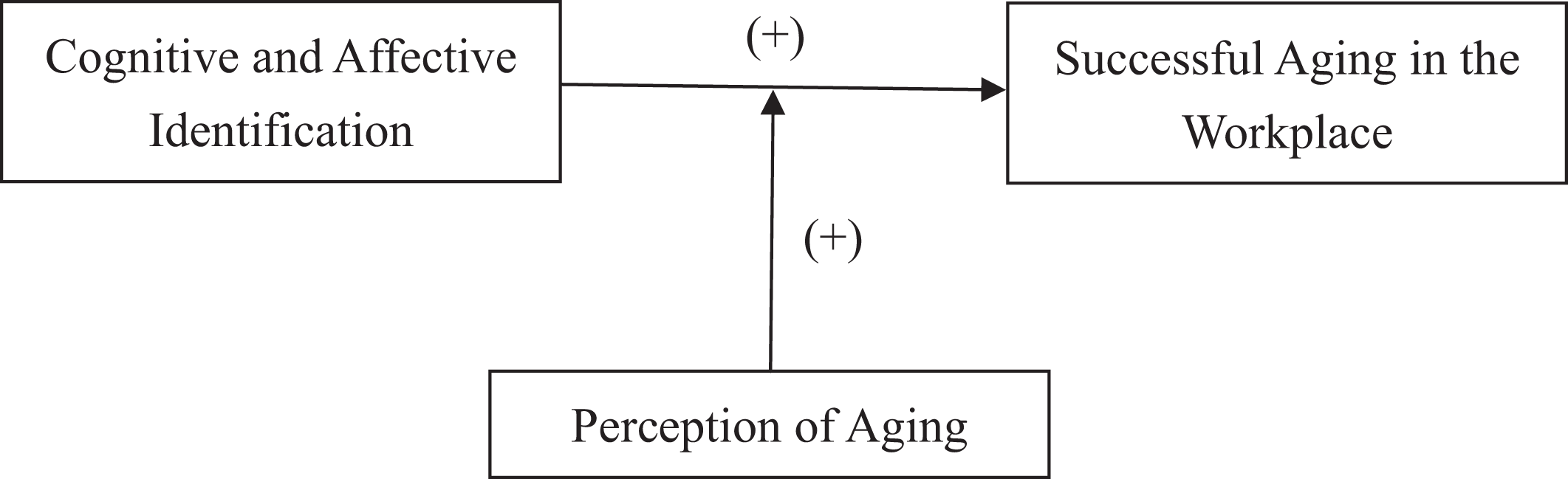
Conceptual model of the study.
Method
Participant and Procedure
We recruited research participants from a large public hospital in Hong Kong. They were eligible to participate in this study as long as they are full-time Hong Kong Chinese employees aged 45 and above during the study period. We adopted the chronological age because unlike other approaches, it is often related to other definitions, such as organizational age.
A total of 260 questionnaires were distributed and 242 valid questionnaires were gathered, obtaining a response rate of 93.10%. To enhance the response rate, a supermarket coupon (US$6.4) was given to participants after returning the completed questionnaire. Among all participants aged 40–64 with the mean age of 51.1 (SD = 4.45), 117 (48.3%) were men and 125 (51.7%) were women. Up to 179 participants (74%) were engaged in nonmanagerial/clerical positions, whereas 63 (26%) were engaged in managerial/professional positions.
Measures
Cognitive Identification and Affective Identification
Both cognitive and affective identifications were measured by the scales developed by Desmette and Gaillard (2008). Each scale consisted of 2 items. Sample items included you see yourself as an older worker (cognitive identification) and generally, you are glad that you are an older worker (affective identification). Desmette and Gaillard showed that these scales had satisfactory internal consistency, with an α coefficient of .79 and .66 for cognitive identification and affective identification, respectively. These scales were also found to correlate with redefinition of aging in Desmette and Gaillard study. In this study, participants rated their identification level on a 5-point Likert-type scale ranging from 1 (strongly disagree) to 5 (strongly agree). Cronbach’s αs for cognitive identification and affective identification were .88 and .72, respectively.
Perception of Aging
Perception of aging was measured by the 3-item scale developed by Desmette and Gaillard (2008). Sample item included to be older is good at work because of the greater experience you have. Earlier study showed that the internal consistency of the scale was satisfactory, with a Cronbach’s α coefficient of .66 and it was found to relate to job autonomy and intergroup permeability (Desmette & Gaillard, 2008). In this present study, participants rated their perception on a 5-point Likert-type scale ranging from 1 (strongly disagree) to 5 (strongly agree). A higher score indicated a positive perception toward aging. The Cronbach’s α coefficient of the perception of aging score was .73.
Perceived Organizational Support
Perceived organizational support was measured using the 10-item scale developed by Eisenberger, Huntington, Hutchison, and Sowa (1986). Sample items included the organization takes pride in my accomplishment at work and the organization really cares about my well-being. Previous research showed that the scale had demonstrated excellent internal consistency, with a Cronbach’s α coefficient of .95 and it was found to relate to affective commitment and altruism (Shore & Wayne, 1993). Participants rated perceived organizational support on a 5-point Likert-type scale ranging from 1 (strongly disagree) to 5 (strongly agree). Higher scores indicated higher perceived organizational support for aging employees. The internal consistency of the perceived organizational support scale was satisfactory, and its Cronbach’s α coefficient was .70.
Successful Aging in the Workplace
Successful aging in the workplace was measured by the successful aging in the workplace scale constructed by Robson et al. (2006). The scale consists of five subscales, namely adaptability and health (18 items), positive relationships (7 items), occupational growth (8 items), personal security (7 items), and continued focus and achievement of personal goals (3 items). Sample items included I do not have difficulty learning new tasks at work, I am able to consider many of my co-workers to be friends, and I am able to achieve the goals that I have defined for myself. In the original study by Robson et al. (2006), these scales had demonstrated satisfactory internal consistency, the α coefficient for adaptability and health was .94, positive relationship was .84, occupational growth was .89, personal security was .86, and continued focus on goals was .88. These dimensions were found to correlate with subjective successful aging and career planning among aging workers in the United States (Robson et al., 2006). Participants were asked to respond on a 5-point scale, ranging from 1 (strongly disagree) to 5 (strongly agree). Higher scores indicated higher levels successful aging in the workplace. In the present study, the Cronbach’s α coefficients of the five dimensions were .88, .83, .84, .82, and .78 for adaptability and health, positive relationship, occupational growth, personal security, and continued focus and achievement of personal goals, respectively.
Demographics
Participants were asked to indicate their gender, age, and job level.
Results
Assessment of Common Method Variance
All data in the present study were collected via self-administered questionnaires. Therefore, common method variance may inflate the strength of observed relationships (Podsakoff, MacKenzie, Kee, & Podsakoff, 2003). Harman’s one-factor test was conducted through explanatory factor analysis to address the common method variance issue. In this statistical procedure, all variables were examined through an exploratory factor analysis using the unrotated principal axis factoring procedure. If a substantial amount of common method variance is present, a single factor will emerge from the factor analysis, or one general factor will account for most of the covariance among variables. Results showed that two rotated factors emerged with an Eigenvalue greater than 1. The two unrotated factors accounted for 63.11% of variance, and the first component only accounted for 45.23% of the total variance. Therefore, we believe that the common method variance was not of great concern, and unlikely to significantly confound the interpretation of results.
Descriptive Statistics and Correlations
Table 1 presents the means, standard deviations, and intercorrelations of the examined variables. Correlation results showed that cognitive identification was significantly related to two dimensions of successful aging in the workplace, namely adaptability and health (r = .23, p = .01) and occupational growth (r = .20, p = .01). Therefore, Hypothesis 1a was just partially supported. Affective identification was found to be significantly related to all dimensions of successful aging in the workplace: adaptability and health (r = .32, p = .01), positive relationship (r = .23, p = .01), occupational growth (r = .30, p = .01), personal security (r = .42, p = .01), and continuous focus on goals (r = .25, p = .01). Based on these results, Hypothesis 1b was supported. Finally, we also found that perceived organizational support was significantly related to all successful aging in the workplace dimensions: adaptability and health (r = .36, p = .01), positive relationship (r = .48, p = .01), occupational growth (r = .52, p = .01), personal security (r = .47, p = .01), and continuous focus on goals (r = .37, p = .01).
Means, Standard Deviations, and Intercorrelations Among the Study Variables (N = 242).
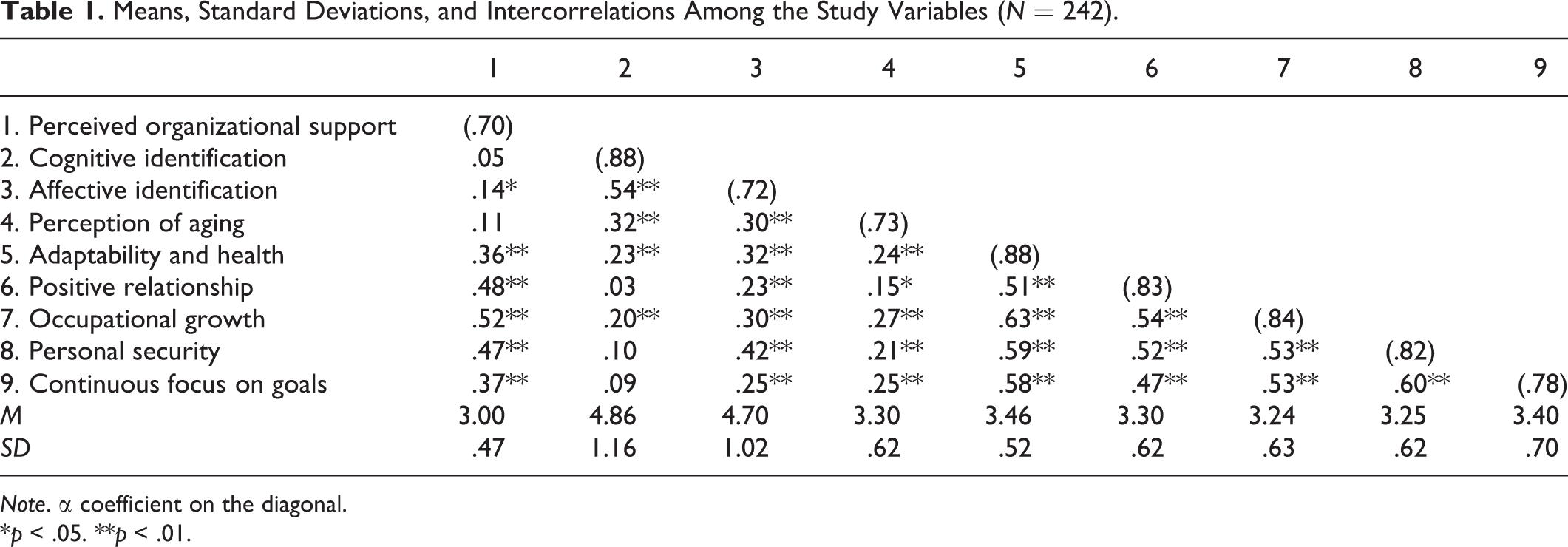
Note. α coefficient on the diagonal.
*p < .05. **p < .01.
Moderated Regression Analyses
We computed five moderated regression analyses to examine the interaction between cognitive identification and affective identification and perception of aging in predicting each dimension of successful aging in the workplace. In the regression model, four main effects (perceived organizational support, cognitive identification, affective identification, and perception of aging) and the two interaction terms (Cognitive Identification × Perception of Aging and Affective Identification × Perception of Aging) were entered. Following the recommendation by Baron and Kenny (1986) and Fraizer, Tix, and Barron (2004), all main effects of predictors (cognitive identification, affective identification, perception of aging) were standardized before creating the interaction term in order to avoid multicollinearity.
As shown in Table 2, perceived organizational support was a consistent correlate in predicting all the successful aging in the workplace dimensions. For the two identification variables, cognitive identification was a significant correlate in predicting positive relationships and personal security, whereas affective identification was a significant correlate in predicting all successful aging in the workplace dimensions. Finally, when all the main effects were considered, four statistically significant interaction effects were found. The interaction term of cognitive identification and perception of aging was significant in predicting adaptability and health (β = −.15, t = −2.15, p = .03) and occupational growth (β = −.24, t = −3.70, p = .01). Figure 2 shows that participants with a positive perception toward aging had higher level of adaptability and health, regardless of their identification level. However, for the group that reported a negative perception, those with a higher cognitive identification tended to report a higher level of adaptability and health. Similarly, as shown in Figure 3, participants with a positive perception of aging generally reported a high level of occupational growth, regardless of the cognitive identification level. However, among the participants with negative perception of aging, those who reported higher cognitive identification tended to report a higher level of occupational growth.
Summary of Multiple Regression Analysis Results (N = 242).
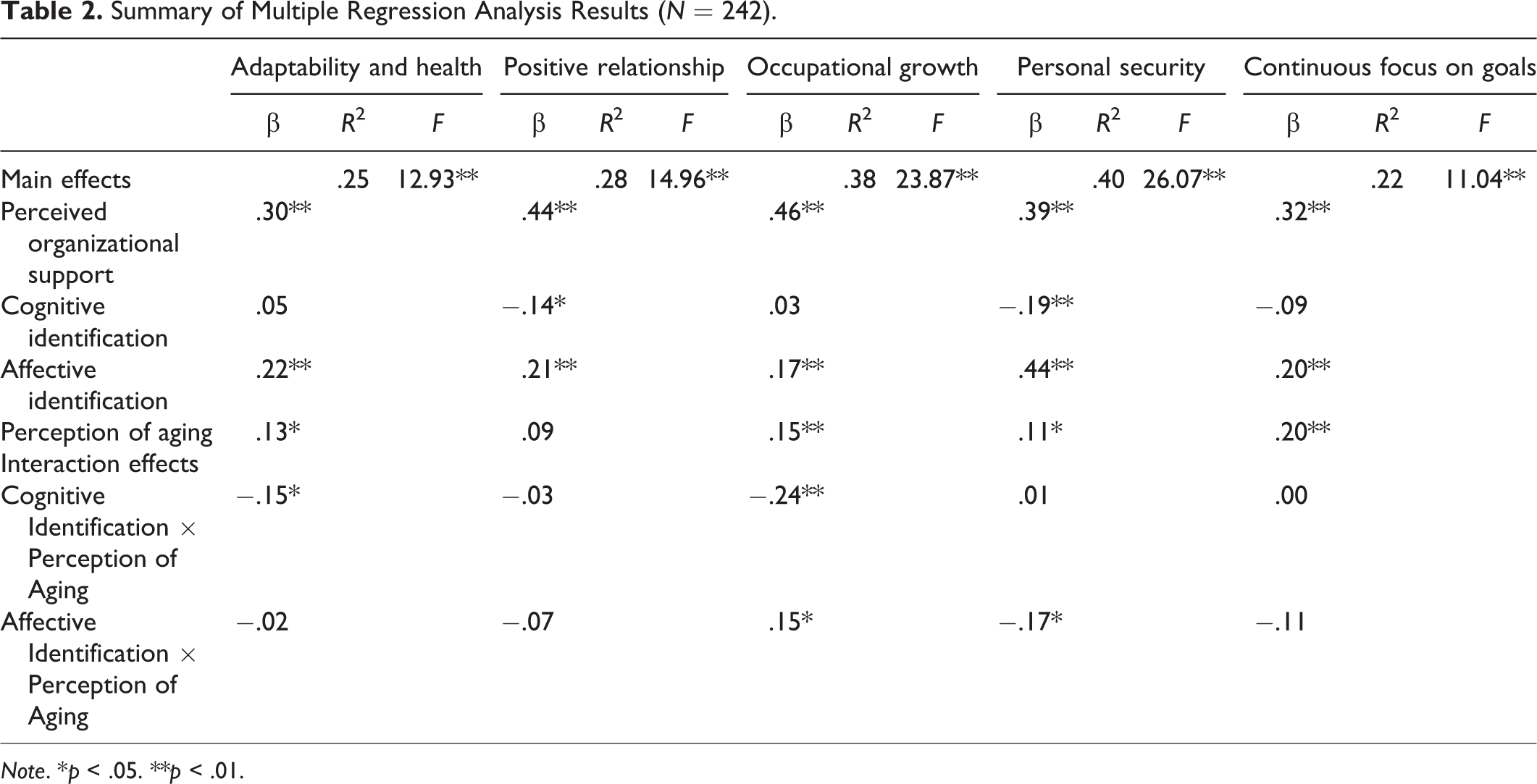
Note. *p < .05. **p < .01.
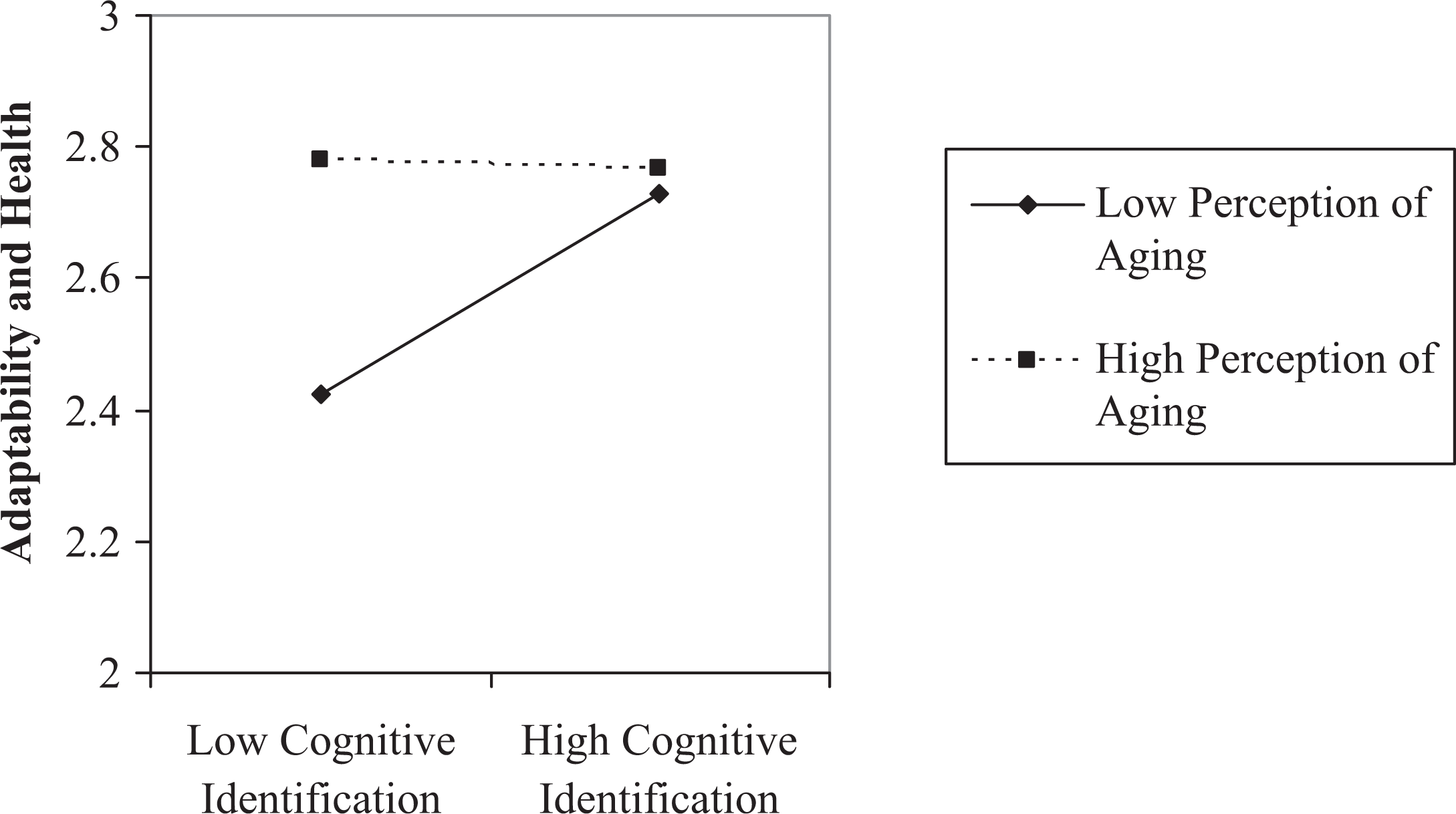
Cognitive identification and perception of aging on adaptability and health.
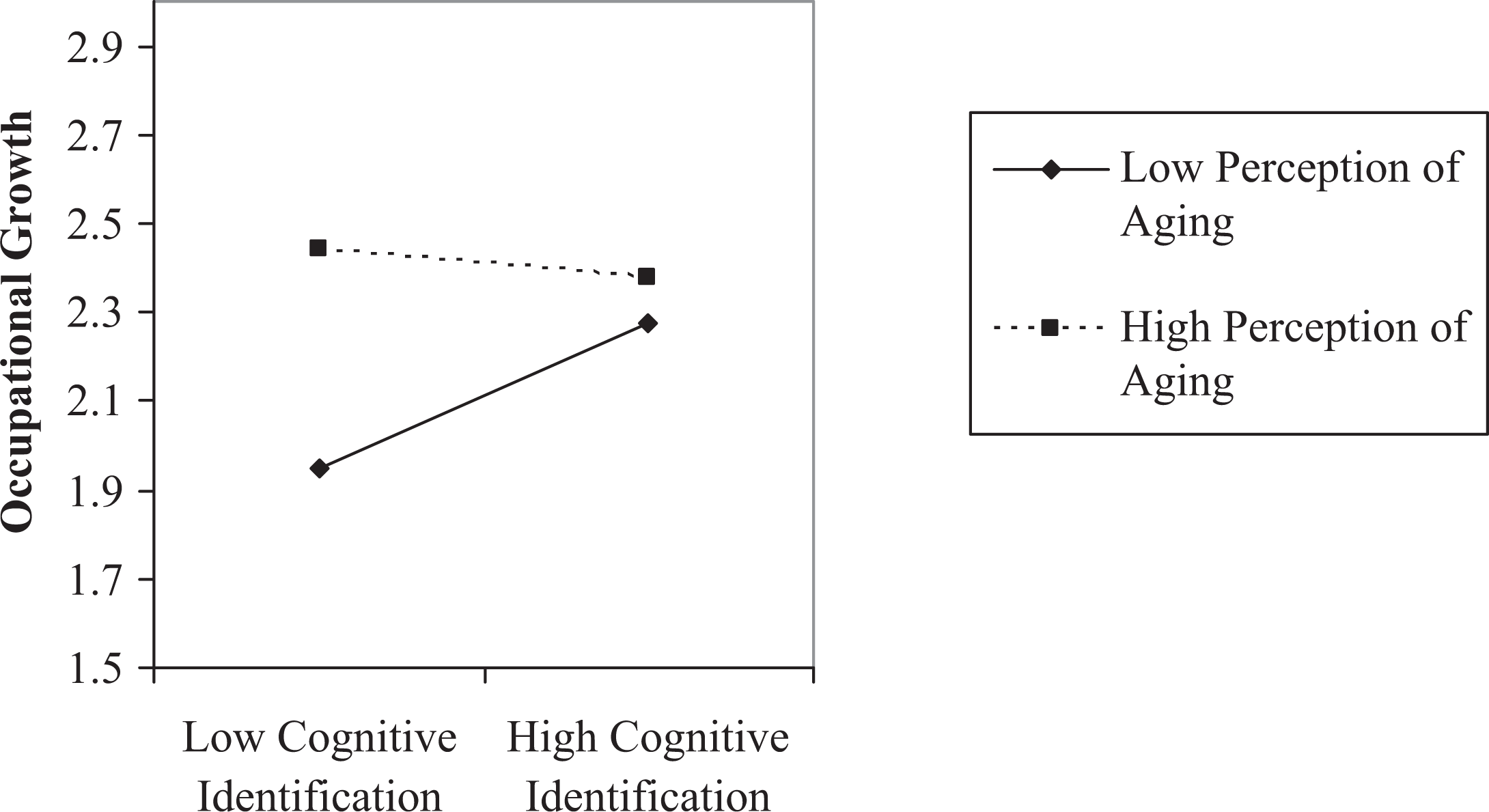
Cognitive identification and perception of aging and occupational growth.
For affective identification and positive perception of aging, results suggested that the interaction terms were significant for occupational growth (β = .15, t = 2.27, p < .05) and personal security (β = −.17, t = −2.63, p < .05). Figure 4 shows that individuals with a positive perception of aging reported a higher level of occupational growth compared to their counterparts who reported a lower level of aging perception. Figure 5 shows that employees with a negative perception of aging and low affective identification reported the lowest level of personal security. However, individuals with a negative perception toward aging but high affective identification reported a similar level of personal security compared to those with a positive perception of aging.
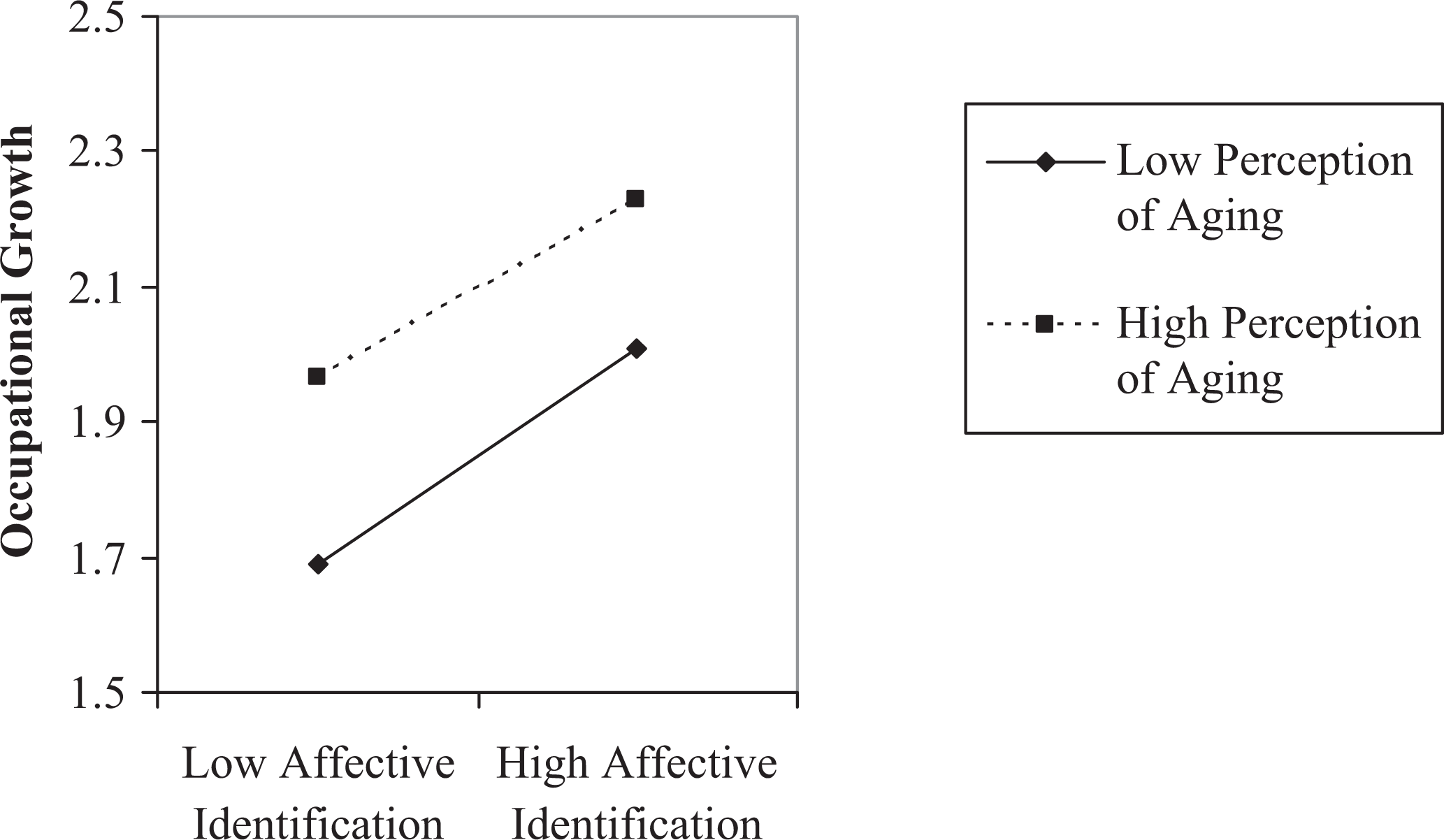
Affective identification and perception of aging on occupational growth.
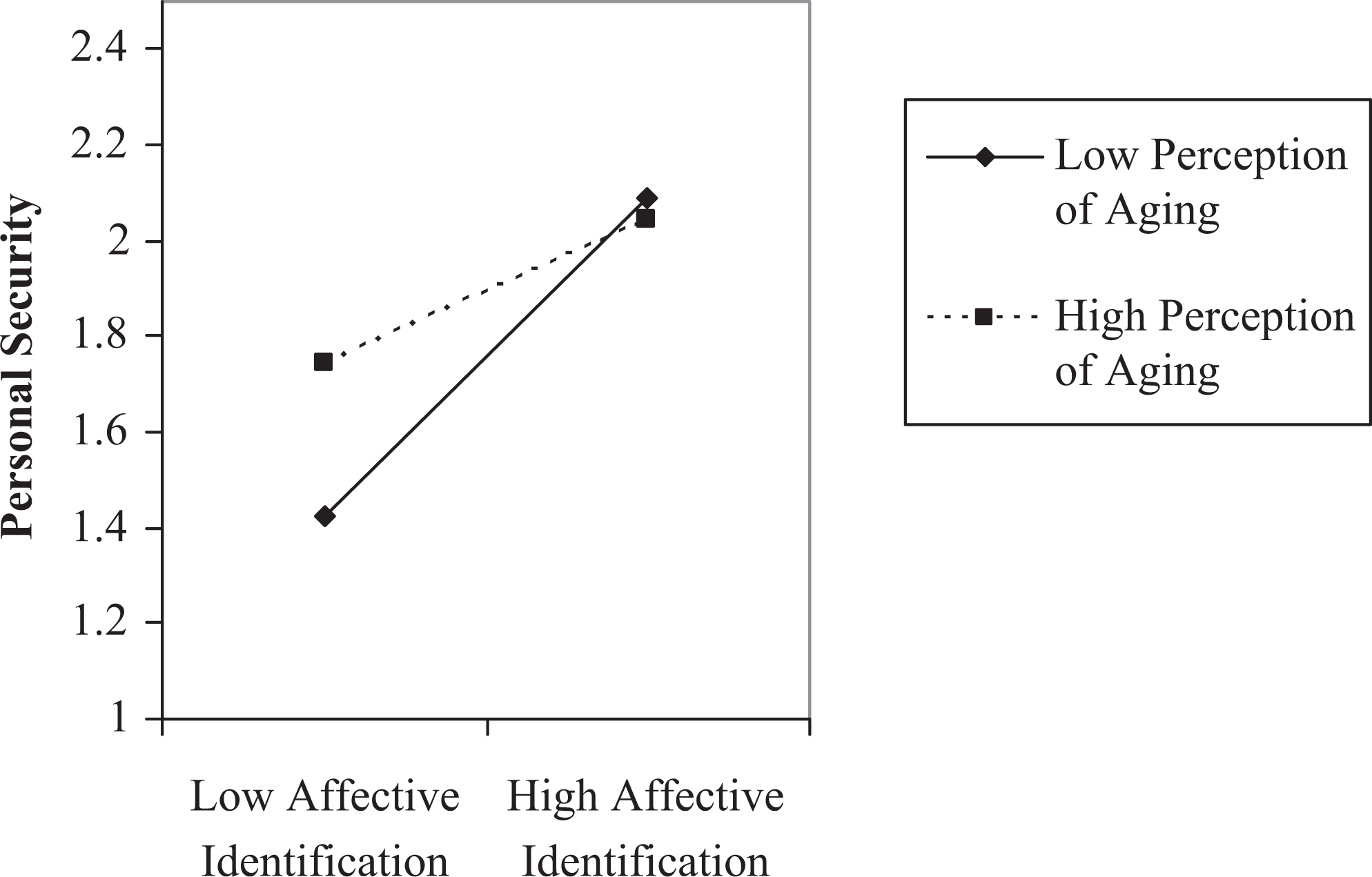
Affective identification and perception of aging on personal security.
Discussion
The population of aging workers will continue to grow. Aging workers have very different needs and may encounter challenges in the workplace (Kanfer & Ackerman, 2004). Therefore, to ensure that they continue to thrive and develop in the workplace, an understanding of the factors that support the successful aging of these workers is strongly needed. The current study investigated a neglected aspect of previous research—the impact of social factors (i.e., social identification and perception of aging)—on successful aging in the workplace. Results indicated that social identification as an aging worker and positive perception of aging were salient correlates of successful aging in the workplace.
First, our results showed that affective identification was positively related to successful aging in the workplace. As suggested by Ho (1996), people in Hong Kong tend to hold their elders in high esteem and abide by intergenerational relationships guided by the concepts of filial piety. Therefore, when individuals affectively identified themselves as aging workers, they would feel pride and they will have stronger confidence to adapt to the work environment and new work tasks. We also found that cognitive identification was positively related to successful aging in the workplace. When individuals identified themselves as aging workers, they may be more open to acknowledge their own strengths and limitations. When they encounter challenges in the workplace, they will adopt effective strategies (e.g., SOC; Baltes & Baltes, 1990) to keep up with job demands. Besides, they may be more willing to create a better social network and set realistic goals in their career. Based on these results, we suggest that organizations can aim to create an aging-worker-friendly organizational culture that cherishes the input from these workers. Organizations should also strive to prohibit the unfair treatment toward aging workers. Furthermore, organizations may create a systematic mentorship program in which aging workers will serve as mentors to share their knowledge and expertise with new employees or those with limited experiences.
In terms of the moderation hypothesis, we found that four interaction effects were significant. In particular, there were two significant interactions between cognitive identification—positive perception of aging in predicting two dimensions of successful aging in the workplace, namely adaptability and health as well as occupational growth. Individuals who did not cognitively evaluate or identify themselves as aging workers tend to report lower adaptability and health as well as occupational growth, especially when they also have more negative perception of aging. Individuals who failed to cognitively identify themselves may have erroneous evaluation of their own competency, which hinder them to adapt in their work environment and sustain further occupational growth. This negative association is particularly strong for those who espoused negative perception of aging.
We also found that there were two significant interactions between affective identification—positive perception of aging in predicting two dimensions of successful aging in the workplace, namely occupational growth and personal security. As discussed, when individuals have affectively identified themselves as aging workers, they should have a sense of pride and high self-esteem because they are expected to be respected by other members in the organization. The positive effect is more salient when the aging workers have a more positive perception of aging. However, when the individuals affectively identified themselves as aging workers but at the same time holding a negative view on aging per se, it will provide challenges for foster occupational growth and have the sense of personal security in the workplace. These finding showed that perception of aging is an important factor that would further influence the role of identification on successful aging in the workplace. Organizations should therefore adopt strategies to enhance the positive perception of aging in organizations. For example, organizations can conduct periodic ceremonies to acknowledge the contribution of aging workers in the organization programs to further consolidate the positive identity of aging workers, such as provision of certificate of merits or long service award.
Finally, we found that perceived organizational support was an important factor for all successful aging in the workplace dimensions, even when other factors were considered. The importance of organizational support for aging workers has been recently reported (e.g., Armstrong-Stassen & Ursel, 2009). Based on organizational support theory (Eisenberger et al., 1986), when aging employees perceive that the organization provided support to them, the perceived cares and approval from the organization would help fostering the sense of successful aging in the workplace by fulfilling their socioemotional needs, such as facilitating their occupational growth and fulfilling their interpersonal needs. As perceived organizational support is vital for the successful aging in the workplace, we suggest that the management should be more sensitive to the aging employees’ needs and provide useful resources and assistance to facilitate maximum inclusion of aging workers in the labor force. From the career counseling practice perspective, organization can provide stronger support to help the aging workers to understand their personal career development opportunities and challenges in their cohort. Career counseling or career coaching should aim to help the aging employees to set realistic occupational goals and help them to achieve these goals. Besides, organizations should provide sufficient training program for aging workers that can enhance their work-related skills and knowledge. With opportunities to obtain training, aging workers can optimize their efforts and they should be able to continue to perform well in the workplace and support their future occupational growth.
This study has several limitations and its results should be interpreted with caution. First, it used a self-reported cross-sectional design in which participants were recruited in a single time point. Common method variance might have inflated the observed associations (Podsakoff et al., 2003). Although Harman’s one-factor test provided evidence that common method variance had not significantly inflated the observed relations, future studies should obtain resources from other sources (e.g., managers, clients) for external validation. Second, this study only recruited participants from a single organization. Therefore, whether the findings could be generalized or represent different occupations is undetermined. Finally, this study only recruits Chinese employees in Hong Kong. Therefore, whether our findings can be readily generalized to other cultural contexts is still unknown. For example, both cognitive identification and affective identification were positively correlated with successful aging in the workplace in our sample. These positive associations may be due to the unique cultural background that treasure and respect for the aging people in the Chinese society. Therefore, admitting oneself as aging worker is indeed a privilege, not a liability. However, in the Western cultural contexts, age stereotype and discrimination is common (e.g., Butler & Berret, 2012; Thorsen et al., 2012). Therefore, individuals may be more reluctant to identify themselves or being identified as aging workers because of the negative connotation with the label. In other words, we might expect very different findings in the Western work context. Additional studies that compare the Chinese and Western aging workers are warranted to compare and contrast the role of identification on successful aging in the workplace. Finally, we have defined aging workers by the age of 45 or above and the mean age of our sample is around 51. To a certain extent, this sample is composed of a relatively “young” aging worker sample. It is still unknown whether our results can be replicated in the “older old” work samples (e.g., age 60 or above) because when they are almost into retirement age, the label “aging workers” might carry different meanings (e.g., soon retiring and low motivation to continue to excel) and thus the identification may not be contributing to the successful aging in the workplace. Additional research should thus be conducted to explore whether these findings can be generalized into “older old” workers.
Footnotes
Authors’ Notes
Part of the results was presented in the Academy of World Business, Marketing and Management Development 2012 Conference, Budapest, Hungary.
Declaration of Conflicting Interests
The author(s) declared no potential conflicts of interest with respect to the research, authorship, and/or publication of this article.
Funding
The author(s) received no financial support for the research, authorship, and/or publication of this article.