







Abstract
As term-time employment for college students has rapidly increased worldwide, the topic of multiple role engagement among employed students has attracted much research attention. Nevertheless, how paid employment might affect student outcomes remains unknown. With this in mind, we provide a critical synthesis of the school-work-life (SWL) interface literature that focuses on undergraduate students who engage in term-time employment because the SWL interface, when considered as a psychological experience emerging from multiple role engagement, may shed light on the complex relationship between engagement in multiple roles and outcomes. Supporting the notion that the SWL interface is an underlying mechanism in the relationship between the multiple role engagement and outcomes, our review suggests that (a) demands and resources in each domain relate to positive/negative inter-role interface and (b) positive/negative inter-role interface predicts various outcomes in working undergraduates. We conclude with practical implications for multiple stakeholders and directions for future research.
Keywords
As term-time employment for college students has rapidly increased worldwide (Richmond, 2013), the topic of multiple role engagement among employed students has attracted much research attention. Because engagement in multiple roles has implications for academic outcomes, future career success, and well-being of employed students (Australian Council for Educational Research, 2011; Moreau & Leatherwood, 2006), there is a pressing need to better understand the experiences of this population. Despite the growing body of research, lack of understanding as to how paid employment might affect student outcomes remains as a key limitation (Creed, French, & Hood, 2015).
With this in mind, this article aims to critically synthesize the literature on inter-role interactions among undergraduate students who engage in term-time employment; specifically, research on the interface among the three major domains, the school-work-life (SWL) interface, is reviewed. This is based on the premise that inter-role interaction is a psychological experience emerging from multiple role engagement (ten Brummelhuis & Bakker, 2012); reflecting subjective experiences of involvement in multiple roles, inter-role interaction may shed light on the process through which term-time employment affects student outcomes. Knowledge of the SWL interface can also help prepare multiple stakeholders who interact with working students (e.g., career counselors, faculty members, work supervisors) to support them more effectively.
The SWL Interface: Inter-Role Interactions Perspective
Individuals’ involvement in multiple roles leads to positive as well as negative outcomes. The existing literature on the effects of combining full-time study with part-time employment supports this notion, with evidence that term-time employment is associated with increased skills and enhanced employability (e.g., Lucas & Lamont, 1998; Watts & Pickering, 2000) as well as with decreased academic performance and reduced psychological well-being (Derous & Ryan, 2008; Salamonson & Andrew, 2006). We propose that inter-role interactions may provide a useful explanation for the underlying mechanism of the complex relationship between multiple role engagement and outcomes.
Inter-role interactions are psychological experiences resulting from multiple role engagement as a function of contextual demands (e.g., workload, academic demands, family demands) and resources (e.g., social support, autonomy) that drain or generate personal resources (ten Brummelhuis & Bakker, 2012). Inter-role conflict (or interference) occurs when contextual demands in one domain drain personal resources (e.g., time, energy, and attention), leaving insufficient resources to handle contextual demands in the other domain, whereas inter-role facilitation (or enrichment) occurs when contextual resources in one domain generate personal resources, facilitating performance in another domain (ten Brummelhuis & Bakker, 2012). These inter-role interactions occur bidirectionally, 1 such that work may interfere with/facilitate schooling and vice versa. Inter-role conflict (or facilitation) is associated with the costs (or benefits) of engaging in the school, work, and life domains. In this sense, inter-role interaction is a key mechanism that underlies the link between multiple role engagement and various outcomes.
With this in mind, we reviewed the literature on the SWL interface. By synthesizing research on the SWL interface among employed undergraduate students, we hope to advance our understanding about how working while studying at university is associated with positive or negative outcomes. After reviewing the literature, we discuss practical implications and suggestions for future research.
Method of the Review
A two-fold search strategy was used to identify articles pertaining to the SWL interface. First, we conducted a digital search through the Google Scholar and PsycARTICLES databases to identify relevant articles. The literature search employed search strings that detailed a specific domain pair (e.g., work AND life, work AND school) and the relationship shared by both domains (e.g., conflict, interference, facilitation, enrichment). All permutations concerning the relationships among the three domains were exhausted. Next, we manually inspected the reference lists of relevant articles to identify additional articles relevant to our review.
For the review, articles were included only if they (a) reported a research study conducted with college/university undergraduate students who engage in term-time employment, (b) included variables concerning inter-role conflict and/or facilitation, and (c) were published in peer-reviewed journals. Given the absence of past attempts to review the SWL interface research and the relative newness of literature on the SWL interface, we did not restrict our search to a particular time frame.
Summary of the Correlates of the SWL Interface
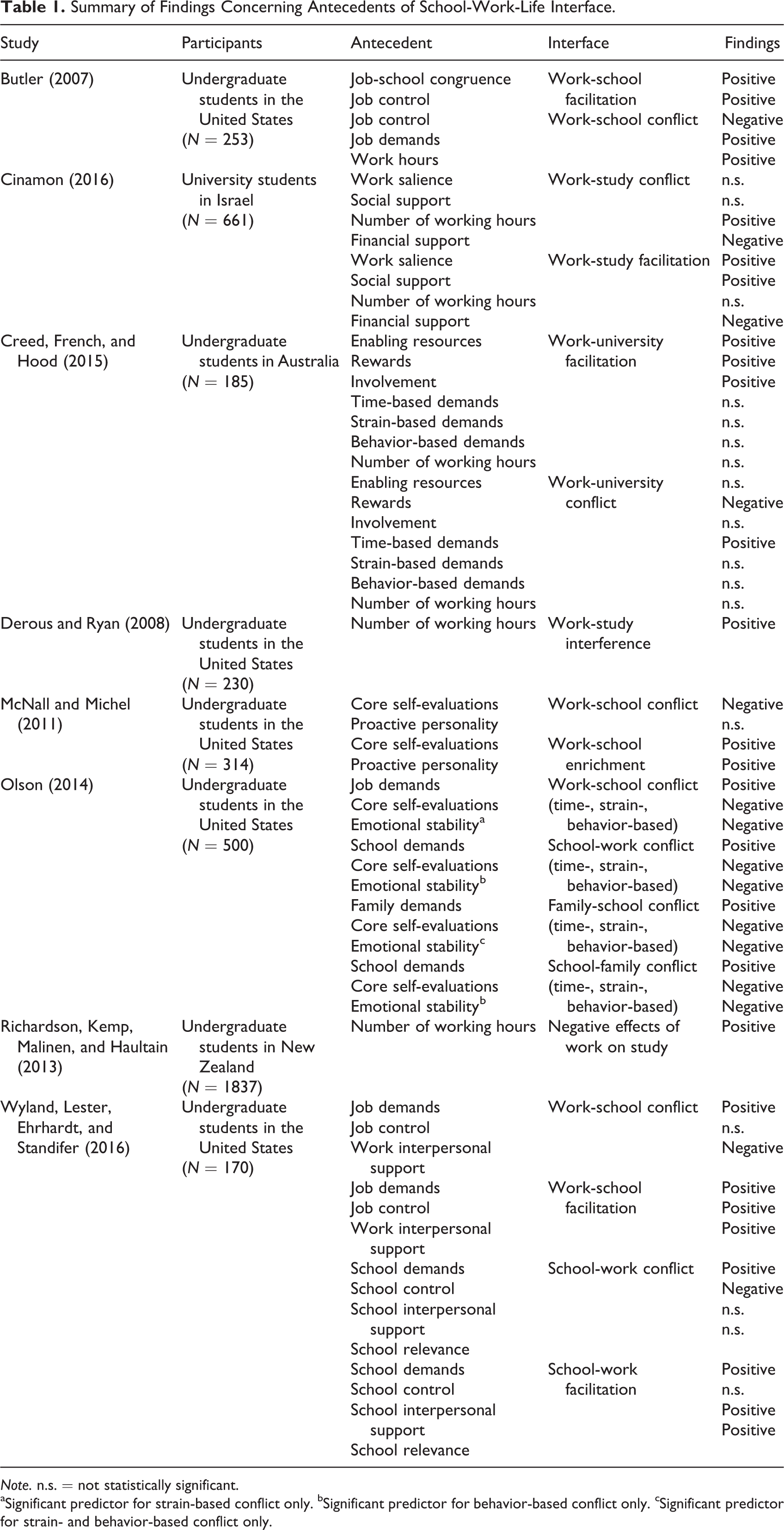
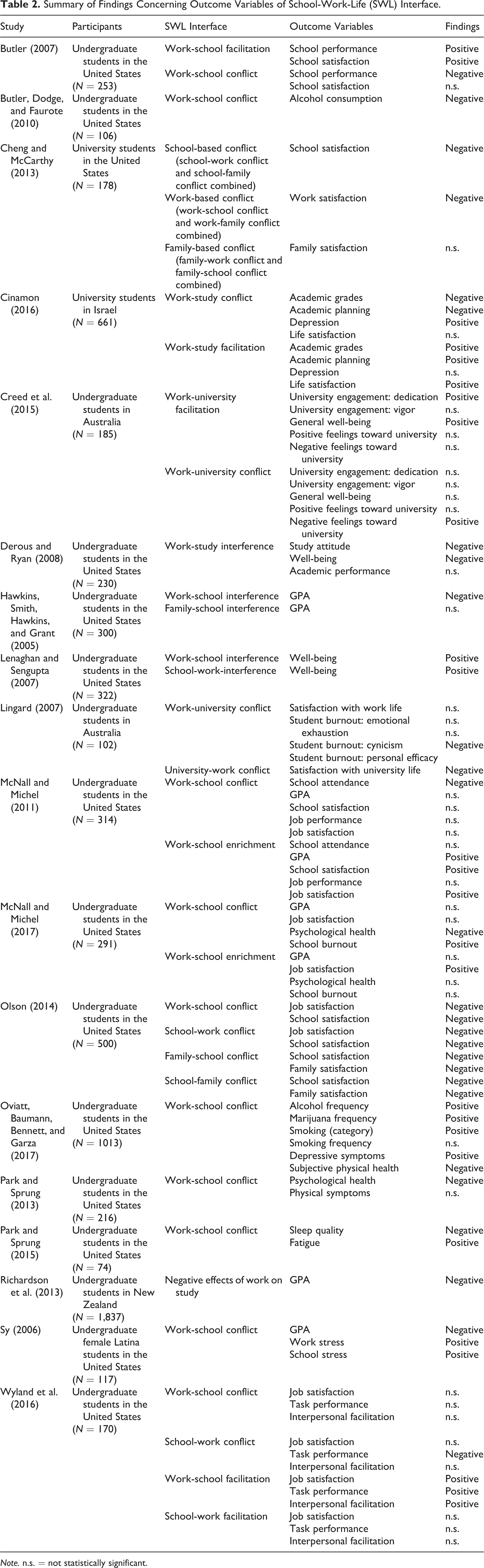
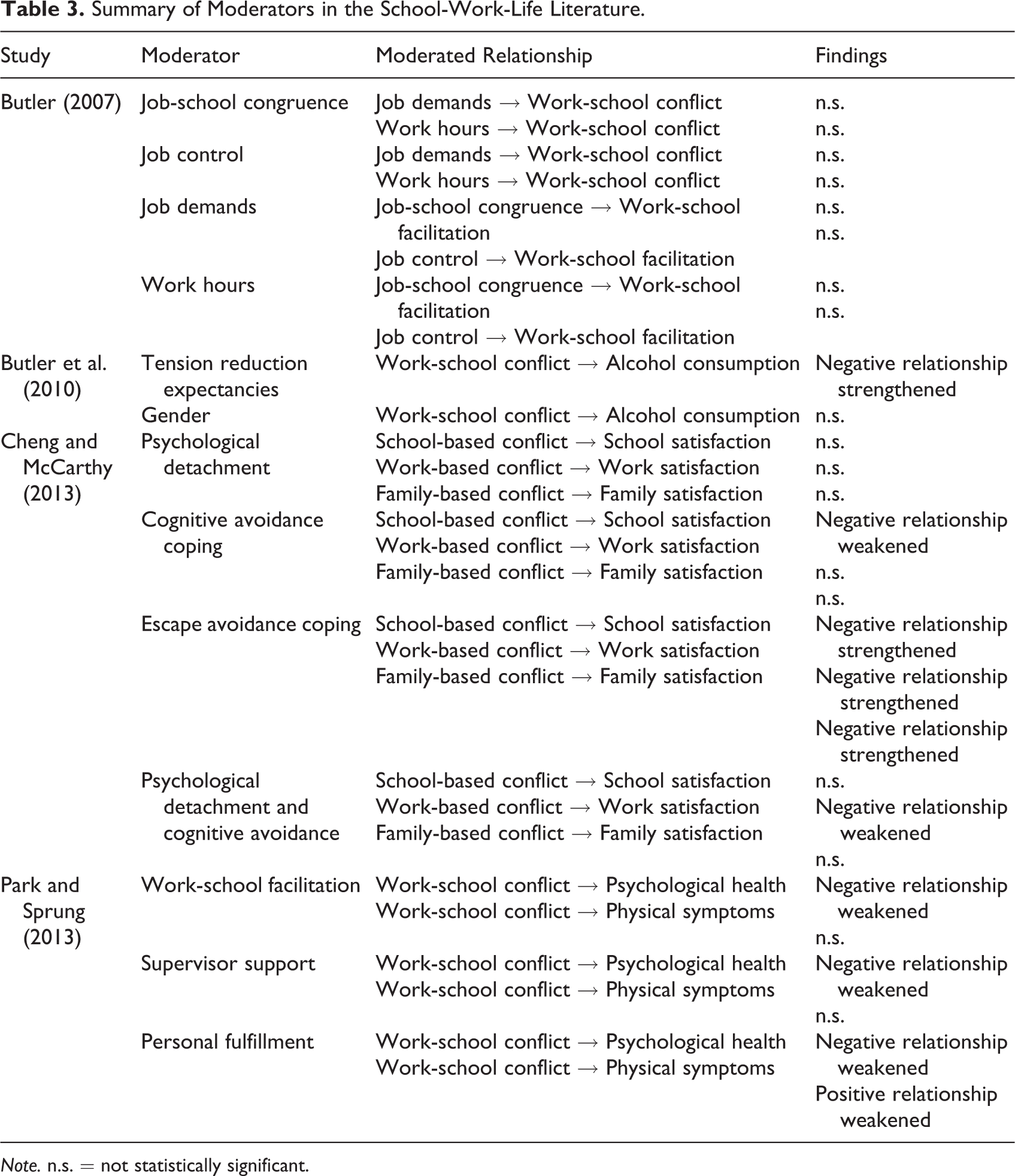
In total, 20 studies met the criteria. We reviewed these studies and categorized them according to what they reported as the antecedents of the SWL interface, outcomes of the SWL interface, and mediating factors of the SWL interface. Tables 1 and 2, respectively, summarize these studies’ findings concerning the antecedents and the outcomes of the SWL interface. We also reviewed moderators of the relationships among the antecedents and outcomes of the SWL interface (see Table 3). Overall, findings from the empirical studies bolstered the proposition that the SWL interface may be an underlying mechanism between multiple role engagement and various outcomes among employed undergraduate students. Figure 1 provides a schematic diagram that summarizes findings in the current literature on the SWL interface.
Summary of Findings Concerning Antecedents of School-Work-Life Interface.
Note. n.s. = not statistically significant.
aSignificant predictor for strain-based conflict only. bSignificant predictor for behavior-based conflict only. cSignificant predictor for strain- and behavior-based conflict only.
Summary of Findings Concerning Outcome Variables of School-Work-Life (SWL) Interface.
Note. n.s. = not statistically significant.
Summary of Moderators in the School-Work-Life Literature.
Note. n.s. = not statistically significant.
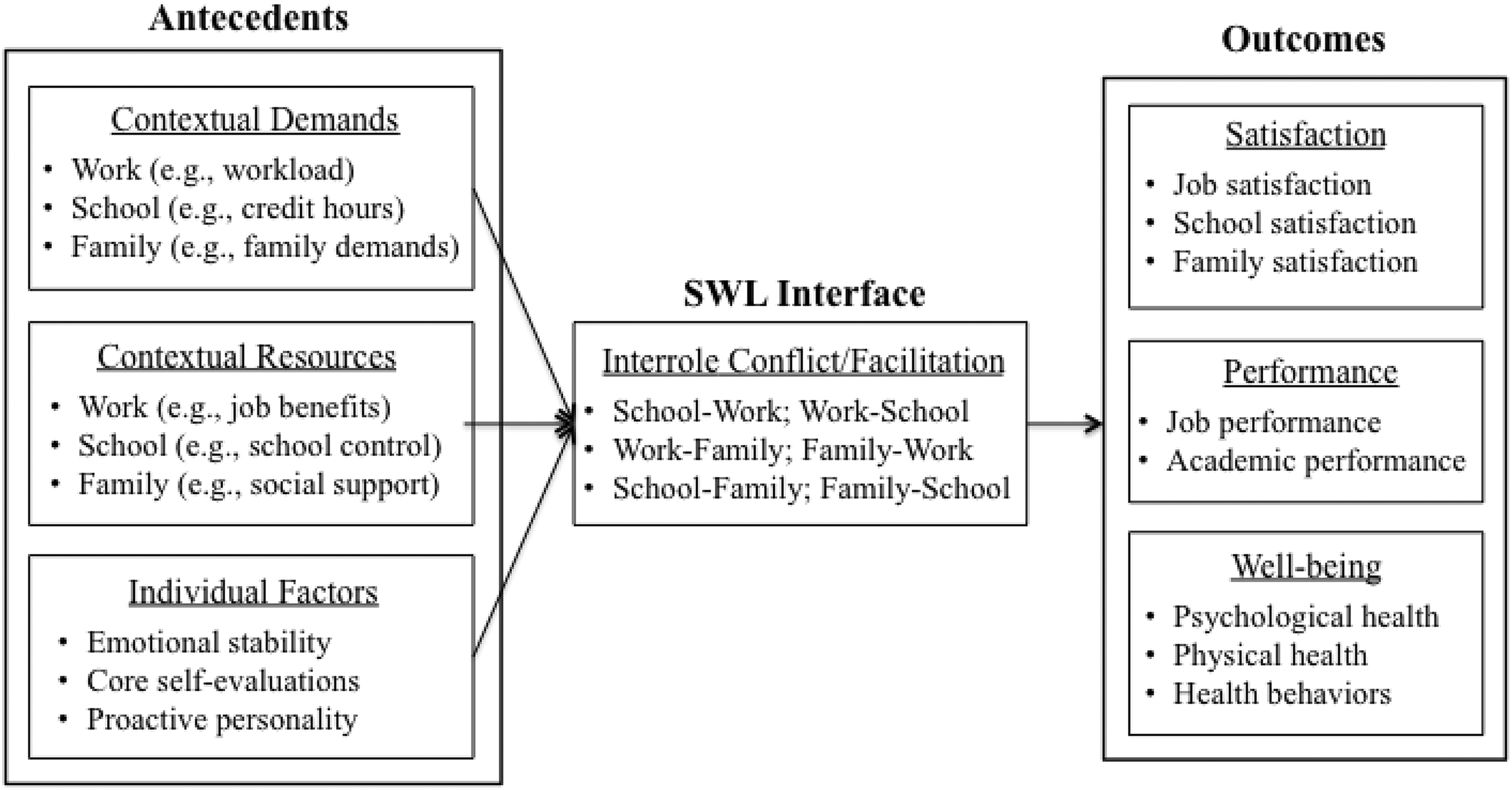
Summary of findings in the school-work-life literature.
Antecedents of the SWL Interface
Consistent with the theoretical framework (ten Brummelhuis & Bakker, 2012), evidence from research to date suggests that contextual demands and resources at work, at school, and within the family, along with individual characteristics, are antecedents to SWL conflict and facilitation. Specifically, the majority of studies substantiated that contextual resources predict optimal inter-role interactions (i.e., less conflict, more facilitation), whereas contextual demands tend to lead to suboptimal inter-role interactions (i.e., more conflict, less facilitation).
In the work domain, interpersonal support and perceived organizational support for school related to increased work-school facilitation and reduced work-school conflict (e.g., McNall & Michel, 2017; Wyland, Lester, Ehrhardt, & Standifer, 2016). Also, job benefits (i.e., enrichment-enabling resources, psychological rewards, and work involvement), job control, and job-school congruence were positively associated with work-school facilitation (e.g., Butler, 2007; Creed et al., 2015). Next, job demands—both as subjective perceptions (e.g., Olson, 2014) and actual work hours (e.g., Derous & Ryan, 2008)—were positively associated with work-school conflict. Thus, findings suggest that a supportive work environment with social support, job autonomy, and manageable workload is essential for optimal inter-role interactions.
In the school domain, interpersonal support and school relevance (i.e., the degree to which the school curriculum is relevant to one’s work) were positively linked to school-work facilitation, whereas school control was associated with less school-work conflict (e.g., Wyland et al., 2016). Studies also reported that demands in various forms—stipulated class time (i.e., credit hours) and perceived school demands—are positively associated with conflict between work and school (e.g., Olson, 2014) and with school-work facilitation (Wyland et al., 2016). In sum, studies highlight that the school characteristics play an important role in shaping working students’ experience of multiple role involvement.
Relatively little research has examined factors in the family domain and individual characteristics. As expected, perceived family demands were positively related to family-school conflict (Olson, 2014). Regarding individual characteristics, emotional stability, core self-evaluations (CSE, i.e., students’ self-assessments of self-esteem, neuroticism, locus of control, and self-efficacy; Judge, Erez, Bono, & Thoresen, 2003), and proactive personality were found to be beneficial and led to lower inter-role conflict among students’ school, work, and life domains and to more work-school enrichment (McNall & Michel, 2011; Olson, 2014). Building on these encouraging results, more research is needed to explore other family-related and personal factors that predict the nature of the SWL interface.
Outcomes of the SWL Interface
Various outcomes have been examined as consequences of SWL conflict and facilitation. As a whole, the literature suggests that inter-role conflict predicts negative outcomes, whereas inter-role facilitation predicts positive outcomes. We review these findings in the order of satisfaction-based, performance-based, and well-being outcomes.
Regarding satisfaction outcomes, work-school conflict, school-work conflict, and work-family conflict were associated with decreased job satisfaction (e.g., Olson, 2014), whereas work-school facilitation was positively related to job satisfaction (e.g., Wyland et al., 2016). Similarly, school-work conflict and school-family conflict, in both directions, negatively related to school satisfaction (e.g., Creed et al., 2015), whereas work-school facilitation positively related to school satisfaction (e.g., Butler, 2007). The findings for family satisfaction were mixed, with some studies reporting that family-school conflict and work-school conflict, in both directions, negatively related to family satisfaction (e.g., Olson, 2014), whereas others observed null findings (e.g., Cheng & McCarthy, 2013).
Studies on the SWL interface have also examined performance at school and work as consequences. With regard to school performance, most studies found that work-school conflict is detrimental to school performance (e.g., Butler, 2007; Hawkins, Smith, Hawkins, & Grant, 2005; McNall & Michel, 2011), whereas work-school facilitation was positively associated with school performance (Butler, 2007) and academic dedication (a component of engagement; Creed et al., 2015). Similar findings were shown for work performance, such that school-work conflict was negatively related to performance, whereas work-school facilitation was positively related to performance (Wyland et al., 2016).
With regard to well-being, work-school conflict has been consistently associated with various indicators of psychological health, including burnout, school and work stress, and depressive symptoms (e.g., Derous & Ryan, 2008; Oviatt, Baumann, Bennett, & Garza, 2017; Sy, 2006), whereas findings concerning physical health were mixed (Oviatt et al., 2017; Park & Sprung, 2013). Next, work-school facilitation was positively associated with general well-being (Creed et al., 2015). Emerging research explored the link between work-school conflict and health behaviors (e.g., alcohol consumption, cigarette use), finding that the relationship is complex and warrants further research that considers both between- and within-person variations (Butler, Dodge, & Faurote, 2010; Oviatt et al., 2017).
Mediating Factors in the SWL Interface Literature
A few studies explored the underlying processes in relationships between antecedents, the SWL interface, and outcome variables. Regarding mediators of the relationship between antecedents and SWL interface, task-based arrangements (e.g., assigning job tasks suited to the individual employee’s skills and preferences) mediated the relationship between workplace negotiation and work-school enrichment (Meiners, 2018). Findings suggest that through workplace negotiations, working students make task-based arrangements that may allow them to pursue school-relevant work responsibilities, which in turn enrich their university experiences.
More studies examined mediators of the relationship between the SWL interface and outcome variables, identifying burnout, sleep quality, and depressive symptoms as mediators. First, burnout partially mediated the positive relationship between work-school conflict and turnover intention (Laughman, Boyd, & Rusbasan, 2016). Second, sleep quality partially mediated the positive relationship between work-school conflict and fatigue; without high-quality sleep, students may accumulate stress and experience fatigue (Park & Sprung, 2015). Last, depressive symptoms mediated the positive relationships of work-school conflict with alcohol consumption, daily cigarette use, and marijuana use (Oviatt et al., 2017).
Moderating Factors in the SWL Interface Literature
The relationships among the SWL interface and its antecedents and outcomes appeared to be qualified by various individual and situational factors. Relatively few studies, however, examined the moderators in the link between antecedents and SWL interface. Specifically, resource-enhancing job characteristics (work-school congruence, job control) did not moderate the positive relationship between resource-draining job characteristics (job demands, work hours) and work-school conflict (Butler, 2007). Similarly, resource-draining job characteristics did not moderate the positive link between resource-enhancing job characteristics and work-school facilitation (Butler, 2007).
More studies have investigated the moderating factors of the relationship between the SWL interface and outcomes. One stream of research concerns various resources that buffer the negative impacts of work-school conflict. For instance, work-school facilitation, work supervisor support, and personal fulfillment at work moderated the link between work-school conflict and health outcomes (Park & Sprung, 2013). Specifically, the negative impact of work-school conflict on health was weaker among working students who experience more work-school facilitation, whose work supervisor is supportive, and who work for personal fulfillment. Another stream of research examined coping strategies as moderators. For example, cognitive avoidance coping (i.e., cognitively distancing oneself from role stressors) mitigated the negative relationship between school-based conflict and school satisfaction, whereas escape avoidance coping (i.e., evading a stressor by distorting one’s thinking) exacerbated the negative relationship between role-based conflict and role satisfaction (Cheng & McCarthy, 2013). Taken together, these findings suggest that the presence of positive work-related resources and the adoption of healthy coping strategies are essential to minimize the harmful effect of inter-role conflict on working students’ well-being.
Limitations of the Review
Limitations of the current review should be acknowledged. The first limitation concerns publication bias. In an attempt to synthesize findings from valid and credible sources, this review includes research published only in peer-reviewed journals. However, this choice may have led to an overrepresentation of significant findings on relationships between the SWL interface and its correlates because studies with significant findings are more likely to be published. Second, given that our interest was to better understand how multiple role engagement initiated by paid employment might affect student outcomes and whether inter-role interface provides an explanation for the relationship, we focused on SWL interface research that targeted working students only. This focus emerged because the psychological experience of managing multiple roles among working students versus nonworking students likely differs due to the obligatory nature of the work domain. Thus, the findings of the current review may not be generalizable to nonworking students, although they too may experience inter-role interactions between school and other life domains (e.g., school-leisure conflict).
Several limitations of the current SWL interface literature itself merit discussion because the findings of this review should be interpreted with these limitations in mind. First, most of the studies utilized cross-sectional designs, whereby single-source data were collected from convenient samples. Thus, the available evidence does not allow us to draw causal conclusions about relationships among antecedents, the SWL interface, and consequences (Sedgwick, 2014). Second, only a few studies examined the entire mediation process that comprises antecedents, the SWL interface, and consequences (e.g., Butler, 2007), and most of those studies adopted the conventional four-step approach to test mediation (i.e., Baron & Kenny, 1986). Because this analytic approach may fail to detect significant indirect effects when direct and indirect effects are significant in opposing directions (Aguinis, Edwards, & Bradley, 2017), these studies might have drawn erroneous conclusions about mediation effects.
Practical Implications
This review offers a comprehensive understanding of the SWL interface as an underlying route between various contextual factors and student outcomes, thereby providing novel opportunities for career counselors to offer guidance for working students. Additionally, the insights into predictors of working students’ performance and well-being can help employers and educational institutions to better support working undergraduates. Of importance, the literature as a whole clearly indicates that inter-role conflict is harmful and inter-role facilitation is beneficial to outcomes in various populations of working undergraduates, pointing toward the need for a concerted effort to optimize working undergraduates’ subjective experience of multiple role engagement. Below we delineate practical implications derived from the current literature, with consideration of multiple stakeholders.
University Stakeholders
For university stakeholders who are concerned about working students (e.g., career counselors, faculty members, administrators), our review suggests that experiences of multiple role engagement among working students can significantly differ depending on the characteristics of the school. School has been shown to be the salient domain for university students (Butler, 2007; Creed et al., 2015), which highlights the paramount importance of interventions that support working students’ academic success. First of all, school counselors may assist to improve working students’ perception of school control to reduce school-work conflict (Wyland et al., 2016). To this end, training programs to develop clients’ skills (e.g., time management, scheduling, stress management, and negotiation skills) could be introduced. Evidence suggests that the perceived effectiveness of school support services negatively relates to work-school conflict (Hammer, Grigsby, & Woods, 1998), attesting that such programs can be useful resources for working undergraduates.
In addition, career counselors can play an active role in optimizing inter-role interface by guiding students toward improved congruency between work and school. For instance, career counselors could help undergraduate students to identify their interests and career potential early on so that the students can choose classes and jobs that closely align with their interests whenever possible. Doing so may be particularly important in the long run, in order to lead students to jobs that are personally meaningful, an alignment that has been shown to accompany various benefits (Allan, Owens, & Duffy, 2017; Duffy, Allan, Autin, & Douglass, 2014; Duffy & Sedlacek, 2007).
Last, in light of the growing research on the importance of individual factors in the SWL interface, school counselors could guide working students to develop positive and empowering personality traits and practices. One such factor that merits particular attention is CSEs, which reflects one’s self-assessments consisting of self-esteem, neuroticism, locus of control, and self-efficacy (Judge et al., 2003). Previous research suggests that CSEs are malleable and may be shaped by external feedback (French, Butts, & Allen, 2016; Johnson, Rosen, & Levy, 2008), which signals a promising area of intervention. For example, school counselors may provide their clients with opportunities to improve self-efficacy by facilitating small masteries in multiple role involvement or sharing successful peer examples for vicarious learning (Bandura, 1977).
Overall, lessons learned from managing multiple roles during university education can potentially improve students’ ability to deal with similar role-related issues when they enter the workforce as full-time employees (Loughlin & Barling, 2001). To that end, school counselors should strive to instill a learning-oriented perspective in working students to maximize benefits from their engagement in multiple roles.
In the arena beyond school counselors, the current literature emphasizes that faculty members and administrators can play a vital role in developing a supportive academic environment to help working undergraduates to navigate the challenges of juggling multiple life roles. Faculty members can be an important source of social support for working students—but they need to be aware of the prevalence of term-time employment among their students and the unique needs of working students. Furthermore, faculty members could contribute to the improvement of job-school congruency by linking students’ learning experiences with their work experiences; incorporating real-life examples into the coursework contents and encouraging working students to share their relevant work experiences may help to achieve this objective. Administrators may want to place a channel to monitor the prevalence of student employment as well as academic performance and well-being among working students (e.g., through annual student surveys) and share the results with various members of the university who interact with working students (e.g., faculty members, student affairs professionals, school counselors). They could also consider updating institutional policies and practices (e.g., encouraging the school-job connection in the academic curriculum) to become more supportive of this growing student group. Additionally, developing and implementing a protocol for faculty members to observe and report working students who are in need of additional support may be necessary to avoid negative academic and health consequences for working students.
Organizational Stakeholders
For organizational stakeholders (e.g., employers, managers, human resource professionals) who are concerned about working students, our review revealed that workplace factors are also important for working students’ subjective experience of multiple role engagement. Providing various resources—enrichment-enabling resources (e.g., school-relevant skills, a sense of responsibility), psychological rewards (e.g., improved self-image and status), and work involvement (e.g., meaningful work participation)—and granting autonomy over work where possible could help promote synergy between work and school for working students. Furthermore, organizations could train supervisors of student workers to be aware of common difficulties encountered by student workers and to become more supportive and empathetic toward student workers. Considering that suboptimal inter-role interactions may relate to working students’ job performance either directly (e.g., Wyland et al., 2016) or indirectly via reduced well-being (e.g., Oviatt et al., 2017), these initiatives to create a supportive and facilitative workplace will also benefit organizations by allowing them to fully utilize the potential of working students.
Directions for Future Research
Our review points to several fruitful avenues for future research. First, studies to date have primarily examined the interface between work and school. Due to scarce research that considers other life domains such as family and leisure, little is known about what gives rise to conflict and facilitation involving these domains or about the relevant consequences. This is a noteworthy gap because most working undergraduates not only combine work and school roles but also devote some of their limited time and resources to familial and leisure responsibilities (Butler, 2007; King & Gaerlan, 2013). Thus, the current SWL literature may not accurately depict what working undergraduates experience when managing multiple life domains. Further research into the life domains of working undergraduates in relation to their work and school domains can build on prior research on family and leisure among nonworking undergraduates, in order to foster a more comprehensive understanding of the SWL interface for working undergraduates. For instance, research has found that the leisure-school and family-school interfaces are associated with academic consequences such as academic satisfaction and performance (e.g., King & Gaerlan, 2013). An assumption that other life roles may be as demanding as undergraduates’ work and school roles, yet may offer a unique set of resources, is a promising topic for future research that could provide valuable insights into the SWL interface.
Second, existing SWL studies have conceptualized inter-role conflict and facilitation as a bi-domain interface that is experienced due to certain characteristics of the originating or receiving domains (e.g., work-school conflict due to work demands). We argue that this practice may not be suitable for capturing the real-world SWL interface that working undergraduates typically confront. In Olson (2014), for instance, family demands positively related to school-work conflict, whereas work demands positively related to school-family conflict. These findings hint at the possibility that some role demands may spill over and contribute to inter-role conflict between two unrelated domains because we have a limited reservoir of resources to satisfy all role demands (Hobfoll, 2002). This may also apply to inter-role facilitation because resources acquired from performing a role could conceivably aid in an unrelated domain. As this notion has not been empirically tested, we encourage future studies to test this hypothesis.
Third, some previous findings imply that role importance may influence the impact of inter-role facilitation and conflict. The role importance hypothesis posits that students tend to identify their school role as their “primary” role, while considering other roles (e.g., work) as less important “secondary” roles (Wyland et al., 2016). When a secondary role is perceived as advantaged in a cross-domain relationship (e.g., in inter-role facilitation), the facilitation-benefit connection may not be as apparent as when the primary role is perceived as advantaged. This perception of role advantage may even extend to inter-role conflict (e.g., school-work conflict), to the point where it could be advantageous for the primary role to encroach on the secondary role (Lenaghan & Sengupta, 2007). Logically, role importance may also exacerbate consequences when the primary role is perceived to be at a disadvantage (e.g., in inter-role conflict). With the vast majority of working undergraduates identifying themselves as “working undergraduates” rather than as “studying employees” (McNall & Michel, 2017), the impact of role importance on the experience and consequence of work-school interface merits further attention. Additionally, future research can investigate the influence of role importance in other “nontraditional” student populations (e.g., student-parents, employed postgraduates). Because “nontraditional” students likely set priorities that differ from those of “traditional” undergraduates, it would be interesting to see whether the two groups identify with their various life roles differently and how this identification affects the relationship between the SWL interface and its outcomes.
Last, there is currently no research on how school, work, and life domains may interact with career aspirations. Previous research indicated that undergraduates may perceive “exertions toward their future career” as a role domain distinct from the work, school, and life domains (Swanson, Broadbridge, & Karatzias, 2006) and that career aspirations can cause distress for higher education students (National Union of Students, 2013). Future research could establish whether career aspirations constitute an independent role domain and, if so, whether and how inter-role facilitation and conflict involving career aspirations influence various student outcomes, especially career-related outcomes. For instance, because term-time employment can be an avenue to achievement and to gaining confidence, skills, and information about the working world (Curtis & Shani, 2002), inter-role facilitation between work and career aspirations may explain how term-time employment affects undergraduates’ future employability.
Conclusion
Our review reveals that the SWL interface explains the relationship between engagement in multiple roles and various outcomes among employed undergraduate students. Demands in the school, work, and family domains lead to inter-role conflict, whereas resources in these domains reduce inter-role conflict and promote inter-role facilitation; furthermore, both inter-role conflict and facilitation are significant predictors of various outcomes including role performance, satisfaction, and well-being. In that a more positive experience of multiple role engagement among working students could positively affect their school, work, and life roles, a joint effort between universities and organizations is needed to optimize the subjective experience of multiple role engagement among this growing group of students. Given the potential costs and benefits of combining term-time employment with academic and other life roles, continuing research on the SWL interface is warranted.
Footnotes
Authors’ Note
Casey Ee Kiang Choo and Zi Xiang Kan contributed equally to this work. This work is based on the undergraduate final year project completed by Casey Ee Kiang Choo and Zi Xiang Kan at the Nanyang Technological University, under the supervision of Eunae Cho.
Declaration of Conflicting Interests
The author(s) declared no potential conflicts of interest with respect to the research, authorship, and/or publication of this article.
Funding
The author(s) received no financial support for the research, authorship, and/or publication of this article.