







Abstract
Veterans who are unemployed and living with mental health or substance use conditions are in need of integrative interventions that support their career development, mental wellness, and sobriety. However, career development interventions are often developed and implemented separate from mental health services. This paper introduces a novel intervention that supports career development of veterans with mental health and substance use concerns: Purposeful Pathways. This paper presents the results from three phases of intervention development: (1) retreats with clinical and vocational psychology experts (n = 13) to develop the theoretical mechanisms of Purposeful Pathways, (2) focus groups with Veterans Health Affairs vocational counselors (n = 6) who provide employment services to veterans with mental health conditions, and (3) an open trial in which veterans with mental health conditions (n = 10) received Purposeful Pathways and provided feedback. Descriptions of the iterative processes of developing the Purposeful Pathways intervention are presented as a model for developing vocational interventions.
Keywords
Introduction
Veterans experiencing mental health and substance use concerns are at risk of poor employment outcomes. For example, veterans with severe mental illness have low rates of competitive employment (Murdoch et al., 2017). Additionally, post-traumatic stress disorder (PTSD) is strongly associated with unemployment such that more severe PTSD symptoms are predictive of greater odds of being without work (Smith et al., 2005; Stevenson, Mueller, et al., 2021). Relatedly, major depressive disorder (MDD) is associated with employment status such that higher self-reported depressive symptoms increase the likelihood of a veteran being unemployed (Zivin et al., 2012). Similarly, veterans with substance use disorders experience high rates of unemployment with the likelihood of unemployment increasing with a co-occurring psychiatric disorder (Humensky et al., 2013). High unemployment rates associated with psychiatric disorders are alarming since unemployment is inextricably linked to a vast range of detrimental social, economic, physical, and psychological outcomes (Paul & Moser, 2009).
The Veterans Health Administration (VHA) offers several vocational rehabilitation programs that serve thousands of veterans with co-occurring conditions, annually. Most commonly, VHA vocational services for veterans focus on getting veterans who are unemployed into jobs rapidly, either through community-based job placement services such as the Individual Placement and Support (IPS) model of Supported Employment (Drake et al., 2012), or through VHA contracted, paid positions that are provided to veterans on a time-limited basis (Transitional Work [TW]). Though IPS and TW are beneficial to many, they are not uniformly effective, as many veterans remain unemployed at program discharge (Abraham et al., 2017).
While rapid work or job placements are an important strategy for overcoming the mental health and environmental barriers to attaining employment among vulnerable populations, a critique of vocational rehabilitation services is the lack of focus on intrinsic factors that may mediate the relationship between contextual barriers and long-term career development. For example, a burgeoning literature testing the theoretical propositions of the Psychology of Working Theory (PWT; Duffy et al., 2016) have demonstrated that the perception of choice in one’s career (i.e., work volition) is a psychological variable mediating the relationship between marginalization and economic constraints on decent work attainment among marginalized communities (Douglass et al., 2017; Duffy et al., 2018; Kim et al., 2022). Among individuals with psychiatric conditions, specifically, there is evidence that employment outcomes are associated with psychological variables such as hopelessness (Davis et al., 2004) and self-efficacy (Michon et al., 2005). Moreover, work motivation has been shown to mediate the negative effects between mental health symptoms and employment outcomes (Saperstein et al., 2011). Methodologically, a critique of vocational rehabilitation research is that studies commonly focus on competitive employment attainment (having a job or not) as the primary outcome, with less consideration for the quality of the job attained. This is concerning, as we know that indicators of job quality (e.g., meaningful employment), directly impact physical and mental health functioning. For example, individuals with co-occurring conditions experience worsening mental health and/or substance use outcomes when working in jobs that are inconsistent with their skills and goals for the future (Luciano & Carpenter-Song, 2014), or that require too many hours that don’t allow for adequate rest (Stevenson et al., 2024). Contrarily, functioning of individuals with co-occurring conditions improves when one is able to consistently work in jobs that are compatible with one’s preferences and needs (Strickler et al., 2009) particularly as related to finding interest/enjoyment in one’s work (Kukla & Bond, 2012).
In sum, there is a need for vocational rehabilitation research and practice to address psychological and mental health-related variables that contribute to employment outcomes, in addition to considering outcomes beyond acquisition of any job to acquisition of meaningful jobs. Unsurprisingly, veterans with mental health and substance use conditions report that attaining meaningful employment is important and promotes their mental health and addiction recovery (Stevenson, Chamberlin et al., 2024; Stevenson, Gorman, et al., 2021); however, this group also reports that they want and need additional support to identify meaningful career goals (Stevenson, Gorman, et al., 2021; Stevenson, Kathawalla et al., 2023). Thus, additional intervention is needed beyond what’s currently available. An intervention focused on career development, mental health/substance use recovery, and the psychological factors that mediate the connection between contextual barriers and employment, could enhance meaningful employment outcomes of veterans participating in vocational rehabilitation services. This may be especially important in interventions like TW that primarily focus on rapid restoration to functioning by providing individuals with immediate access to paid work opportunities.
The Current Study
In the broadest sense, our team was motivated by the question, can a career development intervention be added to existing TW vocational rehabilitation programs to enhance meaningful employment outcomes among veterans living with co-occurring mental health and substance use conditions? This study is the first step in a systematic and progressive intervention development and evaluation process to address this overarching research question. This study begins with identifying the essential components of a career development intervention for veterans with mental health and substance use conditions who are engaged in TW. After identifying necessary components of a novel intervention, we refined the intervention through an iterative process. By the end of this identification and refinement process, this study developed a manualized intervention (see Appendix A) and corresponding treatment fidelity checklist (see Supplemental Materials) to be used in subsequent efficacy and effectiveness trials. To accomplish our proximal goal of developing an intervention manual, this study utilized a three phased approach that included Study 1) expert retreats to synthesize best available theory, research, and practice (Research Question 1 [RQ1]: What are the key treatment components of a new intervention?), Study 2) qualitative focus groups among VHA vocational counselors (Research Question 2 [RQ2]: what suggestions do providers have for refining our intervention based on acceptability, demand, implementation, and integration?), and Study 3) a single-arm open trial among veterans receiving the newly developed intervention (Research Question 3 [RQ3]: what recommendations do veterans have for improving our intervention?).
Study 1: Defining the Intervention Components Through Expert Retreats
There are currently no standardized methods for “defining” intervention components and developing intervention protocols. Behavioral therapy methodologists have described the process of arriving at an intervention protocol as being based on clinical judgment, theoretical rationale, and a clearly identified population that the intervention is intended to serve (Rounsaville et al., 2001). While our target population for our intervention was clear from the onset—veterans participating in TW who have mental health and/or substance use disorders—our research team had multiple theoretical and empirical influences, and a synthesis of these sources was needed. Thus, this first phase of intervention developed focused on convening experts to synthesize influential theoretical and empirical sources to address RQ1.
Theoretical Influence
Our team was influenced by the Psychology of Working Theory (PWT; Duffy et al., 2016). Given our target population, PWT’s emphasis on contextual factors (i.e., marginalization and economic constraints) as directly and indirectly influencing decent work attainment was highly relevant. Moreover, PWT takes an overtly inclusive position for understanding how work impacts the lives of all people, not just those with privilege and choice in their work lives; thus, PWT is likely aligned with the experiences of veterans who may have limited work options. From a PWT perspective, key mediators of macro-level influences on decent work attainment include career adaptability (i.e., the psychosocial resources available to someone to adapt to an uncertain labor market) and work volition (i.e., the perceived choice an individual has in the type of work they do), which suggest that these variables may be the target of intervention. Previous qualitative research demonstrated that PWT could accurately describe the meaning of work among people living with serious mental illness (Millner et al., 2022). In addition, PWT has informed integrative mental health/career interventions and has advocated for a holistic approach to both scholarly efforts and counseling practice (Blustein et al., 2019). Underscoring this integrative approach is the use of well-being as an outcome in the PWT model and the inclusion of relational and social support factors within the conceptualization of the theory, which operationalize means of connecting work and mental health in treatment.
We were additionally influenced by the Career Pathways Framework (CPF; Satgunam & Millner, 2021), a contextualized stage model for the career advancement of individuals living with serious mental health conditions (MHCs). According to the CPF, individuals with serious MHCs occupy one of five stages: career detachment (no plan of working), career consideration (considering the possibility of work), career exploration (actively learning about possible work options), career choice and preparation (gaining experiences related to their chosen career path), and career establishment and maintenance (engaged in a chosen career role and setting) (Satgunam & Millner, 2021). This model additionally considers psychological, social, and structural competencies (career adaptability, work motivation, self-efficacy, environmental awareness, and vocational identity) for career advancement, and ultimately, attaining decent work (Satgunam & Millner, 2021). These competencies are thought to promote advancement in the CPF stage model; thus, they may be the target of a career development intervention.
Finally, we were informed by an earlier qualitative study of the career development needs of veterans with MHCs (Stevenson, Kathawalla et al., 2023). Results from this study uncovered tasks and barriers associated with the career development of veterans with MHCs: 1) tasks: finding personally important career goals, developing skills for maintaining employment, and developing job-searching skills, 2) barriers: difficulty in the job application process due to discrimination, stigma, lack of resources and skills, balancing mental health and substance use recovery with employment, difficulty identifying job goals due to low self-worth/-efficacy (Stevenson, Kathawalla et al., 2023). Additionally, veterans identified the following strategies as supportive of their career development: 1) interventions: get to know the whole client (not just the problems), facilitate ongoing career exploration, provide job-search skill training, provide information and resources about vocational services, and take an integrative approach, and 2) implementation strategies: basic helping skills, offer career development interventions based on client preference, and develop note templates (Stevenson, Kathawalla et al., 2023).
Given the complexity of these multiple sources, we sought to gather insights from those with theoretical, empirical, and methodological expertise related to vocational psychology and psychosocial intervention development. We viewed this process as superior to relying on one individual (i.e., the PI of this study), which is often the case in behavioral intervention development (Rounsaville et al., 2001), to coalesce existing theoretical and empirical results into a comprehensive and novel intervention model.
Method
Participants and Procedures
In the Fall of 2021, the PI facilitated two virtual retreats with theory, method, and clinical experts to identify the key theoretical components for our intervention. The first retreat was attended by five experts (four counseling psychologists with expertise in PWT and one clinical psychologist with expertise in developing manualized interventions). The second retreat was attended by four experts (three counseling psychologists—one with expertise in PWT, one with expertise in the CPF, and one national administrator for the Veterans Health Administration [VHA] Vocational Services Office—and one sociologist with expertise in vocational rehabilitation). In addition to the nine experts described, the PI (a counseling psychologist with expertise in vocational psychology), a co-I (a counseling psychologist and clinician for a VHA vocational service program), a clinical psychology postdoctoral fellow (training in community reintegration services), and a research assistant attended both retreats. Each retreat lasted 2 hours. The fellow and research assistant took detailed notes. Other demographic information about retreat participants were not collected.
Prior to each meeting, participants were sent seminal articles and presentations detailing the theoretical background for the intervention (e.g., PWT, Duffy et al., 2016; CPF, Satgunam & Millner, 2021; career development of veterans with MHCs, Stevenson, Kathawalla et al., 2023). At the start of each meeting, the PI provided a brief review of the background and context in which a proposed intervention would be implemented, the VHA TW vocational rehabilitation program. Afterward, the goals for the meeting were set: “to build consensus on how to adapt the theoretical underpinnings of a career development intervention for veterans with mental health conditions by expanding upon, refining, and adapting PWT as well as CPF and recent research examining the career development needs of veterans with mental health conditions.” PWT, CPF, and findings from Stevenson, Kathawalla et al. (2023) were then briefly reviewed. This led to an open discussion surrounding the interpretation of these findings in light of major theoretical and practice knowledge. Both process and content were discussed for inclusion in a treatment manual. In situations where consensus among content experts could not be reached, the majority stance was used to determine inclusion or exclusion of content into the treatment manual.
Results
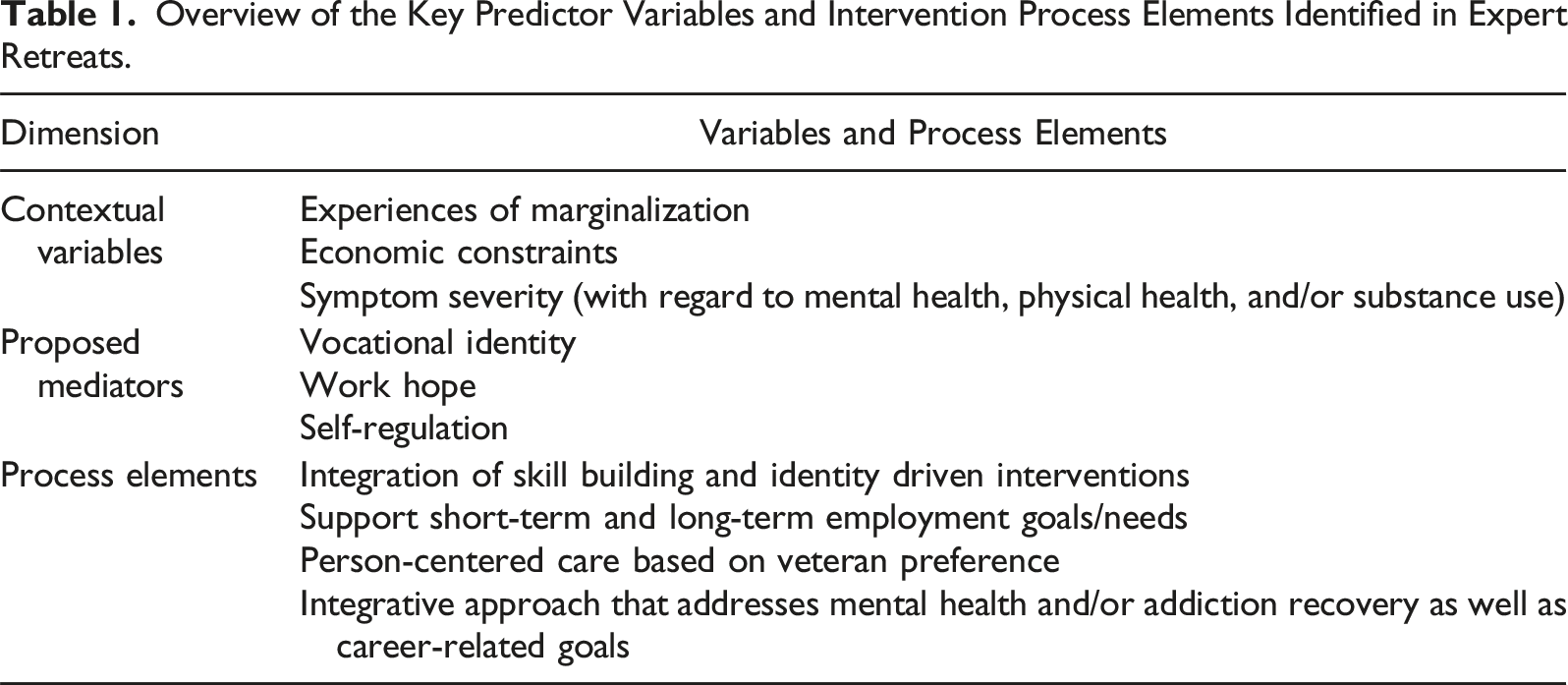
According to the experts, environmental-contextual factors (especially marginalization and economic constraints; Duffy et al., 2016) were believed to have both direct and indirect effects on the career development of veterans with MHCs. These macro-level factors were discussed as impacting short-term survival needs (e.g., immediate needs for earning a sustained income) as well as longer-term career development needs (e.g., developing a meaningful employment life to support mental health and substance use recovery). Symptom severity (i.e., the degree of physical health, mental health, and substance use symptoms a veteran experiences), was additionally identified as a contextual variable relevant to career development in that severe symptoms can impact employment functioning and sustaining a job over time.
Several mediators were identified as potential points for intervention. Vocational identity (i.e., knowing which work roles best align with interests, values, and skills [Holland et al., 1980], and viewing oneself as a worker or a potential worker; Satgunam & Millner, 2021) was discussed as impacting relationships between contextual factors and career-related outcomes, such that greater vocational identity would lead to better vocational outcomes. Relatedly, work hope (i.e., having a clear job goal, having a pathway to reach one’s work goal, and having the perceived agency to reach one’s goal, Juntunen & Wettersten, 2006) was identified as especially relevant for promoting career development among veterans with MHCs and may mitigate the deleterious effects of some or all of the contextual variables. Finally, self-regulation (i.e., having skills to manage one’s thoughts, emotions, behaviors, and/or attention over time and across contexts in pursuit of goals; Karoly, 1993) was deemed critical for maintaining employment over time. Though not traditionally associated with career development practice, a focus on maintaining employment was viewed as relevant by a majority because career development would likely be compromised by frequent job loss and job change stemming from challenges with self-regulation. Conversely, skills related to self-regulation would likely support job maintenance and career advancement and may buffer against consequences of contextual challenges related to marginalization, economic constraints, and severe symptoms.
Overview of the Key Predictor Variables and Intervention Process Elements Identified in Expert Retreats.
Manual Development
After the expert retreats, the PI (in consultation with five co-investigators) developed a 54-page preliminary treatment manual, which we coined Purposeful Pathways. The initial Purposeful Pathways manual consisted of a brief overview of treatment, including underlying assumptions and principles. Phases of treatment were presented along with the general structure of treatment and step-by-step instructions on required and optional intervention components.
The manual was crafted with an emphasis on flexibility to meet varying needs of veterans (rather than taking a one-size-fits-all approach), which led to the emergence of three treatment phases. “Introductory Sessions” focused on establishing the purpose of the treatment and developing a treatment plan. “Middle Sessions” included core (required) and optional treatment elements. Core treatment elements included career exploration, with specific emphasis on exploring career paths in the context of accommodating disabilities or other recovery needs, as well as job goal setting and goal planning. The optional treatment elements included strategies for overcoming common obstacles faced by veterans with MHCs: lack of support, internalized stigma, lack of resources/environmental awareness, low sense of control, and job-search attitudes/beliefs. “Discharge Planning” sessions focused on treatment termination. Overall, the PI was influenced by select theoretical orientations to counseling, especially cognitive-behavioral therapy (CBT) and motivational interviewing (MI) given their wide use in mental health care for veterans (e.g., DeMarce et al., 2023; Miller & Rollnick, 2023). Principles of CBT and MI such as psychoeducation, open ended questions, affirmations, reflections, collaboration, seeking permission, and motivational enhancement strategies informed the description, content, and process of many of interventions in the manual.
Study Two: Manual Refinement Using Field-Based Expert Reviews
After constructing the initial Purposeful Pathways manual, a progressive and translational model of intervention development suggests refining the intervention to maximize efficiency without compromising effectiveness (Powell et al., 2021). Thus, we used this phase of intervention development to examine issues related to the useability of the Purposeful Pathways intervention as perceived by VHA vocational counselors who would actually implement the intervention. We specifically aimed to answer RQ 2 by identifying and rectifying potential issues related to the acceptability, demand, integration, and implementation of our newly developed intervention.
Method
Participants and Procedures
In Spring 2022, two focus groups were held with six VHA vocational services counselors to review and provide feedback on the draft manual. These counselors had participated in a qualitative study on veterans’ career development and agreed to be contacted later to participate in this phase of intervention development (see Stevenson, Kathawalla et al., 2023 for a description of the process of recruiting these experts). Four counselors identified as “female” and two identified as “male,” and five reported their age range as “35–50,” while one reported their age range as “51–65.” Five counselors identified as “White” and one identified as “Black.” The counselors held an average of 13.0 years of experience working in VHA vocational services, and all held clinical as well as administrative responsibilities in their respective vocational services program.
Each focus group lasted one hour and was facilitated by the PI and one co-I (a counseling psychologist and clinical director of one VHA vocational service program). A research assistant was also present as a notetaker. The focus groups included open ended questions to assess the following: acceptability (e.g., “How do you think veterans could benefit from this intervention?”), demand (e.g., “How often might you utilize this intervention – either through direct implementation or through referral?”), implementation (e.g., “Describe any concerns you have about full implementation of this intervention.”), and integration (e.g., “What recommendations do you have regarding integration of this intervention into current VHA vocational services?”). Focus groups were audio recorded and transcribed.
Analysis of transcripts were informed by a rapid analytic approach (Hamilton, 2013). This approach is appropriate for projects with structured and clear interview guides, and that are geared toward short-term projects in health service research settings (such as the VHA) aiming to quickly summarize key points from original data to inform clinical practice (St George et al., 2023) and implementation outcomes (Hamilton & Finley, 2019). To start, the PI constructed a thematic matrix organizing the expert feedback based upon the interview guide: (1) acceptability, (2) demand, (3) implementation, and (4) integration. The PI and two additional researchers independently reviewed the focus group transcripts and summarized data to fit within the developed thematic matrix. The three researchers met to discuss data extracted and condensed their summary matrices into a master matrix to ensure comprehensiveness. Though rapid qualitative analysis allows for data to be categorized outside of the original thematic matrix, in this analysis, all data was found to fit into one of the four identified thematic domains.
Results
Summary of Veterans Affairs Vocational Counselors’ Feedback on the Preliminary Treatment Manual.
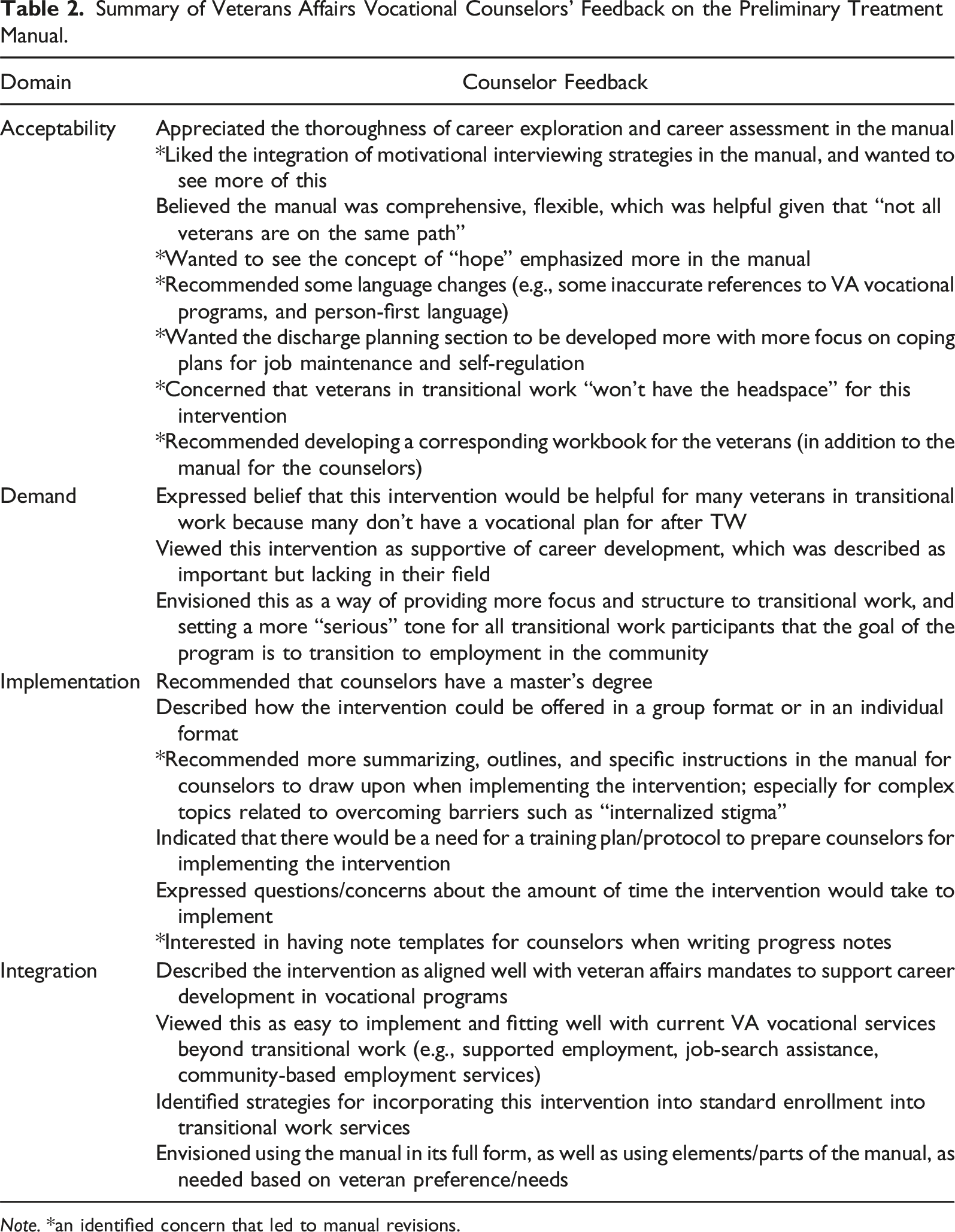
Note. *an identified concern that led to manual revisions.
Manual Revisions
Several revisions were made to the manual, to address counselors’ concerns with acceptability and implementation. First, additional instructions were added to the manual to enhance the utilization of the MI spirit (Miller & Rollnick, 2023). Modifications were made to language (e.g., person-first language) and more details for particular interventions were expanded. We additionally included key elements of the MI spirit: “affirmations,” “information sharing,” and “collaboration” into a newly developed fidelity checklist tool to ensure that counselors incorporate MI principles while implementing the manual (see Supplemental Material). Finally, ruler questions to assess motivation for change were included (Miller & Rollnick, 2023).
A second area we improved upon was emphasis on work hope. This was accomplished through assessment of work hope and adapting a future work self-intervention (see Krieshok et al., 1999) as a means of exploring one’s future self, and promoting hope and optimism in one’s ability to achieve their best envisioned work-self. Additionally, we included “hope/optimism” in our fidelity checklist tool to ensure that counselors routinely incorporate statements that convey a belief that the client’s goals can be achieved.
Concerns arose about difficulty in attending to “complex” elements of the manual (i.e., optional sections addressing psychosocial barriers) and designation of components with “as needed” or “required.” Thus, rather than describing “core” and “optional” treatment elements, all middle sessions were revised to be optional based on unique needs and treatment plan. We additionally enhanced the treatment manual to more explicitly attend to job maintenance and self-regulation by developing a “vocational coping plan” which maps out key strategies for managing distress at work. Instructions and templates for developing these plans were created.
Given concern that veterans may not have the “headspace” for a career development intervention, given the multiple psychosocial stressors they were managing simultaneously, changes to the introductory sessions were made. Consistent with the inherent future orientation of career counseling and the need to orient and prepare clients for this work (Taber, 2015), interventions that oriented clients to the future focus of the manual were included. Additionally, instructions were explicitly incorporated to allow counselors flexibility to attend to clients’ pressing felt needs. Counselors’ ability to balance client’s felt needs with the career focus of the manual was added as an element of the fidelity tool to ensure that counselors actively collaborate with the client on managing both immediate stressors and the manual content.
Study 3: Manual Refinement Using Feedback From Veterans Participating in an Open Trial
Pilot studies are an important component of developing and refining interventions (Leon et al., 2011). While no single pilot methodology is recommended for this stage of intervention development, we utilized a single-arm open trial with qualitative interviews given the feasibility and timeliness of this approach. This method addressed RQ3 by asking actual veteran-consumers of the treatment to provide feedback on the intervention. Consistent with previous recommendations, the PI delivered the intervention within the specific context in which it was intended to be used, among the intended population, at one single location (Rounsaville et al., 2001). Given that this study was a pilot, we were not powered to test hypotheses. Rather we aimed to make revisions to the manual based on veteran feedback.
Methods
Participants and Procedures
Between June 2022 and November 2022, 10 veterans were recruited to participate in an open trial in which they received the experimental career development services (delivered by the PI) and provide feedback on the intervention content and process through a qualitative exit interview. Veterans were recruited from one VHA hospital that provided vocational rehabilitation services to veterans with MHCs. Veterans interested in the study were screened to determine eligibility. Inclusion criteria included (1) presence of a current psychiatric disorder, as indicated by an ICD-10 diagnosis entered in the veterans VHA medical record within the last six months, inputted by a licensed mental health provider, (2) be unemployed, underemployed, or employed but functioning poorly at work secondary to mental illness or substance abuse, (3) be at least 18 years of age, (4) planning to work for three years beyond the end of this study, and (5) be competent to provide written informed consent. Exclusion criteria included (1) acute suicide/homicide risk requiring treatment focused on safety to self or others, (2) ineligible for vocational services at VA, (3) currently enrolled in Supported Employment services, (4) Symptom Checklist-6 (SCL-6; Rosen et al., 2000) score greater than 26, (5) Veterans RAND-12 (VR-12; Kazis et al., 2006) physical component score less than 12, and VR-12 mental composite score less than 8, (6) improbability that participants will complete the study for the following reasons: expected deployment, expected incarceration, expected long-term hospitalization, or expected relocation from the vicinity of the participating VA during the study period, and (7) unwillingness to engage in a weekly career intervention. Veterans who were eligible and interested in participating in this study completed an informed consent process and began scheduling regular meetings with the PI to engage in the experimental intervention.
All veterans identified as male, and most self-identified their race as White (60%) followed by Black (30%) and Hispanic/Cuban (10%). The mean age of participants was 49.5 (SD = 10.2). Most served in the Army (50%), followed by the Marines (30%), then Navy (20%). Most were divorced (30%) or currently married (20%) and a majority either had a high school diploma/GED (40%) or an associate’s degree (40%). Ninety percent of the veterans experienced homelessness at some point in their lives, and a majority (60%) were residing in a residential treatment program for homelessness or housing instability. Most (70%) received disability compensation through the VA for a service-related condition. All participants had co-occurring mental health and substance use diagnoses. Mental health diagnoses included PTSD (60%), depressive disorders (major depression or depression, NOS; 30%), anxiety disorder, NOS (20%), attention deficit disorder (20%), and bipolar disorder (20%). Regarding substance use, half of participants had an opioid use disorder, followed by alcohol use disorder (40%), cocaine use disorder (20%), and cannabis use disorder (20%). All participants were unemployed in the three months preceding study enrollment, and on average (M), participants had not held a competitive job for 6.7 years (range = 0.5 to 24; SD = 8.30).
Means and Standard Deviations of Measures at Baseline and Exit.
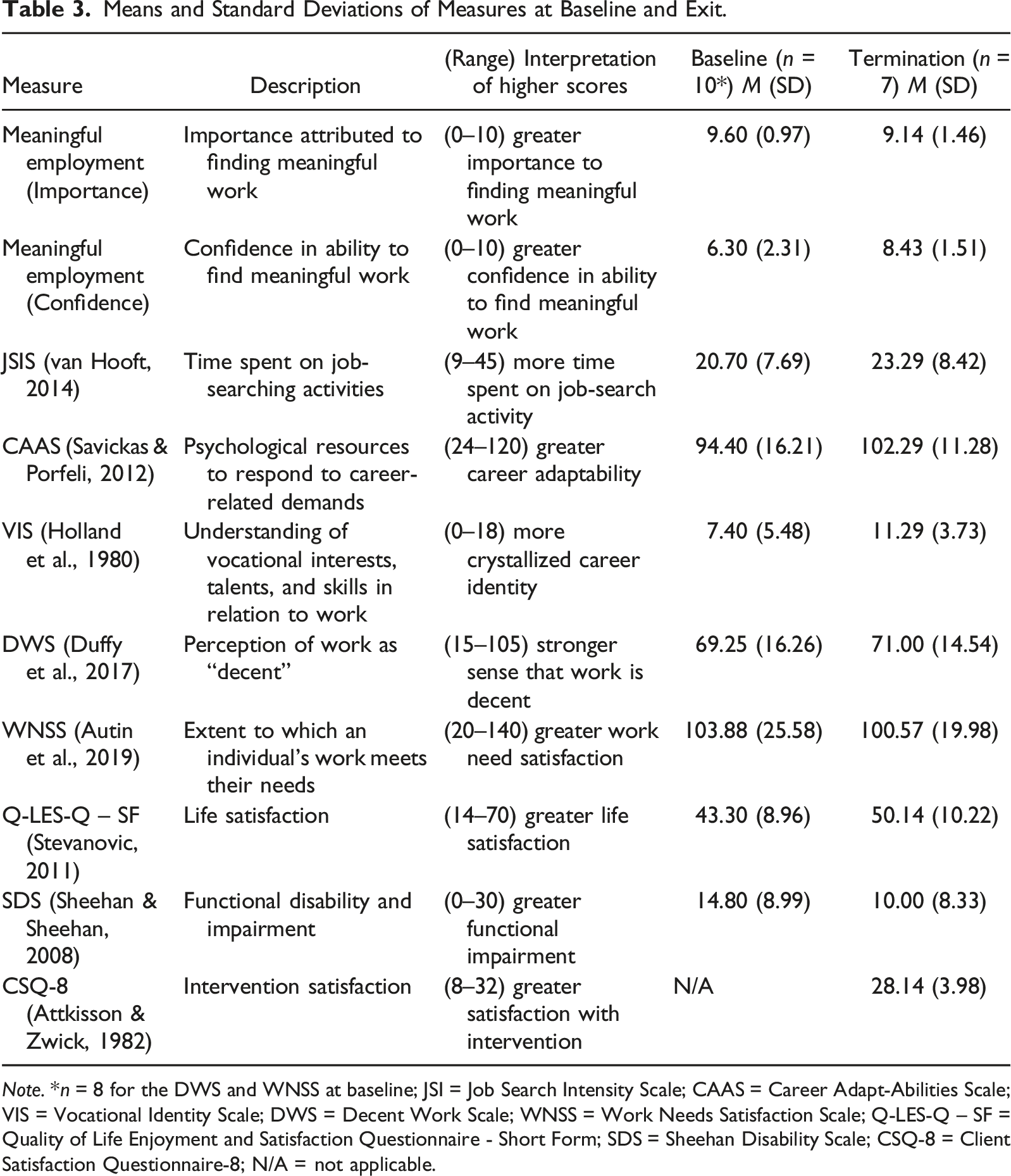
Note. *n = 8 for the DWS and WNSS at baseline; JSI = Job Search Intensity Scale; CAAS = Career Adapt-Abilities Scale; VIS = Vocational Identity Scale; DWS = Decent Work Scale; WNSS = Work Needs Satisfaction Scale; Q-LES-Q – SF = Quality of Life Enjoyment and Satisfaction Questionnaire - Short Form; SDS = Sheehan Disability Scale; CSQ-8 = Client Satisfaction Questionnaire-8; N/A = not applicable.
Seven of the participants completed a semi-structured exit interview with a researcher to assess acceptability of the intervention as well as feedback on making improvements. Questions included (1) “What was your experience like with the career counseling sessions?” (2) “In what ways has the treatment been helpful to you?” (3) “In what ways has the treatment been unhelpful to you?” (4) “In what ways has this treatment helped you make progress with your career goals and planning?” (5) “Was there anything missing in the treatment that you would have liked to be included?” (6) “Who would you recommend this program to and why?” (7) “For what reasons would you seek out a program like this in the future?” and (8) “Was there anything about the provider’s approach that you liked or disliked?” Exit interviews were audio recorded and transcribed.
The same analytic methods previously described for the counselor focus groups informed the analysis of these veteran interviews. The PI first constructed a thematic matrix that included two thematic elements based on the aims of this phase of manual refinement: 1) helpful intervention components, and 2) suggested intervention improvements. The PI and one additional researcher reviewed these transcripts and summarized key points based on this thematic template as either helpful or suggestions for improving the intervention. These two researchers met to ensure that all suggestions for improvement were identified. No additional thematic domains were identified as all data fit within the two domains of the thematic matrix.
Results
All seven veterans described the intervention as “helpful,” and most reported that the intervention encouraged them to think and plan for their future by identifying specific goals and pathways to reach their goals as well as addressing underlying barriers. All veterans identified helpful elements of the counselor’s approach including building rapport, appropriately pushing clients to consider their vocational plans, and other basic counseling skills. All veterans reported they would recommend the intervention to others, especially veterans in recovery from mental health and addictions who are unsure of their vocational future. Only two veterans made suggestions for improvement. One veteran expressed a desire to have a client workbook with specific worksheets. A second veteran reported they wanted a time-unlimited approach to continue receiving support as needed.
Manual Refinement
Based on veteran feedback, the PI constructed a veteran workbook that corresponded with the counselor manual. This workbook contains a brief introduction and a description of how the counselor will use the workbook during the course of their work. This introduction was followed by materials from the manual including handouts and worksheets relevant for veteran use. Finally, given the request for a time-unlimited approach, the discharge planning section was updated to explicitly address veterans’ return to treatment, as needed. An overview of the final Purposeful Pathways intervention is provided in Appendix A.
General Discussion
This study sought to iteratively produce an integrative and manualized career development intervention for veterans with mental health and substance use conditions. We systematically gathered perspectives from multiple relevant sources—veterans with lived experiences, VHA vocational counselors, and vocational psychology theoretical experts—to inform the entire manual formulation process (e.g., theoretical framing, specific content, structure, and revision/refinement). As a result, the Purposeful Pathways intervention was developed with a strong conceptual and applied foundation. Results offer indication that Purposeful Pathways is acceptable and could be feasibly integrated into VHA TW vocational services.
Proposed Treatment Components
In response to RQ1, findings from our expert retreat analysis provide a tentative outline of the key contextual and mediating variables important for an integrative career development intervention for veterans with co-occurring mental health and substance use conditions. Marginalization, economic constraints, and symptom severity were identified as key contextual factors that reduce one’s ability to secure meaningful employment. These predictors are closely aligned with PWT (Duffy et al., 2016), and reflect the voices of veterans in previous studies who report that lack of financial resources and experiences of discrimination negatively impact vocational attainment and overall career attainment/development (Stevenson et al., 2024; Stevenson, Kathawalla et al., 2023). Results from our theoretical and empirical analysis extend PWT with the inclusion of symptom severity as a salient predictor of career development, and explicitly accounts for the unique needs of veterans with co-occurring conditions as research demonstrates that symptom severity negatively impacts employment functioning (Smith et al., 2005; Stevenson et al., 2024; Stevenson, Mueller, et al., 2021). Within this contextual backdrop of marginalization, economic constraints, and symptom severity, results from our expert retreats suggest that improvements to vocational identity, work hope, and self-regulation may act as critical points of intervention for supporting veterans in vocational rehabilitation to achieve long-term career goals and the attainment of meaningful employment.
Vocational identity has been conceptualized as a critical component of career advancement of people with serious mental illness (Satgunam & Millner, 2021), as well as enhancing work role functioning among veterans with PTSD (Osborne et al., 2022). Empirically, greater vocational identity has been associated with career-related self-efficacy (Li et al., 2019) and other distal outcomes such as greater psychological well-being (Strauser et al., 2008) and life satisfaction (Kvaskova et al., 2023). Qualitative work among young adults living with mental health conditions suggests that increasing work-related identity leads to greater positive attitudes, promotes confidence, and provides clearer life directions that promote mental health recovery (Liljeholm & Bejerholm, 2020). Collectively, these findings align with our proposition that improving vocational identity may enhance meaningful employment outcomes. It may be the case that improving vocational identity promotes positive attitudes, confidence, and the formulation and pursuit of meaningful goals that buffer against other contextual barriers.
Work-related hope has been conceptualized as an important career development task that supports an individual in maintaining connection to their vocational identity in the presence of obstacles (Diemer & Blustein, 2007). Recently, researchers found positive associations between employment-related hope and subjective recovery from mental health experiences among individuals with serious mental illness suggesting that employment-related hope “may preserve a sense of recovery in the face of challenges; this may ultimately lead to better outcomes, such as the achievement of one’s goals in the community, including those related to work” (Kukla et al., 2024, p. 7). Further, work-related hope is associated with career self-management (Brown et al., 2013) and job-search behavior among individuals with serious mental health conditions (Stevenson, Millner, et al., 2021). Though more research is needed, there is suggestive evidence that work-related hope may facilitate cognitive-behavioral responses from individuals that support long-term career development processes and the acquisition of meaningful career goals.
Finally, results from our study highlight the importance of self-regulation in sustaining career developmental processes overtime. Previous intervention studies show that improvements can be made to self-regulatory cognitions and behaviors, which lead to improved vocational outcomes and increased satisfaction (Raabe et al., 2007). Given that veterans in recovery from mental health and substance use disorders experience frequent job loss and job transition while simultaneously managing health and substance use goals (Stevenson et al., 2024), developing skills for managing thoughts, emotions, behaviors, and motivations are likely to improve management of frequent job transitions, sustain goal oriented progress, and promote healthy decisions surrounding mental health and substance use recovery (i.e., sustaining sobriety or reductions in substance use).
Treatment Refinement
In answering RQ2 and RQ3, several refinements were made to the Purposeful Pathways intervention in response to concerns expressed by VHA counselors and veterans. Based upon their feedback, the final intervention emphasized elements of motivation, hope, future orientation, and building coping skill. Additionally, a corresponding workbook was developed to be used by clients during the intervention process. Additionally, considerations for training future counselors in the intervention were built upon such that more concrete examples were provided throughout the intervention manual and templates were developed for implementation.
Results from this study additionally provide preliminary evidence for the acceptability, demand, and integration of the Purposeful Pathways intervention. VHA vocational counselors who reviewed the initial manual endorsed numerous qualities of the intervention that they found appealing. These individuals perceived strong demand for the Purposeful Pathways intervention, particularly in the context of TW as they believed it would provide structure and support veterans in their employment goals beyond the TW program. They additionally reported that integration of the Purposeful Pathways intervention into TW services would be feasible. Likewise, veteran participants in a single-arm open trial of Purposeful Pathways provide preliminary evidence, based on qualitative interviews and high scores on a measure of satisfaction with services (the CSQ-8), that the intervention was acceptable and helpful. While our open trial was not powered for hypotheses testing, there is indication that Purposeful Pathways was associated with positive changes in vocational, well-being, and functional outcomes, and thus, future testing of this intervention may be warranted.
Limitations
There are several limitations in our study to be noted. First, we did not collect social-demographic identity information on the experts beyond professional background. This limits our ability to ensure heterogeneity in perspectives obtained regarding intervention components. However, given our initial theoretical influence was identified a priori, we intentionally sought perspectives from those with expertise on theory and research pertinent to our intervention. We also ensured representation from experts within and outside of the VHA system to enhance generalizability. Attaining perspectives from VHA counselors and veterans themselves also enhances heterogeneity of perspectives gathered. An additional limitation of our study is that all veterans in our open trial identified as male. Though a majority of veterans who use vocational rehabilitation services identify as male (Abraham et al., 2017), it is possible that our intervention has missed important intervention components or areas for refinement. Future evaluations of Purposeful Pathways will benefit from engagement with gender-diverse samples.
Implications for Career Counseling Practice and Research
Despite the above mentioned limitations, our study offers multiple important implications for career counseling practice and research. Practitioners who work with veterans with mental health and/or substance use conditions may find benefit in offering services that are integrative of career development and the pursuit of meaningful employment goals within the context of mental health and addiction recovery. In combination with vocational rehabilitation services, which primarily address the functional need for rapid access to work, individualized interventions that aim to improve vocational identity, work hope, and self-regulation are likely appropriate clinical targets of intervention for this special population. These services should be implemented within a person-centered framework, integrating identity exploration with concrete skill building, and attending to both short-term and long-term career planning. The Purposeful Pathways intervention represents one such approach that could augment vocational rehabilitation services typically provided to veterans in TW.
The proposed mediators of our intervention require further explication by research. While there is already strong evidence linking contextual barriers to vocational identity, work hope, and self-regulatory skills, there is a need for stronger evidence linking these constructs to ultimate outcomes of attaining meaningful employment and enhanced well-being. Intervention researchers could address our ultimate research question surrounding the efficacy and effectiveness of the Purposeful Pathways intervention. An important first step in evaluating the Purposeful Pathways intervention includes studies that evaluate the acceptability and feasibility of this intervention though a larger open trial or a pilot-randomized controlled trial (RCT; Rounsaville et al., 2001); one such study is already underway (see Stevenson, Teravainen et al., 2023). Following feasibility and acceptability research, a fully powered RCT could demonstrate the efficacy of the intervention in improving career development and employment functioning outcomes of this vulnerable population.
Conclusion
Veterans living with mental health and substance use conditions are in need of evidence-based interventions that promote their long-term career development. The Purposeful Pathways intervention was developed to meet this need. Though further testing and evaluation of this intervention is necessary, Purposeful Pathways appears to be an acceptable intervention that integrates career development with mental health and substance use recovery.
Supplemental Material
Supplemental Material - Purposeful Pathways: An Integrative Career Development Intervention for Vocational, Mental Health, and Substance Use Recovery
Supplemental Material for Purposeful Pathways: An Integrative Career Development Intervention for Vocational, Mental Health, and Substance Use Recovery by Brian J. Stevenson, Cheyenne Reed, Amanda Falcón, Taylor Hunt, Ummul-Kiram Kathawalla, Lisa Mueller, Kelley McNary, Sarah Wilkins, and David Blustein in Journal of Career Development
Footnotes
Declaration of Conflicting Interests
The author(s) declared no potential conflicts of interest with respect to the research, authorship, and/or publication of this article.
Funding
The author(s) disclosed receipt of the following financial support for the research, authorship, and/or publication of this article: This work was supported by Career Development Award (1 IK2 RX003401-01A2) from the United States (U.S.) Department of Veterans Affairs.

Supplemental Material
Supplemental material for this article is available online.
Appendix
Author Biographies
References
Supplementary Material
Please find the following supplemental material available below.
For Open Access articles published under a Creative Commons License, all supplemental material carries the same license as the article it is associated with.
For non-Open Access articles published, all supplemental material carries a non-exclusive license, and permission requests for re-use of supplemental material or any part of supplemental material shall be sent directly to the copyright owner as specified in the copyright notice associated with the article.
