







Abstract
Two distinct literature bases exist documenting the benefits of study aboard participation and state-adopted merit-aid policies. However, few, to date, have estimated the impact of merit-aid adoption on study abroad participation. Results from our study demonstrate the potential positive externality merit-aid policy adoption has on study abroad participation. In addition, we find that increases in study abroad participation is concentrated primarily within public doctoral/research institutions and institutions with students from more affluent families.
Introduction
Over the past decade, the increasingly global nature of the business world has continued to heighten employers’ interest in students who have had international/global experiences that complement their academic training (Trooboff, Vande, & Rayman, 2008). In light of this, college students have traditionally turned to study abroad programs for a combination of educational and international experiences (Hoffa, 2007; Kitsantas, 2004). Institutions of higher education have typically tried to balance the demand for global educational experiences with concerns about the rising costs of attending college. Consequently, states have adopted a number of policies designed to mitigate students’ uncertainties about the costs of higher education. Although systematic bodies of literature separately address the predictors and impact of the international educational experience (e.g., study abroad) and the effects of state financial aid policies on student decision making, a void exists in the literature connecting these two mechanisms.
Various scholars have examined the effects of merit-aid policies on academic and social outcomes. In particular, researchers have found that the adoption of merit-aid policies has directly affected academic outcomes such as in-state student enrollment (Cornwell, Mustard, & Sridhar, 2006; Stanley & French, 2009; Upton, 2016), student retention and completion (Henry, Rubenstein, & Bugler, 2004; Scott-Clayton, 2011), and students’ choice of major (Hu, 2008; Zhang, 2011). In addition, merit-aid policies have been linked to indirect academic and social outcomes, such as advanced placement (AP) course-taking patterns (Kramer, 2016) and increases in college binge drinking (Cowan & White, 2015). To date, scholars have not identified any prior work examining the connections between adoption of merit-aid policies and participation in study abroad. Participation in study abroad programs, however, has been shown to have significant academic, personal, and cognitive benefits (Kehl & Morris, 2008; Raby, Rhodes, & Biscarra, 2014; Salisbury, Umbach, Paulsen, & Pascarella, 2009).
This article serves as an examination of the role of merit-aid policy adoption on student participation in study abroad programs. Specifically, the following research questions guided this article:
Framed through the economic theory of mental accounting (Thaler, 1985), we used a quasi-experimental, difference-in-difference (DiD) approach to estimate the effect of Tennessee HOPE (TN HOPE)/Tennessee Education Lottery Scholarship (TELS)/merit-aid adoption on students’ institutional-level participation in study abroad. We found that the adoption of merit-aid policies, specifically in Tennessee, positively affected the number of students participating in study abroad programs, but the increase in participation was primarily concentrated in public institutions offering doctoral and master’s degree programs.
This article includes an overview of the literature on both merit-aid policies and the determinants and benefits of study abroad; a summary of the theoretical framework used to generate our hypothesis and drive our analysis; a presentation of data, methodology, and limitations; insights into our main effects as well as our heterogeneous effects and robustness checks; and a discussion of findings and implications for future research and policy.
Literature Review
Prior Research on Merit Aid
One of the most popular state-adopted policies for countering the rising costs of higher education is a broad merit-based aid policy. The success of merit-aid policies is based largely on their ability to reward high-achieving secondary students and promote the retention of high school graduates at in-state postsecondary institutions (Cornwell et al., 2006). Zhang and Ness (2010) found that the adoption of merit-aid policies significantly increased the number of in-state high school graduates choosing to pursue higher education within the same state from which they had graduated high school, thereby minimizing the movement of talented students to other states (Fitzpatrick & Jones, 2016). Cohodes and Goodman (2014) found, in their evaluation of a merit-aid program in Massachusetts, that the tuition and fees subsidies provided through that program significantly altered students’ college choice behaviors, with students more likely to select low-quality postsecondary institutions when presented with larger merit-aid subsidies. Scott-Clayton (2011) found that in West Virginia, merit-aid policies are related to higher levels of college degree completion, while Upton (2016) found that positive degree completion effects were concentrated within underrepresented student populations.
Beyond their direct effects on student enrollment and completion, merit-aid policies have significantly altered the decision making of institution leaders and state policy makers. Kramer, Ortagus, and Lacy (2018), like Long (2004), found that the adoption of merit-aid policies significantly affected pricing strategies for postsecondary institutions, and Kramer (2016) found that merit-aid policies were related to increases in secondary AP program participation. Merit-aid polices have been linked to noneducational outcomes as well. For instance, the adoption of a merit-aid policy was connected to an increase in local home prices (Campbell & Smith, 2009) as well as to new car sales for high-income families (Cornwell & Mustard, 2007).
Prior Research on Study Abroad
According to previous research, precollege academic preparation, socioeconomic and racial/ethnic characteristics, and involvement in college activities may all influence a student’s choice to study abroad (Luo & Drake, 2015; Salisbury, Paulsen, & Pascarella, 2011; Salisbury et al., 2009). Despite the growth in participation in study abroad, it continues largely to be a college activity that is predominantly White (McClure, Szelenyi, Niehaus, Anderson, & Reed, 2010), middle-income and affluent (Goldstein & Kim, 2006), and female (Salisbury et al., 2009). Indeed, African American/Black students were found to constitute 12.5% of enrolled students but only 3.5% of participants in study abroad (Comp, 2006). Low-income and minority students often seek out employment opportunities in the summer—a time of year when most study abroad opportunities are available—to support their higher education and are thus faced with the trade-off between earning income and participating in study abroad programs.
Student concerns about undergraduate major completion, level of academic expectations (informed or otherwise), and student ethnocentrism all significantly affect their likelihood of participation in a study abroad program (Goldstein & Kim, 2006). Doyle et al. (2010) expanded Goldstein and Kim’s (2006) earlier work, finding that informing students about the social and academic benefits of studying abroad early in their undergraduate tenure created positive expectations of the study abroad experience and thus led to increased participation in such experiences. However, this informational effect on participation is mitigated by students’ access to financial resources (Lorz et al., 2016).
Significant literature has also highlighted the direct and indirect benefits of participating in study abroad programs, noting in particular that studying abroad helps students develop career-related skills (Paige, Fry, Stallman, Jon, & Josić, 2010), self-efficacy (Cubillos & Ilvento, 2012), global-mindedness (Kehl & Morris, 2008), foreign language skills (Martinsen, Baker, Dewey, Bown, & Johnson, 2010), and interpersonal communication skills (Salisbury et al., 2009). Both Sutton and Rubin (2010) and Raby et al. (2014) found that study abroad programs were associated with increased student retention rates, higher academic performance in English and math courses, and elevated degree completion percentages.
In addition to contributing to student development, participation in study abroad also directly affects academic outcomes, as evidenced by several studies relating study abroad to higher graduation rates for at least some groups of students (Malmgren & Galvin, 2008; Sutton & Rubin, 2010). Luo and Drake (2015) additionally reported increased postparticipation grade point averages (GPAs) for students who studied abroad. Finally, Posey (2003) found that African American and Asian/Pacific Islander students who studied abroad showed higher graduation rates than White and Hispanic/Latino students.
Although the benefits of studying abroad are well documented, scholars have additionally noted the differential effects of study abroad on various student subgroups. Baxter Magolda (1992), for example, reported that the value of studying abroad might be greater for women, as their learning styles differ from those of men, with women tending to learn more by experience. This is particularly troubling given that women are the majority of study abroad students. Salsbury et al. (2011) found that not only are African American and White students more likely than their peers to engage in study abroad programs, but also they take away different outcomes from similar experiences. In addition, Wiers-Jenssen and Try (2005) further described the effects of study abroad experiences as influenced by the destination country.
Barriers to Participation in Study Abroad
Despite the many benefits to be had by participating in study abroad programs, scholars have documented systematic financial, family, language, and curricular barriers that limit participation in such programs (Salisbury et al., 2009; Sánchez, Fornerino, & Zhang, 2006). These barriers have been shown to disproportionately affect the participation of students from disadvantaged and underrepresented populations (Ðoàn, 2002; Hembroff & Rusz, 1993; Van Der Meid, 2003). Within the literature, scholars have discussed finances as one of the primary potential barriers to participation in a study abroad program. Van Der Meid (2003) documented that cost, regardless of access to financial aid, affected students’ willingness to participate. Van Der Meid’s (2003) findings support the early work of Ðoàn (2002), who suggested that the fiscal effects of participation in study abroad were the largest barrier to such study. Recent work by Whatley (2017) found that both need-based and non-need-based financial aid are predictors of increased participation in study abroad—signaling a potential role for financial aid in inducing students to participate.
In addition to financial considerations, Hembroff and Rusz (1993) outlined barriers associated with foreign-language acquisition and fear of racism as additional factors affecting students’, particularly underrepresented minorities’, participation in study abroad programs. Salisbury et al. (2009) acknowledged the potential role of finances, but rather than identifying finances as a direct connection to participation in study abroad, they found a link between finances and students’ social and cultural barriers.
Conceptual Framework
To help frame the intersection between merit-aid policy adoption and participation in study abroad, we modeled study abroad as an auxiliary component of the undergraduate college experience. Specifically, we borrowed from the economic theory of mental accounting (Thaler, 1985) to discuss the interplay between expansive financial aid subsidies and participation in study abroad activities. Because finances represent the greatest barrier to participating in study abroad programs, we expanded our conceptual framework by modeling the potential effects of merit-aid policies on fiscal inputs into students’ utility maximization, with the assumption that students’ inherent interest in engaging in study abroad experiences is constant. Using the canonical work of Thaler (1985) on mental accounting, we hypothesized that the adoption of broad merit-aid policies, and thus a reduction in costs for merit-aid recipients, would result in increased student investment and participation in noncentral educational activities rather than redistributed savings to other areas. This hypothesis was based in part on the core assumption of mental accounting, which holds that individuals—in this case either individual students or the parents/guardians funding those students’ postsecondary education—form separate mental accounts and use them independently to evaluate opportunities in each area. Kahneman and Tversky (1984) demonstrated that individuals form separate accounts for individual activities and events and that intrinsic cost estimates are posted to these accounts.
For example, in the United States, parents/guardians begin saving for their children’s postsecondary education early (Dondero & Humphries, 2016; Hillman, Gast, & George-Jackson, 2015; Sherraden, Johnson, Elliott, Porterfield, & Rainford, 2007), prior to the adoption of any broad-based merit-aid policies. In theory, the adoption of broad merit-aid policies diminishes the need for fiscal resources to cover tuition and fee expenses. Given that parents/guardians have already mentally assigned these funds to a “college mental account,” they would then leave those resources in the “postsecondary mental account” and spend them on auxiliary postsecondary activities, such as study abroad.
To examine whether the adoption of a merit-aid policy influences participation in study abroad, we applied a multidisciplinary conceptual framework to examine students’ desire to participate in study abroad as well as the role of merit-aid policies in reducing fiscal barriers. As noted earlier, students’ decisions are based on whether the direct and opportunity costs of participation in study abroad are mitigated by reductions in the cost of attending higher education that result from merit-aid subsidies. Because prior work shows that merit-aid policy adoption significantly influences student academic decisions (Hernández-Julián, 2009; Kramer, 2016), we hypothesized that participation in study abroad would increase post-merit-aid policy adoption because of the large, direct reduction in tuition fees and fees associated with the merit-aid award in Tennessee.
Data and Methods
Tennessee Education Lottery Scholarship/TN HOPE
The Tennessee legislative body adopted the Tennessee Education Lottery Scholarship (TELS) program in May 2003 with the intention of increasing high school graduates’ access to higher education. As the largest component of the TELS program, the merit-based Tennessee HOPE Scholarship (TN HOPE) provides funding to select in-state high school graduates attending qualifying public and private 2- or 4-year institutions. In addition, qualifying students must have met secondary performance standards on the ACT/SAT or earned a requisite high school GPA. 1 Once qualified, students receive a fixed scholarship amount.
The TN HOPE scholarship has three components: (a) the TN HOPE base amount, (b) the general assembly merit supplement (GAMS), and (c) Aspire, a need-based HOPE supplement. Over time, the maximum base amount has increased to keep pace with tuition and fees. Initially approved for a base award of US$3,000, the amount available to students annually has grown to US$6,000. The Aspire need-based supplement was US$1,500 until 2009, when it was increased to US$2,250. Finally, the GAMS has grown from a US$700 to a US$1,500 supplement to the TN HOPE base. 2
Figure 1 provides a graphical representation of the portion of the published tuition and fees covered by the base TN HOPE maximum award for incoming students. The amount of tuition and fees covered by the base TN HOPE award has remained relatively stable, covering between the full cost of tuition and fees and 73% for public 4-year institutions and between 25% and 35% at private 4-year institutions (based on the authors’ calculations). Students receiving additional support through the merit- and need-based supplements would have a higher proportion of these fees covered.
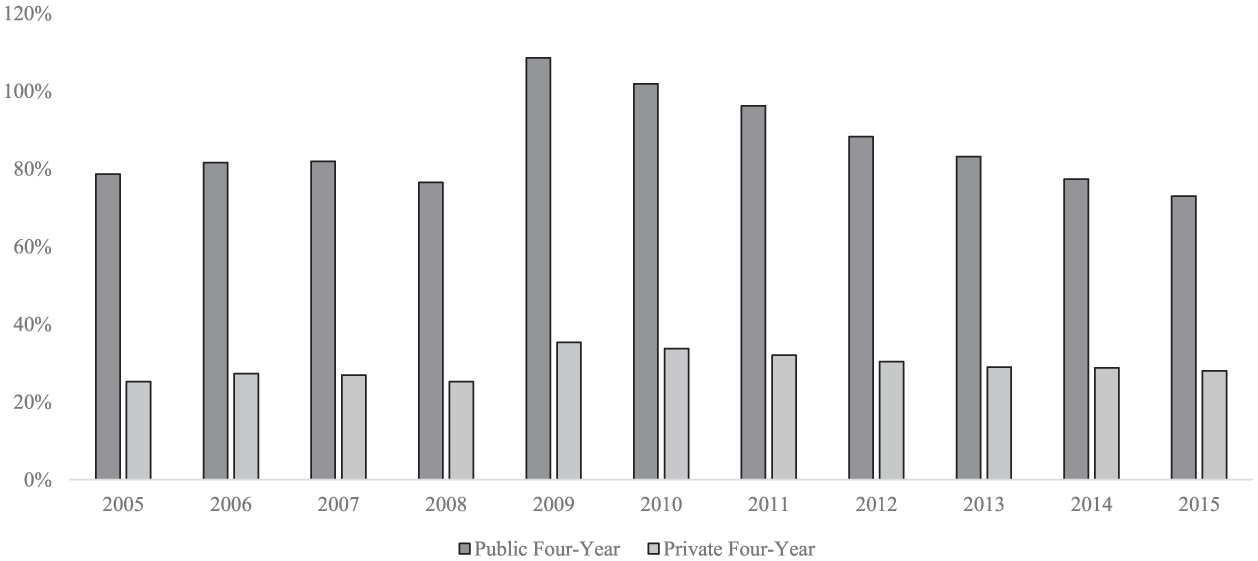
Percent of published tuition and fees covered by the base Tennessee HOPE maximum scholarship for incoming students.
As indicated in prior research, the distribution of TN HOPE merit-aid scholarships is disproportionately concentrated within doctoral/research universities. 3 Based on our calculations, and as reflected across our analytical sample, doctoral/research universities enrolled approximately 45% of all TN HOPE recipients and received approximately 49% of TN HOPE dollars. Master’s degree–granting institutions enrolled 31% of TN HOPE recipients and received 35% of TN HOPE funds. The remaining 24% of recipients and 20% of scholarship dollars were distributed across baccalaureate- and associate’s degree–granting institutions as well as specially focused/other institutions. Figure 2 depicts distributional trends in both number of students and TN HOPE dollars by institution type.
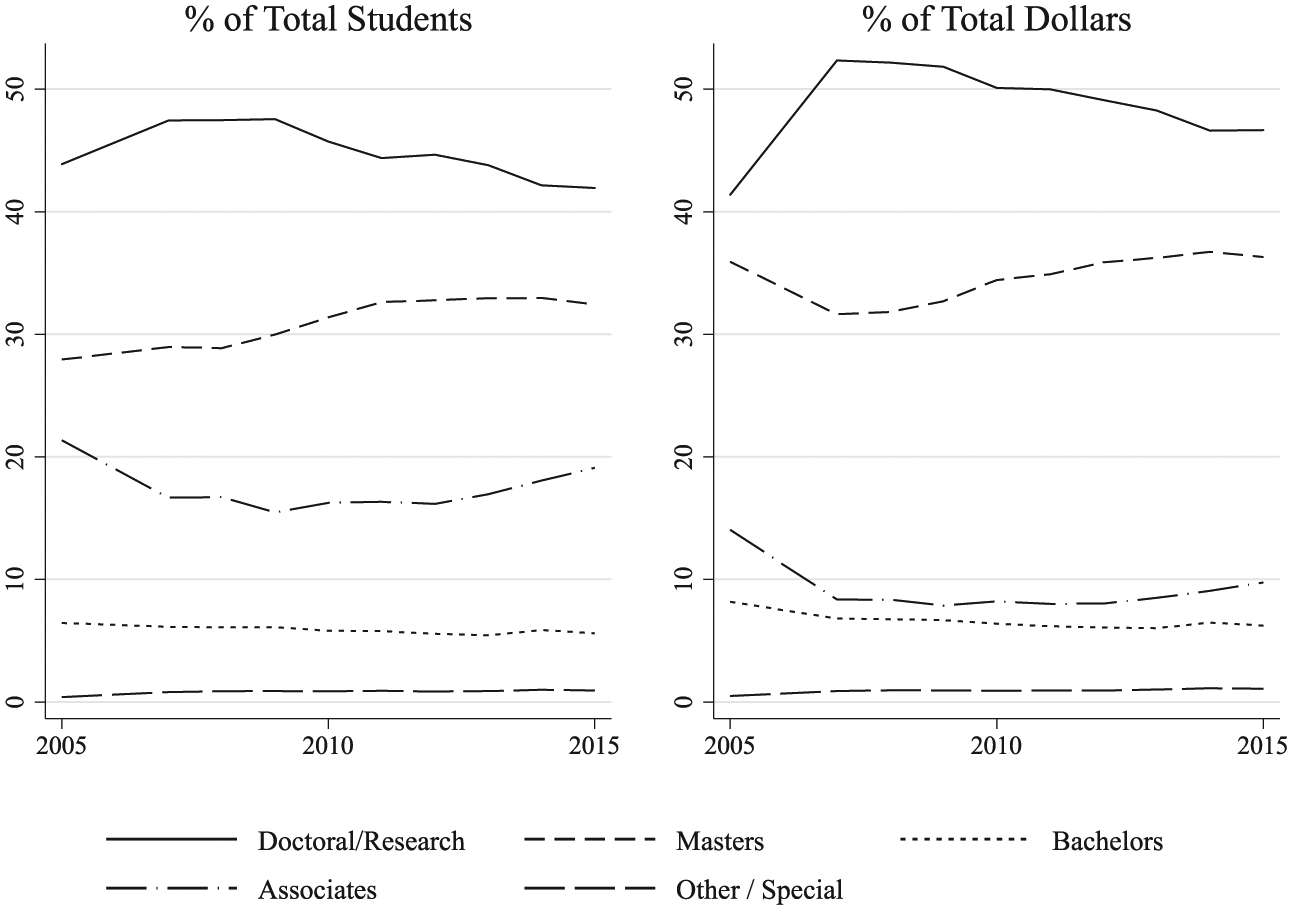
Distributional trends in TN-HOPE recipients and dollars by institutional type.
Data and Sample
To explore the relationship between the adoption of the TN HOPE merit-aid policy and participation in study abroad, we created a time-varying institution-level panel data set with time-varying state-level variables. First, we gathered institution-level study abroad participation data from the Institute of International Education. We then matched these data with institution-level characteristics from the Integrated Postsecondary Education Data System (IPEDS) and connected state-level economic and education factors from the Bureau of Economic Analysis (BEA).
The purpose of this study was to analyze the effects of state-adopted merit-aid policies on participation in study abroad within Tennessee. As a result, the population of interest was all public and private 4-year baccalaureate degree-granting institutions. Our analysis sample was not a random sample but rather was the set of all institutions that met our criteria and that reported sufficient IPEDS data to be included in analyses. We defined public and private 4-year institutions using the following categories from the 2000 Carnegie Classification: research universities–extensive, research universities–intensive, master’s universities I, master’s universities II, baccalaureate colleges–liberal arts, baccalaureate colleges–general, baccalaureate/associate’s colleges. Finally, we limited our sample to institutions that had reported participation in study abroad for at least 12 of the 15 years of our sample. Our analytical sample included public and private 4-year institutions (n = 496) over a 15-year period (observations = 7,183) between 2001 and 2015. To demonstrate the robustness of the results, we ran alternate specifications with the inclusion of all institutions; doing so yielded similar results in terms of magnitude and significance.
Variables
Dependent variables
Our primary dependent variable (outcome) of interest was the number of students participating in a study abroad program at a given institution during a given year. We collected institution-level study abroad participation data from the Institute of International Education’s Open Doors Report on International Education Exchange, which captures unduplicated student headcounts in any study abroad program during the course of an academic year. Data were available for our entire analytical sample. Due to student privacy regulations, institutions reported study abroad participants only if 10 or more students took part.
Independent/control variables
We also included a series of covariates within our DiD model to increase the precision of our estimates and strengthen our control groups. Although these control variables are not listed within the results tables due to space limitations, a complete list of summary statistics appears in Table 1. We controlled for state economic characteristics, such as per capita income, state unemployment rate, and state gross domestic product. In addition, we accounted for institutions’ size, proportion of undergraduate students, and level of expenditures on education-related activities, each of which directly or indirectly connects to the dependent variable. We also included institution and year fixed effects to account for unobserved heterogeneity and any effects attributable to year-specific factors.
Mean (SD) of Key Outcomes and Covariates.
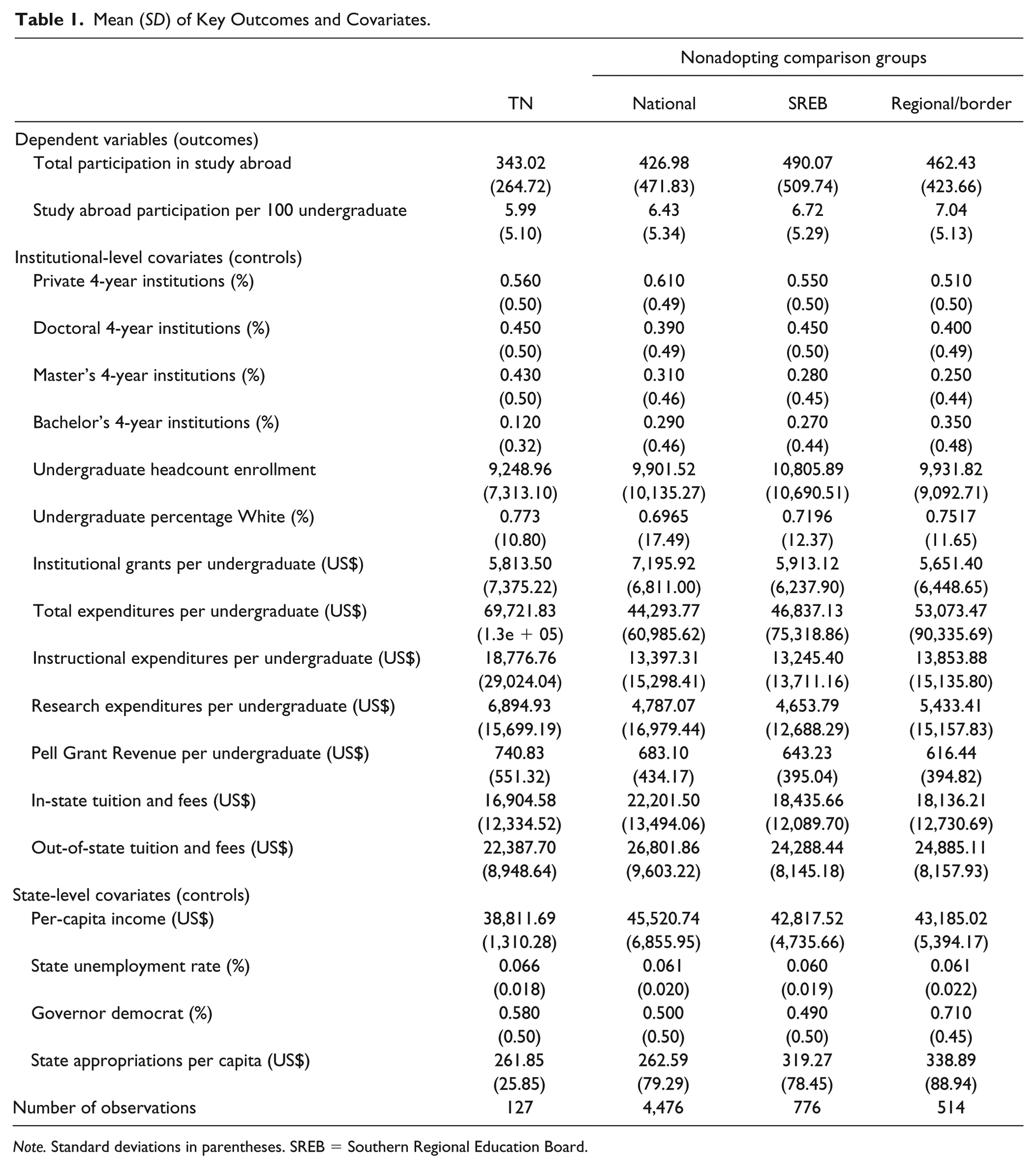
Note. Standard deviations in parentheses. SREB = Southern Regional Education Board.
To determine the effects of the covariates, we ran the model without the presence of any control variables. The addition of the vector of controls increased the explanatory power of the analysis without increasing the bias in parameter estimates. Previous models included a larger subset of the institutional- and state-level controls, but these inclusions introduced redundancy into the model and did not significantly affect the results. In pursuit of a more efficient and parsimonious model, we opted to include only the controls outlined previously.
Empirical Strategy
To estimate the effects of Tennessee merit-aid adoption on participation in study abroad, we capitalized on a naturally occurring policy adoption experiment. Specifically, we borrowed similar methodological approaches from Dynarski (2000), Hillman, Tandberg, and Gross (2014), and Zhang and Ness (2010), each of whom used a combination of traditional ordinary least squares (OLS) fixed-effects regression parameters and the DiD approach to study institution and student responses to state-level policy adoption. Given that this study examined the effects of TN HOPE adoption, there existed a single policy shock and that allowed us to leveraged the simultaneous adoption statewide to specify Equation 1,

where Treats is an indicator having a value of 1 for institutions located within Tennessee but 0 otherwise. Postt has a value of 1 when the time period equals or exceeds the adoption year (2004) but 0 otherwise. Treats * Postt is the DiD coefficient representing an estimate of the causal effects of the adoption of the TN HOPE merit-aid policy on outcome Y (participation in study abroad) for institution i during time t.
We extended Equation 1 to account for mitigating factors that might affect participation in study abroad. Equation 2, our final model specification, includes X′it, a vector of time-varying institution-level covariates; S′st, a vector of state-level time-varying covariates intended to capture state economic conditions; lt, institution fixed effects; δt, year fixed effects; and εst, our robust state clustered standard error:

The reasoning behind the decision to cluster the standards error at the state level was twofold: First, doing so relaxed many of the assumptions around autocorrelation and heteroskedasticity. Second, given that state officials rather than individual institutions made the policy decision, clustering errors at the state level produced conservative estimates of significance.
Validation of Design Assumptions
Identifying the counterfactual in the absence of policy adoption is challenging when using any quasi-experimental design. Using a DiD analytical approach, however, did allow us to approximate the effects of nonadoption by classifying institutions in nonadopting states as controls, thereby producing estimates of what could have occurred within the outcomes had the merit-aid policy not been adopted. This counterfactual approach assumed that treatment and control units followed similar (or parallel) prepolicy patterns and that the resulting variations in outcomes can be attributed to policy adoption. Although this assumption is difficult to test, our study adopted two techniques to test the parallel assumption.
First, we added an institution- and state-specific trend to the set of covariates (Angrist & Pischke, 2008; Belasco, Rosinger, & Hearn, 2015). Such inclusion controlled for the possibility that institutions in merit-aid adopting states experienced differences in the outcomes of interest prior to the adoption of a merit-aid policy. To address the potential for less than ideal prepolicy trends, we created state and institutional trend variables by regressing dummy time variables for the years prior to the adoption of TN HOPE on each of the dependent variables and multiplying the resulting coefficient by the year to create a unique state- and institutional-trend variable.
Figure 3 provides a visual representation of the pre- and post-trends in participation in study abroad for Tennessee institutions of higher education compared with those in non-merit aid-adopting states. Prior to adopting TN HOPE, institutions within Tennessee and in non-merit aid-adopting states reported similar average levels of participation in study abroad by their students. Postadoption, a small dip in participation occurred within Tennessee institutions, with a large increase appearing in subsequent years. Institutions located in non-merit aid-adopting states, however, showed consistent growth in their participation in study abroad, consistent with data found in the academic literature and published reports (Institute of International Education, 2016). 4
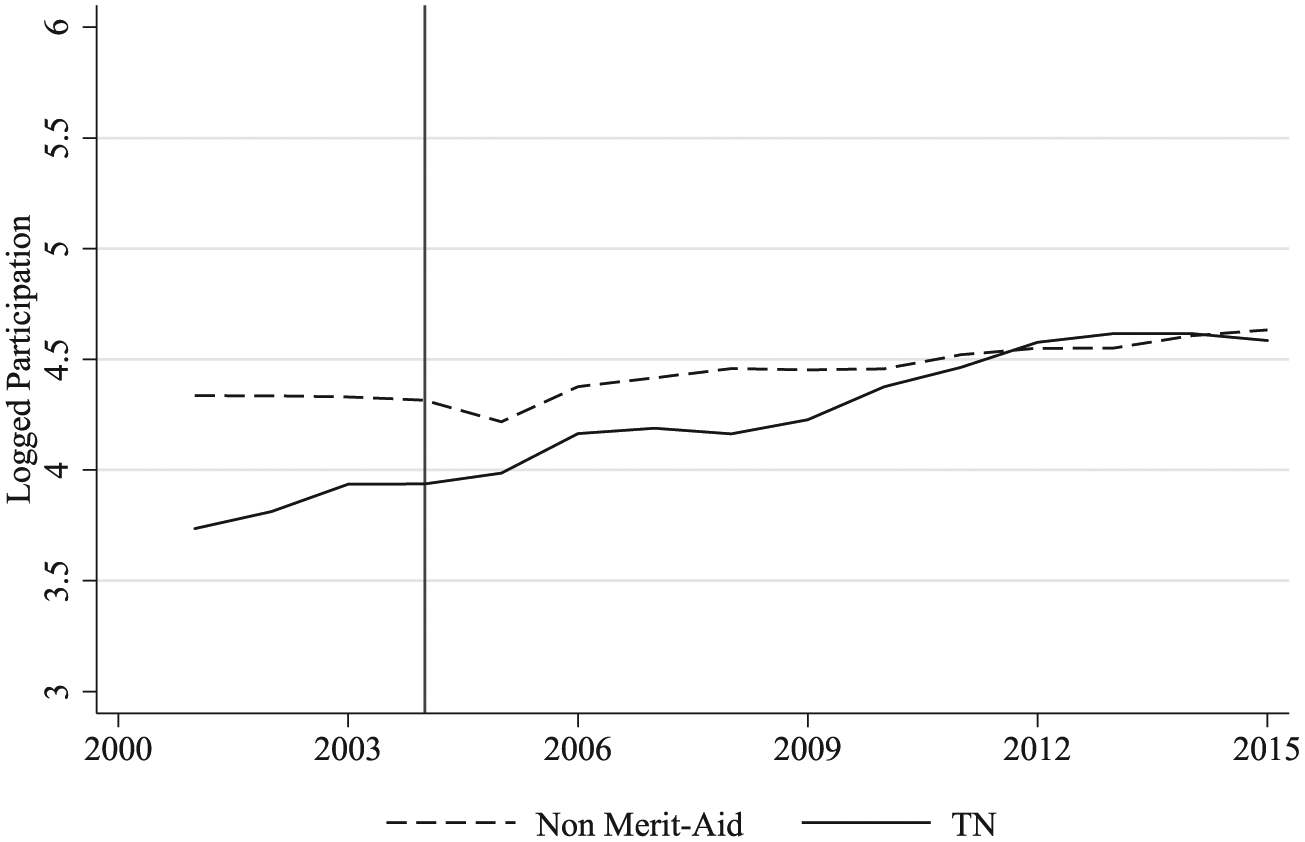
Parallel trends between non-merit-aid and TN-HOPE institutions.
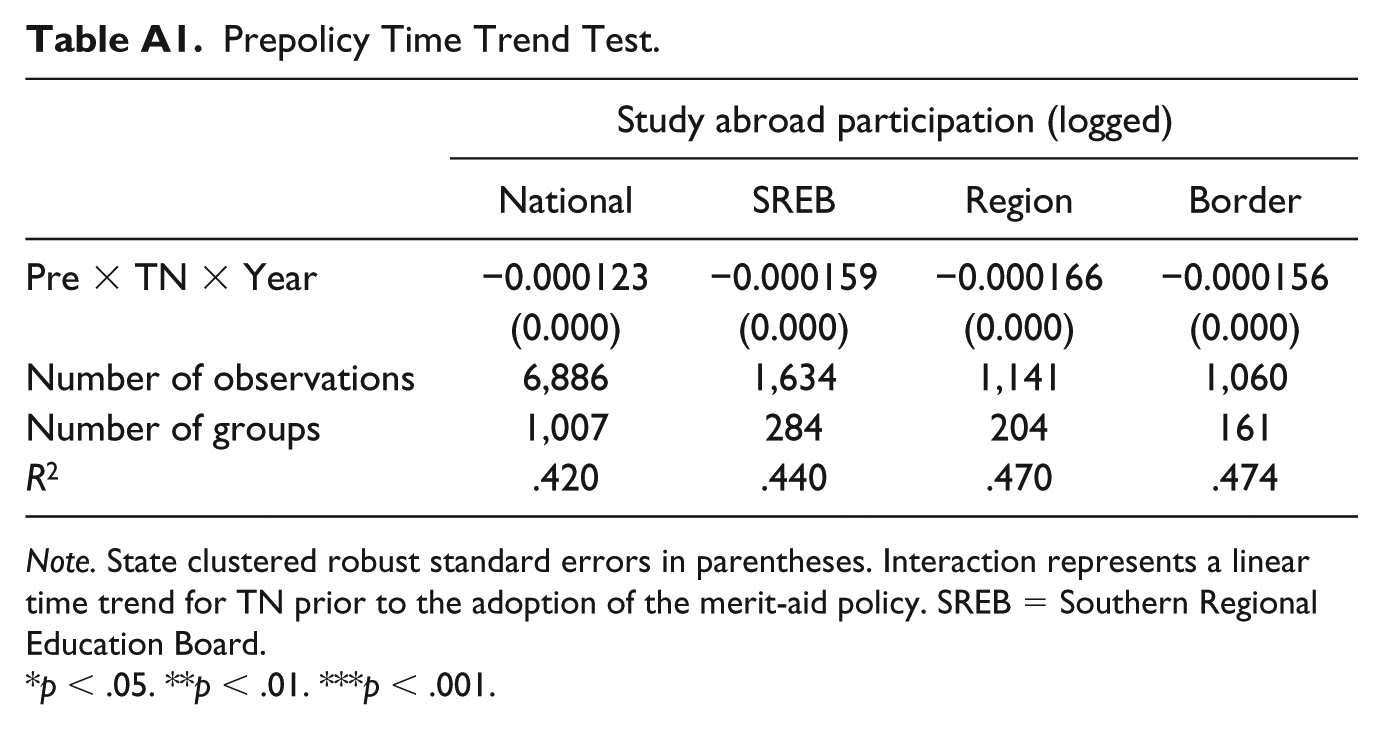
We formally tested the assumption of parallel trends by applying a linear specification that interacted with our linear time trend with our treatment indicator and indicators of the prepolicy period—2004 and earlier. The resulting interaction was effectively a test of the parallel trends that formally tested whether, during the prepolicy period, there were different time trends for institutions in Tennessee and the soon-to-be-treated institutions and the nonadopting control institutions. Estimates from our formal parallel trends test were statistically insignificant (at the p < .05 level) for our interaction term and, combined with visual inspection of Figure 3, provided robust evidence that 4-year institutions in Tennessee and 4-year institutions in non–merit-aid states demonstrated similar trends prior to 2004.
Second, to further test the assumptions of this study’s DiD design, we also ran our models using three different comparison groups (Meyer, 1995) to ensure that our estimates were not sensitive to the compositional effects of selecting institutions from nonadopting states. Descriptions of the three comparison groups appear hereafter.
Group 1: National comparison (National). Analysis began with the most general control group—institutions within states that have not adopted a merit-aid policy—and then narrowed to include states having similar prepolicy characteristics. We removed all institutions located within a state that had previously adopted a merit-aid policy. However, as a robustness check, we added to our control group states that had adopted weak merit-aid programs and achieved similar results. 5
Group 2: Consortium states (SREB). In addition to adding nonadopting states as a control group, we limited the second control group to members belonging to the Southern Regional Education Board (SREB). Doing so accounted for any region-based tuition reciprocity agreements (Cornwell et al., 2006; DesJardins, Ahlburg, & McCall, 2006) or any other policy-relevant set of counterfactuals.
Group 3: Economic region (Region). As is common with DiD approaches, this study used geographic boundaries to specify two control groups (Dynarski, 2000; Zhang & Ness, 2010). Specifically, we leveraged geographic proximity to include states identified by the Bureau of Economic Analysis as sharing a physical border with Tennessee.
Group 4: Neighboring states (Border). One of the most common control groups included within DiD studies is the use of neighboring or border states. Given the prevalence of the tuition agreements, student migration between bordering states, and similarities in economic conditions and demographic profiles of the residents, the use of neighboring states often serves as an effective proxy for a nonadopting control group.
Table 1 displays descriptive statistics for both Tennessee and the comparison groups. Across the majority of indicators, institutions in the non-merit aid-adopting SREB and the Region and Border groups provided a more robust comparison group and thus were the focus of our analysis.
Limitations
This study was limited in a number of ways. First, the adoption of a merit-aid policy may have been implemented simultaneously with other policies or economic considerations that influenced state and institutional decisions. Results of a falsification test relaxed this concern to some degree, as no significant differences occurred in participation in study abroad prior to the adoption of the TN HOPE merit-aid policy. Second, despite the variances explained within each model, additional time-variant factors could still have affected the outcomes. The fixed-effects approach accounts for institutional factors that are consistent and immeasurable, but this approach does not account for covariates varying across time. Finally, Meyer (1995) argued that DiD estimations can be sensitive to the selected functional form. Specifically, DiD estimates can actually change their sign if a nonlinear transformation, such as a log, is applied to the dependent variable. To account for this potential limitation, we ran model specifications that included our dependent variables’ nonlogged forms. Results from these tests indicated that the variables are not dependent on our functional form choice; accordingly, in keeping with Wooldridge’s (2009) recommendation, we log transformed our dependent variables for efficiency and ease of interpretation. Finally, availability of data only at the institutional level limited opportunities to estimate individual student responses to the presence of the TN HOPE policy as well as to estimate heterogeneous treatment effects by race/ethnicity and socioeconomic status—both approaches that are important to further understanding the effects of merit-aid incentives.
Results
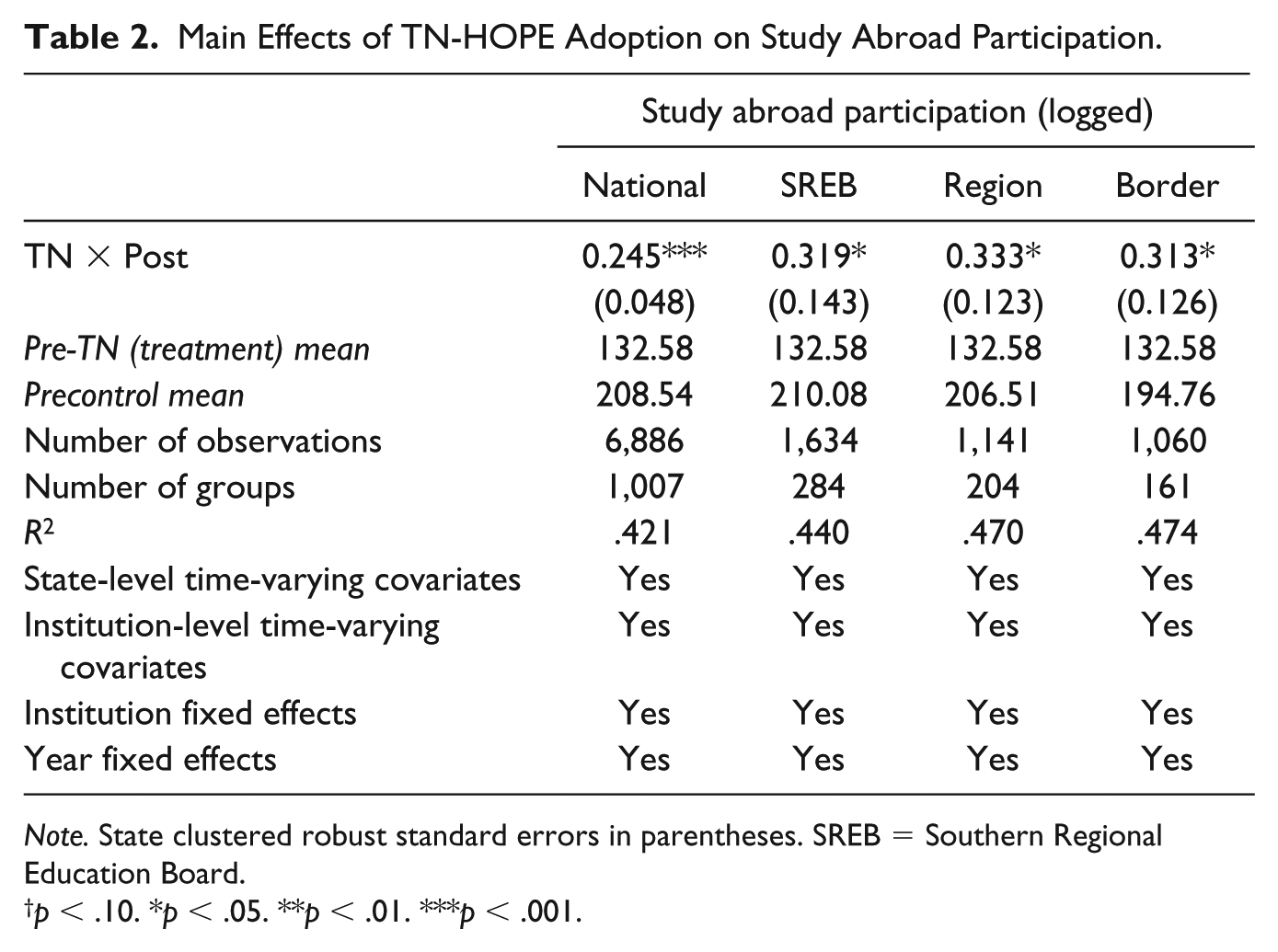
Table 2 provides, for our main effects, point estimates of the effects of TN HOPE merit-aid adoption on participation in study abroad. As mentioned previously, use of three comparison groups provided robustness to the estimated results. As Hillman et al. (2014) reported, when discussing robustness across multiple comparison groups, (a) use of one comparison group yields a statistically significant result and equals “limited” evidence, (b) use of two groups provides stronger evidence, and (c) use of three comparison groups yields statistically significant results, providing the strongest evidence possible. Alternatively, if estimates reveal no significant patterns across four comparison groups, then we can conclude that the policy had a null effect on that particular outcome. Across each of the four comparison groups, we found evidence of a positive and statistically significant relationship between TN HOPE adoption and participation in study abroad. The magnitude of these estimates was also consistent, ranging from a 24.5% to a 33.3% increase in participation in study abroad. Based on preadoption figures on participation in study abroad, we estimate that adoption of the TN HOPE policy increased the number of students participating in study abroad programs in TN institutions by between 32.5 and 43.8 students per year.
Main Effects of TN-HOPE Adoption on Study Abroad Participation.
Note. State clustered robust standard errors in parentheses. SREB = Southern Regional Education Board.
p < .10. *p < .05. **p < .01. ***p < .001.
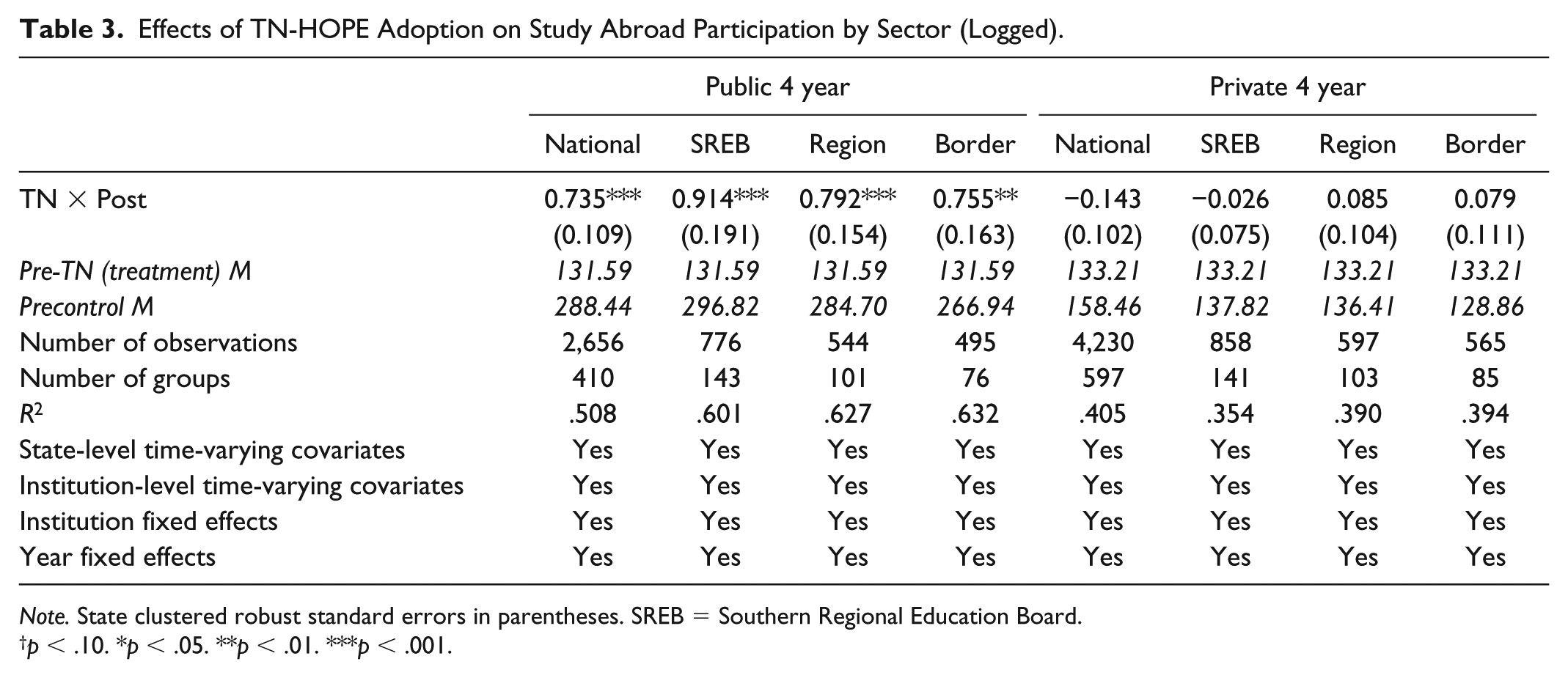
That students receive the same level of fiscal support regardless of whether they are attending a public or a private institution is a unique aspect of the TN HOPE merit-aid policy. Furthermore, Table 3 depicts the heterogeneous effects of TN HOPE adoption by both public and private 4-year institutions. We find that the majority of the treatment effect identified in Table 2 is concentrated within public 4-year institutions. Across our four specifications, we found statistically significant and consistent evidence that participation in study abroad programs increased in public 4-year institutions. Specifically, we found a 73.5% to 91.4% increase in participation postadoption—meaning an estimated increase of between 97 and 120 more students annually participating in study abroad programs within TN HOPE. However, we found limited or no statistical evidence of a similar effect within private institutions—the coefficients were positive and trended in a similar direction, but the magnitudes were smaller and less precisely estimated. Given the larger concentration of TN HOPE recipients and the relative cost of attendance, we would expect that the policy effect would be larger in public 4-year institutions.
Effects of TN-HOPE Adoption on Study Abroad Participation by Sector (Logged).
Note. State clustered robust standard errors in parentheses. SREB = Southern Regional Education Board.
p < .10. *p < .05. **p < .01. ***p < .001.
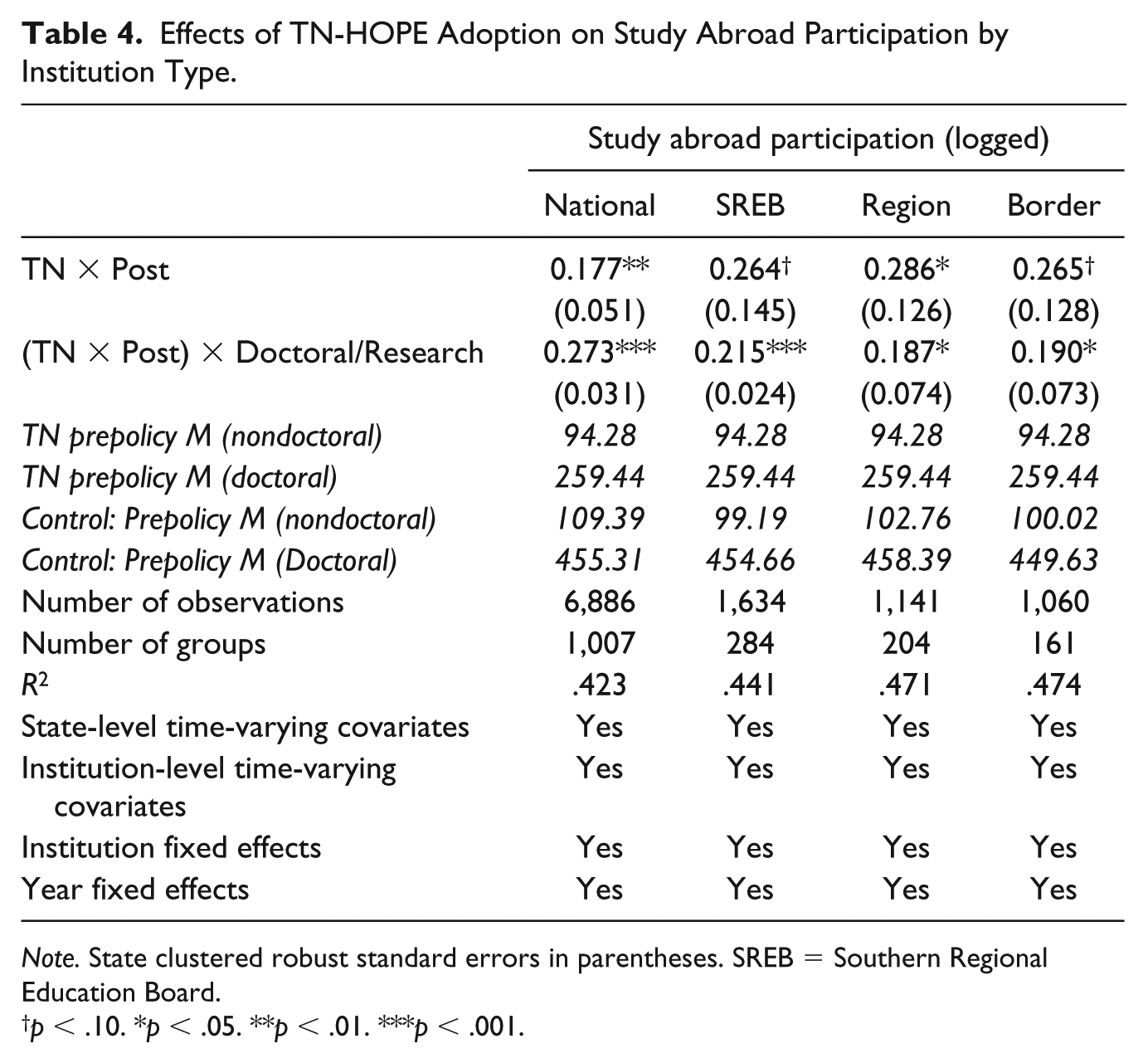
We were also interested in the effects of merit-aid policy adoption, by institution type, on participation in study abroad. We extended our DiD equation and estimate our treatment effect by interacting our policy adoption variable with a dichotomous indicator for research/doctoral universities. The decision to collapse bachelor’s and master’s institutions was consistent with the work of Long (2004), who found that the largest proportion of merit-aid recipients attend public doctoral/research universities. This finding also holds true for recipients within Tennessee. Figure 2 depicts the distribution of TN HOPE scholarship recipients by institution type and illustrates that more than 45% attend public and private research/doctoral institutions. Point estimates from Table 4 illustrate that the effect of merit aid on participation in study abroad is almost entirely concentrated within doctoral/research institutions. This study found that bachelor’s and master’s institutions experienced a marginal and statistically significant increase in their participation in study abroad, between 17.7% and 28.6%, postadoption. We also found that doctoral/research institutions experienced a postadoption increase in their participation in study abroad. In total, doctoral/research universities in TN saw a statistically significant increase in participation in study abroad of 45% to 47.9%—corresponding to 117 to 124 students annually.
Effects of TN-HOPE Adoption on Study Abroad Participation by Institution Type.
Note. State clustered robust standard errors in parentheses. SREB = Southern Regional Education Board.
p < .10. *p < .05. **p < .01. ***p < .001.
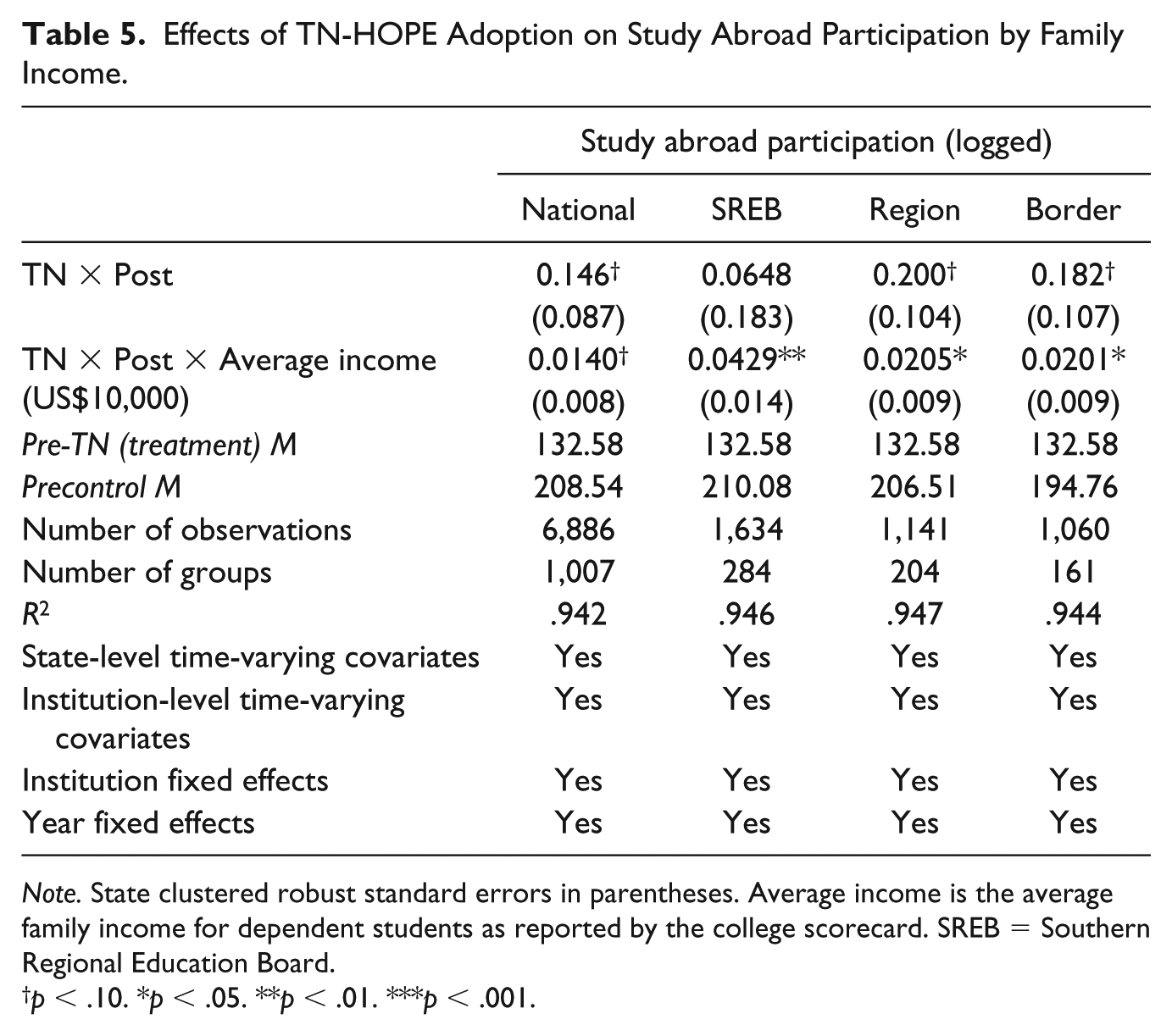
Scholars have suggested that merit-aid policies are regressive in nature for being disproportionately funded by low-income families but disproportionately used by affluent families (Ness & Mistretta, 2010). Interested in testing whether the effect of merit-aid adoption differed by affluence of students on campus, we capitalized on data from NCES’s College Scorecards, which capture average family income of dependent and independent students in constant dollars. We focused on dependent student income and interacted that measure with our primary DiD indicator. Table 5 provides the interacted effect of the adoption of TN’s merit-aid policy with US$10,000 changes in the average dependent student’s family income. We see suggested evidence that adoption of the TN merit-aid policy still has a significant effect (TN * Post), but we see stronger and more statistically significant evidence that increases in participation in study abroad are influenced by increases to the average dependent income. In the most conservative estimate (Border), we found that for every additional US$10,000 increase in average dependent family income, participation in study abroad increased by 2%. This effect suggests that the connection of the merit-aid effect to participation in study abroad is happening at campuses that have more affluent students.
Effects of TN-HOPE Adoption on Study Abroad Participation by Family Income.
Note. State clustered robust standard errors in parentheses. Average income is the average family income for dependent students as reported by the college scorecard. SREB = Southern Regional Education Board.
p < .10. *p < .05. **p < .01. ***p < .001.
Robustness Test
A primary goal of the DiD approach was to differentiate the policy treatment effect from a time effect standpoint. Figure 4 presents the falsification test used to examine the trends in study abroad participation between TN and nonadopting control groups before policy implementation. We found no statistically significant differences when we assigned the adoption of the TN HOPE policy to 1 and 2 years prior to the actual adoption of the merit-aid policy. In addition, we found positive and statistically significant results for 1, 2, 3, and 4 years postadoption. The effect point estimates are stable in magnitude and statistically significant over time after the adoption of the policy. We also found that our postadoption estimates become increasingly precise beyond the adoption year. The combination of the no-prepolicy-falsification effect, stable statistical significance, and similar magnitudes postpolicy provide robust evidence that we were able to isolate the effect of TN HOPE adoption on participation in study abroad.
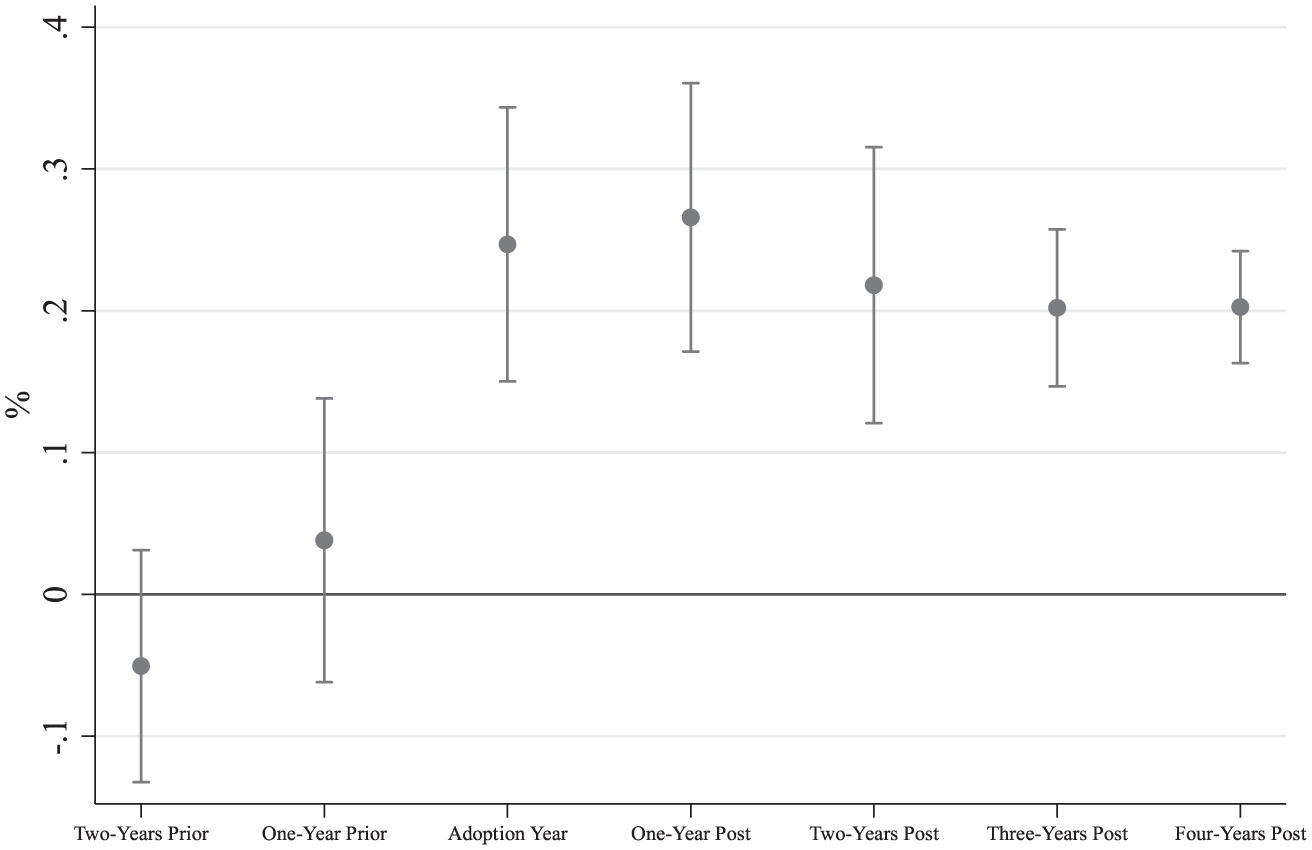
Falsification check of difference-in-difference assumptions and treatment effect.
Discussion and Conclusions
The academic, social, and interpersonal benefits of study abroad experiences are well documented in the literature (Kehl & Morris, 2008; Raby et al., 2014; Salisbury et al., 2009). Similarly, empirical literature robustly documents the effects of merit-aid policies on student access to higher education, student retention, and student completion of degree programs, as well as on institutional decision making (Cornwell et al., 2006; Fitzpatrick & Jones, 2016; Henry et al., 2004; Scott-Clayton, 2011; Stanley & French, 2009; Upton, 2016). The primary aim of this study was to examine the potential intersection between Tennessee’s state-adopted merit-aid policy and changes in institution-level participation in study abroad. The findings from this study suggest that, on average, the adoption of broad-based merit-aid policies increases participation in study abroad programs. However, results also appear to suggest that increases in merit-aid-induced study abroad participation may be concentrated in more selective institutions of higher education and in institutions with students from more affluent families—adding to the growing literature base on the regressive nature of lottery-funded merit-aid programs.
The concentrated of the merit-aid policy effect on study abroad participation at doctoral/research institutions provided additional evidence of a meaningful policy effect. This is due to the fact that the majority of merit-aid recipients attend public doctoral/research institutions (Cornwell et al., 2006; Dynarski, 2004) and thus a high concentration of tuition subsidized students enroll at these institutions. The concentrated effects of the TN HOPE policy within these institutions aligns with the findings of prior research. Specifically, Long (2004) reported that institutions having larger shares of GA HOPE merit-aid scholarship recipients experienced greater increases in tuition and fees whereas Cornwell et al. (2006) found that institutions receiving the largest numbers of merit-aid recipients experienced the greatest increases in overall enrollment—later supported by Zhang, Hu, and Sensenig (2013). As we did not have access to student-level data, approximating the policy effects by concentration of recipients serves as a useful robustness check.
When examining the heterogeneous effects of TN merit-aid adoption on participation in study abroad, this study adds to the growing evidence of the possible regressive nature of merit-aid policies. As we mentioned previously, the concentration of the policy effect is primarily within doctoral degree-granting public institutions. Students from lower income and underrepresented families are less likely to enroll in these institutions (Bastedo & Jaquette, 2011) and thus would be less likely to access any residual increases. We also found further evidence that the effect of TN merit-aid policies on participation in study abroad may be concentrated in institutions enrolling students from more affluent families. Specifically, we were able to connect larger increases in participation in study abroad in institutions with higher average family income. Many have argued that a state-funded lottery programs amounted to a regressive tax against low-income families (Clotfelter & Cook, 1989)—low-income families spend disproportionately more of their incomes on lottery expenditures. Combined with the prior work that connects merit-aid policy benefits with more affluent families (Heller & Marin, 2004), the results for this study add to the growing literature base of potential regressive tendency of merit-aid policies to not only exacerbate the higher education access gap (Binder & Ganderton, 2004), but also the postenrollment experiences of college students.
As prior reports on the role of merit aid suggest (Cohodes & Goodman, 2014; Cornwell & Mustard, 2007), the decrease in postsecondary cost burden experienced by recipients of merit-aid scholarships likely generates unused resources that could be repurposed to support international travel and participation in study abroad. Building on our conceptual framework, we hypothesized that parents or guardians providing financial support to undergraduates engage in mental accounting strategies (Thaler, 1985) by reallocating the merit-aid based savings on expected tuition and fee expenditures to other postsecondary activities—in our conception, at least in part to supporting study abroad opportunities. Further supporting our conceptual framework, our results connecting average family income with participation in study abroad give credence to the idea of mental accounting. Families that have discretionary income are more likely to engage in mental accounting and thus would be more likely to reallocate tuition savings to other postsecondary education activities.
The prevalence of broad-based merit-aid policies further highlights the applicability of this study. In addition, the current movement of states toward promise, or free college, programs may learn from these results. Both broad-based merit-aid programs and promise programs remove the tuition and fee access barrier, and this study illustrates the potential reinvestment in nonessential postsecondary experiences. Although representing only a small piece of the postsecondary experience, the direct and indirect costs associated with participation in study abroad serve as an interesting application of our conceptual framework, illustrating the ways in which students, parents, and guardians redistribute resources when provided a large tuition and fee subsidy.
Previous research empirically linked the adoption of merit-aid policies to a decrease in “brain drain” (Fitzpatrick & Jones, 2016), an increase in bachelor’s degree completion rates (Henry et al., 2004; Scott-Clayton, 2011), and a reduction in student debt burdens (Chen & Wiederspan, 2014; Goetz, Mimura, Desai, & Cude, 2008). The results of this study add to the growing literature base on the potential unintended benefits of broad state-adopted merit-aid policies, particularly related to participation in study abroad. Given the push to include experiential and global learning opportunities within the postsecondary student experience, this study suggests that on the surface, merit-aid policies may be an effective policy mechanism for increasing participation in study abroad by reducing individual student costs associated with tuition and fees, but it also indicates that those increases in participation may be concentrated within students from more affluent families.
The application of mental accounting (Thaler, 1985) as an explanatory framework for our findings is both novel (within education) and interesting. Specifically, we find that the large tuition and fee subsidies received may provide flexible capital that parents, guardians, and students reinvest in their college experience—particularly for families of students who attend more affluent campuses. As colleges and universities look to enhance the student experience through higher order engagement activities (Kuh, 2003), merit-aid policies may serve as a meaningful policy adoption on the surface, but may perpetuate the postsecondary experience gap between low-income and non-low-income students. Additional research should further examine the differences in responses to financial aid policies on participation in study abroad and the role of merit-aid policies in other auxiliary postsecondary experiences (e.g., fraternities/sororities, alternate spring break activities, club sports) that have fiscal barriers.
This study’s limitations notwithstanding its results provide a unique contribution to the empirical literature. Not only does this study connect the adoption of state merit-aid policies to subsequent changes to participation in study abroad, but it is also one of the few educational studies demonstrating the potential effects of mental accounting on postsecondary financing decisions. As institution leaders and policy makers examine mechanisms for providing a comprehensive postsecondary experience, the adoption of state merit-aid policies may serve as a regressive policy lever for increasing access to cocurricular activities.
Footnotes
Appendix
Prepolicy Time Trend Test.
| Study abroad participation (logged) |
||||
|---|---|---|---|---|
| National | SREB | Region | Border | |
| Pre × TN × Year | −0.000123 | −0.000159 | −0.000166 | −0.000156 |
| (0.000) | (0.000) | (0.000) | (0.000) | |
| Number of observations | 6,886 | 1,634 | 1,141 | 1,060 |
| Number of groups | 1,007 | 284 | 204 | 161 |
| R 2 | .420 | .440 | .470 | .474 |
Note. State clustered robust standard errors in parentheses. Interaction represents a linear time trend for TN prior to the adoption of the merit-aid policy. SREB = Southern Regional Education Board.
p < .05. **p < .01. ***p < .001.
Acknowledgements
The authors would like to acknowledge Dr. Douglas Webber for feedback provided during the writing process. They would also like to extend their gratitude to the reviewer(s) of this manuscript who provided a thoughtful review that strengthen the manuscript during the review process.
Author’s Note
Authorship order is alphabetical and signals equal contribution to the article.
Declaration of Conflicting Interests
The author(s) declared no potential conflicts of interest with respect to the research, authorship, and/or publication of this article.
Funding
The author(s) received no financial support for the research, authorship, and/or publication of this article.