







Abstract
This study sought to understand how state-level policies inform and promote the implementation of restorative justice in education (RJE). A content analysis of 60 laws revealed that definitions, structures, and supports varied greatly, causing us to question whether policies support a systematic implementation of RJE and how policies can prevent the misuse of RJE as an alternative system of punishment. We recommend that laws clearly define the paradigm shift underlying RJE, and provide sustained support to promote a realignment of policies and practices with attention to incorporating measures of accountability to larger values surrounding equity and justice.
Introduction
Educators, school administrators, and parents across the globe have become increasingly concerned about the consequences of zero-tolerance disciplinary policies on students and school culture (Heitzeg, 2009; Skiba & Knesting, 2002; U.S Department of Education, 2014). Zero-tolerance and exclusionary policies such as suspension, expulsion, and referral to law enforcement are consistently shown to disproportionately affect students of color and students with disabilities (Gregory et al., 2010; Losen, 2013; Whitford et al., 2019). Students who have been suspended are less likely to graduate high school and more likely to become involved with the criminal justice system (Mittleman, 2018). Restorative justice in education (RJE) is emerging as a promising alternative to these practices for its ability to improve student behavior, as well as school climate, culture, and safety (Fronius et al., 2019).
Restorative justice is a philosophy with associated practices seeking to promote a form of justice that acknowledges the interconnectedness and worthiness of people. Rooted in Indigenous teachings and other worldviews that center relational accountability and understandings, restorative justice focuses on relationships when harm occurs and emphasizes the needs of those impacted (Zehr, 2005). In the wake of conflict and harm, those involved are invited to participate in facilitated dialog to support a deeper understanding of the experience and to support healing and repairing harm to the degree possible. Central to restorative justice is a commitment to creating and maintaining just and equitable communities by acknowledging history, power, difference, and oppression (Davis, 2019).
As practitioners, scholars, and community activists have witnessed an uptake in the adoption of restorative justice across different institutions—including prison (Ross & Muro, 2020), judicial (Van Ness, 2016), child welfare (Crampton & Rideout, 2011), and school systems (Brown, 2018)—questions surrounding the risk of co-option and the promise of a quick fix to institutional harm and racial disparities have surfaced (Zehr & Toews, 2004). This has created tensions around how to “scale up” restorative justice with integrity and in alignment with restorative values. These tensions are also relevant to implementing RJE and addressing the long-term, negative impacts of zero-tolerance and exclusionary disciplinary practices and policies (Lustick, 2021; Winn & Winn, 2021). The present study sought to examine the ways in which RJE is currently being promoted through state-level legislation by understanding the language, structures, and supports available to schools. This knowledge can inform future state-level policy creation and provide a framework for policymakers seeking to support the implementation of RJE from a transformative lens.
Overview of Restorative Justice in Education
As part of our consideration and analysis of restorative justice in schools, we chose to use the RJE framework (Evans & Vaandering, 2016). RJE includes “restorative justice practices,” “restorative practices,” and “restorative justice” in the school environment. Although there is no singular RJE definition or set of practices, the term is often used to encompass practices within the educational system that focus on non-punitive, relationship-centered methods of addressing harm, problem solving, and reintegration (Amstutz & Mullet, 2014). At its core, RJE can be characterized by three components: (1) building and maintaining healthy relationships; (2) supporting processes that repair harm and transform conflict; and (3) creating just and equitable learning environments (B. Evans & Vaandering, 2016). A transformative conception of RJE is holistic and reorients the system from one of social control to one of social engagement (Morrison, 2011; Reimer, 2019), and supports the creation of learning environments characterized by justice and equity. Values of respect, mutual concern, and dignity guide the implementation of RJE, with the goal of creating learning spaces anchored in a belief that people are worthy of being honored and valued (Evans & Vaandering, 2016).
RJE is not a program, strategy, or tool but rather a values-based approach to understanding and implementing a relational school culture that transforms schools into places where educators, students, and staff feel safe, valued, and a sense of belonging. In order to effectively implement RJE, schools must intentionally infuse a restorative approach into all interactions and relationships within the school in addition to its policies, procedures, and structures. RJE aims to create a culture of care that advances student development, growth, learning, and empowerment (Cavanagh et al., 2014). It has been widely asserted that whole-school approaches to implementation are most successful if RJE is to contribute to creating school environments where positive perceptions and outcomes are experienced by students and staff (González, Sattler, & Buth, 2019; B. E. Morrison & Vaandering, 2012).
When RJE is implemented with fidelity to its underlying principles and values, it has been associated with decreases in student misbehavior and school discipline incidents (Armour, 2013; Augustine et al., 2018; Baker, 2009; Suvall, 2009); improvements in school climate, culture, and safety (Augustine et al., 2018; González, 2012; McMorris et al., 2013; Mirsky, 2007); improved attendance and reduced absenteeism (Baker, 2009; Jain et al., 2014); reduced racial disparities in disciplinary actions (Gregory & Clawson, 2016; Vincent et al., 2016); improvements in perceptions of procedural justice (Vincent et al., 2016); improvements in peer relationships; improvements in academic outcomes, including 4-year graduation rates; reduced dropout rates; improved reading levels (Jain et al., 2014); and improved test scores, most notably for racial and ethnic minority students (Jain et al., 2014). However, it should be noted that the majority of RJE literature has been based on relational, rather than causal, research methods (Fronius et al., 2019).
One exception is the research conducted by Augustine et al. (2018), in which a randomized control trial (RCT) design was used to investigate the impact of implementing RJE on classroom and school climate, and suspension rates. Findings were mixed, with overall school climate improved, as rated by teachers; reductions in suspension rates, particularly for African American students and those from low-income families; and reductions in academic outcomes for grades 6 to 8 and no changes in overall arrest rates. Another exception is the mixed method RCT conducted by Ayoub et al. (2022). Findings of the process evaluation indicated RJE led to perceived positive benefits related to a sense of community in schools, including the creation of spaces where positive relationships were built, mutual aid was offered, and social-emotional skills were developed. However, school staff and students reported mixed perceptions when specifically reflecting on changes in student behavioral problems and punitive disciplinary practices. Further, results of the outcome evaluation indicated implementation of RJE did not significantly impact student behavior incidents or suspension rates, although the authors questioned whether suspension was an appropriate outcome measure given RJE’s limited ability to impact conditioned systemic responses during early implementation and overall implementation challenges.
Given the growing body of literature and case examples of the positive effects of RJE, policymakers, school administrators, and community members have become invested in policies that encourage its implementation. Although many states have enacted legislation surrounding RJE, there is little existing research that comprehensively analyzes the legislation’s content, goals, and language. There are questions concerning the ability of these policies to pragmatically influence disciplinary practices in schools, as well as their potential to effectively transform the root causes of disparities in school disciplinary action. In this study, we aim to fill some of those gaps by critically examining how state level policies inform implementation of RJE.
Power of Policy for Change
The focus of our study is grounded in an understanding of the power of policy to enact social change. Policy is an important mechanism to address social problems as it reflects society’s values, sets social goals, and shapes social norms and behaviors (Reisch, 2019). Institutionalizing social goals into policy allows for consistent response to social problems, the outcomes of which can then be evaluated to understand whether and how certain approaches meet identified goals or exacerbate inequities (Reisch, 2019). In this way, policy creates a framework for responding to society’s most pernicious inequities and can be used as an instrument to achieve social justice.
Unfortunately, history has also shown that policy can produce and sustain inequities. An example of this can be seen in the implementation of zero-tolerance policies. For context, state legislatures are the primary entities responsible for the maintenance and operation of public schools. In addition to being deeply involved in the establishment and regulation of curriculum and teaching methods in school systems, legislatures also develop policies in other systems (e.g., health, judicial, child welfare) that impact the function and practice of schools.
Zero-tolerance policies emerged in the context of the “War on Drugs” era starting in the 1980s with the rise in mass incarceration and promotion of harsh sentencing legislation (Stahl, 2016). In response to a pattern of gun violence on school grounds, school administrators began adopting a “zero-tolerance” approach to violence at school (Stahl, 2016). Strikingly, the disproportionate rates of people of color incarcerated as a result of harsh sentencing legislation can also be seen in the increased rates of expulsion, suspension, arrests, and detained youth of color (Gregory et al., 2010; Losen, 2013; Whitford et al., 2019). At present, discussions surrounding zero-tolerance policies are acknowledging the disproportionate impact on students of color and those with disabilities and as such there is growing momentum to finding solutions to reverse such inequities.
Given restorative justice’s ability to respond to the consequences of exclusionary policies, it is increasingly being seen as a policy solution in school settings (Anfara et al., 2013). González, Etow, and De La Vega (2019) noted an increase in state and local administrative bodies incorporating principles of restorative justice into student codes of conduct and school disciplinary policies. One such example included the formalization of restorative justice in New York City’s citywide discipline code in 2015. Likewise, Maryland previously amended their state code for discipline to incorporate restorative justice (González, Etow, & De La Vega, 2019). Efforts to capture policy trends is ongoing as legislation implementing restorative justice in schools continues to rise across the country (see S. Sliva, 2019).
Institutionalizing restorative justice into policy is an important step in implementing these practices in schools. However, for restorative justice or for any policy to be successful in achieving its desired outcomes, it is critical to understand how such policy is realized in practice.
Translation of Policy Into Practice
The power of policy to respond to identified social problems depends on several factors, including the way it translates into practice. Much can be lost from identification of a social problem, the development of a vision, and goals for policy response to implementation of policy language. Cause and consequence approaches to policy analysis can help determine how well a policy’s goals are aligned with its outcomes once implemented (Kanenberg, 2013). Other frameworks, such as one articulated by Gilbert and Terrell (2013), seek to understand who benefits from a particular policy, what the benefit is, the criteria for receiving those benefits, how those benefits are delivered, and how benefits are financed. Together, frameworks such as these offer a window into the complexities that exist in translating policy language to practice and provide an understanding for what is needed to ensure successful implementation.
Implementing restorative justice requires embracing its philosophy schoolwide; in effect, changing school culture from one based on social control to one emphasizing social engagement (B. E. Morrison & Vaandering, 2012; Reimer, 2015). However, rather than emphasizing the relational needs within a community, restorative justice has sometimes been used as an alternative discipline system for the sole purpose of controlling individual student behavior. This has occurred as restorative justice has become a popular buzz-term for efforts to address the very real concerns related to the “school-to-prison pipeline.” Without a clear understanding of its philosophy, schools are including practices under the umbrella of restorative justice that may actually perpetuate social inequities. Rather than implementing restorative justice to create a relationship-based environment, schools may see restorative justice as a way to serve the interests of adults in the school environment to better manage and control students.
Currently, 41% of schools nationally report some level of restorative practice use in 2017 to 2018 (Diliberti et al., 2019) and a majority of states incorporate restorative justice in statute or code (Pavelka, 2013). This underscores the belief in restorative justice as a policy solution as well as the use of policy as a mechanism to promote restorative justice practice. Further, González (2019) completed a 50-state analysis and found it could be considered as a new legal norm, stating, “Restorative justice is no longer viewed as an alternative program at the margins of school discipline. Rather, it is at the center of critical educational and legal policy reform” (p. 308). Given this trend, along with the evidence illustrating RJE’s effectiveness, a better understanding of how state policy facilitates its uptake into schools may be one way to harness the power of policy. Our review attempts to understand how state policies on restorative justice are informing and promoting the implementation of RJE in schools. Specifically, we sought to answer the question: How do state-level policies inform and promote the implementation of restorative justice in education?
Method
In the present study, we reviewed and conducted a content analysis of state laws containing references to RJE. A review of state laws was chosen as laws generally reflect the public policy goals of any given state and carry the power to direct practice in ways other forms of policy do not. We drew inspiration from S. M. Sliva and Lambert (2015) and Pavelka (2016), who effectively used content analyses to review state criminal and juvenile codes for the presence of restorative justice. Content analysis is a qualitative method used for analyzing text data (Hsieh & Shannon, 2005). We used both deductive and inductive coding. Deductive coding is based on previous research of theories, models, or findings (Burns & Grove, 2005), while inductive coding derives coding categories directly from the raw data (Hsieh & Shannon, 2005). Our analysis was primarily deductive, in that a priori codes were used, based on findings from a RJE legislative landscape scan by Molloy and Ross (2019). In addition to using predetermined codes as part of an open coding process, we simultaneously conducted an inductive analysis and created additional codes as needed.
Search and Data Evaluation
To conduct our search of state laws, we employed the search terms “restorative justice” and “education” in Nexis Uni, an online academic database containing legal sources, including full text state laws. To be included in the review, laws needed to be passed between January 1, 2010 and June 4, 2020. This search resulted in 464 laws. The fifth author completed an initial review of all laws, excluding 380 when the legislation did not pertain to the research question or were duplicates (e.g., not the most recent legislation). Laws were excluded if they were appropriations bills or were specific to criminal justice, higher education, physical health, or social services. This resulted in a second review of 84 laws by the first three authors to strengthen the reliability of the selection process. Twenty-four laws were excluded during the second review after the first three authors came to consensus on their lack of relevance to the research question. A total of 60 laws were determined eligible for inclusion in the content analysis. See Figure 1 for a visual illustration of this process.
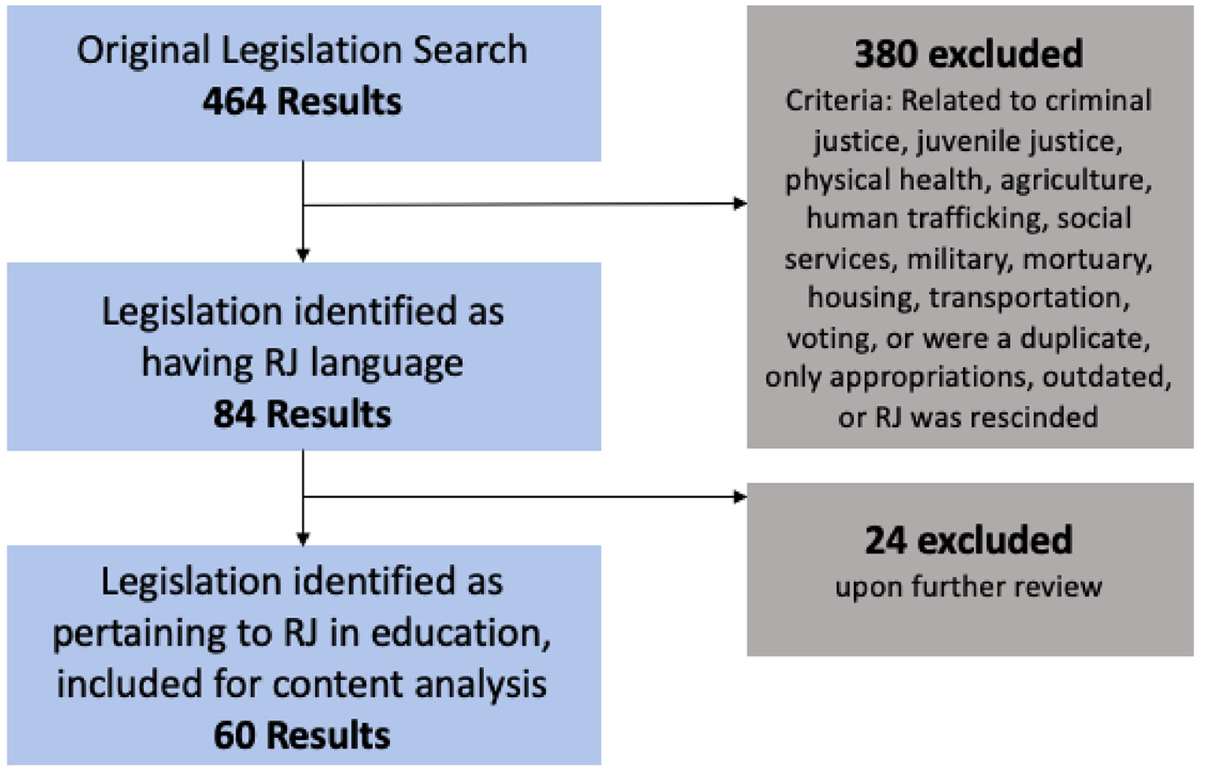
Visual illustration of the search process. This figure shows the multi-step process of search, review and exclusion.
Content Analysis
We used five predetermined codes to review the laws that met our search criteria: RJE definition, legislative direction, training requirements, focus area, and funding. These codes were included in an Excel codebook to support us in applying the codes consistently across readings and reviewers. The following coding definitions used to guide our analysis:
(1) RJE definition: Laws that included specific definitions of RJE were coded as “yes” and those without were coded as “no.” When determining whether state laws included definitions of RJE, we searched for specific descriptions of RJ, for example, statements that went beyond simply saying schools should implement a RJ program to those that included details related to what that would mean, who it would include, and for what purposes.
(2) Legislative direction: Laws were coded as either “preferred option” or “one of many” to indicate the level of direction provided by the legislation, that is, whether RJ was the preferred option or one of many options recommended by the law.
(3) Training requirements: Laws that included mandates (e.g., language such as “must” or “will”) for RJ training were coded as “yes” and those without mandates (e.g., language such as “may” or “can”) as “no.” However, laws were not coded for the presence of accountability mechanisms that were directly associated with the mandates. Training details were inductively coded as the analysis was completed, for example, who the training was for, whether it was funded, and what topics were included in training above and beyond RJ.
(4) Focus area: Laws that identified education focus areas that RJ was intended to address were coded as “yes” and those without as “no.” Foci were inductively coded as the analysis was completed, for example, discipline, truancy/attendance, school safety, mental health/school climate, equity emphasis, and School Resource Officer (SRO).
(5) Funding: Laws that included any funding for the implementation of RJE were coded as “yes” and those without as “no.” We also identified any specified funding mechanisms, including legislative appropriations (e.g., surcharge on offender fees, state budget appropriation), grants, taxing structures, and other.
To ensure interrater reliability, three authors applied the predetermined codes to the first 10 laws before meeting to discuss data that could not be coded under existing codes and clarify coding definitions that were applied differently. At that point, the codebook was modified based on our inductive observations to include the code accountability measures. Laws were coded “yes” if mechanisms were in place to evaluate implementation efforts and “no” if mechanisms were not in place. We also documented what was being measured. The remaining laws were divided among the coders, who conducted the content analysis individually. We met to discuss laws that could not be easily coded until consensus was reached.
Findings
In this section, we present the results of the content analysis organized by the codes described above. Twenty-four states were represented across the 60 laws included in the analysis. California (n = 13), Utah (n = 6), and Maryland (n = 5) had the largest number of laws. Figure 2 includes a map of the United States identifying all represented states.
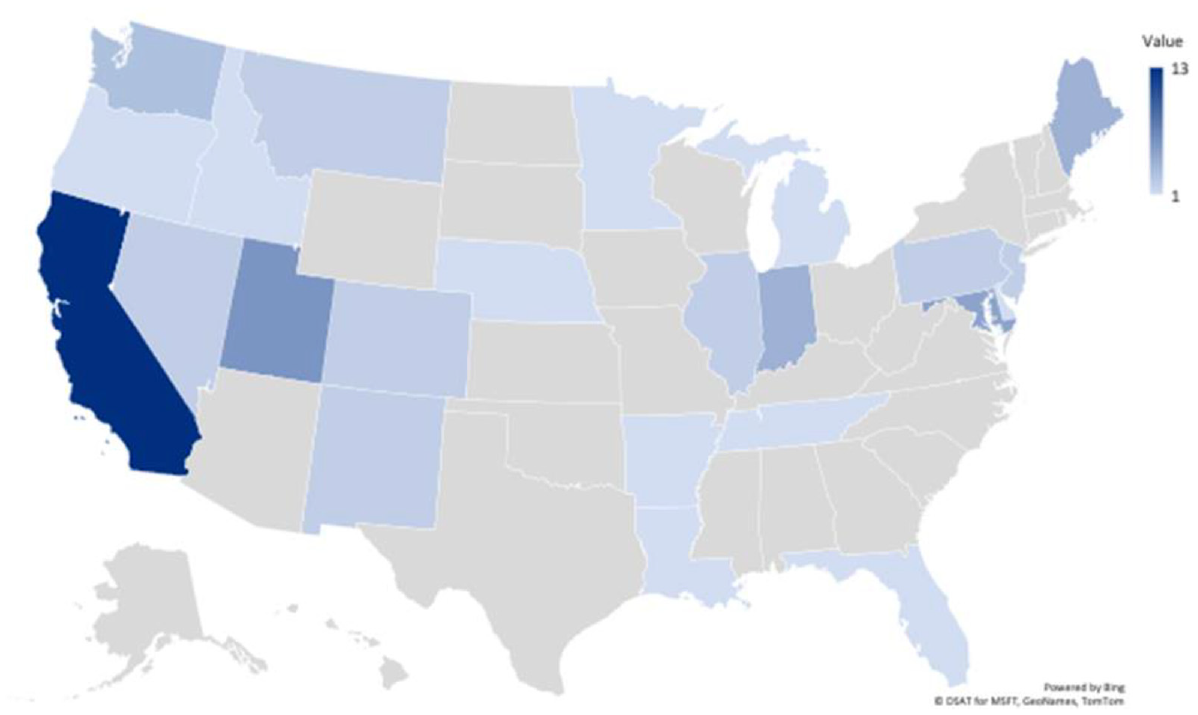
Map of the United States with restorative justice legislation identified in 2010-2020.
Legislative Definitions of Restorative Justice
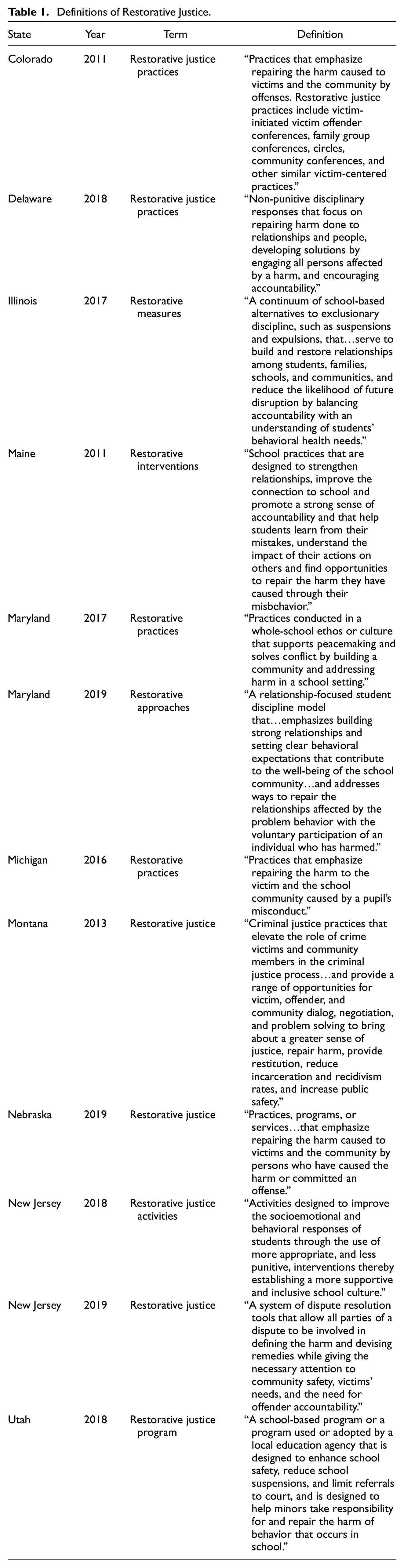
All bills included in this review referenced RJE, but only 42% of states (n = 10) specifically defined restorative justice in their legislation (UT, NJ, NE, MT, MI, MD, MN, IL, DE, and CO; see Table 1). For example, New Jersey defines restorative justice as a “system of dispute resolution tools that allow all parties of a dispute to be involved in defining the harm and devising remedies while giving the necessary attention to community safety, victims’ needs, and the need for offender accountability” (N.J. Stat Ann. § 18A:37-38, 2019). Alternatively, Montana defines RJ as a set of “criminal justice practices that elevate the role of crime victims and community members in the criminal justice process, [and] hold offenders directly accountable to the people and communities they have harmed” (MCA § 2-15-13, 2013). A full list of definitions is included in Table 1 to illustrate the range of definitions of restorative justice and their wide variety of foci. For example, eight laws from seven states (i.e., UT, NJ 2018, MI, MD 2017, MD 2019, MN, IL, DE) focus on the uses of restorative justice specifically in schools, while the remaining four emphasize the role of the victims and offenders during dispute resolution more broadly (NJ 2019, NE, MT, CO). The definition provided in the Montana law even focuses on the role of restorative justice in the criminal justice system, despite schools being eligible for the program funding.
Definitions of Restorative Justice.
Legislative Direction for Use of Restorative Justice in Schools
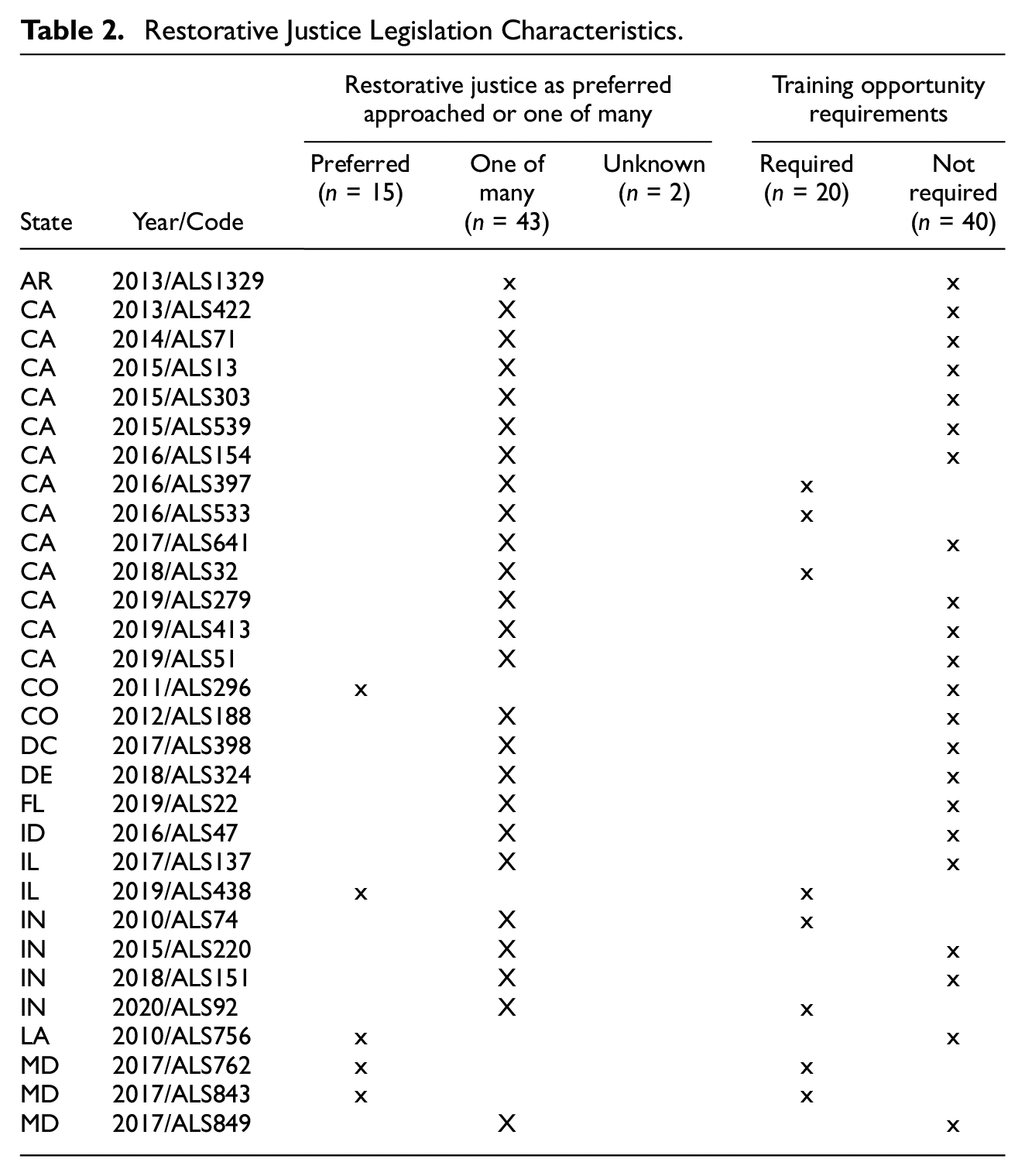
Beyond simply including restorative justice in legislation, a quarter of the laws (25%; n = 15; see Table 2) dictated restorative justice as the preferred approach, while the majority of laws (71.6%; n = 43) included restorative justice as one of many approaches from which to choose. The remaining two laws (Utah 2020 and Michigan) were written in such a way that a preference for restorative justice or listing restorative justice as one of many options could not be indicated.
Restorative Justice Legislation Characteristics.
Restorative Justice as Preferred Option
Fifteen laws (25%) laws specifically encourage the use of restorative justice as the primary route to achieving the law’s goal. For example, Michigan statute dictates that “restorative practices should be the first consideration to remediate offenses such as interpersonal conflicts, bullying, verbal and physical conflicts, theft, damage to property, class disruption, and harassment and cyberbullying” (MCLS § 380.1310c, 2016). The law further explains that the school board or its designee “shall consider using restorative practices as an alternative or in addition to suspension or expulsion under this act” (MCLS § 380.1310c, 2016). Similarly, Colorado law “supports and encourages the use of restorative justice as a school’s first consideration to remediate offenses such as interpersonal conflicts, bullying, verbal and physical conflicts, theft, damage to property, class disruption, harassment and internet harassment, and attendance issues” (Colo. ALS § 22-32-144, 2011).
Restorative Justice as One of Many Options
Forty-three laws (71.6%) include restorative justice as one of many potential solutions to the problem being addressed. For example, one Utah law states that a minor may not be referred to law enforcement for certain infractions on school property, but may be referred to “alternative evidence-based interventions” instead. A restorative justice program is among the interventions listed, along with others such as a crisis outreach team and youth court (Utah Code Ann. § 53G-8-211, 2018). Others recommend evidence based or trauma-informed practices more generally and for more broad purposes. For example, D.C. includes restorative practices as one option of “trauma-informed disciplinary practices” (D.C. Code Ann. § 38-235, 2017). Similarly, in Indiana restorative justice is included as one way to “create positive classroom and school climates that are culturally responsive” (IN Code § 20-28-3-3.5, 2018).
Training Requirements
A third of laws (33.3%; n = 20; see Table 2) outlined training requirements for restorative justice practitioners or required or provided educators and other members of school communities with opportunities to be trained in RJE. For example, school districts in Colorado are encouraged through the law to conduct training and education in the principles and practices of restorative justice to ensure that “capable personnel and resources are available to successfully facilitate all steps of the restorative justice process” (Colo. Rev. Stat. § 22-32-144, 2011). Minnesota, Pennsylvania, and Utah provided resources to increase the accessibility of restorative justice training. For example, one California law allocated funding for grants to offer professional development opportunities with options for instruction in restorative practices, social-emotional learning, inclusive practices, and other alternative behavioral programs (Cal. ALS § 44690, 2019). A Pennsylvania law created grant programs to use restorative justice as a method for reducing violence among students. The same bill also authorizes student resource officers to train students in restorative practices, conflict resolution, and crime awareness (PA Gen. Ass. § 11142, 2018). A New Mexico law “encourages each school district to implement training and education in the principles and practices of restorative justice,” but does not require or provide training (NM House Bill § 589, 2019). Louisiana also does not require training, but will provide technical assistance if requested (LA House Bill, 2010).
Area of Focus
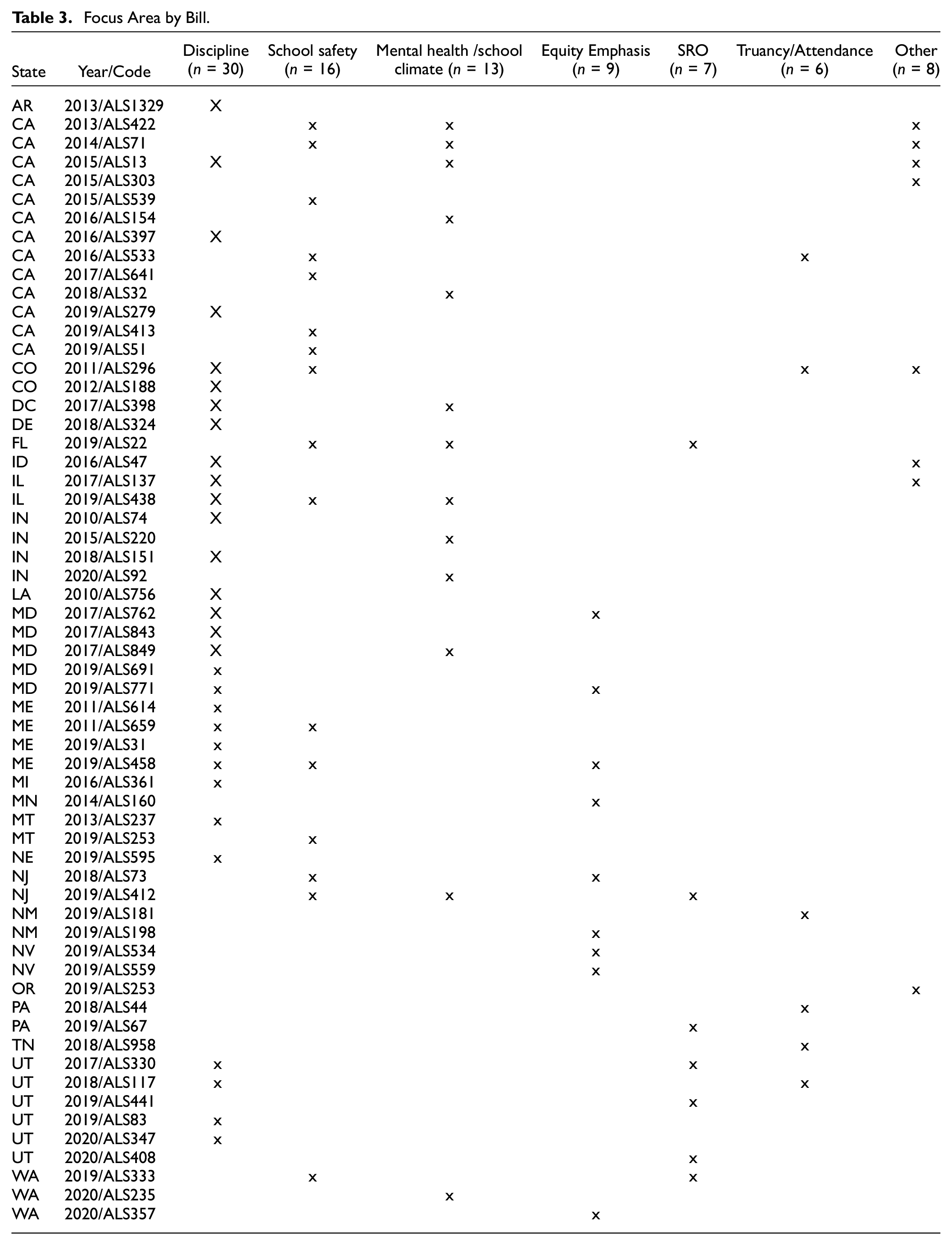
Restorative justice was included in laws to address a spectrum of specific problems and needs within the educational system. Table 3 provides an overview of focus areas. These focus areas include: discipline, school safety, mental health and school culture, equity, school resource officer, and truancy/attendance. The majority of laws (n = 30; 50%) from 15 states (AR, CA, CO, D.C., DE, ID, IL, IN, LA, MD, ME, MI, MT, NE, UT) concerned restorative justice in relation to discipline. Sixteen laws (26.7%) from eight states (CA, CO, FL, IL, ME, MT, NJ, WA) emphasized restorative justice as a way to promote school safety. Thirteen laws (21.7%) from seven states (CA, FL, IN, IL, MD, NJ, WA) and the District of Columbia refer more broadly to restorative justice as a way to improve mental health and school culture. Nine laws (18.3%) from seven states (MD, ME, MN, NJ, NM, NV, WA) focus on inequity of disciplinary actions. Seven laws (11.7%) from five states (FL, NJ, PA, UT, WA) focus on school resource officers. Six laws (10%) of laws from six states (CA, CO, NM, PA, TN, UT) address truancy/attendance, eight laws from five states (CO, CA, ID, IL, OR) address other topics (e.g., moving forward after genocide).
Focus Area by Bill.
Funding Routes for Restorative Justice Implementation
States and school districts use a variety of methods to fund restorative justice efforts, including specific legislative appropriation (Gonzalez et al., 2021; Hamaji et al., 2017), grants (Gonzalez et al., 2021; Sakala et al., 2018), and innovative taxing structures (Sakala et al., 2018). Funding is often necessary to support professional development and ongoing coaching of educators and other school personnel in restorative justice principles and practices, as well as securing full time restorative coordinators (Fronius et al., 2019; Sandwick et al., 2019). Funding can also provide an incentive for schools to try new approaches, such as restorative justice (Payne & Welch, 2018). Included below are states which have funding appropriations for restorative justice in schools or legislation that offers avenues for generating revenue for the implementation of restorative justice.
Legislative Appropriation
Ten states (CA, IL, IN, MD, MT, NJ, NM, PA, UT, WA) and the District of Columbia (18.3%) indicated dedicated funding sources for restorative justice efforts. Ten laws explicitly appropriated money from existing budget streams to be used to implement RJE. For example, the California 2017–2018 state budget appropriated $15 million to the Orange County Department of Education and the Butte County Department of Education to “foster a positive school climate in both academic and behavioral areas, including, but not limited to, positive behavior interventions and support, minimizing the use of emergency interventions, restorative justice, bullying prevention, social and emotional learning, trauma-informed practice, and cultural competency.” These funds are also to be used for a school district to implement a pilot program to improve school climate. Participants of the pilot program are required to explore and implement restorative justice models as well as develop and execute a strategy for implementing restorative practices and strategies (Cal. AB § 1808, 2018).
Grants
Ten percent of bills (n = 6) from six states (CA, IN, MD, NJ, NM, PA,) indicated funding for RJE could come in the form of grants. Grant funds came from various sources, including allocation from the state budget, federal funds, private grant programs, among other unique sources. For example, Indiana established a Safe Schools Fund, which is authorized to fund “evidence-based practices that contribute to a positive school environment, including classroom management skills, positive behavioral intervention and support, restorative practices, and social emotional learning.” The Fund was created through appropriation from the state fund and is also eligible to receive money from any public or private sources (Ind. Code Ann. § 5-2-10.1-2., 2015). Among the creative funding sources is the Safe Neighborhoods and Schools Fund in California, a funding pool created with the intention of reducing crime, including truancy and dropout prevention. This funding was created through the approval of Proposition 47, which reduces sentencing penalties for nonviolent, non-serious drug and property crimes and reallocates the money saved into the Fund. Twenty-five percent of the Fund is required to go to the Department of Education for a grant program “to reduce truancy and support pupils who are at risk of dropping out of school or who are victims of crime” (Cal. AB § 1:7:33 7599, 2016).
Accountability Measures
Accountability measures to evaluate the effectiveness of restorative justice implementation were included in more than a third of laws (38.3%; n = 23) from xx states (AR, CA, CO, D.C. IL, IN, LA, MA, MD, MN, MT, NE, NJ, NM, NV, WA). For example, D.C. (D.C. Code Ann. § 38-235, 2017) requires an “evaluative report on local education agency and school implementation of practices to promote school safety and reduce the use of exclusion, including barriers and effective approaches.” The report requires a trend analysis to identify disparities in exclusion of students based on sexual orientation or gender identity. Other laws require data disaggregated by a variety of demographics. One law in Maryland, which highlights the disproportionate representation of minorities in the school-to-prison pipeline, requires a comprehensive data brief including: (1) the number and distribution of school-based arrests and referrals to law enforcement disaggregated by a student’s age, race, gender, grade level, disability status, free or reduced price meals eligibility, and English language learner status; (2) the behaviors for which students were disciplined and the consequences for each response; and (3) each local school system’s discipline policies and to what extent each local school system utilizes alternatives to suspension, exclusion, and arrest, including restorative practices (Md. State Government Code Ann. § 2-1246, 2017).
Discussion
This research provides an initial review of state-level laws that promote the implementation of RJE. Although the findings cannot speak to the nuances of how these laws have been translated into practice and associated student outcomes, they provide policymakers and restorative justice advocates with an understanding of the multiple ways in which RJE is being promoted and what improvements can be made. Given the growing body of research that documents the positive impacts—both outcome- and process-oriented—of implementing RJE, we sought to take the next instrumental step by understanding how state-level policy informs and promotes the implementation of RJE. The 24 states we identified should be commended for taking the initial steps necessary to promote and provide direction on the implementation of RJE. However, the findings of this content analysis caused us to question whether states had adequate mandates with associated accountability mechanisms, structures, and funding in place to support the systematic implementation of RJE and to meet policy goals and student needs.
As educators, scholars, and restorative justice practitioners, our lived experiences inform our research, just as our positionalities within these roles and others shapes how we interpret these findings. What follows is a review of our findings in light of our knowledge of RJE gained through practice and research. Specifically, we broadly look at both the tensions and possibilities within the core findings, and provide recommendations and insights for scholars, policy makers, and restorative justice advocates.
Defining Restorative Justice
The majority of states did not provide a definition of RJE, and those that did emphasized a variety of principles and practices. Without a clear articulation of what RJE is, schools are left to interpret and label practices based on a potentially limited understanding of RJE. Definitions that utilize an offender and victim orientation—as opposed to those that emphasize building community, repairing harm, and healing—are not appropriate for use in schools. Inclusion of stigmatizing language in policy demonstrates the limited understanding policymakers have of RJE.
Because restorative justice can address multiple needs and concerns of stakeholders/constituencies, a lack of RJE definition can be attributed to the way in which a policy surrounding implementation may be presented as a bipartisan or nonpartisan policy solution (Roach, 2000). Liberal policymakers often view RJE as a way to address SEL of students and keep kids in schools whereas conservative policymakers often promote RJE as providing schools with further mechanisms to discipline students and address truancy and safety concerns. As a result, one could assume compromises were made in crafting the language and selecting a primary focus area to meet multiple constituency’s goals. A review of the preambles to each law illuminates the succinct messaging used to capture the largest audience, indicating the states priorities, community pressures, and potentially histories. Future research is needed to understand the impact of introducing RJE as a component of laws intended to address a variety of focus areas. In addition, following the evolution of a law could provide insight into state legislators’ evolving understanding of RJE and modifications to law that occurred to attend to stakeholder concerns or needs (e.g., lawsuits, community pressure, implementation barriers).
Funding and Training
While funding, policy, and associated reforms cannot dictate change at an intrapersonal level, a growing body of RJE implementation research confirms the need for educators and staff to develop self-awareness and practice self-healing as a starting point to their work with students (Molloy, 2019; Vaandering, 2014). This extends to school-level relationships, as integrity among educators and staff impacts the ability of schools to implement RJE and experience positive outcomes (Brown, 2018). A strong grounding in the theory of restorative justice is essential to understanding the mindset shift necessary to commit to creating a restorative school environment (Evans & Vaandering, 2016). RJE requires a comprehensive, whole school approach to relationship building, justice, and equity, which is reflected in pedagogy, policies and procedures, curriculum, and schoolwide culture. As such, all school personnel and students need sufficient training, practicing, and ongoing coaching (Gregory & Evans, 2020). However, our findings suggest laws do not extend to this level of direction and as a result schools are left to create implementation plans without sufficient guidance based on the best evidence available.
Given that the implementation of restorative justice is a process, there is a need for ongoing training and coaching, and for these efforts to be supported by dedicated and sustained funding. The findings of this scan demonstrated a lack of intentional direction regarding training and support for teachers. Not only was training not always included in policy, but who was provided with training was inconsistent and often directed at School Resource Officers, rather than educational professionals. The topic of the training was also variable, with few laws promoting training on RJE in relation to racial disparities in discipline or cultural humility. Sufficient funding for implementation is a key component in effective RJE implementation (Hall et al., 2021). In her national review of restorative justice legislation in the juvenile justice system, Pavelka (2016) noted that “adequate” funding does not necessarily mean additional funding; rather, adequate funding can be achieved through realigning or redirecting existing resources. Possibilities exist for legislators and community stakeholders to think creatively about reallocating existing funding streams or reorienting the positions of existing staff to dedicate resources to support RJE implementation (e.g., not separate from other initiatives that look to support student wellbeing).
Accountability Measures
When RJE is offered as an option among many interventions, schools with documented disparities in disciplinary actions may choose not to implement RJE but instead turn to other behavioral interventions that emphasize a focus on youth as sites of concern as opposed to practices and policies that directly address exclusionary discipline. However, we recognize the tension inherent in promoting RJE in a top down manner. Further, few laws had strong accountability measures that included an emphasis on tracking impact of RJE and/or disciplinary action included in law. Without data collection on changes in disparities in disciplinary action and school-based arrest, as well as, changes in school climate and culture there is no way to evaluate the degree of change in students’ lived experience in schools implementing restorative justice. Legislation has the potential to communicate a clear comprehensive directive or state strategy based on the best evidence and to include ongoing accountability measures to evaluate the approaches effectiveness. In order for policy to make palpable changes in students’ lives, there need to be accountability measures in place. Few laws were passed that included a mandate for consistent data collection and reporting.
Since many of the laws were drafted and passed to address the negative impacts of zero-tolerance approaches to discipline and the resulting STPP (Gonzalez, 2020), it is surprising that few laws specifically address disparities in disciplinary actions experienced by Black, Indigenous, People of Color (BIPOC), special education, LGBTQ, and those with behavioral health challenges students (Annamma et al., 2014; Green & Allen, 2017). In order to address these concerns through the implementation of RJE, laws need to directly address these injustices through culturally relevant pedagogy and curriculum, and anti-racist/anti-bias training and practices, and accountability measures. Systemic racism can and will influence the ways RJE is experienced and implemented with “fidelity.” This requires a framing of RJE that asks education professionals to consider community building, opportunities for relationships building WHILE confronting unjust educational structures, policies and individual practices. Future research should review laws identified as having racial equity oriented language in place to support community transparency and to determine if there are structures and measures included to address these disparities.
Supporting Shifts in Ideology and Practice
RJE requires a fundamental shift in values around the purpose of discipline in schools; RJE requires schools to shift from an emphasis on social control and punishment to social engagement and co-regulation (B. E. Morrison & Vaandering, 2012). Given our experience with policy advocacy, we questioned whether a focus on school safety and language surrounding attendance and truancy were ways in which many states were successful in moving policy across party lines. This emphasis on safety as associated with enforcement builds connections between restorative justice and systems of policing and punishment, as opposed to dismantling relationships between schools and the prison industrial complex. The emphasis on safety also begs the question, safety for whom? To operate from these policies, which couple RJE with safety, schools need to consider who feels safe and protected with the presence of SROs or security officers, and what students and staff may not? As B. Morrison (2014) articulates, “Practice, and training, without theoretical understanding can produce more harm than good; theory building, without practice, limits external validity and levers to build capacity” (p. 128). We would extend Morrison’s statement, offering that RJE implemented without connection to racial equity and anti-oppressive pedagogy can work to create new tools that replicate systemic violence and student pushout.
Summary
Foucault (1994) warns, “One can perfectly well conceive of revolutions that leave essentially untouched the power relations that form the basis for the functioning of the state” (p. 123). For restorative justice to challenge the structural inequalities of social institutions, a radical transformation in power relations within institutional and community contexts is needed. Policies should promote approaches to implementation that give considerable attention to the ways in which schools understand the goals of restorative justice, how these understandings impact practices, and what attention is directed toward an interrogation of current practices and its impact on students. Educational reform through RJE legislation provides one avenue to impact change; however, we believe multiple strategies are necessary to truly engage RJE as a practice to transform punitive discipline and support the belonging and wellness of students and staff within school systems.
One such strategy would require stakeholders to think of RJE implementation as a nonreformist reform, a concept Fraser (2003) draws on, as presented by Gorz (1967). Nonreformist reforms reject the claim that strategies to address injustice either address outcomes and improvements to existing systems or target root causes that seek to restructure generative frameworks—they are not absolute, but rather acknowledge that the contexts in which reforms occur can allow surface level strategies to lead to transformative outcomes and vice versa (Fraser, 2003). Nonreformist reforms are thought to be ambitious in theory yet achievable in practice as they can change the school contexts, power imbalances, and underlying structures that generate injustice. Nonreformist reforms engage individuals’ real needs in the moment, but also set in motion trajectories of change that make more radical reforms possible over time without needing to go backwards and undue policies or actions (Fraser, 2003).
This framing of restorative justice as a nonreformist reform (Hereth et al., 2012; Horsford et al., 2019) would allow RJE to fulfill its transformative potential and assume a shift in ideology supported within an overarching vision of schools as spaces of liberation and possibility. Utilizing a nonreformist reform approach acknowledges that superficial strategies can seem pragmatic but substantively flawed and transformative strategies can seem idealistic but impractical. As such, this approach presents a “both/and” path to change, where the goal is not allowing the transformative power of restorative justice to be exchanged for the pragmatics of resolving immediate problems through the implementation of strategies alone (Molloy, 2018). In schools where hierarchy, punitive practices, and carceral logics are embedded, it is possible that restorative justice succumbs to reification, a concern with top-down policy. However, when adopted by a school that has taken measures to disrupt hierarchy and interrogate their approach to equity, restorative justice is likely to promote transformation (González, Sattler, & Buth, 2019). Similarly, implementing restorative justice through concrete strategies could have transformative effects in some contexts, provided they are grounded in restorative values and reflection is consistently pursued. Embracing “both/and” thinking opens up possibilities for the implementation of strategies to set in motion a trajectory of changes within schools in which transformative practices become practical and authentic over time.
Limitations
Our review should be considered in the context of several limitations, primary of which is the interpretive nature of content analysis. Laws and legal language by their very nature can be interpreted in multiple ways. We as researchers applied the codes in the most literal, consistent, and objective way to ensure reliability across coders. Interrater reliability was assessed in the coding of the first 10 laws; in the remaining review of laws, only those that were questionable were discussed. It is possible coding varied amongst reviewers and future legislative scans should have more robust interrater reliability measures in place. We also recognize that our review may not represent all relevant laws, as our search terms may have missed laws that related to the implementation of restorative practices, but were not named as RJE. Some laws might support the implementation of RJE without explicitly stating such (e.g., laws designed to improve mental health or social-emotional learning that are informed by restorative justice theory, but are not named as such). Further, our review did not include local efforts such as state education agency initiatives or local school districts that may be informing or serving as a driving force behind RJE implementation. Our goal of this study was to provide an initial understanding of the ways restorative justice is being defined within policy, how policy is being used to further RJE, and how these findings may inform recommendations.
Conclusion
This scan builds on previous work (Molloy, 2018), rooted in the assumption that changing policies will not necessarily change school culture and traditional notions of discipline in schools unless implementation is paired with critical attention to the values of dignity, mutual concern, and respect that are the foundation of all restorative practices. Within this scan, we see tensions within school discipline reform, as well as possibilities for community-centered policies to offer measures of accountability and alignment with larger values surrounding equity and justice. The implementation of restorative justice is not in and of itself, a “good thing” (Johnstone & Van Ness, 2007)—it is susceptible to political manipulation (Woolford, 2009) and if applied without an anti-oppressive lens may serve to perpetuate systems of policing or racial disparities (Simmons, 2021). Our findings highlight a need to define RJE, to interrogate how we think of and frame safety, and to resist the framing of RJE as separate from equity, mental health, and school climate. To shield against this misuse, we suggest that implementation efforts clearly define the paradigm shift that restorative justice is seeking (Zehr, 2005), and support this shift through an alignment of policies and practices that offer ongoing support and funding for educators and students alike.
Footnotes
Declaration of Conflicting Interests
The author(s) declared no potential conflicts of interest with respect to the research, authorship, and/or publication of this article.
Funding
The author(s) received no financial support for the research, authorship, and/or publication of this article.
