







Abstract
The ‘American Dream’ under advanced capitalism promises social mobility for groups who were historically locked out of higher education, including women, first generation/working-class students, and students of color. College enrollment among these groups has continued despite obstacles, including structural inequalities. Marginalized students can internalize structural inequalities, which may result in a lack of confidence. To better understand academic confidence, we conducted 82 in-depth interviews with a diverse group of working-class college students at a commuter university. We also completed a longitudinal analysis of their academic transcripts. Findings suggest that despite men’s and women’s similar levels of achievement, confidence in academic ability is gendered for working-class students. The vast majority of men developed a strong sense of confidence despite their working-class position while most of the women recounted instances of gender subordination that undermined their confidence. Implications suggest that gender and class shape students’ confidence and experiences in higher education.
Keywords
Introduction
Recent media attention has focused on concerns that young men, especially those from disadvantaged backgrounds, ‘are falling behind girls and women’ (Reeves, 2024: 72). Citing findings that men have lower educational attainment and higher rates of overdose and suicide than women, and earn less than they did in the 1970s, Reeves (2024: 15) laments that boys and men are ‘falling behind at school and college because the educational system is structured in ways that put them at a disadvantage’ (Reeves, 2024: xiii). Indeed, in a reversal of long-term historical trends, the gender gap in educational attainment now favors women, with 34.7% of men and 43.8% of women aged 25–29 attaining a bachelor’s degree or higher (Digest of Education Statistics, 2020). This pattern holds across all racial and ethnic groups (National Center for Education Statistics, 2016a)and is present for men and women of all ages (National Center for Education Statistics, 2016b).
At the same time, structural inequalities resulting from male dominance, institutionalized racism and class inequalities under advanced capitalism continue to shape students’ experiences of higher education. Although Reeves (2024) recognizes that disadvantaged young men face worse conditions than those who are more privileged, arguments about men ‘falling behind’ women ignore the historical legacy of male dominance in education. Likewise, American higher education is highly stratified and reproduces existing class-based inequalities (Bourdieu, 1973; Bowles and Gintis, 2011). Working-class and poor students are disadvantaged at every stage of the attainment process (Andres and Adamuti-Trache, 2008; Armstrong and Hamilton, 2013; Aronson, 2008) and higher education can be a hostile place for people of color, particularly women of color (Collins, 1990; hooks, 1994).
Previous research has demonstrated that men have a tendency to overestimate their abilities and performance in education and employment, while women underestimate both (Beyer, 1998; Kay and Shipman, 2014). Women, even those who are highly successful, report self-doubt, including perceptions that they struggle with their academic coursework and feel like an ‘imposter’ (Cokley et al., 2015; Kay and Shipman, 2014). As Ridgeway and Correll (2004: 510) point out, ‘hegemonic cultural beliefs about gender’ and the ‘social relational contexts’ of education perpetuate gender inequalities through such assessments of competence. Similarly, prior research documents that working-class college students often experience cognitive dissonance as their inner values clash with educational institutions that valorize middle class skills and values (Hurst, 2010). This disjuncture between institutions and student perceptions of their own skills can lead to confusion, anger, shame, feeling like an ‘imposter’ (Jensen, 2004: 171) and lack of confidence (James, 1995). Likewise, ‘smartness’ is framed in the image of a wealthy, white man and this connection with whiteness can negatively influence students of color (Hatt, 2016: 1143).
It is within this context that we examine how inequalities, especially at the intersection of gender and social class, make their way into students’ understandings of their own abilities. In particular, we examine perceptions of confidence in academic ability among working-class college students at a 4-year commuter university. We focus on gender differences in confidence in order to deepen our understanding of how persisting gender inequalities and patterns of domination create divergent ideas about confidence among working-class college students. We thus ask the following research questions: how do working-class college students present their own understandings of confidence? In what ways are these understandings tied to gender inequalities? And how are these gendered perceptions linked with social class backgrounds?
Our findings suggest that gender and class influence confidence in college through gender- and class-based experiences. For working-class women, these experiences occur primarily in the intimate family and relational sphere. In these arenas, women are subjected to negative instances of socialization and male violence. In contrast, for working-class men, class-based inequalities in the labor market can erode confidence in college and contribute to a crisis of masculinity. We find that even achievement by itself does not ameliorate the striking deficits rooted in these inequalities.
Literature Review
Social Class Inequalities and Higher Education
Under advanced capitalism, the educational system acts as a sorting mechanism that perpetuates social class inequalities intergenerationally (Bowles and Gintis, 2011). Schooling produces workers who accept their own alienation and, through instilling beliefs in meritocracy, perpetuates the dominance of some groups over others (Bowles and Gintis, 2011). Middle class job skills (e.g. verbal skills) are valued over working-class job skills (e.g. manual labor) in educational institutions (Bourdieu, 1973).
The attitudes, aspirations, and worldviews of the working-class (their ‘habitus’, or internalization of objective circumstances) do not allow them access to the dominant cultural system that is created by the elite and is rewarded in schools (Bourdieu, 1973). Cultural capital, the symbolic resources transmitted across generations, leads to social reproduction through family environment and upbringing. As a result, postsecondary choices often fit within students’ ‘comfort’ levels and frame of reference (McDonough, 1998). While middle- and upper-class youth find that teachers’ interactions and expectations are ‘familiar and comfortable’, poor and working-class students often find them ‘unfamiliar and confusing’ (Callero, 2018: 106). As hooks (1994: 178) notes, social class is reflected in values, as well as ‘the biases that informed the way knowledge would be given and received’.
Because higher education reproduces existing class-based inequalities, working-class students experience many obstacles when pursuing a degree (Armstrong and Hamilton, 2013; Aronson, 2017; Aronson and Fleming, 2021; Hurst, 2010). Our educational system sorts students through a preoccupation with labeling their mental capacities. Artifacts such as grades, test scores, and college preparatory curriculum are associated with ‘smartness’ and represent gatekeeping mechanisms that lead some students to success and others to failure (Hatt, 2012). These inequalities can influence the confidence levels of working-class college students (James, 1995; Jensen, 2004). Previous research suggests that both men and women from working-class backgrounds would likely experience doubts in their own abilities in college, with women faring worse than men because they are doubly disadvantaged in the class and gender hierarchy (see Beal, 2008; Collins, 1990; Crenshaw, 1991).
Gender Inequalities in Higher Education
Although the vast majority of contemporary women in the United States now pursue work trajectories that are similar to those of men, they face persistent labor market discrimination and harassment. Glass ceilings, the concentration of women in female-dominated jobs, income inequality, obstacles to balancing work and family, and women’s own choices, on occasion, push women out of the labor force and foster traditional ways of thinking among both men and women (Aronson and Mortimer, 2017). When women complete their education, establishing a viable work path and identity can be fraught with difficulty because of gender inequalities in parenting roles (Aronson and Mortimer, 2017). As a result of gendered scripts in the family (Loscocco and Bird, 2012), and because workplaces do not adequately accommodate family demands, many couples make traditional arrangements when they have children (Singley and Hynes, 2005). This pattern was notably visible during the recent COVID-19 pandemic (Bateman and Ross, 2020). Sex segregation and gender discrimination in the labor market results in gender-differentiated self-assessments of competence, with even highly successful women reporting self-doubt (Correll, 2004).
Considering education, prior studies suggest that men have advantages in the classroom, while women often experience a ‘chilly climate’ (Lee and Mccabe, 2021). In their major choices, women respond to cultural beliefs and stereotypes that men have more competence in STEM fields; they also report lower confidence levels than men (Jagacinski, 2013; Leslie et al., 2015), especially in mathematics (Moakler and Kim, 2014). Half of scientists in one study agreed that women were discouraged in educational settings from pursuing STEM fields, suggesting an impact from socialization and discrimination (Ecklund et al., 2012). Women in engineering report greater difficulty than men in projecting an impression of confidence, resulting in a ‘gender-related anxiety’ rooted in fears about their acceptance in this field (Dryburgh, 1999). These gender differences are often perceived as ‘natural’ despite evidence otherwise (see Lorber, 1994).
As a result of deeply ingrained gender socialization, the gender gap in confidence starts early in life (Morris, 2012; Musto, 2019). Musto (2019) found that in higher-level middle school courses, boys’ frequent oral participation was encouraged and led to the perception by other students that they were more intelligent than girls. In contrast, in lower-level courses, where girls participated more frequently than boys, students ‘were still enmeshed in the school’s broader patterns of male dominance’ (Musto, 2019: 384). As a result, the girls were perceived as inferior to the school’s brightest students, who were high-participating boys (Musto, 2019).
In a study of working-class high school students, gender differences in confidence levels were linked with the level of effort expended (Morris, 2012). Working-class high school girls responded to perceived gender inequality by exerting extra effort in school, which may explain their higher achievement (Morris, 2012). In fact, one explanation for women’s higher GPAs than men’s (Conger and Long, 2010) is that women may be working harder as a result of lower confidence levels (Sakulku and Alexander, 2011). People with an ‘imposter phenomenon’, who believe that their success will be perceived as fraudulent, may over-prepare and expend more effort than others for particular tasks (Sakulku and Alexander, 2011). For boys, performance of masculinity included elements of overconfidence (Morris, 2012). That is, boys’ attempts to appear overly confident at times resulted in ‘carelessness’ in school tasks; they expended less effort as they expressed strong confidence in their own innate abilities (Morris, 2012). Some boys appear to associate school with femininity and may exert less effort in school in order to appear more masculine (Heyder and Kessels, 2013).
Gender inequalities early in life follow people into adulthood. Previous research has found that women college students have lower confidence levels than men despite higher academic achievement (Conger and Long, 2010). In fact, women report struggling with their academic coursework and feeling like an ‘imposter’ (Cokley et al., 2015). Male students, who are exposed to the belief that men are better at particular tasks, assessed their abilities at higher levels than did female students, even though all received the same scores (Correll, 2004). In contrast, ‘negative recall bias’ plays a role in women’s lack of confidence, as they are more likely to recall past failures than successes and underestimate their performance in male domains (Beyer, 1998). Women’s self-ratings were lower than men’s, especially in male-dominated fields, resulting in Women gravitating towards traditionally female-oriented fields (Lips, 2004).
Racial and Ethnic Inequalities in Higher Education
Similar to other institutions, higher education operates in a racialized society. Students of color often experience marginalization, especially when attending colleges in which the student body is predominantly white or characterized by separate racial or ethnic enclaves (Feagin et al., 2014; Goodwin, 2006). In such environments, some students of color may feel that the university cannot adequately meet their needs, while others are able to turn positions of marginality into resilience (Goodwin, 2006; Joseph et al., 2023). Joseph et al. (2023: 639) delineate the many challenges of ‘learning while Black’. Challenges include factors like a lack of Black representation on campus (and a resulting isolation and lack of mentoring), as well as microaggressions or overt racism, which can result in negative everyday experiences (Joseph et al., 2023). Furthermore, racial and class disadvantage often intersect in university experiences. For example, students of color experience increased rates of basic needs insecurity, including food and housing insecurity, when compared to their white peers (Price et al., 2019).
In addition, immigrant-origin students now represent one-third of those in higher education (Migration Policy Institute, 2020), and are often encouraged by their families to pursue higher education as a means of upward social mobility (Portes and Fernández-Kelly, 2008). In previous work, we examined the experiences of Arab American commuter university students (Forsythe-Brown et al., in press) living in the largest Arab American ethnic enclave outside of the Middle East (Marks et al., 2023). This study found that students often experience a cultural mismatch between family expectations of interdependence and those of the institution, which focus on individualism (Forsythe-Brown et al., in press). Family obligations were highly linked with gender: immigrant-origin men and women both experienced cultural expectations to serve their family, with men contributing to family finances and women contributing to family care work (Forsythe-Brown et al., in press). These roles and time demands were invisible to the university, and in some cases, resulted in students calling into question their abilities to balance family and academic achievement (Forsythe-Brown et al., in press). Similarly, as a result of institutionalized racism, students of color often express lower levels of academic confidence than white students (Hutz and Martin, 2007). Cokley et al. (2013) report that lower confidence and self-efficacy may result from feelings of stigma connected to holding a minority status in higher education.
Academic Confidence and Inequalities
As we have described, structural inequalities in social class, gender and race/ethnicity can influence inequalities in students’ academic confidence. Psychologists studying confidence have emphasized its tie to personality traits. For example, Dweck (2002) finds that students who have ‘fixed mindsets’ often perceive failures on tasks as an indication that they are ‘dumb’ and lose confidence in themselves. They are also more anxious in settings in which their abilities might be tested and evaluated, which often results in worse performance (Carr et al., 2012). These students are more likely than those with ‘malleable’ or flexible mindsets to avoid situations in which they might struggle. Students with fixed mindsets often forgo activities that may expose their lack of knowledge or intelligence, even when the activities are helpful for self-development and improvement (Dweck, 2002). For example, they may avoid oral participation in class due to concerns about appearing less ‘smart’ to their peers (Claro et al., 2016).
Theories of confidence and intelligence are also shaped by responses from others in social environments. More specifically, when individuals are praised or shamed for their performance, this feedback leads to believing that one is ‘smart’ or ‘dumb’ (Dweck, 2002). Overconfidence also occurs with a social comparison, whereby people view themselves more favorably than others (Moore and Healy, 2008).
Low-income students are more likely to have a fixed mindset than their more advantaged counterparts: they believe that their abilities are innate, static and unable to be developed (Claro et al., 2016; Hwang et al., 2019). In contrast, students who are more advantaged are more likely to have a malleable or growth mindset: they believe that their talents can be developed through hard work, and they utilize particular strategies for success and seek out help and input from others when they need assistance (Claro et al., 2016). Perceptions of confidence impact college students’ attainment and achievement patterns (Zorkina and Nalbone, 2003), and lack of confidence may lead to fear of being viewed by peers and instructors as ‘unintelligent’ (Fassinger, 1995).
Likewise, stereotypes are one factor that limit women’s ability to employ a ‘growth’ mindset in academics (particularly in male-dominated fields; Good et al., 2012). In the face of academic challenges, women may be persuaded by negative stereotypes that they have a fixed lack of intelligence (Good et al., 2012). On the other hand, and particularly in male-dominated domains such as mathematics, men are encouraged to adopt a growth mindset that is tied with perceptions of intelligence (Good et al., 2012).
Although research on gender differences in mindset explains important dimensions of gender differences in confidence, these studies do not analyze power, inequalities, and patterns of domination. Yet as Ridgeway and Correll (2004: 511) point out, inequalities are maintained through ‘cultural beliefs and distribution of resources at the macro level, patterns of behavior and organizational practices at the interactional level, and selves and identities at the individual level’. Gendered assessments of competence are ‘ubiquitous and persistent’, and lead to expectations that ‘men are generally more competent than women’, particularly in settings like the workplace and education (Ridgeway and Correll, 2004: 514).
The present study investigates how gendered understandings of confidence are impacted by gender inequalities. In particular, we examine the ways that gender inequalities in arenas outside of college—especially inequalities in socialization, family roles, and experiences with male violence—lead women to doubt their own abilities inside of college. We focus on working-class students, who have been found to have lower levels of confidence in higher education relative to their more advantaged peers (Busher et al., 2014; Jameson and Fusco, 2014; Jensen, 2004). We define ‘working-class’ as having parents who have not completed at least a bachelor’s degree, earning below the median household income, or both. We investigate the ways that gendered understandings of confidence are tied to gender inequalities among working-class students.
Methods
Procedure
This mixed-method project included in-depth, structured interviews at a 4-year public commuter university in Metropolitan Detroit between 2009 and 2011, and an analysis of students’ academic transcripts 6–8 years later (through 2017). Interviewees were recruited in their classes, as all instructors in the University were asked (via email, with an attached recruitment flier) to make announcements regarding the study. There were five recruitment announcements sent to all faculty over a 1-year period (between November 2009 and November 2010). We conducted a pre-interview screening in order to select a diversity of students for interviews from those who volunteered. Because we recruited participants in waves, subsequent rounds emphasized interviews with those demographic groups who were less likely to volunteer initially, including men and those whose majors fell outside of social and behavioral sciences (e.g. engineering and business). We also attempted to obtain a diverse sample in terms of racial and ethnic background. In particular, since the university has a large Middle Eastern or North African population, we made a special effort to recruit and interview Middle Eastern or North African students.
Interviews were conducted face-to-face in a university office by a trained research assistant. We surmised that a student interviewer would be able to establish better rapport when discussing student concerns than a faculty interviewer, as they were closer in age and circumstance. The interviews lasted between 45 minutes and 2 and 1/2 hours, with most lasting about 1 hour. Interviewees were given a $25 Visa gift card at the conclusion of the interview. The interviews were tape recorded and transcribed verbatim. The study followed ethical standards of informed consent and confidentiality. The Institutional Review Board approved the research protocol and human subjects protections were followed. Participants consented to participate and to allow the Principal Investigator to access their academic records, including academic transcripts. Confidentiality of respondents has been protected and all identifying information has been removed from the quotes utilized in this study.
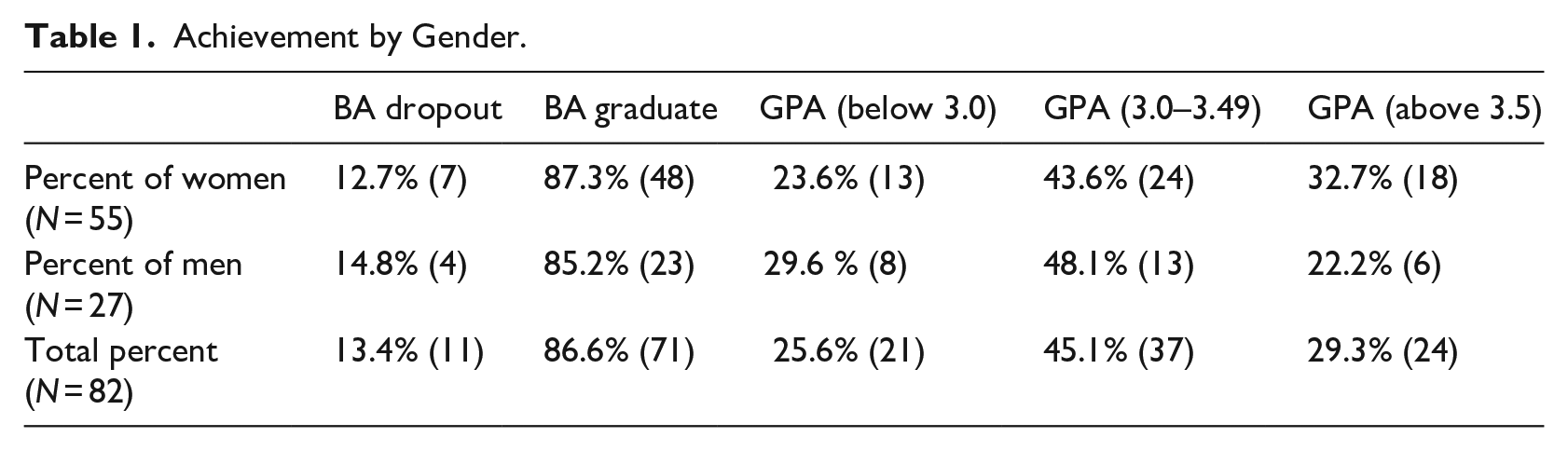
To assess outcomes, including degree completion and academic achievement, we tracked the interviewees via their academic transcripts through August 2017, which was 6–8 years after the interviews were conducted. Two sources of tracking the interviewees were utilized: university academic transcripts and National Clearinghouse data, which shows enrollment in other postsecondary institutions. Between these two sources, we were able to determine whether, when and where students completed their degrees, as well as their final GPAs. Most students interviewed (86.6%, N = 71; see Table 1) had completed their degrees within the 6–8 year period in which we followed them. As Table 1 indicates, students varied significantly in their achievement levels, such as GPA.
Achievement by Gender.
Participants
All participants completed a demographic survey at the time of the interview. Questions were open-ended, including gender. Table 2 illustrates the sample characteristics by gender. The sample was about two-thirds women (67%); none of the participants identified as non-binary through our open-ended question on gender identification. Because of our interest in the non-traditionally-aged student experience, a special effort was made to study the experiences of those who were over 25 years old or already parents. As a result, 70.7% of the students were at least 25 years old. The age distribution was relatively similar for the men and women (see Table 2). Since we are interested in obstacles experienced at different points in the postsecondary education process, students were interviewed at varying points in their undergraduate careers. Students were enrolled at the university between 1 and 21 semesters, with a mean of 6.98 semesters.
Annual Income, Parents’ Education, and Age by Gender.
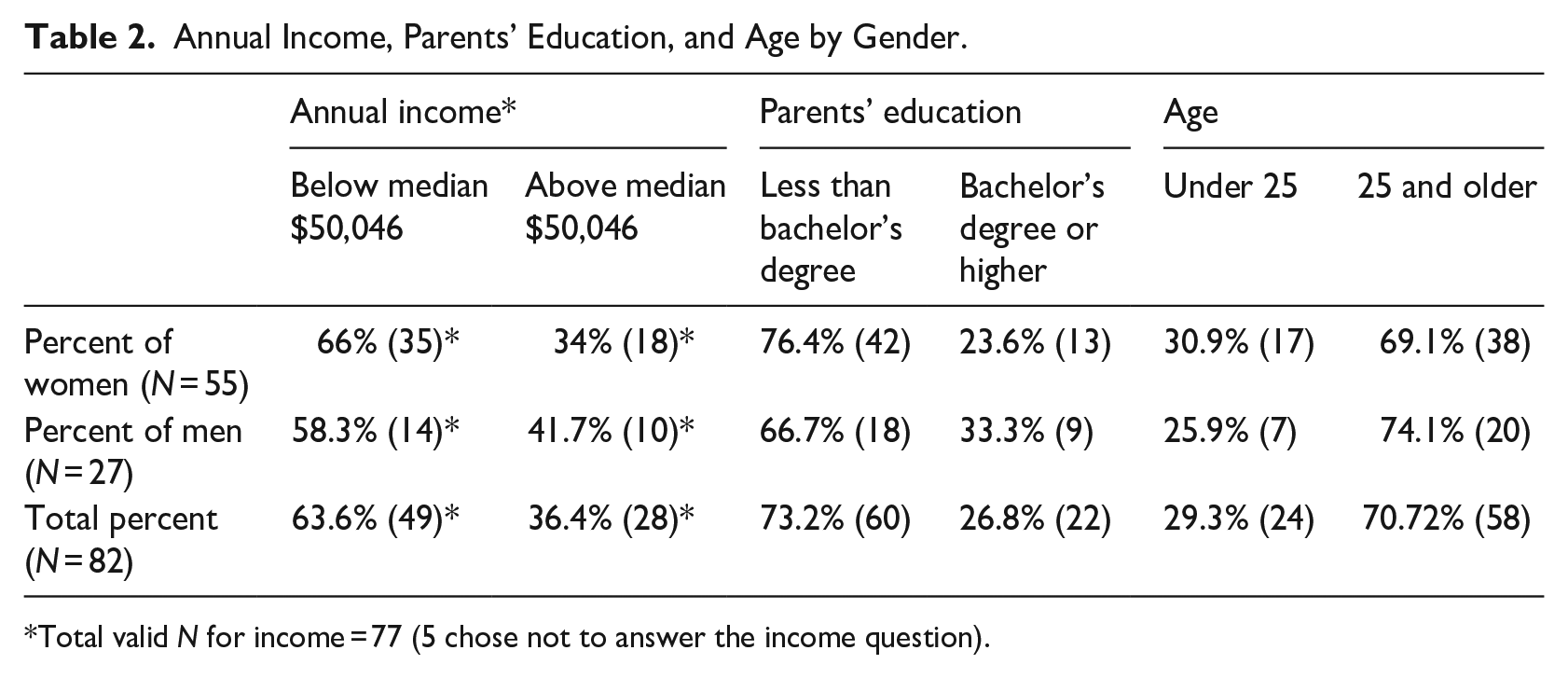
Total valid N for income = 77 (5 chose not to answer the income question).
Of the 100 students interviewed, this paper focuses on a sub-sample of 82. The interview question—‘how confident are you about your abilities in college?’—examined in detail here, was not one of the original questions on the interview guide. It was added after 18 interviews had already been completed when it became apparent that confidence was an important theme that emerged from our analysis of the early interviews.
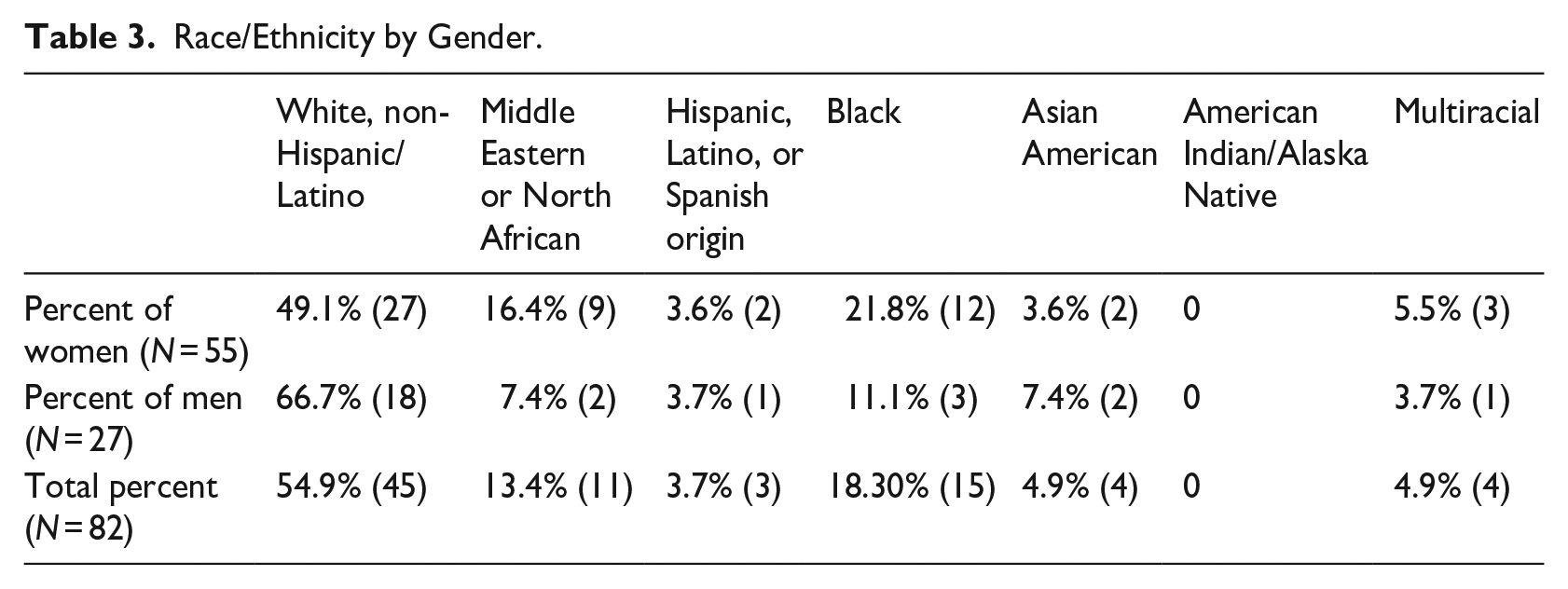
Of the 82 interviews examined here, 79 fell into our definition of ‘working-class’—below the median household income of $50,046 in 2010 (Noss, 2011), first-generation college student, or both. Considered separately, 73.2% were first-generation college students and 63.6% earned below the median household income (see Table 2). The sample was diverse in terms of racial and ethnic background, with 54.9% white and 45.1% students of color (13.4% were Middle Eastern or North African, 3.7% were Hispanic, Latino, or Spanish origin, 18.3% were Black, 4.9% were Asian American, and 4.9% were multiracial; see Table 3). As illustrated in Table 3, the women in our study were more likely to be students of color than the men. While about half of the women came from non-Hispanic/Latino white backgrounds, two-thirds of the men identified as white (see Table 3). Women were more likely than men to come from Middle Eastern or North African (16.4% vs. 7.4%) or Black (21.8% vs. 11.1%) backgrounds (see Table 3).
Race/Ethnicity by Gender.
Measures and Analytic Strategy
The structured interview guide covered a wide range of themes. Questions included such issues as why they decided to go to college, the transition to the current institution, financing their education, and the most significant challenges they faced. The analysis of interview transcripts started with inductive open coding for major themes and then progressed to more fine-grained, focused coding based on emergent themes (Charmez, 1995; Glaser and Strauss, 1967). We used a qualitative data analysis program (Atlas.ti) to enter codes, highlight passages of text, and examine co-occurrences of codes. This strategy sought to bring together quotes from multiple interviewees on a given theme. The coding scheme and analytical framework was continually refined throughout the analytic process (Miles and Huberman, 1994). The theme categories were modified when new themes emerged or previous themes appeared less relevant. In this paper, we focus on participants’ experiences of college, with particular attention to responses to the question: ‘How confident are you about your abilities in college?’
The themes that emerged from our inductive analysis (Charmez, 1995; Glaser and Strauss, 1967) of academic confidence were highly differentiated by gendered. First, we noted that men more often spoke about feeling ‘smart’, whereas women more frequently reported feeling ‘dumb’. For the men, the most important themes included prior performance, overconfidence, and an erosion of confidence as a result of job loss. In contrast, the most important themes for the women included negative socialization, expectations of low achievement, and experiences with male violence.
Findings
Quantitative Analysis
Overall, our findings indicate that women expressed lower academic confidence than men despite comparable levels of academic achievement. An analysis of interviewees’ academic transcripts 6–8 years after the interviews revealed that men and women had similar levels of educational attainment and achievement. Degree completion rates were quite similar, as 87.3% of women and 85.2% of men completed their degrees (see Table 1). Men and women also had similar GPAs, as reflected in their academic transcripts at the time of their degree completion (see Table 1). There were no significant differences by gender in the number of classes that students withdrew from, took incompletes in, or failed (based on their academic transcripts in 2017). However, confidence in academic ability among these working-class college students was gendered. We found statistically significant gender differences on the high-low confidence variable despite similar levels of academic achievement. As shown in Table 4, 70.9% (N = 39) of women who were asked about their academic confidence expressed a lack of confidence, while only 14.8% (N = 4) of the men expressed low confidence (χ2 (1, N = 82) = 22.848, p < .0001).
Academic Confidence Level by Gender.
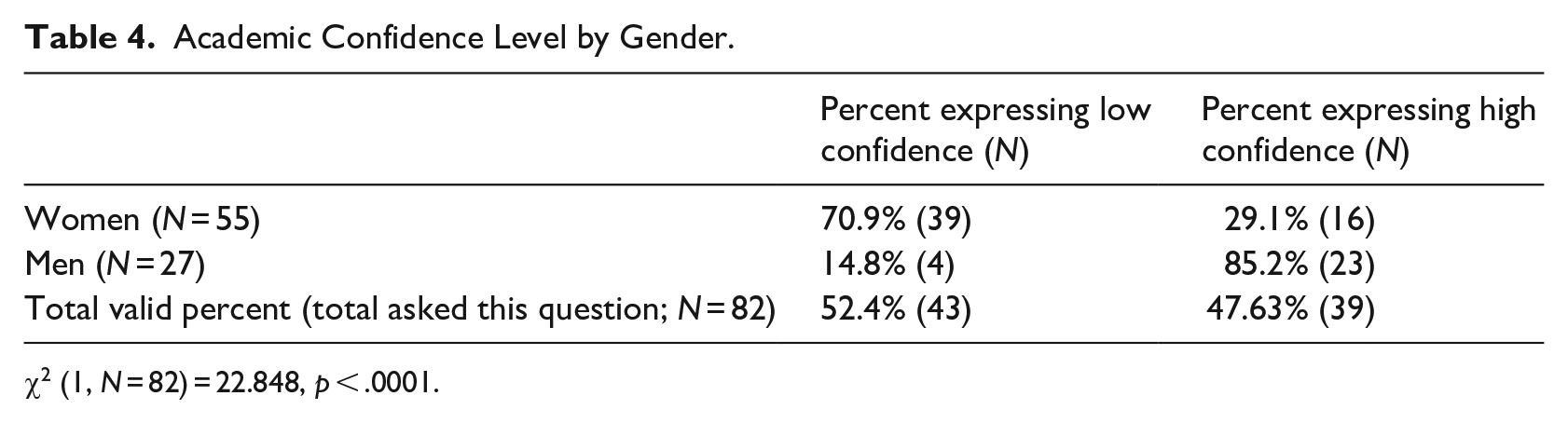
χ2 (1, N = 82) = 22.848, p < .0001.
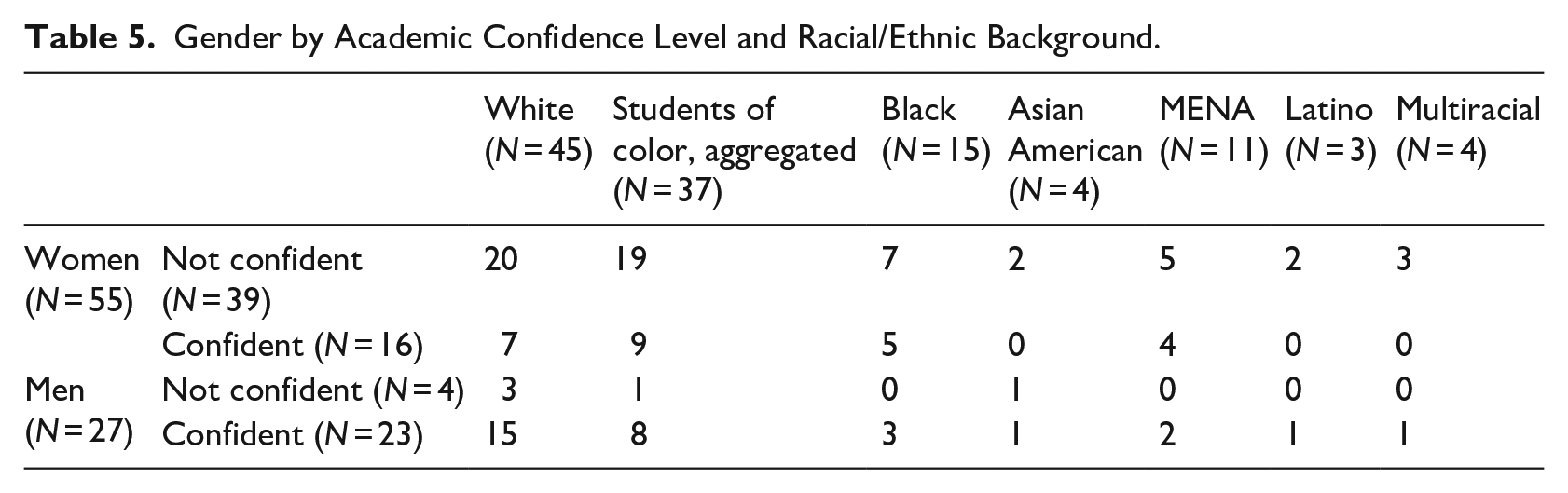
Despite limitations as a result of our small sample size, we break down confidence levels by gender and racial/ethnic background (see Table 5). Overall, our findings indicate that the majority of women across all racial/ethnic backgrounds report a lack of confidence in their academic ability while the vast majority of men across all racial/ethnic backgrounds report feeling confident. To facilitate comparison between groups, we have listed both the number of participants with particular racial/ethnic backgrounds and an aggregated number of students of color. Table 5 indicates that 20 white women and 19 women of color (out of 55 total) lacked confidence in their academic ability, while only seven white women and nine women of color felt confident. Conversely, 15 white men and eight men of color (out of 27 total) felt confident in their academic ability, while only three white men and one man of color lacked confidence. Although participants from different racial/ethnic backgrounds experience college differently (e.g. in Metropolitan Detroit, the experiences of Black students are likely to diverge from those from Middle Eastern or North African backgrounds as a result of many factors, including segregation and immigration status), a full analysis of these differences is beyond the scope of this paper. Our findings suggest a more comprehensive analysis of the intersection of gender and racial/ethnic background is needed to better understand the divergent experiences among working-class college students.
Gender by Academic Confidence Level and Racial/Ethnic Background.
Qualitative Analysis
Our analysis of the qualitative interview data unpacks gender differences in how the participants talked about their own academic confidence. We have organized these findings according to the gendered themes that emerged from our interviews. We begin with the men, who often spoke about feeling ‘smart’ as a result of prior performance. We also examine the theme of overconfidence and an erosion of confidence that sometimes resulted from men’s job losses. In contrast, the women more frequently reported feeling ‘dumb’. For women, confidence was tied to negative socialization, expectations of low achievement, and experiences with male violence. We will conclude by reflecting on these gender differences in confidence for working-class students.
Men’s Academic Confidence
Perceived Intelligence
Twenty-three of the 27 men in our study described feeling confident in their academic abilities, using words like ‘smart’ to imply that they perceived their natural abilities positively. For example, a white man whose father had a college degree stated: ‘I expect most of the time I will be pretty confident because I’m smart’. A Hispanic and first-generation man put it similarly: ‘I’m very confident. I’m a pretty smart guy’.
Participants drew on past performances to derive confidence in their future achievement. For example, a first-generation white man who stated that he was ‘very confident’ said of completing his college degree: ‘I made it this far. I’m halfway done. There is no stopping me now. I’m going to do it. I know I’m going to finish’. A first-generation Native American man put it likewise: ‘I’m pretty confident. I’m a senior in undergraduate now. I mean, it’s nothing new. I know what you have to do’. A Black man whose father had a college degree pointed to his prior academic successes: ‘I’m pretty confident. My grades have always been good or decent, so I’m confident that I can finish these next couple years and have a good marking on my degree’. Not all of the men presented themselves as having always felt confident, but successes accumulated to influence their views. For example, a white man whose parents had not attended college admitted to feeling afraid: ‘It was scary when I was getting out of high school and enrolling in college. I wasn’t sure if I could handle it’. Despite some initial doubts, he developed confidence over time. He continued: ‘But that was just fear. So I got over it’.
Overconfidence
Some participants who felt confident in their academic abilities reported investing minimal effort in their academic work. Like the men quoted above, these participants relied on perceived natural ability. For example, a first-generation white man described himself as ‘very confident’. He explained:
I’m pretty much of the opinion that unless it’s a special case, I shouldn’t have to read the assigned book. I should be able to absorb as much as I need to get an A or a B on everything simply by coming to class.
He stressed that grades ‘are not super important. I just expect that they will be good without a lot of extra effort. I expect myself just to naturally do good [sic]’. With a reliance on natural ability, this man put minimal effort in coursework; he was confident about his performance despite not reading the assigned course material.
Similarly, when asked whether coming to college required a lot of thought, another first-generation white man replied: ‘Nope. I was just always called ‘the smart one’. I was just always good at this stuff’. Implying a notion of placement and social comparison (Moore and Healy, 2008), this interviewee was socialized to believe that he, ‘the smart one’, had greater innate ability than others in his family or those he knew. When asked about his studying process, he emphasized a lack of effort in his coursework:
I don’t really study that much. I go to class probably about 80 percent of the time. I will miss a couple of days. Really, I just learn from a good professor. So as long as I go to class, I really don’t have to study. I look at it the day before the test and I’m fine usually.
These examples may suggest a possible connection between high levels of confidence and low levels of effort, including missing class, skipping assigned readings, and de-emphasizing the importance of studying for exams. The use of the word ‘smart’ as a perceived natural ability is thus not necessarily congruent with the level of effort expended. Overconfidence among these men may be tied to the performance of masculinity (Morris, 2012) and their dominant position in the gender hierarchy.
Job Loss and Lack of Confidence
In contrast to the participants already quoted, four of the men expressed a lack of perceived confidence. These men expressed concerns about their own intelligence being deficient. In particular, for these men, work insecurity, job loss, and layoffs were interpreted as threats to their sense of confidence. Although our longitudinal analysis revealed that all of these working-class men eventually completed their degrees, their social class position and insecure work lives eroded their confidence because they were not able to enact a wage earner role.
In particular, these men enrolled in postsecondary education after job loss and emphasized that their (lack of) confidence was linked to their lack of success as breadwinners, which is a traditional masculine role for many working-class men (see also Aronson and Price, 2023). For example, one first-generation white man who was married with two children explained that he felt ‘awful being out of work’. When asked about his insecurities, he discussed how success in college did not translate into confidence. He said he was worried about: ‘Having to drop a required class because I’m not smart enough to do it’. This emphasis on deficient natural intelligence (‘not smart enough’) was connected with his inability to perform his breadwinning role. Similarly, a 55 year old white man who was laid off from his manufacturing job described going to college as ‘scary:’ ‘As I have gotten older, I have lost self-confidence and I don’t know why. But I do not have the confidence that I had when I was 20 years old’. Suggesting that even prior successes did not repair his loss of confidence, he reported feeling ‘surprised’ when he performed well in a class, as if he expected to fail.
One man revealed that his current lack of confidence was tied to growing up in extreme poverty. As discussed elsewhere (Aronson and Price, 2023), this 32 year old first-generation white father had been in a gang and his environment made him doubt his abilities: ‘Can I do this? I grew up thinking that maybe I couldn’t do this’. He enrolled in college for the first time after being laid off from a retail management position, which had inadequate job security. He said: ‘One disaster day always leads to another. Are you going to lose this job? Can you support a family?’ In this example, perceived confidence reflected insecurities in the labor market that corresponded with his social class position.
In sum, although working-class men typically experience disadvantages in higher education as a result of their social class position, the majority of men in this study expressed confidence in their academic ability. Using words like ‘smart’, they drew on prior performance to explain their sense of confidence. For some of these men, overconfidence led them to expend minimal effort in their coursework (see also Morris, 2012). For four men, their working-class socioeconomic position was more influential than their gender position, as unemployment and an inability to secure a breadwinner identity threw traditional masculinity into question and resulted in an erosion of confidence. Thus, for a minority of working-class men, confidence was linked with the ability to enact traditional masculinity in the economic domain.
Women’s Academic Confidence
Perceived Lack of Intelligence
For the women, confidence was tied to both social class experiences and gender subordination. Nearly three-quarters of the women presented themselves as lacking confidence, and many used words like ‘stupid’ to describe themselves. They expressed concerns about their innate abilities and even high achievement or academic success could not alter their deficiencies. For example, a first-generation Hispanic woman explained that when she encounters a novel area, she ‘doubts’ herself. A white woman whose mother had a college degree said she felt ‘really dumb . . . in biology and stat[istics]’. She appeared to assume that she would not be able to learn the new material: ‘I feel really dumb because my background is not in that and it really deflated my ego’.
Several women mentioned hearing a ‘voice’ ‘in their head’ that dispensed mostly negative, self-deprecating thoughts. For example, a first-generation Black woman described growth in her confidence, yet persistent doubts about her intelligence. She said: ‘Now I’m much more confident. I know I can do it because I’ve been doing it’. Yet despite academic success, her lack of confidence persisted: ‘Still, I get that little voice in my head, you know, like ‘you’re stupid’. And then sometimes I even think, ‘Am I really this smart? Can I do this stuff?’ Similarly, a first-generation white woman explained her doubt in her abilities as follows:
I don’t think that I have that much confidence. I’m always really surprised when I get a good grade. It’s like a surprise, because the first few times that I went in [to an exam] and I was just so sure of myself. And I thought I had it down pat and I didn’t have it down pat. And so that brings my confidence down because I think that I’m not doing something right or maybe I’m just stupid and I just can’t get it. Maybe it’s never going to work for me.
In this example, a past poor performance is linked with a negative presentation of confidence. Even when she receives a ‘good grade’, she is unable to overcome rigid feelings of stupidity and deficient perceptions of her natural ability. Our longitudinal analyses of academic transcripts revealed that this participant did not complete her degree. It is possible that this woman’s expressed lack of confidence and her demeaning self-presentation may have influenced her eventual decision to exit college.
Lack of confidence negatively affected women’s everyday experiences, and sometimes led them to minimize risks. For example, when asked if she had considered applying for scholarships, an Asian American woman whose parents both had college degrees, simply said: ‘No. I don’t think I have the confidence to feel like I would get that scholarship’. A first-generation Black woman put it in more general terms: ‘I just try to not put myself in that situation. If I know that there is going to be trouble ahead, I just try to avoid it or just try to do something where it won’t be as bad’.
Another area where lack of confidence led women to minimize risks was in participating in classroom discussion. For example, when asked ‘What have been the main obstacles or challenges that you have faced since you have been in college?’, one first-generation white woman stated:
Talking in front of class, being called upon and not knowing the answer or not feeling like I knew the answer. That’s been the most challenging. And that’s probably just my own insecurity. Just not feeling that I know enough about it. So I don’t want to appear less than what I would like to.
Likewise, a first-generation Black woman did not want to appear to be ‘lost:’
Because of how I thought of myself for so many years, I don’t respond right away. I get a feel of discussion to make sure that I’m not lost somewhere in my own world and when I see that I’m on track, then I feel more confident.
Disadvantaged in terms of race, class, and gender, this interviewee implied having a long-term negative self-assessment.
A longitudinal comparison of men’s and women’s academic transcripts revealed that women were slightly more likely than men to withdraw from, or take an incomplete in, a course. In the interviews, the women reported that these experiences impacted them deeply. One first-generation white woman summarized the negative emotions she felt after dropping a class as follows: ‘In a sense, it was humiliating. It was almost like a failure. Like a sense of failure’. Likewise, another first-generation white woman said: ‘The first time I dropped a class, I felt like the biggest failure in the world. Like I’d done something wrong’. Another woman with a similar demographic profile described being ridiculed by her parents for dropping a class. After noting that she ‘felt horrible’, she said: ‘I got harassed more at home for dropping it than I did at school’. In contrast, we did not see this emphasis on perceived failure from most of the men who discussed (or reported) dropping a class. For example, one first-generation Middle Eastern man said:
Even if I’m doing bad in a class, I still take it, because I don’t understand the point of dropping, because if I did bad in it, I did bad in it, so what? I mean it affects my GPA, but hopefully if I go to medical school and they’re interviewing me, I took it because I wanted to learn about it, and it was a hard class but I tried. At least I tried.
Confidence and Class Inequalities
Some participants perceived their own inferiority within a social class comparison. For example, a white woman whose mother received a college degree later in life put it very bluntly: ‘I’m insecure about my intelligence’. She continued, emphasizing a middle to upper-middle class comparison: ‘I always felt inferior to my doctor friends and my lawyer friends’. Likewise, a multiracial first-generation woman also linked her feelings of inferiority to social class when comparing herself to other students:
My first year here I thought, ‘I can’t keep up. I can’t do it. I can’t do what all these other students do. I don’t have the money to buy lunch every day, to have a car like that’. I thought, ‘I don’t belong here’. But I was really intimidated by it. I felt sort of like you got to be a doctor’s kid to succeed in a place like this.
In a context in which the majority of students at the institution were working-class themselves, it is especially notable that these women linked their own lack of confidence with their social class status. Feeling inferior to other students who are mostly of a similar social class background makes women’s lack of confidence even more striking. This finding indicates that social comparison may be especially damaging for working-class women, who lack both class-based and male entitlement.
Expressions of inferiority stemming from social comparisons among women in our sample often led to self-doubt. For example, an Asian American woman whose father had a college degree stated:
Sometimes I feel like everyone else knows way more than I do, when really we’re all on the same level. Right now I feel like sometimes as far as paper writing, I don’t have the same vocabulary or I don’t have good phrasing or whatever, so I do kind of get nervous about that.
Here, although she knew that her abilities were comparable to others, she still experienced feelings of inferiority. Similarly, a first-generation Black student who felt ‘alone and isolated’ in college went on to describe her fear of failure: ‘I was afraid that I might not do well, that maybe I had lost whatever it was I had when I was in high school. So I was afraid of succeeding. I really was’. These findings suggest feeling inferior to others was linked to a lack of confidence for working-class women, who are at the bottom of both the class and gender hierarchies. These findings also highlight the challenges of being a woman of color in higher education, which can be a hostile and isolating environment for marginalized students (hooks, 1994).
Confidence and Gender Inequalities
Overall, we find that male dominance impacts women’s perceptions of confidence in three primary ways. First, unlike the men, who received positive socialization for being ‘smart’, many of the women linked their own lack of confidence to stereotypes or experiences with negative socialization. Second, working-class women felt that stereotypical housewife and mother roles limited their achievement. Third, several of the women had experienced male violence that they felt eroded their confidence.
Lack of confidence may be tied to stereotypes and gender norms that assume women to be inferior in competitive environments such as higher education (Ridgeway and Correll, 2004). In fact, many women described a lack of confidence that was tied to feelings of inferiority and social comparison (Moore and Healy, 2008). For example, a white woman whose parents both had college degrees said:
I’m insecure about school too. I’ve never been the smartest person in the group. I’m not the brightest crayon in the box, but I do know a lot. So I know there’s always going to be somebody out there that’s smarter than me. And that’s okay. But it still makes me feel kind of bad.
In this self-deprecating quote, social comparison is important, as her own lack of intelligence is deficient compared to the ‘the group’ or other crayons ‘in the box’. As she continued, she revealed that this comparison has a gendered component: ‘My brother has been very, very smart. He has a scholarship. He always gets A’s and I get a lot of B’s. It’s like he does better than me at everything’. She went on to describe their ‘different brains’, which resulted in her brother being ‘smart’ and her being ‘social’. She viewed these differences as biological, yet resulting in different levels of effort: ‘I’ve had to work hard for everything, but everything he has always comes so easy’. For this participant, ability is intertwined with gender stereotypes, helping to legitimize a lack of confidence.
Likewise, a first-generation Black woman also reported negative thoughts about her innate ability, particularly after comparing herself to her siblings and other students. She said: ‘Oh my God. What? Am I stupid or something?’ and ‘Oh my God, maybe I’m just not as smart’ as her siblings, who were performing at higher levels than her. These social comparisons and resulting negative perceptions appear to have resulted from childhood socialization. As she put it:
I had a particular relative who used to call me ‘airhead’ and ‘dingy’ all the time. I mean, it was so much in my mind that I pretty much was convinced, I’m just stupid. I’m just not as smart as other people.
In this example, experiences with gender stereotypes through socialization, itself an expression of patriarchy, contributes to a lack of confidence.
For these women, gender inequalities that came through in their family lives also contributed to a lack of confidence. For example, a first-generation Middle Eastern woman mentioned the direct negative influence of her husband and sons on her confidence:
My family thinks I’m stupid. After so many years of getting these subliminal messages from everybody around you, that ‘you don’t know anything’ and that ‘you can’t do anything,’ it kind of sticks with you. Like, I’m just some housewife.
Although feeling ‘stupid . . . sticks with you’, this participant resisted the gender inequalities upon which these feelings were based. Enrolling in college was one way that she fought back against the patriarchal ideologies common in her family. She described her efforts to improve her sense of confidence as follows: ‘I need to prove something. And to me, I need to get back my self-esteem’. A first-generation white woman also described her feelings in relation to stereotypical expectations of women who had been homemakers. Discussing both resentment and concerns about being hired after completing her degree, she said: ‘Coming back now at this age, I have to fight down resentment. You’ve been a homemaker all these years, who’s really going to hire you at this point in time?’
Similarly, a first-generation Black woman described how the expectations of her as a wife and mother conflicted with her ability to succeed in college:
The way I was brought up, you get married, you have kids, and that’s pretty much it for the girls. So I didn’t really think a lot about education and then once I got married and I started to figure out, I really should get a degree. It was a conflict. And whenever I would bring it up to my husband, his response would be, ‘Well, what are we supposed to do? We’re supposed to just change our lifestyles because you want to go to school?’
Previously, she had dropped out of high school after receiving messages from her teachers that she was ‘stupid’. This negative socialization by her community, teachers, and husband still haunts her and has resulted in a lack of academic confidence: ‘I still don’t think I’m smart. I still know that I’m lacking’.
Additionally, several women pointed out that past experiences with male abuse and violence had diminished their confidence. For example, one first-generation Black woman directly linked her lack of confidence with her experience with sexual assault:
When I was 15, I had been a victim of rape. So by the time I was 19, I left to go to college. I really had low self-esteem. I had low self-esteem and I really didn’t feel like a smart person at the time.
Other women described how situations of abuse and control by their male partners eroded their sense of confidence. As one first-generation white woman put it: ‘I was married and he was very controlling and jealous and it was a horrible marriage. And he hated me going to college’. Later in life, she experienced ‘empowerment’ when she and her husband divorced. She said: ‘I just started going to school because I wanted my Associate’s degree. So I guess the divorce encouraged me’. Similarly, a first-generation Black woman described a ‘big fight’ with her partner when she told him that she had decided to go to college:
He’d rather me just have another baby and not go get an education. And when I started to go to school, it really started to change the way we interacted. Because I had an opinion more, which, he didn’t like that. He’s a nice guy, but he has very chauvinistic ways, and you can see them, especially when it comes to education.
For these women, past experiences with male violence and abuse affected the timing of their education. Although they delayed pursuing their degrees, they eventually challenged male dominance and became more confident in their own academic abilities.
In addition to those quoted above, 16 (29%) of the women (see Table 4) expressed confidence in their academic abilities. Many of these women reported that they started out lacking confidence, but this situation changed over time with experiences that made them feel successful. For example, one first-generation Black woman said that she was ‘very’ confident: ‘I believe I can do whatever I set my mind to. Whatever it is, even if it just seems challenging initially, I believe once I get started in it that I can accomplish it’. Another first generation Black woman explained that her confidence increased as she stopped interpreting challenges as a threat to her identity:
Back in the day, I would never really ask questions or speak out in class. I just think that just comes with maturity, that you are more comfortable. And you just do not care if anybody thinks [your question] is stupid or whatever.
Similarly, a first-generation Middle Eastern woman also reported feeling insecure about her confidence when she first started college. She described a transition from feeling ‘dumb’ to ‘smart’ after high levels of achievement.: ‘After I got all those A’s, I really felt confident. ‘I can do this. I can go to college. I’m not dumb. I am smart’. . . . My confidence level right now is really high’. In this case, receiving high grades contributed to her transition toward feeling confident.
Reflecting on times when they were able to overcome extreme instances of gender subordination due to patriarchy, women also reported that overcoming negative experiences with socialization or abuse helped their confidence. One first-generation white woman stated that she had been in a ‘pretty violent’ relationship for over 2 years, where she was routinely subjected to verbal abuse: ‘I pretty much was told, “You’re not going to succeed. You can’t do it without me.”’ When she left the abusive relationship, she was able to develop more confidence in herself and eventually enrolled in college. Another white woman described feeling ‘scared’ when she started college because of how she was socialized: ‘I was brought up in a culture that girls don’t go to school. They get married at 18 and knock out babies like Pez dispensers. It was never an option to go to college. It was just not discussed’. In sum, the women participants described instances of male violence, gender socialization, and traditional gender roles that impacted their confidence in their academic abilities. As we have seen, their subordinate gender and working-class backgrounds led to a lack of confidence in their abilities.
Conclusion
Our study elucidates how persisting inequalities influence working-class men and women in gendered ways. Although previous research has found self-doubts in ability among working-class students in higher education (Busher et al., 2014; Jameson and Fusco, 2014; Jensen, 2004), the majority of the working-class men in our sample were protected from these feelings by virtue of socialization that taught them that they were ‘smart’. It is notable that many of the quotes by men highlighted their perceptions of being naturally smart. Gender and racial differences are often normalized and perceived to be natural, despite evidence otherwise (Hatt, 2016; Lorber, 1994). Essentially, these working-class men drew on male privilege and its corresponding socialization to develop confidence in their academic abilities despite their working-class positions. In contrast, we find that gender inequalities in arenas outside of college—especially in socialization, constrained family roles, and experiences with male violence—lead women to doubt their own academic abilities.
We find that working-class men typically drew on prior performance to explain their sense of confidence. In fact, some of the men developed overconfidence and reported expending minimal effort in their coursework (see also Morris, 2012). However, we find that a small number of men expressed an erosion of confidence that was associated with job loss. For these men, disadvantage in the class hierarchy was more pronounced than gender privilege. Class subordination, in the form of insecure work, led to a loss of wage earning status, which meant an inability to enact the expectations of traditional working-class masculinity. When they lost their jobs and began college, working-class men experienced negative feelings of self-confidence, despite their male privilege, leading some to express a crisis of masculinity. Additionally, although most of the men’s confidence was positive at first blush, overconfidence may be problematic. Working-class men occupy a unique position: although they have access to labor market advantages when compared to women, they are still subjected to significant class-based disadvantages. In fact, men may be exhibiting overconfidence to preserve a masculine identity and they might eventually experience negative implications from the reduced effort they invest in their schoolwork. As demonstrated from the men who experienced job loss, the erosion of a wage earner identity can be detrimental to working-class men.
In contrast, for most of the women participants, confidence was linked to social class and gender subordination. It is especially concerning that many women in the sample characterized themselves as naturally ‘dumb’ or ‘stupid’. We found that male dominance impacted women’s sense of confidence as a result of three primary factors: negative socialization, expectations that women limit achievement to conform to stereotypical housewife and maternal roles, and male violence. In fact, these persisting forms of patriarchy contributed to ‘feeling dumb’ despite levels of achievement and attainment that matched or exceeded those of the men. The role of male violence and abuse was particularly disturbing.
Importantly, our longitudinal analysis of student transcripts reveals that men and women did not exhibit differences in college achievement or degree attainment. That is, despite concerns about their own abilities, women achieved at high levels and eventually went on to complete their degrees at rates slightly higher than the men. This is notable and worth celebrating. An area of future study might explore protective factors that increase resilience and lead students to success despite low levels of confidence.
This study has two primary limitations that should be addressed in future studies. In particular, we were limited in our ability to complete an intersectional analysis, especially the intersection of gender and racial/ethnic background. The small number of participants in each group limited our comparisons (see Table 4) and a more complete analysis of how the issue of confidence was understood by students of color was beyond the scope of this paper. Likewise, we were not able to examine confidence by gender and academic discipline because of small sample sizes within groups. Previous research suggests that women pursuing and persisting in STEM fields (Kang et al., 2019) may develop lower confidence levels than those in fields more traditionally coded as female. These are important areas of future study.
Since women are attaining and achieving at comparable levels as men, it is easy to overlook or minimize the self-destructive views among working-class women students. Yet our findings have implications for subsequent achievement for both working-class men and women, as gender inequalities accumulate over the life course (see also Ridgeway and Correll, 2004). Our study suggests that gendered understandings of confidence need to be taken seriously, as they influence students very deeply. Instead of focusing primarily on achievement and attainment, educators should be aware of gender differences in confidence and should aim to disrupt gender (as well as class- and race-based) hierarchies. These persistent and remarkably ubiquitous inequalities may be harmful over the long term as students pursue postsecondary education and life after college.
Footnotes
Funding
The author(s) disclosed receipt of the following financial support for the research, authorship, and/or publication of this article: This project was internally funded by the Rackham Graduate School at the University of Michigan – Ann Arbor, The Institute for Research on Women and Gender at the University of Michigan – Ann Arbor, and The Office of Research and Sponsored Programs at the University of Michigan – Dearborn. We would like to thank the research assistants who assisted with the design and data collection: Ashleigh Hodge, Sumeyya Rehman, and Cynthia Douglas. We would also like to thank Maureen Linker, Patricia Smith, and Jacqueline Vansant, who provided comments on previous versions of this paper.
