







Abstract
This paper shows how work visas racialize immigrant labor in the U.S., paying specific attention to Specialty Occupation (H-1B) visas and Temporary Worker (H-2A and H-2B) visas. I undertake comparative-historical analysis using theoretical, qualitative, and quantitative methods. I make the following three arguments. First, I develop the theoretical framework of ‘implicitly racialized capitalism’ to explain why, in the post-Civil Rights era, the racialization of immigrant labor is necessarily covert. Second, I demonstrate the path dependent relationship between the 1965 Immigration and Nationality Act, the 1986 Immigration Reform and Control Act, and the 1990 Immigration Act. Third, I demonstrate that work visas racialize tech work and farmwork through racially coded conceptions of ‘skill’. H-1B visas racialize tech work as a ‘high-skilled’ occupation for Indian immigrants. H-2 visas racialize farmwork as an ‘unskilled’ occupation for Mexican immigrants. H-1B visas facilitate Indian inclusion, while H-2 visas lead to Mexican exclusion from American society.
Keywords
Introduction
Asian and Latinx immigrant workers are valued differently in the United States. For a preliminary insight into this difference, we can compare two employers’ responses to state violence against immigrant workers from India and Mexico.
First, we can consider an employer’s response to state violence against Indian immigrants. Almost immediately upon taking office during his first presidency in January 2017, Republican President Donald Trump issued a range of attacks against immigrants, including the threat to curtail the Specialty Occupation (H-1B) visa program that tech workers use for work authorization (Coren, 2017). Most immigrant workers in the U.S. tech sector are Asian, and more specifically, from India. 1 The tech sector resisted Trump’s attacks against their workers with speed and alacrity. On 28 January 2017, Sam Altman, the president of a tech firm in Silicon Valley, issued a call to arms for immigrant workers’ rights, saying, ‘it is time for tech companies to start speaking up about some of the actions taken by President Trump’s administration’ (Altman in Weinberger, 2017). Altman’s (2017) statement in the news and on his blog indicated that the tech sector valued its immigrant workers and was willing to take a stand for them.
Second, we can consider an employer’s response to state violence against Mexican immigrants. On 10 May 2023, the Republican Governor of Florida, Ron DeSantis, signed a bill restricting immigrant workers’ rights and effectively reducing the number of immigrant farmworkers in Florida (Government of Florida, 2023). Most farmworkers in the U.S. are Latinx, more specifically from Mexico, and many of them are undocumented. 2 In response to Governor DeSantis’ bill, all that one Florida farm owner had to say was, ‘Get ready to pay more at the grocery store’ (Little, 2023). The Florida farm owner’s response indicates that the agricultural sector only values the low cost of Mexican farmworkers, while remaining largely indifferent to the workers’ plight.
This paper shows that the discrepancy between the two employers’ responses above is the product of institutional rather than individual bias. This paper illuminates the differential social valuation of Asian immigrants compared to Latinx immigrants, of ‘high-skilled’ workers compared to ‘unskilled’ workers, and the centrality of racialized U.S. work visas to these interconnected processes. Specialty Occupation (H-1B) visas racialize tech work as an ‘Asian’ occupation, while Temporary Worker (H-2) visas racialize farmwork as a ‘Latinx’ occupation.
In the section, ‘Methodological Framework: Comparative-Historical Analysis’, I outline the paper’s methodological framework. I discuss the combination of comparative-historical methods used, which include theoretical methods in the form of conceptual development; qualitative methods in the form of path dependent analysis of secondary sources; and quantitative methods in the form of descriptive inference of statistical data.
In the section, ‘Theoretical Framework: Implicitly Racialized Capitalism’, I develop the paper’s theoretical framework to explain how, in the post-Civil Rights era, the racialization of capitalism is necessarily covert or ‘implicit’. My framework contributes to the literature on racial capitalism by highlighting the state’s key role in mediating between the material reality of racialized employment and the superstructural ideology of racial neutrality.
In the section, ‘The Implicit Racialization of Specialty Occupation (H-1B) and Dependent (H-4) Visas as Asian Visas’, and the section, ‘The Implicit Racialization of Temporary Worker Visas as Latinx Visas’, I use qualitative and quantitative methods to illuminate the racialization of tech work and farmwork as immigrant occupations in the U.S. Using qualitative methods, I conduct a path dependent analysis of the racialization of immigration through law. The 1965 Immigration and Nationality Act inaugurated the era of implicitly racialized immigration by including preferences for middle-class professionals over working-class people, and, for a time, for Eastern Hemispheric over Western Hemispheric immigrants. The 1965 Act’s racial and economic biases were subsequently amplified by the 1986 Immigration Reform and Control Act (IRCA) and the 1990 Immigration Act (IMMACT90). In the section on Specialty Occupation (H-1B ) visas, I show how IMMACT90’s reformulation of H-1B visas further racialized tech work as an ‘Indian’ occupation, while discursively constructing tech workers as ‘high-skilled’ and thus deserving of high incomes legal security. In the section on Temporary Worker (H-2A and H-2B visas), I show how IRCA’s reformulation of H-2 visas further racialized farmwork as a ‘Mexican’ occupation, while discursively constructing farmworkers as ‘unskilled’, undeserving of minimum wages, and deserving of deportability.
Further, in both the sections on Specialty Occupation and Temporary Worker visas, I use the quantitative method of descriptive inference to demonstrate that implicitly racialized processes produce undeniably racialized outcomes. From 2016 to 2020, Asians (largely Indians) received 90% of Specialty Occupation visas (Figure 1), in addition to receiving 93% of Dependent visas (Figure 2). During this time, North Americans (largely Mexicans) received 96% of Temporary Worker visas (Figure 3), while receiving only 2.1% of dependent visas (Figure 2). Descriptive inference illuminates the stark extent of the racialization of worker and dependent visas in the U.S.
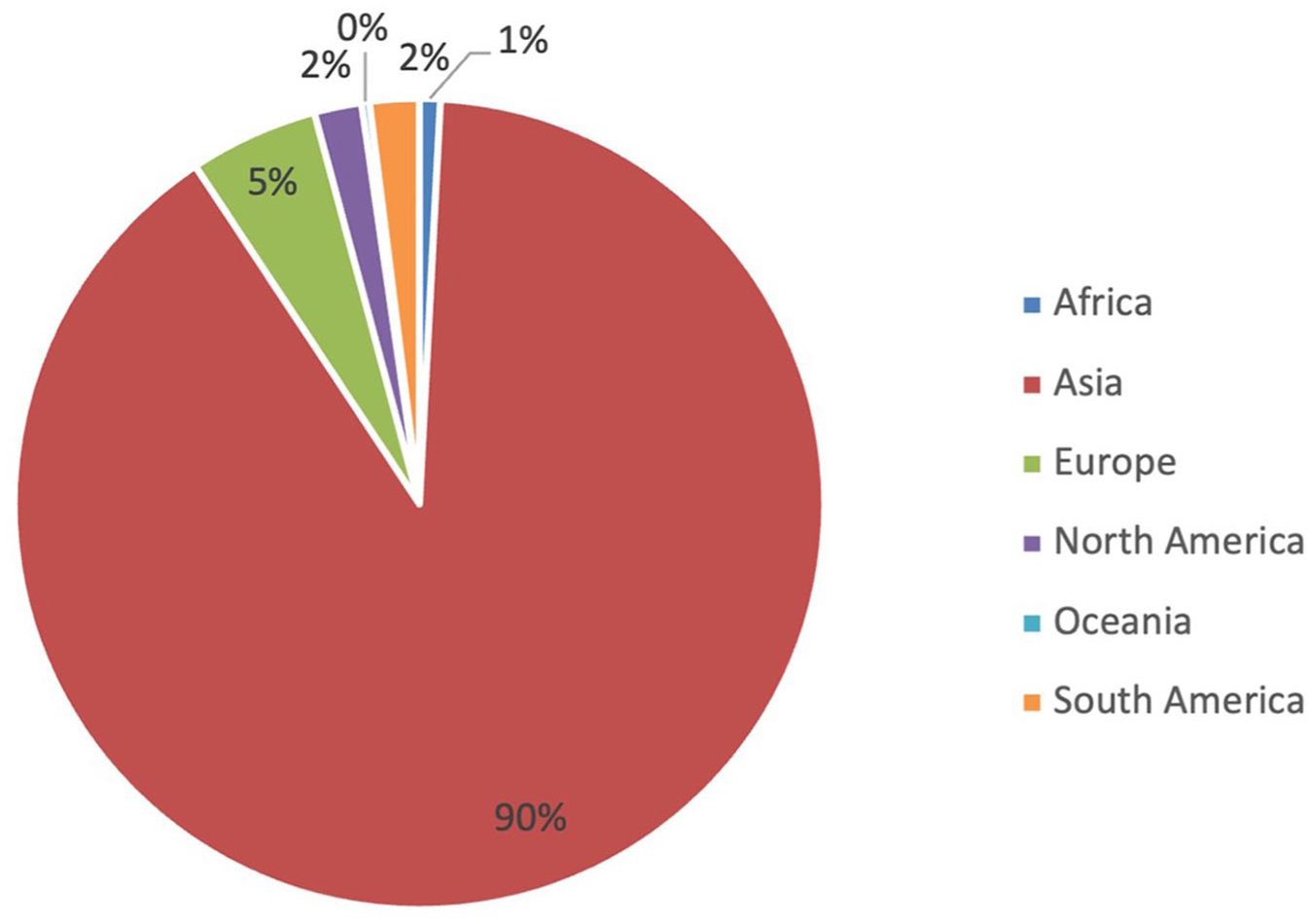
Specialty occupation visas (H-1B and H-1B1) by continent, FY16 to FY20.
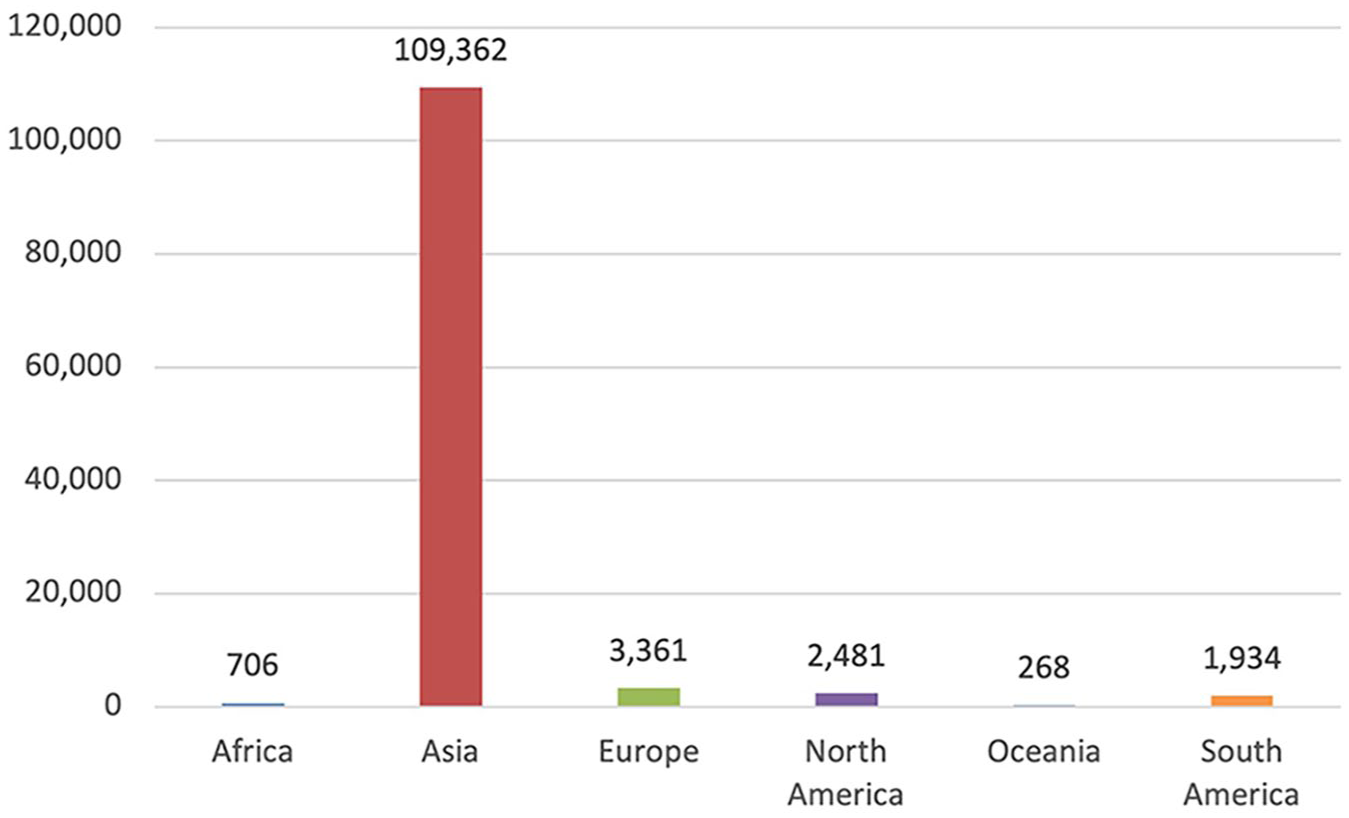
Dependent visas (H-4) by continent, annual averages FY16 to FY20.
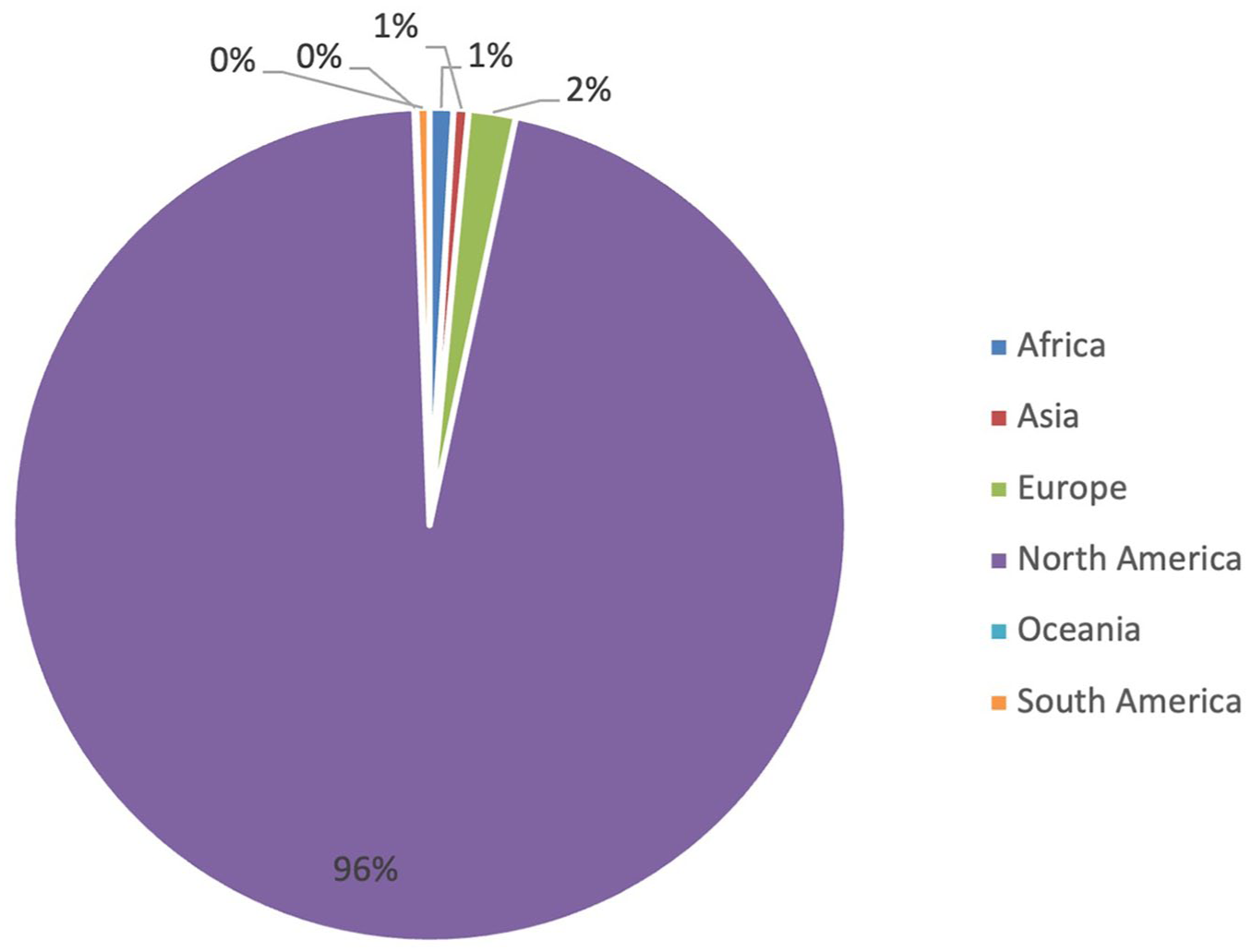
Temporary workers visas (H-2A and H-2B) by continent, FY16 to FY20.
The implicit racialization of capitalism has profound implications for Asian and Latinx immigrant workers in the U.S. The 1965 Act initiated a path dependent sequence of legislative events that included IRCA and IMMACT90. The cumulative effect of these immigration laws was to increasingly racialize immigrant labor, and to exacerbate economic, legal, and family-based inequalities between racialized groups of immigrants, as well as to exacerbate inequalities between citizen workers and immigrant workers. The implicit racialization of capitalism advantages the interests of American corporations over immigrant workers. Both sets of employment visas facilitate racial capitalism by recruiting less expensive labor from the Global South to minimize wages and maximize profits for U.S. corporations. Both sets of immigrant workers experience racial and economic discrimination relative to their U.S. citizen counterparts. However, here is where the similarities end. Successive immigration laws and the implicit racialization of capitalism have produced profound inequalities between Asian and Latinx immigrant workers in the U.S. ‘High-skilled’ Indian tech workers are racialized as ‘model minorities’, and are offered a middle-class life and a pathway to U.S. citizenship. In contrast, ‘unskilled’ Latinx farmworkers are racialized as ‘bad hombres’, and are offered temporary and precarious employment that renders them legally insecure and potentially deportable.
The aritcle concludes with the section ‘Conclusion: The Divergent Fates of Asian and Latinx Immigrant Workers in the U.S.’ In this section, I argue that differentially racialized work visas destine Asian and Latinx immigrant workers for divergent life paths.
Methodological Framework: Comparative-Historical Analysis
I employ Comparative-Historical Analysis (CHA) as a methodology for examining the racialization of immigration in the U.S. In sociology, CHA has been described as the method of choice for tackling the ‘“big” questions . . . about large-scale outcomes’ (Mahoney and Rueschemeyer, 2003: 7; emphasis added). CHA emphasizes both historicity—the idea that ‘present differences’ can be attributed to ‘identifiable events or conditions in a historical past’, and contingency—the idea that historical causes ‘happened to be present when they caused the differences that are today explained by them, but they might just as well have been absent’ (Streeck, 2015: 265).
During the early 21st century, CHA and sociology underwent what can be referred to as the ‘epistemology wars’, fought across a qualitative-quantitative methodological divide. The epistemology wars created exclusionary camps and transformed CHA into an epistemological minefield. Introductions to anthologies edited by positivist comparative-historians noted that ‘scholarship that avoids causal analysis in favor of “interpretive” approaches aimed at uncovering the culturally situated meanings of human behavior is not the kind of research considered in this volume’ (Mahoney and Rueschemeyer, 2003: 11). Introductions to anthologies edited by anti-positivist comparative-historians noted that the ‘overarching aim of this book is to survey the landscape of alternatives to positivism in the human sciences; the entire second half is given over to this task’ (Steinmetz, 2005: 2). Two decades hence, it is time to move beyond the epistemology wars, and to reconfigure CHA. In this paper, I model the approach of an epistemologically plural CHA, by combining theoretical analysis with qualitative and quantitative empirical methods.
Theoretical Methods
Even positivists acknowledge that CHA has been a pioneering subfield for conceptual development and conceptual innovation (Mahoney, 2004: 93). Interpretivists caution that lest comparative-historians come to be mistaken for historical ‘accountants’, they must go beyond the mere recitation of historical facts to offer explanation and theoretical analysis (Steinmetz, 2005: 11). Further, theoretical analysis fosters interpretivist innovation and prevents ‘reconsolidation around a new [anti-positivist] orthodoxy’ (p. 3). Heeding this call for theoretical CHA, in the section, ‘Theoretical Framework: Implicitly Racialized Capitalism’, I develop the theoretical framework of ‘implicitly racialized capitalism’ by drawing on prior literatures on racial capitalism, implicit racism, the racial state, and the racialization of immigrants in the U.S.
Qualitative Methods
In the section, ‘The Implicit Racialization of Specialty Occupation (H-1B) and Dependent (H-4) Visas as Asian Visas’, and the section, ‘The Implicit Racialization of Temporary Worker Visas as Latinx Visas’, I use the CHA approach of ‘path dependence’ to undertake a qualitative cross-temporal analysis of the racialization of immigration across the pre- and post-Civil Rights eras. In CHA, ‘path dependence’ highlights the importance of history on the present and the future. In Charles Tilly’s (1988) definition, path dependence refers to how ‘past social relations and their residues—material, ideological, and otherwise—constrain present social relations, and consequently their residues as well’ (p. 710). The existence of a given social structure influences the probability of alternative structures ensuing in the future (p. 710). In James Mahoney’s (2000) definition, path dependence refers to those ‘historical sequences in which contingent events set into motion institutional patterns or event chains that have deterministic properties’ (p. 507). Mahoney’s language is avowedly positivist and heavy-handedly ‘deterministic’ in its sequentialism. Nonetheless, the notion of ‘historically contingent events setting into motion institutional patterns’ accurately characterizes the waves of the legislative racialization of immigration in the U.S.
In the section ‘The Implicit Racialization of Specialty Occupation (H-1B) and Dependent (H-4) Visas as Asian Visas’, and the section, ‘The Implicit Racialization of Temporary Worker Visas as Latinx Visas’, I use path dependent frameworks to examine qualitative data. I focus on the 1965, 1986, and 1990 immigration laws to highlight the racialization of Indian and Mexican immigrants in the pre- and post-Civil Rights eras. I demonstrate that the 1965 Immigration and Nationality Act was a historically contingent legislative event that inaugurated a path dependent set of legislative events in the form of IRCA in 1986 and IMMACT90 in 1990. The 1965 Act advantaged middle-class professional immigrants from the Eastern Hemisphere, while disadvantaging working-class immigrants from the Western Hemisphere. In 1986, IRCA institutionalized the revised Temporary Worker visas, which were inherently precarious, as areplacement for the Bracero program, thus further disadvantaging working-class immigrants, particularly those from Mexico. In 1990, IMMACT90 institutionalized the revised Specialty Occupation visas, which now offered a path to permanent residency, thus further advantaging middle-class professional immigrants, particularly those from India.
Quantitative Methods
Social scientists consider descriptive inference to be an important aspect of research (Mahoney, 2004: 93). Descriptive inference includes the use of statistical methods to describe the features of a given sample or population (p. 93). In CHA, descriptive inference involves developing and using indicators to measure a particular social phenomenon (p. 95). In this paper, I use descriptive inference to examine the racialization of visas and deportations in the U.S. I use quantitative data on Non-Immigrant Visas (NIV) from the U.S. Department of State (2022). NIV data comprises of a spreadsheet organized into tabs for years. I use data on deportations from the 2020 Yearbook of Immigration Statistics (U.S. Department of Homeland Security, 2022).
I use the unequal distribution of work visas between immigrants from different continents as an indicator of the racialization of immigrant labor. In the section on H-1B visas, I undertake a cross-racial statistical analysis of the distribution of Specialty Occupation (H-1B and H-1B1) visas and Dependent (H-4) visas. In the section on H-2 visas, I undertake a cross-racial statistical analysis of Temporary Agricultural Worker (H-2A) visas and Temporary Non-Agricultural Worker (H-2B) visas. Specialty Occupation (H-1B and H-1B1) visas are designed for occupations requiring ‘specialized training’ and advanced education. Temporary Worker visas (H-2A and H-2B) are designed for ‘temporary’ occupations in agricultural and non-agricultural sectors. Dependent (H-4) visas are designed for the spouses and children of the recipients of a range of visas.
I analyzed the statistical data using Microsoft Excel. I began by creating six continent-specific tables for Africa, Asia, Europe, North America, Oceania, and South America. Each continent’s table had eight columns: Year, Specialty Occupation (H-1B) visas, Specialty Occupation (H-1B1) visas, Dependent visas (H-4), Temporary Agricultural Workers (H-2A), Temporary Non-agricultural Workers (H-2B), Deportations, and Net Inflows. Each continent’s table had six rows: FY16, FY17, FY18, FY19, FY20, and Average. I populated these tables with NIV and deportations data. I calculated ‘Net Inflows’ by adding the statistics for the three visas and subtracting deportations. The Net Inflows column provided a stark perspective on migration flows by contextualizing visa statistics against the number of deportations.
For each continent, there were some variations from year-to-year in visas and deportations, but these were insignificant compared to differences between continents. Thus, I chose to calculate a 5-year average for each visa for each continent. The 5-year averages glossed over the minimal differences between years within a single continent, while highlighting the more significant differences between continents. Comparative-historians have bemoaned the ‘snap-shot’ effect in statistical analysis produced by focusing on ‘a single point in time’ that is temporally decontextualized (Mahoney, 2004: 88). To counteract this effect, I used 5-year averages for nearly all statistics (FY16 to FY20). Using statistical averages from a 5-year period minimizes any possible effects of outlier years, especially from the pandemic year of FY20.
In the next step, I created a ‘final’ table with seven rows and eight columns. The seven rows included a heading row, six rows for each continent, and a row for ‘Totals’. The eight columns included a heading column, Specialty Occupation (H-1B) visas, Specialty Occupation (H-1B1) visas, Dependent visas (H-4), Temporary Agricultural Workers (H-2A), and Temporary Non-agricultural Workers (H-2B), Deportations, and Net Inflows. I populated this table with 5-year averages for each continent calculated in the previous set of tables. In the final step, I created charts on Microsoft Excel. I color-coded the pie charts and bar charts by continent to provide a visual depiction of the racialized distribution of work and family visas, deportations, and net migration inflows in the U.S.
Theoretical Framework: Implicitly Racialized Capitalism
I develop the theoretical framework of implicitly racialized capitalism by drawing on prior scholarship on racial capitalism (Robinson, 2020), the racial state (Omi and Winant, 2014), and ‘colorblind’ racism, or as I refer to it, implicit racism (Alexander, 2010; Bonilla-Silva, 2006). The implicit racialization of capitalism bridges the contradiction between: (i) racial capitalism’s profit-maximizing imperative to racialize the global labor force, and (ii) racial neutrality, or the ideology of racial non-discrimination. Racial capitalism necessarily racializes the laborforce to minimize wages, maximize profits, and capture markets of labor and goods. In sharp contrast, the 1964 Civil Rights Act made the explicit racialization of the laborforce illegal, thus obstructing the racial logics of capitalism. Subsequently, implicitly racialized capitalism emerged as an adaptive mechanism to protect racial capitalism from the threat posed by the discourse of racial equality. The post-Civil Rights era is the era of implicit racism, or, in other words, the era of white supremacy masquerading as racial non-discrimination. Implicit racialization uses the guise of racial non-discrimination to reproduce, reinscribe, and rework racisms.
Implicit racialization is a white supremacist wolf in the guise of a racially neutral sheep. The contrast between the racist wolf and the professedly non-racist sheep represents the contradiction at the heart of the bourgeois-liberal racial state—proclamations of equality plastered over the deeply unequal and violent systems of racial capitalism and white supremacy, which are founded on racial and economic difference. More than mere disguise, however, the discourse of racial neutrality functions as a core mechanism through which implicit racialization operates. Implicit racialization uses the discourse of racial neutrality to provide legal cover for racially loaded logics, making those logics more difficult to locate or identify, and thus, stabilizing systems of racial violence and exclusion.
Racial Capitalism and the Racial State
The roots of capitalism are inherently racialized, given the centrality of the African slave trade to the foundation of capitalism. 3 Rather than overcoming social differences, the ‘development, organization, and expansion of capitalist society pursued essentially racial directions’ (Robinson, 2020: 2). Capitalist accumulation necessarily generates racialized dispossession (Melamed, 2015: 77). Capitalism constructs racialized classes within the global reserve army of labor, both nationally and transnationally (Bonacich et al., 2008). Racial capitalism is intertwined with imperialism, the construction of borders, and the regulation of migration (Gahman and Hjalmarson, 2019: 107). Racial capitalism constructs differences between citizens and foreigners to facilitate surplus accumulation (Robinson and Santos, 2014; Valdez, 2021: 918). Anti-immigrant state policies enable the super-exploitation of immigrants, heighten immigrant deportability, fuel capitalist accumulation through privatized immigrant detention, and distract non-immigrant workers from the crises of capitalism (Robinson and Santos, 2014).
Racial capitalism produces racial and economic contradictions that require a racial state to manage them, but in a way that is covert or ‘implicit’, rather than overt or explicit. Under racial capitalism, the role of the state is to enable capital accumulation amidst the generation of racial and economic contradictions. Racial capitalism produces contradictions between propertied and unpropertied classes, and between dominant and subjugated racial groups. However, racial capitalism is also threatened by the contradictions it produces—giving the bourgeois-liberal state a job to do and a problem to solve. In the famous line from the Communist Manifesto, ‘The executive of the modern State is but a committee for managing the common affairs of the whole bourgeoisie’ (Marx and Engels, 1978: 475). In the transition from illiberal feudalism to liberal capitalism, political emancipation does not result in human emancipation, and the function of the liberal state is to manage identity-based differences, rather than to eliminate them (Brown, 2020; Marx, 1844). The bourgeois-liberal state uses many mechanisms to manage these racial contradictions—ranging from hegemony (Omi and Winant, 2014: 147) to repression (Jung and Kwon, 2013).
Implicit Racialization
‘Implicit racialization’ is a core mechanism used by the bourgeois-liberal racial state to reconcile the inherently racialized nature of capitalism with the liberal discourse of racial non-discrimination. Implicit racialization works through the hegemonic discourse of racial neutrality, while also reconfiguring coercive state programs, such as racialized incarceration, detention, and deportation. I coin the term ‘implicit racialization’ by combining two concepts: (i) racialization (Omi and Winant, 2014), and (ii) ‘colorblind’ racism, which I refer to as implicit racism (Alexander, 2010; Bonilla-Silva, 2006). Racialization refers to ‘the extension of racial meaning to a previously racially unclassified relationship, social practice, or group’ (Omi and Winant, 2014: 111; italicized emphasis original; underlined emphasis added). The racialization framework suggests a break from the past, and a harkening back to an imaginary pre-racial era when things were ‘racially unclassified’. It is arguable, however, that instead of having clean beginnings and endings, racial regimes morph and evolve over time. In contrast to Omi and Winant’s racialization framework, which emphasizes novelty, Bonilla-Silva and Alexander’s framework of implicit racism emphasizes connection and continuity between systems of racial domination across the pre- and post-Civil-Rights eras. While my framework builds on the concept of ‘colorblind’ racism, I replace the ableist term ‘colorblind’ with the anti-ableist term ‘implicit’. 4 Implicit racism ‘explains contemporary racial inequality as the outcome of nonracial dynamics’ (Bonilla-Silva, 2006: 2). Especially relevant is Bonilla-Silva’s idea of ‘abstract liberal’ political equality, which ‘involves using ideas associated with political liberalism . . . and economic liberalism . . . in an abstract manner to explain racial matters’ (p. 28; emphasis original). For example, white people oppose affirmative action on the grounds that it constitutes ‘preferential treatment’ (p. 28). The regime of implicit racism is characteristic of the post-Civil Rights era, when ‘it is no longer socially permissible to use race, explicitly, as a justification for discrimination, exclusion, and social contempt’ (Alexander, 2010: 2; emphasis added). In this sense, the post-Civil Rights era represents a transformation rather than an abolition of the system of racial domination (Alexander, 2010: 2). The concept of implicit racism has been used to study politics (Bonilla-Silva and Dietrich, 2011), mass Black incarceration (Alexander, 2010), education (Husband, 2016), and healthcare (Williams et al., 2020).
The Disparate Racialization of Asian Americans and Latinx Americans
Historically, the sociology of immigration has focused on the idea of immigrant ‘assimilation’, which can be understood as immigrant achievement of upward mobility. The ‘assimilation’ framework is individualistic, non-relational, does not account for racialization, and treats ‘immigrants’ as a homogenous category. An assimilationist framework cannot explain the severe discrepancy between the experiences of Asian and Latinx immigrants in the U.S. It is not simply the case that Asian and Latinx workers ‘assimilate’ or integrate unequally relative to each other in American society. Rather, it is the case that Asian workers integrate, while Latinx workers do not integrate and are expelled after having been sufficiently exploited.
The racialization of Asian immigrants is characterized by legal security and middle-class privilege. Nonetheless, anti-Asian bias persists despite upward mobility. Asian Americans ‘do not escape racial bias just because they have Yale degrees and expensive homes’ (Kim, 2007: 564). The racialization of Asians as highly educated model minorities represents a ‘double-edged sword’ that keeps Asian workers under a ‘bamboo ceiling’ and out of management and leadership positions (Lee and Zhou, 2015: 186–187). In the U.S., Asian American assimilation is mediated by racialization processes that reify boundaries between Asians and whites (Lee and Kye, 2016: 255–266). Thus, despite high levels of socio-economic attainment and high rates of marriages to whites, Asians are deemed ‘forever foreigners’ who are unable to fully assimilate or ‘whiten’ (Lee and Zhou, 2015; Zhou, 2004).
In contrast to the experience of Asian immigrants, the racialization of Latinx immigrants is constituted by legal insecurity and working-class precarity. Latinx immigrants are racialized as nonwhite through the deployment of negative stereotypes in real life (Vasquez, 2010), and in the media, where they are associated with criminality (Brown et al., 2018: 118). Latinx immigrants experience employment discrimination for speaking a language other than English (Joseph, 2011), are treated as desirable yet devalued workers, and are subject to high levels state surveillance (Rodriguez, 2020). Further, Latinx immigrants are racialized as ‘undocumented’ through microaggressions in social settings (Rodriguez, 2021), which impacts their mental health, fostering feelings of fear and anxiety (Joseph, 2011: 175). Even Latinx DACA recipients experience fear and helplessness because of the temporary nature of DACA and because of racial profiling (Aranda and Vaquera, 2015).
The 1965 Immigration and Nationality Act
The1965 Immigration and Nationality Act was a historically contingent legislative event that emerged out of the long and complex history of the Civil Rights movement. The post-Civil Rights era mirrors the contradictions of the Civil Rights movement that birthed it. The Civil Rights movement was a complex, long-term social movement, whose ideals spanned the gamut from the liberal reformist goals of racial inclusion to the left revolutionary goal of overthrowing capitalism (Haines, 2002). One of the most significant political gain of the Civil Rights movement was the passing of the 1964 Civil Rights Act, which outlawed discrimination on the basis of race, color, religion, sex, and national origin (Haines, 2002: 143–144). While the 1964 Civil Rights Act abolished explicit racial discrimination in law, it left intact the structures of racial capitalism that underlie racial violence in the United States. Consequently, the post-Civil-Rights era is mired in racial contradictions, where racial equality in the politico-legal arena exists in tension with racial inequality in the socio-economic arena. Implicit racialization emerges in the post-Civil-Rights era as the bridge between these antithetical realms.
In 1965, Congress passed the Immigration and Nationality Act with the purported aim of removing racial distinctions in immigration policy (FitzGerald and Cook-Martín, 2014: 86). At the time, President Lyndon B. Johnson augured that the 1965 Act would dissolve ‘the twin barriers of prejudice and privilege’ from the immigration system (in Douglas et al., 2015: 1437). President Johnson’s words were less than prophetic. The 1965 Act included some anti-racist provisions, for example, the abolition of the explicitly racially discriminatory National Origins Formula, in addition to the lifting of the ban on Asian and African immigration (Massey, 2008). These provisions undid the privilege that some Europeans had heretofore enjoyed in the American immigration system (FitzGerald and Cook-Martín, 2014). But this is not to say that the 1965 Act eliminated either prejudice or privilege altogether.
The 1965 Act replaced previous quotas based on national origin with new quotas based on class and hemispheric origin. The 1965 Act disadvantaged Latin Americans and farmworkers in several ways. First, the Act introduced an explicitly hierarchical system with seven tiers, which explicitly advantaged middle-class professionals (Harris, 1977: 300). The third tier introduced a quota of 10% for ‘immigrants who are members of the professions, or who because of their exceptional ability in the sciences or the arts will substantially benefit prospectively the national economy, cultural interests, or welfare of the United States’ (Immigration and Nationality Act, 1965).
The second way in which the 1965 Act explicitly disadvantaged farmworkers and implicitly disadvantaged Mexicans was by excluding ‘seasonal’ workers. The sixth tier reserved a quota of 10% for ‘immigrants who are capable of performing specified skilled or unskilled labor, not of a temporary or seasonal nature, for which a shortage of employable and willing persons exists in the United States’ (Immigration and Nationality Act, 1965; emphasis added). Right from inception, the 1965 Act explicitly excluded farmworkers, whose work was considered ‘seasonal’, from eligibility for the 10% quota in the sixth tier. Thus, the 1965 Act replaced previous quotas based on national origin with new quotas based on class and hemispheric origin.
The third way in which the 1965 Act disadvantaged Latin Americans was by including preferences for Eastern Hemispheric immigrants (FitzGerald and Cook-Martín, 2014: 86). From 1965 to 1976, the preference for ‘alien professionals’ was only applicable to immigrants from the Eastern Hemisphere (Harris, 1977: 304). The 1965 Act’s hemispheric-bias had immediate effects. The Act’s preference for Eastern Hemispheric professionals stimulated the migration of middle-class Indians in high numbers (Hess, 1974: 577). In contrast, in 1968, Western Hemispheric immigrants had to wait for two and a half years for a visa (Harris, 1977: 303, fn. 51). It was only with the 1976 Amendments that the preference for professionals became applicable to immigrants from the Western Hemisphere as well as the Eastern Hemisphere (p. 304).
The fourth way in which the 1965 Act disadvantaged Latin Americans was through its racial neutrality. Previously, countries in the Western Hemisphere, including Latin America, had not been subject to a migration cap. The 1965 Act’s new, racially neutral, equal quotas of 20,000 for each country effectively disadvantaged Mexican immigration, which had previously been uncapped (Douglas et al., 2015: 1448). The result of this cap was to transform a proportion of Mexican immigrants into undocumented immigrants.
Following the 1964 Civil Rights Act and the 1965 Immigration and Nationality Act, it became illegal for the state and capitalists to discriminate between workers on the basis of race, while it remained legal for the state and capitalists to discriminate between workers on the basis of ‘skill’ and occupation. Consequently, immigration agencies discursively differentiated between occupations based on requisite ‘skill’, constructing conceptual and material hierarchies between ‘high-skilled’ and ‘unskilled’ workers. Through the legal instrument of work visas, immigration agencies used these differential levels of ‘skill’ to unequally distribute legal security and income between groups of immigrant workers.
If the 1965 Act had been an earthquake, its aftershocks would have reverberated far into the future. The 1965 Act inaugurated a path dependent set of legislative events that included the ratification of IRCA in 1986 and IMMACT90. The 1965 Act institutionalized hemispheric- and class-based biases, which were amplified by IRCA and IMMACT90. The 1965 Act included a quota for workers who were either ‘skilled or unskilled’. However, this lack of preference for ‘skill’ was upended through IRCA’s re-creation of Temporary Worker visas for ‘unskilled’ workers, and again through IMMACT90’s re-creation of Specialty Occupation visas for ‘high-skilled’ workers. Both IRCA and IMMACT90 used ‘skill’ as code for race and class. IRCA replaced the Bracero program with the reformulated precarious Temporary Worker (H-2A and H-2B) visa program (discussed further in the section on Temporary Worker Visas). IMMACT90 institutionalized the revised Specialty Occupation visas, which now offered a path to permanent residency, thus further advantaging middle-class professional immigrants, particularly those from India (discussed further in the section on Specialty Occupation visas).
The Implicit Racialization of Specialty Occupation (H-1B) and Dependent (H-4) Visas as Asian Visas
Indian immigrants in the U.S. have literally and figuratively come a long way. Today touted among America’s ‘model minorities’, Indian immigrants were not always seen nor received this way. On Labor Day, 2 September 1907, in Bellingham, Washington, hundreds of union activists rounded up and assaulted Indian Sikh lumberjacks, marched on the town, and demanded that all ‘Hindu’ millworkers be fired immediately (Kraig, 2024). In contrast, contemporarily, in the Greater Seattle area of Washington, within commuting distance of the Microsoft and Amazon headquarters, one can enjoy festivals of Indian cinema (Consulate General of India, Seattle, 2025), while experiencing the diversity of South Asian cuisine (Saracino, 2021), including a South Asian re-appropriation of the quintessentially Western pizza (Vinh, 2021). Much has changed for Indian immigrants over the course of a century, but what accounts for this?
In one word, class. The change in the experience of Indian immigrants in the U.S. can be explained, to a significant extent, by a transformation in the class composition of Indian migration to the U.S. The 1965 Immigration and Nationality Act initiated a path dependent set of legislative events that compounded the advantages accrued by middle-class professionals from India. 1965 was a watershed moment in the racialization, classization, and occupationalization of Indian immigrant workers in the U.S. The ‘occupationalization’ or ‘classization’ of race refers to the association of certain racial or ethnic groups with a specific class or occupation. In the pre-Civil-Rights era, most Indian immigrants to the U.S. were working-class, and were subject to public violence and explicit demands for exclusion. In the post-Civil Rights era, the 1965 Act proved to be a boon for Indian middle-class professionals. Subsequently, IMMACT90 further advantaged the sub-group of Indian computer scientists through the creation of Specialty Occupation visas.
Specialty Occupation (H-1B and H-1B1) visas are available to workers in occupations that require special training and high levels of education. According to U.S. Citizenship and Immigration Services (USCIS, 2022), ‘This nonimmigrant classification applies to people who wish to perform services in a specialty occupation, services of exceptional merit and ability relating to a Department of Defense (DOD) cooperative research and development project, or services as a fashion model of distinguished merit or ability’ (USCIS, 2021a). The H-1B1 program is similar to the H-1B program, except that H-1B1 visas are only available to immigrants from Chile (with a quota of 1400), and Singapore (with a quota of 5400) (Department of Labor). H-1B visas are typically granted for 3 years and can be extended for up to 6 years. After this point, petitioners must apply for permanent residency. H-1B visas are known as ‘dual-intent’ visas because while they are tehcnically temporary, they can be used by those with the ‘intent’ to achieve permanent residency in the U.S.
While Indian immigration has burgeoned during the late 20th century, it has been delimited to the migration of a specific class of immigrants (the middle class), and within that class, by the migration of workers employed within a specific sector (the tech sector). The case of Indian tech workers in the U.S. illuminates the occupationalization or classization of race, to the point where the categories of ‘tech workers’ and ‘Indian immigrants’ have become nearly synonymous. U.S. immigration agencies have facilitated the ‘Indianization’ of the tech sector by constructing the category of ‘high-skilled’ immigrant workers.
In this section, I historicize the racialization of Indian workers in the U.S., followed by an illustration of the racialized distribution of H-1B visas, and a discussion of the exploitation of ‘high-skilled’ Indian workers by American tech corporations.
The History of the Racialization of Indian Labor in the U.S
The racialization of Indian immigrant labor transpired through a set of path dependent laws that increasingly advantaged the migration of a specific class of workers from India. In 1952, Congress first created H-1 visas for workers of ‘distinguished ability or merit’ (Baxter and Norwasteh, 2021: 15). The 1965 Act bolstered the migration of middle-class professionals from India (Harris, 1977: 304; Hess, 1974: 577). In 1990, the Immigration Act (IMMACT90) created Specialty Occupation (H-1B) visas, stimulating the migration of ‘high-skilled’ Indian tech workers to satiate the growing appetite of American tech companies (Banerjee, 2006). This path dependent set of legislations that led to the creation of the H-1B visa shows how implicitly racialized capitalism reworks pre-existing racial and class regimes.
In the pre-1965 era, the majority of Indian immigrants to North America belonged to the working-class. During the late eighteenth and early 19th century, Indian laborers immigrated to Canada to construct railways for the Canadian government (Hess, 1969: 60). Indian immigration to Canada generated racist anxiety among white Canadians, who considered ‘the Hindus’ (as they were referred to) to be unassimilable (Hess, 1969: 60). In 1909, white Canadians’ racist anxiety led the Canadian government to halt Indian immigration, in consultation with the British empire (p. 60).
During the 19th century, working-class Indian immigration to the U.S. spilled over from farmers and laborers immigrating to Canada (Hess, 1969: 60). During this time, middle-class Indian immigrants to the U.S. comprised of proselytizing swamis, anti-colonial revolutionary students, and merchants (Bagoria, 2009: 895–897). Statistics for Indian immigration to the U.S. during the late nineteenth and early 20th century are as follows: around 30 immigrants annually (1898 to 1903); 200 (1904 to 1906); 1072 (1907); and 1710 (1908), with most of them working in the lumber industry in Washington and California (Hess, 1969: 61). Similarly to Canada, the growth of the ‘Hindu’ community in India bred resentment among whites (p. 61). The growing Indian presence resulted in anti-Indian riots. Most notably, on Labor Day, 2 September 1907, hundreds of union advocates marched in Bellingham, Washington, against Indian immigrant workers of the Sikh faith, demanding that mill owners fire all ‘Hindus’ immediately (Hess, 1969: 61; Kraig, 2024). In 1909, 1782 Indians immigrated to California to construct the San Francisco railroads (Hess, 1969: 62). In 1910, the Immigration Commission on the Pacific Coast referred to Indians as ‘the most undesirable of Asiatics’ and argued for their exclusion (p. 62). Magazines reflected this anti-Indian racism, referring to Indian migration as the ‘“tide of turbans”’ and a ‘“Hindu invasion”’ (p. 62). In addition, in 1910, the American Association of Labor and the Asiatic Exclusion League referred to Indian workers as ‘“rag heads”’ and a ‘“distinct menace”’ (Bagoria, 2009: 895). In 1917, the Immigration Act created a Barred Zone of the Asia Pacific Triangle, which declared immigrants from Burma, China, India, Japan, and other Asian countries inadmissible (p. 898). This Act stayed in place for nearly 30 years, until its amendment in 1946 made Indians and Filipinos admissible, and set a quota of 100 annual immigrants from India (p. 899).
The Immigration Act of 1952 created H-1 visas, which allowed firms to hire skilled workers on a temporary basis (Zavodny, 2003). H-1 visas were designed for ‘workers of distinguished merit and ability’ who could be hired as temporary workers for permanent positions (Gordon, 1983: 402). At this time, H-1 workers received 2-year contracts, after which they could receive 1-year extensions indefinitely while remainingas temporary workers (pp. 402–403). In subsequent decades, Congress divided the H-1 visa into H-1A, H-1B and H-1C visas.
The 1965 Immigration and Nationality Act was a watershed moment that transformed the class and occupational composition of Indian immigrants and their reception in the United States. The 1965 Immigration and Nationality Act was a watershed moment that transformed the class and occupational composition of Indian immigrants and their reception in the United States. The 1965 Act instituted equal national annual caps of 20,000 for every country (Douglas et al., 2015: 1448). In addition, the 1965 Act instituted a seven-tier preference system that prioritized family reunification, high-skilled workers, and refugees (Harris, 1977). Indian immigration to the U.S. dramatically increased due to the 1965 Act’s preference for middle-class professionals from the Eastern Hemisphere. Indian immigration to the U.S. increased from 6000 total (1946 to 1965), to more than 50,000 total (1966 to 1972) (Hess, 1974: 577). Indian immigrants from 1966 to 1972 amounted to more than 70% of all Indian immigrants to the U.S. during the previous 150 years (p. 577). The 1965 Act stimulated the classed immigration of ‘upper middle-class professionals’ from India, who retained their middle-class status upon arrival to the U.S. (Das, 2002: 139). Most Indian professionals who arrived after 1965 were scientists, doctors, engineers, and educationists (Bagoria, 2009: 901). Successive legislations converted the temporary H-1 visa, created in 1952, into a more permanent visa. In 1970, Congress removed the requirement that H-1 immigrant workers be hired on a temporary basis (Lowell, 2000).
In 1990, the IMMACT90 law created the Specialty Occupation (H-1B) worker visa to satiate American tech companies’ needs for computer programmers and software specialists (Underwood, 2000: 730). Thus, IMMACT90 stimulated the migration of middle-class Indian tech workers. IMMACT90 reformulated H-1B visas as ‘dual-intent’ visas, which meant that while workers were hired temporarily, they could eventually achieve permanent residency (Banerjee, 2006: 430). The initial annual quota for H-1Bs was 65,000, but it was increased to 195,000 by President Clinton for the period from 2000 to 2003 (Banerjee, 2006; Underwood, 2000). The H-1B cap was later shifted back down to 65,000. In 2004, Congress added 20,000 to the annual cap for immigrants holding Master’s degrees (Pierce and Gelatt, 2018). In 2015, the Obama administration allowed spouses of H-1B recipients to receive work authorization (Pierce and Gelatt, 2018). The total cap of 85,000 H-1B visas was in effect in 2022.
Big Tech companies in the U.S. are completely reliant on immigrant labor. In fact, Big Tech companies were so literally reliant on immigrant tech workers that specific legislation was developed for a subset of companies that were deemed ‘H-1B dependent’ (Zavodny, 2003). Tech firms that are successful in having petitions for H-1B workers approved fare better than those that do not (Dimmock et al., 2021: 6950). Owing to their need for immigrant workers, Big Tech companies have favored progressive immigration reform (Kennedy, 2019). However, organized conservative groups have opposed immigration reform to expand the H-1B cap, as in 2014, resulting in the H-1B cap staying at its current level since 2004 (Kennedy, 2019). Currently, the H-1B visa quota of 85,000 is insufficient to meet the demand from employers and employees alike.
The Racialized Distribution of Specialty Occupation Work Visas
In the realm of Specialty Occupation visas, ‘high-skilled’ labor is often code for tech labor, which is often code for Indian labor. In 2023, 65% of the recipients of Specialty Occupation visas had a computer-science job and were paid a median salary of $123,600 (Im et al., 2025). The distribution of Specialty Occupation and Dependent visas is highly racialized. From FY16 to FY20, Asians constituted 90% of the recipients of Specialty Occupation visas, while Europeans constitute 5%, and North Americans, and South Americans constitute 2% each (Figure 1). More specifically, citizens of India received 76% (94,558 out of a total of 124,983) of all H-1B visas disbursed in FY20 (U.S. Department of State, 2022), up from 49% in 2001 (Zavodny, 2003). Further, Asians received 93% (109,362 out of 118,113) of Dependent or H-4 visas on average from FY16 to FY20 (Figure 2).
Spouses and children under 21 of Specialty Occupation workers are eligible for employment authorization (USCIS, 2021b), although this was not always the case. While the regulations state that spouses and children of all ‘H’ visas are eligible for Dependent visas, the racialized distribution of Dependent visas (Figure 2) suggests that Latinx and Temporary Workers are left out of the fray when it comes to being able to bring their families over to the U.S.
Racial Capitalism and the Exploitation of ‘High-Skilled’ Asian Labor
Under racial capitalism, Global North corporations accumulate intellectual and financial capital by exploiting Global South workers. U.S. immigration agencies facilitate this racialized exploitation of workers. Despite the benefits offered to (primarily Indian) immigrant workers by Specialty Occupation (H-1B) visas, the ultimate purpose of this visa program is to advance the interests of American capitalists. Big Tech corporations use Specialty Occupation visas to recruit underpaid foreign workers at the lowest wages and the most precarious terms possible. The H-1B visa provides immigrant workers with legal security by offering a path to permanent residency. This is especially true in comparison to other visas, such as the Temporary Worker (H-2) visas discussed subsequently, which do not offer legal security in this manner. Nonetheless, the Specialty Occupation visa program is problematic in four key aspects, discussed below.
First, Specialty Occupation visas operate through a problematic lottery system. Hundreds of thousands of petitioners file for H-1B visas, which are processed through a lottery system (Pierce and Gelatt, 2018). In 2016, USCIS was sued on the grounds that the H-1B visa lottery system was ‘arbitrary, capricious, [characterized by] an abuse of discretion, or otherwise not in accordance with the law’, and that petitions should be processed in the order they were received (Callan, 2016: 342). The vagaries of the lottery system lead some high-skilled immigrants to not pursue careers in the corporate sector, and to instead ‘settle for academia’, an occupation that is cap-exempt (Amuedo-Dorantes and Furtado, 2019).
Second, the cap on Specialty Occupation visas facilitates the exploitation of immigrant students. Part of the overrepresentation of Asians in Specialty Occupation visas can be explained by their overrepresentation in student (F-1) visas. The issuance of H-1B visas is positively correlated with the issue of F-1 visas (Shih, 2016: 121). High numbers of Asian international students attend institutes of higher education in the U.S. In FY20, Asians received more than four times as many student visas compared to Latinx people (U.S. Department of State, 2022). In FY20, Asians received 60% of F-1 student visas (66,150 out of 111,387 visas), while Latinx people received 14% (15,357 out of 111,387) of F-1 visas (U.S. Department of State, 2022). More than half of the international students from Asia eventually acquire permanent residency in the Global North (Rizvi, 2005: 177). The transnational mobility of students in higher education reifies inequalities in the global knowledge economy, and the ‘brain drain’ of Asian students reflects a growing divide in knowledge between the Global North and Global South (p. 190).
To meet tech firms’ increasing demand for immigrant workers without raising the H-1B quota, the Obama administration extended the Optional Practical Training (OPT) program for international students in STEM from 1 to 3 years (Monroe, 2019). The OPT program benefits employers more than employees—it offers a quick fix for employers to meet their labor needs without having to sponsor work visas, thus leaving employees’ immigration needs unmet (Monroe, 2019: 1393). OPT is a benefit of F-1 student visas, which are non-immigrant visas. Thus, employment on OPT does not lead to or count towards permanent residency for the immigrant student worker. Most high-skilled workers intend to stay in the U.S., and many do (Lowell, 2000). The trend in STEM occupations is for employees to file for OPT, rather than for employers to sponsor H-1B visas for employees. This trend renders STEM workers precarious and vulnerable, as they would be forced to return to their home countries if they do not secure H-1B sponsorship in time.
Third, Specialty Occupation visas facilitate wage theft by employers. H-1B visas engender legal dependence on employers, which makes conditions ripe for economic exploitation (Banerjee, 2006). While the H-1B visa program formally requires pay equity between foreign workers and domestic workers, labor advocates argue that this does not pan out in reality, with employers paying immigrant workers less than their domestic counterparts (Underwood, 2000: 737). H-1B visa legislation contains a statutory gap that allows employers to underpay immigrant workers by choosing an arbitrarily low figure for the ‘prevailing wage’ (Fulmer, 2009). The U.S. Department of Labor enabled American corporations to steal Asian and Indian wages by certifying 60% of Specialty Occupation jobs at wages that were significantly less than the local median wage (Costa and Hira, 2020: 1; U.S. Department of Labor, n.d.). Tech workers on H-1B visas receive $13,000 fewer in wages compared to their American citizen colleagues in the same state (Miano, 2005: 300). Employers have the right to arbitrarily decrease wages and benefits, raise rates of commission, overcharge for health care fees, and ‘continuously threaten to fire their workers’ (Banerjee, 2006: 437). H-1B visas ensure that Indian technologists’ status as middle-class workers does not completely offset their deportability as immigrants.
The top 30 Specialty Occupation employers include large American corporations such as Amazon, Apple, Facebook, Google, Microsoft, and Walmart—all of whom use the loopholes in H-1B policies to pay immigrant workers below the local median wage (Costa and Hira, 2020: 1). The top 30 H-1B employers account for more than a quarter of all H-1B visas disbursed (p. 1). Of these, half are ‘body shops’—consultant firms that outsource tech labor (p. 1). Body shops often engage in wage theft by completing a visa application for a job in a low-paying area while placing the employee in a high-paying area, and collecting the difference between the wages (Ontiveros, 2017: 22). In addition, body shops steal workers’ wages by not paying overtime and delaying wage payment (p. 22).
Fourth, the Specialty Occupation visa program facilitates worker abuse, for which Big Tech corporations have been sued. In 2002, 800 immigrant employees from China, India, and Vietnam filed a lawsuit against Siebel Systems for wage and hour violations (Ontiveros, 2017: 22). These H-1B workers were not paid for overtime and were given extremely tight deadlines to complete impossible tasks, resulting in ‘overwork, sleep deprivation, and health problems, including miscarriages’ (p. 22). In 2006, Siebel Systems settled with these 800 immigrant employees for a cumulative payout of $27.5 million (p. 22). The Siebel Systems case is closer to the norm than a deviation from it. The abuse of Indian tech workers during the early 21st century is reminiscent of anti-Indian racism in the early 20th ?century. One hundred years later, anti-Indian racism still exists, but has become implicit, encoded in labor laws and social practices, rather than printed on the pages of a magazine.
The Implicit Racialization of Temporary Worker Visas as Latinx Visas
Mexican immigrant farmworkers in the U.S. have not come that far, either literally or figuratively. On 17 September 1963 in Salinas, California, a flatbed truck carrying 57 Mexican bracero farmworkers crashed into a freight train, killing 32 of the Mexican workers (Gershon, 2024). The truck was transporting the workers to their labor camp at the end of a 10-hour workday spent harvesting vegetables (Gershon, 2024). Almost exactly 60 years later, on 5 September 2023 in Spring Hope, North Carolina, José Arturo González Mendoza was picking sweet potatoes on a farm owned by Barnes Farming, when he fell unconscious and died (Sánchez-Guerra, 2024). Occupational fatality for Mexican farmworkers is high and normalized in the U.S. (Castillo et al., 2021: 1). In 2017, transportation-related accidents were among the most significant causes of farmworker deaths (p. 4). From the pre- to the post-Civil Rights era, mortality rates for Mexican farmworkers in the U.S. have remained high. Not much has changed for Mexican immigrants over the course of a century, but what accounts for this?
In one word, race. The continuity in the experience of Mexican immigrants in the U.S. can be explained, to a significant extent, by the fact that farmwork continues to be racialized as a Mexican occupation in the U.S. In 1942, the U.S. and Mexico created a worker exchange program known as the ‘Bracero’ program, initiating a path dependent set of legislative events that ensured that farmwork remained racialized as a Mexican occupation. These path dependent events include the initial creation of H-1 visas in 1952; the formal termination of the Bracero program in 1964; the 1965 Immigration and Nationality Act; and IRCA in 1986. These laws compounded the disadvantages accrued by working-class immigrants from Latin America in general, and from Mexico in particular.
The 1965 Immigration and Nationality Act’s racial neutrality contradicted the racialized nature of the Bracero program. Nonetheless, the Bracero program continued informally into the 1980s. In 1986, IRCA created Temporary Worker (H-2A and H-2B) visas, which were explicitly race neutral but implicitly functioned as work visas for Mexican immigrants. Temporary Worker visas illuminate how implicit racialization revitalizes and reworks prior racial regimes, bridging the pre-Civil Rights era of explicit racism and the post-Civil Rights era of implicit racism. TThe pre-Civil Rights era Bracero program evolved into Temporary Worker visas in the post-Civil Rights era. H-2 visas facilitate the exploitation of Mexican workers by discursively constructing farmwork and other occupations as ‘temporary’ and ‘unskilled’—categories that are implicitly racialized code for ‘Mexican’. The precarious nature of H-2 visas renders Mexican immigrants deportable.
There are two types of Temporary Worker Visas: Temporary Agricultural Worker (H-2A) visas and Temporary Non-Agricultural Worker (H-2B) visas. U.S. employers use these visas to hire temporary agricultural workers and temporary non-agricultural workers. According to USCIS, ‘The H-2A program allows U.S. employers or U.S. agents who meet specific regulatory requirements to bring foreign nationals to the United States to fill temporary agricultural jobs’ (USCIS, 2021c; emphasis added). Further, ‘The H-2B program allows U.S. employers or U.S. agents who meet specific regulatory requirements to bring foreign nationals to the United States to fill temporary nonagricultural jobs’ (USCIS, 2020; emphasis added). Temporary worker visas are 1-year contracts that can be renewed for up to 3 years, after which the worker must leave the US for a period of 60 days before they can return under another H-2 visa. Temporary worker visas do not offer a path to permanent residency or citizenship to employees.
In this section, I historicize the racialization of Mexican workers in the U.S., followed by an illustration of the racialized distribution of Temporary Worker (H-2) visas, and a discussion of the exploitation of ‘unskilled’ Mexican workers by American capitalists.
The History of the Racialization of Mexican Labor in the U.S
The implicit racialization of immigrant labor follows path dependent trajectories. In the United States, farmwork has long been racialized as a socially devalued occupation reserved for Mexican immigrants. Dating at least as far back as 1942, successive policies and laws have ensured the continuity of this phenomenon across the pre- and post-Civil Rights era.
Twentieth century policies illuminate the path dependent legislative construction of farmwork as a Latinx or Mexican occupation. From 1942 to 1964, the U.S. and Mexico were in a bilateral worker exchange agreement known as the Bracero program (Bickerton, 2000). The Bracero program brought millions of Mexican workers to the United States on a temporary basis (Mandeel, 2014). The term bracero means ‘he who works with his arms’ (Mandeel, 2014: 171). The idea of the ‘bracero’ was based on gendered and racialized constructions of Mexican men as physically strong and well-suited to agricultural labor. American agricultural companies used the Bracero program to resolve domestic labor shortages by hiring Mexican workers (Martin, 2002). The Bracero program also functioned as a pilot project, whose success led to its replication for the recruitment of agricultural workers from other Latin American countries. Through the 1952 Immigration Act, Congress created Temporary Worker (H-2) visas to bring in temporary workers from the Bahamas, Barbados, Jamaica, and other Caribbean countries, on contracts similar to the Bracero program (Immigration History, n.d.). Thus, Temporary Worker visas initially emerged out of the Bracero program during the pre-Civil Rights era, with a broader ambit that precluded the need to develop bilateral worker exchange agreements with other countries on an individual basis. From 1960 to 1980, the H-2 visa program brought in 2000 immigrant guestworkers every year from other Latinx countries (Immigration History, n.d.). In 1956, documented admissions under the Bracero program peaked at 445,000 (Martin, 2002: 129).
The 1950s were a mixed era in terms of immigrant worker rights. During this time, upon apprehension by immigration enforcement, some undocumented immigrants were sent to the border to receive work permits (Martin, 2002). In the punitive, anti-immigrant moment of the early 21st century, the idea of undocumented immigrants receiving work authorization upon apprehension seems unthinkable. Even so, the Bracero program was exploitative of Mexican immigrants, as the U.S. did not enforce the worker protections that were guaranteed in the agreement (Martin, 2002). For this reason, the Bracero program was criticized by civil society for its exploitative nature (Massey, 2008: 70). During the early 1960s, Congress downsized the Bracero program under pressure from progressive civil society groups (p. 70). The number of bracero workers decreased from 438,000 in 1959, to 178,000 in 1964 (p. 70). The Bracero program was terminated in 1964, as its bilateral nature contradicted the race-neutral principles of the Civil Rights Act of 1964 and upcoming 1965 Immigration and Nationality Act. Despite its formal termination in 1964, the Bracero program continued to operate in an unregulated manner into the 1980s (Lungren and Holsclaw, 1982: 245). This shows that explicit racialization regimes continue into the post-Civil-Rights era despite their illegality, and that they have not been entirely replaced by implicit racialization regimes.
The 1965 Act disadvantaged working-class Mexican immigrants and increased undocumented migration from Mexico. The 1965 Act capped visas for all immigrants from the Western Hemisphere at 120,000, starting 1 July 1968 (Hartley, 1972: 61). In addition, all countries were now subject to a cap of 20,000, which disadvantaged Mexico, as it had previously not been subject to a cap (Douglas et al., 2015: 1448). The new cap on Mexican immigration transformed a proportion of Mexican immigrants into undocumented immigrants. Further, the 1965 Act instituted new logics of racial differentiation through the racially coded preference for professional workers compared to farmworkers (Harris, 1977: 300). Thus, the 1965 Immigration Act implicitly racialized farmworkers or Latinx immigrants into an expendable, rights-less, deportable workforce.
In 1986, the Immigration Reform and Control Act (IRCA) created the two Temporary Worker (H-2A and H-2B) visas as they exist in their current form. IRCA was a significant law because it provided one-time amnesty and pathway to citizenship for existing undocumented immigrants (Luckstead and Devadoss, 2019: 1). IRCA bifurcated the pre-existing H-2 temporary work visa category into Temporary Worker visas for Agricultural workers (H-2A) and Non-Agricultural workers (H-2B) visas (p. 1). The creation of two separate kinds of Temporary Worker visas appears, at first glance, as an expansive policy that would have improved immigrants’ working and living conditions. In reality, however, IRCA institutionalized the racialized devaluation of farmwork as a racialized occupation for Mexican immigrants.
IRCA’s purported efforts at enhancing immigrant worker protections were counterproductive at best. In theory, IRCA would have enforced sanctions against American employers who hired undocumented workers (Donato et al., 1992: 93). In practice, IRCA indirectly enabled ‘sanctions’ against immigrant workers by exacerbating employers’ exploitation of workers (Phillips and Massey, 1999: 233). IRCA instituted quotas for Temporary Worker visa programs that were insufficient to meet either employers’ labor needs or employees’ immigration needs (Costa, 2022). IRCA created inequalities between documented and undocumented workers, in addition to decreasing worker hours and worker income (Donato et al., 1992). The process of sponsoring H-2 visas was difficult and expensive for employers, who found it easier to hire undocumented workers (Orrenius and Zavodny, 2012: 99–100). Employers subsequently threatened undocumented immigrant workers with deportation if they dissented (Wishnie, 2007: 216).
IRCA’s purported efforts at ‘immigration control’ were also counterproductive. IRCA was more effective in achieving its goal of ‘immigration control’ in the short term rather than in the long term. From about 1986 to 1988, IRCA reduced linewatch apprehensions by 700,000 (White et al., 1990). Further, in the years immediately following its passing, IRCA reduced undocumented immigration as a proportion of total immigration of total immigration (Cornelius, 1989: 689). In the long run, however, IRCA neither had a significant impact on undocumented immigration (Orrenius and Zavodny, 2003), nor did it protect American workers (Wishnie, 2007). Thus, IRCA enabled undocumented immigration by workers and unauthorized employment by employers—effectively keeping Latinx people disposable as workers and deportable as immigrants. In this sense, IRCA, ratified in 1986, re-created the conditions of the Bracero program, created in 1942.
How did the racialization of Latinx immigrant labor change from the pre-Civil-Rights era to the post-Civil-Rights era? Under implicitly racialized capitalism, state agencies enable the racialized recruitment of the cheapest and most expendable workers. American agro-capitalists’ desire to recruit precarious farmworkers has not changed. In the pre-Civil-Rights era, the recruitment of immigrant farmworkers was carried out through the Bracero program. In the post-Civil-Rights era, the recruitment of immigrant farmworkers is carried out through the Temporary Worker (H-2A and H-2B) program. Below, I outline four key similarities between the Bracero program and the Temporary Worker Program: transience, racialization, wage theft, and medical abuse.
First, both the Bracero program and Temporary Worker programs are racialized—the difference being that the Bracero program was explicitly racialized, while the Temporary Worker program is implicitly racialized. Since the Bracero program was a bilateral worker exchange program, 100% of Bracero workers were Mexican immigrants. Today, 96% of all Temporary Workers are from North America (Figure 2), and 93% of Temporary Agricultural Workers are from Mexico (U.S. Department of State, 2022). American employers pretend to not make decisions based on race, but have preferences for workers based on racial, ethnic, and gender identity and legal status (Maldonado, 2009: 1032). Employers actively recruit non-Latinx white workers for jobs in management, while recruiting Latinx workers for low-end jobs (p. 1025). White American employers justify their racism by claiming that ‘These people, Hispanics particularly, are very reluctant to . . . be bosses’ (p. 1026).
Second, both the Bracero and Temporary Worker programs are temporary: braceros were recruited as temporary workers and were expected to leave voluntarily at the end of their term, or face deportation. Similarly, Temporary Worker visas are 1-year contracts that can be renewed but do not lead to Permanent Residency or subsequent citizenship. The temporary legal status conferred by both programs placed Latinx workers in a liminal state of temporary legality, rendering them vulnerable to employer abuse and to deportation.
Third, both programs engender wage theft. Following the pattern laid out by the Bracero program, the Temporary Worker program offers few if any worker protections, rendering workers susceptible to abuse by employers. In 2019, former bracero workers were still waiting for back wages that they were owed from a legal settlement (Macias, 2019). Today, Mexican immigrant workers in the U.S. retain racialized disadvantages in wages relative to their citizen counterparts despite accumulation in work experience, and they do this to a greater extent than non-Mexican immigrants (Borjas and Katz, 2007: 53). Contemporary agro-capitalists are exempt from paying farmworkers the minimum wage. However, these employers do not even honor the existing wage agreements, which are set below minimum wage. Wage-theft is a pervasive challenge for undocumented immigrant workers across the U.S., from Texas (Covert, 2018) to California (UCLA Labor Center, 2015). During 2021, the office of the Wage and Hour Division confirmed 358 employer violations of the H-2A visa and collected back wages for 7000 workers for a total amount of $5.8 million (U.S. Department of Labor, 2022). Black and Latinx workers are over-represented in the meatpacking industry, where workers suffer from grueling and violent working conditions (Nessel, 2001; Ribas, 2016). Undocumented Latinx immigrants are prime targets for the ultra-exploitative, ‘dead-end “Latino job” of meatpacking’ (Olivos and Sandoval, 2015: 205). While Latinx workers in the meatpacking industry hold a range of different immigrant authorization statuses, they share similar vulnerabilities in that English is their second language and they are considered foreigners (Ribas, 2016: 125).
Fourth, both programs engender medical abuse. Bracero workers were subject to invasive and humiliating health screenings on both sides of the border and were denied access to healthcare in the labor camps (Molina, 2011). Epidemiological studies of contemporary farmworkers in the U.S. have found ‘elevated proportionate mortality from injuries, tuberculosis, mental disorders, cerebrovascular disease, respiratory diseases, ulcers, hypertension, and cirrhosis’, in addition to elevated risk of mortality from ‘cancers of the buccal cavity, larynx, esophagus, stomach, skin, and cervix’ (Colt et al., 2001: 604). Despite legislative shifts from the pre- to the post-Civil Rights era, the brutal occupational violence of farmwork for Mexican immigrants in the U.S. has not changed.
The Racialized Distribution of Temporary Worker Visas
The Temporary Worker visa is an implicitly racialized program targeted towards Latinx, and more specifically, Mexican workers. In 2017, H-2A jobs comprised 25% of all farmworker jobs (Luckstead and Devadoss, 2019). Figure 3 below illustrates the racialized distribution of Temporary Worker visas. From 2016 to 2020, 96% (251,087 out of 261,277) of Temporary Worker visas were given to North Americans (Figure 3). More specifically, most of these recipients were from Mexico. For example, in FY20, Mexican immigrants received 93% (197,908 out of 213,394) Temporary Agricultural Worker H-2A visas (U.S. Department of State, 2022). In addition, in FY 20, Mexican immigrants received 75% (46,201 out of 61,865) of Temporary Non-Agricultural Worker H-2B visas (U.S. Department of State, 2022).
The racialized distribution of Temporary Worker visas is not incidental, but a predictable outcome of the racialization of visas and the racialization of labor. First, the racialization of Temporary Worker visas can be attributed to an implicitly racialized visa regime that uses ‘skill’ as code for race. The Temporary Worker visa program implicitly racializes ‘unskilled’ occupations as Latinx immigrant occupations. Second, the racialization of Temporary Worker visas is the product of racial capitalism, which produces racialized classes of workers to fulfill specific labor needs. The Temporary Worker visa program enables U.S. capitalists to hire Latinx, and more specifically, Mexican workers for underpaying and exploitative temporary jobs. In the process, Temporary Worker visas constitute (predominantly male) Mexican immigrants as an ‘unskilled’, disposable, and deportable workforce.
Racial Capitalism and the Exploitation of ‘Unskilled’ Latinx Labor
The racialized exploitation of Mexican farmworkers in the U.S. dates at least as far back as the early 19th century, when agrarian business owners on the West Coast used racialized wage differentiation to exploit immigrant workers (Silver et al., 2021: 3). Mexican immigrant farmworkers began working in California after the Mexican-American War of 1848 (p. 3). In the globalized 21st century, American corporations’ demand for ‘unskilled’ labor is met through Latin America’s global reserve army of labor (Olivos and Sandoval, 2015: 206).
The idea of ‘unskilled’ labor is an ideological construction designed to devalue the labor of workers. Mexican farmworkers are not actually ‘disposable’. Indeed, the clamoring of U.S. agro-capitalists for Temporary Worker visas indicates the necessity of Mexican farmworkers to the American economy. During the coronavirus pandemic lockdown, farmworkers were designated as essential workers. Food production is central to American lives and livelihoods. Where does American food come from? In the U.S., 85% of the food that is consumed is produced within the country, while only 15% of the food is imported (Food and Drug Administration, 2023). Who produces American food? Mexican farmworkers, many of whom are undocumented. Forty-four percent of all U.S. farmworkers are undocumented, while 78% of all U.S. farmworkers are Latinx (Farmworker Justice, 2022: 1). Despite the classification of temporary workers as ‘unskilled’, in fact, Mexican migrant workers develop and transfer lifelong human capital over the course of their careers, including technical skills, education, English-language proficiency, and social skills (Hagan et al., 2014: 76). Nonetheless, the discursive construction of ‘temporary’ labor enables immigration agencies to couple ‘temporary’ occupations that do not offer long-term job security, with temporary H-2 visas that do not offer long-term legal security.
Conclusion: The Divergent Fates of Asian and Latinx Immigrant Workers in the U.S
From the pre-Civil Rights era to the post-Civil Rights era, the United States has racialized labor through a series of path dependent laws. The 1965 Immigration and Nationality Act, IRCA1986, and IMMACT90 created a regime of work visas differentiated by levels of ‘skill’, where skill was explicitly coded for class and implicitly coded for race. State institutions such as the Congress, the Presidency, the Department of Labor, and the Department of Homeland Security are handmaidens to American agricultural and tech corporations. These state institutions facilitate implicitly racialized capitalism by recruiting workers from specific countries for specific occupations. U.S. immigration agencies whitewash the racialized preferences of American capitalists by providing work visas with the cover of racial neutrality. By enabling employers’ racialized employment practices, the Department of Labor minimizes wages and maximizes profits for American corporations. The Department of Homeland Security issues visas that keep workers legally precarious, maximizing the power differential between American capitalists and immigrant workers. Through these processes, U.S. state institutions reproduce racially differentialized classes of workers nationally and transnationally.
In the post-Civil Rights era of implicitly racialized capitalism, work visas are required by law to have an explicitly race-neutral form, but they secretly harbor racial content nonetheless. The 1965 Immigration and Nationality Act initiated a path dependent set of laws that had a snowball effect on the racialization of immigrant labor in the U.S. The 1965 Act purged explicit racial discrimination in immigration policy by establishing an equal quota for every country. However, the Act produced new class differences that were implicitly racialized, advantaging middle-class Asian immigrants, while disadvantaging working-class Latinx immigrants. The 1965 Act set the stage for the subsequent implicit racialization of immigration and the exacerbation of racially classed inequalities. In 1986, IRCA created Temporary Worker visas for ‘un-skilled’ (Mexican) farmworkers, and in 1990, IMMACT90 created Specialty Occupation visas for ‘high-skilled’ (Indian) tech workers. The primary function of both these visas was to advance capitalist interests by enabling profit maximization through racialized labor exploitation.
What paths did this path dependent set of laws set Asian and Latinx immigrants on? Different ones. Specialty Occupation (H-1B) visas are implicitly Asian visas, while Temporary Worker (H-2A and H-2B) visas are implicitly Latinx visas. From 2016 to 2020, Asians received 90% (771,617 out of 858,855) of Specialty Occupation visas, while North and South Americans combined received only 4% (33,204 of 858,855) of these visas (Figure 4; U.S. Department of State, 2022). During this time, North and South Americans combined received 97% (1,262,045 out of 1,306,386) of Temporary Worker visas, while Asians received only 0.6% (7958 out 1,306,386) of these visas (Figure 4; U.S. Department of State, 2022). These statistics demonstrate that the two worker visas are differently implicitly racialized.
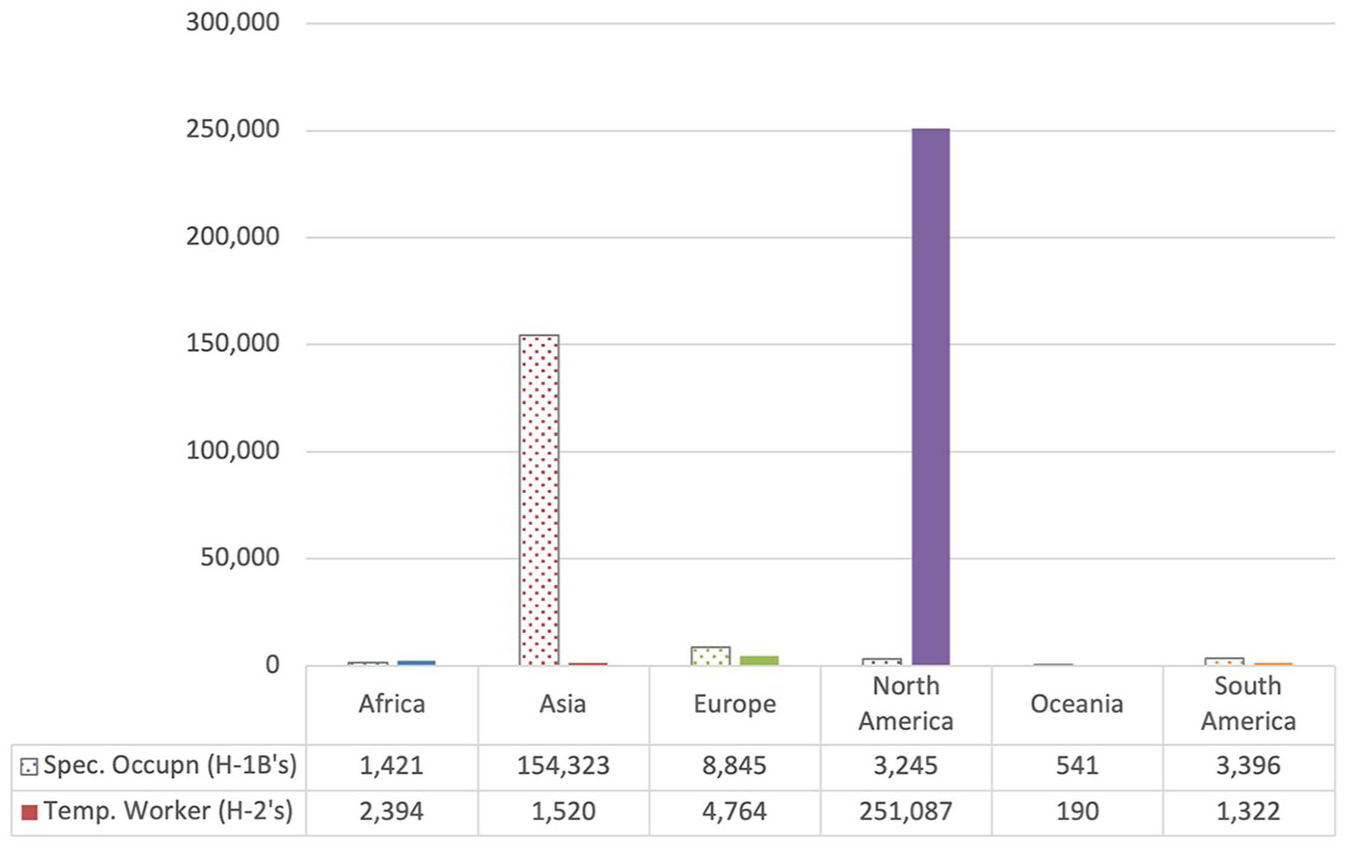
Specialty occupation* and temporary worker** visas by continent, annual averages FY16 to FY20.
*Specialty occupation include H-1B and H-1B1 visas.
**Temporary workers include H-2A and H-2B visas.
How do net migration flows appear under implicitly racialized capitalism? Based on the sum of Specialty Occupation visas, Temporary Worker visas, and Dependent visas net of deportations, there was a net U.S. inflow of 251,035 Asians, a net outflow of 321,352 North Americans, and a net outflow of 12,276 South Americans annually from FY16 to FY20 (Figure 5). U.S. immigration flows are not represented in their entirety in Figure 5, as there are many other types of visas and immigration instruments other than those represented here. Nonetheless, Figures 4 and 5 highlight the racialized distribution of worker visas and deportations. In Figure 5, the bars for Asians and Latinx immigrants point in altogether different directions, illuminating their divergent socio-economic destinations.
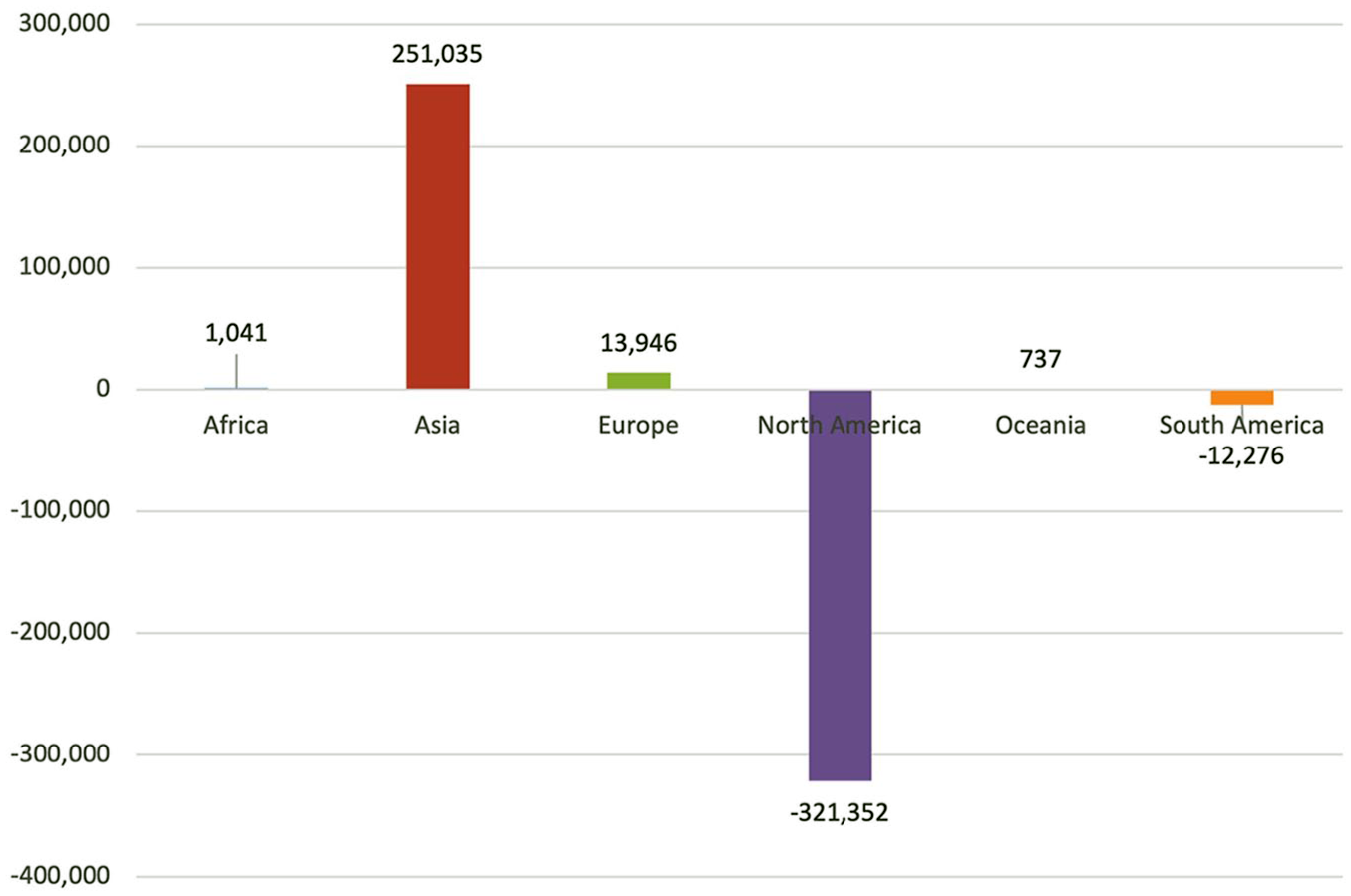
Worker and dependent* visas net of deportations by continent, annual averages FY16 to FY20.
*Worker visas include specialty occupation visas (H-1B, H-1B1) and temporary worker visas (H-2A and H-2B). Dependent visas are H-4 visas.
Is there a shared experience of being an ‘immigrant worker’ in the United States? There are some similarities in the immigrant positionality of Indian Specialty Occupation workers and Mexican Temporary Workers. Both groups represent racialized classes within the global reserve army of labor. Immigrant workers in both sectors experience discrimination relative to their (white) citizen counterparts. Both sets of visas are employer-driven, in that employers petition for worker authorizations to fulfill their labor needs. Both sets of visas emerge out of the necessity of racialized immigrant labor to American capital. Yet, both visa programs function to invert this relation, rendering immigrant employees dependent on American employers.
Despite some similarities, the experiences of Mexican immigrant farmworkers are largely incommensurable with those of Indian immigrant tech workers, based on differences in economic class, occupational prestige, legal status, and deportability. Working-class, ‘unskilled’ Mexican farmworkers are denied minimum wages and are only offered ‘temporary’ employment in socially devalued occupations, such as agricultural and manual labor. Farmworkers’ precarious jobs and visas make it difficult to access Dependent visas for spouses. Further, these allegedly ‘unskilled’ and ‘temporary’ Mexican workers are not offered a path to permanent residency. Rather, the short-term nature of Temporary Worker visas renders workers potentially undocumented at the end of their 1-year contracts, thus contributing to racialized Mexican deportability. In contrast, middle-class ‘high-skilled’ Indian tech workers land high-paying jobs that guarantee economic and legal security, and access to Dependent visas that allows them to cohabit with their families. Indeed, Indian immigrant tech workers are one of the select groups that have been afforded upward mobility under the otherwise brutal system of implicitly racialized global capitalism.
Footnotes
Acknowledgements
Moon-Kie Jung provided close feedback on several drafts of this paper and encouraged me to pursue a comparative analysis of the racialization of Asian and Latinx immigrants in the U.S. Cedric de Leon provided feedback on a previous draft of this paper and encouraged me to engage more closely with theories of racial capitalism. Fareen Parvez provided feedback on a previous draft of this paper and encouraged me to contextualize the experience of middle-class Indian immigrants in the U.S. amidst the experiences of working-class Indians. Payal Banerjee and Cyril Ghosh provided feedback on a previous draft and encouraged me to examine the racialization of Mexican farmwork in historical perspective.
Funding
The author received no financial support for the research, authorship, and/or publication of this article.
