






Abstract
Background:
Clostridium difficile infection (CDI) is treated most often with metronidazole or vancomycin. Both have been effective in treatment of mild to moderate infection. In more severe cases, vancomycin may be more effective.
Objectives:
The primary objectives were to quantify the severity of CDI and to describe overall adherence to the institutional CDI guideline. Secondary objectives were to assess factors associated with adherence to the guidelines.
Methods:
Retrospective analysis of the electronic medical record was used to evaluate adherence to institutional guidelines. Data collected included demographics and other factors potentially contributing to adherence: Charlson comorbidity index, severity of infection, recurrence, intensive care unit (ICU) admission, infectious diseases (ID) consult, total duration and number of antibiotics, alternative therapies, and acid suppression. Descriptive statistics and bivariate analyses were used to describe and compare factors associated with guideline adherence; multivariate logistic regression assessed independent predictors of adherence.
Results:
A total of 387 patients met the inclusion criteria. CDI severity was 55.8% mild/moderate cases, 42.4% severe, 0.5% fulminant, and 1.3% prophylaxis. Overall, institutional guideline adherence was 51.9%. In bivariate analyses, 5 factors were associated with nonadherence to guidelines: older age, ICU admission, duration of antibiotics, mild/moderate and severe infection (all P < .05). In the logistic regression model, severe infection (P < .001) and longer duration of antibiotics (P < .05) were independently associated with guideline nonadherence.
Conclusion:
In this study, 42.4% of the patients met criteria for severe infection. Providers for patients with severe infection and longer duration of antibiotic therapy were less likely to adhere to the institutional guideline.
Keywords
Background
Clostridium difficile is the primary cause of antibiotic-associated colitis, responsible for 15% to 20% of antibiotic-associated diarrhea, and pseudomembranous enterocolitis is most commonly caused by C difficile infection (CDI). 1 From 1999 to 2007 in the United States, CDI was the main cause for gastroenteritis-associated death. 2 CDI poses a serious threat to patients’ morbidity and mortality. Mortality rates have been reported as 6.9% at 30 days after diagnosis and 16.7% at 1 year. 3 -5 In 2011, an estimated 29 300 deaths were attributed to CDI in the United States. 6 There is a significant financial cost associated with CDI. The estimated cost associated with CDI in acute care facilities is US$4.8 billion. 6 Various risk factors for CDI have been identified including advancing age, length of hospital stay, antimicrobial exposure, cancer chemotherapy, gastrointestinal surgery or manipulation, and possibly acid suppression therapy. 7
The institutional C difficile treatment guideline used at the University of Rochester (UR) Medicine Strong Memorial Hospital and Highland Hospital at the time of this study was adopted primarily from recommendations from the Clinical Practice Guidelines for CDI in Adults: 2010 update by the Society for Healthcare Epidemiology of America (SHEA) and Infectious Diseases Society of America (IDSA), expert opinion from within the institution, and the research by Zar and colleagues. 7,8 Metronidazole and vancomycin have been found to be equally efficacious for the treatment of mild to moderate CDI; therefore, metronidazole is recommended as first-line treatment in these cases to decrease cost and the development of vancomycin-resistant microorganisms. 8 However, vancomycin at a dosage of 125 mg by mouth 4 times per day was found to be superior to metronidazole 500 mg by mouth 3 times per day in a subgroup of patients with severe disease. 8
Treatment of CDI can be challenging, and the recurrence is reported to be as high as 25% in patients treated with metronidazole and/or vancomycin. 9 -11 CDI has a significant impact on patient morbidity and mortality as well as financial burden to the institution. An evaluation of the guideline was conducted at UR Medicine Highland Hospital to ensure adherence to the institutional guidelines to help optimize C. difficile therapy.
Objective
The primary objectives were to quantify the severity of CDI and to describe overall adherence to the institutional guidelines for treatment of CDI regarding the prescribing of vancomycin (oral) or metronidazole (oral or intravenous). Secondary objectives were to assess factors associated with adherence to the guidelines.
Methods
Study Design
A retrospective analysis of a health system electronic medical record to evaluate adherence to institutional prescribing guidelines and to determine the quantity of cases that fell into each severity category for C. difficile was completed. All methods were approved by the institutional review board at UR Medicine and Highland Hospital.
Definition of Institutional Guideline Adherence and Severity
Antibiotic choice for C. difficile episodes was categorized and treated based on the severity index summarized below in the UR Medicine, Strong Memorial Hospital and Highland Hospital C. difficile Treatment Guideline for Adult Patients with Documented/Presumed CDI at the time of therapy initiation. These criteria incorporated expert opinion from institutional infectious diseases and gastroenterology providers, pharmacy, microbiology, national guidelines, and available literature. Guidelines were disseminated via e-mail, presented at internal medicine noon conferences, and posted to the clinical practice guideline site on the internal intranet at UR Medicine. Mild to Moderate: minimal evidence of toxicity Severe: at least one of the following: endoscopic evidence of pseudomembranous colitis or requires treatment for C. difficile in the ICU or at least 2 of the following not attributable to other causes: age >60 years, temperature >38.3°C, albumin <2.5 mg/dL, peripheral WBC count >20 000 cells/mm3, acute renal failure (acute renal failure was defined as serum creatinine level >1.5 times the premorbid level for purposes of this study) Fulminant: ileus, toxic megacolon, hypotension, colonic perforation
During the time period evaluated, the health system required approval from an infectious disease physician or a clinical pharmacy specialist to use oral vancomycin. See Table 1 for full institutional guideline treatment recommendations.
Clostridium difficile Institutional Treatment Guidelines.
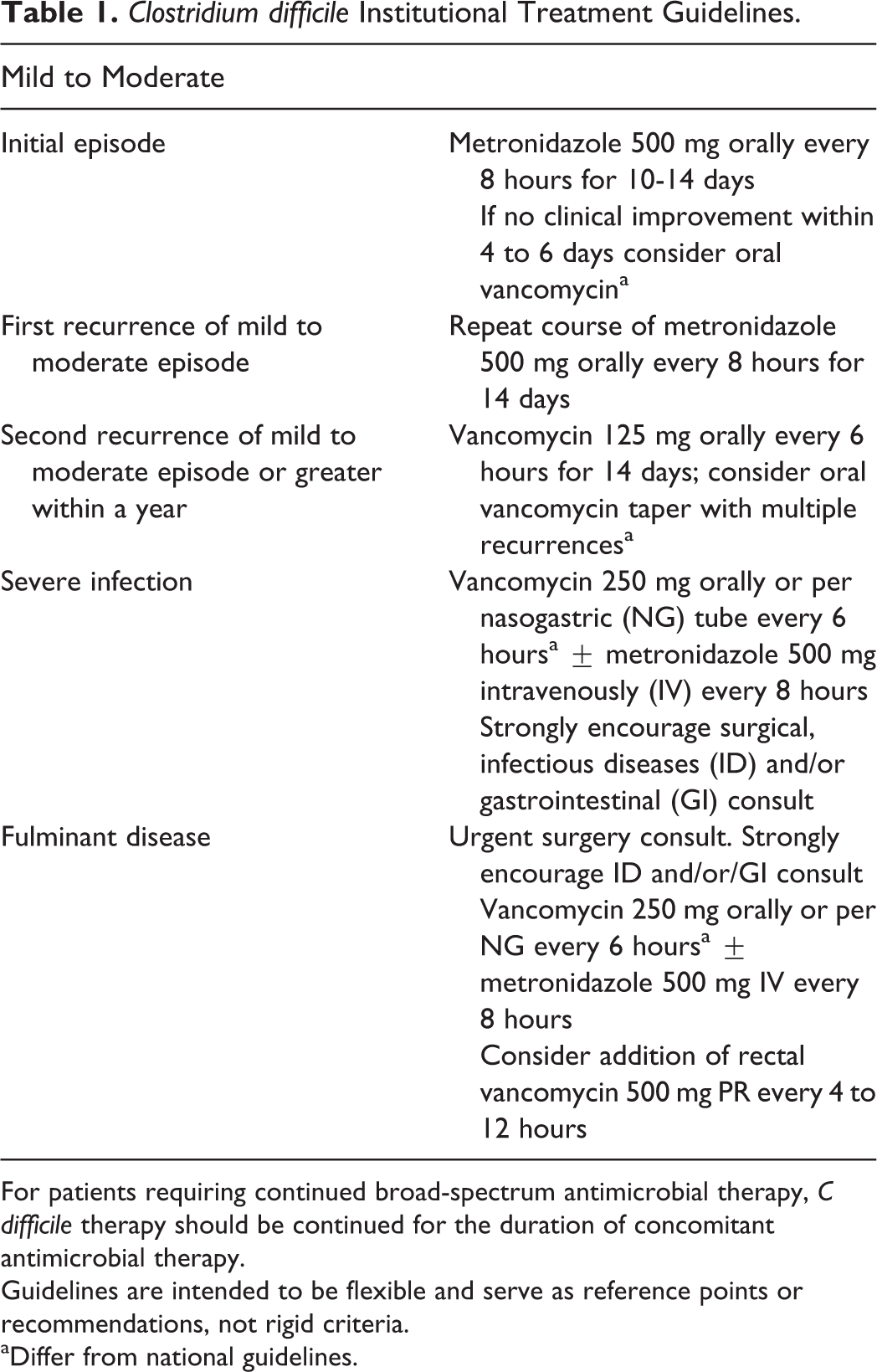
For patients requiring continued broad-spectrum antimicrobial therapy, C difficile therapy should be continued for the duration of concomitant antimicrobial therapy.
Guidelines are intended to be flexible and serve as reference points or recommendations, not rigid criteria.
aDiffer from national guidelines.
Definition of CDI, clinical cure, and recurrence
Following the 2010 SHEA/IDSA C. difficile guideline, we defined CDI as the following: (1) the presence of diarrhea, defined as passage of 3 or more unformed stools in 24 or fewer consecutive hours and (2) a stool test result positive for the presence of toxigenic C. difficile or its toxins or colonoscopic or histopathologic findings demonstrating pseudomembranous colitis. 7 Clinical cure and clinical recurrence followed the definitions of Louie and colleagues and were used to assess whether the cases of C. difficile was new versus recurrence. 12 Clinical cure was defined as resolution of diarrhea (3 or fewer unformed stools for 2 consecutive days), after receiving 10 days of treatment for CDI, with no further requirement of therapy for CDI, and patients didn’t have diarrhea for 2 days following completion of therapy. Clinical recurrence was defined as reappearance of more than 3 diarrheal stools per 24-hour period within 4 weeks after the cessation of therapy, C. difficile toxin A or B, or both, in stool, and a need for retreatment for C. difficile infection.
Subjects and data
Subjects were inpatients of the UR Medicine, Highland Hospital who received antibiotics for the prophylaxis or treatment for CDI between October 1, 2011, and March 31, 2013. Inclusion criteria were (1) a positive result on a C. difficile toxin A or toxin B enzyme immunoassay, toxin B polymerase chain reaction, or cytotoxin assay and (2) prescription for oral vancomycin or metronidazole (oral or intravenous) determined to be utilized for the treatment of CDI. Prophylactic use of vancomycin or metronidazole was characterized as nonadherence to the institutional guideline. Severity of disease was not characterized for those patients as the drugs were not being used to treat active infection. Subjects were excluded if documentation was insufficient to determine the severity of an active CDI, which was required to determine guideline adherence.
Subjects were identified by reviewing the electronic medical records of all patients who received vancomycin (oral) and/or metronidazole (oral or intravenous). All data were extracted from electronic medical records from the start date of first C. difficile prophylaxis or treatment regimen. Variables collected included demographics, comorbidities, vital signs, blood test results, all concurrent antimicrobials (doses, frequencies, duration, indication, and routes) used 30 days prior to and/or during C. difficile treatment CDI severity, episode of infection (primary infection, or recurrence), results of any endoscopic procedure or abdominal ultrasound, computed tomography, or magnetic resonance imaging, admission to the ICU, alternative treatment modalities for CDI (eg, probiotics, fidaxomicin, rifaximin, stool transplant, colectomy), microbiology cultures and susceptibility testing within 60 days of initiation of therapy, concurrent use of acid suppressive therapy (ie proton pump inhibitors and/or H2 receptor antagonists), admitting physician specialty, and any record of consultation with an infectious disease physician. Reasons for nonadherence to guidelines were evaluated.
Accounting for comorbidities
Health status was assessed using the age-adjusted Charlson comorbidity index (CCI). The CCI is a validated, continuous measure for risk adjustment. 13,14
Analysis
Descriptive statistics characterized the patient sample by age, sex, comorbidities, and other characteristics relevant to comparing the study results to other patient populations or practice settings. Two-sample t tests were used to assess differences between means (Mann-Whitney U tests, which remain valid under a wider range of conditions than parametric tests, were also calculated to check parametric test results). 15 χ2 Tests were used for differences between dichotomous categorical variables. Logistic regression was used to identify patient, provider, and episode characteristics that explained variation in adherence to the institutional guideline. The unit of analysis was the hospital admission. We began with a model with all multiplicative interactions and then dropped insignificant and small interaction terms for parsimony. We excluded observations from the model for which disease severity was undefined. The level of statistical significance was set at P < .05. Analyses were performed in STATA 12. 15
Results
A total of 387 patients met the criteria for inclusion (Table 2). CDI treatment was determined to be adherent to the guideline in 51.9% of patients. CDI severity was as follows: 55.8% were mild/moderate, 42.4% severe, and 0.5% fulminant. In 1.3% of patients, therapy was documented as prophylaxis. The average age-adjusted CCI score was 5.5 which has been associated with a 1-year mortality rate of 85%. 13
Demographic and Baseline Characteristics of Patients.a
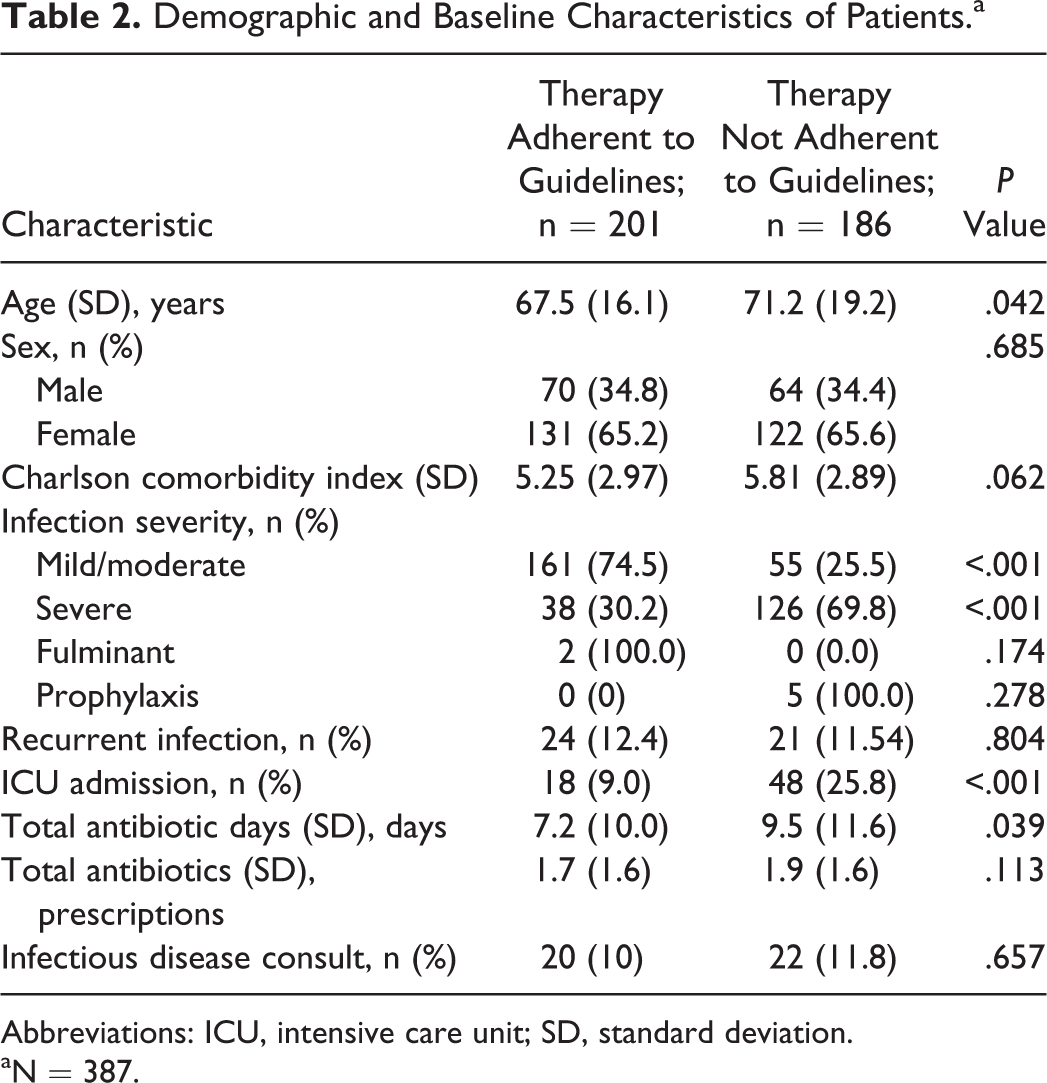
Abbreviations: ICU, intensive care unit; SD, standard deviation.
aN = 387.
In a multivariate logistic regression (Table 3), severe infection and longer duration of antibiotic therapy were both independently associated with reduced odds of adherence to guidelines (P < .001 and P = .013, respectively). Factors that were not significantly associated with provider adherence to the guideline included an infectious disease consult, patient age, sex, CCI, ICU admission, total number of antibiotics, and a recurrence of the infection.
Logistic Regression: Factors Influencing Adherence to Institutional CDI Guideline.
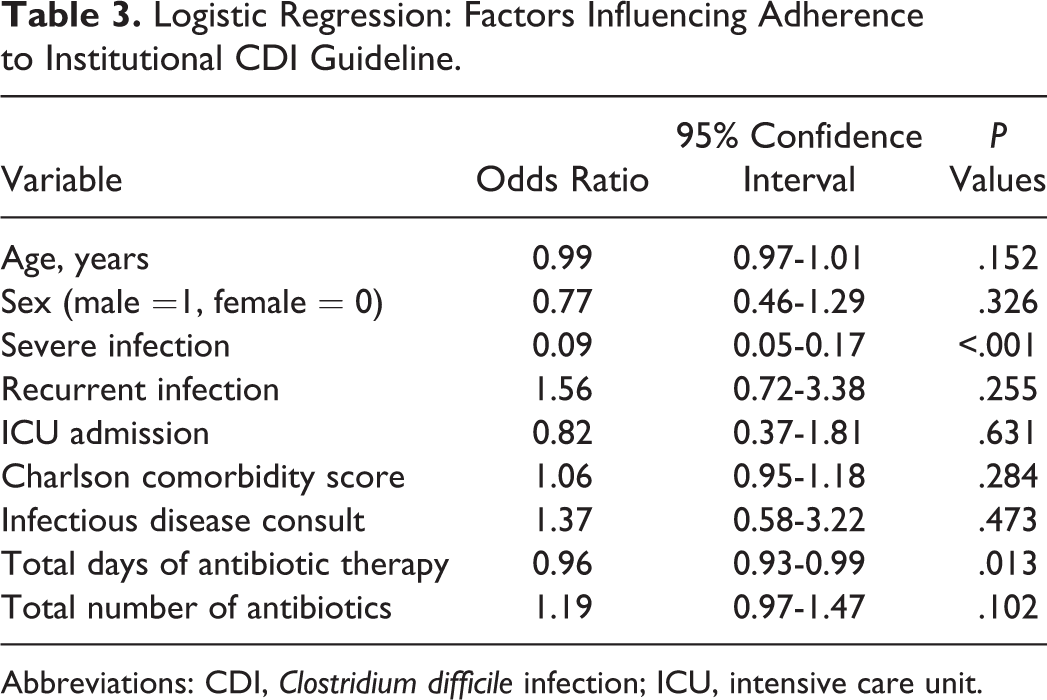
Abbreviations: CDI, Clostridium difficile infection; ICU, intensive care unit.
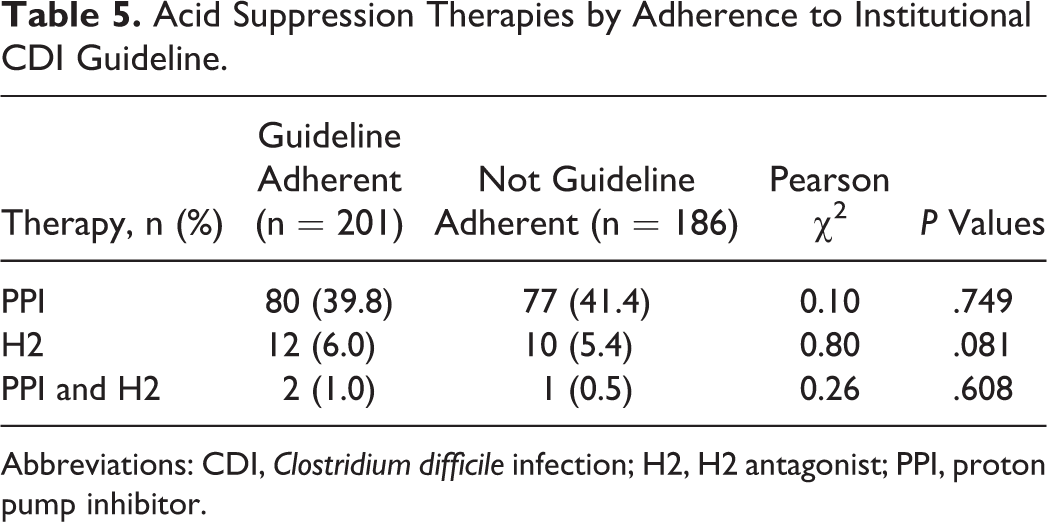
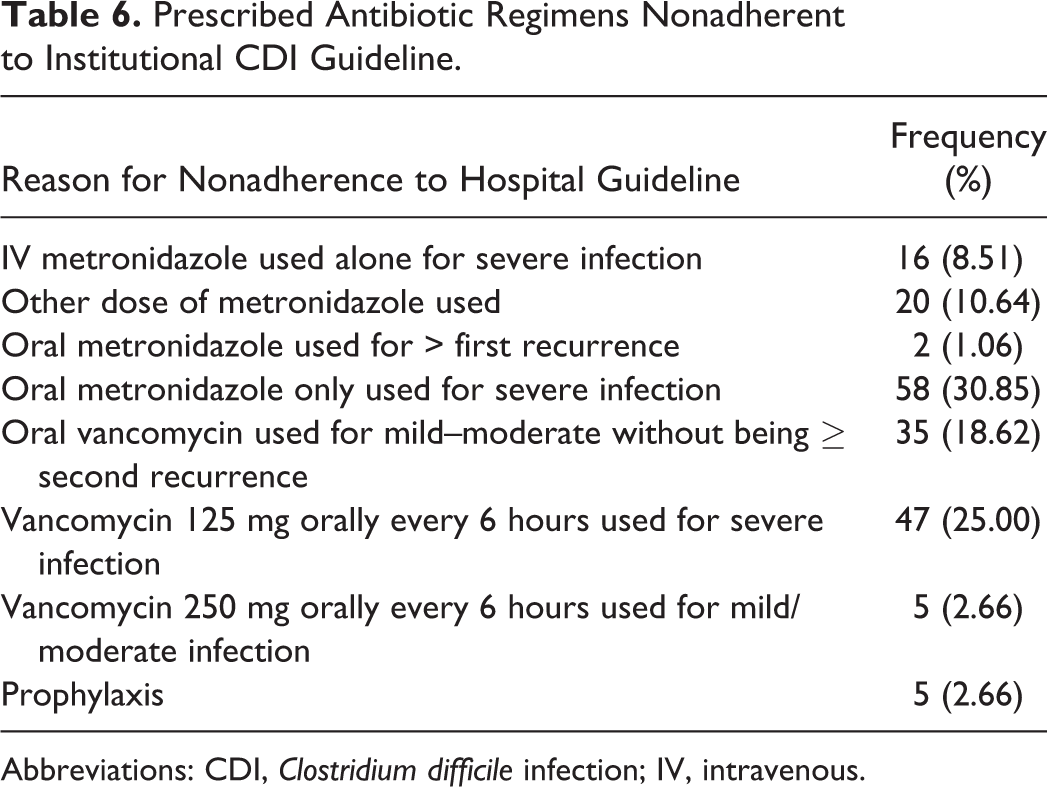
We found no statistically significant difference in the number of patients who received alternative therapies or acid suppression therapy with regard to provider adherence to guideline therapy (Tables 4 and 5). The most common prescribing associated with nonadherence to guidelines was the use of oral metronidazole only for severe infection and vancomycin 125 mg by mouth every 6 hours used for severe infection (Table 6). Notably, the type of admitting service (ie, provider specialty) was not significant. The only 2 cases of fulminant disease were prescribed according to guideline. Disease severity was undefined in 5 observations because vancomycin was used as prophylaxis, and those patients were excluded as a result.
Alternative Therapies by Adherence to Institutional CDI Guideline.
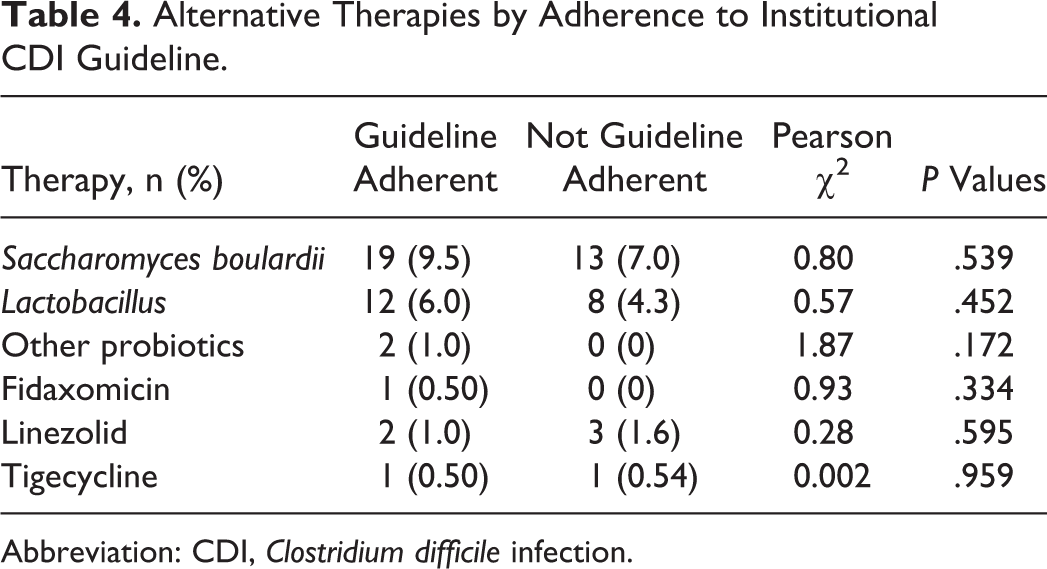
Abbreviation: CDI, Clostridium difficile infection.
Acid Suppression Therapies by Adherence to Institutional CDI Guideline.
Abbreviations: CDI, Clostridium difficile infection; H2, H2 antagonist; PPI, proton pump inhibitor.
Prescribed Antibiotic Regimens Nonadherent to Institutional CDI Guideline.
Abbreviations: CDI, Clostridium difficile infection; IV, intravenous.
Conclusion
CDI has progressed from a relatively uncommon hospital-acquired infection to a major contributor to morbidity and mortality inside the hospital as well as within the community. 16 -20 In 2011, there were approximately 450 000 incident and 83 000 recurrent CDIs in the United States. 6 Severity incidence of CDI varies based on geographic location and depends on the predominate strain in the community. 4,17 -20 In our study population, 42.4% of the patients met criteria for severe infection. This rate is consistent with data recently published in a veteran population where 42% of episodes were classified as severe. 21 Our patient population includes a majority of high-risk elderly patients with many comorbid disease states and was supported with an average age-adjusted CCI score of 5.5. Despite strong evidence and clinical practice guidelines to support vancomycin treatment for severe CDI, it was underused as an empiric treatment option. 7,8,22,23 In our study, 39% of patients initially received metronidazole despite being classified as a severe CDI. Oral vancomycin required preapproval for use beyond the first dose at the time of our study, which may have contributed to provider preference to use metronidazole. Another possibility for using metronidazole alone for severe infection may have been because the provider did not have immediate access to the necessary objective criteria required to determine severity that was available for this retrospective analysis or providers did not evaluate the patient as clinically severe at the time of suspected diagnosis.
The institutional guideline evaluated in this study was developed by the Antibiotic Subcommittee of the Therapeutics Committee and approved in 2008, then reviewed in 2009 and again in 2013 after the release of the American College of Gastroenterology Guidelines for the Diagnosis, Treatment, and Prevention of CDI. These guidelines incorporated expert opinion from our institutional infectious diseases and gastroenterology providers, pharmacy, microbiology, national guidelines, and available literature. Guidelines were disseminated via e-mail, presented at internal medicine noon conferences, and posted to the clinical practice guideline site on the internal intranet at UR Medicine. Despite this approval and reevaluation from clinical experts at our institution, a large percentage of providers at the hospital were found not to adhere to the guideline. Providers were not found to be more likely adherent to the institutional guideline in any specific set of circumstances except for severity of infection and total number of antibiotic days. This could be for a number of reasons, but the provider use of a guideline-recommended drug at a different dose accounted for 38.3% of reasons for nonadherence (Table 6). The 2010 SHEA/IDSA Clinical Practice Guidelines for CDI in Adults and the 2013 American College of Gastroenterology Guidelines for Diagnosis, Treatment, and Prevention of CDIs both recommend vancomycin at a dose of 125 mg for severe infection 7,23 ; however, there is moderate to low level evidence provided for this recommendation. Use of vancomycin 125 mg for severe infections accounted for 25% of the listed reasons for nonadherence to the hospital guideline. Providers may consider vancomycin 125 mg orally clinically equivalent to 250 mg orally because there is no sufficient data to support which dose is appropriate for severe cases. Because oral vancomycin dosing recommendations for severe and fulminant infection at our institution differed from the aforementioned national guidelines, providers may have been less likely to adhere the institutional guideline. This could explain why 25% of providers used vancomycin 125 mg by mouth every 6 hours for severe CDI. Additionally, if the patient was not able to take oral medication, intravenous metronidazole may have been the only route available for treatment and should be considered as appropriate therapy for severe infection if oral alternatives were not an option. We were unable to evaluate whether the intravenous use of metronidazole correlated with a nothing by mouth order as the study was retrospective in nature. As prophylaxis is not currently listed in the guidelines, all cases of prophylaxis were considered nonadherent to the guideline.
The number and percentage of patients receiving alternative therapies and acid suppression (Tables 4 and 5) did not seem to influence whether the institutional guideline was followed, but the study wasn’t powered to detect a difference.
Additional education for all providers and pharmacy staff would likely shift prescribing trends in favor of adherence to institutional guidelines. Electronic order sets may also be developed to assist with appropriate ordering. The UR Medicine’s treatment guideline notes “guidelines are intended to be flexible.” This study strictly compares actual versus idealized treatment; therefore, many of the findings of nonadherence may be perfectly acceptable in a clinical situation. It does, however, shed light on many situations where deviating from the hospital guideline may be harder to explain. Findings from this study supported subsequent changes made to the institutional guideline, which was supported by a companion study and expert opinion of the Departments of Infectious Diseases and Gastroenterology. Oral vancomycin no longer requires approval for use in our institution with the goal of encouraging its use in appropriate cases. In addition, the dose recommendation of vancomycin for severe infection is now consistent with the recommendations of the national guidelines. 7,23
Modifications were made to reflect the most recent data available regarding the treatment of CDI, and a follow-up evaluation will be necessary to determine current prescribing patterns.
Limitations of the study included an inability to measure patient outcomes. Researchers were unable to evaluate effectiveness of therapy, merely adherence to a guideline and characterization of severity of CDI. Data collection was retrospective, and therefore limited to what was recorded in the electronic record for patients admitted to our institution only.
Footnotes
Authors’ Note
The manuscript was presented in part at ASHP Clinical Midyear Meeting; December 8-12, 2013; Orlando, FL.
Declaration of Conflicting Interests
The author(s) declared no potential conflicts of interest with respect to the research, authorship, and/or publication of this article.
Funding
The author(s) received no financial support for the research, authorship, and/or publication of this article.